Home Blog Page 366

CJID seeks pitches on press freedom, freedom of expression, access to information  

The Centre for Journalism Innovation and Development (CJID) is inviting journalists to submit compelling story pitches focused on press freedom, freedom of expression, and access to information in Nigeria.  

The initiative seeks to support investigative and in-depth reporting on challenges facing media practitioners, government policies affecting press freedom, cases of censorship, and other threats to free speech.  

CJID has consistently provided journalists with resources to pursue critical stories that hold power to account, and this call for pitches is another opportunity for media professionals to spotlight press freedom issues with data-driven and well-researched narratives.  

Focus areas  

Applicants are encouraged to pitch stories on:  

– Government policies and their impact on press freedom.  

– Threats to journalists, censorship, and legal battles.  

– Access to information laws and their enforcement.  

– Digital rights, online surveillance, and media regulation.  

– Misinformation, disinformation, and challenges to ethical journalism.  

Interested applicants should submit a detailed pitch outlining their story idea, proposed sources, methodology, and expected impact. Submissions should be sent via this link before the application deadline on the 28 of February 2025.  

Selected applicants will receive funding of 500,000 Naira to develop their stories for publication.  


Shifting gears: Inside Trump’s policy shockwaves in 20 days

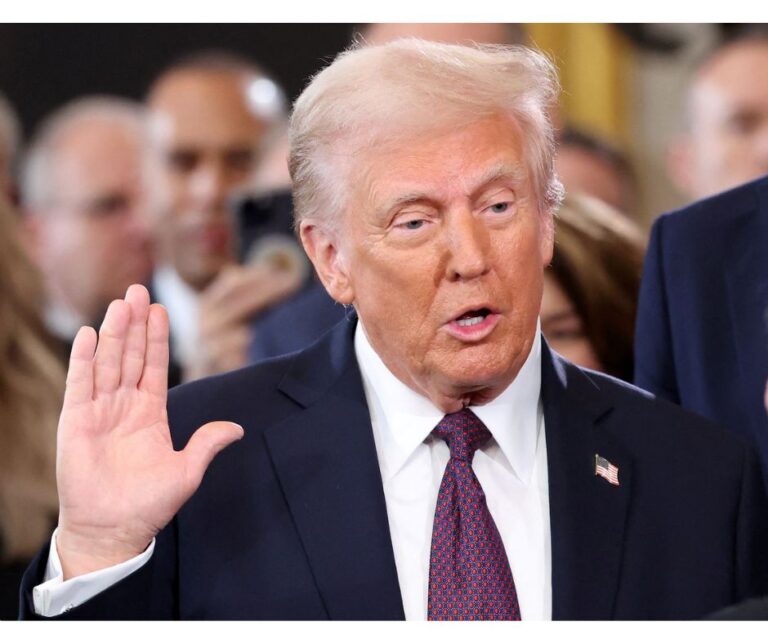
PRESIDENT Donald Trump’s first 20 days in office have been marked by a series of daily controversies, public outrage, and commendations.

On his first full day in office, he signed about 42 Executive Orders and issued multiple directives through the White House Press Secretary, Karoline Leavitt, who has continued to relay Trump’s directives and actions.

Some of these executive orders are rescinding dozens of former president Joe Biden’s executive orders, including on racial equity, protections for LGBTQ+ individuals, and artificial intelligence (AI).

The Trump-Vance administration prioritises key policies such as border security by reinstating strict immigration measures, enhancing deportation efforts, suspending refugee resettlement, and deploying military personnel, including the National Guard, to assist with border enforcement.

The White House stated that the administration aims to overhaul the federal bureaucracy by freezing non-essential hiring, rescinding diversity, equity, and inclusion (DEI) programmes, and holding government workers accountable by requiring in-person attendance.

Additionally, the administration intends to enforce policies that define traditional gender identities and ban transgender athletes from participating in women’s sports.

These plans were not long in coming, as Trump has already set the ball rolling. During this period, he has instilled fear among immigrant (illegal) communities, including Nigerians, frozen U.S. aid and funding for global projects, withdrawn from the World Health Organization (WHO), dismantling of the U.S. Agency for International Development (USAID) and plans to ‘take over’ Gaza.

USAID ‘shut down’

In recent days, pressure from the Trump’s administration has fuelled many allegations around the United States Agency for International Development (USAID) projects. This includes allegations that USAID-funded reporting is biased or politically motivated and also embezzlement of public funds under execution of fake projects.

His planned dismantling of USAID could take hundreds of jobs worldwide as most of USAID’s staff have been placed on administrative leave.

Following Trump’s inauguration and the subsequent attack on the agency, USAID stated that thousands of employees would be put on leave, with the agency recalling its workers from missions across the world. 

USAID supports health and emergency programmes in over 120 countries, including some of the world’s poorest regions and independent journalism in over 30 countries.

Taking over of Gaza

On Tuesday, February 4, Trump held a joint press conference with Israel’s Prime Minister, Benjamin Netanyahu, where he said that the U.S. plans to take over the Gaza Strip to “dismantle and develop it.”

While unveiling the plan to Netanyahu, who visited the White House for a bilateral meeting, he also vowed to relocate the original inhabitants – the Palestinians – to neighbouring countries.

However, many people, especially in the Middle East, have described the plan as ethnic cleansing, with Hamas also strongly condemning the plan, saying it would only worsen chaos and tension in the region. 

Cutting aid to South Africa

In what has been described as a retaliatory move by many, the U.S. president suspended all future funding to South Africa. Trump’s administration accused the South Africa government of confiscating land and mistreating certain groups.

Trump stated that the United States would withhold aid until these issues are thoroughly investigated; emphasising that such actions would not be tolerated. 

However, in response, South African President, Cyril Ramaphosa, while expressing his concerns over the development, stated that the recently signed expropriation law aimed to ensure equitable and just access to land in accordance with the country’s constitution, rather than to confiscate property.

Pulling out of WHO

Similarly, Trump, as part of his first executive orders, withdrew the United States from the World Health Organization (WHO).

The order reverses the Biden administration’s 2021 decision to rejoin the global health body, citing the WHO’s handling of the COVID-19 pandemic and alleged political influence from member states, including China, as key reasons for the withdrawal. 

Under the order, all U.S. funding and resources to the WHO will be paused, and American personnel working with the organisation will be recalled.

Freezing HIV funding and subsequent lifting 

Another move that sparked reaction, was the decision by the Trump’s government to halt U.S. foreign aid funding for 90 days, particularly for life-saving health programmes like the President’s Emergency Plan for AIDS Relief (PEPFAR). 

The funding freeze stemmed from an executive order signed by Trump on January 20, 2025, directing a review of all foreign aid programmes to align with his “America First” policy. 

The ICIR reports that the proposed funding freeze was viewed as capable of putting millions of people, including Nigerian HIV patients, at immediate risk, with fears of treatment disruption and possible deterioration of the health of people with the virus. 

However, after so much outrage, reactions and appeal, the U.S. reportedly exempted PEPFAR.

Pulling out of climate agreement 

President Trump also pulled out the US from the Paris Climate Agreement.

The Paris Agreement is a legally binding international treaty on climate change. It was adopted by 196 parties at the UN Climate Change Conference (COP21) in Paris, France, on 12 December 2015, and entered into force on 4 November 2016.

Like several other orders, the move has sparked reactions, as critics warned it could weaken international cooperation on public health crises.

Redefining birthright citizenship 

Trump has also given an order seeking to redefine birthright citizenship in the United States. The order sought to limit automatic citizenship to children born to parents who are U.S. citizens or permanent residents. 

The ICIR reported that this policy shift has far-reaching implications for immigrant communities, particularly unlawful immigrants.

Redefining gender ideology 

President Trump also enacted an executive order that redefines sex and gender within federal policies, aiming to diminish legal protections for transgender, nonbinary, and intersex individuals. 

The directive mandates federal agencies to recognise only two sexes—male and female as assigned at birth—and to eliminate references to nonbinary identities. It also prohibits acknowledging gender identity as distinct from biological sex. 

This policy shift has led to the removal of LGBTQ+ content from numerous federal websites, affecting resources related to health, education, and human rights, among others.

Keeping men out of women’s sports 

On February 5, 2025, Trump issued another executive order “Keeping Men Out of Women’s Sports,” with the aim of prohibiting transgender women from participating in women’s sports teams. 

The order mandates that educational institutions receiving federal funds must restrict women’s sports to individuals assigned female at birth, aligning with Title IX provisions. 

This executive order has also elicited varied responses from different stakeholders.

Sanctioning ICC

The U.S president has also imposed sanctions on the International Criminal Court (ICC) in response to its arrest warrants against Israeli Prime Minister Benjamin Netanyahu and former Defense Minister, Yoav Gallant. 

The ICC accused them of depriving Gaza civilians of essential needs during the Gaza war. The executive order authorises economic and travel sanctions against individuals involved in ICC investigations targeting U.S. citizens or allies, including Israel. 

These measures include asset freezes and visa restrictions affecting ICC officials and their families. 

Parting way with UNHRC

Similarly, the United States has chosen to part ways with the UN Human Rights Council (UNHRC) and a cessation of funding to the UN Relief and Works Agency for Palestine Refugees (UNRWA). 

New tariff law

Trump, on February 1, announced through his social media that he has implemented new tariffs under the International Emergency Economic Powers Act (IEEPA). 

The new tariffs include a 25 per cent levy on imports from Mexico and Canada, with a reduced 10 per cent tariff specifically on Canadian energy products.

Also, a 10 per cent tariff was imposed on imports from China. He noted that the measures aim to address the pressing issues of illegal immigration and the proliferation of deadly drugs, such as fentanyl, which have been detrimental to American communities. 

UNIZIK probes viral video showing student assaulting lecturer

0

THE management of Nnamdi Azikiwe University (UNIZIK), Awka, Anambra State, said it had launched an investigation into a viral video showing a third-year student of its Department of History and International Studies, Goddy Mbakwe Precious, assaulting a lecturer of the school’s Department of Theatre Arts and Film Studies, Chukwudi Okoye. 

The altercation began when Okoye walked into Precious who was taking a video along the university hallway. 

Footage showed Okoye tapping the student on the shoulder, saying “Excuse me” as he passed, but Mbakwe reacted, saying “Can you imagine? He just hit me.”

The situation escalated, with other videos showing Precious grabbing Okoye’s shirt and tearing it. She also bit the man on the wrist. 

Throughout the process, Okoye was seen as maintaining his composure and not retaliating.

The ICIR, however, could not independently confirm how the incident degenerated as the lecturer was seen to have passed by the young student in the first footage.

However, social media posts attributed to the lecturer and Precious provided differing accounts of the incident. 

Precious, in a post attributed to her, claimed that someone attempted to grab her phone from behind, and eventually realised it was the same lecturer who had interrupted her video.

She further alleged that Okoye grabbed her “breast region,” and scratched her chest with his nail.

“I was devastated and at the same time still lamenting in pain as I picked up the pieces of my shattered phone. But the situation took a dark turn when the lecturer grasped my breast region, saying unspeakable things.

“I was left stunned, trying to comprehend the horror unfolding before me. As I realised my cleavage was exposed, I begged him to let me go, but he ignored my pleas, holding me firmly. His nails and clutches left certain prints and scratches on my chest rather.

“I was mortified. I tried to cover myself, pulling my dress together, and exclaimed in desperation, ‘Sir, I’ll hold you oh!’. I didn’t mean to threaten him; I just wanted him to release me. But he wouldn’t budge. In a split second, I bit his hands, hoping he’d let go. That was when I held his clothes and accidentally tore his shirt,” she reportedly said.

However, the lecturer, in a post linked to him, claimed that he overheard her insulting him and decided to return to ascertain if she was one of his students and also to demand that she delete the video that showed him passing by.

 “My theatre Arts people, I had just left Hall 19, where Dr Ebekue (another lecturer) was teaching. Walking along the passage, I saw a girl doing a video with her phone,” he said.

He added, “Tapping her slightly, I asked her to excuse me as I walked past. After about two or three steps, I heard her say, ‘Who does this man think he is?’ I walked back to ascertain first if she was my student and second to make sure she deleted the video showing where I passed.”

According to him, the student bit him on both arms, tore his clothes, slapped him, and scratched his face in the process.

“I then demanded and reached for her phone, only to be bitten by the girl on both arms in quick succession. I then held on to her left hand so she wouldn’t get away. That was when she lost it; she tore my clothes, slapped and scratched my face, and generally went berserk on me – all which I received with calm.”

Reacting to the incident in a statement signed by its spokesperson, Njelita Louis, on Tuesday, February 11, the university emphasised its commitment to upholding its core values of discipline, self-reliance, excellence, and justice. 

It announced a full-scale, transparent, and unbiased investigation into the matter, urging all parties and the public to remain calm. 

The management further assured that appropriate sanctions would be implemented based on the investigation’s outcome.

APC director abductors demand N350m ransom

0

THE kidnappers of the director of administration at the All Progressives Congress (APC) national secretariat in Abuja, Adekunle Raif Adeniji, are reportedly demanding N350 million ransom for his release.

They have been in touch with his family and threatened that the payment must be made for him to be freed.

Adeniji’s family member told Daily Trust he would not be released until the ransom was paid.

The ICIR reports that Adeniji was appointed as the APC director of administration in August 2024. He took over after Alaba Adediwura resigned from the post.

Meanwhile, the National Working Committee (NWC) at the party’s secretariat has yet to issue an official statement regarding the ransom demand.

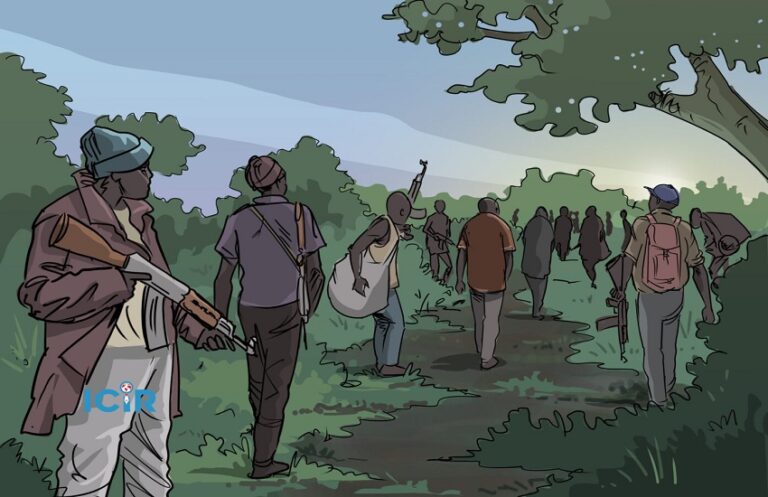
Adeniji was abducted by gunmen armed with AK-47 rifles in the Chikakore area of Kubwa within the Bwari Area Council of the Federal Capital Territory two weeks ago.

The bandits attacked the community on Sunday, January 26, and abducted five residents.

According to police sources, the bandits raided the Health Center extension area of Chikakore at around 11 pm, abducting a family of four, including one Adesiyan Akinropo, his wife, their son, and Adeniji, who visited them. A neighbour to the abducted family was also whisked away.

A woman was reportedly brutally hit with a gun butt during the attack, leading to a severe head injury that left her bleeding profusely. She was rushed to the hospital for treatment.

The ICIR reported that the FCT Police Command confirmed the incident in a statement through its spokesperson, Josephine Adeh.

Adeniji’s brother’s wife, Esther, reportedly lost her life in the incident, and her body was found the following morning in the Ijah-Gbagyi community of Tafa Local Government Area in Niger State.


Wits Centre offers health reporting grants to African journalists

The Wits Centre for Journalism is offering 12 health reporting grants of US$2,000 each to  investigative journalists based in Africa. 

The application process is as follows:

  1. Submit a 300-word motivation statement and a budget breakdown to chris.kabwato3@wits.ac.zain in either English or French. The motivation statement should cover the subject you wish to investigate, its relevance and the location(s).
  2. Attach a copy of your curriculum vitae.
  3. A review committee will select the best proposals and inform the winning applicants.
  4. The selected journalists will sign a letter of commitment to complete the health reports within a period of two months. The reports should be between 1,200 to 2,000 words and can be written in English or French.

Application closes on Friday, February 28.

Customs suspends 4% importation charge amid public outcry

0

THE Nigeria Customs Service (NCS) has suspended the controversial four per cent Free-on-Board (FOB) charge on imports.

The charges is provided in Section 18(1)(a) of the Nigeria Customs Service Act (NCSA) 2023.

In a statement of Tuesday, February 11 by its national public relations officer, Abdullahi Maiwada, the NCS said it has suspended the charge.

It said the decision was sequel to ongoing consultations with the Minister of Finance and Coordinating Minister of the Economy, Wale Edun and other stakeholders.

It stressed that the suspension would enable comprehensive stakeholder engagement and consultations on the framework regarding the implementation.

“The timing of this suspension aligns with the exit of the contract agreement with the Service providers, including Webb Fontaine, which were previously funded through the 1% Comprehensive Import Supervision Scheme (CISS).

“This presents an opportunity to review our revenue framework holistically,” the NCS stated.

Importers, manufacturers association, and other stakeholders had criticised the new charge, declaring it as outrageous.

They believe the levy could lead to increase in prices of goods and heighten inflation.

Under the previous funding arrangement repealed by the NCSA 2023, the NCS said separating the one per cent CISS and seven per cent cost of a collection created operational inefficiencies and funding gaps in customs modernisation efforts.

It noted that the new Act addresses the challenges by consolidating “not less than 4% of the Free-on-Board value of imports.”

The charge was designed to ensure sustainable funding for critical customs operations and modernisation initiatives.

It however, said, “This transition period will allow the Service to optimise the management of these frameworks to serve our stakeholders and the nation’s interests better.”

The Act further empowers the Service to modernise its operations through various technological innovations.

Specifically, Section 28 of the NCSA 2023 authorises developing and maintaining electronic systems for information exchange between the service, other government agencies, and traders.

The service is already implementing several digital solutions, including the recently deployed B’Odogwu clearance system, which stakeholders are benefiting from through faster clearance times and improved transparency.

Other innovative solutions authorised by the Act include single window implementation (Section 33); sisk management systems (Section 32); non-intrusive inspection equipment (Section 59); and electronic data exchange facilities (Section 33(3)).

The ICIR reported on Tuesday that the Manufacturers Association of Nigeria (MAN) had called for the suspension of the implementation of a four per cent charge on all FOB value of imports.

The association argued that implementing the levy would led to further rise in Inflation and an increase in the cost of doing business, which is at variance with the government’s ease of doing business drives.

“We had expected that the NCS would give priority to trade facilitation given the prevailing economic downturn, rather than exacerbating the spiraling cost of production.

“The indiscriminate increase in levy is contradicting the government’s preaching on ease of doing business. It will also make our cost environment less attractive for investors, thereby facilitating smuggling and loss of revenue for the Customs,” MAN had warned.

The association further expressed worries that the levy would cause heavy disruption in the supply chain, trigger raw materials stock-out in many manufacturing concerns, inflict higher cost of demurrage, increase the huge volume of unsold inventories, and worsen the competitiveness of Nigerian manufacturers.

NGX suspends Thomas Wyatt’s shares over non-compliance

0

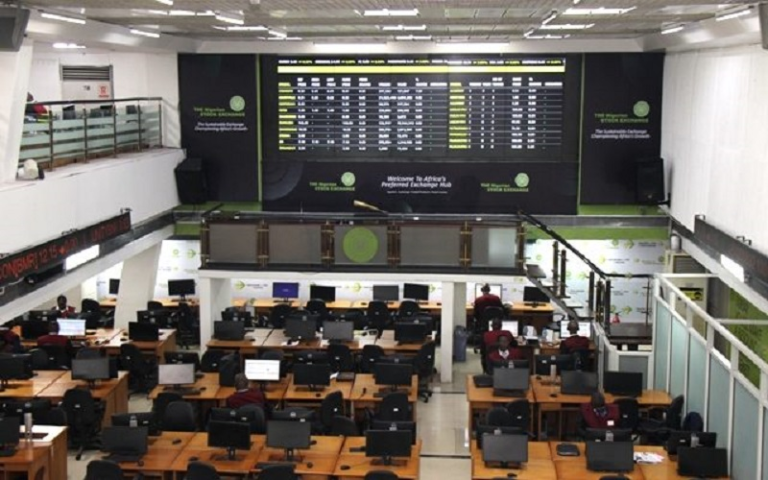
THE Nigerian Exchange Limited (NGX) has suspended the trading of Thomas Wyatt Nigeria Plc’s shares on the Nigeria stock exchange over the company’s failure to file its financial statements.

The suspension raises concerns about the company’s transparency and compliance with regulatory requirements.

Announcing this on Tuesday, February 11, the NGX said Thomas Wyatt shares’ suspension takes immediate effect.

The action follows Rule 3.1, which provides the rules for the filing of accounts and treatment of default filing, known as Default Filing Rules.

NGX noted that the rule mandates it to suspend trading in a company’s securities if it fails to submit its financial reports within the stipulated timeframe.

“This suspension is a necessary step to maintain the integrity of the market and ensure investors have access to timely and accurate information.

“We have clear rules in place regarding financial reporting, and we must enforce them to protect the investing public,”  NGX said.

Thomas Wyatt has yet to file its audited financial statements for the year ended March 31, 2024, as well as its unaudited financial statements for the periods ended June 30, and September 30 for the same year.

The NGX usually allow three months for listed companies to submit their audited financial statements after the close of the financial in every December and one month after the close of quarterly reports.

“We understand that companies may face challenges in meeting reporting deadlines.

“However, timely and accurate financial reporting is crucial for investor confidence. We urge Thomas Wyatt Nigeria Plc to submit their outstanding reports as quickly as possible,” the NGX added.

On Tuesday, The ICIR observed that the company’s shares were not traded on the floor of the exchange.

Aside from the concern about the company’s internal controls and financial management, the suspension has resulted in investors being unable to trade their shares until the ban is lifted.

Market analysts suggest that this incident could negatively impact investor sentiment towards the company and potentially the broader market and erode investor confidence.

The ICIR can report that in November 2018, the NGX similarly suspended Thomas Wyatt’s shares from trading on the exchange over non-compliance in filing its financial reports.

Listed on the Nigeria stock exchange in October 1978, Thomas Wyatt currently has a market capitalisation of N732.60 million on the exchange.

Its share price has dropped by 2.12 per cent since the start of the year to close at N1.85 on Monday, February 10.

Thomas Wyatt’s line of business includes large-scale printing and the manufacturing of school and office stationery, hitherto printed in the United Kingdom and imported into Nigeria.

Meanwhile, the Nigeria stock market rebounded on Tuesday from yesterday’s losses.

The All-Share Index increased to 106,574.98 basis points from 105,891.33,  indicating a year-to-date return of 3.54 per cent.

Similarly, the market capitalisation increased by N66.495 trillion from N66.069 trillion, which closed the previous trading day.

This left investors to gain N426 billion at the close of the day’s trading.

Access Holdings and Transnational Corporation recorded the highest volume and value of shares trading on the exchange respectively, while Ellah Lakes topped the gainers’ list with 10.00 per cent.

Manufacturers call for 4% Customs levy suspension

0

THE Manufacturers Association of Nigeria (MAN) has called for the suspension of the implementation of a 4 per cent charge on all Free On-Board (FOB) value of imports recently imposed by the Nigerian Customs Service.

The MAN leadership said the levy will lead to a further rise in Inflation and an increase in the cost of doing business, which is at variance with the government’s ease of doing business drives.

The ICIR reports that Customs announced the implementation of the 4 per cent charge on the Free On-Board value of imports in line with the provisions of the Nigeria Customs Service Act (NCSA) 2023.

“The FOB charge, which is calculated based on the value of imported goods, including the cost of goods and transportation expenses incurred up to the port of loading, is essential to driving the effective operation of the service,” Abdullahi Maiwada, the spokesperson of the service said in a statement on Tuesday, February 11.

Reacting to the development through a statement released on Tuesday and signed by the director-general of MAN, Segun Ajayi-Kadir, the association condemned the “sudden and inopportune introduction and implementation of the 4 per cent FOB Levy.”

MAN said it is an “unfortunate addition” to the 1 per cent Comprehensive Import Supervision Scheme (CISS) fee being paid by its members.

The association said it is concerned that the government through the NCS is introducing new levies at a time when it should be helping local businesses reduce the cost of doing business.

“We had expected that the NCS would give priority to trade facilitation given the prevailing economic downturn, rather than exacerbating the spiraling cost of production,” the statement noted.

The association stressed that the already high rate of calculating the customs duty exchange rate and the new levy will further escalate the cost of imported raw materials, which had earlier jumped by over 118 per cent from ₦2.07 trillion in the first nine months of 2023 to ₦4.53 trillion in the same period of 2024.

The association stressed that the levy will render Nigeria’s manufacturing sector uncompetitive and will increase smuggling appetite through unofficial trade routes.

“The indiscriminate increase in levy is contradicting the government’s preaching on ease of doing business. It will also make our cost environment less attractive for investors, thereby facilitating smuggling and loss of revenue for the Customs.

“The levy will cause heavy disruption in the supply chain, trigger raw materials stock-out in many manufacturing concerns, inflict higher cost of demurrage, further increase the huge volume of unsold inventories, and worsen the competitiveness of Nigerian manufacturers.

According to MAN, the introduction of the levy contradicts the principles of the ongoing Fiscal Policy and Tax Reforms and the spirit behind the tax bills currently being considered by the National Assembly.

“These efforts are targeted at eliminating the multiplicity of taxes and reduction of tax burden for households, manufacturers, and other private businesses,” it added.

The introduction of the levy is an additional incentive to smuggling, trade diversion, under-declaration of duty, and other trade infractions that have bedeviled the country, stretched the capacity of Customs, and undermined the revenue profile of the country.

The ICIR has reported that the manufacturers have called for a fixed customs import-duty exchange rate to avert ‘price-gouging’ and curb inflation’s impact on businesses.

Nigeria ranked 140th in global corruption index

0

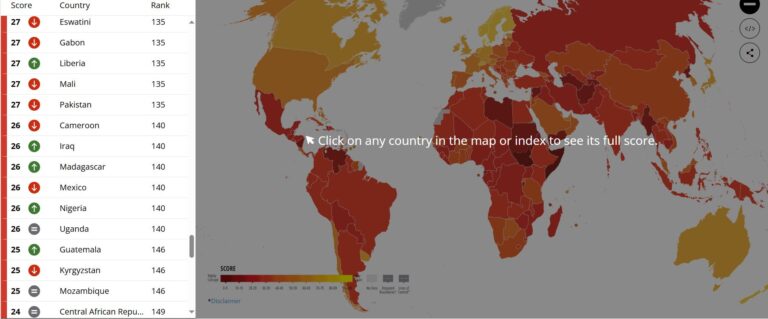
NIGERIA has crawled to the 140 spot in Transparency International’s global corruption ranking in 2024 with 26 scores from its position at 25 in 2023.

The chair of Transparency International (TI), Francois Valeria presented the 2024 Corruption Perceptions Index and the latest global rankings on Tuesday.

TI on Tuesday ranked the countries based on perceived levels of public sector corruption, using data from various reputable sources, including the World Bank and the World Economic Forum.

Valeria said that while 32 countries have reduced their corruption levels since 2012, 148 countries have stayed stagnant or gotten worse during the same period.

“The global average of 43 has also stood still for years, while over two-thirds of countries score below 50” he said.

CPI Score

Despite slight improvements in 2024, Nigeria still trails behind several African nations in tackling corruption. Countries like Seychelles that have strengthened their anti-corruption measures, enhanced accountability, and implemented governance reforms, is leading with a score of 72, followed by Cabo Verde (62), Namibia (59), Mauritius (56), Rwanda (57), and Botswana (57). 

The latest ranking came weeks after the Organised Crime and Corruption Reporting Project’s (OCCRP) named President Bola Tinubu among the five most corrupt persons worldwide.

Nigeria’s Historical Performance

The global anti-corruption coalition ranks countries based on data from reputable sources, like the World Bank and the bank of Africa. The scale ranges from 0 to 100, where 100 represents a corruption-free country, and 0 indicates a highly corrupt system.

The global coalition against corruption uses organizations and institutions as sources for its ranking. A score of 100 indicates a corruption-free country, while 0 signifies a highly corrupt system. 

Nigeria has consistently ranked low on the Corruption Perceptions Index, by attaining an all-time low in 1996 with an average score of 21.48 since 1996 and the highest recorded score was 28 in 2016, reflecting ongoing challenges in tackling corruption.

According to The ICIR, Nigeria ranked 144th and 148th respectively in 2017 and 2018, maintaining a score of 27 despite the Muhammadu Buhari administration’s efforts to combat corruption, even though Nigeria ranked 136th in 2014, one year before Buhari was elected.

In 2019 and 2020, Nigeria was ranked 146th and 49th which places Nigeria as West Africa’s most corrupt country after Guinea-Bissau.

The ICIR reports that Nigeria dropped in 2021from 149th to 154th place among 180 countries

Since 2012, Nigeria has maintained a dangling average score of 26.6 on the Corruption Perceptions Index.

Uganda, Mexico, Madagascar, Iraq, and Cameroon share the same ranking as Nigeria, each scoring 26 points in 2024.

The latest ranking makes Denmark the least corrupt country with 90 points, Finland as second with 88 points, and Singapore as third with 84 points.


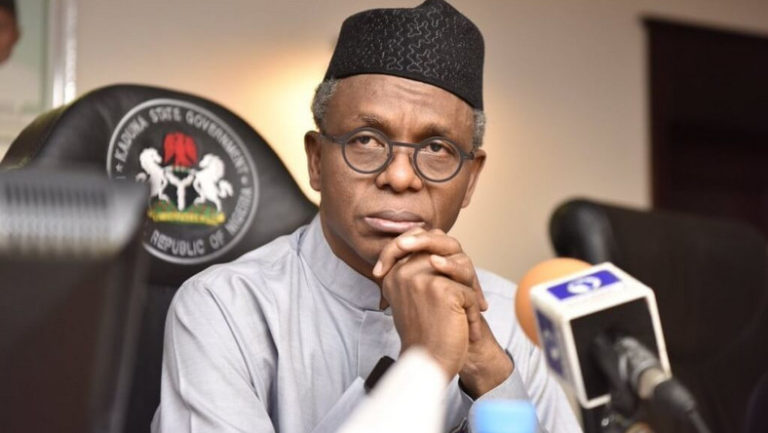
I fear no arrest, I’m returning to Nigeria soon – El Rufai

FORMER Kaduna State Governor Nasir El-Rufai has declared that he is not intimidated by threats of arrest by President Bola Tinubu’s government.

He promised to return to Nigeria before February 20.

He said he had put all his academic plans on hold and would spend more time in Nigeria than ever. “Silence is no longer golden. Inaction has never been an option,” he stated.

His latest outburst came amidst the festering rift between him and Tinubu’s government.

El Rufai and some chieftains of the ruling All Progressives Congress (APC) loyal to Tinubu have exchanged tantrums in recent weeks as his opposition grows against the government he helped to form.

Reacting to a post on X on Tuesday, February 11,  about his possible arrest by Tinubu’s administration, El-Rufai claimed that his adversaries were attempting to force him into exile.

He alleged that his political foes had sent similar threat messages through many of his friends, family, and political associates.

El-Rufai, who said he was in Egypt, said, I have been hearing these same rumours of arrest, detention, and torture in some dungeon in the NSA’s office (where Emefiele was allegedly tortured to resign as CBN governor),” since July 2024 when the so-called report of the Kaduna Assembly began circulating. El-Rufai tweeted.

He highlighted his intention to return to Nigeria for the launch of former President Ibrahim Babangida’s memoirs.

“The arrest, detention, and torture of perceived political enemies are nothing new in human affairs. I have been arrested and detained thrice in the past for expressing my views on previous governments.

“There is always a morning after the arrest, detention, or torture, and political life continues. As for death, it is when Allah destines it, and it is ultimately the fate of every human,” he added.

El-Rufai, one of the major APC stalwarts who ensured Tinubu won the presidency, was nominated as a minister by Tinubu in 2023 but was not confirmed by the Senate due to alleged security issues.

The ICIR reported that El-Rufai, a former minister of the Federal Capital Territory (FCT), has been an outspoken critic of the Tinubu administration in recent months.

He has confronted his predecessor, Uba Sani, who accused him and his appointees of squirrelling the state’s resources, milking it dry, and plunging it into a huge debt.

On February 4, he alleged that Tinubu’s administrationselectivelypaid Sani’s government over N150 billion. He attributed such payment to why the Kaduna governor backed the Tinubu-led Federal Government against him.

Also recently, while speaking at a national conference on strengthening democracy in Abuja on Monday, January 27, El-Rufai called on opposition parties to form a united platform to challenge the ruling party andsavethe nation’s democracy.

“We know what it is, and we don’t want a military rule, but we also don’t want civilians behaving like the military in their ‘babarriga‘ and suits. So, this is a national emergency,” he warned.

In another fiery attack, El-Rufai took a swipe at the national security adviser, Nuhu Ribadu.