Home Blog Page 372

UK, US citizens, others seek quality healthcare in Nigeria – Health Minister

0

THE Nigerian government has claimed that the nation is rapidly becoming a hub for international patients seeking quality healthcare. 

Coordinating Minister of Health and Social Welfare, Ali Pate, stated this while briefing State House correspondents on Tuesday, February 4, after the Federal Executive Council (FEC) meeting.      

“You can see that gradually, piece by piece, we have been building our health infrastructure, but also at a higher level in the teaching hospitals.

“People are now beginning to come to Nigeria from the region to receive quality healthcare. This is already happening, including people from far away, places like the United Kingdom and United States,” the minister said.

He stressed that the ‘transformation’ was a realisation of President Bola Tinubu’s promise to upgrade Nigeria’s health system. 

“We need to sustain it, we’re investing, and we will continue to invest in that direction,” Pate, who also announced the ratification of the African Medicines Agency Treaty by FEC, said.  

While the minister’s claim could be true, The ICIR has yet to independently verify the number of such patients.

The ICIR has over the years reported that many hospitals in Nigeria suffered from severe infrastructural deficits, power failures and shortages of health practitioners, among others.

Just two weeks ago, the Medical and Dental Consultants Association (MDCAN) raised the alarm over the exodus of medical consultants from Nigeria.

The group said over 1,300 medical consultants migrated from the nation in five years, leaving the country with only 6,000 consultants, serving nearly 220 million people, including international patients.

Investigations by The ICIR  indicate that hundreds of hospitals, particularly primary healthcare centres in Nigeria continue to grapple with basic needs and critical infrastructure challenges.

One of The ICIR’s reports detailed how inadequate manpower crippled primary healthcare in Nasarawa, one of Nigeria’s 36 states.

The World Health Organisation (WHO) suggested that Nigeria required at least 300 radiotherapy machines to address gaps in cancer treatment in the country effectively. As of 2019, only four cancer treatment centres were functional in the country, the National Medical Association (NMA) reportedly said. 

Two years later, in 2021, the Federal government approved 12 additional hospitals for chemotherapy.

Several reports by The ICIR in 2022 showed how consultants in many Nigerian hospitals fled the nation for greener pastures.

Some of the reports can be found here, here and here.

One of the challenges facing Nigeria health sectors is poor financing. The Head of States and Governments of countries on the African continent agreed that 15 per cent of the budgets of African Union members should be allocated to the health sector. Nigeria has yet to fulfil this agreement since 2001 when it was made in Abuja.

Consequently, the nation’s health systems have been riddled with some of the poorest data on maternal and child health globally. The country also parades some of the worst statistics on communicable diseases namely HIV/AIDS, tuberculosis, and hepatitis, and non-communicable ailments including cancer, diabetes, and hypertension.

Meanwhile, Tinubu’s administration is approving more funds for the nation’s health sector. In addition to the N2.48 trillion he allocated to the health sector in the proposed 2025 appropriation bill (the highest ever for the sector), the president is also funding the sector with an additional $1 billion.

Speaking on the African Medicines Agency Treaty approved by FEC, Pate said the project, originally conceived at the 32nd Africa Union Heads of State and Government meeting in Addis Ababa in February 2019, had already been signed by 37 AU member states, with 26 ratifying it.

According to him, the treaty aims to harmonise standards and ensure safe, quality-assured medical services across the continent.    

“So far, 37 member states of the African Union have signed the treaty, and 26 have ratified it. The Federal Executive Council today directed that the treaty be ratified by Nigeria and directed us to take all actions to give effect to the treaty,” he said.

The minister noted that the agreement would also increase access to safe, quality-assured medical services and use common standards across the continent towards a Pan-African regulatory framework.

“And the import of this is, as we move in this direction, what we produce as part of our value chain expansion will have a much wider market.

“So, we’re expanding the market for products that can be manufactured here, just as other African countries; what they manufacture, we can also trade with them,” he said.

The minister added that alongside the treaty’s ratification, the FEC approved major investments in diagnostic infrastructure. 

According to him, six contracts were approved to equip several key medical institutions with advanced diagnostic equipment – including three magnetic resonance imaging machines and two CT scan devices at the University of Uyo Teaching Hospital in Akwa Ibom State, and the Federal Medical Centre in Abeokuta, Ogun State.

Others are Obafemi Awolowo University in Ile Ife, the Federal Medical Centre in Keffi (Nasarawa State), the Modibbo Adamawa University Teaching Hospital in Yola, Adamawa State, and the Federal Teaching Hospital in Kebbi.

“This investment in critical diagnostic infrastructure is part of a broader effort to expand Nigeria’s health system capacity, ensuring that our tertiary institutions can offer world-class medical services,” he said.

Northern states to experience delayed rainfalls in 2025 – NiMet

0

THE Nigeria Meteorological Agency has predicted that some states in the North would experience delayed rainfall this year.

Affected states include Plateau, Kaduna, Benue, Niger, Nasarawa, Kwara, Adamawa, and Taraba.

The forecast followed the release of the 2025 Seasonal Climate Prediction (SCP) in Abuja on Tuesday, February 4.

The minister of aviation and aerospace development, Festus Keyamo, unveiled the SCP with the theme, “The Role of Early Warnings towards a Climate Resilient Aviation Industry for Sustainable Socio-Economic Development,” at a public event in the nation’s capital.

According to the report, Nigeria is expected to experience varied rainfall patterns in 2025, with early onset predicted in the southern states of Delta, Bayelsa, Rivers, Anambra, and parts of Oyo, Ogun, Osun, Ondo, Lagos, Edo, Enugu, Imo, and Ebonyi.

The rest of the country is anticipated to have a normal onset of rainfall.

The end of the rainy season is predicted to be early in states such as Zamfara, Katsina, Kano, Kaduna, Jigawa, Plateau, Bauchi, Borno, Yobe, Adamawa, Taraba, Niger, Kwara, Kogi, FCT, Ekiti, and Ondo.

However, a delayed end to the season is expected in parts of Kaduna, Nasarawa, Benue, Lagos, Kwara, Taraba, Oyo, Ogun, Cross River, Delta, Akwa Ibom, Ebonyi, Anambra, and Enugu.

Keyamo emphasised that the SCP document wais a critical tool for informed decision-making, providing insights into expected weather and climate patterns, which could be used by various sectors such as agriculture, disaster risk management, health, marine operations, transport, and aviation to plan, mitigate risks, and harness opportunities.

In his welcome address, the permanent secretary of the Ministry of Aviation and Aerospace Development, Ibrahim Abubakar Kana, noted that the summary of the SCP document would be translated into Hausa, Igbo, Yoruba, and Pidgin languages to ensure accessibility and inclusivity.

He also noted that a comprehensive report on the state of the climate in Nigeria for 2024 underscored the ministry’s and NiMet’s commitment to reaching the most remote communities.

The director general and chief executive officer of NiMet, Charles Anosike, a professor, said the SCP was a perishable document that required stakeholders to utilise the information, provide feedback, and evaluate its effectiveness.

He commended the chairman of the Senate Committee on Aviation and the chairman of the House Committee on Aviation Technology for their support towards the progress of NiMet and urged them to support the downscaling of the SCP to their constituencies and states for maximum impact.

The ICIR reports that delayed rainfall predicted in the North might worsen food crises in Nigeria.


Reps alert of Tinubu’s rejection of Adamawa university bill day after approving same for Ogoni

0

PRESIDENT Bola Tinubu has declined to sign the Federal University of Education Numan (Establishment) Bill, 2024, citing concerns over land ownership and its provisions for awarding degrees.

His decision was conveyed in a letter to the House of Representatives, read by the deputy speaker, Benjamin Kalu, on Tuesday, February 4.

The bill, sponsored by Binos Yaroe, a senator representing Adamawa South, was passed by the National Assembly in 2024 and forwarded to the president for approval. 

However, Tinubu raised objections to Section 22 of the bill, which he said granted the Adamawa State governor the power to dispose of school’s land. 

He argued that federal universities and their assets fell under the jurisdiction of the president, not state governments.  

“Pursuant to Section 58(4) of the 1999 Constitution of the Federal Republic of Nigeria as amended, I hereby convey to the House of Representatives my decision taken on December 23, 2024, to decline presidential assent to the Federal University of Education, Numan Establishment Bill 2024 recently passed by the National Assembly.

“I am declining assent to the bill as Section 22 of the bill confers the authority to the disposal of the land of the university on the governor and not the president as it ought to be in the case of land belonging to the Federal Government,” the letter read in part.

Tinubu further stated that the bill failed to specify the university’s authority to award degrees in Section 25(b).

The rejection came just a day after the president approved the establishment of the Federal University of Environmental Technology in Ogoni, Rivers State.

A statement by the president’s spokesperson, Bayo Onanuga, on Monday, February 4, noted that Ogoni town of Tai will host the university. 

The statement stated that during the signing ceremony at the State House, in Abuja , Tinubu said the university would further empower Ogoni citizens and provide more opportunities for participation and development.

“It is more than the creation of a university. It is the reaffirmation of our unwavering commitment to the people of Ogoni, the Niger Delta and the entire nation as a whole.

“For decades, the Ogoni people have been at the forefront of the fight for environmental restoration and sustainable development, shaping national and global conversations on these critical issues.

“By signing this bill into law, we are taking a decisive step towards addressing historical grievances and creating new opportunities for learning, growth and prosperity,” the president stated.


Police arraign Ogun monarch for assaulting elderly man in viral video

0

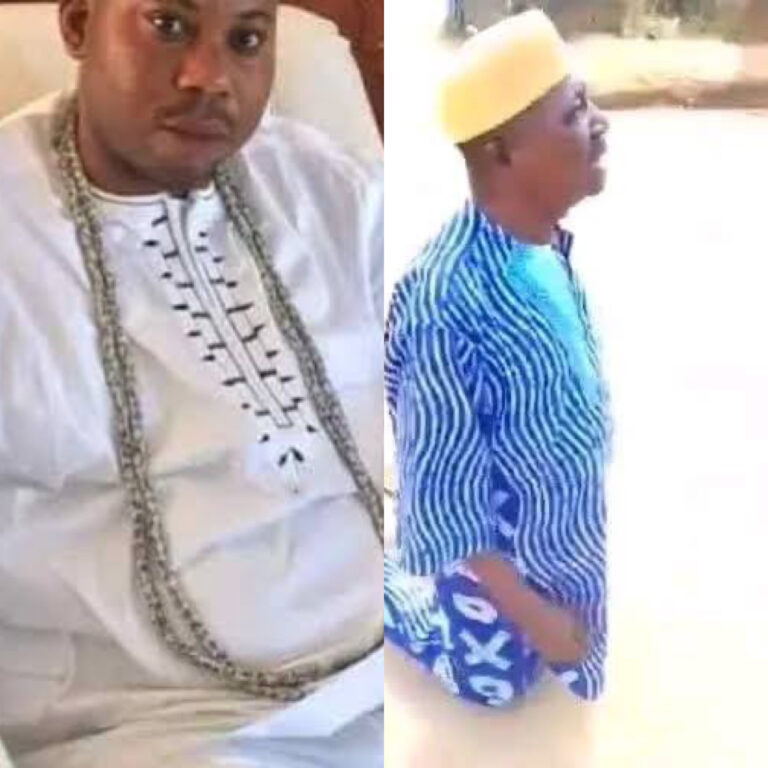
THE embattled Olorile of Orile-Ifo, Abdulsemiu Ogunjobi, has been arraigned before a court in Ogun State.

The monarch was arraigned on a three-count charge bordering on conspiracy, assault, and conduct likely to cause a breach of peace following his public assault on a 73-year-old man, Areola Abraham.

The Nigeria Police Force said in a statement by its public relations officer, Muyiwa Adejobi, on Tuesday, February 4, that the monarch was granted bail, and the case adjourned to March 6.

The attack, captured in a viral video, sparked outrage on social media.  In the video, some men could be seen with Ogunjobi, said to be a former police officer, slapping Abraham and forcing him to kneel and prostrate.

Following the viral video and public outcry, the NPF, on Sunday, February 2, said the Ogun State Police Command had interrogated the accused and assured the public that the matter would be justly handled.

“The Oba has been invited and interrogated today by the command. The matter is being looked into for justice to prevail. Nobody can claim to be controlling the NPF. Justice must be served by all means, ”Adejobi said.

Meanwhile, in a statement on Tuesday, Adejobi stated that the “police will continue to uphold the rule of law and the core values of the noble profession.

“The Kabiyesi Abdulsemiu Ogunjobi, who assaulted one elderly man in a viral video, in Ifo Ogun State, has been charged to court today 4th February 2025, on (a) three-count charge of conspiracy, assault and conduct likely (to cause a breach of peace)

He was granted bail while the case was adjourned to 06/03/2025.”

Ogun State Government suspends monarch

The ICIR reports that Ogunjobi’s assault on Abraham, which reportedly took place on January 21, triggered a swift response from the Ogun State Government, which suspended the monarch for six months. 

The suspension was announced on Monday, February 3, by the special adviser to the governor on communication and strategy, Kayode Akinmade.  

The government’s decision, according to Akinmade, followed an interrogation by the commissioner for local government and chieftaincy affairs, Ganiyu Hamzat, who summoned both the monarch and the victim. 

Akinmade stated that the suspension was necessary due to the monarch’s “reckless utterances and public misconduct,” which he said violated public expectation from a traditional ruler.  

 “This became imperative as a result of the reckless utterances and public misconduct of the Kabiyesi, as it was evident in the social media and being bandied in the larger public space.

“After the investigation conducted on the matter, the Kabiyesi has been suspended and stripped of the paraphernalia of the stool of Olorile-Ifo pending the determination of his culpability or otherwise on the allegation.

“The foregoing decision was reached by the ministry in conjunction with the Egba Traditional Council in accordance with Section 52(1) of the Obas and Chiefs’ Law of Ogun State 2021,” he wrote.

‘He said he would kill me and nothing would happen,’ victim says, demands justice

Meanwhile, speaking during a press conference by the Committee for the Defence of Human Rights (CDHR),  the victim, Areola Abraham, recounted that he was on his way to buy food when the Olorile of Ifo called him over, only to slap him and order his men to attack him. 

He said, “I asked him what I did, but he never wanted to listen to me. He only wanted to molest me; that is what he does. When he gets to his hotel, he will now be showing them the video; he will say ‘Look at how he was begging me’; I molested him and made him beg.

“He said he was in control of the police, that he would kill me and nothing would happen. I however want the Nigerian government to save me from him. He said he would kill me and nothing would happen. I am now very afraid of my life.”

The CDHR stated that it petitioned the inspector general of police, Kayode Egbetokun, and demanded Ogunjobi’s arrest and prosecution. 

It also alleged that the monarch had a history of using thugs to intimidate residents while leveraging his past position as a police officer. 

GIJN opens submission for 2025 Sigma Award

GLOBAL Investigative Journalism Network and Sigma Award invite journalists worldwide to submit their best data stories published in 2024.

The award is open to individuals, small newsrooms, as well as bigger teams.

As in previous editions, the Sigma Award accepts all categories of data stories done between January 1 to December 31, 2024.

The fifth edition of the Sigma Awards is an effort to empower the global community of data journalists. The competition aims to bring together the community and support those working with data.

Applicants with multiple projects can submit as many as they want. Also, group and newsroom entries have to specify if they qualify as a large or a small newsroom or as an individual, where applicable.

The sum of US$5,000 will be distributed among the winners.

The deadline for entry is February 28, 2025. Interested applicants can apply here.

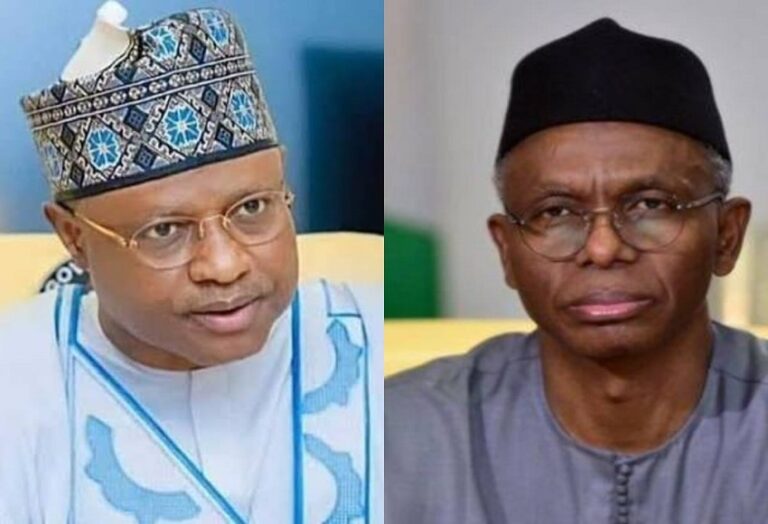
Tinubu ‘selectively’ paid Kaduna government over N150 billion, alleges El-Rufai

FORMER Kaduna State Governor, Nasir El-Rufai, has alleged that President Bola Tinubu’s administration ‘selectively’ paid the Kaduna State government, headed by Governor Uba Sani, over N150 billion.

El-Rufai’s claim followed Sani’s recent swipe at opposition politicians seeking to unseat Tinubu in 2027. 

Reacting to rumours that former Vice President Atiku Abubakar, El-Rufai and other prominent politicians were planning to form a coalition to dislodge Tinubu in 2027, Sani challenged the coalition to test its popularity against the president when he featured on a TVC programme on Monday, February 3.

He described the group members as power-hungry people who failed to deliver while in government.

Responding, Sani’s predecessor, El-Rufai in a post on X, dismissed the governor’s remarks and called him a sycophant.

He alleged that his loyalty to Tinubu was due to the N150 billion the Federal Government paid as reimbursements and grants to the Kaduna State Government in the past 18 months.

“The Federal Government ‘reimbursements, interventions, and grants’ in excess of N150 billion have been given selectively to Kaduna by Tinubu now explains everything,El-Rufai tweeted.

He added that the Kaduna people would pass their judgment in the next election.

Efforts to verify el-Rufai’s claim that the Tinubu’s government selectively paid the Kaduna State Government over N150 billion were unsuccessful, as the governor’s chief press secretary, Ibraheem Musa, failed to answer calls or respond to text and Whatsapp messages sent to his line.

The crisis between El-Rufai and Sani has deteriorated over the past months.

The ICIR reported that months after he had extolled his predecessor, Sani came hard on the El-Rufai administration, blaming it for the state’s debt and his government’s inability to pay salaries.

In his inaugural address to the state on May 29, 2023, Sani extolled El-Rufai, describing him as a leader who left a legacy of transformational leadership in the state. He went on to rename a 15 – 15-kilometre road after the former governor.

In 2020, while he served as chairman of the Senate Committee on Banking, Insurance and Other Financial Institutions, Sani spoke in favour of a $350 million loan, sought by the El-Rufai government.

He went further to assume responsibility for what he considered the unlikely possibility that El-Rufai would fail in the utilisation of the loan.

However, less than a year into his tenure, Sani announced that his government was unable to pay workers’ salaries and blamed the development on the debts he inherited from the previous administration.

The declaration sparked reactions from Nigerians, especially on social media. Some accused Sani of being incapable and dug up old reports where he declared support for El-Rufai’s government, including assuming responsibility for El-Rufai’s failure to use the loan he took.

The crisis festered when the state government accused  El-Rufai’s administration of mismanaging N432 billion, resulting in much debt for the state.

Following the allegation, the Kaduna State House of Assembly recommended that the former governor be prosecuted over allegations of money laundering and abuse of office.

This occurred on Wednesday, June 5, 2024, after an ad-hoc committee set up to investigate the allegations submitted its report.

The committee was led by its chairman Henry Zacharia. Its findings revealed that several loans obtained by the Kaduna government under El-Rufai’s administration were not used for intended purposes.

The committee also reported that due process was not followed in securing some of the loans and in awarding certain contracts. Some of El-Rufai’s cabinet members were also indicted in the report.

Reacting, El-Rufai sued the state House of Assembly for accusing him of money laundering and abuse of office.

The suit was filed by his lawyer, Abdulhakeem Mustapha, a senior advocate.

El-Rufai, in the lawsuit, demanded, among others, that the court declare the Assembly probe report void because he was not given a fair chance to address the accusations.

Also recently, El-Rufai has been at the forefront of criticising Tinubu’s administration, which he helped to form. He fell out with the All Progressives Congress (APC) government after his ministerial appointment failed to sail through. 

Speaking at a national conference on strengthening democracy in Abuja on Monday, January 27, El-Rufai called on opposition parties to form a united platform to challenge the ruling party and ‘save’ the nation’s democracy.

“We know what it is, and we don’t want a military rule, but we also don’t want civilians behaving like the military in theirbabarrigaand suits. So, this is a national emergency,he warned.

He further claimed that there was a deliberate effort to destroy major opposition parties like the People’s Democratic Party (PDP) and the Labour Party (LP).

Diverting local refineries crude violates Nigeria’s law, NUPRC warns oil firms

0

THE Nigerian Upstream Petroleum Regulatory Commission (NUPRC) has sent a note of warning to oil companies and their partners that diverting crude oil meant for local refineries violates the law.

It gave the warning in a letter dated February 2, 2025, addressed to exploration and production companies and their equity partners, a circular reportedly issued by its Public Affairs Unit on Monday, February 3, stated.

It said it would deny export permits for crude oil cargoes intended for domestic refining if oil companies fail to meet their local crude supply obligations.

“Kindly note that the diversion of crude cargo designated for domestic refineries is a violation of the law, and the Commission will henceforth disallow export permits for such cargoes.

“All cargoes designated for domestic refining can only be altered with the express approval of the Commission Chief Executive. The above is for your strict compliance,” the letter read.

At a meeting attended by more than 50 critical industry players over the weekend, crude oil refiners and producers were said to have blamed each other for the inconsistencies in the implementation of the Domestic Crude Supply Obligation (DCSO) policy.

While the refiners claimed that producers were not meeting supply terms and preferred to sell their crude outside, forcing them to look elsewhere for feedstock, the producers countered the claim that refiners hardly met commercial and operational terms, forcing them to explore other markets elsewhere to avoid unnecessary operational bottlenecks.

The circular noted that the NUPRC chief executive, Gbenga Komolafe, stressed that diverting crude oil meant for local refineries violates the law, urging the oil companies to strictly adhere to the Crude Oil Supply Obligations for local refineries.

He cited Section 109 of the Petroleum Industry Act (PIA) 2021, which aims to ensure a stable supply of crude oil to domestic refineries and strengthen the nation’s energy security.

He said the NUPRC will henceforth strictly enforce the policy regarding implementation and defaults by oil companies, hinting that the commission would take actions to enforce compliance with the DCSO.

These include developing and signing the Production Curtailment and Domestic Crude Oil Supply Obligation Regulation 2023, as well as creating the DCSO framework and procedure guide for implementation, Komolafe said.

The commission also cautioned against further breaches from either party.

It advised refiners to adhere to international best practices in procurement and operational matters and reminded producers that any variation of the DCSO policy conditions requires its express approval before selling crude outside the agreed framework to prevent abuse.

Komolafe also warned he would no longer tolerate violations of domestic crude supply regulations, stressing that non-compliance threatens Nigeria’s energy security.

Meanwhile the Dangote Refinery is expected to process 550,000 barrels per day and 17.05 million barrels per month in the first half of the year, which is equivalent to 85 per cent of capacity.

The chief executive, Aliko Dangote, had reportedly said the 650,000-bpd capacity refinery had only received five crude cargoes from the state oil firm, Nigerian National Petroleum Company Limited (NNPCL), since it started operating earlier this year, instead of the 15 it expected.

He noted that as a result, the refinery has had to increase crude imports due to insufficient domestic supplies.

The ICIR can report that the NNPCL had in the past agreed to supply the refinery 300,000 bpd but it is struggling with low production and some of its crude is being exchanged for gasoline imports.

Nigerian private sector businesses sustain growth in January

THE Nigerian private sector sustained growth in business activity to start the year despite a surge in inflationary pressure.

The Stanbic IBTC Bank said in its latest monthly Purchasing Managers’ Index (PMI) data released on Monday, February 3.

Headline PMI posted 52.0 in January, down from 52.7 in December but still above the 50.0 no-change mark indicating confidence in private business activity.

A PMI reading above 50.0 points signals an improvement in business conditions, while below 50.0 shows a deterioration.

The sustained growth came after private sector businesses contracted for five consecutive months, from July to November 2024.

Stanbic IBTC’s latest data also indicates that the nascent growth in the Nigerian private sector seen at the end of December 2024 was sustained into the first month of 2025, with new orders and business activity continuing to rise.

“Moreover, there was a large improvement in business confidence while firms expanded employment, purchasing and inventories,” it stated.

It pointed out that input costs and output prices continued to rise rapidly, but respective rates of inflation were much slower than seen in December.

The January PMI points, therefore, signalled a second successive monthly improvement in the health of the Nigerian private sector after having returned to growth in December, but the rate of expansion eased from the previous month.

According to the Stanbic IBTC data, the uplift in sentiment seen at the start of the year was the largest since the survey began just over 11 years ago.

It attributed this to signs of inflationary pressures softening in January, which the National Bureau of Statistics monthly report expected to be released in the middle of this could justify.

The ICIR can report that Nigeria’s inflation currently stood at 34.8 per cent in December, having risen from 34.6 per cent in November.

The PMI data noted that efforts to satisfy customer requirements on time led companies to, among other things, expand their purchasing activity and inventory holdings at the start of the year.

Over the weekend, the newly elected chairman of the Organised Private Sector of Nigeria, Dele Oye, called for a united and inclusive private sector to drive sustainable economic growth to address the pressing issues facing private sector businesses.

Commenting on the data, the head of equity research in West Africa at Stanbic IBTC Bank, Muyiwa Oni, said, “Nigeria’s private sector activity sustained its improvement in January 2025, albeit lower than levels seen in December 2024.”

He noted that headline inflation averaged 33.18 per cent year-on-year in 2024 from an average of 24.52 per cent in 2023.

He said this was driven mostly by foreign exchange depreciation, renewed petrol price increases in line with full petrol price liberalisation, structurally low food supplies exacerbated by high extreme weather conditions, and increased food demand, especially during the festive season.

“We expect a moderation in the inflation rate in 2025 although the pace of the moderation is only likely to be faster in late Q3:25.

“Notably, we expect headline inflation to average 30.5% y/y in 2025 and end the year at 27.1% y/y,” Oni said.

He said the bank projects the non-oil sector to grow by 3.2 per cent in 2025 from an estimated 3.0 per cent year-on-year in 2024.

The growth is also likely to pick up across manufacturing and trade, while ICT finance and insurance should continue to play a big role in economic performance.

However, Oni said the agriculture sector would likely still lag its long-term average amid lingering internal security challenges, high input costs, and extreme weather conditions.

“Within the manufacturing sector, cement, food and chemicals, and pharmaceutical products are key sub-sectors that have been exceeding the manufacturing sector’s growth since Q4:22,” he added.

Nigeria approves $1bn to boost PHC services, N4.8 for HIV treatment

0

THE Federal Executive Council (FEC) on Monday, February 3, approved $1 billion to strengthen primary healthcare services across the country.

The approval, aimed at boosting the government’s Human Capital Opportunities for Prosperity and Equity (HOPE) programme, was announced by the finance and coordinating minister of the economy, Wale Edun, after the FEC) meeting.

Edun said the International Development Association (IDA) provided two concessional loans of $500 million each, with an additional $70 million grants from other international bodies.

“This programme is very much in line with the direction of this administration – to focus on investing in the human capital of Nigerians. People are at the centre of the Renewed Hope Agenda,” the minister said.

Similarly, the FEC approved N4.8 billion for the procurement of 150,000 HIV treatment packs to support Nigerians living with the virus.

Coordinating minister of health and social welfare, Muhammad Pate, disclosed this while addressing State House Correspondents after the FEC meeting.

The ICIR reports that the HIV fund came days after global concerns over the temporary suspension of United States foreign aid funding, which threatened access to lifesaving antiretroviral therapy (ART) for millions of people, including Nigerians.

The freeze, introduced by  President Donald Trump’s administration, had raised fears of treatment disruptions in Nigeria, one of the countries heavily reliant on the President’s Emergency Plan for AIDS Relief (PEPFAR).

Meanwhile, following advocacy from global health organisations, the US granted a waiver for HIV treatment programmes, ensuring continued medication supply for affected patients.

Nigeria, which bears the highest HIV burden in Sub-Saharan Africa, has about two million people living with the virus, yet contributes less than 20 per cent of the required funding for HIV treatment and prevention.

Pate further explained that while Nigeria appreciates the US contributions over the past two decades, the country would focus on transforming its health sector through domestic financing and stronger national systems.

“This allocation is critical for ensuring that those living with HIV continue to receive necessary treatments without interruption,” Pate said.

According to him, FEC set up a committee to come up with a sustainability plan.

“This is about ensuring that no Nigerian loses access to treatment during this period of adjustment,” he added.

Nearly 200,000 students obtain student loan in less than one year – NELFUND

0

THE Nigerian Education Loan Fund (NELFUND) has revealed that 192,906 students have benefited from the Fund since its launch in 2024.

statement by NELFUND, on Monday, February 3, via its X handle, stated that as of February 3, 2025, it received 364,042 applications. 

Out of the number, N20 billion (N20,074,050,000) was disbursed for institutional fees, which directly benefited 192,906 students across various tertiary institutions.

The statement added that in addition to institutional fees, N12,818,960,000 was allocated for 169,115 students’ upkeep, who each receive a monthly stipend of N20,000. 

The ICIR reports that these figures contrast with recent reported claims by President Bola Tinubu at the 33rd Convocation of the Federal University of Technology, Minna. 

At the event, the president, represented by Rakiya Gambo Ilyasu of the Federal Ministry of Education, stated that NELFUND had disbursed over N104 billion to 600,000 students.

This figure sparked reactions about the reach and impact of the initiative.

In his address, the president emphasised the administration’s commitment to revamping the education sector. 

According to him: “The NELFUND programme aims to provide financial support to students, bridging the gap between financial challenges and access to higher education. With this significant investment, the government is empowering students to pursue their academic dreams, driving human capital development, and fostering a knowledge-driven society,” he stated.

He further said the government had allocated N940.5 billion to the Tertiary Education Trust Fund (TETFund) in the 2025 budget.

Tinubu signed the Student Loans (Access to Higher Education) Act (Repeal and Re-Enactment) Bill into law on Wednesday, April 3, 2024, following approval by the Senate on Wednesday, March 20.

Although the Act is touted to ease access to tertiary education for Nigerian students, members of the Academic Staff Union of Universities (ASUU) have continued to describe it as an attempt by the government to abandon public universities’ funding.