Home Blog Page 376

PSC approves retirement of police officers above 60 amid ‘illegal IGP’ saga

0

THE Police Service Commission (PSC) has approved the immediate retirement of officers above 60 or those who have served for 35 years.

In a statement signed by its spokesperson, Ikechukwu Ani, on Friday, January 31, the commission at its 24th plenary meeting of 27th and 28th September 2017 had approved that recruits and other officers of the Nigeria Police Force (NPF) should have their date of appointment in the Force against the date of their enlistment documented.

“The commission has passionately revisited its decision and has come to the conclusion that the said decision in its intent and purpose contradicted the principle of (the) merger of service in the Public service and it is in violation of Public Service Rule No 020908 ( i & ii) which provides for retirement on (the) attainment of 35 years in service or 60 years of age.”

“Accordingly, the commission, at its 1st extraordinary meeting of the 6th management board held today, Friday, 31st January 2025, approved the immediate retirement of those officers who have spent more than 35 years in service and those above 60 years of age.”

The commission’s chairman, Hashimu Argungu, a retired deputy inspector-general of police, presided over the meeting, which had Adamu Paul Galumje, a retired justice of the Supreme Court, who represented the judiciary in attendance.

Also in attendance at the meeting were Taiwo Lakanu, a deputy inspector general of police, who represented the police; and Onyemuchi Nnamani, the commission’s secretary.

The commission added that it had conveyed the decision to the inspector general of police (IGP), Kayode Egbetokun, for implementation.

This is coming amid controversy surrounding Egbetokun’s tenure as the NPF chief.

Decision comes amid protests against Egbetokun’s continued stay in office

Egbetokun has continued to face the heat since Monday, January 27, when a human rights activist and the presidential candidate of the African Action Congress (AAC) in the 2023 election, Omoyele Sowore, honoured the police invitation in Abuja.

Sowore was later charged by the police for alleged cyberstalking and false publication against Egbetokun on Tuesday, January 28.

The charges, filed at the Federal High Court in Abuja and shared by Sowore’s handle on X, showed that the lawsuit stemmed from his posts on X, where he was said to have referred to Egbetokun as anillegal IGP.”

According to the charge sheet seen by The ICIR, the police accused Sowore of making statements capable of causing a breakdown of law and order. 

Sowore, in a fresh post on his Facebook handle on Thursday, January 30, insisted that the IGP’s tenure was illegal.

However, in a statement signed by police spokesperson Muyiwa Adejobi, on Thursday, the NPF said Sowore’s claim was unfounded and sought to undermine the legitimacy of the IGP’s appointment as well as public confidence in the police.

It referred to Part III, Section 7 (6) of the amended Police Act, 2020, which states,The person appointed to the office of the inspector-general of police shall hold office for four years.”

According to the police, this amendment aims to provide stability and continuity in the leadership of the NPF, enabling the IGP to implement long-term plans and policies without fear of abrupt termination.

“It is crucial for members of the public to be aware that IGP Egbetokun’s status as the 22nd Indigenous inspector-general of police is both legally and procedurally sound,the NPF stated.

The police said it viewed Sowore’s claim as an attempt to erode public trust and foster confusion regarding the force’s leadership.

Quoting relevant portions of the amended Police Act, the attorney-general of the federation, Lateef Fagbemi, a senior advocate, also averred that Egbetokun’s continued stay in office was legal.

Genesis of crisis

The ICIR reports that President Bola Tinubu appointed Egbetokun as acting IGP’ in October 2023, pending his confirmation by the National Assembly.

The appointment took effect on the 31st of the same month.

Egbetokun should have left office on September 4, 2024, the day he clocked 60.

Rather than allow him to go, the Tinubu-led Federal Government pushed a bill for the amendment of the Police Act, which consequently paved the way for the IGP’ to remain in office for four uninterrupted years, meaning he will quit office in October 2027.

Many citizens who opposed this speedy amendment of the Police Act by the National Assembly claimed the move was to aid Tinubu, who is likely to seek a second term and use Egbetokun and the entire police to his advantage in the 2027 presidential poll before Egbetokun’s tenure will elapse.

The ICIR reports that Egbetokun was Tinubu’s chief security officer when he was Lagos State Governor in 1999.

He was promoted to deputy inspector-general of police shortly after Tinubu’ won the February 25, 2023, presidential election, with many Nigerians suspecting he could be the next IGP’ because of his closeness to Tinubu.

 

Moghalu decries Africa’s reliance on foreign aid for healthcare funding

0

A FORMER deputy governor of the Central Bank of Nigeria (CBN), Kingsley Moghalu, has decried African leaders’ reliance on aid for the greater chunk of their healthcare funding, amid worry over the United States’ funding freeze.

He called on African countries to prioritise healthcare funding from their resources rather than relying on foreign support.

Moghalu, the current president of the African School of Governance (ASG), a pan-African graduate school focused on public policy and governance based in Kigali, Rwanda, made the call in a statement on Friday, January 31.

He said dependence on external assistance for healthcare interventions was not a sustainable strategy for the continent.

“African countries must prioritise funding for healthcare from their own resources. Reliance on foreign aid for healthcare interventions is not wisdom.

“President Trump’s withdrawal of the U.S. from WHO is a wake-up call. African countries can fund their healthcare,” he said.

The ICIR reports that Trump signed an order to pull his country out of the World Health Organisation (WHO) membership and funding on the day he assumed power on Monday, January 20.

The order was one of the executive orders he signed on his inauguration day. It marked the second time Trump would exit the U.S. from the WHO.

He was critical of how the international health body handled COVID-19 when he first came to office, but his successor, former President Joe Biden, returned the US to the WHO.

Moghalu believes Trump’s latest action is a wake-up call for African nations to take responsibility for their healthcare systems.

He criticised African leaders for their misplaced priorities, noting that the amount of aid received was insignificant compared to the resources wasted on luxuries and corruption.

“Many simply have the wrong priorities. What many African countries receive in aid is nothing compared to the resources that are wasted on the comfort of politicians or corruptly misappropriated. There are, of course, countries that are exceptions to this general situation,” Moghalu said.

He acknowledged the African nations that have demonstrated better fiscal responsibility as exceptions to the trend.

The political economist further urged governments across the continent to take decisive action to ensure that healthcare funding is treated as a critical national priority.

The ICIR reported that the Federal Government welcomed the decision by the United States to exempt HIV treatment programmes from the 90-day freeze on foreign aid spending.

The waiver, announced by the Joint United Nations Programme on HIV/AIDS (UNAIDS) on Wednesday, January 29, would ensure the continued distribution of lifesaving HIV medications, providing relief for millions of Nigerians and other people around the world who rely on donor-funded treatment.

The ICIR also reported that the executive order signed by Trump had raised serious concerns among health stakeholders in Nigeria, given that the country has the highest number of people living with HIV in the West and Central African region.

Again, Matawalle warns Amaechi to stop ‘inciting violence’ or face consequences

0

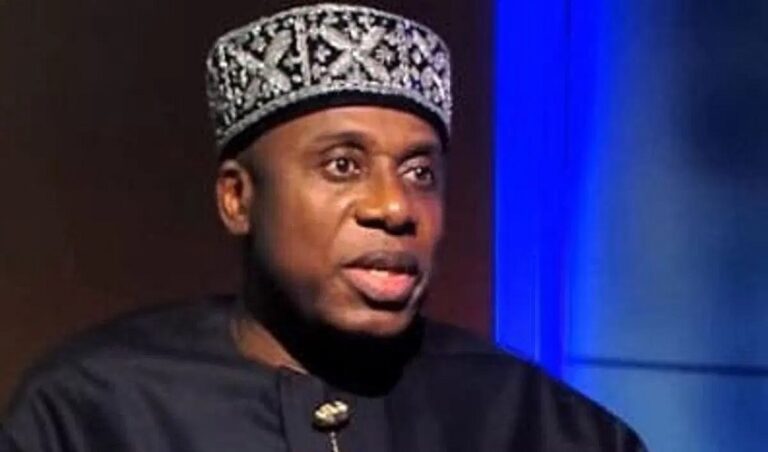
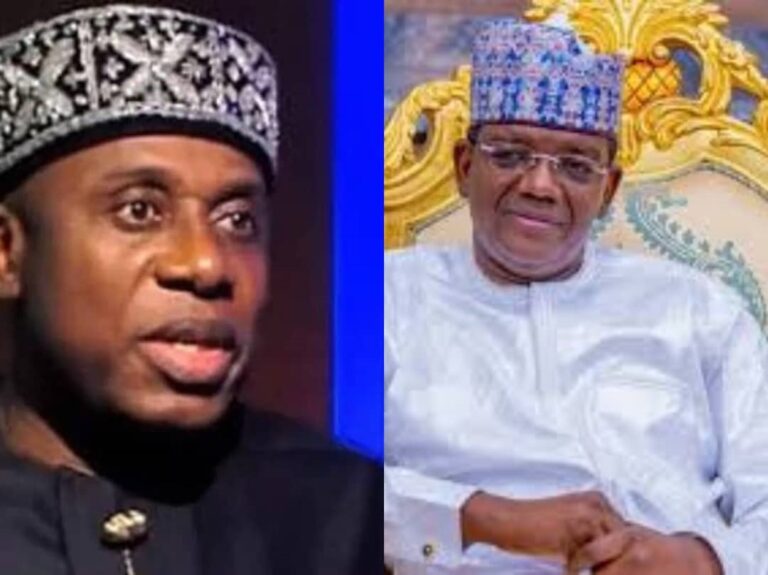
FOR the second time in three months, the minister of state for defence, Bello Muhammed Matawalle, has warned the former minister of transportation, Rotimi Amaechi, to stop inciting violence or face consequences.

Matawalle described recent remarks by Amaechi concerning the leadership style of President Bola Ahmed Tinubu as reckless and inciting.

Amaechi, also a former governor of Rivers State, had accused Nigerian leaders of having uncontrollable avarice for power.

He said Nigerian politicians’ primary objective was to hold on to power at all costs, even if it meant resorting to theft and violence.

Amaechi, who contested and lost the All Progressives Congress (APC) presidential primary to President Bola Tinubu in 2022, stated these at the National Conference on Strengthening Democracy in Nigeria held in Abuja earlier this week.

Speaking at the event, Amaechi said the country’s situation required that citizens devise strategies on how to sack many leaders from office in the next election.

However, he noted that rather than being told the blatant truth that they were failures, such leaders were being deceitfully hailed by the same people they denied good leadership.

He argued that the current political structure in the country was unlikely to change under  Tinubu’s government if citizens failed to form a strong alliance against the ruling party before the next election.

“The politician is there in Nigeria to steal, to maim, to kill, and to remain in power. If you think Tinubu will give it to you, you are wasting your time,he stated.

Reacting to the statement, Matawalle said it was reckless and dangerous for a former public officeholder to make such “inflammatory remarks”.

“At a time when the government is working tirelessly to consolidate national unity and security, no responsible leader should fan the flames of violence and political unrest,Matawalle stated.

He warned against spreading what he described as narratives of violence and anarchy among Nigerians, adding that Nigeria is a country governed by laws, not a place where power is taken by force.

Matawalle warned that security agencies were watching closely, and anyone trying to incite violence or destabilise the nation would be held accountable and face the full force of the law.

The statement, signed by the director of press and public relations at the Ministry of Defence, Henshaw Ogubike, stressed that the government would not tolerate subversive rhetoric aimed at undermining national unity or inciting lawlessness.

Matawalle cautioned Amaechi that power is attained through democratic means, not through coercion, violence, or lawlessness.

He reaffirmed the commitment of Tinubu’s administration to upholding peace, democratic values and national security.

The ICIR reports that this is not the first time the defence minister will be cautioning Amaechi for allegedly inciting Nigerians against the Tinubu-led government.

In October 2024, Matawalle accused Amaechi of inciting violence and unrest in Nigeria following his comments on hardship in the country.


Police react to Sowore’s stance that Egbetokun is ‘illegal IGP’

0

THE Nigeria Police Force (NPF) has refuted claim by human rights activist Omoyele Sowore alleging that the inspector-general of police (IGP), Kayode Egbetokun, continued stay in office is illegal.  

The NPF described the claim as “baseless and misleading.”

Sowore, the presidential candidate of the African Action Congress (AAC) in the 2023 election, has maintained that the tenure of the IGP is illegal.

The ICIR reports that President Bola Tinubu appointed Egbetokun as acting IGP’ in October 2023, pending his confirmation by the National Assembly.

The appointment took effect on 31st of the same month.

Egbetokun should have left office on September 4, 2024, the day he clocked 60.

Rather than allow him to go, the Tinubu-led Federal Government pushed a bill for the amendment of the Police Act, which consequently paved the way for the IGP’ to remain in office for four uninterrupted years, meaning he will quit office in October 2027.

Many citizens who opposed this speedy amendment of the Police Act by the National Assembly claimed the move was to aid Tinubu, who is likely to seek a second term and use Egbetokun and the entire police to his advantage in the 2027 presidential poll, before Egbetokun’s tenure will elapse.

The ICIR reports that Egbetokun was Tinubu’s chief security officer when he was Lagos State Governor in 1999.

He was promoted as deputy inspector-general of police shortly after Tinubu’ won the February 25, 2023 presidential election, with many Nigerians suspecting he could be the next IGP’ because of his closeness to Tinubu.

Given Sowore stance on the IGP,  he was formally charged by the police for alleged cyberstalking and false publication against the IGP on Tuesday, January 28.

The charges, filed at the Federal High Court in Abuja and shared by Sowore’s handle on X showed that the lawsuit stemmed from Sowore’s posts on X, where he was said to have referred to Egbetokun as an “illegal IGP.”

According to the charge sheet seen by The ICIR, the police accused Sowore of making statements capable of causing a breakdown of law and order. 

Sowore, in a fresh post on his Facebook handle on Thursday, January 30, insisted that the IGP’s tenure is illegal when he wrote, “It is reported that Kayode Egbetokun, Nigeria’s Illegal Inspector General of Police, has hurriedly left a conference in Rwanda to return to Nigeria to address concerns by police cadres regarding his continued unjust, unfair, and illegal occupation of the office of the IGP beyond the expiration of his tenure in 2024, having served for 35 years and also attained the age of 60. The straightforward solution is to retire and allow others to rise through the ranks.”

The police stand

However, in a statement issued on Thursday and signed by police spokesperson, Muyiwa Adejobi, the NPF said Sowore’s claim was unfounded and sought to undermine the legitimacy of the IGP’s appointment as well as public confidence in the police.

It referred to Part III, Section 7 (6) of the amended Police Act, 2020 which states, “The person appointed to the office of the inspector-general of police shall hold office for four years.”

This is against the previous law which mandated the IGP’ to retire immediately he clocked 60 years or had served for 35 years.

The police said Egbetokun’s tenure was ratified by the Police Council, and he had received the requisite confirmation letter from the presidency, validating his tenure from October 31, 2023, to October 31, 2027.”

It added, “In line with the provisions of Section 8A of the executive bill passed, which amended the Police Act, clearly stating that “Any person appointed to the office of inspector-general of police shall remain in office until the end of term stipulated in the letter of appointment in line with the provisions of Section 7(6) of this Act.”

According to the police, this amendment aims to provide stability and continuity in the leadership of the Nigeria Police Force, enabling the IGP to implement long-term plans and policies without fear of abrupt termination.

“It is crucial for members of the public to be aware that IGP Egbetokun’s status as the 22nd indigenous inspector-general of police is both legally and procedurally sound,” the NPF stated.

The police said it viewed Sowore’s claim as an attempt to erode public trust and foster confusion regarding the force’s leadership.

The Force cautioned individuals and groups against perpetuating such “unfounded narratives that could mislead the public and jeopardise national security.”

.Controversy over IGP’s

The controversy about the tenure of the IGP didn’t start with the current police boss. Egbetokun’s predecessor, Usman Baba, was not in any way different.

Baba clocked 60 years old in March 2023 and attained the mandatory 35 years of service but he remained in office till Tinubu removed him and appointed Egbetokun as his replacement three months later.

The Police Act Amendment Bill

In July 2024, the National Assembly passed a Bill for the IGP to complete a four-year tenure.

The Police Act Amendment Bill was passed to enable a person appointed to the office of the IGP to remain in office until the end of the term stipulated in the letter of appointment.

Tinubu forwarded the bill to the House of Representatives and Senate to amend the tenure of the IGP.

According to Section 18(8) of the Police Act 2020, Egbetokun, who was born on September 4, 1964, was expected to retire in September 2024, when he will be 60 years old.

Specifically, Section 18(8) of the new Act states: “Every police officer shall, on recruitment or appointment, serve in the Nigeria Police Force for 35 years or until the age of 60 years, whichever is earlier.”

But while the Police Act pegs the retirement age of police officers at 60 years of age or 35 years of service, another section of the bill also pegs the tenure of the IG at four years.

The controversial amendment, which caused outrage, was the inclusion of Section 18(8A), which gives IGPs special civil service rights and enforces Section 7 of the Act.

Part III, Section 7 (6) of the Act, which repealed the Police Act Cap. P19, Laws of the Federation of Nigeria, 2004, prescribed a four-year single tenure for a person appointed to the office of the IG subject to the provisions of clause 18(8).

Section 18(8A) of the Nigeria Police Act 2020 was amended as follows: “Notwithstanding the provisions of subsection (8) of this section, any person appointed to the office of Inspector-General of Police shall remain in office until the end of the term stipulated in the letter of appointment in line with the provisions of Section 7(6) of this Act.”

The amendment implies that once a police officer is appointed as inspector general, they must serve a four-year term, regardless of their age or years of service

Some human rights activists like Sowore have, however, kicked against  Egbetokun enjoying the new term limit.

Nigeria hails U.S. waiver on HIV funding freeze

0

THE Federal Government of Nigeria has welcomed the decision by the United States to exempt HIV treatment programmes from its recently announced 90-day freeze on foreign aid spending. 

The waiver, announced by the Joint United Nations Programme on HIV/AIDS (UNAIDS) on Wednesday, January 29, would ensure the continued distribution of lifesaving HIV medications, providing relief for millions of Nigerians and other people around the world who rely on donor-funded treatment.  

The ICIR reported that the executive order signed last week had raised serious concerns among health stakeholders in Nigeria, given that the country has the highest number of people living with HIV in the West and Central African region. 

The United States President’s Emergency Plan for AIDS Relief (PEPFAR), has been a lifeline for millions of people living with HIV, providing access to life-saving antiretroviral therapy (ART), with the medications not only keeping the virus in check but also preventing further transmission. 

The project, launched in 2003 under former President George W. Bush, has reportedly provided antiretroviral therapy (ART) for over 20.6 million people worldwide. Its interventions also help to prevent mother-to-child transmission of HIV and have saved an estimated 26 million lives. 

Meanwhile, reacting to the latest development, the director-general of the National Agency for the Control of AIDS (NACA), Temitope Ilori, lauded the U.S. on the waiver while acknowledging the uncertainties surrounding foreign aid under the new administration.

According to her, the government has pledged to strengthen local funding mechanisms and work towards a sustainable HIV response that is less vulnerable to shifts in foreign aid policies. 

She noted key strategies to include enhanced stakeholder collaboration, policy reforms, and increased investment from both the public and private sectors.

“Last week, the Trump administration issued an executive order halting foreign aid for 90 days. However, on Tuesday, January 28, 2025, the administration issued a waiver for lifesaving medicines and medical services, offering a reprieve for a worldwide HIV treatment programme. This waiver allows for the continuous distribution of HIV medications.

“The Nigerian government appreciates the U.S. government waiver and is mindful of the potential change to foreign aid in the near future under the new administration. The Nigerian government would intensify domestic resource mobilisation strategies towards ownership and sustainability of the HIV response in the country with a view to reducing the risks of donor aid policy shifts to the HIV response while ensuring that the country’s strategic goals and targets in the fight against HIV are achieved. 

“Through effective stakeholder collaboration, creating favourable policies and enabling environment and advocacy to policy makers, Nigeria can still achieve the target of ending AIDS by 2030,” Ilori said.

She further encouraged persons living with HIV to continue accessing treatment services across the country, as she assured that PEPFAR-supported programmes remained operational.

“We encourage the patient community to continue accessing HIV treatment services in service delivery points across the country and appeal to all our state governors, private sector partners, all the honourable members of the National Assembly and State Houses of Assembly, civil society organisations, the media and all other relevant stakeholders, to continue in their commitment and support to the fight against HIV/AIDS in Nigeria,” the statement added.

The ICIR reported that the World Health Organisation (WHO) and other relevant health bodies had expressed fears over the freezing of the HIV funding by the U.S. government. 

Beyond the immediate impact on treatment access, WHO had warned that the funding freeze could disrupt scientific advancements in HIV care, including innovative diagnostics, affordable medicines, and community-based healthcare models. 

“Such measures, if prolonged, could lead to rises in new infections and deaths, reversing decades of progress and potentially taking the world back to the 1980s and 1990s when millions died of HIV every year globally, including many in the United States of America,” the statement added.

Also, the president of the International AIDS Society (IAS), Beatriz Grinsztejn, had warned that the situation “ is a matter of life or death,” 

“PEPFAR provides lifesaving antiretrovirals for more than 20 million people – and stopping its funding essentially stops their HIV treatment. If that happens, people are going to die and HIV will resurge.

Sevilla FC invites Nigerian talent Ola Great for trial after social media challenge

0

SPANISH club Sevilla FC has invited Nigerian  talent Ola Great for a trial with its international team, Sevilla FC D, after he successfully completed a viral social media challenge.

The challenge, posted on Sevilla’s English C account, has ultimately secured Great the opportunity to showcase his skills at the club’s Innovation Center, according to a statement by the football club on Thursday, January 30.

The challenge began when Great posted a request on X, asking how many ‘reposts’ his post needed to gain a trial with the Spanish club, with the handler demanding 100,000.

Consequently, the post met and exceeded the required number of reposts on January 21, a day after the request, but there were concerns when the club didn’t immediately respond to the outcome.

However, the club said in a statement on Thursday that it was waiting for Great in Sevilla for the trial.

The statement was accompanied by a video of another Nigerian, Chinese Paul Obi, who recently signed for the academy, extending a personal invitation to Ola Great.

Hello, my friend Ola. I’m Obi Paul, a Nigerian player for Sevilla FC D, and we would love for you to come and take a trial with our international team. We’re waiting for you,” Obi said in the video.

The club further noted that Obi had already integrated into the team led by coach Óscar Olomo.

Great, who is now preparing for the upcoming trial, joins a squad with diverse backgrounds in Sevilla FC D, which already includes players from Indonesia, the United States, Mexico, Puerto Rico, and Sweden.

After spending 24 years in public office, Amaechi accuses Nigerian leaders of clinging to power

A FORMER Minister of Transport, Rotimi Amaechi, has accused Nigerian leaders of having uncontrollable avarice for power.

He said Nigerian politicians’ primary objective was to hold on to power at all costs, even if it meant resorting to theft and violence.

Amaechi, who contested and lost the All Progressives Congress (APC) presidential primary to President Bola Tinubu in 2022, stated these at the National Conference on Strengthening Democracy in Nigeria held in Abuja earlier this week.

The conference, which brought together stakeholders from different political parties, was to enable participants to brainstorm on the nation’s democratic journey.

Speaking at the event, Amaechi said the country’s situation required that citizens strategies on how to sack many leaders from office in the next election.

However, he noted that rather than being told the blatant truth that they were failures, such leaders were being deceitfully hailed by the same people they denied good leadership.

He noted that such feigned applause would be misinterpreted, allowing politicians to act with impunity.

He argued that the current political structure in the country was unlikely to change under  President Bola Tinubu’s government if citizens failed to form a strong alliance against the ruling party before the next election.

“The politician is there in Nigeria to steal, to maim, to kill, and to remain in power. If you think Tinubu will give it to you, you are wasting your time,” he stated.

Amaechi said his involvement in Nigerian politics since he left university in 1987 was shaped by poverty and claimed he had been part of the process till today.

He boasted that he remained a strong force and could not be wished away in the APC.

“You can’t wish me away in the formation of APC; you certainly can’t wish me away. You can’t wish me away in how APC won the election; you can’t.

“But the truth is that if some of us did not stick out our necks to say PDP, Goodluck (Jonathan), we want to die with you. When they saw that we were ready to die, they gave up power,he stated.

The ICIR reports that Amaechi, who joined politics after he graduated from the university, was the Speaker of the Rivers State House of Assembly for eight years – between 1999 and 2007.

Before then, he had served as special adviser to former Governor Peter Odili when he was deputy governor in 1992.

Ameachi, who clocks 60 this year, served as the Rivers State governor for eight years – from 2007 and 2015 – before joining former President Muhammadu Buhari’s government, where he served as minister of transportation for nearly eight years.

He resigned on March 17, 2022, to contest for the presidency. He lost the party’s primary to Tinubu.

For the first time in over two decades, Ameachi has operated outside a public office. He has also not been recognised by the Tinubu’s government.

N99bn wasted on abandoned projects, Tracka’s Report reveals

0

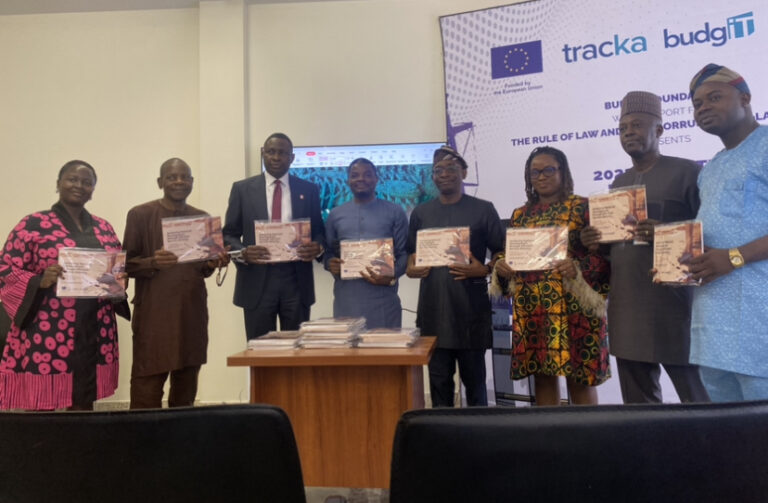
Tracka, a public accountability unit of BudgIT, has revealed in its latest report that over N99 billion has been squandered on 352 federal government projects that were either abandoned or left uncompleted.

The findings, which were presented by, Tracka’s Head, Ayomide Ladipo, during a review of the organisation’s 2023/2024 field activities on Thursday, January 30, triggered renewed calls for urgent reforms in Nigeria’s budgeting and procurement processes to improve transparency, efficiency, and service delivery.

Between September 2023 and September 2024, Tracka tracked 1,404 federal projects, and uncovered that 223 projects, valued at N79.81 billion, were not executed while another 129, costing N19.81 billion, had been abandoned. 

Altogether, these uncompleted and neglected projects represent a total loss of N99.62 billion—money that should have been used to develop vital infrastructure across the country, Ladipo noted. 

According to the report, only 720 projects were completed, amounting to N91.28 billion, while 332 others remain ongoing, with N91.61 billion allocated to them.

Speaking on procurement fraud and corruption in the public sector while giving his goodwill message, the Economic and Financial Crimes Commission (EFCC) Chairman, Olanipekun Olukayode, condemned the current budgeting system, which he said allocates funds to government agencies without their input.

He argued that this approach leads to failed projects and increased corruption, with procurement accounting for over 90 per cent of public sector corruption in Nigeria.

“One of the major problems we have in Nigeria is the issue of public corruption. When you are talking about public corruption substantially, statistics have shown that more than 90 per cent of public graft, apart from bribery, and all of that, comes through contract and procurement,” the EFCC helmsman said.

He also expressed concerns over the country’s annual budget process, arguing that it hinders effective project implementation. 

He frowned at the practice of ‘envelop budgets’ without consultation with the relevant agencies, saying that this practice leads to inefficiencies and poor accountability.

“You can’t hold me accountable for what I wasn’t part of. If I’m not part of the preparation of my budget, it will be difficult for me to execute the same budget. This is what has led us to where we are now,” he said. 

Also speaking, the Director-General of the Bureau of Public Procurement (BPP) Adebowale Adedokun, stressed the importance of transparent procurement processes in driving national development.

He described procurement as the “gateway” through which government projects and services reach the people and assured stakeholders that the BPP under his leadership would prioritise accountability, efficiency, and legal access to procurement data.

He emphasised that every government project must now come with a contract management plan to track progress and prevent abandoned projects.

Adedokun stated that the agency had saved over N1.9 trillion through its procurement oversight, preventing funds that “ordinarily would have been siphoned.”

He also disclosed that over N14 trillion had been generated for Nigeria through procurement regulations since 2016, with recent efforts saving $150,000 in just one transaction.

Other details

A further breakdown of Tracka’s findings also highlighted discrepancies in fund disbursement.  Out of the 1,404 projects tracked, it noted that payment data was available for only 671 projects, with N178 billion disbursed to 614 contractors.

The report revealed that many contractors received payments without delivering on their obligations.

Some examples of failed projects cited in the report include the construction of Tudun Wuss-Wandi-Baraza-Durr-Zumbulpolchi-Dot-Kwanar, roads in Bauchi State, where N205 million was allocated. However, after multiple payments totalling N1.4 billion to Datum Construction Nigeria Ltd., the roads remain in disrepair.

Also cited was the rehabilitation of roads in Nasarawa State, where N1.18 billion was allocated, but after N401 million was disbursed to Mainstream Contractors Nigeria Ltd., no project was done.

The report further highlighted several systemic issues fuelling the abandonment and non-completion of projects, including alleged interference by the National Assembly, poor oversight by Ministries, Departments, and Agencies (MDAs), and a lack of transparency in the management of public resources. 

It also accused the National Assembly of inflating and inserting projects into the budget for personal gains. In the 2024 budget alone, 7,447 projects worth N2.24 trillion were inserted, with the Federal Ministry of Agriculture having the highest number of such projects, according to the report.

On Freedom of Information (FOI)response rate, Ladipo said: “This year, we wrote 377 letters to the MDAs, seeking updates on projects assigned to them. Coincidentally, we again recorded a 2.1 per cent response rate as we did in 2022, but as against one respondent who acted within the seven days as stipulated in the FOI Act last year, five of them did in 2023. “

Earlier, the Country Director of Budgit, Gabriel Okeowo, praised the invaluable contributions of its Tracka unit responsible for analysing, evaluating, and reviewing budgets. 

Okeowo stated that over the past 11 years, Tracka had continuously worked to assess how government spending impacts local communities, focusing particularly on capital projects. 

Improved local refining lessens Nigeria’s petrol imports to 110,000bpd – Report

0

NIGERIA’s imports of gasoline is on course for an eight-year low, dropping to 110,000 barrels a day between January 1-24, 2025.

Data compiled by Bloomberg from analytics firm Vortexa show this on Wednesday, January 29.

It attributed the drop in petrol importation into the country to the ramp-up of petroleum production from the Dangote Refinery.

“Shipments into the country stood at about 110,000 barrels-a-day during Jan. 1-24, data compiled by Bloomberg from analytics firm Vortexa show.

“If that rate were to continue for the rest of the month, the country’s imports—most of which come from Europe—would hit their lowest since 2017,” it said.

The 650,000 nameplate refinery started the production of premium motor spirit (PMS), otherwise known as petrol, in September 2024, after months of delay in coming on stream, arising from regulatory bottlenecks and securing crude oil from the state-owned oil firm, the Nigerian National Petroleum Company Limited (NNPCL).

The data further indicated that the country’s new mega-refinery is pushing out foreign suppliers, boosting the African nation’s fuel independence.

“A large part of the slowdown in Nigeria’s gasoline imports is due to the ramp-up of the Dangote refinery,” Vortexa analyst Samantha Hartke was quoted to have said. “Northwest Europe will have to find alternative homes for its gasoline supplies.”

The 110,000bpd is the lowest since 2017 when imports used to be above 200,000bpd and sometimes as high as 400,000bpd.

Industry experts also hold the view that the Dangote refinery, which has the highest refining capacity in Africa and Europe, has disrupted global oil trade and pushed some refineries in Europe out of the market.

Although the refinery is not yet operating at its full capacity, it is seen boosting Nigeria’s fuel independence by reducing imports.

Stockpiles of gasoline held in independent storage in Amsterdam-Rotterdam-Antwerp — a key exporting hub for barrels to Nigeria — have meanwhile hit a record high, according to figures from Insights Global, adding that the stockpiles have surged to record highs.

The Dangote refinery, which is getting most of its field stocks from the United States as the NNPCL appears not to meet crude supply to the refinery, has helped reduce Nigeria’s imports of refined petroleum products while also exporting to other countries.

Dangote’s PMS is being exported to various African countries including Ghana, Togo, Cameroon, South Africa, and Angola, as well as to Europe.

Earlier this month, The ICIR reported that the Dangote Refinery ramping up of production capacity was pushing some European refineries which hitherto serviced the Nigerian market out of business.

Meta agrees to pay $25m to Trump over Facebook ban

0

META, the parent company of Facebook and Instagram, has agreed to pay $25 million to settle a lawsuit filed by United States President Donald Trump over the suspension of his accounts following the January 6, 2021, attack on the Capitol.

According to a report by BBC, the settlement, which was first reported by the Wall Street Journal, marks a significant development in Trump’s long-standing battle with major social media platforms. 

The ICIR reported that Trump sued Meta and its CEO, Mark Zuckerberg, in 2021, arguing that the suspension of his accounts amounted to censorship. 

Trump said in the lawsuit filed in the US District Court in Miami that social media companies and their chief executive officers (CSOs) violated the right to freedom of speech guaranteed by the First Amendment of the U.S. Constitution.

He prayed the court to end the alleged censorship, noting that if they could ban a president, “they can do it to anyone.”

The company initially imposed a two-year ban on Trump’s accounts, before later reinstating them in the build-up to the 2024 U.S. presidential election. The account was reinstated in July 2024.

According to reports, $22 million of the settlement funds will go toward Trump’s presidential library, while the remaining amount will cover legal fees and compensation for other plaintiffs involved in the case.

However, Meta has not admitted to any wrongdoing as part of the settlement.

The lawsuit’s resolution comes amid signs of improved relations between Trump and Zuckerberg. 

In November 2024, following Trump’s election victory, Zuckerberg visited Trump’s Mar-a-Lago resort, a move widely interpreted as an effort to mend relations.

In December, Meta donated $1 million to Trump’s inauguration fund. 

Earlier this month, Zuckerberg was seen among several tech industry billionaires at Trump’s inauguration at the U.S. Capitol, alongside figures like Google’s Sundar Pichai, Amazon’s Jeff Bezos, and Elon Musk, owner of X (formerly Twitter).

The ICIR reported that X had also permanently suspended Trump’s account after the Capitol riot, citing the risk of further incitement. 

However, after Elon Musk acquired Twitter in 2022, he reinstated Trump’s account following a public poll on the platform.