Home Blog Page 38

Police dismiss officers involved in Delta shooting

THE Nigeria Police Force said it had dismissed officers involved in the shooting of a suspect, Mene Ogidi, in Effurun, Delta State, on Sunday, April 26.
In a statement signed by the Force Public Relations Officer, Anthony Placid, a deputy commissioner of police, on Wednesday, the Force said the Inspector-General of Police, Tunji Disu, approved the dismissal, following the recommendation of Force Disciplinary Committee (FDC) which investigated them in Abuja.
However, the Force did not provide the officers’ details, including their names.
The Force said all the officers involved in the shooting were moved to Abuja for questioning and would face prosecution after their dismissal.
“The Force Disciplinary Committee (FDC), alongside other internal disciplinary processes, has concluded its review. Findings established unequivocally that the principal officer, ASP Nuhu Usman, acted in gross violation of Force Order 237 and other extant regulations governing the use of firearms. His actions were unlawful, unprofessional, and a clear betrayal of the oath to protect life and uphold the law.
“Consequently, the FDC has recommended the immediate dismissal of ASP Nuhu Usman and other officers found culpable. The Inspector-General of Police has approved the recommendations and forwarded same to the Police Service Commission for ratification in line with due process.
“Upon completion of the administrative procedures, the affected officers will be handed over to the appropriate judicial authorities for prosecution for their roles in the extrajudicial shooting,” part of the statement said.
It noted that the IGP reiterated, in the strongest terms, that the Nigeria Police Force maintained a zero-tolerance stance on extra-judicial actions and abuse of power.
The IGP stated that no uniform conferred the right to take life outside the provisions of the law. stressing that any officer who violated this fundamental principle would face the full weight of disciplinary and legal consequences.
While condoling with the deceased family, the IGP assured the family that incident would not be treated lightly.
“The Force is fully committed to ensuring that justice is not only served but seen to be served, in a manner that reinforces public confidence and institutional accountability.”
“Members of the public are urged to remain calm and law-abiding, as the Nigeria Police Force remains steadfast in its commitment to discipline, professionalism, and the protection of the rights and dignity of all citizens while ensuring accountability at all levels.”
Backstory

The shooting, captured in a widely shared video, had caused strong public condemnation.

Reacting to the video and accompanying public outrage against the killer-cop while featuring on Channels TV “Morning Brief,” on Wednesday, April 29, the command spokesperson, Bright Edafe, said the officer, Nuhu Usman, would face the full wrath of the law.

Edafe stated that the officer’s actions were unprofessional and unjustifiable.

The iCIR reports that the victim was 28 years old. He was said to be an upcoming artiste.

The dismissed officers had acted on intelligence suggesting that the suspect had been caught while trying to send a package containing “a Beretta pistol with four rounds of ammunition.”

However, the police confirmed that the officer in charge of the operation for his arrest violated official rules. “The police officer leading the team, ASP Nuhu Usman, in clear violation of Force Order 237 and the Standard Operating Procedure of the Nigeria Police Force, discharged his firearm, leading to the death of the suspect,” the command spokesperson said in a statement after the video of the killing went viral.

The ICIR reports that the incident adds to a pattern of extra-judicial killings by police officers and other armed state actors in Nigeria.

Efforts to halt the illicit act have failed to yield results as activists, lawyers, journalists, civil society organisations and other citizens frowning at the menace have been tracked, apprehended, tried in court and jailed.

The most notable attempt by Nigerians to halt the police inhumane treatment of Nigerians culminated in the #ENDSARS Protests in 2020, in which many Nigerians were brutally attacked and killed.

Supreme Court sets Thursday for ruling on ADC leadership crisis

0

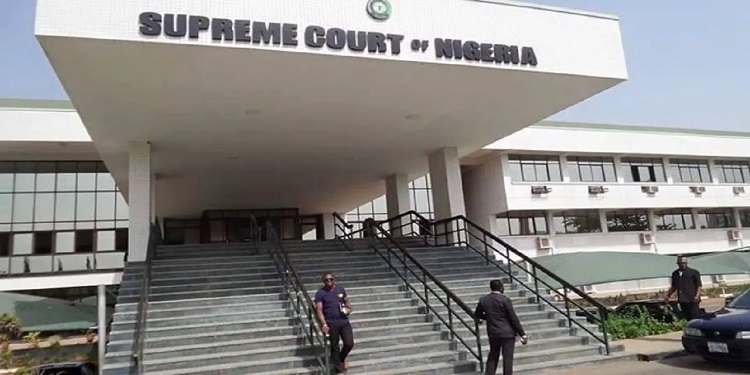
THE Supreme Court has fixed Thursday, April 30, for judgment in the leadership dispute rocking the opposition African Democratic Congress (ADC)

The apex court had earlier reserved judgment in the matter after parties adopted their final written addresses.

However, on Tuesday, April 28, the David Mark faction of the opposition party petitioned the Chief Justice of Nigeria (CJN), arguing that time was not on its side and urged for expedited ruling.

On Wednesday, the court announced that the judgment would be delivered by 2 p.m. on Thursday.

A five-member panel of the apex court, led by Justice Mohammed Garba, had fixed the matter for judgment after hearing arguments from all parties involved in the dispute.

The case, which has generated tension within the party, centres on the leadership tussle over the control and direction of the ADC ahead of future political activities.

In a letter addressed to the CJN through its counsel, S.E. Aruwa (SAN) & Co., the Mark-led faction warned that further delay in the judgment could jeopardise the party’s constitutional right to participate in the 2027 elections.

According to the letter, the unresolved appeal threatened to leave the party without recognised leadership, especially as the Independent National Electoral Commission (INEC), listed as the fourth respondent, had allegedly begun acting on the lower court judgment by moving to withdraw recognition of the ADC leadership.

The counsel argued that the development stemmed from Appeal No. CA/ABJ/145/2026, which sought to de-recognise the party’s leadership, creating what it described as a leadership vacuum despite ADC remaining a registered political party.

The party further noted that with INEC’s revised timetable for the 2027 general elections already released, ADC risked being shut out of the electoral process if the Supreme Court failed to deliver judgment promptly.

The ICIR reports that the leadership crisis in ADC began in 2025 following the influx of major opposition figures into the party as part of efforts to build a coalition platform ahead of the 2027 presidential election.

Among those who joined the party were former Vice President Atiku Abubakar, former Kaduna State Governor Nasir El-Rufai, former Minister of Transportation Rotimi Amaechi, former Osun State Governor Rauf Aregbesola, and David Mark.

The politicians, many of whom defected from the Peoples Democratic Party (PDP) and the All Progressives Congress (APC), adopted the ADC as a platform to challenge President Bola Tinubu in the next general election.

The crisis deepened after the resignation of the party’s former executives led by Ralph Nwosu and the emergence of a new National Working Committee headed by Mark on July 29, 2025.

This triggered a legal challenge by Nafiu Bala, a former vice-national chairman of the party, who approached the Federal High Court in Abuja, seeking recognition as the legitimate national chairman under the party’s constitution.

While the Federal High Court initially ordered parties to maintain the status quo, the Court of Appeal later upheld the order and directed all parties, including INEC, to maintain existing arrangements pending further hearing.

Following the ruling, both factions wrote to INEC on March 16, each seeking recognition.

INEC later removed Mark’s name as national chairman and Aregbesola as national secretary from its website on April 1, stating that it would not recognise any faction until the legal dispute was resolved.

The development triggered protests in Abuja, with party members accusing the electoral commission of bias and warning that the unresolved crisis threatened the party’s internal democracy.

The Mark-led faction subsequently approached the Supreme Court to challenge the Court of Appeal ruling, with the apex court reserving judgment on April 22 before fixing Thursday for final determination.

Tinubu approves land for ambassadors-designate in Abuja

0

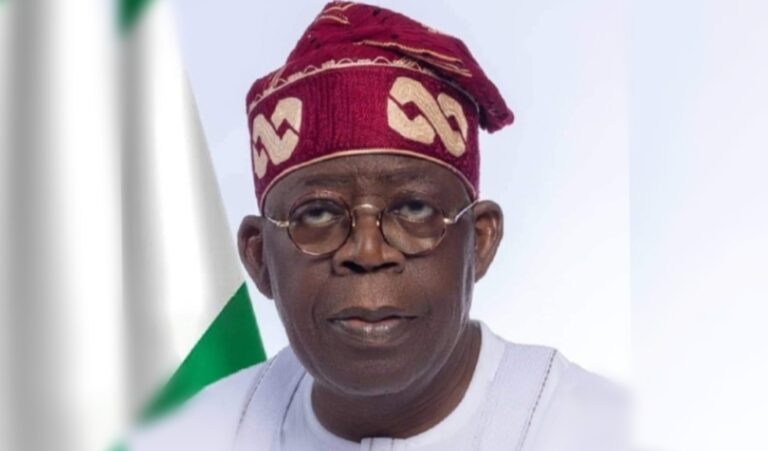
PRESIDENT Bola Tinubu has approved plots of land in Abuja to his newly appointed ambassadors and high commissioners-designate.

The ICIR reported in March that Tinubu deployed 65 ambassadors for various diplomatic missions worldwide.

The Minister of the Federal Capital Territory, Nyesom Wike, announced the land allocation in Abuja on Wednesday, April 29, during a courtesy visit by the envoys, led by the Permanent Secretary of the Ministry of Foreign Affairs,  Dunoma Ahmed.

In a statement by Deputy Director, Press, Office of the Minister, Rabi Umar, Wike said the move was intended to provide the envoys with permanent residences in the nation’s capital and ensure that they have a home to return to during official briefings and after their service abroad.

Wike was quoted as saying, “Mr President called me and said these ambassadors would be leaving Nigeria, and he believes that from time to time, they will come to Abuja to brief him… So, he directed that before you leave this morning, every one of you should have your form to fill out for land allocation in Abuja so that when you come back, you don’t need to stay in a hotel”.

The statement quoted him further, “Barr. Wike further charged the diplomats to be the eyes and ears of Nigeria during their national assignments, emphasising that their character and representation were vital to how the world perceives the country. He specifically urged them to counter misinformation regarding Nigeria’s political landscape, especially the narrative that Nigeria is turning into a one-party state.”

The minister also identified agriculture and waste management as two critical sectors where the FCT needed international partnerships, mentioning ongoing discussions with Saudi Arabia, Egypt, and Ireland in this regard.

Earlier, the leader of the delegation, Dunoma Ahmed, explained that the visit was designed to acquaint the envoys with the strategic importance of the FCT as the diplomatic hub of the country and the window through which the international community views Nigeria.

“This visit is intended to deepen understanding of the ongoing initiatives, opportunities and developmental priorities within the Territory. It is also an opportunity to explore how our missions abroad can effectively support and complement the efforts of the FCT Administration in areas such as investment promotions, cultural exchange, partnerships and infrastructure advancements”.

He pledged that the officials would align their efforts abroad with the developmental priorities of the FCT Administration and Tinubu’s vision.

The ICIR reports that in December 2025, the Senate Committee on Foreign Affairs screened and approved non-career ambassadorial nominees forwarded by Tinubu, which included former ministers, Femi Fani-Kayode and Abdulrahman Dambazau, former presidential aide Reno Omokri, former Enugu State Governor Ifeanyi Ugwuanyi, former presidential aide Senator Ita Enang, and former Independent National Electoral Commission (INEC) Chairman, Yakubu Mahmood.

After assuming office in September 2023, the Tinubu administration recalled all Nigerian ambassadors, but replacing them proved slow. This attracted criticisms following prolonged gaps in diplomatic representation that weakened Nigeria’s international influence and hampered bilateral cooperation.

For nearly 28 months, Nigeria’s over 100 diplomatic missions worldwide operated without substantive ambassadors but worked with chargés d’affaires and senior diplomats managing embassies.

Weak oversight, illegal mining drive illicit financial flows in Nigeria’s mining sector — NEITI Report

A new report by the Nigeria Extractive Industries Transparency Initiative (NEITI) has detailed how weak governance structures, illegal mining, and poor transparency are driving illicit financial flows in Nigeria’s mining sector. 

The report, titled “Stemming the Scourge of Illicit Financial Flows in Nigeria’s Mining Sector”, a copy of which The ICIR exclusively obtained, disclosed that the country’s mining ecosystem is plagued by severe governance, transparency, and enforcement weaknesses, which enable widespread revenue leakages.

The document noted that illicit financial flows in the sector occur through illegal extraction, under-reporting of production, trade mispricing, smuggling, and laundering of proceeds. These activities, the report said, are not isolated but deeply entrenched.

“IFFs enablers in Nigeria’s mining sector are systemic rather than incidental,” the report stated, adding that the problem is embedded across institutions, markets, and security structures.

According to the findings, weak regulatory capacity, political interference, and poor coordination among government agencies limit effective oversight and allow exploitation of institutional gaps.

The report also highlighted the dominance of foreign buyers in the mining market, noting that “this creates pricing imbalances and enables the under-valuation of minerals, capital flights and concealment of actual transaction values.”

Data and transparency challenges were identified as major concerns, with irreconcilable datasets among agencies, incomplete production reporting, and weak verification of beneficial ownership making it difficult to track revenues and ownership structures.

In addition, the report pointed to the high level of informality in artisanal and small-scale mining, which operates largely outside regulatory systems, complicating monitoring, taxation, and enforcement.

Corruption and criminal activities were also found to be widespread, with illegal levies, extortion, and the involvement of armed groups facilitating smuggling and weakening state authority in mining areas.

The report warned that these challenges are fuelling organised crime, undermining legitimate operators, and depriving the country of much-needed revenue. It stressed the need for urgent reforms to strengthen governance, improve transparency, and restore control over the sector.

It further revealed that institutional capacity constraints and fragmented governance are weakening regulatory effectiveness. Key agencies, including the Ministry of Solid Minerals Development, Mining Cadastre Office, NEITI, Customs, and state bodies, face challenges such as inadequate staffing, limited expertise, and weak digital infrastructure. 

These weaknesses are compounded by poor coordination and the absence of an integrated monitoring system, resulting in inconsistent data and limited oversight across the sector. 

“Weak data governance, limited transparency, and insufficient enforcement of beneficial ownership significantly facilitate corruption and regulatory capture. Persistent weaknesses in data governance, manifested through reliance on manual record-keeping, non- verifiable production reporting, and incomplete export documentation, significantly reduce transparency across the mining value chain. These deficiencies facilitate misreporting, data manipulation, and the concealment of mineral flows,” part of the report reads. 

“Furthermore, the lack of robust beneficial ownership disclosure and verification frameworks allows the use of shell companies and enables politically exposed persons (PEPs) to obscure ultimate ownership and control, thereby increasing the sector’s exposure to illicit financial flows and regulatory capture.”

The report noted that beneficial ownership transparency remains weak, with mining licences often held through shell companies and special purpose vehicles, making it difficult to identify the true owners. This opacity allows politically exposed persons and foreign actors to hide control of mining operations. 

In addition, fragmented coordination among key institutions, including the Ministry of Solid Minerals Development, NEITI, Customs, the Nigerian Financial Intelligence Unit, and the Central Bank of Nigeria, limits the ability to reconcile production, export, and revenue data. 

Market risks were also highlighted, with foreign buyers exerting a strong influence over pricing and export channels. The report said this dominance encourages under-valuation of minerals and creates opportunities for trade-based money laundering, especially with the prevalence of cash transactions. 

It further revealed that weak regulation of artisanal mining leads to value chain leakages, as illegally mined minerals are often mixed with legitimate ones and exported, making traceability difficult. 

The report warned that corruption and insecurity have worsened the situation, with bandits and criminal groups controlling mining sites, imposing illegal fees, and financing their activities through mineral proceeds. 

Despite increased enforcement efforts, prosecution remains weak, with few convictions compared to the number of arrests. This reduces deterrence and allows illicit practices to persist, according to the report. 

The report urged the presidency to establish and operationalise a structured inter-agency coordination framework involving the Ministry of Solid Minerals Development, NEITI, EFCC,NFIU, ICPC, Nigeria Customs Service, security agencies, revenue authorities, and relevant sub-national institutions.

“The Office of the National Security Adviser should enhance intelligence sharing, joint investigations, and coordinated enforcement actions targeting mining-related illicit financial flows,” the report said.

 

Officer to face trial for ‘killing’ suspect in Delta viral video – PPRO

THE DELTA State Police Command has vowed that its officer who shot and killed a suspect in Effurun area of the state would be tried for murder.

The incident, captured in a widely shared video, has caused strong public condemnation.

Reacting to the video and accompanying public outrage against the killer-cop while featuring on Channels TV “Morning Brief,” on Wednesday, April 29, the command spokesperson, Bright Edafe, said the officer, Nuhu Usman, would face the full wrath of the law.

Edafe stated that the officer’s actions were unprofessional and unjustifiable. He also addressed why the officer’s face was covered in the official statement announcing his arrest and explained that it was done in line with professional standards.

The iCIR reports that the victim, identified as Mene Ogidi, was 28 years old. He was said to be an upcoming artiste.

According to the police, the incident happened on April 26, 2026. Officers from the Effurun Area Command had acted on intelligence suggesting that the suspect had been caught while trying to send a package containing “a Beretta pistol with four rounds of ammunition.”

However, the police confirmed that the officer in charge of the operation for his arrest violated official rules. “The police officer leading the team, ASP Nuhu Usman, in clear violation of Force Order 237 and the Standard Operating Procedure of the Nigeria Police Force, discharged his firearm, leading to the death of the suspect,” the command spokesperson said in a statement after the video of the killing went viral.

While condoling with the deceased’ family, the command said upon receipt of the report of the shooting, the Commissioner of Police directed the Area Commander, Effurun, to immediately arrest the officer and transfer him to the State Headquarters, Asaba, for necessary disciplinary action.

“The officer has since been queried and transferred to Force Headquarters, Abuja, where he will appear before the Force Disciplinary Committee, currently in session, for immediate disciplinary sanction and prosecution.

“The Command, in line with the policy of the Nigeria Police Force, emphasises respect for the rule of law, human rights, professionalism, accountability and public trust. The command further reaffirms its zero tolerance for lawlessness, recklessness and extra-judicial conduct,” he Edafe stated.

The ICIR reports that the incident adds to a pattern of extra-judicial killings by police officers and other armed state actors in Nigeria.

Efforts to halt the illicit act have failed to yield results as activists, lawyers, journalists, civil society organisations and other citizens frowning at the menace have been tracked, apprehended, tried in court and jailed.

The most notable attempt by Nigerians to halt the police inhumane treatment of Nigerians culminated in the #ENDSARS Protests in 2020, in which many Nigerians were brutally attacked and killed.

Meanwhile, many Nigerians are calling on the Nigerian Police Force to apprehend all officers culpable in Ogidi’s killing for questioning and prosecution.


Court bars INEC from recognising ADC congresses

0

A FEDERAL High Court in Abuja has restrained the Independent National Electoral Commission (INEC) from recognising or participating in any congress organised by the disputed caretaker leadership of the African Democratic Congress (ADC).

In a judgment delivered on Wednesday, April 29, Joyce Abdulmalik also barred former Senate President David Mark and other senior figures in the party from interfering with the duties and tenure of elected state executives.

The judgement arose from a suit filed by Norman Obinna and six others, representing ADC state chairmen and executive committees across the country. 

They challenged the legitimacy of the caretaker or interim national leadership, especially its decision to set up a committee to conduct state congresses. 

They asked the court to affirm the tenure of the state executive committees and stop any parallel arrangements capable of weakening their authority.

In her ruling, Abdulmalik described the originating summons as meritorious and said the major issue was whether Mark and other defendants had the legal authority to take over the functions of elected ADC state organs whose tenure is protected by the party’s constitution.

The ruling comes barely 24 hours after the Mark-led faction of the ADC appealed to the Chief Justice of Nigeria, Kudirat Kekere-Ekun, to hasten the Supreme Court’s judgment on the party’s lingering leadership dispute, warning that any further delay could threaten its participation in the 2027 general elections.

In a letter dated April 28, 2026, and signed by its counsel, S.E. Aruwa, a senior advocate, the faction said the unresolved appeal before the apex court could leave the party without recognised leadership and jeopardise its constitutional right to contest the next general election.

The faction argued that the delay had created uncertainty, especially after INEC allegedly began acting on the judgment of the lower court by withdrawing recognition of the ADC leadership.

According to the letter, the development followed Appeal No. CA/ABJ/145/2026, which sought to de-recognise the party leadership, creating what it described as a leadership vacuum despite the ADC remaining a registered political party.

The Mark-led faction warned that with INEC’s revised timetable for the 2027 elections already in motion, the party risked being excluded from the electoral process if the Supreme Court failed to deliver judgment quickly.

Meanwhile, in Wednesday’s judgment, Abdulmalik ruled that the caretaker leadership lacked constitutional authority to organise state congresses or appoint a congress committee.

She held that only duly elected party organs recognised by the ADC constitution had the power to conduct such congresses and affirmed that the tenure of the state executive committees remained valid.

The court therefore set aside the appointment of the congress committee and restrained INEC from recognising any congress organised by it.

The judge relied on Section 223 of the 1999 Constitution, which requires political parties to conduct periodic elections based on democratic principles, as well as Article 23 of the ADC Constitution, which states that national and state officers can only serve a maximum of two terms spanning eight years.

She said the court needed to determine whether Mark and the other defendants acted outside the law by convening meetings and creating a congress committee to organise state congresses.

It also barred Mark and other defendants from organising congresses or conventions outside the provisions of the ADC constitution or taking steps capable of undermining the authority of the state executive committees.

Dangote raises petrol price by N75, ex-depot price hits N1,275

0

DANGOTE Petrochemical Refinery has again raised the ex-depot price of petrol by N75 per litre, fueling fears of fresh fuel price hikes nationwide.

Price data from Petroleumprice.ng and a Dangote refinery official confirmed the hike on Wednesday, April 29. The refinery increased its petrol loading price from N1,200 per litre to N1,275 per litre, as coastal supply prices climbed to N1,215 per litre.

Industry sources said the refinery implemented the change amid operational adjustments as the Middle East war between the United States and Iran continues to take toll on global crude oil prices.

As of today, Brent crude sells for $114.3 per barrel, according to oilprice.com.

The development immediately rattled the downstream petroleum market, which has been officially deregulated by the Nigerian government. Dangote Refinery, currently suppling a higher percentage of Nigerian petroleum needs, is always adjusting prices according to prevailing global pricing template.

“Yes, the increase of PMS to N1,275 per litre is true. Coastal price is N1,215,” an official who is not authorised to speak for the company said.

Another source said the refinery halted its Proforma Invoice entry process at about 4:00 pm on Tuesday, adding that, “The shutdown disrupted normal supply scheduling across its loading system to enable proper price adjustments and official communication to the marketers procuring petrol from the company.”

Traders and marketers are already expecting higher depot costs and a possible rise in pump prices nationwide, with some filling station retail outlets also adjusting pricing despite selling their old stocks.

Industry operators also claimed that such interruptions quickly raise logistics and distribution expenses, stressing that those costs add more pressure along the value chain.

Crude price surge has been linked to heightened geopolitical tensions around the Strait of Hormuz, a key global oil supply route.

The ICIR reports that Dangote Refinery has been adjusting prices of petrol mostly upward since the US-Iran conflict began on February 28, with the Federal Government having little or no impact on pricing, despite the crude-for-naira policy.

Police confirm Ondo Poly student found hanging in his room

0

THE Ondo State Police Command has confirmed a suspected suicide incident at Emure-Ile community, Owo Local Government Area of Ondo State.

The incident involves a 20-year-old student of Rufus Giwa Polytechnic Owo (RUGIPO), Audi Emmanuel, who was found hanging in his room.

Spokesperson of the Ondo State Police Command, Abayomi Jimoh, confirmed the incident in a statement, noting that the police had launched investigation to ascertain the circumstances surrounding the death.

“The Ondo State Police Command confirms the report of a suspected suicide incident at Emure-Ile involving a 20-year-old student of Rufus Giwa Polytechnic, who was found dead in his residence,” Jimoh said.

Emmanuel’s lifeless body was reportedly found dangling from a rope and already emitting offensive odour in his apartment after he allegedly took his life.

Neighbours were seen covering their noses as Emmanuel’s swollen body was seen hanging in a video posted on Facebook on Tuesday.

The police explained that operatives promptly visited the scene, where the body was recovered and deposited at the morgue for preservation and autopsy.

“Preliminary observations suggest a case of suicide; a thorough investigation is ongoing to ascertain the full circumstances surrounding the incident,” the police said.

The command commiserated with the deceased’s family and urged the public to speak up during moments of emotional distress to enable them to get the help they need.

A Guardian report indicates that Emmanuel was said to be studying Computer Engineering in the state-owned institution.

One of his neighbours was said to have raised the alarm when offensive odour oozed from his room. Neighbours forced his door open and met his body hanging and swollen.

“Emmanuel’s body was found hanging in his rented apartment. The odour from his room was so heavy. We tried to reach him, but we couldn’t. So we decided to force the door open.

“We didn’t know what could have happened for such action. But we immediately contacted the police, who came to evacuate the corpse. We have not seen any form of suicide note,” a neighbour said.

Datti Baba-Ahmed dumps Labour Party, joins PRP after rejecting ADC coalition

0

THE 2023 vice-presidential candidate of the Labour Party (LP), Yusuf Datti Baba-Ahmed, has announced his decision to quit the party and defect to the Peoples Redemption Party (PRP)

Baba-Ahmed made the disclosure on Tuesday, April 28, while featuring on Channels Television’s Politics Today.

He explained that the party had lost the principles that attracted him to it ahead of the 2023 general elections.

According to him, the Labour Party no longer reflects the values it once stood for, especially following internal crisis and what he described as deliberate efforts by certain individuals to frustrate him politically.

“I am leaving the Labour Party tomorrow. There is more to it. When there was real peace in the Labour Party was when they posted back. They redeployed someone with a specific purpose and because of the antecedent of the individual to make life difficult, particularly for me. What the Labour Party stood for then is no longer what it is today,” he said.

He stated that his exit from the party would become effective at midnight, adding that his new political destination would be the Peoples Redemption Party.

“I am leaving the Labour Party midnight and I am joining PRP. PRP is the new destination. PRP is the one with a history. It’s about 75 years old,” he stated.

Baba-Ahmed’s defection comes months after he publicly distanced himself from the coalition of opposition politicians seeking to adopt the African Democratic Congress (ADC) as a common platform ahead of the 2027 polls.

The coalition, which has attracted several opposition figures, including former vice president Atiku Abukakar, former governors Peter Obi, Rabiu Kwankwaso, Rotimi Amaechi, Rauf Aregbesola, Nasir El-Rufai, and former Senate President David Mark, was formed to serve as a strong force to confront President Bola Tinubu and his party – the ruling All Progressives Congress (APC).

However, Baba-Ahmed had openly rejected suggestions that he would join the movement.

He had insisted that Nigeria’s political crisis could not be solved by simply repackaging old politicians under a new coalition.

At the time, he argued that many of those driving coalition talks were individuals who had contributed to Nigeria’s current failures and could not be trusted to deliver real change.

Speaking on Channels Television’s Politics Today in August 2025, he dismissed the coalition as deceptive, saying, “They are deceiving us,” while insisting he remained in the Labour Party and wanted the party’s presidential candidate in the 2023 poll, Peter Obi, to return to the party for the 2027 election.

His refusal to align with the ADC coalition was seen by many as a signal that he was considering an alternative political path outside both the Labour Party and the mainstream opposition alliances.

Baba-Ahmed was Obi’s running mate in the 2023 poll. Their ticket became one of the strongest opposition forces during the polls, attracting significant support from young voters.

Although the party eventually lost the election to Tinubu of the APC, the Obi-Datti ticket reshaped opposition politics and significantly boosted the Labour Party’s position during the 2023 election, as the party won significant seats at the National Assembly.

Since the election, however, like other opposition parties in the country, the Labour Party has been embroiled in prolonged leadership disputes, legal battles, and factional struggles involving its national leadership.

60% of Nigerian varsity students linked to internet fraud – EFCC

0

THE CHAIRMAN of Economic and Financial Crimes Commission (EFCC), Ola Olukoyede, has raised concerns about the increasing involvement of university students in cybercrime across Nigeria.

Speaking at the 8th Biennial Conference of Pro-Chancellors of State Universities in Kano, he revealed that recent findings by the commission showed that a large number of students are involved in online fraud.

“Six out of every 10 students in our universities are into cybercrime. It is a very disturbing situation,” Daily Trust reported him as saying.

He warned that the trend remained a serious danger to both the education sector and the country’s values, noting that higher institutions were gradually into centre for fraudulent activities. According to him, many of those arrested for internet fraud, commonly known as “Yahoo Yahoo,” are undergraduates.

He also raised alarm about the rise of “Yahoo Plus,” where cybercrime is combined with ritual practices.

Olukoyede pointed out that some of the students involved in cybercrime go as far as breaking into school systems and even pressuring lecturers to change their grades.

He urged school authorities and governing bodies to act quickly by tightening internal controls and promoting strong moral values among students. He also recommended the use of modern tools like artificial intelligence to help identify and prevent such crimes within universities.

The EFCC chairman further mentioned a major crackdown in Lagos where 792 individuals connected to an international cybercrime network were apprehended. He noted that many of those arrested were students, highlighting how widespread and organised these illegal activities have become. According to him, the operation relies on advanced technology, including AI, to uncover the network.

While calling on university leaders to improve internal systems and work closely with law enforcement agencies, he advised institutions to adopt AI-based management systems to improve openness, detect fraud, and ensure proper use of funds.

He explained that many universities depended on outdated manual processes, making it easier for issues like ghost workers on payroll, inflated project costs, and misuse of funds to occur.

“A university that lacks financial accountability cannot credibly train future professionals. The integrity of our universities is a matter of national security,” he said.

He emphasised that artificial intelligence could be used in areas such as detecting fraud, managing salaries, monitoring contracts, and maintaining academic honesty. These tools can quickly spot unusual financial activities, identify payment errors, and improve auditing systems, he stated.

Olukoyede added that technology has already helped the EFCC in its investigations, especially in tracking financial crimes and analysing digital evidence. However, he stressed that AI should support human decision-making, not replace it, and must be used in line with existing laws on data protection and procurement.

He also encouraged universities to train staff in fields like cybersecurity, machine learning, and digital administration. In addition, he urged institutions to improve their technology systems by investing in reliable internet access and cloud-based platforms to make AI implementation effective.