THE Court of Appeal, Abuja Division, has affirmed Julius Abure as the national chairman of the Labour Party (LP).
The court, in a unanimous decision by a three-member panel, upheld the October 8 judgement of the Federal High Court in Abuja, which ordered the Independent National Electoral Commission (INEC) to give the LP under Abure’sleadership all the rights and privileges accorded a political party duly registered in Nigeria.
In the judgment delivered on Friday, January 17, the lead judge, Hamma Barka, upheld the earlier judgment of November 13, 2024, which recognises Abure as the party’s national chairman.
The court affirmed that this decision had not been reversed by any other court.
Barka made this declaration in the ruling on two separate appeals filed by Esther Nenadi Usman, a former senator, who heads the caretaker committee of the LP and INEC.
The appellate court made it clear that it’s not its job to decide who leads the party, stressing that’ such a crisis could not be settled in court.
The court maintained that a previous judgment made by the Federal High Court on October 8, 2024 by Emeka Nwite was no longer valid because it was made without the court having the proper jurisdiction.
As a result, the Court of Appeal struck out that judgment and stated that its decision was consistent with other recent rulings, including one from the Supreme Court that affirmed the candidacy of an LP candidate in the Imo state governorship election.
The court reaffirmed its previous ruling, declaring Abure as the national chairman of the Labour Party, and struck out the suit challenging his leadership.
The ICIR reported that the Federal High Court in Abuja had declared Abure as the substantive national chairman of the LP.
Delivering judgment in the suit on Tuesday, October 8, the judge, Nwite, affirmed the Abure-led leadership.
The court also recognised the March 2024 Nnewi convention that produced Abure and other executives of the party.
The judge ordered INEC to recognise Abure as the legitimate chairman of the LP, overturning the commission’s rejection of the Abure-led leadership.
The court upheld the plaintiff’s stand, citing convincing and verifiable documents.
The INEC had earlier claimed that the LP’s national convention held in Nnewi violated the Nigerian Constitution and Electoral Act and failed to meet legal requirements.
The INEC claimed Abure’s tenure as LP chairman expired in June 2024 and refused to recognise him as the party’s national chairman.
The commission stated this in response to a lawsuit filed by the LP challenging its exclusion from INEC’s refresher training for uploading party agents ahead of the Edo and Ondo governorship elections.
The INEC’s legal team, led by Tanko Inuwa, a senior advocate, boasted that the LP’s lawsuit seeking declaratory reliefs would not be granted.
The ICIR reported in September 2024 that the crisis in the LP got to its peak when the Abure-led faction withdrew the automatic ticket it previously earmarked for the party’s presidential candidate in the 2023 election, Peter Obi, and Abia State governor, Alex Otti, for the 2027 presidential and governorship elections, respectively.
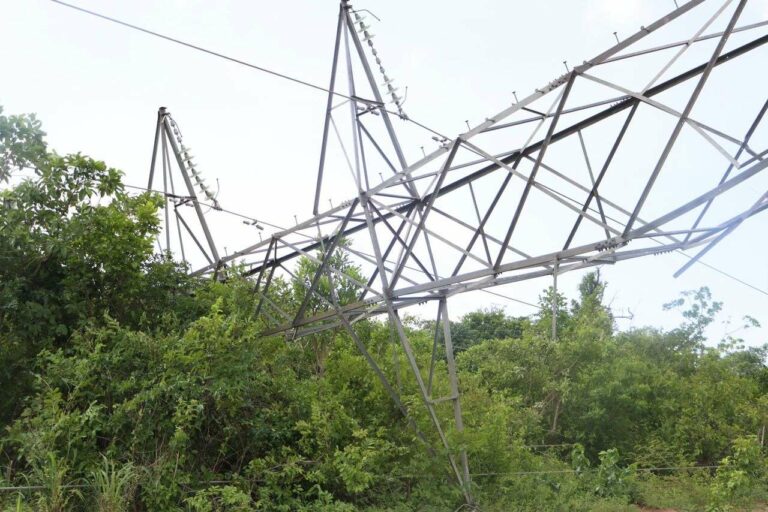
THE Transmission Company of Nigeria (TCN) has reported an attack on transmission lines conveying bulk power to Abuja, the Federal Capital Territory (FCT).
A statement by the general manager of public affairs at the TCN, Ndidi Mbah, on Friday, January 17, said unknown persons carried out the attack around Millennium Park.
The vandals did not only destroy cables, they carted away 40 meters of 1x500mm XLPE conductor on the 132KV transmission lines.
The ICIR reports that Millennium Park is a stone’s throw from the Aso Villa, otherwise known as the Presidential Villa, housing President Bola Tinubu, the National Assembly, the Supreme Court and other prominent government institutions.
Mbah said the incident occurred in the early hours of Friday at its 132KV transmission line and underground cable transmitting bulk power to the 132KV Central Area transmission substation, Katampe, Abuja.
According to her, the attack on the power infrastructure affected the supply of electricity to Maitama, Wuse, Garki, Jabi, Lifecamp, Asokoro, Utako, Mabushi and part of the Presidential Villa.
Mbah said the attack affected distribution feeders feeding the Central Area and over 60 per cent of the power supply to Abuja.
Speaking further on the recurrent vandalism of power cables across the country, Mbah said the company had dispatched a team of engineers to the site to ensure quick restoration of power.
She appealed to Nigerians to be vigilant and protect TCN’s transmission equipment.
The ICIRreported that the TCN confirmed that 128 transmission towers were destroyed by vandals in 2024, raising concerns over the recurrent epileptic power supply in the country.
In 2024, the northern part of the country was plunged into darkness following the activities of vandals.
The transmission company said it spent about N8.8 billion to repair and put into use the vandalised transmission towers within the year.
Meanwhile, thousands of Abuja residents have been facing disruption in power supply following the relocation of the 33KV DC Airport Feeder and 132KV Kukwaba-Apo Transmission Line Towers along the Outer Southern Expressway by the Federal Capital Development Authority (FCDA)
The Abuja Electricity Distribution Company (AEDC) disclosed this in a statement on its official X handle on Friday, January 3.
The two-week power outage which began on Monday, January 6, is expected to end on Tuesday, January 21.
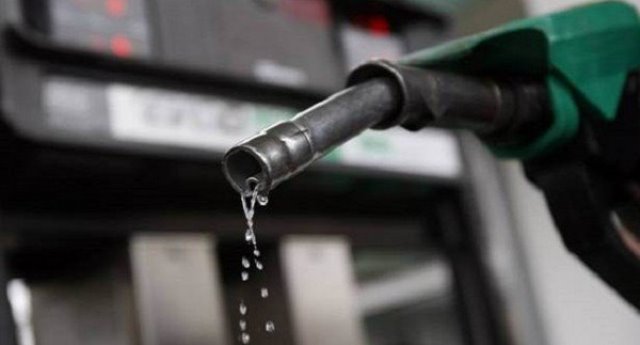
PETROLEUM Retail Outlet Owners Association of Nigeria (PETROAN) has confirmed price adjustments in its retail outlets nationwide.
The National President of PETROAN, Billy-Gillis-Harry, told The ICIR that there were marginal price adjustments in most of its retail outlets across the country, following the current global spike in the price of Brent crude.
According to oilprice.com, Brent crude oil sells at $81.03 today, Friday, January 17, the highest in 2025, and a major reason for the increase.
Sequel to the global hike in price, the Dangote Petroleum Refinery communicated an upward adjustment in the price of petrol to its customers to N955 from N899/litre earlier today.
In a statement seen by The ICIR, the refinery announced that its refined products would be sold at N955 per litre at the loading gantry.
It noted that marketers buying between two million – 4.99 million litres would begin to buy at N955 per litre while those buying five million litres and above would buy at N950 per litre.
The amount marks an increase of N55.5 or 6.17 per cent from N899.50 per litre announced as a holiday discount for Nigerians last year December.
According to the refinery, the adjustment applies to all stock balances yet to be lifted when it announced the rise in price while pending stock as of the time would also be repriced at the updated rates.
The statement added that the new price regime would take effect from 5:30 pm, today.
Part of the notice titled, “Communication on PMS Price Review” reads, “Kindly be advised that effective from 5:30 pm today, an upward adjustment has been implemented on the gantry price of premium motor spirit (petrol). Please note that all stock balances yet to be lifted at the above-stated time are to be repriced at the newly reviewed prices.
“We shall communicate with customers on their revised volumes based on the reviewed prices, in due course.”
It added that the price increase was expected to have widespread effects on the downstream petroleum sector, particularly private depots and retail markets.
An oil sector governance expert, Adeola Adenikinju, told the ICIR that there is a need for the regulatory bodies to monitor the price adjustments to forestall possible incidences of quasi-market dominance.
“The regulatory authorities must find a way to ensure price control powers are not usurped by an individual but determined by market forces,” he added.
On Thursday, January 16, the minister of state petroleum resources (Oil), Heineken Lokpobiri, said that the price of crude oil in the international market remained a major force in driving the fluctuations in the pump prices of petrol.
He said the downstream sector was fully deregulated with the government no longer involved in setting prices.
Meanwhile, The ICIRreported that the Organisation of the Petroleum Exporting Countries (OPEC) confirmed that the 650,000 barrels per day/bpd Dangote Refinery capacity to ramp up production was pushing some European refineries which hitherto serviced the Nigerian market out of business.
The Dangote Refinery, which began operations in January last year, started producing petrol in September, years after the country had relied solely on importation for its fuel needs with the Nigerian National Petroleum Company Limited (NNPCL) superintending the import over the years.
IN 2024 alone, Nigeria witnessed the tragic loss of at least 96 lives due to stampedes, with seven deadly incidents marking the year. Over the past 13 years, these devastating events have claimed nearly 300 lives, a grim reminder of the recurring human cost of overcrowding in search of necessities.
Recently, Oyo, Ibadan, and Abuja have seen the latest outbreaks of these tragedies, sparking alarm and reflection on the underlying causes.
Stampedes in Nigeria are often tied to the desperate scramble for free goods, particularly food, palliative supplies, and relief materials. The underlying causes are painfully clearly poverty. Widespread hunger has pushed many Nigerians to overwhelming locations where such distributions take place. For instance, at the funfair in Ibadan, Oyo State, organisers promised to distribute 5,000 naira and food to 5,000 children. However, reports indicated that over 15,000 people showed up for the event, triggering a chaotic crush. This overwhelming turnout, coupled with the scarcity of resources, has led to repeated tragedies.
In recent incidents across Oyo, Anambra, and the Federal Capital Territory (FCT), a staggering 72 people lost their lives, and many others were left injured. These tragic events are stark reminders of the dire economic situation in Nigeria, worsened by inflation, the devaluation of the naira, and the removal of fuel subsidies, which have all raised the cost of living.
Despite government attempts to mitigate the effects, such as increasing the minimum wage, the reality of everyday life remains harsh for many Nigerians, who continue to flock to relief distribution points in search of food and other necessities.
Fourteen years of stampedes in Nigeria (2010-2024)
The history of stampedes in Nigeria reveals a disturbing pattern. In 2013, during the Sallah festivities in Kwara State, a stampede occurred at the residence of former Senate President, Bukola Saraki. The tragic event, which claimed 20 lives, was sparked by a food distribution initiative. This wasn’t the first time such an incident had occurred in Kwara. There were similar tragedies that had claimed the lives of 36 people between 2010 and 2011. A few years earlier, on November 17, 2010, during Saraki’s campaign for the National Assembly, 11 campaigners died in a stampede. Then, on May 27, 2011, during his inauguration, 25 people perished during a palliative distribution.
Stampede in Nigeria
The roots of these events can be traced to a culture of philanthropy established by the late Alhaji Abubakar Olusola Saraki, Bukola’s father, who was known for his generous charity, especially during Eid al-Fitr celebrations. While his charitable legacy was meant to uplift the needy, it also inadvertently contributed to a series of fatal stampedes that resulted from overcrowding at these charity events.
Also, one of the most tragic incidents took place in Lagos in 2010, when a stampede at the National Stadium during the free distribution of rice and other goods resulted in the deaths of over 15 people. The event, organised by the National Emergency Management Agency (NEMA) and other organisations, was meant to assist the vulnerable but ended in tragedy.
In Port Harcourt, the Rivers State capital, another stampede happened on February 13, 2011, along Aba Road, where 10 people were reportedly trampled at Liberation Stadium, the venue of a presidential rally. The incident occurred when policemen on horseback rode into a crowd scrambling for Naira notes tossed into the air by a prominent politician.
Similarly, in Anambra State, another tragic stampede occurred in November 2013 during the “Feast of All Saints” crusade at the Holy Ghost Adoration Ministry in Uke. The gathering of over 100,000 people spiralled out of control, claiming 28 lives. The stampede reportedly started after a former governor, Peter Obi, was handed the microphone to speak. Tensions arose when some opposition supporters started protesting, leading to chaos, and ultimately, the deaths of 28 people.
Another heart-wrenching incident occurred in March 2014, when 16 Nigerians died in stampedes at recruitment events organised by the Nigeria Immigration Service (NIS). The tragedy took place on Saturday, March 15, 2014, when 6.5 million people across all 37 states of Nigeria, including the Federal Capital Territory (FCT), flocked to various recruitment centres in search of one of the 4,000 vacant positions in the Nigeria Immigration Service. The desperate pursuit of work, combined with the disorganised nature of the event, led to a deadly crush.
The ICIR findings from 2015 to 2016 show that there were no records of stampede-reported cases in Nigeria. The only reported case that affected 54 Nigerians occurred in Minna (Saudi Arabia) during the 2015 pilgrimages, the incident occurred while the pilgrims were stoning the devil as part of the pilgrimage rite.
Another tragic stampede occurred in June 2017 in Katsina State, where five people died when hundreds of beggars rushed to collect alms from a wealthy business mogul, Kamal Ma’a Gafi. Tragically, four of the victims were children, underscoring the vulnerability of the poor and the disastrous consequences of a lack of crowd control.
The Covid-19 pandemic in 2020 further exacerbated the crisis, with 23 refugees in Niger Republic dying in a stampede during a food distribution event. The refugees, who had fled the conflict in Borno State, were promised food assistance, but after the governor left, the distribution faltered, leading to a deadly stampede. This marked yet another chapter in Nigeria’s ongoing struggle with managing large crowds at aid distribution events.
In 2022, stampedes claimed 33 lives in two separate incidents. The first occurred on May 28, in Port Harcourt, Rivers State, at a Church event organised by the King’s Assembly. The “Shop for Free” programme, which promised free food, drew in thousands of people, and the resulting chaos, led to 31 deaths.
Similarly, on August 18, a stampede at Comfort Life Mission International Church in Lagos left two people dead and many others injured.
2024 stampedes
The start of 2024 saw several stampedes, with seven people killed during the distribution of seized rice by the Nigerian Customs Service in Lagos. As part of efforts to alleviate the economic strain on Nigerians, the Customs distributed seized food items, requiring participants to pay a #10,000 fee and present their National Identification Number. Sadly, this initiative, intended to help, turned into another deadly event.
On March 22, three students lost their lives during a rice distribution at Nasarawa State University in Keffi, while the following day, seven people died during an almsgiving event organised by Shafa Holdings in Bauchi. The desperation for food led to overcrowding, which led to disaster once again.
Perhaps, one of the saddest of these recent incidents occurred on April 5, 2024, in Sokoto, where nine people lost their lives during a food distribution event hosted by Senator Aliyu Wamakko.
In Oyo State, a stampede at a carnival in Ibadan claimed over 35 lives, most of whom were children. The event, which promised free food for the first 5,000 attendees, drew an overwhelming crowd, leading to disaster.
In Abuja, a similar tragedy occurred at the Holy Trinity Catholic Church, where 10 people died. Another 20 perished in Anambra on the same day, as at least 20 people were reportedly killed in the Ojika community during a rice and gift distribution event.
These events highlight a troubling trend in Nigeria, where the desperation for food and resources in times of economic hardship leads to tragic loss of lives.
What’s common across these incidents is the unrelenting hope of those who, in search of sustenance, find themselves caught in a deadly struggle for survival.
Nation reacts
Dignitaries, including President Bola Ahmed Tinubu, extended their condolences to the families of the deceased and all Nigerians. The president in his media chat faulted the organisers of the events, pointing out that he had been on a palliative sharing mission in his home in Lagos for the past 25 years but had never experienced any kind of stampede or crowd crumble before.
Also, towards the Christmas and New Year’s Eve, the Nigerian police launched an investigation into states where three incidents occurred. The organisers have been arrested by the police force. ICIR reported how the ex-wife of the Ooni of Ife queen Noami alongside two others was arrested over the Ibadan stampede.
But concerns remain as there were no investigations on past stampede incidents even where notable people were involved. For instance, Saraki had three stampede events that claimed no fewer than 56 people. Also, the influence of Peter Obi at the crusade in a church at Uke Anambra where the former Governor was in attendance. He reportedly acknowledged that he noticed unusual reaction from the crowd after he was handed the microphone and suddenly there were political posters from members of the crusade. Obi claimed they left the location of the crusade before he heard the news.
Also, Aliyu Wamakko the current senator representing Sokoto Central and former governor of the state had nine people died in his residence in an organised palliative distribution. Even though Kamal Ma’a Gafi was arrested in 2017 after the incident that killed five in his home during a N500 alms, there were no reports to claim he was prosecuted.
Nigeria immigration service NIS was also caught in the incident that killed 16 people in three states and FCT in a 2014 recruitment exercise. Also the Nigeria Custom Service NCS contributed to the toll in the rice auction sale in Lagos that also claimed not less ten 7 people.
This corroborates that philanthropic individuals, government agencies, politicians, and worship centres have contributed to the rising incidents of stampedes in countries.
The challenge has been the lack of crowd-control measures in place and clearly some of the incidents that involved Nigeria’s paramilitary signaled that control is just beyond mobilizing security agencies to the places of distribution.
SOME Nigerians recruited to work as prison officers in the United Kingdom have resorted to sleeping in cars and setting up makeshift camps due to the absence of accommodation arrangements, according to a report by The Telegraph.
The UK prison service, grappling with staff shortages, reportedly started sponsoring skilled worker visas after an October 2023 change in visa regulations included prison officers to the list of eligible skilled workers.
However, the report noted that the recruits arrived and expected accommodation to be part of the job package, only to discover that no such provision existed.
The president of the Prison Officers Association (POA), Mark Fairhurst, described the situation as dire, recounting incidents where recruits arrived at prisons with their families and luggage, assuming housing would be provided.
In one case, Fairhurst stated a Nigerian officer who could not afford a 70-mile daily commute resorted to sleeping in his car outside the prison, adding that at another location, recruits set up a camp in a wooded area opposite the prison.
Sources from the Ministry of Justice (MoJ) told The Telegraph that approximately 250 foreign nationals had been sponsored to join the Prison Service after completing Zoom interviews and vetting processes.
Prison governors noted that foreign applicants, including many Nigerians, constituted up to two-thirds of the 3,500 monthly applications during one period last year, with the president of the Prison Governors’ Association, Tom Wheatley, stating that the demand appeared to have been fuelled online by the ‘expat Nigerian community.’
He noted that concerns had been raised over language barriers, integration challenges in rural areas, and inadequate preparation for the demands of the role.
Fairhurst also called for a return to in-person interviews, arguing that the current Zoom-based hiring process is insufficient.
He stated that frontline prison officers were often hired without undergoing any face-to-face interviews, and recruits received just six weeks of training, which he argued was insufficient for learning how to manage prisoners effectively.
Telegraph further reported that a record 165 prison staff were sacked for misconduct in 2024, which according to the HM Prison and Probation Service is an increase of 34 per cent compared to the previous year.
The ICIR reports that in recent years, a growing number of Nigerians have migrated to the United Kingdom in search of better opportunities, a trend popularly known as ‘japa,’ which translates to ‘escape’ or ‘flee’ in the Yoruba Language.
This movement has been driven by economic hardships, high unemployment rates, and insecurity.
While many make the journey with the hope of becoming successful, a significant portion end up taking menial jobs that fall below their qualifications to survive and support families back home.
These roles often include caregiving, cleaning, or other low-paying jobs in sectors with staffing shortages.
THE Independent National Electoral Commission (INEC) deleted the record of 7,746 deceased voters from the national voter register in Nigeria’s 36 states and the Federal Capital Territory (FCT) as of December 2022.
The INEC’s voter education and publicity director, Victoria Etta-Messi, disclosed this on Thursday, January 16.
According to INEC, despite progress in cleaning the register, persistent challenges remained during its 2023 post-general election review in December 2024.
Etta-Messi said inadequate official death records made it difficult for the commission to remove deceased voters’ details.
“Problems with official death records continue to make it very difficult for INEC to remove deceased registrants,” the commission stated.
It added that enhanced collaboration with agencies like the National Population Commission (NPC) and the National Identity Management Commission (NIMC) was critical to address the problem.
The INEC said it used a system called the Automated Biometric Identification System (ABIS) to identify and remove fake or duplicate voter registrations, and it turned out that a whopping 2.7 million registrations were invalid – that’s about 22.6 per cent of all new registrants.
The commission said it was committed to making the voter registration process more secure and reliable.
The INEC voter register has always been viewed with suspicion. A few months before the 2023 general election, the electoral body reacted to allegations that underagedpersons were discovered in the register.
This followed INEC’s announcement that it had displayed the register across polling units in the country and on its website.
However, Nigerians expressed concerns over the alarming numbers of underage voters found in the register.
While some wondered how the names got into the register, some called on INEC to carry out due diligence in ridding the register of ineligible voters to restore public confidence before the 2023 polls.
In May 2023, the House of Representatives asked INEC to develop a mechanism to clean up its voter register of dead and fictitious names.
The lawmakers tasked the electoral body to design a software application where families, who lost their loved ones could report the demise of a particular Permanent Voter’s Card (PVC) number so that it could be duly deleted from the commission’s register, polling unit, and ward.
They further asked INEC to include voter verification during continuous voter registration (CVR) to identify those on the register who were still alive and fish out those with fake registration.
The House reached these resolutions when it adopted a motion of urgent public importance sponsored by Leke Abejide, who claimed that INEC’s register was full of millions of people who were dead or non-existent.
Abejide said even his deceased father, who passed on long ago, still had his name displayed on the board (voter’s register) during the general election.
NIGERIAN Governors’ Forum (NGF) has thrown its weight behind the proposed tax reform bills currently under consideration by the National Assembly, citing the need for comprehensive fiscal modernisation and equitable resource distribution.
The development reflects a sudden change in the previous.stance of the NGF, an umbrella body of all Nigerian governors.
In a communiqué signed by its chairman and Kwara State Governor Abdulrahman Abdulrazaq, after a meeting on Thursday, January 16,, the governors emphasised their support for the reform, with key recommendations to ensure fairness and protect citizens’ welfare.
The forum proposed a revised Value Added Tax (VAT) sharing formula, allocating 50 per cent based on equality, 30 per cent based on derivation, and 20 per cent based on population.
They also urged the Federal Government to maintain the current VAT rate and Corporate Income Tax (CIT) levels, citing the need for economic stability.
The governors stressed the importance of continued VAT exemptions for essential goods and agricultural produce to safeguard citizens and encourage agricultural productivity.
The communique reads in part, “The forum reiterated its strong support for the comprehensive reform of Nigeria’s archaic tax laws. Members acknowledged the importance of modernising the tax system to enhance fiscal stability and align with global best practices.
“The forum endorsed a revised Value Added Tax (VAT) sharing formula to ensure equitable distribution of resources: 50 per cent based on equality, 30 per cent based on derivation, and 20 per cent based on population.
“Members agreed that there should be no increase in the VAT rate or reduction in Corporate Income Tax (CIT) at this time to maintain economic stability. The forum advocated for the continued exemption of essential goods and agricultural produce from VAT to safeguard the welfare of citizens and promote agricultural productivity.”
Additionally, the communiqué recommended that development levies allocated to agencies like TETFUND, NASENI, and NITDA remain without terminal clauses in the reform bills.
”The meeting recommended that there should be no terminal clause for TETFUND, NASENI, and NITDA in the sharing of development levies in the bills.
“The meeting supports the continuation of the legislative process at the National Assembly that will culminate in. the eventual passage of the Tax Reform Bills,” the statement added.
THE Governor of the Central Bank of Nigeria (CBN), Olayemi Cardoso, has launched two policy initiatives – the document flow (DocFlow) system and the ministries, departments, and agencies (MDAs) naira payment solution.
In a statement issued by the apex bank on Thursday, December 16, the launch was held at the CBN headquarters in Abuja on Wednesday, December 15, and is a continuation of the bank’s digital revolution project tagged “Digital First” which was flagged off by the Governor in December 2023 as one of his transformation initiatives.
Cardoso, at the launch, explained in the statement that the DocFlow system is a
solution designed to revolutionise the bank’s document management processes by digitising documentation, minimising paper usage, and streamlining the approval processes.
He emphasised the significance of the MDAs Naira Payment Solution, which automates the cash withdrawal process for MDAs, enhancing efficiency in financial transactions and strengthening client support.
Cardoso pledged his commitment to all initiatives of the Bank which aims to enhance service delivery, improve operational efficiency, and foster sustainability through technological advancements and expressed delight that the two solutions were fully developed in-house, thus saving a lot of costs.
Also speaking at the event, the deputy governor, operations, Emem Usoro stated
that the launch of the solutions demonstrated the Bank’s desire for operational
excellence through process automation and creating a culture of innovation that
prioritises stakeholders’ satisfaction.
She further highlighted the benefit of the MDAs naira payment solution to include improved service delivery to the MDAs, while minimising errors, irregularities and mitigating against fraud.
In her remarks, the project lead and acting director of CBN’s Information Technology Department, Jide-Samuel, disclosed that the MDA Cash Payment Solution has been successfully tested with some MDAs and aligns with the Bank’s enterprise objective of, “Excellence in Central Banking Operations”.
The ICIR reports that the MDAs naira payment solution is considered a game-changer in the CBN’s financial transaction management. It is also projected to cause a 70 per cent improvement in payment turnaround time and further improves Nigeria’s financial ecosystem.
The ICIR has reported that CBN recorded 190 per cent improvement on digital transactions of the e-Naira since the system was launched in October 2021.
The apex bank expressed its commitment to build on the recorded successes to grow transactions on digital economy, while encouraging more Nigerians to embrace the platform.
The ICIR reports that Nigeria’s fintech sector has grown exponentially in recent years, driven by both consumer demand and advancements in technology.
According to the Nigeria Inter-Bank Settlement System (NIBSS),the electronic payment transactions in Nigeria hit an all-time high in 2023 as it rose by 55 per cent to N600 trillion, compared to N387 trillion in 2022.
NIBSS data also showed that the total value of point of sale (PoS) transactions for 2023 was N10.73 trillion compared to N8.39 trillion recorded in 2022 indicating a 27.85 per cent increase.
THE Organisation of the Petroleum Exporting Countries (OPEC) has confirmed that 650,000 barrels per day/bpd Dangote Refinery capacity to ramp-up production is pushing some European refineries which hitherto serviced the Nigerian market out of business.
The Dangote refinery, which began operations in January last year, started producing Premium Motor Spirit (PMS) in September, years after the country had relied solely on importation for its fuel needs with the Nigerian National Petroleum Company Limited (NNPCL) superintending the import over the years.
Following the commencement, the refinery has exported petrol, diesel, and aviation fuel to other countries within and outside Africa.
A report by OPEC on Wednesday, January 15, stated that the emergence of Dangote refinery has reduced the importation of petroleum products from Europe to Nigeria.
“The ongoing operational ramp-up efforts at Nigeria’s new Dangote refinery and its gasoline (petrol) exports to the international market will likely weigh further on the European gasoline market.
“Continued gasoline production in Nigeria, a country that has relied heavily on imports to meet its domestic fuel needs in the past, will most likely continue to free up gasoline volumes in international markets which will call for new destinations and flow adjustments for the extra volumes going forward,” the report stated.
Commenting on the development, an energy analyst, Adeola Adenikinju, who is also a professor of Energy economist at the University of Ibadan, told The ICIR that several European refineries which are used to refining Nigeria’s crude may have to seek alternative with the emergence of Dangote Refinery.
“Nigeria imports most of its imported Petroleum products from Belgium, Netherlands, Norway, India and Korea Republic. These countries will really seek alternatives now Nigeria has ramped up production from Dangote and other local refineries,”Adenikinju told said.
He stressed that the improved local refining capacity is good business for the economy, but also warned the government to ensure proper regulatory oversight that will avert monopoly.
It would be noted that in the last quarter of 2024, OPEC said “imports also declined, particularly oil product imports, improving the outlook for the external sector.”
The OPEC report stated that the gasoline crack spread in Rotterdam against Brent increased slightly on healthy exports as confirmed by gasoline inventories.
It added that the gasoline inventory builds are expected to extend into the coming month amid a lengthening gasoline balance in the Atlantic Basin due to winter-season demand-side pressures.
OPEC maintained that the ongoing recovery in gasoline refinery output levels will likely exacerbate the already bearish market sentiment.
Meanwhile, the monthly Oil Market Report disclosed that the average daily crude production in Nigeria hit 1.507 million barrels in December, according to data OPEC got from secondary sources.
It was said to have risen by 12,000bpd, from 1.477mbpd in November.
However, the figure supplied by the government was 1.485mbpd for December. This aligns with that of the Nigerian Upstream Petroleum Regulatory Commission.
Recall that the Dangote refinery was ranked above the 10 biggest refineries in Europe because of its capacity, according to data compiled by Bloomberg.
The ICIR reports that the $20bn Dangote refinery can refine 650,000 barrels of petroleum products per day and is gradually becoming petroleum market leader while influencing pricing largely in the downstream sector.
The OPEC report further stated that this is over 246,00bpd capacity more than Shell’s Pernis refinery located in the Netherlands.
It added that the Pernis refinery has an installed capacity of 404,000bpd the biggest in Europe. The BP Rotterdam in the Netherlands has 380,000 capacity.
NIGERIA’s crude oil production has not improved in the last four years despite the Nigerian Upstream Petroleum Regulatory Commission (NUPRC) doubling the country’s oil rig count to 32.
The NUPRC chief executive, Gbenga Komolafe, declared this before the Senate Committee on Appropriation on Tuesday, January 14.
He said Nigeria’s rig count doubled from 16 in 2021 to 32 in 2024, adding that the increase in rig count reflected ongoing efforts to boost upstream activities and enhance the country’s crude oil production capacity.
“Nigeria’s rig count, which stood at 16 as of 2021, has now doubled to 32 under the commission’s oversight.
“This increase reflects ongoing efforts to boost upstream activities and enhance the country’s crude oil production capacity,” Komolafe said.
The ICIR analysis of NUPRC oil production data agrees with Komolafe’s stance that crude oil production failed to improve despite doubling the oil ring count.
Nigeria’s total oil production, including crude oil, blended condensate and unblended condensate, averaged 1.62 million barrels per day (mbpd) in 2021.
Production dropped to an average of 1.38mbpd in 2022 and recorded a marginal rise to 1.47mbpd in 2023.
While an oil rig refers to a structure designed for drilling wells into the earth to extract oil and natural gas, the oil rig count refers to the number of oil rigs actively drilling for oil in a particular region or country.
The number of rigs is crucial in assessing the level of oil production activity and a higher rig count typically suggests increased oil production, while a lower count indicates reduced activity, according to industry experts.
Last year, at the 23rd edition of the Nigeria Oil and Gas Conference and Exhibition (NOG Energy Week) in Abuja, the state-owned oil firm, Nigerians National Petroleum Company Limited (NNPCL), declared a state of emergency on crude oil production.
“We have decided to stop the debate. We have declared war on the challenges affecting our crude oil production. War means war.
“We have the right tools. We know what to fight. We know what we have to do at the level of assets. We have engaged our partners. And we will work together to improve the situation,” the NNPCL boss, Mele Kyari, assured.
However, crude oil production volume continues to be below the benchmark target, leaving experts to frown at Nigeria’s inability to meet its Organisation of Petroleum Exporting Countries (OPEC) quota of 1.5 million bpd.
As Nigeria continues to fund budget deficit year after year, an energy expert, Joe Nwakwue, believes that every Nigerian should be worried about the output level of the nation’s oil production with the rise in the price of crude oil at the international market.
Another expert, Kalu Aja, noted that crude oil remained Nigeria’s major source of revenue and should be guarded jealously.
“Our inability to meet up with our OPEC quota is a major concern,” he said.
In its Monthly Oil Market Report, released on Wednesday, January 15, OPEC revealed that Nigeria’s crude oil production, based on direct communication, fell to 1,485 in December 2024 from 1,486 in November.
The OPEC was, however, hopeful that the ongoing operational ramp-up efforts at Nigeria’s new Dangote Refinery and its gasoline exports to the international market would likely weigh further on the European gasoline market.
It added, “Continued gasoline production in Nigeria, a country that has relied heavily on imports to meet its domestic fuel needs in the past, will most likely continue to free up gasoline volumes in international markets which will call for new destinations and flow adjustments for the extra volumes going forward.”
Meanwhile, the NUPRC has projected a crude oil production (oil and condensate) of at least 2.1mbpd in 2025.