THE Wellcome Photography Prize is seeking imagery exploring health, climate and science.
This year, the contest aims to highlight stories of hope and resilience across Wellcome’s core areas of focus and the spaces where they intersect.
Applicants can submit entries in three categories: striking solo photography; a storytelling series, and the marvels of scientific and medical imaging.
Images should explore one or more of the following subject matters: mental health; infectious disease; climate and health; and/or discovery research.
The winner of each category will receive GBP10,000 (US$12,585). An additional 22 entries from across the three categories will be awarded GBP1,000 (US$1,258) each.
Photographers from all disciplines and levels can submit their work on science and health for this prize.
These top 25 entries will be shown at a major public exhibition in London in summer 2025.
They may also get the opportunity to take part in events to showcase their work to a range of audiences.
The deadline for the submission of the application is January 14, 2025.
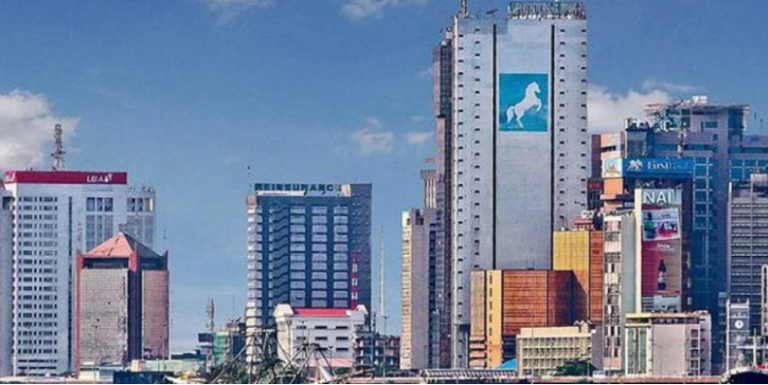
THE Central Bank of Nigeria (CBN) has accepted N370.41 billion capital raising for Access Holdings Plc but rejected N822.596 million in offers.
The bank, on July 8, 2024, opened its rights issue to existing shareholders and closed it on August 23.
The offer was 17,772,612,811 ordinary shares of N0.50 each at N19.75 per share, setting a condition for purchase based on one new ordinary share for every two existing ordinary shares held as of Friday, June 7, 2024.
In its latest notification to the investing public, Access Holdings said N371.77 billion were received in respect of the offer, while N371.24 billion were confirmed as valid and successfully processed in connection with the offer.
However, CBN disqualified N822.596 million for not meeting up with the capital verification report.
“Therefore, 18,755,158,972 shares valued at N370,414,389,697.00 were accepted having been confirmed as valid and verified by the CBN,” the bank disclosed.
The N370.41 rights issue accepted by the apex bank is aimed at strengthening the lender’s capital base beyond a new regulatory requirement as part of its expansion strategy.
The lender’s share capital — at N600 billion naira — is now 20 per cent above the minimum required for banks with international operating licences.
The fresh capital inflow has received the Securities Exchange Commission (SEC), it stated.
The ICIR reports that the rights offer is part of the bank’s plan to raise $1.5 billion to help meet CBN’s mandate of N500 billion minimum capital for internationally licensed banks.
The apex bank had set a 24-month period, which started in April 2024 and will end in March 2026, for all banks to be recapitalised.
In March, it issued a guideline to banks as it hopes to reposition the country’s banking system and position it towards the federal government’s dream of achieving a $1 trillion economy by 2030.
PRIMARY and secondary schools across Bauchi State are not only in a decrepit state, but they also lack adequate and qualified teachers. This investigation unveils the dire conditions in the schools and how the state government is looking the other way.
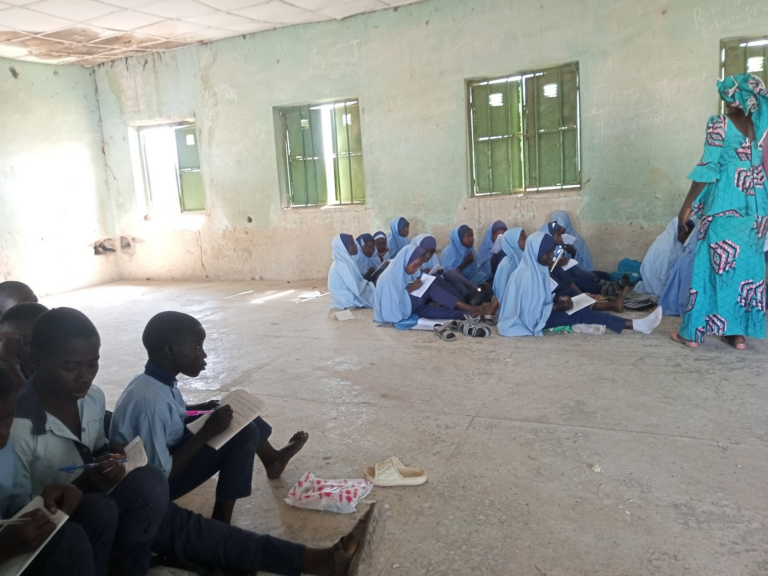
In Mararaban Liman Katagum, an outskirts community in Bauchi local government of Bauchi State, northern Nigeria, 14-year-old Musa Ahmad, sits quietly on the bare floor of a dusty classroom at Government Junior Secondary School (GJSS) Mararaba, scribbling down algebraic equations.
His teacher, *Abdullahi (real name withheld for fear of victimisation), paces before the weary blackboard, trying to explain the lesson. Yet, something seems missing – Musa struggles to comprehend the material. Not because he lacks capacity, but because his teacher apparently lacked a background in mathematics.
Abdullahi, originally employed as a social studies teacher, had been reassigned to teach mathematics due to shortage of qualified teachers in the school.
“I haven’t studied mathematics,” Abdullahi admits,” but I have to teach it. What choice do I have? The students need a teacher, and there’s no one else.”
Abdullahi, a teacher in a school with over 300 students, is a reflection of the shortage of qualified teachers in Bauchi State.
Students in GJSS Mararaba
This trend is particularly pronounced in primary and junior secondary schools. Teachers like Abdullahi are assigned to teach subjects such as mathematics, and English language, despite having no formal qualifications in these fields.
During a visit by our reporter to GJSS Mararaba on October 23, 2024, only one teacher was present to manage the entire school. When the reporter returned on November 5, Abdullahi, joined by a fellow teacher and a volunteer, was doing his best to control the crowded classrooms.
“I’m exhausted,” he lamented, slumping into a chair as the volunteer left just four minutes later, leaving him and his colleague to face the challenge alone.
“The truth is; we need more teachers. Right now, we don’t have an agricultural science teacher. Sometimes the Hausa language teacher steps in to help, but it’s not enough.”
Abdullahi explained that, in reality, the school needs at least 25 teachers to function properly, yet only nine are officially assigned, scrolling down the list of names in a faded record book which he said teachers bought with their meagre salaries to keep the school running.
He also lamented about the prevalence of nepotism in employment practices, which compounds their staffing crisis. “Some of the teachers here are sons and daughters of big people. They show up only when they feel like. Others, who want to teach, come from far away and can’t afford transport fares five days a week,” he said.
Abdullahi pointed out another challenge – the proliferation of teachers trained only in Islamic studies. “We have over four Islamic teachers here who can’t teach other subjects, but we have no choice but to ask them to try,” he explained.
“There are graduates and NCE holders in this community, eager and qualified to teach, yet they are sitting at home, their potentials wasted, while our classrooms remain underserved,” he added.
Challenges at every turn
Less than 10 kilometres from GJSS Mararaba, exists a 16-year-old nomadic school staffed by a single teacher, who, for over a decade, worked to educate more than 300 pupils. Tragically, in early 2024, the sole teacher passed away, leaving the pupils stranded in a makeshift shelter, formed by the community.
In Dass local government area, the problem is similar. The administrative officer at Government Junior Secondary School (GJSS), Husaini Wandi spoke about how the lack of teachers affects education.
“We need more teachers,” he said, citing the imbalance in the deployment of the teachers as another problem. “Out of 12 teachers, we have four Islamic teachers and four basic science ones. But we don’t have a single mathematics teacher, which is a core subject essential for the students.
“English is being managed by an NYSC corps member posted here and only one teacher for Physical Health Education (PHE). Yet, we’re responsible for teaching over 200 students. The last time the state recruited new teachers was back in 2014.”
On this reporter’s first visit to the school on October 30, it was under lock. A teacher on a phone call explained that staff had been called to Bauchi for a verification exercise.
A signpost at the GJSS Wandi.
When this reporter returned on November 5, three teachers were present. Corroborating on the persistent flaws in education in the state, he continued, “The education system here is pathetic. Teachers often buy registers and other essential materials out of their own pockets or with support from the PTA (Parent-Teacher Association). Every week, we contribute to buying chalk. It’s truly unfortunate.”
Further findings show that in several schools across the state, it is common for one teacher to teach up to multiple subjects in a week. The result is an overburdened, underprepared work.
Many schools under lock
Just like the scene at JSS Wandi and Dabardak in Dass on October 30, where neither teachers nor students were present, JSS Ajili in Misau LG is facing a similar challenge.
A visit to the school on November 6, found it entirely deserted, with doors closed and no sign of staff or students.
“No one showed up, and this is how it often is,” a nearby primary school teacher revealed, adding: “There are only three teachers here, and perhaps they are bored of coming.”
In Giade, like in many places visited, the story is the same. Zankam primary school, was also under lock when the reporter visited the school on October 17, as no teacher was available.
Zankam Primary School in Giade.
However, a couple of months earlier, the headmaster of the school Alhaji Haruna said there were only two teachers in the school.
Haruna explained the challenges of rotating classes in their classrooms, merging pupils from different grades just to cover the basics.
In Abbakorawa village, the situation is also similar. Only two teachers, the headmaster who travels from a neighbouring community come infrequently and an Arabic teacher.
“The children are not coming due to the lack of teachers,” said Malam Muhammadu, a community elder in Abbakorawa, adding, “If they come one day and don’t meet a teacher, they leave and may not return for the whole week.”
“It pains me, seeing that our children are not attending school, but there is nothing one can do,” he said.
Students as victims
Like Musa in Mararaba, Aisha Sagir, a 16-year-old student in Misau, grieved that, “Our teacher doesn’t seem to understand some topics. In some instances, we have to figure things out ourselves. We don’t know how this thing can work.”
Assessments of the students in various schools in the state revealed a wide gap between the required standard and their current comprehension.
This situation indicates the vast challenges facing education in the state, where understaffed schools leave hundreds of students without adequate knowledge.
The findings discovered that Bauchi State has long struggled with a shortage of qualified teachers, a problem acute in rural and underserved areas.
In 2023, the state government acknowledged that 79 schools in Misau LGA alone had only one teacher each. Yet, the government official revealed that the teacher deficit in the council was better off, compared to other LGs.
“Misau is even better compared to other LGAs. Go to some other schools and see the situation there,” the director of school services of the State Universal Basic Education Board (SUBEB) in Bauchi Korijo Usman, revealed.
He also pointed out that the average class size in the state was 72 students, more than double the 1:35 teacher-student ratio recommended by the Nigerian government.
Impact on teachers
The consequences of the deficit for teachers are dreadful, with many teachers experiencing burnout, as they are forced to prepare lessons for subjects they do not fully understand, Fatima Mohammed, a teacher at a junior secondary school, in Ningi lamented.
“I was employed to teach social studies, but now I am also responsible for English language and on some occasions, agricultural science. Every night I stay up late, trying to read textbooks to make sense of the materials I’m supposed to teach. It’s exhausting.”
This additional workload, coupled with low pay and inadequate resources, has left many teachers like Fatima questioning their career choices.
Her passion for teaching has been eroded by the daily challenges she faces. “I wanted to be a teacher, but now, I feel exhausted and also feel like I am failing my students.”
Despite acknowledging the decade-long challenge, the state government has shown a ‘devil-may-care’ attitude to recruit more teachers. As a result, teachers are left to fill the gaps, often with disastrous consequences.
In schools lacking teachers, classrooms become nearly empty of teachers, or those who teach subjects beyond their field of study resulting in the students becoming lax in attending classes.
This threatens the educational future of young ones, as former head of school services, and one of the stakeholders in the council, Jibrin Saleh, stated.
Saleh, who served in Dass LGA before retiring, described a shattered education system, worsened by the government’s failure to recruit more teachers.
“When I was transferred to Dass in 2016, we had about 800 teachers. By the time I left in 2022, that number had dropped to less than 500,” he said, noting that every year, teachers either retire or pass away without replacement.
This, according to Saleh, is one of the major reasons for the gradual collapse of the educational infrastructure in the state.
“Today, there are 93 schools across Dass LGA, yet many operate with only two to four teachers, even in upper-basic schools where at least 10 teachers should ideally be needed every day to cover a wide range of subjects.”
In those schools, according to Saleh, the shortage forced teachers to teach subjects they weren’t qualified for, thereby compromising students’ learning and comprehension.
“In schools like Gala, Goltukurwa, and Dabardak, some teachers handle multiple subjects outside their specialties, just to keep the curriculum afloat.
He added that this trend not only burdens the teachers but also leaves students without a foundational understanding of key subjects. “The impact on the students is severe; they lack the knowledge needed to advance,” he said.
Students sitting on the bare floor at Mararaba School.
Volunteers step in
Due to the teacher depletion, young graduates with university degrees, likewise those with qualifications like the National Certificate in Education (NCE) have stepped in as volunteer teachers.
However, they are often compensated with pittance pooled together by the few permanent teachers or go unnoticed.
“These volunteers patriotically contribute, accepting as little as N3,000 a month,” Saleh said, highlighting the sacrifices these aspiring teachers make to support their community despite limited financial recognition.
The impact on students is clear. These volunteer teachers frequently abandon their roles without notice, as seen in Mararaba school.
Saleh himself has three NCE holders and a graduate in his household who are ready to teach but remain unemployed.
Aliyu Usman Tilde, former commissioner for education in the state corroborated that, “The popular thing is to believe that there is a shortage of teachers in public schools and rural areas especially.”
Tilde maintained that employing more skilled teachers would be a welcome step.
He identified the imbalance in the teachers’ specialisation as another pressing challenge in the state.
He said, “the second problem is the area of specialisation of teachers. What do you do as an administrator in a political era where any slight effort to balance up things is greeted with so much condemnation in the larger public and discomfort in the government house?
“This can only be corrected by prudent future recruitments and when both the public and the politicians are ready for it because it will require the painful disengagement of some teachers and replacing them with the desired ones.”
In 2023, Abdullahi Abubakar, a specialist with the USAID-funded “LEARN to Read” project, lamented that basic education in Bauchi State was in bad condition, with 207 public schools across the state having no single teacher.
He revealed this in Kano at a two-day orientation programme for the state legislators on their oversight roles which was reported by several media houses, including ThisDay and Daily Trust.
Low performance
Reports indicate that Bauchi State students consistently underperform in national exams compared to their peers in many states.
The 2019 SSCE performance for students in Bauchi State public schools published by NBS shows that only 23 per cent of the students got credit in five subjects, including mathematics and English, taking 34th position out of the 36 states of the federation and Abuja.
In 2020, 24 per cent of the students got the five subjects, while in 2021, the state made a stride to clinch better steps with nearly 68 per cenr of the total candidates that sat for WASSCE, becoming the 10th state with poor student performance.
For students like Musa in Mararaba and Aisha in Misau, time is running out. Each year they spend in an understaffed school is another year that their dreams are deferred.
Parents lament
Parents are equally concerned. Salamatu Adamu, a mother of four students in Gamawa, lamented the poor quality of education her children receive.
“I sent my children to school but they often complain about not understanding when we try to assess them. How can they succeed if their teachers don’t know the subjects?” she asked.
According to Salamatu, the depletion of teachers deprives children of a proper learning experience, often leading to a decline in their moral values.
“Many times, students are left unattended when they should be engaged in class, leaving them unchecked.
“Education is not a priority for our leaders. They talk about reforms, but when it comes to reality, they fall short. The masses suffer, but it’s like no one cares,” she said.
For a decade, the Bauchi State government failed to implement effective recruitment strategies to address the growing gap in the education sector, the reality officials often refute.
Mohammed Abdullahi, the Spokesman for the Bauchi State SUBEB, said they are aware of the challenge.
According to Abdullahi, the state government has approved the recruitment of more teachers, but the plan was delayed by some bureaucratic processes he did not specify, “and it has not kicked off”, he said.
Mohammed Abdullahi, Bauchi SUBEB PRO.
With the new chairmen of SUBEB and Teachers Service Commission (TSC) in the state, Abdullahi hoped that the recruitment process would soon commence, stressing “I know they are working round the clock.”
According to the SUBEB spokesman, the last recruitment done was in late 2014, but the state absorbed some 1,000 UNICEF-trained female teachers into classrooms.
As of August 2023, the total number of teachers in Bauchi State public schools was 14,510 consisting of 9,104 male and 5,406 female teachers managing 14,499 classrooms across the state.
However, Abdullahi stressed that the number of teachers goes down every month, because a considerable number of teachers retire or die every month, and there is no replacement.
The teacher deficit in Bauchi State, caused by the government’s failure to recruit, highlights an education system where potentials and hope are impeded by neglect and systemic failures.
With this, committed teachers suffer, while the hope of children striving for a good education continues to fade out.
THE Nigerian Civil Aviation Authority (NCAA) has initiated punitive actions against some airlines for breaching various consumer protection regulations.
This was disclosed by the NCAA director of public affairs and consumer protection, Michael Achimugu, in a statement posted on his official X page, on Tuesday, December 24.
While Achimugu’s statement did not name the affected airlines, Leadership newspaper reportedthat Ethiopian Airways, Royal Maroc Airways, Arik Air, Aero Contractors, and Air Peace were among those facing sanctions.
According to the NCAA, the violations include issues such as short-landed baggage, delayed refunds, flight delays and cancellations, mishandling of baggage, and non-responsiveness to official communications.
The director noted that the cases had been escalated to the NCAA Legal Department for further action.
“Earlier today, I notified five airlines that the NCAA has initiated enforcement actions against the operators for violation of various consumer protection regulations (Part 19 of the NCAA Regulations 2023).
“The violations include, but not limited to, short-landed baggage, delayed refunds, flight delays and cancellations, non-responsiveness to official communication from the authority, manhandled baggage, etc.
“I have now escalated our enforcement actions to the NCAA Legal Department for further action,” part of the statement read.
Achimugu emphasised the agency’s commitment to enforcing compliance with its 2023 consumer protection regulations while also noting that not all disruptions are faults of airlines
He stressed that the NCAA will continue to support airlines while also protecting the rights and responsibilities of air travellers.
“Recall that about a week ago, I announced that sanctions would be enforced for delayed refunds. I must commend the majority of Nigerian airlines for complying with the regulations since then.
“These enforcement actions exist to improve service in the industry, and the NCAA remains committed to protecting the rights of all stakeholders, including the airlines,” he stressed.
The ICIR reports that airlines operating in the country have faced increasing scrutiny over customer service standards, with recurring complaints from passengers about delayed flights, damaged baggage, and slow refunds.
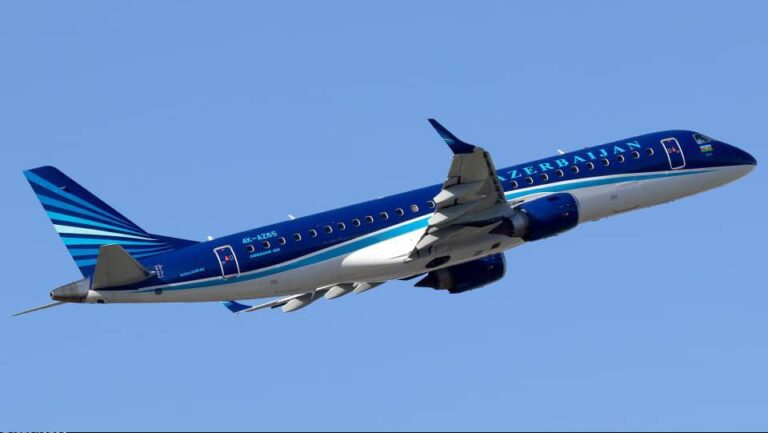
AT least 35 passengers were killed after an Azerbaijan Airlines jet with 67 people on board crashed on Wednesday, December 25, in western Kazakhstan
Officials said about 28 people survived the crash, which occurred near the city of Aktau, an oil and gas hub on the eastern shore of the Caspian Sea.
The plane was flying from Baku, Azerbaijan to Grozny, Chechnya in southern Russia before it crashed after veering from its scheduled route due to fog.
The flight’s original route would have taken it along the western shore of the Caspian Sea.
All five crew members died, with the majority of survivors occupying seats in the plane’s tail section.
“A plane doing the Baku-Grozny route crashed near the city of Aktau. It belongs to Azerbaijan Airlines,” the Kazakh transport ministry said on Telegram.
Meanwhile, Azerbaijani President Ilham Aliyev was forced to cut short his trip to Russia, where he was scheduled to attend a summit of leaders from the Commonwealth of Independent States, a group of former Soviet nations.
He expressed his condolence over the tragedy.
Azerbaijan Airlines reported that the plane had 67 passengers on board, consisting of 62 passengers and five crew members.
The plane made an emergency landing approximately three kilometres from Aktau. According to the Kazakh Transport Ministry, the passengers consisted of 37 Azerbaijanis, six Kazakhs, three Kyrgyzstanis, and 16 Russians.
Kazakhstan’s Emergency Ministry reported that its personnel extinguished a fire that erupted when the plane crashed.
Preliminary reports indicate that 28 survivors, including two children, are receiving medical treatment in a hospital. A team of 150 emergency responders worked at the scene.
The ministry announced that a special flight with specialist doctors was being dispatched from Astana to provide medical care to the injured. Initially, 14 survivors were taken to the regional hospital, with five in intensive care.
Azerbaijan’s First Lady and First Vice President, Mehriban Aliyeva, expressed deep sorrow over the loss of lives in the plane crash. She extended her condolences to the victims’ families, wishing them strength and patience, and also wished a speedy recovery to those injured.
According to reports, the plane deviated from its usual route while crossing the Caspian Sea and circled the area before crashing.
Kazakh authorities have launched an investigation into the cause of the accident.
“Pastor adebayo may Allah guide you to the right path.”
The post has garnered over 3.8 million views, with more than 1,500 reposts, over 1,800 comments and more than 4,000 likes as of December 22, 2024.
Popularly called Pastor Adeboye, the Christian cleric oversees the RCCG church which has a presence in many countries with thousands of parishes and millions of parishioners worldwide.
CLAIM
Image shows Pastor Adeboye in Saudi Arabia.
THE FINDINGS
Findings by The FactCheckHub show that the claim is MISLEADING as the images are deepfakes, and very likely generated using Artificial Intelligence (AI).
AI-generated images of Pastor Adeboye in Mecca that went viral on X.
The FactCheckHub used multiple AI detection tools to verify the two images and the results shows high likelihood that they were generated using artificial intelligence (AI) tools.
For instance, The FactCheckHub checked the images using hive moderation, an advanced AI detection tools, the result shows 99.7 per cent and 99 per cent probabilities of being AI-generated or deep fake content.
We also checked the images using TrueMedia.org, another AI content detection tool, the result also shows that the images are digitally manipulated and showed 99% confidence of them being generated by AI.
In addition, our fact-checker reviewed Adeboye’s social media accounts and media reports but couldn’t find the images or any report indicating that the pastor went to Saudi Arabia.
THE VERDICT
The claim that the images show Pastor Adeboye in front of Kaabah in Saudi Arabbia is MISLEADING; findings show that the images are very likely AI-generated.
2024 is another windfall year for Nigerian banks as the monetary authority’s hawkish policy boosted banks’ earnings but stunted operations for manufacturing companies and other businesses.
Following the floating of the exchange rate by the Central Bank of Nigeria (CBN), last year, many banks reported massive foreign exchange gains, especially banks with thick foreign currency-denominated assets.
The profits made surprisingly attracted the government’s attention as it demanded a 50 per cent windfall tax from the gains, which shareholders associations have vowed to contend to protect shareholders’ funds.
The apex bank too had its eye on the gain and had strictly warned banks not to pay dividends or meet operating expenses from it.
However, it is a pretty kettle of fish this year as CBN’s hawkish and unrelenting orthodox monetary policy boosted banks’ earnings, but stifled the operations of other businesses.
CBN’s hawkish rate stance
In all its monetary policy committee (MPC) meetings held this year, CBN consecutively hiked the benchmark interest rate by 875 basis points from 18.75 per cent to 27.50 per cent.
Benchmark interest rate, otherwise known as the monetary policy rate (MPR), is the official interest rate at which CBN lends money to commercial banks. The base rate guides the rates commercial banks charge their customers for loans.
The MPC in February raised the benchmark interest rate by 400 basis points to 22.75 per cent. In March it raised it by 200 basis points to 24.75 per cent and in May by 150 basis points to 26.25 per cent.
The committee continued tightening the base interest rate. In July, it raised it by 50 basis points to 26.75; in September by 50 basis points to 27.25 per cent; and by 25 basis points to 27.50 per cent in November to close the year.
According to financial experts, a hike in the benchmark interest rate leads to a higher cost of funds which discourages lending to the real sectors of the economy.
Cost of fund stokes business operations
While the continued hike in the base interest rate boosted banks’ earnings, it inversely affected the operation of other sectors of the economy including manufacturing and small and medium-sized enterprises (SMEs).
“These sectors have been craving a breath of fresh air as the MPC members of CBN hawked votes to tighten the benchmark interest rates,” a renowned economist, Muda Yusuf said.
Yusuf described the orthodox policy choice of the apex bank as being at variance with the mood of most economic players and the desire to promote economic recovery and growth.
“What manufacturers and other investors need at this time is some oxygen and stimulus, not policy measures that would worsen an already suffocating situation,” he said in September.
His advice was that the private sector should not be made to pay for the price of liquidity growth, which it was not responsible for.
“A hike in interest rates increases the cost of funds and is detrimental to investment and growth in the Nigerian economy,” Yusuf said.
“We believe that the policy decisions of the CBN are most inappropriate for the prevailing economic conditions and the challenges faced by entrepreneurs in the country,” he maintained.
The chart shows loss performances of some manufacturing companies. Source: financial statements
A cursory look at the nine-month financial statements that ended September 30, 2024, of some manufacturing companies revealed negative operating performances.
Nigerian Breweries reported N64.30 billion; International Breweries, N112.82 billion; Dangote Sugar Refinery, N184.36 billion; Cadbury Nigeria, N11.86 billion; and Nestle Nigeria; N184.27 billion in losses after tax.
This indicated that the operating and production costs of many businesses were further exacerbated by the CBN’s hawkish policy, resulting in negative financial performances as suffered by the above manufacturing companies.
Private-sector business activity contracted
The CBN has been raising the benchmark interest rates to rein in inflation which throttled to 34.60 per cent in November from 29.90 per cent in January.
Inflation, which increases businesses operating costs and reduces the purchasing power of consumers, made private sector business activities contract for five consecutive months, according to the monthly Purchasing Managers’ Index (PMI) report, an economic indicator that measures the health of the manufacturing and service sectors.
In July, business activities declined to 49.2 points from 50.1 in June. It remained contracted in August at 49.9 points, 49.8 points in September, 46.9 points in October, and 49.6 points in November.
The report which is published by Stanbic IBTC Bank indicates that when the PMI reading is above 50.0 points, it signals an improvement in business conditions, but below 50.0 readings show a deterioration in business activity.
A windfall year for banks
Nigerian banks’ bottom-line profits were boosted by the CBN increasing rate hike contrary to the impact it had on other businesses, a look at their nine-month financial performances reveals.
Growth in banks’ interest income as reported in their financial statements
Access Holdings reported the highest interest earnings of N2.397 trillion in September 2024 relative to N962.88 billion in 2023. This is followed by Zenith Bank which posted N1.95 trillion from N670.93 billion.
Ecobank Transnational Incorporated (ETI) earned N1.93 trillion from an interest income relative to N805.11 billion, United Bank for Africa (UBA), N1.798 trillion from N666.29 billion, and FBN Holdings, N1.63 trillion from N617.06 billion.
Guaranty Trust Holding Company (GTCO) also reported a huge interest income of N980.34 billion compared to N374.56 in the review period as well as other banks represented in the chart.
The head of Financial Institutions Rating at Agusto & co, Ayokunle Olubunmi, explained that the significance seen in the earnings resulted because the growth of the interest income far outweighs the interest expenses.
“Don’t forget that some of the assets that brought about the banks’ growth in interest income are in foreign currency and the interest income also will be in foreign currency,” he told The ICIR.
NIGERIANS may have to wait a bit longer for the positives expected from President Bola Ahmed Tinubu’s economic policies with the reforms squeezing Nigerians’ purchasing power amid rising cost of living.
The twin policies of fuel subsidy removal and floating the exchange rate by the Tinubu administration led to a macroeconomic upturn that saw Nigerians’ purchasing power weakened, with most Nigerians struggling to buy food.
A few days back, Nigerians witnessed a stampede of its citizens awaiting a rice charity programme in Ibadan, Anambra and Nigeria’s capital city Abuja,a situation that attested to the inability of most Nigerians to buy affordable food.
To worsen the concern, the Nigeria’s headline inflation worsened to 34.6 per cent in November from 33.88 per cent in October, according to the National Bureau of Statistics (NBS) latest report.
The statistics office further disclosed that food inflation in November rose to 39.93 per cent on a year-on-year, higher than the 32.84 per cent rate recorded in November 2023.
Despite these glaring struggles of Nigerians to feed and meet up with other basics, government officials of the Tinubu administration said Nigerians have to pay the price of the ongoing reforms with temporary difficulties.
“The key lesson that I think I would focus on is that in devising these programmes and carrying out the reforms, what is particularly important — because the benefits over the longer term and the costs are frontloaded, it is important that the social safety nets that will help the poor and the vulnerable cope with the up‑front costs with a spike in their cost‑of‑living is adequately planned for and dealt with,” the minister of finance and the coordinating minister of the economy said while defending President Tinubu’s economic reforms.
Notably, Nigerians have been struggling with the negative consequences of food inflation as the country’s food-belt states are still bedevilled by insecurity.
“If you want inflation to go down, we must be self-sufficient in food. We must bring down the price of food. There are no two ways about that. In most food-belt, farmers go through lots of trouble to harvest their food. The government should tackle food-insecurity and see its impact on food inflation,” a development economist, Kalu Aja said in an X space organised on rising food inflation.
The statistics office also disclosed that the cost of food in Nigeria increased 39.93 percent in November of 2024 over the same month in the previous year. Food Inflation in Nigeria averaged 13.86 percent from 1996 until 2024, reaching an all-time high of 40.87 percent in June of 2024 and a record low of -17.50 percent in January of 2000.
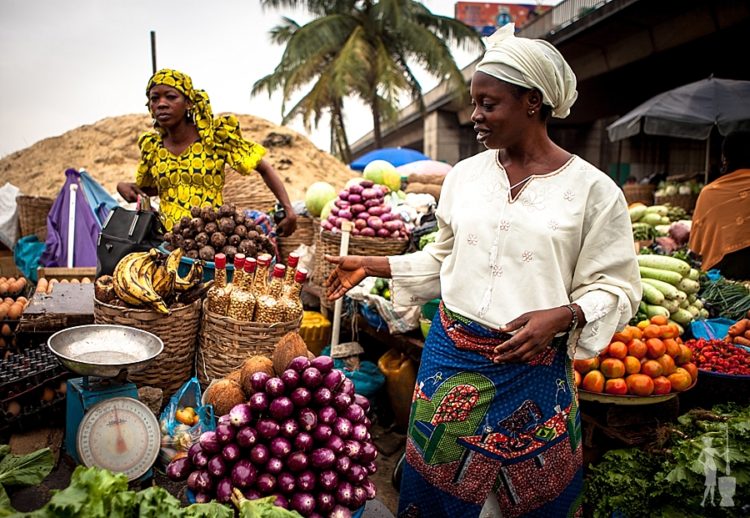
The ICIR reports that torrential rain and flood in 29 of Nigeria’s 36 states this year have destroyed more than 1.5 million hectares of cropland, making millions go hungry and causing mass displacement. The central bank has hiked interest rates five times this year to try to get inflation under control, yet Nigerians can hardly buy food.
Citing his personal experience, a public servant and resident of Kubwa in Bwari Area Council of the Federal Capital Territory (FCT), Adamu Bello, said the situation was becoming worrisome, especially in local communities where three square meals have now become a luxury.
“It is getting worse daily; people can hardly feed three times a day, even though they try to manage their resources to buy what they can afford.
“Only those with sufficient funds can buy foodstuffs in bulk now to save costs in the festive season, and how many have the money with all the high bills to pay?” he said.
He urged the government to intervene to find lasting solutions to the rising cost of food.
How Tinubu’s reforms fared in banking sector in 2024
The banking sector witnessed several policy measures in 2024 which were largely influenced by three major factors, namely the persistent rise in the inflation rate, policy measures to reform the foreign exchange market and the recapitalization programme announced for the industry.
On inflation, the steady rise in prices of goods and services worsened in 2024, due to a combination of further increase in pump price of petrol and continuous naira depreciation.
In 2024, the naira depreciated by 34 per cent and 56 per cent to N1,662 and N1540 per dollar in the parallel and official market, from N1, 240 and N988.46 per dollar at the beginning of the year.
The depreciation of the naira combined with fuel subsidy removal led to 76.4 per cent increase in national average price of petrol to N1,184.83 per litre.
Interest rate hikes fail to halt inflation
In response to the persistent rise in the inflation rate, the Central Bank of Nigeria (CBN), implemented measures to reduce money supply in the banking system. The apex bank raised the benchmark interest rate eight times and by 875 basis points to 27.5 per cent in November from 18.75 per cent at the beginning of the year. These measures failed to lessen the inflationary pressure as Nigerians still struggle with high food prices.
“The magic wand is ensuring incentivised food production in Nigeria’s food belts and massive food supply will impact hugely on inflation drop,” a development economist, Celestine Okeke, told The ICIR.
The CBN also increased the Cash Reserve Ratio (CRR), of Commercial and Merchant banks to 50 per cent and 16 per cent respectively from 32.5 percent and 10 per cent at the beginning of the year. Furthermore, the apex bank conducted a liquidity mop up through regular sale of Open Market Operations (OMO), treasury bills.
The ICIR analysis of data from the apex bank showed that the CBN sold N12.83 trillion worth of OMO Treasury bills from January to December 5, up from N716.7 billion in the whole of 2023.
This development led to acute scarcity of funds in the interbank money market, with banks regularly resorting to borrow from the CBN to meet short term cash needs.
Reflecting this, the interbank interest rate rose to 31.5 per cent on Friday December 13, 2024, from 15.38 per cent on December 29, 2023.
In line with the hikes in the MPR, interest rate on 365-days treasury bills rose 22.9 per cent in December from 12.24 per cent at the end of last year. While the high-interest rate regime triggered by the MPR hikes, attracted criticism from manufacturers and other real sector operators, it however enhanced investors’ returns on fixed income investment like TBs, Commercial Papers, and bonds, as well as on banks’ interest income and profitability.
Restriction on banks’ FX holdings
The CBN on January 31st, in a bid to improve forex supply, and address excess dollar holdings by banks, ordered the banks to sell their excess dollar holdings within 24 hours. In a letter on Harmonisation of Reporting Requirements on Foreign Currency Exposures of Banks, the CBN warned against excess dollar holdings.
“The Central Bank of Nigeria has noted with concern the growth in foreign currency exposures of banks through their Net Open Position (NOP). This has created an incentive for banks to hold excess long foreign currency positions, which exposes banks to foreign exchange and other risks,” the CBN said.
Consequently, the apex bank pegged the Net Open Position, NOP, the difference between a bank’s foreign currency assets and its foreign currency liabilities, to 20 per cent of shareholders’ funds.
Hence it directed that banks with current NOPs exceeding these limits should adjust their positions to comply with the new regulations latest by February 1, 2024.
E-payment for PTA/BTA
In a bid to sanitise the forex market, the CBN on February 14, restricted the payment of Personal and Business Travel Allowances (PTA/BTA) through electronic channels only.
“In line with the Bank’s commitment to ensure transparency and stability in the foreign exchange market and avoid foreign exchange malpractices, Authorized Dealer Banks shall henceforth effect payout of PTA/BTA through electronic channels only, including debit or credit cards. For the avoidance of doubt, payment of PTA/BTA by cash is no longer permitted,” the apex bank stated in a circular.
FX backlog resolving
A major issue that dogged the banking industry in 2024 was the overdue $7 billion foreign exchange forward transactions. In February, the CBN Governor, Olayemi Cardoso, in an interview, said a forensic audit of $7 billion of overdue foreign exchange transactions, the bank has been trying to clear had uncovered irregularities affecting $2.4 billion worth of the transactions.
Following this disclosure, the CBN in March announced that it has cleared all valid FX backlog, including the $600 million belonging to foreign airlines operating in the country. However, members of the Organised Private Sector, OPS, faulted the claim by the CBN saying many businesses still had funds trapped at the banks without any communication from the CBN regarding what constitutes a valid forex request and those deemed invalid.
The national vice president of the Nigerian Association of Small-Scale Industrialists (NACCI), Segun Kuti- George, argued that the claim by the CBN that some of the forex requests were invalid was ‘propaganda’ and that some of the affected businesses were contemplating taking legal action against the banks in order to force the CBN’s intervention in the matter.
”Some of the requests have been cleared, but there are others that they are saying were illegal and did not meet their criteria. But the importers are not aware of the reason why the requests have been rejected. Their money is still with the bank, and they are groaning,” he said.
Following the intervention of the Presidency, the CBN Governor, in October, said that the apex bank had commenced a re-validation exercise to ascertain complaints of manufacturers and importers over foreign exchange claims worth $2.4 billion.
Speaking at a special summit dinner organised by the Nigerian Economic Summit Group in Abuja, Cardoso said the CBN had finalised its first stage of verification and is currently going through a second stage to authenticate claims by manufacturers.
AN Abuja High Court has ordered the State Security Services (SSS) to release the detained president of Miyetti Allah Kautal Hore, Bello Bodejo, pending his trial.
According to the News Agency of Nigeria (NAN), Mohammed Zubairu, a vacation judge, instructed the attorney-general of the federation (AGF), Lateef Fagbemi, and director-general (DG) of the SSS, Adeola Ajayi, to promptly admit Bodejo to administrative bail.
Zubairu made the order after an ex-parte motion moved by Bodejo’s counsel, Reuben Atabo, a senior advocate.
Although the motion ex-parte, marked: M/16976/2024, was moved by Atabo on Monday, the certified true copy of the order was made available on Tuesday, December 24.
Bodejo had petitioned the court to release him from the SSS detention, pending a hearing and decision on his main application.
He’s also seeking permission to apply for a writ of habeas corpus, which would challenge the legality of his detention.
In essence, he’s suing the AGF and the DG of the SSS, citing them as respondents in the case.
In his ruling, the judge recognised the respondents’ legal power to prevent and investigate crimes, including the power to arrest, detain, and prosecute offenders.
The judge emphasised that while the respondents had the authority to arrest and detain people, this power is limited by the Constitution, specifically Section 35, which requires that a suspect be detained for no more than 24 or 48 hours.
The judge stressed that this timeframe.was absolute and that courts must be vigilant in ensuring that constitutional provisions are respected and not violated.
“Consequently. leave is hereby granted to the applicant to so apply. I so hold,” the judge ruled.
The judge reportedly ordered the applicant to submit the main application within 24 hours to assess its merits and emphasised that in a constitutional democracy, people should not be detained beyond the constitutionally guaranteed period without a court order.
The judge noted that the applicant had been held since December 9, 2024, without being arraigned in court. He therefore ordered the respondents to produce the applicant in court or grant him administrative bail pending the hearing and decision on the habeas corpus (relief from unlawful detention) application.
The judge adjourned the matter until December 30 for a hearing.
The ICIR reported that Bodejo was first detained after being taken into custody on January 23, 2024, in Malia, Nasarawa State.
The Federal Government later arraigned him before a Federal High Court in Abuja on Friday, March 22 for terrorism-related offences.
He was accused of establishing and supporting an ethnic militia group – Kungiya Zaman Lafiya.
The AGF office filed a three-count charge against him.
According to the AGF’s Office, Bodejo breached the Terrorism (Prevention and Prohibition) Act of 2022.
A CHIEF Magistrate’s Court sitting in Iyaganku, Ibadan, has ordered the remand of Naomi Silekunola, former wife of the Ooni of Ife; Oriyomi Hamzat, chief executive officer (CEO) of Agidigbo FM; and Abdullahi Fasasi, principal of Islamic High School Ibadan, at the Agodi Correctional Centre.
The defendants were arraigned on Tuesday, December 24, in connection with the December 18 stampede and deaths at a Christmas funfair held at the Islamic High School, Bashorun, Ibadan.
The tragic event claimed the lives of 35 children and left six others injured.
Presiding over the case, Olabisi Ogunkanmi, a chief magistrate, directed that the three accused be held in custody pending legal advice from the Oyo State director of public prosecutions.
They are facing a four-count charge related to the stampede and deaths, which the prosecution argued contravened Section 324 of the Criminal Code, Cap. 38, Vol. II, Laws of Oyo State, 2000.
According to the prosecution, the accused played key roles in organising the event, which drew over 5,000 children with promises of cash handouts and free food.
The overwhelming crowd caused a deadly stampede, turning the festive gathering into a disaster.
The ICIR reported that the stampede was widely condemned for lacking adequate planning and crowd control.
The police, who confirmed 35 fatalities, arrested eight persons linked to the event, including Silekunola, who was identified as the main organiser.
The incident triggered nationwide criticism, with many demanding stricter regulations for public events to prevent similar tragedies.
Many Nigerians also attributed the incident to the widespread hunger and hardships grappled by millions of Nigerians.
Despite the calamity, two others followed within the same week in Okija, Anambra State, and a Catholic Chuch in Maitama, Abuja, claiming the lives of dozens of people who came to collect food and other gifts preparatory to Christmas.