THE Federal Government has revealed its plans to review the Lagos-Calabar coastal road project and scale down the lanes from 10 to six to reduce costs.
The minister of works, David Umahi, reportedly disclosed this while touring the highway on Friday, December 20.
He said the review became necessary due to variations in the initial designs and additional interventions.
This includes evacuation of refuse up to 10 meters deep and backfilling affected areas, Umahi said.
He hinted at government efforts to preserve certain structures along the project corridor, adding that part of the available land would be repurposed to include a service lane for communities.
According to the minister, the project review will also address gaps in the initial design, with specific adjustments such as constructing a retaining wall in areas like the Landmark section to ensure stability and durability.
He stated further that the 750-kilometre highway would be equipped with solar-powered streetlights, security cameras, strategic security points, and tree planting to enhance environmental protection and aesthetics.
Umahi said 20 kilometres of the first section of the highway would be among other critical road projects scheduled for inauguration by May 29, 2026.
The ICIRreported that the highway project was initially estimated to cost N15 trillion and to be built by Hitech Construction Company, owned by Gilbert Chargoury, a long-term associate of President Bola Tinubu.
It is an inter-state highway and economic corridor designed to traverse eight states along the coastal shoreline of the country, starting from Lagos State, South-West and ending in Cross River State, South-South.
However, the project has generated heated debates as Nigerians question the importance of the road when the country is experiencing the worst economic crisis in decades.
A case in point is the compensation to be paid to owners of properties along the corridor.
Already, the demolition of Landmark Beach Resort and other businesses was estimated at over $200 million around the project take-off point in Lagos State.
YOUNG professional developers in Nigeria have bared their minds on why most of their colleagues are eager to leave the country once they acquire the requisite skills in the tech ecosystem.
For 27-year-old Aliyu Gambo, a professional software developer from Kaduna, remaining in Nigeria or ‘japaing‘ abroad is a thought that occupies the mind of most of the people in his industry.
“This is the question I have been asking myself: why is it that a developer will reach a certain level of his career and the thought of leaving the country will creep in,” he said.
His thought is not far from reality as many young Nigerians believe that any slightest opportunity to travel to a foreign land should be embraced. It’s a way to escape the unfriendly working environment in Nigeria.
Japa syndrome is a term used to describe the large number of Nigerians who are leaving the country to seek better lives abroad. It also means to run, flee, or escape.
Reports show there is a talent dearth in Nigeria’s tech ecosystem such that expertise is now being sought from outside Africa to build products used in the country.
Some reasons for the shortage include inadequate developers, the availability of remote work that has enabled Nigerian developers to gain employment outside the country, and the preference by most companies to recruit senior talents.
According to a World Bank Group report, in 2020, there were just 83,000 software developers in Nigeria, with over 200 million people, compared to 630,000 in California, with a population of 39 million.
Gambo says he has done his research and finds out that developers are not well paid in Nigeria, not minding how many years put into the job compared to what other developers earn in foreign countries.
“We Nigerians, we are concerned about the money we pay to developers and not the value they create,” Gambo posits. “Nigerian environment does not encourage many best brains to remain in the country but pushes them out to seek better fortunes outside the country where they render their services.”
While it is good to make good fortunes, he feels otherwise that developers who are running to other countries are selling their ideas to the detriment of their own country.
Aliyu Gambo believes leaving Nigeria to reside in a foreign land is a thought among many young developers.
“You are developing their country. Meanwhile, your country is lagging. The more they go there, the more the country is lacking developers,” he says.
In June 2023, a motion was brought to the House of Representatives on the need to declare the emigration of young Nigerians abroad as a national emergency, pointing to the fact that the japa syndrome seems to have reached a worrying state in Nigeria.
“I think the thing we are lacking in Nigeria is the way we treat our developers,” Gambo opines.
He has a prospect to develop an Artificial Intelligence (AI) driven application that could help solve a particular problem in the agro-textile industry, hoping that when the application is launched, it will connect many stakeholders within the value-chain in the agriculture and textile industries.
Lack of resources and support
Gambo says many developers face challenges in the area of resources and support, expressing that remote jobs within Nigeria have not earned the trust.
“If you’re in Lagos or Abuja, you have the privilege of seeing many organisations that need your services.
“If you live in a state where you have companies to employ you, by the time you start working, people will encourage you. You will have other developers to practice with and do projects together.”
He encounters the Financial Services Innovators (FSI) in one of the tech communities he has been involved.
“FSI has helped me. I have undergone more than one programme on FSI,” he recalls.
The organisation help upcoming and tech-savvy enthusiasts to grow and sharpen their passion within the tech ecosystem.
It doesn’t only bring people into a community and train them, it further mentors them and gives them exposure and opportunities to leverage, Gambo, who is barely three years in the profession, hints.
Like many others too, Esther Inyang, a newbie in software development, from Lagos, holds a similar line of thoughts as Gambo.
“It is true that many developers would like to leave the country for greener pastures in more developed countries such as the United States (Silicon Valley), Canada, Germany, the United Kingdom, Switzerland, Ireland, Netherlands, Australia, Singapore, etc.
Esther Inyang
“These developers are largely motivated by better career opportunities for skill enhancement, access to state-of-the-art tech infrastructures, and cutting-edge innovative projects such as healthcare technologies, space exploration technologies, artificial intelligence systems, biotechnologies, decentralised financial technologies, and
Environmental innovations,” she enthuses.
Other enticing factors for the 30-year-old Inyang are work-life balance, higher salaries, stable economic environments, and personal aspirations for international exposure.
On japaing abroad, she says, “My view on this is that Nigeria is our fatherland, and we have the responsibility to take care of what is ours.
“Our youths are smart, intelligent, and talented in many areas; therefore, leaving Nigeria is not the solution to the gaps in those areas we are lacking as a nation; instead, leaving Nigeria is creating more void in these areas that are already staggering.”
“As much as japa may enhance people’s personal growth and development, young Nigerians should not forget that the systems of the developed countries were largely built by the people.
“Hence, if they (Nigerians) must go, I would prefer for them not to stay too long but to bring back the knowledge and experience gathered, to build these technologies and innovative ecosystems in Nigeria,” she suggests.
A 5-year milestone
The ICIR reports that FSI recently marked its 5th anniversary, celebrating incredible years of driving innovation and empowering the Nigerian tech ecosystem.
Aituaz Kola-Oladejo, FSI ED
According to the organisation, the milestone is a testament to the passion, resilience, and dedication of its staff, innovators, zonal leads, state leads, campus ambassador leads, partners, sponsors, and donors who have been instrumental in shaping the journey.
“It had been 5 years of working and partnering with a community of brilliant Nigerians, which include Tertiary Institutions’ students, Financial Services Providers who contributed APIs to the innovation sandbox, international organisations and tech innovators to make Nigeria the ultimate tech hub.
“Together, we’ve nurtured groundbreaking ideas, inspired change, and paved the way for a brighter, tech-driven future,” the executive director of FSI, Aituaz Kola-Oladejo, comments.
An independent risk advisor, Uade Ahimie, commends the efforts and works of FSI to drive the next generation of business leaders towards managing the expectations of tech businesses.
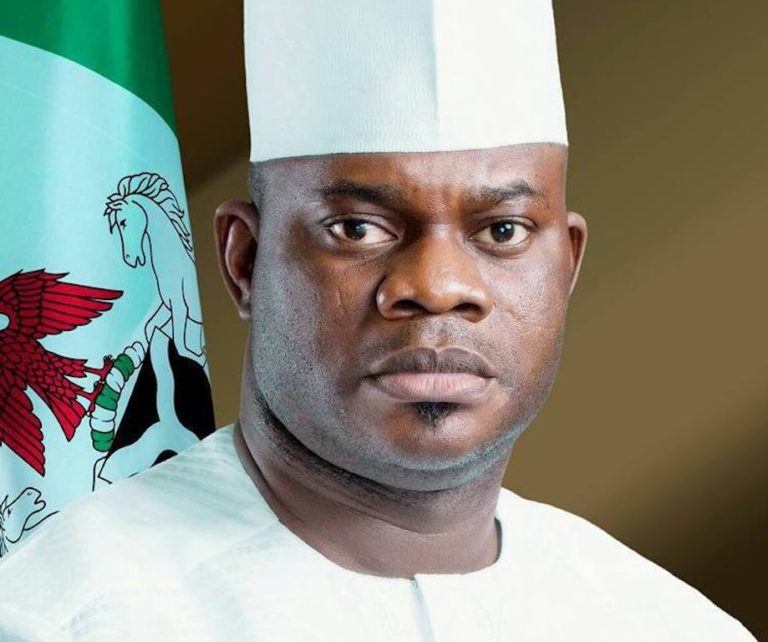
FORMER Kogi State Governor Yahaya Bello has been released from Kuje Custodial Centre, Federal Capital Territory (FCT) after meeting his bail conditions imposed by the FCT High Court, Maitama.
The Nigerian Correctional Service (NCS), FCT Command, spokesperson, Adamu Duza, confirmed this on Friday, December 20.
Duza said the controller of NCoS FCT, Ajibogun Olatubosun, was on the ground to ensure Bello’s smooth release.
The court has granted the former governor ₦500 million bail. The bail conditions, as set by the judge, MaryAnne Anenih, required the accused to provide three sureties who owned properties in high-end areas of Abuja, such as Maitama, Guzape, or Asokoro.
Bello must also surrender his passport and obtain permission before travelling outside Nigeria.
The ICIR reported on November 27that the former governor and his co-defendants, Abdulsalami Hudu and Umar Shoaib Oricha were arraigned on a 16-count charge over alleged 110 billion money laundering.
The charges include conspiracy, criminal breach of trust, and unlawful possession of property, filed by the Economic and Financial Crimes Commission (EFCC)
All three defendants pleaded not guilty. Bello’s bail approval came after his initial application was rejected on procedural grounds.
After the court had listened to their pleas, the defendant’s counsel, Joseph Daudu, a senior advocate, moved for the bail application of the former governor.
The prosecution counsel, Kemi Pinheiro, a senior advocate, objected to the bail application and argued that it had been invalid since October.
Disagreeing with Pinheiro’s argument, Daudu claimed that the only considerable application before the court was Bello’s bail application, filed on November 22. He said the bail application was made with a written address.
Bello’s counsel argued that his client remained innocent until proven guilty by the court.
Theprosecution’s objection was based on the fact that the accused was facing charges at the Federal High Court and had refused to appear to take his plea, he added.
In her ruling, the trial judge adjourned the ruling on the bail application to December 10 and ordered that the three defendants remain in EFCC custody.
However, at the resumed hearing on Tuesday, December 10, the court rejected Bello’s bail application, citing procedural irregularities in the filing of the application.
The judge, while delivering the ruling, stated that the application was premature as it was filed before Bello was present in court or custody.
The court noted that the bail application, dated November 22, was filed before Bello’s arraignment, which took place on November 27, days after he was taken into custody on November 26.
Bello’s counsel, Daudu, urged the court to consider the application, arguing that his client, a two-term governor of Kogi State, would not interfere with witnesses or jump bail.
However, EFCC counsel countered the request. He argued that the application was grossly incompetent, as it was filed before the arraignment, contrary to the provisions of the Administration of Criminal Justice Act.
EDO State High Court sitting in Benin has ordered the reinstatement of 18 local government chairmen and their deputies who were suspended by the State House of Assembly.
The judge who presided over the case, Efe Ikponmwonba, issued a mandatory injunction compelling the defendants, including the Edo State Governor Monday Okpebholo, the Edo State Government, the attorney-general, and the accountant-general to restore the claimants to their respective offices.
The court further restrained the defendants from acting on the resolution passed by the state House of Assembly suspending the chairmen and their deputies.
Ikponmwonba stressed that the status quo as of December 12, 2024, must be maintained pending the hearing and determination of the motion on notice.
“The court orders a mandatory injunction compelling the defendant by themselves, their privies, servants, agents, however named or described, to restore the chairmen and vice chairmen of their respective local government councils,” the judge ruled.
The case was adjourned to February 17, 2025, for a hearing, with the court directing that hearing notices be issued to the defendants.
Background
The ICIR reports that the suspended chairmen and their deputies were removed from office on December 17, 2024, by the Edo State House of Assembly following allegations of insubordination and gross misconduct by Okpebholo.
The Assembly accused the officials of failing to submit financial statements as directed by the governor.
The decision to suspend them was made after a petition by the governor, who alleged that the council leaders had refused to provide financial records to the state government.
At the plenary, the motion for their suspension was moved by Isibor Adeh, representing Esan North East 1, and seconded by Donald Okogbe, representing Akoko-Edo 2.
Out of 23 lawmakers present, 14 voted in favour of the suspension, six opposed it, and three abstained. The suspension was initially set for two months, with the House Speaker, Blessing Agbebaku, directing the clerk to record the votes.
Days later, the Economic and Financial Crimes Commission (EFCC) launched an investigation into the activities of the suspended council leaders.
In a letter dated December 17, 2024, and signed by its director of investigation, Abdulkarim Chukkol, the EFCC summoned the chairpersons for questioning.
The commission requested certified documents detailing payroll records, bank statements, and council finances from January 2024 to date.
Chairpersons from six councils, including Akoko-Edo, Egor, and Esan Central, were summoned to appear on December 19, while others were scheduled for December 20.
The commission stated that the probe was in line with its mandate under the EFCC (Establishment) Act of 2004.
As the investigation continues, The ICIR reports that the reinstatement order adds another layer of complexity to the unfolding events in Edo State’s governance.
Okpebholo of the All Progressives Congress (APC) took over from Godwin Obaseki of the Peoples’ Democratic Party (PDP) under whom the election that brought the council leaders into office was conducted.
The governor defeated Obaseki’s preferred candidate, Asue Ighodalo, in the election.
A FIRE incident in the early hours of Friday, December 20, claimed the lives of a husband, his wife, and their grandson in the Ori-Eru, Idikan area of Ibadan, Oyo State.
The Oyo State Fire Services Agency confirmed the tragedy in a statement issued by its general manager, Yemi Akinyinka.
According to Akinyinka, the agency received a distress call from a resident, identified as Hassan, at 3:46 a.m.
The agency stressed that the distress call prompted immediate deployment of personnel to the scene.
The ICIR couldn’t confirm how long it took the personnel to get to the scene.
“On arrival, we met an upper floor of a residential storey building of six rooms well alight, and we swiftly swung into action, and the fire was completely extinguished,” he said.
Akinyinka noted that despite their efforts, three occupants of the building – a husband, his wife, and their grandson – lost their lives to the inferno.
However, five other residents were rescued alive, and the ground floor of the building, along with nearby properties, was saved from the blaze.
The agency further noted that investigations revealed that the fire was caused by an attempt to keep the house warm using naked flames, which ignited a huge fire after the occupants fell asleep.
“From our investigation, we discovered that in their attempt to keep their house warm because of the cold weather, they resorted to using naked fire, which resulted in a fire disaster after they had slept off,” the agency said.
This incident follows another tragedy recorded in the ancient city on Wednesday, December 18, when a stampede at a Christmas funfair in the Bashorun district claimed the lives of 35 children and left six hospitalised.
The event had drawn a crowd of over 5,000 children, who were enticed by promises of cash handouts and free food.
The Oyo State Government said victims were taken to hospitals for treatment.
Consequently, the police, who confirmed the casualties, arrested eight people who organised the event, including the main organiser, Naomi Silekunola, a former wife of the Ooni of Ife, Oba Adeyeye Ogunwusi.
MAJOR oil marketers in the country believe that the petrol price could go below N900 if the Nigerian exchange rate stabilises and naira sustain current gains against the United States dollar.
The gains are largely from the appreciation in Nigeria’s foreign reserve currently at over $42 billion, due largely to improved local petroleum refining occasioned by coming on stream of Dangote Refinery and the rehabilitation of Portharcourt Refinery.
As a result, the marketers expressed optimism that the price slash of petrol could go further down with stable exchange rate in the country and sustained strengthening of the naira against the dollar.
“The downward trend in the price is as a result of the impact of exchange rate stability in the past few days. The naira is currently strengthening against the dollar and that’s having huge impact on the price of petroleum products,” the public relations officer of the Independent Petroleum Marketers of Nigeria (IPMAN), Chinedu Ukadike, told The ICIR
He stressed that since monopoly is gradually being phased out in the market, competition will continue to drive down the price below N900, with marketers sourcing products from various channels currently.
“If you look closely, marketers are now sourcing petroleum products from different channels. The Portharcourt Refinery is working, Dangote is working, other modular refineries are working giving marketers choices in the market to compete. These are factors that drives down prices,” he added.
Already, checks by The ICIR has shown retailers have started reducing there pump price.
Commenting further on the development, the national president of the Petroleum Products Retail Outlets Owners Association of Nigeria (PETROAN), Billy Gillis-Harry, told The ICIR that the association members are already slashing their price even before Dangote’s announcements.
He said, “in Abuja here, many of our filling stations retail outlets are selling below N1,000. Go to Rain Oil, Emadeb and even NIPCO, the prices are coming down.
“We believe that competition is healthy for the market and good for our business,” he noted.
The ICIR reported that Dangote Petroleum Refinery slashed the ex-pump price of its petrol to N899.50 per litre, from N970 per litre.
According to the refinery, the slash in price was expected to provide much-needed relief for Nigerians ahead of the holiday season.
In his statement, the Chief Branding and Communications Officer of Dangote Group, Anthony Chiejina, stated, “To alleviate transport costs during this holiday season, Dangote Refinery is offering a holiday discount on PMS. From today, our petrol will be available at N899.50 per litre at our truck loading gantry or SPM.
THE Securities and Exchange Commission (SEC) has directed all public listed companies to publish their financial statements on their official websites or face sanctions.
It gave the mandate in a circular on Thursday, December 19, giving the companies January 2025 deadline to do so.
The apex regulator in the Nigerian capital market explained that the move is to guarantee transparency and timely disclosure of financial records by the listed companies.
It is also to ensure seamless public access to financial information, which is critical for making sound investment decisions.
“The Securities and Exchange Commission has observed that public companies file their periodic returns with the Commission and relevant securities exchanges without simultaneously publishing them on their websites.
“This omission is a contravention of Rules 39 and 41 of the Commission’s Rules and Regulations.”
The SEC said while public companies routinely submit their financial returns to regulatory bodies, many fail to make these documents accessible to the investing public on their websites.
It stressed that the lack of accessibility undermines investor confidence and violates disclosure requirements.
“The rationale for the publication of periodic returns on their websites is to provide seamless access by the public to such information, which would serve as a guide to making sound investment decisions.
“It is also important to reiterate in this regard that timely disclosures remain a key component of shareholders’ engagement,” the commission explained.
It, however, warned to sanction any public company that fails to comply with the requirement of the referenced rules.
The rule directs public listed companies to file their periodic returns with the Commission, relevant securities exchanges, and publish the same on their website.
The ICIR can report that public listed companies are expected to file their financial statements quarterly, full year audited financial statements, annual report and sustainability report.
The director-general of SEC, Emomotimi Agama, had expressed determination to address the challenges of the capital market and position it for the $1tn economy dream of the governorship.
He officially assumed office on Tuesday, April 30 and his appointment has since been confirmed by the National Assembly.
A MAGISTRATE Court in Ado-Ekiti, Ekiti State, has granted N30 million bail to Dele Farotimi, a lawyer and human rights activist facing trial for alleged defamation of a fellow senior lawyer, Afe Babalola.
The court’s judge, Abayomi Adeosun, granted Farotimi’s bail application on Friday, December, 20.
The bail conditions include two sureties, who must be responsible citizens and the defendant’s international passport seized by the court.
As part of the bail condition, Farotimi was restricted from media interviews during the pendency of the case.
Farotimi, renowned for his criticism of human rights abuses and advocacy for justice, was arrested following a petition filed by Babalola, a senior advocate and founder of Afe Babalola University.
Babalola claimed the accused defamed him in his book titled: ‘Nigeria and its Criminal Justice System’.
The charges, detailed under the Cybercrimes (Prohibition, Prevention, Etc.) Act, 2015, centre on allegations of defamation stemming from Farotimi’s book, Nigeria and its Criminal Justice System.
The ICIR reported that the court denied the activist bail and remanded him in prison.
The case, with suit number MAD/1,476.C/2024, lists the Ekiti State commissioner of police as the complainant.
It quoted court filings as saying excerpts from the book allegedly made damaging remarks about Babalola, referring to him in disparaging terms.
The filing shows the prosecution arguing that such descriptions were intended to harm the senior advocate’s reputation.
The ICIR reported how the police arrested Farotimi on Tuesday, December 3 in Lagos State. His arrest was exposed by the 2023 African Action Congress (AAC) presidential candidate, Omoyele Sowore, in a post on his X handle.
Farotimi was subsequently transferred to Ekiti State, where he was later detained by the State Police Command.
His arrest sparked outrage, with notable figures like the former vice president Atiku Abubakar, and presidential candidate of the Labour Party in the 2023 election, Peter Obi, describing it as a gross misuse of police powers and an assault on democracy and justice.
Also, the Nigerian Bar Association (NBA) condemned his arrest, while also demanding his immediate release.
The NBA strongly condemned the alleged invasion of Farotimi’s law firm and the harassment of lawyers and staff within the premises by the police.
The NBA described the police actions as a troubling breach of the rule of law and the sanctity of the legal profession.
On December 11, a High Court of the Federal Capital Territory (FCT) issued an interim order banning the sale of Farotimi’s book in which he allegedly defamed the litigant.
THE attorney-general of the federation (AGF) and minister of justice, Lateef Fagbemi, a senior advocate, has affirmed that governors lacked the power to sack local government (LG) chairmen in their respective states.
He said doing so would translate to violating the Constitution and would not be tolerated under President Bola Tinubu’s government.
According to Fagbemi, only the legislative arm of the councils has the power to remove the chairmen and their deputies.
He cited a recent Supreme Court judgment that reaffirmed local governments’ autonomy and limited governors’ power to sack the leaders.
Fagbemi assured Nigerians that the Federal Government was committed to upholding the Constitution which guarantees the independence of LGAs.
He highlighted key reforms aimed at transforming Nigeria’s justice sector, including the newly introduced National Policy on Justice (2024-2028).
He said the policy sought to address systemic challenges in the sector and enhance the sector’s contributions to national security, electoral integrity, and economic growth.
Fagbemi had earlier threatened to file a contempt of court suit against governors who refused to comply with the Supreme Court ruling on local government autonomy.
He issued the threat on Thursday, December 12, at the 2024 annual conference of the National Association of Judiciary Correspondents in Abuja.
He said he was aware that some governors embarked on legislations that appeared to be an affront to the judgment of the Supreme Court on local government autonomy.
The ICIR reported that despite the Supreme Court judgment on local government autonomy, the Edo State Assembly on December 17 suspendedthe 18 local government chairmen and their deputies for two months.
The Assembly had accused the officials of insubordination and misconduct, particularly for failing to submit financial statements as directed by the state Governor Monday Okpebholo.
The decision followed a petition submitted by the governor, accusing the council heads of refusing to submit their financial records to the state government.
The governor described their actions as insubordination and gross misconduct, urging lawmakers to address the matter.
Out of the 23 lawmakers present, 14 voted in favour of the suspension, six opposed it, and three abstained.
Following the suspension, theEconomic and Financial Crimes Commission (EFCC) launchedan investigation into the activities of the suspended chairpersons of the 18 LGAs.
In a letter dated December 17, 2024, signed by the director of investigation, Abdulkarim Chukkol, the EFCC invited the suspended council leaders for questioning.
The letter, addressed to the secretary to the Edo State Government, requested comprehensive documentation regarding financial operations in the councils.
Documents requested include certified true copies of records related to staff strength and payroll, details of accounts used for salary payments, and bank statements of these accounts from January 1, 2024, to date.
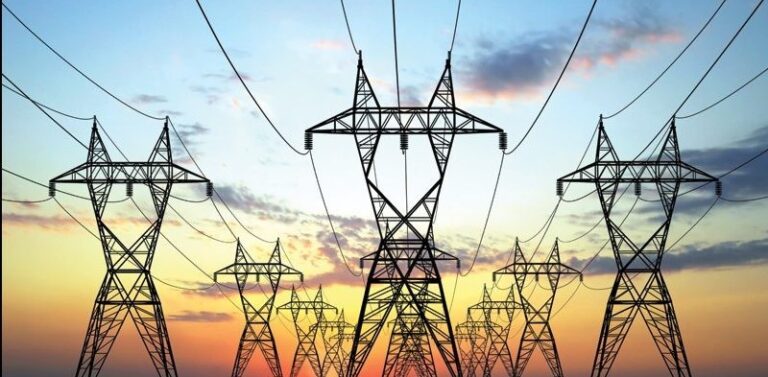
NIGERIA’s Federal Capital Territory (FCT)Abuja is currently in darkness as the Transmission Company of Nigeria (TCN) has announced that its 330kV Shiroro –Katampe transmission line was vandalised on Wednesday, December 18, 2024.
The vandalised transmission lines also supply lights to some parts of Nigeria’s northern region.
In a statement issued late Thursday, December 19, by TCN’s general manager, Ndidi Mbah, the company said the incident occurred at approximately 11:43 pm, when the 330kV Shiroro – Katampe circuit lost supply on the grid.
She said a trial reclosure was attempted, but the line tripped again immediately.
“TCN lines patrol team was dispatched from the Abuja Regional office of TCN to investigate the cause of the fault.
“The team discovered that vandals had stolen part of the conductor between towers T216 and T218,” the company’s statement said.
The company further stated that the TCN lines maintenance crew has since mobilised to the site and is working assiduously to replace the vandalised 330kV power conductor. Restoration of bulk power supply through the affected line is expected soon.
The transmission company also appealed to the general public to assist in identifying and reporting suspicious activities around power transmission infrastructure, to curb activities of vandals and apprehend the culprits.
The ICIR in November reported that 128 transmission towers were destroyed by vandals in 2024, raising concern over the recurrent epileptic power supply in the country.
The transmission company also said it has so far spent about N8.8 billion to repair and put into adequate use the vandalised transmission towers within the year.
The ICIR also reported that Shiroro-Kaduna transmission line, which supplies power to Northern Nigeria, was in October vandalised by insurgents and deploying engineers without security support was not feasible.
The transmission line is a critical infrastructure that supplies electricity to the Northern region.