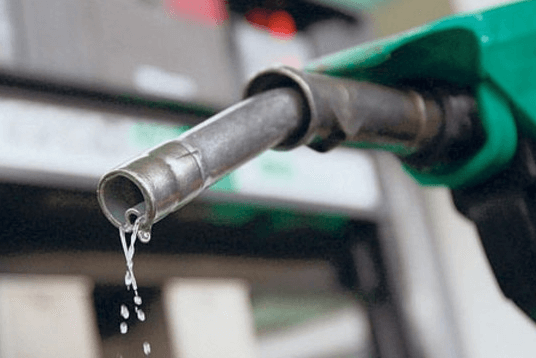
DANGOTE Refinery has slashed its petrol price to N899.50 per litre.
The group’s chief branding and communications officer, Anthony Chiejina, announced this in a statement on Thursday, December 19.
The announcement takes effect immediately.
He said the “holiday bonanza” would provide much-needed relief for Nigerians ahead of the holiday season.
The refinery had in November reduced its petrol price after agitations from Nigerians on high energy costs.
“Africa’s first privately-owned oil refinery, which previously lowered the price to N970 per litre on November 24, has now announced a new price of N899.50 per litre. This reduction is designed to ease transport costs during the festive period,” the refinery said.
The company also introduced a special offer to further benefit consumers, stating that in addition to the holiday discount, it would allow consumers to purchase an additional litre of fuel on credit for every litre bought on a cash basis.
“To alleviate transport costs during this holiday season, Dangote Refinery is offering a holiday discount on PMS. From today, our petrol will be available at N899.50 per litre at our truck loading gantry or SPM.
“Furthermore, for every litre purchased on a cash basis, consumers will have the opportunity to buy another litre on credit, backed by a bank guarantee from Access Bank, First Bank, or Zenith Bank.”
The refinery said it was committed to ensuring Nigerians have access to premium quality petroleum products that are competitively priced, as well as environmentally and engine friendly.
According to the refinery, its operations mark the end of Nigeria being a dumping ground for substandard and ‘blended’ imported products, which it said had posed significant risks to human health, machinery, and the environment.
The Dangote Refinery, with a capacity of 650,000 barrels per day (BPD), is the largest single-train refinery in the world, expected to meet 100 per cent of Nigeria’s refined petroleum product requirements, with a surplus available for export.
The ICIR reports since President Bola Tinubu removed subsidy on petrol on the day he took over power on May 29, 2023, many Nigerians have abandoned their vehicles at home and opted for commercial vehicles to go to work or other destinations.
This organisation also reports that many citizens travel during Yuletide, which is a period to reunite with distant relations and take a long rest which the season offers.
The ICIRreported recently that in addition to hardship facing Nigerians, cash scarcity hit businesses nationwide as banks unofficially reduced cash withdrawals across the counter and on the automated teller machines (ATMs).
The Central Bank of Nigeria (CBN) has also recently restricted the amount of cash the point-of-sale operators can give to their customers.
It set a daily cash-out limit of N100,000 per customer transaction on PoS terminals and weekly withdrawals of not more than N500,000, while also setting a cumulative daily limit for each agent’s total cash-out transactions to N1,200,000 daily.
These measures have further compounded the challenges Nigerians face.
CLIMATE Resilience for All is offering a training course on extreme heat reporting.
The course is designed to improve journalists’ reporting on the impacts of extreme heat, giving them new sources, story angles and ideas on how to cover the mounting impacts of this climate threat.
The practical and interactive course will help participants integrate heat stories within their regular reporting beat and offer guidance on rethinking heat visuals.
The three-day in-person training course will be held in Accra, Ghana on February 10 to 12, 2025.
English-speaking journalists in Nigeria, Ghana, Sierra Leone, Liberia and The Gambia can apply for a free course.
Selected journalists will receive travel, accommodation and meals.
The deadline for the application is January 6, 2025. Interested applicants can apply here.
THE Oyo State Government has described the death of scores of children killed during a stampede at a carnival in Ibadan, the state capital, on Wednesday, December 18, as a huge loss to the state.
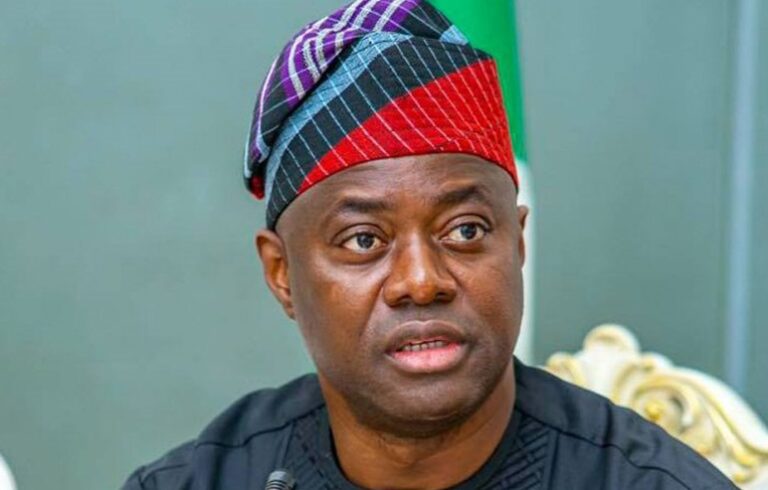
The state Governor Seyi Makinde sympathised with the victims’ families in a statement and pledged a thorough investigation into the tragedy.
He said his government took steps to ensure no further deaths were recorded at the venue by deploying security agents to restore order at the venue.
He assured the state that anyone directly or remotely involved in the incident would be held accountable. He urged the people to remain calm as the security agencies investigate the incident.
Several reports indicate that 32 children died in the stampede that resulted from a large crowd of children who thronged a venue of an event where food and other items were to be shared.
The ICIR reports that a similar incident occurred in 2022 in Rivers State where the Police confirmed 31 persons dead in a stampede at the Kings Assembly Church located in the GRA axis of Port Harcourt, the state capital.
Seven other persons were injured in the incident.
The tragedy, which occurred on Saturday, May 28, 2022, reportedly resulted from a programme organised by the church where some gifts were to be shared with participants as part of the church’s fourth anniversary.
Reports indicate that the Ibadan calamity recorded a large casualty because parents sent their children much earlier than when the event was billed to start, with some of the parents accompanying their wards to the event venue.
The state’s commissioner for information and orientation, Dotun Oyelade, confirmed that the stampede occurred during a private children’s funfair held at Basorun Islamic High School in the state capital.
According to him, the incident occurred in the early hours of Wednesday, December 18, leading to the loss of several lives, most of whom were children, while others sustained injuries.
He said the state government swiftly mobilised a rapid response team to provide immediate assistance, adding that victims were promptly transported to various hospitals in Ibadan for medical care.
Meanwhile, Agidigbo FM, a radio station said to have organised the event in conjunction with the former wife of Ooni of Ife, Naomi Shikemi, denied organising the event.
The station urged the public to clarify information before spreading false claims.
It urged the government to investigate the incident thoroughly and ensure that those responsible for the tragedy are held accountable.
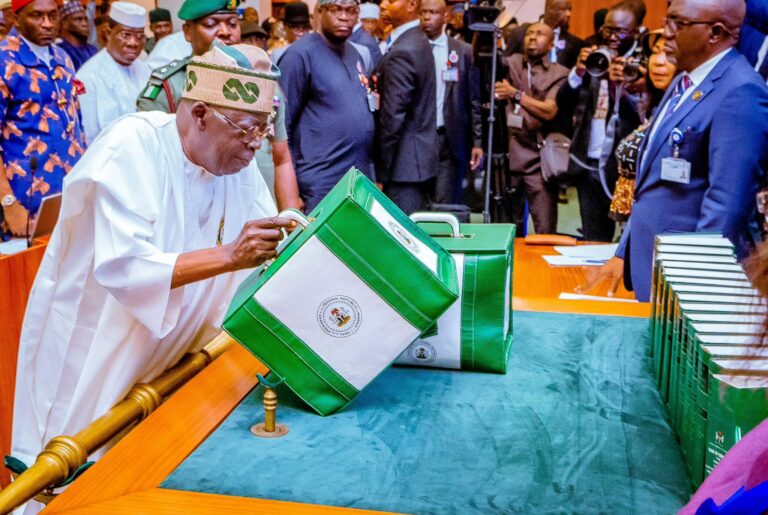
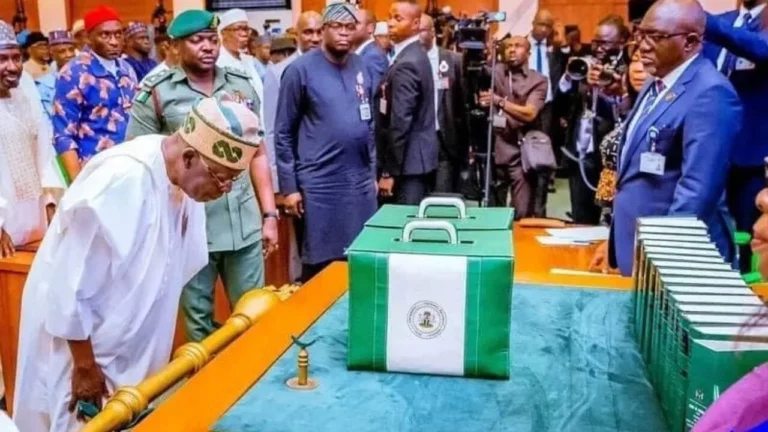
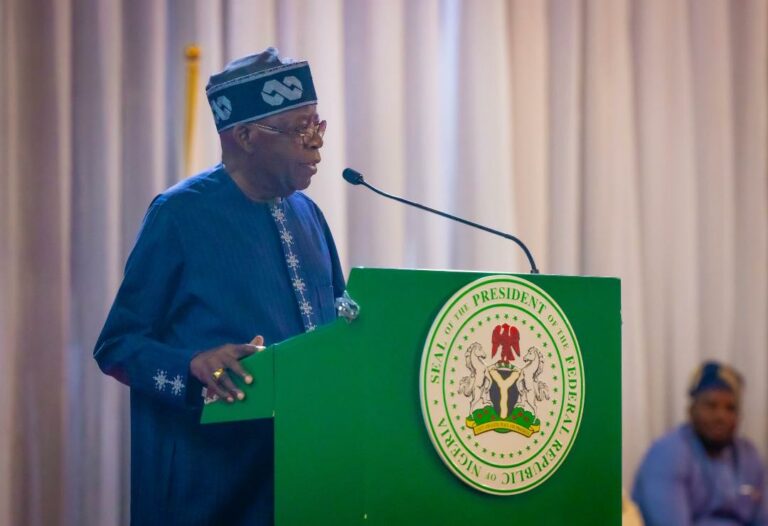
PRESIDENT Bola Tinubu on Wednesday, December 18 presented Nigeria’s 2025 budget to a joint session of the National Assembly with key highlights, adjusting the exchange rate benchmark to N1,500 per dollar.
Christened ‘Budget of Restoration: Securing Peace, Rebuilding Prosperity,’ Tinubu presented a budget size of N47.9 trillion to the chambers.
He said the 2025 budget sought to consolidate the key policies his administration had instituted to restructure Nigeria’s economy and boost human capital development, increase the volume of trade and investments, bolster oil and gas production, get the manufacturing sector humming and ultimately increase the competitiveness of the country’s economy.
In the medium-term expenditure framework (MTEF) and fiscal strategy paper (FSP) for 2025-2027 passed by the National Assembly on November 30, Tinubu has presented an exchange rate pegged at N1,400 to the dollar for the three years, The ICIRreported.
2025 budget targets
N34.82 trillion in revenue, a government expenditure of N47.90 trillion, resulting in an N13.08 trillion deficit or 3.89 per cent of Nigerian gross domestic product (GDP), and N15.81 trillion in debt servicing.
Crude oil production assumption at 2.06 million barrels per day (mbpd).
Inflation is to drop from 34.6 per cent to 15 per cent by 2025, with the naira-dollar exchange rate improving from N1,700 to N1,500 per dollar.
N4.91 trillion allocation for defence and security, N4.06 trillion for infrastructure, N2.48 trillion for health, and N3.52 trillion for education.
The President hinted that education infrastructure is to receive N826.90 billion, including provisions for nine new institutions while in health, N402 billion will go towards infrastructure, with N282.65 billion allocated to the Basic Health Care Fund.
“This is an ambitious but necessary budget to secure our future,” Tinubu said, believing that the 2025 budget will help to achieve the restoration of macroeconomic stability and enhance the business environment.
Also, it will foster inclusive growth, employment, and poverty reduction and promote equitable income distribution and human capital development.
According to the President, all the projections are based on the observations of red
2025 proposed budget
uced importation of petroleum products alongside increased export of finished petroleum products, bumper harvests, driven by enhanced security, reduced reliance on food imports and increased foreign exchange inflows through Foreign Portfolio Investments.
It is also based on higher crude oil output and exports, coupled with a substantial reduction in upstream oil and gas production costs.
“We have significantly increased funding for the military, paramilitary, and police forces to secure the nation, protect our borders, and consolidate government control over every inch of our national territory.
“The government will continue to provide our security forces with the modern tools and technology they need to keep us safe. Boosting the morale of our men and women in the armed forces will remain our government’s top priority,” Tinubu stressed.
However, a development economist, Kalu Aja, commenting on the budget said, “The 2025 budget, I title it ‘Borrow $ [dollar] to spend on salaries and debt service and pray oil exports to increase.’
“The only savour I see is the Dangote Refinery (if Malta Blending agrees).”
The speaker of the House of Representatives, Tajudeen Abbas, said Tinubu took bold and decisive steps at removing fuel subsidies, unifying foreign exchange rates, and introducing innovative economic policies to reform the country’s economy.
He, however, said the country’s fiscal realities warrant critical reflection.
2024 budget performance
Meanwhile, Tinubu asserted that 2024 achieved N14.55 trillion in revenue, meeting 75 per cent of his administration’s target, and N21.60 trillion in expenditure, representing 85 per cent of the target as of the third quarter.
“While challenges persist, we improved revenue collection and fulfilled key obligations. The transformational effects of this on our economy are gradually being felt,” he added.
ITORO Etukudo is a contestant in the 45th Miss Nigeria pageant scheduled for coronation this Thursday, December 19, in Lagos, the economic hub of Nigeria. She is among the 20 young women who will battle it out at the grand finale.
The competition commenced with over 40 contestants; 30 made it to the next stage of the contest – the sashing stage and then 10 more were eliminated after a series of events, which included public voting.
For many people, their exposure to pageantry is limited to the televised grand finale, press runs and, in recent times, curated clips shared on social media. As such, they would describe it as glitz and glamour, but that’s just one-half of the story.
For Etukodo, it’s no walk in the park; it took her four years of preparation to get to this stage, she says and this is the case for many beauty queens. They start at smaller niches – schools, associations, and community, and move to the state level, regional, national and then international – although the process is not cast in stone.
Etukodo’s journey to the Miss Nigeria stage began in 2020 when she participated in the Miss Akwa Ibom Iconic Pageant, which she says was to actualise her childhood dreams of being a beauty queen.
She didn’t stop there, “I began researching and planning for something bigger because I wanted more from this journey,” she tells The ICIR.
Itoro Etukodo
Modern-day pageant faces criticism. In some quarters, it is seen as anachronistic in an era of women’s empowerment. Why do women participate in a process described as objectifying women?
Grace Levy, who won the Miss Universe Great Britain in 2014, says the criticism stems because most people do not see the process.
“That is because they only see the pageant finale, they don’t see the process that women go through to get to that point,” she states on an episode of BBC’s ‘The Why Factor’.
She adds that pageantry is about “embracing your femininity”. She listed having a platform to reach a greater audience as one of the reasons people participate.
This rings true for Etukudo, who sees being a beauty queen as an act of service.
“I deeply love Nigeria and have a strong desire to serve this country. I believe this platform will allow me to achieve that dream in ways beyond what I can imagine”, she says.
Service comes with its attendant sacrifices. When she decided to enter the Miss Nigeria contest, she was working as a journalist – a demanding profession – which wouldn’t give her time to prepare. From the auditioning to the grand finale spans several weeks, and this includes travelling and also participating in multiple tasks if you make it to boot camp. So, she resigned her job.
“When I resigned from my previous job, I hadn’t yet received the email from Miss Nigeria, but I felt a clear sense of purpose that pageantry was the next step for me. I knew I had to prepare myself for this opportunity,” she says.
She would later receive the email on December 1.
Miss Nigeria is among the top pageants in the country which started in 1957. It’s not clear what the winner(s) will get aside from the crown and platform, the organisers have largely been silent on this in their press runs and amplification contents.
“This is a new era, an era where we intentionally amplify young voices, foster innovation and showcase the unique quality that defines today’s Nigerian woman,” says Rita Dominic, the chairperson of Miss Nigeria’s board of trustees in one of the promo contents.
Dominic, a renowned Nigerian actress and considered to be fashion-forward, took over the reins last year. This came after her marriage to Fidelis Anosike, chairman of Folio Communications – the organisation behind the pageant.
A few months ago, Chidimma Adetshina won Miss Universe Nigeria – a different pageant. The crown came with N10 million cash prize and representing Nigeria at the Miss Universe 2024 pageant in Mexico, where she placed as first runner-up. Her journey was marred with controversy as she was a contestant for a similar pageant in South Africa before she withdrew.
Chidimma Adetshina, Miss Universe first runner up
There have, however, been several cases of organisers of beauty pageants not redeeming their pledges. This is in addition to reports of underhand practices. In 2016, actress, Yvonne Jegede called out the organisers of Miss Delta Constituency Beauty Pageant where she was a judge, for allegedly influencing the process.
“I was called to be the chief judge at the Miss Delta Constituency Beauty Pageant that took place on the 24th of June in Delta State, and while I sat at the table with my fellow judges assessing the contestants, making sure we picked who deserved to be queen, the organiser came to our table to tell us who should win, who his candidate was,” Jegede stated in a report by The Nation.
Shatu Garko
If Etukodo or any of the 19 others clinches the crown, they will be taking over from Shatu Garko.
Garko’s victory as the 44th queen was trailed by controversy. Kano State morality police (Hisbah) waded into the matter and termed her participation as ‘illegal’.
“We (Hisbah) have confirmed that Shatu Garko is a Muslim from Kano State, and her parents come from Garko Local Government Area. Kano is a sharia state, and this is why we would not allow the matter to pass.
“We will invite the parents to talk to them about the actions of their daughter and the fact that what she did is illegal in Islam in case they don’t know so that she would not continue in that path and also stop other girls from copying her,” the morality police stated in a BBC report.
Garko has been queen since 2021 when the competition was last held. Her Instagram profile description reads, “World’s first Hijabi to win a national pageant”. In an instagram post, she tells the contestants that whether they win or not, they have become part of something meaningful by just showing up.
Etukodo hopes to win to serve her community. “I realised that with a title, I could serve my community, my state, and my country meaningfully. Over time, I have also studied many prestigious national and international pageants, fueling my passion for this path”, she says.
The Communication Arts graduate believes the work she has put in, her attempt to join a modelling agency, and her deliberate efforts to look for public-facing opportunities like working as an OAP and a TV presenter have prepared her for the journey.
L-R: Etukudo reporting during the August Endbadgovernence protest in Abuja and as a host of Fact Finders radio programme.
As she and other contestants vies for the crown in Nigeria, a similar pageant on the other side of the world – Miss Netherlands – has seen its final dance after close to a century run. The organisers say it has become “no longer of this time”.
“After years of history full of glamour, talent and inspiration, Miss Netherlands is saying goodbye to the title that many have taken to their hearts. But this is not the end; it is a new beginning. The world is changing, and we are changing with it,” a statement on its website reads.
Miss Nigeria has undergone changes, like the elimination of the swimsuit round, but will it eventually become a “no longer of this time” event?
THE Dangote Group has countered the Nigerian National Petroleum Company Limited’s (NNPCL) claim that it secured a $1 billion loan backed by crude oil to help the Dangote Refinery come on stream.
In a statement on Wednesday, December 2024, the group’s chief branding and communications officer, Anthony Chiejina, said the NNPCL’s claim was a misrepresentation of facts.
He said the Dangote Group was not struggling with liquidity challenges at the time, stressing that the numerous inquiries received by the company from stakeholders seeking clarification prompted the clarification.
The NNPCL had reportedly said its $1 billion loan backed by crude oil helped the Dangote Refinery to come on stream.
The chief corporate communications officer at NNPCL, Olufemi Soneye, stated this at the Energy Relations Stakeholders Engagement in Abuja on Monday, December 16.
He said, “A strategic decision to secure a $1 billion loan backed by NNPC’s crude was instrumental in supporting the Dangote Refinery during liquidity challenges, paving the way for the establishment of Nigeria’s first private refinery.
“This initiative underscores NNPC’s dedication to fostering public-private partnerships that drive national development.”
In its statement on Wednesday, the Dangote Group described the NNPCL claim as a misrepresentation of facts.
“We would like to clarify that this is a misrepresentation of the situation as $1bn is just about five per cent of the investment that went into building the Dangote Refinery,” the Dangote Group spokesperson stated.
According to him, Dangote Refinery’s decision to enter into a partnership with NNPCL was based on recognition of its strategic position in the industry as the largest off-taker of Nigerian crude and, at the time, the sole supplier of gasoline into Nigeria.
“We agreed on the sale of a 20 per cent stake at a value of $2.76 billion. Of this, we agreed that they will only pay $1 billion while the balance will be recovered over five years through deductions on crude oil that they supply to us and from dividends due to them.
“If we were struggling with liquidity challenges, we wouldn’t have given them such generous payment terms,” Chiejina explained.
He stated further that as of 2021 when the agreement was signed, the refinery was at the pre-commission stage.
“In addition, if we were struggling with liquidity issues, this agreement would have been cash-based rather than credit-driven,” he stressed.
According to Chiejina, it is unfortunate that NNPCL was later unable to supply the agreed 300 thousand barrels a day of crude given that the state-owned oil company had committed a greater part of its crude cargoes to financiers with the expectation of higher production, which it was unable to achieve.
“We subsequently gave them 12 months for them to pay cash for the balance of their equity given their inability to supply the agreed crude oil volume.
“NNPCL failed to meet this deadline which expired on June 30th 2024. As a result, their equity share was revised down to 7.24 per cent. These events have been widely reported by both parties,” he noted.
Chiejina maintained that it was inaccurate for the NNPCL to claim that it facilitated a $1 billion investment amid liquidity challenges to help Dangote Refinery commence operation.
“Like all business partners, NNPCL invested, $1 billion in the refinery to acquire an ownership stake of 7.24 per cent stake that is beneficial to its interests.
“NNPCL remains our valued partner in progress, and it is imperative for all stakeholders to adhere to the facts and present the narrative in the correct context, to guide the media in reporting accurately for the benefit of our stakeholders and the public,” he added.
PRESIDENT Bola Tinubu has proposed N3.52 trillion of the total N47.90 trillion national budget for the education sector.
This allocation, however, still falls short of the United Nations Educational, Scientific and Cultural Organisation (UNESCO) benchmark, which recommends that at least 15 to 20 per cent of a national budget be directed toward education.
Tinubu, on Wednesday, December 18, while presenting the 2025 national budget, titled “Budget of Restoration: Securing Peace, Rebuilding Prosperity,” to the joint session of the National Assembly, outlined approaches to addressing Nigeria’s key development priorities.
The proposed N3.52 trillion for the education sector, represents 7.3 per cent of the total budget, a marginal increase from the 5.5 per cent allocated in 2024.
The allocation, according to the President, reflected the administration’s commitment to enhancing human capital development, a critical component of its Renewed Hope Agenda.
Tinubu also stressed that his administration had so far disbursed 34 billion naira to over 300,000 students via the Nigeria Education Loan Fund (NELFUND).
Given the breakdown by the President, the education sector allocation includes provisions for infrastructure development, teacher training, and the expansion of educational opportunities across the country.
“In the 2025 budget, we have made provision for 826.90 billion naira for infrastructure development in the educational sector. This provision also includes those for the Universal Basic Education (UBEC) and the nine new higher educational institutions,” Tinubu said.
This also means that the largest bulk of the money goes to paying salaries, with only 23.5 per cent allocated for infrastructure development.
The ICIR earlier in the year reported that Tinubu allocated only 5.98 per cent of the 2024 budget of N24.08 trillion to the sector.
A review of the 2024 approved budget revealed that N1.59 trillion, or 5.5 per cent, of the N28.77 trillion, was allocated to education.
This was despite the President’s several promises during his campaign and post-election addresses to reform the education sector by augmenting funding.
Out of the allocation to the Education Ministry, N480 billion (N480,781,350,182) was budgeted for capital projects, constituting 30.3 per cent, and the overhead budget stands at 4.5 per cent, totalling N72.1 billion (N72,124,230,514).
Meanwhile, personnel allocation is slightly over a trillion (1,036,484,193,887), translating to 65.2 per cent of the ministry’s budget.
PRESIDENT Bola Tinubu said the 2025 budget estimates would focus on ensuring inflation decline from the current 34.6 per cent to 15 per cent next year.
The President said this during his presentation of the N47.9 trillion 2025 budget proposal to a joint session of the National Assembly on Wednesday, December 18.
He also assured that measures were in place to ensure Nigeria’s volatile exchange rate improves from approximately N1,700 per dollar to N1,500.
According to Tinubu, “This is an ambitious but necessary budget to secure our future.”
“The budget projects inflation will decline from the current rate of 34.6 per cent to 15 per cent next year, while the exchange rate will improve from approximately 1,700 naira per US dollar to 1,500 naira, and a base crude oil production assumption of 2.06 million barrels per day,” Tinubu said.
He stressed that the budget projections were based on observations such as reduction of petroleum products importation, increased export of finished petroleum products, bumper harvest driven by enhanced security, and reducing reliance on food imports, among others.
The proposed budget, described as a blueprint for economic recovery, is built on key assumptions to spur growth.
These include a crude oil production target of 2.06 million barrels per day, a significant reduction in petroleum product imports through expanded domestic refining capacity, and enhanced agricultural output facilitated by improved security measures.
Tinubu listed highlights of the budget to include defence and security – N4.91 trillion, infrastructure – N4.06 trillion, health – N2.4 trillion, and education – N3.5 trillion, among others.
The President explained that the 2025 budget sought to restore macroeconomic stability enhance the business environment, foster inclusive growth, employment and poverty reduction, and promote equitable income distribution and human capital development.
“In 2025, we are targeting N34.8 trillion in revenue to fund the budget. Government expenditure in the same year is projected to be N47.90trillion including N15.81trillion for debt servicing,” he added.
Notably, N13.0 trillion or 3.89 per cent of GDP will make up the budget deficit (borrowings).
The ICIR reports that Nigerians are grappling with economic hardship following an incessant increase in inflation and a volatile exchange rate that has seen dollar exchange as high as N1,700 in recent days.
Recall, on Monday, December 16, the National Bureau of Statistics (NBS) said Nigeria’s headline inflation rate rose to 34.60 per cent in November 2024 from 33.88 per cent in October 2024.
The November inflation rate showed an increase of 0.72 per cent points compared to the October 2024 inflation rate, according to NBS’s latest Consumer Price Index (CPI) report which measures the rate of change in prices of goods and services.
“On a year-on-year basis, the headline inflation rate was 6.40 per cent points higher than the rate recorded in November 2023 (28.20 per cent). This shows that the headline inflation rate (year-on-year basis) increased in November 2024 compared to the same month in the preceding year (i.e., November 2023),” the statistics office said.
Significantly, the food inflation rate in November 2024 was 39.93 cent on a year-on-year basis, 7.08 per cent points higher than the rate recorded in November 2023 (32.84 per cent).
THE National Assembly has approved an extension of the 2024 budget to run till June 30, 2025, thereby halting its January-December budget cycle.
The Senate president, Godswill Akpabio, announced this at the joint sitting of the upper and lower chambers for the 2025 budget presentation by President Bola Tinubu on Wednesday, December 18.
He said the extension was to ensure continuity in fiscal operations and the seamless execution of key government projects.
He hinted that the enabling law for the extension had been put in place.
Analysts believe the extension will help the government achieve its economic goals while mitigating challenges posed by delayed project implementation and fiscal bottlenecks.
It will also ensure that critical expenditures continue uninterrupted while the 2025 budget undergoes deliberation and approval.
Highlighting the Tax Reform Bill, the Nigerian Revenue Service Establishment Bill 2024, and other critical legislative initiatives, Akpabio said the efforts were essential steps toward the Tinubu-led administration’s vision of a prosperous and technologically advanced Nigeria.
He called on ministries, departments, and agencies (MDAs) of the government to prioritise their roles in the budget defence process, emphasising the need for timely submissions and active participation.
The Senate President warned that the National Assembly would take decisive action against MDAs that fail to appear for budget defence sessions or cause unnecessary delays.
Commenting on the 2024 budget performance so far, Akpabio said, “Your Excellency, we have noted the 2024 budget performance of 50 per cent for capital expenditure and 48 per cent for recurrent expenditure respectively.”
He stressed that the enabling law to facilitate the budget extension had been put in place to ensure the National Assembly sustains the momentum of the budget implementation and the enabling oversight function.
The ICIR can report that the ninth National Assembly in 2020 introduced the January-December budget cycle during the administration of former President Muhammadu Buhari as a strategy to enhance budget performance.
During its first budget presentation in 2023, Tinubu urged the National Assembly to hasten its passage to maintain the January-December cycle.
“I am confident that the National Assembly will continue to work closely with us to ensure that deliberations on the 2024 budget are thorough and concluded with reasonable dispatch. Our goal is for the Appropriation Act to take effect on the 1st of January 2024,” Tinubu had said.
Meanwhile, Tinubu had shifted the 2025 budget presentation from Tuesday, December 17 to Wednesday, December 18, to enable the executive to adjust the budget.
PRESIDENT Bola Tinubu on Wednesday, December 18, presented the 2025 Budget tagged “Securing Peace, Rebuilding Prosperity,” to a joint session of the National Assembly.
The proposed budget totals N47.9 trillion, with a projected revenue target of N34.82 trillion, leaving a deficit of N13.08 trillion.
In the breakdown, Tinubu announced an allocation of N2.48 trillion to the health sector, representing 5.2 per cent of the total budget.
This falls short of the Abuja Declaration target of 15 per cent for health funding but reflects his administration’s commitment to improving healthcare delivery across the country.
The ICIR reports that in 2001, the African Union (AU) member states met in Nigeria’s capital, Abuja, and agreed to devote 15 per cent of their yearly budgets to health. However, over the years, Nigeria has struggled to provide good health for its citizens, as funding for the sector has often been much lower than expected.
The 2025 proposed health budget, in its further breakdown by the President, includes N402 billion for health infrastructure and N282.65 billion for the Basic Health Care Fund.
The health infrastructure allocation constitutes 16.2 per cent of the total health budget, while the Basic Healthcare Provision Fund (BHCPF) accounts for 11.4 per cent.
This means that, again, the health sector recurrent will consume the larger part of the fund.
“We are convinced that Universal Health Coverage initiatives will strengthen primary healthcare systems across Nigeria. In this way, we have allocated 402 billion naira for infrastructure investments in the health sector in the 2025 Budget and another 282.65 billion naira for the Basic Health Care Fund,” Tinubu said, adding that “Our hospitals will be revitalised with medication and better resources, ensuring quality care for all Nigerians.”
The President noted that the objective was consistent with the Federal Government’s planned procurement of essential drugs for distribution to public healthcare facilities nationwide, improving healthcare access and reducing medical import dependency.
Tinubu stressed the importance of addressing Nigeria’s pressing challenges, including insecurity, poverty, and unemployment, while promising reforms to stabilise the economy.
The budget comes amid rising inflation, currently at 34.6 per cent, with the president targeting a reduction to 15 per cent in 2025.
The President assured Nigerians of better days ahead, saying, “This 2025 budget proposal lays the foundation for peace, prosperity, and much-needed hope.”
While the allocation to health falls short of the Abuja declaration, The ICIR can report that it’s an increase from the percentage approved for the sector in 2024.
In January, President Bola Tinubu approved N28.78 trillion as fiscal appropriation for 2024 of which N1.34 trillion was allocated to the Federal Ministry of Health and Social Welfare, representing 4.64 per cent of the budget.
When broken down, the ministry had a personnel expenditure of N771.56 billion, N121.76 billion for overhead, and N542.95 billion for capital expenditure.
Also, in 2023, the allocation to healthcare was N1.17 trillion, representing 4.91 of the total 421.8 trillion naira budget.
In 2022, with a total expenditure of N17.14 trillion, only 4.23 per cent of the total budget was allocated to health, while in 2021, the sector got 4.05 per cent of the budget.
A report shows how Nigeria has failed to fulfil its pledge since it signed the agreement to allocate 15 per cent of its budget to the sector.