Home Blog Page 406

Tinubu presents N47.9tn 2025 budget, allocates N2.48tn to health sector

0

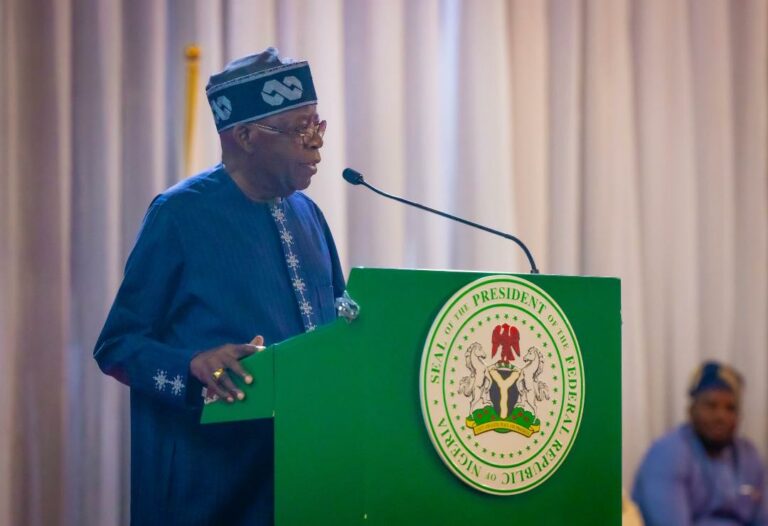
PRESIDENT Bola Tinubu on Wednesday, December 18, presented the 2025 Budget tagged “Securing Peace, Rebuilding Prosperity,” to a joint session of the National Assembly.

The proposed budget totals N47.9 trillion, with a projected revenue target of N34.82 trillion, leaving a deficit of N13.08 trillion.  

In the breakdown, Tinubu announced an allocation of N2.48 trillion to the health sector, representing 5.2 per cent of the total budget. 

This falls short of the Abuja Declaration target of 15 per cent for health funding but reflects his administration’s commitment to improving healthcare delivery across the country.  

The ICIR reports that in 2001, the African Union (AU) member states met in Nigeria’s capital, Abuja, and agreed to devote 15 per cent of their yearly budgets to health. However, over the years, Nigeria has struggled to provide good health for its citizens, as funding for the sector has often been much lower than expected.

The 2025 proposed health budget, in its further breakdown by the President, includes N402 billion for health infrastructure and N282.65 billion for the Basic Health Care Fund.

The health infrastructure allocation constitutes 16.2 per cent of the total health budget, while the Basic Healthcare Provision Fund (BHCPF) accounts for 11.4 per cent. 

This means that, again, the health sector recurrent will consume the larger part of the fund. 

“We are convinced that Universal Health Coverage initiatives will strengthen primary healthcare systems across Nigeria. In this way, we have allocated 402 billion naira for infrastructure investments in the health sector in the 2025 Budget and another 282.65 billion naira for the Basic Health Care Fund,” Tinubu said, adding that “Our hospitals will be revitalised with medication and better resources, ensuring quality care for all Nigerians.”

The President noted that the objective was consistent with the Federal Government’s planned procurement of essential drugs for distribution to public healthcare facilities nationwide, improving healthcare access and reducing medical import dependency.

Tinubu stressed the importance of addressing Nigeria’s pressing challenges, including insecurity, poverty, and unemployment, while promising reforms to stabilise the economy.  

The budget comes amid rising inflation, currently at 34.6 per cent, with the president targeting a reduction to 15 per cent in 2025. 

The President assured Nigerians of better days ahead, saying, “This 2025 budget proposal lays the foundation for peace, prosperity, and much-needed hope.”  

While the allocation to health falls short of the Abuja declaration, The ICIR can report that it’s an increase from the percentage approved for the sector in 2024.

In January, President Bola Tinubu approved N28.78 trillion as fiscal appropriation for 2024 of which N1.34 trillion was allocated to the Federal Ministry of Health and Social Welfare, representing 4.64 per cent of the budget.

When broken down, the ministry had a personnel expenditure of N771.56 billion,  N121.76 billion for overhead, and N542.95 billion for capital expenditure.

Also, in 2023, the allocation to healthcare was N1.17 trillion, representing 4.91 of the total 421.8 trillion naira budget. 

In 2022, with a total expenditure of N17.14 trillion, only 4.23 per cent of the total budget was allocated to health, while in 2021, the sector got 4.05 per cent of the budget.

A report shows how Nigeria has failed to fulfil its pledge since it signed the agreement to allocate 15 per cent of its budget to the sector. 

CBN limits cash withdrawal to N100,000 per customer at PoS terminal

0

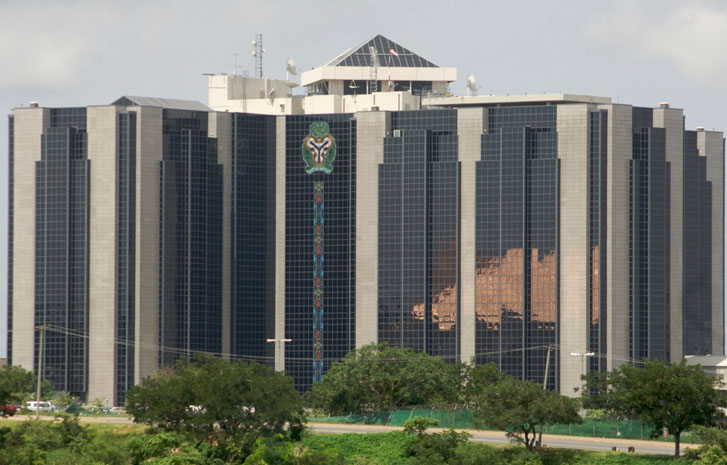
THE Central Bank of Nigeria (CBN) has set a daily cash-out limit of N100,000 per customer transacting on point-of-sale (PoS) terminals.

The new policy, directed to deposit money banks, microfinance banks, mobile money operators, and superagents was issued on Tuesday, December 17 and signed by its director of payments system management department, Oladimeji Yisa Taiwo.

It stressed that all principals of agents are to comply with the directives with immediate effect.

CBN said PoS agents must ensure no individual customer withdraws more than N100,000 daily, regardless of the channel, adding that weekly withdrawals for customers must not exceed N500,000.

It also set a cumulative daily limit for each agent’s total cash-out transactions to N1,200,000 daily.

The apex bank further set critical measures for the principals of agent banking operations.

This includes mandatory monitoring of BVNs linked to agents’ accounts by institutions to identify any unauthorised banking activities outside designated float accounts.

It also includes real-time transaction reporting whereby agents are required to connect their terminals to the payments terminal service aggregator (PTSA) and send daily transaction reports to the Nigerian Inter-Bank Settlement System (NIBSS) electronically.

According to CBN, the new directives are to streamline agency banking operations, encourage electronic payment adoption, and enhance the country’s cashless economy drive.

The directives also help for uniform operational standards, fraud prevention, and improved monitoring within the agent banking sector, CBN added.

The ICIR reported recently that cash scarcity has hit businesses in this yuletide season across the, prompting the PoS operators to adjust their charges to almost 100 per cent higher.

Most PoS agent terminals visited in Abuja, Lagos, and Ogun states have increased their charges to N200 for N5,000, revealing that they have been buying the cash from market traders and filling station attendants.

Many of the banks visited have restricted their ATMs to dispense a maximum of N5,000 to customers using other ATM cards on their machines.

Last year, Nigerians suffered the same fate as cash scarcity and high cost as commercial banks continue to ration cash dispensing to consumers, The ICIR reported.

Governor vows pardon for teenager sentenced to death for stealing fowl after 14yrs in jail

0

OSUN State Governor Ademola Adeleke has intervened in the case of a teenager from the state, Segun Olowookere, who was convicted and sentenced to death for stealing a fowl.

The ICIR reports that Olowookere was sentenced in 2010 and has spent 14 years in prison. He was 17 years old when he was sentenced to death for stealing a fowl and eggs from a poultry farm in Oyan, Odo-Otin Local Government of the state.

In a post on his X handle on Tuesday, December 17, Adeleke said he had ordered the state commissioner of justice to look into the matter.

I have received the report of a case of a young man reportedly sentenced to death by hanging in Osun State for stealing a fowl. Consequently, I have directed the attorney general and commissioner for justice, Osun State, to commence a full investigation into the matter and initiate processes to grant the prerogative of mercy to the young man.

“Osun is a land of justice and equity and must ensure fairness and protection of the sanctity of lives. I assure members of the public that this matter is receiving my direct attention with every sense of urgency also attached to our response to the matter,he tweeted.

Earlier in a statement, Adeleke’s spokesperson, Olawale Rasheed, stated that the governor directed the state’s attorney general to investigate the case and ensure the man is pardoned before this year ends.

The boy’s parents have been pleading with Governor Adeleke to grant their son amnesty, arguing that the punishment is too harsh.

They have also been appealing to the Speaker of the Osun State House of Assembly, Adewale Egbedun, to intervene in the matter.

The parents were said to be devastated, as Segun is their only son.

As of the time of filing this report, there are no full details on the name of the judge who sentenced the boy to death.

Meanwhile, Nigerians on X have reacted to the matter.

An X user, A Ajakaiye questioned the way cases between ordinary citizens and politicians are handled.

“Man sentenced to death for stealing a fowl. ■Politician/government official granted bail and discharged for stealing billions of Nigeria. We hail thee,he posted.

Another X user, Abiodun A. Adeleke posted,What’s happening in this country? Death by hanging for someone who stole fowl that’s worth less than N15,000 but the person that allegedly diverted funds and built over 700 duplexes didn’t even get their name mentioned! Not to talk of any sentence at all. There’s fire on the mountain.

In his tweet, X user BroDan Oyiri asked for details of the judge that passed the judgement.

“Please, can somebody find out and produce the name and the face of the particular judge? I still can’t believe this is true,he posted.


Oando continues to show signs of financial distress amid Agip oil acquisition controversy

0

OANDO Plc continues to show signs of financial distress as its total liabilities exceed its total assets, raising concern that it may default on its obligations to creditors.

The company’s nine-month results revealed the latest development amid the controversy that trailed its acquisition of Nigerian Agip Oil Company (NAOC) from Italian oil firm Eni.

On Monday, December 16, the indigenous oil company released its unaudited financial statements for the nine months ended September 2023 and 2024, respectively.

It showed that Oando’s total liabilities exceeded its total assets, wiping out shareholders’ funds.

A breakdown of the results is that Oando’s total assets stood at N7.84 trillion in September 2024, from N2.68 trillion in September 2023.

On the other hand, its total liabilities stood at N8.04 trillion in September 2024 from N2.94 trillion in September 2023.

This saw its negative balance sheets drop to N198.56 billion in September 2024 from N267.18 billion in September 2023.

The negative balances indicate the company’s suffering from asset deficiency, a situation where its liabilities exceed its assets.

It is a sign that Oando is still undergoing financial distress and indicates that it may default on its debt obligations to creditors and be headed for insolvency.

It also represents a red flag that Oando’s financial health might be in jeopardy, including negative cash flows, declining sales, and a high debt load.

The indigenous energy solutions provider was recently sanctioned for non-compliance with regulatory rules in the release of its 2023 audited financial statements by the Nigerian Exchange Group (NGX).

The NGX Regulation Limited (NGX RegCo), a wholly-owned subsidiary of the NGX Group, had suspended the trading of Oando’s shares on the floor of the exchange with effect from Thursday, October 24.

According to the NGX, the indigenous oil firm failed to submit its audited financial statements for the year ended December 31, 2023.

The Johannesburg Stock Exchange had in March suspended trading in Oando shares due to its inability to meet the extended deadline to publish its 2022 audited financial statements and after failing to meet the deadline to publish its interim results for 2023.

Oando has been reporting negative financial performance since 2019 and was on the verge of delisting from the Nigerian stock market in 2022.

Amid the financial distress, Oando, in August this year, announced its acquisition of the NAOC from Italian oil major Eni.

It said it secured a $650 million lending facility from the African Export-Import Bank (Afreximbank) as part of the $783 million used to acquire Agip Oil.

However, the acquisition drew concerns from former vicce president Atiku Abubakar who questioned President Bola Tinubu’s interest in Oando and the seemingly accelerated approval for the purchase of onshore assets in Agip while other transactions such as the Shell/Renaissance deal and the Mobil/Seplat continue to suffer delays.

Atiku even noted that Oando is owned by the incumbent president’s nephew, maintaining that Oando was being given undue and preferential treatment in the oil and gas sector to the detriment of more competent investors.

ICPC secures 16 convictions, tracks 1,500 projects valued at N610bn in one year – Chairman

0

THE Independent Corrupt Practices and Other Related Offences Commission (ICPC) has secured 16 convictions and tracked 1,500 projects valued at N610 billion in one year.

The ICPC chairman, Musa Adamu Aliyu, a senior advocate, disclosed this in Abuja on Tuesday, December 17, during his first anniversary in office.

He said that in the past year, the commission processed 851 petitions, fully investigated 95 cases, and filed 72 cases in court, securing 16 convictions.

In his speech at the occasion titledThe ICPC and The Fight Against Corruption in Nigeria: An Account of My One Year in Office, Aliyu noted that the commission revived cases that had been dormant for a decade to ensure justice.

He added that the agency recovered over N29.7 billion in cash and made significant progress in tracking government projects nationwide.

The ICPC chair said the commission also recovered N10.986 billion in value-added tax (VAT) and remitted it to the Federal Inland Revenue Service (FIRS)

Besides, the commission recovered N10 billion meant for COVID-19 vaccine production and returned it to the treasury. It also recovered another $966,900.83 in foreign currency which it kept in its account at the Central Bank of Nigeria.

The chairman noted that the commission finalised the forfeiture of assets valued at N2.5 billion and blocked the diversion of public funds amounting to N5.8 billion.

“We are not just focused on enforcement but also prevention,” Aliyu stated, adding that “Our collaboration with key stakeholders ensures a holistic approach to tackling corruption.”

In his keynote address, the commissioner of Sierra Leone’s anti-corruption commission (ACC), Francis Kaifala, called for a regional action to fight corruption in Africa.

Kaifala said Nigeria’s efforts to combat corruption inspired other African countries to enhance their legal framework against the menace.

According to him, corruption has a huge negative impact on Africa, with the continent losing $88.6 billion annually to corruption, and a whopping $2 trillion to bribery alone. He attributed the figures to reports by the United Nations and the International Monetary Fund (IMF), respectively.

Other guests at the event, were the director-general of the Bureau of Public Procurement (BPP), Adebowale Adedokun, president of the Nigerian Institute of Public Relations, Ike Neliaku, the chairman of the EFCC, Ola Olukoyede, and the chairman of the Body of Benchers, Adegboyega Awomolo.

The ICIR reported that President Bola Tinubu appointed Aliyu. a former attorney general and commissioner for justice, Jigawa State, as the new ICPC boss in October 2023.


Tinubu’s government admits gaps in Nigeria’s maternal, child health

0

THE Nigerian government has admitted that there are gaps in maternal and child health in the country.

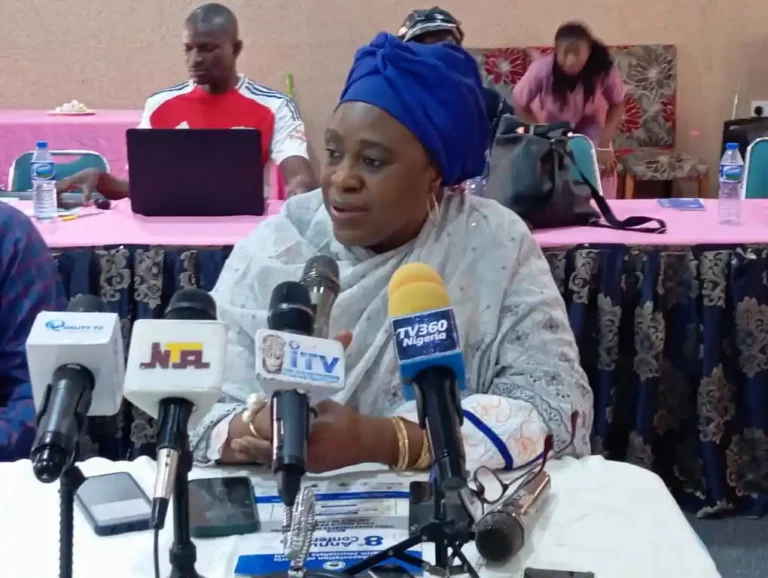
Addressing the Association of Health Journalists (ANHEJ) at its 8th Annual Conference in Abuja as a guest speaker recently, the special adviser to the President on health, Salma Ibrahim Anas, a doctor, said the gaps existed largely at the sub-national levels, including states and local government areas (LGAs).

Speaking on the conference theme, “SWAP Effectiveness in Addressing Poor Health Outcomes: The Role Of The Media,” Anas who was the Borno State’s former commissioner for health said President Bola Tinubu’s government was determined to do things differently to turn the tide.

“I want to say also that there are huge gaps that we need to do much more than what we have been doing. We need to double our efforts, not only at the national level but most importantly at the sub-national level. That is where Nigerian citizens are. That is where we seek services. That is where quality services will be delivered to the citizens of Nigeria. So much needs to be done at the state level and the local government level.

She expressed delight that Tinubu’s administration was strengthening the country’s LGAs through the autonomy it recently achieved through the Supreme Court.

Anas said some data from the National Demography and Health Survey and the National Health Facility Survey were not good for the country.

“In the area of maternal health, we need to do much more. We need to do things differently since it has not been giving us good results in several years that we have been doing; we are still not doing so well. You look at indices around antenatal care uptake for women, pregnant women, deliveries and skilled birth attendants, they are still very poor.

“We made very little progress in the modern family planning commodities which is a game-changer in the health of women. The newborn, it has also stagnated. We’ve not made much progress there. What can we now pick out of the box? What do we do differently in terms of the Federal Government’s commitment, investment and also the development partners and donor commitments at the moment? How do we maximize the resources and achieve results?”

She reiterated Nigerians’ rights to enjoy quality, affordable and accessible healthcare, which she promised that Tinubu’s administration would deliver.

She said it was also the government’s desire for the nation to attain universal health coverage.

She added that as part of the government’s resolve to improve the nation’s health system, the President approved an executive order on tax and value-added tax waiver on ingredients for drugs produced locally in the country, among others.

“We are working assiduously to improve quality healthcare delivery, especially at the sub-national level through the largest platform – the National Primary Health Care Development Agency (NPHCDA). We’ve made a lot of investment. There has also been an expansion of the National Health Insurance Authority and state governors are also expanding, she stated.

Dr Salma Ibrahim Anas (sitting in the middle on the first row) flanked by members of the Association of Nigeria Health Journalists (ANHEJ) at the association’s 8th Annual Conference in Abuja on Saturday, December 14

The ICIR reports that Anas’ position indicates that similar challenges observed under former President Muhammadu Buhari are yet to be addressed.

Data from the 2024 NDHS show that the percentage of women who received antenatal care (ANC) fell sharply in 2024 to 63 per cent from 67 per cent in the 2018 NDHS. This downward trend in ANC coverage takes Nigerian women’s maternal health risks back to 2013 levels when the figure stood at 61 per cent.

The report also shows an alarming 11 per cent increase in children receiving no vaccinations in Nigeria (zero dose children) as the percentage of children receiving no vaccination increased from 19 per cent in 2018 to 30 per cent in 2024 NDHS.

Meanwhile, in a presentation titled, “Overview of Nutrition Situation in Nigeria,” the director and head nutrition department, Federal Ministry of Health and Social Welfare, Ladidi Bako-Aiyegbusi, said at the ANHEJ conference that Nigeria ranked second globally and first in Africa in the number of children suffering from severe acute malnutrition (SAM).

Represented by the baby-friendly initiative desk officer at the ministry, Adenike Bayode, the director listed drivers of malnutrition to include inadequate food intake, lack of dietary diversity, infectious diseases, food insecurity, inadequate child and maternal care, poor access to health services, and unhealthy environment.

Others are poverty, population, weak governance commitment, and man-made disasters including communal conflicts.

In his opening remark, ANHEJ president, Joseph Kadiri, called for increased investments and collaboration among government, development partners and citizens to raise the bar for the nation’s health system.

While pledging increased reportage of the nation’s health sector, Kadiri called for improved service delivery and judicious use of funds allocated to the sector.


Reps probe non-delivery of 2,000 tractors, 100 combined harvesters

0

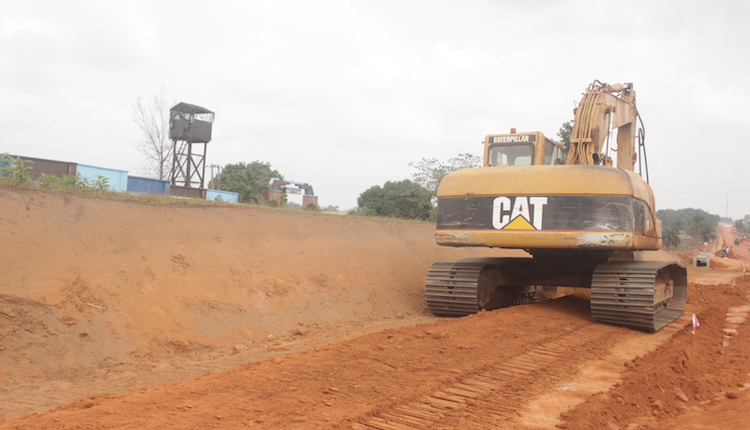
THE House of Representatives has mandated its committee on Agricultural Production and Services to investigate the non-delivery of the 2,000 tractors implements and 100 combined harvesters after one year of federal government agreements with a company, John Deere Tractors.

The House also directed the committee to inquire on the status of the tractor assembly plants contemplated in the agreements with AFTRADE DMCC for establishment of a tractor assembly plant to produce 9,022 agricultural implements and 2,000 Belarus tractors annually.

This was sequel to the adoption of a motion moved by the member representing Edu/Moro/Patigi of Kwara state, Ahmed Adam Saba at plenary on Tuesday, December 17.

Moving the motion, Saba said noted that President Bola Tinubu had on July 13, 2023, declared a state of emergency on food security, and a major component put forward to boost food production was massive agricultural mechanisation across the country.

He said the Federal Ministry of Agriculture and Food Security had signed an agreement with John Deere Tractors to supply 2000 tractors implements and 100 combined harvesters annually.

The lawmaker recalled that; “the contract for a tractor assembly plant in Nigeria was agreed to cost $70,041,733.80 and N2,981,739,134.30, respectively, with actual equipment and delivery costs, the contract includes sales, after-sales services, spare parts, and training for mechanised service providers.

“The Federal Ministry of Agriculture and Food Security, pursuant to the Presidential Food Security Initiative (PFSI), entered into another five year agreement with AFTRADE DMCC for establishment of a tractor assembly plant to produce 9,022 agricultural implements and 2,000 Belarus tractors annually, this Agreement was estimated to cost Nigeria about $684,190,433.00 and N138,613,486,965.0 as actual equipment cost and delivery/assembly cost, respectively.

“Both agreements were laden with benefits to accrue to Nigeria if implemented, which include increased agricultural production, technology transfer, and reduction of the foreign currency expenditure
on the purchase of ready made equipment due to the growth of local production.”

Saba expressed worry that a year after the agreements were signed by the National Agricultural Development Fund and the Federal Ministry of Agriculture and Food Security, no single tractor or implement has been received in
Nigeria despite the huge public funds involved in these transactions.

He also expressed concern that the non-delivery of these tractors and implements is a setback to the Renewed Hope Agenda in Agricultural mechanisation and this posed challenge to Nigeria’s food sufficiency ambition, as two farming seasons have been lost since the signing of the agreements.


READ ALSO:


The ICIR reports that Nigeria is currently facing food insecurity which mechanised agriculture enabled by tractors could remedy the situation with food prices currently out of reach for most Nigerians.

The ICIR also reported that the  NBS has attributed constant  rise in food inflation to the rate of increase in the average prices of mudfish, catfish dried, dried fish sardine, rice, yam flour, millet whole grain, corn flour, agric egg, powdered milk, fresh milk, dried beef, goat meat, and frozen chicken.

“The average annual rate of food inflation for the twelve months ending November 2024 over the previous twelve-month average was 38.67 per cent, which was 11.58 per cent points higher compared with the average annual rate of change recorded in November 2023(27.09 per cent),” NBS reported stated.

Misinformation that dominated the media space in 2024

0

IN recent months, Nigeria’s social media space has experienced a significant increase in disinformation and misinformation trends, sometimes leading to widespread public confusion and unrest.

Instances range from the circulation of outdated protest videos to the dissemination of misleading claims about government policies and activities.

This development underscores the urgent need for effective fact-checking to counter the proliferation of false information in public space. Below is a compilation of some notable cases recorded by The FactCheckHub this year:

Samoa Agreement

On June 28, 2024, the Nigerian government signed the $150 billion Samoa trade agreement with the European Union, which sparked widespread controversy after the disclosure by the minister of Budget and Economic Planning, Atiku Bagudu.

Public backlash erupted over claims that the agreement endorses LGBTQ rights on July 4 2024, contrary to Nigerian laws. However, an explainer on the agreement by The FactCheckHub revealed that the cited articles 2.5 and 29.5 contained no reference to LGBTQ provisions, highlighting the misleading nature of the allegations.

#EndBad Governance protests

During the EndBad Governance protests held from August 1 to 10, the social media space was flooded with a wave of misinformation and fake news, which significantly distorted information about Nigerians’ protest against hardship in the West African nation.

Among these were the rehashing of old videos from the 2020 EndSARS protests, falsely presented as recent events, and the circulation of protest scenes from other countries misrepresented as occurrences in Nigeria.

For instance, a seven-year-old protest video from Venezuela was widely shared online, misleadingly linked to the hunger protests in Nigeria to amplify the narrative. Notable public figures further fueled the misinformation by sharing unrelated or outdated images and videos, claiming they depicted the  protests.

These instances underscore the critical role of fact-checking in combating the spread of false information during moments of social unrest as reported by The FactCheckHub.

Foreign currency press statement

In February, an old press release from the Central Bank of Nigeria, (CBN) resurfaced, reportedly stating that the bank had planned to prosecute individuals involved in foreign currency transactions.

The release, shared by Daniel Bwala and other social media users, also gained traction through media reports, creating the impression that it was a recent directive.

However, a review of the CBN website revealed that the press release was originally issued on July 4, 2015.

₦70,000 minimum wage

In 2023, the Nigerian government proposed a new minimum wage as part of its agreement with the Nigeria Labour Congress (NLC) to end a national strike called by the workers union. But earlier in 2024, a  scam falsely claimed that the Lagos State government had begun paying the new minimum wage of ₦70,000.

In April, a viral video of Lagos State governor, Babajide Sanwo-Olu, at the Eko Cares launch further fueled the misinformation, with claims that he announced the new minimum wage. However, the state’s commissioner for information, Gbenga Omotoso, clarified that the governor made no such declaration.

When the minimum wage implementation began in July 2024, Nigeria’s Senate President, Godswill Akpabio, falsely stated that all employers in Nigeria were required to pay the new minimum wage.

The FactCheckHub debunked this claim, citing Sections 3 and 4 of the National Minimum Wage Act 2019. While Section 3 mandates employers to pay at least the national minimum wage, Section 4 exempts businesses with fewer than 25 employees, as well as freelancers, part-time employees, and certain other categories.

Nigerian agencies scrapped

On April 19, 2024, footage of a Federal Executive Council (FEC) meeting was shared on X, by Dino Melaye and Instablog9ja with claims that the Nigerian government had scrapped agencies like FRCN, ICPC, and NCDC.

However media reports from February 27, 2024, confirmed that the FEC had approved implementing recommendations from the Steve Oronsaye panel to restructure and rationalize federal agencies through mergers, and the scrapping of some entities.

Findings revealed that the claim of mass agency scrapping was FALSE, according to the Oronsaye report, as only PTAD and NSSEC were slated for scrapping. Other agencies were to be merged or subsumed, as outlined by the federal government in its February announcement.

Old presidential broadcast rehashed by presidency

Following the widespread criticism of President Bola Ahmed Tinubu‘s nationwide broadcast on August 4, the official X accounts of the president and the Nigerian presidency shared an old video portraying him urging citizens to remain calm and patient.

This video was also reported by some media outlets, creating the impression that it was a statement linked to the August 4 broadcast.

However, a Google reverse image search of keyframes from the video revealed that the longer version was initially shared by the Nigerian presidency on July 31, 2023.

The text of the address was also published on the presidency’s official website the same day.

Old video of Yoruba nation protest reshared

In February, X users recirculated an old video of a Yoruba nation protest, falsely attributing it to recent demonstrations over the economic hardship in Nigeria. Arise News also aired the footage during its “What’s trending” segment on The Morning Show, stating that Yoruba nation activists protested in Ondo State, calling for secession amidst rising economic challenges.

However, a review of the videos and reports revealed that they were originally published in 2021.

Oyo State split into two

When the bill proposing the division of Oyo State into two was still being discussed at the House of Representatives, a popular Nigerian social media blogger, Tunde Ednut posted a clip of the plenary session with a clickbait headline that the state had already been split into two which was widely shared on Instagram, and WhatsApp and thus sparked debate among netizens.

However, media reports indicated that the bill to split Oyo State into two has not been assented to, as it had only passed second reading, and h forwarded to the committee on constitutional review.

Warehouse naira hoarding

In February, a video circulated on social media particularly on X which claimed to show bundles of newly printed naira notes hoarded in a warehouse in northern Nigeria. The footage depicted men in a warehouse filled with stacked boxes, sparking allegations of corruption and hoarding.

However, the video was a February 13, 2024, operation by the Public Complaints and Anti-Corruption Commission (PCAC) in Kano State and unrelated to currency hoarding.

Credible outlets like Arise News and TVC News reported that the operation targeted warehouses accused of hoarding food items, not currency. According to the reports, items discovered included millet, sugar, sorghum, flour, maize, and spaghetti. A closer review of the footage identified Golden Penny’s Mai Kwabo Spaghetti, a product of Flour Mills of Nigeria Plc, among the hoarded goods.

Maiduguri Flood 

On September 9, 2024, the  Alau Dam in Maiduguri collapsed  which led to severe flooding in Maiduguri, the Borno State capital, causing considerable humanitarian challenges.

Reports show that at least 37 people died, and more than 1 million residents were displaced throughout the region, as a result.

An X user had posted a video claiming that it shows dead bodies that were recovered from the flood. However, checks by The FactCheckHub indicated that the video showed trucks and tricycles conveying dead bodies after terrorists struck a community in Yobe State on September 1, 2024.

The Punch reported that gunmen suspected to be Boko Haram insurgents killed residents and set ablaze shops and houses in Mafa village in Tarmuwa Local Government Area of Yobe State.

A Facebook user also shared an image of bundles of a legal tender while claiming that it was part of the items found and recovered from the Maiduguri flood.

Findings by The FactCheckHub show that the claim was misleading as the incident happened in northern Sudan and was unrelated to flooding in Borno State.

ICIR-funded report wins Ethical Journalism Award

0

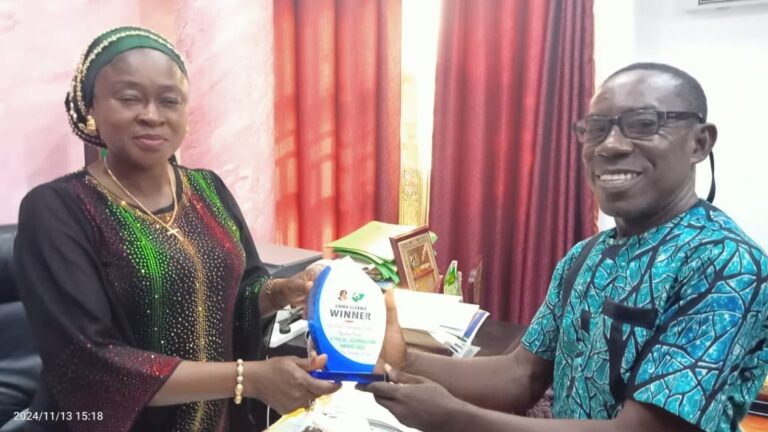
THE Nation newspaper correspondent in Anambra State, Emma Elekwa, has won the 2024 edition of the Professor Chinyere Stella Okunna Award for Ethical Journalism.

Elekwa was declared the prize winner at the Nigerian Union of Journalists (NUJ) Council Press Week/Man of the Year Award.

The award followed his submission of his report titled, “Erratic power supply cripples poultry businesses in Anambra; farmers resort to lanterns and charcoal.”

The ICIR funded the report under its Strengthening Public Accountability For Results and Knowledge (SPARK 2) project which was supported  by the International Budget Partnership (IBP)

Speaking before the award presentation, a member of the panel of judges, Jude Atupulazi, said the occasion was an opportunity to celebrate media practitioners who distinguished themselves, especially in the area of ethical journalism.

He announced the reporter with Ikenga online, Lawrence Nwimo, as runner-up, out of a total of ten entries.

He congratulated the awardees for their dedication and sacrifice and described the selection process as fair and transparent.

The Anambra State commissioner for information, Law Mefor, described NUJ as one of the reputable institutions in Nigeria. He pleaded with members to continue to partner with the government for a better society.

“NUJ is one of the reputable institutions in Nigeria, and I’m proud to be associated with it. I call on members to continue to partner with the government,” the commissioner stated.

The chairman of the occasion, Stella Okunna, a professor, commended NUJ leadership for the improved edition of the annual ceremony while appreciating the dignitaries that graced the occasion.

Okunna described journalism as the voice of the masses, emphasising that removing ethics from it would render the profession obsolete and have devastating consequences for society.

She urged journalists to embrace ethical journalism to advance the profession.

Responding, the award winner, Elekwa, expressed appreciation to God for the wisdom, zeal, and passion bestowed on him to carry out his duty.

He also appreciated his media outfit, The Nation Newspapers, and the International Centre for Investigative Reporting (ICIR) for providing the platform that made the award a reality.

“I must confess that the award came to me as a surprise. I reluctantly submitted the entry a day before the deadline and forgot about it until today that I was called up,” he said.

While dedicating the award to God and his colleagues in the pen profession, Elekwa said it would spur him to do more robust and impactful reports.

Speaking with The ICIR on Tuesday, December 17, Elekwa said the award was purely based on his competence.

According to him, the report that won him the award was an in-depth, investigative analysis addressing the peculiar challenges of rural women farmers.

“The story angle is barely virgin and underreported. The report is objective and near error-free. It goes further to demonstrate my competence, commitment, and passion for writing,” he stated.

He added that the award would motivate him to keep writing, especially towards exposing ills in the society.


Nigerians pay N2.23tn ransom to kidnappers in one year – NBS

THE National Bureau of Statistics (NBS) has disclosed that Nigerians paid N2.23 trillion to kidnappers as ransoms in 12 months.

 The payments were made between May 2023 and April 2024.

 In its latest Crime Experience and Security Perception Survey report, the NBS revealed that Nigerian households experienced an estimated 51.89 million crime incidents within the period.

 The North-West region topped the list with 14.4 million reported cases, followed closely by the North-Central region with 8.8 million incidents.

 Meanwhile, the South-East region recorded the lowest number of crimes, with 6.18 million incidents.

The report showed that crime disproportionately affected rural areas, with 26.53 million incidents occurring in rural households compared to 25.36 million in urban areas.

 Kidnapping was particularly a major issue, as 4.14 million households fell victim to home robberies.

Sixty-five per cent of those kidnapped were forced to pay ransom, with an average payment of N2.67 million, totalling N2.23 trillion nationwide.

 Despite these figures, underreporting remained a significant issue, with only 36.3 per cent of home robbery victims and a similarly low percentage of kidnapping victims reporting the incidents to the authorities, the NBS stated.

 The report partly reads,Among households that experienced kidnapping incidents, 65.0 per cent paid a ransom. The average amount paid as ransom was N2,670,693, with an estimated total ransom of N2,231,772,563,507 paid within the reference period.”

According to the survey, many victims of crime didn’t report to the authorities, citing a lack of trust in law enforcement and doubts about the effectiveness of police intervention.

 The survey found that 21.4 per cent of Nigerians experienced crime firsthand, with phone theft being the most common offence, affecting 13.8 per cent of the population. While most phone theft victims reported the crime to the police, only half were satisfied with the response. 

It noted that the situation was more dire for victims of sexual offences, with an estimated 1.4 million Nigerians affected. Only 22.7 per cent of these victims reported the crime to the authorities.

 The survey found that 9.6 per cent of Nigerians believed they were at risk of becoming victims of crime within the next one year, with rural areas feeling more vulnerable than urban areas.

The report also raised concerns about the effectiveness of Nigeria’s security agencies, particularly the police, in responding to emergencies. Only 33.1 per cent of Nigerians reported that security agencies responded to emergency calls within 30 minutes. 

In many rural areas, local vigilante groups were seen as a more reliable source of security, highlighting the need for improved trust and effectiveness in Nigeria’s law enforcement agencies.

Kidnapping for ransom has become a national security threat in Nigeria. How it’s done varies from targeting individuals to indiscriminate kidnappings and mass kidnappings in schools and communities. 

There has been a growing body of research on the subject. However, there remains a gap in understanding how families mobilise resources and deliver ransom to kidnappers.

In recent years, Nigeria has seen a sharp increase in kidnappings. This has seen citizens pay billions of naira in ransom to secure the release of their loved ones at the hands of kidnappers. 

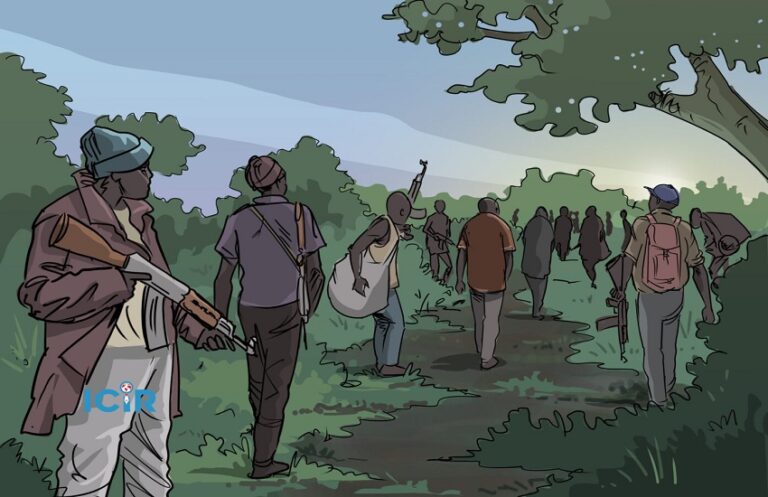
In this report, The ICIR examines cases of kidnapping, ransom payment, and the cost of being kidnapped in Nigeria.