FORMER Vice President Atiku Abubakar has on Sunday, January 12, condemned the recent military airstrike in Jilli axis of Borno State, raising concerns over civilian casualties during counter-insurgency operations.
While targeting insurgents, innocent Nigerians were once again reduced to collateral damage, he said, questioning how long citizens would remain unsafe both from terrorists and from operations meant to protect them.
“Just a few days ago, the United States deployed over 150 aircraft and spent an estimated $300 million to rescue just one pilot in Iran, even destroying equipment worth over $100 million each to protect a single life. That is the value they place on one citizen. Here at home, we must ask: what is the value of Nigerian lives? This demands urgent review, accountability, and decisive action to prevent a recurrence,” he added.
The former vice president extended condolences to the families of victims and affected communities, urging the government to uphold its responsibility to protect citizens.
A military airstrike on Saturday night has left dozens of people dead in Jilli axis, Borno State. The strike, which targeted a village market, occurred as Nigerian military jets were reportedly pursuing Islamist militants in the northeast.
The incident took place in a border community between Yobe and Borno states, a region that remains the epicentre of a long-running insurgency.
While local sources and residents report a high civilian toll at a village market, the Nigerian military has maintained that the operation was a precision strike targeting a high-level terrorist logistics hub.
In an official statement released by the Nigerian Army regarding Operation HADIN KAI, the Air Component of Joint Task Force (North East) confirmed it conducted a precision strike on April 11, 2026.
According to the military, the target was an abandoned village near Jilli in Gubio Local Government Area, which had been identified as a major movement corridor for Islamic State West Africa Province (ISWAP) terrorists.
A military airstrike on Saturday night has left dozens of people dead in Jilli axis, Borno State. The strike, which targeted a village market, occurred as Nigerian military jets were reportedly pursuing Islamist militants in the northeast.
The incident took place in a border community between Yobe and Borno states, a region that remains the epicentre of a long-running insurgency.
While local sources and residents report a high civilian toll at a village market, the Nigerian military has maintained that the operation was a precision strike targeting a high-level terrorist logistics hub.
In an official statement released by the Nigerian Army regarding Operation HADIN KAI, the Air Component of Joint Task Force (North East) confirmed it conducted a precision strike on April 11, 2026.
According to the military, the target was an abandoned village near Jilli in Gubio Local Government Area, which had been identified as a major movement corridor for Islamic State West Africa Province (ISWAP) terrorists.
The military stated that the operation followed intensified intelligence, surveillance, and reconnaissance (ISR) missions triggered by recent attacks on troops in the Bindul, Ngamdu, and Benisheik axes.
“Target fidelity was confirmed through multiple credible Human Intelligence sources, supported by persistent aerial surveillance. Upon final validation, the Air Component executed a series of precision strikes on the objectives,” the military said.
However, eyewitness accounts said the casualties were primarily civilians who were at the market when the bombardment began.
Lawan Zanna Nur Geidam, the councillor and the traditional head of Fuchimeram ward in Yobe’s Geidam district, provided a grim account of the aftermath. In a telephone interview with Reuters, he confirmed the scale of the carnage.
“It’s a very devastating incident at Jilli Market. As I’m speaking to you, over 200 people have lost their lives from the air strike at the market,” Geidam stated.
Residents confirmed the incident and the terror that hit the market square. Ahmed Ali, a 43-year-old vendor who sells medical consumables at the market, recounted his narrow escape from his hospital bed.
“I became so scared and attempted to run away, but a friend dragged me, and we all lay on the ground,”
Following the airstrike, the military reported the arrest of a suspected terrorist logistics courier, identified as “Turja Bulu,” in Ngamdu Town on April 12.
According to the statement, Bulu confessed to participating in recent attacks and revealed he had been dispatched from the Jilli axis to provide food items to other terrorist groups hibernating in the Magumeri-Gubio area.
However, the military’s official communication made no mention of a market being hit or civilian casualties.
The Yobe State Emergency Management Agency (SEMA) has since activated its emergency response protocols following preliminary reports of the casualties.
THE Oyo State Police Command has apprehended a 23-year-old man, Sodiq Kayode Akorede, after he was found in possession of a severed head of a six-year-old girl in Ibadan.
The incident, which occurred on Saturday, April 11, in Adigun village, Olorunda Ogunsola area of the Ona-Ara Local Government Area, shocked residents across the state.
In a statement released on Sunday, April 12, made available to the public, the command’s spokesperson, Ayanlade Olayinka, detailed the events leading to the arrest.
He stated that the command acted on information suggesting that a young girl had been unlawfully killed and her head severed in Adigun Village on Saturday, April 11.
He said the severed head was allegedly found in the possession of one Sodiq Akorede at the Olorunda Ogunsola area.
“In connection with the above, the command received information that a young girl had been unlawfully killed, with her head severed and reportedly found in the possession of one Sodiq Kayode Akorede ‘M’ at the aforementioned location.
“Upon receipt of this information, the Commissioner of Police, Oyo State Command, CP Abimbola Ayodeji Olugbenga, promptly directed that operatives be mobilised to the scene, the suspect be rescued, and the exhibit secured,” the statement said.
Following the directive from the Commissioner of Police, Oyo State Command, Abimbola Ayodeji Olugbenga, police officers moved in to secure the evidence and prevent a lynching by an angry mob.
“Consequently, in compliance with this directive, police officers swiftly mobilised to the scene and, despite stiff resistance from an irate mob, acted with professionalism, restraint, and in accordance with the law to successfully rescue and arrest the suspect, as well as secure the exhibit found in his possession.
“Following the arrest, preliminary investigation revealed that the suspect, one Sodiq Kayode Akorede ‘M’, aged 23, allegedly unlawfully killed a six-year-old girl, later identified as Mutiyatu Sunday ‘F’, and severed her head, which was recovered from him,” it stated further.
It added that, “Upon interrogation, the suspect confessed to the commission of the crime. He was thereafter conveyed to a medical facility for necessary treatment following injuries sustained from the mob attack. He will be transferred to the State Criminal Investigation Department (CID) for discreet investigation and prosecution.”
Olugbenga warned the public against the dangers of jungle justice, noting that such actions often compromise the integrity of criminal investigations.
He concluded by reassuring the public and residents that justice will be served and also urged them to remain law-abiding and report suspicious activities to security agencies.
THE Presidential Fiscal Policy and Tax Reforms Committee has dismissed reports alleging that the Minister of State for Finance, Taiwo Oyedele, admitted errors in Nigeria’s new tax laws.
In a statement posted on Sunday, April 12, via Oyedele’s X handle, the committee described the reports as misleading, saying they misrepresented the minister’s remarks.
It clarified that claims suggesting Oyedele called on Nigerians to await the outcome of a legislative probe were false, noting that the legislative process had already been concluded and certified copies of the laws published by the National Assembly since early January 2026.
The committee warned that such narratives could distort public understanding of the reforms.
It explained that the minister, while speaking at a fireside chat during the Nigerian Bar Association (NBA) Section on Legal Practice conference in Lagos, highlighted early gains recorded since the implementation of the tax laws.
According to the committee, these gains include a significant increase in the number of informal businesses seeking registration with the Corporate Affairs Commission (CAC), as well as a rise in registered taxpayers from about 10 million to over 100 million nationwide.
The committee attributed the development to provisions in the new laws, including tax exemptions for small companies and low-income earners, as well as reliefs on essential goods and services.
It added that the reforms were designed to ease the tax burden through measures such as exemptions on food, education, healthcare, transportation and rent, alongside the introduction of a Tax Ombud to protect taxpayers’ rights.
The committee also noted that Oyedele acknowledged that no law is perfect and stressed the need for continuous stakeholder engagement to address any gaps through future amendments under the Finance Act process.
It urged the public to disregard what it described as sensational reports and rely on official sources for accurate information on the reforms.
The new tax laws, signed in 2025 and implemented in January 2026, aim to simplify Nigeria’s tax system, expand the revenue base, reduce multiple taxation, and ease the burden on low-income earners and small businesses.
However, concerns emerged late last year when some lawmakers, including Abdussamad Dasuki, raised issues over alleged discrepancies between the harmonised bills passed by the National Assembly and the gazetted versions.
Professional services firm KPMG had also flagged potential inconsistencies, gaps and omissions in the laws.
Oyedele, who chaired the Presidential Fiscal Policy and Tax Reforms Committee, has previously dismissed similar claims, maintaining that implementation is ongoing while necessary refinements are being made.
Some media platforms had reported that Oyedele admitted to errors in Nigeria’s tax reform laws, assuring that measures are underway to correct the identified issues.
Oyedele addressed concerns about reported discrepancies in the new laws during a fireside chat at the 2026 annual conference of the Nigerian Bar Association (NBA) section on legal practice.
“Our administration will be committed to permanently securing the safety, freedom and prosperity of all Nigerians. We shall adopt a proactive and intelligence driven security approach to sufficiently address the nation’s security threats.”
NIGER State in Nigeria’s north-central zone also goes by the moniker of “Power State”. Nigeria’s founding Head of State, Nnamdi Azikiwe, was born in the territory of the state as was Emeka Odumegwu-Ojukwu, leader of the defunct Biafra. The state has also produced two former military heads of state and a Chief Justice of Nigeria, but these are not the reasons its moniker.
Niger State is the “power state” because it is host to several sensitive and strategic national energy assets in located in Jebba, Kainji, and Shiroro, on the lower course of the River Niger. In addition, the state also hosts a collection of sensitive security installations. In the recent past, however, the state has become the place where the power of the Nigerian state goes to advertise its incapacities.
Shiroro illustrates this problem. At about 5,171 km², Shiroro Local Government Area (LGA) of Niger State is approximately the size of Imo State in south-east Nigeria. In May 2025, Humangle reported that insurgents allied with Boko Haram have “formed a parallel government physically stationed on the fringes of the Allawa Forest in Shiroro.” In the past half decade, Shiroro has been the site of the most intense slaughter of uniformed assets of Nigeria’s armed and security services.
On the night of June 29-30 2022, for instance, a motorbike gang of over 300 armed terrorists descended on Ajata-Aboki village in the Gurmana Ward of Shiroro. Their destination was an artisanal mine in the village. At the site, they reportedly abducted at least four Chinese and several other workers.
While the attack was ongoing, a company of soldiers stationed in nearby Erena responded to a distress call about the attack. On their way, they encountered an ambush from the insurgents who killed scores, including least 30 soldiers and six civilian volunteers. President Buhari called this tragedy “a direct assault on Nigeria, vowing that the attackers would not go unpunished.”
In fact, they did.
All this unfolded under the a federal government run by the All Progressives Congress (APC) headed by the predecessor of the current incumbent. As presidential candidate of the party, Bola Tinubu promised to solve insecurity.
Published under the title “Renewed Hope: Action Plan for a New Nigeria”, his manifesto for the 2023 presidential election began: “The fundamental responsibility of government is to protect the lives and property of its citizens. We will mobilise the totality of our national security, military and law enforcement assets to protect all Nigerians from danger and from the fear of danger.”
He did not mean it. For the people of Shiroro, as with many communities in North-central Nigeria, the only thing worse than the growing intensification of atrocity and danger is the even more intense indifference of the Tinubu administration to their plight.
In April 2024, one officer of the Nigerian Army (a Captain), six soldiers under his command and a volunteer hunter were killed in separate attacks on Roro, Karaga, and Rumace communities in Bassa Ward of Shiroro.
Around 11 September 2024, the casualty count in an encounter between the security services and insurgent terrorists in Bassa included at least two officers of the State Security Service (SSS).
In November 2024, insurgents in Shiroro killed four officers of the Nigeria Security and Civil Defence Corps (NSCDC), and disappeared another.
In the wake of these incidents, Shiroro, a source of power to many communities in Northern Nigeria, has “become a slaughterhouse”, where terrorists operate at will and mass atrocities stalk every community.
In June 2024, “witnesses in the town of Bassa said Boko Haram fighters attacked in broad daylight on June 6, shot the victims at close range and beheaded 10 of them.”
As the world prepared for Christmas on 24 December 2025, the terrorists picked upon Karibo community in Shiroro, killing about 15.
The latest attacks on Lanta and Bagna in Shiroro began on Easter Monday. It left at least 63 killed, mostly “operatives of the State Security Services (SSS), vigilantes, and local hunters.” No abductions were reported.
Shiroro is by no means an outlier in its vicinity. Rather, it mirrors the experience of an increasing number of communities in northern Nigeria where the Nigerian State has become complicit in its own retrenchment under the watch of a president who promised different.
The period since the Easter weekend has witnessed intense and brutal slaughter across the landscape of northern Nigeria, including in Benue, Borno, Kaduna, Katsina, Kebbi, Kwara, Niger, Plateau and Zamfara States.
Rather than worry about the protection of Nigerians exposed to this pattern of murderous insecurity, Defence Minister, Chris Musa, a recently retired General of the Nigerian Army and an even more recent recruit into the ranks of the ruling party, flamboyantly busied himself with the defence and security of the party political convention of the ruling APC.
Far from making a priority of fulfilling his campaign promise to improve the protection and security of communities across the country, President Bola Tinubu appears more invested in the creature comforts of himself and his most loyal acolytes. In response to the widening field of slaughter in northern Nigeria, the government increasingly defaults to propaganda and falsehood.
On Easter Sunday, for instance, armed terrorists two places of worship in Ariko Community in Awon Ward, Kachia Local Government Area, of Kaduna State. In separate attacks on the First ECWA Church and Saint Augustine’s Catholic Church in the village, they killed at least five worshippers and abducted another 38 into the surrounding foliage.
In response, the Army promptly issued a statement claiming that it had “rescued” 31 of the abductees. Nothing of the sort happened. The following day, the community leadership issued a public statement firmly refuting this claim.
This was not a first. On 18 January 2026, after terrorists abducted 177 worshippers from three churches in Kurmin Wali, Kajuru Local Government Area of Kaduna State, the Nigeria Police Force and the Chairman of the Local Government publicly denied the abductions. They only reluctantly walked back their denials after public pressure. Those who called attention to this pattern of institutional mendacity have suffered persecution and intimidation.
As the insecurity has intensified, the response of the Bola Tinubu administration has evolved from complicit indifference and now verges on criminal cynicism. North-central and north-west Nigeria, the sites of this intensification of insecurity, happen also to be the most fertile sites of votes in Nigeria.
While the communities in these parts of the country get emptied into mass graves or internal displacement camps, and the uniformed security agents sent to defend them pay with their lives in impermissible numbers, the politicians are busy recruiting political defections or fomenting political disaffection.
The only thing that counts these days is not the security and wellbeing of the voters but the promise of assured return for the ruling party in the invention of a contingent electoral landslide in January 2026. In the nature of these things in Nigeria, even as most of their members now inhabit mass graves or IDP camps in far flung places, these empty communities will, nevertheless, report a fulsome turnout of ghosts in the presidential election in 2027 in favour of the ruling party.
Shiroro is a testing ground.
Hunters for happy endings are likely to create a squatter camp around this concluding paragraph, looking for recommendations or suggestions. I have none. A government that encourages lies against its own citizens in mass graves or under the thrall of atrocity abduction does not need recommendations to reverse its commitment to renewed dystopia. To the citizens and communities caught in this, however, we owe acknowledgement and solidarity. This is the beginning.
THE Federal Government has released a list of 48 individuals and groups allegedly linked to terrorism financing in Nigeria.
The list was published on Saturday. April 11, by the Nigeria Sanctions Committee (NIGSAC), detailing persons and entities suspected of involvement in terrorism-related activities across the country.
Those named in the document include individuals reportedly connected to proscribed groups such as the Indigenous People of Biafra (IPOB), Ansaru, and the Islamic State West Africa Province (ISWAP).
The list includes Abdulsamat Ohida, Mohammed Sani, Abdurrahaman Abdurrahaman, Fatima Ishaq, Tukur Mamu, Yusuf Ghazali, Muhammad Sani, Abubakar Muhammad, Sallamudeen Hassan, Adamu Ishak, Hassana Isah, Abdulkareem Musa, Umar Abdullahi, Abdurrahaman Ado, Bashir Yusuf, and Ibrahim Alhassan.
Others are Muhammad Isah, Salihu Adamu, Surajo Mohammad, Fannami Bukar, Muhammed Musa, Sahabi Ismail, Mohammed Buba, Jama’atu Wal-Jihad, Ansarul Sudan (Ansaru), Islamic State West Africa Province (ISWAP), Indigenous People of Biafra (IPOB), Yan Group, Yan Group NLBDG, Adamu Hassan, Hassan Mohammed.
Also listed are Usman Abubakar, Kubara Salawu, Rabiu Suleiman, Simon Njoku, Godstime Iyare, Francis Mmadubuchi, John Onwumere, Chikwuka Eze, Edwin Chukwuedo, Chiwendu Owoh, Ginika Orji, Awo Uchechukwu, Mercy Ali, Ohagwu Juliana, Eze Okpoto, Nwaobi Chimezie, and Ogumu Kewe.
The Federal Government’s move follows ongoing efforts to curb terrorism financing and disrupt networks that provide financial and logistical support to extremist groups operating in Nigeria.
Authorities have, in recent years, intensified surveillance and enforcement actions targeting individuals and entities suspected of aiding insurgent activities, particularly in the North-East and other conflict-prone regions.
IN a new fiscal policy move, the Minister of Finance and Coordinating Minister of the Economy, Wale Edun, has approved the implementation of 2026 policy measures, including downward tariff adjustments on about 30 items.
Part of the policy is a list of 127 tariff lines with reduced import duty rates, seeking to “promote and stimulate growth in critical sectors of the economy.”
The minister conveyed the Fiscal Policy Measures (FPM) via a circular dated April 1, 2026.
Informed sources at the Federal Ministry of Finance also confirmed to The ICIR that the new policy measure sought to provide fiscal policy relief for the import-dependent Nigeria economy over the effect of the US-Israel-Iran conflict.
They also said that the measure was part of a policy initiative geared towards improving trade facilitation and trade in goods, since the Nigerian Customs Service (NCS) had been occasionally accused of an arbitrary increase in customs duty, leading to cargoes staying longer at Nigerian ports.
For instance, the import adjustment tax (IAT) on items such as crude palm oil has been pegged at a total effective rate of 28.75 per cent, a decline from previous high-tariff regimes.
Also, fully built units of passenger motor vehicles, four-wheel drive motor vehicles, and station wagons now attract a total effective tariff of 40 per cent, indicating a slash as against the 70 per cent contained in the 2015 fiscal policy measures
According to the circular, a 90-day grace period was granted for importers who had opened Form ‘M’ before April 1 to enable them to clear their goods at prevailing rates.
But a new excise duty regime and the green tax surcharge are set to take effect from July 1, 2026.
Some of the items from the gazette include Anti-malarial medicaments (20 per cent), rice (in bulk or packing of 5kg, which now attracts a 47.5 per cent reduction, as against 70 per cent.
Also, broken rice drops to 30 per cent from 70 per cent, wheat or meslin flour stands at 70 per cent.
Other affected items are crude palm oil (now 28.75 per cent from 35 per cent), margarine (excluding liquid)– 40 per cent
Raw cane sugar (Beet sugar) drops to 57.5 per cent from 70 per cent. Raw cane sugar (Other) is now 55 per cent (reduced from 70 per cent).
There is also Cane/Beet sugar (Powder/Granule) dropping from 70 per cent to 57.5 per cent.
Refined salt (for human consumption) equally dropped from 70 per cent to 55 per cent; envelopes 40 per cent (reduced from 50 per cent), and diaries/notebooks came down from 40 per 30 per cent.
The ICIR reports that the fiscal document outlines significant tariff reductions on various products, including:
– Wheat or Meslin flour: 70 per cent
– Crude palm oil: reduced from 35 per cent to 28.75 per cent
– Margarine (excluding liquid): 40 per cent
– Raw cane sugar (Beet sugar): reduced from 70 per cent to 57.5 per cent
– Raw cane sugar (Other): reduced from 70 per cent to 55 per cent
– Cane/Beet sugar (Powder/Granule): reduced from 70 per cent to 57.5 per cent
– Refined salt (for human consumption): reduced from 70 per cent to 55 per cent
– Envelopes: reduced from 50 per cent to 40 per cent
– Diaries/Notebooks: reduced from 40 per cent to 30 per cent
– Unglazed ceramic tiles: reduced from 40 per cent to 35 per cent
– Glazed ceramic tiles: reduced from 55% to 46.25 per cent
– Ceramic cubes (7cm): reduced from 40 per cent to 35 per cent
– Zinc-coated steel sheets: reduced from 45 per cent to 35 per cent
FOR years, rural communities across Makurdi, Guma, and Logo local government areas of Benue State have lived under the shadow of armed violence, with farmers caught at the centre of repeated attacks that have killed residents, destroyed villages, and emptied farmlands. This investigation tracks displaced farmers across these villages, from the homes they were forced to flee to the places they now seek safety, revealing a pattern of brutal killings, forced migration, and the slow abandonment of agricultural life in one of Nigeria’s most important food-producing regions.
It was not said as a threat. It was said quietly, almost as a plea, the kind of statement that carries more exhaustion than fear.
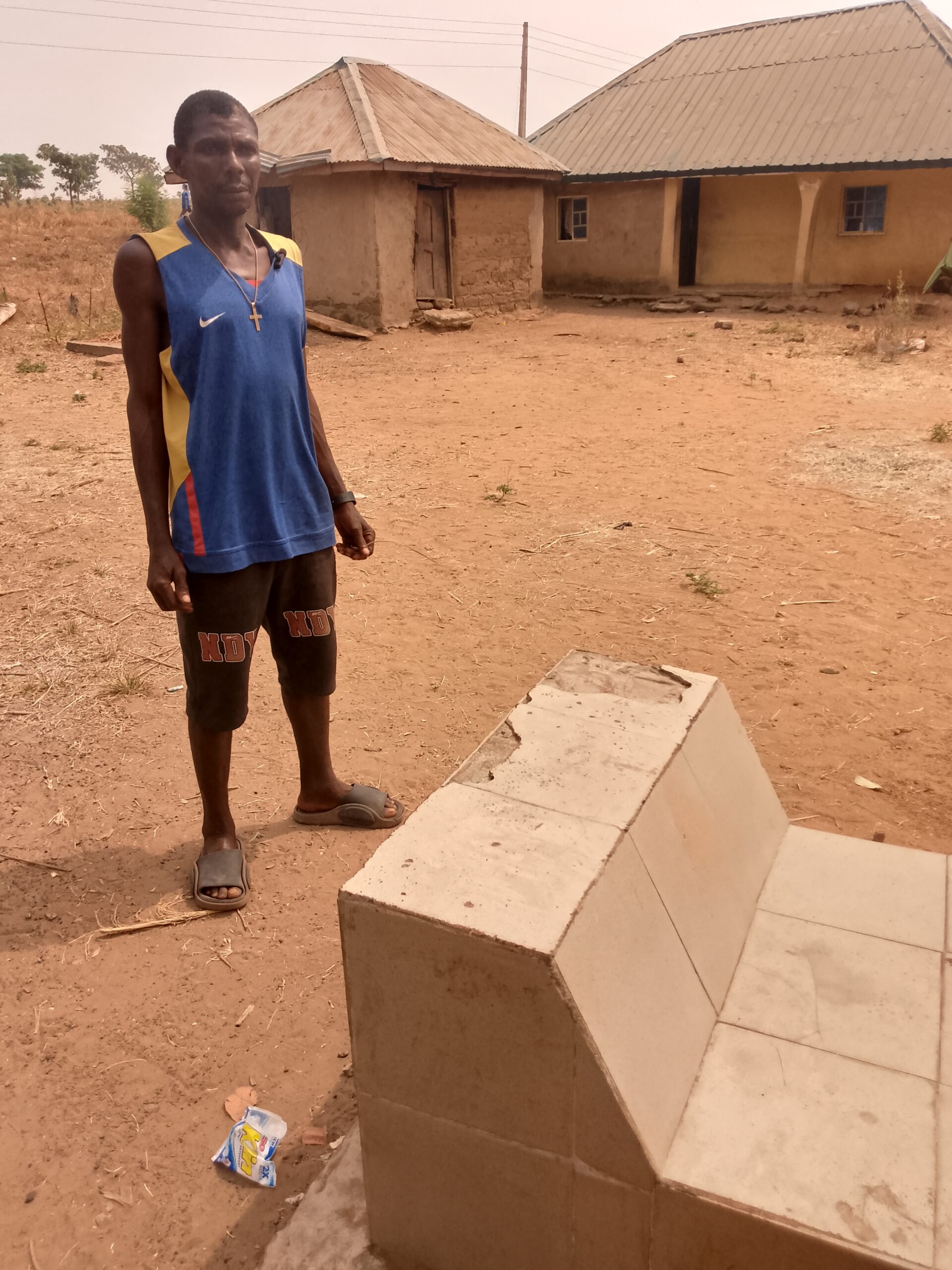
Michael Passenger, a 47-year-old farmer from Che-Ayagwa village in the Guma Local Government Area of Benue State, took a step back when he first saw this reporter approach, unsure who he was or what he represented. Only after he introduced himself did he relax slightly.
A deserted village about 2 kilometres from Che Ayagwa village
Still, when this reporter asked if they could walk to the farmlands, beyond the river that now marks the boundary between the villagers and armed herders, his voice changed. His warning on not coming ‘back alive’ came from six years of loss, displacement, and watching a community slowly disappear.
Two long journeys, one mission
Getting to Makurdi, the capital of Benue State, already felt like a journey into a story that few outside the region understand. From Lagos, this reporter flew to Abuja and then travelled six hours by road, watching the urban skyline fade into long stretches of farmland and quiet settlements.
There is no commercial airport in the state, and perhaps that distance, physical and symbolic, mirrors how removed these communities are from national attention. Yet this is Benue, widely known as Nigeria’s “food basket”, a state whose fertile land once fed millions, now increasingly defined by fear, silence, and forced migration.
The purpose of the investigation was to track farmers who have become victims of insecurity, and to document how years of farmer-herder clashes, kidnappings, and killings are forcing them to abandon their ancestral homes and farmlands.
Across several villages visited by this reporter in the Makurdi, Guma, and Logo LGAS of the state, farmlands now lie empty, not because the soil has failed, but because the people who used to work it no longer dare to return.
Many have sought refuge in neighbouring communities, while others have been spending years in internally displaced persons (IDP) camps, torn between the memory of home and the uncertainty of return.
On-site investigations revealed that what is happening in Benue is not just a security crisis; it is a quiet form of forced displacement. Families are scattered, livelihoods destroyed, and agricultural production is shrinking with every abandoned farming field.
A village under siege
In Che-Ayagwa, fear is now part of daily routine. Michael’s 30-acre farm still exists, just across the river, but it has been inaccessible for years.
“They are living on the other side of the river now,” he said.
The land has changed hands, not through sale or inheritance, but through violence and absence.
After Michael said this reporter would not come back alive if he went beyond the river, he was not only talking about the path across the other side. He was describing the reality of a people who no longer sleep indoors, who keep watch through the night, who measure survival in days rather than seasons, and who farm memories instead of land.
It was soon discovered that his story is not an exception in Benue; it is the pattern.The 47-year-old has lived in Che-Ayagwa his entire life. It is the village where he was born, and where he once cultivated 30 acres of farmland.
According to him, the violence that changed everything began six years ago. “We lost 35 villagers that day,” he said.
47 year old Michael Passenger standing beside a friends grave
The memory remains sharp. On that day, one of the villagers had gone to the riverside and noticed smoke rising from the bush. Alarmed, he ran back to inform the residents. But the warning was not taken seriously. Life continued as normal.
That evening, everyone gathered at the village centre, watching television, unaware that it would be the last normal night for many of them.
Later, after they had returned to their huts, the gunshots began.
“By the time I stepped outside to see what was going on, what I saw were dead bodies,” Michael recalled.
From that night, Che-Ayagwa stopped being just a village. Residents said it became a place under siege, and the river that runs close to the community turned into an invisible border between life and death.
On the other side of the river lie the farmlands, once the community’s economic lifeline. But now, those fields are abandoned.
“Since then, we do not go beyond the river where our farms are,” he said.
The fear is not based on rumours or distant reports. It is renewed constantly. Just the night before the conversation with Michael, another villager had been killed while attempting to sneak into his farm to gather what to eat.
“They even killed one of us yesterday (January 29) when he attempted to go to his farm to gather what he could sell or cook for his family. People are hungry here.”
Sometimes, Michael says, the attackers can be seen from afar, standing across the river, close enough to be visible and to remind the villagers that they are being watched.
“If you go to the river, you will see them sometimes far away, but crossing to the other side is dangerous.”
A weird survival plan
The danger does not stop at the farmlands. The violence often spills into the village itself. According to Michael, there are times when armed herders enter Che-Ayagwa without warning. When that happens, the community has developed its own survival routine.
“When they come, we will quickly tell all the children to run away while we, the old ones, stay with them. If they want to kill us, at least they will not be able to pursue the children.”
He said it is a strategy built on sacrifice. They accept death as a possibility as long as the younger ones have a chance to live.
Michael spoke of other villagers whose lives have been permanently altered. One man lost his first child and saw his second child injured by gunfire. Although the bullet was removed, the damage never fully healed.
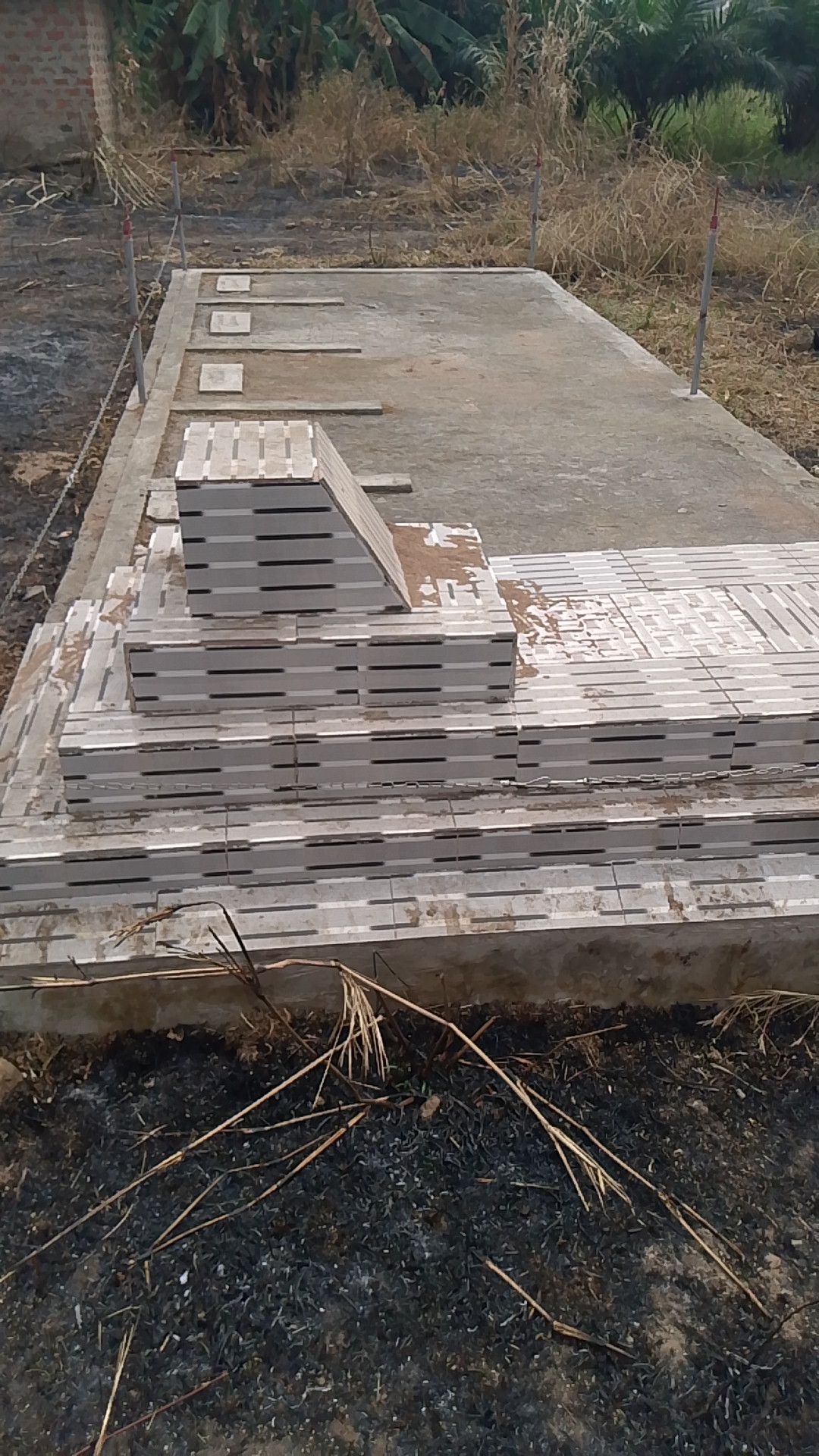
A family of 6 was buried here after an attack in Che Ayagwa
“A villager… they slaughtered his first child and shot his second child. Despite removing the bullet, his hand has never remained the same.”
Findings showed that the attacks have reshaped not just movement, but sleep, space, and the meaning of safety itself. Homes are no longer places of rest.
“We do not sleep indoors anymore. We sleep outside just in case they attack,” Michael said, pointing to the space where he sleeps every night, adding that, “We sleep beside graves.”
For Michael and many others like him, abandoning their farms did not happen overnight. It happened slowly, through fear, repeated attacks, and the realisation that returning to the fields could mean not returning at all. The farmlands remain untouched, not because they have abandoned farming, but because farming has become a risk they can no longer afford.
A pattern of reported attacks across Benue
Findings showed that what is happening in Che-Ayagwa is not isolated. Across Benue State and several parts of Nigeria’s Middle Belt, similar stories have been repeatedly documented by national and international media, human rights organisations, and security reports.
Over the past decade, reports showed herder-related violence has evolved from sporadic clashes into a sustained pattern of armed attacks on rural farming communities.
Multiple reports by Nigerian newspapers, have chronicled waves of attacks in Benue, Plateau, Nasarawa, Southern Kaduna, and parts of Taraba. These reports consistently described armed groups invading villages, killing residents, burning homes, and forcing entire communities to flee.
On February 6, armed herders invaded Anwase market in Mbaikyor council ward of Kwande LGA. The assailants razed the market while the market men and women ran for their lives.
The attack came two days after the attack on Abande community in the same ward council where 17 persons were reportedly killed and several others injured.
According to data from different conflict monitoring organisations, thousands of civilians have been killed in farmer-herder-related violence over the last decade, with Benue State ranking among the most affected. In several years, Benue alone recorded hundreds of deaths, dozens of destroyed communities, and tens of thousands of displaced persons.
In 2018, for instance, coordinated attacks in Guma and Logo local government areas of Benue reportedly left more than 70 people dead within a few days, triggering national outrage and mass displacement. Since then, similar incidents have been recorded almost annually, with communities in Agatu, Kwande, Makurdi outskirts, and Gwer West repeatedly appearing in casualty reports.
In April 2025, after a fresh wave of attacks on villages across Guma, Logo, and Ukum local government areas, the state governor, Hyacinth Alia, told the public that 598 people lost their lives while thousands were left without homes as of April 17, 2025.
Despite the promise of the governor, Hycinth Alia, to improve the security in the affected areas, attacks resumed on May 9 in the three local government areas and also in Kwande, leaving at least 20 people dead.
On June 13, 2025, Yelewata community in Guma local government area was thrown into mourning after assailants attacked the residents, leading to the death of over 100 villagers, including farmers.
Designed by bullets, a village of dead bodies
About 20 minutes away from Che-Ayagwa, along the Abagena expressway leading into Makurdi, the capital city, another village tells a similar story.
It was a sunny Thursday afternoon, and Oluga Akerenyi was under the big tree in front of his house. Lying on a mat and receiving the cool breeze that the tree’s leaves could offer, his wives sat on a bench beside him as the family traded in conversations.
Akerenyi has been the village head for years, but he said the attacks began three years ago, marking the start of a cycle of violence that the community has not recovered from.
“We were all taking in fresh air the night they attacked us,” he said.
According to the chief, the assault came suddenly. People ran in different directions, trying to escape, but many were unable to move fast enough.
“Everyone ran, but some were caught either by bullets or machetes. There was blood everywhere,” he said.
Oluga Akerenyi
He explained that during recent attacks, a substance was released into the air, making it difficult for villagers to breathe and slowing them down as they tried to flee.
“There was a particular chemical they released into the air as people were running. This chemical stopped people from breathing well, so it slowed their movement and allowed the attackers to catch up with them,” he narrated.
Since then, large parts of the village have been abandoned, especially the areas closest to where the attackers are believed to emerge from.
“Because of the attacks, we decided to abandon the huts that are close to where the attackers always come from,” the chief said.
While some residents fled Abagena entirely, others had nowhere else to go. Even those who tried to leave eventually returned, not because the village was safe, but because survival outside it proved impossible.
“We once left the village, but there was nothing for us to live on outside, so some of us came back,” he said.
Like many farmers across Benue, the chief has also lost his livelihood. His farmlands are no longer accessible.
“We cannot go to our farms anymore because they are there. I used to have six acres, but not anymore. Now we are just trying to cultivate whatever we can inside the village.”
The scale of loss in Abagena is visible everywhere. According to Akerenyi, the community has buried hundreds of people since the attacks began.
“There are more than 100 graves in this village,” he said. “For some people, we do not even build proper graves. We just dig the ground, do the necessary rites, and cover it.”
He pointed to a nearby compound along the path leading to his home, describing it as one of many silent reminders of what the village has endured.
“The hut you passed to meet me here was a place where someone was recently killed. They chased the man and caught up with him before they cut him into pieces and beheaded him. They took the head around the village before throwing it away,” he narrated.
Headless father buried beside wife, four children
Akerenyi led this reporter to the compound where he narrated how an entire family was wiped out when the attackers entered their compound at night during one of the invasions.
“They burnt the first compound they entered and killed everyone there. It was a family of six. The father was beheaded, and the wife and four children were shot to death,” he said.
Pointing to the graveyard where the family were buried, he said the villagers buried the husband without his head.
Graves in Che Ayagwa
The psychological toll has been just as devastating as the physical losses. According to the chief, displacement has changed the geography of fear.
“We have heard that some Fulani herdsmen have migrated to the other side of the road. Now we are in their middle. They can surround us from both sides at any time,” he said.
Like Che-Ayagwa, this village has not been officially evacuated. Findings revealed that there are no formal relocation plans, no permanent security presence, and no realistic path back to normal life. What remains is a community surviving in fragments, farming within fences, sleeping with fear, counting graves, and living with the constant knowledge that safety is temporary and survival is accidental.
Common patterns
Moving through several villages and informal settlements across Benue State, a pattern was discovered. The footpaths wound between clusters of mud houses, opening into small squares and narrow side lanes, each compound separated by low walls and patches of dry earth.
But across all the spaces, regardless of layout or size, one feature was common. In nearly every compound, beside homes that were still occupied and others already abandoned, there was at least one grave. Some were carefully marked, others barely distinguishable from the surrounding soil, but their presence cut across each village, turning private living spaces into shared sites of mourning and making death a permanent part of every community’s physical landscape.
In one of the villages, residents led the reporter to a recently abandoned compound, its doors left open and household items still scattered across the rooms as if the occupants had only stepped out briefly.
The family, they explained, had fled to one of the IDP camps in the state after losing two relatives who were killed on their farmlands during one of the attacks. Since then, no one has returned to the house. Neighbours said the family could no longer bear the fear of staying in a place filled with memories of loss and fear.
‘Abducted villagers are used as shields’
A rescue worker and state coordinator of the Grassroots Development Monitoring and Advocacy Centre in the North Central region, Yinka Razzaq, said attacks in vulnerable communities are often coordinated to overwhelm any available security forces.
“The attacks often occur at the same time to create distraction for military intervention. One can happen in Kwara and another in Niger within a short period. It diverts strategy and weakens response.”
He said casualties are handled quickly, but abductions complicate rescue efforts.
“The injured are rushed to hospitals. The dead are buried almost immediately. Those abducted remain with the attackers and are sometimes used as shields during military operations, which makes rescue difficult and opens room for ransom negotiations.”
Razzaq described victims as “psychologically distressed and emotionally traumatised,” adding that families struggle to cope months after attacks.
He identified poor road networks, weak infrastructure, and delayed military response as major gaps, calling for improved security presence, better access roads, and grassroots early-warning systems to curb recurring violence.
Cost beyond human lives
According to several reports, the humanitarian consequences are severe. The National Emergency Management Agency (NEMA) and the Benue State Emergency Management Agency have, at different times, confirmed the existence of multiple internally displaced persons (IDP) camps across the state, housing thousands of people who fled rural communities due to armed violence.
65-year-old Tyo Ugba at the Ugba IDP camp
Findings revealed that many of these camps have existed for years, effectively becoming permanent settlements.
Human rights groups have also raised concerns about the militarisation of what was once described as communal conflict.
Investigations now point to the use of sophisticated weapons, coordinated movements, and organised armed groups, indicating that the violence has long outgrown simple disputes over grazing routes or farmland.
Across the villages visited in the state, farmers shared that the impact goes beyond loss of life. Agricultural production in affected areas has sharply declined. In a state officially described as Nigeria’s “food basket”, insecurity has turned farmlands into danger zones, crops rot unharvested, planting seasons are missed, and rural economies collapse quietly.
In early January, The United Nations World Food Programme announced that Nigeria is facing one of the worst hunger crises in recent times, as nearly 35 million people are projected to experience acute and severe food insecurity during the 2026 lean season, according to the most recent Cadre Harmonise – the equivalent of the Integrated Food Security Phase Classification (IPC) for West and Central Africa.
According to WFP’s Nigeria Country Director, David Stevenson, renewed violence has devastated fragile rural communities, displacing families, destroying food reserves, and accelerating alarming levels of hunger and insecurity.
“In the past four months alone, 3.5 million people were forced to flee their homes, with 80 per cent of these located in the country’s north.”
A global provider of early warning and analysis on acute food insecurity, the Famine Early Warning Systems Network (FEWS Net), has said worsening conflict across the North West and North Central continues to disrupt agricultural activities, eroding livelihoods, and forcing large numbers of households to flee their communities.
In its Nigeria Food Security Outlook (Oct 2025 – May 2026), FEWS Net noted that, “Escalating conflict across northern Nigeria is driving an increase in needs through July. As the 2026 lean season progresses, conflict and high inflation will continue to impede agricultural activities and other income-earning opportunities.
“Widespread Crisis outcomes are expected across the north, with Emergency outcomes in the most heavily conflict-affected local government areas in the Northeast, where households face severely restricted mobility and poor market access, and humanitarians are unable to deliver food assistance.”
The group projected that by July, 2026, more than 20 million Nigerians would be facing “food consumption gaps which are reflected by high or above-usual acute malnutrition; will marginally able to meet minimum food needs but only by depleting essential livelihood assets or through crisis-coping strategies; or have large food consumption gaps which are reflected in very high acute malnutrition and excess mortality.”
This report was commissioned with support from the Centre for Journalism Innovation and Development (CJID) under a journalism support initiative funded by the Royal Norwegian Embassy and is the first of a two-part series.
LEGAL experts and data privacy advocates under the auspices of the Incorporated Trustees of the Data Privacy Lawyers Association (DPLA) and Etisang Solomon have filed a fundamental rights enforcement suit at the Federal High Court, Kaduna Judicial Division, against the Central Bank of Nigeria (CBN).
The suit, officially stamped by the court on April 8, 2026, seeks to nullify a CBN circular that restricts bank customers to a single lifetime amendment of phone numbers linked to their Bank Verification Numbers (BVN).
The circular titled “Addendum to the Revised Regulatory Framework for Bank Verification Number (BVN) Operations and Watchlist for the Nigerian Banking Industry,” was issued by the apex bank on March 12, 2026.
According to the provisions of clause (c) in that document, any amendment to phone numbers linked to a BVN shall be allowed only once, with the new provisions set to take effect from May 1, 2026.
Reacting to the CBN directive, legal experts and data privacy advocates argue that this timeline and the restriction itself violate multiple provisions of the 1999 constitution and the Nigeria Data Protection Act (NDPA).
They are seeking nine reliefs from the court, including declarations that the circular violates section 37 of the constitution regarding the right to privacy, Section 24(1)(e) and 34(1)(c) of the NDPA, along with orders nullifying the impugned clause, a perpetual injunction restraining the CBN from enforcing it, and a mandamus directing the CBN to review and amend the circular.
In an affidavit sworn on behalf of the applicants, Christopher Yange highlighted the practical dangers of the policy, noting that telecommunications providers frequently recycle, deactivate, or reassign numbers that have been lost or stolen.
He cited a report from the Foundation for Investigative Journalism (FIJ) to demonstrate that phone numbers are not static assets.
Furthermore, the legal experts and data privacy advocates also contend that if a customer’s number is compromised after their single permitted update, they would be permanently barred from correcting their financial records, leaving sensitive data such as transaction alerts and One-Time Passwords (OTPs) vulnerable to interception by third parties.
The applicants’ counsel, Olumide Babalola, Emmanuel Okpara, and Frank Ijege of Olumide Babalola LP, in a detailed written address spanning over 12 pages, framed the case around three core legal issues.
They argued on the first issue that a phone number associated with a BVN transcends basic administrative data, serving instead as a vital conduit for financial security, including transaction notifications, OTPs, and authentication protocols.
To bolster this claim, they pointed to several legal precedents. Among these was the 2021 Court of Appeal ruling in Digital Rights Lawyers Initiative v National Identity Management Commission (NIMC), which affirmed that constitutional privacy rights encompass the safeguarding of personal data.
Additionally, they referenced the 2025 decision in Omotayo versus Airtel Networks, where the Court of Appeal reiterated that the privacy of telecommunications and call records is protected under the constitution.
On the second issue,they argued that by permitting only a single update, the CBN essentially grants itself a permanent power of veto over a citizen’s right to correct their data, a move that directly contradicts the clear language of the law.
To support this claim, they referenced the 2024 High Court of Lagos ruling in Rebecca Temitope Bonje versus Guaranty Trust Bank Plc, which upheld the legal requirement for data precision and the right to rectification as mandated by the NDPA.
Concerning the third legal point, the applicants argued that the single-amendment restriction serves as a rigid, all-encompassing mandate.
They noted that it fails to consider valid circumstances like the loss or physical damage of a SIM card, switching service providers, the recycling of phone numbers, or moving to a new line for personal safety.
The legal team maintained that the apex bank could achieve its anti-fraud objectives through less restrictive measures, such as advanced identity checks, multi-factor authentication, or short-term account freezes for security verification, without compromising the fundamental rights of bank customers.
The affidavit further claims the CBN’s directive lacks good faith, citing a lack of public evidence or regulatory impact assessments.
It also highlights a failure to consult stakeholders across the banking, telecom, and data protection sectors, the absence of a structured appeal process for device loss or errors, and a general lack of alignment with the NDPA.
The lawsuit, as documented by TheNigeriaLawyer, pursues several key reliefs: a declaration that the circular is unconstitutional and breaches the NDPA; the nullification of clause (c) of the addendum; and a perpetual injunction against the phone number amendment limit.
Furthermore, it seeks a mandamus to compel the CBN to revise the circular in line with constitutional and data accuracy standards, alongside an order for the bank to implement a flexible and verifiable update framework.
THE World Bank has withdrawn the latest Nigeria Development Update (NDU) from its website, pulling the document just days after its April 7, 2026, publication.
The publication, titled “Nigeria’s Tomorrow Must Start Today: The Case for Early Childhood Development,” became inaccessible on April 10, 2026, following a wave of public scrutiny over the institution’s advisory on fuel policy.
While the full document remains offline, the Washington-based bank issued a clarifying statement to address the growing backlash over its position on Premium Motor Spirit (PMS) importation.
In its clarification, the World Bank noted that suggestions to allow petrol imports must be weighed against the need for energy security.
The institution shifted the immediate focus toward domestic welfare, stating that:
“In the case of Nigeria, the focus should be to provide targeted support to the most vulnerable people through their well-functioning social safety net system, and the World Bank Group stands ready to step up its existing support.”
While the bank maintained that moving toward a competitive retail market remains an important policy direction, it cautioned that such a transition requires a well-sequenced implementation strategy that guarantees the quality and standards of all petroleum products.
Before its removal, the report offered a cautiously optimistic assessment of Nigeria’s fiscal health, noting that inflation had cooled to 15.1 per cent in February 2026, down from 26.3 per cent recorded the previous year.
The bank credited this moderation to tighter monetary policy and improved food supply conditions. Despite these positive indicators, it acknowledged ongoing efforts to stabilise the domestic fuel market, adding:
“The World Bank Group recognises the efforts of the Government of Nigeria and the Nigerian private sector in taking concrete steps to safeguard fuel supply — a foundation that is essential to protect consumers and businesses.”
The biannual publication, which typically assesses Nigeria’s economic and social conditions and offers policy guidance, also indicated that early 2026 economic indicators pointed to sustained growth across sectors, despite mild pressures from global geopolitical tensions.
The World Bank has not provided an official explanation regarding the removal of the April 2026 edition, as the “page not found” error persists for users as of the time of filing this report.
Here’s what the website says after clicking the link
For now, only the accompanying press statements remain public, leaving the detailed policy recommendations within the full NDU unavailable and raising fresh questions about the bank’s position on Nigeria’s fuel policy direction.