Home Blog Page 50

ADC crisis: Lawyers divide over NBA’s position on court involvement in party matters

LEGAL practitioners have expressed divergent views over a recent statement by the Nigerian Bar Association (NBA) warning lawyers and courts against involvement in the internal affairs of political parties ahead of the 2027 general elections.

While some lawyers backed the NBA’s position as a necessary step to safeguard democracy, others faulted it, arguing that it undermines constitutional rights, particularly the right to a fair hearing.

A Lagos-based lawyer, Muhammed Adam, criticised the statement, saying it does not reflect the association’s collective position.

“With due respect, I think the NBA President needs to separate his personal opinion from the opinion of the Association. This cannot be the position of the Association on matters like this,” he said.

Similarly, human rights lawyer Emmanuel Ogar argued that the NBA’s reliance on Section 83 of the Electoral Act 2026 fails to recognise the supremacy of the Constitution.

“The right to fair hearing is a constitutional right, and where a person alleges that their rights (under any circumstances) have been violated, those individuals have the right to fair hearings or the right to seek redress in court,” he said.

Ogar described any attempt to oust the jurisdiction of courts as inconsistent with Section 36(1) of the 1999 Constitution, stressing that “no law or authority is superior to the Constitution.”

He added that while courts should be cautious in granting interlocutory orders capable of stalling democratic processes, they cannot be barred from exercising judicial powers where rights are allegedly violated.

“Finally, threatening lawyers or judges in statements is, on its own, totally unacceptable. The NBA is not a political party to make statements, advising parties or INEC on matters pending before the Court, also, the NBA and its leadership, cannot constitute itself to a Court to give a conclusive interpretation of the law or give verdict based on what the leadership believes is the true position of the law, no matter how persuasive the facts appears before it,” he added.

Also weighing in, another Lagos-based lawyer, Ridwan Oke, cited judicial precedents to support litigants’ right to approach the courts.

Citing the case of Inakoju versus Adeleke, he noted that courts have historically intervened in political matters where due process was breached.

“Imagine if Lawyers had refused to go to court because the Constitution purportedly ousted the jurisdiction of the Court? So, who are you to deny people their fundamental right to a fair hearing by saying they cannot approach the Court? It is only the court that can determine that it has entered its jurisdiction. Not you, a random fellow citizen,” he said.

Oke, however, called for scrutiny of the nature of court orders granted in political cases rather than restricting access to the courts.

On the other hand, some lawyers aligned with the NBA’s position, describing it as a necessary intervention to curb abuse of judicial processes.

Human rights lawyers, Festus Ogun and Inibehe Effiong, strongly backed the association’s stance.

“Any lawyer who has any issue with this statement must stand to be counted as one of the very enemies of Nigeria’s democracy,” Ogun said, commending the NBA leadership.

Effiong also reaffirmed his stance with the NBA’s position.

Another lawyer, Najib Adab Usman, also welcomed the NBA’s warning, noting that unethical practices among lawyers have contributed to the problem.

“Lawyers have lost their collective will to challenge unethical and unprofessional conduct among themselves. I welcome the caution by the NBA to lawyers, the courts, and the Independent National Electoral Commission,” he said.

Usman added that disciplinary measures should be taken against erring practitioners, citing what he described as growing misuse of court processes in politically sensitive cases.

Recall that the lawyer of Nafiu Bello, the ex-ADC national deputy chairman, had filed a suit seeking that INEC recognises him as the authentic ADC chairman, following the resignation of the founder and immediate past chairman, Ralph Nwosu.

The derecognition, which will bar the ADC from fielding a presidential candidate for the 2027 election, has prompted ongoing protests at the INEC headquarters in Abuja, as well as public condemnation of the move by the electoral body, alleging it is helping the ruling All Progressives Congress (APC) impose a one-party system in the country

Reacting to the development, the NBA specifically referenced Section 83 of the Act, which bars courts from entertaining cases relating to the internal affairs of political parties and restricts the granting of interim or interlocutory injunctions in such matters.

It decried what it described as a growing trend of lawyers filing suits in violation of the law and courts granting orders contrary to statutory provisions, warning that such practices could undermine democratic processes and turn the judiciary into a tool for political manipulation.

The NBA also cautioned legal practitioners against engaging in forum shopping and filing cases aimed at securing undue political advantage, stressing that such actions amount to abuse of court process and breach of professional responsibility.

It further warned that lawyers found culpable risk facing disciplinary action before the Legal Practitioners Disciplinary Committee, while urging courts to resist being drawn into matters the law expressly prohibits.


Herders, locals behind abductions, killings in Ilu-Abo, environs – Olu Falae

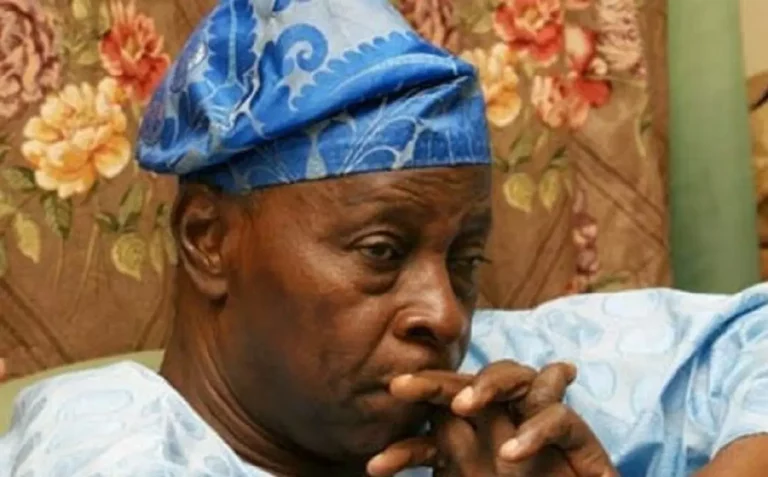
ILU-ABO, a community headed by the former Secretary to the Government of the Federation, Olu Falae, has become an epicenter of banditry, kidnappings and killings in Nigeria’s South-West. In this exclusive interview with The ICIR’s Marcus Fatunmole, the 87-year-old monarch spoke on the crises, the people behind them, insecurity in Nigeria, Amotekun, state police, among others.

Your community has been at the centre of attacks in the South-West, why are the crises recurring?

Until recently, Ilu-Abo was a very safe and secure community. Even our name “Ilu-Abo, l’abe Oluwa” that’s the name our fathers gave to this place over 125 years ago. But recently, the kidnappers came here, and we’ve been witnessing incidents of kidnapping in close succession. Before that, we had been using our security infrastructures here, using our local hunters, which is about four or five years ago. We bought uniforms for them, gave them torches and local guns because they could not work as security guards without anything at all.

But, unfortunately, the initiative collapsed because of lack of needed support from some community members. When the latest incidents happened, we have done a number of things. If you go round Ilu-Abo, you will see seven check points. The checkpoints have security posts, which we built ourselves.

We have divided Ilu-Abo into seven beats for the police, the military and Amotekun to cover 24/7. The rural beats, Igbajo, Agun and Kajola axis where people farm will be heavily covered during the day because that is when farmers are in their farms. They should feel safe and secure. In the night, there is nobody in those rural areas. They will focus on the towns and communities. We are doing all that. Obas in Akure North met with the governor months ago and proposed what we were doing in Ilu-Abo that each community should be assisted to set up its own security outfit. The governor agreed that it should be done.

He has asked us to do a proposal to cover all the communities in Akure North. We are working on it. When that comes, it will supplement what we are doing. As a result of the frequency of kidnappings here, the military has sent a detachment here, the police have sent their armed officers to support the police station here. Amotekun also has a unit here. So, we have three units of government’s security agencies, plus our own hunters. We are going to coordinate them to ensure that every area is covered day and night.

With what we are doing, we hope that no kidnapping will ever take place here again. If any kidnapper comes, I’m sure he is coming to die, because those security forces will deal with him. They succeeded because we never thought we could be attacked. When you don’t expect any hostility, you’re easy prey. When you don’t expect anybody, somebody can just come and grab you. They did it three times, I pray they never do it again. And by God’s grace, they will not do it again.

When you don’t expect any hostility, you’re easy prey

The government has already assisted us by giving us the detachments of the military, police and Amotekun stationed here. They’ve also promised further help by setting security outfits all over the local governments. All in all, I think government is doing well. We too are more than carrying our burden. We currently have house to house security collection, which we use to support those who mount security checkpoints and make sure that this place is secure. We had a community meeting sometimes ago and we agreed that every household would pay N5,000 per month, not every person, but household. But if you are the only one living in your house, you pay the N5,000.

I’ve always believed that security is a local matter

We take it as a very important matter because it’s our lives that are at stake. I’ve always believed that security is a local matter. If Ilu-Abo is secure, Eleyowo, Oba-Ile, Iju, Itaogbolu, Ayetoro and others are secure, then, the whole of Akure North will be secure. But if we are secure here and Bolorunduro and others are doing nothing, kidnappers will have their bases in those communities, attack us and run back there. However, if those places are security alert, we will all be safe.

We hope that the government’s programme will take off soon so that every community in Akure North will be safe and secure.

Akure North is a gateway to the South-West. What immediate measures are other community leaders in the LGA putting in place to contain the crisis?

I’m the Olu-Abo of Ilu-Abo. Ilu-Abo is my responsibility. Let me give you an example. Bolorunduro is our next-door neighbour. They have Olu Bolorunduro. He wrote to me and said his people had seen the security checkpoints we erected at Oyin Iloro, which is part of Ilu-Abo, next to Bolorunduro. In fact, he took the photographs and sent them to me. He said Baba, please, come and set up three like this in Bolorunduro. I’m not the Oba of Bolorunduro. It’s not my responsibility, unless you ask me to come and annex Bolorunduro and add it to Ilu-Abo, which I’m not inclined to do. They see what we are doing, they know it is good, and they also want to do the same. We are setting the pace in the area of self-help on security.

Do you see this crisis spilling into other South-West states if not contained?

Well, the foundation of security in the South-West is Amotekun, which was spearheaded and initiated by our late governor Aketi. The idea came from a meeting I had with him when he first became governor. I booked an appointment to see him When I got to his office, he wasn’t there. I returned home. A few days later, he came to see me in my house. I told him that the only reason I wanted to see him was about insecurity. Look at this scar (he showed the reporter the scar on his hand), it was inflicted on me by kidnappers, when I was kidnapped in 2015. I said if a man like me could be kidnapped, what is the fate of the ordinary person. I said we must do something in the South-West to make sure that doesn’t happen again. That was the beginning of idea of the South-West Security Network, known as Amotekun.

I thank God that the thing came out of my conversation with late Aketi. When Amotekun was about to the passed into law by the State House of Assembly, we held public hearings on the matter because the Attorney-General of the Federation at that time (Abubakar Malami) was telling them that we could not set up Amotekun. I told the governor to tell him that in the North, there was Hisbah, which is a police force for enforcing Sharia provisions. Hisbah is a state creation. It’s a creation of state house of assembly. So, if they could have Hisbah in the North, we are absolutely right to have Amotekun here.

In fact, Amotekun has not gone as far as Hisbah. Hisbah has all the three powers of a police force: the power to investigate and arrest, the power to detain, and the power to prosecute. All the three are given to Hisbah. Amotekun has limited powers. So, we have no apologies for setting up Amotekun.

Nigeria is one country. How can one region has the right to set up a police force to protect itself and we don’t have the same right down here. Anyway, eventually, Amotekun was established but it still has very limited powers. The arms it can carry are of inferior varieties compared with what even kidnappers carry. However, that’s for another day.

Here, I believe Ondo and Oyo State are the two states in South-West that are very serious about this local security force. When I was going to Lagos, near Ijebu-Ode, I saw cows roaming freely. Ondo State has passed the law against free grazing because the grazing of cattle is what is used to perpetrate evil – the herders during the day, the kidnappers at night. Those who kidnapped me were herders. When they were arrested, the leader said he was herding cattle near my farm. He said his friends told him it was Sallah time, they wanted to do Sallah and they needed money. His friend said he saw a big man who had a farm there. He said if they could abduct him, there would be much money for the Sallah. Then, they came and kidnapped me. What I’m saying is that other states in the South-West outside of Ondo and Oyo, don’t seem to take the Amotekun thing as seriously as it should be.

Those who kidnapped me were herders. When they were arrested, the leader said he was herding cattle near my farm.

We still have cows grazing in Ondo State, but they are committing an illegal act. Whenever cows come into my farm, I’ve told my security people and the police who are there to kill them. They should kill it and I will give it to the villagers to eat.

…open grazing is a criminal offence in this state. If other states in the South-West want to do that, they must. This is because criminality and cattle grazing go hand in hand.

Given the intelligence at your disposal, who are the people abducting your subjects in Ilu-Abo?

Those who kidnapped me were Fulani boys, six of them, virtually all in their twenties.

…I’m talking of the current abductors and killers in Ilu-Abo

They are the same Fulani people; although I suspect our own people. I’ve now discovered it is good business. For example, last week, in Akure town, at St David’s School, there’s a health centre there. At 2:am, people went and kidnapped the nurses. Those were not Fulani people. Fulanis don’t operate in towns. They operate in the bush. These were our own people. They’ve learnt from the Fulanis that there’s money in this business.

Some are even kidnapping themselves and announcing they’ve been kidnapped to make money.

Yes, the Fulanis are the main offenders, perpetrators of these criminal acts, but some of our own indigenous people have learnt from them and are making money. They are organising kidnapping on their own. Some are even kidnapping themselves and announcing they’ve been kidnapped to make money.

How do you see Nigeria today, and what do you see ahead?

I characterise Nigeria’s security situation in relation to my own personal history. When I was 14, I went to Igbobi College, Lagos. I would go, I was in the boarding house. After three months, we would be on holiday, I travelled to Akure by myself. I did that until I left school in 1957. Nothing happened to me. In fact, on one occasion, my first time at Igbobi, when the holiday came, our people from Igbara-Oke, Ilaramokin, Owo, Benin, people in this axis, they went to Army Transportation and asked a truck to take us to this axis. That truck would stop at Benin Royal Mill.  I joined them. We got to Akure at 1am, and I was the only passenger for Akure. I had to disembark at the motor park at 1a.m at the age of 14. There was no light in Akure in 1953. I didn’t know what to do.

At 14, I was free to travel throughout Nigeria, at 77, I was not safe on my own farm.

They put my box on my head and I trekked from the motor park for one and a half miles to our house behind Elemo’s compound inside darkness. Nothing happened to me. That tells you how safe life was. Now, at the age of 77, I was kidnapped on my own farm. At 14, I was free to travel throughout Nigeria, at 77, I was not safe on my own farm. That summarises the story for you; the terrible change that has occurred.  As I’ve said, the solution to this insecurity lies in communities setting up their own defence force and defending themselves.

Not even the state police?

I said community. The police are here; they are part of the community. The soldiers are here. We are forming a joint community task force for Ilu-Abo. Police, hunters, Amotekun, they are all members. State police will help tremendously. I have been preaching state police for 30 years. I think some of us saw far ahead when this idea came about. Some felt how could it happen? They said creating state police would divide Nigeria. People who said that were ignorant or too young to know that once upon a time in Nigeria, we had three police forces.

When I was a child, the Nigeria Police Force, the Western Regional Police, headed by Baba Omitowoju from Ife, and Akure Constabulary. Every town had its own police. Not local government but every town, Owo, Akure, Ado-Ekiti, Ikere had their own police to take care of local crimes. There was Nigerian Police dealing with serious crimes, murder, currency forging, inter-community riots. Those who were stealing goats and chickens were pursued by the local constabularies. There was no clash at all. But when the civil war came, the military wanted to build up very rapidly, they went to these local police forces and regional police.

Since they already had some measures of trainings, they gathered them, gave them military training for three months and sent them to the front. When the war ended, nobody remembered to return those people to what they used to do. That was how those other police forces disappeared. The consequence is what you see today.

So, the state police will go a long way to improve the situation, working with the communities. Nigeria Police Force is too stretched to be effective. Nigeria has about 250 million people, do we have up to 300,000 police officers? I doubt it. The police-population ratio is extremely low in Nigeria. The state police will improve that ratio and, therefore, security.

Fresh Plateau attack leaves eight dead, several injured

0


AT LEAST eight people have been confirmed dead and four others injured after armed men attacked Vole community in Kwatas district of Bokkos Local Government Area, Plateau State, late Thursday evening.

The Chairman of the Community Peace Observers in Bokkos LGA, Kefas Mallai, confirmed the incident in a statement according to Punch.

Sources said many of the victims were from the same family.

The deceased were identified as Iliya Mangut Dakus, Luck Titus Dakus, Habila Istifanu Dakus, Hassan Istifanus Dakus, Hassan Moses Dakus, Biggie Lucky Dakus, Sunday Gideon Dakus, and Innocent Barnabas Makwin.

The Chairman of the Plateau Youth Council (PYC) in Bokkos, Dakol James, also confirmed the attack, describing frustration over what he called a lack of immediate security response.

“The entire Bokkos youth population is deeply disappointed with the security situation. As of this morning, no security personnel have been deployed to assess the situation. It has been about 12 hours, and we have not seen any security presence,” he said.

Local sources said the attackers stormed the area between 8:00 p.m. and 9:00 p.m., opened fire on residents and caused panic across the community.

A youth leader, Christopher Luka, said he first heard gunshots at about 8:00 p.m. but could not immediately determine where they were coming from. He said the attack was unexpected, adding that the area had been relatively calm before the incident.

“There had been no recent incidents of violence, so this attack came as a shock. We strongly condemn both the attack and the absence of security personnel,” he stated.

He added that youth groups in the area had been trying to prevent tensions from escalating while waiting for authorities to respond.

The Chairman of the Gan Allah Fulani Development Association in Bokkos, Saleh Adamu, also condemned the killings, saying the incident was disturbing given recent relative calm in the area. He called on security agencies to identify those responsible and ensure they are prosecuted.

The attack comes a day after separate incidents in nearby communities, including a mining site in Kok village and Chenye village, where two people were killed in similar violence across Barkin Ladi and Riyom local government areas.

It also followed repeated attacks in the state since late March this year. The Plateau State Government had imposed a 48-hour curfew in Jos North Local Government Area following a deadly attack on March 29 in Gari Ya Waye community, Angwan Rukuba by gunmen.

The incident immediately led to a retaliatory attack by mobs who reportedly killed dozens of people. The state has since been thrown into panic as more attacks had occurred in parts of the state, especially in Jos North.

On Thursday, April 9, the Vice Chancellor of the University of Jos, revealed that two students of his university died in the attacks.


Oxford International Centre for publishing offers fellowship

OXFORD International Centre for Publishing (OICP) is seeking a fellow for the David McClure Public Interest Journalism Fellowship.

Presented by the OICP at Oxford Brookes University, the public interest journalism fellowship supports one writing fellow with an award of £15,000.

The Fellowship will support the publication of a piece of long-form journalism that is of significant contemporary resonance.

Organiser says, “The OICP is one of the leading institutes for media education in the world, with a reputation for innovation and excellence in teaching and research.

“The Centre offers a range of postgraduate and undergraduate awards in journalism and publishing, and carries out academic research, professional development programmes and consultancy”.

The deadline for applications is May 31, 2026. Interested applicants can apply here.

AI in Newsroom Fellowship 2026 seeks fellows

AFRICA Uncensored and DW Akademie are inviting applications for their AI in the Newsroom Fellowship, a six-month intensive programme designed to bridge the gap between journalism and emerging technologies.

From June to December 2026, selected fellows will work on building products for adoption in their newsrooms and work environments, as well as the development of AI workflows for editorial processes.

Organisers says, “We are looking for journalists, editors and news content creators with an interest in AI-supported journalism, and who are able to define a clear use case stating how they plan to use AI tools to solve a challenge they have identified, and who are able to use AI tools to advance their work”.

Fellows will be required to identify a concrete problem within their newsroom and demonstrate how their proposed AI prototype will help solve it. Additionally, applicants will be expected to submit a letter of commitment from their newsroom, or if a freelancer, a personal letter of commitment for the proposed project.

What the fellowship offers

The programme offers technical upskilling, which include deep dives into AI tools for data journalism, AI literacy trainings, and pairing with experts in the AI space.

Others are project mentorship, collaborative network and hands-on experience with a dedicated sandbox of tools, and the frameworks needed to address emerging and existing challenges.

Application deadline is April 30, 2026. Interested applicants can apply here. 

At least 8 attacks hit military bases since January as insurgents intensify North-East offensive

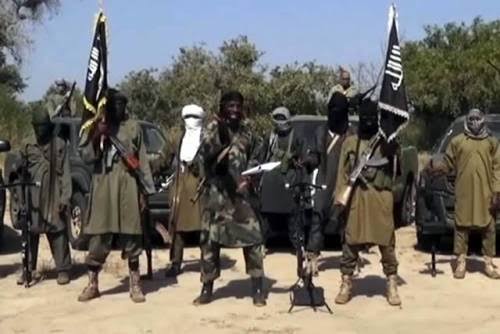
BOKO Haram factions have attacked at least eight Nigerian military bases eight times since the beginning of 2026, with the latest assault on a brigade headquarters in Benisheikh, Borno State.

The attack on Thursday, April 9, led to the death of several soldiers, including a high-ranking officer. Although the Defence Headquarters (DHQ), in a statement confirming the attack, failed to provide the exact number of the affected soldiers, it stated that “a few brave and gallant soldiers” paid the supreme price in the line of duty.

However, Daily Trust reported that Oseni Omoh Braimah, a brigadier general and 17 soldiers were killed in coordinated attacks by suspected members of the Islamic State of West Africa Province (ISWAP)

The military said the attackers stormed the base at about 12:30 a.m. in a coordinated attempt to breach the defensive perimeter of the formation, but were met with “exceptional courage, professionalism, and superior firepower” from troops led by the late brigade commander, Braimah. 

According to the DHQ, the insurgents were forced to retreat in disarray after a fierce exchange.

Meanwhile, the Benisheikh attack adds to a growing list of assaults recorded across the North-East in 2026, with data showing a sustained pattern of strikes on military formations, mostly in Borno State.

Timeline of attacks

The ICIR reports that since the start of 2026, Nigeria’s counterinsurgency front in the North-East has come under renewed strain, with insurgent groups, particularly the Islamic State West Africa Province (ISWAP),  launching at least eight coordinated attacks on military formations across Borno and parts of Yobe State.

A data analysis of confirmed incidents between January and early April shows these attacks are part of ISWAP’s so-called “Burning of the Camps” campaign, an ongoing offensive that began in February 2025 and has focused on military bases across the Lake Chad Basin. 

Since its launch, the campaign has reportedly extended beyond Nigeria, with military formations in Niger and Cameroon also coming under attack. The pattern suggests a deliberate effort to weaken fixed military positions, which insurgent planners often see as both symbolic representations and key logistical hubs of state control in contested areas.

Attacks reported since January

On January 23, insurgents attacked Malam-Fatori in Mobbar Local Government Area, where about 20 soldiers were reportedly killed in a prolonged gun battle. On the same day, a separate ambush in Damasak led to the death of a Nigerian Army major, underscoring the coordinated nature of early-year operations by the insurgents.

Days later on January 29, in Kawuri, Bama Local Government Area, another military position was attacked, leaving a forest guard dead and a lieutenant missing. The attackers were also reported to have set fire to parts of the military base before retreating into the surrounding hills under the cover of darkness.

The tempo of attacks increased in March, beginning with an assault on a Forward Operating Base in Mayanti, Bama, where a base commander and three soldiers were killed alongside a local hunter.

Between March 5 and 6, insurgents launched at least simultaneous attacks on military bases in Konduga, Mainok, Jakana and Marte on the same nights. A lieutenant colonel commanding 222 Battalion was killed in the coordinated raids, alongside several other soldiers, before troops repelled the attackers.

Reports also indicated that over 53 vehicles were either destroyed or seized during the operations, along with 84 motorcycles that were captured or set ablaze. The group also said it recovered a significant stockpile of arms, including 54 rifles, 20 machine guns, and eight heavy weapons such as rocket-propelled grenade launchers and mortars.

The ICIR reported that insurgents, in claims circulated through Amaq News Agency and affiliated social media channels, said they killed at least 16 soldiers and officers during the attacks. They also reported that a suicide vehicle-borne improvised explosive device (SVBIED) exploded near Njimya village in the Sambisa Forest the following day, allegedly causing about 20 more casualties and forcing troops to withdraw from the base.

On March 9, another senior officer, Umar Farouq, Lieutenant Colonel, was killed in Kukawa after sustaining injuries during an attack on a military formation. On the same day, insurgents struck Goniri in Yobe State, destroying military vehicles before withdrawing after a gunfight with troops.

On March 18, troops said its repelled another major assault in Mallam-Fatori, killing at least 80 insurgents, according to military accounts, in one of the fiercest encounters of the year so far.

Across all recorded incidents, Borno State accounts for seven of the eight attacks, with Yobe recording one.

While the Nigeria authorities have continued to maintain that troops remain in control of the situation, many Nigerians have questioned their proactiveness in foiling attacks on military bases and local communities.

Recall that The ICIR documented at least seven attacks on Nigerian military bases in 2025, carried out by Boko Haram and its splinter faction, ISWAP, across the North-East theatre of operations. 

The sustained attacks on the North-East are part of wider escalation of insecurity across Nigeria, where terrorism, killings, kidnappings, among others, appear to be perennial crises.

Abducted Kwara women, children beg governor, FG for rescue after 2 months in captivity

0

THE 176 women and children who were kidnapped in Kwara State in February have again begged the state and federal government to rescue them from their captors’ hands.

The abductees were whisked away by terrorists during attacks on Woro and Kososo communities in Kaiama Local Government Area of Kwara State on February 3.

They made the appeal for their release in a viral video published by Sahara Reporters on Thursday, April 9, two months after they were abducted by armed attackers suspected to be linked to a Boko Haram faction operating in the region.

The violent raid that led to their abduction left over 100 residents dead, including traditional and religious leaders in the affected communities.

In the latest footage, the victims, mostly women and children, appeared visibly exhausted and distressed. Many were seen wearing soiled clothes as they stood closely together under tense conditions while being addressed by armed men.

In the video, several of the abducted persons were seen responding to questions from the armed group as they begged for their safety.

“This is our last opportunity”

One of the victims, a young woman, who spoke in English, appealed to government authorities and religious leaders for their immediate intervention.

“Dear Muslim sisters and brothers, we are here today. We are the people who were kidnapped from Woro, Kaiama Local Government Area on February 3. Today is April 8. Please, we are begging you, this is the last opportunity they gave us,” she said.

She pleaded for urgent rescue, noting the presence of vulnerable individuals among the captives.

“We have small children with us and we have some people with pregnancies. Please, assist us. Those who are here, some people with anaemia, please, help us.

“We are begging you. This is the last opportunity that we have, and they teach us the things that we do not know at home, like Tawheedi (the oneness of Allah). We lacked Tawheedi at home even though those people at home know that we lacked Tawheedi. But we are here, they teach us everything, and we understand everything.

Another female victim, speaking in Yoruba, also appealed for help, directing her message to both Kwara and Oyo State governments.

“They are feeding us and teaching us religion. All the things we don’t know, all the gaps in our religion were being filled. But we need help because this is the last chance they gave us,” she said.

Other captives, speaking in Nupe language, echoed similar pleas, all urging authorities to intervene and ensure their release.

“We have indoctrinated them”

Speaking in Hausa in the background of the video, one of the terrorists confirmed responsibility for the abduction, claiming the captives had been ‘indoctrinated’ and exposed to teachings since their capture.

“We are the ones who kidnapped the people of Woro and Kososo,” the terrorist said. “We have indoctrinated them and changed their way of life from what they knew before their abduction.”

He added that the victims were allowed to speak as part of what he described as a final opportunity to reach authorities.

Not the first plea

However, this was not the first time the women would be begging for freedom. 

On April 2, the 176 women and children were also seen in a viral video begging for their freedom after the government failed to rescue them.

According to a report by Sahara Reporters, which quoted a community source, the bandits are demanding over N3 billion for the release of the victims.

‘It’s fake’: CBN dismisses Polaris bank liquidation claim

THE Central Bank of Nigeria (CBN) has debunked rumours suggesting that Polaris Bank is undergoing liquidation, while affirming that the bank is safe and secure for its customers, investors and depositors.

The apex bank disclosed this in a post on X, assuring the public that the country’s banking system remained stable and secure.

The clarification followed a viral post, claiming that Polaris Bank was facing liquidation for failing to meet the bank’s recapitalisation requirements, and could soon lose its operating licence, with the Nigeria Deposit Insurance Corporation set to take over the process.

It further alleged that the founder of the Eleganza Group, Razaq Okoya, had made a bid to acquire and revive the bank, pending approval from regulators and shareholders.

Sharing a screenshot of a viral claim, however, the apex bank flagged it as “fake content.”

It clarified that the claims did not reflect the current state of the Nigerian banking sector.

“This content is fake. Let the public be guided. The Nigerian banking system is safe and secure,” the bank said.

On April 1, the CBN confirmed that 33 banks successfully met the revised minimum capital requirements under its recapitalisation programme, marking a significant milestone in strengthening the financial system.

A total of N4.65 trillion was raised during the 24-month exercise, pushing capital adequacy ratios across the sector above global Basel benchmarks and enhancing banks’ resilience, according to the apex bank.

However, it noted that “a limited number of institutions remain subject to ongoing regulatory and judicial processes, which are being addressed through established supervisory and legal frameworks.”

As part of efforts to reinforce oversight and stability in the sector, in January 2024, the CBN dissolved the boards and management of Polaris Bank, alongside Union Bank and Keystone Bank.

In 2022, the bank was also at the centre of controversy following claims that a higher bid was submitted during its sale process than the one eventually accepted.

At the time, reports indicated that the House of Representatives directed the apex bank to suspend the sale.

Again, a Federal High Court in Lagos reportedly reversed the sack of the board and management of Union Bank of Nigeria on March 25.

Responding, while maintaining that the bank’s regulatory status remained unchanged, the CBN stated that it would review the judgment.

An earlier report by The ICIR disclosed that although the March 31st deadline for their recapitalisation was not met, the CBN advised depositors with Union, Keystone, and Polaris banks not to panic about their funds.

The apex bank said the banks were still undergoing judicial and regulatory procedures, while assuring depositors about the safety of their funds.

UNIJOS VC confirms 2 students killed in Plateau violence

0

THE Vice Chancellor of the university of Jos, Tanko Ishaya, a professor, has confirmed the death of two students of the institution during the recent unrest in Jos North Local government area of Plateau State.

Ishaya made this known during a news conference in Jos on April 9.

THE ICIR reported that the violence began on March 29 when gunmen attacked the Angwan Rukuba community, an area where many students and staff of the university reside.

The attack led to several deaths and injuries and forced the state government to impose a 48-hour curfew. Although the curfew was later lifted on April 1, reports indicate that the violence spread to other nearby communities.

According to the vice chancellor, aside from the two fatalities, several others linked to the institution were harmed, including students and a staff member who are currently undergoing medical care.

He said the deceased were identified as Abel Gershon, a third-year student studying Building, and Adeyemo Temitope, a final-year student studying Quantity Surveying.

“Abel Gershon was shot in the stomach on March 29 and admitted to the intensive care unit of the Jos University Teaching Hospital (JUTH). Unfortunately, he died on Sunday, April 5,” Ishaya said,

Temitope left the campus alone on April 1 and encountered violence along Bauchi Road. He was shot and macheted to death by hoodlums.

“We have a total of five members of the university community affected by this incident: four students and one staff member,” the vice chancellor stated.

He extended his sympathies to the bereaved families and noted that those hospitalised were showing signs of recovery. Despite the situation, he assured that the institution remained secure, and that its campuses had not been directly targeted since the conflict in the state began.

He further explained that academic activities would proceed as planned, with students expected to return on April 13.

While appealing to parents and guardians to allow their children to resume their studies and continue their examinations, he assured that additional safety measures had been put in place within the school and nearby areas.

The ICIR reports that many students at the university were quickly evacuated by their state governments, while others left the school environment on their own.


Timeline: Key comments by Trump administration on Nigeria in six months

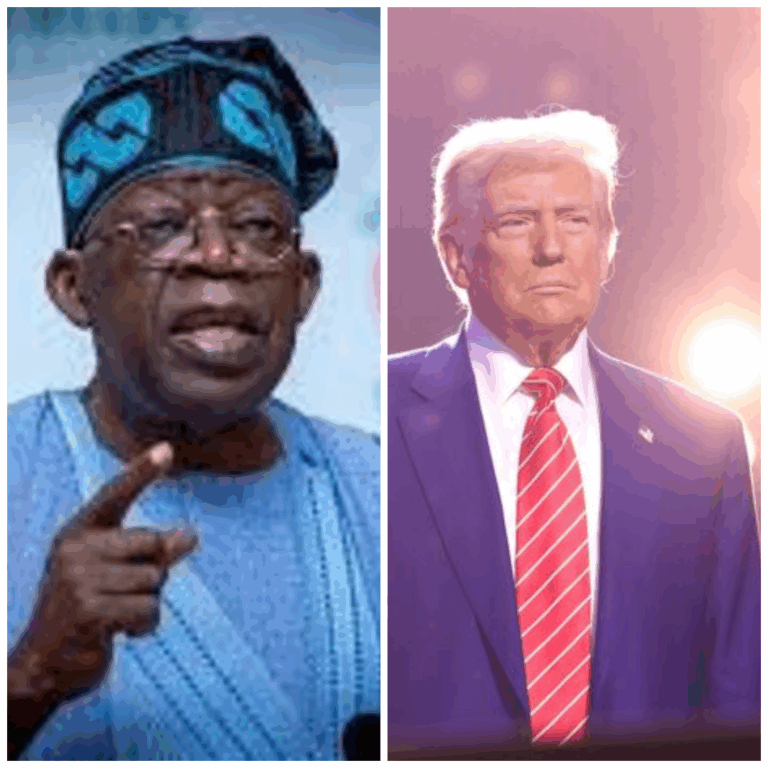
A SERIES of remarks and policy signals attributed to the United States in recent months have drawn attention to Nigeria’s international image, with critics warning of potential diplomatic and economic implications as the federal government intensifies efforts to attract foreign investment.

Since late 2025, statements linked to the administration of the US President Donald Trump have increasingly portrayed Nigeria in a negative light, ranging from security concerns to questions about governance and public health systems. 

While some of these characterisations remain contested, they have nonetheless circulated widely in diplomatic and media spaces.

Below is a timeline of the US key comments on Nigeria within the period.

Trump listed Nigeria as CPC 

In October 2025, Trump designated Nigeria as a “Country of Particular Concern” (CPC), a label used by the US for countries accused of alleged violations of religious freedom.

The US president first triggered controversy when he claimed that Christians in Nigeria were under severe threat. Posting on Truth Social, Trump said Christianity was facing an “existential threat” in Nigeria, alleging that thousands of Christians were being killed by “radical Islamists.”

The move placed Nigeria in the same conversation as countries like China and North Korea under US watchlists.

‘Now a disgraced country’

In a follow-up statement in November 2025, Trump escalated his rhetoric, threatening punitive measures against Nigeria.

He further dubbed the country as “now a disgraced country,” adding that US attack on Nigeria would be “fast, vicious, and sweet.”

“If the Nigerian government continues to allow the killing of Christians, the U.S.A. will immediately stop all aid and assistance to Nigeria and may very well go into that now disgraced country, ‘guns-a-blazing,’ to completely wipe out the Islamic terrorists who are committing these horrible atrocities.

“I am hereby instructing our Department of War to prepare for possible action. If we attack, it will be fast, vicious, and sweet, just like the terrorist thugs attack our CHERISHED Christians! WARNING: THE NIGERIAN GOVERNMENT BETTER MOVE FAST!” he threatened.

The phrase has since gained traction among Nigerians opposition leaders, with some noting that such language from a US president could shape diplomatic and investors perceptions.

Trump links Nigeria to ‘fake news’

Months later, reacting to a report by CNN on a US-Iran ceasefire, Trump on April 8, 2026, claimed the report relied on a “false statement” originating from a Nigerian source.

“The false statement was linked to a Fake News site (from Nigeria),” he said, describing it as a “new, trouble-making site.”

Trump, however, did not name the platform or provide evidence to back the claim.

Nigeria described as insecure, parading weak health system

Hours after accusing Nigeria of peddling fake news, the Trump’s administration described Africa’s most populous country as an “insecure nation with a very poor health system.”

In a detailed travel advisory, the US, through the Department of States, urged its citizens to reconsider visiting Nigeria due to rising concerns over crime, terrorism, civil unrest, kidnapping, and unreliable healthcare services.

It also directed all its non-emergency employees and its employees’ families at its Abuja Embassy to quit over insecurity.

The US labelled all regions in Nigeria as unsafe except the South-West. It listed 23 of Nigeria’s 36 states as unsafe for its citizens.

The advisory placed Nigeria at Level 3, meaning travellers are advised to reconsider their plans because of serious dangers that exist across the country.

“Reconsider travel to Nigeria due to crime, terrorism, unrest, kidnapping, and inconsistent availability of health care services. Some areas have increased risk.” part of the advisory read.

The US pointed to widespread violent crime as a major concern and listed armed robbery, assault, carjacking, and kidnapping for ransom as common across states in the North-West, North-West, North-Central, South-South, and South-East.

It argued that the incidents occurred in both urban and rural areas, and affected both foreigners and locals, sometimes along major roads or in residential neighborhoods.

The advsory also highlighted the persistent threat of terrorism that happens with little warning, particularly in parts of the country where extremist groups remain active. These groups are said to be capable of carrying out attacks in public spaces. The risk is heightened by the presence of armed gangs and criminal networks, especially in regions where government control is limited.

The US stance on Nigeria’s health systems is more concerning as it said they could not match those of the US and other advanced nations.

“Americans should not expect the same level of health care to be available in Nigeria as they do in the United States. Nigerian medical facilities are generally not equipped to US or European standards. Many medicines are not available. This includes common medications for diabetes or asthma,” the advisory stated.

The US urged its citizens coming to Nigeria to bring enough over the counter and prescription medicines to last their entire stay.

Nigeria’s push for foreign investors

The remarks came at a time when the administration of President Bola Tinubu is actively seeking foreign investors to boost the economy.

The federal government has embarked on multiple investment drives, policy reforms, and international engagements aimed at improving the business environment and attracting capital inflows.

However, analysts and critics warned that persistent negative narratives from influential global figures like Trump could affect investor confidence, particularly in areas tied to security, governance, and stability.

Is Trump administration saying the obvious?

The ICIR reports that as contestable as the claims are, some of them speak eloquently to the true state of affairs in the country.

Insecurity is rife across Nigeria, as terrorists, bandits and other criminals snuff out the lives of citizens at will daily. As news of one terrorist attack on a community breaks, another will likely follow in matter of hours in different parts of the nation.

Currently, hundreds of citizens are in kidnappers’ custody as billions have been paid to rescue others.

Dozens of rank and file and senior officers of Nigerian security forces have been killed by the criminals in their attempts to contain the menace.

Besides, millions of citizens have been displaced by the crisis and other conflicts across the country..

Similarly, Nigeria’s health sector is currently under several strain. Nigeria, with a population nearing 250 million, continues to face deep structural challenges in healthcare delivery.

Out-of-pocket spending accounts for about 74.68 per cent of total health financing, placing a heavy burden on households and limiting access to essential services. Neonatal mortality remains high at 41 deaths per 1,000 live births as of 2023, while the maternal mortality rate of 576 deaths per 100,000 live births ranks among the worst globally.

The system is also critically understaffed, with about 55,000 licensed doctors serving the population as of March 2024.

The ICIR reports that inequitable distribution of services, weak infrastructure, persistent brain drain and widening socioeconomic inequalities, particularly in rural and underserved communities, have continued to deepen health disparities.

Many facilities lack basic equipment, medicines and essential amenities, while poor remuneration and working conditions drive the continued emigration of skilled health professionals, further weakening service delivery.

At different times, recurring strikes have crippled services in public hospitals because of workers-government face-offs over pay and other demands.