
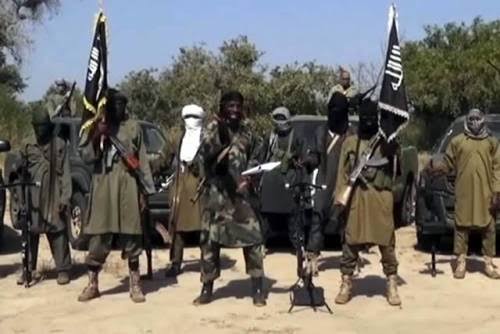
BOKO Haram factions have attacked at least eight Nigerian military bases eight times since the beginning of 2026, with the latest assault on a brigade headquarters in Benisheikh, Borno State.
The attack on Thursday, April 9, led to the death of several soldiers, including a high-ranking officer. Although the Defence Headquarters (DHQ), in a statement confirming the attack, failed to provide the exact number of the affected soldiers, it stated that “a few brave and gallant soldiers” paid the supreme price in the line of duty.
However, Daily Trust reported that Oseni Omoh Braimah, a brigadier general and 17 soldiers were killed in coordinated attacks by suspected members of the Islamic State of West Africa Province (ISWAP)
The military said the attackers stormed the base at about 12:30 a.m. in a coordinated attempt to breach the defensive perimeter of the formation, but were met with “exceptional courage, professionalism, and superior firepower” from troops led by the late brigade commander, Braimah.
According to the DHQ, the insurgents were forced to retreat in disarray after a fierce exchange.
Meanwhile, the Benisheikh attack adds to a growing list of assaults recorded across the North-East in 2026, with data showing a sustained pattern of strikes on military formations, mostly in Borno State.
Timeline of attacks
The ICIR reports that since the start of 2026, Nigeria’s counterinsurgency front in the North-East has come under renewed strain, with insurgent groups, particularly the Islamic State West Africa Province (ISWAP), launching at least eight coordinated attacks on military formations across Borno and parts of Yobe State.
A data analysis of confirmed incidents between January and early April shows these attacks are part of ISWAP’s so-called “Burning of the Camps” campaign, an ongoing offensive that began in February 2025 and has focused on military bases across the Lake Chad Basin.
Since its launch, the campaign has reportedly extended beyond Nigeria, with military formations in Niger and Cameroon also coming under attack. The pattern suggests a deliberate effort to weaken fixed military positions, which insurgent planners often see as both symbolic representations and key logistical hubs of state control in contested areas.
Attacks reported since January
On January 23, insurgents attacked Malam-Fatori in Mobbar Local Government Area, where about 20 soldiers were reportedly killed in a prolonged gun battle. On the same day, a separate ambush in Damasak led to the death of a Nigerian Army major, underscoring the coordinated nature of early-year operations by the insurgents.
Days later on January 29, in Kawuri, Bama Local Government Area, another military position was attacked, leaving a forest guard dead and a lieutenant missing. The attackers were also reported to have set fire to parts of the military base before retreating into the surrounding hills under the cover of darkness.
The tempo of attacks increased in March, beginning with an assault on a Forward Operating Base in Mayanti, Bama, where a base commander and three soldiers were killed alongside a local hunter.
Between March 5 and 6, insurgents launched at least simultaneous attacks on military bases in Konduga, Mainok, Jakana and Marte on the same nights. A lieutenant colonel commanding 222 Battalion was killed in the coordinated raids, alongside several other soldiers, before troops repelled the attackers.
Reports also indicated that over 53 vehicles were either destroyed or seized during the operations, along with 84 motorcycles that were captured or set ablaze. The group also said it recovered a significant stockpile of arms, including 54 rifles, 20 machine guns, and eight heavy weapons such as rocket-propelled grenade launchers and mortars.
The ICIR reported that insurgents, in claims circulated through Amaq News Agency and affiliated social media channels, said they killed at least 16 soldiers and officers during the attacks. They also reported that a suicide vehicle-borne improvised explosive device (SVBIED) exploded near Njimya village in the Sambisa Forest the following day, allegedly causing about 20 more casualties and forcing troops to withdraw from the base.
On March 9, another senior officer, Umar Farouq, Lieutenant Colonel, was killed in Kukawa after sustaining injuries during an attack on a military formation. On the same day, insurgents struck Goniri in Yobe State, destroying military vehicles before withdrawing after a gunfight with troops.
On March 18, troops said its repelled another major assault in Mallam-Fatori, killing at least 80 insurgents, according to military accounts, in one of the fiercest encounters of the year so far.
Across all recorded incidents, Borno State accounts for seven of the eight attacks, with Yobe recording one.
While the Nigeria authorities have continued to maintain that troops remain in control of the situation, many Nigerians have questioned their proactiveness in foiling attacks on military bases and local communities.
Recall that The ICIR documented at least seven attacks on Nigerian military bases in 2025, carried out by Boko Haram and its splinter faction, ISWAP, across the North-East theatre of operations.
The sustained attacks on the North-East are part of wider escalation of insecurity across Nigeria, where terrorism, killings, kidnappings, among others, appear to be perennial crises.

Mustapha Usman is an investigative journalist with the International Centre for Investigative Reporting. You can easily reach him via: musman@icirnigeria.com. He tweets @UsmanMustapha_M