

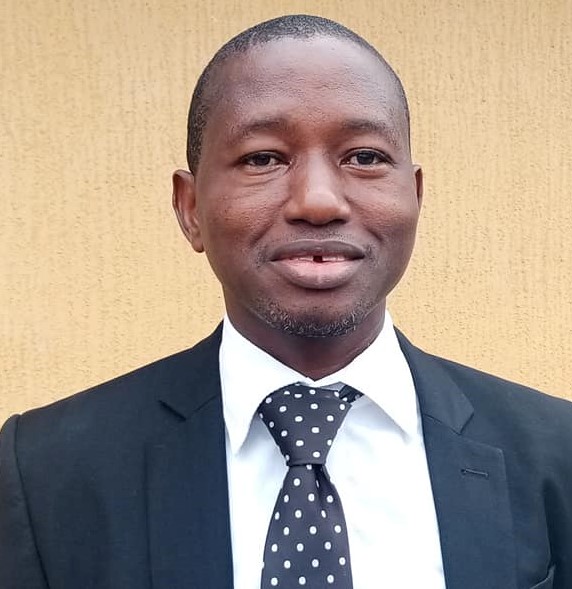
ILU-ABO, a community headed by the former Secretary to the Government of the Federation, Olu Falae, has become an epicenter of banditry, kidnappings and killings in Nigeria’s South-West. In this exclusive interview with The ICIR’s Marcus Fatunmole, the 87-year-old monarch spoke on the crises, the people behind them, insecurity in Nigeria, Amotekun, state police, among others.
Your community has been at the centre of attacks in the South-West, why are the crises recurring?
Until recently, Ilu-Abo was a very safe and secure community. Even our name “Ilu-Abo, l’abe Oluwa” that’s the name our fathers gave to this place over 125 years ago. But recently, the kidnappers came here, and we’ve been witnessing incidents of kidnapping in close succession. Before that, we had been using our security infrastructures here, using our local hunters, which is about four or five years ago. We bought uniforms for them, gave them torches and local guns because they could not work as security guards without anything at all.
But, unfortunately, the initiative collapsed because of lack of needed support from some community members. When the latest incidents happened, we have done a number of things. If you go round Ilu-Abo, you will see seven check points. The checkpoints have security posts, which we built ourselves.
We have divided Ilu-Abo into seven beats for the police, the military and Amotekun to cover 24/7. The rural beats, Igbajo, Agun and Kajola axis where people farm will be heavily covered during the day because that is when farmers are in their farms. They should feel safe and secure. In the night, there is nobody in those rural areas. They will focus on the towns and communities. We are doing all that. Obas in Akure North met with the governor months ago and proposed what we were doing in Ilu-Abo that each community should be assisted to set up its own security outfit. The governor agreed that it should be done.
He has asked us to do a proposal to cover all the communities in Akure North. We are working on it. When that comes, it will supplement what we are doing. As a result of the frequency of kidnappings here, the military has sent a detachment here, the police have sent their armed officers to support the police station here. Amotekun also has a unit here. So, we have three units of government’s security agencies, plus our own hunters. We are going to coordinate them to ensure that every area is covered day and night.
With what we are doing, we hope that no kidnapping will ever take place here again. If any kidnapper comes, I’m sure he is coming to die, because those security forces will deal with him. They succeeded because we never thought we could be attacked. When you don’t expect any hostility, you’re easy prey. When you don’t expect anybody, somebody can just come and grab you. They did it three times, I pray they never do it again. And by God’s grace, they will not do it again.
When you don’t expect any hostility, you’re easy prey
The government has already assisted us by giving us the detachments of the military, police and Amotekun stationed here. They’ve also promised further help by setting security outfits all over the local governments. All in all, I think government is doing well. We too are more than carrying our burden. We currently have house to house security collection, which we use to support those who mount security checkpoints and make sure that this place is secure. We had a community meeting sometimes ago and we agreed that every household would pay N5,000 per month, not every person, but household. But if you are the only one living in your house, you pay the N5,000.
I’ve always believed that security is a local matter
We take it as a very important matter because it’s our lives that are at stake. I’ve always believed that security is a local matter. If Ilu-Abo is secure, Eleyowo, Oba-Ile, Iju, Itaogbolu, Ayetoro and others are secure, then, the whole of Akure North will be secure. But if we are secure here and Bolorunduro and others are doing nothing, kidnappers will have their bases in those communities, attack us and run back there. However, if those places are security alert, we will all be safe.
We hope that the government’s programme will take off soon so that every community in Akure North will be safe and secure.
Akure North is a gateway to the South-West. What immediate measures are other community leaders in the LGA putting in place to contain the crisis?
I’m the Olu-Abo of Ilu-Abo. Ilu-Abo is my responsibility. Let me give you an example. Bolorunduro is our next-door neighbour. They have Olu Bolorunduro. He wrote to me and said his people had seen the security checkpoints we erected at Oyin Iloro, which is part of Ilu-Abo, next to Bolorunduro. In fact, he took the photographs and sent them to me. He said Baba, please, come and set up three like this in Bolorunduro. I’m not the Oba of Bolorunduro. It’s not my responsibility, unless you ask me to come and annex Bolorunduro and add it to Ilu-Abo, which I’m not inclined to do. They see what we are doing, they know it is good, and they also want to do the same. We are setting the pace in the area of self-help on security.
Do you see this crisis spilling into other South-West states if not contained?
Well, the foundation of security in the South-West is Amotekun, which was spearheaded and initiated by our late governor Aketi. The idea came from a meeting I had with him when he first became governor. I booked an appointment to see him When I got to his office, he wasn’t there. I returned home. A few days later, he came to see me in my house. I told him that the only reason I wanted to see him was about insecurity. Look at this scar (he showed the reporter the scar on his hand), it was inflicted on me by kidnappers, when I was kidnapped in 2015. I said if a man like me could be kidnapped, what is the fate of the ordinary person. I said we must do something in the South-West to make sure that doesn’t happen again. That was the beginning of idea of the South-West Security Network, known as Amotekun.
I thank God that the thing came out of my conversation with late Aketi. When Amotekun was about to the passed into law by the State House of Assembly, we held public hearings on the matter because the Attorney-General of the Federation at that time (Abubakar Malami) was telling them that we could not set up Amotekun. I told the governor to tell him that in the North, there was Hisbah, which is a police force for enforcing Sharia provisions. Hisbah is a state creation. It’s a creation of state house of assembly. So, if they could have Hisbah in the North, we are absolutely right to have Amotekun here.
In fact, Amotekun has not gone as far as Hisbah. Hisbah has all the three powers of a police force: the power to investigate and arrest, the power to detain, and the power to prosecute. All the three are given to Hisbah. Amotekun has limited powers. So, we have no apologies for setting up Amotekun.
Nigeria is one country. How can one region has the right to set up a police force to protect itself and we don’t have the same right down here. Anyway, eventually, Amotekun was established but it still has very limited powers. The arms it can carry are of inferior varieties compared with what even kidnappers carry. However, that’s for another day.
Here, I believe Ondo and Oyo State are the two states in South-West that are very serious about this local security force. When I was going to Lagos, near Ijebu-Ode, I saw cows roaming freely. Ondo State has passed the law against free grazing because the grazing of cattle is what is used to perpetrate evil – the herders during the day, the kidnappers at night. Those who kidnapped me were herders. When they were arrested, the leader said he was herding cattle near my farm. He said his friends told him it was Sallah time, they wanted to do Sallah and they needed money. His friend said he saw a big man who had a farm there. He said if they could abduct him, there would be much money for the Sallah. Then, they came and kidnapped me. What I’m saying is that other states in the South-West outside of Ondo and Oyo, don’t seem to take the Amotekun thing as seriously as it should be.
Those who kidnapped me were herders. When they were arrested, the leader said he was herding cattle near my farm.
We still have cows grazing in Ondo State, but they are committing an illegal act. Whenever cows come into my farm, I’ve told my security people and the police who are there to kill them. They should kill it and I will give it to the villagers to eat.
…open grazing is a criminal offence in this state. If other states in the South-West want to do that, they must. This is because criminality and cattle grazing go hand in hand.
Given the intelligence at your disposal, who are the people abducting your subjects in Ilu-Abo?
Those who kidnapped me were Fulani boys, six of them, virtually all in their twenties.
…I’m talking of the current abductors and killers in Ilu-Abo
They are the same Fulani people; although I suspect our own people. I’ve now discovered it is good business. For example, last week, in Akure town, at St David’s School, there’s a health centre there. At 2:am, people went and kidnapped the nurses. Those were not Fulani people. Fulanis don’t operate in towns. They operate in the bush. These were our own people. They’ve learnt from the Fulanis that there’s money in this business.
Some are even kidnapping themselves and announcing they’ve been kidnapped to make money.
Yes, the Fulanis are the main offenders, perpetrators of these criminal acts, but some of our own indigenous people have learnt from them and are making money. They are organising kidnapping on their own. Some are even kidnapping themselves and announcing they’ve been kidnapped to make money.
How do you see Nigeria today, and what do you see ahead?
I characterise Nigeria’s security situation in relation to my own personal history. When I was 14, I went to Igbobi College, Lagos. I would go, I was in the boarding house. After three months, we would be on holiday, I travelled to Akure by myself. I did that until I left school in 1957. Nothing happened to me. In fact, on one occasion, my first time at Igbobi, when the holiday came, our people from Igbara-Oke, Ilaramokin, Owo, Benin, people in this axis, they went to Army Transportation and asked a truck to take us to this axis. That truck would stop at Benin Royal Mill. I joined them. We got to Akure at 1am, and I was the only passenger for Akure. I had to disembark at the motor park at 1a.m at the age of 14. There was no light in Akure in 1953. I didn’t know what to do.
At 14, I was free to travel throughout Nigeria, at 77, I was not safe on my own farm.
They put my box on my head and I trekked from the motor park for one and a half miles to our house behind Elemo’s compound inside darkness. Nothing happened to me. That tells you how safe life was. Now, at the age of 77, I was kidnapped on my own farm. At 14, I was free to travel throughout Nigeria, at 77, I was not safe on my own farm. That summarises the story for you; the terrible change that has occurred. As I’ve said, the solution to this insecurity lies in communities setting up their own defence force and defending themselves.
Not even the state police?
I said community. The police are here; they are part of the community. The soldiers are here. We are forming a joint community task force for Ilu-Abo. Police, hunters, Amotekun, they are all members. State police will help tremendously. I have been preaching state police for 30 years. I think some of us saw far ahead when this idea came about. Some felt how could it happen? They said creating state police would divide Nigeria. People who said that were ignorant or too young to know that once upon a time in Nigeria, we had three police forces.
When I was a child, the Nigeria Police Force, the Western Regional Police, headed by Baba Omitowoju from Ife, and Akure Constabulary. Every town had its own police. Not local government but every town, Owo, Akure, Ado-Ekiti, Ikere had their own police to take care of local crimes. There was Nigerian Police dealing with serious crimes, murder, currency forging, inter-community riots. Those who were stealing goats and chickens were pursued by the local constabularies. There was no clash at all. But when the civil war came, the military wanted to build up very rapidly, they went to these local police forces and regional police.
Since they already had some measures of trainings, they gathered them, gave them military training for three months and sent them to the front. When the war ended, nobody remembered to return those people to what they used to do. That was how those other police forces disappeared. The consequence is what you see today.
So, the state police will go a long way to improve the situation, working with the communities. Nigeria Police Force is too stretched to be effective. Nigeria has about 250 million people, do we have up to 300,000 police officers? I doubt it. The police-population ratio is extremely low in Nigeria. The state police will improve that ratio and, therefore, security.

Marcus bears the light, and he beams it everywhere. He's a good governance and decent society advocate. He's The ICIR Reporter of the Year 2022 and has been the organisation's News Editor since September 2023. Contact him via email @ mfatunmole@icirnigeria.org
Thank u sir, you are really blessed, let assume we can take to elderly man OLU Ilu ABO,we need peace,we have to be secure, like the name of the town sir, this narrative is very clear, well our Governor of Ondo state, should do something fast Thanks