THE Crude Oil Refiners Association of Nigeria (CORAN) has revealed the reason why the domestic refineries, including the Dangote Petroleum Refinery, have yet to start uplifting crude in naira.
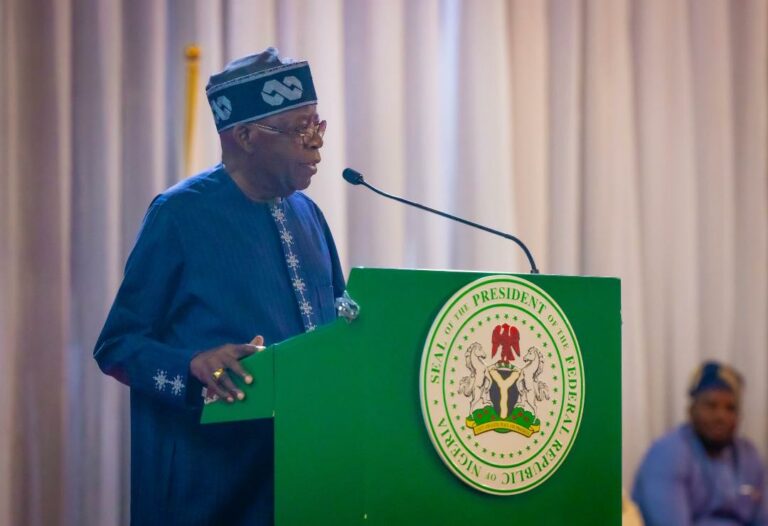
On July 29, Nigerian President Bola Tinubu directed the Nigerian National Petroleum Company Limited (NNPCL) to sell crude to Dangote Refinery and other upcoming refineries in naira, approving 450,000 barrels meant for domestic consumption for the Dangote refinery.
The directive which came following the Federal Executive Council (FEC) meeting was in a bid to intervene in the accusations and counter accusations between the Dangote refinery and the regulatory authorities in the oil sector over selling crude to the refinery.
The ICIRreports that management of the Dangote refinery has lamented not getting crude oil supply to its refinery, forcing the company to source crude from the United States another country for its 650,000-capacity nameplate refinery.
At a Channels Television programme on Wednesday, August 7, the publicity secretary of CORAN, Eche Idoko, said there is no refinery currently producing PMS in Nigeria.
He hinted that the reason why Dangote, Aradel, and other refineries have not activated their plant is because of the uncertainty around the regime of supplies, sales, and pricing of PMS.
He noted that should all the licensed refineries come on board, Nigeria would be able to produce about 1.3 million barrels per day (bpd).
“As it stands right now, none of our members that I know have started uplifting crude in naira,” Idoko said.
Idoko hailed the directive of the government but said there were still a few steps that have to be taken for it to become implementable.
According to him, there needs to be a regulatory framework that will enable local refineries to access crude through the naira, spelling out the quantity, pricing, supply, and other landing charges
“So, all the details are yet to be worked out. While it is a recent development, we will give the government the benefit of the doubt; we are hoping that in the coming days, they will be sitting down with us as stakeholders because you can’t shave a man’s head in his absence.
“We are hoping that we and our members will be part and parcel of the processes,” Idoko said
In terms of crude availability, in line with the Petroleum Industry Act, he hinted that the Nigerian Upstream Petroleum Regulatory Commission (NUPRC), working with the Nigerian Midstream and Downstream Petroleum Regulatory Authority (NMDPRA), has gone ahead to put in place a domestic crude supply obligation guideline.
“What we are waiting for is for that guideline to be gazetted. We have extensively debated and participated with other stakeholders.
“So, we have a document that we think mirrors the minds of all of the stakeholders to an extent,” he said.
According to Idoko, the association does not yet know whether the document has been gazetted but was sure that the NUPRC could know.
“If that document, the crude domestic supply guideline, comes on stream it could aid those of our refineries that are producing now to begin to access crude under the (naira) regime as regards the incentive that should come to us.
“But as it stands right now none of our members are accessing crude yet under this regime and we are actually asking the government to expedite this action so that people can begin to reap the benefit of refineries operating in the country,” he submitted.
As refined petroleum products are anticipated from the Dangote refinery this August, it is yet uncertain whether it will bring down the pump price of petrol currently selling at over N1,000 in some parts of the states.
Issue on price drop
According to the CORAN secretary, it would be misleading to speak at this time about what percentage of petrol price will drop when the local refineries start getting crude supply from NNPCL, explaining that two issues are of concern.
“If we are going to deal in naira, are we going to still allow the regime of dollar floating or peg the price at a particular exchange rate in the dollar so that we sell in naira?
“So, when that is determined then we will be able to say this is the landing cost for crude oil in naira because if it is going to be an equivalent of the dollar in naira then we will be able to do our computation,” he said
Idoko believes that if sold in naira it will give a lot of reprieve to the naira against the dollar in the exchange rate market, and positively impact the end price at which it will be sold to retailers.
The ICIR can report that the removal of petrol subsidy by President Tinubu about a year ago has landed many Nigerians into further hardships, and the reversal is one of the demands of the youth-led struggle which started on Thursday, August 1.
NEARLY 2,000 women plying their trade in two markets in the Mushin and Oyingbo areas of Lagos state, Nigeria’s commercial capital, are subjected to taxes. Still, many say there is nothing to show for the payments to the government.
Findings show that the traders pay an average of N10,500 per head in taxes to the state government, amounting to N252 million yearly.
Despite their significant contribution to the informal sector and their role as Small and Medium-sized Enterprises (SMEs) driving economic growth, many women are subjected to multiple taxations, while the government fails to take care of infrastructural facilities that would enhance their business viability.
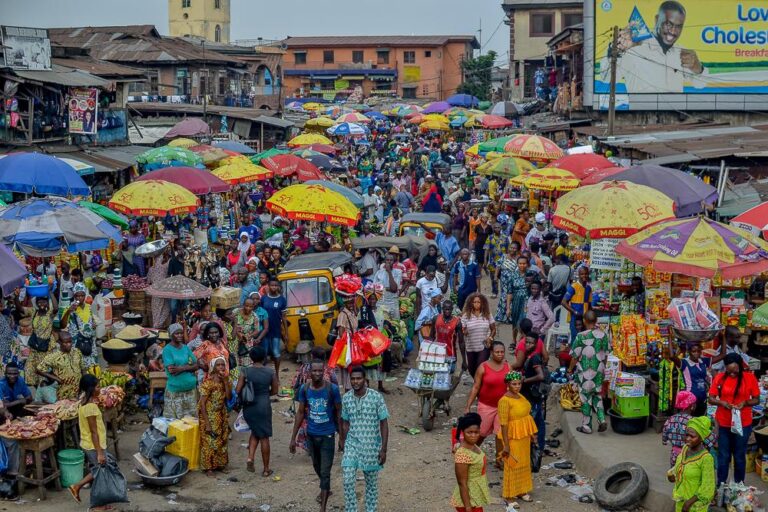
During a visit to Mushin Market on a sunny afternoon, the bustling activity there revealed the extent of transactions between buyers, sellers, union workers, louts, drivers, and load carriers.
Everyone was striving to make a living, directly or indirectly, with the deplorable state of the roads and other infrastructures putting on stark display the challenges facing the traders.
The traders have to cough up money from their meagre earnings to pay taxes and other levies imposed on them.
A food provision seller in the Mushin market, Folasade Ishola, said the value of every tax and levy collected or paid annually has not translated to any tangible benefits for her.
“I pay N10,500 per year for owning a shop in this market. The government is doing things but I have not seen it. We pay for development levy, LAWMA which is a government agency that gives the bill,” she stated.
Another provision seller in the same market, who pleaded anonymity said, “I pay N10,500 yearly as tax and I have not seen any benefit from the government but I am paying because if I don’t pay, they will lock my shop. I pay to sell provisions in the market which they ask us to pay and that is about N3,000.”
Also at Mushin Market, Iyabo Adesina, a hairdresser in the market said she paid N10,500 last year for a tax certificate.
“I pay N8,000 to the local government per year but I have not seen anything the government has done in this market,” Amaka Goodluck, a provision store owner in the market said.
A jewellry seller, Eyiwunmi Adewunmi, said, “I pay any amount the government brings to pay but the last amount I paid was when those in the tax office came to the market and I went to their office too. The government only brings buses for refuse which we pay for; so that is the only benefit I see from them.”
During the investigation, information gathered by respondents reveals that some pay N10,500, N11,200, N12,500, and some N35,000 as tax, which is the disparity of tax payments in the Mushin market.
A hair seller in Mushin market, Mercy Ebere, said, “The tax I pay is N10,000 to Iya oloja and I pay N5,500 for ‘lock-up shop’ which is paid to the local government.
“I have not seen any infrastructure in this market and all the money they are collecting, they are not using it to do anything for us,” Ebere said.
The poor state of the road network in Mushin where market women sell.
There were bad roads, a lack of clean water in the toilets despite the payment of taxes by these market traders.
“Sellers in the Mushin market pay to the Federal Inland Revenue Service which is remitted to the government. The market collects money for LAWMA, development levy which is the major amounted for each shop to pay to the leaders of the market, local government staffs also collect money from the sellers,” said Tawakalitu Opogbenro, a representative of the women leader known as ‘Iyaoloja’ in Mushin said.
She said the government can call for representatives of the market to come for a program and the amount spent for transportation for the representative is removed from the development level.
Citing the development done in the Mushin market, she said “Only politicians have been doing things such as the road repaired in Mumuni street, Mushin by Adeyemi Alli, member house of representative”.
“However, the Government helped develop Dadaiyalode Street in Mushin, Abiodun street” she said, while urging the Nigerian government to help get public toilets, public water, and other roads to help transport goods from one place to another which is a matter of concern for Mushin market at the moment.
A media executive at the Odi-olowo/Ojuwoye local government office, Mushin, Adekunle Oluwatosin, said that people pay taxes to the local government such as ‘Lock up shops’, which is received from market traders, companies in Ilupeju, Fadeyi, and others within the jurisdiction of the Local Government.
He said the local government through the chairman, Rasak Ajala, has been involved in three months of skills acquisition for people which is based on ICT, Corel Draw, Photoshop, and Adobe Illustrator amongst others.
“Bursary is also given to every resident of Odi-olowo/Ojuwoye local council development area with a good academic record, he gives free GCE forms, renovates some abandoned public schools such as one in ikeolu – Odiolowo primary school,” he said.
For Oyingbo, a metropolitan city in the Ebute Metta area of Lagos state, Sekinat Eletu, a shop attendant who sells cutleries told our reporter that a woman-owned shop in Oyingbo Market is expected to pay N18,000 as tax to the market authorities which is referred to as ‘woman leader’.
“Last week, they came to our shop requesting for N18,000 but my boss said she does not have it. I am not sure it is from the government, it is from the woman leader of the market,” she said.
“We were told to pay through the bank to a First Bank account. I don’t know the owner of the account but we were told to be paying there and they will be seeing it,” Eletu stated while adding that women in the market negotiate to pay.
Ireti Adeyemi, who sells scarves at Oyingbo market, said. “We pay tax but there is no specific amount. Even people that are hawking, they cut tickets for them.”
The reporter asked if the money paid by the traders gets to the government, she said, “Everybody is their own government before the government so they know how to settle themselves.”
Poor environmental condition at Oyingbo market as traders sell close to stagnant water, and poor road networks.
“Market traders pay above N10,000 which is paid to Government representatives allocated to collect tax, however we have not seen what the government has done,” said Bilikisu Balogun, a representative of the Woman Leader of Oyingbo market said.
“We do not have electricity in this market, it is a generator we use and we contribute to buy it. We used to have light but for about three years there was no PHCN light in this Oyingbo market.
She urged the government to provide water for the market because market traders buy water to use in the constructed toilet, and the drainage system should be done by the government.
“This issue emphasises the overarching concern with the gender blindness of the Nigerian tax system (laws, policies and administrative processes) and that of its subnational units and more specifically its lack of acknowledgement of the unpaid care responsibilities of women in the informal sector,” Munachi Ugochukwu, economic and gender justice lead at Governance and Rights programme, Christian Aid (UK) Nigeria, said.
He pointed out that the informal sector provides livelihoods for about 80 per cent of the Nigerian labour force and 82 percent of women operate in the sector.
“It is unfair and unequitable for the presumptive tax laws, which govern business operators in the informal economy, to assess and impose flat tax rates across all genders within similar informal business categories regardless of the disparities in income, consumption expenditure and women’s responsibility of unpaid care,” he said.
At the policy level, there is a lack of emphasis and political commitment towards acknowledging gendered concerns and making gender-specific infrastructural provisions, according to Ugochukwu.
“Taxation and governance are two sides of the same coin. And the government’s best way to address tax compliance issues is firstly by demonstrating accountability for the taxes paid,” he said.
He said these could be achieved through tax for service agreements, which he described as “a veritable tool for promoting equity, transparency, accountability and citizens’ participation in governance”.
“Tax for service agreements hold the potential to promote social contracts and equity in resource allocation, improve access to service delivery and build public trust in the system leading to tax compliance and increased tax revenues,” Ugochukwu said.
He said it would serve the best interests of the Lagos state government to work with market association leaderships to facilitate a market consensus around identifying priority projects in the markets, and allocating a percentage of their tax payments to the provision of the identified projects.
“Efforts should also be made by CSOs to engage these constituencies towards building their knowledge and capacities to advocate for such arrangements and by the media to amplify the instrumentality and benefits of the same,” he said.
The director of the Informal Sector and Special Duties at Lagos State Internal Revenue Service (LIRS), Folasade Coker, said in an interview that the majority of people in the informal sector do not know how to calculate the percentage they pay as tax.
“To bring the people in the informal sector to the tax net, the government decided to charge them a token of N8,100 per annum and it can be paid installmentally to make it convenient for them and a receipt will be issued for any payments made,” she said.
While speaking about how to leverage trade unions and associations to ease the tax collection job, Coker said, “We have been able to leverage on these associations to make our work easier. The heads of these markets are also working with us to ensure we reach out to as many who are willing and ready to pay their taxes like Iya Oloja, Igbo Traders Association, and as the cooperation strengthens, things will improve.”
Women, especially those in the informal sector, are said to often bear the brunt of the problem of taxes due to the ignorance of their tax obligations and the amount expected to be paid.
Women, who make up most of Small and Medium Scale Enterprises have a major challenge of multiple taxation.
A report by PwC Nigeria shows that women account for 41 per cent ownership of micro-businesses in Nigeria, with 23 million female entrepreneurs operating within this segment.
Market women who have families, despite their impact on the Nigerian economy, are adversely affected and are being crippled by multiple taxes.
The poor state of the Oyingbo market road network.
Globally, the major source of funds to run government organs effectively has always been through revenue generated directly or indirectly through taxes.
Tax itself is a compulsory (which makes its evasion punishable) contribution to state revenue and is levied by the government on salary, business profits, transactions and even on services.
The Federal Inland Revenue Service in a document, highlighted company tax and Value Added Tax (VAT) as some of the eight taxes collected by the Federal Government, while the state and local governments collect 11 and other 20 taxes respectively.
Research carried out by the Chartered Institute of Taxation of Nigeria on why these taxes exist, the root of multiple taxations was linked to greed, perceived unfair revenue formula and the quest to boost internally generated revenue of states and local councils.
The chairman of the Presidential Fiscal Policy and Tax Reforms Committee, Taiwo Oyedele, while speaking on Channels Television’s Sunrise Daily recently, the numerous taxes levied at various government levels are making life difficult for Nigerians.
“We do not understand why we have so many taxes in Nigeria, just creating problems for everyone,” he said.
According to Oyedele, taxing rights at all levels of government need to be properly defined and addressed to the roots, starting with the country’s constitution.
“We want to go into the constitution itself and address the problem from the roots. Let’s put it there and let it be clear. Clearly define the taxing rights at the different levels of government—this should be what you can collect—from local government to state to federal and here are your responsibilities,” he said.
This report republished from Business Day was made possible with support from the International Budget Partnership (IBP) and the International Centre for Investigative reporting (ICIR) under the Tax Justice, Equity and Transparency Project. Read other stories HERE.
A COALITION of civil society organisations (CSOs) has expressed concerns over President Bola Tinubu administration’s poor response to the nationwide #EndBadGovernance protests.
The group said the President’s recent address failed to speak to the core demands of Nigerians.
In a statement jointly signed by 13 CSOs, including Yiaga Africa, Media Rights Agenda, and Accountability Lab, on Wednesday, August 7, the coalition noted that the President’s speech on August 4, which was the fourth day of the protests, left many critical issues unaddressed.
It also highlighted that the government must recognise that “sovereignty belongs to the people of Nigeria, from whom the government, through this Constitution, derives all its powers and authority.”
Citing Section 14, subsection 2(a) of the 1999 Constitution (as amended), the coalition said it was imperative for the government to engage citizens from the perspective of their needs within their stated demands.
The ICIR reports that many Nigerians have trooped to the streets to protest poor governance and economic hardships caused by Tinubu’s reforms.
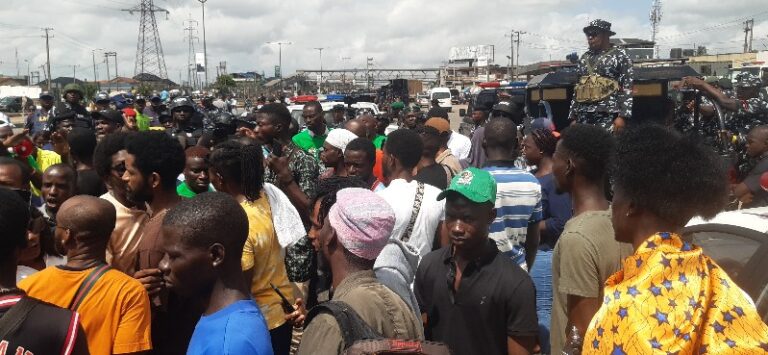
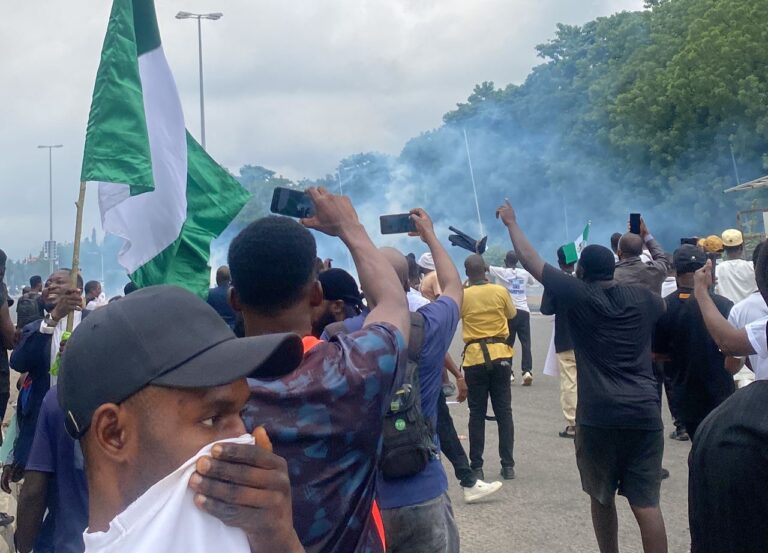
The protests have been marred with violence, largely caused by the security operatives in places like Lagos and Abuja, where protesters have been subjected to tear gas and harassment.
Calling on the protesters to suspend the protests, Tinubu called on the protest organisers to dialogue with the government.
He also boasted of some strides his administration has made in reforming Nigeria’s economy, despite the hardships many citizens continue to face.
The President detailed several economic reforms undertaken by his administration, including the removal of fuel subsidies and the abolition of multiple foreign exchange systems, which he said were essential to halt economic mismanagement and foster sustainable growth.
Meanwhile, the coalition said that except for increased investment in agriculture and student loan disbursements, many of the protesters’ demands were ignored completely.
The demands as noted by the coalition are to protect farms and farmers; human capital development; electoral reform, and constitutional and judicial reforms.
They also stated that the President’s response to demands for reducing the cost of food through importation, subsidised credits, and logistics and storage interventions was partial, only mentioning the release of N570 billion to the 36 states for livelihood support and its plan on agricultural production.
Assessing the response, the coalition queried the specifics of the immediate intervention.
They also asked the President to specify which ministry the money was domiciled in and how much each state received.
The Coalition further condemned the President’s lack of response to critical demands aimed at addressing corruption, government waste, and the aftermath of the #EndSARS protests.
It said Nigerians had called for a permanent reduction in the running costs of the executive and National Assembly, the implementation of the Oronsaye Report to scrap unnecessary agencies, and a reduction in the size of government, among others which the Tinubu’s government had yet to implement.
THE family of a 16-year-old boy shot dead by soldiers in Zaria, Kaduna State, on August 6, has accused the Nigerian Army of offering it N300,000 hours after the incident.
The deceased, Ismail Muhammad, was killed during a curfew at his residence at Sarkin Pawa Street. Samaru, Zaria.
According to the family, Muhammad did not participate in the protest that led to the curfew.
The ICIR reported that the Kaduna State government imposed a 24-hour curfew on the Kaduna and Zaria metropolis and their environs on Monday, August 5, following looting and unrest that accompanied the nationwide hunger protest.
Ismail’s father holding the bag containing the cash
Speaking with The ICIR on Wednesday, August 7, the deceased elder brother, Abubakar Muhammad, said soldiers enforcing curfew rained bullets which pierced through the door of his family house and killed his younger brother.
According to him, the General Officer Commanding (GOC)1 Division, M.L.D. Saraso, a Major General, visited the deceased’s residence and met with his family, including his parents.
“We showed them evidence that they shot our house door. We showed them where the bullets passed. We showed them everything.
“And this morning, I heard them spreading fake news that the boy was part of the protest. We have not had any protest here in Samaru,” he said.
He added that Saraso and his delegation informed the family that they came to investigate the shooting and would not quickly jump into a conclusion.
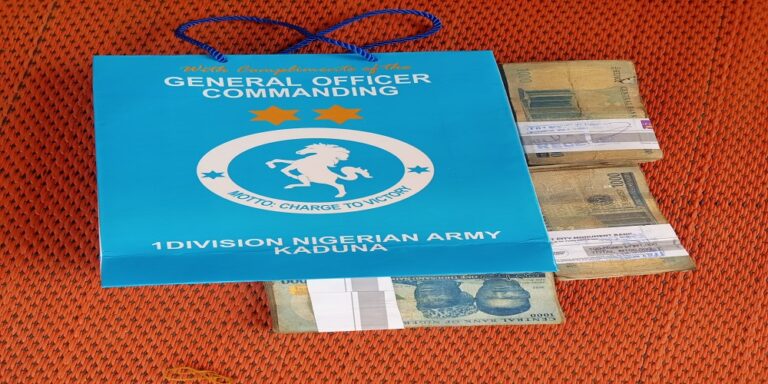
“He (Saraso) gave us something. He gave us a pack having ‘GOC Nigerian Army’ on it. He said most times when they go for a condolence visit, they bring gifts like water to share with people. But because shops were closed due to the curfew, he gave us a bag.
The bag and the cash given to late Ismail’s family by the Nigerian Army
“We checked the bag and saw that it contained 300,000 naira. This morning, someone called my father and told him that he heard that they gave him N70 million.“
Abubakar stressed that contrary to reports, there was no protest in Samaru throughout the period andthere was no need for the military invasion of the area.
He said he was in the house with the late boy when the soldiers shot through the door and killed him.
“Samaru is one of the most peaceful areas, there was no protest in Samaru. Even on the day of the protest, we were doing our activities normally.
“Yesterday, we were at home in the morning. We just heard that soldiers were around the market side sending people to go back to their homes that they were enforcing the curfew. So we just came out to watch what was going on.
“Many people in our area were out to see what was going on along the market side. Soldiers were beating people and sending them back to their homes. Unfortunately, a soldier was approaching our area and we decided to return home.”
The late Ismail
Abubakar said he returned home with his brothers and locked their house door before the soldiers drew near.
He said he heard gunshots shortly after he locked the door and was inside the house.
“We just heard a gunshot straight to our door, twice. By the time we entered the room, one of my younger brothers was saying “They’ve shot Ismail. There was no way for us to meet him by the door side while the door was locked, maybe the soldier might fire another shot at the door. We waited for a while.
“Our neighbours came to the door knocking and asking us to open the door because they heard a shout saying Ismail had been shot. By the time I saw him, he was dead,” Abubakar stated.
The late boy’s parents are in their 50’s and had been distraught by the incident which took away one of their six children, noted Abubakar.
Meanwhile, the Army said the soldier who killed Ismail has been arrested.
The ICIR also learnt Wednesday morning that the GOC visited the deceased family on the order of the Chief of Army Staff, Taoreed Lagbaja.
Samuru’s residents gathered at Ismail’s burial on Tuesday, August 1, as he was buried according to Islamic rites.
In a statement on Wednesday, August 7, the Army spokesperson, Onyema Nwachukwu, said soldiers were enforcing the 24-hour curfew imposed on Kaduna and Zaria metropolis following reports of violence during the #EndBadGovernance protests in the state.
He said the soldiers were attacked by some hoodlums while enforcing the curfew in Zaria.
Nwachukwu added that despite the curfew, thugs were burning tyres and hurling stones at security operatives.
He said although the soldiers intended to disperse the demonstrators with a warning shot, one of them unintentionally killed the boy.
“On arrival at the scene, the hoodlums brazenly attempted attacking the troops, prompting a soldier to fire a warning shot to scare the hoodlums away, which unfortunately led to the death of a 16-year-old boy Ismail Mohammed.
“The soldier involved has since been arrested and undergoing interrogation as at the time of this report.”
The statement added that Chief of Army Staff (COAS), Toareed Lagbaja, had sent a delegation to visit and condole with the family of the deceased.
FINDINGS by The ICIR have shown that eight out of nine states that did not participate in the ongoing #EndBadGovernance protest are among the top states with the highest food inflation rate in Nigeria.
The findings focused primarily on analysing the first four days of then protest.
These states are Ekiti, Kogi, Enugu, Imo, Abia, Ebonyi, Kwara and Ondo. Benue state is the only state that did not participate in the protest and falls among the states with the lowest inflation rate.
The #EndBadGovernance protest, which started on August 1, and is scheduled to last for 10 days, was convened majorly in response to the economic crises Nigerians have experienced since the assumption of President Bola Tinubu in May 2023. It’s been referred to as hunger protest or hardship protest.
Upon his assumption, the removal of fuel subsidies and devaluation of the naira at the foreign exchange market was effected which subsequently harmed the economy with regards to the increase in prices of food, high cost of transportation and other essential commodities.
An infographic showing the outcome of the #EndBadGovernance Protest
These lingering challenges forced many protesters, nationwide, to demand reviews of these policies among other demands. However, this is not the first time Nigerians have taken to the streets to revolt against the government as findings by The ICIR showed that several similar protests have been held since 1929.
Food inflation rate in Nigeria
Meanwhile, data from the National Bureau of Statistics (NBS) showed that as of June 2024, Nigeria’s inflation rate hit a peak of 34.19 per cent while the food inflation rate rose to 40.87 per cent.
“The rise in Food inflation on a year-on-year basis was caused by increases in prices of the following items: Millet Whole grain, Garri, Guinea corn, etc (Bread and Cereals Class), Yam, Water Yam, Coco Yam (Potatoes, Yam & Other Tubers Class), Groundnut Oil, Palm Oil, etc (Oil & Fats Class) and Catfish Dried, Dried Fish-Sadine, Mudfish (Fish Class), etc,” NBS stated.
When The ICIR findings from the inflation data showed that the top 13 states with the highest inflation rate also included the state that did not participate in protest.
State
Inflation rate
Protest remark
Edo
47.34
Participated
Kogi
46.37
Not Participated
Cross River
45.28
Participated
Kwara
44.57
Not Participated
Ekiti
44.5
Not Participated
Oyo
44.38
Participated
Abia
44.28
Not Participated
Ebonyi
44.14
Not Participated
Gombe
43.67
Participated
Enugu
43.55
Not Participated
Ondo
43.48
Not Participated
Sokoto
43.38
Participated
Imo
43.33
Not Participated
States with the highest food inflation rate. Source NBS
According to NBS, the states with the highest food inflation rates as of June 2024 are Edo, Kogi, Cross River, Kwara, Ekiti and Oyo. Others are Abia, Ebonyi, Gombe, Enugu, Ondo, Sokoto and Imo states.
Further findings showed that states like Kano, Nassarawa, Borno, and Kebbi where curfew was declared due to the violent outcome of the protest were among the states with the lowest inflation rate.
State
Inflation rate
Kano
37.56
Plateau
37.34
Kebbi
37.3
Benue
36.89
Borno
36.59
Adamawa
35.96
Bauchi
34.78
Nasarawa
34.31
States with the lowest food inflation rate. Source NBS
The ICIRreported that the #EndBadGovernance witnessed a low or no turn out of people in the South-East states.
SAVE the Children is seeking entries to its Global Media Awards.
The awards aim to celebrate excellence in journalism for child rights in honour of the centennial year since the first Declaration of the Rights of the Child.
The organisers say, “Storytelling that has played a pivotal role in exposing child rights issues can be entered into two categories: local/regional media and international outlets/wires”.
Journalists around the world who cover children’s rights can enter a competition.
Entries must be original and published/broadcast in a national, regional or international media outlet between July 31, 2023 and August 1, 2024. Entries are accepted in all mediums, including print, broadcast, photography and digital.
Winners will receive a trophy and personalised certificate, and be invited to attend a Save the Children international press trip or programme visit.
The deadline for the submission of application is August 31, 2024. Interested applicants can apply here.
PRESIDENT Bola Tinubu has appointed Badamasi Lawal as the Chief Executive Officer (CEO) of the National Social Investment Programme Agency (NSIPA) seven months after the suspension of the former head of the agency, Halima Shehu.
This was disclosed in a statement on Tuesday , August 6, by the president’s spokesperson, Ajuri Ngelale.
According to Ngelale. Lawal is a former commissioner for local government and chieftaincy affairs in Katsina State.
He takes over from Shehu, who was placed on administrative leave by the President due to alleged financial mismanagement.
The ICIR reported in January that the Economic and Financial Crimes Commission (EFCC) arrested and detained Shehu over N37.1 billion allegedly laundered in the Ministry of Humanitarian Affairs, under former Minister Sadiya Umar-Farouk.
Following her suspension, Tinubu instructed the national N-Power programme manager, Akindele Egbuwalo, to step in as acting manager while investigations were ongoing into her alleged infractions.
In Ngelale’s statement on Tuesday, Tinubu also appointed new heads of agencies and programmes in the Federal Ministry of Humanitarian Affairs, Disaster Management and Social Development.
They include Funmilola Olotu as the programme manager of the National Social Safety-Net Coordinating Office, Aishat Alubankudi as head of the Grant for Vulnerable Groups Programme, Ayuba Gufwan as the executive secretary of National Commission for People with Disabilities and Lami Binta Adamu Bello is the new director-general (DG) of the National Agency for the Prohibition of Trafficking in Persons (NAPTIP).
Other appointments by the President include Aderemi Adebowale, as the programme manager of the home-grown school feeding programme, and Abdullahi Alhassan Imam as the head of the National Cash Transfer Office (NCTO).
NIGERIA’S President Bola Tinubu’s nationwide broadcast on Sunday, concerning #EndbadGovernance protests on August 4, has raised further questions about his grasp of the issues that spurred the protest.
For most Nigerians, the speech is hollow and fails to address the hardship and poverty among Nigerians which triggered the protest.
Consequently, there were notable omissions as the President failed to provide answers to the free fall of naira which has daring consequences on the purchasing power of Nigerians and the overall economy.
Despite speaking up on some measures embarked upon by his administration to restore the fragile economy, the speech was silent about the negative impact of his policies on the weak purchasing power of Nigerians, following the naira devaluation.
Another grave omission by the president was on the constant shifting of “goal post” by the Nigerian National Petroleum Company Limited-(NNPCL) about Nigeria’s moribund refineries’ rehabilitation, despite the recent allegation by Africa’s richest man, Aliko Dangote that some senior NNPCL officials own blending plant in Malta.
Industry analysts, said, the President’s silence on these allegations raises further questions about his administration’s resolve to end gasoline importation into the country
Economic watchers also believe the President’s speech showed a disconnect on some of the burning issues and points to a poor feedback mechanism from the President’s management team.
“People are looking more at the results, the President’s team must know that people are expecting results, rather than we will,” a financial expert and economic expert, Gbolahan Olojede.
“People want to see prices of food go down in the market, people need to see the refineries working after several times of shifting the goal post by the GMD of the National Oil Company,” he added.
Other analysts, queried why Tinubu’s doesn’t have an” “economic road map” tied to Nigeria’s medium-term expenditure framework to enable proper tracking of its economic policies instead of an interventionist program.
“The speech spoke about numerous interventions of the president but was silent on key concerns. Recently, the senate raised the ways and means from 5 to 15 per cent. No one is giving us a response to the allegations raised by Dangote about a blending plant in Malta. The naira is on a free fall with inflation diminishing the purchasing power. He needs to address these issues,” a development economist, Celestine Okeke, told The ICIR.
What did Tinubu’s Speech say about the economy?
In his widely expected speech on Sunday, Tinubu detailed measures he took to stabilise the economy, such as removing fuel subsidies and unifying foreign exchange systems, which he said were important to stop mismanagement that his administration inherited.
According to the President, within the past 14 months, his administration has made significant strides in rebuilding the foundation of our economy to carry us into a future of plenty and abundance.
On the fiscal side, he noted that aggregate government revenues have more than doubled, hitting over N9.1 trillion in the first half of 2024 compared to the first half of 2023 due to our efforts at blocking leakages, introducing automation, and mobilising funding creatively without additional burden on the people.
“Productivity is gradually increasing in the n-oil sector, reaching new levels and taking advantage of the opportunities in the current economic ambiance
My dear brothers and sisters, we have come this far,” Tinubu said in his nationwide project.
The President also said debt servicing has been reduced in the last 13 months to 68 per cent from the previous 97 per cent of spent revenue.
He also disclosed that legitimate outstanding foreign exchange obligations of about $ 5 billion have been cleared, without any adverse impact on the government’s programmes.
He said the development has given Nigeria more financial freedom and the room to spend more money on citizens to fund essential social services like education and healthcare. It has also led to our State, and local governments receiving the highest allocations ever in our country’s history from the Federation Account.
“Our once-declining oil and gas industry is experiencing a resurgence on the back of the reforms I announced in May 2024 to address the gaps in the Petroleum Industry Act. Last month, we increased our oil production to 1.61 million barrels per day, and our gas assets are receiving the attention they deserve. Investors are coming back, and we have already seen two Foreign Direct Investments signed off over half a billion dollars since then,” Tinubu said in his nationwide address.
The president also enumerated successes in Nigeria’s oil sector which had led to appreciations in crude oil production, and priority investments in the Compressed Natural Gas Initiative(CNG) to provide alternatives to the economy and bring down costs.
The President also highlighted the efforts of his administration on consumer credit.
“We established the Consumer Credit Corporation with over N200 billion to help Nigerians acquire essential products without the need for immediate cash payments, making life easier for millions of households. This will consequently reduce corruption and eliminate cash and opaque transactions. This week, I ordered the release of an additional N50 billion Naira each for NELFUND – the student loan, and Credit Corporation from the proceeds of crime recovered by the EFCC,” he added.
The President also spoke on interventions in housing and other aspects of the economy.
The president was also largely silent on the high cost of living and free fall of the naira which was a key component demand from the #EndBadgovernance policy.
Notably, Nigeria’s naira has been on free fall since its devaluation which triggered a free flow of the currency-a key policy of the Bola Tinubu administration.
The other key policy of the administration that has caused hardship for Nigerians is the removal of fuel subsidies, which saw the price rise above 200 percent.
According to the National Bureau of Statistics- NBS, energy prices have been a major cause of rising inflation with insecurity also affecting Nigeria’s food belt a major component of food inflation.
Inflation rise
Core inflation increased from 15.7per cent in June 2022 to 27.4 per cent in 2024. Food Inflation also increased from 20.6 per cents to 40.87 per cent in the same period.
This significant rise in both core and food inflation has severely affected the purchasing power of Nigerians, with many average households struggling to afford food and essential goods.
In a country where 40.1 per cent of the population lives below $2.15 per day, an increase in the inflation rate further deepens deprivations of quality healthcare, education, and housing.
The inflation rate during Tinubu’s administration is the highest in the past 25 years.
Besides, all forms of inflation rose the most during the Tinubu administration’s first year in office compared to the first year of previous administrations since 2007.
Concerns
Earlier before the protest, some groups of protesters, comprising nine different organisations, accused the President Bola Ahmed Tinubu-led administration of implementing anti-poor policies supported by the International Monetary Fund(IMF) which has impoverished Nigerians more.
The groups, which comprised a coalition of youths, civil societies, and socialists on the planned ‘EndBadGovernanceinNigeriaprotest’ made their position known in a communique issued on Wednesday, July 31.
Commenting further on the nationwide broadcast in an X post on Sunday, Ezekwesili said, Tinubu’s speech was a monumental missed opportunity to placate citizens with sound answers and an outline of convincing evidence-based actions.
The former minister added that the speech failed to connect to what the protesters were protesting about, adding that it was written out of a mindset that was focused on “getting back at our enemies.”
She wrote, “@officialABAT, As one of the millions of Nigerians who were at church when you delivered your late-in-coming speech to Citizens on the #EndBadGovernancelnNigeria protests, let me loudly say it was underwhelming to read.
“Your speech reads like a page from your party manifesto and failed to connect to what our citizens on the streets are angry and protesting about.
“Your speech is quite a monumental missed opportunity to placate citizens with sound answers and outline of convincing evidence-based actions that you and your @NigeriaGov will immediately take to address the priority #BadGovernance concerns,” the former minister added.
Previous President’s promise unfulfilled
Notably, on a previous nationwide broadcast on July 31, 2023, the Nigerian President said he would provide N200 billion to strengthen the country’s manufacturing and Micro Small and Medium Enterprises (MSMEs).
The promise came following manufacturers’ public outcry over the impacts of fuel subsidy removal and the foreign exchange unification he doggedly introduced.
Upon assuming office on May 29, 2023, Tinubu said fuel subsidy was gone, and the Central Bank of Nigeria (CBN), under his watch, floated the exchange rate in July.
The twin reforms have suffocated business operations and made the business environment difficult for manufacturers and Micro Small and Medium Enterprises.
The palliatives were meant to provide N75 billion to manufacturers and N125 billion to MSMEs and be executed between July 2023 and March 2024.
“To strengthen the manufacturing sector, increase its capacity to expand, and create good paying jobs, we will spend N75 billion between July 2023 and March 2024. Our objective is to fund 75 enterprises with great potential to kick-start sustainable economic growth, accelerate structural transformation, and improve productivity.
“Each of the 75 manufacturing enterprises will be able to access N1 Billion credit at 9% per annum with a maximum of 60 months repayment for long-term loans and 12 months for working capital,” he said in the earlier speech.
Following this earlier promise, the director-general of the Manufacturers Association of Nigeria (MAN) Segun Kadir-Ajayi told The ICIR that members are yet to access the fund almost a year after the President’s speech.
THE Central Bank of Nigeria (CBN) has granted a lifeline to Unity Bank Plc to merge with Providus Bank Limited, raising concern about other banks with poor financial status and weak corporate governance structure.
In a statement signed by its Acting Director of Corporate Communications, Hakama Sidi, on Tuesday, August 6, CBN said it would provide a financial accommodation to support the merger.
It anchored its action with the provisions of Section 42 (2) of the CBN Act, 2007, and said the merger was contingent upon its financial support, which is essential for the financial health and operational stability of the post-merger organisation.
“The Central Bank of Nigeria (CBN) has approved a pivotal financial accommodation to support the proposed merger between Unity Bank Plc and Providus Bank Limited. This strategic move is designed to bolster the stability of Nigeria’s financial system and avert potential systemic risks,” the CBN stated.
The apex bank failed to disclose the amount of financial support it had approved for the merger but hinted that it would be pivotal for addressing Unity Bank’s total obligations to the central bank and other stakeholders.
The merger is contingent upon the financial support from the CBN.
“It is unequivocal to state that the CBN’s action is by the provisions of Section 42 (2) of the CBN Act, 2007. This arrangement is crucial for the financial health and operational stability of the post-merger organisation,” CBN said.
It maintained that no Nigerian bank currently faces a precarious situation comparable to that of Heritage Bank, which withdrew its banking licence and directed the Nigeria Deposit Insurance Corporation (NDIC) to liquidate.
The scheme of merger needs to be examined to understand the details, financial expert, David Adonri, told The ICIR.
“Both are small banks and there could be some synergy in their merger.
“Providus is a new bank and, surprisingly, they are unable to stand the test of time in the industry,” he said.
The ICIR reports that with CBN’s demand for banks’ recapitalisation within two years, the risk exposure of the banks will increase.
Also, the national president of New Dimension Shareholders, Patrick Ajudua, told The ICIR that CBN’s intervention would no doubt save shareholders from losing their investments and ensure the survival of both banks in this era of recapitalisation.
“You will recall that recently, CBN withdrew the licence of Heritage Bank as a result of inherent systemic failure and ongoing concern issue, which adversely affected the shareholders of the bank though not listed on the exchange.
“Therefore, as shareholders of Unity Bank, we are pleased with this approval while praying for a seamless transformative process beneficial to all parties.”
CBN stirs up hornet’s nest with banks’ recapitalisation
The apex bank had started the recapitalisation of banks in Nigeria to push up their capital base, directiñg that banks with weak financial muscles could merge acquire or downgrade to a lower level authorisation.
According to the CBN directive, banks with international licences are to raise a minimum capital base of N500 billion; banks with national authorisation, N200 billion; banks with regional and merchant authorisation, N50 billion; and non-interest banks with national and regional operations, N20 billion and N10 billion, respectively.
The two-year deadline it approved for banks’ recapitalisation, however, did go down well with many analysts who believed that it would have been ideal if carried out on a gradual process over a longer period.
Over the years, Unity Bank has had poor financial performances which might have necessitated the apex bank to approve a lifeline to save the bank.
On June 3, the CBN revoked the operating licence of Heritage Bank over the bank’s failure to improve its financial performance, a situation which constituted a threat to financial stability.
The revocation attracted speculation that filtered media platforms that CBN planned the termination of the banking licences of Unity Bank, Polaris Bank Limited, and Keystone Bank Limited.
The CBN denied it in the swift reaction and labelled the news as false rumours intended to trigger panic in the financial system.
It said the Nigerian financial system remains safe, sound, and resilient but without recourse to the state of the financial health of Unity, Keystone, or Polaris Bank.
In a report on June 28, The ICIR analysed why CBN might consider revoking some bank’s operating licences.
The analysis indicated that the financial position and corporate governance of the Unity Bank, Polaris Bank, and Keystone Bank raised quite a few concerns should the apex bank act by Section 12 of the BOFIA Act.
Over the past five years, Unity Bank has been in a financial dilemma, consistently reporting negative net equity that had wiped off investors’ funds.
Besides their weak financial positions, CBN in January this year faulted Polaris Bank, Union Bank, and Keystone Bank over their adherence to its corporate governance guidelines by removing their boards for various infractions.
In 2006, CBN recapitalised banks and raised their capital base to N25 billion. This resulted in the shrinkage of the number of banks from 89 to 25 through mergers and acquisitions involving 76 banks, following their financial health at the time.
The banks’ capitalisation has started to draw a few banks to the capital market to raise funds to meet the CBN’s minimum capital requirements.
Other banks might go the way of Unity and Providus banks or be downgraded to mitigate CBN’s recapitalisation target.
IN a bold move that ensures that commercial banks have acceptable financial risk exposure status, the Central Bank of Nigeria has approved the merger of Providus Bank and Unity Bank.
The apex bank, in a statement signed by the acting Director of Corporate Communications, Hakama Sidi, on Tuesday, August 6, said the action is by the provisions of Section 42 (2) of the CBN Act, 2007.
Economic watchers are of the view that this kind of merger is expected as most Deposit Money Banks (DMB) are in a last-ditch effort to ensure that their banks have the right risk exposure to businesses with many of them in the capital market to raise funds for that support.
The apex bank also announced approval of a pivotal financial accommodation to support the proposed merger between Unity Bank Plc and Providus Bank Limited.
The apex bank’s statement notes that the merger is contingent upon financial support from the CBN.
“The fund will be instrumental in addressing Unity Bank’s total obligations to the Central Bank and other stakeholders,” the statement read.
“It is unequivocal to state that the CBN’s action is under the provisions of Section 42 (2) of the CBN Act, 2007. This arrangement is crucial for the financial health and operational stability of the post-merger organisation.