Home Blog Page 53

After ICIR report, UDUS names staff in fresh dismissal over NYSC scam

0

By Abdullahi Muritala

USMANU Danfodiyo University Sokoto (UDUS) has, for the first time in recent disciplinary actions, publicly identified a staff member dismissed for misconduct, a move that followed a scrutiny triggered by an earlier report by The ICIR highlighting double standards in the institution’s handling of sanctions.

The university recently announced the dismissal of a staff member, Garba Ahmed, over his alleged involvement in the illegal mobilisation of unqualified students for the National Youth Service Corps (NYSC). Unlike previous cases, UDUS disclosed the identity of the staff member in its official statement.

In the statement, the Director Information and Public Relations of the University, Ismaila Yauri, said the decision was taken at the university governing council’s 176th meeting held on April 1, 2026.

The staff member, before his dismissal, worked in the Registry Department and was found guilty of gross misconduct.

This marks a shift from the pattern established in The ICIR’s earlier report, which revealed that while the university routinely published names and details of expelled students, it withheld the identities of lecturers and staff dismissed for serious offences, including result manipulation and sexual harassment.

The ICIR report sparked conversations around transparency and accountability within the institution, with stakeholders questioning the fairness of exposing students while shielding staff involved in comparable or more severe misconduct.

The latest development points to a possible response to the criticism, with the university taking a more transparent step by identifying the dismissed staff member in a case of significant public interest.

Although UDUS has not explicitly linked the change to the earlier report, the decision to disclose the staff member’s identity represents a notable departure from its previous communication style and signals a possible shift toward greater accountability.


Onyejeocha resigns as minister amid wave of exits ahead of 2027 elections

0

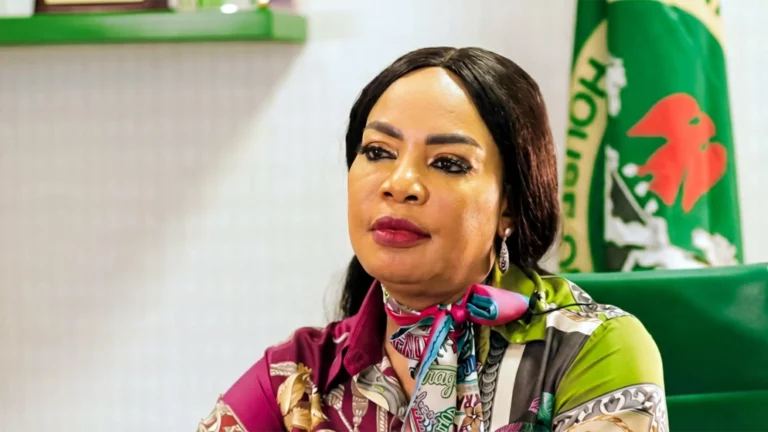
NKEIRUKA Onyejeocha has stepped down as Minister of State for Labour and Employment, joining other political appointees leaving office ahead of the 2027 elections.

In a statement on Friday, April 3, Onyejeocha described her exit as the end of a “significant chapter” in her public service, thanking the Nigeria President, Bola Tinubu, for the opportunity to serve.

She expressed appreciation for the president’s trust and leadership, noting that working under the administration’s Renewed Hope Agenda was both an honour and a privilege.

The former minister also commended the staff of the Federal Ministry of Labour and Employment for their dedication, saying their collective efforts helped advance policies that improved workers’ rights, workplace safety, and employment opportunities.

She extended gratitude to her constituents in Isuikwuato/Umunneochi Federal Constituency and Nigerians at large for their support during her tenure, adding that she remains committed to national development.

“This period marks the end of a significant chapter in my journey of service as I formally resign as Honourable Minister of State for Labour and Employment,” she wrote.

While it is unclear what prompted her resignation, it may not be unconnected with the directive by the president asking all appointees seeking elective positions to resign by March 31.

The directive, communicated through the Office of the Secretary to the Government of the Federation (OSGF), requires ministers, advisers, and heads of agencies intending to contest in party primaries, scheduled between April 23 and May 30, 2026, to resign to ensure compliance with electoral laws and promote a level playing field.

The ICIR reported that following the directive, several top officials have exited their positions.

Among them was Saidu Ahmed Alkali, Minister of Transportation, who is expected to contest the Gombe State governorship race, and Yusuf Maitama Tuggar, who has stepped down to pursue the Bauchi State governorship.

Similarly, Yusuf Tanko Sununu, Minister of State for Humanitarian Affairs and Poverty Reduction, has resigned and is reportedly preparing to contest a senatorial seat in Kebbi State.

Other appointees who have stepped down include Nasiru Gawuna of the Federal Mortgage Bank of Nigeria, Abdulrazak Namdas of the Niger Delta Development Commission board, and presidential aide Nasir Ja’oji, all of whom are said to be seeking elective positions.

Onyejeocha was also a former lawmaker, who represented Isuikwuato/Umunneochi federal constituency of Abia State in the House of Representatives from 2007 to 2023.

If it were possible, I’d have broken my TV screen to shoot Seun Okinbaloye — Wike

0

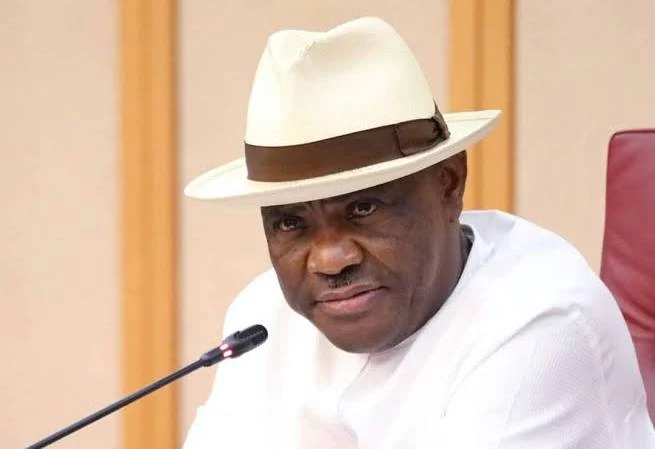
THE Minister of the Federal Capital Territory, Nyesom Wike, has stirred another controversy by saying he would have “shot” a journalist with Channels TV, Seun Okinbaloye.

Presidency defends Tinubu’s Jos airport visit as Obi, Atiku fault action

0

THE NIGERIAN presidency has defended Bola Ahmed Tinubu over his decision to meet victims of recent violence in Plateau State at an airport facility rather than visiting affected communities, citing logistical and security constraints.

In a statement issued on  Friday, April 3, by presidential spokesman Bayo Onanuga, the government said the President’s schedule had to be altered due to overlapping high-level engagements and operational limitations.

According to the presidency, Tinubu’s day initially included receiving Mahamat Idriss Déby in Abuja before travelling onward. However, after being briefed on the killings in Plateau by Governor Caleb Mutfwang, the President adjusted his plans to include a visit to Jos.

The statement explained that the delays during the diplomatic engagement disrupted the revised travel timeline. The presidency added that aviation limitations at the Jos airport, particularly the lack of equipment for night operations, meant the President could not safely travel into the city and return before nightfall.

“As a result, representatives of the affected communities were brought to a venue near the airport to enable the President to meet them promptly,” the statement said.

The government maintained that the visit was substantive rather than symbolic, noting that Tinubu met victims, listened to community leaders and security officials, and proposed measures including the deployment of surveillance technology to improve security. It also highlighted that top defence and police officials had already visited the worst-hit areas, including Rukuba, before the President’s arrival.

Despite the explanation, the decision has drawn sharp criticism from opposition figures.

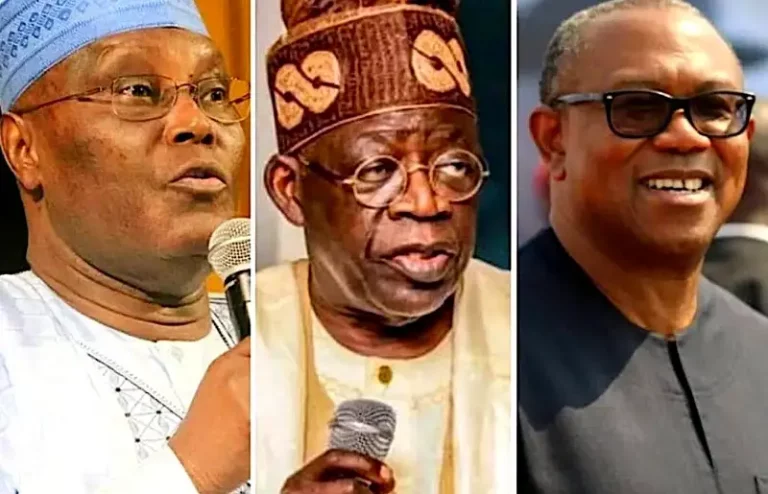
Former Vice President, Atiku Abubakar, described the airport meeting as a sign of detachment from the suffering of affected communities. Through his aide, he argued that the President’s visit fell short of an “on-the-spot assessment,” saying it did not extend beyond the airport or directly reach grieving families.

Similarly, former Anambra State governor and Labour Party presidential candidate in the 2023 elections, Peter Obi, faulted the approach, calling it “irresponsible” and lacking empathy. He drew comparisons with a previous presidential visit to Benue State, where Tinubu also did not visit attack sites.

Obi said, “What happened in Plateau highlights a complete absence of leadership. True leadership requires presence, empathy, compassion, and a willingness to meet people where their pain truly lies.”

He warned that such actions risk deepening public frustration and a sense of abandonment among communities repeatedly affected by violence, urging the federal government to take more decisive and visible steps to address insecurity.

The presidency, however, insisted that the objectives of the visit were achieved, stressing that sustainable peace requires engagement with stakeholders and coordinated security responses rather than optics.

The exchange underscores growing political tension over how best to respond to persistent insecurity, particularly in regions like Plateau State, where recurring attacks have continued to claim lives and displace communities.

Tension rose across parts of Jos North Local Government Area after the state government relaxed the curfew.

Residents told THE ICIR that fresh clashes broke out among communities in the area on Wednesday morning.

The unrest followed earlier attacks in Angwan Rukuba, where violence had forced authorities to impose movement restrictions.

Although the curfew was partly lifted to allow people to carry out essential activities, the move appeared to lead to renewed violence.

THE ICIR also reviewed videos showing chaotic scenes, with groups confronting one another in the streets and, in some cases, clashing with security forces.

Reports indicated that the violence took on a religious angle, with Christian and Muslim youths allegedly attacking each other in parts of the area.

Ghana announces visa-free entry for Africans

0

GHANA has announced plans to introduce a visa-free policy for all African travellers, in a move aimed at deepening unity and improving movement across the continent.

John Dramani Mahama, president of Ghana, made the announcement, stating that the policy will take effect on May 25, 2026, to coincide with the celebration of Africa Day.

“I am also pleased to announce that effective 25th May, 2026, when we commemorate Africa Day, Ghana will commence a free visa regime for all Africans. Africans travelling to Ghana will receive their e-visas online free of charge,” the president said.

While countries in West Africa, including Nigeria, already enjoy visa-free travel under the Economic Community of West African States (ECOWAS) protocol, Ghana’s new policy extends similar access to all Africans beyond the sub-region.

The announcement came after a bilateral meeting with Zimbabwean President Emmerson Mnangagwa at Peduase Lodge in Ghana’s Eastern Region.

President Mahama noted that Ghana already shares a visa-free arrangement with Zimbabwe, highlighting the ease of travel between the two countries.

“But between Ghana and Zimbabwe are In-laws, have a visa-free environment already. We can travel to each other’s countries without needing a visa. You  hop onto the plane and arrive in each other’s country.”

He explained that the new policy reflects Ghana’s long-standing commitment to Pan-African ideals.

According to him, the country sees itself as responsible for remaining open to Africans across the continent.

Mahama also linked the decision to Kwame Nkrumah’s vision, stressing that African countries must move faster toward deeper integration.

The visa-free entry will work as part of a broader e-visa reform programme expected to launch the same month. Government officials say both initiatives are designed to simplify travel, encourage tourism, and make Ghana more attractive to investors.

The president assured that necessary measures have been put in place to manage the system effectively and maintain national security.

“Let me assure the public that adequate systems have been put in place to protect prospective visitors and to ensure that the security of our nation is not compromised,” he stated.

Mahama added that efforts are ongoing to secure more visa waiver agreements for Ghanaian citizens travelling abroad. Since taking office in 2025, his administration has reportedly signed over 20 such agreements to strengthen the value of the Ghanaian passport.

Beyond travel, both Ghana and Zimbabwe reaffirmed their commitment to stronger cooperation on regional and global issues. The leaders emphasised the importance of unity, dialogue, and respect for international law in addressing global challenges, including conflicts and economic instability.

President Mnangagwa described the visit as productive and forward-looking, noting that both countries share common goals around African development and cooperation.

“We remain rooted in the shared ideals of Pan-Africanism, South-South cooperation, and a shared aspiration for African prosperity,” he said.


Whistleblower to be re-arraigned over firearms charge after exposing police payroll scam

THE Nigeria Police Force has re-arraigned Mubarak Bello, the whistleblower who exposed a payroll racket at Katsina command, before the Federal High Court in Katsina for alleged unlawful possession of firearms and ammunition.

Bello, a resident of Katsina, was charged by the office of the Inspector-General of Police on March 23, 2026, for allegedly possessing a locally made gun, four rounds of live ammunition, and two expended cartridges without a valid licence.

The ICIR reports that Bello was originally charged in a Katsina magistrate court in October 2025 with possession of a forged police ID, impersonation, unlawful possession of firearms and ammunition, and dealing in ATM cards — charges the accused calls “trumped up”.

On March 3, 2026, the Katsina magistrate court discharged Bello, prompting police to file a fresh charge of unlawful possession of firearms and ammunition at the Federal High Court.

Allegations before the court

The new charge alleges that on September 13, 2025, around 3:00 a.m., Bello was intercepted in Kofar Durbi Quarters while driving a Toyota Corolla. Police stopped and searched him, recovering a firearm and ammunition. Bello allegedly failed to produce a lawful license, leading to his arrest and forensic examination of the items.

He was charged under Sections 3 and 8(1)(2) of the Firearms Act, Cap F28, Laws of the Federation of Nigeria, 2004. The police plan to call three witnesses: the arresting officer, investigating officer, and a forensic expert to verify the weapon’s functionality.

Whistleblower background

Bello’s arraignment came amid longstanding harassment, threats to his life and prosecution for his role as a whistleblower in an alleged multi-million-naira payroll fraud at the Katsina State Police Command.

On September 14, The ICIR reported that the police had issued a statement over the arrest of 38-year-old Bello, accusing him of impersonation, possession of a fake police identity card, and unlawful possession of firearms.

The Katsina State police command claimed Bello’s arrest on September 13, 2025, came after a routine night patrol team intercepted his Toyota Corolla. The state Police Public Relations Officer ( PRO), Abubakar Sadiq Aliyu, said officers recovered a locally made rifle, live cartridges and a ‘fake’ police ID card.

However, Bello and sources familiar with the case alleged that his arrest was aimed at silencing him over his whistleblowing activities.

The ICIR gathered that Bello was first given a contract as a typist in 2009 to assist the finance department (formerly Mechanised Salary Section, MSS). Before then, he ran a shop at Kofar Turpi, doing typing jobs for police.

As a contract worker in the finance department, Bello became well acquainted with the processes through which officers’ salaries were administered across the state.

He alleged that fictitious police officers’ names were added to the salary system, diverting millions of naira monthly to accounts linked to Katsina Command finance officers, including the Finance Officer and an Assistant Finance Officer.

In 2019, Bello petitioned multiple anti-corruption agencies, including the Independent Corrupt Practices and Other Related Offences Commission (ICPC) and the Economic and Financial Crimes Commission (EFCC), over the alleged “ghost workers” scheme within the command.

Documents reviewed by The ICIR showed that Bello also wrote to the Attorney-General of the Federation and the Police Service Commission in 2020 after his earlier complaints failed to yield action.

In a 2020 petition to the Attorney General, Bello said he was initially instructed to process what he believed were legitimate recruitment documents. He noted that he did not suspect any wrongdoing at first, and when he sought clarification, the officers told him it was part of a “new recruitment process.”

He claimed that he was misled by the officers to forge certificates, open bogus accounts, create appointments and confirmation documents, generate fake promotion and transfer letters.

Bello said when the officers returned for a second phase of the exercise, they asked if he had more names to add to the list, but he refused. According to him, they persisted and eventually pressured him to submit his own name and that of an associate, Muhammad Hussaini, even producing police identity cards for both of them.

During the first and second processes, he listed more than a dozen officers for some of the policemen in the finance unit of the Katsina police command.

Retaliation and arrest

Following his allegations, Bello claimed he became a target of intimidation and repeated attacks. He said threats intensified after he insisted on reporting the incident since December 2019.

In 2020, Bello told investigators from ICPC that police officers raided his home in Sabon Unguwa, Katsina, and his office at the command headquarters, seizing documents and equipment.

He was consequently arrested and detained over impersonating a police officer, claims he maintains were false.

A source at the ICPC source had told The ICIR that some of the claims in Bello’s petition had merit, noting that certain payroll entries he flagged corresponded with suspicious records already unearthed by the agency’s investigation.

Attempts by the ICPC to question officers named in Bello’s petition reportedly stalled after the police authorities failed to grant approval for their appearance. It was reliably gathered that the ICPC Chairman, Musa Adamu Aliyu, a Senior Advocate of Nigeria (SAN), wrote to the Inspector General of Police at the time to release the affected police officers under investigation for questioning but this was never done.

‘I was threatened, attacked’

Speaking with The ICIR, Bello alleged that he had faced multiple threats and physical attacks after exposing the alleged fraud. In earlier accounts, he said police officers raided his home and office, confiscating documents and equipment linked to his claims.

He also recounted being beaten by officers at the Katsina Divisional Crime Officer’s office in 2020.

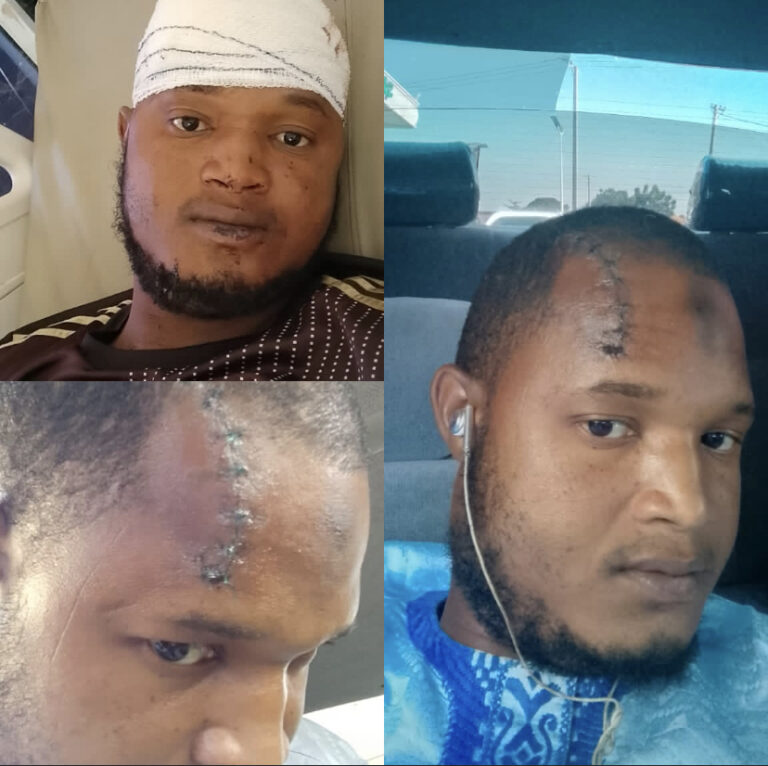
Independent findings by The ICIR show how thugs attacked him with machetes, leaving deep cuts in October 2024. His head was macheted and his hand suffered deep cuts.

In a voice note obtained and reported by The ICIR, he appealed to acquaintances for help, saying he had been ambushed and was receiving treatment at the Federal Medical Centre Katsina.

Sources within the ICPC confirmed that Bello had reported several threats to his life before and after submitting his petition. These circumstances, according to some sources, may lend credence to his claim that he carried a locally made firearm for self-defence.

Bello disputes firearms allegations

Bello rejected the police claims against him, insisting the charges are a deliberate attempt to intimidate, victimise and silence him. He maintained that the firearm found in his possession was for self-defence following repeated attacks on his life after he reported the alleged fraud.

“I had no option than to protect myself after the several attacks,” he said, adding that he had applied for a licence to carry a locally made gun and formally notified police authorities, but received no response.

“I wrote to the Katsina Police command to apply for a gun… I followed the process, but they didn’t issue it to me,” he said. “Even after I got the gun, I informed the DC CID and asked for a licence, but they ignored it.”

Bello also disputed claims that a police identity card found in his possession was fake, stating that he had been issued identification documents during his time working with the police.

Appeal Court upholds ruling against NBC’s power to fine broadcasters

0

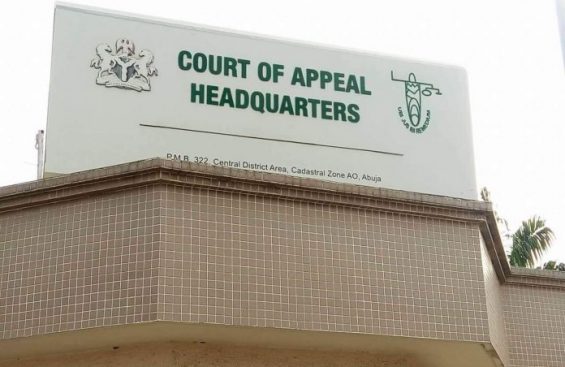
THE Court of Appeal in Abuja has dismissed an appeal by the National Broadcasting Commission (NBC), affirming an earlier ruling that stopped the commission from fining broadcast stations.

In a unanimous judgment delivered on Thursday, April 2, the three-member panel ruled in favour of Media Rights Agenda (MRA), which had challenged the NBC’s powers in court..

The court upheld the May 2023 ruling of the Federal High Court, where one of its judges, James Omotosho, held that only courts, not regulatory agencies, had the power to impose fines for offences.

Omotosho had ruled that fines were sanctions imposed on individuals or organisations found guilty of criminal offences, and that only courts of law in Nigeria had the authority to impose such penalties.

He consequently set aside the fines imposed by the NBC on 45 broadcast stations.

The ICIR reports that the fines, amounting to ₦500,000 each, were announced by the commission on March 1, 2019, for alleged breaches of the Nigeria Broadcasting Code.

Omotosho further ruled that the NBC “is neither a court nor a judicial tribunal to make pronouncements on the guilt of broadcast stations,” adding that the commission’s actions violated the Nigerian Constitution.

The judgment was entered after the NBC failed to appear in court to defend the suit, despite evidence showing it had been duly served with court processes.

In July 2023, the NBC filed a motion asking the same court to set aside the judgment, arguing that the judge lacked jurisdiction and had made his decision without considering relevant facts.

However, on November 23, 2023, Omotosho dismissed the application, describing it as ‘futile’ and “an afterthought,” and noting that the commission had chosen not to defend the case when it had the opportunity.

Dissatisfied with the outcome, the NBC proceeded to the Court of Appeal.

At the hearing of the appeal on February 4, 2026, the NBC’s legal team, including Victor Ogude and Kehinde Wilkey, adopted their written arguments and made additional submissions.

Counsel to MRA, Ezenwa Anumnu, also adopted his brief and responded on behalf of the organisation.

Delivering the lead judgment, Oyejoju Oyewumi, a judge, upheld MRA’s arguments, ruling that the NBC’s appeal lacked merit.

She held that having failed to challenge the case at the Federal High Court, the commission could not raise issues at the appellate stage.

The two other justices on the panel, Abba Bello Mohammed and Donatus Uwaezuoke Okorowo, agreed with the lead judgment.

With this ruling, MRA has secured victory in the first of the two separate appeals involving the NBC over similar judgments of the Federal High Court restraining the commission from imposing fines on broadcast stations.

The second appeal, still pending before the Court of Appeal, stemmed from another Federal High Court judgment delivered on January 17, 2024, by Rita Ofili-Ajumogobia.

In that case, the court also ruled against the NBC in a suit filed by MRA after the commission imposed fines of ₦5 million each on a television station and three pay-TV platforms in 2022.

The fines were issued over allegations that the stations undermined Nigeria’s national security by broadcasting documentaries on banditry.

The Court of Appeal heard arguments in the second appeal on March 25, 2026, and has reserved judgment, which is expected to be delivered at a later date.

Media coalition counters Shettima, says journalists face harassment in Nigeria

0

TOP media bodies in Nigeria and globally have raised concerns about Vice President Kashim Shettima’s recent comments that dismissed reports of journalists facing harassment in the country.

In a letter addressed to President Bola Tinubu, six Nigerian and international media organisations accused his government of ignoring ongoing attacks on journalists.

“Since you assumed office as Nigeria’s president in 2023, the Committee to Protect Journalists (CPJ) has documented Nigerian authorities detaining journalists without warning and mistreating them in custody. Numerous journalists have been arrested and prosecuted over their reporting, including on defamation and cybercrime charges,” the group said.

Comprising the Committee to Protect Journalists, the Centre for Journalism Innovation and Development, the Africa Editors Forum, the Media Rights Agenda, the International Press Centre, and the International Press Institute Nigeria, the group criticised Shettima’s claim of February 27, in which he told members of the Nigerian Press Council that no Nigerian journalist had been harassed in the past three years.

He also lauded President Bola Tinubu for being tolerant and said his government supported press freedom.

“On February 27, a State House press release quoted Vice President Shettima saying to members of the Nigerian Press Council, ‘For the past three years, have you heard of any harassment of journalists? He added that your ‘tolerance threshold is so high.’ The press release also said your administration had promoted ‘an environment that is conducive for journalists to carry out their duties without harassment.”

The coalition said the claims ignored many real and well-documented attacks on journalists under Tinubu’s watch. They asked the president to punish those responsible for such abuses and to change laws that make journalism risky.

Since Tinubu became president in 2023, groups like CPJ have reported several cases where journalists were arrested, attacked, or detained by security forces.

For example, CPJ said at least 56 journalists were attacked or harassed during the #EndBadGovernance protests in August 2024. Security forces were reported to have used bullets and tear gas on journalists covering the protests.

The IPC recorded 65 separate attacks on journalists in 2024, including physical violence, unlawful arrests, and threats. Media Rights Agenda reported 86 violations of press freedom in 2025, while CJID said it had confirmed 231 attacks on journalists since Tinubu assumed office.

The groups said these numbers showed a serious problem and called on the government to take action to stop the violence and intimidation.

They also mentioned past cases that are still unresolved, including the death of Onifade Emmanuel Pelumi, who was found dead in a Lagos mortuary days after being detained while covering protests in October 2020.

According to CPJ, at least 23 journalists have been killed in Nigeria since 1992. Thirteen of those deaths were directly linked to their work, and two other journalists are still missing and believed to be dead.

Call for action ahead of 2027 elections

The coalition warned that the build-up to the 2027 general elections could see increased pressure and violence against the media unless urgent measures are taken.

“We have not seen meaningful efforts to end impunity when journalists are targeted,” the groups said, addng, “Your government must ensure that the periods before, during, and after the coming elections are safe for those who report the news.”

The coalition called on Tinubu to match his “friendship with the media” with bold action: to investigate and prosecute those responsible for media attacks, return Pelumi’s body to his family, and protect journalists as an essential part of Nigeria’s democracy.

The ICIR recently reported that press freedom in Nigeria faced renewed threats following two separate incidents in Bauchi and Niger states.

The attacks, reportedly carried out by government officials, sparked outrage among Nigerian and international media, which called for urgent action to identify and punish those responsible.


Don’t panic, CBN tells Union, Keystone, Polaris depositors over recapitalisation

ALTHOUGH the March 31st deadline for their recapitalisation was not met, the Central Bank of Nigeria (CBN) has advised depositors with Union, Keystone, and Polaris banks not to panic about their funds.

The apex bank said the banks were still undergoing judicial and regulatory procedures, while assuring depositors about the safety of their funds.

The Director of Banking Supervision at the CBN, Olubukola Akinwunmi, who disclosed this on Thursday, April 2, in Abuja on Arise Television Business Morning Programmes, assured depositors of the safety of their funds.

“It’s important we tell Nigerians that these banks have the capacity to raise the required capital, and they’re in the process of raising the required capital, the likes of Union, Keystone and Polaris banks. However, there are judicial and regulatory processes to be addressed before that can be concluded.

He added, “It’s appropriate as an institution that supports the rule of law that we consider it necessary and the governor, Olayemi Cardoso, has mentioned in the last MPC meeting that these banks have different pathways to recapitalisation.”

He said that Nigerians and depositors with the banks had nothing to panic about and could go in and withdraw their funds without any fear of losing their money.

He noted that the apex bank maintained close watch on these banks until the judicial processes are concluded, noting that “they’ll be back on recapitalisation based on the minimum capital requirements stipulated by the apex bank once the processes are sorted.”

Akinwunmi also informed that banks would undergo occasional “stress tests” to ensure their financial stability without waiting for a long-term recapitalisation.

He emphasised the importance of occasional stress tests for banks to ascertain their risk exposure to businesses and the handling of depositors’ funds.

“We don’t have to wait for another 20 years for another recapitalisation to happen. The stress test framework requires the banks to adequately manage a scenario that could happen when there’s a shock that exposes them to higher risks.

“On an ongoing basis, banks should assess their risk exposure based on a gradual deterioration of their loan books, which is a scenario-based deterioration and the bank’s capacity to raise the required capital while managing their risk exposure,” he explained further.

The focus, he said, was for banks to proactively manage their capital adequacy and, where necessary, raise fresh capital required to maintain a capital base without unexpected risk exposure.

“What that does is to ensure that… the banks can maintain a banking system that is stable, resilient and sound for business,” he added.

The ICIR reports that the apex bank has concluded the recapitalisation programme of Nigeria’s banking sector, an effort aimed at strengthening the resilience of the financial system and enhancing its capacity to support the economy.

The CBN introduced a revised recapitalisation policy in March 2024, giving banks a 24-month window, from 1 April 2024 to 31 March 2026, to strengthen their capital base. The policy requires Nigerian banks to strengthen their capital base, with thresholds of N500 billion (international), N200 billion (national), and N50 billion (regional).

Affirming the conclusion of the exercise on Wednesday, April 1, the CBN stated that 33 banks had met the new minimum capital requirement, while raising a total of N4.65 trillion in fresh capital over 24 months.

It stated that the programme recorded strong participation from both domestic and international investors, with 72.55 per cent of capital sourced locally and 27.45 per cent from international markets, which reflects sustained confidence in the Nigerian banking sector.

The central bank stated that all banks remained fully operational, ensuring continued access to banking services for customers.

It added that the programme had strengthened capital adequacy ratios (CAR), with the sector maintaining levels above international Basel benchmarks.

The bank noted that the minimum CAR thresholds remained at 10 per cent for regional and national banks and 15 per cent for banks with international authorisation.

The recapitalisation exercise, implemented alongside an orderly exit from regulatory forbearance, has improved asset quality, reinforcing balance sheet transparency and overall financial system stability.

.

ADC rejects INEC stance, to proceed with congresses, convention

0

THE African Democratic Congress (ADC) has said it would proceed with its planned congresses and national convention despite the Independent National Electoral Commission (INEC) decision to stop recognising the party’s leadership, led by former Senate President, David Mark.

The ICIR reported that citing a recent Appeal Court ruling, INEC removed all ADC leaders from its portal on Wednesday April 1.

Reacting to the decision, the party accused the electoral body of bias and undue interference in its internal affairs.

The ADC National Publicity Secretary, Bolaji Abdullahi, revealed this during an interview on ARISE NEWS on Thursday, April 2, where he maintained that ADC had fulfilled all legal requirements, including notifying INEC ahead of its scheduled activities.

“We have given INEC 21 days’ notice. They have accepted the notice. So, whether they come and continue with our congresses, we’ll continue with our convention,” Abdullahi said.

In its decision on Wednesday, the commission said it would no longer recognise Mark or his team as officials of the party pending the final determination of a case over the party’s leadership, currently before the Federal High Court in Abuja.

Abdullahi, however, argued that INEC’s interpretation of the Appeal Court’s order over the party’s leadership crisis was flawed and politically motivated.

He accused the commission of abandoning neutrality and aligning with external interests to weaken opposition parties ahead of the 2027 general elections.

“Today, INEC has been bamboozled. INEC has been intimidated. INEC has succumbed to intimidation, and they are determined to coronate President Bola Tinubu.”

The ADC spokesperson explained that the party had followed due process in its leadership transition, noting that the former chairman had resigned and that INEC was duly informed.

According to him, the electoral umpire was recognising rival claims and creating confusion within the party.

He stressed that the disputes over party leadership remained internal matters that should not be subject to external interference.

Abdullahi insisted that the Court of Appeal’s directive to maintain the status quo did not justify INEC’s decision to alter the party’s leadership records.

He further alleged that recent developments were part of a broader political strategy to undermine credible opposition ahead of the next general elections.

“The most important point today is that all this is part of an orchestration by the ruling party to destabilise. It is very clear, INEC has shown its hand that it is biased, All this points to INEC trying to create a case. We can see our democracy opening into our very eyes. And we’re asking for proof as if we are foreigners. It is very clear what is going on and it should concern everybody.”

Abdullahi, however, reiterated that the ADC remained focused on its internal processes and would not be deterred.

He stressed that the party’s congresses and convention were critical steps in strengthening its structure and preparing for future elections.

The ICIR reported earlier on Thursday that lawyers condemned the INEC’s decision. They described the commission’s position on the ADC leadership as a threat to the nation’s democracy and an attempt to ensure only the ruling All Progressives Congress (APC) is the only major political party that will participate in the 2027 general elections.

The ICIR reports that the ADC has been widely seen as the only major opposition to challenge the APC which produced President Bola Tinubu in 2023.

Tinubu is currently gearing up to seek re-election, and many Nigerians believe the ADC is the only viable opposition to the APC, given that 32 of Nigeria’s 36 governors are currently in the APC.

Despite the influx of the Nigeria governors into the APC, prominent politicians, including former vice president Atiku Abubakar, former Labour Party presidential candidate, Peter Obi, former secretary to the government of the federation, Babachir Lawal, former Governor Nasir El-Rufai, former Kano State governor Rabiu Kwankwanso, former minister of justice and attorney-general of the federation, Abubakar Malami, and former minister of transportation, Rotimi Amaechi are among the leading figures in the ADC.

Meanwhile, there are concerns that the ADC may not participate in the 2027 polls should the case in court lingers and INEC refuses to change its position on not recognising any of the party’s leaders.

According to the INEC timetable, political parties are to conduct their primaries between April 23 and May 30, 2026.

The ADC’s failure to resolve its leadership crisis will mean that the APC goes to the poll without a major challenge, as the People’s Democratic Party (PDP), once branded as Africa’s largest political party, has seen its membership depleted by mass defections and currently faces similar leadership crisis.