Home Blog Page 579

AEDC to disconnect police headquarters, army barracks, others over debts

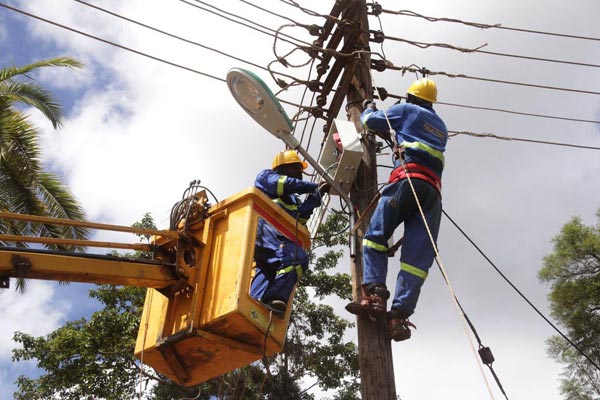
THE Abuja Electricity Distribution Company (AEDC) said it would on Monday, June 3 disconnect some federal government ministries, police force headquarters, army barracks, and other customers over unpaid electricity bills.

Abuja DisCo disclosed this in a notice seen by The ICIR.

The notice reportedly read, “This is to inform the general that AEDC will disconnect all customers with outstanding electricity bills on June 3, 2024.

“Timely payment of electricity bills is crucial for the continued operation and enhancement of AEDC’s infrastructure, ensuring we can deliver efficient and reliable service to our community.”

Other customers billed to be disconnected include the Nigeria Airforce, Kogi and Niger state governments, and the Ministry of Education, among others (see the list below).

The ICIR can recall that in February this year, the Abuja DisCo threatened to disconnect electricity in the Presidential Villa, the Federal Inland Revenue Service (FIRS), and other Federal Government ministries, departments, and agencies over their refusal to pay over N47 billion outstanding debts as of December 2023.

In another publication, The ICIR reported how MDA debts were worsening liquidity in Nigeria’s power sector. This major concern has seen investors turn a blind eye to Nigeria’s privatized power sector.

Full list of the customers to be disconnected:

  • Nigeria Army
  • Nigeria Airforce
  • Defence Headquarters (HQ)
  • Federal Capital Development Authority
  • Kogi State Government
  • Niger State Government
  • Nigeria Police Force HQ
  • Nigerian Army Barracks
  • Federal ministry of industry, Trade and Investment
  • Nigeria Police Force HQ
  • Nigerian Army Barracks
  • Power House
  • Office of the secretary to the government of the federation (SGF) House 1
  • Head of Service
  • Ministry of Education
  • Ministry of women’s affairs
  • Ministry of Industry
  • Ministry of Trade
  • Ministry of Interior
  • Ministry of Water Resources
  • National Stadium
  • Goodluck Jonathan Athletics Hall
  • Ministry of Finance
  • Ministry of Education
  • Ministry of Trade
  • National Planning Commission (budget)
  • Ministry of Works
  • Federal Airport Authority of  Nigeria (FAAN) Abuja
  • All other customers owing AEDC
Electricity workers set for indefinite strike

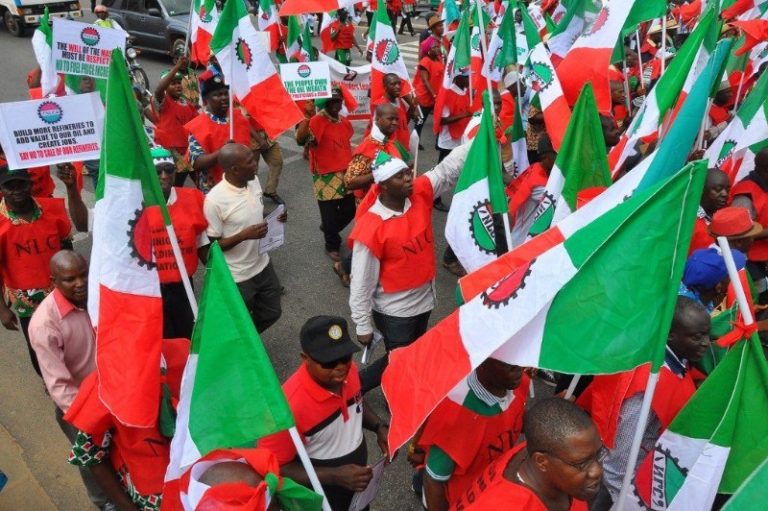
FOLLOWING the announcement of an indefinite nationwide strike by organised labour in Nigeria, the National Union of Electricity Employees (NUEE) has also informed of plans to embark on an indefinite strike starting Monday, June 3, 2024.

In an official letter signed by the union’s Acting General Secretary, Dominic Igwebike the strike is due to the failure of the Nigerian Government to implement and sign into law the new national minimum wage on or before May 31, 2024.

The letter also identified non-reversal of the electricity tariff which was hiked from N65/kWh(kilowatts) to N225/kwh(kilowatts) without consulting the stakeholders as required by the law and apartheid categorization of Nigeria’s electricity consumers into bands” as other reasons for the industrial action.

Igwebike in the letter called on all the executives to mobilise their members to comply with the directive, adding that withdrawal of services becomes effective at midnight on Sunday, June 2.

“Given the above, all National, State, and Chapter executives are requested to start the
mobilisation of our members in total compliance with this directive to ensure the government does the right thing as stated above.

“You are encouraged to work with the leadership of State Executive Councils (SEC) of the Congress in your various states to have a successful action. The withdrawal of services becomes effective Sunday 2nd June by midnight,” the letter read.

The president of the Trade Union Congress (TUC), Festus Osifo, during a joint news conference with the Nigeria Labour Congress (NLC) leadership in Abuja on Friday, May 31, declared a nationwide strike to commence from Monday, June 3, over the federal government’s failure to meet its demand for a new minimum wage.

Meanwhile, the federal government has pleaded with organised labour in Nigeria to reconsider its decision to embark on the strike, noting that whatever the government does is in the interest of Nigerians and the FG has already made an offer of N60,000.

Over 107,000 produced passport booklets uncollected – Immigration boss

0

THE comptroller-general of the Nigeria Immigration Service (NIS), Kemi Nandap, has said that 107,646 produced passports remained uncollected across its offices nationwide.

She disclosed this in a statement issued by the NIS Public Relations Officer, Kenneth Udo, on Friday, May 31 in Abuja.

According to her, efforts by the NIS to contact owners of the available passports have not yielded results.

“Applicants are therefore strongly advised to always provide verifiable addresses and phone numbers when filling their online passport application forms for easy contact, “ Nandap said.

She urged applicants whose passports have been produced to go for pick-up at the various Passports Issuing Centres across the country.

To address the issue, the NIS boss said she had directed that all passport offices in Lagos operate on Saturdays between 9 am to 2 pm.

This is to enable NIS officials to attend to only the applicants coming for the collection of their produced passports,  Nandap said. “Therefore, those concerned are hereby informed to take advantage of this opportunity.”

The Immigration boss’ disclosure came as the service is expected to start delivering passports to applicants’ homes.

The Minister of Interior, Olubunmi Tunji-Ojo, who oversees the activities of the NIS, on May 25 directed the NIS to start home delivery of passports to Nigerians effective from June this month.

The home delivery is to begin in Lagos, Port Harcourt, Kano, and Abuja, as directed by the minister.

The initiative was supposed to have commenced in February, however, some bottlenecks hindered the move according to the minister.

The ICIR in an earlier report showed how difficult it is to get passport as some bad eggs in the NIS are involved in passport racketeering, making Nigerians wait for months to get their passport booklets.

Again, CBN clarifies issues on IOC’s 50% repatriated funds

THE Central Bank of Nigeria (CBN) has further clarified the “Cash Pooling” of repatriated oil and gas export proceeds by International Oil Companies (IOCs).

The CBN had made a similar clarification before, read it here.

Cash pooling is the consolidation of a company’s various bank accounts into a single account or “pool,” which is used to manage the company’s overall cash position, The ICIR can report.

This was contained in a circular it issued to all authorised dealer banks on Friday, May 31.

It said the clarification became necessary following the request it received on the foreign exchange sales at the Nigeria Foreign Exchange Market.

“Following the release of the circular dated May 06, 2024, referenced: TED/FEM/PUB/FPC/001/008, in respect of Cash Pooling by banks on behalf of IOCS, we received several requests for clarification on item No 3(8) on forex sales at the Nigeria Foreign Exchange Market,” CBN stated.

Sequel to its previous circulars and the demands for further clarification, the apex bank said the IOCs could sell a 50 per cent balance of their repatriated export proceeds to authorised foreign exchange dealers.

“The 50 per cent balance of the repatriated export proceeds may be sold to Authorized Dealers or eligible users of foreign exchange with eligible transactions.

“If the IOC does not have any financial obligation to settle with the funds during or after the 90-day retention period, the 50 per cent balance may also be sold wholly as stated in (1) above,”  CBN stated.

Recall, on February 14, CBN issued a directive that stopped IOCs from repatriating 100 per cent of their proceeds offshore to their parent companies as it creates liquidity shortfalls in the Nigeria foreign exchange market.

It then directed IOCs to pool 50 per cent of the repatriated proceeds immediately or when needed and the 50 per cent balance to be repatriated 90 days after the export proceeds’ inflow date.

But in another circular dated May 6, CBN maintained that the initial 50 per cent of the repatriated proceeds could be pooled immediately or as when required.

It added that the 50 per cent balance of the repatriated export proceeds could be allocated to meet financial obligations within Nigeria, as and when required, within the stipulated 90-day period.

In the new clarification guideline, however, the apex bank said the IOCs could sell the balance of 50 per cent of their proceeds to authorised dealer banks.

FG pleads with Labour to reconsider strike action over minimum wage

0

THE Federal Government has pleaded with the organised labour in Nigeria to reconsider its decision to embark on a nationwide strike slated to commence on Monday, June 3.

The plea is coming shortly after organised labour declared an indefinite strike over the failure of the federal government’s failure to meet its demand for a new minimum wage.

The ICIR reported that the president of the Trade Union Congress (TUC), Festus Osifo, announced the strike during a joint news conference with the Nigeria Labour Congress (NLC) leadership in Abuja on Friday, May 31.

In an interview with PUNCH newspaper, the Minister of Information and National Orientation, Idris Mohammed, who spoke on behalf of the federal government pleaded with Labour to join hands with FG to find a solution, adding that the government had made an offer of N60,000.

“The government is pleading with Labour to reconsider its position. The FG has already made an offer of N60,000, and whatever the government does is in the interest of Nigerians. We won’t like to do something that will throw the country into another problem.

“Even as we do that, we are pleading with Labour. They are partners in this project called ‘Nigeria’ and we expect them to join hands with the federal government  as it strives to look for solutions that will take Nigeria to the desired prosperity,” he said

He further said that the tripartite committee was set up to address the need to identify common ground, appealing to the unions not to let all that they have achieved thus far be undermined and expressing hope that an agreement might still be reached with them.

“Our message is that of an appeal and the need for Labour to see reason with the government. That was even the basis for setting up the tripartite committee that was made up of Organised Labour, the sub-nationals and the federal government. This was because the government just didn’t want to make unilateral decisions. In any case, the position on the wage regime is not a one-sided thing.

“We expect that they will see reason with the government. That is why we are calling on them to show understanding by not embarking on the strike because we don’t want that at this point. A strike is not the solution to our problem. We are continuing our negotiation with them. The minister and other stakeholders are still talking to them and we believe that we will find a common ground,” he added.

In January, the federal government inaugurated a 37-member tripartite committee with a mandate to come up with a new National Minimum Wage for the country.

The 37-man committee has members cutting across the federal and state government, private sector and Organised Labour and is chaired by the former Head of the Civil Service of the Federation, Bukar Goni Aji.

AfDB seeks overhaul of African ‘concessional loans’ to avert debt crisis

THE African Development Bank (AfDB) has called for an overhaul of the global financial architecture that will see African countries’ access to ‘concessional loans’ devoid of the debt crisis.

AfDB made the call in its African Economic Outlook 2024 report released on Thursday, May 30.

The report makes bold proposals to reform the global financial architecture.

It states that giving Africa a greater voice in multilateral development banks and international financial institutions reflects the continent’s growing share of global gross domestic product and rich natural resources.

It advocates for reforms to expedite debt workouts and ensure sustainable debt management for Africa, recognising the slow and cumbersome nature of existing debt resolution mechanisms.

The report also calls for innovative market-based solutions like “Brady bonds,” debt relief for climate purposes, and sovereign debt authority systems.

The AfDB further seeks a reform of the Multilateral Development Banks (MDBs), urging for a revision of their business models to provide long-term concessional financing at scale.

It says this will help developing countries bolster their capital positions, channel a portion of the International Monetary Fund’s Special Drawing Rights (SDRs) to MDBs, and ensure a healthy replenishment of the concessional windows of the AfDB and World Bank.

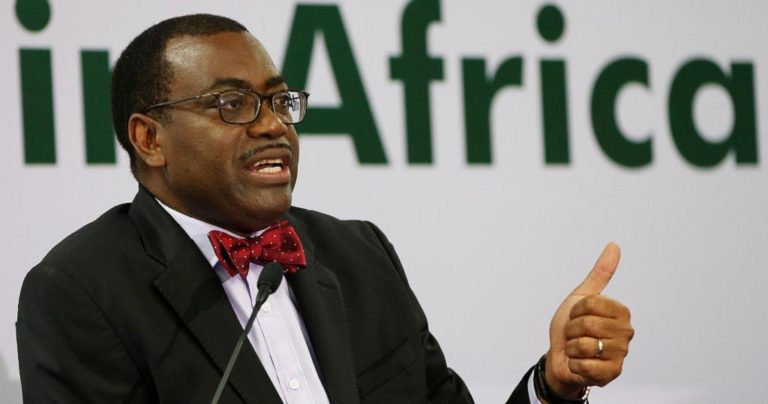
Speaking on the report at the bank’s Annual General Meeting that ended on Friday, May 31, the AfDB President, Akinwumi Adesina, stated, “Let’s be clear. By seeking to transform the global financial architecture, Africa is just asking for a fair share of access and availability of resources to build on our vast economic opportunities.”

He noted that the report highlighted the glaring inadequacies of the current global financial system in closing Africa’s financing gap for structural transformation, estimated at $402.2 billion annually between now and 2030.

To rectify the disparities, Adesina said the report proposed a bold agenda for reforming the global financial architecture, including leveraging private sector financing, simplifying the global climate finance architecture, enhancing domestic resource mobilisation, streamlining debt resolution mechanisms, and reforming the MDBs.

The ICIR reports that the debt situation in African countries has escalated to a critical level as many countries are in, or at risk of, debt distress.

Last year, Ghana defaulted on its debts and Kenya set out to pay back or refinance a $2 billion international bond before June this year.

In Nigeria, the West African Institute for Financial and Economic Management warned that the country was at a high risk of falling into debt distress, urging the government to look for ways of improving revenue generation.

The Governor of the Central Bank of Nigeria, Olayemi Cardoso, had at the joint meeting with the World Bank and IMF in March this year warned the country regarding trends in its borrowing practices.

Harbingers’ Magazine seeks entries for teen journalists

Harbinger’s Magazine is accepting entries for The Harbinger Prize 2024. 

Aspiring journalists, photographers, and multimedia creators, aged 15 to 17, can apply for a global contest.


Read Also:

UN SDG Action Award calls for application

Diaspora Africa offers training on climate migration in Africa

Sir Harry Evans Global Fellowship for Journalists calls for application


On Sept. 30, seven teenagers worldwide will be announced as winners and invited to participate in the Harbingers’ Magazine project in the 2024/25 academic year, with an option to invite up to two friends.

One person will be named the winner of The Harbinger Prize 2024 and invited on an individual reporting trip with a mentor from the OXSFJ.

The deadline is Aug. 1.

To apply sign up for Harbinger Weekly Brief here

Application for Ian Parry Photojournalism grant opens till August

The Ian Parry Photojournalism Grant aims to help young documentary photographers undertake a chosen project and raise their international profile.

Photographers under the age of 24 and those enrolled as full-time photography students can apply for grant awards.


Read Also:

Sir Harry Evans Global Fellowship for Journalists calls for application

Diaspora Africa offers training on climate migration in Africa

UN SDG Action Award calls for application


This year’s contest features two prizes: the Tom Stoddart Award for Excellence and the Ian Parry Photojournalism Grant.

Each winner will receive GBP10,000 (US$12,706), Canon photo equipment and more. 

There is no entry fee. Entrants must submit a portfolio and proposal of a project they would undertake if they won the grants.

The deadline to apply is August 31, 2024. 

To apply click here

About 7m Africans aged 13 to 15 use tobacco – WHO

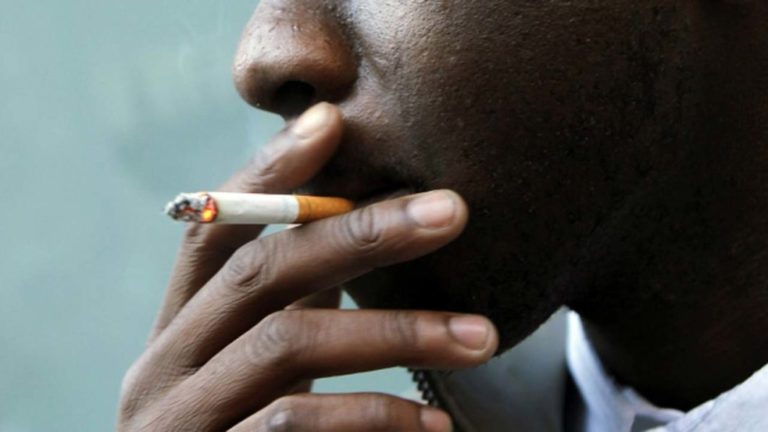
ABOUT seven million Africans aged 13 to 15 use tobacco, data by The World Health Organisation WHO) show.

A statement by the WHO to commemorate 2024 World No Tobacco Day on May 31, indicates that 11.1 per cent of boys and 7.2 per cent of girls in this age group are active tobacco users.

This was as WHO noted that more than 37 million young people aged 13 to 15 use tobacco globally.

World No Tobacco Day, observed annually on May 31, aims to raise awareness about the health risks associated with tobacco use and advocate for effective policies to reduce its consumption. 

This year’s campaign has the themed “Protecting children from tobacco industry interference.”

In her message, the WHO’s Regional Director, Matshidiso Moeti, said the theme is aimed at mobilising international efforts to shield youths from harmful tobacco and nicotine products. 

Moeti quoted the global health organisation’s Director-General, Tedros Ghebreyesus,  highlighting that “tobacco use is declining in 150 countries, and there are now 19 million fewer smokers globally than there were two years ago.”

The regional director also disclosed that about 1.3 million people die from second-hand smoke every year, adding that these deaths are entirely preventable. 

“People exposed to second-hand tobacco smoke are at risk of dying from heart disease, stroke, respiratory diseases, type 2 diabetes, and cancers,” she added.

Tobacco use among adults in Africa declines from 14.9 per cent to 9.5 per cent since 2010

While speaking on the trends of tobacco usage in the last decades, the WHO Africa regional director, revealed that the prevalence of tobacco use among adults in the region declined from 14.9 per cent in 2010 to 9.5 per cent in 2023. 

According to her, the 2023 WHO Global Report on Trends show that 22 countries in the African region are on track to achieve a 30 per cent reduction by the year 2025 relative to 2010 rates. 

She also stated WHO and other UN agencies and governments supported over 5,000 tobacco farmers in Kenya and Zambia to switch to alternative crops.  

“We also know that the tobacco industry isn’t just in the business of producing, marketing, and selling tobacco products. It also spends considerable time and funds promoting misleading science, lobbying, and performing so-called corporate social responsibility activities.

“These tactics are meant to attract young people and to influence policies to favour its commercial interests over public health.” he said.

WHO advocates more efforts

On addressing the barriers to effective response and protecting Africa’s young people from tobacco use, Moeti said more efforts were still needed to stop the tobacco industry’s relentless efforts to market its products to young people.

She further urged member states in the African region to step up their efforts to protect young people from tobacco industry interference by:

.Ensuring governments honour and abide by their obligations under WHO FCTC Article 5.3 by introducing safeguards to protect tobacco-control policy from tobacco industry interference.


READ ALSO:


.Countering tobacco industry tactics through evidence-based arguments and best practices with full involvement of civil society organisations.

.Raising awareness among the public on the tactics of the tobacco industry; and

.Exposing industry efforts to target youth and attract generations of people with addiction through innovative approaches, including marketing new and emerging products and using flavours.

Moeti added that countries should enforce a 100 per cent ban on public smoking and vaping, and apply excise taxes to reduce consumption.

Labour declares nationwide strike over minimum wage

0

THE organised labour in Nigeria has declared a nationwide strike commencing from Monday, June 3, over the federal government’s failure to meet its demand for a new minimum wage.

The president of the Trade Union Congress (TUC), Festus Osifo, announced the strike during a joint news conference with the Nigeria Labour Congress (NLC) leadership in Abuja on Friday, May 31.

The labour leaders stated that they took the decision after their ultimatum for the federal government to finalise all negotiations for a new minimum wage by the end of May expired.

The ICIR reported that the federal government on the eve of Workers’ Day (April 30) announced that it had approved a salary increase of between 25 per cent and 35 per cent for civil servants on the remaining six Consolidated Salary Structures.

The federal government also approved pension increases of between 20 per cent and 28 per cent for pensioners on the Defined Benefits Scheme in respect to the six consolidated salary structures with effect from January 1, 2024.

However, reacting to the development, Ajaero said that organised labour agreed on N615,000 as the living wage for civil servants.

Giving the breakdown of the figure, he said “We have housing and accommodation of N40,000. We asked for electricity of N20,000 — of course, that was before the current tariff increase. Nobody can spend this amount currently. We have a utility that is about N10,000. We looked at kerosene and gas which is about N25,000 to N35,000.

“We looked at food for a family of six, that is about N9,000 in a day. For 30 days, that is about N270,000. Look at medical, N50,000 provided there will be no surgery or whatever.

Ajaero also stated that N20,000 was allocated for clothing, N50,000 for education, and N10,000 for sanitation.

He said another bulk of the money was for transportation, noting that the workers were on the fringes because of the cost of PMS, which amounted to N110,000.

“That brought the whole living wage to N615,000 and I want anyone to subject this to further investigation and find out whether there will be any savings when you pay somebody on this rate.”

While addressing the concerns raised by the NLC, the federal government stated that although the Tripartite Committee on National Minimum Wage was yet to conclude its negotiations, workers would not incur any losses.

However, there has been deadlock between the organised union and the Tripartite committee, with labour pulling out of the negotiation.

The union also rejected two federal government offers, with the latest being the offer to pay N60,000 as a minimum wage.