Home Blog Page 58

MacArthur Foundation launches Nigeria Next grants to boost youth digital inclusion, civic engagement

0

THE MacArthur Foundation has unveiled a new grantmaking initiative, Nigeria Next, aimed at expanding digital inclusion, innovation, and civic participation among young people in Nigeria.

The initiative, announced as part of the foundation’s broader programmes in the country, will fund projects that promote access to technology, strengthen media and civic spaces, and support policies designed to empower youth and improve economic opportunities.

The foundation noted that while Nigeria’s large youth population presents both an opportunity and a challenge, only a small proportion possess the digital skills required to participate fully in the modern economy.

It added that young Nigerians remained underrepresented in global conversations around emerging technologies such as AI, highlighting the need for targeted investment in skills, access, and policy engagement.

According to the foundation, the initiative will provide support for research, advocacy, training, convenings, and pilot projects focused on equipping young Nigerians with digital tools and skills while fostering creativity and innovation.

“Nigeria Next aims to foster digital inclusion, creativity and innovation, civic participation, and evidence-backed policies to empower Nigeria’s young people and expand their economic opportunity. By empowering the nation’s young people, we can drive social and economic change in Nigeria while helping build a free and prosperous future,” the foundation stated.

Four priority areas

The Nigeria Next initiative will focus on four key areas bordering on digital inclusion, creativity and innovation, civic participation, and research and policy analysis.

Under digital inclusion, the grants is expected to target efforts that address barriers to technology access, including affordability, safety, and gaps in artificial intelligence (AI) knowledge.

In the area of creativity and innovation, the foundation said it would support hubs, incubators, and collaborative workspaces aimed at driving economic transformation and workforce development.

The civic participation component will prioritise strengthening journalism and media ecosystems, amplifying youth voices, and promoting digital citizenship to counter authoritarian tendencies online.

Additionally, the programme will fund research and policy analysis to support evidence-based government policies that prioritise youth empowerment, particularly in the technology sector.

Shettima highlights vision for youth empowerment

Speaking on the initiative in a separate statement, director of the foundation in Nigeria, Kole Shettima, said the programme was designed to invest in young Nigerians as drivers of social and economic change.

He noted that many young people, despite limited resources, were already using digital tools to amplify their voices and participate in civic life, citing examples of youth engagement during recent social movements.

“I met Balkisu, a TikToker from the quiet town of Bauchi in Northeast Nigeria, during the #EndBadGovernanceInNigeria movement in 2024. After high school, Balkisu could not attend college due to financial constraints.

“Coming from a large family with competing priorities, her parents could not afford the expense of higher education. Still, Balkisu considered herself fortunate: she had access to a smartphone and one meal a day—luxuries that many of her peers lacked. Balkisu’s story embodies the hopes and aspirations of our new grantmaking initiative: Nigeria Next,” Shettima said.

He explained that the initiative was shaped through consultations across multiple Nigerian cities, including Abuja, Lagos, Kano, Enugu, Port Harcourt, Bauchi, Maiduguri, and Kafanchan, where the foundation engaged young people, civil society actors, and experts to better understand their needs.

He emphasised that Nigeria Next would focus on removing barriers to digital access, supporting creative ecosystems, and strengthening civic spaces where young people can actively contribute to governance and national development.

He added that the programme reflected a deliberate shift from viewing young people as challenges to recognising them as assets capable of reimagining Nigeria’s future.

“As Africa’s most populous country, Nigeria is a dynamic centre for innovation in finance, technology, agriculture, civic tech, and creative industries. The so-called ‘youthquake’—a term used by scholars and commentators—captures the profound impact of young Nigerians. From breakthroughs in Lagos’ tech scene to the global reach of Nollywood and Afrobeats, their ingenuity is unquestionable.

“Young people are also reimagining civic engagement, pioneering new forms of organisations and activism on issues such as clean energy, climate change, democracy, transparency, accountability, and sexual and gender-based violence,” he explained further.

 

Court orders arrest of PDP factional chair Turaki

0

A HIGH Court of the Federal Capital Territory (FCT) sitting in Maitama, Abuja, has issued a bench warrant for the arrest of the factional national chairman of the Peoples Democratic Party (PDP) Kabiru Turaki, after he failed to appear in court for his arraignment in a criminal case filed by the Inspector-General of Police (IGP).

The presiding judge, Peter Kekemeke, gave the order on Thursday, March 26.

He held that Turaki, a former minister, had no justification for his absence despite being duly notified of the proceedings.

The police had instituted a one-count charge against Turaki, accusing him of providing false information in a petition dated October 5, 2022.

According to the charge, Turaki allegedly gave misleading information to the IGP against one Saidi Mohammed Mainasara with the intent of using the police’s lawful authority to cause harm or annoyance.

The police linked the development to an offence punishable under Section 140 of the Penal Code.

When the matter came up, prosecution counsel, Usman Rabiu, informed the court that the case was scheduled for the defendant to take his plea.

He noted that Turaki had been served both the charge and a hearing notice but failed to attend court.

Rabiu subsequently urged the court to invoke Section 396(2) of the Administration of Criminal Justice Act (ACJA), 2015, and issue a bench warrant to compel the defendant’s appearance.

The prosecution also opposed the defence’s reliance on a pending motion seeking to quash the charge, arguing that such an application could only be entertained after the defendant has been arraigned and his plea taken.

Responding, defence counsel, Abdulaziz Ibrahim, a senior advocate, argued that his client had already filed a motion challenging the validity of the charge and maintained that Turaki’s presence in court was not necessary until that application was determined.

He further requested additional time to file written addresses to support the motion.

However, the judge rejected the defence’s position, ruling that the application to quash the charge was premature and could not be heard before arraignment.

Kekemeke observed that the defence did not deny that Turaki had been served with the relevant court processes but failed to provide any reasonable explanation for his absence.

Citing the provisions of Section 396(2) of the ACJA, the court held that where a defendant who is aware of a pending charge deliberately fails to appear, the appropriate step is to issue a bench warrant to secure his attendance.

The judge consequently ordered Turaki’s arrest to ensure he appears before the court to answer to the charge and adjourned the matter till April 22 for his arraignment.

Earlier proceedings

The ICIR reports that the defendant was initially scheduled for arraignment on January 28, but the hearing could also not go on because he did not appear in court.

During the session, the prosecution informed the court that Turaki was expected to be present, in line with a prior summons issued by the court and urged the judge to issue a bench warrant for his arrest.

In response, defence counsel explained that his client was absent due to a letter sent to the Chief Judge of the FCT High Court, requesting that the case be reassigned to another judge.

The lawyer also noted that a petition had been filed questioning the court’s impartiality.

However, the court held that such a petition did not automatically halt criminal proceedings unless the Chief Judge issues a directive to that effect.

Kano mother of quintuplets dies from bleeding

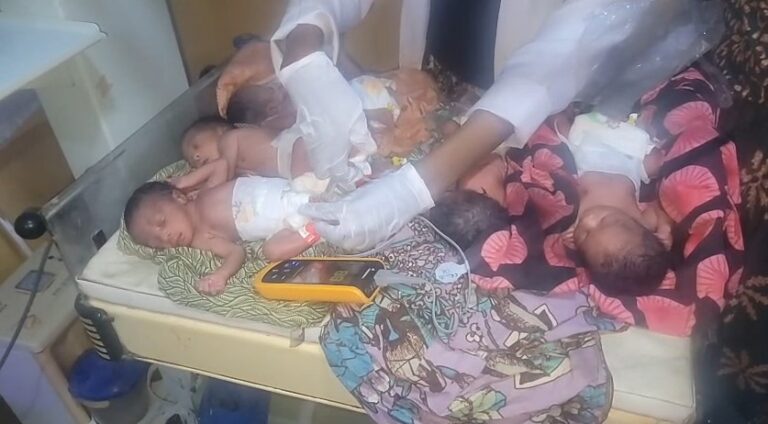
A WOMAN in Kano, Hafsatu Yusuf, who recently gave birth to quintuplets at Murtala Muhammad Specialist Hospital, has died.

The Public Relations Officer of the Kano State Ministry of Health, Nabilusi Abubakar K/Na’isa, confirmed the development in a telephone interview with Punch on Thursday.

He said the woman breathed her last at about 2 a.m. at the hospital.

“She had been bleeding since after delivery, and all efforts by doctors to control the situation were unsuccessful,” he said.

According to K/Na’isa, Yusuf suffered prolonged bleeding following the delivery of her five babies, and despite efforts by medical staff to stabilise her, she could not be saved.

He said the newborns were in stable condition and were receiving medical care at the facility.

The ICIR reports that the late mother had her babies, three boys and two girls, at the Murtala Muhammad Specialist Hospital, Kano on Wednesday. The state government had assumed responsibility for their medical care.

The State Ministry of Health had announced in a statement on Wednesday that both the mother and the newborns were receiving specialised medical attention at the facility.

The woman’s husband, Salisu Nufi’u, a tricycle rider, expressed gratitude to the state government for its intervention, describing it as timely support.

Quintuplets, five babies born from a single pregnancy are extremely rare and typically require intensive medical attention due to the high risks associated with multiple births.

In 2024, Onyebuchi Christian Elendu in Port Harcourt, Rivers State delivered quintuplets after a difficult pregnancy. The births gained attention locally because of the emotional and medical challenges involved.

In a similar development, in 2022, Ewanle Omage’s welcomed quintuplets in 2021.

Medical experts have emphasised that multiple-birth babies often require close monitoring, as they are more likely to be born prematurely and might face early health challenges, as the emotional strength of the parents, combined with professional medical support, continues to play a crucial role in the survival and well-being of the children.

Middle East crisis: Trump insists Tehran seeks deal, Iran refutes claim

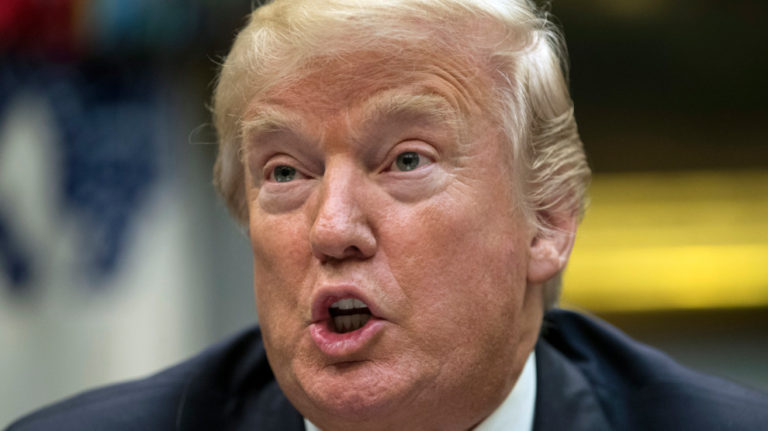
UNITED States President Donald Trump has insisted Tehran is seeking a deal to end nearly a month of intense fighting.

Trump stated this just hours after Iran Foreign Minister Abbas Araqchi claimed his country was only reviewing a US ceasefire proposal. Araqchi said his nation was not negotiating and had no plans to enter talks to end the war.

However, the US president maintained his earlier stance, noting that Iranian leaders were already negotiating behind the scenes. He suggested they were eager for a deal but too fearful to admit it publicly, warning they faced threats both internally and from the United States.

An Iranian embassy official in Islamabad said talks in Islamabad were still on the table and Pakistan was the preferred destination for Tehran, although nothing had been finalised.

According to Reuters, the US proposed a 15-point for negotiation, reportedly delivered via Pakistan. The plan calls for Iran to reopen Hormuz, dismantle its highly enriched uranium stockpiles, curb its missile programme, and cut support for regional allies.

However, Israeli officials doubt Iran will accept such terms and fear US negotiators may soften their stance. Israel is also pushing to retain the right to launch pre-emptive strikes under any agreement.

The ICIR reported that Iran launched multiple waves of missile strikes on Israel on Tuesday, hours after Trump declared a five-day ceasefire.

Trump had said the US was in talks with Iran but Iran’s Parliament Speaker, Mohammad Baqer Qalibaf, whom an Israeli official and two other sources identified as the Iranian-side interlocutor in the talks, wrote on X that no negotiations had taken place.

Iran’s elite Revolutionary Guards (IRGC) said they were launching new attacks on US targets, dismissing Trump’s remarks as “psychological operations” that were “worn out” and had no effect on Tehran’s campaign.

This latest development underscores the worsening trends in a conflict that erupted on February 28, where thousands have been killed across the Middle East following coordinated US-Israeli strikes on Iran. Tehran has repeatedly retaliated with attacks on Israel, US bases, and Gulf nations.

Leadership in Iran has also been thrown into turmoil as Supreme Leader Ayatollah Ali Khamenei was killed in an early Israeli strike, with his son Mojtaba stepping in, though he has since been wounded and largely unseen.

Meanwhile, the closure of the Strait of Hormuz, through which roughly 20 per cent of the world’s oil passes has triggered what analysts are calling the worst energy shock in modern history. Fuel shortages are spreading globally, supply chains are buckling, and governments are considering emergency measures reminiscent of the COVID-19 era.

The ICIR reported that Trump’s decision to step back had earlier lifted equities and pushed oil prices sharply below $100 a barrel, reversing a market slump triggered by his weekend threats and Iran’s warnings of retaliation, but those gains came under pressure on Tuesday after Iran’s parliament speaker denied that any negotiations had taken place, casting doubt on the market’s earlier optimism.

On Tuesday, US Treasury yields climbed and the dollar recovered as markets continued to absorb the shock of energy supply risks tied to Iran’s threat to shipping in the strait.

Brent crude futures rose 4.2 per cent to $104.21 a barrel, rebounding from a roughly 10 per cent drop the previous day, while US crude gained 4.3 per cent to $91.93 per barrel.

ENDSARS: Pelumi Onifade’s case stalls as LASUTH fails to produce key report

The long-running inquest into the death of Nigerian journalist Pelumi Onifade suffered another setback on Tuesday after the Lagos State University Teaching Hospital (LASUTH) failed to comply with a court order to produce a crucial report on an unidentified body linked to the case.

Consequently, Magistrate Temitope Oladele of the Lagos State District Coroner’s Court adjourned the proceedings to April 7, 2026.

She granted LASUTH what she described as a “final opportunity” to submit findings on a body tagged ‘1385.’

These were contained in a statement by Media Rights Agenda on Wednesday, March 25, signed by its Communications Officer, Idowu Adewale.

Part of the statement reads, “The Coroner Court investigating the death of Mr Pelumi Onifade, a young journalist with Gboah TV, who was reportedly shot while covering the #EndSARS protests on October 24, 2020, has adjourned the matter to April 7, 2026, following the failure of the Chief Medical Director (CMD) of the Lagos State University Teaching Hospital (LASUTH) to comply with the Court’s order to produce a report on the whereabout of an unidentified body tagged 1385 which LASUTH was said to have been received from the Ikorodu General Hospital on November 3, 2020 and conducted post-mortem examination on later that month.”

The ICIR reported in 2025 that the court ordered the hospital to release necessary documents relating to the deposit, release or current status of the journalist remains within seven days of receipt of the order to representatives of the MRA, following an application by MRA’s lawyer.

According to MRA, the order, first made on November 18, 2025, directed LASUTH to produce “a comprehensive and specific report” relating to the body.

After repeated failure by LASUTH to produce the report, on March 3, 2026, the MRA’s counsel, Alimi Adamu observed that the order was directed generally at LASUTH and not to any specific official of the hospital, which would make enforcement difficult, and applied for a fresh order directed specifically to the CMD. 

The judge granted the application and issued a fresh order directing the chief medical director “to give a report of the body with the tag number 1385 said to have been received on behalf of LASUTH on 3rd November 2020 from Ikorodu General Hospital, within fourteen (14) days of receipt of this order.”

When the matter came up on March 24, the hospital did not produce the report and was not represented in court by any official or lawyer, the MRA said.

The organisation urged the court to invoke enforcement by issuing a “Form 48”, a legal notice requiring the CMD to show the reason a contempt proceeding should not be initiated against him, due to the frustration by the repeated non-compliance.

“Although Mr. Alimi Adamu, lawyer to Media Rights Agenda (MRA) and the Onifade family, applied to the court to issue a “Form 48” (notice to show cause why order of court should not be enforced by committal proceedings) against the CMD for the continued disobedience of the court’s order in the light of the hospital’s repeated failure to produce the report, the investigating magistrate, Mrs Temitope Oladele, said she wanted to give the medical director a final opportunity to comply with the order.”

Adewale explained that Oladele declined the second application and directed the legal team to follow up with LASUTH to ensure compliance before the next hearing.

The ICIR reported that Onifade, a young reporter with Gboah TV, was allegedly shot while covering protests against police brutality in October 2020. His death became one of the most troubling cases linked to the nationwide demonstrations that called for an end to abuses by security forces.

The coroner’s inquest stemmed from a landmark ruling delivered on July 19, 2024, by Ayokunle Faji, a judge of the Federal High Court in Lagos. In that judgment, the court ordered the Lagos State Government to investigate Onifade’s death, identify those responsible, and ensure they are prosecuted.

The suit, filed by MRA, had challenged both the police and the Lagos State Government over what it described as a failure to properly investigate the killing.

For Onifade’s family and press freedom advocates, the continued delays now compounded by LASUTH’s failure to comply with court orders highlight the persistent obstacles to justice in cases involving state institutions.

As the court reconvenes in April, attention will once again turn to whether LASUTH will finally produce the report that could shed light on the fate of body “1385”—and possibly bring the country closer to answers in a case that has lingered unresolved for over five years.

FG benefits more from naira-for-crude deal than Dangote – Official

0

The Chief Executive Officer (CEO) of Dangote Petrochemical Refinery, David Bird, said on Wednesday that the Federal Government is the primary beneficiary of the Naira-for-crude swap deal, highlighting foreign exchange gains from the strengthening of the naira as the government’s main advantage.

Bird, who disclosed this on Arise Television’s “The Morning Show”, argued that the federal government had made more money from the deal, which has ensured foreign exchange stability and de-dollarisation of the economy, and strengthened the naira.

“Crude-for-Naira is not there to benefit the Dangote Refinery. The deal is to provide resilience to foreign exchange. It is for the benefit of the country to process domestic crude in a domestic currency, “Bird said.

He affirmed that the swap deal helped the Nigerian economy to rely less on dollars for its transactions and stabilise the foreign exchange market, which had previously experienced volatility.

“The deal wasn’t put in place to benefit Dangote Refinery, as we still purchase at international crude rates and at international pricing template, although without foreign exchange problems, “Bird stated.

The CEO further expressed regret over the inability of the Nigerian government to meet its domestic crude allocation contract-agreement, despite paying the international benchmark pricing cost.

“The government needs to be more transparent in its crude allocation to the company to meet domestic consumption. Currently, we get five cargoes monthly allocation as against 13-15 cargoes monthly pre-agreed contract. The 13-15 cargoes monthly is what is required to meet the domestic consumption, which we are not getting currently,” he stated further.

Bird explained that the shortfall from the government had prompted the company to buy at a higher cost at the international crude market, while urging the government to maintain the pre-contract agreed terms on crude allocation.

“Not only do we not get the full pre-contract allocation, but we also don’t get the crude grade preferences. However, given our preference for Nigerian grades, we find them at a $18 higher price premium in the international crude market despite being denied the full domestic allocation at home.

He noted that the global test for crude had given much preference for the Nigerian crude in the international market

He suggested that the Nigerian National Oil Company should have more strategic reserves in partnership with industries to think ahead to manage uncertainties like the United States-Iran War.

“Disruptions in supply chains are conversations that must be sustained in gas, coal, critical minerals and the government has to lead the role in thinking the unthinkable.

The ICIR reports that the United States-Iran conflict has put intense pressure on Nigerians buying fuel at an average of N1,400 currently in several parts of the country.

According to oilprice.com brent crude currently sells for $100 per barrels leaving more money in the hands of the Nigerian government, with most Nigerians tightening their belt to adjust to the rising transport and food costs.

This is even as Nigerians continue to seek pricing-relief from the government, with transport costs and other logistics going higher by the day.

Experts dismiss Adelabu’s pledge to fix electricity in two weeks

NIGERIANS may have to wait longer for solutions to epileptic power supply in the country, despite the two-week assurance from the Minister of Power, Adebayo Adelabu.

Some power sector governance experts who spoke against the backdrop of the minister’s assurance said there were no quick remedies to Nigeria’s power sector problems.

On Tuesday, March 24, the minister of power, whose performance has been rated very low by Nigerians, apologised for the poor power supply and promised that the problems would be solved in two weeks.

“I want to apologise, coming from me as a minister of power, for this temporary issue that is leading to hardship being experienced,” he said.

Adelabu said the apology was necessary given the dry season, which has caused extreme heat and disrupted businesses, schools, and industries.

He said the Federal Government had taken decisive steps to address persistent gas supply challenges in the power sector, noting that the Middle East tension had created a market for Nigerian gas companies, as they are uninterested in vending to the Nigerian power sector due to indebtedness as a result of over N6 trillion debt.

The Minister’s assurances have raised several unanswered questions about the sector, which has been crawling and riddled with debts despite privatisation.

A power sector governance expert, Dan Kunle, believes the minister speaks theory and his knowledge about the sector is not deep enough.

“The crisis was building up since 2015 when the electricity tariffs were frozen for several years, and investors left. Even GENCOs at some point declared force majeure because of growing debts. The producers of gas are handicapped as they need a firm gas-take-and pay contract agreement that is irrevocable.”

Kunle said the gas debts were signs that gas offtake agreements were not honoured and had accumulated over time, worsening the current power problems.

He argued further that the privatisation of the power sector wasn’t properly sustained post -privatisation with the government freezing tariff severally for political reasons, which scared investors.

He stressed the importance of privatising the Nigeria Gas Company to operate on a business basis level.

“Manitoba, which has the concession to manage TCN left back to Canada and TCN has been underperforming. It’s a value chain problem in the power sector. No quick fixes, and we must do the right thing,” he stressed.

Kunle believes that the entire electricity structure has to be overhauled.

Another power sector governance expert, Kunle Kola Olubiyo, told The ICIR that the inability of the Nigerian government to honour debt obligations to the power generation companies remained a major concern for the sector.

“The gas producers are owed arrears of about N6 trillion. This is even the cost of gas already supplied and sold to gas thermal and gas fired power generation plants. The gas producers said they were not willing to sell more gas to the electricity sector because of violations of gas take-off contracts,” he stated.

Despite privatisation, the Nigerian Independent System Operator (NISO) has not released more than 5000 megawatts of power to distribution companies over time.

The ICIR reports that the 11 power Distribution Companies (DisCos) on Tuesday, March 24, received 2,793 Megawatts(MW) of electricity from the Nigerian Electricity Supply Industry (NESI).

A breakdown of the 2,793MW sent by Nigerian Electricity Supply Industry (NESI), the nation’s power system operator, showed Abuja DisCo receiving 503MW. It was followed by Ikeja DisCo, 497MW; Eko DisCo, 424MW; Ibadan DisCo 314MW; Benin DisCo, 212MW; Enugu DisCo, 203MW; Port Harcourt DisCo, 183MW; Kano DisCo, 142MW; Kaduna DisCo, 133MW; Jos DisCo, 119MW; and Yola DisCo 63MW.

Police arrest man for shouting ‘no water, no light’ during Bago’s Suleja visit

0

THE NIGER State Police Command has confirmed the arrest of a 38-year-old Suleja resident, Hamisu Abdullahi, after he protested the lack of basic amenities during a visit by the state Governor Mohammed Bago.

The incident occurred at the Emir of Suleja’s palace shortly after Eid-el-Fitr prayers, where the man was said to have shouted “no water, no light” in the presence of the governor.

According to report, police spokesperson, Wasiu Abiodun, a superintendent of police, said the suspect was taken into custody for actions considered capable of disrupting official activities during the Sallah visit.

“One Hamisu Abdullahi, 38, of Suleja, was arrested and transferred to the State Criminal Investigation Department (SCID), Minna, on March 20, 2026, for suspected thuggery and attempting to disrupt government activities during the Sallah visit,” he said.

Abiodun added that Abdullahi was later granted bail while investigations into the matter continued.

Confirming his release, the suspect’s brother said Abdullahi regained freedom Tuesday evening after spending several days in detention.

Abdullahi, an electrician and father of four living in Unguwan Bayi area of Suleja, was initially held at the Suleja police division before being moved to the State Criminal Investigation Department in Minna.

He alleged that he paid N50,000 to secure his release, according to a report by Sahara Reporters.

“I was released on bail on Tuesday evening. The police at the CID office police headquarters collected N50,000 from me for bail, and I was locked up at the Suleja police division the very day the incident happened on the orders of Bago before I was moved to CID in Minna on Saturday,” he said.

He further stated that he had been directed to report back to the police headquarters in Minna as part of his bail conditions.

Abdullahi also claimed that he was physically assaulted by one of the governor’s aides at the scene before his arrest.

“An aide to the governor slapped me in the presence of the governor the day the incident happened at the Emir’s palace before asking police to take me into their custody,” he further alleged.

The Chief Press Secretary to the governor, Bologi Ibrahim, said he was not aware of the incident when contacted.

The ICIR reports that Bago has faced significant criticism and allegations of misuse of power, particularly on issues bothering on media freedom, handling of dissents, and authoritarian behavior.

Key instances include his closure of Badeggi FM Radio in August 2025. accusing it of inciting the public against his administration. This action was condemned and viewed by civil society organisations, including Amnesty International and Nigeria’s leading opposition party – the African Democratic Congress (ADC) as an attack on press freedom.

The governor ordered security operatives to seal the station and revoke its license without going through the National Broadcasting Commission (NBC) legally designated with such power.

A video circulated in July 2024 showing the governor ordering his security detail to slap and arrest an Islamic cleric during a ceremony in Minna. This sparked outrage, with many viewing it as a clear abuse of power and a violation of human rights.

Reports have highlighted the arrest of citizens, including a student, for criticising the governor on social media. A former All Progressives Congress (APC) gubernatorial aspirant was reportedly detained for over two weeks in November 2025 following criticism of the state’s agricultural policies.

The International Press Institute (IPI) Nigeria added Bago to its “Book of Infamy” for actions deemed detrimental to journalism, specifically for crackdown on the media.

These actions have prompted calls for intervention from civic groups, including petitions to the United States government requesting a visa ban and the freezing of the governor’s assets, citing a “persistent pattern of human rights violations” and “disregard for democratic principles”.

Earlier this week, the International Press Institute Nigeria called on Bola Ahmed Tinubu to caution the governor over actions it said could negatively affect press freedom.

In a statement signed by its Deputy President, Fidelis Mbah, and Legal Adviser, Tobi Soniyi, the organisation expressed concern that recent developments in the state might limit the ability of journalists and media organisations to carry out their duties.

EFCC evicts Malami, family from Abuja residence amid court battle

0

Former Attorney-General of the Federation, Abubakar Malami, has accused the Economic and Financial Crimes Commission (EFCC) of violently ejecting him and his family from their Abuja home.

He described the action as a blatant disregard for due process, given the ongoing litigation between him and the Nigerian government.

Addressing journalists on Tuesday, Malami said EFCC operatives invaded his Maitama residence on Monday and returned the following day with heavily armed reinforcements to complete what he termed a “forceful and unlawful takeover.”

“Yesterday, without further recourse to the court, without seeking an order to seal my properties, without seeking an order to evict my family members and me from the property, without seeking a court order for the appointment of a receiver manager, the EFCC came to effect a forceful eviction. They were unable to conclude the process yesterday and reinforced this morning with a lot of personnel that are armed and indeed forcefully took over possession of my family residence,” he said.

Malami explained that the property, his family home at No. 2 Koronakh Close, off Amazon Street, Maitama, was linked to an interim forfeiture order granted on January 6, 2026, insisting that the order did not empower the EFCC to remove occupants or assume immediate possession.

“The most interesting part of the order was that there was no clear directive or instruction… that the premises would be taken over forthwith or perhaps is being sold, or perhaps evicting the occupants,” he said.

He said he had challenged the forfeiture at the Federal High Court, with the matter adjourned to April 20, 2026. He stressed that the commission’s actions risked undermining judicial authority.

“It is only natural, logical and judicial that no party is expected to overreach by taking unilateral steps that would place a court in a situation of purposelessness. Execution of court orders and processes is an exclusive function of court bailiffs and sheriffs… and is not in any way the prerogative of a party to the litigation,” he stated.

Malami further argued that only court-appointed bailiffs, not litigants are legally empowered to enforce such orders, describing the EFCC’s conduct as “judicially unprecedented” in Nigeria’s legal system.

He alleged that the decision could have political undertones since the incident occurred shortly after his release from detention and amid a surge of public support and visits.

“The fact that these things happen at a time when I was receiving tremendous goodwill messages… can certainly be a basis for people to insinuate perhaps political persecution,” he said.

The former minister vowed to challenge the eviction in court, insisting that legal remedies would be pursued to address what he called an abuse of power.

Meanwhile, the EFCC spokesperson, Dele Oyewale, pushed back against Malami’s claims when contacted by The ICIR.

He said the operation was lawful and grounded in a valid court order.

“He was not forcefully ejected. His family was not forcefully ejected. What the commission did and is still doing is to enforce Section 5 (B) of the Process of Crime Act, POCA, which allows for possession of property that is forfeited by a court order. So, 57 of such properties were forfeited by a court order.

“It’s an interim forfeiture order. And what the commission is doing is to give effect to that section of the POCA Act,” Oyewale added.

Responding to Malami’s claim that the matter was still before the court and should not have been enforced, the EFCC maintained that the existence of an ongoing case would not invalidate a standing court order.

“As long as that court order is subsisting and there is no contrary order of the court against it, it is still standing. There is a forfeiture order. If there is an order of the court, if that order has not been factored, if that order has not been reversed, it is subsisting. So, I don’t know what he’s talking about,” he added.

Oyewale also questioned whether Malami had secured any counter-order nullifying the forfeiture, arguing that without such legal reversal, the commission was within its rights to act.

The ICIR reported that Malami served as the AGF from 2015 to 2023 under the late President Muhammadu Buhari, where he became one of the most influential figures in the cabinet and a central actor in several major legal and political decisions.

He was also widely regarded as one of Buhari’s most loyal allies, often defending controversial government policies and legal actions. Malami was also central to the administration’s alleged selective anti-corruption drive, with critics accusing him of selective prosecution and political interference.

His tenure courted controversies, including allegations of financial irregularities, handling of recovered looted funds and legal interpretations that shaped the Buhari administration’s posture on human rights and press freedom.

In 2020, he was accused of interfering in the prosecution of some high cases such as the Malabu Oil case, former Senate President Bukola Saraki and former Gombe State Governor, Danjuma Goje.

Also in August 2020, a coalition against corruption called on Buhari to probe Malami for allegations ranging from financial sleaze involving him and his family to influence peddling.

Recall that shortly after leaving office in August 2023, the Independent Corrupt Practices and other related offences Commission (ICPC) probed him over allegations of corruption and abuse of office.

IWMF seeks entries for Elizabeth Neuffer Fellowship

THE International Women’s Media Foundation (IWMF) seek applications for the 2027 edition of the Elizabeth Neuffer Fellowship.

The Fellowship provides academic and professional opportunities to advance the reporting skills of women and nonbinary journalists who focus on human rights and social justice.

The Fellowship was created in memory of The Boston Globe correspondent and IWMF Courage in Journalism Award (1998) winner Elizabeth Neuffer, who died while reporting in Iraq on May 9, 2003.

In collaboration with Neuffer’s family and friends, the IWMF started this fellowship to honour Neuffer’s legacy while advancing her work in the fields of human rights and social justice.

The programme is designed for women and nonbinary journalists with at least three years of professional experience in journalism working in print, broadcast, or digital media, either as a staff journalist or as a freelancer.

Organiser says, “All nationalities are welcome to apply, but non-native English speakers must have excellent written and verbal English skills in order to fully participate in and benefit from the programme”.

The fellow will complete research and coursework at MIT’s Centre for International Studies and journalism internships at The Boston Globe and The New York Times. The flexible structure of the programme provides fellows with opportunities to pursue academic research and hone their reporting skills.

The application deadline is April 19, 2026. Interested applicants can apply here.