THE Kogi State Police Command has confirmed the abduction of students by bandits during an attack on Confluence University of Science and Technology (CUSTEC) in Osara, Okene, Kogi, on Thursday, May 9.
In a text message sent to The ICIR on Friday, May 10, the command spokesperson, William Ovye Aya, said the state police commissioner, Bethrand Onuoha, had deployed tactical teams to rescue the students.
“Yes, there was an attack yesterday at the Confluence University Osara. CP has deployed tactical teams comprising the Police Mobile Force, Counter Terrorism, Quick Response Unit, Intelligence Units, and Anti-Kidnapping working in synergy with the military, DSS, local vigilantes, and hunters in trailing the hoodlums to rescue the victims and arrest the perpetrators,” he wrote.
The ICIR reports that a yet-to-be-disclosed number of students were abducted in the school on Thursday.
According to reports, eyewitness accounts indicate that the bandits swooped on the university around 9 pm while the students were doing night prep for their upcoming examinations.
A source told the News Agency of Nigeria (NAN) that the bandits entered through the forest and proceeded to enter three lecture halls, where they fired shots into the air to intimidate the students.
“They trapped the students inside the halls and started taking them; the school was thrown into total confusion as fear-stricken students in other halls hurried to safety, scampering in various directions.
“By the time local security guards and the conventional security men at the gate engaged the bandits, they had already succeeded in abducting some students.
“But the efforts minimised the damage as the attackers didn’t go beyond the first three halls,” the source said.
The source highlighted that the students were preparing for their first-semester examination set to begin on Monday, May 13, when the bandits carried out the raid.
Another student, who spoke to NAN anonymously, explained that he and some colleagues ran to the bush and hid there for over an hour.
The Cable also reported that a student, who was in ‘Class LR5’ with several other students for tutorials expressed shock upon hearing the initial gunshot, followed by several more in quick succession.
“We started scampering to safety and it appeared that the gunshots were coming from class LR3, where some students were also reading,” she said.
“I did not know where to run to. When I peeped through the window, I saw our security guard returning fire.”
School abductions drag
Abduction of students has become a source of concern in Nigeria, where the number of out-of-school children is very high.
In 2023, The ICIRreported that Nigeria had 19.7 million out-of-school children and was the country globally with the third highest number of children deprived of education according to the United Nations Educational Scientific and Cultural Organization (UNESCO) 2020 Model Estimates.
On Thursday, March 7, 137 students and their principal were reportedly abducted by terrorists from the LEA Primary School in Kuriga, a community within the Chikun Local Government Area of Kaduna State.
The incident generated public outcry, with several leaders, including President Bola Tinubu, calling for their immediate release.
Abduction of schoolchildren became common in Nigeria, especially in the North, after nearly 300 students were abducted by terrorists from a school in Chibok, Borno State, in 2014.
Findings by The ICIRshow that bandits and terrorist groups have disrupted the Nigerian education system, kidnapping over 1,000 students in the last decade.
Within the past three administrations, the abduction of school children has generated millions in ransom for kidnappers, leaving citizens with no hope of a possible end to the menace.
Student abduction occurs in primary, secondary and tertiary institutions in Nigeria.
Among the tertiary institutions where students have been whisked away are Federal University Dutsin Ma, Katsina State, in 2023; Federal University, Gusau, in Zamfara State, in 2022, and the Federal College of Forestry Mechanization, Afaka, in 2021.
AS President Bola Tinubu marks one year in office, the state of education under his administration has been marred with a series of challenges bordering on financial burdens, dragging student loans, and attacks on schools and students. The ICIR, in this report which is part of the series “Tinubu’s one year in office”, highlights some of the strides and challenges recorded during the first year of Tinubu’s administration.
School fees astronomical hike
Following the emergence of Tinubu as president, many tertiary institutions, particularly universities, alongside unity schools, increased their school fees by over 100 per cent, while some were hiked by over 200 per cent.
The school fee hike immediately led to resistance from the students, with many universities’ students protesting the astronomical increase in the school fees, urging the federal government and the school management to reduce the fee.
Civil society organisations, parents and concerned Nigerians also joined in the fight against the increment, citing the economic hardships resulting from the ‘subsidy is gone’ declaration by Tinubu during his inauguration.
Some universities justified the hike in school fees by describing the development as the “prevailing economic realities and needs” to meet their obligations to students and staff.
They also claimed that the federal government should increase the budgetary allocations to education and ensure that schools are well-equipped, staffed, and capable of providing quality education.
The students of federal government colleges, known as Federal Unity Colleges, were not exempted as the government increased their tuition. According to a statement signed by the Director of Senior Secondary Education, Binta Abdulkadir, the new students are expected to pay ₦100,000 instead of the old N45,000.
Why universities increased fees – Tinubu’s government
Speaking on the increment of school fees, the Federal Ministry of Education explained that the institutions are introducing fees to cover the cost of accommodation and utilities.
In 2023, the ministry’s permanent secretary, Andrew Adejo, noted that the latest fee increment by some federal government-owned universities is not connected with the Student Loans Act.
Adejo clarified that due to the dissolution of the governing councils of the institutions, the ministry had taken on the responsibility of approving fee increases in their absence.
He mentioned that the ministry initially approved a fee increase request from the University of Lagos but ceased approval for others after Tinubu affirmed that federal government-owned institutions would remain tuition-free.
“What they (universities) collect is charges to cover the cost of accommodation, ICT, power, among others. It is the Governing Councils of the Universities that have the power to approve such charges for them.
“The only university that increased charges after the signing of the Student Loans Act is the University of Lagos. They came to the ministry with a proposal to Increase their charges because all governing councils were dissolved, and we gave them approval.
“Immediately that was done, there was a resolution from the House stopping increase of fees and the president also gave a directive stopping any increase in fees and that is where it is, even though several others have brought their proposals,” Adejo said.
Students loan drags
In what was believed to be an alleviation of the economic hardships and school fees increment, on Monday, June 12, Tinubu signed the Students Loans Bill into Law. The law was expected to enable indigent students in public tertiary institutions to take government loans to pay their tuition fees.
However, nearly a year later, the enactment of the law remains stagnant.
The ICIR reports that the bill had earlier been passed by the House of Representatives and sent to the Senate, where it also sailed through in November 2023 but attracted criticisms from many Nigerians, including members of the Academic Staff Union of Universities (ASUU), who described it as unnecessary.
The union also described the bill as an attempt by the government to systematically abandon funding of education in public universities.
With the launch plan failing to materialise, Tinubu took action on March 14, writing to the National Assembly to repeal and reenact the student loan bill.
Before now, the executive secretary of the Nigerian Education Loan Fund, Akintunde Sawyer, had said that the launch of the scheme was suspended indefinitely. He cited the need for corrections and alignment among stakeholders before a concrete rollout could happen.
Unlike the initial bill that was passed and subsequently repealed, the new Act removed the provision that required applicants’ families to earn an annual income of less than N500,000 before they could be eligible for the loan.
It also allows applicants to access loans that cover other fees aside from tuition, unlike the previous Act that limited applications to just tuition.
Attacks on schools, abduction of students
While the government grapples with the stalled implementation of the student loan programme, another pressing issue is attacks on schools and the abduction of students across the country.
In recent years, Nigeria has witnessed a disturbing trend of armed attacks targeting educational institutions, with militant groups, including Boko Haram and bandits, targeting schools and instilling fear among students, parents, and alike.
The abduction of students has become a particularly major issue also during the Tinubu’s first year, with no sight of subsiding anytime soon.
In several reports, The ICIR documents how Nigerian students have either been abducted on their way to schools or within school premises, with over 200 of them reported as kidnapped.
More recently, in March 2024, armed assailants attacked the Kuriga primary and secondary school in Kaduna State, abducting 137 students.
For instance, in Kuriga, a town in Kaduna state, 137 schoolchildren were kidnapped by bandits while preparing for their morning assembly. The students spents 16 days in captivity before they regained freedom.
On January 29, gunmen kidnapped school pupils and teachers from the Apostolic Faith Montessori School in Emure Ekiti, Ekiti State.
The pupils and their teachers were later released in the wee hours on Sunday, February 4, but the driver, who was also among the abductees, was killed and burnt by the kidnappers.
Education budget heavy on running cost
Nigeria’s education funding again failed to meet United Nations Educational, Scientific and Cultural Organisation (UNESCO)’s standard, given President Tinubu’s allocation of only 5.98 per cent of the 2024 budget of N24.08 trillion to the sector.
The UNESCO sets a benchmark of at least 15 to 20 per cent of the national budget for education. However, the Nigerian government has failed to meet the benchmark year after year.
A review of the 2024 approved budget revealed that N1.59 trillion, or 5.5 per cent, of the N28.77 trillion, was allocated to education.
This was despite the president’s several promises during his campaign and post-election addresses to reform the education sector by augmenting funding.
Out of the allocation to the Education Ministry, N480 billion (N480,781,350,182) was budgeted for capital projects, constituting 30.3 per cent, and the overhead budget stands at 4.5 per cent, totalling N72.1 billion (N72,124,230,514).
Meanwhile, the allocation for the personnel is slightly over a trillion (1,036,484,193,887), translating to 65.2 per cent of the budgeted amount to the ministry.
This also means that the largest bulk of the money goes to paying salaries, with just about a quarter of the allocation for capital projects.
Tinubu’s payment of ASUU withheld salaries, ensures undisrupted academics
Meanwhile, in a significant attempt to ensure undisrupted academics activities by the Academic Staff Union, Tinubu, in October 2023, waived the “No Work, No Pay Policy” of the Federal Government and approved the release of four of the eight months’ salaries of ASUU members withheld by the administration of the former President Muhammadu Buhari’s government.
The salaries were withheld after the lecturers went on strike between February and October 2024 to force the government to meet their demands.
Tinubu, in a statement released by his Special Adviser on Media and Publicity, Ajuri Ngelale, revealed that the waiver “will allow for the previously striking members of ASUU to receive four months of salary accruals out of the eight months of salary which was withheld during the eight-month industrial action undertaken by the union.”
The ICIR reports that ASUU often downed tools over unmet demands by the Federal Government, including a 2009 agreement with the lecturers, which the government failed to implement.
The union went on strike five times in five years under the immediate past Federal Government, which was headed by former President Muhammadu Buhari.
The group was on strike in 2016, 2017, 2018, 2020, and 2022. However, a hitch-free academic year was recorded in 2023.
TUNDE Hassan-Odukale has stepped down as chairman of First Bank of Nigeria Limited, following the expiration of his tenure.
The company’s Secretary, Adewale Arogundade, disclosed this in a statement on Thursday, May 9, to update the Nigerian Exchange Group and the investing public on the recent developments within the bank.
He said Hassan-Odukale’s exit followed the completion of the cumulative number of 12 years for a non-executive director, in line with the Central Bank of Nigeria’s Corporate Governance Guidelines.
Hassan-Odukale joined the board of First Bank as a non-executive director in 2011.
“Consequently, the Board of First Bank has appointed Mr Ebenezer Olufowose, a Non-Executive Director, as the new Chairman of the Board of Directors of First Bank of Nigeria Limited,” Arogundade stated.
Hassan-Odukale currently sits as the Managing Director of Leadway Assurance Company Limited.
The ICIR reports that the CBN corporate governance guidelines state that “NEDS (with the exception of INEDs) of a bank shall serve for a maximum of 12 years comprising three terms of four years each.”
The First Bank’s new chairman, Olufowose, also the Group Managing Director of First Ally Capital Limited, was appointed to the Board of Directors of First Bank on April 29, 2021.
Before joining First Bank Board, he was executive director at Access Bank Plc and Citibank Nigeria.
He is expected to bring his over 36 years of experience in the financial services industry to consolidate and improve upon the work done by his predecessors.
On April 22, The ICIRreported that Adesola Adeduntan resigned as the managing director/chief executive officer of First Bank, eight months before the expiration of his tenure.
His abrupt resignation elicited concerns among relevant stakeholders in the financial sector. It also violated the CBN corporate governance guidelines.
However, the apex has yet to officially comment on his decision or approve the new appointment of Olusegun Alebiosu as the bank’s acting CEO.
DESPITE public outcry over the introduction of the 0.5 per cent cyber security levy, the Senate Committee on National Security and Intelligence has given its nod to the implementation of the directive by the Central Bank of Nigeria (CBN).
Most citizens and pressure groups like the Nigeria Labour Congress (NLC) the Northern Elders Forum and the presidential candidate of the Labour Party in the 2023 General elections Peter Obi have all kicked against the levy while berating the government’s ‘insensitivity’ to the current economic plight of Nigerians.
But the Senate Committee on National Security and Intelligence said that the 0.5 per cent cybercrime levy provided for in the Cybercrimes (Prohibition, Prevention, etc) (Amendment) Act, 2024 was not punitive, arguing that it had numerous exemptions to protect and relieve ordinary citizens, particularly the poor.
The chairman of the Committee, Shehu Umar Buba clarified controversy surrounding the proposed implementation of the levy by the CBN.
On Monday, May 6, the CBN directed banks and other financial institutions to implement a 0.5 per cent cybersecurity levy on all electronic transfers.
The CBN said the policy would take effect in two weeks, adding that the charges would be remitted to the National Cyber Security Fund, which the Office of the National Security Adviser would administer.
Following the enactment of the Cybercrime Act 2024 and under the provision of Section 44 (2)(a) of the Act, a levy of 0.5 per cent (0.005) equivalent to half per cent of all electronic transactions value by the business specified in the Second Schedule of the Act is to be remitted to the National Cybersecurity Fund.
However, the circular exempted some transactions from the levy.
According to the chairman, the exemptions include salary payments, intra-account transfers, loan disbursements and repayments, and other financial transactions.
He said the exemption also applied to interbank placements, banks’ transfers to CBN and vice versa, inter-branch transfers within a bank, cheque clearing and settlements, and Letters of Credit (LCs).
It also include banks’ recapitalisation-related funding only bulk funds movement from collection accounts; savings and deposits including transactions involving long-term investments such as treasury bills, bonds; and commercial papers; government social welfare programmes transactions, e.g. pension payments; non-profit and charitable transactions including donations to registered non-profit organisations or charities; educational institutions transactions, including tuition payments and other transaction involving schools, universities, or other academic institutions, among others.
Buba emphasised that the provisions for the cybersecurity levy had been in place since 2015 but were delayed due to unclear interpretations and applications.
“The Cybercrimes Act of 2015 has provisions for imposing a cybersecurity levy since its enactment, but the vagueness of Section 44 led to different interpretations until the 2024 amendments. The levy is 0.5 per cent, equivalent to half a percent of the value of all electronic transactions by businesses specified in the Second Schedule to the Act”, he said.
He further explained the amendments to the Cybercrimes Act were a collaborative effort with the National Assembly’s ICT and Cyber Security Committee. He added that the committee underwent a transparent public hearing process, receiving contributions from various stakeholders.
“Both Houses of the National Assembly unanimously passed it before President Bola Ahmed Tinubu signed it into law”, he said.
“The amendments addressed crucial gaps in the Act and empowered the nation to implement the National Cybersecurity Programme effectively. They also seek to realign and empower the country to combat the inadequate funding and disruptive effects of cyber threats on national security and critical economic infrastructures,” the lawmaker added.
The chairman underscored the importance of the cybersecurity levy’s implementation, stating that its prudent utilisation would bolster the nation’s capacity to evaluate, execute, upgrade, and fortify the security of national critical economic infrastructure.
THE Senate, on Thursday, May 9, approved a bill to amend the National Drug Law Enforcement Agency (NDLEA) Act to include a death penalty for people involved in drug-related crimes in Nigeria.
The Senate approved the death sentence as the maximum punishment for drug-related offences as part of amendments to the NDLEA Act.
It approved the death penalty as punishment for the importation of hard drugs into the country.
The punishment will also be meted out to persons involved in the production, transportation, sale, and distribution of hard drugs through any channel in Nigeria.
Among the substances listed in a new bill approved by the Senate are heroin and cocaine.
The bill is titled, “National Drug Law Enforcement Agency (NDLEA) Act (Amendment) Bill, 2024.”
Currently, the maximum punishment for drug offenders is life imprisonment.
Senate Chief Whip Ali Ndume suggested that the sentence be ‘toughened’ to the death penalty during the debate of the report on the bill.
The penalty for drug importation or dealership is captured in Section 11 of the existing law, which Ndume sought to increase to a death sentence.
“This should be changed to the death sentence. This is the standard worldwide. We have to do this to address this drug problem that has seriously affected our youth.
“It should be toughened beyond life imprisonment. It should be the death sentence, either by hanging or any other way,” Ndume told his colleagues.
However, a few senators, including Adams Oshiomhole, a former governor of Edo State, publicly objected to the Senate’s decision.
Raising his voice, an irritated Oshiomhole informed his colleagues that he rarely made jokes about matters about life and death.
“This is lawmaking. We are not here to take voice votes,” Oshiomhole stated.
However, the Deputy Senate President (DSP), Barau Jibrin, informed Oshiomole of Senate procedure, stating that he should have requested a division of the Senate as soon as the vote was completed and before the Senate proceeded to another section of the bill which contained the change.
Another senator from Akwa Ibom State, Sampson Ekong, also attempted to challenge the decision, but he was denied.
The bill was approved for a third reading by the Senate.
The bill’s report was jointly developed by the Committees on Human Rights, Legal Matters/Drugs and Narcotics, and the Judiciary.
It is a misplaced priority – stakeholders
Meanwhile, some concerned Nigerians have described the bill as a misplaced priority.
In his submission on the issue, the Director General of the Centre For Credible Leadership And Citizens Awareness, Gabriel Nwambu, said the major problem facing Nigeria is corruption.
Nwambu, an anti-corruption crusader, said it was a misplaced priority to put a death sentence on those found culpable in drug dealing and exempt people found guilty of corruption.
According to him, those found to be corrupt should be punished with the same punishment to deter intending and future perpetrators.
Nwambu said adeath sentence for those involved in drug dealing and drug racket might not have the desired effect Nigeria needed.
He described the country’s present situation as an ” all-time low” and urged that all efforts be channelled towards fighting corruption.
“It has never been this bad. The country goes cap in hand on the streets of China, looking for where to take loans, and these loans are not even utilised and would also be embezzled.
“The truth is clear and very evident: the problem we have in Nigeria is a result of the failure of leadership, and corruption is a major challenge we have now,” Nwambu stated.
He advised the anti-corruption agencies to focus on past governors who looted their state’s treasury.
“I suggest that the death penalty should be on corrupt individuals, corrupt persons found guilty under a court, before a court of competent jurisdiction.
“It is more appropriate if you do that. That is enough punitive measures to sanitise this country. Nobody will want to be corrupt,” he added.
Also speaking with The ICIR in a chat, a school proprietor, Layiwola Lawrence, accused the legislators of always trying to avoid laws that directly affect them.
“They can’t approve laws that they will be guilty of in the future. They are always biased, and this can’t help the development of our country,” he stated.
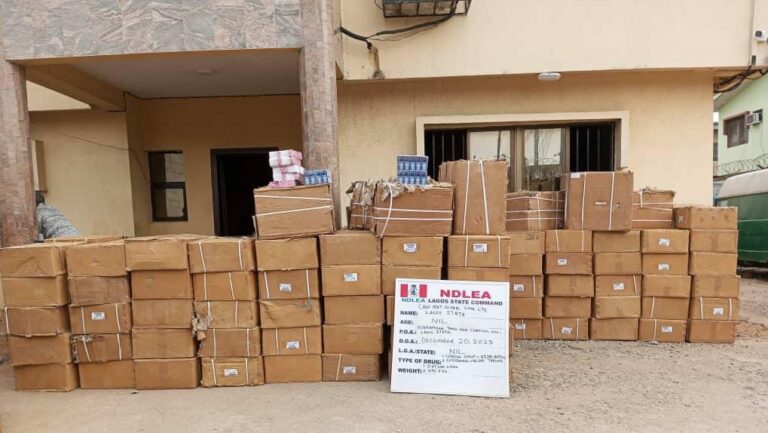
The ICIR reported that the NDLEA seized 29,789 drugs between January and February this year.
Cannabis accounts for the most significant number of seizures, with 26,876, while 68 kilogrammes of cocaine were confiscated.
The anti-drug trafficking agency also arrested2,744 drug traffickers within the period.
Among those arrested, 805 cases were charged to court, 684 persons, including 636 males and 48 females, were convicted, and 316 persons were rehabilitated.
These figures were contained in data covering January and February 2024, which the agency, through its spokesperson, Femi Babafemi, sent to The ICIR on Tuesday, April 2.
THE National Vice President of the Association of Mobile Money and Bank Agents of Nigeria (AMMBAN), Obioha Oti, has said that with the July deadline directive for registration of point-of-sale merchants with the Corporate Affairs Commission (CAC), Nigeria could witness a setback in the financial inclusion of its unbanked citizens and a rise in transaction costs.
Oti, who spoke exclusively with The ICIR on Thursday, May 9, on the development, said several money agents played vital roles in the financial inclusion of people in localities where banks do not operate in the country.
He said those agents could be pressured out of the business with “short notice” by the Central Bank of Nigeria (CBN) mandating the operators to register with the CAC before end of July this year.
He suggested that the Federal Government engage the mobile money bank operators in better ways to implement the policy to avoid tension in the financial services industry.
According to Oti, many PoS operators don’t have start-up capital of up to N20,000 and could have issues with a registered business name, which takes not less than N25,000 with the assistance of some licensed business registration agents.
The Vice President of the Association of Mobile Money Bank Agents of Nigeria,AMMBAN,Obioha Oti
“We are seeking greater engagements with the Central Bank of Nigeria and the Corporate Affairs Commission on this development so that we won’t have our members out of business because of the difficulty in this registration. We have a database of all the registered mobile money agents. We can avail them of this seamless platform for such registration so that the process does not hurt their business and pile up pressure on financial transactions.
“If they just want a CAC portal, it is okay for them to open a portal so that people can submit their information online as such that it can hit the CAC database. This would enable them not to go through the difficult process of going through business registration agents, which could scuttle financial inclusion. If this is not well handled, the crowd could return to the banking hall for cash, which could overheat the system,” he added.
Already, the CAC has directed financial institutions to ensure compliance with the CBN’s order on compulsory registration of point-of-sale operators within the country.
In a statement titled ‘Enforcement of Compliance With Central Bank Nigeria Directive on Registration Before Onboarding’ on Thursday, CAC said it had instructed banks to ensure registration on or before July 7, 2024.
In a letter to all affected banks, signed by the Registrar-General and Chief Executive Officer, Hussaini Magaji, the CAC said the instruction was in line with Section 863(1) of the Companies and Allied Matters Act-CAMA and the CBN guidelines for Agent Banking, 2013.
The CBN had earlier, through a memo issued on April 30, directed all non-individuals on the agent banking authorization, to immediately take steps to register their businesses with the CAC in line with Section 863 of the Companies and Allied Matters Act (CAMA) 2020.
The directive made it mandatory for PoS terminals, whether agents, merchants, or individuals, to register with CAC before the commencement of business.
“The Registrar-General therefore enjoined the banks to ensure maximum compliance with the requirements of the law to ensure economic growth,” the CBN statement added.
Magaji, during an event in Abuja on Wednesday, May 8, said mandatory registration of PoS operators nationwide would reduce kidnapping and help security agencies arrest recipients of ransom payments from kidnap victims.
According to a fraud report by the Nigeria Inter-Bank Settlement System Plc, PoS terminals accounted for 26.37 per cent of fraud incidents in 2023.
Last week, the CBN stopped major fintech firms like Kuda, Opay, PalmPay and Moniepoint from onboarding new customers. The fintech firms later warned their customers against trading in cryptocurrency or any virtual currency on their apps, threatening to block any accounts found engaging in such activities.
Registration could trigger possible hike in PoS transaction costs
Oti (National Vice President of the Association of Mobile Money and Bank Agents of Nigeria) warned that the registration fee with the CAC could trigger a possible hike in transaction costs since the government is already planning an increment in telecommunication tax.
“In summary what we are saying is that the CBN is the regulator of financial business, however, they don’t need to regulate in vacuum. They have to feel the pulse of the nation and see how not to put pressure on the banking hall and financial inclusion. It was last week that the financial inclusion desk was launched in Abuja with a focus on taking it to the last mile. The POS agents are the agents that drive that. By the time you start pursuing them like this, you’re fighting them with lots of fees to pay.”
Findings by The ICIR showed that with an average of one million licensed mobile money agents across the country and a business registration cost of N25,000, the CAC could rake in a minimum of N25 billion from the registration.
A PoS agent, Kofi Kolawole, voiced concerns that the registration process and associated fees would eat into their already thin profit margins. He further warned that the increased transaction costs resulting from the registration would ultimately be borne by customers, potentially dissuading them from utilising PoS services.
Echoing Kolawole’s sentiments, another PoS operator in the FCT, Clement Agbasi, emphasised the contradiction between the registration mandate and the CBN financial inclusion initiative.
Agbasi lamented that the directive could drive customers away from formal banking channels, undermining efforts to bring the unbanked population into the financial mainstream.
IN 2019, the World Bank reported that the average life expectancy globally, which is the estimated number of years people are expected to live, was 73.4 – 73 years and four months.
Although this was the global figure for the year, average life expectancy varies per country, with some ranking higher or lower than the global age.
While wealthy Asian and European countries ranked above the global average in 2019, poorer African countries ranked much lower.
Countries like Japan, Switzerland, and Lichtenstein, which consistently top the list, had an average age of 84. In contrast, people in Nigeria and Chad, at the bottom of the list, were expected to live only up to about 53 years.
This is despite Nigeria’s goal to attain 70 years of life expectancy by 2020.
By 2021, global average life expectancy declined for the second straight year—the first being in 2020—as people were now only expected to live up to 71 years, according to the World Bank.
Despite the decline, countries like Japan have stayed above average, hovering between 84 and 85 years during the period, while others like Nigeria have remained at the bottom.
According to data from the World Health Organization (WHO), the top ten causes of death in Nigeria are health-related, with road injury being the only non-health-related cause of death in the country.
Some of the health issues include lower respiratory infections, malaria, tuberculosis, stroke, and neonatal and maternal conditions.
Of these issues, Nigeria accounted for 12 per cent of global stillbirths and maternal and neonatal deaths in 2023, second only to India, according to WHO.
Many of the victims of these health challenges mostly suffer as a result of inadequate access to healthcare, a problem that has continued to persist in the country.
Low life expectancy, inadequate access to health
Dorcas Olaniyi, a resident of Nigeria’s Federal Capital Territory (FCT), recounted to The ICIR how the struggle to access healthcare led to the death of her child in 2022.
Olaniyi felt pains one morning in June 2022 and rushed to the neighbouring Primary Health Centre (PHC) at about 7:00 a.m., but the facility had not commenced operations for the day.
She returned two hours later, but the PHC remained closed, so she sought help at a local, privately owned hospital.
At the clinic, the doctor confirmed that she was in labour, but Olaniyi was made to wait till the evening before she was attended to.
“He came to visit me and told me the baby was fine and that I shouldn’t be worried,” she said.
But the longer she waited, the more pain she felt, and eventually, other people around her began to get worried, attracting the doctor’s attention.
“When the doctor couldn’t resist people’s agitation, he attended to me, but by then, I think the child had become so weak the child couldn’t come outside.
“I pushed and tried, but the child didn’t come outside until after many trials before he came out. At that time, he was not crying. He gave him an injection, but the child still didn’t cry; that was when the doctor said the child wasn’t okay. The placenta, too, didn’t come outside,” Olaniyi recounted.
Olaniyi is one of many Nigerians who have lost their loved ones or died as a result of the country’s poor health system.
While there is more access to healthcare in developed countries, Nigerians battle several limitations in the health sector, including an absence of hospitals or health centres in many communities or dilapidated structures in other cases.
Unlike many other developed countries, the country also has a shortage of medical staff.
For instance, according to the Organisation for Economic Co-operation and Development (OECD), Japan has a doctor-to-patient ratio of 2.6 to 1,000 people, while Nigeria has less than 100,000 doctors serving over 200 million Nigerians.
This means that in Nigeria, there is less than one doctor for every 2,220 people, which falls short of WHO’s recommendation of at least one doctor for every 1000 patients.
This is despite Nigeria having nearly twice the population of Japan. While Japan has 122.7 million people, Nigeria has an estimated population of 228 million.
The shortage of medical staff is worsened by increased emigration due to unfavourable work conditions, which became so heightened that the United Kingdom placed Nigeria, along with other countries, on a red list, from which health workers will not be recruited without government permission.
How can Nigeria measure up?
One factor that enhances access to healthcare is health insurance, as it somewhat reduces out-of-pocket medical expenses.
In Nigeria, where more than half of the population lives in extreme poverty, only about three per cent of the population is captured under the National Health Insurance Scheme (NHIS), according to a report by the National Center for Biotechnology Information (NCBI).
While Nigeria struggles to enrol a reasonable part of the population under this scheme, Japan already has 29 million people enrolled under its National Health Insurance System -about 24 per cent of its population.
Although not enough to guarantee adequate healthcare on its own, one step which can further ease access to health services and possibly improve life expectancy is to increase the number of citizens enrolled under its National Health Insurance Scheme.
Japan also allocated 30 per cent of its 2024 budget to social security, focusing more on its ageing population. Out of a total budget of $744 billion, $249 billion was set aside for social security in the country.
Nearly half of the sum set aside is to be used for pension-related issues, which, on the contrary, has remained a longstanding issue for older citizens in Nigeria.
The ICIR has reported that many subnational governments in Nigeria withhold pension payments from older citizens, sometimes for years at a time.
In some cases, retirees are denied their pensions due to mismanagement of funds or corruption. Yet, most governors are entitled to huge pensions after only serving in government for a maximum of eight years.
Many retired citizens in Nigeria have lost their lives or loved ones due to a lack of financial capacity to access healthcare and other basic needs and are confronted with hardships upon retirement, a situation which, if addressed, can lead to a better quality of life for older Nigerians.
Apart from health-related issues, many other socio-economic factors affect the life expectancy of people in a country.
According to a study published by the NCBI, a more even distribution of income and higher levels of education can have positive effects on life expectancy in a country.
The study also showed that in Nigeria, higher unemployment rates have adverse effects on life expectancy.
“Unemployment is an influential factor that needs necessary attention. In Nigeria where the demographic structure is such that, the youth constitutes the greater percentage of the population, the life expectancy of the population would be enhanced if employment could be raised,” the report read.
The study recommended that policies addressing the country’s socio-economic challenges be implemented, a step which can bring Nigeria closer to its life expectancy goal of 70 years.
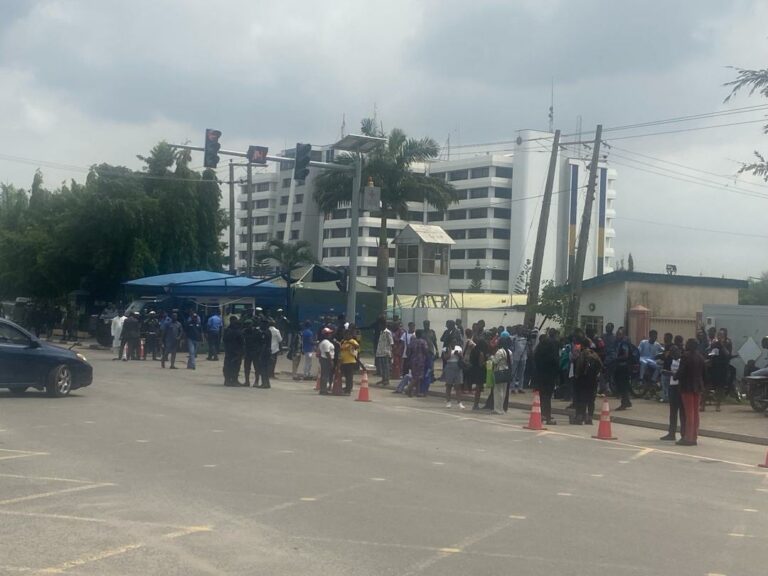
TWENTY-THREE Civil Society Organisations (CSOs) and journalists gathered at the Nigeria Police Force (NPF) Headquarters on Thursday, May 9, to protest against the continued detention of a reporter with the Foundation for Investigative Journalism (FIJ), Daniel Ojukwu.
The protesters who marched and chanted various solidarity songs also voiced their discontent over the growing cases of attacks on press freedom and the flagrant abuse of due process and the rule of law by the Nigeria Police under the Inspector-General of Police (IGP) Kayode Adeolu Egbetokun.
Addressing the police, the Action Group on the Protection of Civic Actors’ spokesperson, Bukola Shonibare, said that the continuous silencing of journalists and civic actors who hold power accountable undermined the provisions of Sections 22 and 39 of the Constitution of the Federal Republic of Nigeria, 1999 (as amended), which guarantees freedom of the press and freedom of expression, respectively.
According to her, the coordinated use of state resources, the mischievous interpretation and hyper-application of laws, especially the Cybercrimes Act of 2015, which has now been amended, and the abuse of power and public institutions are all draconian tactics deployed to shrink Nigeria’s fragile civic space further.
“Mr Ojukwu’s fundamental human rights have been blatantly violated. Even though the Nigeria Police has filed no formal charges, he remains in custody. Additionally, Daniel’s unlawful arrest and detention contravenes the combined reading and cumulative effect of Sections 34, 35, and 41 of the Constitution of the Federal Republic of Nigeria, 1999, which protects his rights to respect for the dignity of his person, personal liberty, and freedom of movement,” she said.
Also speaking on the issue, Deputy Director, Centre for Journalism Innovation and Development (CJID), Busola Ajibola, called for due process to be followed if the journalist is being accused of a crime.
She further said the CSOs and journalists hoped that the police and government could embrace a human rights-oriented approach in their interactions with journalists.
Deputy Director, Journalism, Centre for Journalism, Innovation and Development, Busola Ajibola
“If you think the journalists have erred on the side of ethics, the right thing to do is to charge them in court, not abduct or detain them for days.
“It is very important for the (President) Bola Tinubu administration to respond to this issue because the image this administration would like us to believe is that they don’t respect the values of democracy, and one of the fundamental anchors of democracy is a free press,” she said.
Ojukwu was abducted by officials of the Intelligence Response Team (IRT) of the Inspector-General of Police (IGP) Kayode Egbetokun on Wednesday, May 1, two days before World Press Freedom Day.
His abduction only became known on Friday, May 3, after spending four days with the police in Lagos State. He was subsequently transferred to the Force Criminal Investigation Department (FCID) in Abuja.
On the orders of the IGP, Ojukwu was transferred by the IRT to the Nigeria Police Force National Cybercrime Centre (NPF-NCCC) in Abuja in the early hours of Sunday, May 5.
On the same day, the police produced a petition showing that his abduction was in connection to the Foundation for Investigative Journalism’s (FIJ) story linking former Senior Special Assistant on Sustainable Development Goals (SSAP-SDGs) Adejoke Orelope-Adefulire to corrupt practices.
The Chief Executive Officer (CEO) of the Public and Private Development Centre (PPDC), Jibril Shittu, who was also present at the protest, urged the authorities to allow citizens to engage with their leaders, especially when they have questions about procurement processes or project delivery.
He further noted that the protesters demanded that Ojukwu be released and the rights of journalists and every well-meaning Nigerian be respected.
Continued detention, a calculated act to violate Ojukwu’s rights –Sowore
Speaking on Ojukwu’s detention, human rights activist and former presidential candidate of the African Action Congress (AAC), Omoyele Sowore, said the administrative bail conditions the police had given were more stringent and intentionally aimed at violating his rights.
“We have tried our best to explore the feasible means of getting Daniel released, but we discovered that the police were recalcitrant. This is a calculated act to violate his rights. The highest authorities, particularly the IGP, are involved in the issue.
“That is what we found out. In fact, we met with senior police officers, and they told us to present one surety. We presented the highest official of the NUJ in Abuja, and they said they wanted to verify his property and place of work. Everything was provided, but when they came back in the evening, they said they had now jacked the bail condition to two directors, who are civil servants with landed properties in Abuja.
Human Rights Activists Omoyele Sowore at the protest
He condemned the new conditions demanded by the police, adding that not many civil servants living on their salaries could afford landed properties in Abuja.
“Let me explain to you those kinds of bail conditions. You are asking an investigative journalist to present corrupt people as his sureties. I know Nigerians might not think about it, but it is an oxymoron for somebody to ask an investigative journalist to present the corrupt people he has been investigating as his sureties,” Sowore said.
We will release Ojukwu soon –FCT CP
Addressing the protesters, the Federal Capital Territory (FCT) Commissioner of Police, Benneth Igweh, called for calm and promised that the journalist would be released soon.
“What we are saying is that the Force is looking into the matter. There is no need for the protest at all because every Nigerian, including Ojukwu, is entitled to his rights and privileges. I am with the DIG Force CID, that’s why I said he would be released. I am assuring you.
“Those who know me know that my word is my bond. So leave this matter, it is being taken care of, otherwise, I wouldn’t have been here,” he said.
Commissioner of Police FCT, Benneth Igweh, addresses protesters
Attacks and unlawful detention of journalists have remained a threat to press freedom in Nigeria.
In March 2024, the former editor of Frist News, a media outlet in Nigeria, was abducted from his home in Lagos and flown to Abuja, where he was detained for nearly two weeks by officials of the Nigerian Army.
While his location remained unknown, the leadership of the Nigerian media community searched frantically for him, reaching out to sources within the presidency, the Nigerian Army, and the State Security Service (SSS), who all denied knowing his whereabouts.
Olatunji was later released the following morning after officials of the Defence Intelligence Academy (DIA) handed him over to some journalists by the roadside in Abuja. He is one of many Nigerian journalists who have faced harassment from the government in the line of duty.
PRESIDENT Bola Tinubu’s promise to provide funds to manufacturers and micro, small, and medium-sized enterprises (MSMEs) to drive the country’s productivity sectors has failed to meet the set target.
Read the series “Tinubu’s one year in office” here.
On a nationwide broadcast on July 31, 2023, the Nigerian President said he would provide N200 billion to strengthen the country’s manufacturing and MSMEs.
The promise came following public outcry over the impacts of fuel subsidy removal and the foreign exchange unification he doggedly introduced.
Upon assuming office on May 29, 2023, Tinubu said fuel subsidy was gone, and the Central Bank of Nigeria (CBN), under his watch, floated the exchange rate in July.
The twin reforms have suffocated business operations and made the business environment difficult for manufacturers and MSMEs.
The palliatives were meant to provide N75 billion to manufacturers and N125 billion to MSMEs and be executed between July 2023 and March 2024.
“To strengthen the manufacturing sector, increase its capacity to expand and create good paying jobs, we will spend N75 billion between July 2023 and March 2024. Our objective is to fund 75 enterprises with great potential to kick-start sustainable economic growth, accelerate structural transformation and improve productivity.
“Each of the 75 manufacturing enterprises will be able to access N1 Billion credit at 9% per annum with maximum of 60 months repayment for long term loans and 12 months for working capital, Tinubu said.
On MSMEs, he promised, “Our administration recognises the importance of micro, small and medium-sized enterprises and the informal sector as drivers of growth. We are going to energise this very important sector with N125 billion.”
President Tinubu also announced that his administration would fund 100,000 MSMEs and start-ups with N75 billion; however, as of the time this report was written, these promises had yet to be fulfilled.
Many groups and associations have raised concerns about the President’s soothing for MSMEs, manufacturing, and other sectors of the economy.
In various reports, the Manufacturers Association of Nigeria (MAN), Association of Small Business Owners of Nigeria (ASBON), Nigerian Association of Small Scale Industrialists, Nigerian Association of Small and Medium Enterprises (NASME), Association of Micro-Entrepreneurs of Nigeria (AMEN), and the Lagos Chamber of Commerce and Industry (LCCI) have said the only information they had about the fund was the President’s pronouncement.
They had equally expressed concerns about the criteria for disbursement, the requirements, terms and conditions, prospects and the agencies that would disburse the funds.
The proposed palliative was expected to help cushion the reforms’ effects and drive the country’s productivity sectors.
Challenges of the manufacturing, MSME sectors
With the removal of the fuel subsidy and the unification of the exchange rate, the manufacturing and MSME sectors have been operating under high energy and increasing raw materials costs amid other headwinds.
The latest report from the National Bureau of Statistics (NBS) reveals that as of the fourth quarter of 2023, the manufacturing sector’s real GDP growth stood at 1.38 per cent, lower than 2.45 per cent in the same quarter of 2022.
Its real contribution to GDP was 8.23 per cent, lower than the 8.40 per cent recorded in Q4 2022.
In a statement in March 2024, MAN declared that 767 manufacturers shut down operations while 335 became distressed in 2023.
The MSMEs also faced similar challenges and multiple hurdles in establishing and growing sustainable enterprises, with the need for appropriate forms of finance often ranked as the most severe constraint.
According to a survey conducted by the Small and Medium Enterprises Development Agency of Nigeria (SMEDAN) and the National Bureau of Statistics (NBS), the number of businesses under MSMEs is estimated at 39.6 million.
In 2022, MSMEs contributed 48 per cent to GDP and accounted for 96 per cent of businesses and 84 per cent of employment.
Despite its contribution to the Nigerian economy and gross domestic product (GDP), the government has yet to give proper attention to the sector.
The World Bank says the MSMEs play a significant role in most economies, particularly developing countries like Nigeria.
Better late than never as FG launches MSME, manufacturers’ loan fund
The delay in President Tinubu honouring his promise to manufacturers was of concern, and the process needed to be faster, said the Director General of MAN, Segun Ajayi-Kadir.
In a report by The ICIR in October 2023, Ajayi-Kadir noted that it would have been better if manufacturers and MSMEs had started to enjoy the loan facility.
The association was ready to provide details and the identities of its members to the government.
“It is better late than never; now the government should expedite action to ensure these facilities are available, particularly with the agreement with labour.”
He maintained that the N75 billion and N125 billion would not address the crises in the sectors but that a deliberate attempt at prioritising loan facilities at an interest rate repayable by manufacturers would have helped.
On April 22, the Nigerian government launched the MSME and manufacturing segment of the presidential N200 billion fund; however, access to the palliatives requires a bureaucratic process.
The Minister of Industry, Trade and Investment, Doris Uzoka-Anite, confirmed the launch, declaring that the Federal government had allocated N75 billion for MSMEs and N75 billion for manufacturers.
She detailed the application criteria and said MSMEs will receive up to N1 million, and manufacturers will receive up to N1 billion.
“This fund is strategically divided, dedicating N75 billion to MSMEs and another N75 billion to the manufacturing sector.”
Uzoka-Anite did not clarify whether the Federal government has slashed the N125 billion proposed for the MSMEs to N75 billion, as what was allocated falls short of the President’s announcement.
The National President of AMEN, Saviour Iche, said the federal government is not prioritising the MSMEs and manufacturers over the palliative.
“The story is still the same. When you have done something once, twice or thrice, you will not be encouraged if asked to do it again.
“These people are playing to the gallery. We have suggested to the government ways to get the money to the right people,” he said.
He was concerned aboutwhy the government did not give the funds directly to associations rather than channel them through a third party, adding, “We have been applying online and are tired.”
A FEDERAL High Court (FHC) in Abuja has granted the former Minister of Aviation, Hadi Sirika, his daughter Fatima, and two others ₦100 million bail over alleged N2.7 billion fraud for which they are standing trial.
The other two defendants in the case by the Economic and Financial Crimes Commission (EFCC) are Jalal Hamma and Al-Duraq Investment Ltd.
Sirika pleaded ‘not guilty’ when the six-count charge was read to him.
His counsel, Kanu Agabi, urged the court to grant him bail on self-recognition as a former minister.
Lawyer to the EFCC, Rotimi Jacobs, did not oppose the bail application but asked the court to impose hard bail conditions on the accused.
After the arguments, the trial judge, Sylvanus Oriji, granted the accused bail of N100 million each and two sureties in like sum.
According to the court, in addition to the money, they must make sureties available who must have landed properties in Abuja and be responsible citizens.
In addition, the sureties must hold legally registered landed holdings within the FCT.
The court also prohibited the accused from leaving the country without authorisation.
Oriji ordered that the defendants be remanded in prison if they failed to meet their bail conditions.
The trial is scheduled to start on June 10, 11, and 20.
On Wednesday, May 8, The ICIR reported that the EFCC charged Sirika, his daughter and two other suspects in court.
Sirika is standing trial a few weeks after the anti-graft agency quizzed him over alleged money laundering.
It was learnt that the former minister met with EFCC investigators to answer questions on alleged fraudulent contracts he awarded to Engirios Nigeria Limited, owned by his younger brother, Abubakar Sirika.
The ICIR reported on June 15, 2023, that EFCC summoned him over the N3 billion Nigeria Air project.
The former minister on an Arise Television programme on Sunday, June 11 2023, argued that of the N5 billion budgeted for the project take-off, only N3 billion was released, contrary to the speculation that the Aviation Ministry had spent N85 billion on the failed Nigeria Air project.
The bulk of the expended funds, according to Sirika, was channelled into consultancies, salaries, and administrative costs associated with setting up the national carrier.
The ICIR reported that both the Senate and the House of Representatives aviation committees had criticised the unveiling of the Nigeria Air aircraft, with the latter labelling it a fraud.