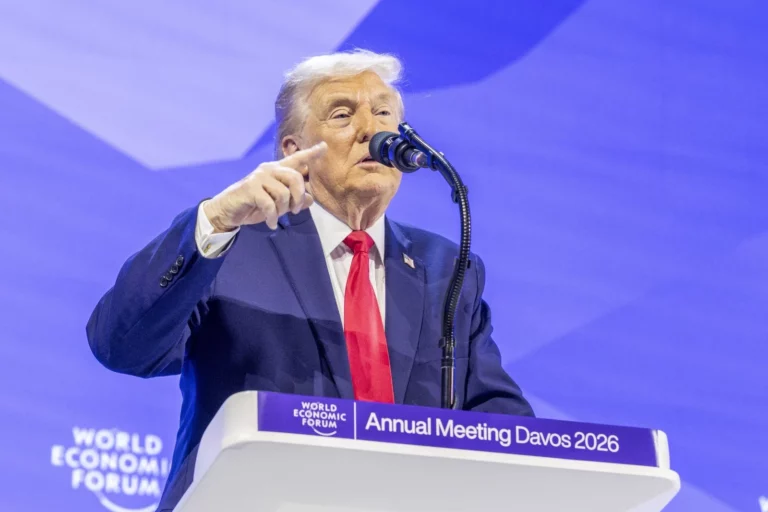
UNITED State President Donald Trump has threatened to target Iran’s major power plants if Tehran fails to fully reopen the Strait of Hormuz within 48 hours.
In a strongly worded social media post on Saturday, Trump said the US would “obliterate” Iran’s energy infrastructure if the vital waterway critical to global oil and gas shipments is not reopened without threat.
“If Iran doesn’t FULLY OPEN, WITHOUT THREAT, the Strait of Hormuz, within 48 HOURS from this exact point in time, the United States of America will hit and obliterate their various POWER PLANTS, STARTING WITH THE BIGGEST ONE FIRST!” Trump said on social media.
The ICIRreports that the Strait of Hormuz remains largely disrupted amid fears of Iranian attacks, choking a passage that handles roughly 20 per cent of global oil and liquefied natural gas flows. The near shutdown has already shaken global markets, with European gas prices surging significantly in recent days, raising concerns of a broader energy crisis.
In Nigeria, rising energy prices are fueling inflation concerns, as Dangote Petroleum Refinery has again raised the ex-depot price of Premium Motor Spirit (petrol) to N1,245 per litre, intensifying pressure on Nigeria’s downstream market.
The latest adjustment, effective from midnight on Saturday, marks the fourth upward review by the refinery in March alone, as PMS prices have risen rapidly from about N774 earlier in the month to N875, N995, N1,175, and now N1,245 per litre.
Trump’s ultimatum marks a sharp shift in tone, coming barely 24 hours after the US leader suggested a possible de-escalation of the conflict.
Meanwhile, Iran’s Khatam al-Anbiya Headquarters responded with a warning of its own, saying any US strike on its energy infrastructure would trigger attacks on American energy, IT, and desalination facilities across the region.
The standoff follows a chain of retaliatory strikes. After an Israeli attack on Iran’s key gas field, Tehran struck Qatar’s Ras Laffan Industrial City, a major global LNG hub, causing damage expected to take years to repair.
According to Israeli military chief Eyal Zamir, Iran had, for the first time, deployed long-range missiles capable of reaching European capitals such as Berlin, Paris, and Rome, signalling a potential widening of the potential reach of attacks beyond the Middle East, even as a separate Iranian strike left dozens injured near one of Israel’s nuclear facilities.
Zamir said that Iran has also reportedly launched two ballistic missiles with a range of 4,000 km (2,500 miles) toward the US-British military base at Diego Garcia in the Indian Ocean, underscoring the growing regional threat, noting that this is the first time Iran had used long-range missiles since the United States and Israel began attacking Iran on February 28.
According to Reuters, the conflict which is now in its fourth week, has claimed over 2,000 lives, with dozens more injured in recent strikes on southern Israel, including in Dimona and Arad areas near sensitive military installations.
Israeli Prime Minister Benjamin Netanyahu described the situation as “a very difficult evening,” vowing continued military action.
THE Nigerian Bar Association (NBA) has strongly condemned the reported sexual assault of women during a local festival in Ozoro, Delta State, describing the incident as a “national disgrace” and a grave violation of human rights.
In a joint statement signed on Saturday, March 21, by the NBA President Afam Osigwe and Chairperson of the NBA Women Forum, Huwaila Muhammad, said the incident reflects a “collapse of conscience” and exposes deep-rooted gender-based violence.
“A society reveals its true character in how it treats its women. Where women are chased, stripped, groped, violated, and publicly humiliated by mobs under the guise of celebration, what is on display is not culture. It is barbarity. It is a collapse of conscience. It is a stain on our shared humanity.
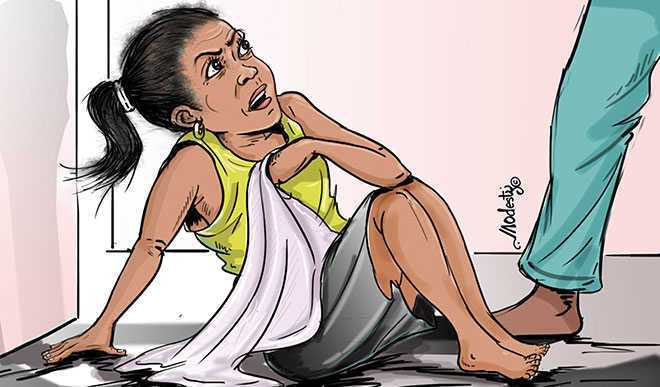
“The deeply disturbing reports emerging from a recent festival in Ozoro, Delta State, are not just troubling; they are horrifying. Women were allegedly accosted in broad daylight, forcefully stripped of their clothing, sexually assaulted, and subjected to degrading treatment by groups of young men while others watched, recorded, and, in some instances, cheered,” the statement read.
The condemnation follows the circulation of a disturbing viral video showing groups of men allegedly harassing and assaulting young women during the Alue-Do Festival in Uruamudhu Community, one of the five traditional communities in Ozoro Kingdom.
The ICIRreported that the Nigeria Police Force (NPF) and Nigerians have reacted with outrage as reports suggest that even visitors unfamiliar with the festival’s risks including students from nearby institutions may have been affected.
The NBA in its latest statement stressed that such acts constitute serious criminal offences, including sexual violence, assault, and violations of the constitutional rights to dignity, liberty, and personal security as enshrined in the 1999 Constitution (as amended).
“These acts amount to a grave violation of the fundamental rights to dignity of the human person, personal liberty, and security as guaranteed under the Constitution of the Federal Republic of Nigeria, 1999 (as amended), as well as other international human rights instruments. They also constitute serious criminal offences under our laws, including assault, sexual violence, and public indecency.
Rejecting any cultural justification, the association declared that no tradition can legitimise violence against women, urging authorities to take decisive action.
“No woman should ever have to endure such terror, such exposure, such violation of her dignity. This was not a festival. This was lawlessness. This was gender-based violence in its most primitive and shameful form.
The NBA also called on community leaders and festival organisers to ensure that cultural events uphold dignity and safety, rather than becoming platforms for abuse.
“It is criminality. We call on the Delta State Government and all relevant law enforcement agencies to act swiftly and decisively. The perpetrators must be identified, arrested, and prosecuted.
“Those who aided, enabled, or failed to intervene must also be held accountable. Justice must not be delayed, and it must not be selective. Silence, indifference, or excuses in the face of such brutality only embolden further abuse.
“We further call on community leaders, traditional institutions, and festival organisers to take urgent responsibility. Cultural celebrations must never become theatres of violence. They must reflect dignity, order, and respect for human life, not chaos and cruelty.
“The protection of women is not optional. It is a legal duty. It is a moral obligation. It is a test of who we are as a people. Nigeria must not become a place where women live in fear of being stripped of both their clothing and their dignity in public spaces. This must never happen again!,” the statement added.
Echoing similar concerns, the Delta State Government described the incident as “barbaric and unacceptable,” warning against the misuse of cultural gatherings to perpetrate criminal acts.
Commissioner for Works (Rural Roads) and Public Information, Charles Aniagwu, urged security agencies to act swiftly in apprehending those responsible.
“The Delta State Government strongly condemns the harassment of ladies and the reported cases of rape during the Ozoro Festival. Such barbaric acts are totally unacceptable and have no place in our society,” the Commissioner for Works (Rural Roads) and Public Information, Charles Aniagwu, said in a statement.
The State Government emphasised that protecting women is not only a moral responsibility but a legal obligation, warning that failure to act decisively could embolden further abuse.
“We are calling on the police and other security agencies to fish out the perpetrators of these heinous acts and bring them to justice. No individual or group should be allowed to hide under the guise of a festival to perpetrate criminal activities,” he added.
Recently, two rape allegations dominated Nigerian social media, triggering outrage and sympathy. However, both stories turned to be false. In this report, The ICIR examines false rape allegations, and how justice should respond without silencing genuine survivors.
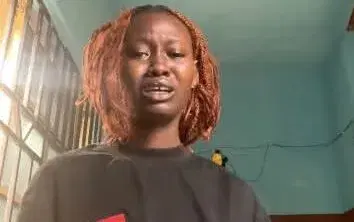
A TikTok user, Abigail Nsuka, known as Mirabel, posted a tearful video alleging she had been raped and mutilated in her apartment in the early hours of Sunday, February 15. In subsequent posts, she claimed she was being threatened and intimidated to remain silent, sharing worrying screenshots to back it up.
Her videos went viral with users reposting them across TikTok, X, and other social media platforms. The videos tugged at the hearts of everyone who watched due to the pain etched in her voice which had thousands of people demanding justice for her while others began attempting to identify the alleged perpetrator just so he could be punished.
Mirabel
In the video, Mirabel tearfully recounted how the gory day started.
“I have insomnia. If I’m not drunk or high, I can’t sleep. On Saturday, I drank, and it wasn’t working. But I needed to be high enough so I could sleep,” she said.
She claimed she slept around 6am and woke up at about 9am to a knock on her door.
“I slept around 6am but around 9am, I heard a knock on my door. I thought it was my neighbour because it’ was Sunday morning and some of them would have gone to Church, so maybe the one knocking wanted to ask me for something.”
Within days, cracks began appearing in her narrative. Online commentators highlighted inconsistencies in the timelines and screenshots she shared, some of the messages allegedly sent by the rapist contained phrases that also appeared in her messages. Questions mounted about the authenticity of her story.
She didn’t just gain the sympathy; she also received financial supports from sympathisers according to videos posted online. Mirabel with the help of her friend shared her bank details for people to support.
Social media influencer known as VeryDarkMan, claimed he transferred N100,000 to her, while others voiced out. Her videos also pulled celebrities like the singer known as Simi to voice out about the pain women go through.
Under mounting public scrutiny from influencers and users, Mirabel later admitted to VeryDarkMan that the rape claim was fabricated. Recordings circulating online captured her acknowledging that she had created threatening messages herself and pleaded for insanity and hallucination.
“I used to masturbate, and I’m a lesbian. I often self-harm when I have panic attacks. It might be a hallucination,” she said.
It was during this point that she also confessed to have created a TikTok account separately from the one she uses, just to message herself to portray that a rapist has truly been messaging her.
The Ogun State Police Command confirmed it had opened an investigation. While the Public Relations Officer, Oluseyi Babaseyi noted on his social handle X that knowingly providing false information to law enforcement agents is a criminal offence.
The case shifted from a viral story of victimhood to a possible case of false reporting.
That’s not all, around the same time, a female student at Obafemi Awolowo University, Adewale Adeola Adeife, publicly accused Ojuko Adefesobi, known as David on X for rape.
The allegation circulated widely within campus networks and online communities. As often happens in digital spaces, reactions formed quickly. Opinions were drawn.
Adeola accused Adefesobi due to their different opinions regarding Mirabel’s case, and while Adeola was quick to tag Adefesobi as a rapist. According to Adefesobi, she also circulated his contact in group chats in a bad light just to garner attention.
Photo credit: X (Adeola)
Soon after, she issued a public apology video stating that the claim was false and it was a spur of the moment action.
“He is never a rapist. I’ve never caught him raping anybody. So, I am sorry, David, I’m sorry for calling you a rapist, and this is just to clear the air. He is not a rapist. David is not a rapist.”
Adefesobi, known as David subsequently filed a ₦15 million civil lawsuit, alleging defamation, reputational harm, and emotional distress. The Guardian reported that in court filings, his legal team, Anekwe & Associates, Barristers & Solicitors, also demanded a written apology and full retraction, to be published prominently on all platforms including all social media platforms and any other medium where the defamatory allegation was originally published. They argued that the allegation caused significant personal and reputational damage.
Unlike the TikTok case, this matter transitioned into civil litigation rather than immediate criminal prosecution.
These incidents have revived debate over how Nigeria’s justice system should respond when rape allegations are proven false, and whether such responses risk discouraging genuine survivors from reporting.
False rape accusations
The two recent Nigerian cases illustrate the speed at which allegations now travel and the slower pace at which truth is established. They also reveal the delicate balance between ensuring accountability for intentional falsehoods and protecting the rights of genuine survivors whose experiences already face scrutiny and doubt.
A false accusation of rape happens when a person states that they or another person have been raped when no rape occurred. It is the deliberate, fabricated reporting of sexual assault where no crime occurred.
Globally, research consistently indicates that false rape allegations represent a small minority of reported cases, often estimated between 2 and 10 percent. Meanwhile, sexual violence remains widespread and significantly underreported. According to the World Health Organization, approximately one in three women worldwide experience physical or sexual violence in their lifetime. In Nigeria, surveys from the National Bureau of Statistics have documented high levels of gender-based violence.
How should the justice system respond?
To understand the legal and social implications of such cases, The ICIR reached out to a human rights advocate, Kiyenpiya Mafuyai.
Asked whether Nigeria’s existing laws are enough to address false reporting, she said, “The existing laws are sufficient to address false reporting. Section 8 of Violence Against Persons Prohibition Act (VAPPA) addresses the issue directly within the context of gender – based violence. In addition the Penal Code law makes the giving of false evidence or perjury an offence. This could also be applied as false reporting and it is considered a serious offense against the administration of justice.
However, the challenge may arise in proving the offence beyond reasonable doubt. It would be necessary to prove that the person is legally bound to tell the truth, that the person made a false statement and that they actually knew or believed that the statement was false. Then there must be corroboration which is additional evidence or a witness to confirm the statement was false.”
On how should the justice system responds to false rape allegations without creating fear for survivors, she explained that women’s rights advocates have long insisted that rape reports must be taken seriously to counter stigma and underreporting.
“In order to encourage survivors of rape to speak up, in spite of the stigma, and report, women’s rights advocates have always insisted that when such reports are made, they should be taken seriously and pursued vigorously,” she said.
“Therefore when an individual subverts the system and makes a false accusation which is proven to be false the justice system strongly condemns it. This is because it undermines any progress that has been made in demanding that authorities treat every report of rape with the seriousness it deserves.” she stressed.
She pointed to Section 8 of the VAPP Act, which directly addresses false allegations within gender-based violence proceedings.
The section provides that any person who wilfully makes a false statement whether oral or documentary, in a judicial proceeding under the Act, or with the aim of initiating criminal proceedings against another person, commits an offence. Upon conviction, the offence is punishable by a fine of ₦200,000 or imprisonment for a term not exceeding 12 months.
She emphasised that accountability and survivor protection are not mutually exclusive.
“We can hold individuals accountable for intentional falsehoods by reporting it and following up to ensure that they are prosecuted under the laws provided,” she said.
She also cautioned against media sensationalism.
“Social media can be sensational and conduct media trials without following due process or upholding human rights standards such as fair hearing. Activists should discourage media trials rather than fanning the flames. They should follow due process, report to constituted authorities, and monitor cases while reporting only verified facts.”
She concluded that data must be collated and publicised to underscore that only an infinitesimal fraction of rape reports are false allegations.
A midnight fire has gutted the Plumbing Materials Section of the Head Bridge Market, near the Ogbo-Ogwu Medicine Market in Anambra State, destroying shops and goods worth millions of naira.
The market, situated along the busy Onitsha–Awka Expressway near the River Niger Bridge, went up in flames in the late hours of Friday, with the blaze spreading into the early hours of Saturday.
While no casualties were reported in the incident, and the cause of the fire is yet to be unknown, traders were left counting heavy losses as their wares were consumed by the inferno.
Eyewitnesses said the fire started around 11:55 p.m. and spread rapidly across sections of the market before it could be contained, making it difficult for traders to salvage their goods.
All efforts by some affected traders to recover their wares were abortive due to how intense the fire was.
Eyewitnesses quoted by Punch said that the fire burned for several minutes before the state fire service arrived at the scene.
“The fire started at almost 12 midnight, the security men at the market alerted officials and traders, but before they could rush to the market, the fire had burnt a substantial part of the Market”
“As we speak now, some of the affected shop owners are still packing some of their burnt items and examining the extent of damage. The exact cause of the fire could not be immediately determined, but a power surge is suspected”
Fire service officials later responded to the incident and brought the situation under control, preventing further spread.
Dangote Petroleum Refinery has again raised the ex-depot price of Premium Motor Spirit (petrol) to N1,245 per litre, intensifying pressure on Nigeria’s downstream market amid worsening global oil dynamics.
In a notice to marketers on Friday, March 20, the refinery attributed the latest adjustment to escalating geopolitical tensions affecting crude supply chains and international pricing benchmarks. The new gantry price reflects a N70 increase from the previous N1,175 per litre, while the coastal price was also revised upward to N1,606,518 per metric tonne.
“Please be informed that due to the current global geopolitical situation, which has further escalated, the PMS gantry and coastal prices have been reviewed and updated as outlined below,” the notice read.
The ICIR reports that the latest adjustment, effective from midnight on Saturday, marks the fourth upward review by the refinery in March alone, highlighting the speed at which global shocks are transmitting into domestic fuel costs.
PMS prices have risen rapidly from about N774 earlier in the month to N875, N995, N1,175, and now N1,245 per litre.
“The refinery raised its coastal price from N1,512,648 per metric tonne to N1,606,518 per metric tonne, while the gantry price increased from N1,175 per litre to N1,245 per litre. Please note that the revised price will apply to all unloaded gantry and coastal volumes and is effective from 12 am on the 21st of March 2026,” it stated.
The refinery added that marketers with existing supply agreements secured by bank guarantees would continue to lift products under previously approved terms, subject to specified conditions.
“For customers with a valid Bank Guarantee with DPRP, loading will continue with existing ATCs/PRN (if any), provided the BG credit balance covers the price change differential. The corresponding debit note will be passed in your trading account with DPRP. Payment evidence for the price change differential will be required by Monday, March 23, 2026,” the notice added.
The refinery insisted the adjustment was necessary to align with current market conditions, emphasising that external factors outside its control drove the pricing review.
The ICIR reports that the latest increase is likely to ripple through the retail market, with pump prices expected to rise as marketers pass on higher landing costs to consumers.
Analysts said the move reinforces Nigeria’s continued exposure to external fuel price shocks, despite expectations that the refinery would help stabilise supply and moderate volatility.
Amid tensions in major oil-producing regions in the Middle East, which are driving up crude and freight costs, the refinery maintained that the price review reflects prevailing global realities beyond its control.
THE Nigeria Police Force (NPF) and Nigerians have reacted with outrage following the circulation of disturbing videos showing assault and alleged gang rape of women in Ozoro, a community in Delta State.
The videos, which surfaced on social media on Friday, March 20, show several women crying and calling for help as groups of men harassed and attacked them in public.
In one of the clips, a male voice was heard claiming that any woman who stepped outside during the period risked being raped.
Another clip showed a lady being dragged on the ground, with men attempting to tear her clothes, while also manhandling her. She was later seen to be rescued by another person. However, several other ladies were chased down the street by men numbering hundreds.
The incidents have been linked by online sources to what has been described as a so-called ‘festival’ in Ozoro, where young women were allegedly targeted by men.
Reports also suggested that warnings had circulated within the community advising girls and women to remain indoors for their safety.
The ICIR reports that Ozoro hosts part of Delta State University.
Police condemn act, launch investigation
Reacting to the development on Friday, the Delta State Police Command described the incident as “alarming, disgusting and embarrassing,” stressing that no cultural practice could justify such acts.
The command’s spokesperson, Bright Edafe, said the state Commissioner of Police, Aina Adesola, had ordered an immediate investigation into the matter.
The police condemned the acts in strong terms, noting that “no custom or tradition is superior to the rights of citizens.”
The police further assured residents that those responsible would be identified, arrested, and prosecuted, while calling on witnesses to come forward with useful information to aid the investigation.
Public outrage trails incident
The videos have triggered widespread condemnation across social media, with many Nigerians expressing shock and anger over the attacks.
Travel content creator,Tayo Aina, described the incident as “the sickest” thing he had seen, questioning what kind of tradition could permit such acts. He called on the Delta State Government to intervene.
“This is the sickest shit I ever seen. What kind of disgusting tradition is this? Even animals can’t be doing this shit. Shame to all the men in this video. The government of Delta state needs to intervene and shut down whatever culture or tradition this is,” he wrote.
Another user, Tyson.nie, criticised the practice, noting that warnings for women to stay indoors instead of arresting perpetrators reflected a failure of local security structures.
Others described the acts as barbaric and inhumane, highlighting the trauma associated with sexual violence.
Also, popular social media influencer, Dickson said any practice that violated consent could not be considered tradition. He called for the arrest of all those involved, stressing that customs that contradict Nigerian law and basic principles of justice should not be tolerated.
“There is no such thing as a raping festival. That is not culture. Any sexual practice that removes the right of women to be willing participant, is not culture. That is simply gang rape and sexual assault.
“The police need to pack everybody involved if they are not also involved in this madness. Culture is not absolute. Man made culture. Therefore, man can undo it. Any culture that is repugnant to natural justice, equity and good conscience is not binding. Any culture that is incompatible with extant Nigerian law is not binding. Any culture that contravenes public policy is not binding,” he wrote.
THE National Environmental Standards and Regulations Enforcement Agency (NESREA) on Wednesday, sealed Bond Chemicals Industries Limited in Oyo State, for violating environmental regulations.
This is coming after The ICIR published an investigation into how residents of Awe community are facing hardship as a result of chemical spillage from Bond Chemicals Ltd. which has contaminated their water sources.
The facility was found to be discharging untreated industrial waste into the environment, posing risks to public health and its ecosystem.
During this investigation, this organisation reached out to NESREA on February 16, informing the agency about its findings, and how Bond Chemicals operations breached relevant Nigeria environmental laws.
Key findings
The ICIR investigation revealed the presence of brown coloration and suspended particles in the water sample obtained from one of the wells used by residents, indicating sediment contamination or iron-related discoloration. Also, high levels of ammonia (3.72 mg/L) were detected in the water even as experts warned that the water is unsafe and threatens public health. Following the investigation, NASREA on Wednesday sealed off Bond Chemicals Industries Limited facility in Oyo State.
In a press release sent to The ICIR, NASREA said it conducted a compliance inspection from its Southwest zonal office on the February 18, 2026, which revealed the facility had no functional Effluent Treatment Plant and was discharging untreated wastewater with offensive odour directly into the environment in contravention of applicable environmental standards and regulations.
NASREA noted that following the inspection, the facility was duly notified and issued directives to immediately abate the “environmental nuisance by installing and operating an effluent treatment system in line with regulatory requirement, and also to obtain the required permits.”
However, a follow up inspection revealed that the facility failed to comply with the agency’s directives.
The Agency said it sealed the facility as part of its statutory mandate to prevent further environmental degradation and to safeguard public health.
“The Director General of NESREA Prof, Innocent Barikor reiterates that all industry operators are required to comply fully with environmental regulations, including the installation and proper operation of pollution control equipment.
“He further states that the agency will continue to intensify its monitoring and enforcement activities nationwide and will not hesitate to apply appropriate sanctions against any facility found to be in violation,” part of the statement reads.
NASREA revealed that the facility will remain closed until full compliance with its directive is achieved.
BORNO State Governor, Babagana Zulum, has revealed that two suspected bombers might unleash mayhem in the state at any time, especially as residents celebrate the Eid-el-Fitr festival.
He said the attackers were likely foreign nationals who escaped into the state with three others who detonated bombs that struck three locations in Maiduguri, the state capital, on Monday, March 16.
The ICIR reports that the coordinated bombings on Monday Market, the gate of the University of Maiduguri Teaching Hospital, and the Post Office Flyover area killed 23 people and injured 108 others.
Speaking with the BBC Hausa in the aftermath of the attacks, Zulum disclosed that intelligence reports indicated five assailants infiltrated the city ahead of the incidents. Three of them were killed in the explosions, while the remaining two are still being actively tracked by security forces.
“We have directed that people should restrict their movements and activities this Sallah period so there could be fewer casualties when it eventually happens because they often target soft spots where they would record many casualties.
“There are about four to five million people in Maiduguri town. So, there’s no way we could ask everyone to stay indoors this period. That’s why we asked the people to be vigilant in their actions and movement this period,” he noted.
Zulum said the “alarming attacks” of Boko Haram fighters on military formations in Ajari, Baga, and Damboa in the city were a direct result of sustained military offensives in the Sambisa Forest, which “are pushing insurgents out of their hideouts and into civilian communities.
“These days, there is fighting in Sambisa, whenever there is fighting, they will also come out and show that they are strong to attract our attention so that we leave the bush and come to the city,” Zulum said.
He explained that security sources said that intelligence suggested insurgents deliberately escalate violence during the last ten days of Ramadan, drawing symbolic motivation from the historic Battle of Badr.
He added that the decision triggered coordinated counteroperations by Nigerian armed forces aimed at preventing further attacks.
Zulum said that as the search for the two remaining suspects continued, residents should report suspicious movements and cooperate with security agencies to prevent further attacks.
The ICIR reports that Borno State has faced insurgency for nearly two decades, recording huge human and infrastructural losses.
NIGERIA’S opposition parties, the Peoples Democratic Party (PDP) and the African Democratic Congress (ADC), have criticised the administration of President Bola Tinubu following the country’s ranking as the fourth most terrorism-impacted nation in the 2026 Global Terrorism Index.
The Global Terrorism Index 2026 (GTI 2026) is an annual data-driven report by the Institute for Economics & Peace that measures the impact of terrorism worldwide.
GTI 2026 provides a global ranking of countries by the impact of terrorism, using a composite score based on incidents, fatalities, injuries, and hostages, weighted over five years to capture lasting psychological and social effects.
The report placed Nigeria behind Pakistan, Burkina Faso and Niger, with a score of 7.792.
According to the index, terrorist incidents in Nigeria rose by 43 per cent, from 120 in 2024 to 171 in 2025, while deaths increased significantly, with civilians accounting for the majority of victims.
Data from the Global Terrorism Index also showed that insurgent groups such as ISWAP and Boko Haram remain major drivers of violence, with the North-East, particularly Borno, continuing to bear the brunt of attacks.
The report also notes rising sophistication in some jihadist operations, including increased use of drones and battlefield-style tactics, and warns that overlapping conflicts (for example around Iran and South Asia) and deteriorating economic conditions may reverse recent global gains.
PDP: Tinubu government dancing on blood
In a statement by its National Publicity Secretary, Ini Ememobong, on March 19, the PDP described the ranking as “painful but not surprising,” accusing the Tinubu-led government of failing in its primary duty to protect lives and property.
The party said Nigeria’s placement among the world’s most terrorised countries reflected the “daily lived reality” of citizens, alleging that insecurity had worsened under the current administration.
“The country has now become more insecure than at any time in this Fourth Republic,” the party said, adding that insecurity had evolved into a “trillion-naira economy.”
The PDP also criticised what it described as the government’s ‘reactive’ approach to security, urging the administration to adopt a “whole-of-society” strategy to address the crisis and ensure both immediate cessation of attacks and long-term stability.
“This global report aligns with the daily lived reality of Nigerians, who are now more insecure than they have ever been in this Fourth Republic. In fact, under President Tinubu’s watch, insecurity has not just become very lucrative, it has attained a trillion-naira economy status.
“We call on the president and the entire security hierarchy to stop performing reactive responses that have defined post-attack communications and rather adopt a whole-of-society approach towards solving insecurity. Furthermore, they should evolve programmes and policies capable of delivering negative peace (cessation of attacks and incidents) immediately and providing the basis for positive peace (voluntary and unforced harmonious co-existence),” the statement read.
ADC proposes security overhaul
Similarly, the ADC faulted the federal government’s handling of insecurity, citing figures from the Global Terrorism Index to argue that the situation had deteriorated under Tinubu’s watch.
A statement by the party’s spokesperson, Bolaji Abdullahi, said the figures released by the GTA showed how exposed ordinary Nigerians had become. He noted that Borno State accounted for 67 per cent of attacks and 72 per cent of deaths, while civilians made up 67 per cent of those killed.
Abdullahi also criticised the president’s overseas engagements amid ongoing attacks, contrasting his actions with global examples of leadership during crises.
“It is interesting to note that when American soldiers were killed in the recent Iran conflict, President Trump went to receive their bodies. But when 30 civilians were killed this week in Borno, President Tinubu flew to the United Kingdom for tea and biscuits.
“This is why the ADC will take three decisive steps to fix Nigeria’s broken security system and restore safety across the country,” he wrote.
To address the situation, the party outlined a three-point plan focused on improving coordination among security agencies, decentralising policing, and shifting from reactive to preventive strategies.
It proposed the creation of a national intelligence coordination system, a unified Joint Terrorism Task Force, and the deployment of early warning systems and rapid response units across all states.
Rising insecurity
In recent weeks, insurgents linked to Islamic State West Africa Province and Boko Haram have intensified attacks on military formations in Borno State, exposing the continued vulnerability of security forces in the country.
Reports indicate that terrorists overran military bases in the state during coordinated attacks in early March, killing dozens of soldiers and carting away weapons and vehicles.
During these coordinated attacks, at least three commanding officers were reportedly killed alongside dozens of junior officers.
The onslaughts, The ICIR reports, were part of a wider surge in insurgent activity in the North-East that has reportedly left at least 65 soldiers dead within two weeks. Recall that the region has faced nearly two decades of attacks by the marauders.
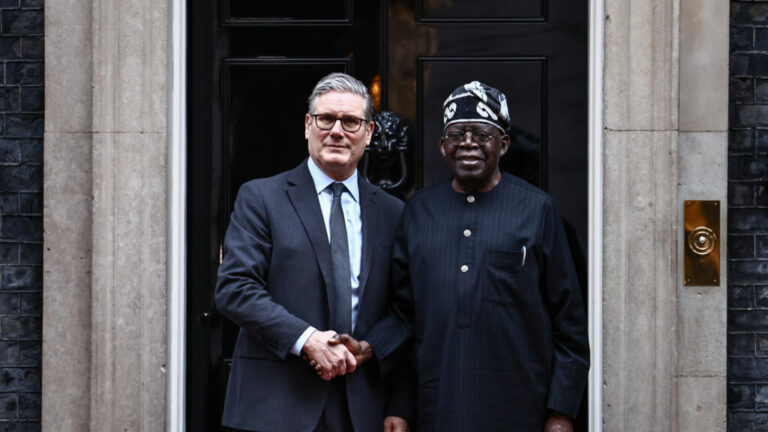
PRESIDENT Bola Tinubu-led Federal Government has signed a new agreement with the United Kingdom (UK) to facilitate the return of thousands of failed asylum seekers and convicted criminals to Nigeria.
The agreement, signed by Minister of Interior, Olubunmi Tunji-Ojo and the UK’s Home Secretary, Shabana Mahmood, seeks to deepen cooperation on migration and criminal justice between both countries.
However, it remains unclear how such a decision would further impact a nation currently overwhelmed with protracted insecurity, occasioned by terrorism, banditry, gunrunning, kidnapping, armed robbery, internet fraud, among others.
The ICIR cannot also immediately confirm if the decision would involve accepting deported citizens of other countries into Nigeria by the Tinubu government, and if there will be pecuniary gains or other benefits attached to the plan.
With the agreement, “visa overstayers, foreign criminals and failed asylum seekers will be removed from British soil far more easily under a new agreement struck this week during the state visit of Nigeria’s President, Bola Tinubu,” a part of a statement released by the UK after the pact said.
The ICIRreported that Tinubu embarked on a state visit to the UK on Tuesday, accompanied by his wife, Oluremi Tinubu, and other top government functionaries for a high-level visit at the invitation of King Charles III and Queen Camilla.
The Nigerian leader was hosted at Windsor Castle, marking the first state visit by a Nigerian president to the United Kingdom in 37 years.
The visit, which ended today, saw some agreements signed between the two nations, including trade and defence to further deepen the relationship between Nigeria’s former colonial master and the Africa’s most populous country.
Reacting further to the agreement on deportation of asylum and criminals, the UK said its letters, an alternative identification document issued to individuals without a valid passport and used to support the return of people with no right to remain in the UK, would be recognised by the Nigerian government for the first time.
“The agreement, reached between the Home Secretary, Shabana Mahmood, and Nigeria’s Minister of Interior, Dr Olubunmi Tunji-Ojo, removes one of the major administrative hurdles to returning people, meaning the UK will no longer have to wait for emergency travel documents to be issued by Nigeria,” the UK said.
According to the country, the new deal adds to the sweeping reforms the Home Secretary has made to the UK immigration system to secure the UK’s borders and remove incentives attracting illegal migrants to Britain.
Data by the UK authorities show that are currently 961 Nigerian failed asylum seekers in the UK who have exhausted their rights of appeal. There are also 1,110 foreign national offenders from Nigeria, whom the Home Office is waiting to deport.
The ICIR reports that the UK struck a similar deal with Rwanda in 2022. It agreed to pay at least £370 million for relocating asylum seekers to the country. However, the decision failed to materialise.
Speaking further on Tuesday after the pact with Nigeria, the UK said, “The agreement marks a shared commitment to safe, fair and well‑managed migration. Annual returns to Nigeria have nearly doubled to 1,150. Returns and deportations of illegal migrants and foreign criminals from the UK have reached nearly 60,000 since the 2024 election.
“A further agreement to launch joint operations and share information has been reached to crack down on criminal gangs abusing visa routes, making sure all arrivals are genuine and ready to contribute.
“Following a series of high‑profile cases involving fake job sponsorships, sham marriages and forged financial or employment records, a new standardised document‑checking system will verify the authenticity of applications. Nigeria will also review its laws to tackle immigration crime, ensuring the toughest possible sentences are handed down to offenders.”
It said the partnership would build on work already disrupting high‑harm fraud networks, preventing millions in losses and protecting vulnerable people across the UK.
Minister for Border Security and Asylum Alex Norris said the agreement was another step in UK’s mission to restore order to the border by ensuring those who have no right to be in the country are swiftly removed.
He said “Nigeria is a key partner in our work to tackle illegal migration, as the UK’s largest African visa market and home to thousands of Nigerians who have built their lives here. We owe everyone across the system fairness.”
Similarly, the Nigerian Minister of Interior commended the pact, noting that his country would ensure its success.