Home Blog Page 610

Ikeja Electric apologises for failing to meet 20-hour electricity supply

0

THE Ikeja Electric has apologised for not meeting Band A customers’ 20-hour minimum electricity supply, as power supply has recently worsened in several parts of Lagos State and Nigeria.

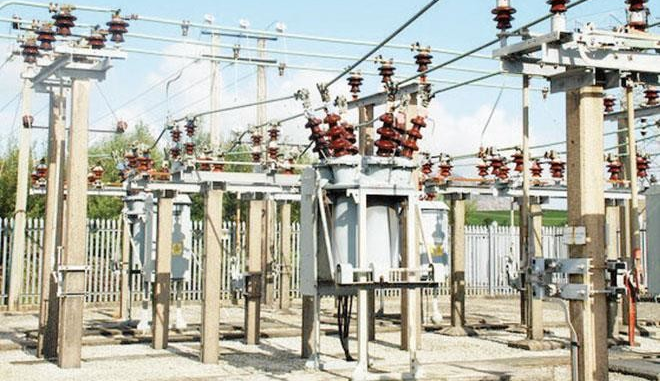
In a statement on Saturday, April 27, the distribution company (DisCo) said it experienced faults with some of its feeders in Ikeja and Ikorodu.

“We extend our apologies for falling short of the expected minimum service level of 20 hours on the Band A feeders below, for 25th and 26th April, 2024. We regret any inconvenience this may have caused you,” it said.

It said the locations most affected were Ikeja and Ikorodu, noting that feeder 11-PT-CINJ-T2 at Awuse in Ikeja and the 11-PTCCINJ-T3 feeder at Oba Akinjobi in Ikeja GRA were affected.  


Read Also:


A feeder at Odogunya in Ikorodu was also affected, resulting in the 11-kilovolt (KV) fault.

The Nigerian Electricity Regulatory Commission (NERC) has approved a tariff hike for Band A customers, who enjoy up to 20 hours of power supply, effective April 1.

The NERC recently approved a tariff hike for Band A customers, who will enjoy up to 20 hours of uninterrupted power supply daily.

Accordingly, the 11 DisCos in the country, including Ikeja Electric, have raised their electricity tariff to about N220 per kilowatt-hour for Band A customers, effective April 1.

According to NERC, Band A customers made up 15 per cent of its 12 million customers in Nigeria but raised concerns over the capacity of the DisCos to provide the required hours of electricity.

Despite the tariff hike, blackouts have persisted in most states, as many customers on Band A in different parts of the country have complained of not having a 20-hour electricity supply, The ICIR reported. 

Attempts to reach the principal manager of Public Affairs at Ikeja Electric, Olusola Ayeni, for comment on when the issues would be resolved -were unsuccessful, as his phone line was switched off when filing this report.

However, the NERC’s commissioner of consumer Affairs, Aisha Mahmud, told The ICIR that customers could seek compensation for poor power supply when DisCos failed to supply a minimum of 20 hours of power under the Band following the latest tariff increment.

According to Mahmud, customers will be eligible for a 50 per cent increase in compensation, as stipulated by NERC regulations, should DisCos persistently fail to meet service levels of at least 20 hours daily for seven consecutive days.

She said it would also result in the automatic downgrade of the feeder.

The ICIR reported that stakeholders had raised concerns about how the NERC could monitor a customer who’s supposed to have 20 hours but gets less and that the tariff hike for Band A customers would not solve the country’s epileptic power supply problem.

Five dead, many injured in Rivers tanker explosion

0

FIVE people have been confirmed dead and several injured in an inferno after a tanker exploded on the East-West Road axis of Port-Harcourt, Rivers state, on the night of Friday, April 27.

About 70 vehicles were said to have been consumed in the tragedy.

The spokesperson for the State Police Command, Grace Iringe-Koko, told the Punch on Saturday that five people had died so far from the incident.

, “For now, about five persons are dead. The Commissioner of Police and his team were on the ground last night to ensure there is no breakdown of law and order.”

 Following the impact of the inferno, eye-witnesses said more people could have died from the accident, which happened after a tanker carrying petroleum products burst into flames.


Read Also:

The tanker was said to be travelling on a run-down road when it was struck by another large truck, causing it to burst into flames.

The fire quickly spread to many other cars on the route, trapping occupants and preventing many of them from escaping. 

The East-West Road has been under construction for many years, increasing risks of accident for motorists who ply the route.

A Facebook user, Chinedu Joseph, posted a video of the incident on his page and said many cars had been burnt down in the inferno.

“It sounds like a serious and distressing situation. I hope the authorities and emergency services respond promptly to contain the fire and provide assistance to those affected,” he said.

Meanwhile, Rivers State Governor Siminalayi Fubara visited the site of the tanker explosion in Eleme Local Government Area on Saturday, April 27.

Fubara was accompanied to the scene of the incident by the Rivers Commissioner for Police, Olatunji Disu, and the Commissioner for Energy, Maximus Nwafor.

After seeing the carnage caused by the fire, Fubara directed security agencies to conduct a thorough assessment of the accidents to facilitate the provision of aid to victims’ families.

He said he got the information through the medical director of Indorama and immediately alerted the security agencies. 

“From what we are seeing this morning, it was not a very pleasant case.

We recorded, from what I am seeing, a huge number of vehicles being destroyed and souls lost. I have already asked the security agencies to give us a full brief so that we can come into the situation fully by seeing how much we can support the families of the bereaved and how we can cushion the effect of the losses,” the governor stated.

He also lamented the state of the East-West road’s Eleme segment, which has rapidly deteriorated.

ICPC grills TETFund directors over alleged N3.8bn contract fraud

0

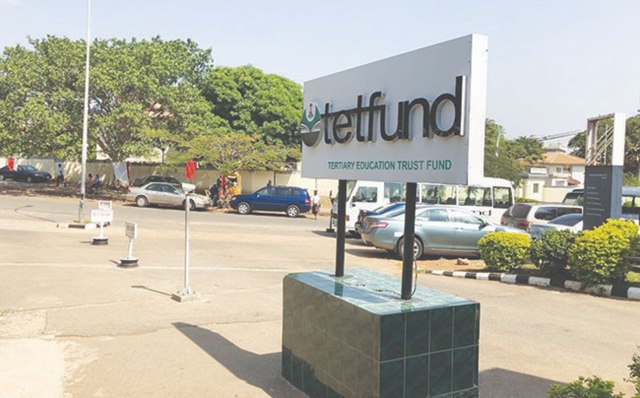
THE Independent Corrupt Practices and Other Related Offences Commission (ICPC) has grilled three directors of the Tertiary Education Trust Fund (TETFUND) over alleged N3.8 billion contract fraud.

The three directors questioned include the agency’s director of finance and accounts, Gloria Olotu, the director of human resources and general administration, Kolapo Okunola, and the director of information communication technology (ICT), Joseph Odo.

The officials reportedly arrived at the ICPC office in the Federal Capital Territory (FCT) between 10 a.m. and 11 a.m. on Thursday and were questioned until around 6 p.m.


Read Also:

The ICPC spokesperson Ademola Bakare told The ICIR on Saturday, April 27, that contrary to wide speculations, the commission did not arrest the executive secretary (ES) of TETFUND, Sonny Echono.

“It’s a director, one Dr Gloria Olotu that was in our custody and helping us with our investigation presently, not the ES,” he stated.

According to Bakara, Olotu could not meet her bail conditions on Thursday but has now been released.

Bakare did not disclose the actual offence committed by the three ICPC directors.

Premium Times reported on Monday, April 22, about a contentious TETFund contract award of N3.8 billion to Fides Et Ratio Academy, an educational service provider.

The TETFund reportedly secretly awarded a contract worth over N3.8 billion five days before the end of former President Muhammadu Buhari’s administration, in violation of the law.

According to the newspaper, the contractor received N2.9 billion from TETFund in four instalments, contravening the law.

As required by Nigeria’s procurement law, the organisation said it could find no proof that bidders submitted a bid for the contract. 

The newspaper claimed the letter of contract award, dated May 24, 2023, was signed by Okunlola.

LG election kicks off in Oyo amid tight security presence

0

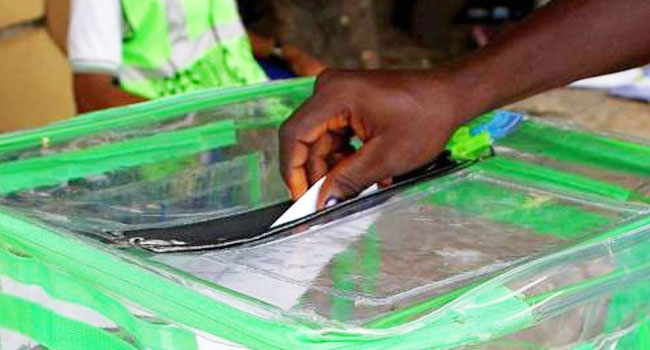
THE local government area (LGA) election in Oyo State, scheduled for Saturday, April 27, has kicked off amid the tight presence of security operatives.

The state Governor Seyi Makinde reportedly cast his vote at about 10.23 a.m. at the polling unit 1, Ward 11 in Ibadan North East LGA.

The Oyo State Independent Electoral Commission (OYSIEC) is conducting the election, which is being held across the 33 LGAs.

However, there was a late arrival of the electoral officials and voting materials at some wards as residents waited patiently for the electoral officials.


Read Also:


The News Agency of Nigeria reported that electoral officials were expected at Ward 9, Onipe area of Ibadan, at about 9.20 a.m.

Similarly, at about 9.15 a.m., electoral officials had yet to resume in Wards 1, 2, and 3 at Aba Aremu, Ido LGA.

A Labour Party (LP) chairmanship candidate for Oluyole LGA, Oyebukola Akinpelu, corroborated the delay.

The election is expected to take place in 6,693 polling units across the 33 LGAs as voters choose their chairpersons and councillors who would oversee the grassroots administration.

The ICIR reports that accreditation and voting are meant to co-occur between 8.00 a.m. and 3.00 p.m.

The state’s Commissioner of Police, Adebola Hamza, had on Friday, April 26, said at least 12,000 security personnel were deployed for the election, placing restriction orders on human and vehicular movements to allow for uninterrupted voting during the stipulated hours.

Hamzat disclosed this at a media briefing by heads of security agencies and OYSIEC, detailing that the personnel included 8,000 police officers and 2,125 from other security agencies, excluding the military.

The police commissioner added that vehicular movement would be restricted from 6 a.m. to 6 p.m.

“Nobody, no matter how highly placed, should go to the polling units with any security aide. The use of sirens or unauthorised number plates will not be tolerated,” he warned.

EFCC arrests 34 suspected currency speculators in Abuja 

0

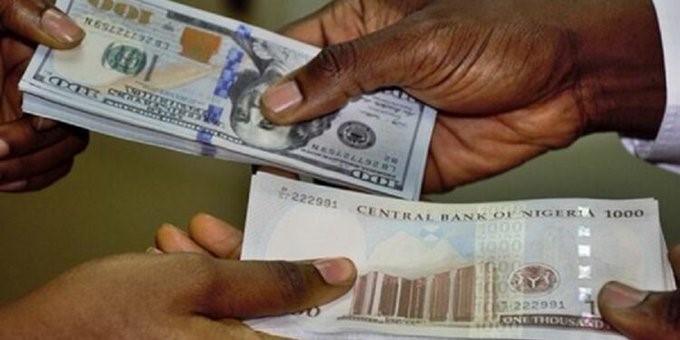
THE Economic and Financial Crimes Commission EFCC) has arrested 34 suspected currency speculators for alleged foreign exchange fraud at the Wuse Zone 4 area of the Federal Capital Territory (FCT).

The suspects were arrested in a sting operation following credible intelligence about illegal sales of dollars.

The spokesperson of the EFCC, Dele Oyewale, disclosed this in a statement on Friday, April 26.


Read Also:

Bawa: EFCC raid on BDC operators behind rise of naira against dollar

CBN revokes 4,173 Bureau De Change operators’ licence

EFCC arrests, grills NDDC’s Account Director over alleged N25bn fraud

ICPC grills TETFund directors over alleged N3.8bn contract fraud

EFCC arrests 34 suspected currency speculators in Abuja 


The anti-graft agency said its operatives, who were attached to the Taskforce on Currency Mutilation, Dollarisation of the Economy, and Forex Malpractice, carried out the arrest.

The agency listed the suspects arrested as Usman Mohammed, Abdullahi Nasir, Abubakar Saleh, Mohammed Kabir Ibrahim, Abubakar Ghadafi, Muktar Usman, Umar Abubakar Abba, Yakubu Sani, Aminu Abubakar, Muhammed Suleman Abara, Yusuf Tahir, Usman Lawal, Usman Lawal and Usman Umar.

Others are Amina Garba Rola, Muhammed Aliyu, Murtala Haruna, Sani Mohammed, Umar Farouk, Muhammed Sagiuru, Aminu Salisu, Lawal Bello, Munzali Hashim, Jamilu Suleiman, Mustapha Umar, Mubarak Tanimu, Adamu Garba, Mohammed Usman, Bello Musa, Saleh Mohammed Naseer, Zaharadeen Yau, Musa Umaru Adamu, Usman Machido, and Abdulaziz Abubakar Abba.

The agency said the suspects would be arraigned in court upon the conclusion of investigation.

The EFCC agents arrested over 50 illegal Bureau De Change (BDC) operators in Wuse Zone 4 Abuja in February due to the continued fall of the naira in the foreign exchange market.

A BDC operator, Abubakar Taura, at the Wuse Zone 4 told reporters that the operatives came around 3 p.m. and arrested over 50 of their members. 

In August 2023, the Central Bank of Nigeria (CBN) intensified efforts to battle currency speculators and developed new guidelines for BDC operators.

Nigeria has been facing serious currency problems since it floated its naira currency against the US dollar. This has caused economic issues, with a surge in inflation leading to a high cost of living.

Also, there are concerns about floating the naira against the dollar, which has led to the dollarisation of the economy and currency speculation. 


Again, ABCON raises concern over naira hoarding, speculation

THE Association of Bureaux De Change Operators of Nigeria (ABCON) has again warned economic saboteurs who are speculating and hoarding the naira to desist from such actions amid the recent naira depreciation.

ABCON has raised several concerns about naira speculation and hoarding. It accused Binance, a borderless foreign exchange trade platform, of significantly influencing Nigeria’s currency market and determining its direction.

The reactions that followed the accusation were Binance’s suspension of its trading platform to Nigerians, the government slam of $10 billion compensation on the platform, and the subsequent arrest of two of its senior executives who are currently being tried in court.

The move saw the naira, which lost value to over N1,900 against the dollar, appreciate to about N1,000 after the clampdown. Still, the naira has returned to depreciating against the dollar in recent weeks.


Read Also:


In the just-concluded week, the naira depreciated against the dollar after opening at N1,169.99 at the official window on Monday, April 22, and closing at N1,339.23 on Friday, April 26. At the parallel (black) market, the naira also slightly depreciated against the dollar when it closed at N1,290 on Friday from N1,245 on Monday.

In a statement on Friday, April 26, ABCON president Aminu Gwadabe expressed hope that the association would establish a unified retail-end forex market to tackle volatility and boost regulatory compliance among Bureau De Change (BDC) operators.

The strategic plan meant to unify operators from different cadres of the market would include the inauguration of state chapters for market coordination to ensure integration and administration of a united market structure in the BDC sub-sector.

He said ABCON would deploy technology to help fight the sabotage of CBN’s reforms.

Gwadabe said the new blueprint for a united retail end forex market structure would ensure the deployment of a centralised, democratised, and liberalised online real-time trading platform.

“Finally, we also condemned in its entirety the seemingly reappearance of illegal economic behaviours in forex conversion and P2P (person-to-person) trading that poses another recent surprises in naira volatility.

“I therefore want to warn that while surprises are the new normal, resilience is also the new skill.”

The ABCON boss expressed confidence in the efforts of the Central Bank and relevant security agencies to adopt measures to deal with any saboteurs and retain successes recorded on naira appreciation.

“It is, therefore, in our own interest to desist from hoarding and speculation as it is a bubble and will burst in no distance time,” he said.

He hinted that ABCON would extend its automation policies and platforms to all BDC operators across Nigeria markets and upgrade its Business Process Platform, formerly SAAZ Master.

Gwadabe also said the association would sustain its engagement with regulatory agencies, security operatives, and other government apparatus to entrench a secure and thriving forex market supporting regulation and government.

“Part of our vision for a united retail-end forex market include activating geo=mapping and automated BDCs physical office verification exercise using the remote gravity physical verification apps.

“This will enable forex buyers to easily locate where BDCs offices are for effective and seamless transactions,” he said.

Gwadabe continued that the vision for a united retail-end forex market would help provide market intelligence reports, enhance the local and global image of BDCs and other stakeholders and market operators, and boost employment generation.

He noted that it would also create a well-structured, transparent, and competitive platform to combat the menace of unlicensed platforms like Binance, Aboki FX, and ByBit.

The ICIR reports that ABCON’s primary goal is to ensure forex availability to the critical retail end of the forex market and bridge the gap between the official and parallel market exchange rates.

Since assuming office last year, the governor of the Central Bank of Nigeria (CBN), Olayemi Cardoso, has repeatedly said the apex bank was pursuing true price discovery for the naira.

Court summons EFCC chair for alleged contempt over Yahaya Bello

0

A KOGI  State High Court sitting in Lokoja has summoned the Chairman of the Economic and Financial Crimes Commission (EFCC), Ola Olukoyede, to provide justification for why he should not be subjected to committal order for allegedly breaking a court order regarding the state’s former governor Yahaya Bello.

The court ordered Olukoyede to appear before it on May 13.  

The EFCC boss is facing a contempt charge for carrying out “some acts upon which they (the EFCC) have been restrained” by the court on February 9, pending the determination of the substantive originating motion.


Read Also:

The judge, I. A. Jamil, in his ruling in suit no: HCL/68M/2024 and motion no: HCL/190M/2024, requested that “the said act was carried out by the respondent (EFCC) in violation of the order, which was valid and subsisting when they carried out the act. 

The judge’s decision was based on a motion ex-parte that Bello filed through his lawyer, M.S. Yusuf, asking the court to issue and serve Form 49 Notice, which requires the respondent (the EFCC chairman) to justify why an order of committal on him should not be imposed.

After hearing the applicant’s attorney’s arguments, reviewing the written address submission, and reviewing the evidence, Jamil granted Bello’s requests and ordered Olukoyede to be called before the court to address the contempt charge.

The ICIR reported that EFCC operatives stormed Bello’s Abuja home on Wednesday, April 17, to arrest him.

The planned arrest on the alleged sleaze he perpetrated while in office.

However, the arrest was unsuccessful, as multiple reports say the Kogi State governor, Ahmed Usman Ododo, smuggled out the former governor. 

Ododo drove into Bello’s residence while the EFCC surrounded the building.

According to reports, the development forced the commission’s operatives to leave Bello’s residence.

The ICIR reported that there was confusion when the EFCC obtained a warrant for Bello’s arrest from a Federal High Court in Abuja after another judgment from the Kogi State High Court prevented the commission from enforcing the arrest.

The Abuja order was in preparation for his planned arraignment on Thursday, April 18, though he had not yet been arrested.

Emeka Nwite, a justice of the Federal High Court, granted Bello’s arrest warrant on Wednesday, April 17, at the EFCC’s request.

The Abuja ruling contradicted the judgement obtained by Bello in Kogi State.

The Kogi order restrained the commission from arresting, detaining, and prosecuting the state’s former governor.

The EFCC is prosecuting Bello and others on an amended 17-count charge of money laundering, breach of trust and misappropriation of N84 billion.

After failing to appear in court, the EFCC declared Bello wanted.

Nigerian Breweries’ operational loss widens by 386% in Q1

NIGERIAN Breweries (NB) Plc’s net loss increased by 386.13 per cent to N52.09 billion in the first quarter (Q1) of 2024.

The consumer goods company temporarily shut two of its nine factories in 2023 following an operational net loss of N106 billion.

The Managing Director, Hans Essaadi, told journalists in Lagos at a conference earlier this month that the loss resulted from naira depreciation, high inflation, foreign exchange (FX) challenges, and diminished consumer disposable income.

As a result, NB has planned to raise N600 billion through a rights issue, among other strategic decisions.


Read Also:


Essaadi stressed that the business recovery plan entailed a rights issue, a review of the company’s current organisational structure and size, the temporary suspension of operations in two of its nine breweries, and optimisation of production capacity in the other seven breweries—some of which have received significant capital investment in recent years.

Despite the strategic plans the company said it was implementing, its operational performance has continued in a loss streak.

In its Q1 financial statements released on Friday, April 26, NB posted a net loss of N52.09 billion, relative to the N10.72 billion loss reported in Q1 2023.

In a statement on Friday, NB blamed its Q1 loss on increased interest rates resulting from upward adjustments in monetary policy rates and continued volatility in the foreign exchange market.

A check by The ICIR showed that NB’s negative performance arose significantly from its borrowing costs (finance expenses) to creditors, representing expenses outside its core business.

The company reported N90.85 billion in negative net finance costs in the review quarter, which rose by 370.2 per cent from N19.32 billion in Q1 2022, as its finance expenses exceeded its income.

A net finance cost is the difference between financing the purchase of an asset (finance expenses) and the asset’s cash yield (finance income). Negative net finance costs occur when the expenses exceed the income.

“Looking forward, while the Nigerian business environment remains turbulent in the short term, we maintain our unwavering belief in the country’s positive long-term market fundamentals.

“We are committed to navigating these challenges with the implementation of our business recovery plan, which is a business-wide reorganisation programme involving the optimisation of our operations for efficiency and capital injection via a rights issue with a view to improving our financial position,” NB said.

In August 2023, The ICIR reported losses of most fast-moving consumer goods (FMCG) companies, including Nestle Nigeria, Dangote Sugar Refinery, and Cadbury Nigeria.

Brain drain: Less than 45% of registered doctors in Nigeria renew licence – MDCN

0

THE Medical and Dental Council of Nigeria (MDCN) said less than 45 per cent of registered doctors in Nigeria renewed their annual licence in 2023.

The MDCN Deputy-Registrar Victor Kolawole disclosed this at the induction/oath-takingceremony of the 2022/2023 Batch B Medicine and Surgery graduates of the Edo State University on Friday, April 26.

He noted that out of 130,000 doctors registered since 1963, only 58,000 renewed their licenses.


Read Also:


Kolawole attributed the decline to the emigration of doctors and appealed to the inductees to remain in Nigeria and practice the profession.

He also urged the inductees to uphold the sanctity of the profession and called on the governor to improve facilities at the University Teaching Hospital.

“It is noteworthy that Edo State University Teaching Hospital Auchi is the first state-owned teaching hospital in Edo. I respectfully urge the state government to sustain efforts towards improving facilities at Edo State University Teaching Hospital, Auchi,” he said.

Doctors have continued to emigrate from Nigeria in search of greener pastures.

In 2018, it was reported that at least 12 Nigerian doctors were registered in the United Kingdom weekly.

The emigration of doctors has been a source of concern for Nigerians, as the country currently has a doctor-patient ratio of only about one doctor to every 2,220 people.

In 2023, Nigeria’s House of Representatives passed a bill seeking to amend the MDCN Act to prevent Nigeria-trained medical or dental practitioners from being granted full licenses until they have worked for a minimum of five years in the country.

The bill was met with stiff resistance by the Nigeria Medical Association (NMA) as doctors threatened to go on strike, citing poor working conditions and inadequate remuneration for medical practitioners in the country as significant reasons for the emigration.

Benin, Liberia, Sierra-Leone join five other African countries to roll out malaria vaccine

0

The World Health Organisation has commended Benin, Liberia, and Sierra Leone for launching a ‘large-scale rollout’ of a life-saving malaria vaccine, targeting millions of children across the three West African nations. 

The vaccine rollout, announced on World Malaria Day, seeks further to scale up vaccine deployment in the African region, according to the global health body.

This new development increased the number of countries on the continent offering the malaria vaccine as part of their childhood immunisation programmes to eight.


Read Also:


Between 2019 and July 2023, the malaria vaccine, the RTS, S/AS01, was administered to more than 1.7 million children in Ghana, Kenya, and Malawi. 

The vaccine has since reached over 2 million children from 2019 to December 2023, showing a significant reduction in malaria illness, a 13 per cent drop in overall child mortality, and substantial reductions in hospitalisations in the three countries. 

The WHO noted that since 2019, Ghana, Kenya, and Malawi had been implementing the vaccine through the Malaria Vaccine Implementation Programme and had demonstrated its safety and efficacy in reducing severe malaria and child mortality. 

The initiative is coordinated by WHO and funded by Gavi, the Vaccine Alliance, the Global Fund, and Unitaid.

Meanwhile, WHO said that several of the over 30 countries in the African region had expressed interest in the vaccine and were scheduled to roll it out in the next year through support from Gavi, the Vaccine Alliance, as efforts continue to widen its deployment in the region.

WHO stated that Benin, which received 215 900 doses, had added the malaria vaccine to its Expanded Programme on Immunization. The vaccine should be given in four doses to children around five months of age.

“The introduction of the malaria vaccine in the Expanded Programme on Immunization for our children is a major step forward in the fight against this scourge. I would like to reassure that the malaria vaccines are safe and effective and contribute to the protection of our children against this serious and fatal diseases,” said Benjamin Hounkpatin, a professor and Minister of Health of Benin.

According to WHO, the vaccine rollout commenced in Liberia’s southern Rivercess County and is scheduled to extend to five additional counties with significant malaria prevalence.

An estimated 45,000 children are anticipated to receive benefits from the 112,000 doses of the vaccine currently available.

Also, in Sierra Leone, the first doses were administered to children at a health centre in Western Area Rural, where the authorities kicked off the rollout of 550,000 vaccine doses. The vaccine will then be delivered to health facilities nationwide. 

“With the new, safe and efficacious malaria vaccine, we now have an additional tool to fight this disease. In combination with insecticide-treated nets, effective diagnosis and treatment, and indoor spraying, no child should die from malaria infection,” said Austin Demby, a doctor and Minister of Health of Sierra Leone.

The ICIR reports that malaria remains a huge health challenge in the African region, with the region accounting for 94 per cent of global malaria cases and 95 per cent of all malaria deaths in 2022, according to the World Malaria Report 2023.

Challenges in the fight against Malaria

WHO said in a statement commemorating International World Malaria Day that the fight against Malaria in African countries has stalled since 2017.

The ICIR also reported that despite concerted efforts and interventions, Nigeria continues to face significant challenges in its fight against the disease.

Some of the factors cited by WHO and the health experts who spoke to The ICIR include climate change, humanitarian crises, low access to and insufficient quality of health services, gender-related barriers, biological threats such as insecticide, drug resistance and global economic crises. 

They also identified a lack of state ownership, poor budgetary allocations, and high out-of-pocket expenditures as contributing factors.