Home Blog Page 611

Burkina Faso bans BBC, VOA over mass killing reportage

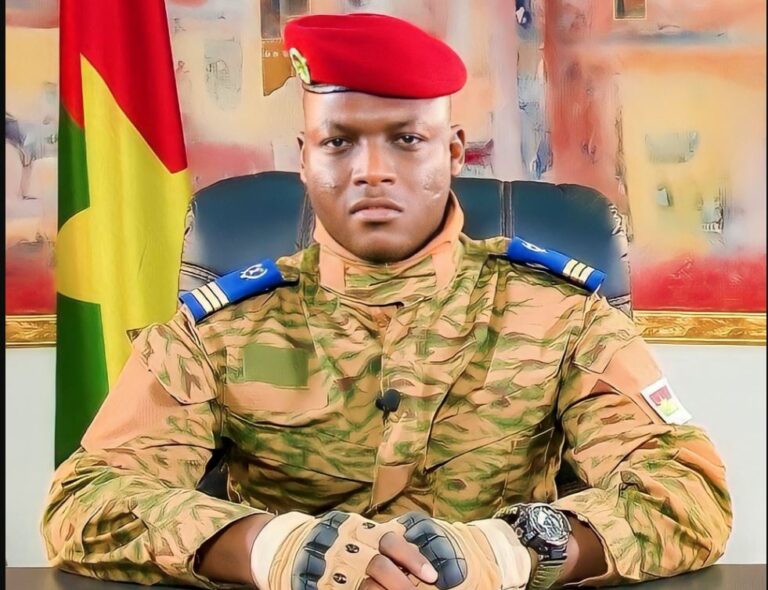
THE government of Burkina Faso has suspended the British Broadcasting Corporation (BBC) and Voice of America (VOA) radio stations for reporting mass executions of civilians by the country’s military forces, as detailed in a Human Rights Watch (HRW) report.

According to the country’s Superior Council for Communication (CSC) spokeswoman, Tonssira Myrian Corine Sanou, both radio stations would be suspended for two weeks, warning other media networks to avoid reporting the story.

“The programmes of these two international radio networks broadcasting from Ouagadougou have been suspended for a period of two weeks”, she announced.


Read also:

Okuama: Military declares 8 wanted over killing of 17 soldiers

Floods kill 155 in Tanzania, 45 in Kenya

Nigerian Military retrieves over 66,000 firearms from non-state actors


The CSC spokeswoman further added that BBC Africa and the United States-funded VOA had also published the report on their digital platforms, stating that the report by HRW contained “peremptory and tendentious declarations against the Army likely to create public disorder and it had hasty and biased declarations without tangible proof against the Burkinabe Army”.

The CSC also noted that the country’s internet service providers had been ordered to suspend access to the websites and other digital platforms of the BBC, VOA and HRW from Burkina Faso.

According to HRW’s findings, the massacre seemed to be a part of a larger military operation against civilians who were thought to be working with armed organizations.

The report revealed that about 44 people, including 20 children, were slaughtered by the nation’s military in Nondin village, while 179 people, including 36 children, were killed in nearby Soro village of Thiou district in the northern Yatenga province.

Ondo poll: ‘We will defeat APC roundly’, PDP boasts

FOLLOWING the emergence of the former deputy governor of Ondo State, Agboola Ajayi, as the governorship candidate of the Peoples Democratic Party (PDP) in the state, the party has boasted that it was on its way back to power.

The party’s publicity secretary,  Kennedy Peretei, said this while speaking with The ICIR on Friday, April 26.

Ajayi, who served under the late governor Rotimi Akeredolu, picked the party’s ticket on Thursday, April 25, having defeated six other aspirants at the primary held in Akure, the state capital.


Read Also:


Akeredolu and Ajayi parted ways after an unresolved feud at the end of the late governor’s first term in 2020.

Akeredolu picked the incumbent Governor Lucky Aiyedatiwa as his running mate instead of continuing with Ajayi in the 2020 poll.

Coincidentally, Aiyedatiwa who succeeded Akeredolu after his demise on December 27, 2023 is the candidate of his party, the All Progressives Congress (APC), for the November 16 election.

In 2020, Ajayi defected from the All Progressives Congress to the PDP and subsequently joined the Zenith Labour Party in his bid to become the state governor but lost to Akeredolu. 

Common things between Ajayi, Aiyedatiwa

Both leaders served as deputy governors under the late Akeredolu.

Ajayi served as the chairman of the House Committee on Niger Delta Development Commission (NDDC) from 2007 to 2010, when he was in the House of Representatives. Aiyedatiwa was the Ondo State’s representative on the NDDC Board from 2018 to 2019.

They are both from the Ondo South senatorial district.

They are both in their 50s (quinquagenarian). Agboola is 55, and Aiyedatiwa is 59.

Controversies continue to trails APC primary

The ICIR reported that Aiyedatiwa was declared the winner of the APC primary on April 22.

The primary committee chairman and Kogi State Governor, Ahmed Ododo, declared him the winner, having gathered 48,569 votes. He edged out his fellow contender, Mayowa Akinfolarin, who polled 15,343 votes, while Olusola Oke came third with 14,865 votes.

Although several contestants alleged that the election was married with irregularities, Ododo said the exercise went on “smoothly”, with little skirmishes recorded.

In addition, some party supporters staged protests in Akure, calling for the cancellation of the primary and removal of Ododo as the committee chairman.

PDP vows to unseat APC

Meanwhile, speaking with The ICIR, the PDP publicity secretary in the state said the party was ready to give the ruling party a run for its money.

Responding to a question on suspected friendship between between Agboola and Aiyedatiwa which might not make the election very competitive, Peretei said, “Do you know that all the 16 people that contested in the APC are from the South? Do you know that even the seven who contested from the PDP are all from the South?

“Seven plus 16 is 23. All the 23 are from the South. They are all kinsmen. All of them are kinsmen. There is no issue of being friends, they can’t fight each other. It’s a political warefare. We are saying that APC has not done well to deserve another term in government. The PDP is going to give them a run for their money.”

Asked if there were aggrieved aspirants in his party as the APC recorded after its primary, he said, “Not to my knowledge. This is because the process was free and fair. The delegates were known two weeks before the primaries. Nobody was in the dark.”

When reminded that the PDP had not been in power for nearly a decade in the state and there could be challenges with its structures, especially at the local level, he said “We’ll defeat them (the APC) roundly.”

CJID seeks delegates for journalism, digital tech, AI dialogue

0

THE Centre for Journalism Innovation and Development (CJID) is inviting journalists interested in digital technology and AI to attend its dialogue on the intersection of journalism, digital technology, and artificial intelligence (AI).

During the dialogue, experts will discuss the intersection of these fields and strategies for navigating digital disruption, harnessing the power of AI, and ensuring the continued vitality of the media ecosystem.


Read Also:

UNESCO invites journalists to annual World Press Freedom Day conference

Springer Nature organises webinar on migration, sustainability

FactCheck Africa opens application for AI journalism fellowship

Ondo poll: ‘We will defeat APC roundly’, PDP boasts

Burkina Faso bans BBC, VOA over mass killing reportage


The programme is scheduled for May 27-28, 2024, in Abuja and will be hosted by the (CJID).

All interested applicants in Nigeria are welcome to apply, as the CJID has limited and highly competitive travel or accommodation support for some selected delegates outside Abuja.

The deadline for applications is May 6, 2024.

To apply, click here


Naira depreciation pushes Customs duty rate by 11% in 2 days

THE latest naira depreciation has resulted in import duty spike as Nigeria Customs Service (NCS) exchange rate for import duty collection has risen by 11.0 per cent.

A check by The ICIR showed that the duty has risen from N1,150/$ charged on Tuesday, April 23, to N1,277.52/$ on Thursday, April 25.

This is according to the latest update on the customs exchange rate window.

The rise indicates an increase of N127.36 within the two days.


Read Also:


The 11 per cent rise is coming on the heels of concerns about an incessant increase in Customs duty. Economic analysts have urged the government to have a fixed rate on duty payment, which would reduce inflation.

“Let the Central Bank of Nigeria have a fixed rate for import duty. It will help to moderate inflation rise which is causing lots of problems to the economy,” an economist and the former Director-General of Lagos Chamber of Commerce and Industry, Muda Yusuf, told The ICIR.

The constant adjustments of exchange duty enable ‘price gouging’ by businesses instead of allowing traditional market fundamentals to determine the price of goods.

This development does not sit well with manufacturers who had, on several occasions, engaged the government on this while seeking a rate that would remove uncertainties in the prices of commodities.

“It will lead to moderate cost of production and raw materials inputs, and it will bring down the cost of end products and increase the volume of sales. More production and sales means more revenue for the government and overall moderate inflation,” the Director-General of the Manufacturers Association of Nigeria (MAN) Segun Ajayi-Kadir told The ICIR.

Notably, the Central Bank of Nigeria (CBN) had previously announced that the exchange rate indicated on the Form M application date would be used for duty collection calculations.

Collaborating closely with the CBN, the NCS regularly updates the exchange rate to synchronise with the official market rate on the Nigerian Autonomous Foreign Exchange Market (NAFEM) window, consequently leading to frequent adjustments in the rate.

The exchange rate for Customs import duties collection has steadily increased after the naira depreciated from a peak of N1612.28/$ earlier in March to just over 1,100, occasioned by the strengthening of the naira.

The Customs duty has risen more than six times under President Bola Tinubu, prompting concerns about its impact on the rise of commodity prices and growing food inflation at 40 per cent.

However, the exchange rate has steadily risen since the naira depreciated last week.

On April 21, the exchange rate stood at N1,150 from N1,147 because of the marginal weakening of the naira.

On Thursday, the naira closed on the official window at N1329.4 to the greenback, according to data from the CBN.

The naira slumped 17 per cent to a one-month low at N1,300/$1 on the official window on Wednesday, April 24.


Abuja school to refund $760,000 advance fee paid by Yahaya Bello for his children

0

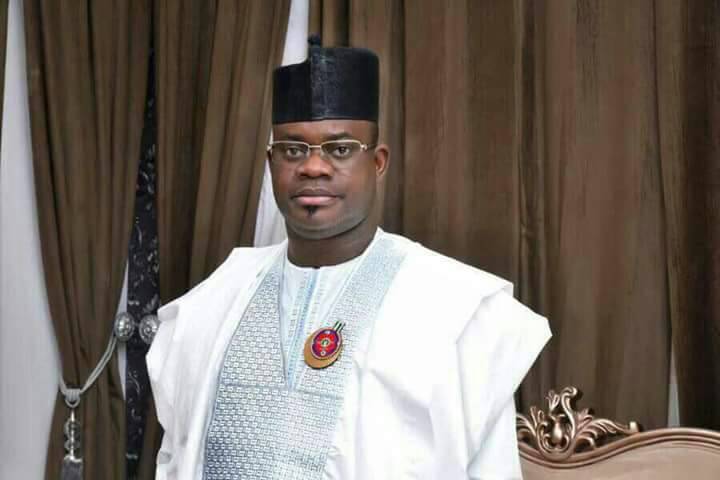
THE American International School Abuja (AISA) has sought to refund the $760,000 advance fee paid by the former governor of Kogi State, Yahaya Bello, for his children.

In a letter, the school asked the Economic and Financial Crimes Commission (EFCC) for “authentic banking details” to refund the fee.

The EFCC chairman, Ola Olukoyede, had alleged that Bello paid $720,000 in advance as fee for five of his children from the Kogi State government coffers.

The fee was to take care of their education for years.


Read Also:

Bello is currently battling a corruption case worth N80.2 billion with the EFCC.

The EFCC had trailed the transaction between Bello and the school before the school issued its letter in 2022.

Reacting to the EFCC’s demand for the money in a letter dated October 24, 2022, the school stated that since it had already deducted the cost of the educational services, it would only refund $760,910.

The school said $845.8 in tuition and other fees has been deposited into its account since September 7, 2021.

The school noted, “We have calculated the net amount to be transferred and refunded to the state after deducting the educational services rendered as $760,910.84.”

It claimed in a statement signed by Greg Hughes that “Ali Bello contacted the school on Friday, August 13, 2021, requesting to pay the family school fees in advance until the students graduate from high school,” 

Bello has been on EFCC’s radar over corruption charges.

The commission’s operatives stormed Bello’s Abuja home on Wednesday, April 17, to arrest him.

The planned arrest on the alleged sleaze he perpetrated while in office.

His house in the Wuse Zone 4 area of the nation’s capital was cordoned off as the operatives made spirited attempts to gain entry.

However, the arrest was unsuccessful, as multiple reports say the Kogi State governor, Ahmed Usman Ododo, smuggled out the former governor. 

Ododo drove into Bello’s residence while the EFCC surrounded the building Wednesday afternoon.

According to reports, the development forced the commission’s operatives to leave Bello’s residence.

The ICIR reported on March 15 that the EFCC filed charges against Bello, his nephew Ali Bello, Dauda Sulaiman, and Abdulsalam Hudu for alleged N84 billion money laundering.

The case was initiated before James Omotosho of the Federal High Court, Maitama, Abuja, on Thursday, March 14, 2024.

The EFCC is prosecuting Bello and others on an amended 17-count charge of money laundering, breach of trust and misappropriation of N84 billion.

After failing to appear in court, the EFCC declared Bello wanted.

The anti-corruption Agency revealed this on its verified Facebook handle on Thursday, April 18. 

The photograph of the former governor was displayed with the inscription ‘WANTED’ in the notice.

Marketers mum over price hike as PMS queues worsen in FCT, Kaduna

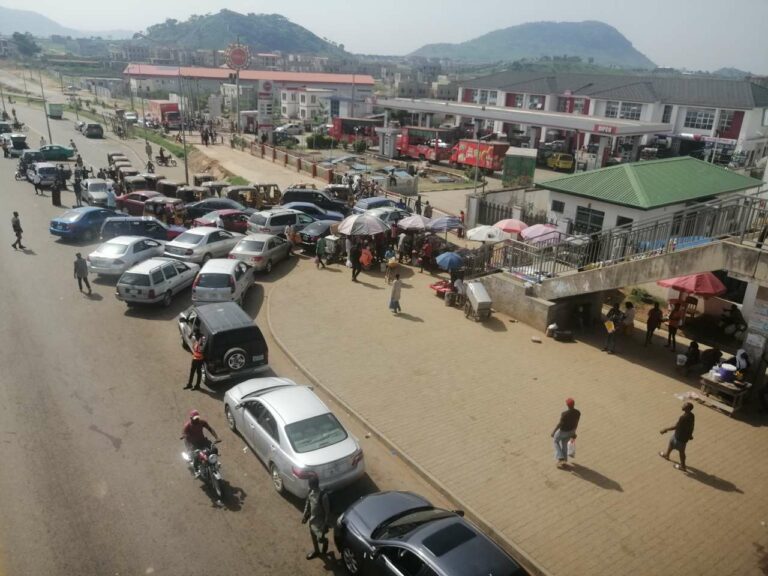
SENIOR officials of major petroleum marketers across the country have kept mum over possible price hikes following a build-up of longer fuel queues.

Various union bodies of petroleum marketers have yet to issue an official statement on the scarcity, and many filling stations in the Federal Capital Territory (FCT) and Kaduna state have shut down.

The ICIR called the Major Oil Marketers Association of Nigeria (MOMAN) for its response to the situation, but calls and messages sent to its leadership were not replied to.


Read Also:


The queue build-up may not be unconnected with the global surge of Brent crude, which sells at 89.22 per barrel, and the possible move to hike the price by marketers.

The $89.22 per barrel price puts the average official cost of fuel at about N900 if freight charges and logistic costs are built into the cost as Nigeria waits for the take-off of the Portharcourt and Dangote refineries, which could bring down the price by about 15 per cent.

Nevertheless, the Nigerian National Petroleum Company Limited (NNPCL) has pegged the price at N617 per litre in Abuja and about N600 in some parts of the country.

It continues with its price peg despite the deregulation of the petroleum upstream and downstream sectors.

Findings showed that in Lagos, there are insignificant fuel queues in the metropolis and Ogun States on Thursday, April 25, amid growing fears of possible fuel hikes.

The ICIR reporter in Lagos also observed Gbagada, Ojudu-Berger, and some filling stations along the Lagos-Ibadan Expressway; fuel was sold relatively at N635 in most filling stations, not NNPC Ltd.

However, following the panic buying in other states, the NNPCL said it had resolved the cause of the challenge in the fuel supply.

The NNPCL disclosed this in a statement on Thursday by its chief corporate communications officer, Olufemi Soneye.

“The Nigerian National Petroleum Company Limited (NNPC Ltd.) wishes to clarify that the tightness in the supply of premium motor spirit currently being experienced in some areas across the country is due to logistics issues, which have been resolved,” the statement said.

The state-owned oil company reiterated that the prices of petroleum products were not changing.

It urged Nigerians to avoid panic buying, adding that the product was in large quantity in the country.

NNPC’s pump price selling below N600 in Lagos

The pump price of petrol at the NNPCL filling stations in Lagos state is below N600 per litre, while it has gone above N600 in other filling stations.

At the NNPCL filling stations in Ojudu-Berger and Alapere-Estate, the pump price of fuel is at N568, while other filling stations not owned by NNPCL were selling at a higher rate.

A TotalEnergies filling station along the Lagos-Ibadan Expressway, around the Alausa-Secretariat, was selling at N603, while a Conoil filling station a few meters away was selling at N608.

A fuel attendant at Conoil told the reporter that most of the filling stations, like Conoil and Mobil, could sell at a cheaper rate than other filling stations owned by individuals.

“The marketers that have depots like Coniol, Mobil, and others will sell at a lower price than filing stations that are owned by private individuals who do not have depots,” the fuel attendant said.

In some privately owned filling stations, the pump price of fuel was about N640.

At Petrocam filling station in Mowe, Ogun State, the pump price of fuel was selling for N640 and Ardova at N635.

Queues in Abuja

In Abuja, the fuel queue is intensifying with some marketers selling above N700.

A motorist, Babajide Ayetoto, lamented that he had been in the queue at NNPCL in Kubwa Road since 7 am.

He wondered what could have resulted in the fuel scarcity this time.

“I have been here since 7 am today, yet no assurance that I could get the product. The situation is terrible. I wonder what could be the reason for this hardship”, he stated.

A resident of Lugbe in the Federal Capital Territory (FCT), Nnamdi Okorie, said the situation was the same at the Wuye area where he queued to buy fuel.

“I queued at Shafa filling station, Wuye, for hours before I could get the product. On my way from Lugbe, I could not see any filling station dispensing”, he said.

Checks by The ICIR on Wednesday and Thursday showed that virtually all fuel stations along the Airport Road and Kuje community of the FCT were shut.

Recall that President Bola Ahmed Tinubu’s government removed fuel subsidies, causing the pump price of fuel to rise to between N617 and N690 per litre from N238.

PMS scarcity as fuel sells N1,000 in Kaduna

Kaduna residents are grappling with severe fuel scarcity, with motorists compelled to purchase the product for as much as N1,100 per litre from black market vendors.

Findings showed that many residents going to work were stranded due to fuel scarcity across the state, and very few commercial operators provided services.

Most filling stations were not dispensing fuel, and the few that did hiked the pump price to between N750 and N810 per litre. Despite the hike, long queues were seen at the stations.

A resident, Mohammed Amin, said he bought two litres for N2 200. He stated that if the problem persisted, he would abandon his vehicle at home and opt for commercial transportation.

Findings showed that commercial operators also use the scarcity to hike their fares.

A commuter, Amina Isa, who said she usually paid N100 from the NNPCL filling station in Millennium City in the state to a roundabout where she picked another tricycle to her destination, said, “After waiting three hours without getting a ride, I had no option but to board the next available keke who charged me N300 to the same destination.


    Naira depreciates further to 1,400/$ amid rising dollar demand

    THE Nigerian naira depreciated further on Thursday, April 25, and was exchanged for N1,400 against the US dollar on the black market despite the Central Bank of Nigeria’s (CBN) below-market-rate sales to Bureau De Change Operators (BDCs).

    Findings showed the depreciation followed renewed demand pressure in the foreign exchange (FX) market.

    Economic analysts said the naira is under pressure because of Nigeria’s weak exports and inability to meet the Organisation of Petroleum Exporting Countries (OPEC) quota assigned to Nigeria at 1.7 million barrels per day.


    Read Also:


    “The fiscal side needs to take responsibility and show it is working, the structural issues are still there, and food inflation is so high. The monetary policy is not enough. Already, the naira has lost about N400 against the US dollar this month, as dynamics changes in Nigeria’s foreign exchange market,” an economist, Olumide Adesina, said in reaction to the naira’s depreciation.

    With the current exchange rate, the naira has lost 19.64 per cent in two weeks compared to N1,125 per dollar quoted on April 12, 2023, on the parallel market, popularly called the black market.

    On Wednesday, the naira depreciated to N1,308.52 per dollar at the Nigerian Autonomous Foreign Exchange Market (NAFEM).

    Compared to the level on April 12, 2024, the naira has weakened by 12.69 per cent from N1,142.38 per dollar in the last two weeks, according to data from the FMDQ Securities Exchange.

    The naira has retreated this week as dollar liquidity dips on the back of the exit of some foreign portfolio investors spooked by the Israel-Hamas war and a stronger dollar.

    “The market needs exchange rate hedging products to manage volatility. CBN may not intervene fully in the market because they have been called out severally for dipping the reserve in their interventions. In the coming days, speculators may dominate the market,” an economist, Kingsley Obiakor, said.

    Alleged fraud: court orders arrest of former NILDS DG

    0

    A FEDERAL High Court in Apo, Abuja, has ordered the arrest of the former Director General of the National Institute for Legislative and Democratic Studies (NILDS), Ladi Aisha Hamalai, over her failure to appear in the fraud case preferred against her by the Independent Corrupt Practices and Other Related Offences Commission (ICPC).

    The Court was presided over by a judge, C. O. Oba, who issued the bench warrant for the arrest on Monday, April 22, 2024, following her repeated failure to appear in court to defend herself. 

     The ICPC lawyer informed the court that it was the fourth consecutive time the accused had failed to honour the commission’s invitation to appear in the case, having been adequately served.


    Read Also:

     According to the ICPC in the suit charge number FCT/HC/CR/312/23, the commission is accusing Hamalai of using her office to confer corrupt advantage upon herself by requesting the sum of N12 million to rent a guest house for her office but used the amount to purchase a property for herself at Gwarimpa area of Abuja.

    In a four-count charge, the commission also accused the former DG of requesting another N29 million to furnish the building as a government guest house. 

     The ICPC prosecutor, Michael Adesola, told the court that the former Hamalai had been served the arraignment notice but was surprised she was not in court.

    On her part, Hamalai’s counsel, Olayemi Afolayan, informed the court that her client was sick, the reason she was absent.

    However, the judge ruled that having failed to appear in court, the ICPC should effect her arrest and produce her in court at the next adjourned date.

     The matter has since been adjourned till September 9.

    The NILDS is a capacity-building organisation of the National Assembly that offers technical assistance to Nigeria’s legislature and other democratic establishments. It was established under the Legislative Studies Act on March 2, 2011. 

    Floods kill 155 in Tanzania, 45 in Kenya

    0

    ABOUT 155 people have died from flood and landslides caused by El Niño in Tanzania, leaving at least 236 injured, the country’s Prime Minister Kassim Majaliwa said on Thursday, April 25.

    According to Majaliwa, over 10,000 houses were damaged, with about 200,000 people being affected.

    He warned that the rains might continue into May and urged families to leave flood-prone areas.

    “The heavy El Nino rains, accompanied by strong winds, floods, and landslides in various parts of the country, have caused significant damage. These include loss of life, destruction of crops, homes, citizens’ property, and infrastructure such as roads, bridges, and railways,” he said.

    Read also:

    Jigawa’s silent crisis: Farmers’ battle against hunger in the wake of devastating floods

    Flooding swallows communities in Kogi but some residents stay back to adapt

    UNGA 78: Africa needs global support to tackle climate change – Tinubu

    Like Tanzania, heavy rains have also swept through other countries in East Africa, including Kenya and Burundi, causing a humanitarian crisis in the region.

    Kenya has experienced severe rain since mid-March, but the downpours have worsened over the last week, resulting in widespread flooding.

    Since the rains began, around 45 people have died as a result of flooding in Kenya, with 13 dead in Nairobi this week, while over 96,000 people have been displaced in Burundi.

    Kenya’s president, William Ruto, called for an emergency multi-agency meeting and ordered the army to help with rescue operations as the rains pounded large parts of the country.

    The rains caused floods that engulfed homes and blocked roads and bridges in some slum areas of the capital.

    With forecasts predicting additional heavy rains, Kenyans have been cautioned to remain vigilant, as residents residing in the most flood-prone areas would be relocated.

    During a press briefing, the country’s deputy speaker, Gladys Boss, told reporters that “the government would do whatever it takes, apply all the required resources in terms of money and personnel to make sure that lives are not lost and the people of Kenya are protected from this disaster.”

    Nigeria remains world’s most burdened country with malaria cases, deaths

    0

    NIGERIA remains world’s malaria capital, despite making significant strides in reducing cases and deaths from the disease over the past two decades, according to the World Health Organisation’s (WHO) data.

    As the country joins the rest of the world to commemorate this year World Malaria Day, today, April 25, The ICIR presents how the country has fared with the scourge.

    Public health experts who spoke with The ICIR urged Nigerians to utilise available services and support the government’s efforts to combat the disease.

    They called on government at all levels to be more committed to tackling the menace.

    They also solicited sustained commitment to the fight against the scourge.

    Caused by parasites transmitted to people through the bites of infected female Anopheles mosquitoes, malaria is a preventable and curable major public health issue affecting millions of Nigerians.


    Read Also:


    The disease, mostly found in tropical countries, can be life-threatening, with nearly half of the world and 97 per cent of Nigeria’s population at risk of the disease.

    For instance, in 2021, there were approximately 249 million reported cases of malaria, leading to about 608,000 deaths.

    Nigeria (26.6 per cent), the Democratic Republic of the Congo (12.3 per cent), Uganda (5.1 per cent), Mozambique (4.1 per cent) and Angola (3.4 per cent) collectively represented half of the total malaria cases worldwide.

    Also, Nigeria (31.3 per cent), the Democratic Republic of the Congo (12.6 per cent), Tanzania (4.1 per cent), and Niger (3.9 per cent) together accounted for slightly more than half of all malaria-related deaths worldwide.

    While individuals of all ages are susceptible to the disease, children and pregnant women are particularly vulnerable and prone to experiencing complications. This heightened susceptibility puts them at a higher risk of severe illness and increases the likelihood of mortality, especially among children under five.

    Experts who spoke with The ICIR disclosed that a higher prevalence is generally observed in the northern states compared to the southern states.

    They also noted that the Nigerian government has taken proactive measures over the years to reduce the spread and prevalence of the disease, focusing on reducing it to at least 10 per cent by 2025, but minimal successes have been recorded.

    Why Nigeria continues to grapple with malaria

    Despite concerted efforts and interventions, Nigeria continues to face significant challenges in its fight against malaria, said Adewale Adeleye Samuel, medical doctor and a senior registrar at the Department of Public Medicine, University of Abuja Teaching Hospital. 

    Samuel said it was important to look into the factors contributing to this persistent struggle, noting that the government had implemented several strategies to reduce the prevalence of the disease over the years.

    He also noted that while the government needed to do more to sensitise and distribute insecticide-treated nets (ITNs) to people in marginalised communities, citizens should also use ITNs instead of selling them.

    “Before now, we had ITN in circulation. But then we had incidents of people storing them in their houses, and at the end of the day, they started selling them. There are two issues here: One is there’s a difference between you giving them and them using them. So that is the place where I think the government should come in,” he said.

    Also, according to the 2022 WHO report on malaria in Nigeria, the disease continues to take a toll on people’s health, especially young children. The WHO estimates that malaria accounted for 20 per cent of all deaths in children under five in 2021. 

    Compared with other countries with high malaria prevalence in the WHO African region, Nigeria, despite its efforts, experienced disruptions to essential malaria services. 

    These disruptions are estimated by WHO to have resulted in an additional 480,000 malaria cases and 10,000 malaria-related deaths.

    WHO also states that in 2021, about 37 per cent of children under five did not receive care within two weeks when they had a fever, and only a quarter of all children with fever got tested. Among those who sought care, only 39 per cent were tested.

    Despite recent improvements, malaria parasitological diagnosis remains low in Nigeria, leading to inappropriate treatment of patients and irrational use of malaria drugs. 

    The global health body also cites lack of state ownership, poor budgetary allocations, and high out-of-pocket expenditures as contributing factors.

    Strides in malaria intervention

    The 2021 Nigeria Malaria Indicator Survey (NMIS) revealed that malaria prevalence in Nigeria fell from 42 per cent in 2010 to 27 per cent in 2015, then to 23 per cent in 2018 and 22 per cent in 2021.

    WHO also observes that despite the significant burden and the hurdles posed by the COVID-19 pandemic, malaria incidence has decreased by 26 per cent since 2000, noting that the decline is evidenced by a decrease from 413 cases per 1000 population in 2000 to 306 cases per 1000 in 2021.

    Before the pandemic in 2019, WHO says malaria incidence stood at 302 cases per 1000 population.

    In the same period, the malaria mortality rate (i.e. deaths per 1000 population at risk) fell by 55 per cent from 2.1 per 1000 population in 2000 to 0.9 per 1000 population in 2021. Malaria mortality rate in 2019 was 1.2 per 1000 population. 

    “Between 2009 and 2021, about 220 million insecticide-treated nets (ITNs) were distributed in 37 States. The proportion of the population who slept under ITNs the night before the survey increased from 22.9 per cent in 2010 to 36.4 per cent in 2021. The percentage of children under the age of five who slept under an ITN the night before the survey increased from 28.9 per cent in 2010 to 41.2 per cent in 2021. 

    “The coverage for the intermittent preventive treatment of malaria in pregnancy – receiving two or more doses of sulfadoxine-pyrimethamine (SP) – rose from 22 per cent in 2015 to 26 per cent in 2020, it declined to 23 per cent in 2021,” the report added.

    The public health expert, Adewale Adeleye Samuel, explained that the government had tried to control malaria through several intervention programmes.

    “A lot of programmes have come over the years. Roll Back Malaria; a lot of them just want to see that malaria is being controlled. The last strategic plan, the National Malaria Strategic Plan that we were looking at the end of 2025, aimed at reducing the prevalence of malaria to less than 10 per cent and then looking at mortality, especially among children now, to be less than 50 per 1000 births. 

    “So, all these efforts, put together, are the efforts by the government, through the Federal Ministry of Health, to ensure that malaria is under control.”

    Looking forward

    Proferring solutions to the prevalence of malaria in Nigeria, a public health practitioner, Michael Olarewaju, emphasised the need for the government to expand ITN distribution and ensure proper use across the country.

    He also highlighted the need to improve access to rapid diagnostic tests and effective antimalarial treatments, invest in research for new prevention and control strategies, including vaccines, and promote community awareness about malaria prevention measures.

    On his part, Samuel called for improved budgetary allocations and investment in research for medical practitioners.