Home Blog Page 641

Africa to face spikes in food prices with global warming – Report

A report by the European Central Bank and some scientists has predicted that food prices and inflation rates would skyrocket globally due to global warming and heatwaves, with Africa and South America likely to be the worst-hit continents.

The researchers warned that changing climate conditions could drive up food prices by 3.2 per cent in a year and put “persistent upward” pressure on inflation in the coming decades.

“We find this strong evidence that higher temperatures, particularly in the summer or in places that are hot, cause price increases mainly in food inflation but also in overall inflation.

“In those places in the northern hemisphere – mainly in the summer – that’s where those things will mainly happen. Whereas in the rest of the world, it will be more spread out across the year,” one of the researchers, Maximilian Kotz, was reported to have told AFP.

The ICIR reported that heat stress is already affecting farming in Nigeria, pushing farmers, especially those in the poultry sector, out of business and leading to a hike in the cost of poultry products.

Some farmers who recounted their experiences to The ICIR said that beyond the harm caused directly to the birds by the unfavourable weather conditions, heat stress forced farmers to explore other means of protecting their crops and animals, which, in most cases, increases production costs by a wide margin.

“We are spending a lot of money to save our birds through these mechanisms, like diesel. Every day, we consume N20,000 worth of diesel to save our birds from dying.

“We have to turn on the generators to power the fans, foggers and sprinklers. The profits that we are supposed to gain, we put back into the poultry. So we are not getting that much profit because of the extra expenses. If you don’t have any way to protect your birds from the heat, you can lose all of your birds in one day,” a poultry farmer Zayyanu Abubakar, said.

Alleged Terrorism: FG arraigns Miyetti Allah leader

THE Federal Government has arraigned the leader of the Miyetti Allah Kautal Hore group, Bello Bodejo, before a Federal High Court in Abuja for terrorism-related offences.

Bodejo was arraigned on Friday, March 22, where he was accused of establishing and supporting an ethnic militia group – Kungiya Zaman Lafiya.

The Attorney General of the Federation (AGF) office filed a three-count charge against him.


Read Also:

According to the AGF’s Office, Bodejo had breached the Terrorism (Prevention and Prohibition) Act of 2022.

The accused entered a not-guilty plea to the charges.

The presiding judge, Inyang Ekwo, ordered him detained in the Defence Intelligence Agency (DIA) custody.

Ekwo had, on March 13, fixed March 22 for ruling on the motion following the failure of the Federal Government to file a charge and arraign Bodejo in court for an alleged terrorism offence.

Upon resumed hearing on Friday, Ekwo, in his ruling, held that events had overtaken the motion.

The judge ordered the defendant to enter his plea.

He pleaded not guilty to the charge, following which the prosecution lawyer, M. B. Abubakar, pleaded with the court to order his remand in the custody of the Defence Intelligence Agency, DIA.

Ekwo granted the request and adjourned till May 27 for the commencement of trial.

On Wednesday, March 13, members of “Miyetti Allah Kautal Hore” embarked on a peaceful protest at the Federal High Court, Abuja, to demand the release of Bodejo.

The group’s spokesperson, Kabir Matazu, described Bodejo’s arrest and detention as illegal.

He emphasised that it was crucial to uphold the rule of law in democracy. He pleaded with the security services in Nigeria to free Bodejo immediately and without restrictions.

The protest occurred the same day a Federal High Court planned to hear Bodejo’s motion to be released from the Defence Intelligence Agency’s (DIA) custody.

The judge, Ekwo, had earlier issued an order directing the Federal Government to charge Bodejo within seven days after remanding him in DIA custody for 15 days while investigations were being completed.

The Federal Government had filed a motion ex parte to detain Bodejo in the National Intelligence Agency’s (NIA) custody until the end of the investigations and his arraignment in court.

According to the Terrorism (Prevention and Prohibition) Act, 2022, Bodejo was arrested on suspicion of organising an armed militia and posing a threat to national security.

The allegation against him was filed in a motion dated February 5 and submitted by the Director of Public Prosecution of the Federation. MB Abubakar.

Bodejo was detained after being taken into custody on January 23 in Malia, Nasarawa State.

Nasarawa varsity students die in stampede over palliative

0

NO fewer than two students of Nasarawa State University, Keffi, died in a vicious struggle for a palliative at the university’s convocation square on Friday, March 22.

The ICIR learnt that the incident, which also caused injuries of varying degrees to about ten students, was initially intended to be flagged off by the state governor, Abdullahi Sule.

However, the situation took another turn when some students overpowered the security operatives at the entrance of the convocation square, where the distribution was meant to take place.

The palliative was said to be two bags of 7.5kg rice per student.

Read Also:

31 dead, seven injured in Port Harcourt church stampede

Scores injured in stampede during Nigeria-Zambia match

Many Feared Dead In Anambra Stampede

Sule had recently announced the distribution of two 7.5 kg bags of rice and N5,000 to students in state tertiary institutions

While acknowledging the programme’s success in the state, the governor said the palliative distribution would continue, especially with students of tertiary institutions as target beneficiaries.

He said there was an urgent need to extend the gesture to the students as the prevailing hardship affected every segment of society.

He added that the gesture would reduce the burden on the parents battling to pay their children’s school fees in the face of the prevailing economic downturns facing the nation and homes.

However, during the flag-off of the palliative programme at the state university, sources disclosed that two students had been confirmed dead as a result of the stampede. 

The source also shared a picture of the two deceased female students with The ICIR.

“Two students have died, but we don’t have the exact number of students that are injured yet, but they are about ten or thereabouts…Some of the injured are in the school clinic, but those in critical condition were taken to FMC,” the source said.

Giving more details into the circumstance, the source, who is also a student at the institution, said: “Actually, they were about to distribute the palliative this morning and to do flag off when the governor comes, but the students came and overpowered the security because they were many. They broke the door and forced themselves in. Some were stepped on, so they kept falling on one another. And that’s what caused the death. 

The ICIR tried to confirm the details of the incident with the students’ union, but calls and messages sent to the union’s president, Yunusa Baduku, were not picked up or replied to.

Meanwhile, confirming the incident with Punch newspaper, Baduku said that most of the students involved in the stampede had been rushed to hospitals in the area for medical attention.

He said, “Seriously, what happened this morning at the Nasarawa State University, Keffi, is uncalled for and very pathetic.

“After our arrangement for the distribution of palliatives to the students, which was to be held at the University’s convocation square, they (students) suddenly arrived at the venue in their numbers and overpowered the security. “They broke through the gate into the convocation square where the bags of rice were to be shared.

“Unfortunately, most of our female students sustained several degrees of injuries, while others got suffocated because of the population at the venue for the distribution of the palliative,” the students leader said.

State police: 20 states yet to submit report – NEC

0

TWENTY governors have yet to submit reports of their decision on state creation to the National Economic Council (NEC).

According to the Special Adviser to the Vice President on Media and Communications, Stanley Nkwocha, on Thursday, March 21, only 16 states have submitted presentations on state police.

Nkwocha said the states also recommended changes to the Constitution to allow for the creation of state police.


Read Also:

Nkwocha said the NEC was still expecting reports from 20 states.

The presentations were among the documents presented at the 140th NEC meeting, which Vice President Kashim Shettima chaired on Thursday at the Aso Rock Villa in Abuja.

He stated that the Secretary to NEC, Nebeolisa Anako, made a presentation on submissions by states on the state police creation.

“States recommended changes in the Constitution and the current policing structure to enable the operationalisation of the initiative.”

However, no details were provided on the states that have yet to submit their reports. 

The Vice President’s office said the compilation was ongoing and confirmed that the entire number would be disclosed at a subsequent NEC meeting.

Section 153(1) and Paragraphs 18 and 19 of Part I of the Third Schedule of the 1999 Constitution (as amended) provided the framework for creating the NEC. 

The Vice President chairs the NEC, consisting of the Central Bank Governor, the 36 state governors, and other appropriation-based government officials.

It is tasked with advising the President on matters pertaining to the economy, particularly on actions required to coordinate the various Federal Government’s economic planning initiatives.

On Thursday, February 15, the Federal Government and 36 state governors agreed to create state police.

This was part of the outcome of a meeting between President Bola Tinubu and state governors at the Presidential Villa.

Minister of Information and National Orientation Mohammed Idris disclosed this to reporters after the meeting.

He said the process was still in its early stages and would take shape after further discussions.

The ICIR reported that a bill for creating state police has scaled a second reading at the House of Representatives.

The bill, sponsored by the Deputy Speaker of the House, Benjamin Kalu and 14 others, seeks to alter the relevant sections of the 1999 Constitution to pave the way for states to establish their police forces across the country.

During the plenary session on Tuesday, February 21, lawmakers took turns contributing to the debate on the House floor.

Kalu, who stood in for the Speaker, Tajudeenm Abbas, encouraged members to put Nigerians’ safety above political aspirations. 

The ICIR reports that there have been calls for state police in response to the country’s growing security concerns.

Kidnapping and banditry are two security issues Nigeria has struggled with in recent years after over a decade of fighting terrorism.

Supporters of the creation of state police believe it would improve policing efficacy, enable more localised control over security issues, and bring law enforcement closer to the communities they serve.


NAFDAC, police burst illegal alcohol factories in Lagos

0

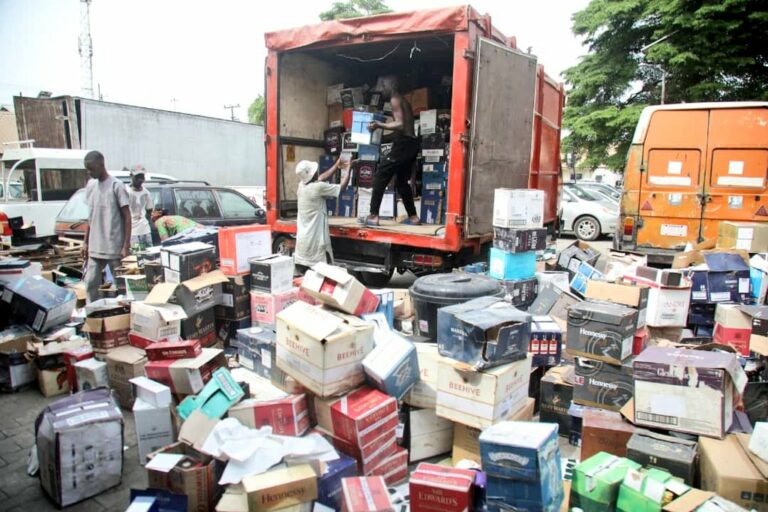
THE National Agency For Food And Drug Administration and Control (NAFDAC) has uncovered illegal activities involving the production and distribution of various brands of alcoholic beverages at the Trade Fair Complex in Lagos State.

NAFDAC, in a statement on Thursday, March 22, said its Investigation and Enforcement Directorate discovered the facilities operating within shop 34, shop 17/24, and attachment 17/2 in the Niger 4 Plaza of the complex while acting on credible intelligence.

The statement added that the team found mini plastic mixing tanks, improvised filters, cartons of empty bottles with intact labels, corks, packaging materials, and assorted drinks that had already been produced and packaged during the operation.


Read Also:


It noted that over 3,452 cartons of empty and filled bottles, valued at over N250 million, had been seized and evacuated from the location.

The NAFDAC, however, called on the public to remain vigilant and report any suspicious activities to the nearest NAFDAC office.

Similarly, the Lagos State Police Command announced that its operatives had busted a fake drink factory in the Agege area of the state and arrested four suspects connected to the illegal factory on the same day.

The command’s public relations officer, Benjamin Hundeyin, revealed this in a brief message on his X page on Thursday.

The police also said it initiated an investigation into the suspects’ alleged production and distribution of counterfeit drinks following credible information.

According to Hundeyin, during the raid, four suspects believed to be the masterminds behind the illegal distillery were apprehended, and their products were seized, among other items.

“Officers of Isokoko Division, acting on credible information, raided a house in Agege where fake alcoholic drinks were being produced. The police arrested four people behind the illegal distillery and recovered fake drinks, empty bottles and labels of different brands. Investigation is ongoing,” Hundeyin said.

Alleged N29bn fraud: EFCC re-arraigns ex-governor Nyako, son

0

THE Economic and Financial Crimes Commission (EFCC) has re-arraigned a former governor of Adamawa State, Murtala Nyako‎, his son, Abdulaziz and others at the Federal High Court in Abuja.

They were re-arraigned on Thursday, March 21, on 37 counts of allegedly laundering N29 billion.

Prosecuting agency, the EFCC, said the accused allegedly committed the fraud while Nyako was governor of Adamawa State.


Read Also:

Also arraigned with them were Abubakar Aliyu and Zulkifik Abba.

The companies allegedly involved in the money laundering were added as fifth through ninth defendants, respectively, including Blue Opal Limited, Sebore Farms & Extension Limited, Pagoda Fortunes Limited, Tower Assets Management Limited, and Crust Energy Limited.

The re-arraignment followed the elevation of the former trial judge, Okon Abang, to the Court of Appeal.

When the matter was mentioned in court, the prosecuting lawyer, Oluwaleke Atolagbe, informed the court that the case was being handled “de novo” (afresh) because the first two judges assigned to the case were no longer available.

“Justice Evoh Chukwu first handled the matter where we called eight witnesses before he died. It was then transferred to Justice Okon Abang, where we called 21 witnesses and closed our case.

“Unfortunately, Justice Abang was elevated to the Court of Appeal, and that is why we are before you today, my lord,” Atolagbe stated.

The trial judge, Peter Lifu, ordered that the defendants be updated on the charges so they might enter a plea.

All the defendants maintained their not guilty plea.

Counsel to the defendants, Michael Aondoakaa, SAN, pleaded with the court to grant his client’s request to continue attending trial on bail under the same terms and circumstances as were set down when the court initially accepted their plea.

“We pray the court will allow us to continue enjoying that bail, and for our part, we promise not to default even now,” Aondoakaa urged.

The judge inquired whether the sureties remained available.

The judge permitted them to continue under the same bail terms after counsel confirmed that the sureties were still available and the prosecution had not objected.

Besides, the prosecution informed the court that attempts had been made to reach a plea agreement before Abang’s elevation.

Atolagbe stated that the prosecution was prepared to listen to the defendants if they were open to considering that alternative.

But Aondoakaa clarified that given the former governor’s advanced age, the agreement was more about “settling the matter amicably” than a plea deal.

The judge then scheduled a new trial date for May 10 and 13.

The EFCC claimed that between January 2011 and December 2014, the defendants allegedly took money out of the Adamawa treasury.

According to the commission, they used businesses as covert channels to steal billions of dollars, which they transferred into personal accounts and transferred to Abuja, where they were used to construct private estates.

They were charged with 37 counts of criminal conspiracy, theft, abuse of office, and money laundering by the EFCC.

The anti-graft agency called 21 witnesses throughout the trial to support its allegations against the defendants in its case, which started in 2015.

Nyako, 81 years old and a retired military officer, was the governor of Adamawa State from 2007 to 2008 and from 2008 to 2014.

The ICIR reported that the Supreme Court dismissed an appeal by Nyako in 2016, seeking an order from the court to reinstate him as governor of Adamawa State to enable him to complete his truncated second term.

Nyako was removed as governor of the state on July 15, 2014, about ten months away from the expiration of his tenure.

Gumi faults FG’s list of terror financiers, says no Nigerian funds terrorism

0

CONTROVERSIAL Islamic cleric Ahmad Gumi has raised objections to the recent list of terror financiers released by the Federal Government.

He said no Nigerian was involved in financing terrorism.

Gumi, in an X space organised by Daily Trust, on Thursday, March 21, criticised the government’s approach, noting that the security agencies had no right to label anyone a terrorist financier.

The Federal government had, on Wednesday, March 20, named 15 entities, including nine individuals and six BDC operators and firms, for alleged involvement in terrorism financing.

It said details of the development were contained in a document revealed by the Nigerian Financial Intelligence Unit (NFIU).

Among the individuals named in the document was Gumi’s spokesperson and Kaduna-based publisher, Tukur Mamu.

According to the report, Mamu “participated in the financing of terrorism by receiving and delivering ransom payments over the sum of $200,000 US in support of ISWAP terrorists for the release of hostages of the Abuja-Kaduna train attack.”

Mamu, the publisher of Desert Herald Newspaper, was arrested by Interpol while in the company of his two wives and one other person as they awaited a connecting flight to Saudi Arabia for the lesser Hajj in September 2022.

The Egyptian authorities arrested him based on a request by the Nigerian government. The State Security Service (SSS) subsequently picked him up at the Mallam Aminu Kano International Airport in Kano on his repatriation to Nigeria.

Although Mamu led negotiations for the release of passengers abducted on the Abuja-Kaduna train, he was alleged to have been working for the terrorists that masterminded the abduction of the train passengers. 

Reacting to the government’s decision naming him and others as terrorists’ financier on Thursday, Gumi claimed that no Nigerian would finance terrorism.

He argued that terrorists sustain their activities through funds acquired from ransom payments made by the families of kidnapped victims.

“No Nigerian will put his money into terrorism. We’re beyond that. These people are financing themselves by taking our children for ransom.

“So, how can we say some people are financing terrorism because there is a misunderstanding between them?” the cleric queried.

According to him, it’s ‘rubbish’ for the government to frame its political opposition as terror financiers.

Speaking on the alleged involvement of Mamu in terrorism, Gumi said the embattled publisher should face punishment if proven guilty both in a court of law and in the court of public opinion.

“Mamu’s case is in the court. Let’s wait to hear from the court. It’s wrong to resort to media trial. Let’s wait for the court to state if he is a financier or not. I think if he is acquitted, he has a strong case to make on libel.

“Who declares someone a terrorist financer? Is it the court of law or a security agency? The security agency has no right to declare anyone a terrorist financier. The case is already in court, so why are they judging him on the pages of the newspaper? Once a case is in court, you allow the court to decide,” he added.

The ICIR reported how the controversial cleric appealed to the Federal Government to dialogue with the bandits who abducted school children in Chikun Local Government Area of Kaduna State as a way of rescuing the students.

On Thursday, March 7, this organisation reported how gunmen invaded a school in Kaduna State and reportedly kidnapped about 287 children, alongside some staff.

Gumi also asked Tinubu to allow him to lead the dialogue.


READ ALSO:


Before his Thursday’s position, the Federal Government terror financiers list had sparked a wave of reactions among civil society organisations and other Nigerians, with some voicing concern over the procedures of coming out with such a list while many criticised the ‘apologists’ for allegedly sympathising with armed groups and downplaying the severity of the terrorism threat facing Nigeria.

In its position, the National Treasurer of the Association of Bureaux De Change Operators of Nigeria (ABCON), Gbadamosi Moh-Murtala, said terrorism financing had been a known issue but that it was worrisome that anyone on the street exchanging dollars is regarded as a BDC operator who could be viewed as a potential terrorist sponsor.

He said for the Federal Government to have named them meant it had evidence at its disposal.

FG restates plans to close metering gaps, de-risk power sector

The Nigerian government has assured that it would close the metering gaps, de-risk the power sector, and address the financial liquidity challenges facing the nation’s power sector.

The Special Adviser on Energy to President Bola Tinubu, Olu Verheijen, gave the assurance on Wednesday, March 20, during a session at the 2024 edition of CERAWeek by S&P Global held in Houston, the United States.

The session with the theme, “Energizing Tomorrow: Charting a successful path for Africa’s energy transition.” was moderated by the Research and Analysis Executive Director, S&P Global Paul McConnell.

Read Also:

Panelists at the session included the Commissioner for Infrastructure, Energy and Digitisation, African Union, Amani Abou-Zeid, and the Research Director and Senior Fellow, Energy Security and Climate Change Program, Centre for Strategic and International Studies, Gracelin Baskaran.

Speaking at the session, Verheijen said the Federal Government was working on several initiatives to decentralise energy transmission.

On the power distribution side, she explained that the government was deploying different technologies to guarantee an increased electricity supply, especially for customers who consumed more.

Given that the government is faced with fiscal constraints, the presidential adviser explained that many creative initiatives were being implemented to de-risk the power sector in Nigeria.

She said while the International Energy Agency, IEA had estimated an investment gap of $190 billion, the government might be unable to raise such funding considering the tight fiscal environment.

Despite the constraints, she assured me that many initiatives would be implemented to unlock the sector’s potential.

“So, what are we trying to do to make sure we can scale faster? We are making sure that we creatively target certain aspects that we think are catalytic to the rest of the entire value chain.

“So, we launched a presidential initiative recently. What are we using that to do? We say we need about $10 billion to double our transmission capacity. We don’t have that, but maybe we have a fraction of that, and we can then make sure we procure meters, convert all of the six million customers that we currently have into paying customers with digital technology and smart meters and make sure we grow revenue that way,” she said.

She assured that the Federal Government was determined to improve the financial viability of the public utilities and attract capital.

“When you’ve de-risked that entire value chain, we can then have more capital to that grid and then expand access and grow consumption,” she added.


African Games: Tobi Amusan wins third consecutive gold medal in 100m hurdles 

0

NIGERIA’S world record holder Tobi Amusan on Wednesday night won the gold medal in the women’s 100-metre hurdles at the ongoing African Games in Accra, Ghana.

Tobi, a cynosure of eyes on the track, was booked for a yellow card after beating the gun for the first time, forcing the race to restart.

At the blast of the gun the second time, she dashed into the air, stretching her legs with a low flight to scale the hurdles and finish the race at 12.89s (-2.1).

Read Also

Tobi Amusan wins Stockholm Diamond League women’s 100 metres hurdles 

African Games: Nigeria wins nine gold in weightlifting 

Jamaica’s Danielle Willams denies Tobi Amusan’s World women 100m hurdles title defence

The win offered Amusan a hat-trick of African Games titles, having won the last two editions held in Congo Brazzaville (2014) and in Rabat (2019), igniting jubilation in the Team Nigeria camp.

Nigeria’s sprinter competed against Madagascar’s Sidonie Fiadanantsoa, who ran 13.19s to finish second and Zimbabwe’s Ashley Tinashe Kamangirirain, who ran 13.59s.

The fourth position was secured by the second Nigerian athlete in the race, Faith Osamuyi, who ran 13.77s.

In women’s 4x100m, Amusan also led Nigeria’s team to win another gold, hitting the breast tape in a time of 43.06s.

Justina Eyakpobeyan, Olajide Olayinka, Fore Abinusawa and Amusan achieved the feat and added to the country’s gold medal haul.

Also, in the men’s 4x100m final, Team Nigeria outclassed Ghana and Liberia to claim the gold medal.

Team Nigeria ended the race in a time of 38.41 seconds, while Ghana finished behind at 38.43 seconds, with Liberia at 38.73 seconds to secure the silver and bronze, respectively.

The problem with N10m tobacco control fund

0

By Robert EGBE

THE national budget for 2024 saw Nigeria double its financial commitment to the Tobacco Control Fund (TCF) from N4.7 million in the previous year to N10 million, heeding long-standing stakeholder calls for increased funding.

The money earmarked for tobacco control aligns with Section 8 of the Nigeria Tobacco Control Act (NTCA), 2015, which stipulates funding for the National Tobacco Control Committee (NTCC) and Tobacco Control Unit (TCU) to carry out their obligations.

This fund, drawn from various government revenues, support the work of relevant government institutions in health promotion initiatives, tobacco control programs, and enforcement activities to ensure compliance with set laws and regulations.


Read Also:


By outlining a dedicated fund for tobacco control in the NTCA, the federal government indicated that it appreciated the necessity and capacity of such measures to facilitate the security of public health.

Nonetheless, the journey towards operationalising the fund has been fraught with challenges and protracted, with the current allocation being very modest.

To be clear, the budget increase to N10 million, though a step in the right direction, still falls short of the broad spectrum of tasks and necessary financial resources required for the tobacco control committee to discharge its responsibilities effectively.

For instance, the committee is expected to meet at least four times annually, as stated in the NTCA. Yet, last year, the committee noted that convening even a single meeting alone costs a minimum of N4 million. The figure does not include expenditure for other essential activities such as the coordination of public health campaigns, population-wide cessation and anti-smoking programs, and collaborations with a variety of stakeholders among other initiatives.

The NTCA, in another case, is expected to work with the Ministry of Agriculture and other relevant agencies on alternative cropping for tobacco farmers. Such a transition would require ongoing trainings, distribution of substitute seedlings, and potentially, the provision of even soft loans to aid farmers make the switch.  Evidently, N10 million is nowhere adequate for the gamut of interventions and programming essential for robust tobacco control in the country.

This paucity of funds also indirectly facilitates the tobacco industry’s strategy of utilizing Corporate Social Responsibility (CSR) initiatives, to market its brand and cultivate harmful relationships with state authorities and strategic institutions in society.

By forming partnerships with government bodies, youth-focused agencies, and tertiary institutions to undertake ‘‘socially responsible’’ initiatives such as organising farm fairs and agribusiness trainings for farmers and young school graduates, tobacco corporations not only position themselves as benefactors but also subtly promote their brands and earn public endorsements for it.  This scheming not only sidesteps Nigeria’s tobacco control laws but also raises conflict of interest concerns, all of which undermines efforts to regulate tobacco consumption.

As tobacco corporations tirelessly seek to circumvent national regulations and laws, their substantial financial resources significantly aid them.

Only last November, the Federal Competition and Consumer Protection Commission (FCCPC) fined British American Tobacco Nigeria Limited (BATN) and its affiliates an unprecedented $110 million for violating national tobacco control regulations, among other laws. The fine was one of the highest in Nigerian quasi-judicial history, with the FCCPC granting them grace period of a few years to liquidate the penalty. But just days after the announcement of the fine, BATN issued a statement saying it had paid up, reflecting the deep pockets of the organisation.

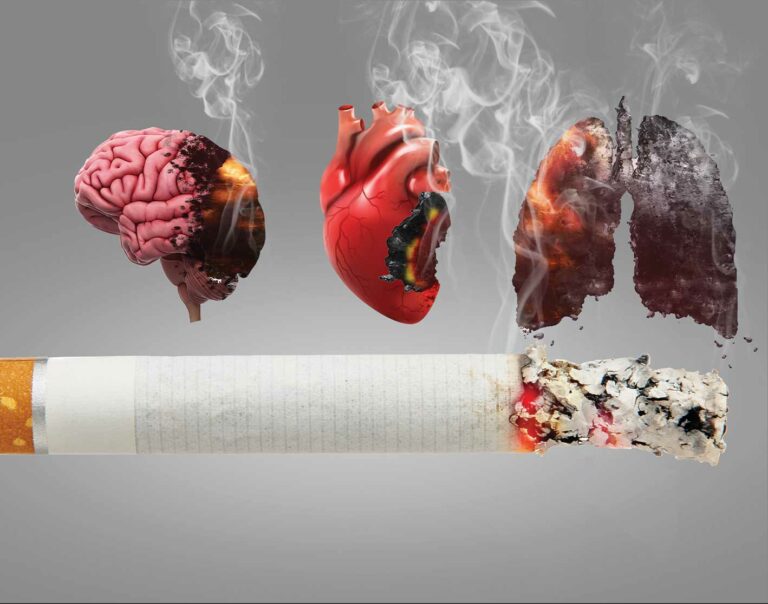
Up against a public enemy as the tobacco industry with deep pockets, the case for an improved tobacco control funding to fortify public health is made even more urgent. As the leading preventable cause of deaths and diseases, tobacco kills half of its regular users. In fact, by the Federal Government’s own records, no fewer than 26,800 persons die in Nigeria each year from tobacco or tobacco-linked diseases. Yet, the ‘‘casualties are not only those who are dead”, to borrow the words of the late Nigerian poet and playwright, John Pepper Clark.

According to the United States Centres for Disease Control and Prevention, for every person who dies because of smoking, at least 30 people live with a serious smoking-related illness, including cancer, heart disease, stroke, lung diseases, diabetes, and chronic obstructive pulmonary disease (COPD), which includes emphysema and chronic bronchitis. Thus, thousands of other tobacco consumers in Nigeria are racked with costly, debilitating non-communicable diseases.

Tobacco control is not merely a health issue but also an economic and environmental concern. The costs associated with treating tobacco-related diseases, environmental cleanup, and loss of productivity due to illness and premature deaths run into billions of naira annually. A robust tobacco control strategy, backed by substantial financial resources, can mitigate these burdens, and safeguard the well-being of Nigerians.

On this note, the federal government must recognize the urgency of increasing its allocation to the tobacco control fund in the next budget cycle commensurate with the scale of the problem. This would be a significant step towards empowering relevant agencies to wage powerful campaigns and interventions against tobacco consumption. This investment in public health will yield dividends in the form of reduced healthcare costs, a healthier population and workforce, and a cleaner environment for future generations.

Robert Egbe is the Communication Officer at pan-African not-for-profit, Corporate Accountability and Public Participation Africa (CAPPA) www.cappaafrica.org. He can be reached via regbe@cappaafrica.org