Home Blog Page 652

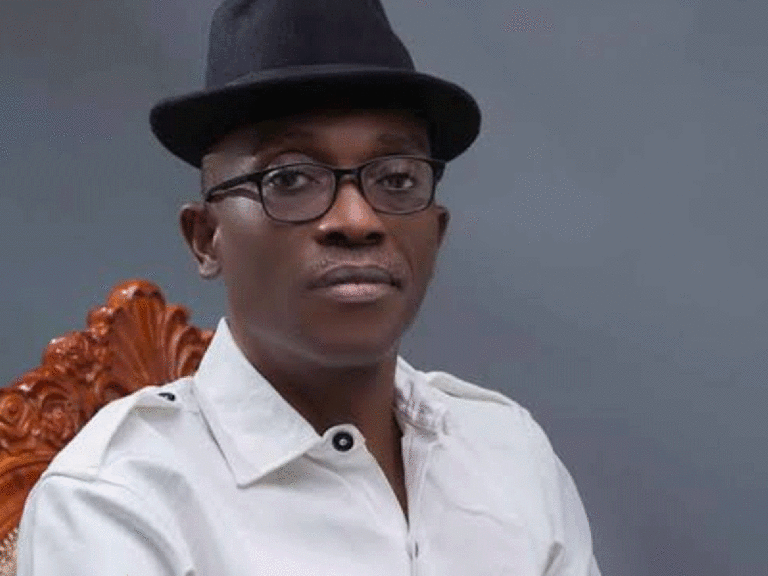
Evidence revealed suspended UNICAL dean demanded nude photos of student – Court

0

A FEDERAL High Court, Abuja, has stated that evidence presented by the prosecution revealed that the suspended dean of the Faculty of Law, University of Calabar (UNICAL), Cyril Ndifon, demanded the nude photos of the second prosecution witness (Name withheld).

The court said there was a need for Ndifon, a professor, to explain his intent and purpose for such a request.

The judge, James Omotosho, overruled the no-case submission made by Ndifon and his lawyer, Sunny Anyanwu, in the sexual harassment case instituted against him by the Independent Corrupt Practices and Other Related Offences Commission (ICPC).


Read Also:

The ICPC is prosecuting Ndifon and Anyanwu over alleged sexual misconduct and attempt to perverse the cause of justice contrary to Sections 8, 18 and 19 of the Corrupt Practices and Other Related Offences Act, 2000 and Section 182 of the Penal Code Cap. 532 Laws of the Federal Capital Territory, Abuja, 2006.

Before the ruling on the no-case submission, the second defendant, Anyanwu, had informed the court of the absence of his counsel and that of the first defendant, Joe Agi, Senior Advocate of Nigeria (SAN), just as he prayed for an adjournment.

However, Omotosho held that the ruling on the no-case submission would be determined first before the prayer for an adjournment would be heard.

While reading his ruling on the court’s jurisdiction to hear the case, the judge, Omotosho, held that the Federal High Court has the requisite jurisdiction to entertain matters based on the Corrupt Practices Act 2000.

He cited the decision of the Supreme Court in the case of Aweto Vs. FRN (2018) which stated that the powers of the Federal High Court under Section 251 of the 1999 Constitution vested it with exclusive jurisdiction over civil and criminal matters involving federal agencies.

He held that the ICPC is a federal agency and that the first defendant (Cyril Ndifon) is a public officer in a national institution. Hence, the Federal High Court has proper jurisdiction to hear the case.

“These and other pieces of evidence need the defendants to explain their side of the story,” the judge held.

Omotosho, however, noted that “holding that a prima facie case has been established does not necessarily imply that the court finds the defendants guilty of the charge. The defendants are still presumed innocent until proven guilty, and the prosecution must prove the charge beyond reasonable doubt”.

Omotosho told the defendants to enter their defence as the no-case submission was overruled. 

He adjourned the case to March 12, 2024, for the defendants to enter defence after the bail granted to the first defendant was varied.

In October 2023, Ndifon was arrested by the State Security Service (SSS) at the request of the ICPC after he failed to honour invitations following allegations of sexual assault levelled against him.

He was accused of sexual harassment during a protest by female Law students of UNICAL on August 15, 2023.

The students carried placards that read, “Law students are not Bonanza, Prof. Ndifon should stop grabbing us. The Faculty of Law is not a brothel,” “Ndifon must go for our sanity,” among other inscriptions.

He was suspended by the university two days later, and a panel was set up to investigate the allegations.

Although Ndifon denied the allegations and described them as lies, it was the second time he was suspended for similar reasons. The first time was in 2015, when a final-year student accused him of raping her in his office.

He was remanded in prison in January 2024, along with Anyanwu, who called and threatened the star witness in the case.
FG threatens to revoke licence of DisCos over poor power supply

THE federal government has threatened to revoke the licences of power distribution companies (DisCos) over the worsening power supply in the country.  

The Minister of Power, Adebayo Adelabu, said this in a statement on Wednesday, March 6, in Abuja.  

While acknowledging the deteriorating electricity supply across the country, the Minister of Power said he has summoned the Chief Executives of Abuja Electricity Distribution Company (AEDC) and Ibadan Electricity Distribution Company (IBEDC), as well as the Managing Director of the Transmission Company of Nigeria (TCN), to a crucial meeting on how best to handle the situation.

He noted that despite the concerted efforts by the ministry to improve the situation,  it’s disheartening to witness the decline in power supply.

“The Ministry has been exerting pressure on the Generating Companies (GENCOs) to enhance their performance, resulting in a recent increase in generation to over 4000MW. Despite this progress, certain distribution companies are failing to adequately distribute the power supplied by TCN, while vandalism of power infrastructure exacerbates the problem in regions such as Abuja, Benin, Port Harcourt, and Ibadan.

“Moving forward, I am committed to holding all distribution companies accountable for their performance. Willful non-performance will not be tolerated, and severe consequences, including license revocation, may be imposed. Additionally, I have instructed TCN to prioritize repair works on damaged transmission towers and power lines to improve supply in affected regions.

“During recent supervisory visits to power generating plants, I have witnessed firsthand the challenges faced by the sector. Plans are underway to settle outstanding debts owed to power generation and gas supply companies, which will alleviate the financial strain and contribute to improved generation levels nationwide. I urge electricity consumers to remain patient as we work tirelessly to address these issues and provide better service to all Nigerians,” Adelabu added.

The ICIR had reported that there has been an abysmal power supply situation nationwide since the beginning of this year.

Several parts of Abuja have been experiencing a blackout as the TCN on Wednesday, February 28, confirmed the vandalisation of its transmission towers by vandals.

The transmission company said Tower 70 along its 330kV Gwagwalada-Katampe Transmission line was ‘seriously vandalised.’

The situation was similar in several parts of the country, with many Nigerians protesting against the epileptic and complete outage of power supply.

While expressing concern over the situation, Adelabu, via a letter signed by the Director of Distribution Services at the Federal Ministry of Power, B.U Mustapha, mandated the chief executives of the Discos and TCN to be present at a meeting set for next this week.

Edo Assembly serves deputy governor impeachment notice

0

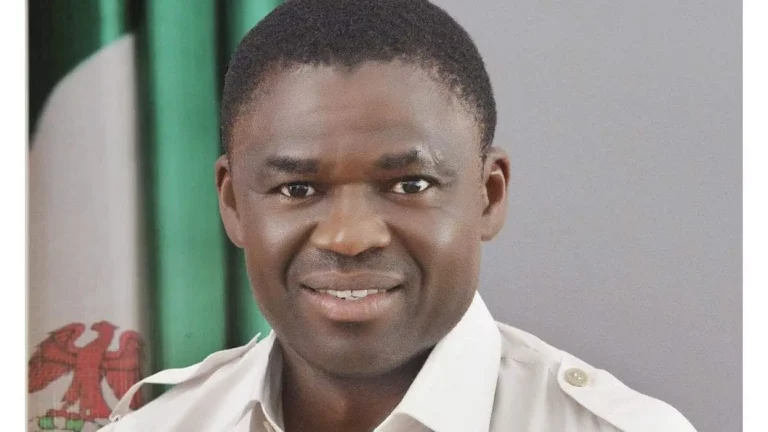
THE Edo State House of Assembly on Wednesday, March 6, commenced the move to impeach the state’s Deputy Governor Philip Shaibu.

Shaibu is being accused of perjury and revelation of government secrets.

The majority leader, Charity Aiguobarueghian, who issued the impeachment notice during plenary, stated that the petition, dated March 5, was signed by 21 of the 24 members against the deputy governor.

Aiguobarueghian further noted that the number of members who signed the petition was more than the two-thirds requirement stipulated in Section 188 (2a) of the constitution of the Federal Republic of Nigeria.

“The petition against the deputy governor came in on March 5 and was signed by 21 out of the 24 members. The number of members who signed the petition was more than the two-third requirement stipulated in the constitution,” Aiguobarueghian stated.


Read Also: Imasuen out as 10 aspirants battle for Edo APC governor ticket


The Speaker, who acknowledged the receipt of the petition, said the petition was based on two grounds and directed the clerk of the house, Yahaya Omogbai, to serve the impeachment notice on Shaibu. 

Shaibu, a former member of the House of Representatives and the ex-Majority Leader of the Edo State House of Assembly was given seven days to respond to the allegations levelled against him.

Shaibu’s impeachment notice might not be unconnected to his face-off with the state Governor, Godwin Obaseki.

The move came a few days after Shaibu said he had been receiving impeachment threats over his involvement in the governorship primary election of the Peoples Democratic Party (PDP), noting that nothing will deter him from contesting for the Edo governorship election which he described as his constitutional right.

The ICIR reports that Shaibu was declared a factional governorship primary election winner on February 22.

However, Asue Ighodalo emerged as the winner of another PDP primary exercise held at the Samuel Ogbemudia Stadium in Benin, becoming the flagbearer endorsed by the PDP national leadership and the preferred candidate of Godwin Obaseki, the governor of Edo.

The impeachment notice is the most recent development in the ongoing conflict between the state governor, Godwin Obaseki, and his deputy, who has been at odds since last year when Shaibu announced his intention to run for governor of the state.

Appeal court affirms Abure as LP chairman

0

THE Court of Appeal, Abuja Division, on Wednesday, March 6, affirmed Julius Abure as the national chairman of the Labour Party (LP).

A Justice at the Federal Capital Territory High Court, Hamza Muazu,  had in 2023, granted an ex-parte order, ordering that Abure and two other national officers stop parading themselves as leaders of the party for allegedly forging national documents.

The ex-parte application was argued before the court by the plaintiffs’ lawyer, James Onoja,

Onoja told the court that Abure and the others allegedly forged several documents like receipts, seals and affidavits of the court to carry out criminal activities.

He also noted that the LP had received a letter from the Chief Registrar of the Court concerning documents that were allegedly used in criminal activities by Abure and the three others.

However, in the judgement on Wednesday, Justice Hamman Barka held that the high court was wrong to have assumed jurisdiction on the matter.

Delivering judgment in the appeal filed by Abure challenging the decision of the trial court, Barka, leading a three-member panel of Justices of the Court of Appeal held that Abure’s appeal has merit and was accordingly allowed.

The Appellate Court ruled in favour of Abure and ordered the respondent, Lamidi Apapa, to pay a cost of one million naira.

He said, “The judgement of the lower court is hereby set aside” he held and awarded a cost of N1 million in favour of the appellant.

The ICIR’s reported that Abure has been involved in a leadership tussle with Apapa’s party faction since after the presidential election of 2023.

Abure was arrested in Benin City, the Edo State capital, on Wednesday, February 21. This followed a petition, including allegations of threats to life and attempted murder, among other infractions, by the LP Youth Leader, Eragbe Anselm Aphimia.

Appeal court rejects FG’s bid to retry Orji Kalu fraud case

0

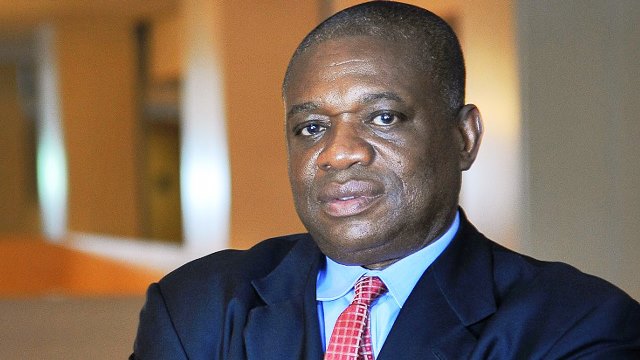
THE Court of Appeal on Tuesday, March 6, rejected the Federal Government’s bid to begin a fresh prosecution of ex-Abia governor Orji Uzor Kalu.

In the judgment delivered on Wednesday, March 6, in the N7.6 billion fraud and money laundering case brought against Kalu, the court decided that no court should accept the Federal Government’s appeal because it was inconsistent and incompetent.

In the judgment delivered by the judge, Joseph Oyewole, the court said that the record of appeal was not compiled, signed, and certified by any person known to law.


Read Also:

Oyewole specifically said that the name of the individual who assembled, signed, and certified the record was missing, as required by law.

Consequently, the judge struck out the appeals marked CA/ABJ/CV/797/2021 and CA/ABJ/CV/798/2021, which Federal Government filed against Kalu and his firm.

On December 5, 2019, a Federal High Court (FHC) sentenced the former governor, currently a senator representing Abia North, to twelve years in prison for allegedly stealing large sums of money from the state’s Treasury while in office.

However, the Supreme Court overturned and set aside the High Court’s judgment, citing the Judge, Mohammed Idris’s elevation to Justice of the Court of Appeal as justification.

According to the ruling of the Supreme Court, Idris cannot serve as both a Federal High Judge and a Justice of the Court of Appeal simultaneously.

The apex court then gave the FHC Chief Judge an order to transfer the matter to a different judge so it might be tried again.

It also held that the fiat issued to him (Kalu) by the Court of Appeal under section 396 (7) of the Administration of Criminal Justice Act was unconstitutional.

As a result, the apex court quashed the judgment that convicted Kalu and ordered a fresh trial process.

Not satisfied with the judgment, the EFCC said it would immediately commence the re-arraignment of the former governor.

In a statement by the Head of Media and Publicity, Dele Oyewale, the Commission described the Apex court judgment as ‘unfortunate’ and a ‘technical ambush’ against Kalu’s trial.

It emphasized its readiness to commence a fresh and immediate retrial as the evidence against Kalu and others joined in the suit was enormous.

But Kalu returned to the FHC and got a ruling that prohibited the Economic and Financial Crimes Commission (EFCC) from launching a new investigation into his case.

According to Inyang Ekwo, who granted the restriction order against the EFCC, the Supreme Court’s ruling did not mention Kalu.

“An order is hereby made prohibiting the Federal Government through the EFCC from retrying the applicant (Kalu) on charge no. FHC/ABJ/CR/56/2007 since there was no order in the judgment of the Supreme Court for the retrial of Kalu,” Ekwo said in a suit filed by Kalu.

According to Ekwo, the EFCC can move on with Kalu’s co-defendant, Ude Udeogu, retrial because the Supreme Court explicitly mandated that his case file be returned to the FHC.

Nigeria attracted $30bn in foreign investments under my watch-Tinubu

0

PRESIDENT Bola Tinubu said his nine-month-old administration has attracted $30 billion in Direct Foreign Investment commitments to shore up the Nigerian economy.

Tinubu made this known during the 2023 Leadership Annual Conference and Award held on Tuesday, March 6, in Abuja.

The President, who was represented by Minister of Information and National Orientation, Mohammed Idris, stated that the Nigerian economy is not in a state of distress as widely speculated but rather faced with challenges.

Acknowledging the various challenging situations, he remarked that the nation has garnered unprecedented opportunities to reshape its trajectory and construct a new, sustainable economy away from the rent-seeking and wasteful practices of the past.

“Since we assumed office in May 2023, we have attracted $30 billion in Foreign Direct Investment (FDI) commitments into the real sectors of the economy, including manufacturing, telecoms, healthcare, oil and gas, and others.

“Those investments have already started coming into the country. Just a few days ago, I was in Qatar on an official visit, where the Emir assured that a senior government delegation would visit Nigeria after Ramadan,” the president said.


Read Also: Nigeria’s capital importation drops by 74 per cent within one year as Lagos, FCT account for 96 per cent of investment destination


Tinubu also noted that he has asked the Minister of Finance and Coordinating Minister of the Economy, Wale Edun, to directly interface with the Qatari authorities to ensure speedy progress.

According to him, the Nigerian economy exhibited a performance in the last quarter of 2023 that surpassed expectations, with a growth rate of 3.46 per cent, compared to 2.54 per cent in the preceding quarter.

“Capital Importation into Nigeria was up by 66 per cent in the fourth quarter of 2023, reversing a 36 per cent decline in the previous quarter.

“In January 2024, the Nigerian Stock Exchange All Share Index (ASI) crossed the 100,000 points mark, its highest ever.

“There is no one who looks at this data who will conclude that “distressed” is the accurate way to describe the Nigerian economy,” Tinubu added.

Capital importation is the influx of external resources into the local capital resources for investment, trade, and business production. The NBS divides it into three main investment types: foreign direct investment (FDI), portfolio investment, and other investments, each comprising various sub-categories. Others here refer to currency deposits, loans, trade credits, etc.

The ICIR had previously reported that Nigeria generated capital importation figures of $1.13 billion and $1.03 billion in the first and second quarters of 2023, respectively, while for the third and fourth quarters of the year in question, the country attracted $654.7 million and $1.09 billion, respectively.

Meanwhile, the total capital importation for 2023 is about 26.70 per cent lower than what was generated in 2022, which was $5.33 billion.  

The report showed that the lowest capital inflow was generated in Ekiti State, which was $50,000, while Lagos State had the highest inflow, with $2.50 billion.

Police confirm abduction of female IDPs in Borno

0

THE Borno state police command has confirmed that Boko Haram insurgents abducted some female internally displaced persons (IDPs) in Ngala, Borno State.

Reports on Tuesday, March 5, stated that the women were abducted by the terrorists on Sunday, March 3, when they went into the bush to get firewood.

They were reportedly besieged by rebels in the Bula Kunte Bush in Ngala Town’s western section, where the bandits freed the elderly amongst them and abducted some young boys and girls.


Read Also:

Speaking to The ICIR in a telephone chat on Wednesday, March 6, the spokesperson of the police command, Nahum Daso Kenneth, said the incident happened, but he has not gotten the details of the occurrence.

” Yes, there was an incident like that in Ngala, but I am yet to be fully briefed on the matter. I will contact you when I get the full details,” Kenneth stated.

This is one of the most significant kidnappings to occur in Borno since the night when 276 girls in Chibok were abducted.

On April 14 2014, the Boko Haram terrorists invaded the Government Secondary School, Chibok, Borno State and abducted 276 school girls. It was a notable incident that attracted global attention.

Ambassadors, human rights activists, popular musicians, and the former United States President, Barrack Obama, along with his wife, Michelle, called on the former government, led by Goodluck Jonathan, to expedite action on the safe rescue of the school girls.

Incidentally, the unfortunate event birthed the BringBackOurGirls movement, co-championed  by the former Minister of Education, Oby Ezekwesili.

For years, the movement consistently advocated, pushing the previous and current administrations to work towards the safe return of the remaining girls. Several solidarity protests were held across the globe.

The ICIR reported in May 2023 that 37 parents of the 276 girls abducted by Boko Haram insurgents from Chibok have died since the incident.

A sibling to one of the abductees, Ayuba Alamson, made the claim in Abuja on Saturday, May 20, at an event organised by Women Radio to commemorate nine years of the abduction and remind former President Muhammadu Buhari of his vow to rescue the girls.

Alamson said the parents of the remaining girls who were yet to return were traumatised and abandoned by the government.

Alamson explained that some of the girls who regained freedom went to secondary schools in Jos, Plateau State, to complete their education.

He claimed the girls who had finished their secondary education have since been at home without anyone helping them get admission into the university. He added that those who were not patient among them had married.

Siemens deal shows signs of failing despite FG’s financial commitments

NIGERIA’s Siemens AG deal is showing signs of failure despite the federal government’s ‘counterpart’ financial commitments on the to the deal.

Like several other power projects in the past with signatures of failures, the Siemens deal, although promising at the beginning, currently shows serious signs of collapse.


Read Also:


Background

In 2019, the then president,  Muhammadu Buhari signed an agreement with a German technology company, Siemens AG to “drastically” improve Nigeria’s power supply by 11,000 megawatts by 2023.

According to the deal, Phase 1 will be completed in two years and Phase 2 in 2023.

The deal was an outcome of the German Chancellor Angela Merkel’s meeting with Buhari on August 31, 2018.

Buhari, after the deal was signed said,”in partnership with the German Government and Siemens AG, we are making an important move forward in addressing Nigeria’s electricity challenge. Our goal is a simple one: to deliver more electricity to Nigerian businesses and homes.”

He challenged Siemens and other partners to work hard in achieving “7,000 megawatts (MW) of reliable power supply by 2021 and 11,000 megawatts by 2023 – in phases 1 and 2 respectively”.

According to the Nigeria Electricity System Operator (NESO), the highest megawatts generation as of July 20, 2019, was 5,016.50 Megawatts while the lowest was 3,139.80 Megawatts.

This amounts to an average of 4,078 megawatts of power supply as of July 20. Pr66 Buhari as of then said only an average of 4,000 megawatts reliably reaches consumers.

“Despite over 13,000 megawatts of power generation capacity, only an average of 4,000 megawatts reliably reaches consumers,” he said.

“This Government’s priority was to stabilise the power generation and gas supply sector through the Payment Assurance Facility, which led to a peak power supply of 5,222 megawatts,” he added.

Failures, and inconsistencies despite financial commitments

Despite huge investment commitments made in this project by the government, the Nigerian power sector has been on a downward spiral, producing less than projected megawatts of power.

For instance, the System Operator from Grid Performance Dashboard of 18 February 2024 is 4000.70 megawatts peak, and off-peak generation same day is 3,434.97 megawatts. These figures fall shy of the targeted 11,000 megawatts for 2023.

Investments commitments on the project by FG on the Siemens deal

The ICIR has earlier reported that in July 2020, Buhari had approved the payment of €15.21million and N1.708billion as counterpart funding for the Presidential Power Initiative (PPI)-initiated under President Muhammadu Buhari to support the Siemens AG deal.

The former  Minister of Finance, Zainab Ahmed, had said $ 1.9 million would be used for payment of transactions advisors and third-party consultants for the Siemens AG deal.

Nigeria, Germany's Siemens sign agreement to increase power supply
President Muhammadu Buhari in an handshake with Joe Kaeser, President of Siemens. Photo credit: Twitter/@bashirahmaad.

Ahmed also explained that €62million would be used for the procurement of mobile equipment and transformers for the transmission of power across the country.

She said, “The second approval that we got from Council today is still relating to the PPI power project and the memo was seeking the approval of Council for the award of contracts for the procurement of mobile equipment for the transmission power component of the project.

“So, 10 mobile equipment and 10 transformers in favour of Siemens AG. The projected progress for the sector wasn’t met, as the 2023 target was to improve power to N11,000 megawatts,” she added.

Presidency silent on progress report request by ICIR

The ICIR reached out to the Presidential Spokesperson, Ajuri Ngelale to give a progress report on the project, despite the President visiting Germany in 2023. However, the Presidential spokesperson did not respond to calls and text messages seeking a response.

The ICIR confirmed that some transformers are coming into the country as a result of the Siemens deal, however, the general progress report on the deal remains elusive, findings have shown.

Siemens deal showing signs of failed power projects like the Mambilla project

The Mambilla project was initially awarded in 2003 to Sunrise Power and Transmission Limited, the proposed 3,050-megawatt plant in Mambilla, Taraba state, is expected to be the largest power-generating installation in Nigeria and one of Africa’s largest hydroelectric power stations.

However, the project has been the subject of decades of legal dispute between the company and the Nigerian government.

In 2008, the late President Umaru Yar’Adua, who succeeded Olusegun Obasanjo, terminated the project.

Just recently, the Federal High Court in Abuja ordered the remand of a former Minister of Power and Steel, Olu Agunloye, in the Kuje Correctional Service over an alleged $6bn fraud in connection to the Mambilla Hydroelectric Power Station.

Agunloye served as minister between 1999 and 2003 under the administration of  Obasanjo.

The Economic and Financial Crimes Commission arraigned Agunloye before a judge, J.O. Onwuegbuzie on Wednesday, where he pleaded not guilty to the charges read to him.

The judge, however, ordered that the embattled former minister be remanded in Kuje Correctional Service pending the hearing of his bail application.

ICIR announces fellows for SPARK 2 project

THE International Centre for Investigative Reporting (ICIR) has announced the selected fellows for the second part of the Strengthening Public Accountability for Results and Knowledge (SPARK 2) Project.

According to a statement signed by her programme Officer, Ayisat Abiona, the project supported by the International Budget Partnerships (IBP), aims to examine factors contributing to the appalling state of maternal healthcare in Nigeria among others.

The project’s focal states are Oyo, Anambra, Niger, Jigawa, Nasarawa, Kano and Ogun states.

Part of the statement reads, “For the agriculture sector reporting, our focus is on the daunting challenges that smallholder women farmers face in terms of lack of access to resources credit, grants, farm inputs, land and information needed for their agricultural business. They frequently lack the resources or capital to farm at a commercially viable scale and have little motivation to do more than is necessary for them to make a living.

“This is mostly due to their restricted access to farmlands, markets, loans, credit and grants, support services and inputs, all of which would have allowed them to boost their output and sales volumes.” 

“For the agric sector reporting, our focal states are Anambra, Jigawa, Nasarawa, Niger, and Oyo. For the health sector reporting, we are concentrating on the Basic Healthcare Provision Fund (BHCPF) and the Midwives Service Scheme (MSS) two key interventions of the government in the Nigerian health sector which have been confronted with numerous challenges, particularly because of inadequate budgetary allocations, misappropriation of funds and poor monitoring system. While the government has launched several reform measures to address various challenges in the health sector, basic healthcare services continue to elude ordinary Nigerians, particularly the most vulnerable people who live in rural areas.”

The project also aimed to address significant challenges, and power relations and provide system-level evidence across the two thematic areas on challenges in the delivery of BHCPF, MSS, and the Agriculture Development Projects across SPARK’s focal states – focusing on systemic, political, and economic issues such as inadequate budgetary support, the influence of party politics in policy, gender disparities as well as cultural and other nuanced influences that impact on outcomes.

The project will build the capacity of journalists to hold power bearers, policymakers, and implementers accountable by publishing focused special and investigative reports and documentaries on delivery end at Primary Health Care, Ward Development Committees, and across commodity groups within SWOFON networks in the focal states to report and investigate the health and agriculture sectors.

Twenty (20) journalists were selected from the states of Oyo, Anambra, Niger, Jigawa, Nasarawa, Kano, and Ogun across print, electronic and digital media.

The list of the successful candidates and their respective organisations is below:

1. Vincent Yusuf, Daily Trust
2. John Adams, The Sun Newspaper
3. Justina Asishana, Nation
4. Bawas khadija Ishaq, Liberty TV
5. Nasiru Yusuf Ibrahim, Abubakar Rimi TV
6. Ibukun Emiola, NAN
7. Akinwale Aboluwade, Oyo Reporters
8. Emma Elekwa, The Nation
9. Ikenna Obianeri, Punch
10. Alfred Ajayi, FRCN
11. Nurudeen Akewushola, ICIR
12. Lawrence Nwimo, Ikenga Online
13. Dan Atori, New Telegraph
14. Ibrahim Hamzat Abaga, Transcontinental Times
15.Omoniyi Busuyi Kolawole, Cool Fm, Wazobia Fm, Arewa Radio, Kano
16. Stephen Enoch, Stallion Times
17.Oladejo Adebayo, Pharmanews
18. Royal Ibeh, Leadership Newspaper
19. Agboluaje Rotimi, The Guardian
20. Ojo Isaac Olufemi, Splash FM

Social media apps, Facebook, Instagram down globally

0

SOCIAL media platforms, Facebook and Instagram were both down on Tuesday, March 5, with users unable to access their accounts. 

According to reports, the incident occurred between noon and 4pm (UTC+1, West Africa Time), and affected users globally.

Messaging apps, Facebook Messenger, and Threads were also affected. All are under the umbrella of the Meta network.


Read Also:

Users discovered that Messenger and Facebook had issues when they could not connect to their accounts, even with the correct login information.

Most users confirmed the development and claimed they could not access their accounts.

Meta also confirmed the glitch.

“We’re aware people are having trouble accessing our services. We are working on this now,” Meta’s Communications Director, Andy Stone, posted on X.

However, The ICIR observed that the disruption was over around 6 pm.

In July 2021, The ICIR reported that Facebook, Instagram and WhatsApp platforms were hit by major global outages, affecting tens of thousands of users, according to outage tracking website Downdetector.com.

The social media giants confirmed the outage with messages posted on Twitter.

“We’re aware that some people are having trouble accessing our apps and products,” the official Twitter accounts said.

Users trying to access Facebook in affected areas were greeted with the message: “Something went wrong. We’re working on it, and we’ll get it fixed as soon as we can.”

Instagram users who tried to use the application on desktops received a ‘5XX server error’ message.

The company said it was “aware that some people were having trouble accessing the Facebook app,” and it was working on restoring access.

The company did not say what caused the outage.

Downdetector, which only tracks outages by collating status reports from a series of sources, including user-submitted errors on its platform, showed over 50,000 incidents of people reporting issues with Facebook and Instagram. The outage might be affecting a more significant number of users.

WhatsApp was also down for over 35,000 users, while Facebook Messenger was down for nearly 9,800 users.