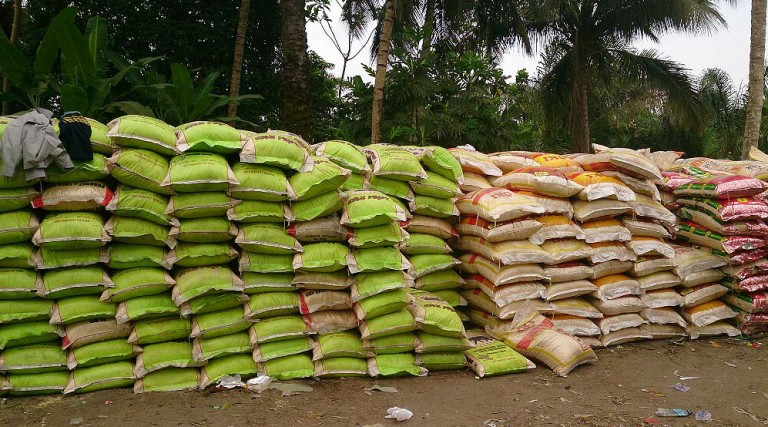
THE Nigeria Customs Service (NCS) has revealed plans to distribute food items it seized to Nigerians to reduce the hunger ravaging the nation.
The NCS’ public relations officer, Abdullahi Maiwada, disclosed this in a statement on Tuesday, February 20.
He, however, said the distribution would be done after all the food items had been certified fit for human consumption.
He explained that the situation became imperative to alleviate the pains caused by food scarcity.
According to Maiwada, the NCS will facilitate the direct disposal of the food items forfeited to the Federal Government.
“The modalities for the disposal will be communicated through NCS formations nationwide, with a firm commitment to transparency, fairness, and public safety. It is our pledge that this exercise will be managed diligently to ensure that the benefits reach those most in need.
“The NCS remains resolute in its dedication to safeguarding the nation’s food security and advancing the economic well-being of all Nigerians. With the unwavering support and cooperation of the public, we will surmount these challenges and pave the way for a more prosperous future for our beloved nation,” he added.
The ICIR reports that Nigerians are expressing anger as many of them can no longer endure the prevailing economic hardship, evidenced by hikes in food prices and other essential commodities.
Recently, protesters have gone to the streets in Ibadan, Lagos, Osun and Niger states to express their frustrations over commodities’ surging prices.
Civil servants in Niger State will on Wednesday, February 21, commence an indefinite strike over the government’s failure to meet their demands.
Prominent among the workers’ demands is improved welfare.
Similarly, the Nigeria Labour Congress (NLC) will embark on nationwide protest next week should the Federal Government fail to listen to its demand.
The union had given a 14-day ultimatum to pressure the government to honour the 16-point agreement reached with it in October 2023.
President Bola Tinubu’s fuel subsidy removal and exchange rate unification have continued to hit harder on the average Nigerian since he announced the policies after taking over power on May 29, 2023.
A BILL for creating state police has scaled a second reading at the House of Representatives.
The bill, sponsored by the Deputy Speaker of the House, Benjamin Kalu and 14 others, seeks to alter the relevant sections of the 1999 Constitution to pave the way for states to establish their police forces across the country.
During Tuesday’s plenary session of the House, lawmakers took turns contributing to the debate on the House floor.
Kalu, who stood in for the Speaker, Tajudeenm Abbas, encouraged members to put Nigerians’ safety above political aspirations.
A member, Babajimi Benson, who also contributed to the debate, said it was the job of the police to maintain law and order.
“We have a population of over 200 million people, but we have a police strength that is less than 400,000. State police should be created to address the internal security challenges of Nigeria,” Benson stated.
The ICIR reported on February 16 that the Federal Government and state governors agreed on creating state police.
This was part of the outcome of a meeting between President Bola Tinubu and state governors at the Presidential Villa in Abuja on Thursday, February 15.
Minister of Information and National Orientation Mohammed Idris disclosed this to reporters after the meeting.
He said the process was still in its early stages and would take shape after further discussions.
The ICIR reports that there have been calls for state police in response to the country’s growing security concerns.
Kidnapping and banditry are two security issues Nigeria has struggled with in recent years after over a decade of fighting terrorism.
On Monday, February 13, governors elected on the Peoples Democratic Party (PDP) platform reiterated their support for state police to address the nation’s deteriorating security. The governors lamented that Nigeria “is almost on the road to Venezuela.”
While Nigerian governors have been pushing for state police, regional groups in the country have established security outfits to complement the Federal Government-funded police and other security institutions in the country.
The South-East launched Ebube Agu, the South-West created Amotekun, and the North founded “Shege Ka Fasa”.
However, it appears that only Amotekun has fully taken shape among the outfits.
In addition to the regional outfits, some states, including Benue, Zamfara, and Kano, have created vigilantes or constabularies to protect their people further.
The ICIR reported that over 5,000 Nigerians were killed in President Bola Tinubu’s first seven months in office, underscoring worsening insecurity under his watch.
THE Natural Oil and Gas Suppliers Association of Nigeria (NOGASA) – the umbrella body of the Petroleum Marketers, has urged the Nigerian government to maintain a uniform price in foreign exchange (FX) while transacting with petroleum marketers or risk industrial action.
The President of NOGASA, Beneth Korie, disclosed this at a press conference on Tuesday, February 19.
He said that the non-uniform price regime for the union and the naira’s freefall was the major cause of high energy prices.
He observed that foreign exchange volatility had exposed Nigerian petroleum marketers and businesses to avoidable risks, causing pain to citizens.
“When you go to the market, one dollar exchanges for N1,500/$ on Monday, and N1,600/$ on Tuesday, how do you expect the marketer to be in business? The naira’s free fall is creating problems for the marketer and the banks that gave him loans for business,” he said.
“Most filling stations are under lock and key and if care is not taken, from now till month end, the system will naturally shut down itself before we even think of going on strike,” he added.
Korie suggested that the government use a uniform rate of N750/$, which was the budget benchmark peg to restore the Nigerian economy amid the naira’s freefall.
“Heaven will not fall if the government uses a uniform FX rate with N750/$ benchmark. Marketers can buy from NNPCL at this rate in naira. It will strengthen the naira and stop this dollarisation. Our economy is too big to fail if we do the right thing and stop all this high inflation ravaging our economy,” he stated.
He also recommended that the refined petroleum product be sold in naira by the NNPCL; otherwise, the union would embark on industrial action.
Besides, he advised the government to peg the diesel price the way it did to fuel to stop the National Association of Road Transport Owners (NARTO) from embarking on industrial action.
“NARTO is our union member, and we understand their concerns. The price of diesel is rising the way the dollar is rising. We urge the government to find a way and peg the price of diesel the way it did to PMS. They should also repair the roads because our members are suffering to transport these products to various states of the federation. There are also issues of bridging the cost gap of transporting the products across the country, which the government owes billions of naira to our union members,” he added.
The ICIRreported that businesses and the economy were receiving heat over the negative impacts of the Central Bank of Nigeria’s floating of the naira, which has led to more troubles for businesses and the dollarisation of the economy.
The naira free fall led to the Nigerians saving their money in dollars, further putting pressure on the naira and leading to high inflation.
Already, there are pockets of protests across the country, of which a possible fuel price hike could trigger a wider problem with the organised labour gearing up to commence nationwide protests scheduled for February 27 and 28.
“All together, we’ve seen the currency lose up to 40 per cent in the eight months of Tinubu’s government, yet its value continues to depreciate. This is a huge concern for businesses and investor confidence,” said a financial analyst, Dumebi Oluwole.
DESPITE sanctioning the approval, the Senate on Tuesday, February 20, resolved to probe the N30 trillion Ways and Means loan obtained by the administration of former president Muhammadu Buhari from the Central Bank of Nigeria (CBN).
The upper chamber has, as a result, constituted an ad hoc committee to interrogate disbursement and usage of the loan.
The resolution was sequel to a report of the Joint Senate Committee on Banking, Insurance and Other Financial Institutions, Finance, National Planning, Agriculture, and Appropriation presented during the plenary.
The Senate President, Godswill Akpabio, announced the resolution after most senators supported it through voice votes.
Chairman of the joint committee, Abdullahi Abubakar, who presented the report, explained that the current economic hardship was caused as a result of the violation of the ways and means of debt.
Abubakar, a Peoples Democratic Party (PDP) senator representing Kebbi North, advised the Federal Government to settle the N30 trillion debt.
The lawmaker also urged the CBN to ensure repayment of various intervention programmes and loans to reduce the money supply.
Ways and Means is a loan facility through which the Central Bank of Nigeria finances the Federal Government’s budget shortfalls.
Senators indict 9th National Assembly
During the plenary, the lawmakers blamed the leadership of the immediate past Senate led by Ahmad Lawan for approving such huge advances for the Federal Government.
In his defence, the immediate past Senate President, Ahmad Lawan, said his leadership approved a total of N23 trillion for the ways and means and not N30 trillion.
“What the 9th National Assembly approved or rectified in terms of ways and means was not 29 or 30 trillion. It was 22 trillion, but there was 819 billion to address very serious infrastructure dilapidation across the country.
“So, it was not 30 trillion. It was 22 trillion, and then, of course, the one we had made it almost 23 trillion. If we have ways and means that is 30 trillion today, that means something happened between then and now, and it is for the National Assembly to find out what happened,” Lawan said.
He, however, urged his colleagues to investigate the approval and disbursement of funds under the ways and means.
“If there were expenditures done wrongfully in contradiction to the provision of the Constitution, the National Assembly can look at the expenditures, and if sanctions are needed for unlawful, wrong, or unauthorised expenditures, the National Assembly can provide the sanctions.
“Nobody in this chamber should suggest that we shouldn’t look into anything that we feel is in the public interest, but let me say this very clearly: what Nigerians want today is food and security. How are we going to provide food for Nigerians and protect their lives?”.
The ICIRreportedat different times how the CBN violated lending to the Federal Government by exceeding the threshold stipulated by the Fiscal Responsibility Act.
There were concerns over failed oversight by the senators who sanctioned the approval without following what the Fiscal Responsibility Act said.
According to the Lead Director of the Centre for Social Justice (CSJ), Eze Onyekpere, the National Assembly flouted its oversight function as mandated by the Act establishing it by not insisting on the details of what the ways and means approved funds were spent on.
“If the National Assembly members had insisted on the breakdown and had done a cost-benefit analysis of the approval, they would have discovered probably that some of the funds were misappropriated. They flouted the law that empowered them for oversight,” Onyekpere said.
“The National Assembly is mandated by the Constitution to act as an agent of accountability through its oversight mechanisms, but failed,”Onyekpere added.
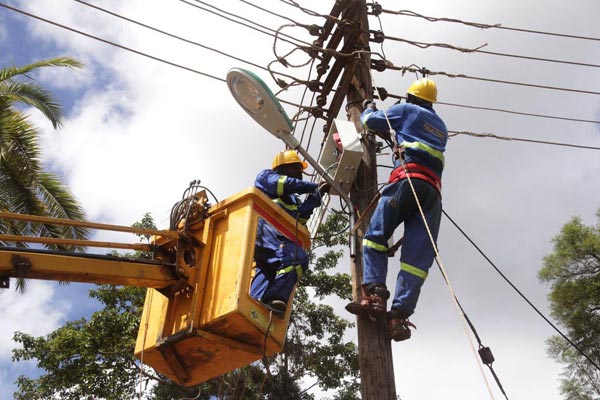
Two days after the Abuja Electricity Distribution Company (AEDC) threatened to disconnect the Presidential Villa over mounting debt, President Bola Tinubu directed immediate settlement of the outstanding bill.
According to a statement released on Tuesday, February 20, and signed by the Special Adviser to the President on Information & Strategy, Bayo Onanuga, Tinubu’s directive follows the reconciliation of accounts between the State House and AEDC.
The statement said contrary to the AEDC’s initial claim of N923 million debt in a paid advertorial in newspapers, the State House’s outstanding bill was N342 million (N342, 352, 217.46.)
He said this was according to a letter by the management of AEDC sent to the State House Permanent Secretary dated February 14, 2024.
“Having reconciled the position to the satisfaction of both parties, the Chief of Staff to the President, Rt Hon. Femi Gbajabiamila, has given assurance that the debt will be paid to AEDC before the end of this week,” the statement reads.
The statement urged other MDAs to reconcile their accounts with AEDC and always pay their electricity bills.
Eighty-six other government-run institutions owed the AEDC, and the debts total N47 billion, according to an advertorial the distribution company ran on the debt.
The ICIR reportedon Monday, February 19, that AEDC threatened to disconnect electricity in the Presidential Villa, the Federal Inland Revenue Service (FIRS), and other Federal Government ministries, departments and agencies over their refusal to pay over N47 billion outstanding debts as of December 2023.
In the list of the debtor MDAs are the Chief of Defence Staff – Barracks and Military Formations owing N12 billion, Ministry of Finance, Ministry of State Petroleum, Ministry of Health, Ministry of Information, Ministry of Education and Ministry of Agriculture.
The debtors also include the Ministry of Education, CBN governor’s office, Ministry of Foreign Affairs, Ministry of Budget and Planning, Ministry of Culture and Tourism, Ministry of Interior, and Ministry of Transport.
The AEDC said in the debts advertorial, “The management of the Abuja Electricity Distribution Company (AEDC) has given a ten days’ notice to 86 government agencies to pay up the N47.1 billion electricity debt they owe or risk disconnection.
CIVIL servants in Niger State will on Wednesday, February 21, embark on an indefinite strike over the government’s failure to meet their demands.
This was disclosed in a letter dated February 19 and signed by the Nigeria Labour Congress chairman, Idrees Lafene, and the chairman of the Trade Union Congress, Ibrahim Gana.
The letter addressed to Governor Mohammed Bago was made available to newsmen on Tuesday, February 20.
The union noted that it had presented some demands and gave an ultimatum in December 2023 to the state government but the demands were yet to be met.
The letter reads in part, “We are writing in furtherance to our earlier letter of ultimatum Ref no. OL/NS/040/GEN/Vol 4/29 dated 20/12/23 and the deadlock on settlement of issues as a result of negotiations with the Niger State government committee.
“We wish to formally inform the government that effective 8am on Wednesday, February 21, 2024, that Niger State workers shall commence an indefinite strike action until our demands are comprehensively met.
“Meanwhile, we wish to reiterate that our doors are open for negotiation subject to the conveyance of formal invitation, reversal of all appointments in dispute, i.e., executive directors Finance, executive directors Admin and executive directors Operations, chairman, members and permanent commissioners of Local Government Service Commission and Civil Service Commission, directors-generals of some agencies, and a clear statement by the government on payment of wage award.”
The labour union also noted that it would not longer tolerate the idea of appointing permanent secretaries who are not eligible.
It further called on the government to retract the recent appointment of a vice principal on secondment as a permanent secretary.
“We also call on the government to desist from victimising teachers and members from the educational sector as a result of the recent debate by some primary school pupils in Agaie LGA,” the letter added.
The workers’ fresh warning came a few days after the national body of the NLC said it would embark on a two-day nationwide mass protest on February 27 and 28 over the worsening hardship in the country.
The development was also on the heels of the declaration by the Association of Master Bakers and Caterers of Nigeria (AMBCN), stating that it would commence a nationwide strike from February 27 should the Federal government refuse to implement the agreement it entered into with the association in 2020.
The NLC president, Joe Ajaero, on Friday, February 16, announced the protest at the Labour House headquarters during an emergency press conference on Friday, February 16.
Ajaero said the decision to protest was made after the expiration of the 14-day ultimatum issued to the Federal Government over hardship across the country.
The ICIR reports that in addition to tackling hardship, the union gave the 14-day ultimatum to pressure the government to honour the 16-point agreement reached with the union on October 2, 2023.
The ICIR reports that there has been an astronomical increase in the prices of goods since President Bola Tinubu announced the removal of the fuel subsidy on May 29, 2023, the day he took over power.
Tinubu’s declaration immediately led to fuel queues as many retailers shut their filling stations, hoarding their stock and creating scarcity with a view to hiking fares later.
THE Federal Government (FG) has threatened a showdown with civil servants leaking official documents.
The Office of the Head of Civil Service of the Federation issued the threat, stating that efforts were being made to prevent the public leakage of classified documents.
This was revealed in a memo from the Head of Civil Service of the Federation, Folashade Yemi-Esan, uploaded on her office’s website on Monday, February 19, 2024.
According to the memo, the government finds leaking official documents embarrassing, which is unacceptable.
In the memo tagged HCSF/3065/VI/189, the Office of the Head of Service said the growing leakage of sensitive official documents in ministries, departments and agencies had been observed with dismay.
“As part of the efforts to curb this undesirable development, all permanent secretaries are to fast-track the migration to the digitalised workflow system and ensure effective deployment of the enterprise content management solution.
“This will reduce physical contact with official documents, thereby checking the increasing incidence of leakage and circulation.
“Furthermore, permanent secretaries are advised to warn all staff against leaking and circulating official information and documents,” the memo stated.
The memo emphasised that any officer caught engaging in such an act would be severely dealt with in line with the relevant provisions of the Public Service Rules and other extant laws.
The ICIR reports that the fresh warning could be linked to the recent leakage of a memo from the Office of the Secretary to the Government of the Federation, George Akume, which contained the government’s plan to provide N500 million in allowances to members of the federal government’s tripartite committee on minimum wage.
Similarly, a circular allegedly from the office of the Minister of Finance and Coordinating Minister of the Economy, Wale Edun, indicating a substantial sum of money to be set aside as a Hajj subsidy, found its way to the public space.
Civil society organisations (CSOs) were enraged by the two memos, and organised labour demanded that the allocations be investigated.
This is not the first time the Federal Government has threatened to sanction civil servants who leak official documents.
The Federal Government, through the Head of the Civil Service of the Federation, Yemi-Esan, on August 2, 2021, threatened to dismiss officials caught leaking classified documents on social media.
The circular with the theme ‘Unauthorised circulation of official documents/information on social media’ was marked HCSF/3065/Vol.1 /94.
In this report, Abdulrasheed Hammad uncovers the sad reality of Sokoto’s children, who are displaced and endangered by hunger and malnutrition amidst government neglect. The report also highlights the harsh lives of refugees in Wurno and Wamakko IDP camps, displaced by bandits and Boko Haram, and the impact on their livelihoods.
Fear of bullets, not hunger, gnawed at Umar Ali’s stomach. Bandits’ attacks on his village became incessant, forcing him to leave his farm uncultivated. The consequence? Not enough food for him and his wife and not enough milk for their five-month-old son, Abubakar.
Abubakar’s tiny body bore the brunt of this, and soon, he started falling sick. Rushed to the Marnona Health Post in Wurno Local Government Area (LGA), he was diagnosed with severe, acute malnutrition, a silent killer stalking children in the shadow of violence. The local health worker, with limited resources, could only offer a referral to the Sokoto State Specialist Hospital, which is miles away for specialised care.
Umar Ali and his child, Abubakar who just survived from severe acute malnutrition.
For two agonising weeks, Umar clung to hope as Abubakar battled against the ravages of malnutrition before he was eventually discharged. Yet, the fight was not over. Umar painfully acknowledged that his child’s condition was further complicated by his mother’s inability to breastfeed. The mother was unable to breastfeed due to her inability to produce enough milk which was caused by not eating adequate and nutritious food. She is also facing health issues that prevent her from breastfeeding and forcing her to give the baby milk.
“After he was discharged from the hospital, his mother had to start preparing a better diet for him more often using available food such as mixing soya beans with groundnut and millet,” he said.
Across Sokoto state, fear of bandits forces farmers like Umar to abandon their fields, which means that they cannot even cultivate food for their families. In this situation, many children are left vulnerable to malnutrition.
Thirty-five-year-old Fatima Ibrahim knows this pain too well. Displaced by bandits, she and her husband now beg for food in the Wurno Internally Displaced Persons ( IDP) camp.
Image of Fatima Ibrahim, breastfeeding her eight-month-old baby
“In 2021, the bandits chased us (myself, my husband and children) from Masama village in Wurno LGA, and we migrated to the Wurno IDP camp. Since we migrated here, life has been difficult for us because my husband has turned into a beggar. This makes it difficult for him to feed us because he left his farm to run for his life,” Fatima Ibrahim bemoaned.
Two and half-year-old child of Fatima Ibrahim
“With five kids to feed, between 8 months to 10 years old, I’m desperate. For instance, today (time of interview0, my husband left for Wurno town to beg for anything to keep us alive. Right now, we have nothing. Despite my inability to eat a balanced diet, I still must breastfeed my baby. He often cries because there isn’t enough milk flowing from the breasts.”
Amidst dire circumstances, the living conditions of the IDPs remain lamentable. They endure squalor and grapple with contaminated water, which poses a severe threat of waterborne diseases, including cholera, to the camp’s children and pregnant women.
Facing financial constraints, most IDPs resort to seeking healthcare from local chemists and untrained traditional medicine practitioners for ailments like fever, malaria, or diarrhoea, as a visit to formal medical facilities is often beyond their means. The lack of financial resources extends its grip on education, depriving their children of schooling opportunities due to an inability to meet associated costs.
Despite their profound struggles, assistance from government agencies, non-governmental organisations, and health professionals remains elusive for these displaced families. The absence of support compounds their challenges, leaving them in a precarious situation with limited access to essential services and resources.
Contaminated water the residents of IDP camp drink for survival Sordid tales of malnutrition
Amidst the stark realities faced by those displaced in Northwest Nigeria, a recent report by Integrated Food Security Phase Classification (IPC) sheds light on the grim prevalence of acute malnutrition. The risk factors, ranging from inadequate food quantity and quality to subpar health-seeking behaviours, highlight the need for urgent intervention. The nexus between malnutrition, poor health services, feeding practices, and overall insecurity further amplifies the vulnerability of populations affected by banditry and displacement.
This disconcerting report not only highlights the precarious conditions of the 575 individuals in this IDP camp, but also serves as a distress signal for the children among them.
Hafsat Labaran with her nine-month-old baby.
In a parallel tale of hardship like Fatima’s family, 25-year-old Hafsatu Labaran and her family share a harrowing journey of displacement triggered by bandit attacks on Masama village in Wurno LGA. With five children to cater for, the youngest a mere nine months old, Hafsatu faces the heart-wrenching reality of sending her other children out to beg for alms. Once a farmer, her husband now toils as a labourer, grappling with the challenge of securing their family’s survival in the aftermath of displacement.
Image of children children living in Wurno IDPImage of children children living in Wurno IDP
“I go into the bush to fetch vegetables and some leaves we use to make garri. I give my baby pap three times a day, and when she is sick, I buy paracetamol. We rarely get any medical help as health workers don’t come here; we go to Wurno Primary Healthcare Centre if it’s serious. Most women also don’t deliver in the hospitals when they are pregnant because of hospital bills.”
Image of child living in Wurno IDP
Rabi Issa, a middle-aged woman in Kasuwar Daji IDP camp, lost her husband to a Boko Haram attack in Faraskawa village, Baga LGA, Borno State in 2017. After being displaced by Boko Haram, she migrated to Dosso in Niger Republic with her nine children before being evacuated by the Nigerian government to Sokoto state. Since arriving at Kasuwar Daji IDPs camp, life has been difficult for her, and her struggles to feed her children with necessary nutrients has resulted in the deaths of them, four-year-old Fatimah and nine-year-old Aliyu.
Women and children in Wamakko IDP campsRabi Issa
She emphasized that hunger is not exclusive to children but also affects adults, citing her battle with an ulcer stemming from the lack of food. She urged the government to intervene, enabling them to achieve self-reliance in securing food for themselves and their children.
While narrating her experience in Niger Republic, she said there is no difference between the difficulties they are facing in Nigeria and Niger other than the fact that Boko Haram was displacing them from one place to another in the latter compared to the former where hunger is killing them. Boko Haram displaced them from Doron Baga in Borno State to Diffa in Niger Republic and from Diffa to Karanga also in Niger before they moved to Gashua and then Gaidam in Yobe State. It is from Gaidam that they moved to Sokoto.
She said, “We were also living in a terrible situation in Gaidam. Boko Haram were killing people consistently. That was when the Nigerian government sent some trucks to evacuate people. That time we didn’t care, as soon as we saw a truck, we would enter so as to save our lives. That was how we saw Sokoto buses and entered, we then found ourselves in Sokoto. Some people were even taken to Kebbi state.”
Hauwa’u Aliyu and her five children, displaced from Isa LGA in Sokoto in 2022, grapple with severe challenges. The family can rarely feed themselves and lacks access to clean water, resulting in chronic diseases among her children due to malnutrition. The older children, aged 8, 6, and 5, are compelled to beg for alms to fend for themselves.
Nine-year-old Haruna Imrana, another victim of bandit-induced displacement, battles not only a skin disease but the added challenge of malnutrition. Tragically, his mother lacks the financial means to seek hospital care, resorting to herbal remedies and topical treatments. Within a camp harboring over 160 children, as disclosed by Haruna’s mother, both boys and girls are compelled to venture into the streets, soliciting alms to combat hunger amidst widespread malnutrition and harsh living conditions.
“Look at his entire body and legs. The thing has affected all his body. I don’t even know what happened to him. We didn’t take him to the hospital but we are using herbal medicine where he drinks and apply the herbs on his body. I need assistance,” Imrana’s mother lamented.
Haruna Imrana, a nine-year-old boy battling with skin disease
Bandits deny Wurno children’s immunisation
In an interview, Bello Muazu, Wurno Local Government Immunisation Officer, revealed a disturbing trend. He stated that there are wards and settlements that health workers cannot access for immunisation or any other medical intervention due to the fear of being kidnapped or killed by bandits. This has left children in these insecurity-prone areas more susceptible to malnutrition due to their inability to access health care.
Muazu noted that the eastern part of Wurno LGA is facing serious insecurity challenges, particularly in Chacho and Kwargaba wards. He added that the most recent attack occurred in the Dimbiso ward. He explained that the number of settlements in the eastern part is higher, and the area also shares boundaries with Isa, Rabah, and part of Goronyo LGAs, leading to increased insecurity in these areas.
Image of Children with Malnutrition in MSF Ward in Sokoto State Specialist Hospital
“Specifically, settlements such as Kafarma, Aisa, Dandutse, and Tsohon Garin Magori under Dimbiso ward are grappling with insecurity. Under Kwargaba ward, locations like Arba, Barayar Zaki Ijjiya, Kawadata, Barayar Zaki Hakimi, Mazun/Sarkin Ruwa, and Dabagin Busau are inaccessible for health workers.
“Similarly, under Chacho/Marnona, settlements Kadagiwa, Masama, Gawo, Doliyal, Laka, Mashekari, Koliyal, Tudun Aligai, Sabon Garin Liman, and Digim settlements are affected. Under Lahodu ward, Farin Modibbo, Farin Dangaladina Rujin Waziri, and Gidan Shinkafa settlements are impacted, and under Dinawa, Gidan Isiya and Rafin Koro settlements are also affected,” he said.
This situation implies that all the children in these wards and settlements are deprived of access to immunisation, food, and also medical intervention, putting them at risk of malnutrition due to the prevailing insecurity.
A Sokoto-based doctor and the Medical Officer at Wurno General Hospital, Anas Chika, stated that there are various vaccines outlined in the national guidelines for children under the age of five. He emphasized that these vaccines are essential because young children are more vulnerable to diseases and have weaker immune systems, adding that the purpose of administering these vaccines is to boost their immunity. He further explained that certain diseases, known as Vaccine-Preventable Diseases, can only be prevented through vaccination and If a child has been vaccinated against a particular disease, their body is already equipped to deal with the virus if they come into contact with it in the future.
“Most of these diseases are deadly and cause significant morbidity. Each country has its own set of vaccines recommended for children. In Nigeria, there is the National Programme on Immunization (NPI) that outlines the vaccines to be given to children at specific periods. Immediately after birth, a child is given three types of vaccines: BCG for tuberculosis, OPV for oral polio vaccine, and Hepatitis B.
“A child is vaccinated against three viruses: tuberculosis, polio, and Hepatitis. Malnutrition, on the other hand, is not a disease that can be prevented by vaccination. It occurs due to abnormal nutrition. If a child does not receive adequate food for his age, he may suffer from malnutrition due to reasons such as poverty, illness preventing food intake, or lack of breastfeeding,” he explained.
While giving a response to the story of a woman unable to breastfeed her baby, he stressed that infants are expected to be exclusively breastfed for the first six months after birth, stating that insufficient breastfeeding can lead to malnutrition. He identified poverty and disease as factors contributing to her inability to breastfeed, which results from the mother’s inability to consume nutritious food necessary for producing breast milk.
He concluded, “The consequence of not immunizing a child against diseases like Polio, Hepatitis, or Tuberculosis can be severe. If the child contracts these diseases and is not immunized, the consequences can be severe. The financial burden of treating these diseases is much higher than the cost of vaccination. Additionally, the time required for treatment is also a concern. Without proper care, a child may suffer long-term morbidity or even death from these illnesses. For instance, Polio can lead to permanent disability, affecting the child’s ability to walk for the rest of their life if they survive it.”
Amid these challenges, a community health worker at Marnona PHC, Hassan Haruna, highlighted ongoing efforts to combat child malnutrition in the area. However, he emphasized a critical gap, which is the absence of adequate health facilities to accommodate children suffering from malnutrition. Haruna elaborated on their existing strategy, which involves the use of the MUAC tape (middle-upper arm circumference) to assess children’s weight.
When the measurement falls within the yellow range, indicating a potential diagnosis of moderate malnutrition, Haruna offers counsel to caregivers.
“I will advise them to maintain a balanced diet for the children. This protocol includes a follow-up appointment scheduled three weeks later, preceding a potential discharge.”
Despite their efforts, the lack of necessary health facilities remains a pressing concern in their fight against malnutrition.
“However, if it shows red, we will refer them to Wurno Town Dispensary or Achida Health Care, or far away Sokoto State Specialist Hospital for proper treatment. We have referred a lot of patients with severe acute malnutrition, and we do receive patients from IDPs camps and neighbouring villages,” he noted.
The Sokoto State Nutrition Officer, Mustapha Abubakar, said the challenges facing the fight against malnutrition is that most of the budgeted funds are not always released.
“This is hindering us from carrying out the plans we have for combating malnutrition in insecurity-prone areas and in IDP camps in Sokoto. While the government often makes promises, the issue is in poor release of funds.
“Our fight against malnutrition includes educating communities on incorporating nutritious foods and integrating services like immunization into our efforts for a combined approach.
“Funding remains a key hurdle, limiting our reach. We’re activating food and nutrition committees at the local government and ward levels to ensure our methods can be sustained even beyond our direct presence,” he said.
While speaking with Hajia Asabe Balarabe, the Sokoto State Commissioner for Health, she noted that this reporter should reach out to the Executive Secretary of the Primary Healthcare Agency. She clarified that the Executive Secretary is responsible for handling issues related to malnutrition in Sokoto State.
Executive Secretary of Sokoto State Primary Health Care, Larai Aliyu Tambuwal, said she recently assumed office and finds it challenging to provide a response regarding the steps they are taking to combat malnutrition in the state. She noted that all the directors from whom she could gather information have been dropped, and she does not want to provide inaccurate information to the reporter.
“I haven’t fully taken over the office, and I am not familiar with the programs they are implementing. I come from WHO, and I lack complete information. With the absence of the directors I relied on for information, it’s difficult to give you a response. I hold a strategic position, and any information I provide will bind me. Therefore, I refrain from making statements to avoid any repercussions,” she explained.
“I am accountable for all activities within the agency, and I am cautious not to make statements that will come back to me. I am currently gathering this information, as I have not been actively involved in the system. Previously, I worked at the WHO, focusing on surveillance and immunization. I have just arrived at the office, and it is empty. Please give us time to gather the necessary information,” she added.
When the reporter approached the commissioner after Mrs. Larai’s response, she declined to comment, citing the division of departments within the ministry. She insisted that the reporter should communicate directly with Mrs. Larai, adding that they have only been in the system for a few months and do not possess detailed information about the reporter’s inquiries at the moment.
Scary Data
According to Sokoto, Kastina, Zamfara, SMART Survey and Integrated Food Security Phase Classification (IPC) Acute Malnutrition (AMN) Analysis survey, Sokoto is among the states with the highest number of malnourished children. Specifically, the report showed that 297,832 children were severely malnourished in the state in 2023.
As part of its strategy to address the alarming malnutrition cases in Sokoto, Governor Ahmed Aliyu allocated 15 per cent of the 2024 budget to the health ministry. This dedicated funding is intended to spearhead comprehensive initiatives addressing different challenges, including malnutrition, which is identified as a significant factor contributing to the prevalence of NOMA, a rapidly progressing severe gangrenous disease of the mouth and the face. It mostly affects children aged 2–6 years suffering from malnutrition, affected by infectious diseases, living in extreme poverty with poor oral health or with weakened immune systems in the state. However, a crucial hurdle remains the uncertain release of these appropriated funds.
A staggering 44 per cent of households in Sokoto State live below the poverty line of $1.90 per day, according to a 2021 study on the nutritional status of children under five. This dire situation translates to 11.2 per cent of children suffering from severe hunger and 18.8 per cent facing moderate hunger. The study also revealed a combined impact of poverty and hunger affecting a staggering 73 per cent of Sokoto households, far exceeding the national average of 45.4 per cent.
When compared to global and national averages, Sokoto falls short on measures of weight and height for age, indicating both immediate and long-term nutritional deficiencies, according to a 2022 study conducted in the Department of Pediatrics in Usmanu Danfodiyo University, Sokoto.
Findings showed that 57.2 per cent of respondents had normal weight for age, 40.8 per cent were severely stunted, 82.2 per cent had normal weight for height, and 56.7 per cent had a normal mid-upper arm circumference.
Expert Weighs In
A medical doctor and nutrition specialist with Médecins Sans Frontières, MSF, Muhammad Salih, said the factors contributing to the high rate of malnutrition in children are classified into modifiable and non-modifiable factors. The modifiable factors include kidnapping and banditry, which need to be fought by the government, while others are in between.
“Some caregivers lack the knowledge to prepare balanced meals despite having food, while others struggle with access to treatment,” he explained. “Children with common, treatable illnesses like dialysis often go undiagnosed or neglected due to dysfunctional healthcare facilities. Even reaching these facilities doesn’t guarantee proper treatment.
“And when families reach the hospital, they face crippling costs. Hospital fees and transportation, especially with long distances, are often insurmountable obstacles. Some are even referred from primary healthcare centres to these facilities, only to hit another wall.”
He further highlighted the limitations of his organisation in reaching insecurity-prone areas, stating, “While we aren’t currently present in insecure areas or IDP camps, we’re exploring ways to provide support. For instance, we operate an IDP camp in Makura with an advocacy team educating caregivers on balanced diets for their children.”
Criticising the government’s lack of action, he added, “Promises to end malnutrition ring hollow without concrete steps. It’s the government’s responsibility to complement the efforts of international NGOs in tackling this crisis.”
Chika the doctor earlier mentioned, said the main causes of malnutrition are poverty, ignorance, giving birth to many children without taking care of them, and insecurity. He added that the best way to solve the malnutrition problem is for the government to reduce the poverty rate among the populace, provide job opportunities, and most importantly, secure the land so that those who want to farm should be able to do so, and those who want to do business should be able to do it freely and earn a living.
ABUJA Electricity Distribution Company (AEDC) has threatened to disconnect electricity in the Presidential Villa, the Federal Inland Revenue Service (FIRS), and other Federal Government ministries, departments and agencies over their refusal to pay over N47 billion outstanding debts as of December 2023.
The AEDC made this known on Monday, February 19, in a public notice sighted by The ICIR.
In the list of the debtor MDAs are the Chief of Defence Staff – Barracks and Military Formations owing N12 billion, Ministry of Finance, Ministry of State Petroleum, Ministry of Health, Ministry of Information, Ministry of Education and Ministry of Agriculture.
The debtors also include the Ministry of Education, CBN governor’s office, Ministry of Foreign Affairs, Ministry of Budget and Planning, Ministry of Culture and Tourism, Ministry of Interior, and Ministry of Transport.
While issuing a notice of disconnection to the affected MDAs through an advertorial, AEDC said, “The management of the Abuja Electricity Distribution Company (AEDC) has given a ten days’ notice to 86 government agencies to pay up the N47.1bn electricity debt they owe or risk disconnection.
“The Abuja Electricity Distribution PLC is constrained to do this publication with the details of government, ministries, departments, and agencies with long outstanding unpaid bills for services rendered to them through the provision of electricity supply in that our previous attempts to make them honour their obligations have not achieved the desired results.”
The firm also urged the MDAs to pay up before the disconnection time slated for Wednesday, February 28, 2024.
“The relevant MDAs are hereby given notice that the AEDC shall, after the expiration of ten days from the date of this publication, that is, after Wednesday, February 28, 2024, embark on the disconnection of our services to them until they discharge their obligations to us by paying their debts.
The ICIRreported how MDA debts were worsening liquidity in Nigeria’s power sector, a major concern that has seen investors turn a blind eye to Nigeria’s privatised power sector.
In most cases, rather than pay up, the MDAs have employed a strategy of disputing the debts and calling for audits and reconciliation of bills over several years.
Consequently, the DISCOs owe other power sector stakeholders and have transferred the cost to ordinary citizens through estimated billing and other unfair practices.
THE National Bureau of Statistics (NBS) has reported an increase in the Nigerian unemployment rate in the third quarter (Q3) of 2023.
The statistics office disclosed this in its ‘Nigeria Labour Force Survey Q3 2023’ released on Monday, February 19.
It said the unemployment rate rose significantly to 5.0 per cent from 4.2 per cent in Q2 2023.
The statistics office changed the methodology for calculating the country’s unemployment rate and slashed the figure to 4.1 per cent in Q1 2023 from 33.3 per cent in Q4 2020.
Analysts had argued that the new NBS methodology did not reflect the accurate picture of the unemployment market in the country.
In its report released on Monday, the NBS stated that about 87.3 per cent of workers were self-employed in Q3 2023, while a minimal proportion of 12.7 per cent of workers were in wage employment in Q3 2023.
It also said that the unemployment rate among persons with post-secondary education was 7.8 per cent in the quarter under review and 8.6 per cent among youth aged between 15 and 24 years.
In the urban areas, NBS puts the unemployment rate at 6.0 per cent in Q3 2023, a slight increase of 0.1 per cent from Q2 2023.
It also reported that time-related underemployment was 12.3 per cent, representing an increase of 0.5 per cent from the rate recorded in Q2 2023.
A further look at the NBS’ Q3 report showed that 4.1 per cent of the working-age population was engaged in subsistence agriculture.
While the informal employment rate was 92.3 per cent in Q3 2023, compared to 92.7 per cent in Q2 2023, the percentage of youth not in employment, education, or training rate was 13.7 per cent in the review quarter.
The labour force participation rate among the working-age population declined to 79.5 per cent in Q3 2023 compared to 80.4 per cent in Q2 2023.
Also, employment-to-population ratio was 75.6 per cent in Q3 2023, with a decrease of 1.5 per cent compared to a ratio of Q2 2023.
“The combined rate of unemployment and time-related underemployment as a share of the labour force population (LU2) increased to 17.3% in Q3 2023 from 15.5 per cent in Q2 2023,” the statistics office added.
The United Nations (UN) has predicted that the global unemployment rate would worsen in 2024.