Most of the demonstrators were young people who claimed they were tired of Nigeria’s situation and that the government must stop the crises.
They carried placards with various inscriptions, such as “Hunger is Killing Us” and “Tinubu Must Address Insecurity.”
The high cost of living, according to the demonstrators, is another issue that has made it difficult for people to fend for themselves.
They said food costs were increasing astronomically, making it challenging for many Nigerians to provide for their families.
The protest took place amid several security issues, including terrorist attacks, banditry, and kidnappings in the country.
However, as of the time of filing this report, the state capital was peaceful.
The ICIR reported that youths in neighbouring Osun State staged a peaceful protest in Osogbo on Friday, February 9, 2024, condemning the rising cost of living in the country and calling for immediate intervention by the government.
The protesters carried placards with inscriptions that read ‘change the unfavourable policies,’ ‘Nigerians are suffering, we can’t cope again.’
They occupied the MDS Road in the state capital.
Earlier, in Niger State, residents had protested hardship, hunger and blocked major roads in Minna, the state capital.
Many residents took to the streets and major roads in the state to protest against the rising cost of living.
The protesters blocked major roads, including the Kpakungu roundabout at Minna-Bida road, stopping the activities of many commercial vehicles in the area.
The protesters complained about the fuel price hike and its continuous economic impacts, emphasising the need for the government to intervene.
According to Uba, he attempted to update the outdated Firearms Act during his time in the Senate.
He said it had been over 30 years since Nigeria’s Firearms Act was amended.
“The Firearms Act in Nigeria is not in line with the global best practices. Nigeria is the only country where you can be arrested with illegal firearms and can be taken to court, and you can be released based on some charges and not imprisonment. You can pay a fine of about N50,000 naira and go home.
“That is why I started emphasising (firearms control) when the United Nations Regional Centre for Peace and Disarmament in Africa (UNREC) tabled the report when I was in the Senate that about 200 million illegal firearms are in circulation in Nigeria out of the 250 million in circulation in West Africa,” the former Senator stated.
The governor added that state policing would reduce the threat of instability that afflicts much of the North.
Sani said in the past six months, he had emphasised that the creation of state police was the only way to address insecurity in the country.
“I am happy that some few weeks ago, some governors joined me in agitating for state police, and it was a lone voice. Some governors have also done a lot in the last few months by establishing or empowering the vigilance services,” Sani noted.
The governor said normalcy had returned to communities affected by violence in his state, and efforts were underway to rescue those abducted by bandits.
On February 16, The ICIR reported that the Federal Government and state governors agreed on creating state police.
This was part of the outcome of a meeting between President Bola Tinubu and state governors at the Presidential Villa in Abuja on Thursday, February 15.
Minister of Information and National Orientation Mohammed Idris disclosed this to reporters after the meeting.
He said the process was still in its early stages and would take shape after further discussions.
The ICIR reports that there have been calls for state police in response to the country’s growing security concerns.
Kidnapping and banditry are two security issues Nigeria has struggled with in recent years after over a decade of fighting terrorism.
On Monday, February 13, governors elected on the Peoples Democratic Party (PDP) platform reiterated their support for state policing to address the nation’s deteriorating security. The governors lamented that Nigeria “is almost on the road to Venezuela.”
While Nigerian governors have been pushing for state police, regional groups in the country have established security outfits to complement the Federal Government-funded police and other security institutions in the country.
The South-East launched Ebube Agu, the South-West created Amotekun, and the North founded “Shege Ka Fasa”.
However, it appears that only Amotekun has fully taken shape among the outfits.
In addition to the regional outfits, some states, including Benue, Zamfara, and Kano, have created vigilantes or constabularies to protect their people further.
The ICIR reported that over 5,000 Nigerians were killed in President Bola Tinubu’s first seven months in office, underscoring worsening insecurity under his watch.
THE Global fund has agreed to a US$993 million grant to Nigeria to help eliminate HIV, Tuberculosis and Malaria. This is great news. It is the first part of new planned grants totalling USD 1 billion over the next two years out of a US$15 billion planned health investments in the long term.
Grant means a gift, not a loan. This is a tremendous opportunity and confirms Nigeria as the Global Fund’s biggest recipient of funding on the African continent. The standard Global Fund deal is that there must also be counterpart funding – so there will be added in-country investments, notably Federal and State health budgets, and special health allocations like the Basic Health Care Provision Fund (BHCPF).
Some Global Fund investments in Nigeria have previously been upset by a series of corruption cases, with infractions committed by both the public and private sectors, leading to the Global Fund actually stopping funding in 2016. There were also corruption problems with GAVI funds, and Nigeria had to refund some funds to GAVI in order to keep benefiting.
So, what is now different in the Nigerian context that will assure accountable and transparent use of Global Fund’s disbursements in order to significantly improve population health? How can citizens track the use of the funds and verify the outputs and outcomes? What accountability mechanisms are openly available?
Like ‘sweet crude’ like ‘sweet Global Fund money’?
To irk the average Nigerian, remind him or her of the large crude oil deposits in the country. It is a classic case of poverty amidst plenty. While we wonder how came about the description ‘sweet crude’, we are reminded that it was not just about the easiness in refining the oil, but that those with power made and continue to make quick and easy generational wealth out of the pains of people, communities and their environments. Perhaps, if those without power had chosen the label, it would have been ‘bitter crude’.
So, like ‘sweet crude’, how do we ensure that the Global Fund grant does not become ‘sweet money’ but is instead smart money – an investment, not a spree?
Global Fund money – so what?
Each year Global Fund invests more than US$5 billion globally to ensure healthier populations. But it is not just about the cash – the Global Fund champions the ‘means’ as well as intended ‘ends’. It is a worldwide partnership instigated to fight diseases, challenge the injustice that fuels them, and strengthen health systems resilience, including responses to health emergencies. It proudly unites world leaders, communities, civil society, health workers and the private sector to find solutions that have the most impact and take these to scale. This is laudable, but easier to say than do, especially in contexts that may be at variance with the guiding principles of the Global Fund, and have been historically so, just like ‘sweet crude’.
It will be a disservice to global health if Global Fund’s money is reduced to ‘sweet money’ and further facilitates a ‘tragedy of commons’ experience. So, in the spirit of the Global Fund’s ideal mission of sustained health security for all, and because we are passionate about squeezing every last drop of value for Nigerians out of these grants, we offer some thoughts drawing from our experience in health systems and accountability across the globe.
First, learn from experience – they say it is the best teacher
Everyone sees how unhappy Nigerians have been with the management of COVID-19 funds, especially with very tiring news around corruption and disregard for accountability by authorities. The Financial Times captured it clearly when it published an article with the title – ‘theft doesn’t even stop during a pandemic’.
A recent shocking revelation from Nigeria was the diversion of N3 billion, about US$2 million of COVID-19 funds to verify a social register whose veracity has been in much contention. Here is a country whose health sector is in the world’s bottom 12, spending funds from a pandemic ‘lavishly’ – ‘sweet money’, right?
The Global Fund’s logo. Source: Global Fund’s website.
Again, we should be frank to ask – what happened to Nigeria’s COVID-19 Fund tracker? We recall some articles between 2021 and 2022, about one year after the pandemic struck, complaining about the early disappearance of Nigeria’s COVID-19 fund tracker from the internet. In contrast, the COVID-19 fund tracker of the United States of America is still up and running. Transparency and accountability are endurance events, not sprints!
This pretence of accountability must be noted by the Global Fund. If trackers are set up, evidence of paying for web hosting and domain for more than 10 years should be presented, as well as evidence of data maintenance and a dedicated technical team. Optimism can only come from being open about the very real risks that lurk in this space and showing confidence that we have the measures in place to address them, not blind faith.
In fact, with Nigeria’s poor score on the Corruption Perception Index at 25/100, applying deep sense of caution whenever money flows in the system must be a priced asset.
Second, be bold! And refuse to fold!
A typical Nigerian will ask – ‘but how come these big organisations and developed countries see how corrupt our leaders are, yet they give us a lot of money?’ An explanation that drives this home is the fact that Nigerian legislators, in the heat of a pandemic took delivery of 2020 Toyota Camry model cars. Yet, the country continued to receive several millions of donations. Not one of the donors could be bold enough to call out such irresponsibility. And this passes on the feeling of complicity on the streets. So, funders have a huge responsibility to change this thinking!
The Global Fund’s commitment to ‘Challenging power dynamics’ is a brilliant aim and is the key to unlocking the maximum effectiveness of its investment. But (again) it is easier to say than do. It is hard to achieve without cool-headed analysis and open debate about exactly which ‘power dynamics’ are at play (which real people, interest groups), and what can be done to ensure that they do not disrupt or divert funds or implementation.
Of course, researching and talking about the politics of implementation is tricky, but whether the P is for ‘Power’ or ‘Politics’ we need to have courage and be frank. Moreover, there is high-quality research on ‘political constraints’ (we know as we deliver this under the world-renowned Anti-Corruption Evidence (ACE) Consortium). The Global Fund and its Nigerian partners should reach out to expert researchers – and can also fund research to fill any gaps in knowledge and practice around accountability and anticorruption, ensuring that its money is not ‘sweet money’.
Third, think quality as well as quantity: numbers don’t always tell the entire story
We can all revisit the comments made by Bill Gates during his 2018 visit. Gates in that meeting with the then Minister of Finance, spoke about how not to expect efficient health service delivery from a health system that is weak. He said, as of then, USD 1 billion he has spent on health in Nigeria has not returned commensurate value.
The Global Fund is certainly a major step forward in the quantity of investment. But quality cannot be assumed. When Nigerians are informed of the numbers, there should be public approval of the value. Over the next two years, Nigerians anticipate USD 1 billion worth of health from Global Health alone. There should be value for money! We expect the books to be open for independent value-for-money assessments.
Fourth, build on the successes that we already have
What are our measures and tools for ensuring quality? Well, we can track the funds. Nigeria has impressive (globally renowned!) independent accountability organisations such as International Centre for Investigative Reporting (ICIR), The Budgit Foundation and Connected Development (Follow the Money), and that can track the funds allocated to and disbursed by politicians. The alternative is to be miserly with data and make any interested parties work hard – and cause friction – through mechanisms such as Freedom of Information (FoI).
A bold step towards ‘challenging power dynamics’ is an early, unequivocal commitment to proactive disclosure. This could be through the benefiting organisations signing a compact that will include publicly available expenditure tracking systems and scorecards on the outputs and outcome of the funds. These do not cost too much but will need budget and altruistic champions if we truly want ‘communities to have an equal voice in the fight and an equal chance at a healthy future’.
Also, our national procurement guidelines are excellent but need to be enforced. Global Fund could catalyse a burst of openness and use public interactive technology to supercharge progress in best procurement practices.
Fifth, build trust, and don’t let it die
Accountability is built on trust, and so the Global Fund recipients need to be consistent in how they share data and engage external partners. Nigeria’s online tracker for COVID-19 funds holds a lot of lessons. Do we set up public accountability systems only for them to be of no use and eventually die? We see how countries such as the US and UK still have their public accountability systems for COVID up and running, even as they continue to entertain debates and litigations.
Sixth, the value of the investment is a reflection of the system’s politics
Why not have a proactive discussion (including all the themes above) about how to truly ‘strengthen health systems resilience’. An article mentioned, ‘we need to talk about bad resilience’, pointing to systems basking in illusions of growth when its foundations are in deep rot. Global Fund cannot put money in a political system and shy away from speaking about political-economic elements that could undermine its investments.
We repeat for those at the back
Going forward, health investments in Nigeria should be on the increase despite sub-optimal national and sub-national allocations. Influxes of money from diverse sources including the Global Fund have raised expectations for an improved health sector in terms of improved health outcomes and improved ratings of the country’s health system.
Of course, there are fears of the invested funds not yielding commensurate value, as that has been the track record of Nigeria for a long time. No thanks to COVID, as public accountability during the pandemic consolidated this obnoxious track record. In fact, regaining public confidence and trust in the health sector is among the goals of the current health sector leadership. But we fear that trust may be further plundered with Global Fund’s injection of ‘scarce’ dollars into the health sector.
This article tries to helpfully but strongly raise this alarm, asking for caution, begging for reflection through past experiences, instructing that books must stay open to the public, advising the importance of engaging evidence experts in accountability and anticorruption to elicit checks and ensure optimal use of funds, and demanding that organizations like Global Fund be bold and engage on the power and political constraints to galvanise an efficient system and squeeze every drop of value out of the Global Fund grant.
Global Fund must resist the labelling of its money, ‘sweet money!’, and we have offered thoughts on what can be done.
Authors’ bios
Prince Agwu is an academic on research positions at University of Dundee, Scotland, and University of Nigeria. He holds a PhD in Social Policy, with his research niche covering governance and policy issues in health systems and migration. He is the African Section Editor for Social Work and Social Sciences Review, an Academic Editor for PLoS ONE, and Associate Editor, Health Research Policy and Systems. He has published remarkably in refereed journals and ranks among top-500 scholars in Nigeria by Sci-Val.
Peter J Evans is a freelance consultant. He was a DFID social development and governance adviser for two decades, and led DFID’s commissioning team for governance, conflict, inclusion and humanitarian research before becoming Director of the U4 Anti-Corruption Resource Centre. He is ‘Not that Peter Evans’ (the more famous American political sociologist).
Obinna Onwujekwe is Professor of Health Economics and Policy, with base at the University of Nigeria, where he is currently the Director of Research. He is the Coordinator of the Health Policy Research Group and the Nigerian Center Director of the African Health Observatory Platform (AHOP) on health systems. He is a member of the Nigerian National Health Research Committee and the African Advisory Committee on Health Research and Development.
THE Federal Government has begun the payment of the withheld salaries of Academic Staff Union of Universities (ASUU).
The ASUU chairperson of Usmanu Danfodiyo University, Sokoto, Muhammad AlMustapha, a Pure and Applied Chemistry professor, confirmed the development to The ICIR on Monday, February 19.
The ICIRreported how President Bola Tinubu in October 2023, waived the “No Work, No Pay Policy” of the Federal Government and approved the release of four of the eight months’ salaries of ASUU members withheld by the administration of the former President Muhammadu Buhari’s government.
The salaries were withheld after the lecturers embarked on strike between February and October 2024 to compel the government to meet its demands.
Tinubu, in a statement released by his Special Adviser on Media and Publicity, Ajuri Ngelale, revealed that the waiver “will allow for the previously striking members of ASUU to receive four months of salary accruals out of the eight months of salary which was withheld during the eight-month industrial action undertaken by the union.”
The ASUU chairman at UDUS in December 2023 lamented that the government had yet to pay them a dime from the withheld salaries.
“Nobody paid us a dime. And the evidence is there; we have done the work stopped during the strike. We have dealt with those sessions. Students have graduated, another set after that one has graduated, and we all forced ourselves without a holiday to ensure we fix those work.”
However, during the conversation with The ICIR on Monday regarding the payment, Almustapha said some members had begun to receive salaries for March and April 2023 while others were waiting for their turn.
He said, “Yes, its confirmed that some of our members have started receiving March and April 2023. Some are still waiting.”
The ICIR reports that ASUU often downed tools over unmet demands by the Federal Government, including a 2009 agreement with the lecturers, which the government failed to implement.
Because of the incessant strikes, many students grow beyond the 30 years required by law for graduates to participate in the mandatory National Youth Service Corps (NYSC). Growing beyond this age disqualifies them from the programme.
The union went on strike five times in five years under the immediate past Federal Government headed by former President Muhammadu Buhari.
The group was on strike in 2016, 2017, 2018, 2020, and 2022.
Every strike declared by ASUU crippled Nigerian public universities as all academic activities were suspended, and students were sent home.
In September 2022, The ICIRreported how the union had gone on strike for over 600 days under Buhari.
OLAYINKA Abioye is the immediate past secretary-general of the National Union of Air Transport Employees (NUATE) and retired Nigerian Airspace Management Agency (NAMA) staff member. In this interview with EHIME ALEX, Abioye, who says he has travelled to over 170 countries, shares insights on several issues in the Nigerian aviation industry and suggests ways to tackle them.
The ICIR: What’s your appraisal of the Nigerian aviation industry?
Olayinka Abioye: Several government policies have devastated the aviation industry, affecting domestic airline operations and the travelling public. One of the challenges we are having in the aviation sector is the inconsistency in the prices of flights, which arose out of the global problem of foreign exchange. As we know, 99.9 per cent of everything in aviation is global – the rules are standard, and the recommended practices are international.
You can’t cut corners. Airline operators purchase their aircraft and fuel at a very high cost, although they get waivers on spare parts. Still, they must go overseas when taking their planes for a comprehensive check. An air ticket, Abuja-Lagos, could sell for N50,000 in the morning; by afternoon, it has gone to N75,000, and by evening, N100,000. Why can’t we have consistent prices?
We also have dilapidated structures. Some of our infrastructures, which cost millions of dollars to implement, are over-aged and need rehabilitation. But our focus has been so much twisted towards generating revenue rather than providing seamless service that makes air travel comfortable and attractive to passengers.
The ICIR: The government should provide infrastructure, but why is the private sector not finding investing in these facilities lucrative?
Olayinka Abioye: Two things! The government will not see the establishment of the MRO (maintenance, repair and overhaul), as people cannot easily steal money from it. I am aware that airline operators in Nigeria apply to the Federal Government for foreign exchange to take their aircraft outside the country for maintenance. It will shock you that about 50 per cent of what is approved is with the BDCs (Bureau de Change). They engage in round-tripping when the dollars are made available to them. I don’t need to bring evidence; we know what is happening in this industry.
Abioye, former secretary-general of NUATE
There was a convention in Johannesburg where decisions were made for any airline operator to get an aircraft on lease and pay over time. Nigerian operators don’t usually fulfil the terms. They will agree, sign, and initiate payments but suddenly stop paying. How do you expect investors from overseas to come when we cannot even be trusted? We breach agreements, we cut corners, and we deceive people.
Do you know how Sirika deceived Nigerians and the whole black race with the National Carrier? What the Federal Executive Council approved for Sirika has never happened in aviation history for a minister to secure such approval for the development of the aviation sector. Look at the new terminal building in Lagos Airport; it is a shame. It has no space for a bigger-bodied aircraft to park when they land. Why are we building a terminal that cannot accommodate aircraft like the Emirates and Qatar? It is a shame that the Murtala Muhammed International Airport, the best so far in Nigeria, after many years, we can’t see what the billions of allocations were used for. Until we cleanse our brains from stealing syndromes, we can’t develop.
We have three good MROs, but our appetite for things from overseas is also part of our problems. We have competent technicians and professionals who can handle any aeroplane to service, repair, and maintain. How many of our airlines patronise them?
On the side of the private sector, even though the last administration established a policy on the ease of doing business to woo investors, the Nigerian system has been so twisted in such a way that you can hardly do business without bribing somebody. Jet A1 is not produced in Nigeria; why? We learnt from history that in the 1970s, Nigeria was one of the six most significant oil producers. Where are we now? We are nowhere because our refineries have been shut down deliberately.
The ICIR: What’s your opinion on the recent shake-off in the aviation sector?
Olayinka Abioye: Truthfully, I felt sad because I know many of the people who were unceremoniously disengaged from service. They are very brilliant men and women, competent and highly professional. But greedy Sirika brought them in at the very wrong period of his tenure. How can a minister who meant well for Nigeria employ people a few days before leaving office? That is wickedness! We knew their end would come from the onset because when you leave office and hurriedly employ people, you create problems. The new minister did the right thing by bringing fresh people to occupy the positions.
The ICIR: You have been critical about the lapses in the aviation sector and have recently written two open letters to the minister. What should the minister focus on to ensure the aviation sector is revamped?
Olayinka Abioye: The Honourable Minister of Aviation and Aerospace Development is a general overseer of the ministry. His primary responsibility is supervising the chief executive officers he has appointed and ensuring they work in tandem with rules establishing their various agencies. Then, the secondary responsibility is to meet with investors and stakeholders and engage them in meaningful discussions, reaching and signing agreements. But the main thrust of the entire thing rests with the chief executive officers.
Over the years, we have seen competent and ready-to-work CEOs who were made incompetent and dysfunctional by the unnecessary and avoidable interference of the minister and ministry officials. They interfere too much in the running of these agencies, which should not be. But when you have a governing board, provided by law, they also stand as a check and balance on the CEOs.
When they have issues, they take it to the minister. The minister has a weight to carry over or on the shoulders of the board, and the board has a weight to carry over or on the shoulders of the CEOs. When these three legs work together, you will see the fantastic rehabilitation and rejuvenation of the industry because our problems are very few and doable things. The challenges we face can be tackled within one year.
How can you have an airport that has no runway light for years? How much does it cost to fix a runway light? Without a runway light, an aircraft takes off and taxis from the domestic terminal to the international before it can make its night flight; it is unheard of. We say we are giants of Africa, and we are not but only giants in corruption.
The ICIR: Since March 2023, one of the runways at the Lagos Airport has yet to be used. What do you think is responsible?
Olayinka Abioye: It is a purely institutional failure. If we procure equipment for use and it is stolen, who stole it? We have security agencies with airport cameras. How many people were apprehended? What was the outcome of the investigation? How many people were indicted in the exercise? We have not heard anything. If the lights are stolen, can’t we buy another one? We have companies in Nigeria that can handle runway lighting. The CEO may not have the powers to approve such things, but the minister has.
Unfortunately, the airline operators are also a problem to themselves; they are busy fighting for power. What for? Why can’t they come together for the progress of the airlines? The dishonesty widening among them has created a loophole for the government to cheat and not respect them. We saw that with the former minister. The minister is there because of the airlines; without them, there is no minister. No one can exist without the other.
So, infrastructures are supposed to be up and running 24/7. That is how aviation runs; if there is a disconnect somewhere, you fix it before 24 hours. These are doable things. I know all this because I was a former Nigerian Airspace Management Agency communications department staff member before I retired. I am very concerned about the way things are run. Some people will feel threatened that this man is exposing some things. No! Instead, it is to ensure we correct our wrongs and run a perfect system because we have the capacity and the human resources to run a functional system. We should not be made a laughingstock of the entire African nations.
The ICIR: You have been critical about the 40 per cent internally generated revenue, now 50 per cent, which the agencies in the aviation sector remit to the Federal Government coffers. If Nigerians think the government is corrupt, can the agencies be prudent with the percentage retained?
Olayinka Abioye: If I answer your question directly, I will inadvertently admit that the 40 per cent the government receives from the agencies is justifiable. It is not! Aviation is a service provider; we must run the system effectively, efficiently, and expeditiously. For instance, FAAN ensures that all the 22 airports it manages work efficiently. FAAN’s electricity bill runs into billions amid Nigeria’s chaotic electricity supply. Maintenance of their facilities across the airport is enormous. So, the 60 per cent is even small. We know the government gives waivers to the industry to grow, but it is an aberration for the aviation sector to give out over 40 per cent of its revenue needed to run the industry when we consider the running of the aviation sector, its over-bloated employees and other expenditures.
I am aware that occasionally, there are capital projects; each agency will bring some money, and the government will complement. But sometimes, the ministry writes and says go and do this project. They will not care how the agency gets the money to execute it, and it must be done. These are the challenges. I will advocate that the new administration let these agencies run in the best manner established by law with their money in full. I have had the privilege of going to over 170 countries; I know what I see in some airports. What does it cost to do solar? It is a shame that we cannot generate our independent power with the calibre of engineers we have. If we do, it will reduce expenditure on fuel and diesel.
The ICIR: How can we change the narrative that workers’ unions are reactionary and not proactive?
Olayinka Abioye: The perception of some of the stakeholders in the industry is that they don’t even like any union. We are the voice of the people. The success of any establishment depends largely on the well-being of the workers. If not for the unions, Sirika would have sold everything in the industry. When leaving office, he was hell-bent on destroying NAMA and FAAN buildings, but unions resisted. Now, there is a letter that FAAN should come back to Lagos. Would they have easily found a place if we had allowed the demolition? He wanted to concession; we were not against it but gave him options. Before I retired, I called his attention to one issue: Katsina produces agricultural products and has a large market. I told him, sir, you want to concession our airport, let us use Katsina International Airport as a test pilot and see how it works within 18 months. If we make a success story of it, we will then concession Lagos Airport.
I won’t say that some union members do not compromise, but when the government violates terms of employment, why won’t the union react? Unions worldwide react to negative things – attacks on their personnel and membership. No responsible union will see the wrong things and not react.
The ICIR: What do you mean when you say the aviation industry is highly regulated?
Olayinka Abioye: We operate according to the details of the International Civil Aviation Organisation, and Nigerian aviation operations cannot be different from other aviation systems. International standards and recommended practices exist, and we operate under these rules. The Nigeria Civil Aviation Authority, which oversees the entire Nigerian aviation system, also has its guidelines. FAAN, which manages all Federal Government airports, is regulated by the NCAA. Airlines also have rules and fly between specific times and carry passengers. When they delay or fail to do so, there is a fine. Recently, the NCAA came up with a rule that if you want to float an airline, you must provide six aircraft, although that policy is being modified because of public outcry. So, every regulation in the Nigerian aviation industry must be within what is recommended internationally. That is why the international body also visits each country annually to do an audit.
The ICIR: Has there been sanctions from the international body?
Olayinka Abioye: We have not been up and doing; that is the problem. The international aviation body does not sanction but takes time to recommend. They will tell us these are areas that require improvement; you have between so and so time to fix them. However, we make laws that need to be followed. All our airports are supposed to be audited to ensure that they follow the norms. Many things have been observed in the last audit, but when ICAO writes that they are coming in March, you will see speed in February. Why can we start from the day of the last audit result and begin to provide those corrective measures? But we will not do that.
Nigeria should be a leading light in Africa. If we can’t beat Egypt or Ethiopia, the best in Africa, we should be a leading light to other countries because we have far better human capacity than the Europeans. Our people go abroad and excel. Why can’t they excel here? It is just the political will and lawlessness.
On the relocation of FAAN, I can recall that in 1980, when I was employed, I signed a form that I was ready to serve in any airport in Nigeria. Some people will be posted out of Lagos; they don’t want to go; some people were brought from the North to the South and didn’t want to come. Some employed people came to Lagos, did their documentation and ran away. Is the South not part of Nigeria? Do they not sign the bond that they were willing to work in any part of Nigeria? So we have to be holistic about this thing. I recently sent five issues to the minister to address, and if he does those things, I can assure you that our system will change.
Sirika bought the Zaria Hotel for the Nigerian College of Aviation Technology. Have the papers been fine-tuned? Who is running or managing it, and what is the management structure? We don’t know! They sold two helicopters belonging to the college, where is the money or the helicopters? We don’t know! Why do we need a University of Aviation and Aerospace when NCAT was established by the United Nations in 1964? Is it dying with no amenities and patronage?
Aviation is a very sensitive industry. One aeroplane crash can affect the Nigerian nation and the global community because individuals from other countries can be in the same plane. The effect touches everybody as compensation, insurance, and others would be paid. A small mistake by any person can cause an air crash, which is why we need to put our house in order and do it as well as in other countries.
The ICIR: We have a new President, and virtually every issue rests on his shoulders. If you could advise the President, what would it be?
Olayinka Abioye: A lot of people don’t know Tinubu. You will be shocked at what he will do. Tinubu called a retreat, and after it, he said to all his ministers, you are accountable to people, and if you make a mistake, I will fire you. Come and sign this quality performance bond. So, when one or more petitions are written against any minister, the person is going. Also, the ministers are afraid because of social media, as their actions can be made open. So, they are also on their toes and have called on their chief executive officers to sign the bond. However, such sack or firing should not be at the whip and caprices of the minister. It must follow due diligence.
SOCIO-ECONOMIC Rights and Accountability Project (SERAP) has urged the Group Chief Executive Officer of the Nigerian National Petroleum Company Limited (NNPCL), Mele Kyari, to account for allegedly missing USD$2.04 billion and N164 billion oil revenues.
The SERAP said the allegations were documented in the 2020 Auditor-General of the Federation’s report published in December 2023 and made available to the public recently.
The organisation noted that the unavailability of the said revenues had done further damage to the nation’s economy and contributed to very high levels of deficit spending by the government.
In a statement released on Saturday, February 17 and signed by its deputy director Kolawole Oluwadare, SERAP called on Kyari to name and shame people responsible for the revenue and hand them over to appropriate anticorruption agencies.
“Without the full recovery and remittance of the missing USD$2.04 billion and N164 billion oil revenues, the dire economic situation may worsen, and Nigerians will continue to be denied access to basic public goods and services.’
“The Auditor-General has for many years documented reports of the disappearance of public funds from the NNPC. Nigerians continue to bear the brunt of these missing oil revenues.”
The statement added that the revenues disappearance reflected a failure of NNPCL accountability and the organisation’s disregard for the values of accountability and transparency.
It further stated that Nigerians were entitled to know the whereabouts of the funds.
The SERAP argued that Nigerians’ rights to restitution, compensation, and a guarantee against repetition would be advanced by maintaining accountability and transparency in the handling of oil revenues, stressing that the monies might have been diverted into private pockets, denying the government the funding needed to carry out its activities.
Citing sections 13 and 16 from the Nigerian Constitution, SERAP said the sections impose clear responsibility on the NNPCL to conform to.
“Nigeria has made legally binding commitments under the UN Convention against corruption to ensure accountability in the management of public resources. Articles Five and Nine of the UN Convention against Corruption also impose legal obligations on the NNPCL to ensure proper management of public affairs and public funds. These commitments ought to be fully upheld and respected,” said the organisation.
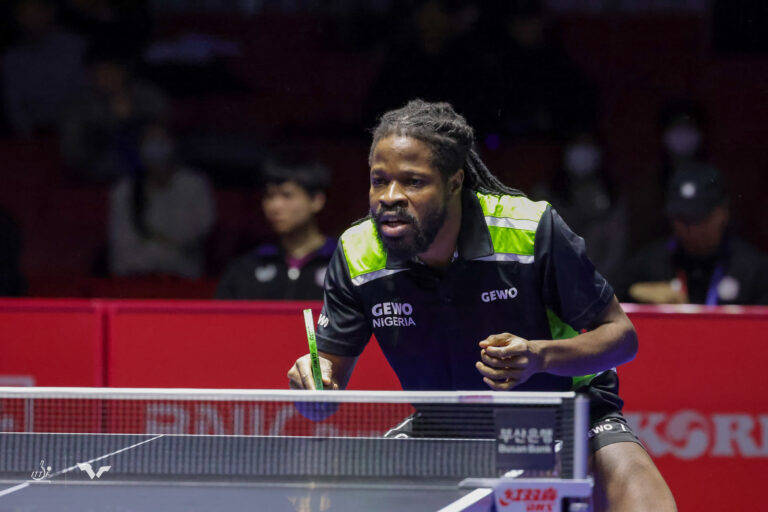
NIGERIA’S table tennis teams have been knocked out of the ongoing International Table Tennis Federation (ITTF) World Team Table Tennis Championships in Busan, South Korea.
The Nigerian teams in men’s and women’s categories were ruled out of contention after losing six of their eight group-stage matches.
Nigerian women’s team, pitted against Germany, Slovakia, Poland, and Mexico in group three, could not continue in the tournament after losing three out of the four group-stage matches.
The players, Edem Offiong, Ajoke Ojomu and Esther Oribamishe began their performance at the tournament after losing 3-0 in their first match against Mexico.
They could not match the strength of the Mexicans.
Similarly, during the second and third matches against Slovakia and Germany, the Nigeria women’s team could not pick a point, losing 0-3 in the two encounters.
Although one match against Poland is left to be played on Tuesday, February 20, previous poor results showed that Nigeria’s team is at a disadvantage in getting to the next round.
Also, Nigeria’s men’s category displayed an unimpressive performance, losing three of their four group-stage matches.
Their first match had a mild drama when the country’s poster boy Quadri Aruna was absent, crediting walkover to the opponent- Japan.
Aruna’s absence took a toll on the men’s team after other players, Olajide Omotayo and Bode Abiodun, could not douse tension, suffering a 3-0 and 3-1 defeat to Chinese Taipei and Madagascar.
Meanwhile, the men’s last group match against the Czech Republic is billed to be held on Monday, February 20, at the Busan Exhibition Convention Centre (BEXCO).
Nigeria’s woeful performance on the world stage is becoming a recurring decimal. The ICIR reported how the Nigeria teams lost at the group stage during the World Table Tennis Championships held last year in Lagos.
Also, this year, The ICIR reported how Nigerian table tennis players lacked quality sporting facilities and exposure to improve their games.
THE Economic and Financial Crimes Commission (EFCC) currently handles several corruption cases in Nigeria, with many involving prominent people.
While some cases are in court, others are still being investigated.
In this report, The ICIR’s Bankole Abe looks at some pending cases with the EFCC, which involve prominent Nigerians.
Newly appointed chief of staff (COS) to Kogi state governor, Ali Bello
Ali Bello, the newly appointed chief of staff (CoS) to Kogi State Governor Usman Ododo, is on trial for money laundering.
Bello, a nephew of the immediate former governor of the state, Yahaya Bello, was among the appointees announced by Ododo on Saturday, January 28, shortly after he took the oath of office in Lokoja, the state capital.
Ali Bello, Nephew to former Kogi state governor Yahaya Bello and current COS to Governor Ododo
The ICIRreported in December 2022that the EFCC arraigned the new CoS, said to be the immediate past governor’s nephew, before a Federal High Court in Abuja in December 2022.
He was arraigned before a judge, James Omotosho, alongside one Dauda Suleiman on a 10-count charge of alleged misappropriation and money laundering.
The commission stated that the accused, including one Abdulsalami Hudu, a cashier at the Kogi State House of Assembly now at large, took N10.2 billion out of the state’s coffers for personal use.
However, the accused entered a “not guilty” plea to the accusations.
Ruling on the bail request by the accused, the court granted the request in the sum of N1 billion apiece, along with two sureties who must provide N2 billion bonds and landed property worth N500 million each.
The court also ordered that they be remanded in prison pending when they fulfil their bail conditions.
The case was then adjourned till February 6, 2023.
On February 8, 2023, the EFCC arraigned Bello alongside Abba Adauda, Yakubu Siyaka Adabenege, and Iyada Sadat for allegedly misappropriating over N3 billion (N3,081,804,654.)
The presiding judge, Obiora Egwuatu, ordered that the defendants be remanded at a correctional centre pending the ruling on their bail application.
They were later granted bail of N500 million each with two sureties in like sum.
Suspended minister of Humanitarian Affairs, Betta Edu
Earlier this year, the EFCC questioned the suspended Minister of Humanitarian Affairs and Poverty Alleviation, Beta Edu, over alleged N585 million fraud.
The former minister arrived at the commission’s headquarters for interrogation in Abuja on Tuesday, January 9, according to the anti-graft spokesperson, Dele Oyewale.
Suspended Minister for Humanitarian Affairs and Poverty Alleviation, Betta Edu
President Bola Tinubu suspended the embattled doctor-turned-politician on Monday, January 8, after public outrage against her alleged diversion of public funds amounting to N585 million.
Suspended NSIPA Cordinator, Halima Shehu
On January 3, the EFCC arrested and detained the suspended National Coordinator of the National Social Investment Programme Agency (NSIPA), Halima Shehu.
Former National Coordinator of the National Social Investment Programme Agency (NSIPA), Halima Shehu.
Shehu was detained over the ongoing probe of N37.1 billion allegedly laundered in the Ministry of Humanitarian Affairs, Disaster Management, and Social Development under former Minister Sadiya Umar-Farouk.
A source within the EFCC confirmed to The ICIR that Shehu was at the commission’s headquarters in Jabi, Abuja, where she faced interrogation.
The source revealed that Shehu was indicted in the alleged N37.1 billion fraud at the ministry because she was the national coordinator of the Conditional Cash Transfer Programme, where the fund was declared missing.
Former Humanitarian minister Sadiya Umar-Farouq
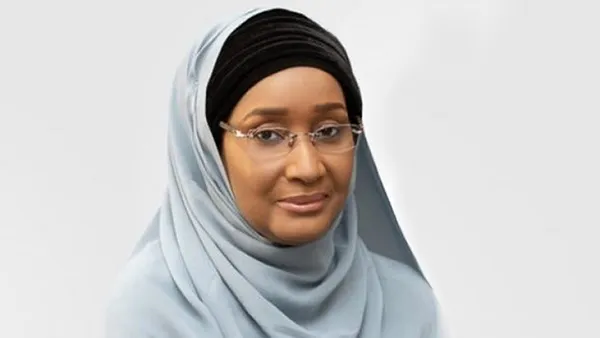
Former Minister of Humanitarian Affairs, Disaster Management and Social Development Sadiya Umar-Farouq presented herself to the EFCC for investigation on Monday, January 8, 2024.
The EFCC spokesperson, Dele Oyewale, confirmed this to The ICIR shortly after she arrived at the commission.
Umar-Farouq has been the subject of investigations by the EFCC following allegations that she laundered N37.1 billion through a contractor, James Okwete.
Former Minister of Humanitarian Affairs, Disaster Management and Social Development Sadiya Umar-Farouq
According to a report, at least 53 companies were traced to the contractor, who was said to have used 47 firms for Federal Government contracts amounting to N27.4 billion.
The former minister denied any relationship with the contractor, describing the allegations as malicious attacks against her.
Umar-Farouk headed the Humanitarian Ministry during former President Muhammadu Buhari’s tenure. She was succeeded by Edu, who was also kicked out of the ministry over sleaze allegations.
Former Accountant-General of the Federation, Ahmed Idris
The EFCC arrested Ahmed Idris, the former Accountant-General of the Federation, on May 16, 2022, for misappropriation of funds through bogus consultancies and other illegal activities using proxies, family members and close associates.
Former accountant-general of the federation, Ahmed Idris
During the proceedings in February 2024, the Federal Capital Territory (FCT) High Court adjourned Idris’ trial to March 20.
The former AGF is being tried alongside three others by the EFCC for alleged diversion of N109 billion.
Former governor of Anambra State, Willie Obiano
A former governor of Anambra State, Willie Obiano, was arrestedon his way out of the country in March 2022 for allegedly diverting Anambra state funds for personal use.
The EFCC arrested him at the Murtala Muhammed International Airport in Lagos State hours after he handed over power to his successor, Chukwuma Soludo.
At the resumed hearing before Inyang Ekwo of the Federal High Court in Abuja on January 23, Obiano pleaded not guilty after the charge was read to him.
The case has been adjourned till March 4 for the commencement of trial.
Former Niger governor Babangida Aliyu
The EFCC dragged a former governor of Niger state, Babangida Aliyu, to the Court of Appeal to set aside a no-case ruling granted him and a former chairman of the Peoples Democratic Party (PDP) in Niger State, Tanko Beji.
This was disclosed in a statement signed by the commission’s head of media and publicity, Dele Oyewale, on Thursday, January 18.
Aliyu and Beji were issued a no-case ruling by Abdullahi Mukailu of the Niger State High Court, Minna, on December 7, 2023, in an alleged N4 billion fraud case.
The EFCC had filed a seven-count charge bordering on conspiracy, abetment and criminal breach of trust before Aliyu Mayaki, now a retired judge, against the former governor, Beji and a former Commissioner for Environment and Chief of Staff to Aliyu, Umar Nasko.
Former Minister of Power Olu Agunloye
The anti-graft agency arraigned the former Minister of Power and Steel Development, Olu Agunloye, before a Federal Capital Territory (FCT) High Court in Abuja.
The EFCC made this known in a post on its X account on Wednesday, January 10.
Agunloye served as minister under former President Olusegun Obasanjo between 1999 and 2003.
On December 13, the commission declared him wanted over an alleged $6 billion fraud.
He was later arraigned on a seven-count charge bordering on fraudulent contract awards and official corruption.
The matter is currently in court.
Former Minister of Aviation Stella Oduah
Three years after filing a charge, the EFCC finally arraigned a former Minister of Aviation, Stella Oduah, her ex-aide, Gloria Odita and seven others over alleged N5 billion naira fraud.
They were arraigned before an Abuja Federal High Court presided by Inyang Ekwo on Friday, July 21, for money laundering, conspiracy, and maintaining anonymous bank accounts.
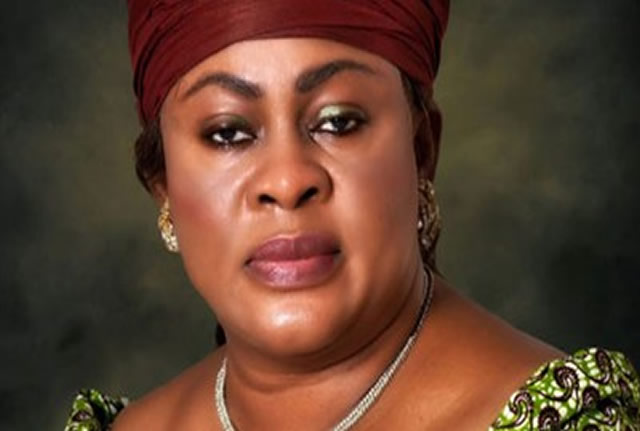
Former Minister of Aviation Stella Oduah
Other defendants include Chukwuma Irene Chinyere, Nwosu Emmanuel Nnamdi, Global Offshore and Marine Ltd, Tip Top Global Resources Ltd, Crystal Television Ltd, China Civil Engineering Construction Corporation (CCECC) Nigeria Ltd and Sobora International Ltd.
The EFCC alleged that Oduah misused government funds worth an estimated N5 billion while serving as a minister.
The FHC/ABJ/CR/316/2020 charge was first filed in 2020.
The Court mandated that the prosecution of Oduah and others accused of laundering nearly N5 billion be handled by the office of the Attorney General of the Federation (AGF).
The case was postponed until October 17 that year for trial.
At the resumed hearing, the court rescheduled it the trial.
The trial judge, Ekwo, adjourned the case due to the defendant’s absence.
At the resumed hearing on November 14, 2023, the new Attorney-General of the Federation (AGF), Lateef Fagbemi, took over the case.
Ekwo then adjourned the matter until March 28 this year.
Impeached Speaker of Ogun State House of Assembly, Olakunle Oluomo
The impeached Speaker of the Ogun House of Assembly, Olakunle Oluomo, was on Monday, January 29, arraigned before a Federal High Court sitting in Abeokuta over alleged misappropriation of public funds running into N2.5 billion.
Oluomo was arraigned alongside two other officers of the assembly, Dayo Samuel and Adeyemo Adedeji.
The crime was allegedly carried out by Oluomo in 2022 when he served as the Assembly Speaker before 18 out of 26 lawmakers removed him as Speaker earlier in January due to accusations of embezzlement, haughtiness, egregious wrongdoing, conceit, bad leadership style, lack of focus and transparency, and inciting members against one another.
Shortly after the three entered the dock on January 29, the judge discovered that the EFCC’s lawyer could not appear in court.
Former Speaker, Ogun State House of Assembly, Olakunle Oluomo
However, the judge, Agatha Okeke, postponed the case till February 29 and March 1.
The ICIRreportedthat the EFCC arrested Oluomo on September 1, 2022, at the Murtala Muhammed International Airport, Ikeja, Lagos, and took him to its Lagos office, where he was detained until he was released on administrative bail.
Oluomo is accused of conspiring, forging documents, and stealing more than N2.5 billion.
WHEN Alex Obiegbu relocated to Lokoja, Kogi state, in 1999, he intended to start a block industry business that civil workers in the Ajaokuta steel plants ( 29 kilometres away) would patronise. Little did he know that 12 years after he would be accumulating a loss of 15 million annually due to flooding.
The 66-year-old man had acquired a five-plot of land just by the roadside in Ganaja village, with several types of industrial equipment to run the block business. Until 2012, Obiegbu had yet to encounter floodwater.
“When I came here, it was a virgin land full of animals, and I got a bulldozer to clear the land, then started my business, which was going fine,” he said.
By 2012, when flooding hit different parts of Nigeria, including Kogi state, Obiegbu lost some sections of his lands. This created a gully that allowed water to penetrate his industrial building when it rained. During the 2022 flooding, the building collapsed.
Like Obiegbu, Sergeant ThankGod, 67, who lives in Adankolo, another community in Lokoja, had his house submerged by flood twice within a decade. Every year during the rainy season, ThankGod spends money to renovate some affected parts of the building.
Both aged men told The ICIR that they have no other place to relocate despite the havoc flooding has caused them.
Sergeant ThankGod, Kogi flood victim, standing in the from of his home
Flooding has become a predominant climate and environmental crisis in major parts of Nigeria, but residents living in riverine communities, especially in Lokoja, the conference point where the River Niger and River Benue meet, face this crisis annually.
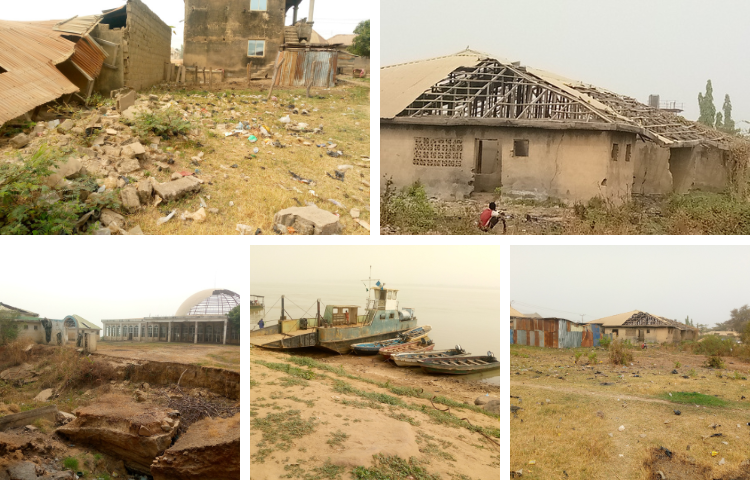
The ICIR visited various riverine communities like Ganaja village, Kabawa, 500-unit housing estate, Kpata, Idom and Gadumo, and observed how flooding had destroyed buildings and caused gullies in some parts of these communities.
Residents told The ICIR that during the rainy season, between July and October, sea level rise causes incursion into these communities.
Extreme rainfall, exacerbated by climate change during the rainy season, can increase the density of the sea, leaving communities within the region to suffer catastrophic effects.
A study by the University of Plymouth published that much of the Nigerian coast is low-lying with the consequence that a one to three-metre rise in sea level can affect human activities in these regions.
Reoccurring flooding in Kogi
Within a decade, Nigeria was hit by flooding twice, in 2012 and 2022. Thousands of people were reportedly displaced, including houses and lands submerged under water.
In Kogi state, according to the National Emergency Management Agency (NEMA), 623,900 people were displaced, and 152,575 hectares of farmland were destroyed in 2012.
Also, in 2022, flooding affected over 514 communities, displacing 471,000 persons with 24 deaths recorded.
This is coming despite the government’s allocation of N234.21 million in three years to erosion control and ecological funds received by the state through the Federal Government’s monthly allocation.
List
2021
2022
2023
Budget
N26,908,430
N106,300,000
N101,000,000
Ecological fund
N634.67 million
N667.38 million
–
(Kogi State Government 2023 Approved Budget – Expenditure by Economic Classification)
Residents living in riverine communities in Lokoja confirmed to The ICIR that flooding is an annual occurrence and efforts put in place by the government to mitigate the crisis are not sustainable.
The residents also said that the damages in communities like Adankolo, Adankolo New Layout, Ganaja junction behind the Federal University of Lokoja, Ganaja village and 500-unit housing estate started since 2012.
“We do not sleep. During the rainy season, our attention is always on the water area because we are close to the water”, a resident in Adankolo New Layout said.
‘Nowhere to go’
During the flooding in 2012, a resident of Adankolo New Layout, David Akale moved his family, including his elderly parents, from his house to a rented apartment far away from Lokoja.
He repeated the same act in 2022, but, this time, he decided to live there. When Akale could not sustain the annual rent of N250,000 for a two-bedroom flat, he moved back to his house in Ganaja junction.
“It told on me and my parent and became traumatic. Opposite me, you will notice that some houses have already been submerged. This used to be a flat land in 2009, but the inflow of water created this gully,” he said.
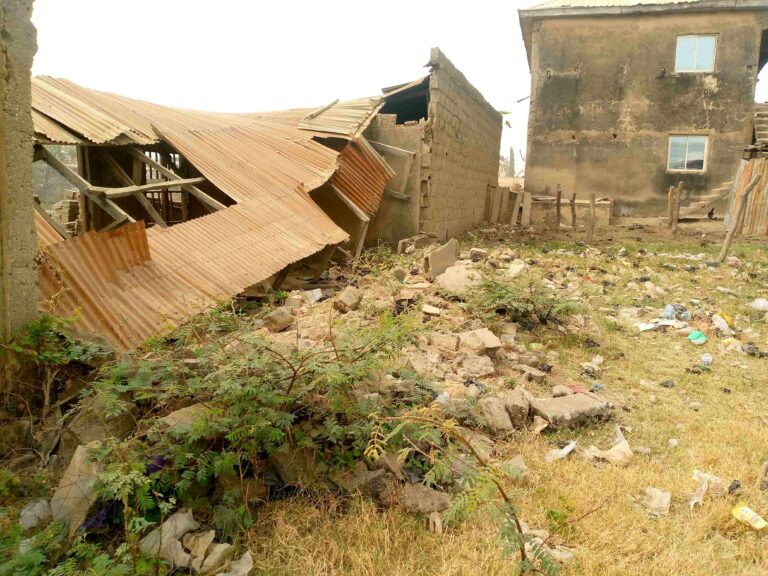
Dilapidated buildings in Kogi state due to flooding/ Kehinde Ogunyale
To control the flood, Akale constructed a concrete fence around his house, but according to him, “water must always find its way.” He said that many residents around his community build high fences and walls to stop the water penetration, but annually, when rain falls, the fences collapse.
For Omotosho Orimolade, 74, not only was his fence destroyed in 2012, but the flood pulled down his four-bedroom flat. He rebuilt the house in 2013, and by 2022, the building collapsed again.
“When the flood came, it covered the house. We did not see anything. We were told to wait until the flood subsided, and when it did, it [the flood] pulled down my house”, Orimolade said.
Now, Orimolade lives in a rented one-room flat with his daughter, just beside his collapsed house.
How the government responded
In 2013, the Kogi state government built a housing estate [now referred to as the post-flood housing estate] to accommodate flood-related victims. However, residents in these affected communities alleged that non-victims had occupied the estate. Several reports attested to the claim, as victims told The ICIR that government officials demand huge amounts from them before they can get an apartment.
The ICIR reached out to the Public Relations Office for Kogi State Emergency Management Agency, Olaoye Ibrahim, who refuted the claims, saying most victims, despite being allocated a home in the estate, relocate back on the motive that the communities are their ancestral home.
Another effort by the state government was building a concrete boundary that extends from the Kabawa community to the Kpata community in 2022 but residents also claimed that sometimes the water overruns the boundary, causing incursion into the communities.
“I have been staying in this community for six years. If the flood comes, all these places will be full of water,” Ibrahim Aisha, who lives in Kpata, said.
Dilapidated buildings in Kogi state due to flooding/ Kehinde Ogunyale.
Also, the residents said that the state government collected names of victims during the two major flood events, promising to give cash, but this was never fulfilled.
“Some foreigners came to quantify my land and promised to give me N12 million. Later, we were told that the money would be given to the government, and since then, we have not heard anything,” Obiegbu said.
There was also a reported allegation of mismanagement of N34 billion meant to dredge the River Niger by the former Minister for Transportation, Rotimi Amaechi. Residents said this would have helped affected riverine communities.
Adapting to the flood
With no support from the government, Obiegbu moved most of his industrial equipment to a separate store and stayed back at his dilapidated building, hoping to sell off blocks that had been moulded.
Meanwhile, ThankGod constructed 80-centimetre wooden shelves that can hold some of his household appliances. Sometimes, just like Aisha, he lives in the floodwater.
A flood risk consultant, Taiwo Ogunwumi, told The ICIR that one of the solutions that can be set up ahead of future flood occurrences is the development and communication of a clear evacuation plan for those living in this riverine area, which includes designated shelter at some meters farther to the river.
He said, “It should be noted that the federal government and few state governments are trying their best in terms of early warning and the provision of relief after the disaster, but I believe it is high time for us to prioritize preparedness and mitigation and not just disaster response. There is a need to check and monitor the action of the State Urban and Region planning departments and other land use departments by ensuring that they are performing their quota of restricting the building or settlement at meters close to the river.”
A lecturer of Geography at the Federal University of Lokoja, Adewale Olatunde, said that the state and federal government needs to do proper channelization of water, including drainage channels, away from the community adding that the floodwater ought to be beneficial to the state rather than a crises to communities.
*This report was sponsored by the Centre for Journalism Innovation and Development with funding support from the Public Diplomacy Section of the U.S. Embassy, Abuja.*
THE Olu of Owode-Egba, Oba Kolawole Sowemimo, in Obafemi/Owode Local Government Area of Ogun State, has been suspended by the Egba traditional council for openly defacing the naira at a social function.
The monarch had been warned earlier by the National Orientation Agency (NOA) after a video of him decorating a Fuji musician, Wasiu Ayinde Marshall, popularly known as K1, with knitted naira notes had gone viral.
According to the NOA, the monarch’s action contravened Section 21 (3) of the Central Bank of Nigeria Act 2007 as amended, which stipulates that spraying of, dancing, or matching on the naira or any note issued by the bank during social occasions or otherwise, constitutes abuse and defacing of the naira or such note and shall be punishable under the law by fines or imprisonment, or both.
The ICIR earlier reported that an actress had also been arrested for allegedly spraying new naira notes at a party.
The monarch was reportedly suspended on Friday, February 16, 2024, at the Egba Traditional Council February statutory meeting, chaired by the Alake of Egbaland, Oba Adedotun Gbadebo.
Announcing the monarch’s suspension, Olowu if Owu, Oba Saka Matemilola, said that Sowemimo should not be invited or seen at any government or public function as a traditional ruler and, for three months, should not receive any payment.
The committee made its decisions after examining the viral video.
Responding, Oba Sowemimo noted that the council’s decision was fair.
“I totally accept the verdict of the council because it is the person that we love that we chastise, so I am good with the decision… when I was asked if I had anything to say, I stood up and apologised for whatever I had done wrong and the suspension which was earlier announced to be for three months without salaries was reduced to two months,” he stated.