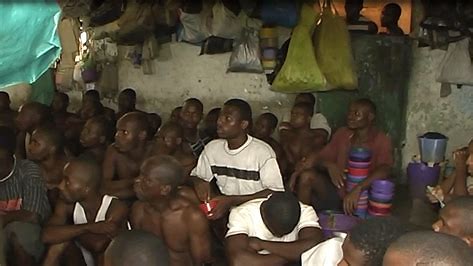
DATA from the Nigerian Correctional Service (NCS) have shown that 54,141 inmates await trial in Nigeria.
The number represents 69 per cent of inmates in the nation’s prisons.
To await trial means the court has yet to pass its final verdict on the crime committed. Hence, the alleged criminal is remanded until a judgment is passed.
The data show that as of December 11, 2023, the number of inmates was 78,446, of which 24,305 had been convicted.
The number of inmates increased by 2,937 in December 2023 from 75,509 reported in December 2022.
By gender, the total number of male inmates is 76,670, while females are 1,776.
According to a report, at least 1,317 people have been pardoned by the federal and state governments between January 2022 and early December 2023.
Male
Female
Convicted
23,870
435
Awaiting trial
52,800
1,341
Total
76,670
1,776
Last month, the Minister of Interior, Olubunmi Tunji-Ojo, flagged off the release of 4,068 inmates sentenced to various terms with the option of a fine.
According to Ojo, as of November 17, 2023, there were about 80,804 inmates in 253 custodial facilities nationwide, which could hold not more than 50,000.
He said, “The Medium Security Custodial Centre, Kuje, where 37 of the beneficiary inmates were released, has the installed capacity to hold 560 inmates, but currently, a total of 730 inmates are being held there.”
Ojo equally called on the United Nations to support the country’s efforts at reforming its correctional service and decongesting its custodial facilities, adding that only five per cent of inmates in the correctional centres could be released with the N585 million it had raised from philanthropic individuals, groups, and corporate bodies to release the inmates.
The ICIR findings in the 2024 proposed budget submitted by the Federal Government showed that the NCS has a capital expenditure of N13.91 billion of the total N120.63 billion allocated. This means the NCS will spend more of its budget (88.5 per cent) on personnel and overhead costs, while capital projects take 11.5 per cent.
A look through some of the capital projects is the ongoing construction of 3000 capacity maximum security prison in Abuja with N700.87 million, the construction and rehabilitation of custodial centres and barracks nationwide with N7.70 billion, the construction of four 3000-capacity maximum security custodial centres in four states with N1.86 billion among others.
The ICIRreported how the federal government budgeted N22.44 billion for feeding inmates in 2023.
This organisation also reported how Gashua Correctional Facility in Yobe state remained uncompleted 40 years after the Federal Government had budgeted billions on it.
NIGERIA’S inflation rate for November 2023 has jumped to 28.2 per cent, making it the highest inflation rate recorded in almost two decades since August 2005.
Findings by The ICIR showed that this is the second time Nigeria would hit an inflation rate of 28.2 per cent. The first was August 2005.
The latest data from the National Bureau of Statistics (NBS) showed that the inflation rate rose by 0.87 per cent from 27.33 per cent in October 2023.
The November inflation rate is the 11 consecutive increase reported this year as millions of Nigerians battle with the high cost of household products following several economic reforms implemented by President Bola Tinubu since he assumed office on May 29.
The NBS said that on a year-on-year basis, the headline inflation rate was 6.73 per cent points higher compared to the rate recorded in November 2022, which was 21.47 per cent.
The food inflation rate, a major determinant of the inflation rate, rose to 32.84 per cent. NBS said that the rise in food inflation on a year-on-year basis was caused by increased prices of bread and cereals, oil and fat, potatoes, yam and other tubers, fish, fruit, meat, vegetables and coffee, tea and cocoa.
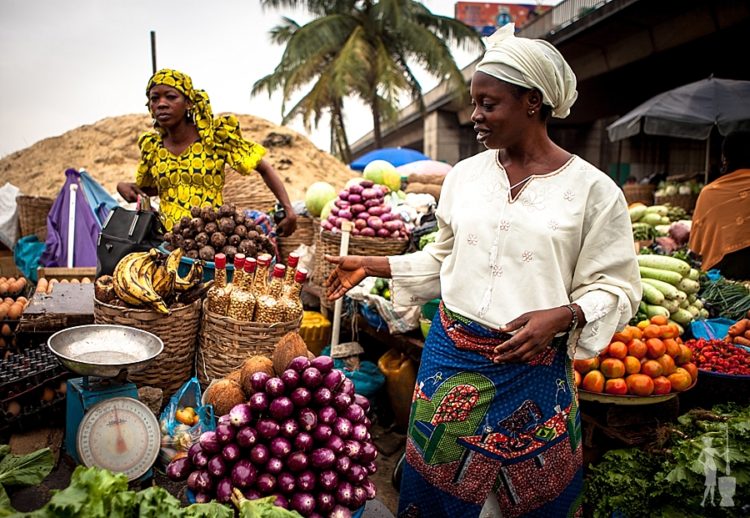
Since removing the fuel subsidy in May, Nigerians have struggled to adjust to the economic hardship of increasing market prices. Alternatively, the President has rolled out several palliative schemes to ease the economy, but the rising inflation rate shows that there has been very little impact.
While appearing before the Joint Committee on Banking, Insurance, and Other Financial Institutions on Thursday, December 14, the Central Bank of Nigeria (CBN) governor, Yemi Cardoso, said the inflation rate was expected to decline by 2024.
He said, “The outlook for the domestic economy remains positive and is expected to maintain the positive trajectory for 2024. Inflation pressures may persist in the short-term but are expected to decline in 2024.”
Also, while presenting the 2024 budget, Tinubu said that the budget was targeted at reducing the inflation rate to 21.4 per cent.
Meanwhile, KPMG Nigeria predicts that with the persistent inflationary pressure, Nigeria’s inflation rate might hit 30 per cent by December 2023.
FIVE students of the Federal University Dutsin Ma, Katsina State, who were abducted over two months ago, have been freed by their captors.
This was disclosed by the University vice-chancellor, Armaya’u Bichi, on Friday, December 15, while briefing journalists in the state.
According to Bichi, a voice recording aired by DW Hausa said four of the five students were released on Friday, while the other one had managed to escape a few days after the abduction.
The ICIRreported that on October 3, suspected bandits abducted five female students of the university.
It was gathered that the students were abducted from their residence behind Mariamoh Ajiri Memorial International School, along Tsaskiya Road, around 3am on Wednesday, October 4.
Meanwhile, briefing journalists on the students’ release, the vice chancellor said the students were on their way home and would be taken to the hospital for a medical checkup.
“Today (Friday), with the help of God, the students have been released. The students are on their way home but would be taken to Abuja to meet the National Security Adviser where they would also be taken to the hospital for medical checkup after which they would be handed over to their families,” Bichi said.
Bichi further attributed the students’ freedom to the efforts of the National Security Adviser, Nuhu Ribadu.
“No money was paid before their release. Neither the government nor the families of the abducted students paid money before the release of the students. It was the efforts of the National Security Adviser. He knows the effort he made to ensure the release of the students. You know it’s a security issue, and we’ll not be making it public,” he said.
The abduction of the FUDMA students came a few weeks after The ICIR reported that over 20 female students of Federal University Gusau, Zamfara state were abducted by bandits.
The bandits invaded the students’ private hostels in the Sabon-Gida community of the Bungudu local government area of the state in the early hours of Friday, September 22. Sabon-Gida is a few meters away from the university.
Sources in the school disclosed to The ICIR that the bandits kidnapped an estimated 25 students (largely female students) before the Nigerian Army rescued 13.
The Nigerian Army has since rescued other affected students.
TWO reports from The International Centre for Investigative Reporting (ICIR) have been nominated for the 2023 edition of the Nigeria Media Merit Award (NMMA).
The awards ceremony, which will be celebrating its31st anniversary, is set to be held at Munson Centre, Lagos, on Sunday, December 17, celebrating and recognising journalists for their excellence.
On December 9, two reports by The ICIR bagged awards at the 18th Wole Soyinka Award for Investigative Reporting (WSAIR) held in Abuja.
A former journalist with The ICIR, Beloved John, emerged as a runner-up for her work, ‘London Graduate School: The ‘Degree Mill’ selling fake honorary doctorate to Africans’.
Similarly, in October, another journalist with The ICIR, Nurudeen Akewushola, emerged as a winner at the 2023 PwC Media Excellence Award in the Tax & Fiscal Policy Reporting category with his two-part investigative series titled ‘Maritime ‘Bandits’.
THE Lagos state Government has asked stakeholders in the real estate business to collaborate with it to de-risk investments in housing and reduce building collapses and demolitions.
The Special Adviser to the Governor on Housing, Barakat Bakare, made this call at the 4th Lagos Real Estate Market Place Conference and Exhibitions held between December 13 and 14 and organised by the Lagos State Real Estate Regulatory Authority (LASRERA).
She said the choice of the theme, ‘Real Estate Regulation: A Penacea for Disaster Mitigation and Recovery in the Built Industry,’ was based on the need for collective assent and joint action in support of regulations and compliance in the sector.
“The Sector has been bedevilled with various disasters in recent times, ranging from building collapse, demolitions, inability to recoup investments, agents’ fraud, to mention a few. There is a need for us to unite and consciously change this narration.
“De-risking housing investments for private developers and investors is a key goal for us in Lagos state. We are certain that providing a favourable environment for private investment in the built sector is fundamental and an entry point for a partnership that works.” Bakare told participants at the conference.
At the two-day event, stakeholders pointed out that the real estate business faced many challenges despite Lagos state’s seemingly robust regulatory framework.
They criticised the state’s housing ministry and various agencies for not doing their jobs as required, thereby creating loopholes for some developers to abuse the system and encouraging quacks.
The incoming president of the Real Estate Developers Association of Nigeria (REDAN), Aliyu Wamakko, lamented the improper coordination of the various agencies under the Lagos state Housing Ministry.
He cited a situation where a developer who had obtained building approval, governor’s consent, and layout approval would fall victim to building demolition for not getting drainage permission, which ideally should have been factored in before commencing construction.
He, however, called on developers to abide by the state’s building code in totality.
While the real estate market in Lagos is booming, with high demand for residential and commercial properties due to the city’s growing population, rising incomes, and increasing urbanisation, the state experiences frequent disasters in building collapse and demolition.
Recent developments show that the state government has been busy demolishing buildings in various parts of the state, such as Lekki Phase II, Ikota GRA, and Oyingbo in Ebute-Metta and the International Trade Fair Complex and other areas, for multiple offences.
Besides, unspecified numbers of multi-million naira buildings are also marked for destruction for various environmental offences, ranging from building on drainage channels to lack of approvals, among others.
In September, a school-turned-residential building housing over 500 rooms with hundreds of residents known as Agboye Estate on Oduntan Street, Ketu, caved in entirely and also in November, a woman said to be 80-year-old was reported to have died as a result of a building collapse in the Oyingbo area of the state.
These incidents require synergy and disaster mitigation strategies by the various stakeholders in the building industry.
Speaking, the Lagos State Governor, Babajide Sanwo-Olu, represented at the event by the Commissioner for Housing, Moruf Akinderu-Fatai, said the urgency of addressing the impact of the well-regulated real estate sector was more apparent than ever before.
“To minimise the risk of disasters and enhance the resilience of structures, it has become compulsory for relevant authorities to require individuals and organisations to purchase insurance coverage against natural disasters.
“Let us all know that by prioritising safety, enforcing building codes, and promoting transparency, we can create resident communities that are better equipped. Let us work hand-in-hand to advocate for robust real estate regulation, for it is through our collective efforts that we can build a safer and more sustainable sector,” the governor urged stakeholders.
The ICIRreported that real estate developers, agents, financiers, realtors, marketers, and other practitioners said it had become imperative for the Lagos government to sanitise the built industry.
HOUR after the Zurmi local government area of Zamfara state requested four Armoured Personal Carriers (APCs) from the Federal Government to enable the military to tackle rising banditry in the area, bandits struck the Zormi community, the Zurmi LGA headquarters, killing soldiers, destroying APC and other military vehicles on Tuesday, December 12.
According to a document signed by Iliya Garba Zurmi on behalf of the sole administrator of the LGA, dated December 10, addressed to the commissioner of security and home affairs in Zamfara state, and obtained by The ICIR, the APCs are needed to fight armed and rampaging bandits.
Page one of the document where the Zurmi LGA demanded more APCs to enable the military to combat the bandits terrorising the LGA
In the document, the LGA listed details of various attacks on communities by a group of armed bandits suspected to be from the enclaves of a notorious bandits leader, Sani Black.
It also listed the names, age and gender of victims of the attacks.
On Wednesday, December 13, The ICIR exclusively reported how the bandits attacked Zormi town, killed soldiers, and destroyed the military base in the community, its armoured personnel carrier, and other vehicles.
According to the LGA, on Wednesday, December 6, the armed bandits in large numbers with their animals invaded farmlands around the Gidan Shaho axis of Sarkin Yamma district, grazing and destroying farm crops,
“This dastardly act started in October and has lasted to date. The armed bandits were chased by Operation Hadari stationed in Zurmi.”
Page two of the document where the Zurmi LGA demanded more APCs to enable the military to combat the bandits terrorising the LGA
It added that the military succeeded in retrieving about 44 sheep left by the armed bandits around Gidan Shaho village, adding that the bandits returned to Gidan Shabo on December 8 with their animals grazing and destroying farm crops.
The LGA said the military went back to the area and chased them away, leaving behind another 115 sheep, which were also moved to the Zurmi community.
“Around 11:30 pm the same armed bandits entered the village burning local grain silos, houses, and shops, killing one Mande aged 50. One Dodo Roba, 60 years sustained gunshots and is currently receiving treatment at General Hospital Zurmi. They also kidnapped 23 innocent persons,” the LGA stated.
Page three of the document where the Zurmi LGA demanded for more APCs to enable the military to combat the bandits terrorising the LGA
The LGA said that the military responded upon receiving the attack report, returned to Gidan Shaho, and chased the bandits away.
It added that on December 9, 2023, the armed bandits moved to Nasarawa Zurmi, the headquarters of Zurmi Local Government, killing two innocent people, namely Jiuji (alias Asha stim, Garba Rikwamba), kidnapped five women, injuring one Abubakar Jari and Yusuf Tailor who is currently receiving treatment at General Hospital Zurmi.
The report said on Sunday, December 10, the district head of Zurmi West, Lawal Ibrahim Sarkin, was almost lynched by members of the community while paying condolence at the family house of those killed by the armed bandits.
“In his condolence speech, he made a slip of tongue and said he is advising the local government council to conduct a security meeting and reconcile with the armed bandits with a view to stopping the rampant attack of innocent lives. Most of the internally displaced persons that attended the funerals were not happy with his remarks and, as such, decided to protest.”
As a result, the LGA said people started throwing stones and raining abusive words on the district head for provoking them with his statement that the LGA should embrace reconciliation with the bandit as the only way to stop the rampant attack on the community.
It added that it took the intervention of the security agents to rescue the district head from the hands of the IDP.
Last page of the document where the Zurmi LGA demanded more APCs to enable the military to combat the bandits terrorising the LGA
Consequently, the LGA requested the immediate intervention of the military authorities to send four more APCs to complement the one already existing at Zurmi Military Camp.
In its exclusive report on Wednesday, December 13, The ICIR highlighted how bandits suspected to be loyalists of a notorious kingpin Gwaska Dankeremi, attacked the military base in the Zurmi community, killing three soldiers.
This organisation gathered that the resurgence of the banditry attacks in the area could be linked with the recent military operations that led to the recovery of many cattle from the dreaded bandits in a nearby forest.
Consequently, the bandits launched a series of attacks on the community for five consecutive times, leaving four civilians dead and injuring others.
Zurmi shares a border with the Niger Republic.
One of the military vehicles attacked by bandits in Zurmi on Tuesday, December 12. Photo credit: The ICIR
The ICIR gathered that the worst of the attacks occurred in the afternoon of Tuesday, December 12.
The attack lasted from 4 p.m. to 6:30 p.m., during which four patrol vehicles of security operatives, including a military armoured personnel carrier (APC), were destroyed.
A government official who pleaded anonymity said three soldiers were killed during the encounter.
The ICIR reports that Zamfara is one of the North-West states facing protracted insecurity.
Zamfara has faced attacks from terrorists, lost hundreds of residents to insecurity, and had thousands of others displaced.
In October 2022, this organisation reported how 30 schools remained shut after one year because of insecurity.
Another military vehicles attacked by bandits in Zurmi, Zamfara state on Tuesday, December 12. Photo credit: The ICIR
NIGERIA’S double-digit inflation will decline in 2024 through the Federal Government’s reforms, the Central Bank of Nigeria (CBN) has said.
The apex bank gave the assurance in Abuja on Thursday, December 14, through its governor, Olayemi Cardoso, at a meeting with the National Assembly Joint Committee on Banking, Insurance and Other Financial Institutions.
Cardoso said reforms such as mopping up excess liquidity and a single exchange rate window would address the country’s volatile exchange rate.
He also projected less revenue from oil exports in the fiscal year, just as he declared that total trade from Nigeria’s foreign exchange market ( NFEM) stood at N18.8 billion in the third quarter (Q3) of 2023.
The apex bank chief told the committee that the outlook for the domestic economy in Nigeria for 2024 was very positive as both the inflation and exchange rates would withstand fluctuating pressures and stabilise.
“The outlook for the domestic economy remains positive and is expected to maintain a positive trajectory for 2024.
“Inflation pressures may persist in the short-term but are expected to decline in 2024. Exchange rate pressures are also expected to reduce significantly with the smooth functioning of the foreign exchange market”, he said.
He informed the committee that the unification of the exchange rate windows in June 2023 had ushered in a new approach to managing the exchange rate aimed at reducing arbitrage, rent-seeking behaviour and speculation in the market.
“The policy aims at creating a market where the demand and supply of foreign exchange determines the exchange rate.
” The premium has narrowed, and our focus on increasing the autonomous FX supply would lead to more stability and further narrowing of the premium,” he said.
According to Cardoso, the total trade in the third quarter of 2023 stood at N18.8 billion.
He added that exports within the same quarter were valued at N10.3 billion while total imports stood at N8.4 billion.
This represents a positive trade balance, which would lead to an increase of the external reserves “,he argued.
He, however, stated that due to prevailing domestic factors, fewer revenues would be earned from oil exports in 2024.
He said: “We expect less revenue from oil exports due to the production limit of 1.78mbpd in 2024. The Organisation of Petroleum Export (OPEC) approved quota for Nigeria is 1.8mbpd, higher than the 2024 budget assumption.
” However, the country’s production has been below these thresholds. The budget benchmark for 2023 was 1.69mbpd, but the highest production level during the year was about 1.35mbpd in Q3 of 2023.
He cited reasons for the projected underperformance of the oil production target, which include crude oil theft, pipeline vandalization, and divestments by major oil companies away from Nigeria.
Before the CBN Governor’s presentation, the committee’s chairman, Tokunbo Abiru (APC Lagos East), said the interactive session was organised for a statutory briefing by CBN in line with extant laws.
In his remarks, the committee’s co-chairman, Bahir El-Rufai, commended the CBN governor and the entire management team on measures being put in place to stabilise the economy.
THE National Assembly has threatened to sanction the Ministers of State for Petroleum Resources (Oil and Gas) Heineken Lokpobiri and Ekperikpe Ekpo, respectively, for failing to appear before it for their 2024 budget defence.
The joint Senate and House of Representatives Committees on Petroleum Resources issued the threat when it convened for the budget defence, but the ministers did not turn up.
The committee had scheduled a session with the ministers on Wednesday, December 14, but was adjourned to the following day due to their absence.
The committee expressed displeasure with the ministers’ absence, considering the importance of the ministry to the survival and growth of Nigeria’s economy.
It consequently adjourned till Monday, December 18.
The lawmakers vowed to deal decisively with the ministers, using every legal instrument available if they fail to honour the invitation again.
The permanent secretary in the ministry, Gabriel Aduda, who was present with some officials, offered to represent the ministers. The lawmakers said he lacked the institutional capacity to engage with them.
The Chairman of the Senate Committee on Petroleum Resources (Upstream), Albert Bassey, expressed dissatisfaction with the ministers’ attitude.
He said: “I am so disappointed, the same reasons yesterday we shifted this meeting. Today again, we have not seen them. We cannot keep shifting. Maybe they are not ready, but nobody will undermine the powers of the National Assembly.”
While emphasising the importance of the ministers explaining the 2024 budget details, he said they had no business being ministers if they couldn’t defend their budget.
The Chairman of the House Committee on Petroleum Resources (Upstream), Alhassan Ado-Doguwa, also expressed disappointment with the ministers, going by the critical role of the oil and gas sector in the nation’s economy.
He pointed out that President Bola Tinubu, as the supervising minister, had appointed two ministers of state, underlining the significance of their presence during the constitutional exercise.
“It is to say the least, very disappointing”, while emphasizing that the ministers’ disregard for the National Assembly’s invitation would not be tolerated.
“We are individually and collectively disappointed. We are disappointed because this is one ministry where the success and survival of the economy of the Federation lies.
“And most of all, this is a ministry that the President is the supervising minister, and because of the importance of this ministry, he has also taken, by way of wisdom, to appoint two ministers of state in this ministry. Here we are engaging this all-important ministry for a constitutional exercise where we represent the interest of our people, but we don’t have any of the ministers here in attendance.
“The President has made it clear that coming to the National Assembly to defend the budget is sacrosanct, and no one can compromise that. So, in our view from the inaction of these two ministers of state, it is like taking the presidential instruction for granted. They are also taking the sanctity of this institution where the sovereignty of the people lies for granted.
“This is not a personal thing. It is in the discharge of our responsibility to our dear nation, and when anyone is trying to be funny about it, we have various instrumentality available to this institution (the National Assembly) to deal with him”, he said.
Doguwa told the ministry’s permanent secretary, who wanted to represent the ministers, “You cannot do it. Your height is short of engaging us here with the ministry where you have the President as the supervising minister.”
NIGERIAN music stars, including Burna Boy, Davido, Rema and Wizkid, have been nominated for the 26th MOBO Awards.
MOBO, an acronym for Music of Black Origin Awards, is an annual awards ceremony held in the United Kingdom (UK) to recognise the excellence of leading black musicians and culture.
The 26th edition of this awards ceremony is scheduled to be held on February 7, 2024, at Utilita Arena Sheffield in Sheffield, United Kingdom.
Seven Nigerians, namely Adekunle Gold, Asake, Ayra Starr, Burna Boy, Davido, Rema and Wizkid, were nominated in the category of Best African Act.
Also nominated in that category are Libianca from Cameroon, South Afric’s Tyla and Uncle Waffles from Eswatini.
In the last edition of the award, nine Nigerian artistes, including Burna Boy, Adekunle Gold, Tems, Asake, Rema, Oxlade, Omah Lay, and Fireboy DML, received nominations for the Best African Act of the Year, with Burna Boy clinching the award alongside the award for Best International Act.
Also nominated for the award is Nigerian gospel singer Samuel Onwubiko, known as Limoblaze. He was nominated for the category of Best Gospel Act.
Another Nigerian who made the list of nominees is Richard Olowaranti Mbu Isong, a music producer professionally known as P2J. He was nominated for Best Producer.
Below is the full list of nominees
BEST MALE ACT
Central Cee
Dave
D-block Europe
J Hus
Nines
Stormzy
BEST FEMALE ACT
Flo
Jorja Smith
Little Simz
Mahalia
Pinkpantheress
Raye
ALBUM OF THE YEAR
Ezra Collective – Where I’m Meant To Be
J Hus – Beautiful and Brutal Yard
Little Simz – No Thank You
Potter Payper – Real Back In Style
Raye – My 21st Century Blues
Stormzy – This Is What I Mean
SONG OF THE YEAR
Central Cee & Dave – ‘Sprinter’
J Hus Feat. Drake – ‘Who Told You’
Jorja Smith – ‘Little Things’
Pinkpantheress & Ice Spice – ‘Boys A Liar PT.2’
Raye & 070 Shake – ‘Escapism’
Stormzy – ‘Hide & Seek’
BEST NEWCOMER
Ama Lou
Antslive
Debbie
Jayo
Nippa
No Guidnce
Rimzee
Strandz
Tamera
Tunde
VIDEO OF THE YEAR
Antslive – ‘Number One Candidate’ (Directed By Tom Emmerson)
Enny – ‘No More Naija Men’ (Directed By Otis Dominique)
Jords – ‘Dirt In The Diamond Ep1: Mobay Feat. Tay Iwar / Stay Close Feat. Kranium’ (Directed By Renee Maria Osubu)
Little Simz – ‘Gorilla’ (Directed By Dave Meyers)
Stormzy – ‘Mel Made Me Do It’ (Directed By Klvdr)
Tion Wayne – ‘Healing’ (Directed By Wowa)
BEST R&B/SOUL ACT
Bellah
Jaz Karis
Mahalia
Ragz Originale
Sampha
Sault
BEST HIP HOP ACT
Avelino
Clavish
Digga D
Enny
Fredo
Giggs
Little Simz
Loyle Carner
Nines
Potter Payper
BEST GRIME ACT
Bugzy Malone
Duppy
Flowdan
Manga Saint Hilare
Novelist
P Money
BEST DRILL ACT
Central Cee
Headie One
K-trap
Kwengface
M24
Russ Millions
Teezandos
Unknown T
BEST INTERNATIONAL ACT (US)
governmentDoja Cat
Drake & 21 Savage
Travis Scott
Ice Spice
Latto
Lil Uzi Vert
Nicki Minaj
Sexyy Red
Sza
Victoria Monet
BEST PERFORMANCE IN A TV SHOW/FILM
governmentAdjani Salmon As Kwabena – Dreaming Whilst Black
Damson Idris As Franklin Saint – Snowfall
Déja J. Bowens As Vita – Champion
Idris Elba As Sam – Hijack
India Amarteifio As Queen Charlotte – Queen Charlotte: A Bridgerton Story
John Boyega As Fontaine – They Cloned Tyrone
Lashana Lynch As Izogie – The Woman King
Letitia Wright As Shuri – Black Panther: Wakanda Forever
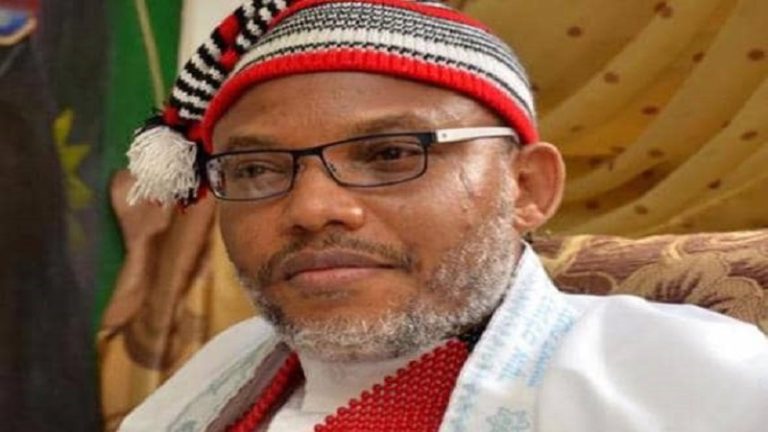
THE Supreme Court, on Friday, December 15, refused to order the release of the leader of the proscribed Indigenous People of Biafra (IPOB), Nnamdi Kanu, from confinement.
The Court of Appeal in October 2022 ordered Kanu’s release and dismissed the terrorism charges against him.
However, in its ruling through Emmanuel Agim, the Supreme Court nullified the Court of Appeal’s decision.
The court said that though the Nigerian government illegally and carelessly extradited Kanu from Kenya, it did not stop any court from continuing a trial.
The court stated that no Nigerian law was mentioned in the lawsuit demanding Kanu’s release on the grounds of his alleged unlawful kidnapping from Kenya.
It added that the IPOB leader would have filed a civil matter against such an act instead of challenging the powers of courts to continue with his trial for alleged criminal charges.
The Supreme Court ruled in the government’s favour and said Kanu must stand trial before the Federal High Court.
Subsequently, the apex court mandated Kanu to defend himself against the remaining seven counts of terrorism-related allegations against him.
In 2021, Kanu was apprehended in Kenya and returned to Nigeria. Since then, he has been in the States Security State Service (SSS) custody.
Kanu, who is being tried on charges bordering on terrorism, was freed by a three-member panel of the court.
The appellate court set aside the judgment of an Abuja Federal High Court, which ordered him to answer seven out of the 15 counts of terrorism filed against him.
Binta Nyako had, in a judgment in April 2022, struck out eight of the 15 counts in the charge preferred against the IPOB leader.
The judge, however, held that Kanu had some questions to answer in counts 1, 2, 3, 4, 5, 8 and 15 of the charge.
But Kanu, through his team of lawyers led by Mike Ozekhome, filed an appeal to quash the remaining seven counts for lack of merit.
In its ruling in October 2022, the Court of Appeal agreed with Kanu’s counsel that the IPOB leader was illegally abducted and extra-ordinarily renditioned from Kenya to Nigeria, against international and local laws.
The panel led by Jummai Hanatu also held that the trial court lacked jurisdiction to handle the charges against Kanu, as he was not adequately arraigned before the court.
The Court of Appeal further held that Kanu’s alleged offences happened in Kenya, not Nigeria.
The court ordered Kanu’s release from custody.
But in a new twist, on October 28, 2022, the Court of Appeal stayed the execution of its earlier order, acquitting Kanu of all charges and directing his release from custody.
This development forced the IPOB leader to file an appeal at the Supreme Court.