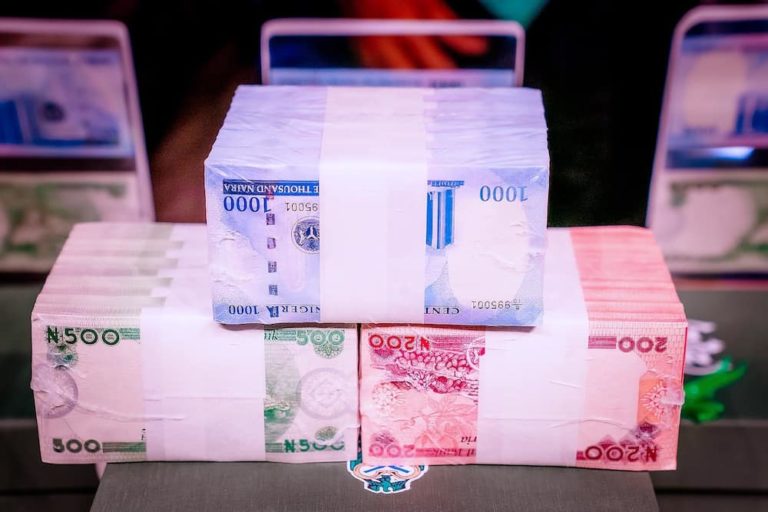
THE House of Representatives is seeking the adoption of the Chinese Yuan (CNY) as an official foreign exchange reserve currency alongside other major international currencies to mitigate the impact of the naira’s depreciation.
This followed the adoption of a motion moved by Jafaru Gambo Leko from Bauchi State at plenary on Wednesday, December 20, in Abuja.
Moving the motion, Leko noted that the Nigerian economy had experienced substantial shifts regarding the naira value, triggering economic instability and uncertainty.
He also noted that the International Monetary Fund proposed diversifying foreign exchange reserves for Central Banks of developing countries, including Nigeria.
The lawmaker further argued that the global economic landscape was evolving and international trade dynamics were shifting, with China assuming a leading role in global trade.
Leko observed that the People’s Republic of China had a stable and globally recognized currency, the Chinese Yuan, gaining recognition in international trade.
He said, “Adopting the Chinese Yuan as an additional foreign exchange reserve currency might mitigate the adverse effects of naira depreciation, reduce the risks associated with exchange rate fluctuations, and enhance Nigeria’s economic stability.
“Furthermore, it would enhance Nigeria’s trade and economic ties with China, a crucial trading partner.”
Adopting the motion, the House mandated its committees on Banking Regulations, Banking and Other Ancillary Institutions to liaise with the Central Bank of Nigeria to explore the appropriate mechanisms, policies, and partnerships required for the adoption and report back in four weeks for further legislative action.
Also, at the plenary, the House adopted a motion directing telecommunication companies to refrain from unwarranted charges for services not rendered and improve service delivery.
In the motion sponsored by Hon. Emmanuel Ukpong-Udo from Akwa Ibom, the House urged the Nigeria Communications Commission (NCC) to ensure that registered network providers namely MTN, Glo, Airtel, and 9mobjle provide quality communication services to Nigerians.
Moving the motion, Ukpong-Udo said: “Despite the increasing and remarkable patronage of telecommunications services by Nigerians, including low-income earners, rural dwellers and the vulnerable in our society, communication services provided by network carriers are not proportionate with the interest expressed by Nigerians.
“Nigerians pay charges on calls with low voice quality arising from congestions, calls freezing and fluctuating network services. Nigerians lose valuable business hours and finances due to poor service delivery by these network service providers whilst enriching the service providers to their detriment.”
On Tuesday, December 19, a group of commercial bike riders at Mpape Bus Stop in the Federal Capital Territory (FCT) complained of high levels of kidnapping and other crimes in the nation’s capital while interacting with The ICIR.
Most of them claimed they tried to close early this Yuletide period to avoid being a victim of criminal activities.
An average Nigerian will share the same thoughts as the bike riders because of the rate of crime and insecurity that often characterise this season every year.
Experience shows there are more insecurity concerns and heightened fear of crimes towards the end of every year in Nigeria.
People take time off work to celebrate with their family and loved ones during the Yuletide season, which increases traffic and probably increases road insecurity.
Leaving their homes and shops for a long time makes them more vulnerable to burglary by thieves.
Stealing appears to be more common around this time of the year because of the ungodly haste to make money and meet certain responsibilities.
In this report, Bankole Abe gathers safety tips from stakeholders in the security sector that could help Nigerians navigate this season.
What Nigerians should do to enhance security – Police
In a chat with The ICIR on Tuesday, December 19, the spokesperson of the Nigeria Police Force (NPF), Olumuyiwa Adejobi, advised citizens to take the following precautions to remain safe this Yuletide season:
Avoid night trips.
Don’t be reckless while driving on highways, and avoid overspeeding.
Don’t drink when you drive, and don’t drive when you drink. Watch your speed, not your time. Observe road signals.
Be moderate in whatever you do. Every man has his gauges and limits.
Funseekers must be law-abiding, security-conscious, and decent in their dealings. They must avoid crisis and violence.
Respect law enforcement agents on duty and be friendly to them. This will save you from many unwarranted issues and confrontations.
Police PRO, Olumuyiwa Adejobi
Use our distress call lines and complaint lines when in need and distress.
Take note and expose any strange or unusual faces around you or in your community.
If you see something, say something.
Avoid the antics of fraudulent elements by confirming your intended customers’ and clients’ status and identity.
Don’t announce travel plans on social media or in public.
Close all gates, doors, and windows properly before going to bed.
Patronise official government and privately owned parks and garages for your safety.
Be a vigilant neighbour, be your brother’s keepers.
Suggestions from security experts
Kabir Adamu, managing director of Beacon Consulting Limited, said four major elements increased exposure to risk during this period.
He said the first is that people travel a lot, leading to the possibility of being attacked on the road.
“People leave their homes to visit villages or even go on holidays. There is risk associated with that,” Adamu said.
Secondly, many festivities happen during the holidays, with associated risks.
Thirdly, he blamed the spike in criminal activity during this period on many people travelling away from their homes.
Safety Tips Banner
According to him, criminals take advantage of homes without occupants or even where the occupants have reduced.
Lastly, he said the deployment of large security personnel along routes and in several locations during this period exposes security personnel to risk.
“So identify the threat, calculate the impact and your vulnerability to that impact, which is the risk and then take measures to either reduce or eliminate that risk.
“If you must travel by road, what are the times these bandits attack the road? Is it daytime or nighttime? If it’s nighttime, can you ensure you arrive at your destination in daylight so you don’t travel at night?
“If you follow this method of identifying the threat, calculating the impact and the vulnerability and then, of course, putting in place mitigation measures, once you do that, for all the threat elements, you would have reduced your exposure to the risk.
Adamu recommended mitigation as a strategy for staying safe during the Yuletide period.
According to him, mitigation is usually divided into at least four to five layers.
Detect the threat element.
Deny – if it’s a house, you have to put security on your doors and other things to stop threat elements from penetrating the house.
Delay the threat element.
Respond – if something happens, you should have the security forces’ telephone number.
Recovery – after the incident, if you’ve done all the first four listed and something happens, you do the fifth one.
“So any security protection you have that has all of these five, you’re good,” Adamu stated.
Also contributing to the issue, the director of publicity, Arewa Youths for Peace and Security, Dantata Mohammed, gave the following tips.
Ensure that you board commercial vehicles from approved bus stops.
For long journeys, passengers should endeavour to go to parks where passenger manifests will be filled.
For local runnings, take registered numbers side numbers for painted taxis and avoid boarding vehicles at isolated places.
Avoid overcrowded areas and unknown people, and don’t stay up late at night.
SEVERAL decades ago when the announcement came that Abuja would be the new Federal Capital Territory, FCT, it sent ripples of jubilation through the hearts of people in Pai and neighbouring communities. Their dreams were laced with hope that, finally, they would be linked to the seat of power.
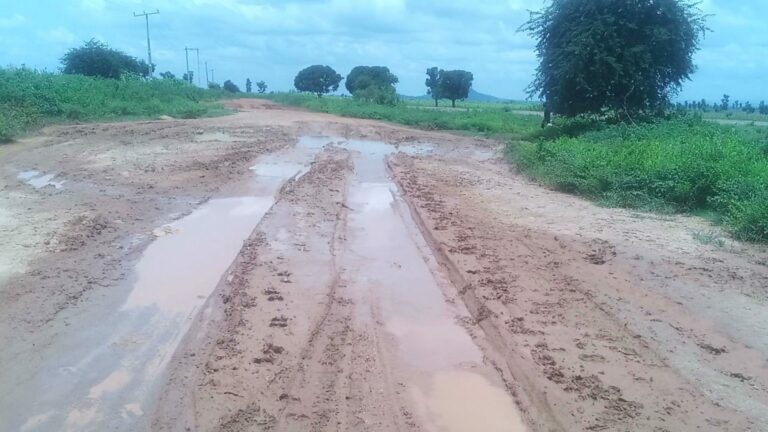
For first-time visitors to Pai and its neighbouring communities like Kundu, Gomni, Tukuruwa, Leleye, Leleye Gwari, Tunga Sarki, and Damakusa, the assumption was simple: as part of the FCT, they would be entitled to the basic amenities that the capital promised.
Foremost among these expectations was a robust road network that would connect these communities to the heart of the nation’s power, not just because they were part of the FCT, but because they had long been the agricultural backbone of the region.
Even though these communities fell under the jurisdiction of the Kwali Local Government, LGA, they had remained far removed from the dividends of democracy for years.
Abubakar Usman, a native of Leleye Gwari and a farmer for over a decade, expressed the sentiments of his community, saying, “We waited for decades, hoping that Pai Road and the adjoining communities would finally receive the attention they deserved.” However, it wasn’t until 2023, amid Nigeria’s general election preparations, that their hopes seemed to materialise. The contract for road construction was awarded to KISMATE RESOURCES LTD, a Jos-based furniture company.
Saidu Yusuf, on the road abandoned by the contractor
August 16, 2022, will forever haunt Saidu Yusuf. In the dead of night, around 3 a.m., he was awakened his wife. She was close to her Expected Delivery Date (EDD), and neither of them anticipated that this momentous occasion would occur in the dead of night. Just a fortnight earlier, his only means of transportation, a motorcycle, had been rendered useless while transporting produce from one of his farms located approximately 20 kilometres away in Dagiri-Bassa.
He found his wife gasping for breath, writhing in pain. Summoning every ounce of strength, he managed to lift her and set off in search of a friend with a working motorcycle to transport his wife to the hospital. Twenty anxious minutes later, he was ready with a friend who could help him undertake this critical journey.
The obstacles they faced were daunting. The nearest primary healthcare centre, Pai, was a mere 10 kilometres away, but it was often deserted on Sundays and weekends, with no one available to attend to patients. The only viable option was a treacherous 35-kilometre journey along muddy roads leading to the Abuja-Lokoja highway route that would take them to the University of Abuja Teaching Hospital, Gwagwalada.
In the silence of that night, as they raced against time on those perilous roads, Saidu Yusuf couldn’t help but wonder about the road construction project that had promised to connect his community to the vital healthcare services they so desperately needed. What had become of that promise?
The tale of Pai Road and its neighbouring communities was one of hope, dashed expectations, and the enduring struggle for basic amenities. As dawn broke on that fateful August morning, Yusuf and his wife were just one among many who would bear the consequences of a broken promise, left to navigate a treacherous journey when they needed help the most.
‘’On a motorcycle with my wife and a friend whom I had to wake up from his sleep, we set out to navigate the treacherous terrain and flooded paths,” Yusuf recounts. “We slipped more than three times, our bodies wracked with pain, while my wife cries for help.”What should have been a 20-25 minute ride to the hospital turned into a gruelling ordeal that lasted an agonising hour.
And that was just the beginning. Upon our arrival at the hospital, we faced another formidable challenge – the agonizing process of registration consumed by the bureaucratic rigors of obtaining a card consumed another hour of our precious time.
Abandoned road surrounded by farmlands
The stakes were high, and the urgency palpable. Yusuf’s wife was in dire need of medical attention, and time was slipping away. The doctor attending to her recommended a cesarean operation as the only hope, but the hours wasted in bureaucratic red tape and the treacherous journey had already conspired against them.
Tragically, it was too late. Despite the doctor’s best efforts, neither Yusuf’s wife nor their unborn child could be saved. The hospital, the symbol of hope and healing, had become a place of despair. In Yusuf’s eyes, it wasn’t just the government that had failed them, but the entire system of governance itself.
But this is not just the story of one man’s loss; it’s a story that resonates far beyond the boundaries of Dagiri Bassa. It’s a narrative of countless communities across Nigeria, where promises made during election campaigns often evaporate into thin air once the votes are cast. Here, the promise of a better life, improved infrastructure, adequate healthcare, and a safe education system feels like a cruel mirage.
The dire circumstances extend far beyond the realm of business
Mohammed Isa, Yusuf’s childhood friend, paints a bleak picture as we sit in one of the dilapidated classrooms of the only public school in their village where their weekly meetings take place. He speaks with a weariness that can only come from years of unfulfilled promises.
“What we face here feels like a deliberate punishment from those in power,” Mohammed asserts.
“During election campaigns, every political party comes to our community, making grand promises of building heaven and earth. But the last major project we received was a borehole in 2004 during the Olusegun Obasanjo administration.”
2004 constructed borehole in Leleye-Gwari, last gift from democracy.
The heart of the matter, however, transcends mere infrastructure. Mohammed’s voice grows stronger as he articulates the deeper issues plaguing their community. “The problem here is not just about our livelihoods,” he insists. “In this community, we have secondary school students who must travel up to 10 kilometres to get to school. On rainy days, we instruct them to stay with friends in neighbouring communities because our paths become flooded death traps.”
He continues, “No amount of money can convince an Okada rider to bring you here. We have witnessed accidents in which Okada riders and students were swept away by the raging waters.”
Dagiri Bassa is a microcosm of a larger, disheartening truth that echoes throughout Nigeria.
For many communities, the promises made during election seasons often dissipate once the ballots are cast. Infrastructure crumbles, healthcare remains inadequate, and education becomes a perilous pursuit.
‘’No vehicle comes here, because of the bad state of our road, the only sane time for us to sell our crops is during dry season but how many food crops can we preserve till that time, our farming activities is basically on loans which the condition of road did not let us meet up with before another farming season year after year the economic lost that we face is unaccountable’’ Mohammed explained.
Mohammed’s words reverberate like a haunting echo of systemic neglect in the heart of this reporter.
Mohammed’s poignant account reveals a cruel cycle of indebtedness that binds this agrarian community in relentless captivity. Year after year, their farming activities are fuelled by loans, yet the unforgiving condition of the road prevents them from reaping the rewards of their toil. It’s a heartbreaking symphony of struggle, as they strive to meet their loan obligations before the onset of each new farming season.
Royalty with the same appeal
Sarkin Pai, pleading for help for his people
Looking at the luxuriant fields that stretched as far as the eye could see, the Sarkin Pai, Abubakar Sanni Pai, spoke with unwavering conviction. “This land, as you can see, is embedded in a lot of riches and wealth,” he asserted, his voice resonating with the gravitas of generations past. “Let me categorically emphasise that there is no crop you can bring here that will not germinate and no animals that cannot survive here. But the lack of access road is killing our farmers here,” he declared with a palpable urgency.
The gravity of the situation became increasingly apparent as Sarkin Pai continued to shed light on the dire consequences of the bad road. He underscored the untapped opportunities that lay dormant not only in Pai but in the surrounding communities as well.
Large rice farmland in Leleye-Gwari faces waste annually.
“We are aware that the government cannot employ all our sons and daughters,” he conceded, his eyes reflecting a deep concern for his people. “But the basic amenities our children need to stay and be productive should be provided. The motorcycles they use in lifting their goods to the markets can do just little. If the government can attend to the issue of road, they would have automatically opened this area as an agro-business hub for people even beyond the Federal Capital Territory,” he passionately proclaimed.
Challenges faced by motorcyclists on the Gomni-Pai route
The graded part of the road done before the 2023 general election. According to the analysis done by Abimbola Awoyinka, A quantity Surveyor taken to the site, The work done is 895meters.
Dalhatu Saidu, a seasoned motorcyclist who traverses the Gomni to Pai route, unveils a harrowing tale of the trials and tribulations riders face along this perilous journey. His analysis delves deep into the challenges posed by both the rainy and dry seasons, shedding light on the adversity that plagues these brave individuals.
During the rainy season, Saidu paints a vivid picture of the relentless struggles that riders like him endure. “No matter how perfect you are,” he reflects somberly, “you will fall at least once.” This succinctly captures the unforgiving nature of the route during monsoons. The combination of slippery, mud-laden paths, obscured potholes, and limited visibility due to rain creates an atmosphere of constant peril.
However, it is the dry season that brings forth an entirely different set of difficulties. Saidu laments, “The dust on this road makes it very difficult to breathe in the night.” This stark observation underscores the health hazards faced by motorcyclists who brave the elements and the choking dust that engulfs them. The road, once a battlefield of mud and rain, transforms into a suffocating dust bowl in the dry months.
What makes matters worse is Saidu’s revelation that “half of the money we make during this time is practically spent on drugs.” Here, he alludes not to illicit substances but to essential medical remedies. The chronic exposure to dust and pollution necessitates frequent medical intervention, further exacerbating the financial strain on these already marginalised individuals.
Ex- FCT Senator, the facilitator of Project
The road project was facilitated by former Federal Capital Territory (FCT) Senator, Philip Aduda. The project, budgeted for in 2020, has raised eyebrows due to its handling by the Upper Niger River Basin Development Authority and its award to Kis-Mate Integrated Resources Limited.
The purpose of this project was the construction of roads and drainage, with a budget allocation of ₦400 million. However, an audit of the project’s financial records reveals a disbursement of only ₦72,089,802.33 in December 2022.
During the heated electioneering campaign leading up to the 2023 general elections, it came to light that less than one kilometre of road was graded. This meagre effort was allegedly orchestrated to appease local communities to secure crucial votes.
Shockingly, the absence of signposts indicating an ongoing project left the affected communities in the dark, unable to identify the contractor and agency responsible for the work. Efforts to reach out to the former Minority leader of the 9th National Assembly, Aduda to get his moves on the road project proved abortive as any time this reporter visit his house in Bwari FCT, he was told he was not in the country, while his political listed number is no longer reachable.
The graded part of the road done before the 2023 general election. According to the analysis done by Abimbola Awoyinka, A quantity Surveyor taken to the site, The work done is 895meters.
The contractor, Kis-Mate Integrated Resources LTD
The contractor in question, Kis-Mate Integrated Resources Limited, appears to exist in a shroud of mystery. A search on the Corporate Affairs Commission (CAC) website, which is responsible for company registration, yielded no results. However, a further search through Nigeria24 and NGcheck uncovered that the company was registered on November 30, 2015, but the nature of its business remains unspecified.
Further digging into the company’s background revealed that Kis-Mate Integrated Resources Limited is listed as a furniture supplier, office supplies, information and communication technology.
This speaks to the company’s competence to undertake a road contract. This is in breach of the Public Procurement Act,2007 Section 16(6), which states that a bidder must possess the necessary professional and technical qualifications to carry out particular procurements. This means that the company must have the experience and expertise to successfully execute the road contract.
The directors of the company, identified as Danladi Emmanuel Tunje and Ajang Isha Nyam, are associates with a web platform dedicated to promoting USAID projects. A further search online shows that Danladi Emmanuel Tunje is linked to another company, where he is also a director and shareholder – Kushim Ritex Concepts Limited.
This reporter visited the address listed on the internet on October 10, 2023 No 6, Ibrahim Abacha Estate Zone 4 Suite Crescent, Abuja, which is listed as the office Kushim Ritex Concepts Limited.
Engaging in conversations with a few people, including a vulcanizer, a beans cake (akara) seller, a laundryman, and a teamaker known as “mai sai” in northern Nigeria, none could definitively attest to knowing Danladi Emmanuel Tunje, neither as a resident nor as a proprietor of an office within the estate.
A look through social media did not also reveal the presence of the organisation or the founders.
Contracting agency keeps mum on project
The reporter visited the FCT Area office of the Upper Niger River Basin Development Authority on September 12, 2023, to obtain information from the agency but encountered a roadblock in the form of a security man who informed them that no one was available, urging a return at another time.
A second attempt was made on September 19, 2023, but the security man suggested two alternatives – either visit the organisation’s office in Minna or reach out to someone familiar with the agency’s activities.
On September 30, 2023, a reminder email was sent to the headquarters of the contracting agency in Minna via info@unrbda.gov.ng. This followed a prior email sent and calls through the organisation’s alleged official line, +23466223148. All these efforts proved abortive.
This Investigation republished from NigeriaONnews is supported by the John D. and Catherine T. MacArthur Foundation and the International Centre for Investigative Reporting.
THE House of Representatives has resolved to probe the loss of over $60 billion in revenue due to inflated cash calls by the Nigerian National Petroleum Company Limited (NNPCL) Joint Venture (JV) Agreements.
Consequently, the House mandated its relevant committees to conduct a comprehensive investigation on all the NNPCL joint venture operations to determine income and cash call costs due to each partner, especially the nation, and whether due process and diligence were observed in the exercise.
The decision followed the adoption of a motion by Chika Okafor, a representative from Imo State, at the plenary on Wednesday, December 20, in Abuja.
Moving the motion, Okafor said NNPCL, on behalf of the Federal Government, operated joint ventures and related agreements with private oil companies in both oil and gas sectors, with the aim of sustainable revenue generation and economic development.
The lawmaker noted that the NNPCL, as representatives of the Federal government and the country, had about 60 per cent holdings while other partners shared the remaining 40 per cent.
He said the joint ventures operated under a “Joint Operating Agreement” that spelt out the responsibilities of each of the partners in the business.
Okafor explained that “Due to bloated cash call costs, the NNPCL Upstream Investment Management Services (NUIMS), a unit under the NNPCL in charge of negotiation of costs (both Capex and Opex) have caused huge losses in the neighbourhood of $60 billion over the years.
“The activities of NUIMS have resulted in huge revenue losses, fiscal deficits and an alarming debt profile. Aware of the need to ensure probity, transparency and value for money in the NNPCL Joint Venture operations.”
Meanwhile, the House has called for the remittance of accrued five per cent users’ charges on petroleum pump price and diesel to the Federal Roads Maintenance Agency (FERMA) for effective road maintenance.
This was as the Green Chamber adopted a motion moved by Aderemi Oseni, a representative from Oyo, urging the Ministry of Petroleum Resources, NNPCL, Nigerian Midstream and Downstream Petroleum Regulatory Authority (NMDPRA) and Ministry of Finance and Office of the Accountant General of the Federation to ensure that the users’ charge is immediately remitted to FERMA under Section 4(1) of the Agency’s (Amendment) Act, 2007.
Leading debate on the motion, Oseni said to underscore the importance of funding to road management and maintenance, Section 4(1) of the FERMA (Amendment) Act, 2007 provides thus:- “The fund of the agency shall consist of five per cent users’ charge on pump price of petrol, diesel and of which 40 per cent will accrue to FERMA.”
He expressed worry that since the commencement of the FERMA (Amendment) Act (2007) which contains this provision, the users’ charge had not been remitted to the agency, which he claimed had accumulated to about N900 billion.
“Disturbed that the perpetual non-remittance of N900 billion in user charges on petrol and diesel pumps negatively impacts the agency’s finances and performance, consequently affecting the state of federal roads,” he stated.
THE Confederation of African Football (CAF) has confirmed Nigeria’s senior men’s football team – the Super Eagles – provisional squad for the 2023 African Cup of Nations (AFCON) billed to kick off on January 13, 2024, in Ivory Coast.
The country’s 41-man provisional list stirred up controversies since it gained public attention on social media on Monday, December 18.
Many football enthusiasts had described the list as fabricated, casting doubt over the authenticity of the list due to the silence of the Nigeria Football Federation.
The ICIR checks on the NFF’s website showed there was no report or comment concerning the list from the football body.
But further check on the CAF website revealed that the 24 participating countries ahead of the tournament have submitted their lists ahead of the tournament, including Nigeria.
According to the list on the CAF website, three Nigeria Premier Football League (NPFL) players were listed, and they are all goalkeepers.
They include Bendel Insurance’s Amas Obasogie, Sporting Lagos’ Christain Nwoke, and Enyimba’s Ojo Olorunleke.
Long-time absentees from the Super Eagles – Ahmed Musa, William Troost-Ekong, Zaidu Sanusi, and Paul Onuachu made the list.
Ola Aina, Samuel Osayi-Bright, Bruno Onyemaechi, Semi Ajayi, Kenneth Omeruo, Calvin Bassey and Chidozie Awaziem were also named.
Some midfielders invited are Wilfred Ndidi, Frank Onyeka, Alex Iwobi, Raphael Onyedika, Joe Aribo, Alhassan Yusuf and Kelechi Iheanacho.
The squad’s strikers include Victor Osimhen, Victor Boniface, Sadiq Umar, Samuel Chukwueze, Moses Simon, Ademola Lookman and Tella Nathan.
According to CAF, the list will be reduced to 27 players on January 3, 2024.
Before now, CAF used to accept 23 players in the final list before it increased the number to 27 for the 2023 AFCON.
The registration of the four more players on the final list is merely an option, not a requirement.
However, during the competition, only 23 players will be eligible to be selected for each match.
In a chat with the The ICIR, a football stakeholder, Dumodi Okonta, explained the reason behind NFF’s silence over the provisional list
“It is CAF that publishes the list first before NFF. Anything that was in the public before CAF was a breach of trust. The person was not meant to publish it.
“It is just like players transfer. It is the club that signed the deal that announces the player first before the club that releases the player,” he said.
Nigeria’s Financial Reporting Council (FRC) said it would commence “effective and comprehensive” compliance monitoring with its new Act from January 1, 2024.
In a notice released on Wednesday, December 20, the council said its 2023 Act, which replaced its 2011 Act had become operational.
The ICIR reports that former President Muhammadu Buhari signed the 2023 amended Act into law in May.
The council’s statement signed by its Executive Secretary/Chief Executive Officer, Rabiu Olowo, FRC said the new legislation marked a significant milestone in the ongoing efforts to promote transparency, accountability, and good governance in Nigeria’s economy.
The amendment introduced several critical changes to regulations and standards governing financial reporting in Nigeria, which the FRC identified as bottlenecks to global best practices.
According to FRC, the amendment clarifies observed ambiguities, especially regarding the definition of public interest entities. It mandates the council to maintain a national repository for financial statements by public interest entities.
It also streamlines the membership of the governing board to eliminate conflicts of interest, strengthens the council’s regulatory responsibilities on financial reporting and corporate governance in Nigeria, and reinforces the council’s enforcement powers to ensure compliance with reporting requirements.
“These changes are anticipated to positively impact businesses and the economy by enhancing the quality and reliability of financial reporting, improving corporate disclosures, boosting investor confidence, and fostering sustainable development.
“Among numerous amendments, section 77 of the Financial Reporting council of Nigeria (FRC) Act 2011 (as amended) is the revised definition of Public Interest Entities (PIEs),” FRC stated.
It said categorically that public interest entities meant governments and government organisations, listed entities on any recognised exchange in Nigeria, non-listed entities that are regulated, public limited companies, and private companies that are holding companies of public or regulated entities.
It also includes concession entities, privatised entities in which the government retains an interest, entities engaged by any tier of government in public works with an annual contract sum of N1 billion and above, and settled from public funds, licensees of government, and all other entities with an annual turnover of N30 billion and above.
On July 5, The ICIRreported that the FRC needed to do its job professionally to be healthier for financial reporting in Nigeria.
In a recent disclosure, the FRC said it had suspended the 2018 audited financial statement of the Nigerian Maritime Administration and Safety Agency (NIMASA) for noncompliance with financial reporting standards, imposed a penalty of N500 million and asked the agency to file a restatement for the 2018 account within 60 days of the notice.
The restatement forms the basis for which NIMASA must prepare and submit its audited financial statements for 2020, 2021, and 2022, which it failed to file as statutorily required.
Also, in a recent report, the FRC was indicted for over N401.75 million the Central Bank of Nigeria (CBN) allegedly paid to the International Financial Reporting Standards (IFRS) Academy for the guidelines the apex bank used to produced its 2016 to 2022 financial statements released amid ongoing probe of the regulator.
The FRC further stated in the notification that organisations that were hitherto not identified as “PIE” but are covered by the amendment were required to ensure that they take steps to register with the council immediately and thoroughly comply with applicable standards, regulations, and rules of the council.
For the avoidance of doubt, FRC said non-listed entities that are regulated by but not limited to the following sectorial regulators include the Central Bank of Nigeria, National Insurance Commission, National Pension Commission, Nigerian Upstream Regulatory Commission, Nigerian Midstream and Downstream Petroleum Authority, and National Health Insurance Authority.
Others are the Nigerian Communications Commission, National Broadcasting Commission, National Universities Commission, National Board of Technical Education, National Commission for Colleges of Education, Nigerian Electricity Regulatory Commission, Securities and Exchange Commission, Nigerian Civil Aviation Authority, and National Agency for Food and Drug Administration and Control.
It also listed the National Automotive Design and Development Council, Nigeria Shippers Council, Nigeria Port Authority, Infrastructure Concession Regulatory Commission, Estate Surveyors and Valuers Registration Board of Nigeria, and Nigerian Tourism Development Corporation.
THE Nigeria Labour Congress (NLC) has threatened that Nigerians could be forced to revolt against the Federal Government over the hardships caused by the scarcity of naira notes.
The NLC, in a statement signed by its President, Joe Ajaero, on Tuesday, December 19, condemned the scarcity and described it as an indictment on the Federal Government.
“This time, there is no discernible reason by the Central Bank of Nigeria (CBN) or any explanation from the government on why Nigerians should be subjected to this level of suffering once again in 2023, though we have heard reasons like the increase in fake notes in circulation and the hoarding of the naira.
“These reasons are clearly unacceptable as we cannot see anything that will make any Nigerian hoard the naira. In any case, it is not the ordinary Nigerian that hoards money in their houses. If the CBN is saying that those with ill-gotten wealth are stashing cash in their houses to avoid detection, it becomes a heavy indictment on the government’s anti-corruption agenda.”
It said if the CBN held the above argument, it meant that the level of graft had increased, resulting in the creation of hideouts for slush funds since Tinubu assumed office.
The group stated that Nigerians were spending more time and money accessing cash, which could undermine the citizens’ confidence in the banking system and force them to react negatively to the unfavourable situation.
“We are worried that by this action and others, the government may be inciting the people and mobilising them to seek alternative routes for protecting themselves from these perverse policies. We believe that the elastic limit of the patience of Nigerians is being breached, and no government inflicts this level of pain on its citizenry and expects them to keep quiet for a long time.
“Forcing Nigerians into revolt by continuously taking actions that deny them basic access to survival will not augur well for our nation. This cash crunch is indeed another test of the already worn patience of Nigerian masses and workers,” Ajaero further noted.
The ICIR reports that there has been an increasing scarcity of cash in circulation in the country in recent weeks, which has left Nigerians frustrated as most Automated Teller Machines (ATMs) have ceased to dispense cash in many parts of the country.
This has resulted in a high cost of charges demanded by POS operators that Nigerians are increasingly turning to for cash.
The ICIRreported the situation threatened the Nigerian economy, as the high costs of POS charges might drive the already soaring inflation rate, currently at 28.2 per cent, even higher.
Nigerians are confronting cash scarcity for the second time in 2023.
Between January and March 2023, the naira redesign and cashless policy introduced by the CBN created severe hardship for Nigerians, who could not access cash to meet daily needs.
Tinubu, who was then vying for the presidency, had strongly condemned the scarcity and had blamed the CBN for plotting his defeat through the naira redesign and the currency’s unavailability for citizen’s use.
He had said, “Let them increase the price of fuel. Only them know where they have hoarded fuel. They hoarded money; they hoarded naira. We will go and vote, and we will win. Even if they changed the ink on naira notes. Whatever their plans, it will come to nought. We are going to win. Those in the PDP will lose (won ma lule).”
THE House of Representatives said it would investigate over N210 billion disbursed by former President Muhammadu Buhari’s administration for the Alternative School Programme.
The lawmakers will also probe the funding for the Better Education Service Delivery for All, At-Risk-Children Programme, and Interventions Programme for Out-of-School Children from 2016 to date.
This follows the adoption of a motion moved by Tijani Ismail Kayode, a representative from Kwara state, at plenary on Tuesday, December 19.
In his lead debate, Kayode said that in October 2019, the Ministry of Education confirmed that the Federal Government committed N10 billion to enrol two million children in school annually and subsequently enrol 10.2 million within five years.
He also said on January 31, 2022, the Federal Government adopted the Presidential Committee on Alternate Education report and renewed its commitment to provide educational opportunities for over 10 million out-of-school children through the Alternate School Programme under the Ministry of Humanitarian Affairs and over N200 billion was allocated for the initiative.
The lawmaker noted that a similar intervention by the World Bank worth $750 million was accessed and utilised within the last four years through Better Education Service Delivery for All (BESDA) to enrol out-of-school children in school in Nigeria.
He observed that in 2021, the Federal government introduced the At-Risk Children Programme (ARC-P), requiring hundreds of billions of naira in expenditure.
Further in his debate, he “regretted that despite the Federal government’s efforts and the release of funds for the programme’s execution, the number of out-of-school children in Nigeria continues to increase rapidly.
He expressed worry that “the misuse of Alternate School Programme funds to reduce out-of-school children in Nigeria has negatively impacted these schemes, leaving many children unschooled.”
In October, the Minister of Humanitarian Affairs and Poverty Alleviation, Beta Edu, said the government was probing intervention schemes under the ministry, citing corruption concerns.
The ICIRreported that Buhari’s several social intervention schemes failed to lift many Nigerians out of poverty despite millions pumped into the scheme.
THE Federal Government has proposed N1.9 trillion for 11 security agencies and the Ministries of Defence and Interior headquarters in 2024.
The amount represents 6.93 per cent of the proposed budget of N27.5 trillion the government plans to spend within the year.
It covers personnel costs, overheads and capital expenditures for the institutions.
The agencies include the National Security Adviser (NSA), Economic and Financial Crime Commission (EFCC), Nigerian Navy, Nigerian Army, Defence Intelligence Agency (DIA), Federal Ministry of Police Affairs, and National Intelligence Agency (NIA).
Others are the State Security Service (SSS), Nigerian Security and Civil Defence Corps (NSCDC), Nigerian Immigration Service, Nigeria Air Force, and the Ministry of Interior and Defence headquarters.
The amount proposed in the 2024 budget is 17.23 per cent higher than the N1.63 trillion approved for the 13 organisations in the 2023 budget.
The ICIR reports that out of the 11 security agencies and two ministries’ headquarters surveyed, the 2024 budget proposal for six security agencies is less than what they received in 2023.
For instance, the NSA received N73.93 billion in 2023, but N65 billion was allocated to the office in the proposed 2024 budget.
Also, the EFCC got N49.9 billion in 2023, but the government allocated N43.11 billion to it in the 2024 budget.
Similarly, the DIA and DSS, which got N41.92 billion and N74.78 billion, respectively, in 2023, were allocated N41.50 billion and N73.75 billion in the 2024 proposed budget.
Insecurity has been a perennial challenge in Nigeria, ranging from attacks by bandits and secessionist groups to attacks by insurgent groups like Boko Haram/Islamic State’s West Africa Province (ISWAP) and clashes between herders and villagers, among others.
Data collated by The ICIR show that between January and October 2023, 7,046 people were killed in violent attacks across Nigeria.
The ICIR gathered the data from the Armed Conflict Location & Event Data Project(ACLED), a data bureau that collects real-time data on the locations, dates, actors, fatalities, and types of all reported political violence and protest events worldwide.
When broken down, this means that an average of 24 persons were killed daily within the month under review.
According to the data, the states with the highest killings within the ten months are Zamfara (672 deaths), Niger (544 deaths), Benue (454 deaths) and Plateau (362 deaths).
The states with the lowest reported cases of death are Ekiti, Gombe, and Jigawa, with five, three, and two deaths, respectively.
The ICIR reported that the presidency planned to spend about N11.1 billion on computer software acquisition in 2024, as shown in the budget proposal.
The ICIR reports that the budget proposal for this item is a sharp rise from the N926.1 million approved by the National Assembly for the same purpose for the presidency in the 2023 budget.
However, the quantity of the item to be procured was not stated in either year.
Some MDAs under the presidency include the State House, Bureau of Public Procurement, ICPC, Office of the Secretary to the Government of the Federation, and Office of the Accountant-General.
The ICIR reports that the Federal Executive Council (FEC), on Monday, November 27, approved N27.5 trillion as the Federal Government’s aggregate expenditure for 2024.
At the presentation, Tinubu listed the budget’s objectives to include:
Reducing poverty,
Improving human capital development,
Macroeconomic stability,
Job-rich economic growth, and
Increased access to social security.
The ICIR reported on Wednesday, December 6, that Tinubu’s Chief of Staff (CoS), Femi Gbajabiamila, refuted the claim that he would spend N10 billion from the proposed budget on his official residence.
The response followed reports by some media platforms on the amount budgeted for refurbishing the CoS’ residence and purchasing software computers in his office, amounting to N21 billion.
A review of the proposed budget by The ICIR showed that the CoS office would spend N21 billion, with the renovation of fixed assets and computer software acquisition amounting to over N10 billion each.
The breakdown of the N10 billion earmarked for the renovation of the fixed assets showed that N5 billion was budgeted to repair the Dodan Barracks presidential lodge and the vice presidential quarters.
The purchase of fixed assets, such as computers, printers, vehicles, refreshments, and office stationery, among other expenditures, takes up the remaining amount.
The ICIR reports that capital projects across Nigeria would suffer more as the Federal Government projected 45 per cent of its N18.3 trillion expected revenue in 2024 to service debts.
The 2024 budget proposes non-debt recurrent expenditure of N9.92 trillion naira, while debt service is projected to be N8.25 trillion naira and capital expenditure is N8.7 trillion.
MAJOR events like the 2023 general elections had their fair share of misinformation and disinformation that contributed to the malaise in Nigeria’s media space.
Apart from the general elections, some false news was reported by media houses. Some of the false news stories were international but made their way into local media publications/broadcast, which many individuals unfortunately believed to be true.
But the fight against misinformation and disinformation would be stagnant if public figures and notable government officials keep spreading fake news and false information, which we saw played out in 2023.
Apart from government officials spreading false information, some international news stories, which were also false and misleading, made its way into the national news, courtesy of some media platforms.
Some of the major false information that went viral in 2023 include:
1. Aisha Binani’s acceptance speech
Nigeria’s gubernatorial elections, which were conducted on the 18th of March 2023, saw Kebbi and Adamawa states having supplementary elections on the 15th of April 2023 after both states were initially declared inconclusive due to the margin of the votes.
The APC candidate, Aisha Dahiru (Binani), had read her acceptance speech after she was illegally declared the governor-elect by the state’s resident electoral commissioner (REC).
She was still reading the speech when her victory was overturned by INEC. According to Nigeria’s electoral law, the REC, Hudu Ari, had no power to announce the winner of the election. The responsibility solely lies with the state collation officer appointed by the Independent National Electoral Commission (INEC).
The speech was televised by the Nigerian Television Authority (NTA) which misled many Nigerians.
2. Dubai visa ban
On September 11 2023, the Special Adviser to the Nigerian president on Media and Publicity, Ajuri Ngelale, shared a statement(archived here) that the visa ban placed on Nigerian travellers by the United Arab Emirates have been lifted immediately. The statement added that Etihad Airways and Emirates Airlines were to resume flights in and out of Nigeria without further delay. A visa ban was placed on Nigeria in October 2022, as the UAE banned nationals of about 20 African countries including Nigeria from entering its borders.
The news was reported by credible media platforms, including ThisDay.
However, on 15th September, 2023, CNN, TheCable and BusinessDay reported that the UAE had contradicted claims of the Nigerian government that the visa ban had been lifted.
Furthermore, In November 2023, Channels TV reported that the FCT minister, Nyesom Wike, had received the UAE ambassador to Nigeria and that during the visit, the minister had sought for the visa restriction ban to be lifted.
3. Sweden sex sport controversy
On June 4, 2023, there were news reports that Sweden had become the first country to officially recognize sex as a sport and a tournament would take place on June 8 which would feature participants from different European countries which would span on for several weeks under the supervision of the Swedish Sex Federation. The news was reported by local and international media.
Few days after the news had made rounds on the internet, Anna Setzman, the spokesperson for the Swedish Sports Confederation debunked the claim in a written statement. She stated that an individual Dragan Bratic, who owned several strip clubs across the country and claimed to be a member of a sex federation applied for membership, but their application was rejected in May 2023.
4. Misleading photo of Islamiyat Oyefusi
Barely a week to Nigeria’s gubernatorial elections which took place on March 18, 2023, a photo of a lady smoking went viral on the internet with various version of a false claim that it was the Labour Party‘s Deputy Governorship candidate for Lagos state, Islamiyat Oyefusi.
The unnamed lady in the photo clearly wasn’t Oyefusi as they lack the same facial features while the lady in question looked younger than her. The deputy governorship candidate had also debunked the claim in a tweet in a response to the claim.
5. Kaduna tribunal judgement
The Kaduna tribunal sitting in its judgement on 28th September, 2023, had dismissed the suit filed by Isah Ashiru and his party, the Peoples Democratic Party (PDP), challenging the victory of Governor Uba Sani of the All Progressives Congress (APC) in the March 18 governorship election. In the suit, he stated that the pre-hearing notice was filed out of time and, therefore, deemed to lack merit.
But Isah Ashiru had shared a statement archived here on X (formerly Twitter) stating that the court had nullified the election and ordered that the Certificate of Return be retrieved and fresh elections be conducted in some polling units in four local government areas of the state.
This generated conflicting narratives in media reports as some media houses had reported Ashiru’s statement.
6. Hakimi: Moroccan football star divorce
On 14th of April, 2023, a French magazine reported that a Moroccan football star Achraf Hakimi’s wife, Hiba Abouk, who is an actress had asked for half of Hakimi’s assets and fortune after she filed for a divorce. The report allegedly said she was surprised when she learned that he has nothing in his name and the beneficiary of Hakimi‘s salary and wealth is none other than his mother. The news caused a stir everywhere as it was widely reported by both international and local media.
It was later discovered that the news was FALSE as the report was extracted and republished from a parody website. Abouk had responded to the allegations stating that such claims ‘no longer affect her’.
7. Otti arrests errant Abians
An X user, @DrChiemeziem, had on Sunday, December 10, 2023 claimed (archived here) that the Abia State governor, Alex Otti, had invited youths and elders who had barricaded a road undergoing construction for peace talks in Umuahia and locked them up.
The post had gone viral and garnered over 800,000 views, and over 6,000 likes within days, and thus prompted the governor to release an official statement via his spokesperson, Dodoh Okafor, who described the reports as ‘false and misleading’.
*This is republished from the FactCheckHub, read the original here.