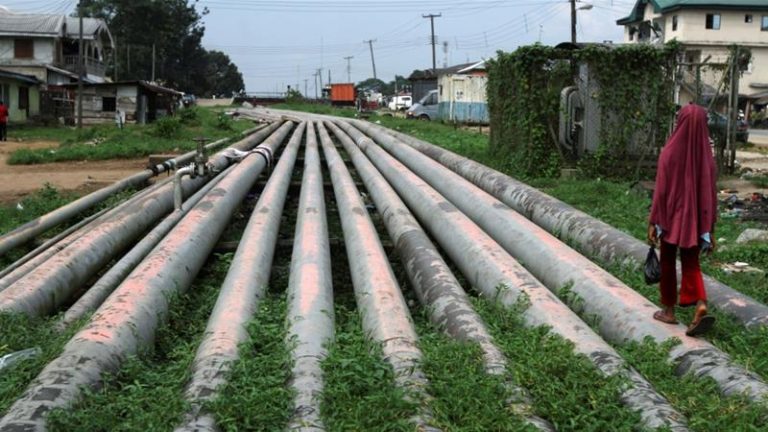
THE Chief Executive Officer (CEO) of the Nigerian National Petroleum Company Limited ( NNPCL) Mele Kyari, has claimed that over 5,000 kilometers of oil pipelines across Nigeria had been damaged by vandals.
He lamented that the activities of the vandals were adversely affecting the company’s operations.
Kyari said this during an interactive session with members of the Senate Committee on Petroleum (Downstream), in Abuja, on Tuesday, November 22.
Despite the challenges, he assured Nigerians that the nation’s four oil refineries would be functional soon.
Kyari highlighted oil pipeline vandalism as a longstanding challenge for the sector, citing the inability to transport oil through pipelines from Warri to Benin for the past 22 years.
“Over 5,000 kilometres of oil pipelines in the country are not working. As a result of pipeline vandalism, 10 million litres of oil were lost from the volume pumped from Aba to Enugu at a time.
“The company has been unable to pump oil from Warri to Benin within the last 22 years and cannot connect to Ore,” he said.
He also stressed that despite the company adopting several measures to secure its pipelines from being vandalised, the oil theft and pipeline vandalisation had persisted.
“There is no amount of security measures that had not been taken to curb the crime without success, which to us in NNPCL, is substantially a national calamity.”
The NNPCL boss further explained that the company was embarking on massive replacements of the pipelines.
Kyari added that the oil sector’s deregulation, particularly the removal of subsidies in May 2023, transformed NNPCL into a profitable entity.
He emphasized that prior to the 2018 deregulation, the company incurred a loss of N802 billion, which was remedied by the 2021 deregulation, resulting in a surplus profit of N687 billion.
Meanwhile, on his part the Chairman of the Senate committee, Ifeanyi Ubah, urged the NNPC Ltd to find a lasting solution to the issues of pipeline vandalism and oil thefts.
Ubah also advised the NNPC Ltd to increase the security surveillance of its pipelines.
Similarly, a member of the committee, Seriake Dickson, representing Bayelsa West, called on the NNPC Ltd to engage with locals on how best to secure the oil pipelines, adding that the company should award contract to the locals especially in oil producing areas as a way of negotiating the security of pipelines.
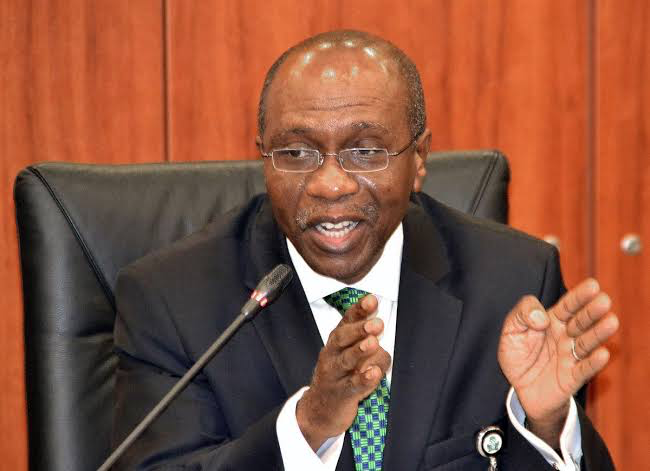
THE Federal Capital Territory High Court, Abuja, has granted former Governor of the Central Bank of Nigeria (CBN), Godwin Emefiele, bail in the sum of N300 million and two sureties in like sum.
According to the judge, Hamza Muazu,the titles and certificates of occupancy for the properties held by the sureties must be from within the Maitama District.
Emefiele is required to stay inside the Abuja Municipal Area Council and deposit all of his travel documents with the court registrar.
He is expected to stay at Kuje Correctional Center until he satisfies his bail requirements.
Emefiele did not attend the hearing on his bail application on Wednesday morning. However, his lawyer, Mathew Burkaa, said that since he was already locked at the Kuje Correctional Center, it was normal.
This comes four months after he was granted N20 million bail by the Federal High Court Sitting in Lagos in a different case involving the unlawful possession of weapons.
The ICIR reportedon Friday, November 17, that Emefiele was sent to Kuje Correctional Centre over an alleged N1.6 billion procurement fraud.
The former CBN governor was arraigned on a six-count charge at a Federal Capital Territory (FCT) High Court, Abuja, on Friday.
The Federal Government said in the new charge sheet that the he unlawfully purchased 43 vehicles for N1.2 billion between 2018 and 2020.
The initial 20-count charge, totalling N6.5 billion, has been lowered to six.
He is the only defendant in the new charge.
After the six-count accusation was read to him, the former CBN governor entered a not-guilty plea when he appeared in court on Friday, November 17, to request bail.
He was charged with ordering 37 Toyota Hilux vehicles, totalling N854 million.
He was also charged with giving corrupt benefits in violation of Section 19 of the Corrupt Practices and Other Related Offenses Act 2000 when he granted N73 million for the supply of a Toyota Landcruiser in 2019.
The Federal Capital Territory High Court Judge Muazu adjourned the case until November 22 to rule on his bail request and November 28 to start the trial.
He ordered Emefiele to be placed under remand in the Kuje Correctional Centre in the interim.
The ICIR reported that a FCT High Court granted the former CBN chief bail on November 8.
The judge, Olukayode Adeniyi, ordered that he be released immediately to his lawyers, who must bring him into court for arraignment the following week or any other day.
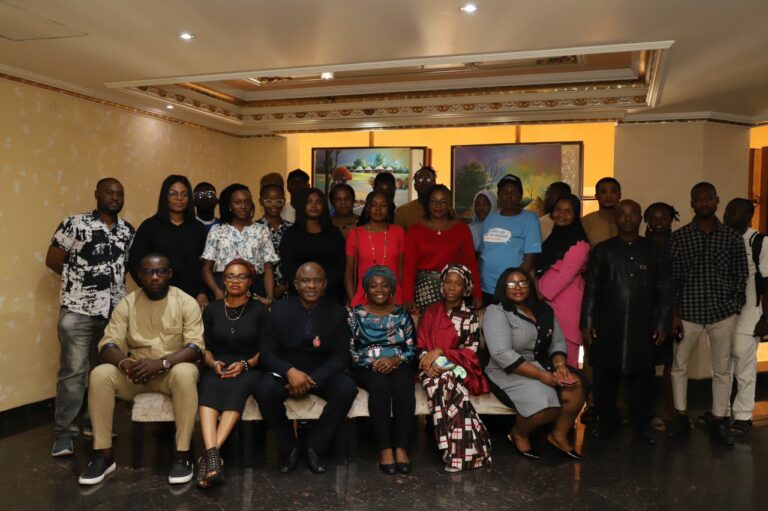
THE Federal Ministry of Health has urged health workers and media practitioners to support adolescents by providing education and information on issues that could help them improve their health.
The ministry made the appeal at a two-day training facilitated by the Gender, Adolescent/School Health and Elderly Care (GASHE) unit of the ministry, in collaboration with the Planned Parenthood Federation of Nigeria (PPFN) in Abuja between Monday, November 20, and Tuesday, November 21.
Adolescence is the phase of life between childhood and adulthood, from ages 10 to 19. It is a unique stage of human development and an important time for setting good health and other foundations for oneself.
According to the World Health Organisation, in 2021, the mortality rates for 10 to 24-year-olds were highest in sub-Saharan Africa, six times higher than in North America and Europe.
In his opening remark at the training, the Director and Head of Gender, Adolescent/School Health, and Elderly Care (GASHE), John Ovuoraye, a doctor, said adolescents are at a unique stage in life characterized by various changes—physical, emotional, cognitive, and psycho-social.
“Given the ease of connection to the wider society through media, factors within the larger global society also influence adolescent development. Factors in these different contexts could either predispose the adolescent to engage in risky or protective behaviours which influence their current and future health and the health of the children they have,” he said.
He also highlighted that adolescents needing particular attention are predominantly from lower socio-economic backgrounds, with lower levels of education, residing in rural or hard-to-reach urban slums, living on the streets, in conflict zones, or encompassing married adolescents and those with disabilities.
Speaking with The ICIR after the training, Ovuoraye emphasized the importance of the ministry’s partnership with the media, noting that there were developments, policies, and health services that journalists could assist in disseminating to Nigerians.
“We felt that people needed to know about implementations going on, to know the services available for adolescents who need to know the government position when it comes to adolescent health issues in the country and, therefore, the reason we need to take the media along.”
On her part, the African Network of Adolescent and Young Persons Development (ANAYD), Sekinat Bello,said the idea behind the training was to inform, sensitise and train journalists on how best they could help in improving the reporting around adolescents and young persons health and development.
She added that the adolescent stage is a very sensitive demography that falls in the teenage age range and also transits into adulthood, adding that many issues are coming up and need to be addressed.
“They (adolescents) are of different diversities – we have people living with HIV, we have people injecting drugs, we have people with disabilities, people in the IDPs, people in the streets, and people in vulnerable and rural communities. So If you want to address some of their issues or talk about their development, you must identify this diversity and know how best to report and send information because you cannot just generalise them.”
Bello, therefore, appealed to the government, health workers, and the media to work together and improve the services rendered to adolescents.
THERE are worries over fiscal rascality by political officeholders in Nigeria, as N1 trillion additional monthly revenue accrual from petroleum subsidy removal remains unaccounted for.
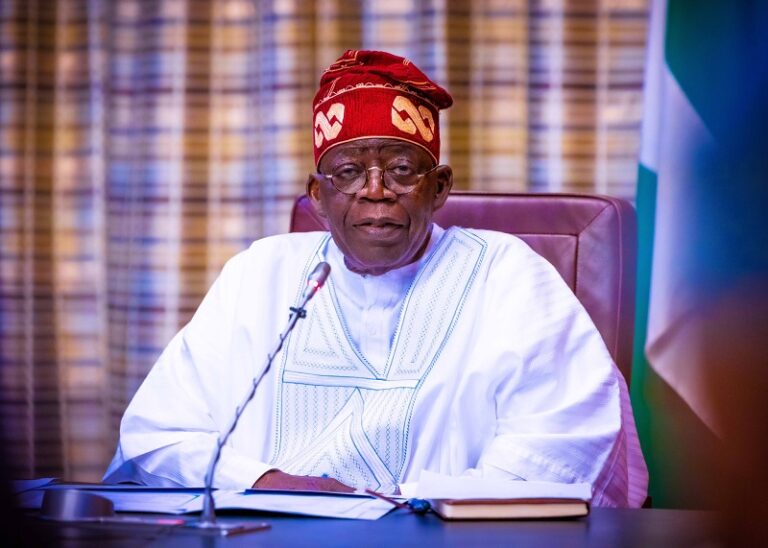
Despite being urged by President Bola Tinubu to make sacrifices after the fuel subsidy removal, Nigerians are currently under severe economic pains, with the nation’s currency – the naira – galloping from its free fall to the US dollar despite interventions by the Central Bank of Nigeria.
More Nigerians are poorer and hungrier, as food inflation stands at 31. 52 per cent, and the surge in food prices squeezes an average citizen’s spending.
But the trajectory contrasts sharply with the leaders who many citizens believe show sheer imprudence in utilising national resources – a culture that has stagnated the nation’s progress for decades.
“The danger is that we have the federation allocation improve by N1 trillion monthly, but the benefits are not trickling down to the people. Subsidy removal gains are not impacting the people. Nigerians are going through a lot economically now,” former Director-General of Lagos Chamber of Commerce and Industry (LCCI), Muda Yusuf, told The ICIR.
“The political authorities need to observe fiscal prudence. What has happened is that those in government have been spending money as if we don’t have a revenue problem. This is bad for our economy,” he added.
Many economists have argued that a bloated federal executive council of 48 cabinet members has become worrisome for an economy that borrows to fund a large chunk of its national budget.
“Should the government be that large at a time when a lean cabinet seems more needful given the financial state of the country?” a political economist, Segun Sowunmi said in response to the development.
The ICIR also reported a huge amount of money expended on the importation and delivery of 360 sports utility vehicles (SUVs) by the House of Representatives worth N57. 6 billion for its members while neglecting indigenous companies and exporting jobs to other advanced economies. The Socio-Economic Rights and Accountability Project (SERAP) has already asked the Federal High Court in Lagos to stop the procurement.
Also, the dust raised by the N5 billion yacht included in the N2.17 trillion supplementary budget, which many had assumed was for the President, has yet to settle, despite borrowing from the World Bank and other multi-lateral lending institutions to fund the budget.
Both at the federal and state, Nigerian leaders have failed to show prudence in fiscal spending with fleets of exotic cars in their convoys, many of which are imported and not sourced from indigenous vehicle manufacturing firms.
Most Nigerian leaders prefer procurement of their utility vehicles to be sourced from imported brands while leaving indigenous firms to struggle.
“I don’t know of any indigenous manufacturing vehicle firm called Nord Automobile limited located in Epe Lagos,” the commissioner for planning and budget, Ope George, said in response to why Lagos would procure fleets of cars without looking towards indigenous vehicle manufacturers.
Commenting on this concern, a development economist, Kalu Aja, argued that Nigeria had a spending problem, not a revenue one.
“The country’s economy is in distress. However, if we get more revenue, it would be spent away by political officeholders taking the largest chunk. Nigeria has a spending problem, not a revenue problem,” he said.
He stressed that something as basic as pipe-borne water was not running in virtually all the local government areas in the country despite huge allocations to states and revenue appreciations.
Last week, The ICIRreportedwhy the minister of finance discouraged further borrowing by the Federal Government at the Medium Term Expenditure Framework (MTEF) defence in Abuja.
He had argued that Nigeria serviced its debts with 98 per cent of its revenue.
Amid these challenges, some Nigerians have been berating some state governments’ fiscal rascality despite 133 million people in multi-dimensional poverty.
“A lot is happening in the states that need tracking. The civil society and the media need to pay more attention at the state level. Track the budget and call out frivolous spending and red flags from state governors. The revenue appreciation should not be a reason for frivolous spending,” Lead director of the Centre for Social Justice, Eze Onyekpere, told The ICIR.
The Minister of Finance, Wale Edun, confirmed that the federation’s account witnessed improved revenue inflow since the subsidy removal from an average of N650 million monthly to over N1 trillion in the last four months.
Monthly allocations to states by the Federal Government have jumped since the subsidy removal, but the majority of citizens believe they have made no significant impacts on their lives.
The ICIRreported frivolous spending by the Lagos state government, a concern early raised by Funso Doherty – a former gubernatorial candidate in the state under the platform of Action Democratic Congress (ADC).
ISRAEL and Hamas have reached an agreement to observe a four-day pause in fighting, during which at least 50 hostages, especially women and children, would be released.
This was contained in a statement by the Israeli government late on Tuesday, November 21, via its social media handle on X, stating that the release of every ten additional hostages would translate to an extra day of respite in the war.
“The Israeli government is committed to the return of all abductees home. Tonight, the government approved the outline for the first stage of achieving this goal, according to which at least 50 abductees – women and children – will be released for 4 days, during which there will be a lull in the fighting. The release of every ten additional abductees will result in an additional day of respite,” an English translation of the statement read.
The deal was reached during a mediation led by Qatar.
Although the statement by Israel did not mention the release of Palestinian prisoners being held in Israel, Hamas disclosed that the 50 Israeli prisoners would be released in exchange for 150 Palestinian hostages held in Israeli jails.
This is the first truce since the war between Israel and Gaza began on October 7, when Hamas launched a surprise attack on Southern Israel during a major Jewish holiday, killing over a thousand people.
Israel had retaliated in a bloody bombardment of Gaza, blocking all fuel, electricity, telecommunication, internet services, food and other essential supplies into the area as part of its war strategies, disregarding warnings by humanitarian agencies of the adverse effect of this tactic.
During the pause, trucks conveying fuel, humanitarian and medical aid are expected to be granted entry into the Gaza Strip.
Israel earlier rejected calls for a ceasefire despite appeals by many countries, including Nigeria, saying it would give room for Hamas to regroup and launch repeat attacks.
The United States of America has also been one of Israel’s strongest allies, rejecting calls for a ceasefire but proposing a humanitarian pause instead, and 14,000 Palestinians have been killed by the Israeli troops, according to Palestine government officials.
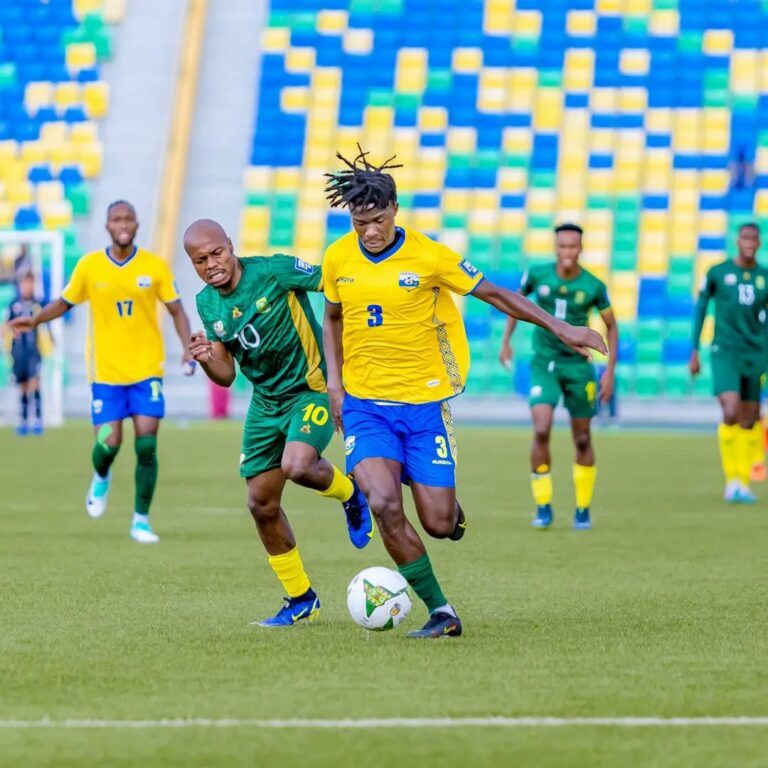
RWANDA defeated South Africa 2 nil on Tuesday, November 21, at the second fixture of the Africa qualifying series for the 2026 World Cup, played at the Huye Stadium in Butare, Rwanda.
Rwanda’s historic victory ended their six-winless streak and pushed them to the top position ahead of South Africa in Group C of the qualifiers.
The shock defeat against South Africa also aroused the Super Eagles’ 2026 World Cup hopes after garnering two points from the first two games to stay in third position on the log.
Rwanda, who had drawn their opening Group C match 0-0 against Zimbabwe, upset their visitors – South Africa – who had enjoyed a 12-match unbeaten streak, to deny them a six-point lead at the top of Group C after Nigeria and Zimbabwe had failed to secure a win.
The host took the lead early, twelve minutes after kickoff, through Innocent Nshuti, who converted the chance after connecting a cross from Byiringiro.
Ten minutes later, Rwanda doubled their lead through Gilbert Mugisha’s powerful right foot, who volleyed the ball into the back of the net.
The second goal left their opponent, who won their opening match with a 2-1 victory against Benin, in awe.
The win means South Africa could not stretch their dominance after they failed to pick up six points to affirm their top position in the group.
The victory for Rwanda puts them at the top of the log with four points. Bafana Bafana are second with three points, while Nigeria’s Eagles are third with two points.
Lesotho and Zimbabwe occupy third place with the same points as Nigeria but have scored fewer goals, while Benin Republic sit at the bottom of the log with one point.
Having played two matches, the next round of games in the 2026 World Cup qualifiers will be held in June 2024. Nigeria will host South Africa, and the match will determine Nigeria’s World Cup qualification.
But before then, the Africa Cup of Nations (AFCON) will be held in January in Cote d’Ivoire.
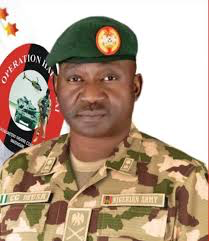
THE Defence Headquarters (DHQ) has debunks the death of the Chief of Defence Staff (CDS) Christopher Musa.
The DHQ disclosed this in a statement on Tuesday signed by Director of Defence Information Tukur Gusau, a brigadier general.
The DHQ said its attention was drawn to a publication by an online newspaper alleging that Musa passed away on Monday, November 20.
“Contrary to recent false publication on @BusinessDayNg by one @DavidIjaseun, The Chief of Defence Staff, General Christopher Gwabin Musa, is alive and well.
“Please rely on credible sources for accurate information. The report is unfortunate, unethical and lacks credibility.
“To put the records straight, the CDS, General CG Musa, is alive and hearty. The Chief of Defence Staff, who just returned from an official assignment outside the country, has resumed work with more vigour to continue his uncommon leadership style to prosper the Armed Forces of Nigeria,” the statement reads.
The statement said the online newspaper had since retracted the story and offered its unreserved apology to the CDS, his family and the Armed Forces of Nigeria.
Meanwhile, the CDS said on Tuesday, November 21, that significant harm was being caused to the southeast region of the nation by the actions of Simon Ekpa, a prominent figure in the proscribed Indigenous People of Biafra (IPOB), currently in Finland.
Musa urged the government to speak with the Finnish government and extend an invitation to its ambassador to Nigeria.
The Defence Chief was addressing the House of Representatives during its sectoral debate on security.
He led other Service Chiefs and the Inspector General of Police to the meeting.
He stated that although the nation’s security services, including the military, alwer working tirelessly to maintain peace in the southeast, Ekpa’s remarks and actions undermine their efforts.
THE Nigeria Centre for Disease Control and Prevention (NCDC) has revealed that four of the 15 priority antibiotic-resistant pathogens causing the greatest threat to human and animal health are in Nigeria.
The Centre also said that over 99.5 per cent of antimicrobial-resistant (AMR) related deaths globally are among children under five years.
The director-general of NCDC, Ifedayo Adetifa, a doctor, said these in a statement on Monday, November 20, as part of the organisation’s activities to commemorate the 2023 World Antimicrobial Awareness Week (WAAW), themed ‘Preventing Antimicrobial Resistance Together.’
According to the World Health Organisation, the World AMR Awareness Week (WAAW) is a global campaign to raise awareness and understanding of AMR and promote best practices among One Health stakeholders to reduce the emergence and spread of drug-resistant infections and is celebrated from 18-24 November every year.
Antimicrobial Resistance (AMR) occurs when bacteria, viruses, fungi, and parasites cease to react to antimicrobial agents. Due to this drug resistance, antibiotics and other antimicrobial treatments lose their effectiveness, making infections challenging or impossible to treat. This heightens the danger of disease transmission, severe illness, and fatality.
The NCDC boss noted that AMR directly causes 1.27 million deaths and is associated with an additional 3.7 million deaths annually, adding that low-and middle-income countries, including Nigeria, bear the brunt of this burden, accounting for over 90 per cent of the direct death toll.
“Sadly, over 99.5 per cent of AMR–related deaths are among children under five. Recent studies show that more people die directly from AMR than from HIV/AIDS, malaria, or any one form of cancer other than lung cancer. In Africa, the burden of death attributed to AMR was highest in western Africa, at 27.3 deaths per 100,000, making it a super region for death due to drug-resistant pathogens,” he added.
Adetifa warned that the impact of AMR on the economy, health systems and the attainment of the Sustainable Development Goals (SDGs) was enormous, as up to US$100 trillion of global gross domestic product could be lost due to AMR by 2050, and the LMICs would be most negatively impacted.
He emphasized the importance of antimicrobial agents for food security. Global antimicrobial consumption is projected to surge by 70 per cent by 2030, potentially impacting sustainable food production systems unless action is taken.
“Since 2017, Nigeria has made strides in its response to AMR. Led by the Nigeria Centre for Disease Control and Prevention (NCDC) in collaboration with the tripartite sectors, there is now an AMR surveillance network, antimicrobial stewardship, and awareness programmes across the country, creating awareness of AMR among healthcare professionals, farmers, and the public.
“Fulfilling its commitment as agreed to at the Third Global High-level Ministerial Conference on AMR in Muscat, Oman, Nigeria is currently finalising its second National Action Plan for AMR (NAP 2.0) in collaboration with all relevant stakeholders to determine required finances, applicable milestones, and national targets, including the Sustainable Development Goal indicators on AMR in the human health sector, and adopting a One Health approach,” Adetifa added.
He further stressed that Nigeria AMR was rated as having an average score of 2.4 points out of 5, indicating that more action is required to combat this challenge during this year’s joint external evaluation of international health regulation core capacities.
Adetifa called on all sectors to join forces and encourage the prudent use of antimicrobials and preventive measures against AMR.
THE November 11 off-cycle governorship election in Imo state leaves in its trail a winner who took all and dissatisfied losers who have vowed to challenge the outcome in court.
Concerns over insecurity had been predicted to mar the election, with the activities of the secessionist group – the Indigenous People of Biafra (IPOB) and the Eastern Security Network (ESN), seen as threats to the poll.
Police officers at the Owerri Municipal on election duty on November 11, 2023.
The election recorded pockets of violence in Orlu. Low voter turnout was a key concern, as some questioned the credibility of Nigeria’s electoral system, with elections largely being determined by the courts.
Low voter turnout at Central School Oji, in Owerri North LGA.
“Nigeran democracy is now from the courts, by the courts, and for the courts. If courts are determining our elections, how can our electoral system grow? Even with the Bimodal Voter Accreditation System (BVAS), we’re yet to get it correct,” a graduate cab driver, Eustace Dike, told our correspondent in Owerri.
Another voter, Amarachi Ukatu, a point of sales (PoS) operator, told TheICIR that the 2023 general elections made her lose confidence in Nigeria’s electoral system.
” No, I won’t vote; after standing in the sun for long, politicians will do their thing,” she said.
Registered voters and data
According to the state’s electoral data published on the Independent National Electoral Commission’s (INEC) portal, the state has 2,419,922 registered voters, of which 2,318,919 collected their permanent voter cards (PVCs).
The state has 305 registration areas and 4,758 polling units (PU). However, 38 of the PUs have no registered voters.
18 candidates participated in election but exercise was a three-horse race
Although Governor Hope Uzodimma has been re-elected for the next four years. according to INEC, which announced the results, findings by The ICIR showed the election was a three-horse race among the ruling All Progressive Congress (APC), the opposition Peoples Democratic Party (PDP) and the Labour Party (LP).
The PDP flagbearer Sam Anyanwu after casting his vote at Central School Amaimo, Polling unit 012.
According to the final list of candidates published in October by INEC, 18 candidates were cleared to participate in the poll.
They are Uchenna Okere of Accord (A), Jack Ogunewe, Action Alliance (AA), Ifeanyi Awulonu, African Action Congress (AAC), Otumbadi Okoroma, African Democratic Congress (ADC), Steve Nwoga, Action Democratic Party (ADP), Goodhope Uzodinma of the ruling (APC), Anthony Ejiogu, All Progressives Grand Alliance (APGA), and Chibuike Edoziem of Allied Peoples Movement (APM).
The Labour Party flagbearer in Imo State, Athan Achonu
Others are Obieze Achilike of Action Peoples Party (APP), Isaac Iwuanyanwu, Boot Party (BP), Nneji Achonu, Labour Party (LP), Ben Ofunzeh, New Nigeria Peoples Party (NNPP), Cole Okwara, National Rescue Movement (NRM), Samuel Anyanwu, People’s Democratic Party (PDP), Ishiodu Uchechukwu, People’s Redemption Party (PRP), Bright Ekwebelem, Social Democratic Party (SDP), Chino Opara, Young Progressives Party (YPP) and Andy Chibuike of the Zenith Labour Party (ZLP).
All the candidates were male. Also, only two of them had female running mates, Ihuoma Ekomaru (APC) and Ogechi Ottih (ADP).
How labour’s feud with state government nearly marred exercise
On October 30, the Nigeria Labour Congress (NLC) vowed to ground activities in Imo state from November 1 to protest the alleged violation of rights and privileges of the state workers.
The NLC president, Joe Ajaero, alleged that the state government had not paid some workers for 20 months.
However, governor Uzodimma said the labour union leader was an interested party in the election and was pursuing the LP’s agenda in the election.
On Wednesday, November 8, Ajaero was reportedly picked up from the Imo council secretariat of the NLC in Owerri by heavily armed Police officers while leading workers protest against the government.
The NLC said Ajaero was beaten and blindfolded immediately after security operatives arrested him.
However, the Police command in the state said Ajaero was not arrested but was taken into protective custody to avoid being lynched by a mob.
The dispute between the NLC and the state government led to a power outage in the entire state, as the state union body responded to the assault on its leader by shutting down power stations.
The ICIRreported the power outage while the Enugu Electricity Distribution Company (EEDC), in a statement on Thursday, November 9, said the persistent power outage in the state was a fallout of strike action by the NLC, which it said was beyond its control.
Opposition parties reject Uzodinma’s victory
The PDP and LP in the state rejected the election results that produced Uzodinma as the winner.
The parties described the elections and declaration of results as a sham.
According to INEC, Uzodinma won in all the 27 local government areas in the state.
Declaring him the winner, the state’s INEC returning officer, Abayemi Fasina, said the APC candidate pulled 540,308 votes to defeat his PDP’s rival Anyanwu, who garnered 71,503 votes, while the LP candidate won 64,081 votes.
Other results in the election are as follows: A (Accord) 1,017, AA 5,756, AAC 537, ADC 3,178, ADP 2,947, APM 328, APP 306, BP 617, LP 6,4081, NNPP 1,062, NRM 344, PRP 265, SDP 717, YDP 1,175, and ZLP 805.
The PDP’s publicity secretary, Ikenna Onuoha, confirmed to The ICIR that the party rejected the election results.
He said his party would challenge the results in court.
He alleged that over 200 polling units where PDP won were ‘criminally’ cancelled.
“You know there was no election yesterday. The purported election was a sham. We have rejected the election in its entirety. The PDP won in over 200 polling units, and the votes were criminally cancelled. We are going to court to seek redress and recover our mandate,” he said.
Similarly, the LP’s secretary in the state, Bright Ofurum, said the party ‘completely’ rejected the results.
“We will make our further position known to you on this devastation and brutality we went through in various local government areas of Imo state. We will put them together, and I will get back to you,” he stated.
Also, the deputy governorship candidate of the NNPP at the poll, Godstime Chibuike, told The ICIR on the phone that there were conflicting figures in the BVAS and figures announced by INEC. He said the party, with other parties, had approached the tribunal to seek redress.
“There are conflicting figures. The portal is showing different results from accredited voters. We have approached the tribunal and sought justice. Let the tribunal tell us the implications of the contradictory figures,” he said.
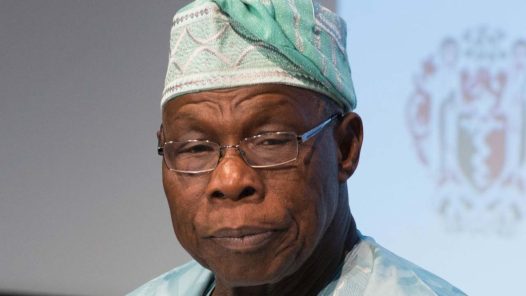
FORMER Nigerian President Olusegun Obasanjo said the Western democratic system of government has failed in Africa.
Obasanjo argued that the system only recognised the views of a few members of society, who serve as representatives of the people, rather than the entire population.
He stated these on Monday, November 20, at an event held at the Olusegun Obasanjo Presidential Library, Abeokuta, Ogun state capital.
Obasanjo advocated for “Afro Democracy,” saying Western Liberal Democracy has to be modified to suit the peculiarities of the African people.
“The weakness and failure of liberal democracy as it is practised stem from its history, content, context, and practice. Once you move from all the people to representatives of the people, you start to encounter troubles and problems. For those who define it as the rule of the majority, should the minority be ignored, neglected, and excluded?
“In short, we have a system of government in which we have no hands to define and design, and we continue with it even when we know that it is not working for us. Those who brought it to us are now questioning the rightness of their invention, its deliverability, and its relevance today without reform,” he reasoned.
The former leader stated that the form of democracy currently being practised in Nigeria failed to provide for good governance or meet expectations in Africa.
“Can we look inward and outward to see what in our country, culture, tradition, practice, and living over the years that we can learn from, adopt, and adapt with practices everywhere for a changed system of government that will service our purpose better and deliver?
“We have to think outside the box and then act with our new thinking. You are invited here to examine clinically the practice of liberal democracy, identify its shortcomings for our society, and bring forth ideas and recommendations that can serve our purpose better, knowing human beings for what we are and going by our experiences and the experiences of others,” he said.
Some other Africans have also argued that democracy is unsuitable for the continent, including Ghanaian economist George Ayittey, who noted in 2010 that Western democracy allowed elected leaders to advance personal interests or those of their ethnic groups while excluding others.
Ayittey posited that Africa should develop a government system consistent with its heritage.
“In our haste to democratise -and also as a condition for Western aid- we copied and adopted the Western form of democracy and neglected to build upon our own democratic tradition,” he noted.
Similarly, former head of the Kenyan Anti-Corruption Commission, Patrick Lumumba, a professor, had suggested that Africa redefine the Western democracy it practises.
Describing Africa as a colonial project serving the West and other developed nations, he said.
“In Nigeria alone, there are over 300 ‘nations’ living in an artificial geographical state because the colonial masters chose to christen it Nigeria. One must be alive to the diversity of the African continent and the reality that before the advent of the colonisers, Africans organised themselves in different ways that worked for them.”
He added, ““Democracy was defined to us in their own way. There is nothing wrong with democracy, but Africa must define it in its own way tailored to work for its people. Democracy defined in America for Americans cannot work the same way in Nigeria. There is no one-size-fits-all system of democracy.”