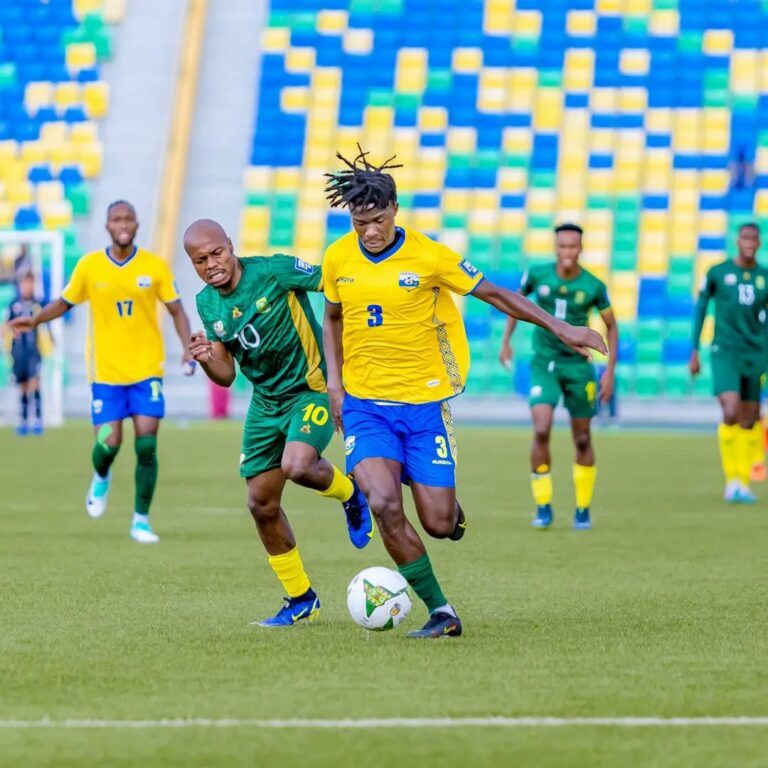
RWANDA defeated South Africa 2 nil on Tuesday, November 21, at the second fixture of the Africa qualifying series for the 2026 World Cup, played at the Huye Stadium in Butare, Rwanda.
Rwanda’s historic victory ended their six-winless streak and pushed them to the top position ahead of South Africa in Group C of the qualifiers.
The shock defeat against South Africa also aroused the Super Eagles’ 2026 World Cup hopes after garnering two points from the first two games to stay in third position on the log.
Rwanda, who had drawn their opening Group C match 0-0 against Zimbabwe, upset their visitors – South Africa – who had enjoyed a 12-match unbeaten streak, to deny them a six-point lead at the top of Group C after Nigeria and Zimbabwe had failed to secure a win.
The host took the lead early, twelve minutes after kickoff, through Innocent Nshuti, who converted the chance after connecting a cross from Byiringiro.
Ten minutes later, Rwanda doubled their lead through Gilbert Mugisha’s powerful right foot, who volleyed the ball into the back of the net.
The second goal left their opponent, who won their opening match with a 2-1 victory against Benin, in awe.
The win means South Africa could not stretch their dominance after they failed to pick up six points to affirm their top position in the group.
The victory for Rwanda puts them at the top of the log with four points. Bafana Bafana are second with three points, while Nigeria’s Eagles are third with two points.
Lesotho and Zimbabwe occupy third place with the same points as Nigeria but have scored fewer goals, while Benin Republic sit at the bottom of the log with one point.
Having played two matches, the next round of games in the 2026 World Cup qualifiers will be held in June 2024. Nigeria will host South Africa, and the match will determine Nigeria’s World Cup qualification.
But before then, the Africa Cup of Nations (AFCON) will be held in January in Cote d’Ivoire.
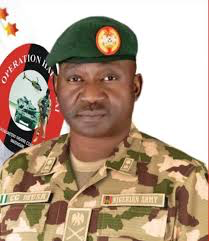
THE Defence Headquarters (DHQ) has debunks the death of the Chief of Defence Staff (CDS) Christopher Musa.
The DHQ disclosed this in a statement on Tuesday signed by Director of Defence Information Tukur Gusau, a brigadier general.
The DHQ said its attention was drawn to a publication by an online newspaper alleging that Musa passed away on Monday, November 20.
“Contrary to recent false publication on @BusinessDayNg by one @DavidIjaseun, The Chief of Defence Staff, General Christopher Gwabin Musa, is alive and well.
“Please rely on credible sources for accurate information. The report is unfortunate, unethical and lacks credibility.
“To put the records straight, the CDS, General CG Musa, is alive and hearty. The Chief of Defence Staff, who just returned from an official assignment outside the country, has resumed work with more vigour to continue his uncommon leadership style to prosper the Armed Forces of Nigeria,” the statement reads.
The statement said the online newspaper had since retracted the story and offered its unreserved apology to the CDS, his family and the Armed Forces of Nigeria.
Meanwhile, the CDS said on Tuesday, November 21, that significant harm was being caused to the southeast region of the nation by the actions of Simon Ekpa, a prominent figure in the proscribed Indigenous People of Biafra (IPOB), currently in Finland.
Musa urged the government to speak with the Finnish government and extend an invitation to its ambassador to Nigeria.
The Defence Chief was addressing the House of Representatives during its sectoral debate on security.
He led other Service Chiefs and the Inspector General of Police to the meeting.
He stated that although the nation’s security services, including the military, alwer working tirelessly to maintain peace in the southeast, Ekpa’s remarks and actions undermine their efforts.
THE Nigeria Centre for Disease Control and Prevention (NCDC) has revealed that four of the 15 priority antibiotic-resistant pathogens causing the greatest threat to human and animal health are in Nigeria.
The Centre also said that over 99.5 per cent of antimicrobial-resistant (AMR) related deaths globally are among children under five years.
The director-general of NCDC, Ifedayo Adetifa, a doctor, said these in a statement on Monday, November 20, as part of the organisation’s activities to commemorate the 2023 World Antimicrobial Awareness Week (WAAW), themed ‘Preventing Antimicrobial Resistance Together.’
According to the World Health Organisation, the World AMR Awareness Week (WAAW) is a global campaign to raise awareness and understanding of AMR and promote best practices among One Health stakeholders to reduce the emergence and spread of drug-resistant infections and is celebrated from 18-24 November every year.
Antimicrobial Resistance (AMR) occurs when bacteria, viruses, fungi, and parasites cease to react to antimicrobial agents. Due to this drug resistance, antibiotics and other antimicrobial treatments lose their effectiveness, making infections challenging or impossible to treat. This heightens the danger of disease transmission, severe illness, and fatality.
The NCDC boss noted that AMR directly causes 1.27 million deaths and is associated with an additional 3.7 million deaths annually, adding that low-and middle-income countries, including Nigeria, bear the brunt of this burden, accounting for over 90 per cent of the direct death toll.
“Sadly, over 99.5 per cent of AMR–related deaths are among children under five. Recent studies show that more people die directly from AMR than from HIV/AIDS, malaria, or any one form of cancer other than lung cancer. In Africa, the burden of death attributed to AMR was highest in western Africa, at 27.3 deaths per 100,000, making it a super region for death due to drug-resistant pathogens,” he added.
Adetifa warned that the impact of AMR on the economy, health systems and the attainment of the Sustainable Development Goals (SDGs) was enormous, as up to US$100 trillion of global gross domestic product could be lost due to AMR by 2050, and the LMICs would be most negatively impacted.
He emphasized the importance of antimicrobial agents for food security. Global antimicrobial consumption is projected to surge by 70 per cent by 2030, potentially impacting sustainable food production systems unless action is taken.
“Since 2017, Nigeria has made strides in its response to AMR. Led by the Nigeria Centre for Disease Control and Prevention (NCDC) in collaboration with the tripartite sectors, there is now an AMR surveillance network, antimicrobial stewardship, and awareness programmes across the country, creating awareness of AMR among healthcare professionals, farmers, and the public.
“Fulfilling its commitment as agreed to at the Third Global High-level Ministerial Conference on AMR in Muscat, Oman, Nigeria is currently finalising its second National Action Plan for AMR (NAP 2.0) in collaboration with all relevant stakeholders to determine required finances, applicable milestones, and national targets, including the Sustainable Development Goal indicators on AMR in the human health sector, and adopting a One Health approach,” Adetifa added.
He further stressed that Nigeria AMR was rated as having an average score of 2.4 points out of 5, indicating that more action is required to combat this challenge during this year’s joint external evaluation of international health regulation core capacities.
Adetifa called on all sectors to join forces and encourage the prudent use of antimicrobials and preventive measures against AMR.
THE November 11 off-cycle governorship election in Imo state leaves in its trail a winner who took all and dissatisfied losers who have vowed to challenge the outcome in court.
Concerns over insecurity had been predicted to mar the election, with the activities of the secessionist group – the Indigenous People of Biafra (IPOB) and the Eastern Security Network (ESN), seen as threats to the poll.
Police officers at the Owerri Municipal on election duty on November 11, 2023.
The election recorded pockets of violence in Orlu. Low voter turnout was a key concern, as some questioned the credibility of Nigeria’s electoral system, with elections largely being determined by the courts.
Low voter turnout at Central School Oji, in Owerri North LGA.
“Nigeran democracy is now from the courts, by the courts, and for the courts. If courts are determining our elections, how can our electoral system grow? Even with the Bimodal Voter Accreditation System (BVAS), we’re yet to get it correct,” a graduate cab driver, Eustace Dike, told our correspondent in Owerri.
Another voter, Amarachi Ukatu, a point of sales (PoS) operator, told TheICIR that the 2023 general elections made her lose confidence in Nigeria’s electoral system.
” No, I won’t vote; after standing in the sun for long, politicians will do their thing,” she said.
Registered voters and data
According to the state’s electoral data published on the Independent National Electoral Commission’s (INEC) portal, the state has 2,419,922 registered voters, of which 2,318,919 collected their permanent voter cards (PVCs).
The state has 305 registration areas and 4,758 polling units (PU). However, 38 of the PUs have no registered voters.
18 candidates participated in election but exercise was a three-horse race
Although Governor Hope Uzodimma has been re-elected for the next four years. according to INEC, which announced the results, findings by The ICIR showed the election was a three-horse race among the ruling All Progressive Congress (APC), the opposition Peoples Democratic Party (PDP) and the Labour Party (LP).
The PDP flagbearer Sam Anyanwu after casting his vote at Central School Amaimo, Polling unit 012.
According to the final list of candidates published in October by INEC, 18 candidates were cleared to participate in the poll.
They are Uchenna Okere of Accord (A), Jack Ogunewe, Action Alliance (AA), Ifeanyi Awulonu, African Action Congress (AAC), Otumbadi Okoroma, African Democratic Congress (ADC), Steve Nwoga, Action Democratic Party (ADP), Goodhope Uzodinma of the ruling (APC), Anthony Ejiogu, All Progressives Grand Alliance (APGA), and Chibuike Edoziem of Allied Peoples Movement (APM).
The Labour Party flagbearer in Imo State, Athan Achonu
Others are Obieze Achilike of Action Peoples Party (APP), Isaac Iwuanyanwu, Boot Party (BP), Nneji Achonu, Labour Party (LP), Ben Ofunzeh, New Nigeria Peoples Party (NNPP), Cole Okwara, National Rescue Movement (NRM), Samuel Anyanwu, People’s Democratic Party (PDP), Ishiodu Uchechukwu, People’s Redemption Party (PRP), Bright Ekwebelem, Social Democratic Party (SDP), Chino Opara, Young Progressives Party (YPP) and Andy Chibuike of the Zenith Labour Party (ZLP).
All the candidates were male. Also, only two of them had female running mates, Ihuoma Ekomaru (APC) and Ogechi Ottih (ADP).
How labour’s feud with state government nearly marred exercise
On October 30, the Nigeria Labour Congress (NLC) vowed to ground activities in Imo state from November 1 to protest the alleged violation of rights and privileges of the state workers.
The NLC president, Joe Ajaero, alleged that the state government had not paid some workers for 20 months.
However, governor Uzodimma said the labour union leader was an interested party in the election and was pursuing the LP’s agenda in the election.
On Wednesday, November 8, Ajaero was reportedly picked up from the Imo council secretariat of the NLC in Owerri by heavily armed Police officers while leading workers protest against the government.
The NLC said Ajaero was beaten and blindfolded immediately after security operatives arrested him.
However, the Police command in the state said Ajaero was not arrested but was taken into protective custody to avoid being lynched by a mob.
The dispute between the NLC and the state government led to a power outage in the entire state, as the state union body responded to the assault on its leader by shutting down power stations.
The ICIRreported the power outage while the Enugu Electricity Distribution Company (EEDC), in a statement on Thursday, November 9, said the persistent power outage in the state was a fallout of strike action by the NLC, which it said was beyond its control.
Opposition parties reject Uzodinma’s victory
The PDP and LP in the state rejected the election results that produced Uzodinma as the winner.
The parties described the elections and declaration of results as a sham.
According to INEC, Uzodinma won in all the 27 local government areas in the state.
Declaring him the winner, the state’s INEC returning officer, Abayemi Fasina, said the APC candidate pulled 540,308 votes to defeat his PDP’s rival Anyanwu, who garnered 71,503 votes, while the LP candidate won 64,081 votes.
Other results in the election are as follows: A (Accord) 1,017, AA 5,756, AAC 537, ADC 3,178, ADP 2,947, APM 328, APP 306, BP 617, LP 6,4081, NNPP 1,062, NRM 344, PRP 265, SDP 717, YDP 1,175, and ZLP 805.
The PDP’s publicity secretary, Ikenna Onuoha, confirmed to The ICIR that the party rejected the election results.
He said his party would challenge the results in court.
He alleged that over 200 polling units where PDP won were ‘criminally’ cancelled.
“You know there was no election yesterday. The purported election was a sham. We have rejected the election in its entirety. The PDP won in over 200 polling units, and the votes were criminally cancelled. We are going to court to seek redress and recover our mandate,” he said.
Similarly, the LP’s secretary in the state, Bright Ofurum, said the party ‘completely’ rejected the results.
“We will make our further position known to you on this devastation and brutality we went through in various local government areas of Imo state. We will put them together, and I will get back to you,” he stated.
Also, the deputy governorship candidate of the NNPP at the poll, Godstime Chibuike, told The ICIR on the phone that there were conflicting figures in the BVAS and figures announced by INEC. He said the party, with other parties, had approached the tribunal to seek redress.
“There are conflicting figures. The portal is showing different results from accredited voters. We have approached the tribunal and sought justice. Let the tribunal tell us the implications of the contradictory figures,” he said.
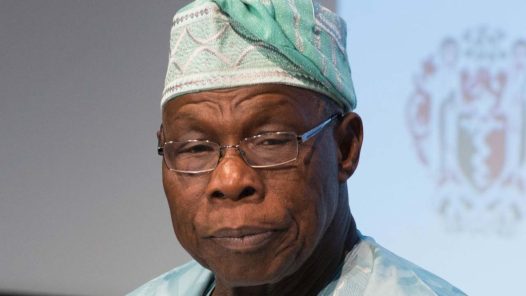
FORMER Nigerian President Olusegun Obasanjo said the Western democratic system of government has failed in Africa.
Obasanjo argued that the system only recognised the views of a few members of society, who serve as representatives of the people, rather than the entire population.
He stated these on Monday, November 20, at an event held at the Olusegun Obasanjo Presidential Library, Abeokuta, Ogun state capital.
Obasanjo advocated for “Afro Democracy,” saying Western Liberal Democracy has to be modified to suit the peculiarities of the African people.
“The weakness and failure of liberal democracy as it is practised stem from its history, content, context, and practice. Once you move from all the people to representatives of the people, you start to encounter troubles and problems. For those who define it as the rule of the majority, should the minority be ignored, neglected, and excluded?
“In short, we have a system of government in which we have no hands to define and design, and we continue with it even when we know that it is not working for us. Those who brought it to us are now questioning the rightness of their invention, its deliverability, and its relevance today without reform,” he reasoned.
The former leader stated that the form of democracy currently being practised in Nigeria failed to provide for good governance or meet expectations in Africa.
“Can we look inward and outward to see what in our country, culture, tradition, practice, and living over the years that we can learn from, adopt, and adapt with practices everywhere for a changed system of government that will service our purpose better and deliver?
“We have to think outside the box and then act with our new thinking. You are invited here to examine clinically the practice of liberal democracy, identify its shortcomings for our society, and bring forth ideas and recommendations that can serve our purpose better, knowing human beings for what we are and going by our experiences and the experiences of others,” he said.
Some other Africans have also argued that democracy is unsuitable for the continent, including Ghanaian economist George Ayittey, who noted in 2010 that Western democracy allowed elected leaders to advance personal interests or those of their ethnic groups while excluding others.
Ayittey posited that Africa should develop a government system consistent with its heritage.
“In our haste to democratise -and also as a condition for Western aid- we copied and adopted the Western form of democracy and neglected to build upon our own democratic tradition,” he noted.
Similarly, former head of the Kenyan Anti-Corruption Commission, Patrick Lumumba, a professor, had suggested that Africa redefine the Western democracy it practises.
Describing Africa as a colonial project serving the West and other developed nations, he said.
“In Nigeria alone, there are over 300 ‘nations’ living in an artificial geographical state because the colonial masters chose to christen it Nigeria. One must be alive to the diversity of the African continent and the reality that before the advent of the colonisers, Africans organised themselves in different ways that worked for them.”
He added, ““Democracy was defined to us in their own way. There is nothing wrong with democracy, but Africa must define it in its own way tailored to work for its people. Democracy defined in America for Americans cannot work the same way in Nigeria. There is no one-size-fits-all system of democracy.”
The initiative seeks to encourage in-depth, high-quality reporting on health innovation issues.
During the fellowship, approved fellows will hone their reporting abilities on the most recent breakthroughs in health and medicine.
Selected fellows will get grant finances, training, and personalized mentoring to develop and publish their original health innovation reporting projects.
Those with experience in the field who are enthusiastic about creative narratives in health-related journalism are invited to apply for a fellowship.
Additionally, fellows will travel abroad for a reporting assignment to engage in science, technology, and health fieldwork.
The applicant needs to have experience publishing in well-known international media sites.
The application deadline is December 15, 2023. Interested fellows can apply here
THE Lagos state Deputy Governor, Obafemi Hamzat, has denied that his office received over N2 billion to procure rechargeable fans, lights and fridge.
The ICIRreported that the governorship candidate of the Action Democratic Congress (ADC) in the state, Funso Doherty, wrote to the state Governor Babajide Sanwo-Olu on some of the controversial projects observed on the state’s procurement portal.
Among the items flagged was “provision of supply items (rechargeable fans, rechargeable lights and fridge in the office of the deputy governor” which was procured under the office of the deputy governor.” The item was awarded to Judkom Enterprises in July, 2023 at the sum of N2 billion ( N2,017,840,000).
In a memo signed by director, finance and account, Tola Ekemode, on behalf of the permanent secretary in the office of the deputy governor and addressed to the director-general of the procurement agency, Hamzat said the approval for the project was N2 million.
He described Doherty’s allegations as untrue, mischievous, fake and unfounded.
Also noted by Doherty on the portal was N30 million awarded to the office of deputy governor for “monthly outreach of indigent citizens by his wife but Amzat claimed his wife got N2.5m each for her monthly outreach programme.
Part of the statement read, “It is important to state that truly, the office did get approval and awarded the provision of supply items (rechargeable fans, rechargeable lights and fridges) for the sum of N2,017,840 (two million, seventeen thousand, eight hundred and forty naira) as against the N2,017,840,000 (two nillion, seventeen million, eight hundred and forty thousand maira, as reported by Doherty in his purported letter.
“In addition, the report that the office through the wife of the deputy governor spent N30,000,000 monthly for outreach to indigents is inaccurate as the amount stated covered the whole year. It is N2,500,000 per month. Same for the empowerment programme by the wife of the deputy governor which also (is) N2,500,000 per month as against N30,000,000 monthly reported,” read the memo.
He called on the agency to take prompt action in addressing the issue by giving the general public a true account of what was approved.
“We are compelled to write this letter due to the inaccuracies it conveyed; as the story was completely different and not a true reflection of what we have in our records. Also, we would not allow some individual(s) and journalists with mischievous inclination to bring the personality and name of the deputy governor, his wife and the office to disrepute,” he said.
THE Central Bank of Nigeria has scrapped the bi-monthly monetary policy committee (MPC) meeting expected to be held in November, Bloomberg reported on Monday, November 20.
According to the report, the apex bank instead chose to have its governor, Olayemi Cardoso, speak at the bankers’ annual dinner on Friday, November 24.
The ICIR reports that this will be the second consecutive time CBN has postponed the MPC meeting, raising concern about Cardoso and his committee of governors’ zeal to rescue the falling naira and bolster other economic indicators.
CBN uses the meeting to address major economic issues, considering the global and domestic headwinds.
The MPC is the CBN’s highest policy-making committee and is mandated to review economic and financial conditions in the economy.
It determines appropriate policy stances in the short to medium term, regularly checks the CBN monetary policy framework, and adopts changes when necessary.
It also communicates monetary and financial policy decisions effectively to the public and ensures the credibility of the monetary policy transmission mechanism model.
The MPC meeting was postponed by CBN in September, putting on hold its bi-monthly statutory function used to consider, recommend, and take critical economic decisions.
Efforts made by The ICIR to have the apex bank speak to why the MPC is being postponed for the second term failed. Its Director of Corporate Communications, Isa AbdulMumin, did not pick up calls or respond to text and WhatsApp messages sent to him.
Experts weigh consequence
Speaking to The ICIR on the implication of CBN’s postponement of the MPC meeting, an economist, Muda Yusuf, pointed out a couple of issues.
He said, “The current team in the CBN is new; the CBN governor is new; all the deputy governors are new. So, I imagine that they are still trying to understand the situation well and familiarise themselves with the issues before they begin to go out there to address the press. There may still be several issues they are trying to sort out.”
“That is not to say that they (CBN) should not communicate because one of the reasons that we have the MPC is after their meeting, they communicate the obvious direction of policy, which also helps to guide investors. It also has a signalling effect on the market, especially the financial market,” Muda Yusuf, said.
Yusuf, the director/chief executive officer of the Centre for the Promotion of Private Enterprise (CPPE), stressed that there was a communication value in holding the MPC meeting besides the steps the committee would take in addressing interest rate, cash reserve ratio (CRR) and the rest of the monetary policy tools.
He noted that it would also influence the economy’s direction, adding that these are important reasons the MPC should hold.
“Although, at this time, many of us do not feel that the CBN has any business in increasing interest rates even though inflation is high because the CBN has been hiking the rate for almost ten participation (meeting) of MPC, and yet inflation has not come down,” the CPPE boss stated.
Inflation rose for the 10th consecutive month to 27.33 per cent in October – the highest rate recorded since August 2005, The ICIRreported, spiking increases in foodstuff and all other economic goods.
The Nigerian currency (naira) has depreciated against the United States dollar by over 40 per cent since the exchange rate unification policy. As of Friday, November 17, the naira stood at N791.75/$1 at the official market and N1,135/$1 at the black market.
Also, an Economics lecturer at the University of Lagos, Babatope Ogunniyi, said holding the MPC was just one of the many ways CBN manages the economy, noting that there were other measures the monetary authority put in place.
He said the MPC was critical to making key economic decisions that might meet projections or below projections and that postponing the MPC meeting could help establish the effect of having to fix the MPC meeting by month.
“Presently, to say that we are not having challenges, we are only trying to play pranks on our economy,” Ogunniyi said.
The situation with the naira is disheartening based on the amount of money injected into the economy. By now, the naira is stabilising around or below N700 to a dollar.
He said the operations of speculators and the countries’ depleting external reserves were responsible for the economy’s woes.
“Our foreign reserves are already depleted. This is supposed to be a cushion upon which the naira is to maintain a balance, but it is not there. Also, ever since the present government came to power, they have been borrowing.
“Borrowing does not help any nation, especially when we are not in a time of war. The monetary and fiscal authorities need to aid the country’s economic progress,” he argued.
He pointing out that the apex bank had been reactionary rather than proactive to speculators’ activities.
Critical decisions taken at the last MPC meeting in July
At its July MPC meeting, the CBN raised the benchmark (monetary policy rate) by 25 basis points to 18.75 per cent and adjusted the asymmetric corridor around the MPR to +100-300.
It retained the CRR, which determines how banks price their loans to customers, at 32.5 per cent at the two-day MPC meeting chaired by Folashodun Shonubi, who acted then as CBN governor following the suspension of the former CBN Governor, Godwin Emefiele.
President Bola Tinubu, on September 16, appointed Cardoso as the new CBN governor.
The new committee of governors calling the shots at the apex bank is Cardoso, CBN governor, and Sani Dattijo, Emem Usoro, Philip Ikeazor, and Bala Bello as deputy governors, respectively.
THE Kano state Police Command on Monday, November 20, said it had uncovered plans by supporters of some political parties to cause violence in the state.
According to the command’s public relations officer, Abdullahi Kiyawa, the groups want to demonstrate against the Appeal Court ruling on the March 2023 gubernatorial election in the state.
He, however, said the command had implemented the necessary security measures to stop hostilities from rising to the point where law and order would collapse.
The command warned the state’s residents to be careful, noting that any protest or procession should follow the law.
He said the state Police commissioner, Usaini Gumel, had asked the residents to be law-abiding and refrain from any unapproved assembly, demonstration, or parade that would incite violence.
According to the spokesman, combined security teams have been sent to key areas to guarantee peace and order.
“Whoever attempts to disrupt the peace in the state will be arrested and made to face the wrath of the law,”,” Kiyawa said.
He asked residents to notify security personnel of any unusual movement of people or objects so they could act quickly.
The ICIR on Friday, November 17, reported that the Court of Appeal in Abuja upheld the Kano state governorship petition tribunal’s verdict that nullified Abba Yusuf’s election.
In the judgment, the three-member panel of the appellate court held that the New Nigeria Peoples Party (NNPP) breached the Constitution by sponsoring Yusuf, who was not a party member.
The court ruled, among others, that the tribunal acted in the public interest when it permitted the APC to tender papers during the trial since the Independent National Electoral Commission (INEC) had given the APC access to materials piecemeal to undermine the petitioner’s claim.
The court’s three-man bench ruled that each political party must keep track of its voter registration.
According to the court, political parties are required by the 1999 Constitution to maintain a membership register and provide it to INEC and the tribunal upon request.
The court further stated that Abba’s NNPP membership is not registered.
“All issues in this appeal are dismissed, and the judgment of the tribunal is affirmed,” the court stated.
The ICIR reported that the Kano State Governorship Election Petition Tribunal had sacked Yusuf as the state governor.
The tribunal consequently declared the APC’s Nasir Gawuna the state’s winner of the March 18 governorship poll.
In its judgment on Wednesday, September 20, the tribunal ordered INEC to withdraw the certificate of return issued to Yusuf and give it to Gawuna.
The three-person panel presided over by Oluyemi Akintan-Osadebay deducted 165,663 votes from Yusuf’s total votes.
The court declared the deducted votes invalid because the ballot papers were not stamped or signed.
Meanwhile, Yusuf has said he would seek redress at the Supreme Court.
In a statement issued on Saturday, November 18, and signed by his spokesperson, Sanusi Bature, the governor described the Court of Appeal’s judgment as a miscarriage of justice.
THE Court of Appeal in Abuja on Monday, November 20, affirmed Hyacinth Alia of the All Progressives Congress (APC) as the winner of the governorship election held on March 18 in Benue state.
The court dismissed the appeal by the Peoples Democratic Party (PDP) and its candidate in the election, Titus Uba.
In their appeal, Uba and the PDP contested the Governorship Election Petitions Tribunal’s ruling, which affirmed Alia as the winner and dismissed their petition.
A three-person tribunal panel, led by Ibrahim Karaye, dismissed the petition because it was statute-barred and was a pre-election matter.
The appellate court presided over by Onyekachi Otisi concluded that Uba had not established forgery charges beyond a reasonable doubt.
Citing section 29(5) of the Electoral Act, Otisi held that the High Court and not the tribunal had the jurisdiction to hear the matter.
The judge further stated that as the appellant did not participate in the party’s primary, he did not have the locus standi to contest the deputy governor’s qualifications.
She added that the deadline set by the Electoral Act for name submissions would be missed and that the rerun primary election was carried out in compliance with a court decision.
“There is a difference between an election conducted based on court order and that of the Electoral Act. The timeline by the Act will collapse where there is a court order”, she added.
The Independent National Electoral Commission (INEC) declared Alia the winner of the governorship election held on March 18, having polled 473,933 votes to defeat Uba, who garnered 223,913 votes.
Uba went on to challenge Alia’s victory at the tribunal.
In April, the tribunal confirmed 19 petitions by the candidates of various political parties who participated in the poll.
However, the chairman of the three-man panel of justices, Ibrahim Karaye, said that the tribunal had no jurisdiction to entertain the petitions as the matters raised before the tribunal were pre-election issues as captured in section 285 of the Electoral Act.
Speaking on Uba’s case, the tribunal said the PDP candidate ought to have pursued his case of non-qualification, the nomination of Alia by the APC, and the allegation of a forged certificate and false information on form EC9 against his deputy, Sam Ode, before INEC.
The ICIR reported that the tribunal upheldAlia’s victory as announced by INEC and dismissed the PDP and Ubah’s petition.