Officials from the Gombe State Universal Basic Education Board (SUBEB) have demoted Sani Ahmed, a former head teacher of Hammadu-Kaffi Primary School in Akko Local Government Area of the state.
In an interview with WikkiTimes during his tenure as head teacher, Ahmed raised concerns about an unfinished project within the school premises.
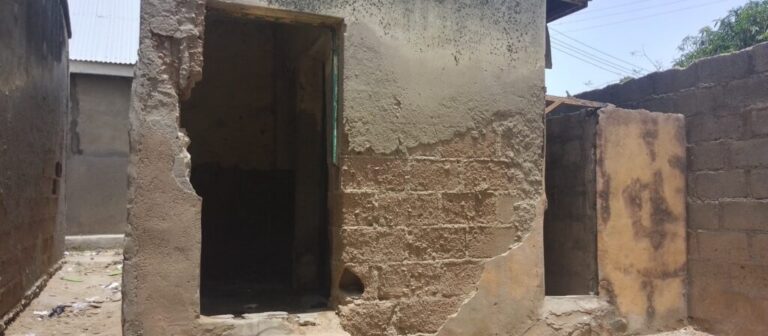
WikkiTimes story had documented how in 2021, Coccon Nigeria Limited was awarded a contract by the Office of the Senior Special Assistant to the President on SDGs to construct a block of six classrooms and VIP toilets. The project which intended to address critical challenges faced by the school, remained incomplete.
The school’s teachers resorted to using their own resources to purchase essential teaching materials such as chalk, desks, and chairs for the over 2,000 students of the public primary school.
Additionally, both teachers and students shared just two latrine toilets—one for teachers and the other for its entire student population. Due to the strain on these facilities, they became unsanitary, and the school struggled to maintain cleanliness due to issues with the only hand-pump borehole, which had developed faults.
WikkiTimes reports that the Director of Budget at Gombe SUBEB, Dan’azumi, allegedly instructed the Akko Local Government Education Secretary, Abubakar Boyi, to demote Ahmed from his position as head teacher as a result of his media interview regarding these various issues that the board had not adequately addressed.
The director also ordered Ahmed’s transfer to a distant location as a form of punishment for granting an interview to journalists without seeking approval from his superiors.
Ahmed has been relocated to a remote primary school, Kalshinge Primary School, situated approximately eight kilometres away from his previous posting.
When contacted for comment, Gombe SUBEB declined to provide any statements on the matter and directed inquiries to Akko Local Government Education Secretary, Abubakar Boyi.
Boyi confirmed Ahmed’s transfer to Kalshingi Primary School and later to Beto Primary School within a month. He criticized Ahmed for divulging information without prior authorization, stating that he should have consulted with higher authorities before going public with the issues.
However, Boyi acknowledged Ahmed’s dedication to his teaching duties, describing him as a committed educator.
The Nigerian Union of Teachers (NUT) Gombe State Chapter said it was unaware of Ahmed’s case but pledged to investigate the matter further.
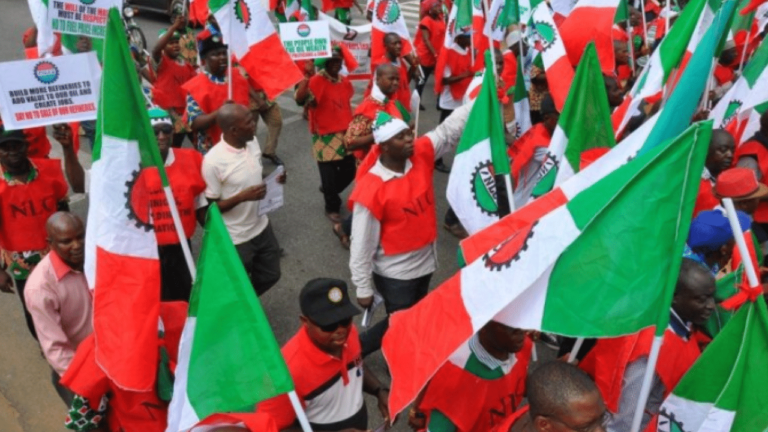
THE Nigeria Labour Congress (NLC) is currently intensifying the mobilisation of its members ahead of its planned two-day warning strike scheduled for Tuesday and Wednesday, September 5 and 6, respectively.
The strike is to protest against the persisting hardship Nigerians face following the removal of subsidy on Premium Motor Spirit (PMS), popularly known as petrol, by President Bola Tinubu-led Federal Government.
NLC President, Joe Ajaero, had on Friday, August 31, ordered the union members to embark on the warning strike.
He said the indefinite strike would begin within 14 working days or 21 days, except the government took drastic measures to cushion the pains associated with the subsidy removal.
The NLC had embarked on a nationwide protest on the same issue in August.
Its members include workers in the public and private sectors.
The ICIR confirms that many NLC affiliate bodies have directed their members to comply with the national body’s directive.
The Maritime Workers Union of Nigeria (MWUN) is among the groups warming up for the strike.
In a circular by its Deputy Secretary General, Erazua Oniha, on behalf of the union’s Secretary General, Felix Akingboye, the union said, “We received a communique from the Nigeria Labour Congress, NLC, on the above subject, directing that all NLC affiliates commence a two-day nationwide warning strike to demonstrate our readiness for the indefinite strike later in the month…
“Consequent to the foregoing, all National Administrative Council, NAC, Central Working Committee, CWC, NEC and members in all ports, jetties, terminals and Oil and Gas platforms nationwide are by this notice directed to commence an immediate and total mobilisation of our members to effectively ensure their participation in the nationwide warning strike from Tuesday 5 to Wednesday 6 September 2023.”
The ICIR reports that the NLC also resolved to embark on a mass protest and rally in Imo State in September over what it described as a renewed onslaught by the government and its agents against labour unions.
Ajaero explained that the action was required due to the government’s alleged deliberate neglect and disregard to engage the relevant stakeholders through the right channel.
Meanwhile, a report says the Federal Government would meet the labour on Monday, September 4, to avert the strike.
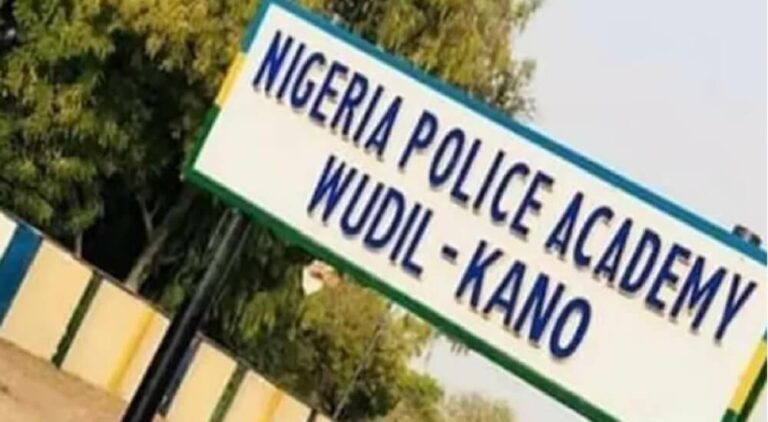
THE Nigeria Police Academy (POLAC), Wudil,in Kano state, has explained how it lost a cadet, Sulaiman Jika, a 100-level course nine police cadet from the Department of Computer Science in the academy on Saturday, September 2, 2023.
The Commandant of the academy, AIG Sadiq Abubakar, on Sunday, confirmed the death in a statement issued by the Police Public Relations Officer for the academy, Hussain Suleman, an assistant superintendent of police.
Abubakar stated that the cadet was ill and had sought medical attention at the clinic, after which he was discharged and was asked to return at intervals for checkups but passed on on Saturday, September 2.
Part of the statement reads, “The Nigeria Police Academy (POLAC) is deeply saddened to announce the passing of one of its cherished cadets, Mr. Sulaiman Jika, who succumbed to a brief and unexpected illness. Jika, a dedicated cadet from the Department of Computer Science, was a proud native of Adamawa state.
“On 29th August 2023, he sought medical attention at the academy clinic due to an ailment. Following a diligent course of treatment and his gradual recovery, he was certified fit and discharged by the medical doctor on call the next day and tasked to return at regular intervals for checks, which he adhered to.”
The school said the deceased was once again admitted to the clinic, where he died on September 2, for further examination and care following a complaint of restlessness.
The management regretted the cadet’s passage and commiserated with his family.
PRESS RELEASE
POLAC Mourns: Commandant Announces Unfortunate Loss of Cadet Sulaiman
Expresses Condolences to his Parents, Loved Ones
The Nigeria Police Academy (POLAC) is deeply saddened to announce the passing of one of its cherished cadets, Mr. Sulaiman Jika, who succumbed…
According to some news reports, sources in the academy who spoke anonymously for fear of being punished attributed the illness and death to starvation. They allegedly stated that Jika was rushed to the academy’s clinic, where he was confirmed dead after he was left unattended.
“Since the new commandant assumed office, they’ve provided us with very bad and inadequate food. The boy that died was not up to 20 years old. The boy wouldn’t have died if they’d attended to him,” said the source.
“Cadets collapse daily here during training due to fatigue because it’s either they’re starved, malnourished, or both. We’re usually threatened by the commandant and forced to engage in unwarranted training exercises.”
“Also, many cadets have been dismissed because they fell sick; that’s why many are trying to manage themselves to avoid expulsion from the academy,” the source further stated.
The ICIR reports that the 23rd commandant of the academy, Sadiq Abubakar, was appointed in April 2023.
KADUNA State governor,Uba Sani, has directed the police to investigate the bandits’ attack on Saya-Saya village, in Ikara Local Government Area of the state, that led to five worshippers’ death in a mosque.
Sani, in a statement by his Chief Press Secretary, Mohammed Shehu, on Sunday, September 3, described the killing as wicked and barbaric.
The governor assured his government would work tirelessly until peace is restored in every part of the state.
On Saturday, September 2, The ICIRreported that seven persons, including five worshippers, were killed by suspected bandits in the village.
The five worshippers were gunned down in the village mosque, while the remaining two other victims were killed at different locations.
According to sources in the village, the incident happened around 8 p.m. while villagers conducted their sunset prayers (Isha’i) at a nearby mosque on Friday, September 1.
The village Head, Abdulrahman Yusuf, who confirmed the attack, said the head of the vigilante in the community was among the victims killed inside the mosque.
“We suspected they traced him (vigilante boss) to the mosque to attack him. We were inside the mosque praying when they arrived and started shooting. Five persons were killed at the mosque, while a driver who brought food items to the village was also killed. The other person was killed at a nearby village,” he said.
He also mentioned that one of the individuals injured by gunfire during the attack was transported to Aminu Kano Teaching Hospital for medical care.
Reacting to this incident, the state governor said, “We understand the concerns and anxieties of the residents of Ikara, in particular, and Kaduna State, in general. Your safety and security are our top priorities, and we want to reassure you that we are working tirelessly to maintain peace and stability.
He called on the public to remain calm and provide relevant information that could assist in investigating the incident.
OPERATIVES of the National Drug Law Enforcement Agency, NDLEA, have intercepted various quantities of illicit drugs and arrested drug dealers in some parts of the country.
Some of the illicit drugs, such as ephedrine, skunk and nitrous oxide, popularly known as laughing gas, were being shipped to South Africa and Kenya when the agency intercepted them at the Murtala Muhammed International Airport (MMIA) Ikeja, Lagos.
A statement by the agency’s spokesperson Femi Babafemi on Sunday, September 3, said the drugs were being transported by members of Transnational Drug Trafficking Organizations (DTO), some of whom were promptly arrested, their mansions raided, and their luxury vehicles seized.
NDLEA also said it intercepted a notorious drug trafficker, Suleiman Babatunde Oba, a member of a cartel distributing cocaine, heroin, methamphetamine and ephedrine between Nigeria, Brazil, Ghana, South Africa, Mozambique, and Europe, on Friday, August 25, following credible intelligence.
Oba was arrested while attempting to board a Rwanda Air flight to South Africa with two boxes loaded with ephedrine sealed in semovita packs.
The recovered substance, according to the statement, is a precursor chemical and active ingredient in the production of methamphetamine.
“In his statement, Suleiman, who holds a South African passport, married to a South African lady and has lived there for over 20 years, identified Hakeem Babatunde Salami, who equally lives in Lagos and South Africa, as the head of the drug ring. A follow-up raid in the house of Salami, located at 75 Wosilatu Dawodu Street, Ijesha, Aguda area of Surulere, Lagos, on Monday, 28th August, revealed that he had fled the country on the same day Suleiman was arrested.
“However, a white Toyota Venza car with registration number LSR 410 HT, a Mercedes Benz SUV marked LSD 998HP, phones and vital documents needed for further investigation were recovered from the house,” the statement added.
The agency, said it seized 25.60kg ephedrine from a trafficker, Arua Emmanuel Onwuka, at the Lagos Airport in August 2021, a seizure that has also been traced to the same cartel whose identified members are currently on the run.
In the same vein, an attempt by another syndicate to export 10.40kg skunk concealed with scent leaf and pepper, going to Nairobi, Kenya, was equally thwarted by NDLEA operatives attached to the NAHCO export shed of the airport on Saturday, 26th August.
The suspect, Ekechukwu Sixtus Ndubuisi, was subsequently arrested in connection with the seizure.
Another bid to export a consignment of 180 canisters of laughing gas to South Africa by a freight agent, Oyekola Gbenga Akeem, for two million naira was also frustrated by operatives who seized the cargo and arrested the suspect, the NDLEA said.
Similarly, NDLEA operatives on Friday, August 25, arrested a drug kingpin, Ngene Emmanuel Onyedikachi, who recruited the fake couple, Ilonzeh Kingsley Onyebuchi and Ilonzeh Roseline Nonyelum arrested for ingesting 1.822kg and 1.50kg of cocaine respectively at the Lagos Airport on August 1, while on their way to India.
The kingpin was picked up at his residence at 28 Afolabi Brown Street, Akoka, Yaba, after an intensive surveillance that lasted 25 days.
“During his interview, Onyedikachi confessed that the two suspects, Ilonzeh Kingsley Onyebuchi and Ilonzeh Roseline Nonyelum, were introduced to him by another member of his syndicate, whom he claimed he met at Zion Church in the Cele area of Lagos. He explained that the drug was sourced from Guinea Conakry.
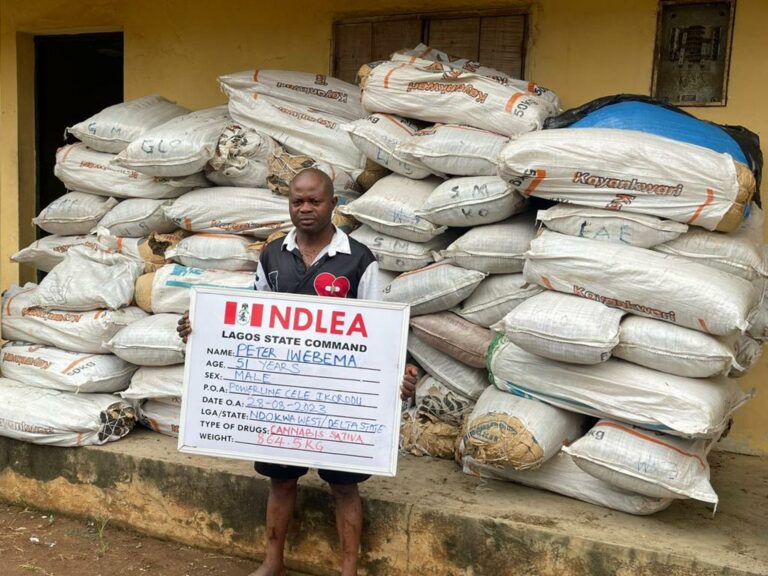
“While operatives of the Lagos state Command of the agency on Monday, 28th August, arrested a suspect, Peter Iwebema, at Ikorodu with 79 and a half bags of cannabis sativa, weighing 864.5kg, their counterparts at Tincan Port command intercepted 27 parcels of Colorado, weighing 13.5kg. The seizure was made from a container, MSMU 5664550, coming from Toronto via Montreal, Canada, during a joint examination with men of Customs Service,” the statement added.
Also, the NDLEA operatives in Sokoto, on Tuesday, August 29, arrested two male suspects: Nafiu Arzika, 30, and Jamilu Aminu, 35, with 330kg skunk, while another suspect, Ismaila Razak, 38, was nabbed with 34.5kg of same substance and 9.5 grams of methamphetamine on Saturday, September 2, at Olodo area of Ibadan, the Oyo state capital.
The chairman/chief executive of the NDLEA, Brigadier-General Mohamed Buba Marwa (Rtd), charged his officers in all state commands to remain vigilant and keep their focus on the agency’s corporate goals.
THE Socio-Economic Rights and Accountability Project (SERAP) has sued Nigerian President Bola Ahmed Tinubu for restricting 25 journalists from covering the Presidential Villa.
The organisation disclosed this in a post via Twitter on Sunday, September 3.
“We’ve sued the Tinubu administration over the unlawful ban of 25 journalists from covering the Presidential Villa. The ban is inconsistent with diversity of voices and the public interest,” the tweet reads.
The suit was filed on Friday, September 1, at the Federal High Court in Lagos and sought to compel Tinubu to reverse the withdrawal of the journalists’ accreditation.
On Friday, August 18, 25 journalists were barred from covering the Villa as security operatives at the main gate withdrew their accreditation tags.
Speaking to The ICIR on August 24, Special Adviser to the President on Media and Publicity, Ajuri Ngelale, said the move was aimed at reducing overcrowding across all departments of the villa.
He also said the reduction did not affect only the media department, adding that notice of the exercise was given to members of the Press Corps ahead of time.
SERAP, however, has demanded a perpetual injunction to restrain the president or other group of persons arbitrarily revoking the accreditation of journalists covering the Villa.
“If not reversed, the arbitrary ban on the journalists from covering the Presidential Villa would open the door to other cases of arbitrariness and would restrict people’s right to freedom of expression, access to information, participation, and media freedom.
“The withdrawal of the accreditations of the journalists is without any lawful justifications. It is inconsistent and incompatible with plurality of voices, diversity of voices, non-discrimination, and just demands of a democratic society, as well as the public interest,” the suit read.
SERAP noted that the existence of diverse media is essential for the functioning of democracy and accountability.
“The withdrawal of the accreditations of the journalists would construct barriers between Nigerians and certain information about the operations of their government, something which they have a constitutional right to receive.
“Media freedom, access to information and the right to participation are necessary for the maintenance of an open and accountable government. These freedoms are so fundamental in a democracy that they trump any vague grounds of ‘security concerns and overcrowding of the press gallery area’ ” SERAP noted.
No date has been fixed for the hearing of the suit.
In 2023, Nigeria ranked 123rd out of 180 countries rated on the press freedom ranking by Reporters without Borders (RSF).
“Nigeria is one of West Africa’s most dangerous and difficult countries for journalists, who are often monitored, attacked and arbitrarily arrested, as was the case during the 2023 elections,” the RSF stated.
MORE residents of Kaduna State have narrated their ordeals from the power outage that has crippled services at the state’s General Hospital, Sabon-Tasha.
The residents’ accounts followed a report published by The ICIR on Friday, September 1, which detailed how the hospital has been in darkness since August 2022.
According to the report, the hospital has remained unconnected to the national grid due to the failure of the state government to capture it for bill payment, thus crippling efficient health care service in the hospital.
The report detailed how patients and their caregivers battle suffocating heat and mosquitoes due to the absence of electricity. It also revealed that health workers use torchlights or rechargeable lamps to cater for patients at night.
Following the report, more residents of the state who have suffered a horrible experience at the hospital reacted to the report on social media, calling on the governor of the State, Uba Sani, to find a lasting solution to the problem.
Reacting to the report on Facebook, one John Kefas narrated his experience when his daughter was admitted to the hospital.
He wrote, “This news is a fact because my daughter was admitted in June. The state of this hospital is pathetic. though I must salute the effort of the health workers who, despite the harsh working conditions, still gave their best using touch lights on that night we were admitted…
“I am not surprised that this hospital is in this state. The same story applies to our roads in Kaduna South (with the exception of Barnawa which you know why). Schools, name them. The hospital is just one of the visible aspects of El Rufai’s eight years of divisive governance in Kaduna state. I hope and pray that the current administration will do something regarding this hospital.”
Another Facebook user, Nanre Geoffrey, reacted, “I was admitted there and vowed never to take any of my loved ones there again. May God bless us with good health.”
Another victim of neglect in the hospital, Jidauna Ephraim, reacted thus: “I had a gruelling experience there when my child was dying. I took my child to Barau Dikko against medical advice. A day later, my child returned to life. So, this is a report I can relate to. Sabo General Hospital, at the moment, is to be avoided.”
Similarly, many Nigerians have questioned why the government neglected the government facility, allowing residents and health workers to struggle for over one year.
Expressing her disappointment, a Facebook user, Oluwafunmilayo Atta-Kakra, said: “As a governor, did he not go round the town to know what was happening? Was there no health commissioner?”
The ICIR report detailed how General Hospital in Sabon-Tasha, Kaduna, has endured a year-long power outage, severely affecting healthcare delivery and patient welfare.
The report highlighted how patients and care-givers face numerous challenges due to the lack of electricity. The report findings revealed that they endure stifling heat, rely on cell phone torches, and even face the threat of dangerous insects in the darkness.
Access to clean water is also a source of concern. The hospital has a borehole but the absence of electricity makes it impossible for people at the facility to pump water for basic needs.
THE Rivers State Police Command has commenced an investigation into the alleged assault and brutality of a traveller in a viral video by its officers.
On Friday, September 1, a video went viral on social media, wherein a woman is heard shouting at some armed policemen along a highway, accusing them of inflicting injury on her sister.
The ICIR observed at least four armed officers in the one-minute, three-second clip at the incident scene.
“This is the Nigerian Police. Look at my sister’s mouth,” the woman said. “Policemen gave my sister Beta injury, and you are here making a video of me. After giving my sister an injury, did you see anything in my sister’s bag? Never,” added the woman.
Although the video didn’t show when the officers inflicted the injury on her, the woman (described as Beta) was visibly bleeding from her lips while trying to clean herself up inside a Toyota Corolla car.
This incident, however, spurred several reactions on social media, particularly on X (formerly known as Twitter), as many accused the Nigerian Police of continuous unprofessional conduct across the country.
Several Nigerians petitioned the Nigerian Police Force and its Public Relations Officer, Olumuyiwa Adejobi, charging them to investigate the incident and take action against police harassment.
One Harrison Gwamnishu, who posted the video of the alleged assault of a traveller via his X handle and described the traveller as Jennifer, said that the traveller was allegedly beaten by officers conducting a stop-and-search operation around Ada George, Port Harcourt, on Thursday.
He also appealed to the Police to investigate the incident. “Please investigate this and call these men to order. Thank you,” he wrote.
In response to this incident, the Rivers State Police Command, via its official X handle on Saturday, September 3, acknowledged that it was aware of the incident and had begun identifying the accused officers.
“The command wishes to inform the general public that all hands are on deck to identify the police officers in the trending video for proper investigation,” the police wrote on the micro-blogging site.
The ICIR reports that this incident is one of the few reported cases of police harassment in previous months.
This organization observed some videos on social media, particularly on X, where police officers were seen harassing Nigerians.
While the Police Public Relations Officer (PPRO) Olumuyiwa Adejobi has repeatedly said the force was taking action against erring officers, the cases of harassment persist in some states.
For instance, Adejobi, on May 17, 2023, confirmed that the Force arrested and detained some policemen who were seen in a viral video brutalising an Okada rider in Lagos.
Also, the Police, in July 2022, said it dismissed Richard Gele, an Inspector of Police caught in a viral video justifying extortion.
Police Harassment in Nigeria
Over the years, many Nigerians have suffered from police harassment and brutality. In 2020, protests against police brutality and harassment swept the nation, resulting in government pledges to reform the organisation.
However, almost three years later, young Nigerians still face this menace, causing them to suffer business losses.
The ICIR in October 2022, reported how Police brutality and extortion plagued many young Nigerians and frustrated many start-up businesses for years.
The report detailed how young people, including small-scale entrepreneurs like Mark Chuks, an Owerri, Imo state resident, lost their livelihoods to police brutality.
Chuks was a victim of an unjust police raid. The security operatives accused him of obstructing an operation. They beat him up and subsequently detained him at the Ihiagwa police station till the following day.
Upon regaining his freedom, however, Chucks fell ill from his beating. For a week after the incident, he could not work.
GUARANTY Trust Holding Company Plc (GTCO), in the first half of its 2023 financial year, incurred N82.96 billion in loan impairment charges despite being far from meeting the central bank’s compulsory target on loan-to-deposit ratio (LDR) policy.
The ICIR‘s analysis of the bank’s audited consolidated and separate financial statements for the period ended June 30, 2023, shows its loan impairment charges rose by 2,257.52 per cent to N82.96 billion at the end of June, from N3.52 billion reported in the corresponding period last year.
The figure represents impaired charges on loans and advances to customers, and loans and advances to banks respectively.
A loan is considered impaired when it is probable that not all related principal and interest payments will be collected or recovered.
A tier-one Nigerian bank, GTCO has again defied the Central Bank of Nigeria’s (CBN) LDR policy.
The apex bank had in October 2019 directed commercial banks to maintain a minimum LDR of 65 per cent.
It set the policy to improve lending to customers to stimulate the real sector of the economy.
For a bank, LDR is used to assess its liquidity by comparing its total loans to deposits for the same period, which impacts both liquidity and solvency in the short, medium and long term.
The ICIR reports that a LDR implies that for every N100 received as deposits, a bank is to lend N65 to customers.
In the review period, analysis by The ICIR shows that the LDR of GTCO stood at 37 per cent as the bank reported N2.32 trillion total loans and advances to banks/customers against N6.32 trillion total deposit from banks/customers.
But the CBN had in a recent circular to banks said it would from July 31 this year begin enforcement of the 65 per cent LDR policy on banks disregarding its directives.
The ICIRreported on July 30 that most banks, including GTCO, had since 2019 failed continually to meet the CBN’s 65 per cent minimum loan requirement to customers.
The report revealed that the LDR of GTCO dropped from about 46 per cent in 2020 to 44 per cent in 2021 and to 41 per cent in 2022.
According to Fitch, a global credit rating agency, Nigerian banks’ impaired loans are expected to surge on reform fallout.
The Nigerian authorities had floated the naira and removed subsidy on petrol, a move which experts have applauded but require putting measures in place to cushion the effect on the masses.
“Nigerian banks face weaker capital ratios and higher impaired loans following reforms to liberalise the Nigerian naira and to remove the long-standing subsidy on fuel.
“The official exchange rate depreciated sharply in June following the Central Bank of Nigeria’s decision to allow the naira to trade at a market-determined rate as part of the reforms under Nigeria’s new government. The official rate has depreciated by over 40 per cent since end-2022,” Fitch said.
The rating agency explained that the naira depreciation would inflate banks’ foreign-currency-denominated risk-weighted assets, and put pressure on capital ratios.
“The naira devaluation, along with the fuel subsidy removal, will also lead to higher near-term inflation and tighter monetary policy, putting pressure on borrowers’ debt-servicing capacity and causing impaired loans to rise quicker than we had previously envisaged,” Fitch added.
Most societies try to protect girls from sexual predators by punishing said predators. But in this report, GRACE OBIKE reveals how pre-teens in Abuja, the Nigerian capital city, are tortured and made to undergo breast ironing all in the name of preventing them from being raped.
It is widely believed that one in every four Nigerian girls has been a victim of sexual violence. Of the number who reported their ugly experiences, fewer than 5 % received any form of support, data from the United Nations International Children’s Emergency Fund (UNICEF) shows.
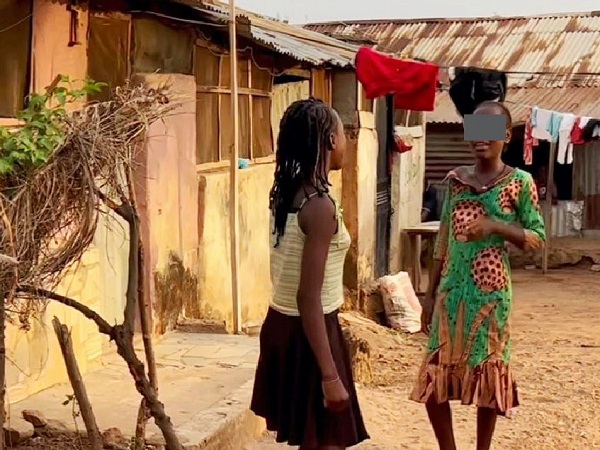
For centuries, the fear of sexual violence has pushed women to adopt different methods of protecting their daughters. In Pygba Sama, a community in Apo about, 14.2km from the Presidential Villa in Abuja, the fear of rape and sexual molestation by randy men has shaped the culture of protection for underage girls.
In order to make teenage girls look less ‘womanly’ and to prevent unwanted male attention, pregnancy and rape, women in Pygba Sama, Kpaduma II and a few other communities in the Federal Capital Territory (FCT) practice breast ironing, also known as breast flattening.
Why Iron the breast?
An Amapala
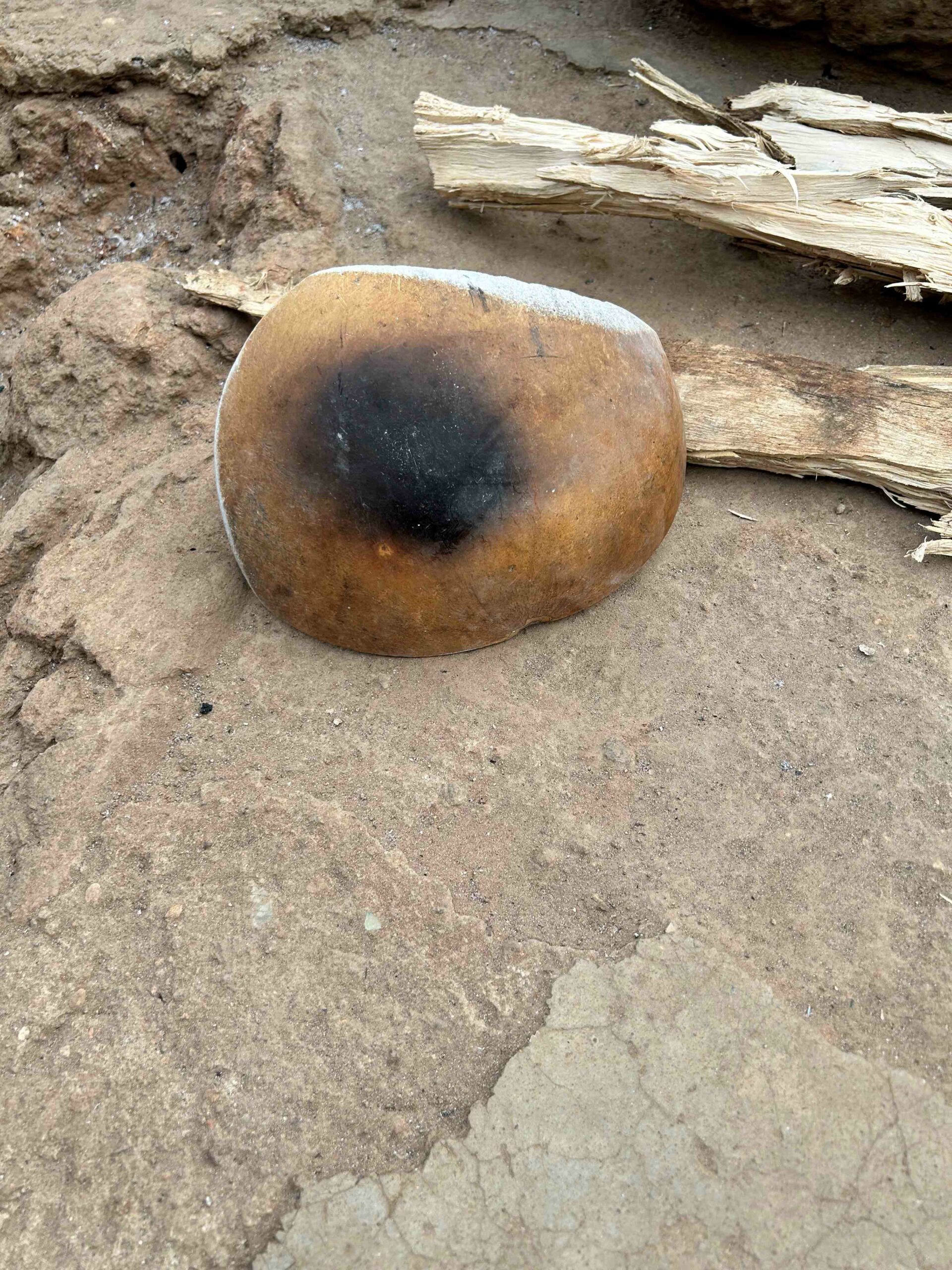
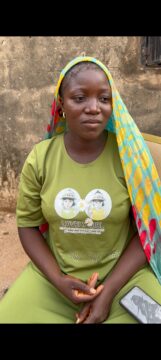
Thirty-year-old Kandie Iliya was in panic mode when she realised that her 10-year-old daughter was beginning to develop breasts. She broke up parts of a calabash into what looks like huge bra cup sizes, called Amapala in Gbagyi language. She then placed the parts of the calabash close to the fire, and when it was hot, she held her screaming daughter down and used it to meticulously massage the daughter’s breasts tissues until she was satisfied it had dissolved.
“I knew she didn’t want it, because she was crying and squirming. But what could I have done? she was too young to start having breasts. I love my daughter and did not want men to start noticing her.” she said.
Kandie is not the only one who believes in such a practice. Thirty-eight-year-old Grace Ekene, who is originally Gbagyi but married to an Igbo man, also decided to iron her daughter’s breasts after realising that the 11 years old was not only towering over her mates in the community but had began to grow breasts.
Although Grace escaped the experience when she was younger because she always ran away each time her mother tried to practice it on her, she still decided to put her daughter through the nightmare for fear of someone noticing the girl or molesting her.
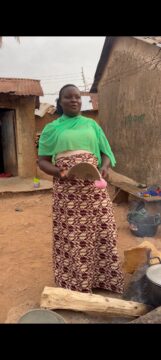
She said: “I didn’t like it when I was young. I was scared of it. Whenever my mother called me for it, I would run away from home till she forgot.
“But after seeing my daughter and the way she was developing beyond her age, I decided to protect her, and I almost succeeded in ironing her breasts.
“Luckily, my friends, who had attended a community meeting on the day that I had set aside to do it, came to visit.
“When I told them what I planned on doing to my daughter that evening, they told me that they were told at the meeting that young girls whose breasts are ironed may develop cancer later in life.”
Breast ironing
According to African Health Organisation, breast ironing is the process whereby young pubescent girls’ breasts are ironed, massaged and/or pounded down through the use of hard or heated objects in order for them to disappear or delay their development.
The United Nations (UN) states that breast ironing affects 3.8 million women around the world and has been identified as one of the five under-reported crimes relating to gender-based violence.
Investigation revealed that the unwholesome practice is carried out with the use of grinding stone, cast iron, coconut shell, calabash, hammer or spatula that has been heated for a long time over a scorching coal. It is also done by tightly wrapping the breasts with a belt or cloth.
In Pygba community, the practice of breasts ironing is as old as time. An investigation carried out by our reporter revealed that almost all the community women spoken to had experienced breast ironing at some stage in their life.
Interestingly, most of them insist that their own mothers and grandmothers were also victims of the generational practice.
An investigation carried out in the communities by the Teenage Network, a non governmental organisation, also revealed that one in every three adolescent girls had experienced breast ironing.
Some victims of the practice like Kandie ironed their breasts themselves when they felt their mothers were not forthcoming due to peer pressure.
Kandie said: “Growing up, I ironed my own breasts myself because I did not want to develop breasts early.
Front of the village head Palace in Pygba sama
“I realised that the parents of all my friends and peers had ironed their breasts, so I didn’t even wait for my mother but did it myself.
“So you can see why I felt that I had to do it to my child.”
Kandie Iliya
Is breast ironing only practised in the FCT?
While Grace Ekene, who is Gbagyi but married to an Igbo man laid out her plan to iron her daughters’ breasts, her best friend in the community, who hails from Enugu State, did the same. Where Grace was going to use the Amapala on the daughter, her friend planned on using a heated spatula as is used in her own village in Enugu.
Olanike Timipa-Uge, Executive Director Teenage Network, an organisation working with Action Aid Nigeria to motivate change in harmful socio-cultural norms that promote violence against women and girls, especially breasts ironing in the FCT explained: “During our baseline assessment which we are implementing in two communities, Pygba Sama and Kpaduma II in the FCT, we identified that one in three adolescent girls in these committees have actually experienced breast ironing.”
She said apart from the FCT, breast ironing is widely practised in Nigeria but reporting is really low.
Timipa-Uge said her organisation has had interactions with adolescent girls in the FCT who came from places like Niger State and they tell them they had experienced it back home.
Apart from Nigeria, the United Nations Population Fund (UNFPA) reported that breasts ironing has been reported in other African countries like Cameroon, Togo, Guinea Bissau, West and Central Africa, including Chad, Benin and Guinea-Conakry.
In Nigeria, apart from the FCT and Niger State, it is reportedly more common in Cross River, mostly amongst Cameroon refugees in the state.
Dangers of breasts ironing
Breast ironing is very painful. But apart from the immediate pains experienced by victims, the practice can cause serious physical issues such as abscess, a painful collection of pus that develops under the skin; cysts: fluid-filled lumps under the skin that can develop into abscesses, itching, constant pain, burns due to the heated objects used, tissue damage.
It can also cause infection, discharge of milk, breasts becoming significantly different in shapes or sizes, fever, scarring, mastitis, an inflammation of breast tissue, complete disappearance of one or both breasts, difficulty breastfeeding and an increased likelihood of breast cancer.
Apart from the physical damage to victims, Timipa-Uge says, “it in a way creates a wrong impression about issues of sexual violence. When you iron girls’ breasts because you don’t want them to be sexually abused, you are indirectly saying that the fact that a girl gets sexually abused, the girl is to blame. You are saying the reason why she is being abused is because she has a breast, which is totally unfair to the girl child.”
She also said it could have a psychological effect on the child because eventually, they tend to develop Post Traumatic Stress Disorder (PTSD).
Cases of sexual abuse in Pygba Sama
At 13 years old, Maria had her life ahead of her until she was raped and impregnated by a 49-year-old man who threatened her life if she revealed his identity.
She later lost the baby after its birth and eventually confided in an adult who confronted her rapist. He dismissed the aspect of rape, claiming the girl had enjoyed the encounter even though she fought, cried all through, and bled.
Seventeen-year-old Joy was also molested by a young man in his early twenties, but unlike Maria, Joy spoke up. She reported the incident but was blamed by the molester’s parents. They accused her in front of the whole community of indecent dressing and acting like a know-all.
Ruth Ibrahim
The parents of the rapist shamed, blamed and called her names in the community until the Teenage Network representative in Pygba Sama, Ruth Ibrahim, reported the case to the village head and threatened to report to the police and accuse their son of rape before the family backed down.
What the law says
The UN Convention on the Rights of the Child (UNCRC) Article 6 states that “States Parties recognise that every child has the inherent right to life. States Parties shall ensure to the maximum extent possible the survival and development of the child.”
Article 19 states: “States Parties shall take all appropriate legislative, administrative, social and educational measures to protect the child from all forms of physical or mental violence, injury or abuse, neglect or negligent treatment, maltreatment or exploitation, including sexual abuse, while in the care of parent(s), legal guardian(s) or any other person who has the care of the child.”
In Nigeria, female genital mutilation/cutting/elongation, breasts Ironing and forced marriages are all criminal offences and are classified as harmful traditional practices under the Violence Against Persons and Prohibition (VAPP) Act.
In terms of punishment, the VAPP Act states: “A person who carries out harmful traditional practices on another commits an offence and is liable on conviction to a term of imprisonment not exceeding four years or to a fine not exceeding N500,000.00 or both.”
Prosecution
Although breast ironing in the VAPP act has been proscribed as a criminal offence punishable by jail term and fine, there is no visible record of a perpetrator who has so far been prosecuted for the crime.
An article by the National Library of Medicine on breast ironing explains that as with a number of other harmful traditional practices (e.g. Female genital mutilation or cutting), breast ironing is typically performed by female familial relatives (e.g. mother, sister, aunt, grandmother, nanny, or another female guardian), and the practice is maintained as a secret between girls and their mothers or other guardians.
It says to date, data and empirical studies on breast ironing have been extremely scarce, thus limiting broad understanding about its extent or general prevalence. Being as secretive a practice as it is due to the relationship between the victims and perpetrators has made reportage of the crime difficult.
Even the National Agency for the Prohibition of Trafficking in Persons (NAPTIP), which was mandated by the Federal Government to administer the provisions of the VAPP Act said the agency had not handled any complaints on breast ironing.
Steps being taken to end breast ironing in FCT
NAPTIP insists that even though no one has come forward to report a case of breast ironing in the FCT, it is aware of its existence and taking steps to curb it.
Director, VAPP Dept at the agency, Mrs. Ijeoma Amugo, said: “The issue was raised on the sideline of our engagement with some stakeholders from the Kabusa area of Apo, Abuja, some weeks ago and it was agreed that they should promptly report such a case to NAPTIP.
“The DG has also directed improved surveillance in the community alongside sustained awareness and enlightenment on the danger of such harmful practices.”
Apart from NAPTIP, Teenage Network has been working with stakeholders in Pygba Sama and Kpaduma II for the past three years on awareness creation.
Teenage Network’s representative in Pygba Sama, Ruth Ibrahim, said she did not know about breast ironing until she relocated to the community with her husband.
According to her, after her relocation, she noticed the high number of sexual and gender-based violence (SGBV) within the community, with men battering their wives at the slightest provocation, like being served their meals without meat, even when they (the men) refuse to provide money for food to wives who are mostly housewives.
She added: “I became friendly with the young girls in the community and they began opening up to me.
“Many of them come to me with things they cannot tell their mothers. It was in the process that I learnt about their tradition of breast ironing and the high level of sexual abuse being committed by older men and young boys.
“So far, I have confronted a lot of these molesters, called them and their families out in community gatherings that I have organised and sensitised the women on the dangers of breast ironing.”
Ruth Ibrahim says a lot has changed in Pygba Sama in the last three years in the aspect of breast ironing because the women are now listening and have begun ostracising mothers who still insist on practicing breast ironing.
Luckily, practitioners like Kandie Iliya are beginning to repent. “After ironing that of my first daughter, I did not iron the breasts of my second because I have become aware of its dangers.
“I did that of my first daughter out of ignorance because I thought I was doing what was best for her.
“But now, they told me that it could lead to cancer, breast pains after giving birth, or it could prevent a mother from producing milk after giving birth. I don’t want anything to happen to my daughters.” she said.
On her part, Timipa-Uge said so far the network has recorded quite a number of success stories. Adolescent girls in the communities have confirmed that there has been a significant reduction in the rate of breast ironing ever since the programme started.
She added: “We’ve had girls whose older siblings had experienced breast ironing before the programme now telling us they were saved from experiencing that, and we have had community women openly telling us how they have changed their mind on the practice.”