SOLUTIONS Journalism Network is seeking entries to its awards, which honour and celebrate outstanding solutions journalism from around the world.
By spotlighting these stories, the organisation aims to elevate what excellence in this craft means and inspire more rigorous, impactful reporting.
Nominations should meet the four pillars of solutions journalism, as defined by the Solutions Journalism Network.
The organiser says, “The awards are open to journalists worldwide — whether working in newsrooms of any size or independently.
“All entrants must submit their own original published work. Entries are accepted across all platforms, including digital, video, print, podcast and radio. For a series, please submit one representative story. If you are submitting on someone else’s behalf, you must have their confirmed permission to do so”.
Eligible entries must have been published or aired between January 1, 2024 and December 31, 2025.
The award categories include the General Excellence in Solutions Journalism, where one winner will receive a cash award of $1,000.
Specialist categories include: The Best of Solutions Journalism in News Articles; in Video; in Audio; in Visual Image; in Multimedia, and the Best of Student Solutions Journalism.
Each specialist category can have up to one first-place winner ($500 award), one second-place winner ($250 award), and one third-place winner ($150 award).
The deadline for nominations is February 27, 2026. Interested applicants can apply here.
PAYPAL has officially announced its return to Nigeria and has gone live through a groundbreaking partnership with local fintech leader Paga.
The partnership is expected to enable millions of users to seamlessly receive international payments and access their funds in naira for the first time in over two decades.
However, there are concerns that issues raised by some customers, before its initial exit, have not been addressed by the Central Bank of Nigeria (CBN).
For nearly two decades, PayPal operated a policy of exclusion against Nigeria. Citing concerns about fraud, it allowed payments to leave the country but blocked the vital function of receiving money.
Some analysts described its actions as unacceptable with many remote workers, freelancers sidelined by PayPal in financial operations.
Consequently, many social media users criticised PayPal over the claim of “seized money”, while emphasising that regulatory test be conducted by the CBN.
“PayPal shouldn’t get to keep all the money they seized and still be able to return to the Nigerian market successfully years later,” an X user @Oloye tweeted in response to PayPal’s return.
“If that happens, then the only lesson they-Paypal will take away is that they can do it again and come back when they please,”@Oloye tweeted further.
Another user@Designatedsvr stated that PayPal’s comeback is a pointer to how political and regulatory authorities treat Nigerians with levity.
“PayPal simply learned about our collective gullibility from our politicians, hence the ‘I don’t care’ attitude, “he stated.
A former customer, Adiva Farida, expressed worry over PayPal’s inability to address issues raised by customers.
“Just checked their profile and there hasn’t been anything remotely close to addressing the complaints and bad experiences Nigerians are sharing about their services,” Farida stated.
On the heels of these concerns, The ICIR reached out to the CBN spokesperson, Sidi Hakama, but got no response from calls and WhatsApp messages sent to her.
Notably, PayPal’s partnership and new integration allow Nigerian users to link their PayPal accounts directly to their Paga digital wallets, facilitating cross-border receipts from PayPal-supported markets worldwide.
The recipients can withdraw these global earnings locally in naira, shop with international PayPal merchants or utilise the funds for everyday needs such as bill payments, bank transfers, or spending via Paga’s integrated Visa card, creating a true bridge between worldwide income and Nigeria’s domestic economy.
This development marks a major milestone for freelancers, online entrepreneurs, and small businesses that have long relied on workarounds to handle PayPal transactions, while empowering merchants to tap into PayPal’s global network of over 400 million users and expand their reach internationally.
The announcement of return made by Paga and PayPal underscores a shared commitment to enhancing financial inclusion and cross-border commerce in one of Africa’s fastest-growing digital payments markets.
For Nigerian merchants and small businesses, the partnership opens doors to PayPal’s vast network of over 400 million users globally, facilitating international sales and business expansion.
“We are proud to make this integration live and available to users across Nigeria. Whether you are a freelancer receiving international payments, a business selling online, or a consumer shopping globally, this collaboration makes it easier to access and use global funds locally, in a way that’s simple, secure, and built for our markets,” said Tayo Oviosu, founder and group CEO of Paga.
Senior Vice President, Regional Head and General Manager of PayPal Middle East and Africa, Otto Williams, added, “We have been intentional about partnering with local innovators like Paga and developing solutions that help Nigerians earn, spend, and grow. This collaboration helps strengthen the broader payments ecosystem by supporting local innovation, expanding financial inclusion, and enabling more consumers and businesses to participate confidently in the digital economy.”
Nigeria’s digital payments landscape is experiencing rapid growth, with transaction values hitting N657.8 trillion in 2023 and over 30 million active mobile wallet users, according to a 2024 Novatia Consulting report.
With more than 21 million users and a robust API infrastructure, Paga is well-positioned to scale PayPal’s services nationwide through its trusted local settlement network and digital wallet ecosystem.
THE United States on Tuesday confirmed that a small team of its military personnel had been sent to Nigeria to support counterterrorism efforts.
The officer in charge of the US Africa Command (AFRICOM), Dagvin Anderson, disclosed this at a press briefing.
According to Reuters, Anderson said the US team was sent after Nigeria and Ghana agreed that more work needed to be done to combat the terrorist threat in West Africa, confirming reports that the US had been conducting surveillance flights over Nigeria.
However, the officer did not provide further details about the size and scope of his country’s mission. Nigeria’s Defence Minister, Christopher Musa, also confirmed that a team was working in Nigeria but did not provide further details.
This is the first official confirmation of US troops presence on Nigerian soil since Washington carried out airstrikes in Sokoto State on 2025 Christmas Day.
The ICIR reported that Washington has intensified pressure on Nigeria following accusations by President Donald Trump that the west African country failed to adequately protect Christian communities from Islamist militant groups operating in the North.
Trump added Nigeria to countries on watchlist for Christian genocide on October 31, referencing alleged grave violations of religious freedom, including the persecution of Christians.
He alleged that Christianity faced an existential threat in Nigeria, with thousands of Christians reportedly killed by radical Islamist groups.
After warning that the US could take action including the possibility of military intervention if Nigeria failed to address the issue, Trump ordered airstrikes on what he described as Islamic State targets in Nigeria on December 25, 2025, and said there could be more US military action against the criminals.
THE Federal Ministry of Information and National Orientation did not allocate any funds to enlighten the public on the danger of fake news in the 2026 budget, despite receiving a total allocation of ₦98.2 billion.
This omission comes amid growing concerns about the impact of misinformation on Nigeria’s democracy and social cohesion. In 2024, FactCheckHubreported that experts in the information ecosystem criticised the ministry’s proposed ₦24.5 million allocation to tackle fake news, describing it as grossly inadequate given the scale of the problem. But since 2024, the ministry has removed that line from its budget.
Despite widespread acknowledgement of misinformation as a major national threat, especially as Nigeria approaches another pre-election period, when false narratives typically intensify, the ministry and the agency failed to prioritise the issue in the current budget cycle. The only related budget was the training for their officers on fact-checking, which attracted a budget allocation of N14 million.
In December, The ICIRreported that President Bola Tinubu presented the ₦58.47 trillion 2026 Appropriation Bill to a joint session of the National Assembly, promising a decisive shift toward disciplined budget execution and results-driven governance.
The budget, titled “Budget of Consolidation, Renewed Resilience and Shared Prosperity,” is intended to consolidate recent economic reforms and translate stabilising macroeconomic indicators into improved living standards for Nigerians.
However, the absence of funding for misinformation countermeasures contrasts sharply with mounting global and local evidence of its dangers. Reports have consistently shown that misinformation and disinformation pose serious threats to democracy and social cohesion, both in Nigeria and worldwide.
For instance, the World Economic Forum’s Global Risks Report 2026 confirmed that misinformation and disinformation remain among the world’s most severe global risks.
In the report published on January 14, 2026, false and misleading information ranked second among short-term global risks, surpassed only by geoeconomic confrontation—placing it ahead of numerous economic, environmental, and security threats.
During the 2023 general elections, misinformation surged across social media platforms.
Political actors and activists circulated doctored photos, videos, and text messages to millions of users, particularly on WhatsApp, fuelling false narratives throughout the February–March election cycle that culminated in President Tinubu’s victory and inauguration in May 2023.
A similar pattern emerged during the recently concluded Anambra election. The campaign period, election day, and aftermath were marked by waves of unverified claims, including false reports of election outcomes, violence, vote-buying, and widespread malpractice. Fact-checks by the Nigerian Fact-Checkers’ Coalition (NFC) later showed that many of these claims were misleading or entirely false.
Misinformation has also affected Nigeria’s international image. The FactCheckHub documented how misleading narratives followed comments by former U.S. President Donald Trump, who designated Nigeria a “Country of Particular Concern” over alleged persecution of Christians—claims that intensified public pressure on the Federal Government.
Additionally, misinformation actors, including members of the Indigenous People of Biafra (IPOB), have used social media platforms such as X to spread false claims about Nigeria, narratives that at one point contributed to heightened diplomatic tensions after the former U.S. president suggested possible military action.
More recently, following the signing of Nigeria’s new tax reforms in June 2025, misleading interpretations of the law have continued to circulate online.
Experts have repeatedly argued that the National Orientation Agency should play a more active role in countering such narratives, a responsibility that remains largely unaddressed in the current budget.
Speaking with The FactCheckHub, the Executive Director of Round Check, Caleb Ijioma, warned that information disorder poses a serious threat to the 2027 general elections.
“With political activities already picking up ahead of the 2027 elections, one would expect the Ministry of Information and National Orientation Agency (NOA) to be more proactive in curbing the spread of misinformation,” he said.
According to Ijioma, misinformation has increasingly become a strategic tool for manipulating voter perception during elections. “We have seen its impact in previous elections. It is getting more serious and has now become a global problem. Bad actors continue to deploy sophisticated techniques to undermine electoral processes and incite violence,” he noted.
He pointed out that in 2025, rage bait was named Oxford’s Word of the Year, reflecting how emotionally charged and misleading content is deliberately used to drive engagement online.
Similarly, the World Economic Forum’s 2025 assessment identified misinformation and disinformation as major short-term risks capable of fuelling instability and eroding trust in governance.
Ijioma said the lack of adequate funding to mitigate these risks leaves the information space wide open for malicious actors.
“It sends a signal that Nigeria is not prepared to confront misinformation as a global threat—one that has continued to negatively affect the country,” he said.
He warned that failure to prioritise misinformation could weaken national institutions across sectors, including health, politics, and the economy.
On the role of budgetary allocation, Ijioma explained that proper funding would enable the Ministry of Information and the NOA to design targeted interventions against misinformation.
“Budgetary allocations can produce dedicated projects aimed at combating misinformation and promoting Media and Information Literacy.
“It will create room for proper partnerships and collaborations with organisations whose work centres on it. You need money for projects, and budgetary allocation will help make this possible, at a time where misinformation is now a global threat to democracy and the economy,” he said.
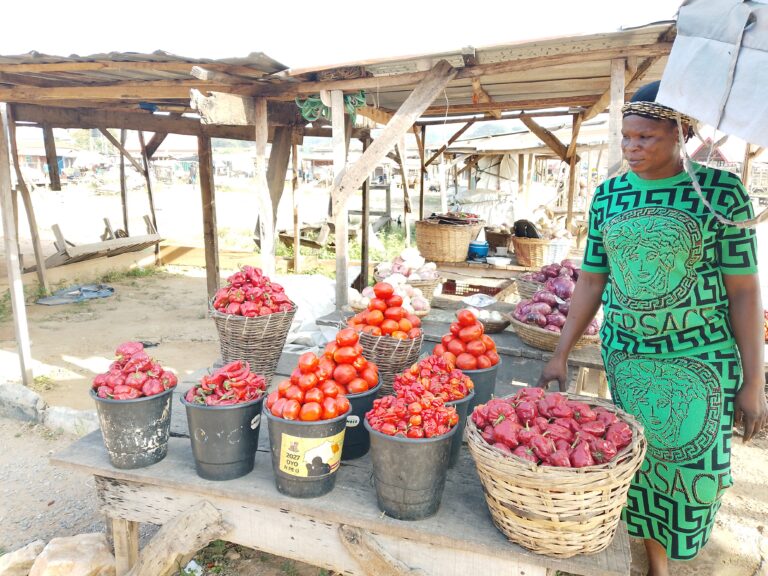
KUDIRAT Salami, a smallholder farmer in Apaadi community, Oluyole Local Government Area (LGA) of Oyo State, did everything right. She harvested early. Packed her tomatoes carefully. Paid for transport. After five years invegetable farming, she prides herself on planning ahead.
But there were things that were out of her control and that she could never have planned because by the time her produce reached the market, prices had collapsed.
Delays on bad roads, waiting time at police checkpoints and the absence of storage facilities turned her fresh produce into a race against decay.
“On that fateful day, I couldn’t sell anything because the market was already flooded with tomatoes that I had no chance of selling mine at all. Some tomatoes were already spoiling. Others were rejected.”
At the end of the day, to dispose of her goods which have now gone totally bad, unfit for consumption, she was asked to pay those who will throw them away.
“By evening, I had to flee the market. I was not ready to pay because I considered it as a double tragedy since I had already lost a huge sum,” Salami said.
For women like Salami, loss does not begin with poor harvest. It begins after harvest. So, you can have a bountiful harvest and still incur losses.
Timing is survival
Across many farming communities in Oyo State, timing has become a matter of economic survival for women who grow, harvest and trade perishable in crops. Without storage or price protection, they are under pressure to sell within narrow windows or risk losing everything.
Red yellow car heavily loaded with baskets and bags on road
Temilade Olabiyi is the leader of the Smallholder Women Farmers Organisation in Nigeria (SWOFON) in Oluyole LGA and vegetable farmer supplying tomatoes and peppers to Oje and Bodija markets. She said post-harvest loss begins long before harvest and one wrong decision can wipe out an entire season’s income.
Timing, she says, determines survival.
“You have to first look for the market before you plant anything,” she noted. With a 72-day planting cycle, Olabiyi explained, planting outside premium demand periods forces farmers to offload produce at giveaway prices or risk watching them rot.
When the road becomes the first market
Long before produce reaches a buyer, it must first survive the journey from the farm, often on bad roads riddled with potholes. For many women farmers in Oyo state, that journey is where losses begin.
Olabiyi said poor road infrastructure steadily eats into her earnings and triggers post-harvest losses almost immediately after harvest. She added that tomatoes and peppers, packed in traditional raffia baskets, bruise easily as vehicles sway through damaged roads, spilling and crushing produce along the way.
“By the time we get to markets like Oje and Bodija they start deducting money immediately. You pay ground rent, stall fees and other charges, sometimes up to ₦3,700 for one plastic basket, even before you talk about price or make a single sale. If there are delays on the road or at checkpoints and the tomatoes arrive bruised or late, the middlemen often take advantage of us. They tell you the price based on yesterday’s market or say there is too much supply that day. At that point, you don’t have a choice. You sell at whatever price they give you.”
Market scene with umbrellas, yams, baskets, traders
Oluwatoyin Oyedeji, a smallholder farmer and resident of Oyo town in Oyo West Local Government Area (LGA), said she has come to realise that the economics of farming no longer favour women like her. She lamented that the rising cost of transportation and the influence of middlemen forced her to abandon selling in major markets altogether.
“The arithmetic no longer adds up. The levies and transport charges alone sometimes compete with my profit. I produce around five to six plastic baskets of tomatoes and I discovered that it costs more to take the goods to the market. At the end of the day, I barely make enough to cover all the costs and the efforts I put in,” Oyedeji said.
The reporter wondered why women farmers cannot find companies that use their produce and sell to them instead of going through the stress of taking them to the market to sell.
The Oyo State SWOFON Coordinator, Mrs Atinuke Akinbade said whatever members of the organisation produce is taken to the market. She noted that their desire has been to have companies or off takers who will buy their products to reduce post harvest loss.
“It is a lofty idea to have our produce taken over as soon as we harvest but that is not the case. We take our produce to the market as we do not have the leverage to connect with companies or off takers to buy off our produce.
“If we can be linked to the market where we will sell to the government or companies it will aid productivity and food security,” Akinbade said.
Pay to sell, pay to dump
At the markets, losses are institutionalised. Women farmers and traders from Sasa, Bodija, Akinyele and Omi-Adio markets told NAN that they are charged multiple, often undocumented levies on each basket of their produce, they pay additional fees on stalls already rented from government, and in some cases are made to pay again simply to sell off produce that has spoiled before it can be sold.
This is also the story of others who buy the produce from farmers to sell.
In Omi-Adio in Ido LGA, a potato vendor, Bolanle Raimi, says costs begin piling up long before any sale is made. She pays levies to middlemen, fees to rate officers, and informal charges on each bag before profit is even considered. Raimi buys in bulk from Omi-Adio, where a bag that once attracted a ₦200 local levy now costs up to ₦1,000. She said these payments go to middlemen and not the government.
Bolanle Raimi potato vendor Omi Adio-market Oyo State
Who are these middlemen? “Those who act as middlemen are those who have been in the trade for long who now use their expertise to control sales and sometimes they are market unions leaders or officials representing traders. So, sometimes they work with revenue officers to collect rates and not every time a receipt is issued, especially levies that are added to the selling prices do not have receipts,” Raimi said.
According to her, “We are paying to sell,” and when heat spoils what she cannot fry into potato chips quickly enough, she pays again to haul it out as waste. In a trade where potatoes last barely eight days if spread under ventilation, she said half of her goods can rot before the week ends.
“When farmers bring their produce to the markets, for instance at Omi-Adio market, the middlemen buy it from them and they add other levies to the selling price per bag. Aside from what farmers paid when they brought in their produce, each trader or vendor is also made to pay some levies.
“At Omi-Adio market, we pay ₦1,000 per bag. We pay this money to the middlemen, not the local government revenue officers. Farmers and traders of perishable goods like me are at a great disadvantage. Most times we rush the produce to the markets and sell at ridiculous amounts just to earn something in return for our efforts.”
Raimi said farmers who resist face consequences. Produce can be delayed, undersold, or rejected outright. According to her, middlemen operate in coordinated groups, enforcing uniform prices and leaving farmers with little bargaining power.
Market scene with umbrellas, yams, baskets, traders
“If the farmer said no and asked for a favourable price for their produce, the middlemen would insist and sell it at their preferred price. If you go elsewhere, you will find those people saying the same thing because the middlemen usually cooperate because they have an association and together they ensure that whatever price they fix is the price every one of them pays to the farmer,” she said.
She noted that levy collection methods differ by market. At Omi-Adio, middlemen collect levies and interface with revenue authorities, whereas at Kila market in neighbouring Ogun State, farmers and traders pay government officials directly.
“What middlemen do is respond to surplus,” she explained. “If a product floods the market, the price drops. When supply is low and buyers are many, prices rise. But farmers do not control this,” Temilade Olabiyi, Oluyole LGA SWOFON leader said.
She noted that markets like Bodija have more structure. Prices are set through associations, with leaders of different produce groups coordinating rates and deductions.
“At Bodija, each trade has leaders in charge of peppers, onions and others. Alongside overall market leaders, they determine prices and how levies like ground rent and house rent are deducted,” she said.
At Sasa market, Fausat Adebayo, a trader, described the bulk-buyers and inter-market systems dominated by traders. She said most produce currently comes from the North, especially during the dry season, while rainy-season supply involves intermediaries who purchase from farmers and transport large volumes to market.
“These people may bring three to four truckloads at once,” she said. “Whatever we buy, we sell cheap. We don’t add more than ₦1,000 or ₦1,500 because we want patronage.”
The Iyaloja of Omi-Adio Market, Alhaja Mojisola Latinwo, acknowledged the challenges but offered a different perspective. She said the market handles fast-moving goods with high patronage and minimal spoilage.
“We buy directly from farmers and sell to retailers who sell in baskets. We usually discard the spoiled ones. We don’t have many spoiled ones because they are fast-moving goods.”
Latinwo, however, disputed claims that official levies significantly inflate prices. She said traders pay a flat ₦50 ticket to the local government per market day, regardless of volume, and argued that margins are kept low to ensure quick turnover.
But traders like Raimi insist that this explanation does not reflect what really happens. She said most of the costs that cripple farmers and small-scale traders are imposed before produce reaches the stalls, through middlemen who control access to buyers and prices, and whose charges are neither documented nor regulated.
Latinwo also pointed to poor road conditions as a major contributor to spoilage, particularly during the rainy season, estimating losses at between 10 and 20 percent. According to her, fees collected by market associations are used for drainage and sanitation.
Cold rooms that never exist
For many women farmers, the problem is not just how fast produce reaches the market, but what happens when it gets there. Once tomatoes, peppers, or potatoes arrive, there is nowhere to store them to prevent decay. No cold rooms or preservation centres.
Oluwafolakemi Omidiwura, a lecturer and post-harvest researcher at the University of Ibadan, said this gap quietly shapes the market in ways farmers can hardly control. She explained that middlemen often delay the sale of newly arrived produce until older stock is cleared, even when buyers are willing to purchase fresh goods.
“What I have noticed is that middlemen sometimes delay (the sale of) fresh produce until the rotten ones are sold. The more they delay, the more decay sets in, both in the fresh produce and the already spoiled ones,” she said.
Tomatoes and red peppers in crates/baskets side by side
The result, she explained, is that freshness loses its advantage. Farmers who arrive early still lose value, not because demand is absent, but because time is used as leverage against them.
For smallholder women farmers, this absence of storage turns every harvest into a gamble. Once produce leaves the farm, the clock begins to tick. Without cold rooms, farmers must sell immediately, accept whatever price is offered, or watch weeks of labour rot away.
Olabiyi said the panic selling that defines post-harvest trade in Oyo would ease if storage facilities existed. According to her, cold rooms are often discussed in trainings and seminars but remain unachieved in practice.
“As smallholder women farmers, we attended a training organised by Japan International Cooperation Agency (JICA) and the Federal Ministry of Agriculture on vegetable production and reducing post-harvest losses,” Olabiyi said. “We were taught about cold storage, but we were not empowered to acquire one. They told us the training objectives didn’t cover empowerment. It was just theoretical.”
During the training, she said participants were taken to supermarkets and markets to observe how proper storage extends shelf life and improves income.
The contrast was clear. What worked elsewhere remained unavailable to them.
“Having cold storage is capital intensive,” Olabiyi said. “If government provides it, farmers would not rush to sell at ridiculous prices. Middlemen would lose their control because farmers could sell directly to retailers and food prices would stabilise.”
The absence of storage also affects traders and aggregators further up the chain. Emmanuel Akinsoji, who has worked as an aggregator for over 25 years, said delay and heat often destroy value long before produce reaches consumers.
“It should not take up to 24 hours to convey agro-produce from the North to the South, but with bad roads, it can take three days,” he said. “Anything can happen in that time. When heat sets in, decay starts.”
According to him, timing now determines price more than quality. Produce that arrives early in the day can sell for more than double what late arrivals fetch, even when they come from the same farm.
“Sometimes a bag of tomatoes sells for ₦80,000 in the morning. Another arrival in the evening may go for ₦35,000. Not because it is worse, but because time has worked against it,” he said.
Asked about cold storage, Akinsoji laughed. He describeit as something discussed more in policy circles than in practice. He said the absence of preservation methods makes the business volatile, with losses often wiping out gains.
“I experienced this in 2007,” he recalled. “I loaded a J5 vehicle from the North to the South. By the time the goods arrived three days late, most had spoiled. What we realised did not even cover transport costs.”
According to h, many farmers and traders remain in business only because occasional profits help offset earlier losses.
Market leaders also acknowledge the gap. The Iyaloja of Omi-Ad, Alhaja Mojisola Latinwo, said the absence of cold storage remains a regret. She recalled that when Governor Seyi Makinde sought input during the planning of the new ultra-modern Omi-Adio market, cold storage was not raised.
“We did not think about it at the time,” she said. “The market has a fire station, potable water and toilets, but no cold room. Cold storage would have helped reduce spoilage of tomatoes, peppers and other perishables.”
Acing to Latinwo, traders now improvise, sometimes using ice blocks to slow spoilage temporarily, though the method offers little protection.
“If we had cold storage, we could keep produce after each market day and transport it to another market the next morning in good condition,” she said. “That would mean better profit and less waste.”
Doing the most, carrying the loss
The losses do not end at the market gate. They follow women home.
Oluwatoyin Oyedeji, a farmer from Oyo town lamented that women do most of the farming related activities especially from land preparation to transport and market entry but earn the least.
“Farmers are simply working for middlemen who dictate prices,” she said. “We have no way to preserve our produce. Often times, we are under the chokehold of debt since we barely make profit”
Bolanle Oyelayo trader Sasa market tomato pepper spoilage Oyo
At Sasa market, trader Mrs Bolanle Oyelayo said tomatoes and peppers must be sold within a day or two, especially during the rainy season, or losses set in quickly. When that does not happen, Oyelayo said she gets apprehensive about her gain.
“During harmattan, goods may last slightly longer but the rains accelerate spoilage.
She said she has invested about ₦600,000 in her stall, yet decay can wipe out gains overnight adding that once spoilage begins in a basket or crate, it spreads quickly, turning capital into waste.
“Anything beyond a few days leads to losses we can’t quantify. We cover the baskets and leave them in the store. There’s no other way to keep them, because the heat at home would spoil them. The rainy season is the hardest. Post-harvest losses rise sharply. Four crates can shrink to two once the rotten ones are removed, causing huge economic losses.
“When we buy goods today, they must be sold by the next day. Otherwise, we find many ‘Esa’—spoiled ones—inside. Only during harmattan can we keep them for up to a week. We don’t have special storage facilities. We just leave them in the open store and cover them with nylon,” Oyelayo said.
She noted that her store used to be larger, but despite the losses she has incurred, she is grateful to still be in business.
Raimi, a mother of four, said she sometimes loses up to half of her goods.
According to her, the losses affect her household because they eat from the potatoes she sells, especially when her children return from school each day.
“Sometimes it is hard to feed because of spoilage. At such times, I have to ration what I give my children so I can still have some to sell and keep the business going.
“It is from the proceeds that I care for my family and pay my children’s school fees. So when losses are heavy, it becomes difficult to earn a living,” Raimi said.
Akinsoji also noted that due to the uncertainty associated with vegetables, sometimes the entire capital is swallowed up by spoilage.
“At times, some of us don’t even make enough to cover the cost of transporting goods from the farm to the market.
“The losses can be so overwhelming that sometimes it is hard to pay back loans taken from microfinance banks, and that usually affects providing for my family’s needs,” he said.
Why Nigeria keeps losing food after harvest -Experts
The scale and persistence of post-harvest losses raise deeper questions about how Nigeria’s agricultural policies protect smallholder farmers, particularly women, who bear the cost when produce fails to reach consumers in good condition.
Oluwafolakemi Omidiwura, a post-harvest researcher at the University of Ibadan, described post-harvest loss as a structural threat to food availability and affordability. She explained that deterioration begins immediately after harvest and intensifies with time, reducing both nutritional value and marketable volume, especially for fruits and vegetables.
According to her, research estimates show that Nigeria loses as much as 40 per cent of fruits and vegetables after harvest, helping to explain why food prices remain high despite widespread production. She said the losses persist not because solutions are unknown, but because they are unevenly applied across the value chain.
Crowded market, Golden Penny flour sacks, umbrella stalls
Omidiwura cautioned against reliance on chemical preservatives, noting their potential health and environmental risks. Instead, she pointed to ongoing research into low-cost, electricity-free storage options such as evaporative cooling systems and natural antimicrobial treatments that could extend shelf life for smallholder farmers who lack access to cold storage or reliable power.
She added that while policies and research institutions addressing post-harvest losses exist, implementation remains weak. Without coordinated adoption of safe handling and preservation methods, she warned, losses would continue to undermine food supply in urban markets.
“The issue we have is actually the implementation of these policies. Middlemen contribute to losses through poor packaging, transportation and market practices, and without proper handling across the value chain, the losses that we experience will continue especially in urban food markets.”
A similar concern was raised by Mr John Olateru, the National First Deputy President, All Farmers Association of Nigeria (AFAN). He blamed persistent post-harvest losses on years of policy inertia. He said farmers continue to absorb losses despite frequent conferences and strategy documents, largely because practical support systems remain absent.
Olateru noted that Nigerian farmers operate at a disadvantage globally, relying heavily on manual methods and lacking access to processing and preservation infrastructure. He said this has allowed neighbouring countries to capture value from Nigerian produce, while local farmers lose income at home.
He argued that climate shocks, pests, and disease outbreaks further expose farmers in the absence of functional insurance systems and effective dissemination of research findings. According to him, losses would remain widespread until investments move beyond policy statements into cold-chain infrastructure, processing hubs close to farms, and targeted support that allows farmers to retain control over their produce.
“If even a fraction of what is discussed is implemented,” Olateru said, Nigeria could significantly reduce post-harvest losses and improve food security.
Who really collects market levies?
Women farmers and traders say they pay multiple levies, yet few can clearly explain who collects the money, what each charge is for, or how much is officially approved.
Findings show that many of these levies form part of local government Internally Generated Revenue (IGR). But unlike in the past, when council officials collected the fees directly, much of the process has now been outsourced to private consultants.
According to officials at Akinyele Local Government Area (LGA), who requested anonymity because they lack permission to speak on the matter, contractors now collect market revenues, remit them to the state, and later return a fraction to the councils.
Olasunkanmi Olaleye Oyo State Commissioner Agriculture, Rural Development
“The state handles most of the IGR on behalf of the local governments, and that is why we are pushing for autonomy,” the officials said.
“Consultants collect the money and pay it to the state, then the state shares some percentage with the LG. I don’t even know the exact breakdown.”
The result is a system where accountability is blurred.
However, s Serifat Fajimi, a land rate officer in Akinyele LGA, said her department collects ground rent based on shop type and location, with fees ranging from ₦1,200 for open stalls to between ₦3,000 and ₦5,000 for locked shops. She said traders are required to pay into the bank and present tellers before receipts are issued.
But this official framework does not apply uniformly across markets.
A senior rate officer in the same local government said several major markets are no longer under the council’s direct collection system. Instead, consultants now handle revenue collection in places such as S
Akinyele Pepper Market, remitting lump sums to the local government after collecting fees from traders.
The official explained that under this arrangement, council officers no longer interface directly with traders, making it difficult to track how much is collected per person or per stall.
“Once consultants take over a market, they collect the money and remit what they are expected to remit. We do not go there to collect again,” he said.
NAN gathered that because it is t easy for officials at both local government and state levels to shortchange the system due to the bureaucracy involved in revenue collection and remittance of IGR, contractors are used for such deals.
It also gathered that contracting levies collection to a third party gives room for corruption and embezzlement. Due to lack of accountability and transparency, this practice has been thriving as both the government officials and contractors are beneficiaries.
An official of the Akinyele Local Government who cannot be named here because of the sensitive nature of the information provided and fear of victimisation said staffers who collect revenue are under bond and there are procedures they must adhere to in collecting receipts and remitting funds. But for the contractors, their case is different because they are often friends of the local government chairmen or the governor and they do not issue receipts.
“They use touts to collect revenue from the market and only pay into the government’s account whatever sharing formula they agreed on.
“Let’s say, you are a friend of Oluyole Local Government chairman and you want to collect the market levies. You will bring your lawyer and a draft agreement and state whatever you will be remitting monthly to the government’s purse.
“In fact, you may meet the target set and you may not but something must be entering the purse; for instance, if you agree to pay in ₦100,000 monthly, you may claim you couldn’t collect much and just pay in ₦60,000.
“Also, there are layers of contractors. The friend of the politician who got the contract will also give it to another person and then at the end it is the touts that will collect the rate.
“But because the government will not release receipts to contractors to use because they may print more or make a counterfeit only staffers in charge of revenue have access to receipt and that also involves about four levels of procedures before any receipts can be released.
“And that is why staffers are usually under bond, they sign serious undertakings, so that they are responsible for any money collected and they must ensure it is remitted into the government’s account. But for contractors nothing of such, once they deliver the amount agreed on they continue to collect levies,” he said.
What the government is doing
The Oyo State government says it is aware of the challenges facing farmers and has begun rolling out interventions aimed at reducing post-harvest losses and strengthening the agricultural value chain.
The Director-General, Oyo State Agribusiness Development Agency (OYSADA), Dr Debo Akande, said the state government has embarked on the construction of about 1,200km feeder roads to improve access to farms and ease the movement of produce to markets and processing centres.
According to him, the roads are part of a broader plan to open up agrarian communities and link farmers to industrial hubs. He said the initiative complements major inter-community roads already built to support agribusiness investments, including routes connecting Ibadan to Fashola in Oyo town, Moniya-Iseyin to Shaki.
Dr. Akande also said the state is establishing aggregation centres in farming communities to allow farmers to store produce temporarily and reduce spoilage. He added that the government has adopted a demand-driven approach, attracting at least 16 medium-scale processing factories between 2019 and 2025.
“These factories now serve as off-takers,” he said. “One cassava processing factory alone works with over 3,000 farmers. For perishables like tomatoes, peppers and bananas, processors are being encouraged to operate closer to production areas.”
According to him, the goal is to reduce waste, stabilise prices, and ensure farmers have predictable markets for their produce.
The Oyo State Commissioner for Agriculture and Rural Development, Mr Olasunkanmi Olaleye, said that the state government is deploying digital platforms, storage infrastructure and market reforms to significantly reduce post-harvest losses across the agricultural value chain.
He said the ministry is developing an Agricultural Information Management System that will include a virtual market, allowing producers to connect directly with consumers and cutting out exploitative middlemen. According to him, middlemen often short-change farmers and contribute to post-harvest losses through poor handling and delayed sales.
Olaleye explained that the virtual market would be interactive and accessible to farmers, noting that most farmers already use mobile phones or can rely on support from their children and extension officers.
“Virtually all farmers are using telephones, and they also have children who are literate,” he said, adding that the ministry has over 100 extension officers across the state who will assist farmers in using the platform,” he said.
The commissioner also disclosed that the state is intensifying efforts to complete a 10,000-metric-tonne silo project to improve storage capacity and reduce spoilage. He said improved road infrastructure across the state has made it easier for produce to move from farms in rural areas to urban centres, further limiting losses caused by poor transportation and delays.
“All these things are in place to eliminate post-harvest losses in Oyo State,” Olaleye said.
On cold storage and logistics, he said the state government, in partnership with the French government through the Rural Access and Agricultural Marketing Project (RAAMP), and World Food Market is constructing agro-logistics centres with warehouses across the state.
He added that modern markets are being built at Ọja Agbe in Iseyin, Ọja Oba in Igboora and Onara, while a major wholesale agri-food market is planned for Ijaye in collaboration with the World Union of Wholesale Markets. The Rungis-style market, he said, is expected to boost agricultural trade, reduce post-harvest losses and enhance food security.
Addressing concerns over market levies, Olaleye said the collection of market charges falls under local governments and traditional authorities, not the state government.
He said the state only collects haulage fees on farm produce and cattle, stressing that it does not engage contractors to collect market levies. “If we receive any information that levies are affecting prices, we will intervene,” he said, adding that price manipulation is often driven by informal middlemen rather than government policies.
This report was made possible with support from the International Centre for Investigative Reporting (ICIR) under the Strengthening Public Accountability for Results and Knowledge (SPARK 2.2) project.
THE African Energy Bank (AEB) is set to commence operations in Nigeria in April, with its headquarters located in Abuja.
The bank is expected to have an initial capital of $5 billion, with plans to scale up to $120 billion within five years.
Nigeria is hosting the AEB, which is a joint initiative of the African Petroleum Producers Organisation (APPO) and Afreximbank.
The bank’s operationalisation aims to address financing gaps for most oil and gas projects in Africa and help Nigeria’s upstream, mid-stream and downstream sectors source finance for its ambitious projects, as global banks prioritise clean energy funding over fossil fuels.
The Minister of State for Petroleum Resources (Oil), Heineken Lokpobiri, disclosed this on Tuesday, February 3, at the ongoing Nigeria International Petroleum Summit (NIES) in Abuja.
Lokpobiri said the bank would start operations “by April at the latest”, as all factors causing delays, including the location of its headquarters, had been sorted out.
He disclosed that the Federal Government had completed the procurement, construction, and finishing of the bank’s headquarters.
“We are now formally handing over this refurbished African Energy Bank to the African Association of Petroleum Producers (APPO) and Afreximbank, having fulfilled all our commitments,” he said.
“Attempts were made to construct the bank three times. The first was discarded for being too enormous, and the second was not accepted because of its location. We are happy that we got this one right.
“It is paid for and furnished, and Nigeria is happy to hand over this well-furnished Africa Energy Bank building to APPO and Afreximbank, who are the enablers of the bank,” he added.
In November 2024, the Ministry of Petroleum Resources said the bank would commence operations on January 28, 2025, but the deadline was later shifted to the first quarter of the year.
In May 2025, the Nigeria Content Development and Monitoring Board (NCDMB) also said the bank would be open for business before the end of the second quarter (Q2) of 2025 — but the deadline was missed.
Other key benefits of the African Energy Bank
The bank is set to bring numerous benefits to Africa’s energy sector and economy.
Omowumi Iledare, a professor of petroleum economics and policy research, told TheICIR that the African Energy Bank could become a stabilising force if it focuses on downstream credit architecture.
“Its value lies in providing guarantees, long-term infrastructure funding, FX risk support, and liquidity mechanisms for energy markets. If it prioritises practical financing tools rather than prestige projects, it can reduce systemic risk in deregulated markets. Its relevance will depend entirely on execution and institutional discipline,” he stated.
The bank, APPO said, would focus on addressing energy poverty in Africa by financing energy projects, including renewable energy initiatives, to provide reliable and sustainable energy to millions of people in Africa.
The organisation stressed that the investment in the bank would stimulate economic growth, create jobs, and attract foreign investment.
“It will promote energy security by financing projects that enhance energy production, transmission, and distribution. It will also support Africa’s transition to cleaner energy sources, reduce greenhouse gas emissions and promote sustainable development,” APPO added.
THE United States (US) Department of Homeland Security (DHS) has listed 79 Nigerian nationals among what it described as the “worst of the worst” criminal non-citizens arrested by the US Immigration and Customs Enforcement (ICE).
The arrests form part of recent enforcement operations across several American states under the leadership of DHS Secretary Kristi Noem, which the department said were focused on removing undocumented immigrants with serious criminal convictions from the US.
According to details published by DHS, the Nigerian nationals were arrested in multiple states including Texas, Maryland, New York, California, Pennsylvania, Georgia, Illinois, Louisiana, Minnesota, Michigan, Wisconsin, Oregon, New Jersey, South Carolina, Montana, North Carolina, Mississippi, Ohio, Oklahoma and Massachusetts.
The offences linked to them include fraud-related crimes such as wire fraud, identity theft, mail fraud and money laundering. They were also accused of violent and sexual offences including rape, sex assault, kidnapping, manslaughter, aggravated assault, robbery and offences involving minors.
Others were convicted of drug-related crimes, weapons offences, burglary, larceny and illegal re-entry into the US after deportation.
Among those named by DHS are Joshua Ineh, convicted of a sex offence and arrested in Minnesota; Usman Momoh, convicted of aggravated assault involving a firearm in Georgia; and Oluwole Odunowo, convicted of identity theft and mail fraud in Texas.
Several arrests were also recorded in Dallas, Texas, which accounted for a significant number of the Nigerian nationals listed.
DHS said the arrests were carried out by ICE officers as part of what it described as “mass deportations starting with the worst of the worst,” adding that the operation aligned with President Donald Trump’s renewed immigration enforcement agenda.
“Under Secretary Noem’s leadership, the hardworking men and women of DHS and ICE are fulfilling President Trump’s promise and carrying out mass deportations – starting with the worst of the worst – including the illegal aliens you see here,” the department stated.
While DHS has not provided a specific timeline for deportation, individuals listed are expected to face removal proceedings following their arrests, in line with US immigration laws.
The development adds to growing concerns among Nigerians in the US, particularly over the reputational impact of high-profile crime-related immigration enforcement actions.
Nigerians have been among those affected by the US deportation policy since Trump took assumed power in January 2024.
Many Nigerians have either voluntarily returned home or were deported over offences ranging from immigration violations to criminal convictions.
The ICIR reported that at least 3,690 Nigerians were scheduled for deportation from the US as deportation of illegal immigrants got underway.
The report stated that the Trump administration carried out raids and arrests in cities such as Chicago, New York City and Los Angeles, targeting illegal immigrants.
The ICIR also reported that the development was part of efforts by the administration to tighten immigration laws, with thousands of people detained and hundreds deported.
Data released by US authorities broke down deportations by nationality and highlighted the role of the Enforcement and Removal Operations of the US Immigration and Customs Enforcement.
The immediate past US envoy to Nigeria, Richard Miller, confirmed that 85 deportees were to be taken to Nigeria’s commercial hub.
The report added that the 85 deportees were part of over 200 Nigerians held in the US immigration camps and scheduled for deportation, with the first batch made up of Nigerians convicted.
Nigerian authorities have yet to officially react to the latest list of Nigerians in the ‘worst of the worst’ list at the time of filing this report.
THE Centre for Journalism, Innovation and Development invites applications from journalists for a three-day capacity-building workshop under its Tech Justice and Digital Governance Project, supported by Luminate.
Applicants must be practising journalists and must demonstrate a clear interest in investigative reporting on online harm and in advancing accountability for digital platforms.
Also, applicants must be available to virtually participate fully in the 3-day training and be willing to produce at least three major investigative reports based on lessons from the training.
Female journalists and persons with disabilities are encouraged to apply.
To apply, applicants must submit one compelling story proposal that clearly demonstrates the potential impact of reporting on online harm, and a minimum of two published articles that showcase strong reporting experience and journalistic skill on the subject matter or related issues
The deadline for applications is February 13, 2026. Interested applicants should apply here.
THE Nigeria Labour Congress (NLC) and the Trade Union Congress (TUC) have called off their planned protest in the Federal Capital Territory (FCT) and directed workers under the Federal Capital Territory Administration to resume work with immediate effect.
The directive followed a meeting between labour leaders, the FCT Minister, Nyesom Wike, and members of the Senate Committee on the FCT. The meeting, which began late on Monday continued into the early hours of Tuesday, leading to an agreement that prompted the unions to suspend the protest and allow normal operations to resume across FCTA offices.
The move could end a dispute that began as a strike action by FCTA workers over unresolved labour and welfare issues.
The ICIR reported that workers under the FCTA, led by the Joint Union Action Committee (JUAC), launched an indefinite strike on January 19, 2026, over unpaid allowances, welfare concerns, and other unresolved labour crises. The action effectively shut down operations across FCTA, the Federal Capital Development Authority (FCDA), and their agencies.
Responding to the strike, the FCT Minister and the FCTA approached the National Industrial Court in Abuja, and on January 27, 2026, the court ordered workers to suspend the strike and resume duty pending the determination of the litigation before the court.
However, the NLC and TUC rejected the court’s verdict and instructed striking workers to defy the order, leading to continued tension and plans for a solidarity rally for today, Tuesdday, February 3.
Meanwhile the FCT Police Command advised against, citing potential security threats and concerns about non-state actors hijacking it.
Similarly, a National Industrial Court in Abuja granted an interim order restraining the NLC, TUC, and JUAC on February 2, from embarking on the planned protest. The judge also directed security agencies to maintain law and order in the FCT pending further hearings.
The court order was issued following an ex parte application from the FCT Minister and the FCTA, which argued the planned protest would disrupt government operations, obstruct traffic and violate residents’ rights.
THERE are six disturbing numbers in the full-year 2025 financial statement of First Holdco, the holding company of First Bank of Nigeria. The numbers have kept investors worried, even though they are not outright signs of a bank in distress.
According to the unaudited financial statement, the company reported a loss of N337.540 billion in the fourth quarter (Q4) of 2025 after a gain of N185.466 billion in the corresponding period of 2024. Shareholders bore the brunt of the poor performance in Q4, suffering a loss of N407.835 billion over the period.
Impairment loss
Secondly, First Holdco’s income statement revealed that the company suffered N748.125 billion impairment loss for the whole of 2025 and N459.206 billion for the last quarter of 2025. This, in simple terms, means that loans had been granted to entities to the tune of N748.125 billion, but they did not repay them. As a result, Nigeria’s oldest bank decided to write them off within a year.
“You do not impair N748.125 billion in one year,” said one Lagos-based investor, who spoke on the condition of anonymity. “That is an indictment on the board and the management of FirstHoldco. And these may have been write-offs of decades of bad loans borrowed by individuals who never wanted to pay back.”
FirstHoldco reacts
On Saturday, however, First Holdco Chairman Femi Otedola justified the company’s decision to write off N748 billion in legacy non-performing loans, stating that the move was a deliberate strategy aimed at securing long-term financial stability.
“At First HoldCo, we decided to clean house properly. We took a huge one-time hit of N748bn to admit old bad loans instead of pretending they do not exist. That is why profit appears to have crashed by 92 per cent. Painful headline, but it is a serious long-term move,” he wrote.
“Why do this now? Because the @cenbank is pushing banks to stop kicking problems down the road. So First HoldCo basically closed the chapter on messy loans from past years, which sends a clear message that borrowing has consequences and it helps rebuild trust.”
Otedola said the key point was that the business itself was still strong, having made N2.96 trillion in interest income and N1.91 trillion in net interest income, which gave it the strength to take the clean-up and still stay standing.
In a response on X to Otedola, however, one netizen, Olujide Olusola, asked, “Who took those loans and refused to pay back? Why are AMCON, EFCC, and other bodies not hunting them down to repay the loans?”
Another netizen added, “Who are the customers who own this bad N748bn? The shareholders of First HoldCo deserve to know those who ate into their assets this deeply.”
But neither Otedola nor First Holdco’s spokespersons provided explanations on other investors’ worries, including bulging operating and maintenance expenses or huge income tax.
Other operating expenses
The third number that worries investors from the First Holdco’s financial statement is the ‘other operating expenses.’ Ordinarily, this should not worry anybody, but the size of the expenses is a source of concern. The financial statement shows that other operating expenses jumped 44 per cent to N809.362 billion in full-year 2025, from N563.706 billion reported in the corresponding period of 2024.
“What is the component of this mammoth number? To put this huge amount as ‘other operating cost’ does not sit well with me,” said a Lagos-based investment analyst, who pleaded anonymity. “It needed to be disaggregated to show investors what constitutes the costs. That is what transparency implies.”
Income tax conundrum
Similarly, the group paid an income tax of N176.344 billion in the full-year 2025, as against N132.977 billion in the corresponding period of 2024. While the tax might have emanated from disallowable expenses, prior period adjustments, or deferred tax write-offs, analysts are wondering why a company whose shareholders suffered humongous losses in Q4 (N407.835 billion) would agree to pay that amount of tax over a year. Some say the company should have paid less than half of the tax, considering the circumstances in which it found itself.
Maintenance cost
More so, First Holdco is spending a lot of money on keeping assets that may have reached their zenith alive. In 2025, it spent N151.164 billion on the maintenance of those assets after burning N134.76 billion on those assets in 2024. Financial analysts say this amounts to wasting money on assets that are not yielding sufficient revenue to cover the cost of their maintenance, wondering why the company did not outrightly write them off to save costs.
“This should have been written off,” said a former banker and financial analyst, Abimbola Ojudu. “You do not keep maintaining assets that aren’t yielding anything.”
This is republished from Economy Post, read it here.