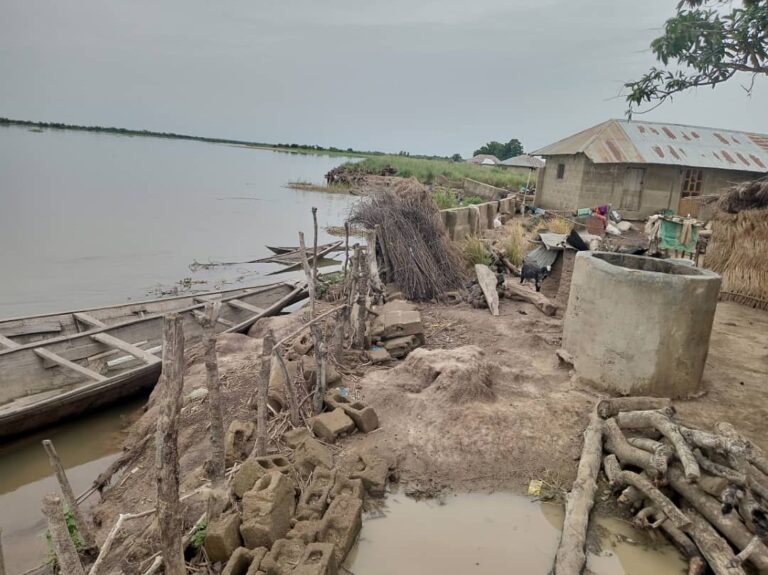
THERE’S an unknown quantity of contaminated Sprite, 50cl glass bottles, circulating across the country, according to the National Agency for Food and Drug Administration and Control (NAFDAC).
NAFDAC disclosed this in a statement released on Wednesday, June 28.
The Agency has urged distributors, retailers and consumers to be cautious and avoid consumption.
According to NAFDAC, the contaminated product was discovered after its post-marketing surveillance unit investigated consumer complaints.
NAFDAC said it had directed all its zonal directors nationwide to look out for the bottles.
“The affected batch of the unwholesome product has been sampled for laboratory analysis in the NAFDAC laboratory. The Agency has directed all zonal directors and state coordinators to carry out surveillance and mop up the implicated batch of the unwholesome product.
“Similarly, a comprehensive current Good Manufacturing Practice Inspection of the manufacturing site is to be carried out by the Agency; this is to find the root cause of the contamination and ensure compliance to marketing authorisation.”
The Agency further disclosed that the affected contaminated 50cl glass bottles came from the Nigerian Bottling Company Limited’s Abuja plant, with batch number AZ6 22:32.
Traders and consumers who have the contaminated drink in their possession have been instructed to submit the stock to the nearest NAFDAC office.
“NAFDAC implores distributors, retailers, and consumers to exercise caution and vigilance to avoid the consumption, sale, or distribution of the unwholesome product. The products’ authenticity and physical condition should be carefully checked.
“Anyone in possession of the above-mentioned batch of Sprite 50cl glass bottles is advised to submit stock to the nearest NAFDAC office. If you, or someone you know, have consumed this product or suffered any adverse reaction/event after consumption, you are advised to seek immediate medical advice from a qualified healthcare professional,” the Agency added.
THE Nigerian Mission in Libya has facilitated the release of 40 Nigerian irregular migrants from the Bir Al-Ghanam detention facility in Libya.
The charge D’Affaires En Titre of the Nigerian Mission in Libya, Kabiru Musa, disclosed this in a statement issued on Wednesday, June 29.
He said the inmates, mostly women, were released on Tuesday, June 28.
“On Tuesday, June 27, 2023, the mission, in its continuous consular assistance to Nigerians in Libya, secured the release of forty irregular migrants who were arrested for immigration offences and detained by Libyan immigration authorities for almost two months,” he said.
The charge D’Affaires En Titre of the Mission said 34 inmates in the group are women who are victims of trafficking gangs. The six others are men.
There have been many cases of trafficking of Nigerians, often involving women and children, to other African countries, according to the United Nations Children’s Fund (UNICEF).
The global non-profit said the situation is driven by poverty, conflict, discrimination and injustice in Nigeria.
Speaking on the latest incident, Musa said the women were lured from Nigeria to Libya by traffickers who used them for manual labour.
“Among the arrested Nigerians are 34 females and six males who were detained at Bir Al-Ghanam detention facility that is about 150 miles away from Tripoli, the capital city.
“It was discovered that most of them were lured into travelling to Libya for greener pasture by their would-be traffickers, but they ended up under exploitation and enforced labour.
“On arrival at the embassy, we received them and admonished them on the need to return home with a promise never to embark on such a deadly journey through the desert again.”
The envoy urged the inmates to provide information about their traffickers in Nigeria and Libya
He said the Nigerians released will continue to be catered for by the Mission until they are repatriated.
“I also encouraged them to feel at home and be willing to give information about their traffickers and agents in Nigeria and Libya so that they can be arrested and punished for their crimes against humanity.
“In the meantime, the Mission will continue to cater for their needs, including feeding, accommodation, clothing and medicals until they can be repatriated home through the International Organisation for Migration (IOM),” Musa said.
Thousands of Nigerians have fallen prey to sophisticated trafficking gangs, living and too often dying in harsh conditions far from home.
25,000 Nigerian women and girls are trapped in Mali
More than 25,000 trafficked Nigerian women and girls are currently trapped in Mali, according to the National Agency for the Prohibition of Trafficking in Persons (NAPTIP).
NAPTIP said its investigation into this “category of victims revealed that they were attracted to Malian men because they spend more money on women compared to Nigerian men”.
“The second major reason is that Malian men are proud of sleeping with women from Nigeria, the giant of Africa,” NAPTIP added.
A PRIVATE hospital in Lagos has reportedly refused to release the corpse of former Nigerian boxer Jeremiah ‘Jerry’ Okorodudu, who died on Wednesday, June 28.
He was 64.
Okorodudu died after battling foot ulcer and stroke.
Before his demise, there were reports that Okorodudu was not able to meet up with medical bills, which affected his treatment.
On Thursday, June 22, the ex-boxer’s wife, Atinuke, told The ICIR that Okorodudu was owing the hospital. She said the hospital demanded the immediate payment of N1 million medical bill, failing which the patient would be thrown out before weekend.
However, Atinuke did not disclose the name of the hospital, saying the proprietor had warned her not to give out the information.
Confirming Okorodudu’s death, a Nigerian sports journalist, Raymond Akparhuere of Eagle 7 Sports Radio, who is close to the ailing ex-boxer, told The ICIR, that the retired pugilist passed away on Wednesday afternoon.
“He died this afternoon, they could not pay the money for his medical bill,” he told The ICIR’s reporter on Wednesday.
Asked if he had heard from Atinuke, he said: “It is still fresh, I can’t call her.”
The ICIR sent a message to the late boxer’s wife to confirm his death but she has not responded as of the time of filing this report.
On a popular sports WhatsApp group, NSM, a source who pleaded anonymity also disclosed the death of the ex-boxer.
According to him, the hospital withheld the corpse of the deceased due to debt owed during his stay in the hospital.
“I just got this now! Good evening sir. Jeremiah is gone and they said we can’t take his body away because we haven’t paid the balance of the hospital,” he posted.
The boxer’s wife later confirmed the development in a interview with The PUNCH.
She said the hospital was not willing to release her husband’s corpse until an outstanding N600,000 medical bill is paid.
“He is dead now but we still need to pay N600,000 to get his body out of the hospital,” she told The PUNCH.
Okorodudu represented Nigeria at the Los Angeles 1984 Olympic Games, where he competed in the middleweight category.
He was a gold medallist at the Oluyole ’79 National Sports Festival in Ibadan.
His medical predicament began in 2020 with a boil that affected his mobility. He then had a successful surgery at Dans Hospital, Irawo, Ikorodu, Lagos.
But his health condition relapsed after he was diagnosed of foot ulcer and suffered a stroke.
THE World Bank and the International Monetary Fund (IMF) have lauded President Bola Tinubu’s decision to effect key economic reforms as “bold choices.”
The World Bank estimates that Nigeria will save N3.9 trillion in 2023, equivalent to 1.6 per cent of the country’s gross domestic product (GDP), following petrol subsidy removal and foreign exchange unification move.
The Tinubu administration is riding on two key reforms of foreign exchange unification and fuel subsidy removal to reset the economy.
“The recently undertaken fuel subsidy removal and foreign exchange reforms are historic. N3.9 trillion in savings in 2023 alone stops Nigeria from going over a fiscal cliff and sets the stage for a new, upward investment, growth, and development trajectory,” the chief economist at World Bank Nigeria, Alex Sienaert, said on Tuesday, June 27 in Abuja at the launch of the Nigeria Development Update for June 2023.
“Headline inflation is expected to rise from 18.8 per cent in 2022 to 25 per cent in 2023. However, by Q1 (first quarter) of 2024, the subsidy removal will start to have a disinflationary effect, meaning that it will alleviate inflationary pressures despite higher petrol prices,” the Update stated.
Speaking about GDP performance in the first quarter of 2023, Sienaert said that increased poverty, accelerated inflation, severe forex distortions characterised the period.
He noted that the naira redesign caused a cash crunch, intensifying the drag caused by external conditions and other domestic policies.
He added that in contrast to the global trend, Nigeria’s inflation surged in the first half of 2023 as policy rate increases were ineffective in controlling inflation because the overall policy stance stayed loose.
“The naira demonetisation reduced GDP growth in manufacturing and services and did not improve either inflation or the forex parallel market rate premium. Inflation pushed an estimated four million more Nigerians into poverty in the first five months of 2023 as average prices of locally produced staples increased faster than average inflation,” he said.
Sienaert said that Nigeria’s debt-to- GDP ratio is estimated to hit 46 per cent, saying the Federal government would be paying off subsidy arrears to the Nigerian National Petroleum Company Limited (NNPC), in addition to other debts that must be serviced.
He expected public external debts to increase, though on a stable path, following the recent reforms.
He added that if there were no buffers to cushion the impact of the reforms, over 7.1 million Nigerians would be further thrown into the poverty net on the back of the reforms and rising inflation.
He advised the Tinubu administration to leverage on the reforms to bend the economic development path upwards and also optimise its full potential, while highlighting the need to provide some timely, temporary and targeted assistance.
He said the subsidy removal was preventing further deterioration, adding that savings from the subsidy can also be used for other pro-poor service delivery such as health, education and infrastructure.
“The current coverage of social protection programmes is low at 19 per cent of the population. Nigeria will continue to spend less than $20 per person monthly,” he said.
The special adviser to President Tinubu on monetary policies, Wale Edun, said that other than the $800 million loan from the World Bank, there may be a need for additional loans to ensure sustainability of the bold reforms. He admitted that the Federal government did not have enough money to spend.
Wale disclosed there were discussions between the chief of staff to the president, Femi Gbajabiamila, and stakeholders including unions, on interventions that would ameliorate reform effects, especially for the poor and most vulnerable people.
“And that involves using the World Bank’s financial muscle to have a loan that will be used as direct cash transfers for the poor. There are other elements in the medium and long term that will be put in place to deal with the immediate spike in inflation and ameliorate the initial pain,” he said.
He explained that the direct cash transfers option was adopted because research had shown that it can actually reduce poverty.
Some other options considered included using compressed natural gas for cheaper energy source, mass transit options, housing and education. According to Edun, there is a fiscal dividend by which state governors are beneficiaries to the tune of about N4 trillion cash dividend.
“What has been identified right now and is being processed is one source of funding. However, like Oliver Twist, we are pointing out that it is not enough and there should be additional sources of funding, which the government is exploring.
“We have identified some sources of funding, but we are going after many more because having taken bold reforms, the rewards should come. The free markets, the financial markets and international investors around the world have rewarded both steps taken by Nigeria,” he added.
Speaking about loans from the Central Bank of Nigeria, Edun said there are regulations that stipulate how much the government can get from the financial regulator, which he promised the administration would abide by, while maintaining the central bank’s independence.
The Country Director for the World Bank for Nigeria, Shubham Chaudhuri, said the bold reforms required some form of buffers to cushion the impact of its consequences over the next few months to rebuild the trust of Nigerians.
“There’s also need to restore the confidence of investors, which will be challenging. The World Bank is here to provide whatever support in terms of ideas, potential solutions, and additional concessional financing,” he said.
Chaudhuri revealed that the Bank’s board approved the $800 million loan in December 2021 as there was a sense that Nigeria was ready to embark on bold reforms.
The Resident Representative of the International Monetary Fund (IMF) in Nigeria, Ari Aisen, considered reforms being done in the country as long overdue.
“It is natural that these policies have some side effects. We have seen inflation already high and it is likely to increase further. In our view, it will be difficult to tailor macroeconomic policies to reduce inflation and achieve durable macro stability. The central bank has a key role in stabilising the economy and it will require much tighter monetary position and stance than we currently see,” Aisen said.
He promised continued IMF support in terms of capacity building, policy advice, and financing, as needed.
Commenting on the option of direct cash transfers as a buffer, Alex Otti, the governor of Abia state, said there should be a sustainable way of ensuring that the targeted people are the ones who benefit from palliatives to avoid a repetition of what happened during the COVID-19 pandemic.
THE West African Examination Council (WAEC) and National Automotive Design and Development Council (NADDC) are some of the notable government agencies that will stop getting budgetary allocations from 2026,The ICIR can confirm.
The Federal government has decided to stop funding some agencies, many of them professional bodies and councils.
The Director-General of the Budget Office, Ben Akabueze, disclosed this in a circular, DG/BDT/GEN.CORR/2016/XII/3067 dated June 26, 2023, addressed to the Nigerian Council of Food, Science & Technology, and the Federal Ministry of Science, Technology & Innovation.
According to Akabueze, the move was in line with the decision of the Presidential Committee on Salaries (PCS).
He noted that the implementation would be effected from December 31, 2026.
The memo read, “I wish to inform you that the Presidential Committee on Salaries (PCS) at its 13th meeting approved the discontinuation of budgetary allocation to Professional Bodies/Councils effective 2026.
“The purpose of this letter, therefore, is to inform you that in compliance with the PCS’s directive, this Office will no longer make budgetary provisions to your institution with effect from the above-stated date, and you will be regarded as a self-funded organisation.”
The official letter from the Budget office of the Federation on the directive
The affected agencies include the Teachers Registration Council of Nigeria, the Computer Registration Council, the Librarians Registration Council, the National Education Research and Development Council, the Mass Literacy Council, the National Examination Council and the West African Examination Council (Local and International) under the Ministry of Education.
Under the Ministry of Health, the Nursing and Midwifery Council, the Pharmacist Council of Nigeria, the Medical and Dental Council of Nigeria (MDCN), and the Medical Laboratory Science Council of Nigeria will be affected.
Others include the Environmental Health Council of Nigeria, the Nigeria Press Council, the Council for the Regulation of Freight Forwarding in Nigeria, the Council of Nigerian Mining Engineers and Geosciences, the Veterinary Council of Nigeria, the Council for the Regulation of Engineering in Nigeria, the Survey Council of Nigeria, the Legal Aid Council, the Council of Legal Education, the National Automotive Design and Development Council, the Nigeria Export Promotion Council, the Financial Reporting Council of Nigeria, the Nigeria Investment Promotion Council, and the Nigerian Council of Food Science and Technology.
THE Nigerian Electricity Regulatory Commission (NERC) is yet to give official approval to a projected 40 per cent electricity tariff increment by the electricity distribution companies (DisCos).
Several news media had been awash with unconfirmed reports that the 11 DisCos would be effecting the increment from Saturday, July 1.
Although the NERC multi-year-tariff-order (MYTO) allows tariff review every six months while considering key variables like exchange rate, inflation and gas pricing, the regulator has not officially issued any directive on any tariff hike.
The projected tariff for July 2023 was expected to remove subsidy and increase the previously frozen tariff bands D and E, increasing the bands from N54.59/kilowatt to N62.16 for band D, and N48.37/kilowatt to N61.16 on average, with an average increase across the bands moving to N67/kilowatt.
Energy experts projected that inflation induced by the floating of the naira and fuel subsidy removal would spike the new average tariff to about N88/kilowatt for the energy sector to recover operational costs.
Over the past week, several media outlets had published the expected 40 per cent rise in tariff, following the MYTO order, in line with the half-yearly review.
Considering Nigeria’s fluctuating exchange rate occasioned by Federal government’s rates unification and double-digit inflation at 22.22 per cent, some analysts say it may be difficult not to hike the tariff in the next July 1 review window.
When contacted, a spokesperson of NERC, Mike Faloseyi, confirmed: “there is no official statement from NERC on the increment.”
The viral rumour about the tariff hike generated condemnations, with the organised private sector, particularly manufacturers, raising concerns on its effects on ease of doing business.
For instance, the Director-General of MAN, Segun Ajayi-Kadir, said in a statement that manufacturers spent, at least N144.5 billion on sourcing alternative energy in 2022, up from N77.22 billion in 2021, which translated to about 87 per cent increase in the cost of access to alternative energy sources by manufacturers within a year.
According to Ajayi-Kadir, electricity tariff had been increased in the last eight years by 186 per cent, which had posed a huge burden to manufacturing.
The statement noted that the fact that the government itself was owed N75 billion in unpaid electricity bills was indicative of how burdensome the cost of electricity had become.
The MAN chief mentioned that the absence of stable, effective and fairly priced electricity supply in Nigeria had been a long-standing challenge for manufacturers, adding that the worrisome development had compelled many manufacturing companies to supplement the unreliable electricity supply with alternative energy sources.
Amid the worries trailing the proposed tariff hike rumour, the Abuja Electricity Distribution Company (AEDC) yesterday, Monday, 26, announced to its franchise customers to disregard the communication circulating in the media regarding the review of the electricity tariff.
“Be informed that no approval for such increment has been received,” the AEDC stated in a statement signed by the management.
Similarly, the Ikeja DisCo has also called on its customers to disregard the tariff increment report.
Assuring its customers of no such plan, the DisCo described the report as “fake news.”
The statement on the Ikeja DisCo’s website read, “Public Notice: Avoid Fake News. Dear Esteemed Customer, if the information is not from, or is not on any of our social media handles, then it is not true.”
A professor of Finance and Capital Market at the Nasarawa State University, Uche Uwaleke, has called for “cautious optimism” on the Federal government’s new foreign exchange unification policy.
Uwaleke, who spoke in a monitored broadcast on Tuesday, June 27, on the Arise Television programme Business Morning, said the government must intensify efforts at improving the supply side of the dollar into the economy to prevent the policy from backfiring.
President Bola Ahmed Tinubu has made foreignexchange unification and fuel subsidy removal key policy directions of his administration, but Uwaleke has asserted certain conditions must be fulfilled to enable success.
“You have seen how the market has reacted to the forex situation already. A country must have sufficient reserves before pegging its currency to the dollar to sustain that. Another precondition is to diversify your export base.
“You can have a managed float system like Nigeria is doing, but transitioning will be done with caution. Our external reserves have dropped to about $1 billion since we commenced this forex unification project. This is why the Federal government and sub-nationals must intensify efforts to ensure increased supply and enable the convergence of the rates,” Uwaleke said.
He posited that the Central Bank of Nigeria (CBN) might need to increase interest rates above 18.5 per cent to enable expected capital inflows.
“Central banks all over the world face a dilemma, and that is why the interest rates need to go up to attract capital inflows from foreign investors. Egypt did a similar policy and have not recovered from it till today. The International Monetary Fund is even telling them that they have not done enough,” he said.
He stressed the importance of Nigeria diversifying its export base to attract more foreign exchange into the economy.
Notably, the exchange rate between the naira and the dollar at the investor and exporter window went for as high as N840/$1 on June 26, 2023, sending jitters to currency watchers.
This is the highest rate traded for the dollar on the official market since the I&E window was launched. The last highest intra-day high was N815/$1.
Nigeria had adopted a market-driven exchange rate policy two weeks ago, leading to an immediate depreciation of the exchange rate from about N471.67/$1 to an average of N765/$1.
In terms of turnover, the I&E window recorded a volume of $198.13 million on Monday, June 26, 2023. Total turnover since the revised I&E window was launched is about $1.4 billion.
THE World Bank has asserted that some policies of the Nigerian Federal government pushed more citizens into different categories of poverty.
The Bank cited, in its latest report in its Nigeria Development Update (NDU) 2023, the country’s inflation rate as one of the highest globally, a situation it said pushed an estimated four million people into poverty between January and May 2023.
The report was launched on Tuesday, June 27 in Abuja.
The ICIR had reported how CBN’s lending to the Federal government over the stipulated limits was negatively impacting inflation and consequently compounding poverty levels.
In the NDU 2023 document, the global lender warned that about 7.1 million poor Nigerians would become poorer if the Federal government failed to compensate or provide palliatives for them, following the removal of fuel subsidy.
According to World Bank data, 89.8 million Nigerians were poor as of the beginning of this year, but the number rose to 93.8 million with the additional four million that became poor between January and May this year.
The latest projection is that the number will further rise to 100.9 million if the government failed to compensate vulnerable citizens for fuel subsidy removal.
The report read in part, “Consumer price inflation has surged and is currently one of the highest globally, which is related to Nigeria’s fiscal imbalance and points to the urgency of reform efforts. Inflation in Nigeria has been high for many years due to structural factors, but it escalated in 2022 to the point where consumer prices increased at their fastest pace for 17 years.”
The report also noted that consumer price index further accelerated in 2023 through May by 22.4 per cent year-on-year. Inflation was also driven by the monetisation of the fiscal deficit by the CBN, multiple exchange rates and exchange rate depreciation in the parallel market, and intensified trade restrictions, exacerbated by the spike in global food and energy prices.
“The CBN implemented measures to control rising inflation, including raising the monetary policy rate by 700 basis points, but these proved ineffective, and monetary policy remained loose overall in the first half of the year. The loss of purchasing power from high inflation has increased poverty in the short-term, pushing an estimated four million Nigerians into poverty between January and May 2023.”
The National Bureau of Statistics (NBS) recently disclosed that inflation in the country rose to 22.41 per cent in May, which is the highest in about 19 years.
Also, the NBS, in its National Multidimensional Poverty Index (MPI) report, disclosed that 133 million Nigerians were multi-dimensionally poor.
The NBS said 63 per cent of Nigerians were poor due to a lack of access to health, education, living standards, employment, and security.
In its new report, the World Bank noted that the loss of purchasing power increased the poverty headcount rate by an estimated 2 percentage points, or the four million people.
The World Bank added that the number of poor people in rural areas increased by an estimated four per cent, while in urban settings, there was an estimated increase of 11 per cent.
The report read, “In the immediate term, the removal of the petrol subsidy has caused an increase in prices, adversely affecting poor and economically insecure Nigerian households. Petrol prices appear to have almost tripled following the subsidy removal.
“The poor and economically insecure households, who directly purchase and use petrol, as well as those that indirectly consume petrol, are adversely affected by the price increase. Among the poor and economically insecure, 38 per cent own a motorcycle and 23 per cent own a generator that depends on petrol. Many more use petrol- dependent transportation.
“The poor and economically insecure households will face an equivalent income loss of N5,700 per month, and, without compensation, an additional 7.1 million people will be pushed into poverty.”
The World Bank warned that many newly poor and economically insecure households would likely resort to consequential coping mechanisms, such as “not sending children to school, or not going to the health facilities to seek preventive healthcare, or cutting back on nutritious dietary choices.”
The Bank stressed the need for adequate compensation, noting that compensating transfers would be essential in helping to shield Nigerian households from the initial price impacts of the subsidy reform.
The lending institution further applauded the removal of the subsidy and foreign exchange management reforms, which it maintained were crucial measures in rebuilding fiscal space and restore macroeconomic stability.
One year after flooding affected communities in Niger state, The ICIR’s Mustapha USMAN visited several local governments to examine the level of government preparedness to deal with potential flooding and mitigate reoccurrence.
In Kusogi, a community in Mokwa LGA, Niger state, the memory of the devastating floods that forced residents to abandon their homes still haunts them as many lives were lost, farmlands were damaged, and properties ruined. Despite this unfortunate mishap, the government’s response has been lacking, with no flood prevention measures or control projects initiated in the village.
As of October 2022, residents of this community, along with their neighbours in surrounding towns, were forced to abandon their homes due to the onslaught of heavy flooding.
Before seeking refuge in an official Internally displaced persons (IDP) camp and makeshift huts, inhabitants of Kusogi squatted in a few houses in large numbers. However, as the flooding became more severe, overburdening even the houses, they gave up and had to flee.
Situated in a riverine area, the community had experienced periodic flooding, but this was one of the worst. While it appears that there may be a similar occurrence this year due to the forecast by the Nigeria Meteorological Agency (NiMET), survivors in this community have returned to their homes; this time, they vowed not to relocate even if there is a repeat of last year.
Some of the reasons cited are hunger, government neglect and lack of basic amenities in their camps.
The ICIR investigation shows that should the forecast become a reality, the community is at risk of losing lives and property as no flood preventive measures and control have been launched in the village – either by the government or the residents.
Forty-year-old Yahaya Mohammed who lives in Kusogi was one of the victims of 2022 flooding incident as he lost his property to the devastating force of the flood. Photo: The ICIR/May 2023.
Forty-year-old Yahaya Mohammed, an inhabitant of Kusogi, explained that flood cut off roads to adjoining villages, and they resorted to using canoes for evacuation. The canoes could hardly take up to 20 residents each.
He said, “It has been eight years now that the government intervened in our plight”, adding that the Hydro Power Producing Area Development Commission (HYPPADEC)visited his village and promised to help the residents in the area with relief materials and fertilisers but failed to deliver.
Kusogi was among the major areas affected by flood in 2022 as scores of houses, thousands of hectares of farmlands, infrastructures and roads were flooded. Beyond the infrastructural damages, many people were reported dead, while thousands were displaced.
The flooding across the country affected 35 of the 36 states and FCT, which Niger state is among. In Niger state, about 35,629 persons were displaced, over 37,000 hectares of land were washed away, and 12 died.
Ketso
Ketso one of the most affected but no visible proactive measures
Ketso village. Ketso is located in the shore of River Niger, thus prone to flooding every year. Photo: The ICIR/May 2023.
The absence of effective flood control measures, infrastructure improvements, and proactive disaster management has left residents of Ketso, a village in Mokwa, exposed and vulnerable to future climate disasters.
According to reports and residents who spoke to The ICIR, this village was one of the most affected areas by flooding last year. The entire area was submerged by water, leading to the loss of lives and property.
Another house on the shore of the River Niger in Ketso village. Photo: The ICIR/May 2023
The village is close to multiple waterways, making it susceptible to future floods. Aside from that, the village hasn’t recovered from last year’s loss as schools, houses, and primary health care in that area remained closed, thus causing distress to the residents.
The ICIR investigation revealed that there’s no single project launched in the villages either by the government or the community despite the severity of last year’s flood and the urgent need for resettlement.
The Back view of some of the houses previously affected by flood in 2022. Photo: The ICIR/May 2023
When The ICIR visited Ketso, the lands allocated to the village for relocation purposes, as directed by the villagers, remained undeveloped, lacking both housing and necessary facilities. The villagers blamed the lack of development on the paucity of funds from the government.
Although HYPPADEC public relation officer Nura Tanko blamed the situation on the area’s inaccessibility, he stated that the initial contractor who was awarded the project left the site and abandoned the project.
However, he noted that the HYPPADEC didn’t plan to execute drainage projects in these communities as they planned to get them housing in upper land.
While speaking with The ICIR in May, he said, “We have already awarded this project about three months ago with the intention that before the rain starts, the project will be completed, but the contractors found it very difficult to assess the areas because of the nature of the place. He abandoned the site, but we mobilised another contractor, who has now resumed work in Muregi and Ketso.”
He also noted that villagers mistook another place for the project’s construction site as the housing scheme was already launched in a place known as the new Ketso and Muregi.
Idris Mohammed, a 37-year-old farmer in Ketso, while explaining the plights and hurdles they went through during the flooding incident, said “When it submerged houses, we deserted village to upland. But when we returned home, our buildings were completely destroyed.”
Speaking further, Idris explained that many farmers took loans to renovate their houses and start afresh.
While appealing to the government, he said, “If the government can not prevent flooding in this community, the hectare upland can be built for us. That is the help that we are seeking from them. It will be the biggest intervention from the government.”
A 25-year-old farmer and the Secretary to the village head, said they have experienced annual flooding for a decade, “When it floods, more than 30 people live in a single room.”
According to him, in a few months to come, no adjoining villages can cross to this village. The ICIR can also confirm that the only bridge that joins the community to other villages and the outside world has been destroyed by flood. One would need to journey on a canoe to get basic amenities.
“Before the election, I took the village head to Muregi where HYYPADEC flagged up”, Usman noted, adding that HYYPADEC promised to build 50 rooms, but they are yet to hear from them.
Unlike residents of Kusogi, who have remained steadfast about not relocating should flooding happen, Ketso inhabitants claimed that by September, they would temporarily seek refuge elsewhere.
Zhiwu and Muregi
Two other villages affected by the flood that The ICIR assessed and observed that there are no flood and erosion control projects are Zhiwu and Muregi.
Like Kusogi and Ketso, these two villages were severely affected by the flood, leading to the loss of lives, farm products and houses. Residents of these communities who were also displaced have now returned to their homes amidst rising fear of future occurrences.
Mariga
Locals deploy self-help to mitigate flooding in Mariga
The view of the abandoned drainage project in Mariga. A project now being completed and repaired by residents of the community. Photo: The ICIR/May 2023.
After suffering extensive damage from last year’s floods, including the horrifying sight of a dead body floating in waterlogged graveyards, residents in Mariga resorted to self-help to repair the abandoned drainage system that has left residents vulnerable to the devastating impact of flooding.
One major concern is the poor state of the road linking Mariga Market to Gulbin Gada, which experienced severe flooding on Monday, May 22, a day before this reporter visited the location. Due to a blockage along its path, water inundated houses and caused widespread damage.
The ICIR gathered that the drainage construction project in the area, initiated by the government, has been left unfinished, leaving the waterways obstructed. The lack of proper drainage systems has further compounded the flooding problem.
Frustrated by the government’s negligence, the community took it upon themselves to repair and complete the culvert.
The yet to be completed drainage project in Mariga. A project now being completed and repaired by residents of the community. Photo: The ICIR/May 2023.
The flooding affected 1500 graves last year. Reports stated that over 1000 decomposed bodies were reburied after the incident, noting that mining activity in the region also contributed to the unfortunate event.
Shafi’u Nata, a 23-year-old residing in Mariga, expressed his concerns about the dire situation. “To tell you the truth, last year’s flood has inflicted damages to our graveyard up to the extent that you can see a dead body floating on water. People have to join forces to relocate graves to safer places because of the water that is flowing.”
“We are anticipating heavy rainfall and the likelihood of flooding this year,” Nata warned. “Even yesterday’s rain experienced blockages in its passage, leading to the forceful breakage of some portions of the road. If not repaired, we fear this project [abandoned construction] may be damaged from the ground.”
“As you see, the water that is coming out from the community has no passageway,” Nata pointed out. “Here, we organised a self-help project to repair a damaged culvert by the caterpillar when they were carrying out the work. We have now repaired it ourselves.
Dayyabu Kabiru Maga, 30 years, another resident of Mariga said, “As a community whose majority of its members are poor, we can’t do anything because it has passed our capacity. Look at the size of the graveyard, a poor man can not do anything to repair it, and we have severally appealed for help, but nothing came. Even the Emir had come, we had one of our townsmen as Commissioner, he came and visited the place, we had state assembly members, they all came in fact their dead parents and relatives are buried here, but they did nothing”.
“We are afraid now if another rain comes and floods occur; we don’t have anywhere to go. All that we can do is to turn to God. Look at this deep hole here (Pointing directly to the abandoned culver) that they started work and abandoned it. We wish they did not even start it because it has no significance. They have blocked waterways. Even the rain that fell the day before yesterday has filled up the place because they have destroyed the mini bridge here.”
Shiroro
Inadequate response in Shiroro LGA
Gwada IDP, where displaced persons by flood camped last year. Photo: The ICIR/June 2023
The flooding incident in Shiroro LGA was not different from other LGA, as about five communities bordering Zungeru hydroelectric power station were affected during the last year’s rainy season. The communities – Gurumana, Palei, Nmachi, Npani, Zangoro, Masuku, and Magani – according to a report, were affected due to the ongoing construction of the power station.
The then Niger state governor also confirmed the incident, noting that the FG made provisions for the affected communities to move to higher grounds. However, villagers claimed neglect in the camp and are returning to their flood-prone communities.
The ICIR gathered that the Federal Government commenced the Zungeru Hydro Electric Power Project in 2013 — an infrastructure that has now caused the displacement of hundreds of residents who were living on the shore of the dam.
Zungeru hydroelectric power plant. Pc: Niger state govt.
The project, which commenced during former President Goodluck Jonathan’s administration at a contract rate of N162.9 billion, was awarded to Messrs SYNOHYDRO Corporation/China Nation Electrical Engineering Corporation Consortium for N162.9 billion.
During the previous year’s rainy season, many villagers from the affected areas were forced to evacuate their homes and seek shelter at the Central Primary School Gwada, which served as a camp for displaced persons.
The camp, which housed people displaced by banditry, was now faced with people displaced by flooding. The then governor of the state, Sani Bello, had said: “We have almost 4,000 IDPs displaced by banditry and the construction of Zungeru dam; some communities have been flooded and are underwater and have left, while they have not been paid compensation.”
“The situation is serious; we are concerned that epidemics can spread. We are making efforts with security agencies as they have been up to the task and have dealt decisively with the bandits,” he said.
During the peak of the flooding in September-October, some villagers resorted to building makeshift shelters, as the Gwada camp was unable to accommodate more people.
Situation of the Gwada camp when The ICIR visited.
However, when The ICIR visited the camp on May 22, 2023, the camp appeared sparsely populated. The camp chairman Lado Pada explained that those displaced by the flood had left. “Now they left because they are looking for where they can get food and water to drink. But we that left Kore are in the IDPs camp, and we are appealing for assistance from wealthy individuals and the government.”
Rafin Gora
In Kotagora, projects are half done
One of the projects constructed to mitigate the effect of flooding
To assess the government’s proactiveness in preventing flooding, The ICIR visited Rafin Gora, a community affected by flood in Kontagora.
Findings revealed that to mitigate the effect of flooding, Niger state government initiated a project in the area late last year, which lasted to early this year. There were constructions of a substantial drainage system, waterways and culverts in one of the places that leads to the village.
Culvert built to mitigate flooding
The ICIR was unable to ascertain the contractor’s identity, as there were no signboards or project offices.
There are two major routes through which water enters the community, and the government has taken measures to address one of these routes.
However, the other waterway remains a significant concern for the residents, as previous flood incidents have already widened it.
Other waterway yet to be addressed by the state government
The ICIR gathered that Niger State Executive Council in 2020 approved the continuation of the construction of drainage channels in the Minna metropolis and the extension of a similar project in Kontagora to avoid flooding.
The then commissioner for Works and Infrastructural Development, Ibrahim Mohammed Panti, explained that the Minna metropolis drainage construction work was paused due to some challenges beyond the control of the contractor which was awarded last year at the cost of over N1.4billion, adding that a similar project in Kontagora has been extended with the additional cost of N635.3million.
Speaking on the intervention received from the government, a 40-year-old Rafin Gora resident Bilyaminu Ango explained that although both the state and local government have attended to some of their needs, he still wished they could do more.
He said, “Government did their best, especially our state government and local government and also the elected governor sent his people to check the place last month. But I still appeal to the government to help us and execute another project in our community, especially the remaining waterway. Because they only contracted one area, and we want them to help us with more culverts in the village.”
Another drainage system in Rafin Gora
Beyond losing houses, property and farm products, Yunusa Kabiru, 49 years old, lost two children and one sibling to the flood last year when the flood hit the community.
When asked if he is planning to relocate this year, he said, “We are going to relocate because even now we are preparing to relocate. Yes, we have intervention from the government; even the governor visited us more than two times and helped us. They helped us with a culvert and a drainage system at the back of our village.”
Flood prevention in Niger state and FG’s Budget
As the flood caused many untold effects last year, the Federal Government under the administration of Muhammadu Buhari took a step towards preventing the flood by budgeting a sum of N43.7 billion out of the approved N49.7 billion for the capital expenditure of the federal ministry of environment.
The FG reported that the amount is a 141.6 per cent increase on the sum of N18.1 billion budgeted for erosion and flood control in 2022. In the budget, the ministry is allocated N86.4 billion for personnel, overhead and capital development fund for the entire 2023.
Also, the National Assembly directed a committee to introduce N200 billion in the budget for ecological funding under the Presidency to prepare and plan further ahead for recurrent floods. This development is to prevent flooding nationwide and prepare a lasting solution to the climate problem.
Similarly, the Niger state earmarked 2.4 billion towards erosion and flood control in their 2023 budget. The projects as nominated by Niger government are the provision of 2no Hilux Vans and 30no motorcycles for Forest Protection Enforcement (statewide) at a contract amount of (N90,000,000.00) distillation of mega drainages and Water-ways in Minna, Suleja, Bida, Kontagora and New Bussa at a contract amount of N20,000,000.00 in Borgu and Agro-climatic resilience activities for semi ARID landscape project (statewide) at N2,327,480,000.00.
Meanwhile, efforts to check other flood-related projects using the Niger state Open Contracting Portal proved abortive as the state failed to upload all the 2023 projects under the Ministry of Environment and Forestry.
The ICIR further checked whether the state government procured flood-related projects in 2021 and 2020 under the same ministry but got no result. Checks by the Ministry of Water Resources and Development and Ministry of Local Government, Community and Development Chieftaincy Affairs to see if the government takes an approach from the Local Government position also showed no result.
Ecological fund from FG and alleged corruption
Dataphyte report shows that 36 states received a total of N64.417 billion as ecological funds between 2021 and 2022. The report noted that the Niger state government got N1,395,465,315 as the ecological fund to mitigate the effects of climate change within that period.
The Ecological Fund is an intervention fund by the Federal Government of Nigeria to address the multifarious ecological challenges in various communities across the Country.
Data for the National Bureau of Statistics shows that Niger state’s ecological fund in December 2022 was N71.8 million. The amount was part of the N1.44trn disbursed by the Federation Account Allocation Committee (FAAC) to the three tiers of government in January 2023 from the total revenue generated in December 2022.
However, several reports indicatedcorruption and mismanagement of money in using the fund. Earlier in 2023, the former president challenged the state governors to account for all the allocated ecological funds in the past years.
Affected residents need to exercise patience – HYPPADEC
The HYPPADEC spokesperson Nura Tanko, while responding to some of the findings by The ICIR, said the commission is doing its best and needs to prioritise the most hit communities.
“As you know, this problem has accumulated for over five decades, and these communities are dealing with socioeconomic and ecological challenges. Addressing it to the satisfaction of the people going by their expectations is not a day or two days job. We are just two years old,” he said.
“Resources also matter in addressing this issue. I can tell you we have actually done our best, and where people are not satisfied with what we are doing, all they need to do is to exercise patience. We can’t rise up in one day and address all the issues.”
“We are sure that we experienced last year no matter the amount of torrent flood, we aren’t going to experience it again. We have re-channelled the water, and we constructed dykes to prevent it from cutting off the road.”
When asked about Ketso and Muregi, he said, “For Ketso and Muregi communities, our plan is not to provide ecological intervention within the existing community, our plan is to relocate these people to where the state government has provided for their relocation and as I speak with you, construction of houses for their relocation has started in a place identified by the state government where the government constructed a clinic and palace for the district heads.”
“For Mariga, as we address these things in batches, it will get to them. We can’t address all this problem overnight because of resources and the number of communities we operate in the six states.”
Speaking on the Hydro Electric Dam project in Shiroro LGA, Tanko said communities in that area have enjoyed the commission’s intervention, which is in contrast to what The ICIR reporter gathered on the field.
“For the Hydroelectric dam, the communities I can tell you about have been enjoying our intervention because we consider them as HYPPADEC communities. Controlling ecological problems is the most expensive project. Flooding is a problem, and it comes with another problem. Whenever there’s flooding, people usually suffer access to potable water and construct boreholes for them. We are also planning to move them.”
When asked about the idea of dredging River Niger, he explained that the idea is not an easy task, and the Federal government cannot take the challenge currently.
The managing director of HYPPADEC, Abubakar Yelwa, had earlier noted that to dredge River Niger, River Benue, and River Kaduna, the Federal Government will have to spend over $20 billion.
The HYPPADEC boss, unfortunately, stated that the process will be difficult for the federal government to handle without intervention from international donor agencies.”
Need for urgent policy coherence in Nigeria
The team lead of GIFSEP, who is also the Africa Regional Coordinator Citizens Climate International, David Mike Terungwa, said there is no policy coherence on flood management in Nigeria.
“There is no one single policy on flood management in Nigeria. Different agencies of Government work on flood and flood-related issues. The Nigeria Hydrological Services Agency is saddled with the responsibility of providing the flood outlook of the country. The federal and State Governments have the National Emergency Management Agency and the State Emergency Management Agency, respectively. These agencies have more to do with disaster response than prevention. There is, therefore, an urgent need for a policy coherence in respect to flood management and control policy. Programmes and plans integration exist usually between the three tiers of government federal-to-states and states-to-local governments.”.
He also stressed that lack of land use planning and enforcement of sustainable land use and urban planning laws affect flood control.
He said, “There is also the lack of early warning systems and downscaling of flood risk and seasonal rainfall predictions. The annual predictions made by NIMET are not downscaled enough to the vulnerable communities. There is also the lack of proper awareness and public sanitisation on climate change and its associated risk such as floods.”
He added that “effective Cooperation and collaboration among relevant Government agencies is key to solving this problem. There is an urgent need to form an intergovernmental agency both at the federal and the state levels that will work beyond the provision of relief materials alone but focus on prevention. This is a combination of awareness, relocation of people from flood plains etc. It is very important to involve stakeholders from the community; the state and local governments have a huge role to play.”
UNITED States (US) health officials have issued a warning following the identification of five cases of malaria in Florida and Texas among individuals who had not recently travelled overseas.
This has raised concerns about the possibility of local transmission of the life-threatening disease within the country.
Authorities in Florida have confirmed four locally transmitted malaria cases in Sarasota County since May, with an additional case identified in Cameron County, Texas.
These cases mark the first instances of local transmission within the United States since 2003.
The Centers for Disease Control and Prevention (CDC) has assured the public that all patients have received treatment and are currently recovering.
The CDC emphasised that there was currently no evidence to suggest a connection between the cases in Florida and Texas.
Nevertheless, investigations have revealed that at least two individuals, one in Florida and another in Texas, had spent prolonged periods outdoors, raising questions about potential exposure to infected mosquitoes.
The CDC also cited an increased risk of “imported malaria cases” as the summer travel season unfolds.
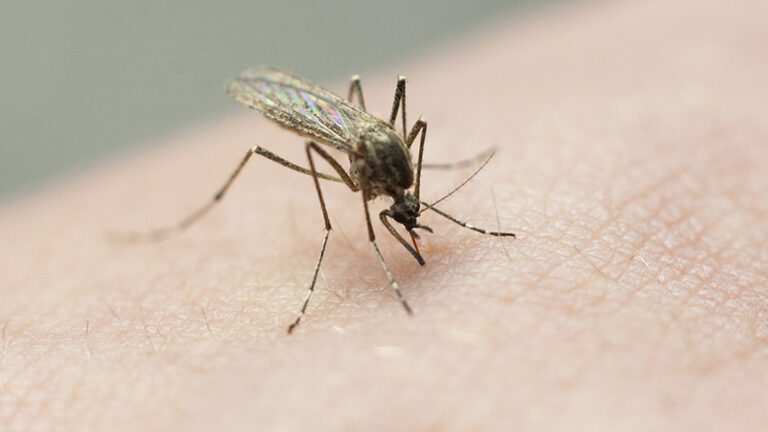
Malaria, a curable yet dangerous illness, is primarily transmitted to humans through mosquito bites from infected mosquitoes carrying the malaria parasite.
However, it can also be transmitted through infected blood during transfusions, organ transplants, or from a pregnant mother to her fetus.
According to the CDC, all five cases involve the P. vivax malaria strain and although this strain is less likely to cause severe or fatal infections compared to other strains, it can lead to relapsing malaria episodes as the parasites hide in the liver and reemerge months or even years later.
An associate professor of pathology and international health at Case Western Reserve University Brian Grimberg, stressed that it was not a time for panic but rather for heightened awareness, as malaria is often not a concern for Americans unless they travel abroad.
While malaria is most prevalent in warm countries, particularly those with tropical climates, the disease was once a significant public health issue in the United States before it was officially eradicated in 1970 after being declared eliminated in 1951.
Globally, malaria continues to be a serious disease, with over 240 million infections occurring each year, predominantly in African countries.
The recent cases serve as a stark reminder of the importance of finding a cure or vaccine for malaria which will not only have significant implications for global health, but would also bolster disease control measures within the US.
In an effort to mitigate the risk of malaria and other mosquito-borne diseases, the CDC has urged the public to apply insect repellents, use screens on windows and doors, and regularly drain items that hold water.
Travellers heading overseas are also advised to pack bug spray and consider staying in accommodations with air conditioning, window and door screens, or using mosquito nets for protection.
Furthermore, the CDC has recommended that hospitals maintain access to malaria tests and stock up on treatments, while public health officials should develop rapid identification, prevention, and control plans to effectively respond to any potential outbreaks.