THE National Drug Law Enforcement Agency (NDLEA) has disclosed that it arrested no fewer than 31,675 drug offenders, while 5,147 persons had been prosecuted and convicted in the past 29 months for drug-related offences.
The chairman/chief executive officer of the NDLEA, Mohamed Buba Marwa, also revealed that over 6.3 million kilogrammes of assorted drugs were seized within the period.
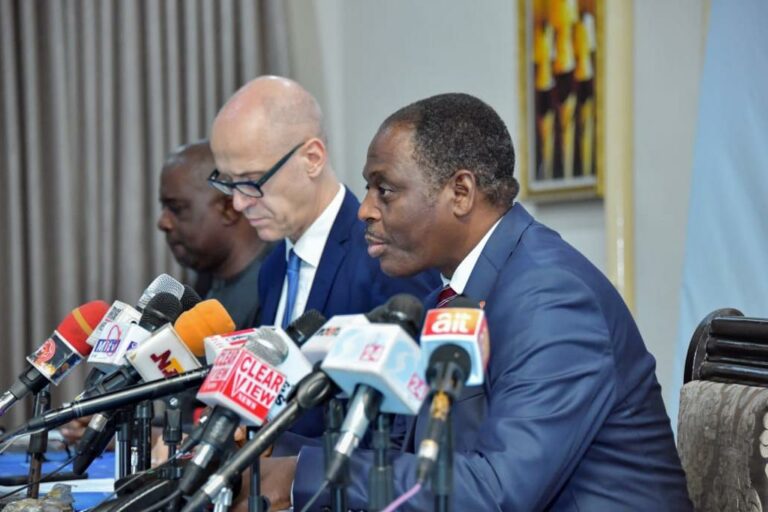
Marwa disclosed this in Abuja on Monday, June 19, at a joint press briefing with the Country Representative of the United Nations Office on Drugs and Crime (UNODC), Oliver Stolpe, to flag off the week-long activities marking the 2023 World Drug Day.
The annual event was “to mobilise resources, align policies, and inspire organisations, communities, and nations to work in a particular direction to effectively tackle the challenges of illicit substances in society.”
According to the NDLEA boss, “This year’s theme, ‘People First: Stop Stigma and Discrimination, Strengthen Prevention,’ is in furtherance of the whole-of-society approach to taming the drug scourge.”
He said the theme was especially pertinent to the Nigerian situation at the moment, adding that in the past two and half years, the NDLEA had strengthened its law enforcement efforts to cut down on the supply of drugs in society.
“In 29 months, we have arrested 31,675 drug offenders, including 35 barons; successfully prosecuted and got convicted 5,147 of them, with over 11,000 other cases still pending in court, while 23,725 drug users had been counselled and rehabilitated, majority of them through brief interventions.
At least, 6.3 million kilogrammes of various illicit substances had been recovered in response to our efforts to sweep up drugs and shut down the distribution channels. We have destroyed 852,142 hectares of cannabis farms and dismantled three clandestine methamphetamine laboratories. I can assure you that even as we speak, NDLEA agents are busy with interdiction activities somewhere.”
Marwa, who was represented at the event by the agency’s Secretary, Shadrach Haruna, added, “Another crucial component is drug demand reduction, which operationally means prevention, treatment and rehabilitation. It should go without saying that we must strike a balance between these two crucial components if we are to achieve our desired utopia of a drug-free society.”
According to him, the enforcement agency had made significant investments in the prevention, treatment and rehabilitation of drug addicts over the last two years.
“The doors of our rehabilitation facilities are open at all times. In the last 29 months, we have acquired a few more rehab centres, given to us as donations, while we have also obtained the Federal government’s approval for the construction of regional model rehabs. More private treatment facilities are also cooperating with NDLEA.
“To cap it all, NDLEA went above and beyond to invest in a toll-free, round-the-clock call centre that provides teletherapy. In summary, we have prioritised treatment, while our WADA advocacy initiative has taken a life of its own with our Commands, Formations and partnering civil society organisations taking sensitisation lectures and campaigns to schools, communities, worship places and many more across the country everyday.”
He further stated that the NDLEA produced television commercials and radio jingles in different languages on various platforms to sensitise the people and equip them with facts about drugs to enable them take the right decisions against substance abuse.
RESEARCHERS have created synthetic human embryos using stem cells, according to mediareports. Remarkably, these embryos have reportedly been created from embryonic stem cells, meaning they do not require sperm and ova.
This development, widely described as a breakthrough that could help scientists learn more about human development and genetic disorders, was revealed this week in Boston at the annual meeting of the International Society for Stem Cell Research.
The research, announced by Professor Magdalena Żernicka-Goetz of the University of Cambridge and the California Institute of Technology, has not yet been published in a peer-reviewed journal. But Żernicka-Goetz told the meeting these human-like embryos had been made by reprogramming human embryonic stem cells.
So what does all this mean for science, and what ethical issues does it present?
What did the researchers do?
Each of these synthetic human embryos is created from a single stem cell. Żernicka-Goetz described how her team grew the synthetic embryos to a stage of development called “gastriculation”, which is a stage just beyond the 14-day developmental mark for a human embryo.
The current legal limit to how long a human embryo can be permitted to develop in a lab is 14 days.
This is approximately the length of time from fertilisation of the egg to implantation in the uterine wall, if conception has taken place within a human womb.
So, synthetic embryos have – for the first time – been allowed to develop past this point.
Initially, the 14-day rule was both a moral and a practical limit; scientists didn’t have the technology to keep embryos alive longer than this.
But the International Society for Stem Cell Research’s 2016 guidelines also suggested the 14-day limit was morally appropriate, as past this point the cells within the embryo begin to differentiate to form important body systems like the gut, brain and lungs.
The International Society for Stem Cell Research’s updated 2021 guidelines now say we should reconsider the 14-day rule, via public debate, to perhaps allow research on embryos later into development in some cases.
From what has been reported about Żernicka-Goetz and her team’s research, the creation of synthetic human-like embryos is a significant advance.
It’s further remarkable they seem to behave, in terms of development, like a human embryo would in some ways.
Żernicka-Goetz reported the human-like embryos began to develop placenta and yolk sacs, but not a beating heart or the beginning of a brain.
Despite the role of the placenta in pregnancy, and its importance to the health of mother and fetus, we know surprisingly little about this vital but temporary organ.
If it was possible to observe placenta in a lab via these synthetic embryos, this could yield valuable knowledge.
Moral quandaries
However, just as there are real possibilities for gaining knowledge from synthetic human-like embryos, there are also real moral quandaries.
One of these quandaries arises around whether their creation really gets us away from the use of human embryos.
Robin Lovell-Badge, the head of stem cell biology and developmental genetics at the Francis Crick Institute in London UK, reportedly said that if these human-like embryos can really model human development in the early stages of pregnancy, then we will not have to use human embryos for research.
At the moment, it is unclear if this is the case for two reasons.
First, the embryos were created from human embryonic stem cells, so it seems they do still need human embryos for their creation. Perhaps more light will be shed on this when Żernicka-Goetz’s research is published.
Second, there are questions about the extent to which these human-like embryos really can model human development.
At the moment, animal models of similar synthetic embryos suggest they are not capable of developing into a full living being. Studies in mice and monkeys have so far shown that the synthetic embryos die a short while after being implanted into a female’s womb, which means they are not viable.
There could be significant limits to the usefulness of these synthetic embryos for learning about human developmental issues, if human-like synthetic embryos aren’t capable of developing into full human babies and do not form important body structures like a beating heart and a brain.
One of the reasons researchers want to use these embryos is for research into miscarriage and developmental anomalies. This is very important, but will these synthetic embryos be “close enough” to real human embryos to reveal useful answers?
Scientists may still rely on the use of human embryos if we do need human embryos for the creation of these models, or there are research questions that these synthetic embryos can’t address.
Is it morally permissable?
This leaves us with the important moral question about whether it is permissible to use human embryos for research.
Further, if the human-like synthetic embryos are capable of developing into full living beings, then we must consider whether it is morally permissible to create them just for research.
It could be that they are not currently capable of developing much further than the 14-day mark.
Scientists might decide that this is a problem that needs to be fixed, partly for practical reasons about the limits to their usefulness. Scientists might then fix these synthetic embryos so that they could continue to develop. However, this would create a huge moral quandary.
We should think carefully about whether it is ethical to create living human-like beings only to conduct research on them.
PRESIDENT Bola Tinubu and his party, the All Progressives Congress (APC), faced a setback in their attempt to halt the Allied Peoples Movement (APM) from challenging his qualification for the February 25 presidential election.
At its resumed sitting on Monday, June 19, the Presidential Election Petition Court (PEPC) rejected the effort of Tinubu, led by his counsel Wole Olanipekun, to dismiss the APM’s petition based on a Supreme Court judgment delivered on May 26.
Tinubu argued that the Supreme Court had already addressed the sole issue raised in the APM’s petition in a separate case filed by the Peoples Democratic Party (PDP). He urged the court to apply the spirit and content of the Supreme Court judgment to dismiss the hearing of the APM’s petition.
However, the court disagreed with Tinubu’s stance and emphasised the importance of a fair hearing, stating that the party should not be excluded.
The justice, Haruna Simon Tsammani-led tribunal, advised the President to present his objections to the petition during the final stages of the court proceedings rather than attempting to dismiss it at its early stage.
The APC, represented by counsel Charles Edosomwen, also raised similar objections to the petition on the same grounds, but the PEPC rejected its arguments as well.
Before the court proceedings, the APM’s lawyer, Gideon Ijiagbonya, informed the court that they had received the Supreme Court judgment that Tinubu’s counsel sought to use to terminate the petition.
Ijiagbonya said that after assessing the judgment, the party concluded that there was merit to the petition and requested a hearing.
He requested an adjournment until June 26 to obtain a crucial document from the Independent National Electoral Commission (INEC) to support their case.
In response, the tribunal denied the request for a week-long adjournment and scheduled the hearing for Wednesday, June 21.
INEC had declared Tinubu as the winner of the February 25 presidential election.
According to INEC, Tinubu secured 8,794,726 votes, the Peoples Democratic Party (PDP) candidate, Atiku Abubakar, had 6,984,520, while the Labour Party (PDP) presidential candidate, Peter Obi, polled 6,101,533.
However, several parties, including the APM, are at the tribunal to challenge Tinubu’s victory and eligibility at the poll. Specifically, the party has asked the tribunal to nullify Tinubu’s election for failing to comply with the 2022 Electoral Act.
It argued that the withdrawal of Ibrahim Masari as the initially nominated Vice-Presidential candidate of the APC invalidated Tinubu’s candidacy under Section 131(c) and 142 of the 1999 Constitution, as amended.
The party contended that there was a three-week gap between Masari’s expressed intention to withdraw, the actual withdrawal of his nomination, and Tinubu’s replacement of him with Shettima.
The APM further claimed that Tinubu’s nomination had expired when he nominated Shettima as Masari’s replacement.
THE Central Bank of Nigeria (CBN) has now permitted domiciliary account holders to utilise cash deposits not exceeding $10,000 per day or its equivalent telegraphic transfer.
The CBN said cash deposits into domiciliary accounts would, consequently, not be restricted and customers “shall have unfettered and unrestricted access to funds in their accounts.”
The apex bank confirmed this in a statement it issued on Sunday, June I8, after a meeting with the Bankers’ Committee.
The meeting was meant to provide further guidance to commercial banks on the recent operational changes to the foreign exchange market, and to discuss the implementation and implications of the changes for the banking public.
Analysts believe this development is intended to allow the domiciliary account to fund the banks that will, in turn, fund the foreign exchange market.
“This development will open up doors for huge remittances in the domiciliary accounts and other forms of remittances, which could rise to $20 billion,” an economist, Kalu Aja said.
Aja stressed that the unification of foreign exchange rates would help to determine the actual value of Nigeria’s currency and attract more investments inflow into Nigeria’s foreign exchange market.
The apex bank itself explained it designed the policy reforms to promote transparency, liquidity, and price discovery in the foreign exchange (forex) market in order to improve forex supply, discourage speculation, enhance customer confidence, and ensure overall stability in the forex market.
Some of the key points of the guidance are as follows:
(a) All visible and invisible transactions (medicals, school fees, basic travel allowance/personal travel allowance, airline, and other remittances) are eligible for the Investors’ and Exporters’ (I & E) window.
(b) Ordinary domiciliary account holders shall have unfettered and unrestricted access to funds in their accounts.
(c) Domiciliary account holders are permitted to utilize cash deposits not exceeding $10,000 per day or its equivalent via telegraphic transfer, among others.
The CBN had earlier announced the dollar rate unification policy aimed at stopping the different rates obtainable before now. The apex bank is expected to introduce more changes in the coming months.
Without help from the government, many Nigerians in communities in states in Northwest Nigeria are succumbing to the rule of criminal gangs known as bandits, who not only impose levies and other dues on them but also force them to work for free in farmlands. The residents acquiesce in exchange for peace, which still eludes them. ABIODUN JAMIU, who visited some of the affected communities in the Northwest, tells the unbelievable harrowing tales of these helpless and hapless Nigerians.
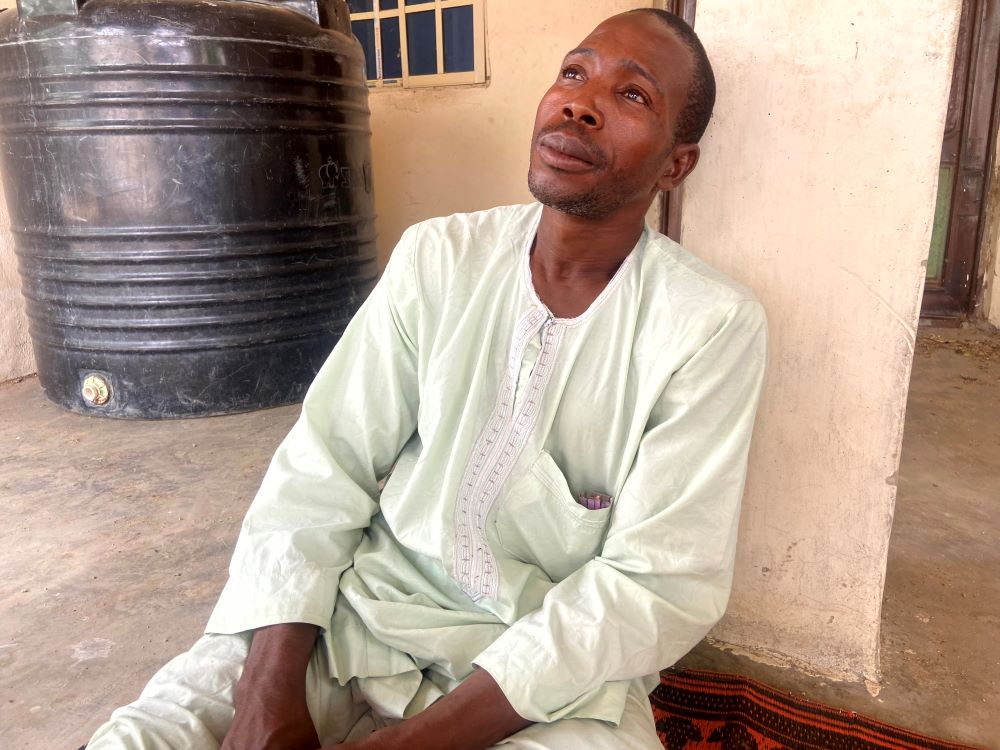
Abubakar Abdullahi’s words trail off as he cringes with unspoken despair that will scar him for a lifetime. One evening in April last year, the 45-year-old was taking his students in an Islamic school in Magazu when criminal gangs, locally known as bandits, raided the remote community in Zamfara, Northwest Nigeria.
He has witnessed many such attacks, leaving pints of grief and pain behind, but that day was different. It struck a part that left him trembling.
Before the conflict that brought the hurricane down to his doorstep sprawled across the region, Abubakar took pride in his work as a farmer and would occasionally relive the good old days every minute into his conversation with The ICIR – when he used to take his farm produce to neighbouring towns.
“Allah has a way of testing his people and would not burden us beyond what we can bear,” he started philosophically. “We used to sell to people from Funtua, Tsafe, and things were good until the boys came with guns, killing people and burning houses.”
The killing spree snakes into farmlands and immediately become the shadow of death. No farmers, including Abubakar, could access their farms for fear of being attacked or kidnapped. And the tiny thread he was holding onto, teaching young children in the evening, was now being threatened following incessant raids that left the village deserted.
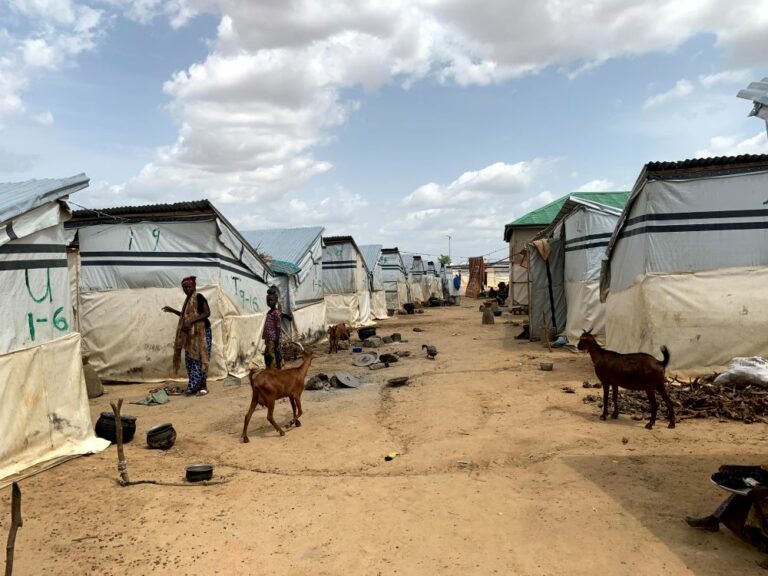
Like everyone in the region, Abubakar had had enough, but he was unsure of the future for himself and his eighteen children. The next morning, he left his village for Tsafe, some 4.5 kilometres away, where he and some of his family stayed with relatives while others went to the local government headquarters, Tsafe, to seek refuge.
“Eating was a nightmare for us, even for our host too. But we have nowhere else to go. They (bandits) stopped us from going to our farms and markets, and now to live in peace is a luxury not many can afford,” he said pointedly.
Eating was a nightmare for us, even for our host too. But we have nowhere else to go. They (bandits) stopped us from going to our farms and markets, and now to live in peace is a luxury not many can afford.
In Nigeria’s Northwest, banditry is rife.
For nearly over a decade, criminal gangs have become a constant threat, killing more than 12,000 people and even injuring more, according to a report [PDF] by Abuja-based policy think tank, Centre for Democracy and Development (CDD). This also includes some 605,505 locals who have been displaced as they raid villages, impose levies on communities and repeatedly even kidnap minors for ransom.
Between July 2021 and June 2022, no fewer than 2,186 people were abducted in the region out of 3,420 kidnapped across the country. During this period, available data shows, a whopping ₦6.531 billion was demanded in exchange for the release of captives, while a fraction of that sum (₦653.7 million) was paid as ransom.
Abubakar works as farmhands with hope that they would be left off the hook
There are believed to be as many as 120 gangs with over 30,000 militants across the northwestern states of Sokoto, Zamfara, Katsina, Kebbi and Kaduna. They comprise mostly ethnic Fulani and mercenaries from other criminal groups and ethnicity.
The crisis, however, does not exist in a vacuum. It was flared [PDF], to some extent, by the farmer-herder conflict that has spiralled significantly across sub-Saharan Africa owing largely to climate change as well as the arbitrary acquisition of restricted grazing routes and reserves among politicians and traditional rulers.
It became a wildfire in later years, around 2011, as self-help militia groups like ‘Yansakai’ formed by farming communities sprang up to protect themselves against the growing tide of the conflict.
Members of Yansakai, however, indiscriminately harass, rob, and kill ordinary herders on suspicion of them being bandits, which further heightens the conflict. The conflict has now spilled into neighbouring states following military offensives in the region.
Unfortunately, as banditry continues to rise in the region, some of the hardest-hit communities are now offering major sacrifices: they now club together to pay protection levy, and live under the terrorists’ harsh law, just so they could buy their safety, a radical step analysts pointed out is a big disconnect between the rhetoric of the authorities and the reality at the local level.
The government has always maintained that it has decimated the gangs and sanctioned measures that include labelling them as terrorists and outlawing the payment of ransom.
This, however, has not in any way significantly calmed the tide of the conflict as the gangs continue to firm their grip on rural communities, exercising de facto authority.
A call of duty – working for bandits –
Abubakar sat on a wooden chair, munching kola nuts as he handed over the remaining lobes to the grey-haired man to his far right. They had just learnt that bandit kingpin, Ado Aliero, had sent messages to communities, including Magazu, requesting farm hands as part of the peace deal he had with elders in the axis. They were to work on his farm for a number of days, or there would be a heavy price to pay.
He was ready to be there.
“When I got the news, I was glad. At least we’re getting somewhere. The light I was waiting for was finally here. I took it as a mandatory assignment to do for peace to reign in our community, considering the number of people who had suffered from their attacks,” Abubakar stated as he relayed his time on the bandits’ farm with 150 other members of the community at gunpoint.
“We’re guarded by their boys throughout our stay. Later on, they would bring cow milk for us to drink as we work for them in batches; some from 8.00 a.m. to 2.00 pm while others from 2.00 p.m. to 7.00 pm,” he recalled.
Of course, the communities were left off the hook for a few weeks. Magazu returned to life too.
“We did not record any attacks for some few weeks. I even called back my wives and children from Tsafe when it looked like the coast was getting clearer. Although they cannot be trusted, they are notorious for breaking agreements; that was all we had at the time,” he added.
But that did not buffer their pain for too long. The village was once again attacked in the thick of the night. But, this time, by another group of bandits. Abubakar’s two wives and three children were kidnapped. He said he had to sell his properties and seek donations from community members to raise the ransom.
“A few weeks after we worked for them, my family was kidnapped, including my two wives, three children and three sisters-in-law with their children. I had to sell some of my properties, including my motorbikes and get donations from the public for us to pay N1,850,000 (about $4,021) ransom before they were released. We also took them to the hospital for treatment for almost a week, and we spent a lot of money there.”
“That some communities in the northwest are choosing to pay off bandits or voluntarily living under their de facto authority underscores the disconnect between the rhetoric of the federal government and the reality at the local level. Whatever the government’s official policy on bandits – whether they are designated as terrorists, or enact laws that say it is illegal for people to pay ransoms to kidnappers – the fact is that people with no succour will do what they have to in order to survive,” says James Barnett, a Lagos-based researcher covering African politics and security at the U.S. think-tank the Hudson Institute.
He noted that many of these gangs have developed “a degree of sociopolitical influence and sophistication” that makes them more like direct challengers of the state’s sovereignty who seek to “position themselves as an alternative, de facto authority in those areas where state institutions are minimal and/or compromised.”
Kamil Abubakar (not related to Abubakar Abdullah), 26, was not as lucky as Abubakar, who left the bandits’ farm unscathed. Kamil now suffers from an usual back pain after spending a day on the farm with the criminal gangs.
When he was nominated by his community, he told The ICIR it was a call of duty for him, and the back pain is the sacrifice he had to pay for peace, though he is yet to be diagnosed because he could not afford the cost.
“I was fine when I got home from their farm and even played football that Sunday. I started feeling mild pain later in the evening in my pelvis until it got severe in the middle of the night. Since then, I’ve been on painkillers whenever the pain hits me,” he said
Kamil wore a bleak grin, an obvious attempt to mask his frustration, but it was not long before the 26-year-old got lost in the torrent of emotions boiling inside of him.
The situation that we are in, I’ve a question, when would it end? People have lost a lot and suffered. When will this slavery end?
“The situation that we are in, I’ve a question, when would it end? People have lost a lot and suffered. When will this slavery end?” he asked before revealing that no attacks have been recorded in the main town since they went to the bandits’ farm, except for some thefts in the tail-end part of the town.
“Our only challenge now is the recurrent seizure of motorcycles when we go out of the village. But we do hope that it will be solved too”, he said.
One of the many challenges that communities in the northwest face is the fluid nature of the conflict. This, according to analysts, makes it difficult to find a lasting peace by negotiating directly with the bandits.
“Negotiating with one set of militants may bring temporary respite, but the gangs are so fractured in the northwest—some rising in influence, others falling, plenty of breaking apart or moving from one territory to another—which makes it very unpredictable,” James noted.
The degree to which bandits offer genuine security varies greatly. James explains that some bandits are very territorial, while others are just extortionists.
“If they (bandits) agree to grant security to a community in return for some sort of levies or other support, they will fight off any rival bandits who infringe on their turf and try to preserve a degree of law and order in that community. Some of the most famous bandits in Nigeria have had this sort of warlord-like approach. But there are also plenty of instances where the relationship is much more limited to pure extortion.”
“Nothing goes well here…”
Elders of Rimni village in Zurmi could no longer bear the barrage of attacks local gangs were pelting them. In mid-January, they sent a delegate to the kingpin terrorising the area, Dan-chake, for a peace deal that was supposed to end the cloud of pain and grief that has enveloped the agrarian community.
Their request was simple: they wanted to breathe a sigh of relief away from the killings, destruction and kidnappings that have brought the village to its knees. But it came at a grave price: they’re to work as farm hands for the kingpin as is done in other parts of rural Zamfara.
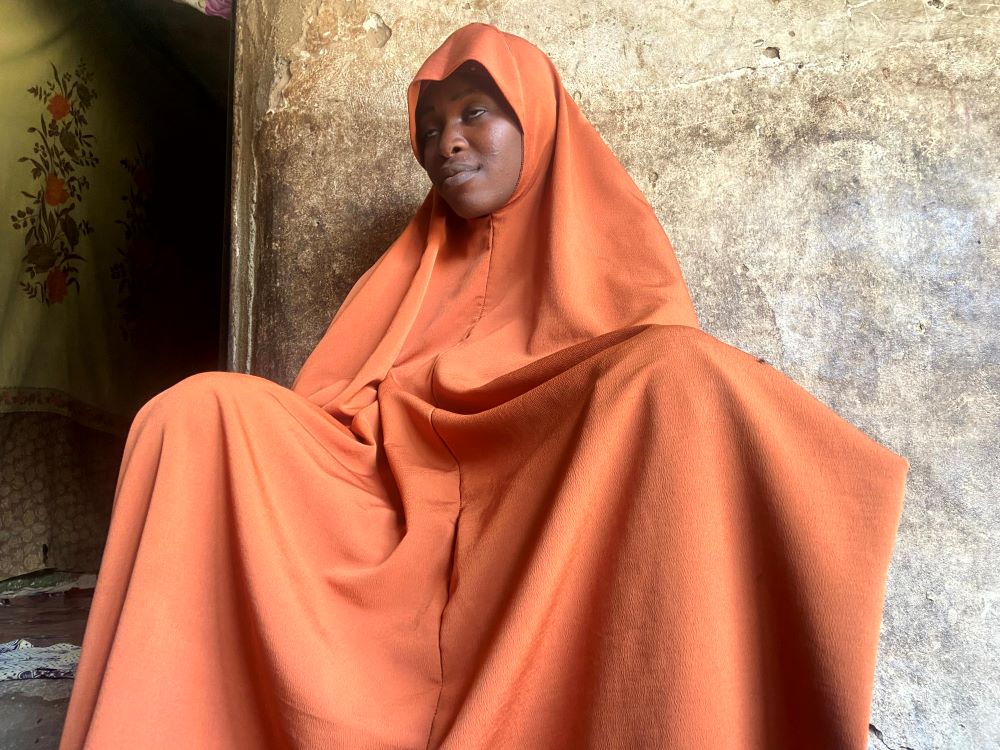
Zaliha still recalls the long night as she feared her worse worries would come to play
Zaliha Muhammad’s heart sank when she learnt that her husband, Mustapha, had been selected as one of the 40 men to work for the group of terrorists on their farmland.
Mustapha, came in a little after Maghrib prayer to meet an exhausted Zaliha, slouched on a mat as she watched over a boiling Miyan Kuka (a local soup made from powdered baobab leaves) on fire. He knew not to break the hush at that moment.
So he waited.
After dinner on that Saturday night, a few days before the arduous task, seeing that Zaliha’s face had lightened up, he broke the sad news to her.
“I was so terrified and scared, thinking of what could happen to him because they (bandits) are not to be trusted,” she said, and just momentarily, her eyes widened with fear. “On the eve of the day he was to go there, I couldn’t even close my eyes as I kept thinking about him willingly walking to his death.”
The 32-year-old mother of three only felt a brief ease when he came back the following day. But she knew they were not entirely out of the woods yet.
“I only felt comfortable when he came back home safely because there is nothing to be happy about. The bandits come to town whenever they want and do anything that pleases them. They (bandits) now come to the village at will; loot places and leave. They should never be trusted,” she said.
“We did what we had to do to fulfil our own end of the bargain, else we incur their wrath,” her husband, Mustapha, chipped in summarily.
We did what we had to do to fulfil our own end of the bargain, else we incur their wrath
“There are villages that were taxed and asked for a protection levy. But we were asked to work on their farm to strengthen the bond of our relationship with them, even when we proposed to contribute money as other villages around us are doing,” he recalled, revealing that few weeks after they had worked on his farm, they (bandits) reneged on the agreement, especially when it was time to harvest their crops.
“We thought that after working for them on their farm, they would allow us to go about our businesses without any attacks. But it only lasted the moments we started harvesting our products.”
He said the gangs started imposing levies on their harvest before extending it to every facet of their lives.
“They started imposing levies on us, we have to pay money to stay in our houses as if we rented it, we have to pay money to prepare our farms, we have to pay money to plant in our farms, and we have to pay money before we can be permitted to harvest our farm products. Nothing goes well here, not even the air we breathe.”
They started imposing levies on us, we have to pay money to stay in our houses as if we rented it, we have to pay money to prepare our farms, we have to pay money to plant in our farms, and we have to pay money before we can be permitted to harvest our farm products. Nothing goes well here, not even the air we breathe.
The Impact
In the village of Gidan Zago, Salisu Muhammed, 42, has seen the bandits take his livelihood away. He lay under the shade of a tree, fronting his house, when his friend, Zayyanu, came bearing news of the peace pact the community struck with “Black” – a bandit kingpin – plaguing the axis.
He said after working on the farms for a few days; the gangs came asking for levies. He knew he had to leave for his safety, abandoning his farmland.
“After we harvested our crops, they would still come for it. And by the time they do that, there would not be anything left to take to the market or even eat at home. The best thing is just to hide some of the crops before they come.
When he realised the web he was stuck with, he said, “I had to escape the village with my wives and children. It’s better we’re safe here in Zurmi than living one breath away from death. We cannot continue farming or working when our lives are in constant danger,” he added.
The unending helplessness in the Northwest, experts argue, has a huge impact on the country’s food security. The region is Nigeria’s breadbasket, contributing significantly to national food production. In Zamfara, the epicentre of the crisis, many farmers have fled their land and those left behind have seen their profits hollowed out by extortion and forced labour.
They cannot also bring their goods to market as bandits have made many roads impassable.
This situation in farming communities, alongside widespread flooding late last year, have continued to push food inflation up the ladder, from 24.46 per cent in March to 24.61 per cent in April, 2023.
Mustapha, 45, worked on a bandit kingpin’s farm to save his community from the wrath of the criminal gangs
Leena Hoffmann, Associate Fellow at Chatham House, argues that the situation in the region signals the fragile state of the country.
“Nigeria is in crisis on multiple levels, particularly in the Northwest. The situation in the region signals the erosion of the state. At the beginning of Buhari’s administration, the lines that he kept repeating was that no part of Nigeria was being controlled or under the command of non-state actors. Those lines no longer hold. These non-state actors and bandits groups have made incursions into communities and are forming a state institution. They may not need to raise flags anywhere.”
It may not have the paraphernalia of insurgency groups like Boko Haram, she says, “but in terms of the regulatory functions of the state, they’re taking on those functions in the Northwest. These actors and groups are now negotiating coercive forms of trust to establish themselves. And this should concern the Nigerian government, but unfortunately, the government concerns itself with form and not substance.”
According to Hoofmann, this highlights the lack of a long-term strategy for a wider scope of security for these communities,
“The country has a formidable governance problem. The state that should provide as its primary function and responsibility the protection of lives and properties has failed to uphold that simple contract. And it is concerning because it shows how fragile and dysfunctional the institutions of the state are, and even for the communities; they have a very limited option”
“In all of this, we still continue to witness year on year increases in the budgetary allocation for security in Nigeria. But one thing is clear, the country cannot continue to fund an institution that is structured for corruption and unaccountability and has been immobilised by impunity. There is a reason accountability matters and it’s for the healthiness of the institution that they (authorities) should be accountable. However, these are conversations that seem very strange to have in the context of Nigeria.”
Zaliha still recalls that long night vividly, as she feared her worst concern would come to play, “it was a day I wish I could forget, but it keeps replaying in my head; the burden of being a widow and taking care of three kids all alone. I don’t ever want it, but the situation made it seem like a hopeless hope.”
SUSPECTED bandits have killed a community leader and his four sons in Dorayi community, Zaria Local Government Area of Kaduna state.
The late leader, Mohammed Shuaibu and his people in the community were allegedly attacked around 10pm on Saturday, June 17 night, in continuation of the gale of attacks by terrorists and other criminals terrorising the state.
Shuaibu’s only surviving child, Abdurrahman, who escaped being mauled, said the assailants killed two other people attempting to flee the village, according to Daily Trust.
The late leader held the title of Ardo of Birni and Kewaye of Zazzau Emirate.
“Ardo was brought out of his bedroom and shot twice in his head, and he died instantly. The bandits went from room to room in the compound and killed my four children, who were married with children.
“The victims are Adamu Shuaibu, Musa Shuaibu, Abubakar Shuaibu and Ibrahim Haruna. After attacking the compound, they also went away with over 100 of our cows,” Shuaibu’s wife, Halima, told reporters after her husband and others were buried on Sunday, June 18.
The spokesperson for the police in the state, Mohammed Jalige, a deputy superintendent of police, could not be reached for comment on the phone at the time this report was being filed on Sunday evening.
The ICIR had published dozens of reports on insecurity in Kaduna State in the past three years. The reports included this and this.
THE Police Service Commission (PSC) has approved gender-inclusive policy guidelines for deploying top officials in the Nigeria Police Force (NPF).
The guidelines provide that, at least, three out of the 37 state commands must have female officers as Commissioners of Police (CPs), and one out of the 17 zonal headquarters must have a female Assistant Inspector-General in charge.
According to a statement by the Commission’s Head of Press and Public Relations, Ikechukwu Ani, the guidelines aim to address the lack of equity and inclusiveness in the deployment of Commissioners in the NPF.
“The Commission on its Policy on Imperativeness of Gender-sensitivity in the Deployment of AIGs and CPs noted the continued practice of lopsided deployments of only male Police Officers to Zones and Commands with no fair consideration and representation of female Police Officers who are qualified for such positions.
“It observed that this will in no time portray the Police as an organisation that is anti-woman empowerment and averse to women inclusivity in governance,” Ani noted.
The PSC also approved that the NPF imbibe the principle of federal character in recruitment and deployment of Commissioners, as current deployments were unfavourable to Nigeria’s North-East and South-Eastern regions.
“The Commission observed the disproportional distribution and lopsided deployment of Command Commissioners and noted that it had become extremely important that a fair representation of all geo-political zones is always reflected in these deployments to eschew and address the feeling and sense of marginalisation and injustice by certain zones of the country in the Nigeria Police Force.
“Henceforth, request for deployment of Commissioners of Police to State Commands must ensure that the disadvantaged zones are considered first in the proposals to the Commission in order to redress the present imbalance and lopsided deployments skewed against the North-East and South-East regions of the country,” Ani noted.
According to the statement, all geo-political zones in Nigeria must have, at least, 15 per cent representation in the deployment of Assistant Inspectors-General, Commissioners of Police and Commanding Officers.
Discrimination against female police officers has been a matter of concern in Nigeria.
In 2021, a female police officer, Omolola Olajide, was dismissed for getting pregnant out of wedlock while in service.
Olajide sued the Ekiti Police Command and the NPF over the dismissal.
The National Industrial Court of Nigeria (NICN) passed judgment in her favour and nullified Section 127 of the Police Act, which prohibited unmarried female police officials from getting pregnant, describing it as “discriminatory.”
Although she was awarded the sum of N5 million as damages, Olajide was not reinstated into the NPF on the grounds that she was on probation at the time of her dismissal.
SEVEN members of the Peoples’ Democratic Party (PDP) State Working Committee in Imo State have resigned.
The members blamed their exit from the party on Samuel Nnaemeka Anyanwu, the party’s governorship candidate in the state for the election coming up on November 11.
Anyanwu, a former senator fondly called Samdadday, was the PDP National Secretary before picking the governorship ticket in April.
He represented Imo East in the 8th Senate.
Addressing journalists on Sunday, June 18, the departing party members said Anyanwu hired thugs to assassinate them, among other grave accusations.
The group comprises the publicity secretary, Collins Opurozor; secretary, Ray Emeana; deputy chairman, Martin Ejiogu; youth leader, Greg Nwadike; state women leader, Maria Mbakwe; state vice chairman, Orlu zone, Chibuisi Obido; and treasurer, Josiah Eze.
“Since Senator Anyanwu became the National Secretary of the party, he has never relented in deploying the powers of his office to fight members of this Working Committee and intimidate even ordinary members of the party. Endless strife, mindless wars and erosion of all democratic values and principles have now defined and defiled Imo PDP.
“It is heartbreaking to inform you that some of us in the State Working Committee have severally escaped assassination attempts because of the wicked lies which our National Secretary sold to his violent supporters that we misappropriated Party funds,” the group claimed.
The angry chieftains alleged that Anyanwu imposed himself on the party in the state to enable him become governor.
According to them, the candidate’s emergence as governor would worsen insecurity in the state.
Besides, they claimed that the governorship candidate was responsible for “hundreds” of party chieftains dumping the PDP.
According to the group, four serving Federal lawmakers also dumped the party “along with thousands of their supporters in a single day.”
They said things worked well in the party when the former Deputy Speaker of the House of Representatives, Emeka Ihedioha, led the party in the state.
Besides, the politicians accused Anyanwu of ill-preparedness for the coming election.
“To be very clear, Senator Anyanwu is not running for governorship in November. If he claims to be running, it is not to our knowledge as members of the State Working Committee. The party does not know what his programme looks like, that is if he has any. Governorship campaigns have started, yet the party does not know if there is anything like a campaign council,” they said.
The ICIR contacted Anyanwu on the telephone on Sunday, June 18 afternoon, but he did not pick up the calls. He did not also respond to text, Whatsapp and e-mail messages sent to his number, which Truecaller, a caller identification application, confirmed belonged to him.
The ICIR reports that the seven aggrieved members said they would announce their new party soon.
This organisation further reports that the ruling All Progressives Congress (APC), headed by Governor Hope Izodinma, will seek to retain power in the state.
Izodinma is the party’s candidate in the coming election.
The Labour Party (LP), which has dominated elections in the South-East since the 2023 general elections, will hope to cause another major upset for the APC and PDP, as it did in Abia State, which the PDP had ruled since 1999 before it lost it to the LP.
The ICIR reports that the LP claimed several National Assembly seats in the region in the last election.
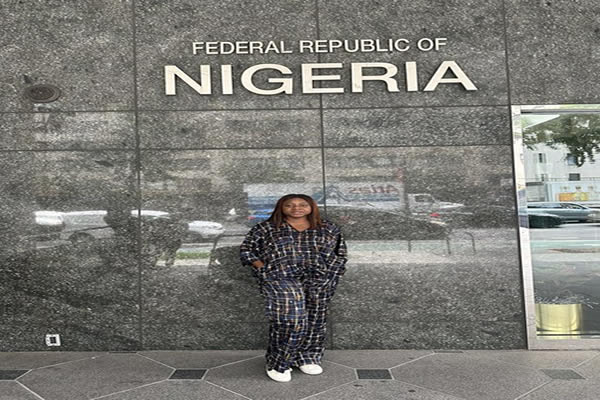
A Nigerian citizen residing in the United States of America, Addy Olubamiji, shared her harrowing experience at the Nigeria House in New York while attempting to obtain passports for herself and her family.
In a tweet on Friday, Olubamiji expressed her frustration with the disrespectful treatment, inconsistent processes, delayed employee arrivals, and lack of empathy she encountered during the application process.
She recounted feeling belittled and moved to tears by the demeaning treatment she received.
“Let it be known that when diasporans try to stay patriotic to our country Nigeria, the systems kept making it difficult for us. We shouldn’t have to cry or plan to bribe or know that the system will not work,” Olubamiji said.
She said her ordeal led her to question her motivation for passport renewal and her desire to obtain one for her child, calling for a thorough examination and improvement of the structures and systems within Nigeria’s embassies worldwide.
In response to Olubamiji’s experience, several individuals shared similar accounts of their encounters with Nigerian embassies.
For example, a twitter user @im_ayodejiRN described the London embassy’s crowded conditions, where people were made to wait on the roadside and were confined to a cramped basement.
@amuta_ann shared her encounter at the Atlanta embassy, where staff members offered assistance in exchange for personal favours to expedite passport processing.
On a more positive note, another user, Babs Adewumi, mentioned his experiences with Nigeria’s embassy in New York and the comparatively smoother operations at the Ottawa office.
He, however, highlighted the challenge of reaching the Ottawa office by phone and emphasised the need for benchmarking, standardization, and performance tracking across Nigeria’s global embassy network.
An investigation by The ICIR [read here] shows that the issue is also obtainable within the country.
The criticisms shed light on the frustrations faced by Nigerians trying to obtain passports both within Nigeria and abroad, underscoring the urgent need for reforming the passport application process, ensuring consistency and efficient service delivery that respects the dignity and rights of all applicants.
Meanwhile, the Acting Comptroller General of the Nigeria Immigration Service (NIS) Caroline Wura-Ola, Adepoju, has announced a state of emergency on passport matters.
Adepoju emphasised the need to address the challenges faced by Nigerians in obtaining passports and has directed all relevant personnel to work tirelessly towards eliminating hindrances to prompt passport access.
IT was a tale of insipid performances by Nigerian players as 11 out of 13 of them failed to win their games in the first round of the main draw at the World Table Tennis (WTT) Contender Series in Lagos.
The ICIR had reported that the WTT Contender Series in Lagos began with the preliminaries stage, which featured 64 table tennis players competing for the 32 alloted slots in the main draw.
At the completion of the preliminaries stage, 32 players that qualified from that stage will join the top-ranked 32 players who automatically were at the main draw to sum up 64 players.
After the commencement of the main draw on Thursday, 11 Nigerian players could not cross the hurdles in the rounds of 32 for both men and women’s singles, and also in the rounds of 16 for both men and women doubles and mixed doubles.
Mixed doubles
Chinese Zhou Ka and He Zhuojia defeated Nigeria’s Orok Etim and Fatimo Bello 3-0 (11 – 3, 11 – 4, 11 – 6).
Also, it was a stroll in the park for India’s Snehit Suravajjula and Diya Parag Chitale as they eased past Nigeria’s Amadi Omeh and Esther Oribamise 3-0 (11 – 4, 11 – 5, 11 – 8).
The Chinese continued their dominance as Nigeria’s Olajide Omotayo and Offiong Edem lost to Xiang Peng and Liu Weishan 0-3 (8 – 11, 7 – 11, 5 – 11).
Likewise, Nigeria’s Taiwo Mati and Ajoke Ojomu lost to Lubomir Pistej and Barbora Balazova from Slovakia 0-3 (3 – 11, 9 – 11, 4 – 11).
Men’s Singles
Nigeria’s fast rising tennis player Taiwo Mati bowed to the artistry of Germany’s Patrick Franziska 0-3 (4 -11, 1 – 11, 7 – 11).
India’s Manav Vikash Thakkar had a tough one against Nigeria’s second best rated player Olajide Omotayo, but it went in favour of the Indian player 3-1 (11 – 7, 11 – 9, 10 – 12, 11 – 8).
Women doubles
Korean Jeon Jihee and Shin Yubin dominated Nigeria’s Ajoke Ojomu and Esther Orobamise 3-0 (11 – 1, 11 – 3, 11 – 3).
China’s He Zhuojia and Wang Xiaotong overpowered Nigeria’s Cecilia Akpan and Offiong Edem 3-0 (11 – 9, 11 – 3, 11 – 4).
Women Singles
Korean Lee Eunhye waltzed through Nigeria’s Fatimo Bello 3-0 (11 – 6, 11 – 7, 11 – 6).
Nigeria’s Offiong Edem lost to Chinese Li Yake 0-3 (6 – 11, 1 – 11, 3 – 11.)
Another Korean sensational Kim Nayeong also knocked out Nigeria’s Esther Oribamise in a straight set, 11 – 8, 11 – 6, 11 – 7.
Mens Doubles
It was all Nigeria’s affair as Amadi Omeh and Azeez Solanke defeated Taiwo Mati and Olajide Omotayo 3-2 (8 – 11, 11 – 7, 11 – 8, 2 – 11, 11 – 8).
It was only Amadi Omeh and Azeez Solanke that qualified to the next round and ended their campaign in the round of 8.
Indian Jeet Chnadra and Snehit Suravajjula overpowered Akinwale Fagbamila and Joshua Oladiran 3-1 (11 – 6, 11 – 6, 7 – 11, 11 – 7).
The ICIR analysed that 12 out of the 14 games the Nigerian players played, they were unable to win a set out of five.
Stakeholders react
The Executive Vice-President, International Table Tennis Federation (ITTF), Wahid Oshodi, described the early exit of Nigerian players in the tournament as “underwhelming”.
Oshodi advised the NTTF to employ the services of a foreign coach that would harness the potentials of the pool of young talents in the country.
“The NTTF has a lot of work to do, I am hoping they will get a coach and I mean they need to bring in someone with international experience, especially because we have good young players. They need someone with the charisma who can lead them through,” he said.
The NTTF president, Ishaku Tikon, in an interview with newsmen, attested that the Nigerians players lost to top ranked players in table tennis.
Tikon said, “It sounds funny that at this time of the event, all Nigerians are out. Of course, it is not out of context, it is something you are aware of; we have the world’s best here.
“The ones that crashed out have done their best. In table tennis, if you take the wrong route, you will retire early, and this applies to all players around the world.
“I commend those ones that are out now; they have done their best. We will go back to the drawing board. We have a few tournaments coming up at the corner, which I am sure we are going to participate in.”