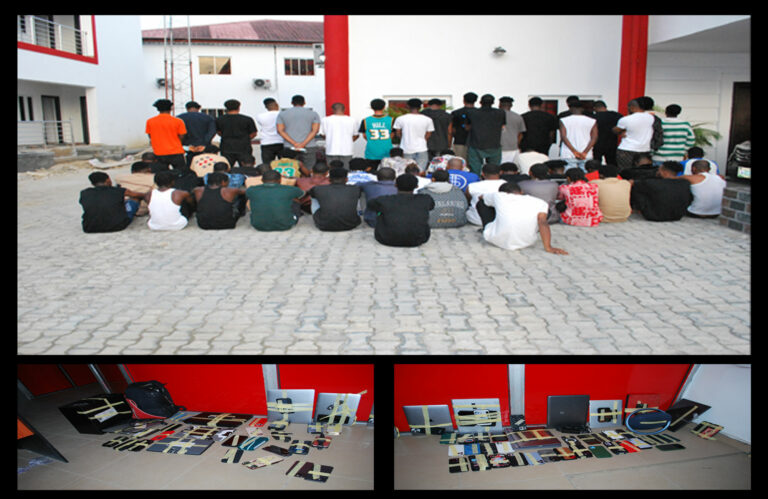
The Economic and Financial Crimes Commission (EFCC), Port Harcourt zonal command, says its operatives have arrested 56 suspects for internet fraud.
A statement released by the Commision said that the suspects were arrested on Monday, June 5, 2023, in a sting operation at Rivtaf Golf Estate, Port Harcourt.
The arrest followed security intelligence on the suspects’ alleged internet fraud-related activities that included dating/romance scam, investment scam, oil scam, contract scam, impersonation, business scam, possession of fraudulent documents, crypto currency scam and forgery.
The suspects are Chukwuemeka Samuel Andrew, Gospel Asawale, Godbless Otuan, Francis ThankGod, Kingsley Udennaka, Ajuobi Lucky Obioma, Gogo Johnson, Hope Offor, Oxford Ibinabo, Boma Kallu, Ebuka Igwe, Hope Nweke, Augutus Chukwudi, Benard Greatman, Chile Mark, George Lumartins, Iyala Ibisejubotonbo, Chizzy Collins, Marvin Maccus, Chimaobi Emmanuel, Precious Chibukem Kelvin, Peter Ayigi, Godswill Chukwu, Dele Emmanuel Niabari, Gabriel Noble, George Williams, and Prince Sonah.
Others are Iwuoha Wisdom Chinemerem, Divine Loiya Princewill, Victor Ajieaku, Goodluck Richman, Nnadozie Kenneth, Daniel Bright Asuquo, Dickson Mirade, Onyechi Emmanuel, Chika Eguma, Fraclin Onokpite, Silvar Uzoeto, Great Rapheal, Victor Awahobasi, Sydney Morris, Olaka Nkpoma, Boma Sobio, Uche Jerry, Onooriode Ruemu, Prince Davidson, Michael Anderson, Lovina Harry, Oti Wilfred Chinonso, Divine Success, Promise Blessing Tamunoimama, Kpakol Bethram Tombari, Michael Solomon, Faisal Abdul, Victor Eseh Chika and Daniel David Elubu.
The anti-corruption agency stated it recovered items that included phones of different brands, laptops, Nigerian and Spanish passports, Apple wrist watches, ATM cards, and local & foreign currencies from the suspects.
Other items were different brands of exotic cars – a black Lexus GS 460, C300 4Matic Mercedes Benz car, a black Lexus IS250, a black Lexus ES350, a Toyota Corolla 2007 model, a black Range Rover and a black Toyota Camry.
The statement said the suspects would be charged to court after conclusion of investigation.
THE Nigerian Medical Association (NMA), Abia state chapter, has suspended its six months old strike to allow the present administration offset the lingering salary arrears.
The suspension takes effect from Friday, June 9, 2023.
A statement by the NMA secretary, Dr Daniel Ekeleme, on Friday, June 9, stated that the state government, led by Alex Chioma Otti, had at different meetings promised to offset all salaries owed doctors in Abia state by December 31, 2023.
The ICIR had reported how Abia state doctors faced many financial difficulties due to the unregulated payment of salary.
The report stated that medical professionals suffered 26 months of unpaid salaries during the immediate past administration of Governor Okezie Victor Ikpeazu.
The ICIR confirmed that resident doctors were being owed 25 months salaries, Hospital Management Board (HMB) staff members were owed about 14 months, while other cadres of doctors in the state were owed 26 months salary arrears.
A communique Ekeleme sent to The ICIR on Friday, June 9, read how Otti, through his Special Adviser on Health, Ngozi Okoronkwo, appealed to doctors to suspend the strike, promising he would pay the arrears.
Part of the statement read, “Following a robust deliberation on the above-mentioned observations, NMA Abia State Executive Council hereby declares the suspension of the total and indefinite strike with effect from Friday, June 9th, 2023.
“By this, all doctors in private, state and federal employees in Abia State should resume work on Friday, 9th June 2023.
“This is to enable the present administration to work and offset the lingering salaries arrears. With this olive branch extended to the Abia State Government, irrespective of the hardships being experienced by doctors under Abia State Government employ, it is our expectation that the government would expedite action on the payment of the salaries as promised to avert the ugly trends of the recent past.”
IN Abuja, Nigeria’s Federal Capital Territory, many residents consume ‘Baba Aisha Herbal Medicine’, a low-endherbal product that sells for just N100 andis touted to cure common diseases. In this five-month-long investigation, Kemi Busari scientifically probes the content of the concoction while questioning regulatory frameworks that allow its supply to thrive.
As the sun sets on the bustling streets of Abuja, a symphony of voices echoes through the residential communities; the voice of hope and healing emanating from horn speakers perched atop vehicles as herbal medicine vendors sing their healing song to all who will listen.
Amongst the various elixirs and tonics on offer, one potion reigns supreme: Sacra Herbs, known popularly as Baba Aisha herbal medicine. From thronging markets to busy intersections in Kubwa, Lugbe, Nyanya, Jabi, Kuje, Kurudu – in fact, every residential community in the federal capital territory – vendors of this medicine hawk their wares, promising to cure a litany of ailments for a mere N100.
Today, Baba Aisha, the sturdy figure behind the Sacra Herbs empire, takes centre stage in a spellbinding nine-minute advertisement blaring from the horn speaker balanced on a rickety Honda Accord car, permanently parked at Kurudu junction.
The ad opens with a devout prayer as the producer, who doubles as the voice-over artist, introduces himself as Dr Salisu Sani Na Wagini (Baba Aisha) and implores the heavens to guard his listeners against the twin curses of poverty and business loss.
With a flourish, shielding his apparent lack of fluency in the English language, Baba Aisha goes on to vaunt the many testimonies from satisfied customers while confidently listing the various maladies Sacra Herbs can cure: typhoid fever, malaria, stomach ulcers, rheumatism, waist pain, piles, and more. He urges his audience to take each of the the120ml bottles two times a day and to eat before consumption.
The ad then shifts to a litany of common symptoms, accompanied by boasts of the thorough research and expert craftsmanship that go into each bottle of Sacra Herbs. Then, he switches to a passionate appeal for people to turn away from the false promises of hospitals and modern medicine and instead trust in the power of Baba Aisha’s brew, especially for children.
A branded sales car in Kurudu
“Even if you have the intention to go to hospital, I Dr. Salisu Sani say don’t go. Even if you go (they’ll) only say your children need drip or add them blood,” he said in the recorded ad. “Not everybody is capable to buy blood…but when you come here with small money, you can take our herbal medicine, and you’ll not get any sickness in your body anymore,” he added, leaving the audience with a sense of hope and conviction that his concoctionis the answer to all their ailments.
Lurked behind these promises is an unsealed bottle of Sacra Herbs tainted with question marks. Questions about its origin; questions about its content, ingredients and mixing formula; questions about prescription and qualification of the producer; and, more importantly, questions about the regulatory framework upon which the product thrives.
To residents of Abuja and adjoining states, where the herbal product is prominent, Sacra Herbs come as a cheap and effective option whenever they are down with ailments, but months of rigorous investigation, which includes extensive laboratory testing of the product, put this in serious doubt.
The unregistered medicine concoction
What Baba Aisha referred to as medicine in the advertisement is a liquid mixture sold in a 120ml unsealed bottle. Each bottle contains a yellowish, minty liquid with a noticeable powdery residue. Our investigation reveals that the colour and amount of residue in each bottle are determined by retailers who add a black powdery substance after taking stocks of the pure yellow liquid.
The bottle also contains information on ingredients, a list of potential ailments cured, dosage, storage information, registration number, company details, telephone numbers and a picture of the producer. In the 14 locations visited across Abuja, the presentation and details on the items are the same.
One quick giveaway on each bottle is that the product carries not one, but two NAFDAC registration numbers. The National Agency for Food and Drug Administration and Control (NAFDAC) is responsible for regulating and controlling the manufacture, importation, exportation, advertisement, distribution, sale and use of food, drugs, cosmetics, medical devices, chemicals and packaged water in Nigeria.
According to NAFDAC’s Food, Drugs and Related Products Act, no herbal medicinal product should be manufactured, exported, advertised, sold or distributed in Nigeria unless it has been registered. But here is Sacra Herbs with two registration numbers – A7-2551L and A7-2590L both tagged ‘NAFDAC REG NO’ on each bottle.
We checked the open portal of NAFDAC to confirm if both or either of the registration numbers are genuine; they were tagged as ‘fake’ on the agency’s search portal.
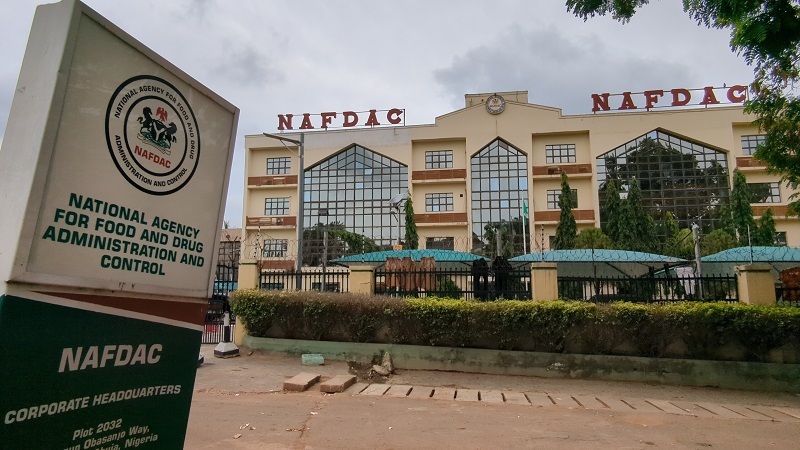
NAFDAC Headquarters, Abuja. Photo: Kemi BusariA bottle of Sacra Herbs
With some skepticism, we pressed further and then came across some reports that could confirm this revelation. In September 2017, NAFDAC impounded some Sacra Herbs products after the agency’s several efforts failed to get the producer to complete their registration and give full details of the products. Has Baba Aisha completed his registration since then? We wrote to NAFDAC to confirm.
In response, the agency said the herb was submitted for registration in January 2018. The request was granted after ‘all the necessary procedures for registration were duly followed by the company and proper documentation provided.’
NAFDAC noted that it received a request for renewal of the registration in August 2020 but it refused to grant, as the application and vetting of the company’s facility for Good Manufacturing Practice (GMP) turned out ‘unsatisfactory.’
_Baba Aisha is our saviour_, says Abdullahi
If regulations are followed, the concoction should already be off the market since the expiry of its registration, but it remained a ‘saviour’ for residents seeking cheap medication. Some of the users of the concoction described the stationary vehicles, where it is mostly sold in residential communities, as their ‘hospital’.
A few other users who cared to probe its authenticity said they were satisfied that it is registered with NAFDAC, probably ignoring or unaware of the fact that the concoction carries two registration numbers.
NAFDAC, in a written response, confirmed A7-2590L to be the correct registration number issued in 2018. The agency said the registration is yet to be renewed since its expiry in 2020.
“NAFDAC does not assign two registration numbers to one product”, the agency notes while disowning A7-2551L.
More regulatory infractions; NAFDAC complicit
We spoke to over 20 users of the medicine, most of them giving positive reviews. They will continue to use the ‘medicine’ so far the regulatory agency has approved. However, NAFDAC may have breached this trust, our investigation shows.
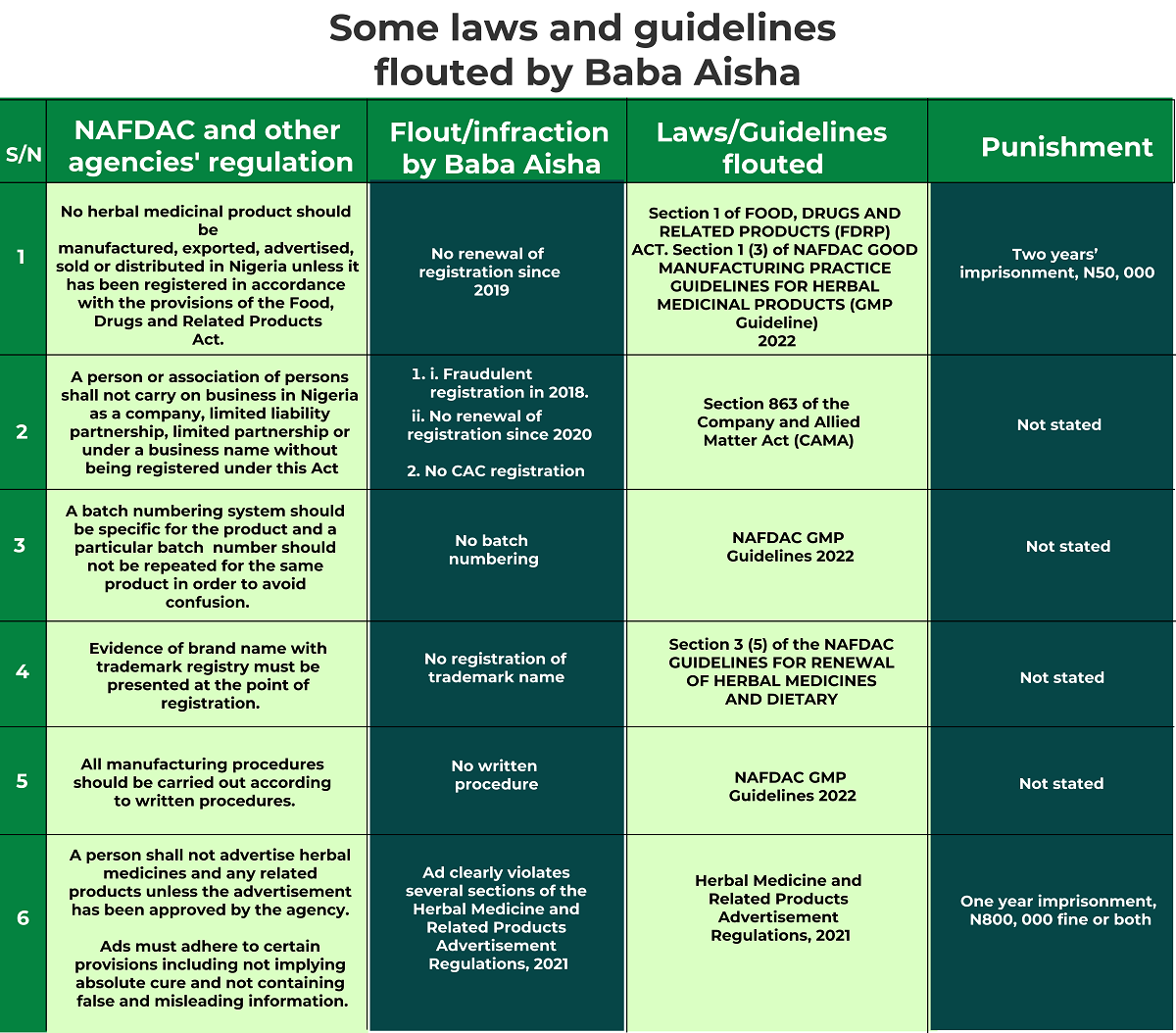
Let’s start with a probe of the 2018 registration. According to NAFDAC’s guidelines for renewal of herbal medicines and dietary supplements, applicants seeking to register their products must fulfil some paperwork conditions; evidence of business incorporation by the Corporate Affairs Commission (CAC), evidence of registration of brand name with Trademark Registry of the Ministry of Industry, Trade and Investment, a comprehensive certificate of analysis by a quality control laboratory, among others. Our investigation shows that Sacra Multi-links barely fulfilled these criteria but was granted registration by NAFDAC.
Multiple searches on the CAC search portal, for the company, Sacra Multi-Links Limited, returned a ‘search not found’ feedback, indicating that the company is not registered. After the open search, we contracted a lawyer to do due diligence on the company.
“The company is not registered with CAC,” the lawyer, Olalekan Idowu, said after a thorough check. “Under the law, you can’t even use your name for a business unless you’re registered,” he added.
The law being referred to here is the Company and Allied Matters Act (CAMA), which in section 863, declares that “a person or association of persons shall not carry on business in Nigeria as a company, limited liability partnership, limited partnership or under a business name without being registered under this Act.”
Zaradeen sells Baba Aisha herbal medicine in Jabi
We proceeded to find out if the company fulfilled the trademark criteria as required by law. Nigeria’s Trademark Registry, in response to our inquiry, noted the company filed for registration on November 23, 2016, but it failed to complete the process, even six years after. The registry noted that Sacra Multi-Links Limited ‘has not acquired the status of registration.’
Two lawyers who commented on the development said the company has at least two more stages – publishing of the trademark in the trademark journal and issuance of certificate – to follow to complete the registration. Both stages, they said, take a maximum of eight months to complete.
‘Don’t go to hospital’
In Nigeria, herbal medicine vendors are a dime a dozen, easily overlooked and forgotten. Perhaps the concoction wouldn’t have attracted this reporter’s attention but for the never-in-doubt advertisement that clearly set out to misinform the public.
In the nine-minute advertisement embedded below, Baba Aisha passionately urged the public not to visit or take their children to the hospital; he claimed hospitals only administer blood or drips for ailments; he gave prescriptions without prior academic or professional expertise and then claimed cure for several diseases – diseases with different origins.
To an average literateperson, the advert comes as some kind of comedy, given the tone and the voice-over artist’s apparent struggle with the English language, but it is what several of his customers needed to hear to shun hospitals.
Alice John, 50, complained of pains in her eyes and other parts of her body in early 2022. Her first stop was a community clinic. Her medical records show she was diagnosed with glaucoma, corneal ulcer and hypertension. She was placed on treatment, but the ailments persisted, prompting an alternative. The alternative came in the persuasive words of Baba Aisha blaring from the stationary vehicle at the junction leading to Mrs John’s house.
“They (neighbours) said the medicine they are shouting (advertising) is working… It’s God (who heals), but I trust this medicine,” she said, adding that she hasn’t visited the hospital since she started taking the concoction in June 2022.
The advert, according to NAFDAC’s Herbal Medicine and Related Products Advertisement Regulations gazetted in 2021, ought to be approved by the agency before use. The regulation states that such ads shall not state or imply that any herbal medicine is ‘safe’ or has ‘guaranteed efficacy or special status’. It noted further that such ads should not contain false or misleading information, vague, unsubstantiated statements or suggestions of superiority over other products or any claim of a universal cure. Baba Aisha’s ad failed in all of this and more!
With 63 per cent of the 200 million estimated population multi-dimensionally poor and the National Health Insurance Scheme covering only three per cent, herbal medicines easily become an option for many.
It is difficult to put a figure to the circulation and consumption of Sacra Herbs but a series of interviews with retailers and users suggest hundreds of thousands of the bottles are sold monthly.
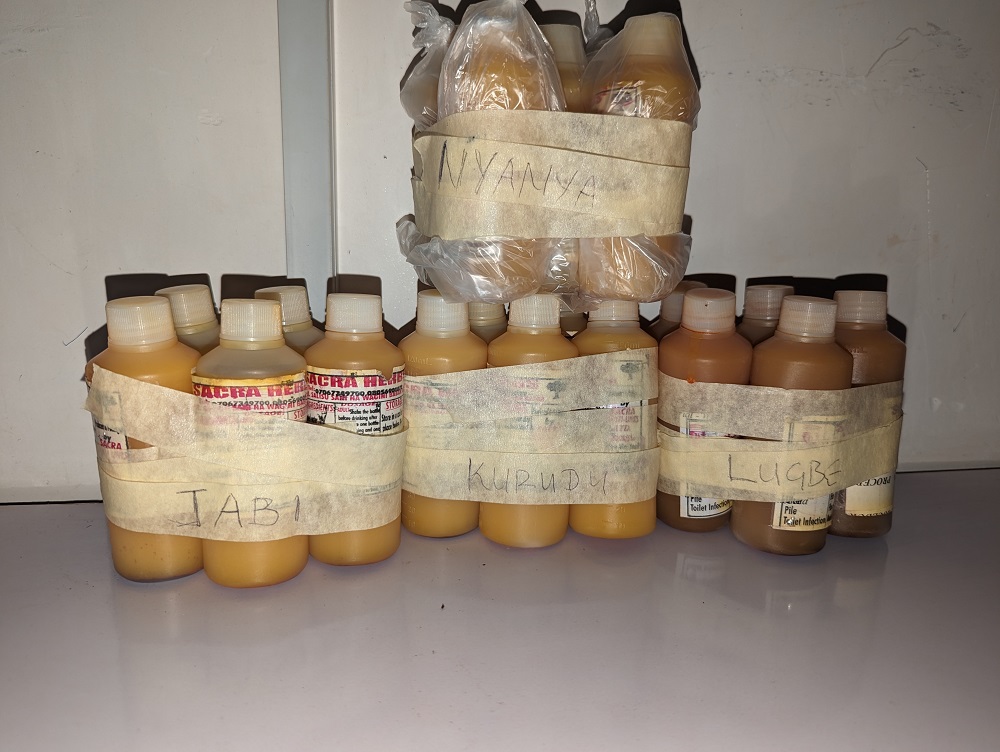
Labelled products sent to the laboratory for test
We wrote NAFDAC to ask if it approved the ad, but the commission failed to respond to our inquiry. Meanwhile, the regulation empowers the NAFDAC to initiate legal proceedings and enforce payment of fines or imprisonment upon conviction.
We could not ascertain if Baba Aisha submitted fake documents or if officials of NAFDAC colluded to issue him registration without fulfilling the minimum criteria. Whatever the case, health experts say the agency has failed Nigerians in its role of keeping the public safe by not conducting proper due diligence.
“People are not going to double-check a product that has a NAFDAC seal on them,” says Lawal Bakare, a dentist and public health specialist. “Because Nigerians trust NAFDAC, the commission needs to know that it puts a lot of responsibility on them.”
We wrote NAFDAC to provide us copies of the documents submitted for registration but got no response. We presented this evidence to the commission and asked questions about the registration process but, again, got no response.
Baba Aisha declined our request to have an interview with him, despite answering repeated calls.
As revealed, NAFDAC’s connivance or lack of due diligence has for years put the lives of millions of users of Sacra Herbs, arguably the most popular concoction in Abuja, at risk but how significant are these risks?
What’s in Baba Aisha’s bottle?
Odigie Okai was experiencing relapsing malaria sometime in 2018, forcing him to either visit the hospital or spend on medicines every two months. “It got to a point some neighbours asked why I was always going to the hospital; that I was wasting money; that have I not heard of Baba Aisha?”
Heeding the advice, a desperate Okai bought three bottles of the ‘medicine’ on a prescription of one bottle per day.
“I took the first one the first day; towards the evening, I started feeling pains in my stomach. The next day, I took the second bottle, and it took a turn for the worse to the point I collapsed,” Okai recounted.
Waking up in the hospital, Okai was informed he had malaria and typhoid and that his situation was aggravated by the concoction.
His condition is similar to that of Isa Ismaila, a tricycle rider who was prescribed a daily dosage of three bottles of Sacra Herbs mixed with salt to cure typhoid sometime in 2022. After taking the first bottle, Ismaila soon becomes heavily sweaty, drowsy and extremely uncomfortable. He had to resort to over-the-counter medicine for his condition to normalise.
“Throughout the night, I could not sleep; I will never take the medicine again,” he said of his experience.
Ismaila
How did a medicine taken to ameliorate a condition end up worsening the ailment? We sought answers in Mols & Sims, an independent biological and chemical laboratory at the Afe Babalola University, Ado Ekiti (ABUAD).
Upon contacting him, a professor of pharmacology and therapeutics, Olaposi Omotuyi, and his team agreed to investigate the potency of the medicine in curing the diseases claimed, starting with malaria. The team also sought to establish if Sacra Herbs are safe for human consumption. 20 bottles of Sacra Herbs, purchased in four different locations in Abuja – five each – were dispatched to the laboratory for investigation.
“To do this (investigate anti-malaria actions of the medicine), what we would do is an in-vivo experiment in which animal models of malaria would be established, and the drugs will be used as an intervention versus a control, like chloroquine in this case, to check out the anti-malaria activity,” Omotuyi, who recently led a team of scientists to discover Virucidine Liquid, an approved cure for COVID-19, said at the beginning of the test.
Parameters adopted by the scientists include the increase in temperature, loss of weight, loss of appetite, death associated with the malaria parasite and an investigation of vital organs of the animals.
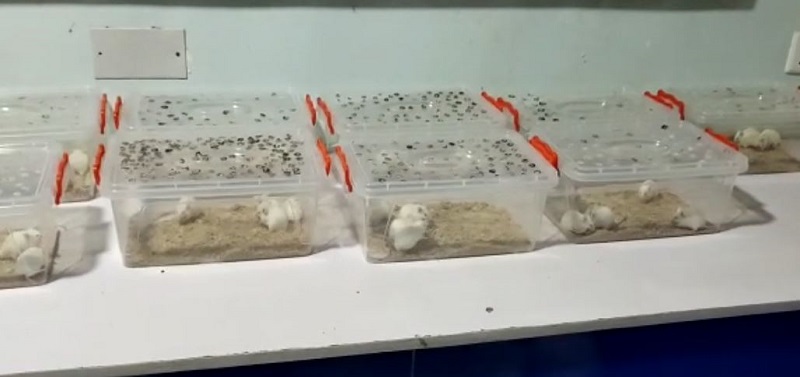
A set of mice being prepared for the experiment
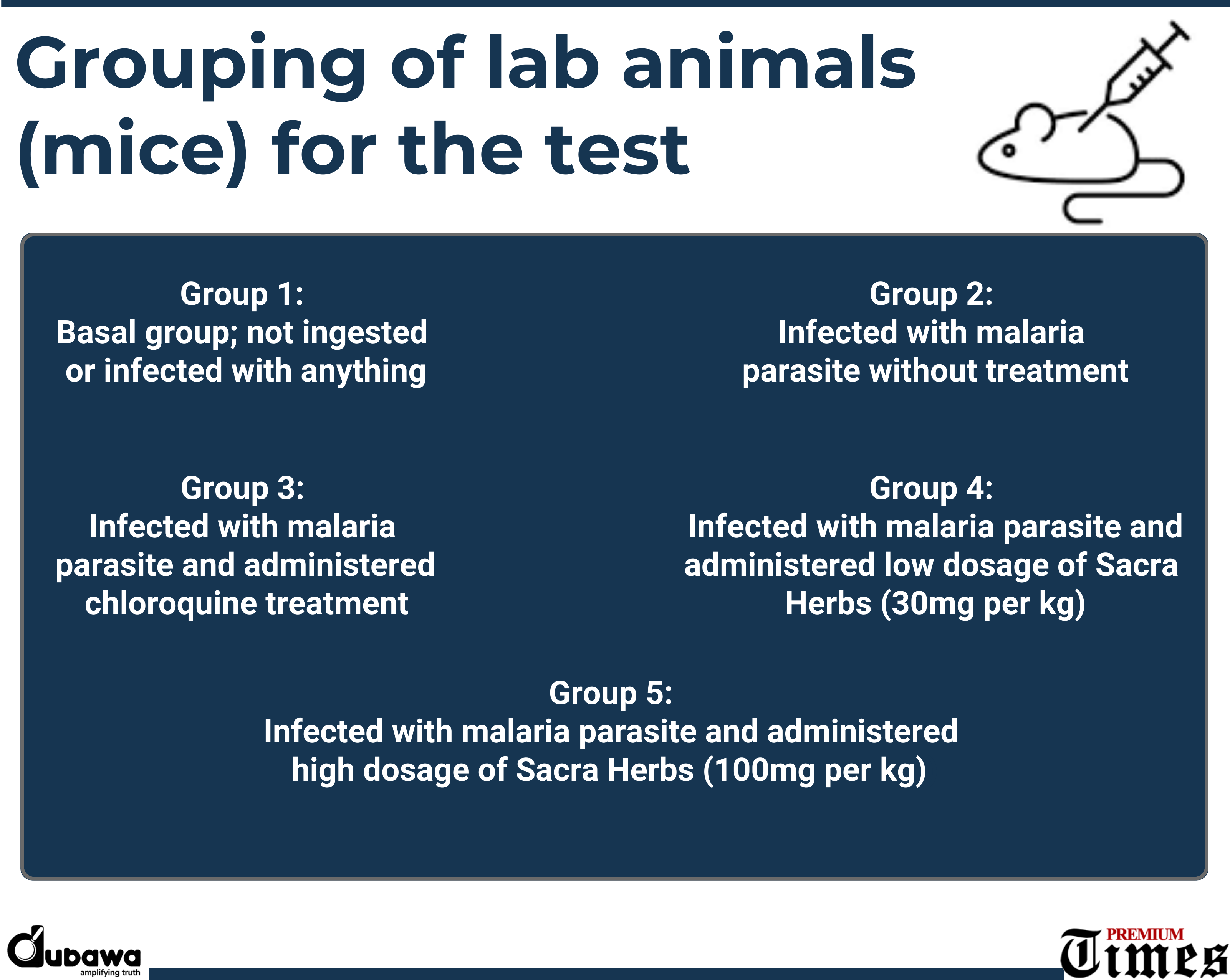
The scientist divided the animals into five groups of eight mice each to include: a basal group not ingested or infected with anything; a group infected with malaria parasite without treatment; a group infected with malaria parasite and administered chloroquine treatment; a group infected with malaria parasite and administered low dosage of Sacra Herbs (30mg per kg); a group infected with malaria parasite and administered high dosage of Sacra Herbs (100mg per kg).
The five groups
Summarily, after an experiment which took up to a month under set international standards, the team of scientists made the following key findings:
●Animals in the two groups administered low and high dosages of Sacra Herbs did not show any positive response to the medicine as a cure. Neither of the doses (100mg per kg nor 30mg per kg) has a curative effect on malaria infection. Therefore, the herbal medicine cannot cure malaria as claimed.
●Animals in the group administered chloroquine at 5mg per kg did not show adverse behavioural changes and were cured of the infection. Therefore, chloroquine is potent in the treatment of malaria.
●The plasmodium infection-associated loss of Packed Cell Volume (PCV) was not reversed under both doses of Sacra Herbs tested. That is when the blood levels of the animals began to go down as a result of the actions of the malaria parasite, the herbal medicine did not reverse the trend as expected of a cure.
●Animals administered Sacra Herbs at 100mg per kg suffered severe kidney and liver damage. Even those in the group infected with malaria and not administered a cure had better liver and kidney function. “This is a pointer to the possible damaging components present in the herbal mixture,” laboratory report says.
●Animals in the 100mg per kg suffered low gluthathione levels, weakening their immune system and making them susceptible to lung infections. Continuous intake for humans could lead to Acute Respiratory Distress Syndrome (ARDS), scientists say.
●All animals in the two groups administered Sacra herbs died within three to six days, meaning that the treatment was not successful. This also affirms that the medicine is a high safety risk to users.
Histological representation of liver of mice in different treatment groups
“It makes the kidney function almost impossible, it makes the liver function almost impossible; that means that anyone who takes this (Baba Aisha herbal medicine) is at a high risk of acute kidney injury, if not chronic,” Prof. Omotuyi said while analysing the result. “When it becomes chronic, one has to be thinking of a kidney transplant, and that does not come cheap, that is if you ever find a donor at all; ditto liver, ditto lungs. These are layman’s way of saying it is not safe to take this medicine as it is presently constituted.”
Although not outrightly established, users of Sacra Herbs such as Okai and Ismaila might have suffered from a breakdown of their vital organs, medical experts who analysed the situation say. Sometimes, this may lead to a total collapse of the kidney or liver, or even death, they add.
“We are seeing patients coming down with kidney failure, liver failure,” says a lecturer at the Department of Community Medicine, Bayero University, and a consultant at the Aminu Kano Teaching Hospital, Usman Bashir. “Our regulatory agencies need to really stand up, put control measures and even ban some of these herbal drugs because they are increasing our burden of disease, they are increasing the number of patients coming to hospitals and most of the time when they come, it is too little too late.”
According to the World Health Organisation’s (WHO) reports cited by many peer-reviewed journals, liver and lung diseases rank among the most-deadly ailments in Nigeria. This study and several others established that ingesting harmful herbs and roots accounts for a high percentage of hospital admissions resulting from kidney and liver diseases in the country.
To be specific on the figures, the Nigeria Association of Nephrology said that about 20 million, accounting for 10 per cent of the population, live with kidney diseases. More disturbing, experts recently estimate that 45, 000 Nigerians die from kidney diseases yearly.
Picture 15: Blurred images of the kidney of the mouse admistered Sacra Herbs (right) turned dark a few days after, while that of the mouse not given any treatment (left) remained normal
The reality is as grim for liver diseases. A February 2023 report by the WHO showed that more than 20 million Nigerians live with Hepatitis B, C, or both; yet more than 80 per cent of the people who have the disease do not know their status.
Some of these deaths are caused by cheap medicines, such as Sacra Herbs, taken to cure ailments. But there are more safety hazards lurked in a Baba Aisha bottle.
Users at risk of cancer
Neither Zaradeen, the retailer of Sacra Herbs in Jabi, Isa, the retailer in Lugbe, Yusuf, the retailer in Nyanya, nor Ahmed, the seller in Kurudu, and other vendors could explain the yellowish nature of the concoction.
However, preliminary laboratory findings indicate that the toxicological burden of the concoction is in part associated with the dye included, which was confirmed to be tartrazine yellow.
“According to the literature, tartrazine yellow dye is highly toxic to humans even at dosages considered safe,” the report notes.
Tartarzine is a colouring agent added to food and medicines to enhance their visual appeal. Several studies have shown that tartrazine’s metabolic conversion into aromatic amine (sulfanilic acid) could result in various disorders, including anaemia, pathological lesions in the brain, liver, kidney and spleen, besides allergic reactions, tumors and cancer.
“On analysis of Sacra Herbs, we accurately determined that one litre of every Sacra Herb has about 5,000 milligram of tartrazine yellow, and in every 250ml bottle (approximately two bottles), it will come down to about 1, 250 milligram and when calculated, everyone that has taken the herbs has taken about three times the recommended dose.
“It means everyone taking these herbs is exposing his (their) body to harmful substances of tartrazine yellow which might be responsible for all the organ destruction found in the animals used,” Omotuyi the professor said, calling for an outright ban on the sales.
He added that only 7.5 milligram per kilogram is recommended daily for human consumption.
Picture 16: Histological representation of liver of mice in different treatment groups
The scientists did not continue to check whether Sacra Herbs work for other ailments claimed as ingesting the animals with the concoction creates an ethical issue since it is confirmed unsafe.
Dying and smiling
For Saleh Ahmed, a commercial tricycle rider, Mohammed Sani, a commercial motorcyclist, Alice John, a banana seller, and over 20 other users of Sacra Herbs interviewed for this report, the herbal medicine remains a trusted substitute for modern treatment.
“I prefer Baban Aisha (to visiting hospitals),” says Ahmed, who boasts of never taking any other medicine for more than two years now. “I will advise someone to take the concoction even if there is enough money to see a doctor.”
On surface analysis, the positive feedback from users is a direct negation of laboratory findings, but experts say this could even be more dangerous.
“An average man is about 70kg. Most at times, when you have an animal used (for lab test) and the animal dies within four days, it can (take) up to a year or two or longer time before they see any kind of damage (in humans),” says a pharmacologist at ABUAD. Oritoke Okeowo.
Other medical experts who analysed the situation gave the same feedback – the users are dying in instalments, unknowingly. They added that although the mixture might contain some potent ingredients, which explains why users get temporary relief, it is largely mixed haphazardly and constitute a health risk to users.
Retailers add black powder to every bottle of Sacra Herbs
Okeowo fears if members of the public continue to consume Sacra Herbs and other harmful herbal products, there might be an ‘increase in kidney and liver diseases and consequently, people’s inability to have transplants, which is currently estimated at N15 to N25 million for kidney and between N5 and N15 million for the liver.
When we got the initial results from the laboratory, we again visited Mrs John to relay the key findings to her and inform her of the dangers of the continuous use of Sacra Herbs. She told us she was still on the three bottles per day dosage anytime she was able to afford it.
John, upon receiving details of the laboratory test, decided to run a kidney and liver test but later opted out for fear of the unknown.
“God has already washed it away. Any affliction devil wants to put in my body with that medicine, God will take it away for me,” she said, strongly dismissing her initial resolve to run a test.
Back in the laboratory, Okeowo is worried Baba Aisha’s high-dosage prescription is very harmful to users.
“We’ve given the mice 100ml per kilogram body weight, what this means is that for every 1kg, we are to give 100 ml. If you multiply it, a human is about 70kg; that’s so much,” she said. “Even if something works, the number of times you have to take it might make you not follow up the dosage, and you might not get complete effect that you should get.”
Baba Aisha, in his ad, prescribed half a bottle of the herbal concoction for children irrespective of their age or body mass. Okeowo warned against such dosage.
“No matter the situation, I would say no child should be given this because they have smaller body weight,” she said. “If an adult is taking it and they are not yet collapsing, definitely it will be a lot worse for children.”
Where does ‘Baba Aisha herbal medicine’ come from?
In October 2021, a popular Twitter user, Daddy Odanz (@MrOdanz), in a banter-like manner, asked his over 100 thousand followers who the ‘most popular herbal medicine doctor in Nigeria’ was. More than a quarter of his respondents mentioned Baba Aisha.
In the comment section, they bantered on how Baba Aisha could already be brewing something for C0VID-19, how his grammar-blundered ad lights up their evening journey from work and the experiences of people around them taking it. A few were curious to know why the herbal products are everywhere but no one knew the origin.
An address on the bottle of the concoction gave us a lead in our bid to unravel the location of Sacra Multi-links Limited.
Before embarking on the journey to Tafa, a town along the Kaduna-Abuja expressway, where the ‘medicine’ is being produced, we contacted Mallam Hamza, who introduced himself as Baba Aisha’s brother.
After several calls, he agreed to meet this reporter for possible business collaboration and other discussions on the concoction. Hamza indeed showed up, but he insisted he would not take this reporter to the location where Sacra Herbs is being produced. Several calls and pleas to Baba Aisha himself would not make either of them bulge.
Their insistence is easily understood; rather than an elaborate setting that guarantees standards and safety, the herbal concoction is produced in a residential building, this reporter would soon find after locating the premises.
A herbal products hawker in Tafa, who doesn’t want to be mentioned to avoid being tracked, said there is no elaborate demarcation of the residence for production. The hawker added that the medicine is usually produced in bulk based on a request by retailers.
Although we could not precisely ascertain as we weren’t granted entry, the building’s outlook fall far short of indications by NAFDAC’s GMP.
Herbal products are expected to be produced under certain standards prescribed by NAFDAC’s Good Manufacturing Practice (GMP). The GMP has many guidelines ranging from staff specialisation, premises marking, sanitation, storage, and equipment maintenance to water supply systems.
Baba Aisha would not comment on our findings despite answering multiple calls requesting his audience.
What about regulation?
Herbal medicine practice in Nigeria is mostly unregulated and often requires no registration or scrutiny. For several years, individuals who parade themselves as ‘doctors’ rip off the public with misleading advertisements without consequences.
At different times, the authorities have made attempts to regulate the sector, but the proceeds of these attempts have not yet materialised. One of such latest moves is that by a senator, Ibrahim Oloriegbe, who believes all herbal medicine practitioners should have a minimum qualification which should not exclude their ability to read and write.
In 2022, the lawmaker’s bill to establish the Federal College of Complementary and Alternative Medicine was assented to by the president and now awaits implementation by the Ministry of Health. Two years earlier, the federal government approved the Bill for establishment of the Council for Traditional, Alternative and Complementary Medicine Practice in the country.
“The college bill aims to improve the training of middle-level manpower for the practice of alternative and complementary medicine hence ensuring access to quality alternative medicines to Nigerians,” Mr Oloriegbe says “The council bill if passed, will ensure effective regulation of practice of traditional and alternative medicine, eliminating quacks and ensuring safety of the people accessing care,” he added.
Table showing offences committed by Baba Aisha
This objective would remain far-fetched without a common front by the herbal medicine practitioners. One association; National Association of Nigerian Traditional Medicine Practitioner (NANTMP), is looking to formalising the workings of herbal medicine practitioners in Nigeria.
“The association is making an effort to curb the bad actors,” says Shaba Maikudi, the president of the association. “There is a committee in charge of this. They are in place to flush (out) and checkmate the bad eggs in the practice of traditional medicine because we are trying to meet up the WHO standard and without flushing quacks, we cannot be able to achieve this aim.
“For herbal hawkers, we want to know the content of the herbs you are selling out to the public. We will now bring them in to educate them on how it can be safe for consumption. We also want to know if the herbs are not contaminated. We also want to make sure these people are registered so that we can know their area of specialisation,” he added.
Maikudi confirmed that Baba Aisha is a member of the association, adding that a list of registered products will be made available on the internet before the end of 2023. He hinted that the association, in conjunction with the Nigerian Natural Medicine Development Agency and the Ministry of Health, would soon start to test herbal products from a recently built laboratory sited in Lagos.
What next?
We sent copies of the laboratory report to NAFDAC, the Ministry of Health, the Consumer Protection Agency, the Standards Organisation of Nigeria and a few civil society actors, to inspire enforcement action.
As prescribed by NAFDAC’s regulations and other statutory laws, Baba Aisha and other vendors of harmful herbal products are liable to different punishments upon conviction.
NAFDAC failed to respond to our enquiry on what actions it would take and other questions regarding our findings.
Again, back to the laboratory, Prof. Omotuyi believes Baba Aisha’s idea can still be polished and properly implemented to guarantee safety.
“I am not so sure what has been put together to produce Sacra Herbs but the producer should also come open; let us know what components are there,” says Prof. Omotuyi. “He must work with scientists to help him establish safety first.”
But Baba Aisha has other ideas, he is confident of curing anyone of any race with his ‘medicine’ so far you are mortal.
“If at all you’re human being, you’re not a spirit, you’ll call us and tell us ‘this your medicine is working’,” he boasts at the peak of his ad, which attracted us to launch this investigation.
STATE governments can attract more investments into Nigeria’s power sector and improve access to electricity in their respective states with the 2023 Electricity Act that President Bola Ahmed Tinubu signed into law on Thursday, June 8.
The National Assembly had, in July 2022, passed the bill leading to the Electricity Act 2023 to repeal the Electricity and Power Sector Reform Act, 2005.
The Electricity Act consolidates all legislations dealing with the electricity supply industry to provide an ideal institutional framework to guide the post-privatisation phase and encourage private sector investments in the sector.
The primary aim of the Act, as stated in its first section, is to create a comprehensive legal and institutional framework to guide the Nigerian electricity supply industry (NESI).
Nigeria has been having energy supply challenges, with about 86 million people unconnected to the national grid and lacking access to electricity.
The electricity sector has remained stagnant over time with the government still paying subsidy of N70 billion annually to keep the sector afloat, despite privatisation.
Industry watchers posit that with the new Act, states can now expand opportunities and play key roles in building power plants and complementing the Federal government’s efforts on the transmission expansion project, while also curbing energy theft in the power industry.
“Section 209-224, for instance, talks about the power theft law in detail. This is an area that I expect states to establish power theft agencies. Once this is done, investors’ confidence on investing in the sector will grow. Remember that revenue collection is a major challenge, and the Act addresses that,” a power sector governance expert and energy lawyer, Chuks Nwani, told The ICIR.
Nwani further said that states can now establish their electricity boards as provided by the Act to look at areas of infrastructure protection, metering, and network expansion investment with the Transmission Company of Nigeria (TCN).
To a development economist, Kelvin Emmanuel, the new Act offers opportunities for states to play a leading role in the deregulated electricity market.
Emmanuel said, “It is a positive development. What the President has basically done with the generation and transmission is they now rest with the Nigerian Electricity Regulatory Commission (NERC), while distribution rests with states’ distribution boards.
“The reality is that transmission capacity is to be unbundled, which impacts the ability of the distribution companies (Discos) to get the load from the generating companies. You will see the states playing more roles to cover prepaid meter penetration rates and cover costs for supplied power.”
The new law, the economist elaborated, would see more states key into investments in the Discos, which had been struggling to stay afloat. Some of them had even gone into administration.
He said, “When you consider lots of outstanding debts running into trillions of naira in the sector, you note that the Federal government has struggled over time, and the states need to support with their own roles.”
Notably, the new Act de-monopolises electricity generation, transmission, and distribution at the national level to empower states, companies, and individuals to generate, transmit and distribute electricity.
States will also be able to issue licences to private investors who can operate mini-grids and power plants within the state. Still, such state licences are not to extend to inter-state or transnational distribution of electricity.
“This is the culmination of two years’ work, to update the electricity law and bring it in line with what the constitution actually provides,” one source said.
Nigeria’s constitution, as amended, provides for shared power between the Federal and state governments in terms of making laws for electricity.
Nigeria’s journey to the new law started with clarifying the position of the constitution on joint regulatory powers, leading to the constitutional amendment that former president, Muhammadu Buhari, assented to in March.
The Electricity Act establishes that NERC’s powers to regulate within Nigeria are without prejudice to the powers of the states to make laws and create electricity markets within those states and to regulate those markets.
It mandates how NERC will be transitioning regulatory responsibilities from itself to state regulators when they are established. Where regulators have not been established, NERC will continue to regulate the electricity business.
This means that states like Kaduna, Lagos, and Edo can begin to regulate their own electricity markets as they have already created laws for them. The other states will continue to be regulated by NERC until they pass their laws.
The new law restates the position and clarifies the authority and powers of the states and federal. It means that Nigeria will not have one single market regulated from Abuja,
but could have, at least, three independent regulators.
The NERC will still carry out cross-border regulation in generation and transmission across states.
Lawmakers under the Act are granted the power to carry out oversight responsibilities through the respective committees on Power in the Senate and House of Representatives.
This is to be carried out notwithstanding the supervisory powers of any government ministry over government-owned enterprises or other entities operating in the Nigerian electricity supply industry in which the government has not divested its equity holdings, and irrespective of the ministry where such entities are placed for administrative supervision.
The Electricity Act also mandates the imposition of renewable purchase obligations on distribution or supply licensees.
It also states that anyone may construct, own or operate an undertaking for generating electricity not exceeding one megawatt (mw) in aggregate at a site, or an undertaking for the distribution of electricity with a capacity not exceeding 100 kilowatts (kw) in aggregate at a site, or such other capacity as the Commission may determine from time to time, without a licence.
THE Zamfara State Police Command said it recovered more than 40 government vehicles from the residence of the state’s former governor, Bello Matawalle.
According to a statement by Sulaiman Bala Idris, the spokesperson of the state governor, Dauda Lawal, the vehicles were recovered during a raid on Matawalle’s residence residence on Friday, June 9.
Idris noted that the raid was executed following a search warrant obtained by the police.
“In the early hours of Friday, the Nigeria Police Force stormed the residence of the former Governor, where over 40 vehicles were impounded,” he said.
“The police acted on a court order and a search warrant obtained for the operation.”
The raid came after the Zamfara State government communicated officially to Matawalle and his former deputy to return all the missing vehicles within five working days.
The governor’s spokesperson added that the state government also lodged an official complaint with the Police over wasteful looting of valuables, including official vehicles, by members of the immediate past administration.
“Consequently, the Police sought a search warrant which was duly given by the court and hence raided Matawalle’s residence in Gusau, Maradun Local Government Area and another unidentified hideout.
“Over 40 vehicles were recovered including three bulletproof vehicles and eight SUVs.”
The state government reiterated its commitment to reclaiming all assets that rightfully belong to the people, emphasising the importance of the endeavor in the mission to rescue and rebuild Zamfara.
It called for calm among the residents, assuring them of significant improvements in security and efforts to address the ongoing water scarcity in the state.
New Zamfara governor accused Matawalle of looting
The state governor had during an interview in a local radio station in Gusau, accused Matawalle of stealing vehicles belonging to the state government.
He also said the former governor looted various public properties, including televisions and cookers, from the Government House.
“Former governor Bello Matawalle had gone away with 17 vehicles from his office and those in the deputy governor’s office claiming that the vehicles are his personal belongings. In fact, not even office equipment were spared,” he said.
“The atrocities are beyond comprehension. I’ve never seen crass irresponsibility like this one. But, with good planning I’m assuring the citizens of the state that we will do our best to correct the anomalies.”
Lawal, a member of the Peoples Democratic Party (PDP), defeated Matawalle, of the All Progressives Congress (APC) in the March 18 governorship election.
EFCC investigates Matawalle over alleged ‘monumental corruption’
The Economic and Financial Crimes Commission (EFCC) had stated that it was investigating Matawalle over corruption allegations, including the award of phantom contracts and diversion of over N70 billion.
The disclosure came after Matawalle accused the Commission’s chairman Abdulrasheed Bawa of demanding $3 million bribe from him.
“The Commission would like to put the nation on notice to expect more of the kind of wild allegations made by Matawalle as those at the receiving end of EFCC’s investigations fight viciously back.
“But the real issue with Matawalle is that he is being investigated by the EFCC over allegations of monumental corruption, award of phantom contracts and diversion of over N70 billion,” EFCC Director of Communication Osita Nwajah said while addressing journalists on May 18.
Accusing the governor of “monumental” corruption, the EFCC stated that it tracked down more than 100 companies that received payments from the claimed funds while there was no evidence of service to the state.
The EFCC said that as part of the extensive investigation of contracts awarded by the Matawalle administration, especially for phantom projects in the local government areas, it recovered N300 million from a company, Fezel Nigeria Limited.
It added that funds were traced to the Zamfara Investment Company.
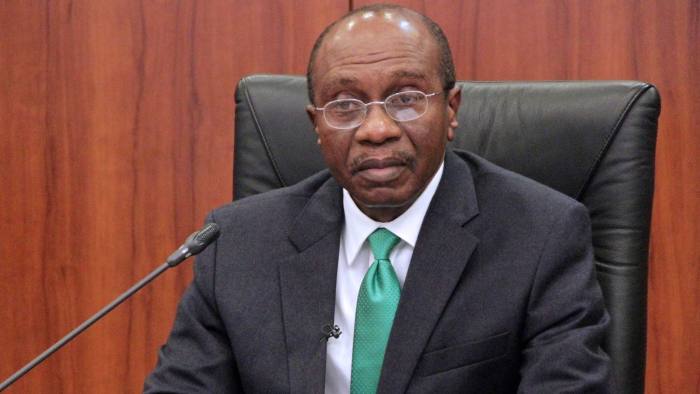
PRESIDENT Bola Ahmed Tinubu has suspended the Central Bank of Nigeria’s (CBN) Governor Godwin Emefiele, with immediate effect.
A press release on Friday, June 9, by the director of information, office of Secretary to the Government of the Federation (SGF), Willie Bassey, reportedly announced the suspension.
It said Emefiele had been directed to immediately hand over the affairs of his office to the Deputy Governor (Operations Directorate), who will act as the CBN governor pending the conclusion of the investigation into Emefiele’s office and reform of the financial sector.
Efforts made by The ICIR to reach the CBN Director of Corporate Communications, Isa Abdulmumin, did not go through as his phone line kept saying, “The person you are calling is busy; please try again at another time.”
Emefiele, born on August 4, 1961, assumed office as CBN governor on June 4, 2014. He was before becoming head of the country’s central bank, managing director of Zenith Bank Plc.
In October 2022, he had announced a redesign of the country’s N200, N500, and N1,000 notes to, according to him, fight terrorism financing, mop up money outside the banking system, and curb the use of cash during the 2023 general elections.
While the CBN said the newly redesigned N200, N500 and N1,000 notes would come into circulation on December 15, it said it would be phasing out the old notes of the three denominations on March 10.
But the policy brought so much agony to Nigerians as the naira notes became scarce, especially since the people had returned the old notes of the three denominations to commercial banks, as ordered by the CBN, which was not circulating the new, redesigned notes to the public.
Till now, the new notes are not circulating widely, and people have been using the old notes, which the Supreme Court ruled can be legal tender until December 31, 2023.
Tinubu had said during the election campaign that the redesign policy was deliberately formulated to make him lose the presidential election.
Emefiele’s suspension is long overdue, Abel Ezekiel, an investment and portfolio analyst, said.
“Inept, and error in financial system management ever experienced in Nigeria banking regulations sector,” were Ezekiel’s words describing Emefiele.
Coming shortly after his suspension, several online media platforms reported that the Department of State Services (DSS) had arrested Emefiele.
There has, however, been no official confirmation of the arrest.
In December last year, the DSS attempted to arrest the CBN chief after it accused him of financing terrorism, aiding and abetting terrorism, and committing other economic crimes.
The agency alleged that Emefiele funded the Indigenous People of Biafra (IPOB).
The secret police also accused him of fraud, money laundering, round-tripping and conferment of financial benefit to self and others.
On December 7, 2022, the DSS, in an ex-parte motion, prayed to the Federal High Court, Abuja, to grant it permission to arrest, probe and detain Emefiele.
However, on December 9, 2022, the court declined the application.
The chief judge, J. T. Tsoho, ruled that the DSS did not provide concrete evidence to substantiate its claims that Emefiele was involved in terrorism financing and economic crimes.
According to the court, such an application should have been accompanied by presidential approval because of the grave implications for the economy if Emefiele as CBN governor, was arrested and detained.
The former President, Muhammadu Buhari, did not approve Emefiele’s arrest until he left office on May 29.
FORMER Kano State governor Abdullahi Ganduje said he could have slapped his predecessor, Rabiu Kwankwaso, had he met him at the Presidential Villa in Abuja, on Friday, June 9.
Ganduje and Kwankwaso, on Friday evening, met with President Bola Tinubu separately over the demolition crisis in Kano and other troubles currently facing the state.
“I know he is in the building, but we have not met. Probably if we met, maybe I could have slapped him,” Daily Trust reported the former governor boasting.
The ICIR reports that less than a week after assuming office, the state governor Yusuf Kabir Abba (also known as Abba Gida-Gida) carried out his threat to pull down structures built on public land during Ganduje’s administration.
In the company of the state commissioner of police, Muhammed Gumel, the governor reportedlysupervised the demolition of a three-storey building with 90 shops.
Shop owners wailed as hoodlums made away with their goods while the exercise lasted.
The police in the state said it arrested 57 of the thieves.
Peeved by the demolition, Ganduje, Kwankwaso, the new governor, and their supporters have been exchanging tantrums over what residents said threatened the peace in the state.
Unconfirmed reports claim Tinubu ordered a stop to the exercise when briefed about the danger the action posed to the state.
The ICIR reports that the new governor is a political godson to Kwankwaso.
Kwankwaso’s party, the New Nigeria Peoples Party (NNPP), defeated Ganduje’s All Progressives Congress (APC) in the last governorship election in Kano State.
Kwankwaso was the presidential candidate of the NNPP in the February 25 presidential election. He came fourth in the poll.
Ganduje was deputy to Kwankwaso during his second term in office as Kano governor, between 2011 and 2015. The two leaders soon became rivals shortly after Ganduje took over power.
In a report on May 30, The ICIR reported how the new government vowed to revisit the murder case against Majority Leader of the House of Representatives, Hassan Ado Doguwa.
During Ganduje’s last days in office, the state ministry of justice cleared Doguwa of any wrongdoing in killings and destructions that greeted the presidential and National Assembly election in Doguwa/Tudun Wada Federal Constituency, which the lawmaker represents.
The report also disclosed how the governor sacked the state Pilgrim’s Welfare Board and replaced its eight members less than 24 hours after assuming office.
In his inaugural speech on May 29, after taking the oath of office, Yusuf vowed to review many of his predecessor’s decisions.
LECTURERS of the Rufus Giwa Polytechnic, Owo (RUGIPO), Ondo State, have embarked on strike over the non-payment of their salaries for the past 13 months.
The institution’s chapter of the Academic Staff Union of Polytechnic (ASUP), which made this known in a communiqué released on Friday, June 8, said the industrial action begins immediately.
In the communiqué, signed by the union’s chairman, Arikawe Ade, and secretary, Fapetu Damilola, the lecturers declared their refusal to partake in the forthcoming first semester examinations scheduled for next Tuesday unless the government intervenes in the matter.
“We want the payment in full of all outstanding (13 months) salary arrears owed to the staff of the institution,” the communique released by the lecturers said.
“The Congress wishes to strongly emphasise that the decision above is binding on all the financial members of the union.”
The union also expressed deep concerns over its members’ distressing circumstances due to accumulating unpaid salaries.
The communique further noted the adverse effects of the hike in fuel price on the lecturers’ well-being and their ability to fulfil official duties.
The lecturers urged the Ondo State government to assist the institution’s authorities in settling the salary arrears, like the state and local government workers, who are not being owed salaries.
However, the spokesperson of the polytechnic, Samuel Ojo, said the management would meet with the lecturers to resolve the dispute.
“If there is now a problem or an issue to the extent that the lecturers are going on strike, then we will return to the discussion table and resolve them,” he said.
“I can assure you, the matter will be resolved amicably between the school and the lecturers.”
When contacted on the matter, Olabode Richard, the Chief Press Secretary to Governor Rotimi Akeredolu, said he will get back to The ICIR.
But he is yet to do so at the time of filing this report.
The lecturers, in 2019, staged a protest over the same unpaid salary arrears but returned to work after promises were made that the salaries would be paid.
THE National Universities Commission (NUC) has offered provisional licence to 37 private universities.
This brings the number of private universities in the country to 148 and the nation’s total universities to 264, according to the Permanent Secretary, Federal Ministry of Education, David Adejo, who addressed education stakeholders at the licencing event that took place at the NUC’s headquarters, in Abuja, on Friday, June 9.
Former President Muhammadu Buhari’s administration approved the university two weeks before leaving office in May.
Adejo, in his address, said the nation needed more universities to accommodate its teeming population seeking admission.
According to him, the arguments that the country should nurture the institutions already on the ground and cease to create more universities were untenable.
“Government is also well aware that countries that are consistently well-ranked in Human Development indices have, in recognition of the important role of universities in human capital development, maintaining a respectable number of universities relative to their population.
“In relation to Nigeria’s population of over 200 million, the current 264 universities are quite low when compared to those of other economies such as Korea, Indonesian among others,” Adejo said.
He said the government would monitor the new institutions for three years and affiliate them with older universities for effective operation and monitoring.
He explained, “This is part of NUC’s initiative for early-warning signals to detect compromises in quality for the application of corrective and remedial measures to redress such situations.
“Substantive licences will be issued to well-managed institutions after the three years of probation following their satisfactory performance and growth, within guidelines stipulated by the Commission.”
The Executive Secretary of NUC, Abubakar Rasheed, said the universities’ licencing went through scrutiny, adding that the Commission ensured their proposed academic programmes would help the nation address some of its challenges.
Rasheed said Nigerian universities have grown in the last 30 years from less than 40 in 1996 to 264 in 2023.
He cautioned the schools’ managements to ensure they abide by the code of practice and all laws guiding the operations of universities in the country.
The universities are Huda University, Gusau, Zamafara State; Franco British International University, Kaduna State; Canadian University of Nigeria, Abuja; Miva Open University, Abuja FCT; and the Gerar University of Medical Science Imope Ijebu, Ogun State; Rayhaan University, Kebbi; Muhammad Kamalud University Kwara; Sam Maris University, Ondo; Aletheia University, Ago-Iwpye Ogun State; and Lux Mundi University Umuahia, Abia State.
Also on the list are West Midlands Open University, Ibadan, Oyo State, Amaj University, Kwali, Abuja, Prime University, Kuje, FCT Abuja, El-Amin University, Minna, Niger State, College of Petroleum and Energy Studies, Kaduna State, Jewel University, Gombe state, Nigerian University of Technology and Management, Apapa, Lagos State, Al-Muhibbah Open University, Abuja and Al-Bayan University, Ankpa, Kogi State; Maduka University, Ekwegbe, Enugu State; PeaceLand University, Enugu State; Amadeus University, Amizi, Abia State; Vision University, Ikogbo, Ogun State; and Azman University, Kano State.
Others are University on the Niger, Umunya, Anambra State, Elrazi Medical University Yargaya University, Kano State, Venite University, Iloro-Ekiti, Ekiti State, Shanahan University Onitsha, Anambra State, The Duke Medical University, Calabar, Cross River State, Mercy Medical University, Iwo, Ogun State, Cosmopolitan University Abuja and Iconic Open University, Sokoto State; British Canadian University, Obufu Cross River State; Hensard University, Toru-Orua, Sagbama, Bayelsa State; Phoenix University, Agwada, Nasarawa State; Wigwe University, Isiokpo Rivers State; and Hillside University of Science and Technology, Okemisi, Ekiti State.
A NIGERIAN school teacher and filmmaker, Bello Habeeb Galadanchi, has responded to criticism for choosing to teach children in China instead of his home country.
In response to the criticism, Galadanchi, who holds a PhD in Comparative English, on Thursday, June 8, defended his decision by shedding light on the favourable work conditions teachers have in China.
As if to demonstrate the level of value and recognition that teachers receive in China, Galadanchi shared the photo of a shopping card which he claimed was distributed to all teachers in his school.
He explained that the card belonged to the second-largest retail app in China and was given as a gesture of appreciation from the school’s Human Resources office.
“I’ve received a lot of criticism for teaching primary school kids in China, instead of Nigeria. Out of the blue, our HR office gave out these cards (2nd biggest retail app in China) to all teachers yesterday just to show appreciation. You can only imagine what our salaries are,” he tweeted.
Retail App Gift Card
One twitter user, @ManhasnoHandle reacted by saying: “Even though I’d what ur reasons are for doing what you do I was expecting an answer that’s deeper than ‘The Pay is better’.”
Galadanchi suggested that the comments made by his critics lacked depth and failed to acknowledge the comprehensive support provided to teachers in China.
He wrote: “Please don’t go around Nigeria telling people that ‘The Pay is better’ is not deep. Also, my answer is implied, if you read it well, it means ‘we are well taken care of’. On the other hand, your comment is shallow”.


![[INVESTIGATION] Baba Aisha, Nigeria’s fake ‘doctor’ cashing out on deadly concoction](https://www.icirnigeria.org/wp-content/uploads/2023/06/Rafiu-Isa-sells-Sacra-Herbs-in-Lugbe-Abuja-768x578.jpg "[INVESTIGATION] Baba Aisha, Nigeria’s fake ‘doctor’ cashing out on deadly concoction")