Home Blog Page 897

EXCLUSIVE: FG yet to pay ASUU’s rival, CONUA, 8 months salaries backlog

THE Federal Government is yet to pay the Congress of University Academics (CONUA) eight months salaries of its members withheld while the strike of the Academic Staff Union of Universities (ASUU) lasted in 2022.

The ICIR reported that ASUU downed tools over unmet demands by the Federal Government, including a 2009 agreement with the lecturers, which the government failed to implement.

ASUU went on strike for eight months – from February 14 to October 14.


READ ALSO:
Strike likely if govt fails to meet our demands – ASUU

ASUU: Why FG should reconsider no work, no pay policy – Labour expert

Half salaries: Gbajabiamila intervenes in ASUU, FG fresh row

ASUU: Why FG should reconsider no work, no pay policy – Labour expert


The ICIR reported that the organisation was on strike for over 600 days under immediate former President Muhammadu Buhari.

In what many Nigerians saw as a plan to weaken ASUU, the Buhari government approved the request by CONUA, a breakaway ASUU faction, to be recognised as a labour union. The government also certified the new body during the last ASUU strike.

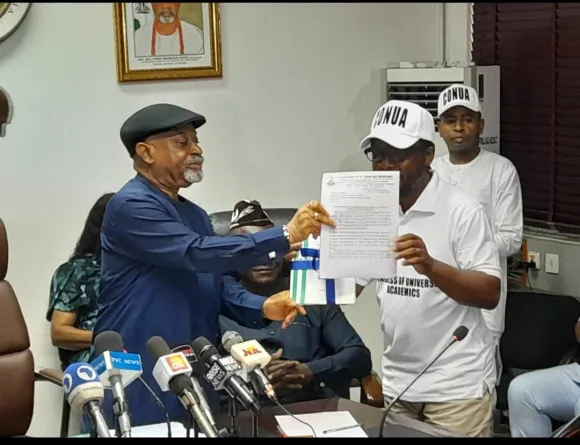
ASUU consequently called off its strike ten days after CONUA’s certification, executed by the former Minister of Labour and Productivity, Chris Ngige.

The union attributed its decision to end the strike to interventions by top government functionaries, other prominent Nigerians, and pleas from parents and students.

The government vowed it would not pay ASUU for the period its members were on strike but would pay CONUA, which it said did not participate in the strike but was forced out of classrooms because ASUU ‘shut the universities’.

However, ASUU argued that only university management could shut the institutions, not its members.

The group described the government’s decision to pay CONUA, whose members did not work during the strike, as discriminatory.

The Ngige-led government’s team took ASUU to court to validate its ‘no work, no pay’ policy.

On Tuesday, May 30, The ICIR reported the court upholding the government decision.

Speaking with The ICIR reporter on the telephone on Thursday, June 1, CONUA’s National Secretary, Henri Oripeloye said members of the union were yet to receive the eight months salary the government promised.

He said, “It has not been paid. We have done all the government asked us to do regarding that. We are waiting for the payment. We have submitted everything they asked us to submit, confirming that we were locked out of the school. For us, we have done our bit of it. We are waiting for the government to fulfil its part of the bargain.”

Oripeloye said part of the information the government demanded from CONUA members is their names and the universities where they teach.

He said the group had 2,000 members waiting for the payment.

Asked if CONUA suspected deception in the Buhari government’s handling of its promise to its members, Oripeloye said, “We believe that government is a continuum. I hope they will look at those things and do the needful,” referring the President Bola Tinubu’s administration which took over from Buhari on Monday, May 29.

He also said there was no reason for anyone to suspect that the government was deceiving the union over the promise.

When contacted on the telephone, the Head of Press and Public Relations, Federal Ministry of Labour and Employment, Olajide Oshundun, said, “If the government has said it will pay them, it will pay them.”

He added: “That one is decided already. Everybody the government said it would pay, it would pay. They will get it even if they have yet to get their money.”

Meanwhile, ASUU President, Emmanuel Osodeke told The ICIR that the union was appealing the court judgment asking its members to forfeit their salaries when they were on strike. “We are appealing the judgment,” he said.

Insecurity: Tinubu issues marching orders to service chiefs

PRESIDENT Bola Ahmed Tinubu has instructed the nation’s service chiefs to develop a comprehensive plan to address the ravaging insecurity, including crude oil theft, in the country.

Tinubu, who issued the directive during his first meeting with the service chiefs at the State House, Abuja, on Thursday, June 1, also demanded increased collaboration among the heads of security agencies for efficiency.

Addressing journalists at the end of the meeting, National Security Adviser (NSA) Babagana Monguno, said that the President tasked the security chiefs on the necessity of avoiding conflicting actions and instead striving towards a unified purpose.

“The President has emphasised the importance of the security agencies redoubling their efforts to move the country forward. He believes in contemporary security measures that meet the demands of the present time.”

He said that Tinubu made it clear that the nation’s deteriorating security fortunes cannot be accepted, urging the agencies to work in unison with a coordinated approach.

“Having been briefed by the participants of the meeting, Mr. President, addressed prevailing issues confronting the nation in terms of insecurity and also mentioned his own philosophy towards dealing with national security issues.

“He is already mandated by the security agencies to come up with a blueprint as far as he knows as far as it’s concerned, it doesn’t have the luxury of time. And whatever changes will be made have to be done as soon as possible,” he said in part.

“The President also has decided that whatever ventures the armed forces are going to be engaged in, they must carry along those operatives in the theatre. They must be well fed, well kitted, motivated and given all that they require.

“The President has said clearly that he will do whatever is within his powers to enable the operational elements but the intelligence agencies must also make their work easy for them by providing the type of intelligence that they require to carry out the assignment.”

According to Monguno, the President expressed his desire to reform the nation’s security sector, stating that he would utilise his powers to facilitate the operational elements, while also emphasising the responsibility of intelligence agencies to provide the necessary information for successful missions.

He said that Tinubu further stressed the importance of inclusivity and support for operatives in the field, adding that the armed forces must ensure the well-being, adequate provisions, and motivation of their personnel involved in various operations.

“He is going to embark on a lot of reforms in terms of our security architecture, he is going to take a closer look at our misfortunes in the maritime domain, focusing particularly on the issues of oil theft, that is not going to tolerate. Wherever the problem is coming from, it must be crushed as soon as possible,” he added.

Those in attendance include the Chief of Army Staff, Farouk Yahaya; Chief of Naval Staff, Awwal Gambo; Chief of Air Staff, Air Marshal Isiaka Amao; and Inspector-General of Police, Usman Alkali Baba.

Nigeria is currently confronted with many security challenges spanning various regions. The North-West and North-Central regions are contending with banditry, while the North-East is still grappling with more than decade threat of Boko Haram. The South-West and South-South regions are experiencing separatist movements, while the South-South is facing issues of oil theft and pipeline vandalism.

Data by the Council on Foreign Relations’ Nigeria Security Tracker (NST) have shown that non-state actors killed 31,821 people between May 2015 and April 2023 during the reign of former President Muhammadu Buhari.

Similarly, according to the Nigerian Extractive Industries Transparency Initiative (NEITI), Nigeria lost 619.7 million barrels of crude oil valued at N16.25 trillion ($46.16 billion) to crude oil theft between 2009 and 2020.

Subsidy removal: Price will come down — NNPC

THE Chief Executive Officer of the Nigerian National Petroleum Company Limited (NNPC) Mele Kyari, has addressed concerns about the increasing prices of Premium Motor Spirit (PMS), otherwise known as petrol, across Nigeria. 

Kyari assured Nigerians that with the final removal of subsidy, competition among major players in the oil sector would lead to a decrease in petrol prices, contrary to the recent upward trends causing panic in the country.

Kyari spoke on Arise TV’s Morning Show, on Thursday, June 1.

The NNPC had adjusted the pump price of petrol by about 200 per cent to reflect market realities immediately after President Bola Tinubu declared the final removal of subsidy.

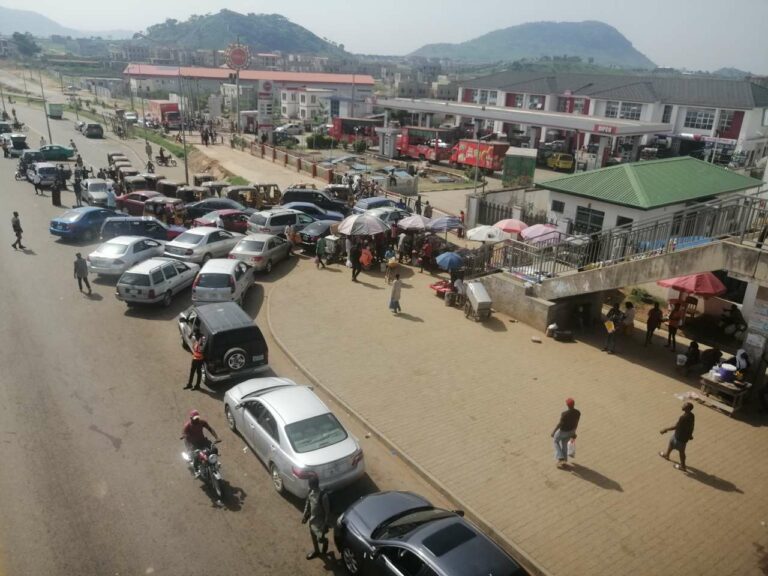
The ICIR, on Wednesday, May 31, reported that following the removal of petroleum subsidy, fuel queues resurfaced at filling stations nationwide as many retailers shut their stations, hoarding their stock and creating scarcity with a view to hiking fares later.

In a template released on Wednesday, May 31 to marketers, the NNPC confirmed the astronomical rise in the pump price of the product, with the minimum being the N488 per litre obtainable in Lagos, while it will be selling as high as N557 per litre in Maiduguri.

The ICIR confirmed that the price in different states varies based on the vagaries of logistics, especially transportation costs.

Meanwhile, speaking on the issue during Arise TV’s Morning Show on Thursday, Kyari said the removal of subsidy would encourage new entrants into the market, fostering competition and phasing out monopoly.

He stressed that the development would lead to healthy competition and ultimately result in a downwards review of petrol prices nationwide.

“The beauty of this (subsidy removal) is that there will be new entrants (into the market) because oil marketing companies’ reluctance to come into the market all along is the very fact of the subsidy regime that is in place.

“And that subsidy regime doesn’t have a guarantee of repayment back to the those who provide the product at subsidise price and now that the market is being regulated, oil marketing companies can actually import product or even if it is produced locally, they can buy and take it into the market and sell it at its retail price.

“Therefore, you will see competition, even with NNPC. And by the way, by law, NNPC cannot do more than 30 per cent of the market going forward. As soon as the market stabilises, oil marketing companies are able to come in…

“Competition will definitely come in and the market will regulate the prices itself. Therefore, this is just an instantaneous price and within a week or two, you will continue to see different prices because of different approaches from major players, companies have different approaches to it and competition will guide that. Ultimately, you’d see changes downwards and it is very likely because efficiency will come in.

“As soon as competition comes in, people will become more efficient in their depots, in managing their trucks and in managing their fuel stations so that people can come to their stations. And it is showing already, right now, you will see motorists going to stations where they can have price differences, so this will regulate the market and on its own, the price will come down naturally and I don’t see any doubt about this,” Kyari said.

Speaking on the issue of fuel stations raising their pump prices despite having subsidised products in stock, Kyari described the development as “a typical stock management matter affecting all commodities”, not just petroleum.

He noted that if the market conditions were reversed, prices could have collapsed, and those holding old stock would have to sell at lower prices to align with market conditions.

Kyari added, “It could have been the other way round, prices could have collapsed downwards and those holding the old stock will have to sell at lower prices to arrive at market condition.

“It is not something serious or strange, this is a stock management issue and it is very typical, no one can do anything different about this.

“The prices we are seeing today at our station are the current price of the commodity. This means that prices in the market can go down at any time and of course, the market will adjust itself.”

FG, Labour meeting deadlocked

The ICIR reports that, in Abeokuta, Ibadan, Osogbo, Akure and Ado-Ekiti, petrol will be selling for N500 per litre. In Port-Harcourt, Calabar, Benin and Asaba, the product will be N511 per litre.

In Ilorin, Uyo, Umahia and Owerri, it is also N511 per litre, while it is N537 per litre in Abuja, Jos, Lafia, Minna and Makurdi. It gets higher in Kano, Kaduna, Dutse and Gusau at N540 per litre, and N545 per litre in Birnin Kebbi.

It is highest in Maiduguri and Damaturu at N557 per litre.

According to Dickson Aja, a commercial bus driver interviewed by The ICIR, he purchased fuel at a rate of N530 per litre in the Gwagwalada Area Council of the Federal Capital Territory.

On Wednesday, May 31, the Federal Government and organised labour met on the issue of fuel subsidy but the meeting ended in a deadlock as they failed to reach a consensus following the hike in petrol pump prices to over N700 from N195 per litre by oil marketers.

Organised labour was represented at the meeting by leaders of the Nigerian Labour Congress (NLC) and the Trade Union Congress (TUC), Joe Ajaero and Festus Osifo, respectively.

Kyari; a former NLC leader and former governor of Edo State, Adams Oshiomhole; Permanent Secretary, State House, Tijjani Umar; and Head of Service of the Federation, Folashade Yemi-Esan, represented the Federal Government.

After the meeting, Dele Alake, who spoke on behalf of the Federal Government, said negotiations between the two sides were ongoing.

The meeting will be reconvened on a yet-to-be-determined date.

Tribunal admits more evidence in Obi’s petition against Tinubu

THE Presidential Election Petition Court (PEPC) has admitted Certified True Copies (CTC) of electoral documents as evidence in the petition filed by the presidential candidate of the Labour Party (LP) Peter Obi, against the election of President Bola Tinubu.

The documents, consisting of polling unit results known as forms EC8A, were tendered by Obi’s legal team led by Awa Kalu, a Senior Advocate of Nigeria (SAN), during the resumed hearing of the suit on Thursday, June 1.

During the proceedings, Obi’s legal team informed the court of their intention to present CTC of the documents from 18 states.

But due to time constraints, they could only present documents from six states before their allotted time expired.

The result sheets tendered during the proceedings were from Local Government Areas in Rivers, Benue, Cross River, Niger, Osun and Ekiti states.

Among the forms EC8As presented to the court, the petitioners initially intended to present the bundle of forms for 21 Local Government Areas in Rivers State, but during their presentation, they could only reconcile and tender 15 of the forms.

The court noted this inconsistency.

The respondents in the petition, including Tinubu’s legal team led by Wole Olanikpekun, SAN, objected to the admissibility of the Certified True Copies of the documents.

They stated they would provide their reasons for objection in their final written addresses.

The Independent National Electoral Commission (INEC) and the All Progressives Congress (APC) also opposed the admissibility of the documents.

However, the five-man panel, led by Haruna Simon Tsammani, admitted the documents from the 15 Local Government Areas in Rivers State as evidence and marked them as Exhibits PB1 to PB15.

The court also admitted electoral forms from 23 Local Government Areas in Benue State, marking them as Exhibits PT1 to PT23.

In the same vein, results from 18 Local Government Areas in Cross River State, marked as Exhibits PD1 to PD18 and results from LGAs in Niger, Osun and Ekiti states were equally admitted as evidence.

The panel adjourned further proceedings in Obi’s petition to June 2, for continuation of hearing.

The ICIR earlier reported that the tribunal, during its sitting on Tuesday, May 30, admitted a United States court judgment against Tinubu as evidence. The judgment, which included five exhibits presented by Obi’s counsels, alleged that Tinubu had been convicted of drug trafficking and fined $460,000.

Obi’s petition

In their petition, Obi and the LP argued that when Tinubu’s running mate, Kashim Shettima, became the vice presidential candidate, he was still nominated as the APC candidate for the Borno Central Senatorial election.

They also challenged Tinubu’s eligibility, alleging that he was previously indicted and fined $460,000.00 by a United States District Court for an offence involving dishonesty and drug trafficking.

Obi, who came third according to results announced by INEC, claimed that the election was invalid due to corrupt practices and non-compliance with the provisions of the Electoral Act, 2022.

He argued that INEC breached its regulations and guidelines by not prescribing and deploying technological devices for voter accreditation, verification, continuation, and authentication as required.

The petitioner sought a declaration from the court that Tinubu was not qualified to contest the election and that all votes recorded for him were wasted.

He also requested the court to determine that he received a majority of lawful votes and satisfied constitutional requirements to be declared the winner.

In the alternative, he called for the cancellation of the election and the conduct of a fresh election in which Tinubu, Shettima, and the APC would not participate.

Nigeria’s tax-to-GDP ratio rose to 10.86% in 2021 – FIRS

THE Federal Inland Revenue Service (FIRS) said Nigeria’s tax-to-gross domestic product (GDP) ratio, which hovered between 5 and 6 per cent for 12 years, had risen to 10.86 per cent by the end of 2021.

The new ratio was communicated to the FIRS via a letter signed by the Statistician-General of the Federation, Adeyemi Adeniran, on May 25 2023 following a review by the Nigerian Bureau of Statistics (NBS), in collaboration with the Federal Ministry of Finance and the FIRS, using data from 2010 to 2021.

The revision took into account revenue items hitherto not previously included in the computations, particularly relevant revenue collected by other agencies of government.

Notably, tax-to-GDP ratio is a measure of a nation’s tax revenue relative to the size of her economy as measured by its GDP.

The ratio is a useful tool for assessing the health of a country’s tax system and highlighting its tax potentials relative to the size of its economy. It is the ultimate measure of the effectiveness of a nation’s tax system compared to other countries.

In a statement announcing the new tax-to-GDP ratio, the executive chairman of FIRS, Muhammad Nami, explained that sources which previously put the country’s tax-to-GDP ratio at between 5 per cent and 6 per cent did not consider tax revenue accruing to other government agencies in their computations.

Particularly, revenues collected by agencies other than the FIRS, Customs and states’ Internal Revenue Service were excluded.

This situation was peculiar to Nigeria as most other countries operate harmonised tax system (all or most tax revenues are collected by one agency of government) with single-point tax revenue reporting. As such, all relevant tax revenues are included in the computation of the tax-to-GDP ratio.

“In order to correctly state the tax-to-GDP ratio, the FIRS initiated a review and re-computation of the ratio for 2010 to 2021. In recomputing the ratio, key indicators that were previously left out were taken into account. This resulted into a revised Tax-to-GDP ratio of 10.86% for 2021 as against 6% hitherto reported,” the statement, issued on May 31, noted.

Nami further said that Nigeria’s tax-to-GDP ratio should ordinarily be higher than 10.86 per cent but for certain economic and fiscal policy factors, including tax waivers and leakages occasioned by the country’s fragmented tax system.

“It is important to note that the tax-to-GDP ratio for Nigeria should be higher, but for the impact of tax waivers contained in our various tax laws (including exemptions to Micro, Small and Medium Enterprises brought in by the Finance Act, 2019), low tax morale, leakages occasioned by the country’s fragmented tax system, and the impact of the rebasing of the GDP in 2014”, he explained.

The FIRS boss implored the government to consider reviewing its policies on tax waivers, thereby guaranteeing increased revenue to prosecute its programmes and positively move the needle of the country’s tax-to-GDP ratio.

Adeniran, in his letter to the FIRS executive chairman, described the revision as a facelift to the tax-to-GDP ratio for Nigeria in comparison with other countries.

Adeniran further noted that the NBS had “carefully and diligently reviewed the methodology used for computing the revised estimates, as well as the various items that have been included in the new computation”, and that the NBS had, as an outcome of its review and meetings with the FIRS, adopted the new tax-to-GDP computation.

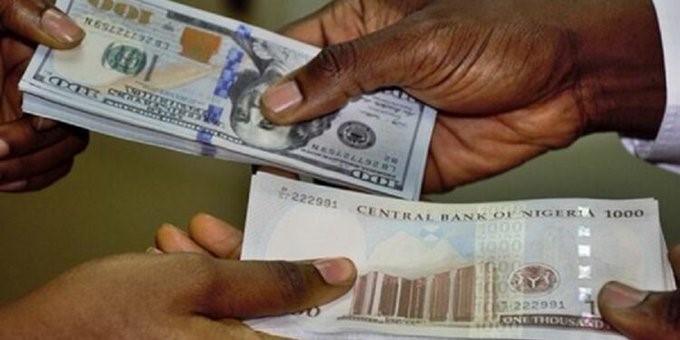
CBN refutes devaluing naira to N630/$1

THE Central Bank of Nigeria (CBN) has debunked media reports it has devalued the country’s currency, the naira, against the United States dollar to N630/$1.

In a statement on Thursday, June 1, CBN’s Acting Director of Corporate Communications, Isa AbdulMumin, described the report as false and should be disregarded.

The ICIR can report that some mainstream media had reported on Wednesday, May 31 that the CBN had devalued the naira.

AbdulMumin said, “The attention of the Central Bank of Nigeria (CBN) has been drawn to a news report by the Daily Trust newspaper of June 1, 2023 titled, ‘CBN Devalues Naira To 630/$1.’

“We wish to state categorically that this news report, which in the imagination of the newspaper is exclusive, is replete with outright falsehoods and destabilising innuendos, reflecting potentially wilful ignorance of the said medium as to the workings of the Nigerian Foreign Exchange Market.”

The apex bank said the exchange rate at the Investors & Exporters (I&E) window traded this morning, June 1, at N465/US$1 and had been stable around this rate for a while.

The regulatory authority urged the public to ignore the news report, as it was speculative and calculated to cause panic in the market.

“Media practitioners are advised to verify their facts from the Central Bank of Nigeria before publishing in order not to misinform the public,” it added.

Meanwhile, the naira appreciated at the I&E window by 0.01 per cent to N464.47/$1 yesterday, May 31, from N464.50/$1 the previous day.

At the parallel market, it appreciated to N760/$1 yesterday from N766/$1 the previous day.

The ICIR reports that the last official devaluation of the naira was in May 2021 when the CBN adopted the Nigerian Autonomous Foreign Exchange Rate (NAFEX), known as the Investors’ and Exporters’ (I&E) forex window rate, as its official exchange rate to the dollar.

Devaluation is the deliberate downward adjustment of the value of a country’s money relative to another currency, group of currencies, or currency standards.

A country can devalue its currency for reasons like boosting exports, narrowing down trade deficit, managing sovereign debts, tackling inflation, boosting purchasing power for foreign activities, guarding against currency wars, and controlling negative investors’ sentiment.

Zamfara gov accuses Matawalle of stealing 17 vehicles, TVs, cookers

ZAMFARA State governor, Dauda Lawal Dare, has said his predecessor, Bello Matawalle, stole 17 vehicles belonging to the state government.

Dare, who made the allegations while speaking with a local radio station in Gusau, the state capital, on Wednesday, May 31, also said Matawalle looted various public properties, including televisions and cookers, from the Government House.

“Former governor Bello Matawalle had gone away with 17 vehicles from his office and those in the deputy governor’s office claiming that the vehicles are his personal belongings. In fact, not even office equipment were spared,” he said.

“The atrocities are beyond comprehension. I’ve never seen crass irresponsibility like this one. But, with good planning I’m assuring the citizens of the state that we will do our best to correct the anomalies.”

Dare, a member of the Peoples Democratic Party (PDP), defeated the incumbent, Matawalle, of the All Progressives Congress (APC) in the March 18 governorship election.

Matawalle is yet to react the Dare’s allegations.

However, the state government’s comments came days after the Economic and Financial Crimes Commission (EFCC) disclosed that Matawalle is being investigated over an alleged N70 billion theft perpetrated through fraudulent contracts awarded by his administration.

The anti-graft agency made the disclosure after Matawalle accused the Commission’s chairman Abdulrasheed Bawa of demanding $2 million bribe from him.

“The Commission would like to put the nation on notice to expect more of the kind of wild allegations made by Matawalle as those at the receiving end of EFCC’s investigations fight viciously back.

“But the real issue with Matawalle is that he is being investigated by the EFCC over allegations of monumental corruption, award of phantom contracts and diversion of over N70 billion,” EFCC Director of Communication Osita Nwajah said while addressing journalists on May 18.

Accusing the governor of “monumental” corruption, the EFCC stated that it tracked down more than 100 companies that received payments from the claimed funds while there was no evidence of service to the state.

The EFCC said that as part of the extensive investigation of contracts awarded by the Matawalle administration, especially for phantom projects in the local government areas, it recovered N300 million from a company, Fezel Nigeria Limited.

It added that funds were traced to the Zamafara Investment Company.

Matawalle, in an interview with the BBC Hausa Service, alleged that EFCC chairman, Bawa, demanded $2 million bribe from him.

Urging the Federal Government to probe Bawa and the activities of the Commission under him, Matawalle wondered why the EFCC always beam its searchlight on state governors.

Matawalle further asserted that if Bawa were to leave his position, it would become evident that he lacks integrity.

“It is not just to always blame governors. It is not only governors who have treasury; the Federal Government also has,” he said.

“What does the EFCC boss do to them? As he is claiming he has evidence on governors, let him show to the world evidence of those at the federal level.

“If he exits office, people will surely know he is not an honest person. I have evidence against him. Let him vacate office.

“I am telling you, within 10 seconds, probably more than 200 people will bring evidence of the bribe he collected from them. He knows what he requested from me, but I declined.

“He requested a bribe of $2 million from me, and I have evidence of this. He knows the house we met, he invited me and told me the conditions. He told me governors were going to his office, but I did not. If I don’t have evidence, I won’t say this.”

Bawa had since denied any wrong doing and asked Matawalle to prove the allegation of corruption against him.

What to know about late Ghanaian author, Ama Ata Aidoo

0

ON Wednesday, May 31, renowned Ghanaian author, playwright and poet, Ama Ata Aidoo, passed on. 

She was 81.

Her passing was announced in a post on her official Instagram account.

“We are despondent to announce to you the passing away of our beloved grandmother, mother, auntie and sister Ama Ata Aidoo. A woman with intelligence who helped the African Literature scene.

“She’s indeed with the most high up there. Till we meet again, we bid you farewell mama. You’re indeed a legend. Rest easy Ama Ata Aidoo. #rip #restinpeace #restinparadise #ghana #literature #amataaidoo”, the message read.

Aidoo reportedly died after a brief illness, according to a statement released by her family.

“Our beloved relative and writer passed away after a short illness,” the family disclosed while urging members of the public to respect their privacy as they mourn the literary icon.

Born on March 23, 1942, in Abeadzi Kyiakor, Gold Coast (now Ghana), Aidoo was celebrated for her significant contributions to African literature and her commitment to feminist ideals.

Her father had established the first school in their village which held a significant influence on her upbringing.

At the tender age of 15, she resolved to pursue a career as a writer, and within a mere span of four years, she managed to fulfill her aspiration when she received encouragement to participate in a writing competition.

She studied English and Drama at the University of Ghana and went further to earn a Masters degree in English from Stanford University in the United States.

She also furthered her studies at the University of Ghana, where she obtained a Diploma in Education.

She produced her first play, ‘The Dilemma of a Ghost’ in 1965 which made her the first published African woman dramatist.

In the early 1980s, she assumed the role of education minister. However, she decided to step down from the position due to her inability to implement tuition-free education.

Aidoo’s writing often explores themes of gender, identity, cultural conflict, and post-colonialism. She is known for her strong female characters who challenge societal norms and advocate for women’s rights.

Her works are characterised by their rich storytelling, vivid imagery, and sharp social commentary.

Some of Aidoo’s notable works include her novel “Our Sister Killjoy” (1977), which critiques the impact of Western culture on Africa, and her collection of short stories titled “No Sweetness Here” (1970), which delves into issues of gender and social inequality.

She wrote several plays which were read in schools across West Africa, including “Anowa” (1970) and “Dilemma of a Ghost” (1965), both of which examine the complexities of African identity and cultural assimilation.

Another of her works, “Girl who can” (2003) analyses African women’s struggle to find their rightful place in society. In the “African love stories” (2006), a double award-winning collection of love stories, she tries to debunk the impression that African women are impoverished victims. The stories in the collection deal with challenging themes surrounding some of the most complex love stories.

Throughout her career, Ama Ata Aidoo received numerous accolades for her literary achievements.

In 2000, she was awarded the Commonwealth Writers’ Prize for Best Book (Africa) for her novel “Changes.” She has also been honoured with the Nelson Mandela Award for Poetry (2015) and the Ghana Book Award for Prose (2018).

Aside from her literary pursuits, Aidoo was actively involved in promoting education and women’s rights in Ghana.

She held various academic positions, including serving as a lecturer and professor at universities in Ghana, the United States and Zimbabwe.

Her commitment to feminism and social justice has made her a respected figure both in Ghana and internationally.

She was a major influence on the younger generation of writers, including Nigeria’s awarding-winning Chimamanda Ngozi Adichie.

Through her writings and activism, she made significant contributions to African literature, feminism and the exploration of African identity in the post-colonial context.

Tributes

Several notable personalities, including actors and members of the literary community, have paid tribute to the late Aidoo.

Mourning Aidoo, veteran Ghanaian actor, Kofi Adjorlolo, noted that a great African intellectual had fallen.

Oh I am so very distraught. Another great African intellectual has fallen. Her books include that of other great African intellectuals.

“Prof Ama Aidoo and other great African minds fine-tuned some of us, especially ‘ME’ to realise what African heritage means, where we are from, who we are and what the outlook will be in the future for us as Africans.”

A Ghanaian NGO, Pen to Paper Ghana, described Aidoo as a great supporter of Ghanaian writers. 

“On her passing, we celebrate the life and legacy of Prof. Ama Ata Aidoo, writer, poet, activist and great supporter of the Writers Project of Ghana from the very start. While we mourn her passing, we also celebrate her work for writers, women and the literary space”.

Similarly, the President of Institute Museum of Ghana, Joseph Awuah-Darko, paid tribute to Aidoo in a social media post where he described her as a defender of marginalised members of the society.

In the post he said, “RIP Prof. Ama Ata Aidoo- poet and a literary luminary whose passing leaves a profound void, leaves behind a legacy that will forever illuminate the literary world. She was secretary in Ghana from 1982-1983. Through her works, Aidoo championed the voices of African women and deftly dismantled societal barriers.

“Aidoo’s intellectual prowess and unwavering commitment to social justice serve as a guiding light, reminding us of the power of literature to challenge norms, ignite change and shape a more inclusive world – a defender of marginalised members of society.”

Awuah-Darko however noted that Aidoo’s indomitable spirit will live on through her works.

“In Prof. Ama Ata Aidoo’s departure, we mourn the loss of a literary giant, but her indomitable spirit lives on through her works, ideas and the lasting impact she has made. Her works remain an enduring testament to her brilliance courage, unwavering commitment to equality and justice.

“You are one of the reasons I wanted to be a writer, we will miss you.”

A look at economic issues Tinubu seeks to address

ON assumption of office, President Bola Ahmed Tinubu highlighted the direction of his economic policy to kick-start his administration.

The policy is expected to address some burning issues that he inherited from his predecessor, Muhammadu Buhari.

Tinubu was sworn in as Nigeria’s 16th president on May 29, having been announced as the winner of the February 25, 2023 presidential election by the Independent National Electoral Commission (INEC) after securing over eight million votes to defeat 17 other candidates. 

During Buhari’s eight years as president, Nigeria’s economy was marred by surging inflation rates, poverty, corruption, and rising food prices, among other social challenges. The ICIR captured these in its ‘Buhari’s eight years in government’ series.

Tinubu is looking to implement key principles that will, according to him, “remodel the economy to bring about growth and development.” 

The president said while giving his inaugural speech that his administration would target a higher gross domestic product growth and significantly reduce unemployment. 

Nigeria’s GDP recently declined to 2.31 per cent in the first quarter of 2023, according to the National Bureau of Statistics (NBS). 

Tinubu intends to reform the budget without endangering inflation, utilize industrial policies to promote domestic manufacturing, make electricity more affordable and accessible, review complaints around multiple taxations for investors, and ensure that foreign businesses repatriate their hard-earned dividends. 

Tinubu also said he would create meaningful opportunities for our youth by creating one million new jobs in the digital economy, fashioning an omnibus Jobs and Prosperity bill to the National Assembly, securing the commodity exchange boards on rural income especially towards agriculture, removing fuel subsidy, and unifying the exchange rate. 

Inflation, manufacturing and access to electricity data

Tinubu’s economic policies are not unconnected to several debilitating figures around Nigeria’s economy regarding inflation, manufacturing and access to electricity.

For instance, the NBS recently disclosed that the country’s headline inflation rose to 22.22 per cent in April 2023, while food inflation surged to 24.61 per cent. 

This is the fourth consecutive rise in 2023. The ICIR reported that under the past administration, the inflation rate rose 59 times in eight years, from 9 per cent in May 2015. 

The NBS first quarter 2023 GDP report showed that the manufacturing sector contributed just 10.1 per cent to the country’s GDP, as against 10.20 per cent in the first quarter of 2022.

The ICIR reported how the Central Bank of Nigeria (CBN) increased the monetary policy rate to 18.5 per cent in May 2023. This increase will especially affect businesses that source their funding from financial institutions.

On electricity, about 90 million Nigerians do not have access to grid power, according to data from the Nigerian Energy Transition Plan (NETP) portal.

The NETP also said that the operational grid capacity of the country was at six gigawatts, while 80 per cent of the operational capacity came from off-grid diesel/petrol generators.

Taxation, unemployment, exchange rate

Also, the President seeks to address issues around multiple taxations, unemployment of several youths, and dual exchange rates.

The ICIR reported how Buhari approved the increase of some taxes in April, barely a month before he handed over.

In Nigeria, multiple taxes collected by agencies of the Federal, state and local government have crippled several businesses.

A document published by the Federal Inland Revenue Service (FIRS) revealed that at least eight taxes are collected by the Federal government, 11 by the state government, and 20 by local government agencies. 

The NBS said that 33.33 per cent of Nigerians were unemployed, while youth unemployment was at 42.5 per cent as of the fourth quarter of 2020. In real terms, it means 23.2 million Nigerians were unemployed. 

However, the Nigerian Economic Summit Group (NESG) said the figure had increased to 37 per cent.  

Tinubu also spoke about unifying the dual exchange rate policy. A dollar to naira at the official rate is N460/1$, but at the parallel market, it is as high as N760/1$.

The World Bank said that the poor exchange rate management style by the CBN caused the country $144.1 billion from 2017 to the first quarter of 2021. Another report said from 2020 to last year, the country lost N8 trillion to  multiple exchange rate.

‘Fuel subsidy is gone’

Tinubu had always advocated for the removal of the petroleum subsidy. He said in his inaugural speech that he was removing the fuel subsidy and would channel the gains towards other socio-economic developments.

The ICIR reported that N13.7 trillion was spent on fuel subsidies from 2005 to 2020. About N4.4 trillion was used to subsidise fuel in 2022. 

While signing the 2023 budget, Buhari appropriated only N3.6 trillion for subsidy for the first half of the year. He later secured $800 million from World Bank as part of its post-subsidy palliative plans.

Tinubu said the country would no longer continue with the subsidy regime. This announcement has since brought a sharp hike in the price of petrol at filling stations across the country. 

However, experts told The ICIR that the president would need to monitor the implementation of policies across several sectors to grow the country’s economy.

Labour berates NNPCLtd for publicising new petrol price template despite ongoing negotiations

THE Nigeria Labour Congress (NLC) has berated the Nigerian National Petroleum Company Limited (NNPLtd.) for publicly publishing a new price template for petrol while talks are ongoing between the Federal government and labour leaders.

The NNPLtd. has today confirmed upward adjustments of the pump prices of petrol at its retail outlets across the country.

The national oil company cited current global market realities as what informed its decision to review the price upwards.

This development did not sit down well with NLC leaders who described government’s approach to the negotiations as double-faced.

“This is an ambush and runs against the spirit and principles of social dialogue, which remains the best platform available for the resolution of the issues arising from the petroleum downstream sector,” said the NLC president Joe Ajaero in a statement he issued on Wednesday, May 31.

Ajaero said, “Government cannot in one breath be talking about deregulation and at the same time be fixing prices of petroleum products. This negates the spirit of allowing the operations of free market unless the government has, as usual, usurped market forces.

“It is, therefore, unacceptable and we seriously condemn it. Good faith negotiation is key to reaching agreement. What the government has done is like holding a gun to the head of the Nigerian people and bringing undue pressure on the leaders, thus undermining the dialogue.”

Ajaero has, consequently, called on the Federal government to immediately withdraw the pricing template to allow free flow of discussion by the parties.

He vowed that Nigerians would not accept manipulation of any kind from any of the parties, especially from government representatives.

“Our committment to the process is buoyed on the fact that all parties would be committed to ensuring that it is carried out within the ambit of liberty without undue pressure,” he said.

The body warned that the release of the template may not allow the talks to continue if nothing was done to withdraw it so that the dialogue can continue unhindered.

Ajaero stressed the importance of flexibility to allow concessions and reasonable accommodation that would produce the best results for the Nigerian people.

The Bola Tinubu administration had declared a no-more subsidy regime, which has sparked off lots of reactions.

Already, long queues of vehicles have resurfaced at filling stations in major cities across the country, with the petroleum retail outlets already adjusting the prices.

“I’m an advocate of subsidy removal. But the manner the President went about it was wrong. There ought to be mechanisms in place to cushion the ripple effects on the economy and to lessen inflation concerns and effects on Nigerians,” the Lead Director, Centre for Social Justice, Eze Onyekpere, told The ICIR.

Onyekpere advised the government to tactically engage the labour union on the issue, as well as plug all loopholes to avoid possible crisis in the country.