Home Blog Page 898

How Tinubu can approach Nigeria’s economic challenges – Teriba

SOLVING Nigeria’s economic challenges lies in addressing the issues around liquidity, stability, growth, and harmony, according to Ayo Teriba, a renowned economist and chief executive officer (CEO) of the Economic Associates (EA).

To Teriba, who spoke with The ICIR, the transition of power to President Bola Tinubu offers Nigeria an excellent opportunity to make fresh efforts to solve lingering economic problems, and to stabilise the growth and progress of the economy.

The four dimensions of liquidity, stability, growth and harmony, Teriba explained, are holistic, inclusive and sequential to each other.

“You cannot talk about stability without liquidity, you cannot talk about growth without stability, and you cannot talk about harmony without growth,” the economist explained.

He believed the new administration could improve on the experience Nigerians had under Buhari’s eight years of administration.

He also stressed that the change of leadership is presenting Nigeria an opportunity to address its difficulties, saying, “There is now a fresh set of hands and eyes who is going to make a fresh set of interventions.”

· Liquidity

Teriba reminded that former president Muhammadu Buhari spent eight years in government, and the country was never liquid: it never had enough money to spend in its budgets nor enough foreign exchange to meet external demand for goods, services, and financial claims.

“Government lacked liquidity, and the financial system did not have adequate liquidity to fund growth. The little money we had went to the cost of borrowing, which kept rising.

“Buhari could not have enough revenue to back his spending, and ran a deficit. He left a mountain of debts at home and abroad and within the Central Bank of Nigeria (CBN). We are talking of more than N20 trillion in the domestic debt market, more than N20 trillion in CBN, and about N20 trillion in external debts,” Teriba said.

He then asked, “What is President Tinubu going to do differently in this aspect? How is he going to find money to fund the government spending? How will he find adequate foreign exchange? And how will he support the growth of micro, small, medium enterprises and large corporations? Teriba asked.

· Stability

Teriba posited that the illiquidity in the financial system precipitated instability, adding that Nigerians watched all economic stability indicators, whether internal or external, deteriorate under Buhari.

For instance, when the former president came into office, the naira was about N200/$1, but now it is above N400/$1 at the official rate and close to N800/$1 at the unofficial rate, Teriba noted, lamenting the existence of a multiplicity of exchange rates.

“A look at the domestic dimension of stability showed that inflation was single digit when Mr Buhari became president. It is above 20 per cent now, and it has been close to 20 per cent for the last three years.

“If Mr Tinubu is going to be able to stabilise the exchange rate and inflation in a sustained manner, he must first ensure that Nigeria has adequate internal and external liquidity buffers that will underpin stability,” he told The ICIR.

· Growth

Teriba said solutions to illiquidity and instability, economic growth, employment, or prosperity were lacking in past administrations as Nigeria was in and out of recession very often, and while employment was always declining, unemployment was always rising.

“Nigeria was largely in recession. The economy was often in decline, and when it grew, it was sluggish. That is the story of the last eight years,” he said.

As Tinubu is talking about six per cent or 12 per cent gross domestic product (GDP) growth, Teriba pointed out that there is about a 40 per cent unemployment rate.

“You cannot separate growth from the unemployment question, where able-bodied people cannot find work to do.

“It is more about knocking off the 40 per cent unemployment rate closer to zero than about 12 or six per cent growth. Tinubu could bring the country’s underutilised human, real estate, and infrastructure into full use, and we could double the economy within the next four or five years,” he suggested.

· Harmony

Teriba submitted that because the country had failed at the levels of liquidity, stability, and growth, it had also over the last four years increasingly failed on the harmony scale.

“When there is inequality, there is an unease. The poor are getting poorer, while the rich are getting richer. The gap between the rich and poor is widening. It is a sort of tension,” he said.

He recommended that for the good of the country, the Tinubu regime would do well to solve the liquidity, stability, growth and harmony problems inclusively and sequentially.

“The story is no longer about how sick the patient is, but about the opportunity presented for the physician to turn things around. What Nigerians and the global community expect from President Tinubu is to identify opportunities, seize them, and turn things around for the country,” Teriba maintained.

[EXPLAINER] Twitter checkmarks and what they symbolise

Upon acquiring the social media platform, THE Chief Executive Officer of Twitter, Elon Musk, announced that the verification checks that serve as a symbol of an account’s authenticity would be a paid subscription.

Initially, Twitter used a “Blue check” verification system with the aim of boosting users’ confidence in the platform by placing a blue check mark next to the names of public figures, companies, journalists, and organisations.

When the subscription was launched, the initial verified accounts were referred to as legacy accounts to differentiate them from those who got the check via the Twitter Blue subscription.

The ICIR had earlier reported that the new Twitter CEO removed blue checks from all the legacy verified accounts that did not subscribe to its new verification system. The development affected many notable individuals and organisations.

In addition to the earlier blue checks, Twitter now has verification badges such as Gold Checkmarks, Company affiliation marks, Official(Grey) checkmarks, and Affiliation badges that symbolise various meanings. In this article, we explain what each of these badges means.

(1) Blue Checkmark

The blue checkmark indicates that an account is subscribed to Twitter Blue and meets Twitter’s eligibility criteria. For accounts that receive the blue checkmark through a Twitter Blue subscription, there is no additional review to verify their adherence to the previous criteria of being active, notable, and authentic.

Illustration picture for blue checkmark/ Source : Twitter

At a cost of $8 per month on the web (or $11 per month on iOS and Android), eligible accounts can obtain the badge along with additional features such as reduced ads, tweet editing capability, extended tweet length up to 10,000 characters, and text formatting options.

To qualify for eligibility, an account must have been active within the last 30 days, possess a display name, profile photo, and a verified phone number, and not impersonate other accounts or entities.

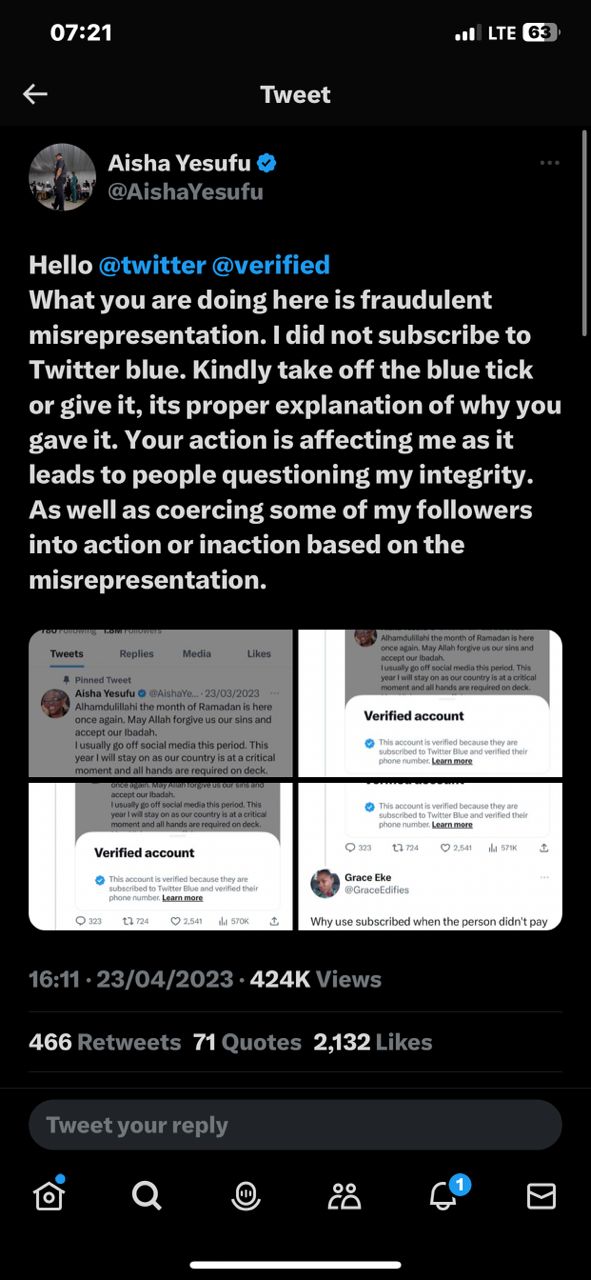
It appears that accounts with one million or more followers are also receiving the blue checkmark automatically, sometimes even against the explicit wishes of the account owners.

After they removed the check marks from all the legacy verified accounts, they returned it for some of the people with 1 million followers and above. People like Aisha Yesufu called out Twitter several times for verifying them without applying for it.

Twitter returned verification for individual legacy account with over 1 million followers

(2) Gold Checkmark

This checkmark indicates that the account belongs to a company or an organisation. The social network launched the “Blue for Business” plan on December 19, which shows company profile pictures in a square with a gold checkmark.

Illustration picture for organisations. Image : Twitter
Illustration picture for organisation/ Credit : Twitter

(3) Official (Grey) checkmark

The checkmark is used primarily for the government, and it’s relevant agencies, departments and ministries.

Illustration picture/ Source : Twitter

“Eligible government organisations at the national level may include: Main executive office accounts, agency accounts overseeing specific areas of policy, main embassy and consulate accounts, and parliamentary or equivalent institutional and committee accounts. Eligible government organisations at the state and local level include: Main executive office accounts and main agency accounts overseeing crisis response, public safety, law enforcement, and regulatory issues,” Twitter stated.

“Eligible government individuals may include Heads of state (presidents, monarchs and prime ministers), deputy heads of state (vice presidents, deputy prime ministers), national-level cabinet members or equivalent, the main official spokesperson for the executive branch or equivalent, and individual members of all chambers of the supranational or national congress, parliament, or equivalent.”

(4) Affiliation badges

Affiliation badges indicate that a Twitter account is associated with an organisation. These badges feature the profile photo of a verified organisation and are applied to all affiliated accounts under that organisation.

Depending on the type of account, affiliated accounts can display gold, grey, or blue checkmarks. Affiliation badges are prominently displayed on Twitter profiles, Tweets, timelines, notifications, direct messages (DMs), search results, and various other places across the platform.

Affiliation badge illustration.

(5) Automated account labels

Automated labels offer transparency by enabling you to distinguish between human-operated accounts and automated ones. When an account is labeled as “automated,” it indicates that the content generated by that account is not created by a human.

Illustration picture/ Source : Twitter

According to Twitter, these labels are still currently being tested and can be found on account profiles alongside profile names and handles. To find out additional information about automated account labels.

Once an account accepts the invitation to Twitter’s test group, an automated account label will appear on their account profile under their profile name and handle. The label may also appear on their Tweets.

(6) Professional category labels

When converting to a Professional Account on Twitter, individuals have the freedom to choose their professional category labels. It is important to note that Twitter does not dictate or regulate the selection of these labels, and users have the flexibility to modify their professional category as desired, even after the initial selection.

Illustration picture/ Source : Twitter


New Era: Tinubu’s inauguration promises

PRESIDENT Bola Ahmed Tinubu has again reiterated his commitment to fulfilling several pledges.

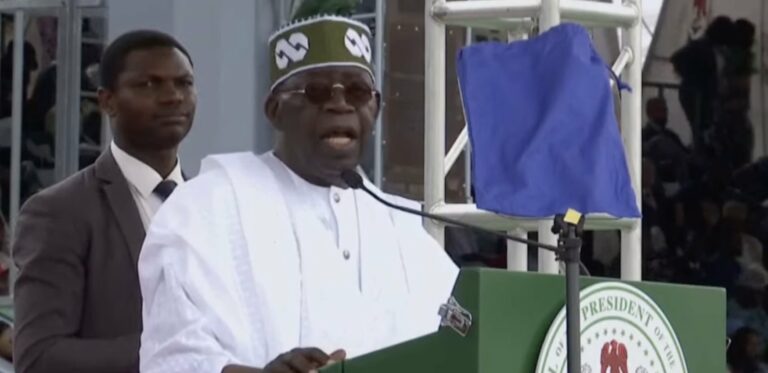
Tinubu, who contested under the All Progressive Party (APC), was inaugurated alongside his vice, Kashim Shettima, on Monday, May 29, at Eagle Square in Abuja.

Tinubu, while delivering his inaugural speech amidst cheers from his supporters, outlined the key initiatives to be anticipated from his administration and placed significant emphasis on fulfilling his campaign promises.

He stressed that the country he dreamed of is more than just an improvement in economics and other statistics.

President Tinubu also noted that his team will soon release key details of his economic programme.

The ICIR has, however, highlighted some of the key promises that Tinubu made while delivering his inaugural speech.

You can read his economic policy here

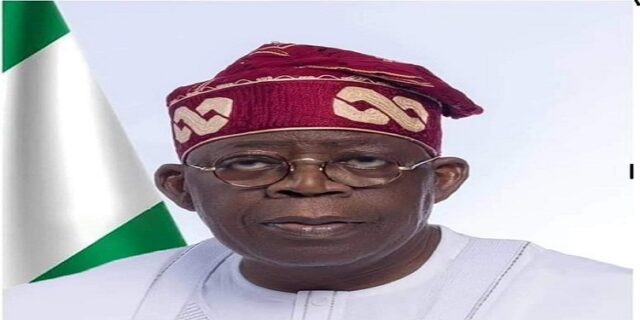
President Bola Ahmed Tinubu

Security

Security is a great concern to many Nigerians; President Tinubu has pledged to prioritise security and effectively tackle the menace of insecurity.

“Security shall be the top priority of our administration because neither prosperity nor justice can prevail amidst insecurity and violence.

“To effectively tackle this menace, we shall reform both our security Doctrine and its Architecture.

“We shall invest more in our security personnel, and this means more than an increase in number. We shall provide better training, equipment, pay and firepower.”

Economy

The new President said his administration will target a higher GDP growth and significantly reduce unemployment.

Tinubu vowed to increase Nigeria’s gross domestic product (GDP) by at least six per cent annually.

He noted that he will achieve that by taking the following steps:

“First, budgetary reform stimulating the economy without engendering inflation will be instituted.

“Second, industrial policy will utilise the full range of fiscal measures to promote domestic manufacturing and lessen import dependency.

“Third, electricity will become more accessible and affordable to businesses and homes alike. Power generation should nearly double, and transmission and distribution networks improved. We will encourage states to develop local sources as well.

“I have a message for our investors, local and foreign: our government shall review all their complaints about multiple taxations and various anti-investment inhibitions.

“We shall ensure that investors and foreign businesses repatriate their hard earned dividends and profits home.”

Jobs Creation 

On job creation, Tinubu vowed to create meaningful opportunities for youths to reduce the unemployment rate in the country.

He promised that his administration would create one million jobs through the digital economy for the teeming youths in Nigeria.

He said, “My administration must create meaningful opportunities for our youth. We shall honour our campaign commitment of one million new jobs in the digital economy,”

“My administration must create meaningful opportunities for our youth. We shall honour our campaign commitment of one million new jobs in the digital economy. 

“Our government also shall work with the National Assembly to fashion an omnibus Jobs and Prosperity bill. This bill will give our administration the policy space to embark on labour-intensive infrastructural improvements, encourage light industry and provide improved social services for the poor, elderly and vulnerable.”

Tinubu reiterated that the Nigerian economy would improve through the creation of budgetary reform and industrial policy to address the economic crisis in Nigeria.

He added that his administration would ensure that Nigerians depend less on importation to strengthen the utilisation of domestic products.


Agriculture

Tinubu also vowed to secure rural incomes through commodity exchange boards and guarantee minimal prices for certain farm products.

“Rural incomes shall be secured by commodity exchange boards guaranteeing minimal prices for certain crops and animal products. A nationwide programme for storage and other facilities to reduce spoilage and waste will be undertaken.

“Agricultural hubs will be created throughout the nation to increase production and engage in value-added processing. The livestock sector will be introduced to best modern practices and steps taken to minimise the perennial conflict over land and water resources in this sector.

“Through these actions, food shall be made more abundant yet less costly. Farmers shall earn more while the average Nigerian pays less.

“We shall continue the efforts of the Buhari administration on infrastructure. Progress toward national networks of roads, rail and ports shall get priority attention,” Tinubu said.

Fuel Subsidy

Another important promise the new President made is re-channelling funds into a better investment instead of the usual subsidy removal.

The President declared that ‘fuel subsidy is gone’ in his inaugural speech.

“We commend the decision of the outgoing administration in phasing out the petrol subsidy regime, which has increasingly favoured the rich more than the poor. Subsidy can no longer justify its ever-increasing costs in the wake of drying resources. We shall instead re-channel the funds into better investment in public infrastructure, education, health care and jobs that will materially improve the lives of millions.”

Monetary  Policy

Tinubu claimed that the Nigerian monetary policy needs thorough housecleaning and would reduce the interest rates to increase investment. He noted that the monetary policy will be reviewed.

“Monetary policy needs thorough house cleaning. The Central Bank must work towards a unified exchange rate. This will direct funds away from arbitrage into meaningful investment in the plant, equipment and jobs that power the real economy.

“Interest rates need to be reduced to increase investment and consumer purchasing in ways that sustain the economy at a higher level.

Whatever merits it had in concept, the currency swap was too harshly applied by the CBN, given the number of unbanked Nigerians. The policy shall be reviewed. In the meantime, my administration will treat both currencies as legal tender.”

He implied he would make the Central Bank of Nigeria (CBN) work towards a  unified exchange rate.

“It must be reduced to increase investment and consumer purchasing in ways that will sustain the economy at the highest level,” he said.

Foreign Policy

President Tinubu explained that the crisis in Sudan has opened their eyes to what true democracy means. 

He stated that his administration would retool Nigeria’s foreign policy to a more active one.

“The crisis in Sudan and the turn from democracy by several nations in our immediate neighbourhood are of pressing concern.

“As such, my primary foreign policy objective must be the peace and stability of the West African sub-region and the African continent. We shall work with ECOWAS, the AU and willing partners in the international community to end extant conflicts and resolve new ones.

“As we contain threats to peace, we shall also retool our foreign policy to more actively lead the regional and continental quest for collective prosperity.”

I will govern, not rule.

Tinubu assured Nigerians that his administration will govern and not rule over them.

“Our administration will govern you only on your behalf but never rule over you. We shall consult and dialogue but never dictate. We shall reach out to all but never put down a single person for holding a view contrary to our own.

“We are here to further mend and heal this nation, not tear and injure it,” Tinubu said.


Fuel subsidy: Commuters groan as transport fares surge

FOLLOWING the “fuel subsidy is gone” declaration by Nigerian President Bola Ahmed Tinubu and the consequent hike of petrol pump price by the Nigerian National Petroleum Company Limited (NNPCLtd), there has been a surge in transport fares across the country, leaving commuters in great agony.

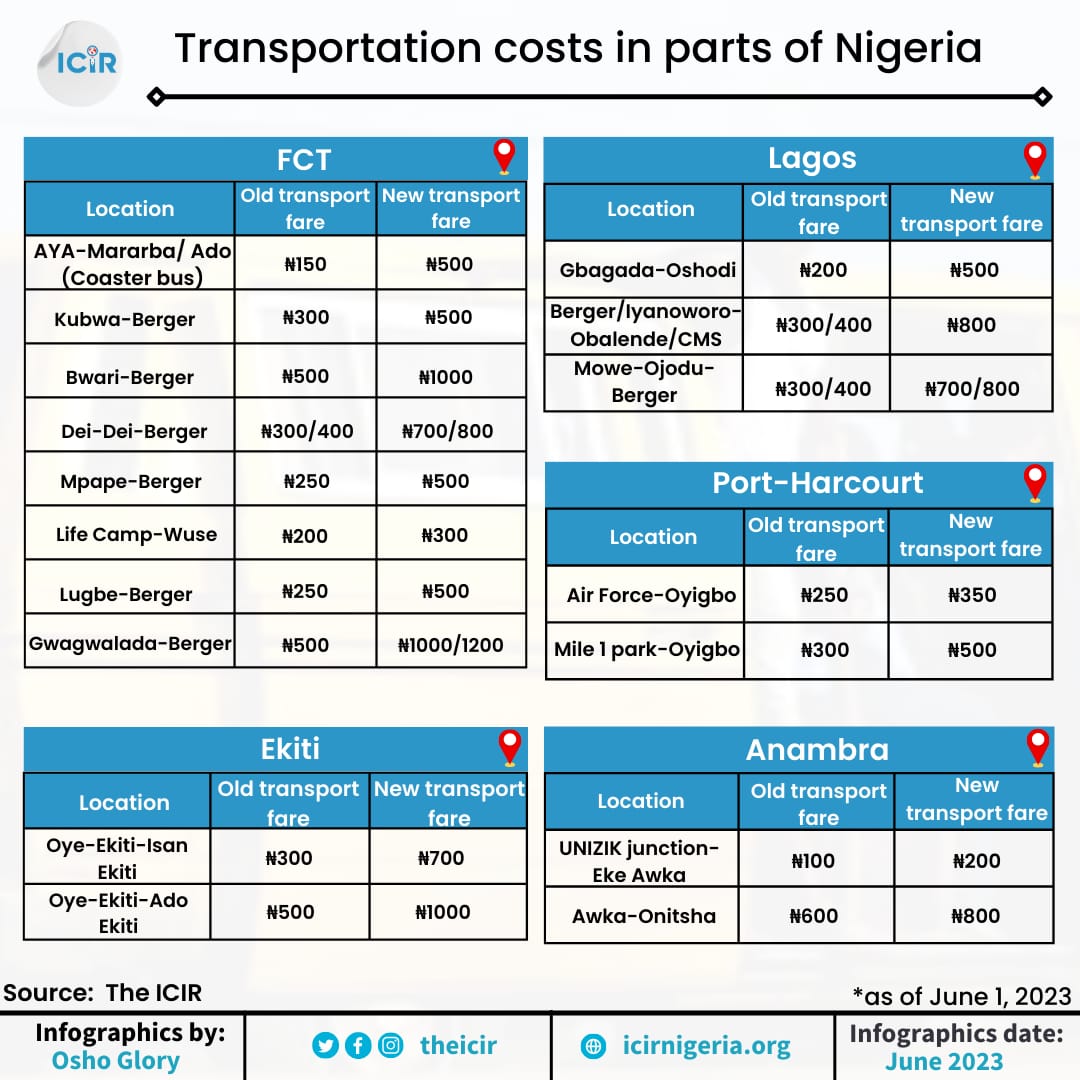
The ICIR observed that transport fares in the Federal Capital Territory (FCT) have risen by, at least, 50 per cent in most parts of Abuja.

Before Tinubu announced fuel subsidy removal during his inauguration speech on Monday, May 29, taxi drivers were charging N200 per passenger from Life Camp junction to Wuse market in Abuja.


READ ALSO:
Buhari tells IMF, World Bank why he ignored fuel subsidy removal advice

Scam website circulates as FG plans to distribute fuel subsidy removal palliative

FLASH BACK: Lai Mohammed’s 360 degree change from critic to advocate of fuel subsidy removal

Fuel subsidy is gone, says Tinubu


However, by Wednesday, May 31, the prices had jumped to N300, with some drivers charging more.

Transportation from Berger to Mpape, which was N250, now costs N500, a 100 per cent increase.

Many residents of the FCT who work within the city centre and live in satellite towns, are being confronted with surging transport costs.

An FCT resident Ayo Taiye who resides in Jikwoyi, described the situation as “difficult.”

Taiye said, “I am coming from Central Area. Before, to Berger, it was N150, but now it is N300. It is so difficult, how much do I collect as salary? If you remove this transport fare from my salary, that means it will be difficult for me to feed.

Transportation costs in parts of Nigeria

“I am going to Kubwa now, I don’t even know how to get there. I don’t know how to manage my money to enable me get there. At the moment, I am hungry. But I can’t eat because I don’t know the amount I will pay for transport now. I’m hearing that it is N1,000. I am still coming back here, I live in Jikwoyi.”

The transport fare from Gwagwalada to Berger, usually N500, now costs between N1,000 and N1,200.

Commuters are now paying between N700 and N800 from Berger to Dei-dei, a trip which used to cost about N400.

In cases where transport fares have not risen significantly, The ICIR observed that drivers have increased the number of passengers transported per trip.

At a small motor park near Banex Plaza Wuse II, drivers increased the number of passengers being conveyed from four to six persons while charging N200 for a trip to the Wuse market, which used to be N150.

In other parts of the country, the situation is no different, as the cost of transportation from Gbagada to Oshodi in Lagos state has risen from N200 to N500, an increase of 150 per cent.

Also, residents paid about N700 for a trip to Ojodu-Berger in Lagos from Mowe, Ogun state, a journey which would ordinarily cost N400.

A resident of Port-Harcourt in Rivers state John Ogu described, in an interview with The ICIR, the situation as “frustrating.”

Ogu said, “From Air Force to Oyigbo was N250, now it’s N350 or N400. From Oyigbo to Mile 1 Park used to be N300, now it’s N500. It is quite frustrating,” he said.

In Ekiti state, a trip from Oye-Ekiti to Isan-Ekiti now costs N700 against a previous price of N300.

Also, transportation from Oye-Ekiti to Ado-Ekiti, the state capital, rose to N1,000 from N500.

The minimum wage in Nigeria is N30,000. Also, more than 60 per cent of the population live in poverty, most of whom will be affected by the sudden increase in transport fares.

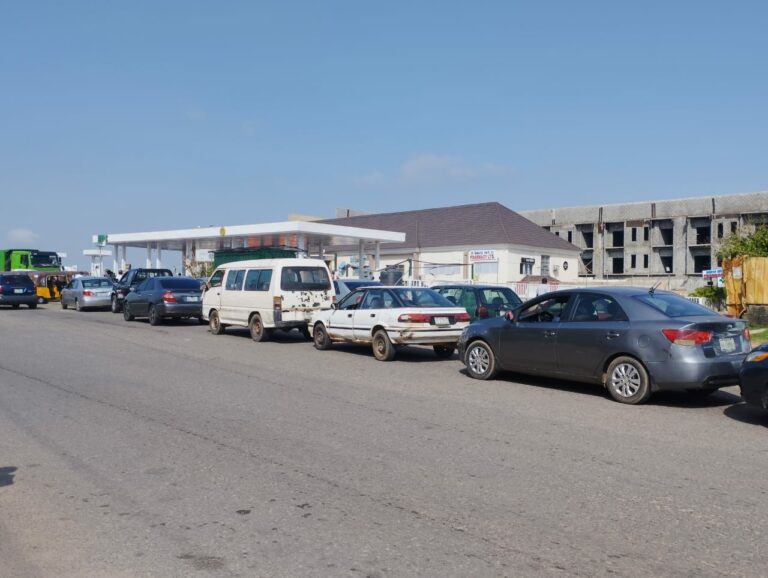
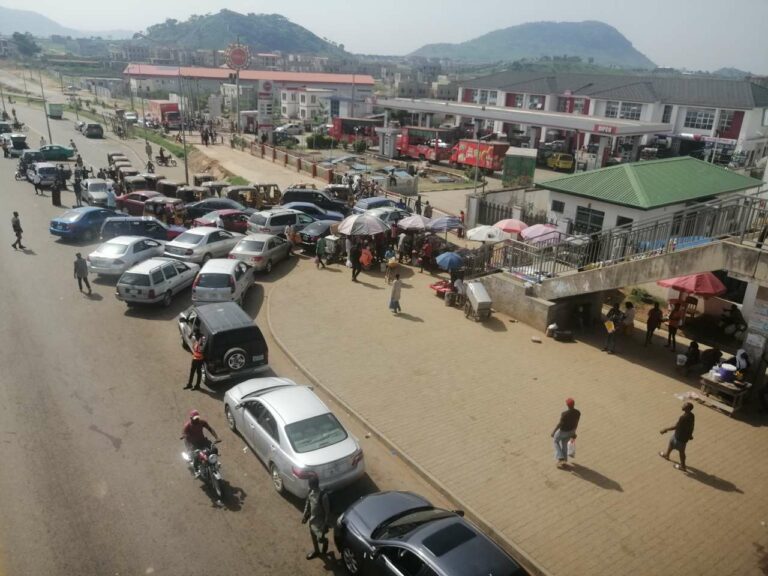
Fuel stations in many states have shut down operations since Monday, May 29 following Tinubu’s speech, and long queues appeared in the few stations that were operating due to panic-buying.

State governors had warned fuel retailers against hoarding the product. However, the Nigerian National Petroleum Company Limited (NNPCLtd) announced the official increase of pump prices from an average of N195 per litre to a range of N488 to N550.

Many commuters have resorted to trekking long distances to conserve transport costs, while motorists complain of low patronage.

“I’ve spent over N4,000 already this morning. I’m supposed to take another drop to where I’m going to now, but I just have to do some exercise to get cheaper transport. We didn’t expect this. It is too early,” an FCT resident Temitope Olawale told The ICIR.

Analysts and many other Nigerians informed on the oil and gas issue agree that fuel subsidy should be removed, as it has been identified as a cause of declining financial resources and an avenue for smuggling and corruption.

Although efforts have been made to remove or reduce fuel subsidy, Nigerians have always resisted them due to the anticipated hardship that the action would cause.

According to data from the NNPCLtd,  N4.39 trillion ($9.7 billion) was spent on petrol subsidy in 2022.

The umbrella body for workers in Nigeria, the Nigeria Labour Congress (NLC), have led many Nigerians in faulting Tinubu’s sudden removal of subsidy without plans to cushion the economic hardships that could result therefrom.

CAPPA urges FG to minimise effects of subsidy removal

0

THE Cooperate Accountability and Public Participation Africa (CAPPA), a civil society organisation, says the new leadership of the country needs to minimise the impact of fuel subsidy removal on Nigerians.

According to the non-profit, reducing the effect of fuel subsidy removal on the people will propel sustainability and stability across the country.

The new president, Bola Tinubu, had declared that “subsidy is gone” during his inaugural speech Monday, May 29.

He noted that the subsidy was unsustainable and rising costs could not be justified as resources dwindled.

“We shall instead re-channel the funds into better investment in Public infrastructure, education, healthcare and jobs that will materially improve the lives of millions,” Tinubu added.

Since the President’s declaration, fuel prices and transportation cost has almost tripled.

Speaking on this, CAPPA’s executive director, Akinbode Oluwafemi, in a statement issued on Thursday, June 1, said Tinubu must work to mitigate the suffering of the people.

“We strongly advise President Tinubu to work to cushion the impact of subsidy removal on Nigerians and righteously manage the nation’s commonwealth to inspire a prosperous, sustainable, and inclusive future for all.

“This is particularly important in the wake of the President’s bold move to eliminate fuel subsidies.”

The civil society organisation urged Tinubu to stick to his campaign manifesto and work to improve the economy through job creation and food security.

CAPPA called for protection of human rights and the supremacy of the rule of law.

“As the President commences his tenure, we further appeal to him to fortify Nigeria’s democracy by safeguarding human rights, upholding the rule of law as promised during his campaign.”

The organisation called for a “government that is transparent, accountable, and immune to corruption and nepotism, which have become the bane of our national progress”.

“Ultimately, the hope of Nigerians lies in President Tinubu’s capacity to restore the country’s lost glory. CAPPA, alongside the Nigerian populace, will extend unwavering support to this mission. We remain hopeful about the future and stand ready to support the new administration in nurturing a culture of transparency, accountability, and Public participation,” CAPPA added.

EFCC grills Fayemi over alleged misappropriation of N4bn

0

FORMER Ekiti State governor, Kayode Fayemi, has been questioned by the Economic and Financial Crimes Commission (EFCC) over allegations of money laundering amounting to N4 billion.

Fayemi was questioned at the zonal command office of the Commission in Kwara State, on Thursday, June 1.

Fayemi, according to media reports, arrived at the EFCC facility around 9:40 am. However, The ICIR could not confirm if he has been released or detained.


Read Also:

Last month, the EFCC had summoned the Fayemi to appear before the head of its zonal command office in Kwara to address queries related to money laundering activities.

The letter, issued by the Commission Zonal Commander, Micheal Nzekwe, requested Fayemi’s presence on May 18 at the commission’s office in Ilorin.

However, Fayemi’s lawyer, Adeola Omotunde, a Senior Advocate of Nigeria (SAN), responded with a follow-up letter dated May 15.

The letter stated that Fayemi was one of the organisers and reviewers of a book published in honour of then President Muhammadu Buhari, making him unavailable for the EFCC’s invitation on May 18 due to prior commitments associated with the book’s public presentation and launching.

Fayemi is not the only former governor being investigated by the anti-graft agency.

The EFCC had also stated it was investigating the former Zamfara State governor, Bello Matawalle over corruption allegations, including the award of phantom contracts and diversion of over N70 billion.

The anti-graft agency made the disclosure after Matawalle accused the Commission’s chairman Abdulrasheed Bawa of demanding $2 million bribe from him.

“The Commission would like to put the nation on notice to expect more of the kind of wild allegations made by Matawalle as those at the receiving end of EFCC’s investigations fight viciously back.

“But the real issue with Matawalle is that he is being investigated by the EFCC over allegations of monumental corruption, award of phantom contracts and diversion of over N70 billion,” EFCC Director of Communication Osita Nwajah said while addressing journalists on May 18.

Accusing the governor of “monumental” corruption, the EFCC stated that it tracked down more than 100 companies that received payments from the claimed funds while there was no evidence of service to the state.

The EFCC said that as part of the extensive investigation of contracts awarded by the Matawalle administration, especially for phantom projects in the local government areas, it recovered N300 million from a company, Fezel Nigeria Limited.

It added that funds were traced to the Zamfara Investment Company.

Kogi State governor, Yahaya Bello, is also being probed for alleged corruption, including the possession of 14 properties in Nigeria and abroad, as well as N400 million.

The anti-graft agency stated that these properties, including a hotel apartment in Dubai, are suspected to be proceeds of unlawful activities.

Other former and serving governors being probed for various offences, in line with mass investigations initiated by the EFCC, include Nyesom Wike (Rivers), Abdullahi Ganduje (Kano), Abubakar Bagudu (Kebbi), Abubakar Bello (Niger), Samuel Ortom (Benue) Benedict Ayade (Crosss River), Dave Umahi (Ebonyi), Okezie Ikpeazu (Abia), Ifeanyi Okowa (Delta), Ahmadu Fintiri (Adamawa), Babajide Sanwo-Olu (Lagos), Nasir El-Rufai (Kaduna), Bala Mohammed (Bauchi) Aminu Masari (Katsina) and Simon Lalong (Plateau).

Competition, market forces to moderate petrol prices downward over time – NNPCLtd GCEO

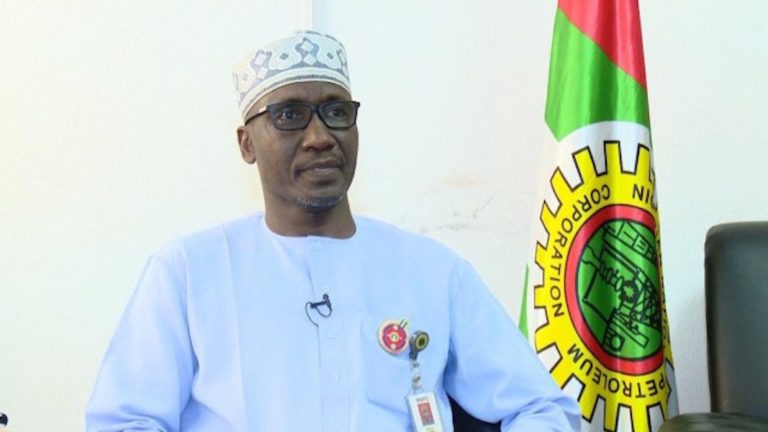
THE Group Chief Executive Officer of the Nigerian National Petroleum Company Limited (NNPCLtd), Mele Kolo Kyari, said competition and market forces would moderate the price of petrol over time when more marketers come into the business.

The NNPCLtd had on May 31 reviewed petrol pump price upward from old prices of between N185 and N200 per litre to a range of N488 to N557 per litre. The sharp price hike immediately triggered increase in cost of goods and services.

Kyari, who spoke today in a monitored broadcast on Arise Television, said with the removal of fuel subsidy, the market was only regulating the price. He said the same market would prune down prices as more marketers come into the petroleum importation business.

According to him, market determination of the price over time would remove price band, and market forces and realities would moderate prices.

“No more price band; the market will determine price. All marketers are determined to come in now because there is no more subsidy regime.They were reluctant before because there was subsidy. Putting a price band is not a characteristic of a deregulated market.

Kyari further said that petrol price is currently being determined by the international price, in addition to other logistics, freight, and border shipment costs.

He said, “There are the cost of ship-to-ship transfers, cost of haulage, cost of managing trucks from depots, cost of managing the product at filling stations, cost of the marketers, cost of depots owners, and there are numbers around.”

He further said that only the market can stop round-tripping, smuggling and other excesses that have characterised the business over time.

He confirmed that the budget for subsidy for 2023 was not cash-backed, arguing it did not make any sense that the government keeps subsidy as a result of the government’s lack of funds.

“We are observing the Petroleum Industry Act laws and would have exited subsidy in February 2022, but the government in its wisdom then had to keep it. However, it is no longer sustainable. It was budgeted for but not cash-backed,” he said.

Commenting further on whether the NNPCLtd would be an obstacle to the marketers when they come into the competition, Kyari said, “The PIA law requires that we don’t do more than 30 per cent in the market. If we do more than that, it is going to infringe on the anti-competition law.

He explained there would be a single exchange market for everyone as the NNPCLtd would be competing with marketers in the same foreign exchange market as a result of the President’s exchange rate unification declaration.

“As we speak today, NNPCLtd uses the official exchange rate to enable proper stabilisation. However, the NNPCLtd will exit in the official exchange rate market and engage in a single forex market,” he said.

But to an oil industry governance expert, Joe Nwakwue, Nigeria does not have a deregulated market regime yet with the NNPCLtd still the sole importer of refined crude in Nigeria.

“We need to have a diversified supply before removing the subsidy. The NNPCLtd is still the sole importer and we cannot be talking about full deregulation when they are still the one fixing price. Subsidy removal is part of deregulation, and we need to open up the supply and get up to five major independent marketers who can muster the capacity to import. There are still lots of works to be done,” Nwakwue told The ICIR.

In a similar vein, a development economist, Celestine Okeke, told The ICIR that the Tinubu administration needed to release a policy document that would inform Nigerians step by step modalities of the deregulation decision.

Okeke said, “There is need for transparent engagement with Nigerians on how and strategy of the subsidy removal, with a policy document to guide the people. It would enthrone confidence in the process. This would save us from lots of the distress that we are currently being confronted with.”


EXCLUSIVE: FG yet to pay ASUU’s rival, CONUA, 8 months salaries backlog

THE Federal Government is yet to pay the Congress of University Academics (CONUA) eight months salaries of its members withheld while the strike of the Academic Staff Union of Universities (ASUU) lasted in 2022.

The ICIR reported that ASUU downed tools over unmet demands by the Federal Government, including a 2009 agreement with the lecturers, which the government failed to implement.

ASUU went on strike for eight months – from February 14 to October 14.


READ ALSO:
Strike likely if govt fails to meet our demands – ASUU

ASUU: Why FG should reconsider no work, no pay policy – Labour expert

Half salaries: Gbajabiamila intervenes in ASUU, FG fresh row

ASUU: Why FG should reconsider no work, no pay policy – Labour expert


The ICIR reported that the organisation was on strike for over 600 days under immediate former President Muhammadu Buhari.

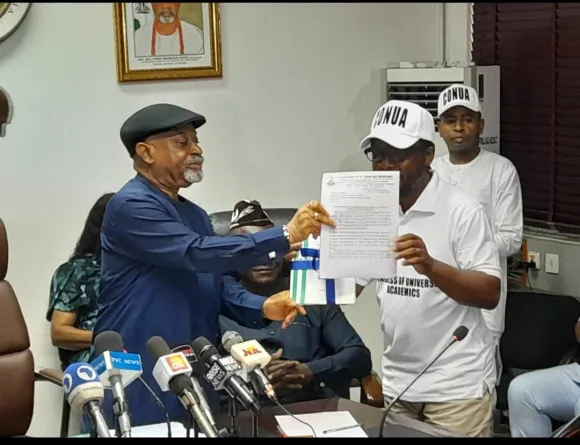
In what many Nigerians saw as a plan to weaken ASUU, the Buhari government approved the request by CONUA, a breakaway ASUU faction, to be recognised as a labour union. The government also certified the new body during the last ASUU strike.

ASUU consequently called off its strike ten days after CONUA’s certification, executed by the former Minister of Labour and Productivity, Chris Ngige.

The union attributed its decision to end the strike to interventions by top government functionaries, other prominent Nigerians, and pleas from parents and students.

The government vowed it would not pay ASUU for the period its members were on strike but would pay CONUA, which it said did not participate in the strike but was forced out of classrooms because ASUU ‘shut the universities’.

However, ASUU argued that only university management could shut the institutions, not its members.

The group described the government’s decision to pay CONUA, whose members did not work during the strike, as discriminatory.

The Ngige-led government’s team took ASUU to court to validate its ‘no work, no pay’ policy.

On Tuesday, May 30, The ICIR reported the court upholding the government decision.

Speaking with The ICIR reporter on the telephone on Thursday, June 1, CONUA’s National Secretary, Henri Oripeloye said members of the union were yet to receive the eight months salary the government promised.

He said, “It has not been paid. We have done all the government asked us to do regarding that. We are waiting for the payment. We have submitted everything they asked us to submit, confirming that we were locked out of the school. For us, we have done our bit of it. We are waiting for the government to fulfil its part of the bargain.”

Oripeloye said part of the information the government demanded from CONUA members is their names and the universities where they teach.

He said the group had 2,000 members waiting for the payment.

Asked if CONUA suspected deception in the Buhari government’s handling of its promise to its members, Oripeloye said, “We believe that government is a continuum. I hope they will look at those things and do the needful,” referring the President Bola Tinubu’s administration which took over from Buhari on Monday, May 29.

He also said there was no reason for anyone to suspect that the government was deceiving the union over the promise.

When contacted on the telephone, the Head of Press and Public Relations, Federal Ministry of Labour and Employment, Olajide Oshundun, said, “If the government has said it will pay them, it will pay them.”

He added: “That one is decided already. Everybody the government said it would pay, it would pay. They will get it even if they have yet to get their money.”

Meanwhile, ASUU President, Emmanuel Osodeke told The ICIR that the union was appealing the court judgment asking its members to forfeit their salaries when they were on strike. “We are appealing the judgment,” he said.

Insecurity: Tinubu issues marching orders to service chiefs

PRESIDENT Bola Ahmed Tinubu has instructed the nation’s service chiefs to develop a comprehensive plan to address the ravaging insecurity, including crude oil theft, in the country.

Tinubu, who issued the directive during his first meeting with the service chiefs at the State House, Abuja, on Thursday, June 1, also demanded increased collaboration among the heads of security agencies for efficiency.

Addressing journalists at the end of the meeting, National Security Adviser (NSA) Babagana Monguno, said that the President tasked the security chiefs on the necessity of avoiding conflicting actions and instead striving towards a unified purpose.

“The President has emphasised the importance of the security agencies redoubling their efforts to move the country forward. He believes in contemporary security measures that meet the demands of the present time.”

He said that Tinubu made it clear that the nation’s deteriorating security fortunes cannot be accepted, urging the agencies to work in unison with a coordinated approach.

“Having been briefed by the participants of the meeting, Mr. President, addressed prevailing issues confronting the nation in terms of insecurity and also mentioned his own philosophy towards dealing with national security issues.

“He is already mandated by the security agencies to come up with a blueprint as far as he knows as far as it’s concerned, it doesn’t have the luxury of time. And whatever changes will be made have to be done as soon as possible,” he said in part.

“The President also has decided that whatever ventures the armed forces are going to be engaged in, they must carry along those operatives in the theatre. They must be well fed, well kitted, motivated and given all that they require.

“The President has said clearly that he will do whatever is within his powers to enable the operational elements but the intelligence agencies must also make their work easy for them by providing the type of intelligence that they require to carry out the assignment.”

According to Monguno, the President expressed his desire to reform the nation’s security sector, stating that he would utilise his powers to facilitate the operational elements, while also emphasising the responsibility of intelligence agencies to provide the necessary information for successful missions.

He said that Tinubu further stressed the importance of inclusivity and support for operatives in the field, adding that the armed forces must ensure the well-being, adequate provisions, and motivation of their personnel involved in various operations.

“He is going to embark on a lot of reforms in terms of our security architecture, he is going to take a closer look at our misfortunes in the maritime domain, focusing particularly on the issues of oil theft, that is not going to tolerate. Wherever the problem is coming from, it must be crushed as soon as possible,” he added.

Those in attendance include the Chief of Army Staff, Farouk Yahaya; Chief of Naval Staff, Awwal Gambo; Chief of Air Staff, Air Marshal Isiaka Amao; and Inspector-General of Police, Usman Alkali Baba.

Nigeria is currently confronted with many security challenges spanning various regions. The North-West and North-Central regions are contending with banditry, while the North-East is still grappling with more than decade threat of Boko Haram. The South-West and South-South regions are experiencing separatist movements, while the South-South is facing issues of oil theft and pipeline vandalism.

Data by the Council on Foreign Relations’ Nigeria Security Tracker (NST) have shown that non-state actors killed 31,821 people between May 2015 and April 2023 during the reign of former President Muhammadu Buhari.

Similarly, according to the Nigerian Extractive Industries Transparency Initiative (NEITI), Nigeria lost 619.7 million barrels of crude oil valued at N16.25 trillion ($46.16 billion) to crude oil theft between 2009 and 2020.

Subsidy removal: Price will come down — NNPC

THE Chief Executive Officer of the Nigerian National Petroleum Company Limited (NNPC) Mele Kyari, has addressed concerns about the increasing prices of Premium Motor Spirit (PMS), otherwise known as petrol, across Nigeria. 

Kyari assured Nigerians that with the final removal of subsidy, competition among major players in the oil sector would lead to a decrease in petrol prices, contrary to the recent upward trends causing panic in the country.

Kyari spoke on Arise TV’s Morning Show, on Thursday, June 1.

The NNPC had adjusted the pump price of petrol by about 200 per cent to reflect market realities immediately after President Bola Tinubu declared the final removal of subsidy.

The ICIR, on Wednesday, May 31, reported that following the removal of petroleum subsidy, fuel queues resurfaced at filling stations nationwide as many retailers shut their stations, hoarding their stock and creating scarcity with a view to hiking fares later.

In a template released on Wednesday, May 31 to marketers, the NNPC confirmed the astronomical rise in the pump price of the product, with the minimum being the N488 per litre obtainable in Lagos, while it will be selling as high as N557 per litre in Maiduguri.

The ICIR confirmed that the price in different states varies based on the vagaries of logistics, especially transportation costs.

Meanwhile, speaking on the issue during Arise TV’s Morning Show on Thursday, Kyari said the removal of subsidy would encourage new entrants into the market, fostering competition and phasing out monopoly.

He stressed that the development would lead to healthy competition and ultimately result in a downwards review of petrol prices nationwide.

“The beauty of this (subsidy removal) is that there will be new entrants (into the market) because oil marketing companies’ reluctance to come into the market all along is the very fact of the subsidy regime that is in place.

“And that subsidy regime doesn’t have a guarantee of repayment back to the those who provide the product at subsidise price and now that the market is being regulated, oil marketing companies can actually import product or even if it is produced locally, they can buy and take it into the market and sell it at its retail price.

“Therefore, you will see competition, even with NNPC. And by the way, by law, NNPC cannot do more than 30 per cent of the market going forward. As soon as the market stabilises, oil marketing companies are able to come in…

“Competition will definitely come in and the market will regulate the prices itself. Therefore, this is just an instantaneous price and within a week or two, you will continue to see different prices because of different approaches from major players, companies have different approaches to it and competition will guide that. Ultimately, you’d see changes downwards and it is very likely because efficiency will come in.

“As soon as competition comes in, people will become more efficient in their depots, in managing their trucks and in managing their fuel stations so that people can come to their stations. And it is showing already, right now, you will see motorists going to stations where they can have price differences, so this will regulate the market and on its own, the price will come down naturally and I don’t see any doubt about this,” Kyari said.

Speaking on the issue of fuel stations raising their pump prices despite having subsidised products in stock, Kyari described the development as “a typical stock management matter affecting all commodities”, not just petroleum.

He noted that if the market conditions were reversed, prices could have collapsed, and those holding old stock would have to sell at lower prices to align with market conditions.

Kyari added, “It could have been the other way round, prices could have collapsed downwards and those holding the old stock will have to sell at lower prices to arrive at market condition.

“It is not something serious or strange, this is a stock management issue and it is very typical, no one can do anything different about this.

“The prices we are seeing today at our station are the current price of the commodity. This means that prices in the market can go down at any time and of course, the market will adjust itself.”

FG, Labour meeting deadlocked

The ICIR reports that, in Abeokuta, Ibadan, Osogbo, Akure and Ado-Ekiti, petrol will be selling for N500 per litre. In Port-Harcourt, Calabar, Benin and Asaba, the product will be N511 per litre.

In Ilorin, Uyo, Umahia and Owerri, it is also N511 per litre, while it is N537 per litre in Abuja, Jos, Lafia, Minna and Makurdi. It gets higher in Kano, Kaduna, Dutse and Gusau at N540 per litre, and N545 per litre in Birnin Kebbi.

It is highest in Maiduguri and Damaturu at N557 per litre.

According to Dickson Aja, a commercial bus driver interviewed by The ICIR, he purchased fuel at a rate of N530 per litre in the Gwagwalada Area Council of the Federal Capital Territory.

On Wednesday, May 31, the Federal Government and organised labour met on the issue of fuel subsidy but the meeting ended in a deadlock as they failed to reach a consensus following the hike in petrol pump prices to over N700 from N195 per litre by oil marketers.

Organised labour was represented at the meeting by leaders of the Nigerian Labour Congress (NLC) and the Trade Union Congress (TUC), Joe Ajaero and Festus Osifo, respectively.

Kyari; a former NLC leader and former governor of Edo State, Adams Oshiomhole; Permanent Secretary, State House, Tijjani Umar; and Head of Service of the Federation, Folashade Yemi-Esan, represented the Federal Government.

After the meeting, Dele Alake, who spoke on behalf of the Federal Government, said negotiations between the two sides were ongoing.

The meeting will be reconvened on a yet-to-be-determined date.