Home Blog Page 902

Economy: What Tinubu’s administration should do — Expert

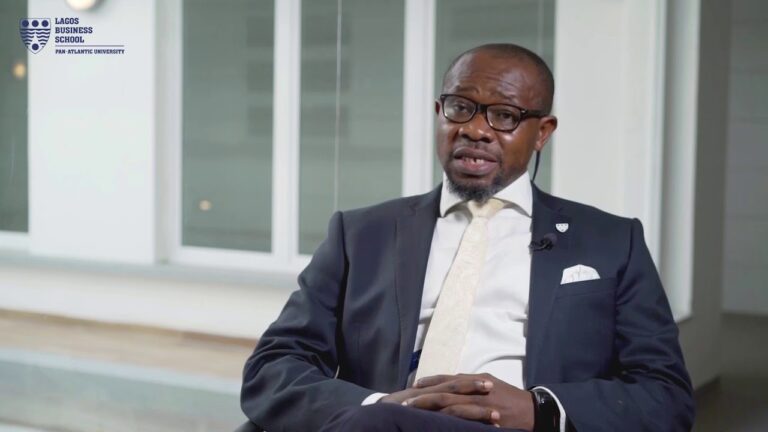
A PROFESSOR of Economics at the Lagos Business School, Bongo Adi, has urged the President Bola Tinubu administration to rationalise the budget of the Federal Government with credible data and statistics.

Speaking on Arise TV on May 26, Adi stressed that rationalising the budget of government agencies and parastatals would mitigate the rate of financial leakages in the country.

He described the annual budgets presented by the Nigerian government as a crude one which should be well scrutinised.


READ ALSO:
Declare your assets, AFRICMIL tells Tinubu

US, others congratulate Tinubu, pledge support

Tinubu promises unified forex regime, agricultural hubs in states

Full text of President Bola Tinubu’s inaugural address


“Nigeria would have huge savings if its expenditure could be brought to a judicious estimate,” he said.

The economist advised the Tinubu administration to implement the recommendations of the Oronsaye Report which stated that some agencies of the government should be scrapped.

“We have too many MDAs and remember the Oronsaye Report. The incoming administration should implement the Oronsaye Report which rationalised the agencies of government. The report had shown that more than half of the agencies of government should not be there and we have so many duplications.”

He further advised the government to focus on how to generate double digits growth that would have measurable impact on the lives of Nigerians.

“The Buhari administration targeted inequality and the poor but you know that we can never solve the problem of poverty by addressing the poor people alone.

“When there is economic growth everybody will live comfortably because the economy is actually the cumulative growth of the individual firms and is an indicator that all the set segments of that economy are growing.

“What the incoming administration should focus on is how to generate global economic growth that will take care of unemployment; that will take care of social risk, health.”

The ICIR had reported that analysts said former President Muhammadu Buhari’s administration failed to lift many Nigerians out of poverty due to lack of attention on the human development index (HDI).

Speaking with The ICIR, a development expert and associate consultant for the British Department for International Development (DFID), Celestine Okeke, said that inflationary pressures have been rising because of the government’s knee-jerk approach to policies and less attention to human capital development.

Okeke said, “Most of our intervention programmes failed because they are knee-jerk. Look at our Anchor Borrowers Programme and see how it was politicised, and now, we have the CBN lamenting people are not paying back.”

Another development economist, Kelvin Emmanuel, told The ICIR that improving the HDI would stimulate economic activities.

Emmanuel said, “Buhari started, for instance, with closing the borders and widening the size of the budget while relying on the Central Bank to provide the deficit financing of the budget.”

He stressed that the more the ways and means is abused, the more the CBN faces a currency depreciation problem, and the more it keeps adjusting the rates to meet up with the parallel market and official rates against the dollar because of exchange rate issues.

Emmanuel argued that the reality on the ground is that inflation is double digit.

The ICIR reported that the consumer price index showed that the country’s inflation rate rose 59 times under Buhari’s eight-year administration.

The data gathered revealed that within the eight years, inflation consistently rose from January to December in 2016 and 2020. On average, the inflation rate rose more in 2017, 2021 and 2022.

The report noted that the constant increase in food prices contradicted the Federal government’s claim that it had achieved food sufficiency in the country.

Egypt’s Al Ahly emerges 2023 BAL champions, to represent Africa at FIBA Cup

0

AL Ahly Sporting Club of Egypt has been crowned the champion of the 2023 Basketball Africa League (BAL) after defeating AS Douanes of Senegal 80-65 in the playoffs.

With the win, Al Ahly earned the right to represent Africa in the next edition of the FIBA Intercontinental Cup.

The playoffs which were hosted in Kigali, Rwanda, was contested by eight teams that qualified from the preliminary stages of both the Sahara and Nile conferences.

The Egyptian club finished on the top of the log with three wins, followed by Association Sportive des Douanes who came second with two wins.

Stade Malien, Clube Atletico Petroloes de Lauanda, Rwanda Energy Group, Abidjan Basket Club, Cape Town Tigers and Clube Ferroviario finished 3rd, 4th, 5th, 6th, 7th and 8th on the log, respectively.

Road to the Playoffs

The journey to the playoffs where Al Ahly were crowned champions began with the preliminary stage, which had teams grouped in the Sahara and Nile conferences.

In the Sahara Conference, Stade Malien, Association Sportive des Douanes, Rwanda Energy Group and Abidjan Basket Club progressed to the playoffs.

Union Sportive Monastirienne and Nigeria’s representative Kwara Falcons Basketball Club failed to qualify for the playoffs.

In the Nile Conference, Clube Ferroviario da Beira, Clube Atletico Petroloes de Luanda, Cape Town Tigers and Al Ahly Sporting Club made it to the playoffs.


READ ALSO:


The two clubs that were unable to qualify for the playoffs are Seydou Legacy Athletique Club and City Oilers.

Al Ahly became the second Egyptian side to win the tournament since Zamalek won the inaugural BAL season.

Al Ahly concluded their 2023 BAL campaign with an overall record of seven wins and just one loss (7-1).

Raymond Dokpesi: First Nigerian to own shipping firm, radio, TV stations

ON Monday, May 29, 2023, one of Nigeria’s illustrious sons and tycoons, Raymond Dokpesi, breathed his last.

He was 71.

Dokpesi, the founder of DAAR Communications plc, which runs Ray Power FM and African Independent Television (AIT), battled a stroke after initially surviving COVID-19 with his family in 2020.

He was recovering from the ailment at a hospital in Abuja, where he succumbed to death.


READ ALSO:

BREAKING: AIT founder Raymond Dokpesi is dead

Buhari’s toothache and a nation in its death throes 

WHO raises global COVID-19 deaths to 20 million


A chieftain of the Peoples Democratic Party (PDPl, he was Deputy Director General of Technical and Systems of Atiku Abubakar’s presidential campaign for the 2023 election.

Dokpesi was the first Nigerian to own an indigenous shipping firm and private radio and television stations in the country.

Before venturing into media enterprise, his relationship with the late Moshood Kashimawo Abiola and Bamanga Tukur had helped him launch the African Ocean Lines (AOL), Nigeria’s first indigenous shipping firm, now defunct.

In 2014, he stepped down as the Chairman of DAAR Communication PLC and handed it over to one of his sons, Paul Dokpesi.

A renowned entrepreneur, Dokpesi married politics with business and was successful in both, but with many hurdles.

He was a founding member of the PDP from its inception and remained in the party till he died.

He etched his name as a pioneer in Nigeria’s media industry and a formidable politician who remained focused on his party’s ideals in Nigeria’s teetering political climate. 

Dokpesi built a formidable network of political and business allies, and also mentored and inspired several journalists into stardom.

The deceased’s political adventure peaked when he contested the position of PDP National Chairman in 2017 and lost to Uche Secondus.

Apart from losing an election, he had a tough time with the Economic and Financial Crimes Commission (EFCC) over corruption charges.

The Commission accused him of illegally pocketing N2.1 billion from Federal Government funds meant for arms procurement to fight insurgency under former President Goodluck Jonathan.

The EFCC charged him to court and froze his accounts, but the Appeal Court eventually freed him.

DSS arrested Dokpesi over alleged link with Henry Okah’s Independence Day bombing in Abuja

On October 1, 2010, while Nigerians celebrated the country’s 50th Independence Anniversary in Abuja, two car bombs killed about a dozen people and injured others.

The Department of State Services (DSS) later alleged that one of the major suspects in the attack, Henry Okah, had a link with Dokpesi, claiming that they exchanged text messages.

At the time, Dokpesi was a campaign director for the former military leader Ibrahim Babangida.

The secret police detained and later released him. 

He later sued the operatives to enforce his fundamental rights.

Statement by his family on his passing

The statement, signed by his son, Raymond Dokpesi (Jnr), shortly after he died on Monday, read: “It is with deep sadness and heavy hearts that we announce the passing of High Chief Raymond Aleogho Anthony Dokpesi (Ezomo of Weppa-Wanno Kingdom) who passed away on May 29, 2023. High Chief Dokpesi was a beloved husband, father, grandfather, and friend to many. He will be deeply missed by all who knew him.

“High Chief Dokpesi was also a respected and accomplished businessman, a pioneer in the media industry, and a philanthropist who dedicated his life to the service of his country and his community. His legacy will live on through the impact he made on the lives of many.

“The Dokpesi family is grateful for the outpouring of love and support during this difficult time. We ask that you keep us in your thoughts and prayers as we mourn the loss of our patriarch. We also ask for privacy during this time as we grieve together as a family.

“The family will release further details on the funeral arrangements in due course. May his soul rest in peace.”

Early childhood and education

Dokpesi, who hails from Agenebode, Edo State, was born in Ibadan, Oyo State, on October 25, 1951. He studied at Loyola College, Ibadan, and the Immaculate Conception College, Benin.

He proceeded to the University of Benin and later to the University of Gdansk, Poland, where he earned his Doctorate in Marine Engineering. A former governor of the old Gongola State and former Chairman of the PDP, Bamanga Tukur, trained him in school.

Work experience after school

He worked as a personal assistant to his benefactor, Bamanga Tukur, before working at the Federal Ministry of Transport under Umaru Dikko and General Garba Wushishi.

His major regret

While interacting with journalists during a party held to celebrate his 70th birthday in 2021, Dokpesi said polygamy was one of his biggest errors. He blamed the mistake on pressure from his family.

He said, “I am a Catholic, and I definitely will tell you that one of the greatest errors of my life is polygamy. But it is not something that I desired or something that I wanted. It was a situation that developed; I just had no alternative. 

“A lot of people looked at it as if it was wealth that distorted my behaviour, but the truth of the matter is that there were internal family challenges that led to polygamy. I was married to a Polish woman; I wanted to remain with the Polish woman, and I still desired it in my old age, but she left Nigeria for reasons that she was the only child of her parents, and so she had to stay with her parents. I had to stay here, and there is no leave in marriage.

“And so, I shuttled down to Poland over 16 times requesting her to come back to Nigeria and stay, but as the only child, she wanted to be by them. My mother was very anxious that I should have children that are my own, kids that I don’t have to enter a plane to go and visit. That whole thing caused the instability that later affected my life.”

Flashback to Numbers: Only 3 out of 10 Nigerians voted during 2023 presidential election

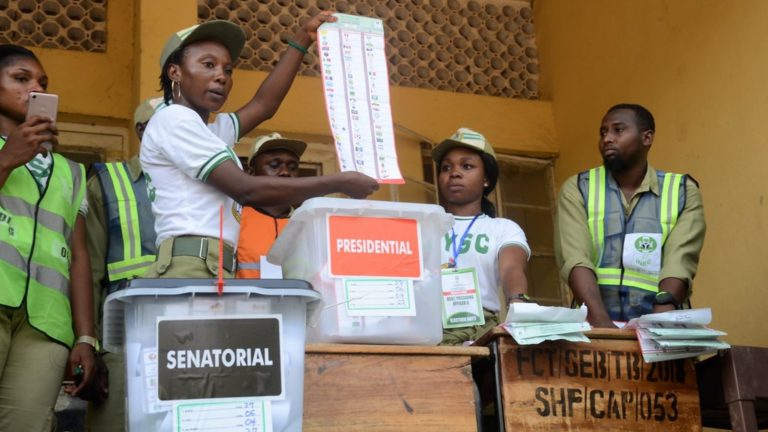
A look at the 2023 presidential elections result has shown that only three out of every 10 Nigerians who registered for the electioneering exercise cast their vote, out of which the former governor of Lagos state, Bola Ahmed Tinubu, emerged as the president. 

All Progressive Party’s Tinubu pulled 8,794,726 votes to defeat 17 other candidates who contested for the seat on February 25, 2023.

According to the Independent National Electoral Commission (INEC), 93.5 million voters were eligible to participate in the election, but only 25.3 million voted. This is approximately 27 per cent of registered voters.


READ ALSO:
2023 Presidential Election: Nigeria may never be the same again, says Nnamani

Wike names Obi hero of 2023 presidential election

US visa ban confirms rigging of 2023 elections — PDP campaign chief

2023 elections record 24 deaths, 238 violence incidents — Report


When broken down into 10’s, it translates into approximately three votes cast out of 10 registered voters.

Meanwhile, the election results post the lowest voter turnout compared with previous elections held since 1999 after the country returned to a democratic government.

Nigeria, according to the constitution, holds its election every four years. 

In the 1999 election, 58 million Nigerian were registered, but only 30 million voted. In 2003, registered voters increased to 61 million while those who participated in the voting exercise were 42 million.

This is a 69 per cent increase in voters’ participation compared to the 52 per cent recorded in the 1999 election.

However, from the 2007 elections, the number of recorded vote cast began to drop despite the increasing number of registered voters. 

For instance, 62 million Nigerians registered to vote during the 2007 election, but only 34 million voted (56 per cent). This was the election that brought in the late Umaru Musa Yar’Adua as president of the country.

In 2011, registered voters were 74 million, while those who voted were 39 million (59 per cent). Also, in 2015 and 2019, registered voters were 67 and 82 million, respectively, but those who cast their votes were 29 million for both years.

This is a 44 per cent decline and 35 per cent for both years, respectively.

The 2023 presidential election was not any different. Voters’ participation in the election drops to 27 per cent. The ICIR reported how Tinubu won the election despite having the lowest turnout.

Mixed reaction clouds results

Despite the low turnout of voters, several controversies have trailed the announcement of Tinubu as the president by INEC. Major contenders, including Peoples Democratic Party and Labour Party candidates, have submitted petitions to the court to nullify the result or the APC’s candidate.

Of the total votes, APC secured 34.8 per cent, while PDP and LP had 27.6 per cent and 24.1 per cent, respectively.

The ICIR reported how the president has been embattled with several controversial allegations, including his source of wealth and health status. 

Tinubu was quick to set up a reconciliation committee to meet with major contenders, but this did not stop the latter from submitting their petitions at the tribunal. The ICIR has been documenting the development of court proceedings between the three political parties.

Meanwhile, public affairs analyst Akpo Ebireri told The ICIR that statistics like this are only indicative of a widening relationship between the government and the people.

He said, “During the polling leading to the last elections, the figures for “undecided” were significantly huge, and that reflected in the eventual participation of voters at the elections. For inclusivity, the government will respond to issues dependent on how loud and united voices are. If there will be a buildup on the momentum witnessed in the last elections, that would be determined by events of the coming months”.

On the effect of the electioneering development in Nigeria, Ebireri said that the attitude and performance of the incoming government would play a key role in determining how other elections would be conducted.

Findings by The ICIR showed that of the 25 million voters who participated in the election, the top four contending political parties secured 92.45 per cent of the vote cast.

“Ordinarily, he ought to be mindful of the delicate state of affairs, especially since he managed to claim only about 35 per cent of the total votes to be announced the winner. There might be the urgency to deliver so as to sway affection in his favour,” Ebireri said.

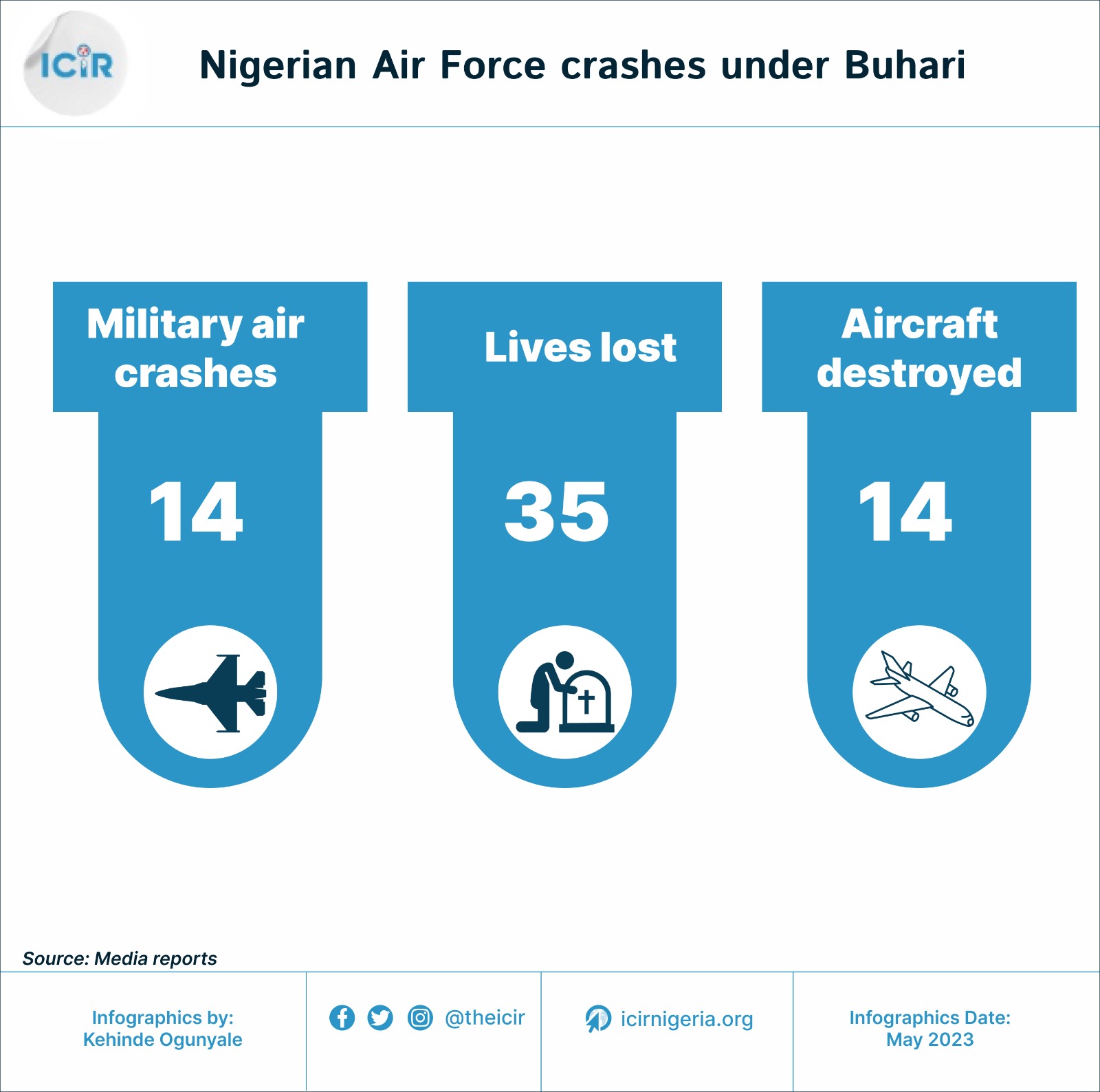
Nigeria under Buhari: 14 military air crashes, 35 lives lost, 14 aircraft destroyed

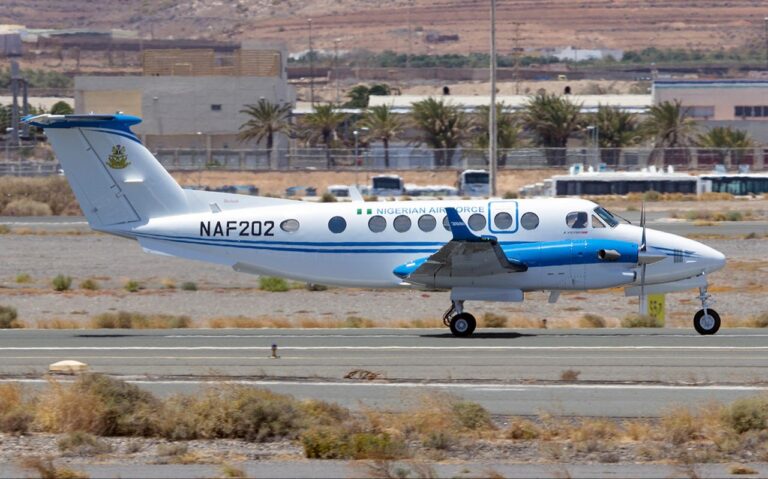
NIGERIA experienced series of military air crashes between 2015 and 2023 under the Muhammadu Buhari-led administration. 

Data garnered from media reports in the last seven years has shown that these devastating incidents resulted in the loss of 14 aircraft and claimed the lives of 35 people, including civilians and military personnel on board the 14 military air crashes.

The crashes have also imposed significant financial costs on the military and have diminished the number of operational aircraft in their fleet.


READ ALSO:


While speaking to journalists shortly after a crash in April 2022, Nigerian Minister of Defence Bashir Magashi stated that the frequent “incident had depleted the human capital assets of the Air Force.”

Despite assurances from the Nigerian Air Force (NAF), the causes of these crashes have not been publicly disclosed. However, experts have attributed the mishaps primarily to inadequate aircraft maintenance.

In February 2023, the Air Force narrowly avoided a crash when one of its jets experienced a mid-air tire failure and executed an emergency belly landing at Lagos Airport.

Timeline For Crashes, Destroyed Aircrafts 

  1. On February 22, 2021, seven NAF personnel perished in a plane crash shortly after takeoff from the Nnamdi Azikwe International Airport. They were en route from Abuja to Minna, Niger State, to rescue abducted students and staff from Government Science College, Kagara.
  2. On March 31, 2021, Air Commodore Edward Gabkwet, former NAF spokesperson, confirmed another aircraft crash and expressed uncertainty regarding the fate of the two pilots involved.
  3. On May 21, 2021, a military Beachcraft 350 aircraft carrying 11 individuals, including the late Chief of Army Staff, Ibrahim Attahiru, tragically crashed, claiming the lives of all onboard at the Kaduna International Airport.
  4. On July 18, 2021, in Zamfara, where an Alpha Jet Aircraft was shot down by bandits. The pilot, Flight Lieutenant Abayomi Dairo, miraculously survived the crash.

    Military plane crashes under Buhari.
    Military plane crashes under Buhari.
  5. In April 2022, a trainer aircraft crashed in Kaduna, resulting in the deaths of two pilots.
  6. Other crashes include the August 29, 2015, Air Force plane crash in Kaduna, which claimed the lives of seven individuals, including four military personnel.
  7. Additionally, on November 15, 2016, an Augusta Westland 101 helicopter crashed in Makurdi, Benue State.
  8. On July 6, 2017, a NAF Agusta 109 Light Utility Helicopter crashed in Borno River, fortunately without any casualties.
  9. On August 2017, an F-7Nl jet crash resulted in one casualty.
  10. Two F-7Ni aircraft collided in mid-air around Katampe Hills in Abuja on September 28, 2018, during a rehearsal for Nigeria’s 58th independence anniversary celebration. Tragically, one person lost their life in this collision.
  11. On January 2, 2019, five crew members aboard an NAF Mi-35 were killed when the aircraft crashed near Damasak, Borno State.
  12. Another NAF helicopter crashed while landing in Katsina state on June 12, 2019, resulting in no fatalities.
  13. On October 10, 2015, an F-7Nl jet crashed in Kaduna, killing one person. The jet, which was part of the Nigerian Air Force (NAF), was on a training mission when it crashed into a residential area. The crash killed one person and injured several others.

Experts Blame Poor Maintenance, Call for Investigation into Nigeria’s Military Aviation Infrastructure

A security expert, Timothy Avele, emphasised that while military air crashes occur worldwide, the frequency and severity witnessed in Nigeria over the past eight years indicate deficiencies in international maintenance standards and quality control.

Avele further pointed out the prevalent poor maintenance culture in Nigeria, particularly within government agencies.

He also believed that the inadequate upkeep of military aircraft, including the procurement and installation of substandard spare parts, is believed to have played a significant role in the recurring accidents.

“Military air crashes occur in any military in the world even in the USA. However, losing over 30 personnel in over 12 crashes in a span of eight years shows either lack of international maintenance standards or lack of quality and airworthiness policy implementation,” he said.

“Generally, we have a poor maintenance culture in Nigeria, especially by government agencies. Another major factor that should be looked into is the issue of the quality of spare parts supplied to maintain these military aircraft.”

He added that the reliance on potentially subpar components could compromise the airworthiness and operational effectiveness of the aircraft, leading to catastrophic outcomes.

The expert also suggested that an assessment of the quality of spare parts supplied for maintenance is necessary.

An aviation safety consultant, Olufemi Adegbesan, believed that the recurring crashes indicate systemic issues within Nigeria’s military aviation infrastructure. He emphasized the need for a comprehensive investigation into the root causes of these accidents to identify and address the underlying factors contributing to the high number of fatalities.

According to Adegbesan, one possible factor was the lack of proper training and proficiency maintenance among pilots and maintenance personnel.

“The recurring military air crashes in Nigeria indicate systemic issues within the military aviation infrastructure that need to be thoroughly investigated,” he said.

“There is a pressing need to assess the root causes of these accidents and identify the underlying factors that contribute to the high number of fatalities.”

He highlighted the importance of continuous training programs and regular assessments to ensure that the skills and knowledge of aviation personnel remain up to date.

“Continuous training programs and regular assessments are crucial to ensure that aviation personnel possess up-to-date skills and knowledge.”

The aviation safety consultant further emphasized the significance of a robust safety management system within the Nigerian Air Force.

This system, according to him, should encompass rigorous maintenance procedures, effective oversight mechanisms, and a culture of reporting and addressing safety concerns.

He also stressed the need for enhanced collaboration between the Nigerian Air Force and external aviation safety organizations.

“Engaging international experts and organizations can provide valuable insights and assistance in improving safety standards and implementing best practices,” he said.

Kano governor vows to reopen murder case against Doguwa

NEW governor of Kano State, Abba Yusuf, has vowed to re-open the murder case against the Majority Leader of the House of Representatives, Hassan Ado Doguwa.

Doguwa is an All Progressives Congress (APC) member representing the state’s Doguwa/Tudun Wada Federal constituency.

Several state residents accused him of masterminding the violence and killings that characterised February 25 Presidential and National Assembly elections in his constituency.


READ ALSO:
Electoral violence: Kano govt clears Doguwa of murder charges

Despite murder allegation, Doguwa joins race for Speaker

Bloodshed and death: Inside story of Kano’s Tudun Wada electoral violence in Doguwa’s constituency

Election Violence: SERAP drags INEC to court over failure to probe governors, deputies


The campaign office of the New Nigeria Peoples Party (NNPP) House of Representatives candidate of Tudun Wada/Doguwa Federal Constituency was burnt by political thugs during the election.

In April, The ICIR reported how Doguwa allegedly “led thugs and caused violence while possessing firearms”.

Following his alleged involvement in the violence recorded during the election, the police arrested Doguwa at Mallam Aminu Kano International Airport (MAKIA) on February 28 after he failed to honour an invitation.

The ICIR reported that the lawmaker was subsequently arraigned for alleged murder and violence during the election.

However, a few days to the end of the APC administration headed by the immediate past governor Abdullahi Ganduje, the state ministry of justice announced that Doguwa has been cleared of the murder charges.

Ganduje’s Commissioner of Justice and Attorney General, Abdullahi-Lawan, while briefing newsmen in Kano, said the ministry could not substantiate charges of criminal conspiracy and culpable homicide against Doguwa.

He said facts and observations were not enough to link Doguwa with the said offences.

However, the new governor, in his inaugural speech on Monday, May 29, vowed to reopen the murder case against Doguwa.

“We shall investigate all cases of political violence that led to the loss of lives and properties across the state in the last eight years. The infamous case of Alhassan Ado Doguwa, who allegedly sponsored the maiming and murder of over 15 innocent souls in Tudun Wada Local Government, will be pursued to its logical conclusion,” he said.

The governor also vowed to revisit all cases of electoral violence throughout the eight years of his predecessor in office.

The review will also include all crimes and injustices against the people of the state during Ganduje’s tenure.

To this end, the governor said his government would set up a judicial commission of inquiry to ensure that the perpetrators of the crime and their sponsors are punished, and the families of victims of political thuggery and other crimes are compensated.

Meanwhile, the governor has sacked the Chairman and Executive Secretary of the State Muslim Pilgrims Welfare Board, Sheikh Abdullahi Pakistan and Muhammad Abba Danbatta, respectively, who were appointed by his predecessor.

He has also dissolved the board.

This was disclosed in a statement released by the governor’s spokesperson, Sanusi Bature Dawakin Tofa, on Tuesday, May 30.

The governor consequently appointed Yusuf Lawan as the new chairman and Laminu Rabiu as the new executive secretary.

According to the statement, the appointees are to immediately take over pilgrims’ welfare activities in the state.

Other members of the new eight-member board are Abbas Abubakar Daneji, Shiek Shehi Shehi Maihula, Munir Lawan, Isma’il Mangu, Aishatu Munir Matawalle, and Sani Ashir.

The ICIR reports that one of the prominent members of the old board affected by the sack is the daughter of the late Islamic cleric, Sheikh Jafar Mahmud Adam, Malama Nana Aisha.

US, others congratulate Tinubu, pledge support

THE United States (US) and some other countries have congratulated Bola Tinubu on his inauguration as the President and Commander in Chief of the Armed Forces of Nigeria on Monday, May 29.

The US government pledged to support and work with Buhari to advance economic growth, security and promote respect for human rights.

In a statement released on Monday, via the official Whitehouse website, President Joe Biden stated that the connections between Nigeria and the US run deep.

The statement read: “On behalf of the people of the United States, I send warm wishes to the government and people of Nigeria as they inaugurate a new President. 

“My administration has worked to strengthen ties between the United States and Nigeria, and I look forward to continuing this work with President Tinubu to support economic growth, advance security, and promote respect for human rights. 

“The people-to-people connections between our two countries run particularly deep, nurtured by a vibrant Nigerian Diaspora in the United States.  As we further deepen our partnership with Nigeria, I look forward to drawing even more on the ideas and energy of this dynamic connection between our countries. As Africa’s largest democracy and economy, Nigeria’s success is the world’s success.  

“Elected leaders owe it to their people to show that democracy can deliver for their needs. And the United States will continue to work closely with Nigeria, as a friend and partner, to deliver a more peaceful and prosperous future for our world.”

Some other countries were reported to have pledged their support to Tinubu’s administration. 

The countries include the United Kingdom, South Korea, Israel, Saudi Arabia, Japan,Cape Verde, Brazil, Somalia and Nicaragua.

This was as disclosed in a statement issued on Monday, May 29, by the President’s media officer, Tunde Rahman.

According to the statement, the letters were presented to Tinubu by special envoys and heads of missions of the countries shortly after his inauguration as President.

The United Kingdom’s new High Commissioner to Nigeria Richard Montgomery officially handed over the goodwill letters from British Prime Minister Rishi Sunak, King Charles and Archbishop of Canterbury Justin Welby.

The South Korean delegation also sought advanced relations between the two countries while delivering a letter of invitation from the country’s President Yoon Suk Yeol.

The Japanese special envoy of Prime Minister Fumio Kishida also expressed the country’s willingness to support Tinubu.

Similarly, the Saudi Arabian delegation, on its part, pledged support through a goodwill message issued by the Saudi Royal House.

Other countries who congratulated and pledged support to Tinubu are Israeli Brazil, Somali, Cape Verde and Nicaragua.

Tinubu vows to create one million jobs, grow GDP by 6% annually

PRESIDENT Bola Tinubu has vowed to increase Nigeria’s gross domestic product (GDP) by, at least, six per cent annually.

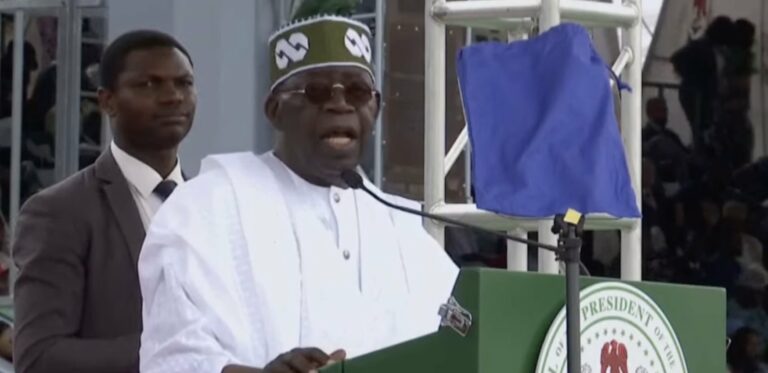
Delivering his inauguration speech at the Eagle Square, Abuja, on Monday, May 29, Tinubu said his administration would ensure that Nigeria raises the GDP through job creation and food security to mitigate poverty.

He promised that his administration would create one million jobs through digital economy for the teeming youths in Nigeria.


READ ALSO:


He said, “My administration must create meaningful opportunities for our youth. We shall honour our campaign commitment of one million new jobs in the digital economy,”

“We shall remodel our economy to bring growth and develop the GDP much better than we have seen through job creation, food security and an end to extreme poverty.

“On the economic, we target a GDP of not less than six percent growth.

“Our government also shall work with the National Assembly to fashion an omnibus Jobs and Prosperity bill. This bill will give our administration the policy space to embark on labour-intensive infrastructural improvements, encourage light industry, and provide improved social services for the poor, elderly and vulnerable.”

Tinubu reiterated that the Nigerian economy would improve through the creation of budgetary reform and industrial policy to address the economic crisis in Nigeria.

He added that his administration would ensure that Nigerians depend less on importation to strengthen the utilisation of domestic products.

Tinubu promised to acknowledge the supremacy of the constitution to eliminate favouritism, nepotism and corruption.

“We will impartiality govern according to the rule of law and constitution and we shall defend the nation from all from of terrorism bedeviling our nation.

“Our government will continue to take proactive steps such as championing a credit culture to discourage corruption while strengthening the effectiveness and efficiency of the various anti-corruption agencies,” he said.

The ICIR had reported that the former Lagos State governor was sworn into office as the President and Commander-in-Chief of the Armed Forces.

Tinubu, of the All Progressives Congress (APC), is the 16th President of Nigeria.

The ICIR noted that the Chief Justice of Nigeria Kayode Ariwoola administered the oath of office on Tinubu at exactly 10:37am on Monday, May 29.

BREAKING: AIT founder Raymond Dokpesi is dead

FOUNDER of DAAR Communications plc, owners of African Independent Television (AIT), Raymond Dokpesi, has died at the age of 71.

It was gathered that Dokpesi, a chieftain of the Peoples Democratic Party (PDP) died at a hospital in Abuja in the early hours of Monday, May 29.

Family sources said he suffered a mild stroke but was recovering until he died. It was learnt that he appeared at a Federal Capital Territory High Court on Thursday, May 25.

Dokpesi’s family has released a statement to confirm his passing.

The statement, signed by his son, Raymond Dokpesi (Jnr), read: “It is with deep sadness and heavy hearts that we announce the passing of High Chief Raymond Aleogho Anthony Dokpesi (Ezomo of Weppa-Wanno Kingdom) who passed away on May 29th, 2023. High Chief Dokpesi was a beloved husband, father, grandfather, and friend to many. He will be deeply missed by all who knew him.

“High Chief Dokpesi was also a respected and accomplished businessman, a pioneer in the media industry, and a philanthropist who dedicated his life to the service of his country and his community. His legacy will live on through the impact he made on the lives of many.

“The Dokpesi family is grateful for the outpouring of love and support during this difficult time. We ask that you keep us in your thoughts and prayers as we mourn the loss of our patriarch. We also ask for privacy during this time as we grieve together as a family.

“The family will release further details on the funeral arrangements in due course.

“May his soul rest in peace.”

Insecurity: New Kaduna gov pledges to actualise state police

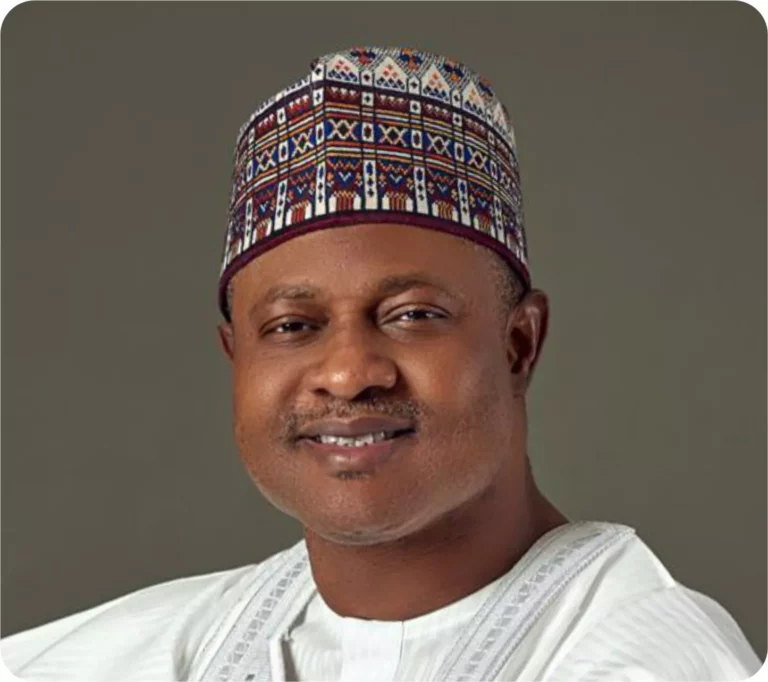
THE NEWLY-SWORN in Kaduna State governor, Uba Sani, has promised to work with other governors in Nigeria to make state police a reality.

Sani stated this on Monday, May 29, in his inaugural address.

He said insecurity was a local problem that required local solutions.


READ ALSO:

Key issues on insecurity in Buhari’s eight years of administration

Insecurity: Over 40 schools remain closed in Benue communities

Insecurity: Benue records 18,000 IDPs in April

FG frustrating effort to fight insecurity — Benue govt


“The prevailing security situation in the country demands a significant shift in the current structure. In this regard, I will work with my colleague governors and members of the National and State Assemblies to make state police a reality. 

“I was at the forefront of advocacy for state police in the 9th Senate. I strongly believe that state police is the panacea for our perennial security challenges. Security is basically a local affair, and it demands a local approach,” he said.

The ICIR reports that coincidentally, the new President Bola Tinubu, who also assumed office on Monday, May 29, in Abuja, had severally canvassed for state police to combat insecurity challenges in the country.

Sani promised to prioritise the Kaduna people and ensure equal opportunity for all.

He promised to build on his predecessor’s successes and take every sector in the state to greater heights.

He said his administration would improve infrastructure and agriculture for urban and rural development.

He pledged to boost education and health services by enrolling more children in school and investing more in primary care services. 

His government would also capture more of the state’s people in health insurance scheme and increase workers’ welfare.

He, however, hinted that he would take tough decisions for the common good of the state.

The governor said he came into government prepared and would deploy competent team members into different areas of governance.

Speaking further on insecurity, the governor said, “Kaduna State has had its fair share of bloodletting and unnecessary destructions. To this end, this administration will invest heavily in all legally permissible efforts, including deploying technology for security and law enforcement. Similarly, we shall be assisting the activities of the police, the military, para-military and other security agencies in the state. 

“We shall also engage traditional, religious institutions and community leaders to ensure effective intelligence gathering as well as working towards peaceful and harmonious coexistence within the various communities.”

The ICIR reports that Kaduna State was like a killing field during the era of Uba’s predecessor, Nasir el-Rufai.

Kidnappers, abductors and insurgents took over many parts of the state and unleashed mayhems on innocent people, including women and children.

In 2021, The ICIR reported how deaths from insecurity causes were higher in Kaduna State than all people in died from the insurgency in Borno, Adamawa and Yobe States.

In 2022, The ICIR reported how parents withdrew their children and ward from school in the state because of insecurity.

In 2023, this organisation reported how non-state actors killed thousands in Kaduna State.