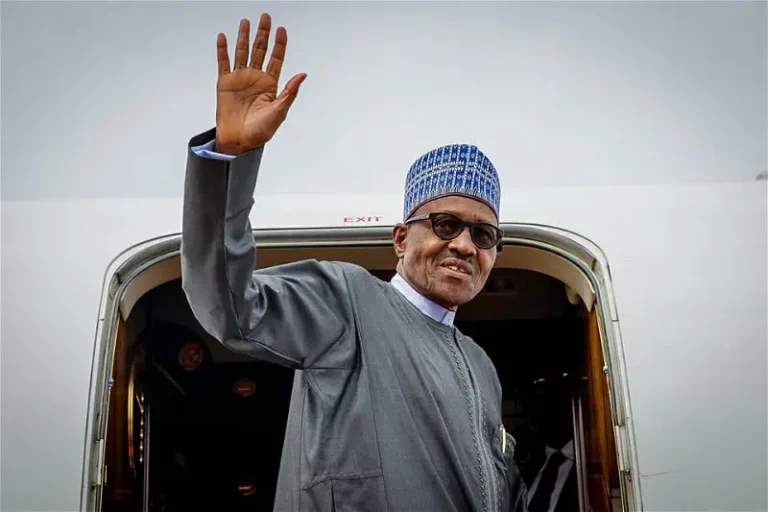
FORMER President Mohammadu Buhari on Monday, May 29, departed Abuja, Nigeria’s capital, for his hometown, Daura, in Katsina State.
Buhari left immediately after completing the military formalities of lowering and hoisting of new flags to mark the commencement of a new administration.
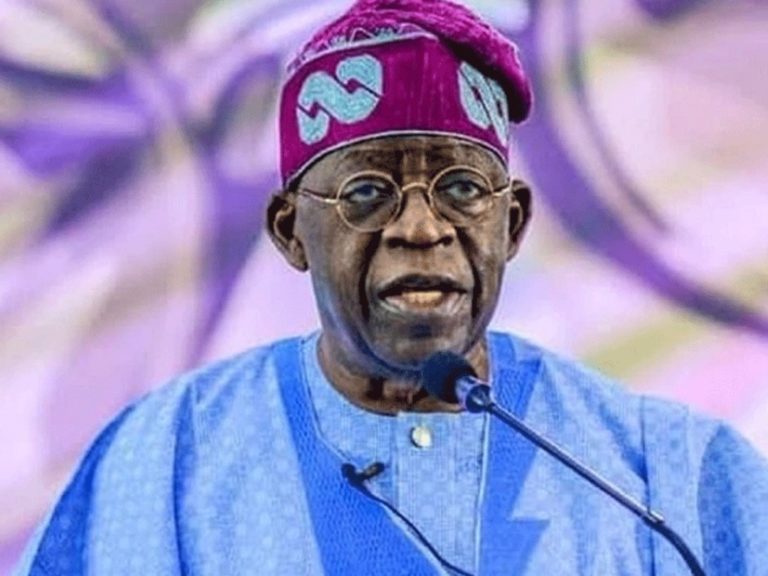
The immediate past President departed the Eagles Square immediately after the inauguration of Bola Tinubu as Nigeria’s 16th President.
Buhari took his last presidential flight on a Nigeria Air Force aircraft at exactly 12:00 pm at the Nnamdi Azikiwe International Airport, Abuja, enroute his native Katsina State where he is expected to reside.
He left in company of his wife, Aisha, and his Aide-De-Camp (ADC) Yusuf Dodo.
Former Vice President Yemi Osinbajo, Minister of Labour and Employment Chris Ngige, Senior Special Assistant on Media and Publicity to the President Garba Shehu, Minister of State for Environment, Udi Odum, and Minister of Humanitarian Affairs and Disaster Management Sadiya Umar Farouq, were some of those who bade Buhari farewell at the Presidential Wing of the airport.
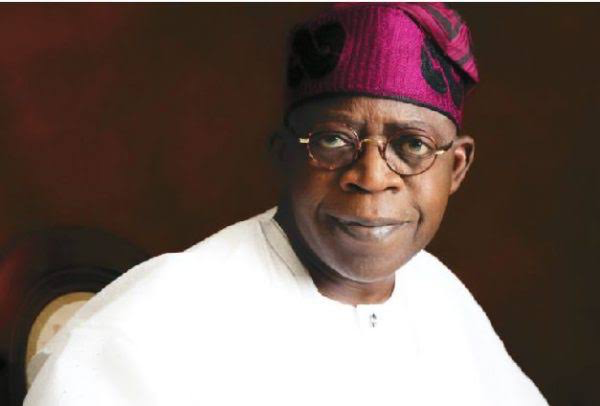
The ICIR earlier reported that former Lagos State governor, Bola Tinubu, was sworn into office as the President and Commander-in-Chief of the Armed Forces of the Federal Republic of Nigeria.
Tinubu, of the All Progressives Congress (APC) is 16th President of Nigeria.
The ICIR noted that Chief Justice of Nigeria Kayode Ariwoola, administered the oath of office on Tinubu at exactly 10:37 am on Monday, May 29.
FORMER governor of Lagos State Bola Tinubu, has been officially sworn in as the President of Nigeria in an inauguration ceremony that took place on Monday, May 29, at the Eagle Square in the capital city of Abuja.
Thousands of Nigerians and several heads foreign of governments witnessed the inauguration as Tinubu took his oath of office after Vice President Kashim Shettima.
“I, Bola Ahmed Tinubu, do solemnly swear, that I will be faithful and bear true allegiance to the Federal Republic of Nigeria. That as President of the Federal Republic of Nigeria, I will discharge my duties and perform my functions honestly to the best of my abilities and faithfully, in accordance with the constitution of the Federal Republic of Nigeria and the law.
“That I will abide by the Code of Conduct contained in the 5th schedule of the constitution of the Federal Republic of Nigeria. That I will not allow my personal interest, influence my official conduct or my official decisions. That I will preserve, protect and defend the constitution of the Federal Republic of Nigeria, so help me God,” Tinubu declared.
At 71 years old, Tinubu steps into the role with a strong background in governance, having successfully governed Lagos, Nigeria’s economic hub, for eight years.
His leadership skills and experience in managing complex issues have garnered him a significant following, with many Nigerians looking to him for solutions to the pressing problems the country faces.
One of the central aspects of Tinubu’s agenda is to build upon the efforts of his predecessor, President Muhammadu Buhari, in delivering democratic dividends to the Nigerian people, as the country grapples with insecurity, widespread poverty, and hunger.
Tinubu recognised these challenges in his manifesto dubbed “Renewed Hope” and has pledged to address them head-on, promising to prioritize the well-being and prosperity of all Nigerians.
However, Tinubu’s ascendancy to the presidency is not without controversy. The legitimacy of his election is currently being contested in court by opposition parties, and many young Nigerians remain skeptical about his ability to bring about meaningful change.
Despite these reservations, Tinubu has vowed to bridge the divisions within the country, working towards unity and national cohesion.
His administration’s success will be measured by its ability to effectively tackle these pressing issues and leave a lasting impact on the lives of Nigerians for generations to come.
FORMER Lagos State governor, Bola Tinubu, has been sworn into office as the President and Commander-in-Chief of the Armed Forces of the Federal Republic of Nigeria.
Tinubu was elected on the platform of the All Progressives Congress (APC).
The ICIR had earlier reported that Tinubu emerged Nigeria’s President-elect on the platform of the ruling APC following the outcome of February 25 presidential election after polling highest votes cast to defeat his closest rivals; former Vice President and candidate of the Peoples Democratic Party (PDP), Atiku Abubakar and the Labour Party (LP) candidate, Peter Obi.
Chief Justice of Nigeria Kayode Ariwoola, administered the oath of office on Tinubu at exactly 10:37 am on Monday, May 29.
He mounted the podium alongside his wife, Oluremi Tinubu. His predecessor former President Muhammadu Buhari and his wife, Aisha Buhari, stood behind him as he took the oath of office.
Vice President Kashim Shettima earlier took the oath of office minutes before Tinubu.
The administration of the oath of office on the new President and Vice President marks the commencement of a new administration in Nigeria.
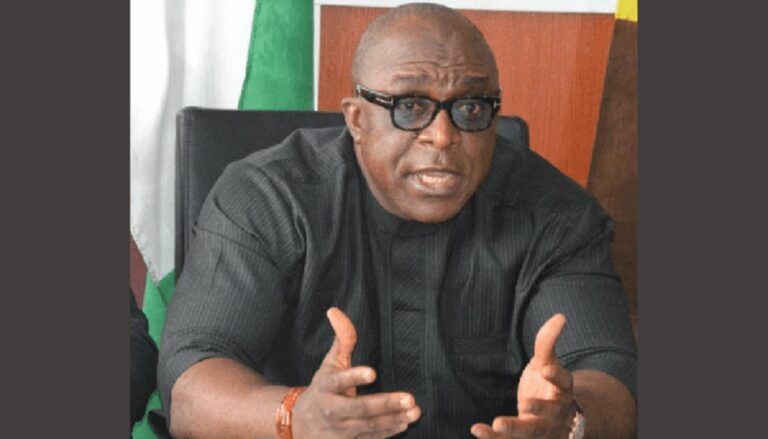
ECONOMIC and Financial Crimes Commission (EFCC) Chairman Abdulrasheed Bawa and outgoing governor of Zamfara State Bello Matawalle are currently engaged in a dirty fight over corruption allegations.
While Bawa accused Matawalle of involvement in ‘monumental corruption’, the governor accused the EFCC chairman of demanding a $2 million bribe from him.
The governor made the accusation in an interview with BBC Hausa Service.
The development is coming amid claims by the EFCC that it is investigating Matawalle over alleged monumental corruption involving the theft of about N70 billion.
The allegation
Speaking in the interview with BBC Hausa Service, Matawalle said, “It is not just to always blame governors. It is not only governors who have treasury; the Federal Government also has. What does the EFCC boss do to them? As he claims he has evidence on governors, let him show the world evidence of those at the federal level.
Zamfara State governor Bello Matawalle. File Copy.
“If he exits office, people will surely know he is not an honest person. I have evidence against him. Let him vacate office.
“I am telling you, within 10 seconds, probably more than 200 people will bring evidence of the bribe he collected from them. He knows what he requested from me, but I declined.
“He requested a bribe of $2 million from me, and I have evidence of this. He knows the house we met, he invited me and told me the conditions. He told me governors were going to his office, but I did not. If I don’t have evidence, I won’t say this.”
Bawa’s response
Reacting to the accusation, Bawa asked Matawalle to prove the allegation of corruption against him.
According to Daily Trust, Bawa, in an interview with BBC Hausa, said it would be beneficial for Matawalle to provide supporting evidence for his allegations.
EFCC Chair, Abdulrasheed Bawa
“There is no human being who is 100% clean; I read somewhere he (Matawalle) asked us to extend our investigation to ministers.
“We carry out our investigations thoroughly, and if Governor Matawalle has knowledge of any minister or governor involved in corrupt practices, he should report it to the appropriate authorities.
“If he has records of my purported corrupt practices, the appropriate channels for redress would be through reporting to the police, ICPC, and the Code of Conduct. Subsequently, investigations into such complaints would ensue,” Bawa said.
The EFCC chairman added that he has nothing to hide and asked Matawalle to petition appropriate authorities if he had any evidence against him.
CSOs demand Bawa’s resignation
Meanwhile, a group of civil society organisations have been demanding Bawa’s resignation.
They alleged that the EFCC under Bawa was corrupt and inefficient.
The activists, led by the Chairman of the Centre for Anti-Corruption and Open Leadership (CACOL), Debo Adeniran, and representing over 150 organisations, emphasised that the EFCC was founded as a crucial agency to fight corruption but has become a tool for settling political scores.
Demanding Bawa’s exit from the office, they argued that it is accepted practice worldwide for officials suspected of serious misbehaviour to resign during investigations.
Adeniran demanded a thorough investigation into the actions of the EFCC under Bawa.
Chairman of the Centre for Anti-Corruption and Open Leadership (CACOL), Debo Adeniran
He also referred to the treatment of Bawa’s predecessor, Ibrahim Magu, who was forced to resign before the investigation against him had produced a conclusive result.
The group called for a thorough investigation into the activities of the EFCC in the last three years, analysing records of arrests, investigations, outcomes and final closure of each incident and individual suspects and how the matters were eventually dispensed with.
“Allegations of sharp practices with confiscated assets by this anti-graft agency have refused to go away.
“To this end, all seized assets need to be forensically audited with a view to recovering all assets re-looted or auctioned in suspicious circumstances,” Olufemi Lawson, CACOL’s spokesperson, added.
The group also accused Bawa of contempt over his failure to comply with an earlier court order.
The activists also contested Bawa’s assertions about the EFCC’s conviction rates — 98.93 per cent conviction rate in 2022, with only 1.07 per cent lost — claiming that most prosecutions were tied to online fraudsters while politically powerful people went unpunished.
EFCC Director of Communication Osita Nwajah disclosed this on May 18, while addressing journalists at the Commission’s headquarters in Abuja.
“The Commission would like to put the nation on notice to expect more of the kind of wild allegations made by Matawalle as those at the receiving end of EFCC’s investigations fight viciously back.
“But the real issue with Matawalle is that he is being investigated by the EFCC over allegations of monumental corruption, award of phantom contracts and diversion of over N70 billion,” Nwajah said.
Accusing the governor of “monumental” corruption, the EFCC stated that it tracked down more than 100 companies that received payments from the claimed funds while there was no evidence of service to the state.
The EFCC said that as part of the extensive investigation of contracts awarded by the Matawalle administration, especially for phantom projects in the local government areas, the Commission recovered N300 million from a company, Fezel Nigeria Limited.
It added that funds were traced to the Zamafara Investment Company.
As a result of Matawalle’s immunity from prosecution as a state governor, the EFCC said that he has not yet been detained and charged with any crimes related to his alleged criminal behaviour.
Also, in another statement on May 19, the EFCC described Matawalle’s $2m bribe accusation as a means to divert attention from the alleged fraud perpetrated by the Zamfara governor.
In the statement signed by spokesperson of the Commission Wilson Uwujaren, the EFCC said Matawalle’s recourse to mudslinging is symptomatic of a drowning man clutching at straws.
Wilson Uwajuren, EFCC spokesman
The EFCC added that if Matawalle should be taken seriously, he should go beyond “sabre-rattling by spilling the beans – provide concrete evidence as proof of his allegations.”
The Commission warned the public about plans by some of the alleged corrupt, politically exposed persons to flee the country before May 29. The EFCC, however, said it is working with its international partners to frustrate the escape plans of such politicians and bring those involved to justice.
Reactions trail allegations
Reacting to the matter, a Civil Society Organisation (CSO), Citizens Advocacy For Social and Economic Rights (CASER), said the Zamfara governor’s ‘accusatory tactics’ will not help him.
CASER, in a press release signed by its Programme Officer (Socio-Legal) Collins Abia, said it is concerned with the adoption of accusatory tactics by some politically exposed persons (PEPs) to intimidate public officials, particularly those working in law enforcement, anti-corruption and the judiciary.
“Nigerians have suffered dramatically from the consequences of deliberate misgovernance in the hands of politicians, particularly state governors, many of whom have failed to deliver on the provision of essential government services because they have diverted allocated state resources for their private use and the security of their future and that of their immediate family.
“Undoubtedly, many State Governors are jittery and apprehensive as their tenures end and the days of reckoning with their use of state resources are fast drawing near.
“These fearful governors, including their appointees, have abused the trust of public office by corruptly enriching themselves instead of using the resources of their states to improve the security and welfare of the people,” CASER stated.
The group said it is not surprising that Matawalle chose to stretch the expiring fortunes of his immunity as a sitting governor to make allegations against the EFCC chairman, knowing that investigations on the misconduct of his administration are nearly concluded and that he would be indeed arrested immediately he leaves office.
CASER, therefore, urges the EFCC and the Nigerian Public not to be deceived by the antics of the Zamfara State governor but insist that he immediately makes public the details of his allegations against Bawa
“The expected public sympathy he had hoped to get by his sensational accusation would not help him escape the thorough investigations that the EFCC had begun against him. Anyone can make wild allegations against any other person, but such a person peddling damaging statements against the reputation of another must be prepared to substantiate such allegations or face the consequences of such a misadventure,” the group added.
CASER asked the in-coming administration of Bola Ahmed Tinubu not to allow Matawalle’s new accusatory tactics to stand as it can be adopted by other governors facing investigation.
Also commenting on the issue in an interview with The ICIR, a newspaper columnist Mojeed Dahiru described the saga as “a needless war of words between a governor and Nigeria’s foremost anti-corruption agency”.
According to Dahiru, the EFCC is doing well in the war against corruption but will do better if it acts more ‘institutionally’ and be less ‘individualistic’ in discharging its responsibilities.
“And by this, I mean for the EFCC to engage less in media trials of individuals and focus more on the bigger picture of the much-needed institutional war on corruption in Nigeria.
“For example, when the governor accused the EFCC of bias in the anti-corruption war, the best response from the Agency would have been simply to set the records straight to the contrary rather counter accusing their accuser of corruption as though it was resorting to providing a “corruption equivalence” in its defence.”
Dahiru added that if indeed the governor has established corruption cases as alleged by the EFCC, the best thing would have been to proceed with prosecution without resorting to a media trial?
In a chat with The ICIR, a human rights lawyer, Frank Tietie, said Matawalle should provide material evidence of the allegation.
He added that any accusation without evidence should be jettisoned.
OUTGOING Nigerian President Muhammadu Buhari has bestowed National awards on his personal photographers, special assistants and about 300 others.
This was announced in a statement by State House Director of Information, Abiodun Oladunjoye, on Sunday, May 28, hours to the end of Buhari’s tenure.
Senior Special Assistant to the President on Media and Publicity Garba Shehu, Senior Special Assistant on Media and Publicity (Office of the Vice President) Laolu Akande, and Permanent Secretary, State House Tijjani Umar received the award of Officer of the Order of the Niger (OON).
“The President’s Personal Photographers for the eight years of his administration, Bayo Omoboriowo and Sunday Aghaeze, bagged Member of the Order of the Federal Republic (MFR) and Member of the Order of the Niger (MON), respectively.
“Also listed for the National Honours Award for their diligent services to the nation are Tolu Ogunlesi, the Special Assistant to the President on Digital and New Media, MON; Tolani Alli, Personal Photographer to the Vice President, MFR; Adamu Sambo, NTA Correspondent and Emmanuel Anrihi, NTA Cameraman, MFR,” the statement read.
Despite his endorsement of policies which plunged Nigerians into hardship, including the naira redesign and subsequent cash crunch, Governor of the Central Bank of Nigeria (CBN) Godwin Emefiele was also listed as one of the recipients of the National Honours.
Emefiele was conferred with the national honour of Commander of the Order of the Federal Republic.
The awardees were advised to visit the office of the Federal Ministry of Special Duties and Intergovernmental Affairs to collect certificates and medals on Thursday, June 1, 2023.
In October 2022, Buhari conferred National Honours on over 400 Nigerians and non-Nigerians, whom he described as men and women of integrity.
He also said the awardees were a shining light to the younger generation of Nigerians.
Renowned Nigerian author Chimamanda Ngozi Adichie had been nominated as a recipient of the National Honours in 2022.
She, however, did not accept the National Honours and was absent at the ceremony during which the awards were conferred.
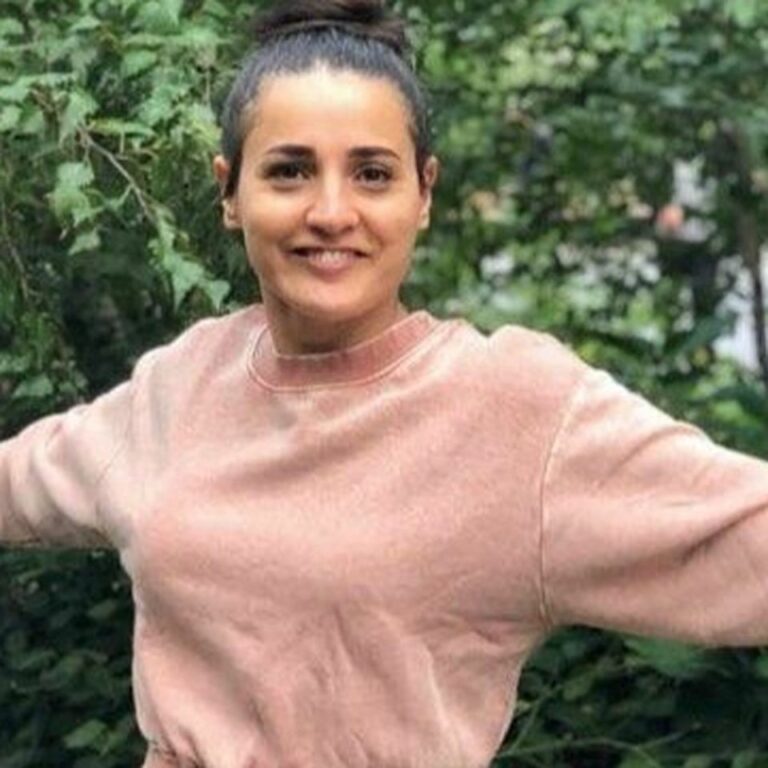
FOLLOWING the tragic incident that happened to Emine Oszoy, an artist based in Queens, her husband, Ferdi Oszoy, who is the interim director of the International Fact-checking Network (IFCN), has released a statement concerning the incident.
In the statement, Oszoy stated that his wife’s life has been negatively affected by the incident as she has suffered a severe injury on her neck.
”Her life has been profoundly impacted by this tragic act of violence. She has suffered a severe injury to her neck that has resulted in significant limitations. Unfortunately, her mobility is expected to be affected, greatly impacting her daily life. But, of course, faith and hope are never-ending. She’s young. She’s a strong woman. She’s creative. She’s empathetic. She’s a warrior. She’s a true friend who goes out of her way to help people.
“The incident occurred on the Southbound platform at the Lexington Avenue 63rd street station around 6am on her way to work in the heart of Manhattan. The incident underscores the pressing need for improvement within the MTA. We must ensure the ability to safeguard individuals, including loved ones like my wife,” Ferdi said.
The ICIR had gathered that on Sunday, May 21, 2023, 35-year-old Emine was on her way to work when she was shoved into a subway train that was pulling out of the Lexington and East 63rd Street station at around 6am She was rushed to the hospital as she had sustained serious head, neck and spine injuries, as well as fractured ribs, while the suspect took off.
The New York Police Department (NYPD) arrested the suspect, 39-year-old Kamal Semrade the following day, who was walked out of Transit District 1 with his head down and saying nothing. He is being charged with attempted murder and assault.
Ferdi thanked the NYPD for the swift and careful handling of the investigation and other parties involved.
He said, “I would like to thank several people. I am truly grateful for the way the NYPD handled the investigation. The NYPD detectives on the case kept me up to date at every step, at every moment.
“They assured me he is going to be caught. And last night, they caught him, and he will face his justice when the time comes. The individuals that surrounded her on that train station, that comforted her and told her that everything was going to be okay until the EMTs came, they were there to keep her motivated to hang onto life. And I really appreciated the New Yorkers who came to her aid in that moment.”
Prior to the incident, Emine 35, was an artist who was born in Antalya, Turkey, and lived and worked in Istanbul before coming to the United States and New York City in 2017. She has lived in NYC since then with her husband and is an award-winning artist, illustrator and painter whose work has appeared in many magazines and for many known clients, such as Airbnb, Puma, Chicago Magazine and Maroon 5.
THE President-elect, Bola Tinubu, will today, Monday, May 29, take his oath of office as Nigeria’s 7th elected president.
The inauguration of the new administration at the national level will take place at the Eagle Square in Abuja.
Tinubu’s government will be the country’s 17th since the British handed over power to Nigeria after independence in 1960.
The ICIR also reports that Tinubu’s presidency will be the fifth since Nigeria returned to democracy in May 1999, coming after former President Olusegun Obasanjo (1999-2007), Umar Yar’Adua (2007-May 2010), Goodluck Jonathan (May 2010-2015), and Muhammadu Buhari (2015-2023).
Tinubu takes over from Buhari, who completes his two terms in office today.
The former Lagos State governor assumes the nation’s leadership with Vice President-elect, Kashim Shettima, a former governor of Zamfara State.
Similarly, 28 governors will be sworn in across the country’s six geo-political zones, including ten old governors who were reelected for second terms.
The states where administrations will be inaugurated today are:
South-South: Akwa Ibom, Cross River, Delta, Rivers,
The new governors
Nasir Idris (Kebbi ), Kefas Agbu (Taraba), Bassey Otu (Cross River), Peter Mbah (Enugu), Mohammed Bago (Niger), Uba Sani (Kaduna), Ahmed Aliyu (Sokoto), and Umar Namadi (Jigawa).
Others are Dikko Radda (Katsina), Umo Eno (Akwa Ibom), Hyacinth Alia (Benue), Francis Nwifuru (Ebonyi), Siminialayi Fubara (Rivers), Alex Otti (Abia), Caleb Mutfwang (Plateau), Abba Kabir (Kano), Sheriff Oborevwori (Delta) and Dauda Lawal (Zamfara).
Ten governors who are returning for a second term
Governors who won a second term in office are Seyi Makinde (Oyo), Inuwa Yahaya (Gombe), Bala Mohammed (Bauchi), Babajide Sanwo-Olu (Lagos), Ahmadu Umaru Fintiri (Adamawa), Mai Mala Buni (Yobe), Babagana Zulum (Borno), Dapo Abiodun (Ogun), Abdullahi Sule (Nasarawa) and AbdulRahman AbdulRazaq (Kwara).
The ICIR reports that 16 governors were elected on the platform of the All Progressives Congress (APC). The Peoples Democratic Party (PDP) has 10 governors, while Labour Party (LP) and the New Nigeria Peoples Party (NNPP) have one, each.
No inauguration in eight states
There will be no inauguration of new administrations in eight states today because their governors are yet to exhaust their terms.
This followed court pronouncements that sacked governors from office, and as a result governorship polls in such states no longer follow general election cycles.
The states include Kogi, Bayelsa and Imo, where governorship elections will hold in November this year.
Others are Edo, Ekiti, Anambra, Osun and Ondo, whose governors will remain in office beyond 2023.
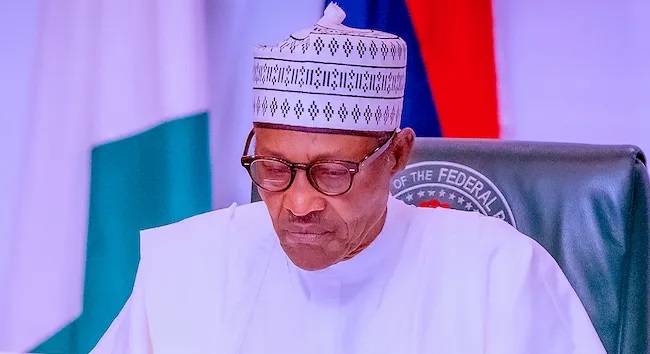
Below is President Muhammadu Buhari’s farewell broadcast to Nigerians, after serving eight years in office – from May 29, 2015, to May 29, 2023. He made the speech on Sunday, May 28, at 7:am.
My fellow Nigerian brothers, sisters and friends of Nigeria.
2. I address you today, in my last assignment as a democratically elected President of our great and well-endowed nation, with a deep sense of gratitude to God, a great deal of appreciation to the Nigerian people and a modest sense of fulfilment.
3. Today we mark and celebrate another peaceful transition of power from one elected government to another in our steady march to improve and sustain Nigeria’s democracy.
4. This year we witnessed the most keenly contested Presidential Elections since the first Republic and this demonstrates that our democracy is getting better and more entrenched with each election.
5. We must as a nation improve and sustain gains we make in the electoral process, on an incremental basis for Nigeria to take its rightful place among Nations.
6. Our democracy provides for, allows and encourages seeking redress for perceived injustices, enabling some candidates and political parties that did not agree with the results to go to court.
7. Irrespective of the outcome of the various cases, I urge all parties involved to accept the decision of our courts and join hands to build a better Nigeria.
8. I salute the doggedness and resilience of all the Presidential Candidates and their political parties for believing in our judicial system by taking their grievances with the election results to court.
9. In the course of the campaigns, we had argued and disagreed on how to make Nigeria better but we never disagreed or had any doubts that Nigeria has to be better.
10. As your President, I call on all of us to bring to bear the strength of our individualism, the power of our unity, the convictions of our beliefs to make Nigeria work better and together with one spirit and one purpose.
11. To my brother, friend and fellow worker in the political terrain for the past ten years – Asiwaju Bola Ahmed Tinubu -, I congratulate you on the realisation of your dream, which was propelled by a burning passion to put Nigeria amongst the leading nations of the world.
12. You have indeed worked for this day and God has crowned your efforts. I have no doubt that your passion for excellence, reliance on competence, fairness in relationships, commitment to equity, loyalty to the country and desire for Nigeria to be globally relevant would come through for you, under God’s guidance, as you lead our country to levels higher that I am leaving.
13. You are the best candidate among all the contestants and Nigerians have chosen well.
14. The last eight years have been an exciting experience in my desire and commitment to see a Nigeria in which public goods and services are available, and accessible within a united, peaceful and secure nation.
15. Fellow Nigerians, on the strength of your overwhelming support for me and my political party, I started this journey with a great deal of promise and expectation from you. I never intended to be just politically correct but to do the correct things that will make meaningful impact on the lives of the common Nigerian.
16. This high expectation was not misplaced because, like the ordinary Nigerian, I had grown tired of watching the country progressively moving away from the path of correctness.
17. To ensure that our democracy remains resilient and our elected representatives remain accountable to the people, I am leaving behind an electoral process which guarantees that votes count, results are credible, elections are fair and transparent and the influence of money in politics reduced to the barest minimum. And Nigerians can elect leaders of their choice.
18. We are already seeing the outcome of this process as it provided an even playing field where persons without any political God-Father or access to money defeated other well-resourced candidates.
19. The Nigerian economy has become more resilient due to the various strategies put in place to ensure that our economy remained afloat during cases of global economic downturns.
20. You would all recall the supply chain disruptions and economic downturn that the world witnessed between 2020 and 2022 as a result of the COVID-19 pandemic. The deftness of our response to the pandemic still remains a global best practice.
21. Furthermore, we increased the ability of the poor and rural Nigerians to earn a living, provided more food for millions in our villages and gave our women opportunities to earn a living.
22. Young men and women in urban centres were also supported to put their skills into productive use. Our administration also provided an enabling environment for the private sector to engage in businesses for which their return on investments is guaranteed.
23. The private sector proved a strong partner in our drive to build a resilient and sustainable economy as evidenced by the growing number of turn-key projects in various sectors of the economy.
24. In the course of revamping the economy, we made some difficult choices, most of which yielded the desired results. Some of the measures led to temporary pain and suffering for which I sincerely apologised to my fellow countrymen, but the measures were taken for the over-all good of the country.
25. Mindful of the need to ensure adequate infrastructure to drive economic growth, we completed age-long projects and processes notably amongst which are the Petroleum Industry Act, completion of some power projects, completion of the second Niger bridge and various important roads linking cities and states.
26. Our battle to ensure that all Nigerians live in a safe and secure environment has achieved considerable results. As I complete my term in office, we have been able to reduce the incidences of banditry, terrorism, armed robbery and other criminal activities considerably.
27. To sustain the gains made so far, I call on all Nigerians to be more vigilant and support the security agencies by ensuring that our values defined by being your brothers’ keeper govern our actions.
28. Up-till now, I still grieve for our children still in captivity, mourn with parents, friends and relatives of all those that lost loved ones in the days of the senseless brigandage and carnage. For all those under unlawful captivity our Security Agencies are working round the clock to secure their release unharmed.
29. Fellow Nigerians, you know how dear the desire in my heart is, to rid the country of corrupt practices that had consistently diminished our efforts to be a great country.
30. I did pursue this commitment relentlessly, in spite of the expected push back. I am happy that considerable progress had been made in repatriating huge sums of money back to the country and also taken over properties illegally acquired from our common wealth.
31. To improve service delivery, we began the implementation of a number of reforms aimed at producing an Efficient, Productive, Incorruptible and Citizen-oriented (EPIC) Federal Civil Service and the results are beginning to show.
32. On the international scene, Nigeria’s influence continues to grow as exemplified by notable Nigerians occupying headship and leadership positions in renowned global bodies.
33. Our democracy is built on and continues to thrive on the principles of separation of powers. The leadership and members of the National Assembly deserve my appreciation for their patriotism which did not detract from their roles as a check to the executive arm.
34. I also want to use this opportunity to express my appreciation to a good number of Nigerians who provided their support and encouragement to help me navigate the exciting journey in moving Nigeria forward.
35. I cannot and will not forget the millions who prayed for me during my illness in my first term of office. I am constantly praying for you and for Nigeria to thrive in peace.
36. As I retire home to Daura, Katsina State, I feel fulfilled that we have started the Nigeria Re-Birth by taking the initial critical steps and I am convinced the in-coming administration will quicken the pace of this walk to see a Nigeria that fulfils its destiny to be a great nation.
37. I am confident that I am leaving office with Nigeria better in 2023 than in 2015.
38. I thank you all. And may God Bless the Federal Republic of Nigeria.
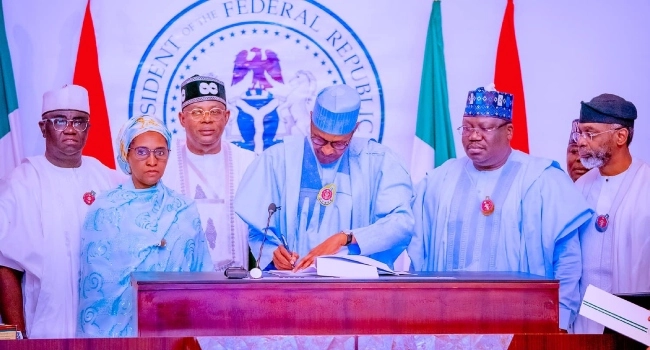
SECTION 5 of the Nigerian 1999 constitution (as amended) confers upon the president the power to sign bills into law after the National Assembly has passed it. Muhammadu Buhari as president, during his eight-year administration, also signed several bills into law.
Some of these include executive orders, establishment bills, constitutional amendments or an amendment to repeal an existing law.
According to the constitution, the president has 30 days to assent to a bill after it has been transmitted to him by the National Assembly. However, if the president withholds his assent for unclear reasons, the bill can be passed by two/third majority of the House.
The ICIR findings, from multiple media reports showed that over 63 bills were signed into law by the former president.
Buhari got resounding compliments when he signed some major bills, which created many controversies at the time of deliberation in the National Assembly.
Meanwhile, there are still concerns over implementing some bills despite being assented to by the president. The ICIR reported how there are concerns about the Petroleum Industrial Act signed in 2021.
Also, the aviation workers, in February 2022, threatened strike action over the failure to implement the minimum wage.
As Nigeria transitions government today, here is a look at some of the bills:
Minimum Wage Increase in 2019
The signing of the Labour Act of 2004 provided the country to set a new minimum wage for workers from N3,000 to N5,500 per month. It was later increased in 2011 to N18,000 in a new minimum wage act signed by President Goodluck Jonathan’s administration.
As the country’s economy began to worsen, the Nigeria Labour Congress embarked on a strike action demanding an increase in the minimum wage in 2018. This demand created uproar during the deliberation of the National Assembly and Nigerian Governors Forum as to how much should be paid.
The amount revolved between N22,000 to over N50,00 until the House of Representatives passed N30,000 in January 2019 and Senate in March. In April, Buhari passed into law the new minimum wage of N30,000.
However, The ICIRreported how the implementation of the new wage stalled for months which led to several strike actions by NLC before coming to an agreement.
‘Not too young to Run’ Bill 2018
In 2016, human rights activists and civic organisations campaigned to reduce the age of running for executive offices, permitting candidates as low as 25- 30 years to via for some state or federal positions.
The bill was introduced into the House of Representatives in 2017 and, after deliberation, transmitted to the 36 states’ House of Assembly for them to vote for the amendment. This process saw a lot of delays up until February 2018.
In April, the Senate concluded to transmit the bill to the president. The ICIRreported how Buhari promised to sign the bill while giving his speech on Democracy Day in May 2018.
Buhari signed the bill two days after, reducing the constitutional age requirement for the office of the President from 40 to 35 years old. Also, the age requirement for the state governor’s office and the Senate automatically drops from 35 to 30 years, while a 25-year-old will now be eligible to run for a seat in state assemblies and the Federal House of Representatives.
Electoral Act 2022
After months of withholding assent, Buhari assented to the electoral bill that repealed and replaced the 2010 Electoral Act.
The 2022 Electoral Act is intended to bring innovations to regulating Federal, State and Area Council elections in Nigeria. The act gave provisions for the electronic transmission of results, early party primaries and the exclusion of Political appointees from acting as voting delegates or aspirants.
Buhari signed the bill into law in February 2022 after withholding assent five times.
In 2018 alone, he rejected the proposed amendments to the Electoral Act four times. His reasons ranged from irregularities to drafting issues, the sequence of elections, and the phrasing of words in parts of the bill.
The first time was in February 2018. Buhari cited the re-ordering of the sequence of elections as his reason for rejection. Then in June, the Amendment Bill was passed by the National Assembly and transmitted to Buhari. But the bill was not considered by the President.
In July 2018, Buhari again refused to sign another version of the Electoral Amendment Bill transmitted to him by the national lawmakers. This time, he stated the increased cost of conducting elections, among other reasons for not signing the Bill. He declined again in December.
The fifth time was in November 2021. Buhari cited the cost of conducting direct primaries and infringement on the rights of Nigerians to participate in governance and security as reasons for the rejection.
The Petroleum Industry Bill
In 2021, President Buhari signed the Petroleum Industry Bill into law, closing a 15-year effort to reform Nigeria’s oil industry. Buhari signed the Petroleum Industry Bill in August, weeks after the National Assembly passed the bill.
The bill aimed to create an environment conducive to the growth of the oil sector and address the grievances of communities most impacted by extractive industries.
The bill also sought to regulate the performance of the oil and gas sector and ensure transparency in Nigeria’s state oil company, the Nigerian National Petroleum Corporation (NNPC). The first petroleum industry bill was presented to the National Assembly in 2008 by the administration of late President Umar Yar’Adua.
But the bill’s passage since then, has suffered multiple setbacks and stalled for almost two decades.
Other Bills signed
Some of the bills assented into law by the outgoing president in 2016 are the Prevention of Crime Amendment Act, the National Crop Varieties and Livestock Breeds (Registration) Amendment Act, the Telecommunications and Postal Offences Amendment Act, The National Agricultural Land Development Authority Amendment Act, The Produce Enforcement of Export Standards Amendment Act , Water Resources Amendment Act among others.
In 2018, he signed the National Senior Citizens Centre Act, Legislative Houses (Powers and Privileges), Rail Loan (International Bank) (Repeal) Act, Avoidance of Double Taxation Agreement between the Federal Republic of Nigeria and the Kingdom of Spain (Domestication and Enforcement ) Act, Extradition (Amendment) Act, among others.
Also, the Reform Nigeria Prison Bill, Asset Management Corporation of Nigeria, Deep Offshore and Inland Basin Production Sharing Contract (PSC) Amendment Bil, Defence Intelligence Agency Civilian Pensions Board, and Finacial Bill was signed between 2019 and 2020.
While the Mental Health Bill, Increase of Retirement Rate Bill, Nigeria Law Reform Commission Act, Nigeria Start-up Bill, Money Laundering (Prevention and Prohibition) Bill, Terrorism (Prevention and Prohibition) Bill, Health insurance as well as some constitutional amendment among others were signed between 2021 and 2023.
NIGERIA risks a ban from the airspace of the United States and European countries if the five-phase certification process of obtaining an operating licence for the national carrier, Nigeria Air, is not followed, the Airline Operators of Nigeria (AON) has warned.
The group gave the warning in a statement by its spokesperson, Obiora Okonkwo, on Sunday, May 28, and accused the outgoing minister of Aviation, Hadi Sirika, of pushing to commence Nigeria Air’s operation without undergoing the process to obtain the Air Operators Certificate (AOC).
The AON, a critical stakeholder in the Nigerian aviation industry, stressed that should Nigeria Air be issued the AOC certificate through the back door to hasten its operation, international aviation safety agencies like the US FAA (Federal Aviation Administration) and the EASA (European Aviation Safety Agency) could blacklist Nigeria.
The group maintained that failure to complete the five-phase certification process is considered a serious infraction by the International Civil Aviation Organisation (ICAO).
While the five-phase process involves pre-application, formal application, document evaluation, demonstration and inspection, and certification, AOC is a safety certificate issued by the Nigeria Civil Aviation Authority (NCAA) to an airline that has demonstrated its fitness to conduct safe flight operations through the five-phase certification process.
AON had faulted the handling of Nigeria Air and sued the minister over the controversies surrounding the project.
But on Friday, May 26, the minister received an aircraft branded Nigeria Air at the Nnamdi Azikiwe International Airport, Abuja, The ICIR reported.
The branded aircraft is one of the 30 aeroplanes expected to form the fleet of Nigeria Air in the next five years.
According to the AON, further implications of not following due process by Nigeria Air include that airlines of those countries would not enter Nigeria, and Nigerian airlines would not be allowed to operate in those countries.
“It also means that Nigeria will definitely fail the upcoming ICAO audit and, by way of further penalty, lose its FAA CAT-1 Certification.
“Nigerian airlines will also not be able to lease aircraft to boost their operations because no lessor will trust the safety certification process of the NCAA,” AON stressed.
The NCAA has resisted the pressure from the minister to issue the AOC certificate to Nigeria Air without a standard process.
“As indigenous operators, we are happy and grateful to the NCAA for saving us from this punishment by resisting the pressure from Minister Hadi Sirika to grant an AOC to Nigeria Air without going through the due process.
“If tampered with, it will have negative expanded multiplier effect on all aspects of the economy and life of Nigeria,” the local operators stated.
The group further queried the whereabouts of the promoters of Nigeria Air and why they were not speaking on behalf of the national carrier, considering it is private sector-led and not a government, wholly-owned initiative.