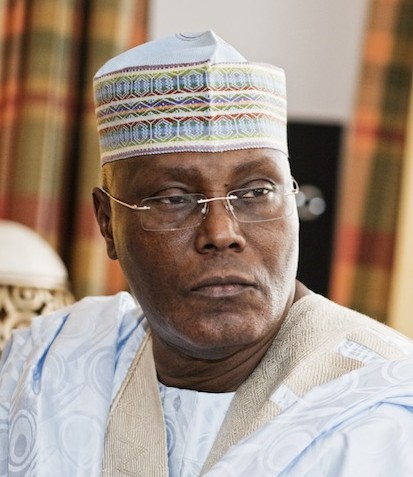
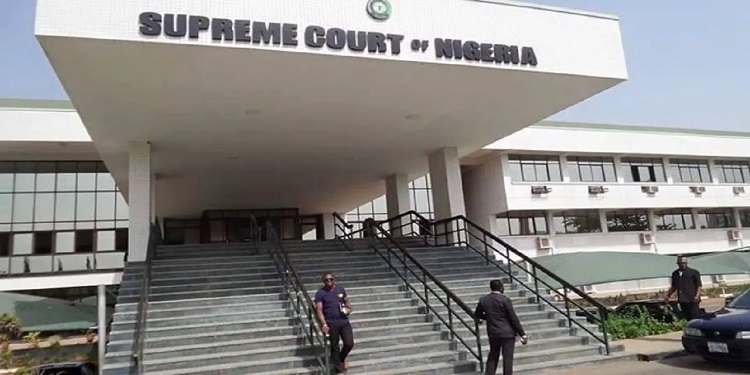
THE presidential candidate of the Peoples Democratic Party (PDP), Atiku Abubakar, has said the ruling of the Supreme Court on the suit filed by the party was not a setback in his quest for justice.
The former Vice President disclosed this in a statement shared on his Twitter handle on Friday, May 26.
The PDP candidate noted that the legal team was primed to robustly prove that the February 25 presidential election was fraudulent and did not comply with the constitutional requirements and the guidelines of the Independent National Electoral Commission (INEC).
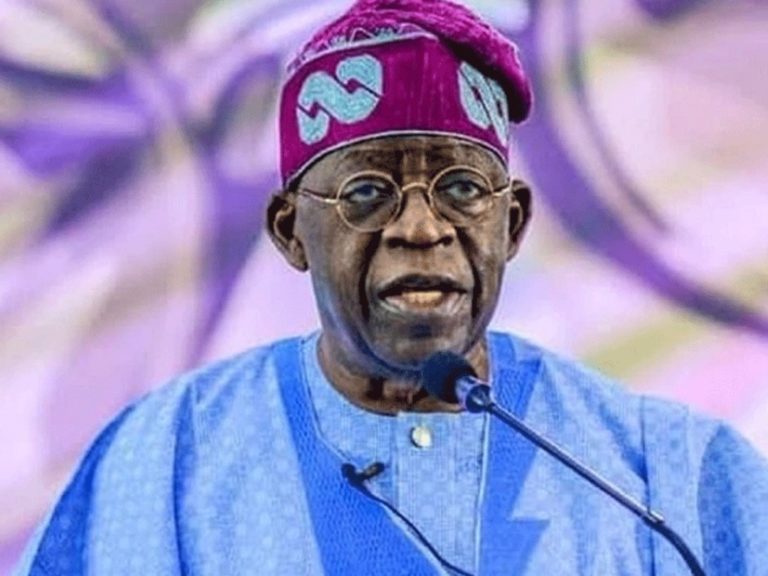
The ICIR had earlier reported that the Apex court dismissed a suit filed by the PDP for the disqualification of President-elect Bola Tinubu and Vice President-elect Kashim Shettima over alleged double nomination.
The Supreme Court Justice, Adamu Jauro, who delivered the judgment, said the PDP acted as an intrusive interloper and a busybody by filing the suit.
The court further described the PDP’s action as misleading and “sad.”
It further awarded a sum of N2 million against the party, noting that the suit lacked merit.
Reacting to the dismissal. Atiku tweeted, “The Supreme Court’s dismissal of the case of the #OfficialPDPNig is not a setback to my quest for justice.
“Our legal team are primed to robustly prove that the election of February 25 was fraudulent, did not comply with the constitutional requirements and the electoral guidelines of the Independent National Electoral Commission, #inecnigeria, and that the announced winner was not even qualified to contest the poll.
“The battle for democracy and the enthronement of a new order to spur growth and development in Nigeria is one to which I have committed my all and for which I am not ready to walk away at this point when our nation is at crossroads.
“We know that sooner than later, our esteemed Justices will make the pronouncement that will serve as a befitting requiem for mandate bandits.
“I urge my supporters to exercise patience and conduct themselves peaceably as we diligently conduct our litigation at the Presidential Election Tribunal Court.”
The suit
The PDP, had on July 28, 2022, filed a suit asking for the disqualification of Tinubu and Shettima from contesting the 2023 presidential election on the grounds that Shettima’s nomination as Tinubu’s running mate amounted to double nomination, in breach of the provisions of Sections 29(1), 33, 35 and 84{1)}(2)} of the Electoral Act, 2022 as amended.
The party argued that Shettima’s nomination to contest the position of vice president and Borno Central senatorial seat breached the law.
Subsequently, an Abuja Federal High Court and the Court of Appeal dismissed the suit.
The party asked the Supreme Court to reverse the Court of Appeal judgment, which held that the party failed to establish its locus standi, noting that Shettima’s disqualification for double nomination could halt the swearing-in of Tinubu as President since they ran a combined ticket.
On May 22, The ICIR reported that the Supreme Court fixed May 26 to deliver judgment in the suit.
At the apex court, the party’s lawyer Joe Agim told argued that the All Progressives Congress (APC) had earlier admitted Shettima’s double nomination at the Court of Appeal.
“There’s a punishment for double nomination,” Agim said.
The PDP requested that the Supreme Court exercise its authority and assume jurisdiction over the case to overturn the lower courts’ earlier rulings and reassess the parties’ arguments.
The PDP claimed that Shettima’s nominations for vice president and Senator are against the terms of the Electoral Act.
The party also explained that Shettima’s Senate nomination had not been withdrawn from the Independent National Electoral Commission (INEC) when he was nominated as Tinubu’s running mate, arguing that running for two posts at once was unlawful.
AN Abuja Federal High Court has dismissed a suit seeking an interim injunction to stop President-elect Bola Tinubu from being inaugurated as President of the Federal Republic of Nigeria on May 29.
In a ruling delivered by presiding judge James Omotosho on Friday, May 26, the court concluded that it lacked the necessary jurisdiction to grant the request made in an ex-parte application that three persons who described themselves as Concerned Nigerians brought before it.
In the suit marked FHC/ABJ/CS/ 657/2023, the plaintiffs — Anongu Moses, Praise Isaiah and Paul Audu – who described themselves as Concerned Nigerians claimed that Tinubu lied under oath on his Form EC9 when he claimed he wasn’t a citizen of another nation.
Additionally, they claimed that the President-elect misrepresented his age under oath.
The plaintiffs informed the court that despite having a passport from Guinea, the President-elect claimed he was a citizen of no other nation.
Concerning educational qualifications, the plaintiffs informed the court that further research had shown that ‘Bola Tinubu’ was a female who had studied at Chicago University in the United States of America.
Additionally, they said that although the President-elect claimed to have been born in 1957, it was determined that he was actually born in 1952.
They claimed that Tinubu’s conduct violated Section 117 of the Criminal Code Act and Section 156 of the Penal Code Act in flagrant ways.
In order to prevent Tinubu from taking office while cases before the Presidential Election Petition Court are being decided, the petitioners, among other things, petitioned the court to order his incarceration.
In addition, they asked the court to prohibit Tinubu from running for any elective office for the following 10 years.
The plaintiffs testified before the court that they had cast ballots in the February 25 presidential election.
In its ruling, the court stated that the lawsuit was “unconstitutional, frivolous, and vexatious”, adding that it lacked jurisdiction to hear the case because the plaintiffs lacked locus standi (legal standing) to bring it.
The court emphasised that only a candidate can contest the eligibility or nomination of a candidate in an election under Section 285 (14) of the 1999 Constitution, as amended.
It further ruled that only the Court of Appeal has jurisdiction to hear cases involving the presidential election because the election has already been held.
Omotosho further held that by launching the lawsuit, which he described as an abuse of the legal system, the plaintiffs wasted the court’s time.
The judge ruled that the lawsuit was filed in bad faith because it was intended to make the judiciary an object of mockery.
Omotosho warned that the lawyers who assisted the plaintiffs in the lawsuit will be reported to the Legal Practitioners Disciplinary Committee and stated that the court would not allow itself to be used as a tool to destabilise the nation.
He thereafter dismissed the case and awarded a total of N15 million against the plaintiffs – N10 and N5 million in favour of Tinubu and the APC respectively.
The court also fined the plaintiffs’ lawyers N1 million.
The court decided that the cost awarded against the plaintiffs will accrue 10 per cent interest annually until its final liquidation.
In another development, the Supreme Court, on Friday, May 26, dismissed a suit filed by the Peoples Democratic Party (PDP) for the disqualification of President-elect Bola Tinubu and Vice President-elect Kashim Shettima over alleged double nomination.
In a ruling which paved the way for Tinubu and Shettima’s inauguration on May 29, the Supreme Court held that the PDP lacked the locus standi to file the lawsuit.
Adamu Jauro, the Supreme Court Justice who delivered the judgment, noted that the PDP acted as an intrusive interloper and a busybody by filing the suit.
The court further described the PDP’s action as misleading and “sad”.
The apex court awarded a sum of N2 million against the PDP and dismissed the suit for lacking merit.
Similarly, on March 30, the Supreme Court dismissed an appeal filed by a former Minister of State for Education, Chukwuemeka Nwajiuba, seeking the disqualification of the presidential candidates of the APC, Tinubu and the PDP, Atiku Abubakar, from the just concluded presidential election.
The court dismissed the appeal when the former minister withdrew it after learning that it had been submitted outside the legal deadline and was; therefore, statute barred.
The Federal High Court and the Court of Appeal in Abuja had dismissed the matter on the grounds that the case lacked merit.
Nwajiuba and a non-governmental organisation, Rights for Everyone International, had petitioned the Supreme Court to annul the procedures that resulted in Tinubu and Abubakar emerging as the candidates for their respective political parties.
Also, the Court Of Appeal on May 25 slammed a N40 million fine on an ex-presidential candidate, Ambrose Owuru, for filing a suit to stop Tinubu’s inauguration.
The three-member panel of the court led by Jamil Tukur determined that by initiating a frivolous, vexatious, and annoying lawsuit to irritate the respondents, Owuru had engaged in a blatant abuse of the legal system.
Owuru, the presidential candidate of the Hope Democratic Party (HDP) in the 2019 elections, filed a suit in April challenging the outcome of the 2019 elections. He claimed he won the poll.
He requested that the court declare the President’s seat vacant and order that he be sworn in as the legitimate winner.
However, in its judgment on May 25, the appellate court decided that the appellant’s complaints about the 2019 presidential election were unusual and unwarranted, given that they had been taken to the highest court and were rejected for lack of substance.
The court ruled that Owuru’s attempt to revive the case that was dismissed in 2019 was made to bring lower courts into conflict with the supremacy of the apex court.
The court ordered that the defendants in the case — President Muhammadu Buhari, Attorney General of the Federation (AGF), Independent National Electoral Commission (INEC) and Tinubu — should receive N10 million each from Owuru as compensation.
Barring any unforeseen circumstances, Tinubu and Shettima will be sworn in as President and Vice President on May 29 for a tenure of four years.
Tinubu was declared the winner of the presidential poll held on February 25.
The Independent National Electoral Commission (INEC) declared him the winner with 8,794,726 votes.
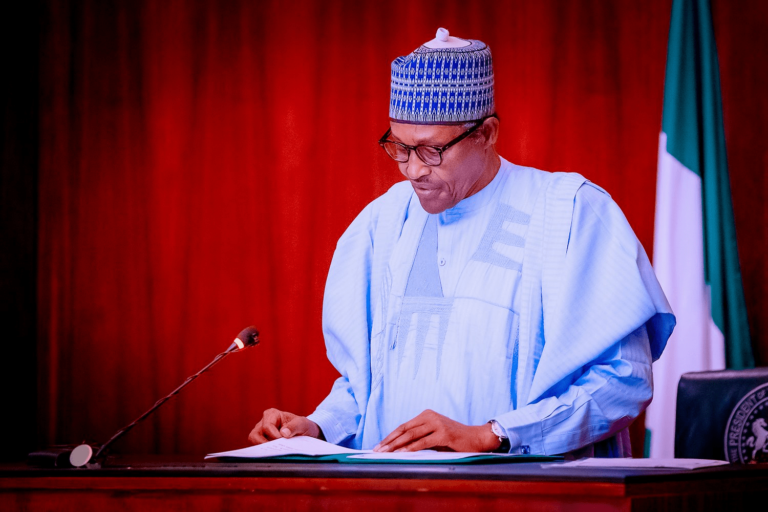
PRESIDENT Mohammed Buhari says the President-elect Bola Tinubu will sustain his administration’s commitment to infrastructural development in the country.
He said this while delivering an address virtually on Friday, May 26, to commission four federal government projects.
The four projects are the Nigerian Navy Logistics College Dawakin Tofa, a 3000-capacity ultramodern correctional centre, the New International Terminal Building of Mallam Aminu Kano International Airport, Kano, as well as the procurement of aircraft, equipment and buildings at the College of Aviation Technology Zaria, Kaduna State.
Speaking on the handover scheduled for Monday, May 29, Buhari said Tinubu will work to improve the availability of infrastructure across the country, as he has done.
He expressed confidence in the President-elect and assured Nigerians that the incoming administration will sustain his tempo of growth and development in Nigeria.
“I am pleased to now commission the Nigerian Navy Logistic College Dawakin Tofa, Kano state, 3000-capacity, the Ultramodern Correctional Centre, Kano, new airport terminal of the Mallam Aminu Kano International Airport, Kano and Aircraft Equipments and buildings at the Nigerian College of Aviation Technology Zaria Kaduna state.
“The four projects that were commissioned today are critical at this time; I have no doubt that the incoming government, which is also progressive, will sustain the tempo of improvement,” he said.
Buhari is set to vacate the Aso Presidential Villa on Monday and hand over to President-elect Bola Tinubu.
The ruling All Progressives Congress (APC) candidate had been declared the winner of the February 25 presidential election, polling 8,794,726 votes.
According to the Independent Electoral Commission, Tinubu had over 25 per cent of the votes cast in 30 states, more than the 24 states constitutionally required.
INEC said Atiku Abubakar of the Peoples Democratic Party (PDP) came second in the election with 6,984,520 votes. While Labour Party candidate Peter Obi came third with 6,101,533 votes.
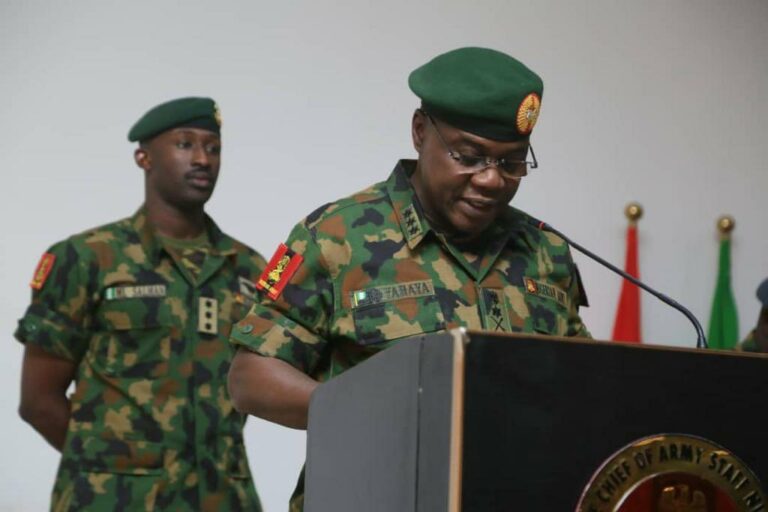
THE family of a slain police officer, Orukpe Monday, killed by soldiers in Lagos State, has dragged the Nigerian Army to court for extra-judicial killing.
Monday, an inspector, died in August 2022 after he and his colleagues were allegedly tortured by a group of angry soldiers at the Trade Fair area of Lagos State.
The soldiers, said to be travelling to the Ojo Military Cantonment, had an argument with police operatives who were coordinating traffic on the highway.
The argument sparked a fight between the policemen and the soldiers who overpowered them and bundled two officers, including Monday, to their barracks.
One policeman was able to flee the scene after struggling with the soldiers with his gun and shooting in the air.
Monday died at the military hospital due to injuries he sustained from the assault by the soldiers.
Two autopsies carried out on the deceased revealed that he died of assault, multiple injuries and blunt force trauma.
The autopsies were conducted by the Lagos State University Teaching Hospital (LASUTH) and the Nigerian Army Cantonment Medical Centre, Ojo.
The autopsy from LASUTH, signed on October 27 by a doctor, O.O. Onayemi of the Department of Pathology and Forensics, revealed that multiple injuries and blunt force trauma caused Monday’s death.
The Nigerian Army’s autopsy report signed by I. Agueze revealed that the primary cause of death was assault, while the secondary cause was a head injury.
Monday’s family is now seeking justice and compensation from the Nigerian Army.
In a suit filed by human rights lawyer and Senior Advocate of Nigeria (SAN) Femi Falana, on Thursday, May 25, the deceased’s wife, Favour Monday, is seeking a N300 million compensation for her late husband.
Parties in the suit include the Chief of Army Staff Faruk Yahaya and 10 officers of the Nigerian Army.
Falana, in the suit, stated that the late police officer’s fundamental rights, including the right to life, dignity of the human person, private and family life, and presumption of innocence, as guaranteed by the Nigerian Constitution and the African Charter on Human and Peoples’ Rights, were grossly violated.
He argued that the extra-judicial killing perpetrated by the soldiers of the Nigerian Army violated Monday’s rights.
In the same vein, he asked the court to declare the torture and extra-judicial killing of the police officer as illegal and unlawful.
“We graciously pray my Lord to so hold and grant the reliefs as sought in the statement accompanying this application. On the whole, we urge your Lordship to find that this application has merit and in finding as such make the declarations and orders sought herein,” parts of the suit read.
“The applicant is a Nigerian, a resident of Otta in Ogun State and the wife of Inspector Orukpe Monday, who was gruesomely murdered by the agents of the first respondent.
“The deceased, Inspector Monday was an Inspector of the police with the Trade Fair Police Divisional Headquarters of the Lagos State Police Command, murdered on August 3, 2022, along Lagos/Badagry Expressway, Lagos while carrying out his official duties as a police officer.
“The deceased, Inspector Monday was entitled to his right to life, dignity of his person, fair hearing and presumption of innocence guaranteed by Sections 33, 34 and 36 (1) and (5) of Nigeria (As Amended) and Articles 4, 5 and 7 of the African Charter on Human and Peoples Rights (CAP A10) LFN 2004.
“The extra-judicial killing of the applicant’s husband, Inspector Monday by armed agents of the first respondent at the Lagos/Badagry Expressway of Lagos State on Wednesday, August 3, 2022, violates the deceased’s fundamental right to life guaranteed by Section 33 (1) of the Constitution of the Federal Republic of Nigeria (FRN) 1999 (As Amended) and Article 4 of the African Charter of Human and Peoples Rights.
“The brutalisation and indiscriminate killing of the applicant’s husband, Inspector Monday by the respondents at the Lagos/Badagry Expressway of Lagos State on Wednesday, August 3, 2022, is wrongful, oppressive, illegal, unlawful, unconstitutional, null and void as it violates the deceased’s fundamental right to the dignity of the human person.
“The extra-judicial murder of the applicant’s husband, Inspector Monday by the respondents at the Lagos/Badagry Expressway of Lagos State on Wednesday, August 3, 2022, is wrongful, oppressive, illegal, unlawful, unconstitutional, null and void as it violates the deceased’s fundamental right to fair hearing and presumption of innocence.”
The senior lawyer asked the court to make an order compelling the respondents to pay a total sum of N300 million as compensation.
The N300 million include the establishment a special education fund of not less than N100 million to cater for the educational needs of the deceased’s children from primary school up to the university of their choices.
It also include N200 million as general and aggravated damages for the illegal violation of Monday’s fundamental rights.
THE Supreme Court, on Friday, May 26, dismissed a suit filed by the Peoples Democratic Party (PDP) for the disqualification of President-elect Bola Tinubu and Vice President-elect Kashim Shettima over alleged double nomination.
In a ruling which paved the way for Tinubu and Shettima’s inauguration on May 29, the Supreme Court held that the PDP lacked the locus standi to file the lawsuit.
Adamu Jauro, the Supreme Court Justice who delivered the judgment, noted that the PDP acted as an intrusive interloper and a busybody by filing the suit.
The court further described the PDP’s action as misleading and “sad”.
The apex court awarded a sum of N2 million against the PDP and dismissed the suit for lacking merit.
On May 22, The ICIR reported that the Supreme Court fixed May 26 to deliver judgment in the suit filed by the PDP for the disqualification of Tinubu and Shettima.
The PDP, in the suit filed on July 28, 2022, asked for the disqualification of Tinubu and Shettima from contesting the 2023 presidential election on the grounds that Shettima’s nomination as Tinubu’s running mate amounted to double nomination, in breach of the provisions of Sections 29(1), 33, 35 and 84{1)}(2)} of the Electoral Act, 2022 as amended.
The party argued that Shettima’s nomination to contest the position of vice president and Borno Central senatorial seat breached the law.
An Abuja Federal High Court and the Court of Appeal had earlier dismissed the suit.
The PDP asked the Supreme Court to reverse the Court of Appeal judgment, which held that the party failed to establish its locus standi, noting that Shettima’s disqualification for double nomination could halt the swearing-in of Tinubu as President since they ran a combined ticket.
Lawyer to PDP Joe Agim told the court that the All Progressives Congress (APC) had earlier admitted Shettima’s double nomination at the Court of Appeal.
“There’s a punishment for double nomination,” Agim said.
In its argument, the All Progressives Congress (APC) noted that the PDP lacked the locus standi to file the suit, challenging the political party’s decision and its nomination of candidates for the polls.
The APC argued that the issue of contention concerned the political party’s internal affairs.
The party also noted that after 180 days, it was too late for the PDP to file a case on the subject with the Supreme Court.
However, in its rejoinder, the PDP cited Uche Nwosu’s precedent and contended that the number of days was irrelevant since, as the Supreme Court had previously stated, “time does not run” when considering cases of double nomination.
The PDP requested that the Supreme Court exercise its authority and assume jurisdiction over the case to overturn the lower courts’ earlier rulings and reassess the parties’ arguments.
The PDP claimed that Shettima’s nominations for vice president and Senator are against the terms of the Electoral Act.
The party asserted that Shettima’s Senate nomination had not been withdrawn from the Independent National Electoral Commission (INEC) when he was nominated as Tinubu’s running mate, arguing that running for two posts at once was unlawful.
This is the latest suit seeking to stop Tinubu’s inauguration that will be dismissed by a law court.
On March 30, the Supreme Court dismissed an appeal filed by a former Minister of State for Education, Chukwuemeka Nwajiuba, seeking the disqualification of the presidential candidates of the APC, Tinubu and the PDP, Atiku Abubakar, from the just concluded presidential election.
The court dismissed the appeal when the former minister withdrew it after learning that it had been submitted outside the legal deadline and was; therefore, statute barred.
The Federal High Court and the Court of Appeal in Abuja had dismissed the matter on the grounds that the case lacked merit.
Nwajiuba and a non-governmental organisation, Rights for Everyone International, had petitioned the Supreme Court to annul the procedures that resulted in Tinubu and Abubakar emerging as the candidates for their respective political parties.
Similarly, the Court Of Appeal on May 25 slammed a N40 million fine on an ex-presidential candidate, Ambrose Owuru, for filing a suit to stop Tinubu’s inauguration.
The three-member panel of the court led by Jamil Tukur determined that by initiating a frivolous, vexatious, and annoying lawsuit to irritate the respondents, Owuru had engaged in a blatant abuse of the legal system.
Owuru, the presidential candidate of the Hope Democratic Party (HDP) in the 2019 elections, filed a suit in April challenging the outcome of the 2019 elections. He claimed he won the poll.
He requested that the court declare the President’s seat vacant and order that he be sworn in as the legitimate winner.
However, in its judgment on May 25, the appellate court decided that the appellant’s complaints about the 2019 presidential election were unusual and unwarranted, given that they had been taken to the highest court and were rejected for lack of substance.
The court ruled that Owuru’s attempt to revive the case that was dismissed in 2019 was made to bring lower courts into conflict with the supremacy of the apex court.
The court ordered that the defendants in the case — President Muhammadu Buhari, Attorney General of the Federation (AGF), Independent National Electoral Commission (INEC) and Tinubu — should receive N10 million each from Owuru as compensation.
Barring any unforeseen circumstances, Tinubu and Shettima will be sworn in as President and Vice President on May 29 for a tenure of four years.
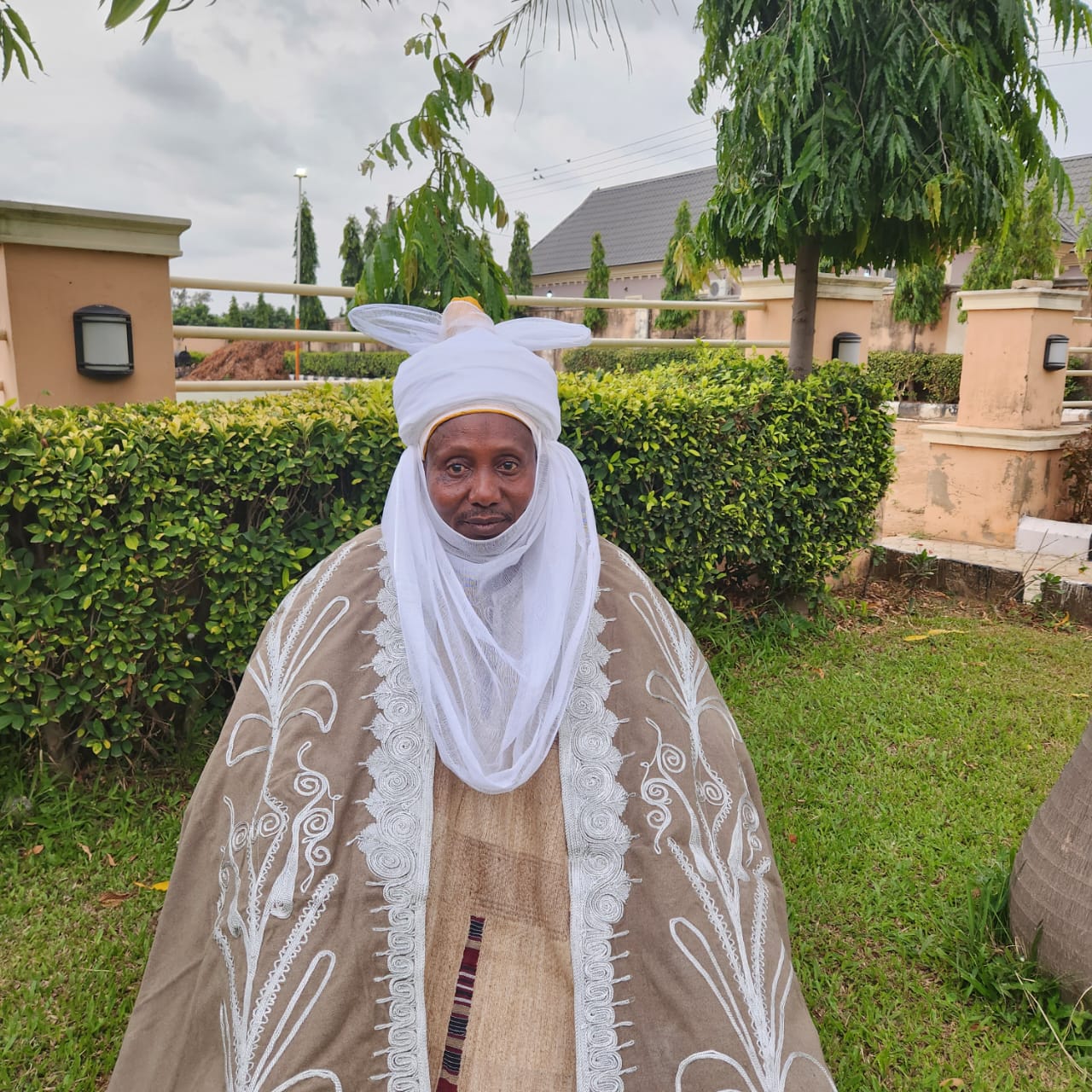
Garba Tukur Idris is a good example of a great leader, whose highly cherished assets are in his competence and integrity. His intellectual ability and humility justified his recent appointment as Makaman Katsina and District Head of Bakori Local Government by the Emir of Katsina, Abdulmumini Kabir Usman.
The newly enthroned District Head was born in Bakori town of Katsina state on May 13 1968, into Iya Nadabo Fulani Family with royal domains occupying Bakori, Kankara, Ketare, Tsiga and Danja Districts of Katsina state.
Garba’s late father, a doctor, Tukur Idris Nadabo, ruled in a similar capacity for 29 years and passed on at the age of 73.
During the reign of his late father, peacebuilding, justice, and security were his established positive qualities, which his son, the current Makama, intends to sustain and uphold.
GT Idris is a reliable ally and a true Muslim steward in human and economic developmental drives. In truth, he possesses remarkable superior managerial prowess to frontally confront the security and social challenges bedevilling Bakori’s local government.
Garba Tukur Idris.
The amiable royal icon has a long and glorious career with the Independent Corrupt Practices and Other Related Offences Commission (ICPC) since 2002. He is the current Resident Anti-Corruption Commissioner of Sokoto state.
The Makama’s capacity to handle the leadership demands of his new office will be powered by the power of knowledge assets garnered within his 21 years in the service of ICPC. His ability to transmit these experiences and their products into this leadership position is not in doubt.
Makama, who served as the Deputy Head of ICPC Operations, has represented the Commission effectively in numerous important national assignments, such as the Pension Reform Task Team that corrected the national pension administrative system and the Presidential Committee for the winding up of SURE-P.
Like any other Muslim child, the young Garba received his early Islamic education before attending Nadabo Primary School Bakori in 1980. He sat for Primary School Leaving Certificate Examination and finished top of his class to proceed to Government Day Secondary School Bakori.
Garba earned a Bachelor’s Degree in Political Science from Ahmadu Bello University, Zaria, Kaduna state 1993, and served his National Youth Service at Adamawa state. He later briefly participated in national politics before returning to his alma mater ABU Zaria in 2000 to obtain a Master’s degree in International Affairs and Diplomacy
He attended various courses and trainings within and outside the country, to mention a few institutes: Anti-Corruption Academy of Nigeria, National Institute for Security Studies (NISS), National Institute for Policy and Strategic Studies (NIPSS); Public Service Institute of Nigeria, (PSIN), Defence Intelligence College; Hongkong University, National Judicial Institute, U.S Embassy in Nigeria; Police Staff College, 177 Guards Battalion, London Graduate School, Johannesburg, South-Africa and Centre for Management Development.
Garba is a member of numerous professional bodies such as the Institute of Fraud Examiners, and Certified Institute of Auctioneers of Nigeria and many others.
He is married to Fatima and blessed with five beautiful children.
ALLAH (swt) shi jaa Zamanin Makaman Katsina, Hakimin Bakori Local Government.
Salihu, writes from ICPC Headquarters Abuja
May 24, 2023.
THE Police has tightened security in the Federal Capital Territory (FCT) ahead of the inauguration of a new administration on May 29.
The inauguration will usher in a new administration headed by President-elect Bola Tinubu, who was declared winner of the February 25 president election.
In a statement on Friday, May 26, Public Relations Officer (PRO) of the FCT Police Command Josephine Adeh said officers and men of the Police Force have been deployed to beef up security in the territory ahead of the event.
There are also collaborations between the Police and other security agencies to ensure that the event is held without any form of violence.
“The strategic, operational deployment is characterized by visibility policing across the Territory, stop and search duty, intelligence-led raids on black spots, surveillance, vehicular/foot patrol, and diversions at strategic points.”
Traffic is to be diverted at strategic points in the FCT, particularly in areas around the Eagle Square, venue of the inauguration.
The FCT police spokesperson listed the areas where traffic is to be diverted as Goodluck Jonathan Expressway by Court of Appeal, Deeper Life Junction, Bond/Total Filling Station, and POWA/FCDA Junction.
Diversions will also be created along the Finance Junction by ECOWAS/Women Affairs, Ministry of Foreign Affairs, Eagle Square (Phase 1 & Phase 11), Kur Muhammad Way/National Mosque, Abia House, and NITEL Junction by Ademola Adetokunbo.
Other areas are Gana Junction/Transcorp, Bayelsa House by Federal High Court, Aso Drive, Ceddi Plaza, NNPC Twin Tower and NNPC/NBS.
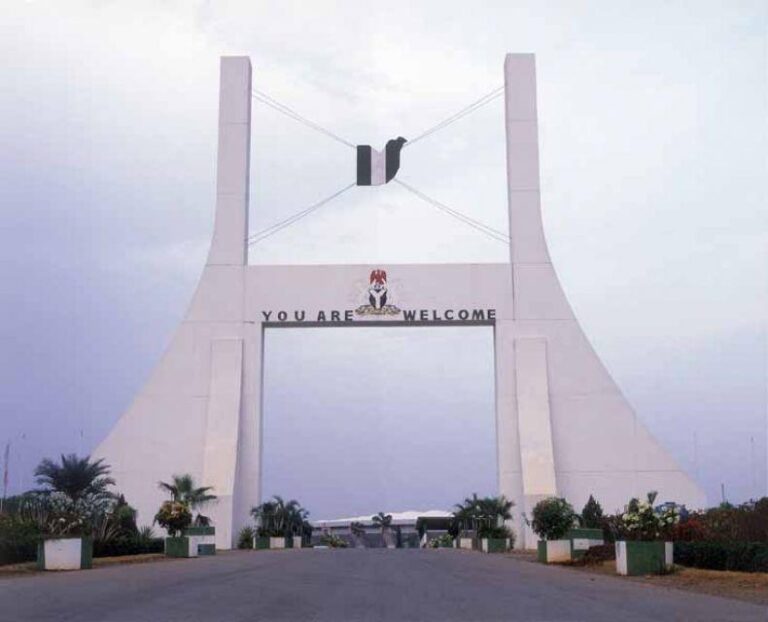
The police spokesperson further disclosed that there would be a display of fireworks by midnight, Sunday, May 28, at the City Gate and Millennium Towers to usher in the new government. She urged residents not to panic.
The ICIR observed heavily armed police units at strategic locations in the FCT on Friday, May 26.
Mobile police vans were also observed patrolling parts of the FCT metropolis.
THE education sector in Nigeria has faced various challenges over the years, which the administration of President Muhammadu Buhari did not decisively tackle despite his campaign promises before the 2015 general elections and even after.
Buhari had, on different occasions, promised to improve the sector, including increasing budgetary allocations to education, resolving long-standing issues with the Academic Staff Union of Universities (ASUU), and improving the quality of primary and secondary education.
The president had also pledged one free meal (to include fruits) daily, for public primary school pupils to encourage children to enrol to be educated and reduce the number of out-of-school children.
The number of out-of-school children under the Buhari administration has, however, ballooned rather than reduce. The United Nations Educational Scientific and Cultural Organization (UNESCO) 2020 Model Estimates on out-of-school children, published in 2022, stated that almost 20 million Nigerian children were out of school. According to the data, the secondary school out-of-school population had grown by 61 per cent, from 6.3 million to 10 million since 2010.
Also, the number of primary school-aged children who were not in school had also increased by 50 per cent, from 6.4 million to 9.7 million since 2010. This put Nigeria as the country with the third highest number of children deprived of education, behind only India and Pakistan.
An investigation published by The ICIR mentioned poverty as one of the factors responsible for the rising numbers of out-of-school children. The report stressed that although basic education was free under the Universal Basic Education Commission (UBEC) Act, there were associated costs, including transportation and the purchase of uniforms, which were unaffordable for many families in Nigeria, where more than half the population lived in extreme poverty.
Poor budget allocations
Poor budget allocations to education has been a major issue in the past eight years as Buhari’s administration failed to budget up to 10 per cent of the total budget to the sector. UNESCO prescribed 15-20 per cent of the total budget to be allocated to education.
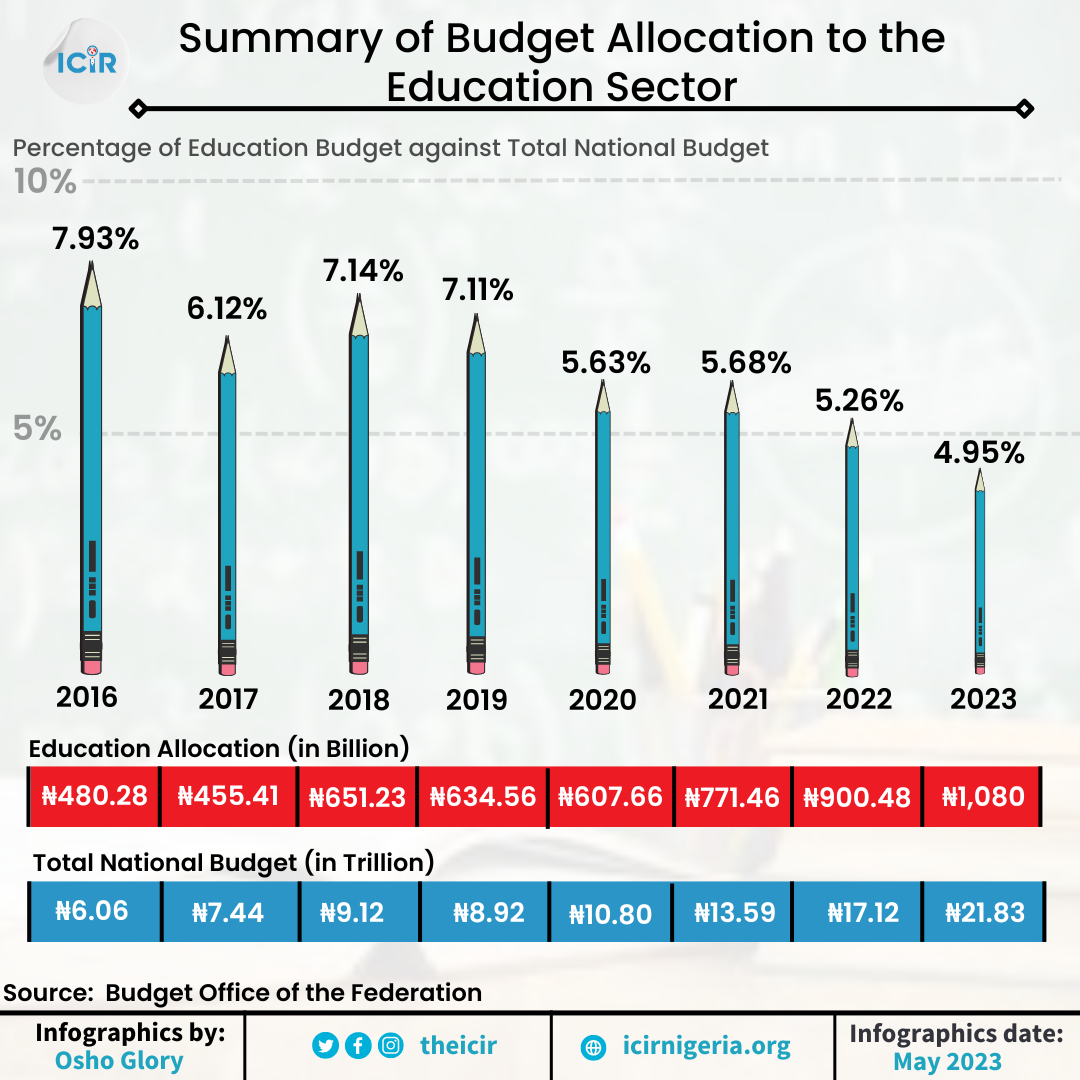
Infographics showing the budget allocation for education sector budget under Buhari
A review of the budgetary allocations for education between 2016 and 2023 indicates that the government has never assigned up to 10 per cent of the total budget to the education sector. The allocation has declined from 7.93 per cent in 2016 to 4.95 per cent in 2023.
In 2015, before Buhari was sworn in, a total of N483 billion (N483,183,784,654), translating to 10.8 per cent of the budget, was for education. It decreased to 7.93 per cent in Buhari’s first budget in 2016. In 2017 6.12 per cent was earmarked for the education sector, showing a decrease from the percentage allocated in the previous year.
In 2018, the allocation to education slightly increased again to 7.14 per cent after a total of N651 billion was set aside for the sector. It decreased again to 7.11 per cent in 2019 as the Federal government allocated N634 billion to the sector.
The budgetary allocation to education kept decreasing despite how vital the sector is and the clamouring of many stakeholders on the need for improvement in the sector. The situation was no different in 2020 as Buhari again earmarked N607 billion, about 5.74 per cent. In 2021, the allocation decreased slightly to 5.29 as the government approved N771.46 billion.
Similarly, the Federal government in 2022 budgeted N900 billion of its total allocation to education, which was about 5.26 per cent of the amount, while in 2023, the administration earmarked 4.95 per cent of the total budget to the sector.
ASUU strike
The Academic Staff Union of Universities (ASUU) has gone on strike for 669 days since Buhari assumed office in 2015. On September 3 last year, The ICIRreported that ASUU had embarked on a 628-day strike. The strike was subsequently suspended on October 14 after the government reached a temporary agreement with the union.
Due to unmet demands and agreements by the Federal government, ASUU most of the time resorted to industrial action to press its claims, resulting in the highest number of days of strikes by lecturers under any President since the nation returned to democracy in 1999. ASUU has since then suspended work for a minimum of 57 months (equivalent to almost five years).
The university lecturers were demanding the implementation of an agreement the Federal government signed with it in 2009, demanding for funding for infrastructure and research in the universities, among others.
Other demands are the deployment of the University Transparency and Accountability Solution (UTAS), payment of outstanding arrears of Earned Academic Allowances (EAA), the release of an agreed sum of money for revitalising public universities (federal and state), addressing proliferation and governance issues in state universities, settling promotion arrears, the release of withheld salaries of academics, and payment of outstanding third-party deductions.
The frequent industrial actions have had an adverse impact on numerous Nigerian students studying in public universities, meaning that the suspension of academic activities has resulted in prolonged academic calendars, thereby disrupting students’ plans and also leading to additional costs.
ASUP concerns
The Academic Staff Union of Polytechnics (ASUP) is also not left out when it comes to industrial actions, as the Federal government also failed to meet their demands. Although the approximate number of times the polytechnic lecturers embarked on strike during Buhari’s administration was lower than that of ASUU, The ICIR can confirm that ASUP went on strike in 2017, 2018/19, 2021, and 2022.
According to a report by The Punch, ASUP embarked on industrial action for 147 days between January 2017 and December 2021. This figure has, however, increased as the union also went on strike in 2022.
Speaking to The ICIR on the challenges the union faced during the Buhari administration, ASUP presidentAnderson Ezeibe said although 11 new federal polytechnics were established and the amendments to the Federal Polytechnics Act was signed into law during the Buhari regime, the new polytechnics can be likened to constituency projects done on a poor foundation. He explained that appointment of principal officers in all but three of these institutions were fundamentally faulty, leading to the maladministration of most of the new institutions.
He added, “The amended Federal Polytechnics Act has been repeatedly violated by the same administration. Funding of the polytechnics has been poor, leading to deterioration in infrastructure. The advent and inclusion of polytechnics into the TSA and IPPIS programmes threw up issues around the smooth administration of the polytechnics and staff welfare.
“The renegotiation of the 2010 FG/ASUP agreement has not been concluded after nearly six years. This has left a lot of issues around appropriate compensation packages, legal reforms, infrastructure deficit, inadequate policy frameworks, the agelong certification blockade, and regulatory impediments unaddressed.
“The recent release of the sum of N15 billion by the government for the first tranche of the NEEDS Assessment came after nine years of agitation by our union. Yet there are yet-to-be-resolved issues around the administration of the funds. In all, the polytechnic system could have been a lot better under the outgoing administration.”
Speaking on staff welfare, he explained that the salaries of staff, particularly academic staff, have depreciated by as much as 200 per cent in value between 2010 and 2023.
“This is, of course, attributed to the nation’s economic crises. But the government has not taken appropriate steps to review the salaries of staff in the polytechnic system as the six years old renegotiation process is yet to be concluded. Staff are working through a slave wage regime, and morale is indeed low,” he added.
According to the ASUP president, it took the union 61 days of industrial action to get the government to release the new minimum wage arrears to deserving staff after two years of implementation in other sectors.
“Equally, agelong welfare issues like release of arrears of CONTISS 15 Migration has been met with the usual administrative inertia.
“The scheme and conditions of service have been undergoing review since 2017 and are yet to be concluded. The exclusion of the sector from the recent 40 per cent salary awards to staff in the core civil service sums up the disposition of the outgoing government to the sector. All this has worsened staff working conditions in the sector, and as we speak, there is a high rate of migration of qualified academic staff away from the sector,” Eziebe said.
State of facilities in public institutions and colleges/schools
While it is important to note that the state of infrastructure in many schools across the country is deplorable, with many schools lacking basic functioning amenities such as toilets, libraries, and laboratories, the administration of Buhari has tried in awarding multimillion naira projects to improve the face of primary and secondary schools across the country.
The ICIR has done several in-depth investigations and special reports on how children are in school in uncomfortable and deplorable situations.
In a recent investigation by The ICIR, some schools in the Federal Capital Territory are facing years of neglect as children learn with no chairs and tables under unroofed classrooms.
Some of the children in Sadaba and Kundu communities in the Kwali Area Council in the Federal Capital Territory have withdrawn from school since storms blew off the roofs of the only public primary school in the villages in 2014 and 2020.
According to the report, the school’s pupils in primaries one to three have had no roof over them since 2020.
Japa syndrome
Although there is no clear data to show the number of students who have migrated abroad, The ICIRreported that UNESCO estimated that 71,753 Nigerians were studying abroad in 2020. But, there are indications that this figure has increased to nearly 100,000 by the end of the year.
The report stressed that the United Kingdom issued visas to 65,929 Nigerian students to study abroad in 2022, which was significantly higher than the 17,973 visas issued in 2019.
Also, 14,438 Nigerians were enrolled at various institutions in the United States of America for the 2021/2022 academic session, while Canada has about 13,745 students in its universities.
In 2016, Nigerian students’ total outbound international mobility in tertiary institutions was 96,735. But between 2017 and 2020, the number dropped significantly to 85,960, 76,330, 69,106, and 71,753 for each year, according to the United Nations Educational, Scientific and Cultural Organization (UNESCO) database.
It would be recalled that, on May 16, a day after Baci set the new record, the GWR took to Twitter to state that it would need to thoroughly review the evidence before making an official announcement regarding Baci’s achievement.
The GWR’s clarification came in response to concerns expressed by Nigerians regarding the perceived delay in acknowledging Baci’s accomplishment.
Also reacting to the concerns expressed by Nigerians, the current record holder, Indian chef Lata Tondon, appealed to Nigerians to remain patient while waiting for the GWR to confirm if Baci had broken her record.
She made this appeal via her Instagram story on Tuesday, May 16.
“A humble request🙏 to all my sisters and brothers in Nigeria 🇳🇬 & India 🇮🇳 to maintain peace and wait for Guinness to officially announce if the current record is broken or not. Please don’t make it a competition, it’s just a record my friends. I am a peace loving person and wish same for you🌻🧘🏻♀️”, she said.
Baci cooked for 100 hours and 40 minutes to complete her bid to break the Guinness World Record for longest individual cooking.
The aspiring record holder originally intended to cook for 96 hours in order to surpass Tandon’s record of 87 hours and 40 minutes.
However, fueled by determination, she pushed herself further and managed to extend her culinary feat to an impressive 100 hours and 40 minutes, shattering the previous record by over 13 hours.
The Cookathon commenced at 4:20 pm on Thursday, May 11, and ended at 8:40 pm on Monday, May 15. All through this period, the chef prepared more than 200 meals, which were generously served to a crowd of over 4,000 people.
The dishes
Baci showcased her culinary prowess, preparing delectable Nigerian dishes including party jollof, coconut rice, native rice, asun rice, fried rice, native pasta, jollof pasta, porridge yam, porridge plantain, mashed potatoes, white rice, among others.
Not stopping at just rice-based dishes, she also offered an exquisite selection of soups, including chicken curry, edikan ikong, egusi, oha, afang, fisherman soup, nsala, goat meat pepper soup, seafood, okra soup and ofe akwu.
She also made a variety of cold dishes including akara, pancakes, burgers, chicken wraps, abacha, and African breadfruit sauces/meats. As side dishes, she served goat meat stew, buka stew, peppered turkey, peppered chicken, fried fish, peppered fish, turkey stew, and ofada sauce.
Speaking at a press conference, she said she cooked all the food alone and God stood by her all through.
“I knew it was a good dream and it was viable but I never knew it would get this big. It was important to me that everything was done well.
“We followed all the rules. I didn’t cut corners in creating the experience I wanted to and God made it bigger than I could imagine.”
She has also been featured on I SAID WHAT I SAID Podcast, The Rise Up episode where she talked about her Cookathon journey.
She said the first 24 hours was the hardest for her as she felt like giving up.
“If you put your bet on when I was going to give up, it would have been the first day,” she said.
Before the Cookathon, she had a 24 hour dry run to prepare her for the D-day. She added that she worked tirelessly with her team to ensure everything is put in place.
The chef said she had thought about the Cookathon five years ago but didn’t do it because she couldn’t afford it then.
“I thought about this five years ago and set my mind to do it about a year ago. I started talking to my executive producer more seriously seven months ago,” she said.
Baci went further to explain that she worked on her body for about six months and also invested so much money to achieve the feat and thought she would go bankrupt.
She appreciated the brands that supported and helped to cushion the cost.
The Cookathon was sponsored by her brand, My Food By Hilda, GB Foods, makers of Gino, Gino Max, Bama and Jumbo, Woodscope, Arla, Baigewallet, Filmhouse, Uber, Monty Suites and Culinary Arts Practitioners Association of Nigeria (CAPA).
Baci was a TV presenter, aspired to be a BBN housemate
Still speaking on the podcast, Baci said she was a TV host and had wanted to do something else.
“I was a TV girl, trying to act, trying to go to Big Brother. Even as at the time I opened my restaurant, I still wanted to go to Big Brother.”
She further said she knew she has so much potential and a lot to offer to the world and that pushed her to attempt the record.
According to her, after she announced her bid to break the Cookathon record, a lot of people texted her friends telling them she can’t achieve the feat.
“There were people texting my friends like ‘who does she think she is, she can’t do it.”
Baci confident of getting Guinness World Records recognition
Asked how she will feel if GWR did not award her the record, Baci said, “To me, my record has been validated, what is coming is just the certification. I did everything by the books, didn’t leave a single stone unturned and I’m confident that I would get it.”
“We put in the work, were live the entire time and anyone that watched it would know we did the work,” she added.
Current record holder Indian chef Lata Tondon. Image credit: Women of Rubies.
Regarding the possibility of her record being surpassed, she stated that she doesn’t mind, as records are meant to be broken.
“Someone else would want to do this after me and I’m happy that I’ve provided the template.”
Kenyan chef warming up to break Baci’s record
Meanwhile,a 40 year old Kenyan chef, Maliha Mohammed, is preparing to surpass Hilda Baci’s record later this year.
She made this known via a video she shared on her Instagram page and has also appealed for donations in cash or kind ahead of her trial scheduled for May 26.
“Kindly donate in cash or kind. Through mpesa no. 0706349213. All cash will help in preparation and overall expenses of the 45 hours cooking trial.
“Let’s donate and show some love. Food will be donated and distributed by @rehanabaluch empowering the African woman company (0113031976) and ofcourse for my fans, friends and family, who will come to see me cooking live in my home kitchen in Tudor Mombasa,” she stated in her post.
An explainer published by The ICIR highlighted the procedure for breaking or setting a world record as well as the process involved in verifying a record.
The Guinness Book of Records attempt will receive official validation upon the verification of proceedings by the Official World Record Office.
This process will involve ensuring that the attempt is meticulously measured, adheres to standardised criteria and can be easily verified.
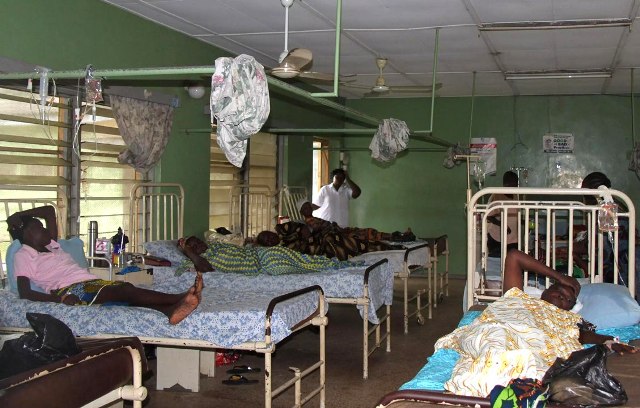
HEALTH workers in federal tertiary hospitals in Nigeria have downed tools effective today, Thursday, May 25.
The workers, under the aegis of Joint Health Sector Unions (JOHESU) and Assembly of Healthcare Professionals (AHPA), declared the strike at a media briefing by the acting national secretary of JOHESU, M. O. Ajorutu, in Abuja.
The ICIR reports that the strike comes four days to the end of President Muhammadu Buhari’s tenure, and the inauguration of President-elect, Bola Tinubu, on May 29.
JOHESU comprises four groups, namely the Medical and Health Workers Union of Nigeria (MHWUN), Nigerian Union of Allied Health Professionals (NUAHP), Senior Staff Association of Universities, Teaching Hospitals, Research Institutes and Associated Institutions (SSAUTHRIAI), and Non-Academic Staff Union of Educational and Associated Institutions (NASU).
Demands by the workers include adjustment of the Consolidated Health Salary Structure (CONHESS), payment of peculiar allowances to health workers under the aegis of JOHESU/AHPA, and immediate and unconditional implementation of the consultant cadre circular for pharmacists in all federal health institutions.
They also demanded the payment of health workers excluded in the payment of new hazard allowances and adjustment of the CONHESS scale as was done with CONMESS, and speedy adjustment of the retirement age of their members from 60 to 65 years and 70 years for consultants.
Other demands are the payment of shortfall arising from the implementation of COVID-19 special inducement allowance, salaries of its members allegedly withheld by the FMC, Owerri, Lagos University Teaching Hospital (LUTH), and Jos University Teaching Hospital (JUTH) for participating in a strike in April and May, 2018 over a ‘discriminatory’ ‘no work, no pay, policy.
The ICIR reports that the strike is linked to the Federal Government’s alleged deal with the National Association of Resident Doctors (NARD), which called off its five-day warning strike on Sunday, May 21.
“In a major twist last week and specifically, this same FMoH (Federal Ministry of Health) entered an agreement with NARD to again adjust CONMESS for a record third time since January 2, 2014, and has proceeded to transmit the financial implications to appropriate arms of the Federal Government for payment,” JOHESU said.
JOHESU noted that as part of efforts by the Federal Government to address some of the issues, the government offered N6.5 billion, which its members rejected “because it was grossly below the N22.6 billion prepared by the National Salaries, Incomes and Wages Commission (NSIWC) as agreed in the 2017 Terms of Settlement.”
But in a subsequent move to meet some of the demands, the government presented two billion naira, about 30 per cent of the amount earlier rejected by the group.
The government provided the fund after the parties appeared before the National Industrial Court over the issues.
The group accused doctors who dominate the leadership of the Federal Ministry of Health of blocking moves by President Muhammadu Buhari-led government to meet the demands.
“This particular development confirms that the rings of physicians who preside over the Federal Ministry of Health are clever users of untruth. They have been manipulating events and dropping the name of President Buhari to have their professional interest dominate proceeding in the health sector.
The group said, “For us in JOHESU, it is a matter of the beat goes on, and we are determined to put a halt to this nauseating manipulation of physicians in the FMoH. In tandem with the reality that when injustice becomes law, resistance becomes a duty, we shall insist that justice be served to us as bonafide and free-born citizens of the Federal Republic of Nigeria. There shall be no going back on the adjustment of CONHESS because it is now or never.”
In 2021, The ICIR reported how disagreements between the government, health workers and doctors led to the nation’s public hospitals losing nearly 300 days in eight years.

![[OPINION] ICPC Commissioner GT Idris as Makaman Katsina, a good example of a great leader](https://www.icirnigeria.org/wp-content/uploads/2023/05/IMG-20230521-WA0040-768x768.jpg "[OPINION] ICPC Commissioner GT Idris as Makaman Katsina, a good example of a great leader")