Home Blog Page 919

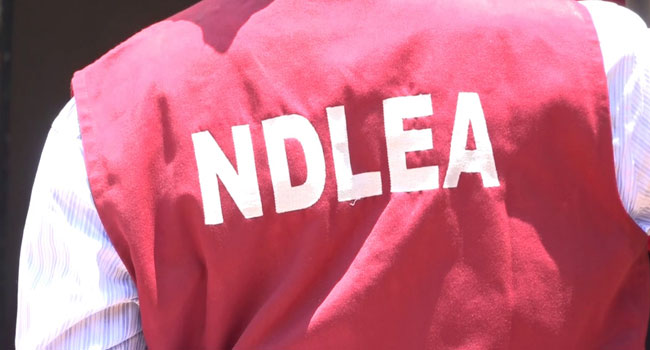
NDLEA raids FCT drug dens, arrests 34

0

THIRTY-FOUR persons have been arrested for drug-related offences by the National Drug Law Enforcement Agency (NDLEA) following raids on illicit drug dealers’ dens in the Federal Capital Territory (FCT).

NDLEA Commander in the FCT Kabir Tsakuwa disclosed this in an interview with the News Agency of Nigeria (NAN) on Thursday, May 18.

The Commander said operatives of the Agency also seized various kinds of illicit substances in the course of the newly launched ‘Operation Tsaro’ aimed at crippling the FCT drug market.

Operation Tsaro was launched on May 8 ahead of the handover of government to a new administration, according to the FCT NDLEA Commander.

“While some of the arrested individuals have been charged and taken to court, others who are users are undergoing counselling sessions,” Tsakuwa said.

Some of the products seized by the Agency include cannabis sativa, methamphetamine, tramadol, codeine, rohypnol, among other psychotropic substances.

Areas covered during the raid are Torabora, Dei-dei, Wuse Zone 4, Wuse Zone 3, Banex, Garki Village, Area 1, Gwarimpa village, Karu Abattoir, Gwagwalada, Kabusa, and Kuchigoro IDP Camp.

In December 2022, the NDLEA said it seized drugs worth N450 billion over a period of 22 months.

The FCT NDLEA also disclosed in March 2023 that it arrested 793 suspects for drug-related cases in one year.

Of 793 suspects arrested, 768 were males and 29, females.

At least 13,125kg of various drug substances were seized during the period with cannabis sativa making up over 12,000kg.

Also, between January and March 2023, the NDLEA said it seized over 2265kg of drugs in the FCT alone.

A 2018 survey by the United Nations Office on Drugs and Crime (UNODC) shows that there is a considerable use of psychoactive substances in Nigeria, especially cannabis sativa, opioids and cough syrups.

The report also disclosed that at least 14. 4 per cent, or 14.3 million people between the ages of 15 and 64 years, use drugs in Nigeria.

NiMet warns of approaching ‘severe’ thunderstorms

THE Nigeria Meteorological Agency (NiMet) has warned of severe thunderstorms approaching from the northeastern part of the country.

A statement released on Wednesday, April 17, by NiMet spokesperson Muntari Ibrahim disclosed that severe thunderstorm cells are currently being observed over the northeastern parts of the country.

The statement noted that Borno, Adamawa, Gombe and Taraba are the states likely to be affected by the thunderstorms.

“Severe thunderstorm cells are currently being observed over the northeastern parts of the country including Borno, Adamawa, Gombe and Taraba; moving in a North-East-South-West direction with a ground speed of 30 km/h.

“These are expected to propagate westward to give squally thunderstorms to some cities.”

According to the statement, another thunderstorm cell was observed developing over Jos’ high grounds, accompanied by stormy winds and heavy rains.

The thunderstorm observed over Jos is expected to spread westwards and affect parts of Gombe, Bauchi, Benue and Plateau states.

Other states which are expected to be affected by thunderstorms include Nasarawa, Enugu, Ebonyi and northern Cross River.

The statement stressed that parts of Kaduna, the Federal Capital Territory (FCT) and Niger are expected to experience thunderstorms with moderate to heavy rains.

Strong winds are likely to precede the rains where thunderstorms are expected and as such, trees, electric poles, unsecured objects and weak buildings may be felled.

NiMet advised members of the public to be cautious to avoid being struck by lightning.

The Agency also stressed the need for airline operators to avail themselves of weather reports periodically for effective planning in their operations.

“Disaster risk managers, agencies and individuals should be proactive to avert loss of lives and property during the rainy season.

“The Central Forecast Office (CFO) in NiMet will continue to monitor the weather and provide updates when necessary”, the statement said.

The ICIR earlier reported that the Federal Government disclosed that 32 states, 178 local government areas (LGAs) and the Federal Capital Territory (FCT) are at risk of heavy flooding in 2023.

The Minister of Water Resources, Suleiman Adamu disclosed this at the presentation of the General Highlights of the 2023 Annual Flood Outlook (AFO) organised by the Nigeria Hydrological Services Agency.

Adamu stated that the forecast for 2023 AFO shows that many states are at high risk of flooding.

According to him, 24 LGAs in 35 states of the federation including the FCT fall within the moderately probable flood risk areas. The remaining 402 Local Government Areas fall within the probable flood risk areas.

The minister stated that the highly probable flood-risk states include: Adamawa, Abia, Akwa-Ibom, Anambra, Bauchi, Bayelsa, Benue, Cross River, Delta, Ebonyi, Ekiti, and Edo.

Other states at risk are: Gombe, Imo, Jigawa, Kaduna, Kano, Kebbi, Kogi, Kwara, Lagos, Nasarawa, Niger, Ogun, Ondo, Osun, Oyo, Rivers, Sokoto, Taraba, Yobe, Zamfara and the Federal Capital Territory.

The ICIR also reported that the National Emergency Management Agency (NEMA) urged residents of riverine and flood-prone communities across the country to relocate to higher grounds before flooding starts this year

Speaking during a Twitter Space organised by organised by The ICIR on April 27, NEMA spokesperson Manzo Ezekiel said relocation will protect residents of flood-prone areas from the impact of another flood disaster which is most likely to occur based on NiMet predictions.

“The NiMET weather prediction is almost hundred per cent accurate,” the NEMA spokesperson said.

Banff Mountain Film competition open

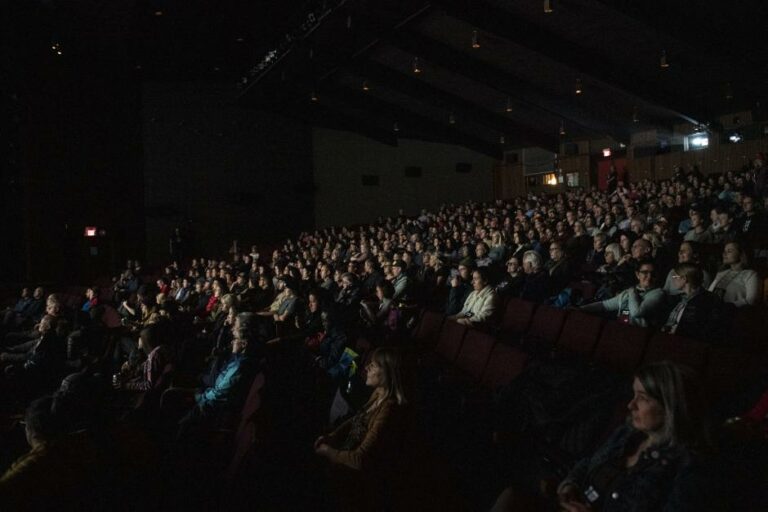
BANFF Centre for Arts and Creativity is inviting entries for its Banff Mountain Film Competition.

The competition is a program of the Banff Centre Mountain Film and Book Festival, which brings together the best films and books on mountains and the spirit of adventure from around the world.

Films produced in 2021, 2022, and 2023 are eligible for submission.

Applicants can submit films in several categories: climbing, mountain sports, mountain culture, environment, snow sports, and adventure.

20181105_BanffAFW_Rachel Ross_1563-edit

If English is not the original language of the film, it must be entered into competition with burned-in English subtitles, or be dubbed in English. Subtitles must be part of the video image.

The grand prize winner will receive CAD5,000. Winners of the best film in each category will receive CAD3,000.
Filmmakers worldwide can compete for cash prizes.

The deadline for the submission of entries is August 2, 2023. Interested applicants can apply here.

Buhari condemns killing of US embassy officials, others

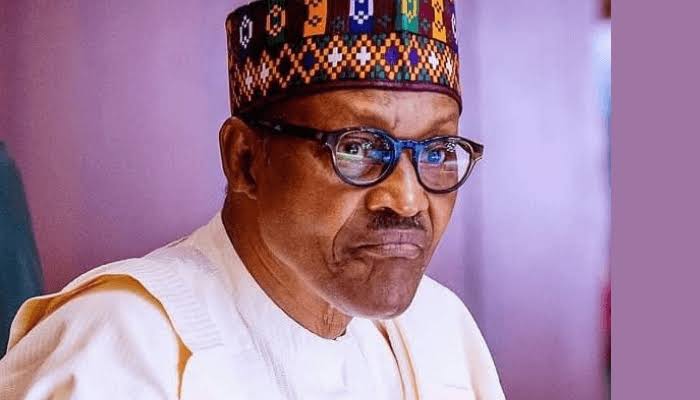
PRESIDENT Muhammadu Buhari has condemned the killing of United States Embassy officials and some policemen during an attack by gunmen in Anambra State.

The President commiserated with the families of the victims, as well as those of several Nigerians killed in the Bwoi District of Mangu Local Government Area of Plateau State, where gunmen killed dozens.

He extended similar sympathy to relations of villagers murdered in Adaka village in Makurdi Local Government and in the Ijaha community of Apa Local Government Area of Benue State, where a report said nine people died.

In a statement by his Senior Special Assistant on Media and Publicity, Garba Shehu, Buhari said on Thursday, May 18, that he was deeply pained by the gruesome deaths.

“We share the grief of the American Embassy, the Nigeria Police Force and our communities in Plateau and Benue and remain committed to fishing out the perpetrators of the attacks and bringing them to justice.

“May God give their families the strength to bear the unfortunate losses,” the President said in what has become a regular rhetoric throughout his eight years in office.

The ICIR reports that the President failed to speak on similar tragedies which occurred on May 12 in the Gitata district of Karu Local Government Area of Nasarawa State, where 40 farmers, including women and children, were reportedly mowed down by suspected herdsmen.

Sources claimed the onslaught was an escalation of a similar attack on Tattara Mada and Angwan Barau communities in the Kokona Local Government Area in the state in April, where 20 persons reportedly died and property worth millions were destroyed.

In March 2022, The ICIR reported a timeline of Buhari’s condolences on tragedies that stemmed from insecurity in the nation within a year.

Nigerians elected the President in 2015, after he repeatedly vowed to secure the nation if given the chance.

A report shows over 10,000 people died from insecurity-related causes in 2021 alone.

The ICIR reported how 287 people were killed within five months in the South-East for similar reasons in 2021. The South-East is one of the country’s six geo-political zones.

Insecurity has taken different forms under the President across the zones. Though he inherited insecurity when he assumed office, many believe the situation worsened during his tenure.

Banditry and kidnapping reign in the North-West and North-Central, and there were still pockets of insurgency in the North-East as of 2022.

‘Unknown gunmen’ take charge of the South-East, killing people and grounding businesses, while ritual killings surged in the South-West. But the South-South, where agitators for (petroleum) resource control had wreaked havoc in the past, have been pacified with empowerment programmes and juicy contracts for monitoring oil infrastructures.

In 2022, The ICIR reported how terrorists attacked 18 correctional centres and released inmates, including other terrorists across Nigeria, under Buhari’s watch.

In July 2022, suspected terrorists attacked the Presidential Guards Brigade in the nation’s capital.

Similarly, this organisation reported how over 80,000 Nigerians fled to the Niger Republic in three months under the president’s watch.

Following deteriorating insecurity across the country, the National Assembly threatened to impeach the President in 2022.

In January, The Punch newspaper reported that 2,140 soldiers, police officers, and others were killed while securing the nation during the president’s tenure.

Buhari leaves office on May 29 and will hand over to the President-Elect, Bola Tinubu.

Kavli Foundation accepts entries for journalism awards

THE Kavli Foundation is accepting entries for its AAAS Kavli Science Journalism Awards.

The awards recognise outstanding reporting for a general audience and honor individuals for coverage of the sciences, engineering and mathematics.

The categories are science reporting: large outlet, science reporting: small outlet, science reporting: in-depth, magazine; video in-depth reporting; video spot news/feature reporting; audio, and children’s science news.

Entries must have been published, broadcast or posted online between July 16, 2022 through July 15, 2023. Works in a language other than English must include an English translation.

The organiser says there will be two awards for each category, a Gold award worth US$5,000 and a Silver award worth US$3,500. One winner for each award in each category will also receive travel expenses to attend an awards ceremony.

Science journalists are eligible for this award.

The deadline for the submission of entries is August 1, 2023. Interested applicants can apply here.

Impostors clone my voice, make phone calls to tarnish my image — Peter Obi

0

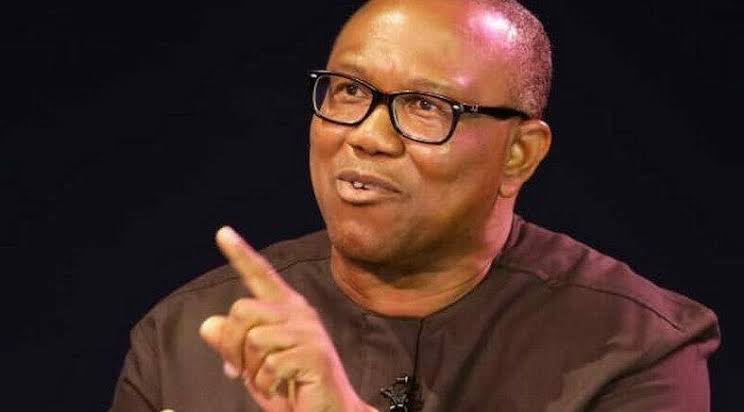
LABOUR Party (LP) presidential candidate Peter Obi has said unknown persons are cloning his voice to make mischievous phone calls in a bid to tarnish his reputation.

Obi said this on Thursday, May 18, in a series of tweets on his official Twitter account. 

The former governor of Anambra State added that he had been a target of impostors both locally and internationally.

“My duplicates are still on the rampage; they now mimic my voice and call people. 

“There is no limit that people cannot go to cause mischief on their target. I have been a target both locally and internationally,” Obi said.

He said the latest incident occured in Abuja on Tuesday, May 17, at the premises of the Court of Appeal, where the Presidential Election Petition Tribunal is sitting.

“A report came to me while I was seated in court that one Prince Mustapha Audu, son of the late Governor of Kogi State, held the OBIdient’s Chief Spokesman, Dr Yunusa Tanko and some others spellbound – castigating and talking down on me, describing me as an ethnic and religious bigot.

“He claimed that I called him while I was in front of his office on Tuesday morning at about 11 a.m. but suddenly cut off the phone after I spoke Igbo, and he, Audu, was unable to respond.

“According to him, Obi may have only helped to empower some businessmen strictly because they were Igbos, and he wondered why Obi should aspire to lead the country if he cannot accommodate other ethnic groups.

“It was one of my aides who quickly alerted me on what was going on, and I pleaded with him to go outside and tell the OBIdients who were with the man to kindly delay him until I come out of the courtroom. 

“After the court proceedings, I met with Audu, and he repeated the same story, adding that he was angry at me for cutting off the phone on him because he could not speak Igbo. He insisted that I was in front of his office in Abuja when I called.”

Obi said he introduced himself to Audu and told him, “My brother, I did not call you, and I couldn’t have been in front of your office on Tuesday because I was not in Abuja and not even in the country. At about the time you alleged that I called you, I was arriving Nice, in France, for a meeting.”

He said he went to London for another meeting and only arrived in Abuja on Tuesday, so there is no way he could have been the one referred to.

“I only flew into the country this morning for this court session,” he told Audu.

Obi added that he also visited Dele Momodu in London to felicitate with him on his 63rd birthday.

“The young man, looking embarrassed and surprised at the same time, added that the voice of the caller and everything sounded like mine. We exchanged pleasantries and took pictures,” Obi tweeted.

In April, The ICIR reported that the Obi-Datti Presidential Campaign Office said Obi was questioned by Immigration officers at Heathrow Airport, London, United Kingdom (UK).

According to a statement released by the Head of Media of the Obi-Datti Campaign, Diran Onifade, on Wednesday, April 12, Obi was detained and interrogated for hours by Immigration officials over offences allegedly committed by an impostor.

According to the Campaign Council, Obi’s impersonator may commit some offences that might result in his arrest in the UK.

Addressing the matter in May, Obi explained that he was neither arrested nor detained in the UK for any offence.

Obi noted that he was pulled aside for a routine check to alert him of the impersonation of his Visa to the UK.

However, there was drama at the Presidential Election Petition Tribunal on Wednesday, May 17, as Labour Party factions clashed during the pre-hearing of the appeal filed by Obi against President-elect Bola Tinubu.

The faction led by the suspended national chairman, Julius Abure, produced Obi as the presidential candidate, and there are speculations that the camp headed by acting national chairman Lamidi Apapa plans to withdraw the party’s petition before the Tribunal.

The clash on Wednesday was between the acting national chairman, Apapa, and Akin Osuntokun, the director general of the party’s presidential campaign committee.

Shortly after, the petition was postponed to Friday, May 19, for the pre-hearing session by the five-member panel led by Justice Haruna Tsammani.

The ICIR reported that Obi came third in the 2023 presidential election but is currently challenging the result declared by the Independent National Electoral Commission (INEC) in court.

FEC approves ‘Park and Pay’ policy in FCT

0

THE Federal Executive Council (FEC), at it’s meeting on Wednesday, May 17, approved the reintroduction of the ‘Park and Pay’ policy in Nigeria’s Federal Capital Territory (FCT).

The policy imposes fees on motorists for parking their vehicles in specific locations or streets within the FCT metropolis.

Minister of Information and Culture Lai Mohammed announced the approval of the policy after the meeting presided by President Muhammadu Buhari.

In January, the Federal Capital Territory Administration (FCTA) announced plans to reintroduce the Park and Pay policy, which existed in the FCT until 2014, when a court ruling declared it illegal.

Director of Traffic Management, FCTA, Wadata Bodinga said the policy was being introduced to address traffic challenges being recorded within the territory.

He added that an increase in the FCT’s population was exposing residents to certain hazards arising from increased competition for parking spaces traffic congestion and destruction of public facilities, including walk ways.

“With the present state of traffic irregularities in the FCT which poses great hazards for road users, the reintroduction of the on-street parking scheme by the administration will mitigate these challenges to the barest.

“While on-street parking scheme may seem overbearing for some users, the scheme impacts positively on FCT residents and economic activities through improving customer experience and promoting efficient park management system,” Bodinga said.

Before it’s suspension in 2014, residents of the FCT had kicked against the policy due to the high-handed manner it was enforced.


READ ALSO:


There were allegations of extortion and harassment by operators of the policy and the enforcement agents.

As a result, some residents approached a High Court in the FCT to challenge the policy. In a ruling that took over an hour, the presiding judge, Justice Peter Affen, held that the policy lacked legal backing.

However, the Senate passed a bill seeking the establishment of road traffic and motor vehicle administration service, which would allow for parking fees and laws in the FCT.

House Speaker: Doguwa steps down for Abbas

THE Majority Leader of the House of Representatives, Alhassan Doguwa, has stepped down for Tajudeen Abbas, the preferred candidate of the All Progressives Congress (APC), in the contest for Speaker of the 10th National Assembly.

The National Working Committee (NWC) had while unveiling the zoning formula for leadership positions of the 10th Assembly in a statement on May 8, announced Abbas from Kaduna, North-West, as the party’s choice for Speaker of the House of Representatives.

Doguwa, seen as one of the strongest aspirants for the position of Speaker of the next House of Representatives, withdrew from the race at meeting of the Joint Task Group, held at the Transcorp Hilton in Abuja on Wednesday, May 18.

Other aspirants who stepped down at the meeting include Abubakar Makki and Tunji Raheem.

Speaking on behalf of the other aspirants at the meeting, Doguwa said he will abide by the wishes of the All Progressives Congress (APC).

“Don’t imagine that my appearance here is by accident. For those of you who are thinking you’re daydreaming, you’re not daydreaming. This is reality,” he said.

Doguwa, who is associated with the G7 Coalition, a group of seven Speakership aspirants who opposed the position of the party, expressed confidence in Abbas.

He noted that Kaduna State lawmaker was qualified with legislative experience to effectively lead the 359 members of the House of Representatives.

The APC National Working Committee (NWC) had announced Abbas and Ben Kalu from Abia State, as the party’s preferred candidates for the position of Speaker and Deputy Speaker, respectively.

In a statement signed by its spokesperson, Felix Morka, the party said it came to the choice of the duo after consultations with the President-elect, Bola Tinubu and other stakeholders.

Parts of the statement read: “The National Working Committee of the All Progressives Congress (APC) met today, Monday, May 8, 2023 to consider reports of consultations and meetings held with the President-Elect, His Excellency, Asiwaju Bola Ahmed Tinubu, other Party leaders and stakeholders on zoning arrangement for 10th National Assembly leadership positions.

“The NWC noted with respect the outcome of the meetings held between the President-Elect and the leadership of the NWC. The NWC called for further and better consultation with necessary stakeholders in order to assure the support of the aspirants to the National Assembly leadership positions and members of the Party nationwide.”

The party urged its leaders, members, and all Nigerians to continue to work for the peace and progress of the country during and beyond the current period of leadership transition.

The party’s decision has continued to generate tension among lawmakers seeking to lead the House when it is inaugurated next month.

The G7 Coalition, comprising the outgoing Deputy Speaker, Ahmed Idris Wase, Muktar Aliyu Betara, Aliyu Sani Jaji, Yusuf Adamu Gagdi, Miriam Onuoha, Alhassan Ado Doguwa, Sada Solo Jibia, and Makki Abubakar Yalleman, had sworn to back one aspirant from them to run against the party’s anointed candidate.

Gagdi, who is Chairman of the House of Representatives Committee on Navy, had insisted he would continue to resist any zoning by the party that is not in line with the political interests of the North-Central zone.

Gagdi said that imposition of Abbas on the party was an arrangement of the incumbent speaker, Femi Gbajabiamila.

“I won’t respect party supremacy when it is against injustice. Why am I elected in the National Assembly? I am elected to represent Nigerians and to ensure justice. Then the party that I seek election under its platform will be aiding and abetting injustice and you expect me to respect that supremacy?

“I have analyzed these things to you that even the deaf and dumb agree that there is injustice and then you are talking about party supremacy. What are they talking about? Have you heard anybody from the north central zone talking about party supremacy?

“Let them say it and see whether they would not sacrifice their political future in the north central zone. North central governors and elected officials met and what was their resolution?

“Even our governors are saying yes they are loyal to the party but yet justice has not been done to us,” he said.

How rise in food prices diminishes Presidency’s claim of food sufficiency

CONSTANT rise in the food price under President Muhammadu Buhari’s administration and its impact on the consumer price index (CPI) has diminished the Presidency’s claim that the country has achieved food sufficiency under the current administration. 

The Buhari administration claimed it has achieved food sufficiency without backing it up with data, despite Nigeria’s food import bill running into trillions, and amid  insecurity incidents that ravaged Nigeria’s food belt states of Benue, Kaduna, Katsina, Maiduguri, and Niger.

Just on Monday, May 15,  the National Bureau of Statistics (NBS) reported that food inflation rate in April 2023 was 24.61 per cent on a year-on-year basis, which was 6.24 per cent points higher compared to the rate recorded in April 2022 (18.37 per cent).


READ ALSO:


“The rise in food inflation on a year-on-year basis was caused by increases in prices of oil and fat, bread and cereals, fish, potatoes, yam and other tubers, fruits, meat, vegetable, and spirits.

“On a month-on-month basis, the food inflation rate in April 2023 was 2.13 per cent. This was 0.06 per cent points higher compared to the rate recorded in March 2023 (2.07 per cent). The average annual rate of food inflation for the 12 months ending April 2023 over the previous 12 months average was 23.22 per cent, which was 4.35 per cent points increase from the average annual rate of change recorded in April 2022 (18.88 per cent),” the NBS report stated.

But contrary to what the NBS figures stated, the Senior Special Assistant to President Muhammadu Buhari on Media and Publicity, Garba Shehu, maintained Tuesday on the Channels Television breakfast programme, the ‘Morning Show’, that the Buhari administration had achieved food sufficiency.

Shehu cited the deal between the OCP of Morocco and the Nigerian government represented by the Nigerian Sovereign Investment Authority (NSIA) as having pruned down fertiliser prices and increased its affordability by farmers.

According to Shehu, the deal enabled farmers to achieve food sufficiency.

He also argued that the Buhari administration’s National Livestock Transformation Plan to stop farmers-herders clash had been adopted by some states like Niger, Katsina, Yobe, and Adamawa and had helped the country achieve self-sufficiency in food.

He linked the rise in food prices to a global cost of living crisis caused by the Russia-Ukraine war rather than failure by the government to check food inflation.

Knowledgeable agribusiness experts poo-poohed the Presidency’s food success claim, saying Nigeria was far from achieving any remarkable sufficiency drive.

“We are far from maximising yield per hectare in our farms. You could see how farmers’ subsistence are being attacked in most Nigerian food basket states. How can you achieve sufficiency in such a situation?” a development economist and agribusiness consultant, Celestine Okeke, told The ICIR.

Available data showed that despite the government’s push to boost local production capacity in recent years, Nigeria still spent a whopping N1.9 trillion importing food in 2022.

A total of N1.9 trillion worth of food products was imported into the country in 2022, indicating a five per cent rise, compared to N2 trillion spent on food importation in 2021, data from the NBS trade report has shown.

The imported food products accounted for 7.29 per cent of the country’s total imports for the year.

In 2020, Nigeria imported N1.2 trillion worth of agricultural products for the year. In 2019, the country imported N959 billion worth of food, accounting for 5.66 per cent of total imports. It imported N857.6 billion and N886.8 billion worth of food products in 2018 and 2017, respectively.

“The data is evidence that we are not growing enough food, and we are left with no option but to import,” the chief executive officer of X-Ray Consulting Limited, Afioluwa Mogaji, said in response to questions.

The ICIR findings also showed that the Nigerian government is yet to address food supply shocks, which largely include an increase in road transportation, security issues in food-producing areas, and legacy infrastructure challenges. Analysts say this has been Nigeria’s bane of agriculture and food sufficiency.

“We still have a long way to go in terms of modern agriculture. Our production costs are still very high, and this is why despite rice sufficiency push, the cost for a bag of rice is still high because of production cost and weak attraction of private capital into our agricultural sector,” Okeke said.

Ondo deep seaport project receives FG’s approval

THE Federal Government has approved the Ondo State Deep Seaport project.

The project was approved at a meeting of the Federal Executive Council (FEC) presided by President Muhammadu Buhari on Wednesday, May 17.

A memo on the project, which was approved at the meeting, was presented by Minister for Transportation Mu’azu Sambo.

A statement released by the Chief Press Secretary to Ondo State Governor Olatunde Richard described the approval of the project as a momentous achievement for the state “as it comes after years of persistent efforts by the state government to establish a deep seaport”.

The statement noted that previous attempts to establish a deed seaport, particularly in the Olokola area of the state, had proved unsuccessful since 2004.

“The efforts were renewed by Governor Oluwarotimi Akeredolu upon his assumption of office as governor in 2017 and became intensified upon the appointment of an indigene of Ondo state, prince Ademola Adegoroye, as minister of state in the federal ministry of transportation in July 2022, just about 10 months ago,” the statement said.

“Akeredolu had submitted the proposal for the establishment of the port to the federal government, with a series of due diligence undertaken by both the state and federal governments.”

The statement added that the approval of the deep seaport comes as a boost to state’s aspirations to become a major player in the maritime industry. “With its strategic coastal location and abundant natural resources, the state is well-positioned to harness the benefits of this ambitious project.”

The statement noted economic analysts and experts have lauded the project’s potential to stimulate economic growth and generate employment opportunities.

According to projections, the project is expected to create thousands of direct and indirect jobs in various sectors, including logistics, manufacturing, transportation, and services.

The project also includes an industrial city designated as a free trade zone.

“The approval of the deep seaport is a transformative development for Ondo State,” an economist at the Federal University Oye Ekiti (FUOYE) Adebayo Adekunle said in an interview with The ICIR on Thursday, May 18.

“It will attract investments, boost trade volumes, and contribute significantly to the state’s GDP. The multiplier effect will extend beyond the port itself, benefiting ancillary industries and supporting economic diversification.”

Earlier this year, Akeredolu had during a working visit to the communities where the project is sited in Ilaje Local Government Area of the state, said that the $1.3 billion seaport project will generate more than N500 billion investments to the state.

While soliciting the support of the host communities and traditional rulers towards the actualisation of the project, the governor said that his administration had spent hundreds of millions of naira on the required studies carried out by local and international consultants.

“The deep seaport and the industrial city project will attract massive investment to the state in particular and Nigeria in general. The one singular project that will change this state totally is the port. Building of the port alone will bring about N500 billion economic activities  to that area.

“This is the most serious business and important projects we want to embark on as a government. Every other thing becomes secondary. We have spent millions of naira on the required studies. We don’t have the money but we will set aside as many projects as we can to get this port done so that the quality will meet the standard expected of us by the Federal Government.”