Home Blog Page 94

Electricity Act: Abuja DisCo transitions into HoldCo, unveils new subsidiaries

The Abuja Electricity Distribution Plc (AEDC) has transitioned to a holding company (HoldCo) to enhance its effectiveness in Nigeria’s evolving power market and decentralised regulatory environment.

The DisCo, in a statement on Sunday, January 18, said the move followed the enactment of the Electricity Act (2023), empowering state governments to establish independent electricity markets and regulatory commission.

The company explained that it had restructured its corporate operations to improve agility, strengthen governance, and enhance service delivery across its franchise areas in response to the decentralised electricity ecosystem.

The AEDC also informed that it incorporated two new subsidiary companies — Niger Electricity Distribution Company and the Kogi Electricity Distribution Company — as part of the transformation.

“These entities will operate under the Niger State Electricity Regulatory Commission (NSERC) and the Kogi State Electricity Regulatory Commission (KSERC), respectively, while remaining integral members of the AEDC Group,” the statement read.

“Key executive appointments have been made, including Sam Odekina as Chief Business Officer and Acting Managing Director of Niger Electricity Distribution Company, and Desmond Eboh as Chief Business Officer and LP Acting Managing Director of Kogi Electricity Distribution Company.

“Plans are underway to commence operations in Nasarawa State, with the transition process expected to begin soon,” it added.

The DisCo reaffirmed its dedication to supporting sustainable, state-regulated electricity markets and setting benchmarks for efficiency, reliability, and customer experience.

The company revealed that it operates in the Federal Capital Territory (FCT) as well as in parts of Niger, Kogi, and Nasarawa states, demonstrating its commitment to driving economic growth and enhancing the quality of life.

Commenting on the decentralisation process, AEDC’s Managing Director and Chief Executive Officer (CEO), Chijioke Okwuokenye, said the HoldCo structure positioned the company to respond to state-specific regulatory requirements while maintaining a unified corporate identity, shared values, and a strong commitment to operational excellence and customer service.

“All subsidiaries will operate as one integrated AEDC family, with uniform conditions of service for employees, ensuring workforce stability and fairness,” he said.

“The Holdco structure aligns perfectly with our goal to enhance operational efficiency and adapt to Nigeria’s evolving energy landscape while exploring new opportunities, driving growth and contributing to Nigeria’s energy sector development.”

Okwuokenye added that the AEDC was committed to maintaining high standards of service, innovation and customer focus, even as it evolved into a new structure.

Apart from AEDC, earlier report by The ICIR revealed that states had been taking responsibility for regulatory oversight in their respective territories, guided by the provisions of the Electricity Act,2023.

Under the new regulatory order, the AEDC is mandated to establish a subsidiary and a holding company under the Companies and Allied Matters Act.

Strike: FCT workers dare Wike, shut down offices

0

WORKERS of the Federal Capital Territory Administration (FCTA) and the Federal Capital Development Authority (FCDA) have embarked on strike.

The workers blamed the action on alleged government’s failure to meet their demands.

Reports indicate that the FCTA Secretariat was locked down, with heavy security deployed at the entrance at about 9:00 a.m. on Monday.

Operatives of the Nigeria Security and Civil Defence Corps (NSCDC) and the Nigeria Police Force were positioned at the gate, while workers were turned back and denied access to the premises. 

The action followed a directive issued earlier by the Joint Union Action Congress (JUAC) President, Rifkatu Iortyer, and Secretary, Abdullahi Saleh, dated January 8, ordering workers across all cadres to withdraw their services from Monday, January 19, in protest against what they called the government’s continued neglect of their demands.

The union said an earlier ultimatum issued on January 7 had elapsed without meaningful engagement from the authorities.

According to the JUAC, key grievances include the non-payment of outstanding promotion arrears, delays in the conduct and release of promotion exercises, and what they described as the continued extension of service for retired directors and permanent secretaries, a practice they said was blocking career progression for serving officers.

The workers also accused the administration of failing to remit statutory deductions, including pension contributions and National Housing Fund payments, warning that the situation could jeopardise the future welfare of affected staff.

JUAC further expressed dissatisfaction with the outcome of the 2024 promotion examinations, describing the exercise as largely unsuccessful and alleging that a significant number of its members were adversely affected.

It condemned the handling of the 2024 promotion examinations, describing the exercise as deeply flawed and largely unsuccessful. 

The strike comes at a time when the Minister of the Federal Capital Territory, Nyesom Wike, is widely perceived to be preoccupied with a protracted political turbulence in Rivers State, rather than focusing fully on the administration of the nation’s capital.

Wike’s ongoing conflict with Governor Siminalayi Fubara, rooted in bitter struggles for political control and influence in Rivers State, has dominated headlines and drawn national attention. 

Efforts by stakeholders, including President Bola Tinubu, to resolve the standoff have failed.

WikkiTimes announces entries for Anas Aremeyaw AI Accountability Fellowship

WIKKITIMES, Northern Nigeria’s leading investigative and accountability journalism platform, through its media development arm, the WikkiTimes Media Foundation, is seeking entries for its Anas Aremeyaw Anas AI Accountability Fellowship (A3AIA).

The specialised journalism fellowship is designed to strengthen investigative reporting on extractive industries, environmental degradation, and resource injustice in under-reported communities across Northern Nigeria.

The fellowship responds to the rapid expansion of mining and extractive activities in Nigeria, particularly in Northern states, which has increasingly exposed communities to illegal mining, environmental destruction, resource theft, displacement, and weak regulatory oversight. Despite the scale of these challenges, reporting on extractive-sector abuses remains limited, largely due to capacity gaps and restricted access to advanced investigative tools among local newsrooms.

The A3AIA Fellowship, inspired by the fearless investigative legacy of renowned Ghanaian journalist Anas Aremeyaw Anas, was conceived to bridge this gap by equipping journalists with cutting-edge digital, data, and artificial intelligence tools to strengthen public-interest reporting and accountability.

The programme will support journalists from local and regional newsrooms, with priority given to reporters working in extractive-affected states.

Targeting journalists across the 19 states of Northern Nigeria, the fellowship will train participants to deploy artificial intelligence, open-source intelligence (OSINT), geospatial analysis, satellite imagery and evidence-based storytelling to uncover and document extractive-sector abuses and governance failures.

The fellowship will run for six months in two phases. The first phase will consist of three months of intensive training covering AI-assisted journalism, satellite imagery analysis, digital verification, safety and extractive-sector reporting. The second phase will focus on a three-month practicum during which fellows will receive close editorial mentorship to produce in-depth investigative reports.

Speaking about the fellowship, Publisher of WikkiTimes, Haruna Mohammed Salisu, said, “We chose to name this fellowship after Anas for a reason that goes beyond admiration. We need a symbol of courage and resilience that can genuinely inspire young reporters in the region. Apart from Anas’s history of fearless journalism, he gave us an additional symbol of courage and resilience last year in Gombe.

We invited him to a conference co-hosted by WikkiTimes and Northeastern University, Gombe. He missed his flight from Abuja to Gombe a day before our conference, yet he refused to back out. Instead, he set out by road at 10 p.m., travelled through one of Nigeria’s most dangerous routes, and arrived in Gombe at 3 a.m. – all to speak to our participants at 10 a.m. that same morning. He took that risk because he believed the young people we brought together deserved to be encouraged.

“His presence motivated dozens of emerging journalists, including students from the Federal University, Kashere, and Northeastern University, Gombe, who were part of the participants at the event,” Haruna said.

He explained that the programme’s spirit was built on the examples, courage, creativity, and fearlessness Anas represents. “We need to help our society by instilling in people, especially our journalists, these kinds of values. That spark that former UN Secretary General Kofi Annan talked about in Anas is the same spark we want to light in young reporters who are working in these forgotten places across northern Nigeria,” the publisher added.

He said WikkiTimes was committed to training journalists prepared to interrogate systems of extractive abuse and environmental injustice, stressing that Anas had demonstrated courageous, evidence-based journalism.

Through this fellowship, WikkiTimes aims to support reporters to expose wrongdoing and amplify the voices of vulnerable communities in line with core values that define the medium. Selected fellows will receive editorial mentorship, a monthly stipend, and access to digital investigative technologies, and will work with WikkiTimes to complete at least one investigation. They will also receive a certificate of completion, signed by Anas.

Interested applicants can apply here. For inquiries, contact Hafsah Ibrahim at hafseemuhammad@wikkitimes.com

Agricultural agency to spend over N2bn on stadiums, religious centres, MRI projects

1

THE National Agricultural Land Development Authority (NALDA) has listed projects worth over N2.6 billion for execution across several states, including the construction of a mini stadium, religious centres, classrooms, health facilities, and the installation of an MRI machine in the 2026 proposed budget.

This has raised questions and concerns about compliance with its statutory mandate.

Established under the National Agricultural Land Development Authority Act (1992 No. 92) and revived in 2016, NALDA’s primary objectives include providing strategic public support for land development; promoting optimal utilisation of rural land resources for food and fibre production; supporting economic-size farm holdings and consolidating fragmented lands.

Others are encouraging mechanisation, sustainable agriculture, and national food security; instituting strategic land-use planning, including forest and grazing reserves; addressing population pressure, and providing technical and extension support to farmers.

The Act explicitly empowers NALDA to acquire, develop, parcel, and redistribute land for agricultural production, and to assist in on-farm training, market access, and technology provision.

The law does not expressly empower the agency to construct sports facilities, religious buildings, formal education infrastructure, or specialised medical diagnostic centres. Social infrastructure provision is permitted only if it supports emergent growth centres around agricultural project sites.

The ICIR reported that President Bola Tinubu presented N58.18 trillion 2026 budget proposal to the National Assembly on Friday, December 19.

In the proposal, defence and security will receive N5.41trillion, ahead of N3.56 trillion for infrastructure, N3.52 trillion for education, and N2.48trillion for health.

Projects listed outside core agricultural functions

Despite aforementioned statutory limitations, procurement documents show that NALDA plans to spend N420 million on the construction of a mini stadium in Kindiyo, Cham Balanga/Billiri Federal Constituency of Gombe State.

The agency also intends to allocate N350 million for the construction of churches, mosques, and other support for religious groups in selected farming communities in Gombe State, alongside N350 million for the construction of classroom blocks for farmers’ communities across the North-East and other parts of the country.

Other education-related projects to be executed by the agency in the financial year include renovation of two classroom blocks in Omala Local Government Area of Kogi State, projected to gulp N21 million, and the supply of school furniture in Jigawa South Senatorial District, for which N70 million was allocated.

Health and diagnostic projects raise questions on mandates

NALDA’s project list further includes N35 million for the construction of a Level 1 primary healthcare centre in Ugbawka community, Enugu East Senatorial District, as well as N175 million each for the construction and furnishing of primary healthcare centres in Gabukka and Mallam Inna areas of Gombe North Senatorial District.

The most capital-intensive item is N1.05 billion budgeted for the provision and installation of a Magnetic Resonance Imaging (MRI) machine at a medical diagnostics centre in Minna.

Although there are no laws in Nigeria that explicitly fault MDAs for carrying out projects against their mandate, former president, Muhammadu Buhari and the Independent Corrupt Practices and Other Related Offences Commission (ICPC) had condemned the insertion of several constituency projects by federal lawmakers.

The ICIR, in its Open Contract Reporting project, reported many constituency projects poorly implemented or abandoned in local communities.

In 2023, a civic organisation BudgIT, pointed out how a total of N4.8 billion was allocated to projects that are outside the scope of their mandates.

The senior research & policy analyst for BudgIT, Vahyala Kwaga, at the time told The ICIR that most of the projects may not be executed because the wrong institutions were allocated the funds to carry them out.

“We need to understand that corruption is not a ‘technical’ matter but one that is fundamental to our governance and government.  Not only are monies almost never used for these projects, they are often diverted to other uses or not even released by the Accountant General’s office.

“This would even lead to poor budget performance because the releases intended by the budget were not even made (though they were ‘saved’) by not disbursing them to these so-called projects outside the mandate of MDAs,” he said.

Historic night as Senegal beat Morocco, emerge 2025 AFCON winner 

0

SENEGAL has emerged Africa Cup of Nations 2025 winner by taking down Morocco to the second position in the final at the Prince Moulay Abdellah Stadium, in Rabat, marking one of the most significant era in African football history.

Papa Gueye secured the first position of the tournament for the West African nation in a most dramatic of circumstances at 94th minute of extra time with a goal, after Brahim Diaz missed the controversial penalty awarded to Morocco, which delayed the match by about 20 minutes.

The last AFCON final decided by more than a single goal was in 1998, and the last final won by more than one goal was Egypt’s 2-0 victory against South Africa in 1998.

The ICIR reports that Nigeria beat Egypt 4-2 in a penalty shootout for third place of the tournament, with Goalkeeper Stanley Nwabali saving two penalties including the first from Mohamed Salah, while Ademola Lookman scored the winning penalty on Saturday.

Nwabali saved the penalty kicks by Salah and Omar Marmoush at the start of the shootout following the teams 0-0 draw in normal time, as no extra time was played for the consolation of a bronze medal.

Victory for Senegal marks a remarkable title defence, further cementing their status as one of Africa’s most consistent football powers, though a win for Morocco would have finally ended a 49-year wait for continental glory, buoyed by passionate home support. 

While both nations played for their second continental AFCON title, as Senegal claimed their first in 2021, and Morocco’s only triumph came nearly 50 years ago in 1976. This is the first time Morocco and Senegal meet in an AFCON final, though they’ve played 31 times overall across all competitions.

The Atlas Lions of Morocco being the host of the tournament topped Group A with three strong results and steamrolled through the knockout stages without conceding from open play, after group stage wins over Comoros (2-0) and Zambia (3-0), and a 1-1 draw with Mali.

They recorded narrow but convincing victories over Tanzania and Cameroon before edging Nigeria in penalties in the semifinal.

The north African nation conceded just two goal in seven matches and kept five clean sheets.

Meanwhile, the Teranga Lions of Senegal entered this final as the defending champions and one of Africa’s most consistent sides. They finished top of Group D and progressed through the knockout rounds with strong performances, including a 1-0 semifinal win against Egypt, courtesy of Sadio Mané’s decisive goal, by showcasing both attacking and defensive quality, scoring 12 goals and conceding just two goals.

Only Nigeria have scored more goals at this year’s tournament than Senegal, as the west African country beat Botswana and Benin 3-0 in the groups in between a 1-1 draw with DR Congo, in the knockouts it dispatched Sudan 3-1, beat Mali 1-0, and then edged past Egypt 1-0 in a very tense semi-final.

This is Senegal’s fourth AFCON final appearance and their third in the last four editions, establishing them firmly among Africa’s elite teams, while tonight represents Morocco’s first AFCON final since 2004, and their biggest opportunity to bring the trophy home for their first AFCON title for 50 years.

Both teams have qualified for the World Cup this year, though Senegal supporters are unsure whether they can attend the team’s first two games in the United States because of a travel ban imposed by the administration of US President Donald Trump but Moroccan fans will not be affected by the travel ban,  the Atlas Lions are in Group C with Brazil, Haiti and Scotland. 

The Teranga Lions are expected to play their first match against France in New Jersey on June 16, four days before facing Norway in the same stadium. Senegal will face a playoff winner between Bolivia, Suriname and Iraq in Toronto for their final group game on June 26.

The hosts of the tournament traditionally have strong finals records, as 11 of the 14 previous hosts who reached an AFCON final went on to win the title but the only hosts to lose an AFCON final in normal time were Tunisia in 1965.

History has repeated itself tonight as the last time Morocco hosted the AFCON was in 1988 and it lost by a single goal in the semi-finals to eventual winners, Cameroon, who advanced to the final where they overcame Nigeria to emerge as champions.

Eight years earlier, a Nigeria defeated Morocco by the same margin on its way to winning the tournament at the expense of Algeria.

In November 2009, Morocco lost against Cameroon, where Pierre Webo and Samuel Eto’o got the goals, though they been unbeaten in their past 39 matches.

After delivering a moment of brilliance to push his side into the lead, Senegal’s Gueye is the Player of the Final.

Senegal’s only Africa Cup of Nations title came in 2022, with Sadio Mané the driving force behind the Lions of Teranga as they defeated Egypt on penalties in the final in Yaoundé.

After missing a spot-kick in normal time, Mané redeemed himself in the shootout by converting the decisive penalty, sealing Senegal’s first-ever AFCON crown. The victory crowned a historic moment for the 2002 World Cup quarter-finalists.

Ahead of the final, Senegal’s coach Pape Thiaw said he hoped the Africa Cup of Nations showdown against Morocco would not be Sadio Mané’s last appearance for the national team, adding that the former Liverpool forward could still reconsider his decision to step away.

Thiaw’s comments came in response to Mané’s remarks after Wednesday’s semi-final victory over Egypt in which he scored the winning goal,  when he suggested he would not feature at another AFCON, after the 2026 World Cup in North America in June and July, by which time he will turn 34.

The next Cup of Nations is due to take place in 2027 in Kenya, Tanzania and Uganda.

AFCON 2025: An enchanting story begins its final journey

0

By Chidi Anselm Odinkalu

The last time Morocco hosted the African Cup of Nations (AFCON) in 1988.It lost by a single goal in the semi-finals to eventual winners, Cameroon, who advanced to the final where they overcame Nigeria to emerge as champions.

Eight years earlier, at the same stage, Nigeria defeated Morocco by the same margin on its way to winning the tournament at the expense of Algeria.

On Sunday, 18 January 2025, Morocco confronts Senegal in the finals of the AFCON 2025 tournament having avenged historic semi-final losses to both Cameroon and Nigeria in the quarter and semi-finals of the competition. The final match will be staged at the stadium in the capital city, Rabat, named in memory of the brother of Morocco’s penultimate King Hassan II and uncle of current King Mohammed VI, Moulay Abdallah ben Ali Alaoui, who died of cancer in December 1983 at the untimely age of 48.

David Goldblatt begins his magisterial book, The Age of Football: The Global Game in the Twenty-First Century, with the observation that despite its colonial origins, football in Africa has “served widely as an instrument of the independence movement and, later, in the shape of the Confederation of African Football (CAF) and the continental tournaments it created, a practical example of pan-African co-operation and identity.” Reflecting this history, African football has been called “the rebellious game.”

Amidst the football spectacle that will unfold in the match, the AFCON finals in Rabat on 18 January 2025 will symbolise an underlying narrative in African football that it hitched closely with the narratives of Africa’s histry and its politics. It will pit two countries with some of the oldest traditions of organised football in Africa under the watch of a man from the first country to play the game on the continent.

164 years after the first official game of football on the African continent, a black billionaire from the country where the game made its African landfall, Patrice Motsepe, will orchestrate the ceremonies of the AFCON finals as the president of the CAF. His elder sister, Dr. Tshepo, happens also to be the spouse of South Africa’s current president, Cyril Ramaphosa. Few, if any, among the Cape colonists who brought the beautiful game to the continent could have divined the trajectory or symbolism of this moment.

Africa’s earliest documented football match reportedly occurred in 1862 between “white colonial bureaucrats and soldiers in Port Elizabeth and Cape Town, South Africa.” It did not involve any natives. In a symbolism of the journey to the right of Africa’s populations to participate in a kickabout, the two teams that will line up in the finals will represent two of the countries with the more established traditions of organised football on the continent.

Association Sportive et Culturelle (ASC) Jeanne d’Arc, Senegal’s oldest football club, was founded 102 years ago in 1923 in capital city, Dakar. It has existed continually since then and beside cross-city rivals, ASC Diaraf, remains one of the two most successful football clubs in the country. The club was originally founded by French Catholic missionaries in pursuit of the legend of colonial civilising mission of creating fit young men of character. Interestingly for an institution dedicated to promoting a colonial vision of masculinity, they named it after France’s patroness saint, Joan of Arc, in a symbolism of faith, strength and colonial domination. In doing so, they also created the first seeds of indigenous resistance.

Those seeds were sown earlier in Africa’s Maghrebine coast. In 1906, the first Earl of Cromer and long-serving British Consul-General in Egypt, Evelyn Baring, oversaw in what has become known as the Denshawai Incident the unfair trial and brutal execution of four Egyptians accused of causing the death by heatstroke of a British official, whom they prevented from feasting on their pigeons. The backlash from Egypt’s population ultimately led to the resignation of Lord Cromer in 1907 and inspired a fierce nationalist movement.

While the elite politicians bickered as to how to organise, Egypt’s student movement founded Al Ahly (National Club) in Cairo, a football club rooted in the idea of national pride and unity and with a mission to resist British colonial oppression. Five years later, cross-city rivals, Zamalek Sporting Club was founded as the team of the elite or middle class.

According to World Football, the contest between Al-Ahly and Zamalek is one of the greatest rivalries in world football. Football journal, FourFourTwo, warns that it is “more than a game.” Having begun as a contest between nationalism and colonial collaboration, it has evolved be defined by status and ideology. In reference to this rivalry, French journalist, Laurent Campistron reports a supporter of one of these clubs as having told him: “In this country, you can eventually change your religion or your wife, but never your club.”

Nine years before the formation of Al-Ahly, in June 1898, Club Sportif (CS) Constantinois was founded in Egypt’s neighbour, Algeria. If Egypt was an early model of the nationalist possibilities in football, Algeria was the place that crystallised the insurgent character of football in Africa. David Goldblatt recalls that Algeria’s “football clubs served as clandestine cells for growing nationalism”.

In the middle of the murderous War of Independence, Algeria’s National Liberation Front (FLN) founded its own national football team in 1958, persuading 30 established stars of French football of Algerian origin to abscond to Tunis where they founded Le Onze de l’Indépendance (the Independence Eleven). That team helped to establish the diplomatic credentials of the FLN long before independence in 1962 and the admission of the country into the ranks of FIFA two years later in 1964.

A leading member of the eleven was Rachid Mekhloufi, St-Etienne’s star striker who was to be in France’s team to the 1958 World Cup. At his death in 2024, it was said of Mekhloufi that “he was more than a footballer who mesmerised fans on the pitch. He was a symbol of resistance to many Algerians.”.

The Beautiful Game took nearly two decades to travel from Algeria to its neighbour, Morocco. When it landed in 1917 at the waning of the First World War, it was through French colonial enthusiasts in the form of Racing Athletic Club (RAC) of Casablanca. The game was later to find an insurgent home in Morocco’s most populous city, leading to the foundation in May 1937 of Wydad Club by an elite group of Moroccan resistance to French occupation led by Mohamed Benjelloun Touimi, who would later become a leading member of the International Olympic Committee. 11 years later, in March 1949, a group of working-class youth equally resisting French colonial rule founded cross-city rivals, Raja Club Athletic. Raja’s proletarian origins would later earn it the sobriquet, “The People’s Club“.

These long traditions of community formation and nation building are what give the AFCON its unique place in the hearts of Africans everywhere and in the firmament of world football. These are not traditions that engage the blinkers of the denizens of the world game in the FIFA.

Committed to extracting every penny of profit from the game, they have decided to kill the competition in its current biennial format. Morocco will be the penultimate in this format. The joint hosting by the countries of East Africa in 2028 will be the last. When it resurrects in 2032, it will be held every four years. AFCON-winning manager, Claude Leroy, has described the decision as ‘stupid’.

Many see “colonial overtones” in FIFA’s underlying reason for the change in the calendar of the AFCON which is mostly to suit the convenience of the European game. The irony should ring quite potent that the African game – rooted as it is in anti-colonial history – will be forced to play vassal to the interests whom it had to fight for the oxygen of its own existence.

A lawyer and a teacher, Odinkalu can be reached at chidi.odinkalu@tufts.edu

UK property: FG files charges against Ozekhome over alleged forgery

0

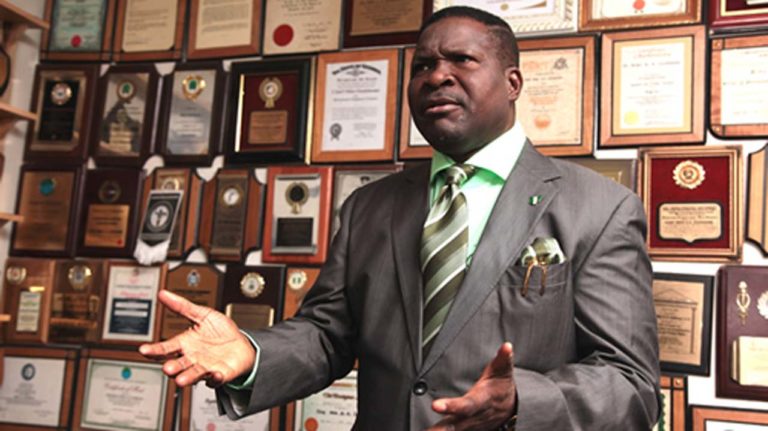
THE Nigerian government has filed a criminal case against Mike Ozekhome, a senior advocate, for allegedly forging and using false documents in a disputed UK property.

According to TheCable, The Independent Corrupt Practices and Other Related Offences Commission (ICPC) filed a three-count charge, marked FCT/HC/CR/010/2026 against the lawyer, on behalf of the Attorney-General of the Federation before a Federal Capital Territory High Court in Abuja on Friday, accusing him of forgery, use of false documents and giving false information in connection with a disputed property in the United Kingdom.

“That you Chief Mike Ozekhome, SAN (M) ’68yrs’ of No. 53, Nile Street, Maitama, Abuja, sometime in August, 2021 or thereabout at a place outside Nigeria i.e. London, within the jurisdiction of this honourable court, directly received house 79 Randall Avenue, London NW2 7SX purportedly given to you by one Mr. Shani Tali, an act you knew constitutes a felony and you thereby committed an offence contrary to section 13 and punishable under Section 24 of the Corrupt Practices and Other Related Offences, Act, 2000,” part of the suit read.

According to the charge sheet, Ozekhome allegedly presented forged documents, including a Nigerian international passport, to support a claim of ownership of a property located at 79 Randall Avenue, London NW2 7SX, during proceedings before the UK First-Tier Tribunal (Property Chamber).

“That you Chief Mike Ozekhome, SAN (M) ’68yrs’ of No. 53, Nile Street, Maitama, Abuja, sometime in August 2021 or thereabout at Abuja within the jurisdiction of this honourable court, while being a legal practitioner and senior advocate of Nigeria did make a false document, to wit: Nigeria passport A07535463 bearing the name of Mr Shani Tali with intent to use same to support claim of ownership of property known and described as 79 Randall Avenue, London NW2 7SX with intent to commit fraud, and you thereby committed an offence contrary to Section 363 and punishable under Section 364 of the Penal Code CAP 532 laws of the Federal Capital Territory Abuja, 2006.

“That you Chief Mike Ozekhome, SAN (M) ’68yrs’ of No. 53, Nile Street, Maitama, Abuja, sometime in August 2021 or thereabout at Abuja within the jurisdiction of this honourable court, while being a legal practitioner and senior advocate of Nigeria dishonestly used as genuine a false Nigeria passport A07535463 bearing the name of Mr Shani Tali to support claim of ownership of property known and described a s 79 Randall Avenue, London NW2 7SX when you had reason to believe that the said document was false and you thereby committed an offence contrary to Section 366 and punishable under Section 364 of the Penal Code CAP 532 laws of the Federal Capital Territory Abuja, 2006,” the charge added.

The Federal Government alleged that the offences were committed around August 2021 in Abuja, but that the documents were later used in the UK proceedings.

The case has not yet been assigned a trial date.

The criminal charge follows growing scrutiny around Ozekhome’s conduct after a UK tribunal judgment reportedly dismissed his testimony as “an invention and contrivance.”

Background 

The London case, filed as REF/2023/0155, arose from competing ownership claims over a property located at 79 Randall Avenue, London NW2 7SX between Ozekhome and a woman identified as Tali Shani. While the names in the property dispute are Ozekhome and Jeremiah Useni, a late retired lieutenant-general, Shani told the tribunal that she was the lawful owner.

Ozekhome maintained that he received the house as a gift from ‘Mr Tali Shani’ in 2021, and a witness known as ‘Tali Shani” testified in favour of Ozekhome, claiming that he had “Powers of Attorney” over the property and had transferred the property to Ozekhome.

The witness claimed ownership of the property from 1993, noting that he later appointed Useni as his property manager, describing Useni as an “elder friend and business partner”.

It was this testimony and the documents accompanying it that allegedly drew the attention of Nigerian authorities.

In the criminal charge now before the Abuja court, the Federal Government accuses Ozekhome of knowingly making and using a false Nigerian passport bearing the name Shani Tali to strengthen ownership claims over the London property.

The prosecution listed investigators and a representative of the Nigerian Immigration Service among its witnesses, indicating that official passport records and identity data will be central to the case.

Documents to be tendered include the judgment of the UK tribunal, extra-judicial statements, official correspondence and passport records relating to Shani Tali.

A publication by a legal scholar and former National Human Rights Commission chairman, Chidi Odinkalu, in October 2025 disclosed that Ozekhome was prevailed upon to withdraw from the September 2025 Call to Bar ceremony in Abuja because of the case.

Odinkalu wrote that members of the Body of Benchers (BoB) objected to Ozekhome’s participation following the UK tribunal decision, arguing that his continued role in formally admitting new lawyers into the profession raised serious ethical concerns.

Body of Benchers is not only responsible for the Call to Bar but also houses the Legal Practitioners Disciplinary Committee (LPDC), the statutory body charged with disciplining erring lawyers.

Odinkalu argued that the episode reflected what he described as a deepening crisis of accountability in Nigeria’s legal profession, where senior lawyers often face little or no professional consequence despite damaging judicial findings.


Museveni declared winner of Uganda presidential poll, set for 7th term

UGANDAN President Yoweri Museveni has been declared the winner of last Thursday president poll, paving the way for his seventh term in office.

The Electoral Commission declared the 81-year-old winner with 71.65 per cent of the vote on Saturday, allowing him to extend his 40-year rule of the East African country.

The ICIR reported that the election was disrupted by violence and an internet shutdown.

There was a heavy police presence around the capital, Kampala as security forces sought to prevent the sort of protests that have hit neighbouring Kenya and Tanzania in recent months.

Former Nigerian president Goodluck Jonathan, representing election observers, told reporters in Kampala that the incidents “instilled fear and eroded public trust in the electoral process.”

Jonathan said the shutdown of the internet “disrupted effective observation” and “increased suspicion” but that the overall conduct of the polls on election day was “peaceful”.

Provisional results showed that Museveni’s ruling party, the National Resistance Movement, had secured a commanding lead in parliamentary seats, even as vote counting was still underway.

Museveni, a former rebel leader who seized power in 1986, has entrenched his grip on the state and security forces, ruthlessly suppressing political opposition over nearly four decades in office.

Kizza Besigye, another leading opposition figure who ran unsuccessfully against Museveni four times, was abducted in Kenya in 2024 and taken back to Uganda, where he is now facing an ongoing treason trial in a military court.

The election period was also marked by reports of violence against opposition groups.

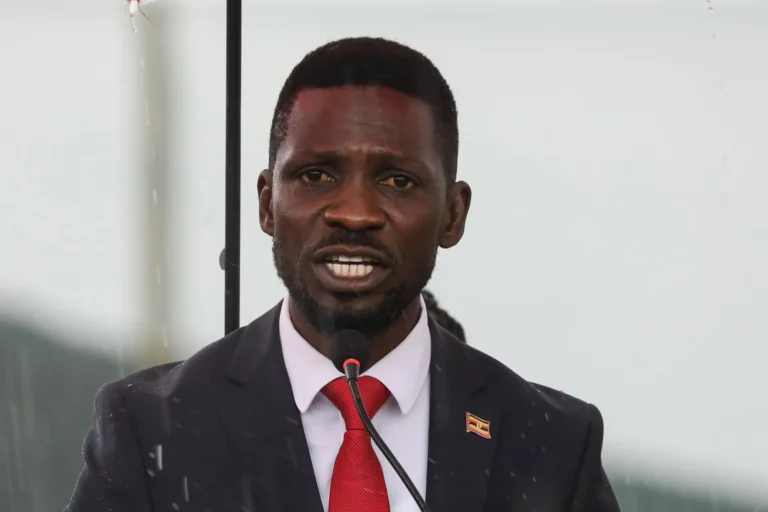
Museveni defeated 43-year-old former singer-turned-politician, Bobi Wine, with 24.72 per cent.

Since entering politics, Wine has come under relentless pressure, with multiple arrests preceding his first presidential run in 2021.

On Friday, Wine, whose real name is Robert Kyagulanyi Ssentamu, said he was under house arrest, and his party later wrote on X that he had been “forcibly taken” by an army helicopter from his compound.

The ICIR reported that the Ugandan police and army denied the allegations.

National police spokesperson, Kituuma Rusoke, said “He is not under arrest,” noting that Wine was at his home and free to move.

Similarly, the Army spokesperson, Chris Magezi, denied the claim, noting that “the rumours of his so-called arrest are baseless and unfounded.”

Lagos orders postmortem after twins allegedly died from vaccination

0

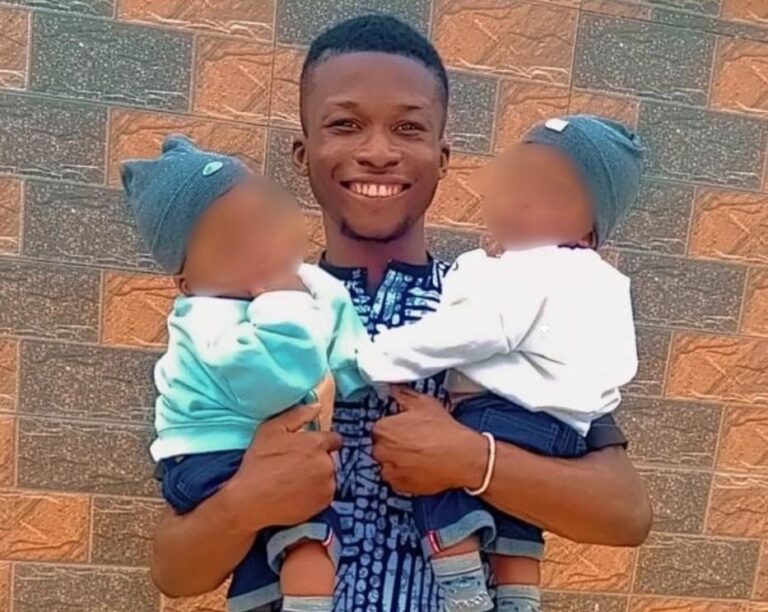
THE Lagos State Government has ordered a postmortem on nine-month-old identical twins, Testimony and Timothy Alozie, following allegation that they died about 24 hours after receiving routine immunisation at a primary health care centre.

According to Punch, the Permanent Secretary of the Lagos State Primary Health Care Board, Ibrahim Mustafa, revealed this on Saturday, noting that investigations had begun and a postmortem had been ordered to determine the cause of death.

“We sympathise with them and we understand the grief these parents will be going through, but we would like for the right things to be done and the right decisions to be taken. It is being investigated by the police, and we are also doing our investigation as a state. We are expecting the postmortem findings. This particular vaccine has been given to many children before and after these kids, and nothing like this has been recorded,” he said.

He said the bodies of the twins were taken to the Lagos State University Teaching Hospital morgue, stressing that the government would make the outcome of its investigation public.

“Once the postmortem findings are out, we will communicate appropriately,” he said.

The ICIR reports that the father of the twins, Samuel Alozie, known on TikTok as Promise Samuel, said he was concerned that the investigation might be compromised to shield the government-owned health facility. He described the process as “government to government.”

“Please, if you are a lawyer, a human rights lawyer, help me. I don’t have money to fight this alone. I need justice for these children,” he pleaded.

The ICIR reported that Alozie’s case gained widespread attention after he posted videos showing his sons’ bodies in separate body bags, alleging the children fell ill and died shortly after vaccination.

In a video shared on Thursday, Alozie said he took the twins for routine immunisation on December 24, 2025, and claimed they became critically weak almost immediately after the injections.

“They could not eat, they could not play, they could not even disturb as they used to. They were just weak,” he said.

According to him, a nurse at the health centre advised that the children be given paracetamol if their temperature rose. He said he and his wife administered the drug and also bathed them in cold water, but their condition did not improve.

“It happened that the immunisation was conducted on the 24th of December in the morning, and on the morning of 25th December, they died. On the 24th, after the injection, they were very weak, and I gave them paracetamol because the nurse said that if the temperature continued, I should give them paracetamol.

 My wife bathed them in cold water. They died on the 25th. The two of them died at the same time. The drug weakened them to the extent that they couldn’t talk, they couldn’t eat, they couldn’t play as usual,” he said.

The distraught father said the twins were healthy before the immunisation and that he had always ensured they received their routine vaccines from birth.

“I’m just confused. How can I lose two children, identical twins that I have suffered so much for? Just nine months, they were not sick. Just because I decided to fulfil the righteousness of taking them for immunisation,” he said.

The bereaved father also noted that the nurse who administered the last injections was not the regular official who usually attended to his children. He rejected preliminary explanations from the health centre that the deaths might have been caused by “food bacteria.”

“The nurse is talking about bacteria, food bacteria. She said that it is food bacteria that killed my children. How can food bacteria kill a child? Food that I’ve been giving them from one month to nine months did not kill them,” he said.

Uganda denies arrest of opposition leader, Bobi Wine

UGANDA’S security officials have denied allegations by opposition leader Bobi Wine’s party that he had been arrested by soldiers as counting continued in an election disrupted by reports of at least 10 deaths and internet blackouts.

On Friday, Wine, whose real name is Robert Kyagulanyi Ssentamu, said he was under house arrest, and his party later wrote on X that he had been “forcibly taken” by an army helicopter from his compound.

Reuters quoted the National police spokesperson, Kituuma Rusoke, as saying “He is not under arrest,” noting that Wine was at his home and free to move.

Similarly, the Army spokesperson, Chris Magezi, denied the claim, noting that “the rumours of his so-called arrest are baseless and unfounded.”

Reports show that on Friday, the election day was disrupted by significant technical problems after biometric machines, used to confirm voters’ identities, malfunctioned, and ballot papers were undelivered for several hours in many areas, and violence was unleashed on opposition members in other parts of the country.

The electoral commission said Saturday morning that the 81-year-old President Yoweri Museveni, who has been in power since 1986, held a commanding lead with nearly 72 per cent of the votes. Wine trailed with 24 per cent, with more than 90 per cent of polling stations counted, as final results would be announced at 13:00 GMT on Saturday.

43-year-old Wine has in recent years emerged as President Yoweri Museveni’s main challenger. He brands himself the “ghetto president,” a reference to the slum communities where he grew up in Uganda’s capital, Kampala.

Wine has accused the government of “massive ballot stuffing” and of attacking several of his party officials under the cover of an internet blackout imposed ahead of Thursday’s polls and still in effect on Saturday.

The United Nations Human Rights Office said last week that the elections were being conducted in an environment of “widespread repression and intimidation” targeting the opposition.

Bobi Wine has alleged large-scale fraud in the poll and has urged his supporters to protest.

The election was also plagued by serious technical difficulties, as biometric machines used to verify voters malfunctioned and ballot papers failed to arrive for several hours in many polling stations.