Home Blog Page 93

Police backtrack after backlash, deny making conflicting statements on Kaduna abduction

0

THE Nigeria Police Force has dismissed claims that it issued conflicting statements over the reported mass abduction of worshippers in Kaduna State.

The Force said its responses on the abduction were guided by available evidence.

The incident reportedly occurred on Sunday in Kurmin Wali community, Kajuru Local Government Area, where 177 worshippers were allegedly kidnapped during an attack.

Initial reports on the incident were dismissed by the Kaduna State Police Command and the state government, which drew criticisms and caused confusion among the public.

Authorities later confirmed the incident.

Speaking on Channels Television’s Politics Today on Wednesday, January 21, the Force Public Relations Officer, Benjamin Hundeyin, a chief superintendent of police (CSP), said the Force did not contradict itself, explaining that early statements reflected the absence of verified information.

“There is no inconsistency from the statement coming from the police. The Kaduna State Commissioner of Police said when we received the information, we immediately mobilised to the scene. We are yet to get any evidence as this happened.

“The moment we obtained evidence, we came out to say that we have gotten evidence. So, there is no inconsistency,” Hundeyin explained.

He said the Inspector-General of Police, Kayode Egbetokun, had since ordered the deployment of helicopters for aerial surveillance, alongside additional operational and intelligence resources.

Hundeyin added that tactical units had been dispatched to the area, patrols intensified, and search-and-rescue operations launched to locate the abductees.

Initial denial and subsequent confirmation

In a statement issued earlier on Tuesday, January 20, Hundeyin confirmed that the abduction was initially disputed during a meeting of the Kaduna State Security Council convened by Governor Uba Sani.

“Subsequent verification from operational units and intelligence sources has confirmed that the incident did occur,” he said, noting that conflicting accounts from individuals within the affected community contributed to the initial uncertainty.

The police also clarified that remarks made by the Kaduna State Commissioner of Police, Rabiu Muhammad, were intended to prevent panic while investigations were ongoing.

At the time, Rabiu had challenged those claiming that an abduction occurred to present evidence, including a list of kidnapped persons and their details.

“Anyone who has evidence should come forward with the list of kidnapped persons and their particulars,” Rabiu said during a press briefing.

Similarly, the Kaduna State Commissioner for Internal Security and Home Affairs, Sule Shuaibu, said engagements with community leaders and the Christian Association of Nigeria (CAN) at the state level suggested the reports were false.

This, however, contradicted the account of the CAN chairman in the 19 northern states and the FCT, John Hayab, who said scores of worshippers were taken during the attack.

Reacting to the commissioner’s statement, the NPF said the uncertainty arose after the Kaduna State Security Council, convened by the government following the reports, received conflicting accounts from individuals from the affected local government area, some of whom he said disputed the incident and described it as false.

Full list of the abductees as culled from TheCable

1. Samson Naallah
2. Ezekiel Naallah
3. Christopher Naallah
4. Martin Samson
5. Moses Samson
6. Clever Godwin
7. Jerusalem Chindo
8. Markus Markus
9. Benjamin Markus
10. Albert Markus
11. Ofelana Markus
12. Linus Markus
13. Hassana Linus
14. Ojo Bamboya
15. Esther Ojo
16. Mary Jonathan
17. George Jonathan
18. Careful Jonathan
19. EF James
20. Morin Boniface
21. Junior James
22. Happiness Jonathan
23. Honest Jonathan
24. Honesty Jonathan
25. Faith Luka
26. Beauty Luka
27. Junior Luka
28. Rosemary Luka
29. Dorothy Luka
30. Selina Luka
31. Alice Bamboya
32. Magdalena Godwin
33. Hassan Ishaya
34. Lazarus Ishaya
35. Marta Ishaya
36. Zummunta Ishaya
37. Salvation Ishaya
38. Susana Linus
39. Jummal Linus
40. Peace Joshua
41. Zahaya Joshua
42. Nabilah Makudi
43.Hajara Makudi
44. Rebecca Hosea
45. Ahmad Ahmad
46. Liyu Ezekiel
47. Vivian Ezekiel
48. Goodluck Ezekiel
49. Beauty Ezekiel
50. Matina Maiyashi
51. Bridget Maiyashi
52. Vivian Linus
53. Mary Amos
54. Hamid Amos
55. Patricia Amos
56. Hamisu Amos
57. Luka Amos
58. Tacy Amos
59. Cynthia Amos
60. Mercy Isaac
61. Augustine Makudi
62. Matthew Samaila
63. Adam Musa
64. Malika Sule
65. Abu Ahmad
66. Hussein Lucky
67. Akinyi Sadiu
68. Dangata Amos
69. Helen Jonathan
70. Asinwa Jonathan
71. Faith Joseph
72. Gloria Kennet
73. Happiness Danisa
74. Fidelis Jacob
75. Tobias Markus
76. Istu Paul
77. Hassana Paul
78. Charity Chindo
79. Christiana Danisa
80. Everest Danima
81. Thomas Philip
82. Catrina Danbosi
83. Halima Hassan
84. Hassan Lukumi
85. Mary Sadiu
86. Franca John
87. Henry Danbiyi
89. Ayuba Lawal
90. Solomon Ayuba
91. Theophilus Danlami
92. Charles Sambo
93. Rahila Charles
94. Gambo Danisa
95. Talent Danisa
96. Nehemiah Danjuma
97. Maijima Shekarau
98. Matina Maijima
99. Laraba Maijima
100. Musa Danjuma
101. Ishaya Danima
102. Lulu Danisa
103. Clement Ahmad
104. Destiny Ahmad
105. Nehemiah Ishaya
106. Simon Ishaya
107. Nasty Muku
108. Helena Joseph
109. Joseph Bawa
110. Sarah Joseph
111. Bulus Mariya
112. Musa Samaila
113. Bulus Bawa
114. Halima Bawa
115. Beture Hosea
116. Sati Hosea
117. Titus John
118. Dogara Bawa
119. Lories Bawa
120. Adamu Aminu
121. Ezekiel Adamu
122. Tenah Markus
123. Tina Danbosi
124. Patricio Bawa
125. Janet Tsuda
126. Amina Danjuma
127. Sandra Danbosi
128. Bridget Sunday
129. Saphat Innocent
130. Alex Sunday
131. Beauty Peter
132. Samisa Paul
133. Joy Joseph
134. Methole Johanna
135. Genesis Johanna
136. Maria Johanna
137. Merozdu Adonu
138. Karimi Jangbe
139. Sunday Martela
140. Santina Hershinga
141. Keuna Michael
142. Hassan Bulus
143. Marzeta Maisoni
144. Mainwa Dominic
145. Godwin Karimi
146. Amos Akijo
147. Nathan Amos
148. Joseph Chindo
149. Lydia Godwin
150. Hamna Maiyangi
151. Toletu Maiyangi
152. Esther Godday
153. Godswill Godday
154. Godlive Samson
155. Goodluck Aliga
156. Madaki Tabawa
157. Tabawa Abba
58. Tabawa Iyamye
159. Samuel Amos
160. Daniel Amos
161. Deborah Amos
162. Ruth Amos
163. Emmanuel Danjuma
164. Joshua Danjuma
165. Rejoice Danisa
166. Blessing Danisa
167. Ibrahim Lawal
168. Zainab Lawal
169. Sadiq Ahmad
170. Aisha Ahmad
171. Yakubu Musa
172. Suleiman Musa
173. Rahama Musa
174. Daniel Jonathan
175. Samuel Jonathan
176. Peter Jonathan
177. Grace Jonathan
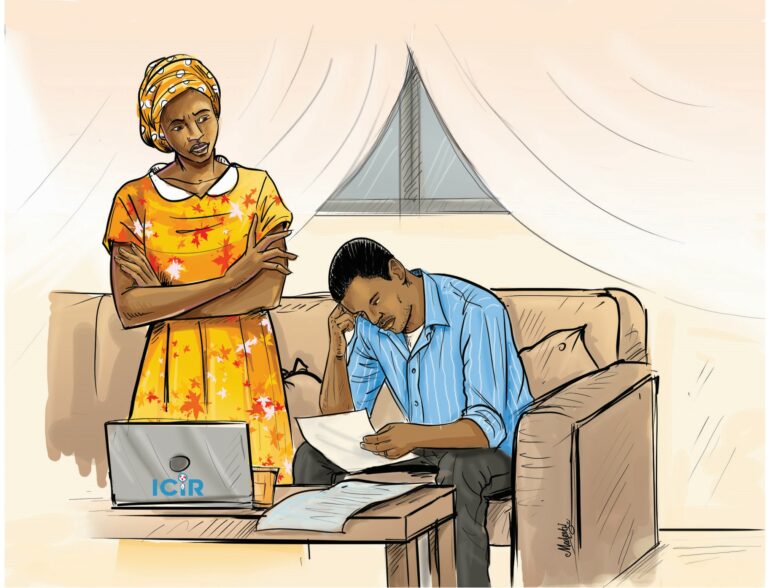
Whistleblowing: of law, justice, and the guardians in between

0

By Chido ONUMAH

IF a single idea has guided the work of the African Centre for Media and Information Literacy (AFRICMIL) over the past years, it is this simple truth: a nation cannot win the war against corruption by sacrificing its most courageous citizens along the way.

The whistleblower is not an inconvenience to governance. He or she is its essential early warning system. And yet, nearly a decade after Nigeria introduced a whistleblower policy, the country still operates without the one safeguard that makes integrity sustainable: a clear, enforceable law that protects those who speak up.

In 2025, AFRICMIL made a deliberate pivot. We moved from managing the consequences of this gap to strengthening the architecture that must eventually close it. Individual case interventions remained central to our work, but the focus widened. This became a year of institutional engagement, judicial preparation, and evidence building. A year spent laying the intellectual and legal groundwork for a system that can outlive goodwill and survive political seasons.

At the heart of this shift was a recognition that laws do not operate in isolation. They are interpreted, enforced, and animated by institutions and people. Chief among them is the judiciary.

That understanding informed last September’s National Interactive Forum for Judges on Whistleblowing and Whistleblower Protection held in Abuja. It was convened in partnership with the National Human Rights Commission (NHRC), TAP iNitiative, Progressive Impact Organisation for Community Development (PRIMORG), and Centre for Fiscal Transparency and Public Integrity (CeFTPI), and supported by the Platform to Protect Whistleblowers in Africa (PPLAAF), Whistleblowing International Network (WIN), MacArthur Foundation and the Independent Corrupt Practices and Other Related Offences Commission (ICPC).

Federal High Court judges gathered not for ceremony, but for a candid exchange on the dilemmas that whistleblowing presents to modern jurisprudence. Questions of anonymity, retaliation, national security, and the balance between transparency and due process were confronted head on.

It was evident, at the forum, that the effectiveness of whistleblower protection will ultimately be determined by the courts. Preparing the judiciary is therefore not an auxiliary task. It is foundational. When a comprehensive law eventually emerges, it must meet a bench that is already conversant with its logic and committed to its spirit. The forum was an exercise in institutional readiness, the kind of quiet work that rarely makes headlines but determines long-term outcomes.

This institutional engagement was reinforced by rigorous research. Our nationwide survey in 2021 examining five years of Nigeria’s whistleblowing policy offered a sobering diagnosis. Awareness of the policy is widespread. Confidence in it is not. Nearly three quarters of respondents reported that they had stopped reporting corruption altogether. Fear of retaliation and scepticism about state protection dominated their responses.

The data did not tell a new story. It confirmed, with empirical clarity, what years of casework have shown. A policy without legal backing creates exposure rather than protection. It asks citizens to be brave while leaving them legally exposed. In that sense, the survey was not merely a research exercise. It became an advocacy instrument, anchoring public conversation in evidence and shifting debate from anecdotes to systemic failure.

Behind these numbers lie real people. The human cost of Nigeria’s legal vacuum remains the moral centre of AFRICMIL’s work. The experiences of courageous Nigerians like Aaron Kaase, Murtala Ibrahim, Ntia Thompson, Joseph Akeju, Sambo Abdullahi, Joseph Ameh, Yisa Usman, Abiodun Thomas, Abraham Taiwo and others illustrate the price of integrity in a system that lacks protective muscle. Each exposed large-scale wrongdoing. Each paid with suspension, seizure of salary, dismissal, or professional exile. Their partial victories in court speak more to personal resilience than to institutional justice.

These are not isolated tragedies. They are symptoms of a framework that deters honesty while emboldening misconduct. Their courage explains why AFRICMIL insists that whistleblower protection is not a favour to individuals. It is a structural necessity for governance.

Our work in the past years also recognised that corruption does not respect borders, and neither should reform. Through the Whistleblowing Advocacy Coalition of West Africa (WACOWA), launched in 2024, AFRICMIL continued to nurture a subregional platform for learning, coordination, and standard setting. Countries such as Ghana and Senegal, which have enacted whistleblower protection laws, offer lessons that can inform Nigeria’s journey, just as Nigeria’s struggles offer cautionary insights to its neighbours.

This regional outlook was complemented by our engagement with broader governance questions. Our First Sub-Regional Conference on Whistleblowing and Whistleblower Protection in West Africa in November 2024 with the theme, Reducing Corruption in West Africa: The Importance of Whistleblowing and Whistleblower Protection Legislations” touched on issues around economic policymaking for equitable growth and social inclusion, interrogating the links between anti-corruption, citizen welfare, and economic justice. Corruption is not an abstract moral failing. It is a daily tax on opportunity, health, and social trust. Policies that ignore citizen wellbeing cannot be sustainable, no matter how technically sound they appear.

Taken together, AFRICMIL’s past interventions were not isolated activities. They formed a coherent strategy centred on institutional capacity, evidence-based advocacy, regional solidarity, and citizen protection. The logic is straightforward. Strong institutions protect individuals. Protected individuals strengthen accountability. Accountability improves governance. Governance improves lives.

In 2026 and beyond, this logic continues to guide our priorities. Legislative advocacy for a dedicated whistleblower protection law remains paramount. Judicial engagement will deepen through follow-up trainings, resource development, and sustained dialogue. Legal defence and support for whistleblowers will continue through initiatives such as our flagship project, Corruption Anonymous, and most critically, collaboration with development partners. Regionally, we shall work towards building WACOWA into a stronger platform for shared standards and collective action. Domestically, we believe that secure reporting systems, institutional partnerships, and civic dialogues will expand citizen participation in accountability processes.

As everyone engaged in this field of endeavour understands, this is not work that yields instant gratification. It is patient, structural, and often unglamorous. But it is precisely the kind of work that turns courage into consequence and ideals into institutions.

AFRICMIL’s journey in 2025 and the previous years was about fortifying the space between law and justice, between policy and protection. In that space stand judges, institutions, citizens, and the quiet systems that decide whether truth is punished or preserved. Strengthening that space is how nations mature.

By December 2026, it would have been 10 years since the whistleblowing policy in Nigeria was introduced. Five years after AFRICMIL’s nationwide survey on whistleblower protection in 2021, the sentiments haven’t changed; if anything, they have been reinforced and have given room for despair and despondency.

Now is the time to make the much-needed transition from policy to law; from intent to action!

In Nigeria, courage should not be an act of self-destruction. It should be met with justice. Having an enabling law to protect whistleblowers is the first step in achieving this. That is the future this work insists on building.

Chido Onumah, PhD, is Coordinator at the African Centre for Media and Information Literacy (AFRICMIL).

Wike appoints another retiring FCTA director as aide

1

THE Minister of the Federal Capital Territory (FCT), Nyesom Wike, has appointed a retiring FCTA official, Musa Daura, as his Senior Special Assistant on Protocol Matters, just as offices managed by the FCT Administration remain shut due to an ongoing workers strike.

 In a statement on Wednesday January 21, the Minister’s Senior Special Assistant on Public Communications and Social Media, Lere Olayinka, announced that Daura, who serves as the Director of the FCT Protocol Department, will take up the new role immediately after his retirement from the civil service on January 24.

Daura has spent more than three decades working in protocol and administrative roles in the FCTA, Olayinka said.

His appointment followed a similar role given by Wike to retired Director of Department of Development Control, Mukhtar Galadima, as Senior Special Assistant on Development Control and Planning in December 2025.

Galadima served as director of the Development Control Department from 2016 to 2025. He got his new role a month after his retirement.

The latest appointment by Wike comes while workers under the Joint Union Action Congress (JUAC) have been on an indefinite strike, demanding payment of long overdue entitlements, improved welfare, and better working conditions.

The strike has paralysed several FCTA offices and the Federal Capital Development Authority (FCDA), causing delays in routine services and administrative functions.

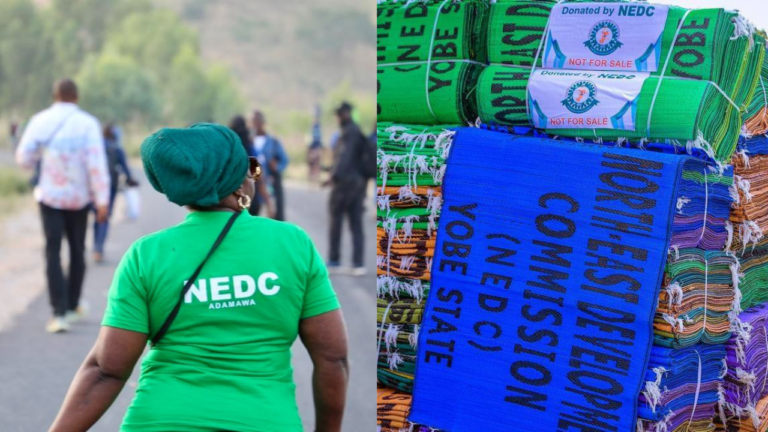
Again, North-East Commission to spend 98.9% of 2026 budget on salaries, leaves little for development

0

THE North-East Development Commission will spend N244.06 billion of its N246.76 billion 2026 proposed budget on personnel costs. 

This represents 98.9 per cent of the total budget for the commission in the financial year.

Consequently, the commission will spend the remaining N2.7 billion on capital projects, representing 1.1 per cent of the total budget.

The ICIR reports that with almost virtually all it funding going into salaries and other welfare packages, the commission will be unable to achieve the goals for which it was set up.

“The commission is charged with the responsibility of, among other things, receiving and managing funds allocated by the Federal Government and international donors for the resettlement, rehabilitation, integration and reconstruction of roads, houses and business premises of victims of insurgency and terrorism, as well as tackling the menace of poverty, illiteracy, ecological problems and any other related environmental or developmental challenges in the North-East States, and for related matters,” the commission’s mandate reads on its website.

In Nigeria’s context, personnel costs often represent a significant portion of recurrent expenditures.

Personnel costs budget typically refers to the expenses related to employee compensation, benefits, and allowances. This includes salaries, wages, allowances, insurance benefits, pension contributions, training, and other benefits for employees.

The North-East region of Nigeria has been plagued by over a decade-long insurgency, led by Boko Haram, resulting in devastating humanitarian and economic consequences.

This has affected the economic development in the region, with hundreds of Internally Displaced Persons (IDP) camps spread across the region.

Though the attacks are abating, general insecurity has persisted inter-communal feuds, cropper-herder conflicts kidnappings, banditry, cattle rustling, among others have displaced thousands, disrupted livelihoods, and hindered access to essential services.

Notably, over two million people are internally displaced in Nigeria, with many facing food insecurity, malnutrition, and limited access to healthcare and education.

Accordingly, the region’s economy has been severely impacted, with widespread destruction of infrastructure, agriculture, and trade, leading to rising food inflation.

The North East region also posted some of Nigeria’s highest poverty rates, with limited access to education, healthcare, and economic opportunities.

The region is confronted with ecological challenges, such as desertification and climate change, worsening the vulnerabilities of residents.

Analysts believe that poor budget allocation to capital funding in the commission raises lots of questions about government’s determination to address key challenges in the North-East.

“This is not good enough. Was the commission created to pay salaries?” a development economist, Kalu Aja, queried.

It would be noted that Nigeria is struggling to fund the capital component of its budget, with its carryover of 70 per cent of its 2025 budget to 2026.

A large chunk of the nation’s budget is to be sourced from borrowing

Nigeria’s proposed 2026 budget includes a deficit of N20.1 trillion, which is approximately 36.9 per cent of the total spending plan of N54.43 trillion. To finance this deficit, the government plans to borrow around N17.89 trillion, with 80 per cent (N14.31 trillion) coming from domestic sources and 20 per cent (N3.58 trillion) from external creditors.

The country’s debt service burden is a significant concern, with N15.91 trillion allocated for debt servicing in 2026, accounting for 29.2 per cent of the total budget. This has raised concerns about debt sustainability and fiscal discipline.

A recurring trend 

2025 budget: Regional commissions to spend 99.7 on salaries, leave little for development
FILE: An infographic illustrating the 2025 proposed budget allocations for Nigeria’s regional development commissions, showing that over 99% of their budgets were earmarked for personnel costs.

The heavy personnel-cost structure in the North-East Development Commission’s (NEDC) proposed 2026 budget mirrors a broader trend observed in the previous fiscal year.

An analysis of the Federal Government’s 2025 budget proposal by The ICIR showed that the five regional development commissions under the Ministry of Regional Development were collectively allocated about N2.5 trillion, with 99.7 per cent of the funds earmarked for personnel costs, leaving just 0.3 per cent for capital and development projects.

According to the 2025 breakdown, four of the five commissions proposed spending their entire allocations on salaries and overheads, while only the NEDC retained a marginal 2.2 per cent for non-personnel expenditure.

The Niger Delta Development Commission (NDDC) topped the list with N776.5 billion allocated fully to salaries, followed by the North-West Development Commission (NWDC) with N585.9 billion and the South-West Development Commission (SWDC) with N498.4 billion. The South-East Development Commission (SEDC) also earmarked N341.3 billion entirely for personnel expenses.

Read also: Why is Federal Horticultural College, Dadin-Kowa, set to get N133 billion in 2026 budget, more than double Nigeria’s top universities?

IWMF seeks nomination for 2026 Courage in Journalism Awards

THE International Women Media Fund (IWMF) seeks nominations for its 2026 Courage in Journalism Awards.

The annual Courage in Journalism Awards honour women and nonbinary journalists who set themselves apart by exhibiting extraordinary bravery, persistence and resilience. Doing whatever it takes to uncover the truth. They raise the bar for reporting under duress or in the face of censorship.

The awards programme honours brave journalists – including photojournalists – working in any country across the world. They report on taboo topics, immerse themselves in hostile environments and share difficult truths. In addition, the honorees demonstrate a commitment to press freedom and often overcome unjust conditions online and offline to become leaders in their industry.

Organiser says “Candidates for the Courage in Journalism Awards must be full-time staff or freelance women or nonbinary reporters, writers, editors, photographers or producers working in any country and of any nationality”.

Deadline to nominate is February 1, 2026, at 11:59 pm ET. Interested applicants can nominate here.

Why is Federal Horticultural College, Dadin-Kowa, set to get N133 billion in 2026 budget, more than double Nigeria’s top universities?

The Federal College of Horticulture, Dadin-Kowa (FCHDK), is slated to receive N133 billion for capital projects in the proposed 2026 budget, an amount that would exceed the allocations for many of Nigeria’s leading federal universities if approved.

Analysis of the 2026 Appropriation Bill showed that the total allocation for the college stands at N135 billion (N135,782,890,354) with N2.7billion for total recurrent and N133bn dedicated to capital expenditure. 

The capital allocation covers projects unrelated to horticulture, including the construction of religious centres, urban roads, and the procurement of e-hailing vehicles in Lagos. 

Comparison with major federal universities

By comparison, several of Nigeria’s top federal universities received significantly lower allocations for 2026:

  • University of Nigeria, Nsukka (UNN): N49.74 billion
  • Ahmadu Bello University, Zaria (ABU): N48.76 billion
  • University of Calabar (UNICAL): N43.83 billion
  • University of Ibadan (UI): N39.57 billion
  • University of Maiduguri (UNIMAID): N37.75 billion.

In each case, the FCHDK allocation is more than double the funding of these top institutions.

In total, the combined allocations for all federal universities in 2026 amount to N1.044 trillion, meaning the FCHDK budget alone represents roughly 12.7 per cent of the total federal university allocations.

Projects outside its mandate

The Federal College of Horticultural Technology, located in Dadin-Kowa, Yamaltu Deba Local Government Area of Gombe State, is a government-owned tertiary institution established in 2002 by President Olusegun Obasanjo’s administration, with a mandate to train and improve manpower in horticultural and landscaping technology. 

Despite its mandate as a specialised institution for horticultural research and training, FCHDK’s 2026 budget includes projects that span multiple sectors. 

For instance, the college proposed to spend N140 million for worship sites in ‘various locations’ in Yamaltu-Deba federal constituency Gombe and N70 million for prayer centres in Kaduna.

It has also budgeted to spend over N1 billion for “fairly used e-hailing cars” and road construction in Lagos, N350 million for community policing vehicles in Kano, N470 million for hospital equipment in Sokoto and Kaduna.

Similarly, the budget allocates N1.05 billion for the supply of Keke Napep (tri-cycle) to beneficiaries in Kaduna State, N1.05 billion for the rehabilitation of selected roads in the state, N280 million for the construction of VIP guest palaces for traditional rulers in selected locations in Gombe State, and N70 million for a comprehensive free medical outreach in Sabon Gari Federal Constituency, Kaduna State.

It further earmarked multi-million naira for solar streetlights and transformers across several states inb the country.

The ICIR analysis also showed that N133 billion allocation is nearly 50 times the college’s recurrent expenditure of N2.7 billion. 

The ICIR reported that while there are no laws in Nigeria that explicitly fault MDAs for carrying out projects against their mandate, former president, Muhammadu Buhari and the Independent Corrupt Practices and Other Related Offences Commission (ICPC) had condemned the insertion of several constituency projects by federal lawmakers.

The pattern mirrors broader trends in Nigeria’s budgeting process, where agencies are routinely saddled with projects outside their statutory responsibilities. In the 2025 budget alone, the National Assembly inserted over 11,000 projects valued at N6.93 trillion, many of which were unrelated to the core mandates of the institutions tasked with executing them, according to Budgit. 

The civic organisation noted that public funds were redirected to religious centres, boreholes, ICT initiatives, and “empowerment of traditional rulers,” highlighting a systemic culture of patronage and waste. 

The ICIR, in its Open Contract Reporting project, reported many constituency projects poorly implemented or abandoned in local communities.

A recurring pattern with Federal College of Horticulture, Dadin-Kowa

This is not the first time FCHDK, has received disproportionately large allocations. In 2024, the National Assembly approved N42.7 billion for the college, a figure that represented an 11,500% increase from the institution’s initial proposal of N368 million, according to a BudgIT Foundation (Tracka) report.

The funds were earmarked for projects such as the installation of solar streetlights and the purchase of Keke NAPEP tricyclee, initiatives largely unrelated to the college’s core mandate of horticultural training and research.

Martha Oyanta Daniel, the state officer for BudgIT Foundation, described the budget inflation as “not appropriate for a country struggling with loans and a high debt servicing ratio.”

She further emphasised that “projects should be allocated to agencies according to their mandates,” adding that the public must engage actively in tracking government expenditures rather than leaving oversight solely to civic organisations.

Value-addition in cocoa, ‘zobo’, sesame, others improving non-oil revenue – NEPC

THE Nigerian government said its decision to enhance value addition for various non-oil exports, including cocoa, sesame, cotton, and hibiscus leaves (commonly known as zobo), contributed to the increase in non-oil revenue figures in 2025. 

The Director-General of the Nigerian Export Promotion Council (NEPC), Nonye Ayeni, who disclosed this on Tuesday, January 20, said exporters were prioritising value addition over raw material exports with refresher trainings for exporters coordinated by the Council.

She said Nigeria’s non-oil exports climbed to a historic high of $6.1 billion in 2025, representing an 11.5 per cent increase from the $5.4 billion recorded in 2024.

She also said Nigeria targeted improvement of its raw materials to avert pressures from Trump’s tariff trade war and improve revenue generation.

“Specifically, in Africa, we exported to 11 ECOWAS countries and 25 other African countries…We also exported cosmetics, cocoa, foodstuffs, and spices to Ghana. A good number of our goods have a good showing in several African countries and Europe,” she said.

On non-oil exports to the US, she noted, “Incidentally, there was an increase in our exports to the United States because of value-addition. From cocoa, we added value and exported cocoa butter, cocoa paste and cocoa liquor.

“We also exported hibiscus, textiles and sesame to the United States,” she added.

Ayeni said data obtained from pre-shipment inspection agencies showed that Nigeria had surpassed its previous performance, describing the 2025 outcome as a milestone for formal, documented trade, citing value-addition impact.

She stressed that Nigeria was also exploring opportunities in the Intra-African trade through the African Continental Free Trade Agreement (AfCTA), adding that “75 exporters were sent to Algeria in 2025 for the African Intra-African trade for matchmaking of businesses for export purposes and exchange of trade ideas and business facilitation.

“This 2025 figure marks the highest non-oil export value achieved in the country for formally documented trade in the country and also from the inception of the council almost 50 years ago. So we have indeed beaten our own records of last year. So, Nigeria has 6.1 billion US dollars in terms of value for non-oil export,” she said.

According to her, the $6.1 billon export value reflects improved activity across several value chains, supported by expanding market access and increasing product diversification.

Beyond value, Ayeni noted that export volumes also rose significantly, with total non-oil exports hitting 8.02 million metric tonnes in 2025, compared with 7.29 million metric tonnes in 2024, representing a 10 per cent increase.

She explained that the strong performance cut across agricultural commodities, processed and semi-processed goods, industrial inputs, and solid minerals, indicating gradual progress in value addition and broader product representation.

“In 2025 alone, Nigeria exported a total of 281 non-oil products. This reflects our steady transition towards value-added exports and deeper integration into global value chains,” Ayeni stated.

The NEPC boss also cautioned that the “impressive figures” did not fully capture the country’s export potential, noting that a significant volume of trade still occurred informally across Nigeria’s land borders.

She said the council was working with the National Bureau of Statistics, the Central Bank of Nigeria (CBN), and other stakeholders to mainstream informal trade into official export records, improve data accuracy, and strengthen policy support for exporters.

Ayeni added that ongoing reforms, export incentives, and capacity-building initiatives would be intensified in 2026 to sustain growth and expand Nigeria’s non-oil export footprint.

How Nigeria can achieve IMF’s 2026 growth forecast – Economists

ECONOMISTS have warned that Nigerians should cautiously embrace the International Monetary Fund (IMF) projection of 4.4 per cent economic growth outlook for their country, warning that longstanding economic issues are significant barriers to its realisation.

In its latest projections, the IMF raised its growth forecasts for Nigeria to 4.4 per cent from 3.9 per cent, citing improved macroeconomic conditions and economic reforms by the President Bola Tinubu-led administration.

The new projection is contained in the IMF’s latest report for January 2026 World Economic Outlook (WEO) Update, titled “Global Economy: Steady amid Divergent Forces,” and released on Monday, January 19.

According to the IMF, Nigeria’s economy is expected to maintain a steady expansion path, rising from 4.1 per cent in 2024 to 4.2 per cent in 2025, before accelerating to 4.4 per cent in 2026. The new estimate represents a 0.2 percentage point upward revision from the iMF’s October 2025 projection.

It disclosed that Nigeria’s improved outlook mirrored a broader pickup across sub-Saharan Africa, where growth is projected to reach 4.6 per cent in 2026 and 2027.

The Fund attributed the regional performance to “macroeconomic stabilisation and continued reform efforts” across key economies.

Despite the optimism that greeted the forecasts, economists stressed the need for cautious optimism, noting that the government needed to address core legacy issues, including insecurity in the food-belt states, the high cost of credit lending to small-scale businesses, and high import duties.

While inflation has eased since last year December to 15.5 per cent, the structural drivers of costs, especially energy, transportation, logistics and insecurity, remain firmly in place.

Economist Musa Yusuf, who heads the Centre for the Promotion of Private Enterprise (CPPE), told The ICIR that core legacy issues should be properly addressed for the realisation of the projected growth.

“Persistent structural challenges continue to drive inflationary pressures that need to be addressed, such as energy and fuel costs, rising transportation and logistics expenses, insecurity affecting agricultural output, and high cost of credit and import duties,” he said.

Yusuf, a former Director-General of Lagos Chamber of Commerce, stressed that major drivers of inflation, namely goods, beverages, housing, restaurants, transportation and fuel, accounted for 72 per cent of inflation pressures and remained key challenges.

Economist and Senior Analyst at the Financial Derivative Company (FDC), Dumebi Oluwole, made similar submissions and urged the government to build on an improved macroeconomic outlook and formalisation of the economy through the new tax laws.

“We have seen appreciable progress in manufacturing, Telcom and financial services, insurance, banking recapitalisation. We are also expecting more formalisation of the informal economy through the new tax laws, which could help improve productivity levels,” she said.

She stressed that “In a pre -election year, policy pronouncements could bring in more cash and nudge inflation. At the output level, more construction work is expected, which could spur the manufacturing sector.

She added, “The political economy doesn’t live in isolation. There could be a move from the government this year, but they should be cautious not to cause any disruption from the policies.”

In its global forecasts, the IMF projected 3.3 per cent growth for Nigeria in 2026, noting that the world economy remained resilient despite persistent uncertainties. The outlook, the Fund said, reflects a “balancing of divergent forces,” as the negative effects of changing trade policies are being offset by rising investment in technology and artificial intelligence (AI).

For Nigeria, the IMF identified energy prices as a critical factor shaping the 2026 outlook. It projected that “energy commodity prices are expected to decline by about seven per cent in 2026,” largely due to weak global demand.

However, the report noted that oil prices were being supported by what it described as a “soft price floor,” driven by coordinated production management by OPEC+ and crude stockpiling by China, helping to limit downside pressures.

Despite the improved forecast, the IMF warned that risks to the outlook remain tilted to the downside. These risks include escalating geopolitical tensions in the Middle East and Ukraine, with potential spillovers to supply chains; renewed trade tensions and protectionist measures, which could heighten global uncertainty; and high public debt and fiscal deficits, capable of exerting upward pressure on long-term interest rates.

To sustain growth, the IMF urged Nigerian authorities to focus on “rebuilding fiscal buffers” and pressing ahead with “structural reforms without delay.”

The Fund stressed that “Central Bank independence remained critical for macroeconomic stability, especially in an environment of heightened global volatility. It also cautioned that any discretionary fiscal support should be well-targeted and must include clear sunset provisions to ensure such measures remain temporary.

Just like the Nigeria Economic Summit Group’s (NESG) 5.5 per cent economic projection in 2026, the IMF said Nigeria’s ability to meet its 2026 growth target would depend on the “consistent implementation of reforms” and the country’s capacity to withstand domestic and external shocks as the global economy continues to adjust.


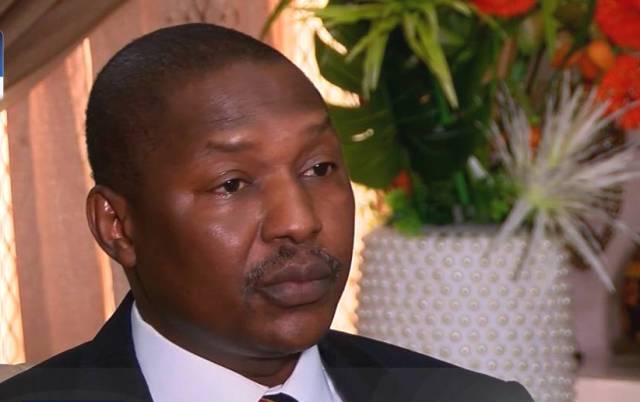
Like Emefiele, Tinubu’s government tightens grip on Malami, as SSS re-arrests former AGF

0

OPERATIVES of the State Security Service (SSS) on Monday re-arrested former Attorney-General of the Federation (AGF) and Minister of Justice, Abubakar Malami, moments after his release from the Kuje Correctional Centre in Abuja, in what some have described as a continuation of President Bola Tinubu’s hardline posture against influential figures of the immediate past administration of late former President Muhammadu Buhari.

Malami, a senior advocate, was re-arrested at a facility where he had been remanded over an N8.7 billion money laundering case filed by the Economic and Financial Crimes Commission (EFCC). 

The SSS picked him up as he exited the prison facility, acting on a fresh investigation linked to arms allegedly discovered at his residence in Birnin Kebbi, Kebbi State, during EFCC raids carried out in December 2025.

A video that circulated widely on social media showed the former justice minister being escorted by security operatives towards a black pickup truck. In the footage, Malami appeared to question the operatives’ authority, asking to see their identification before entering the vehicle. 

The ICIR reports that the development came after days of reported surveillance around the prison by SSS operatives, who were said to have waited out Malami’s detention to re-arrest him immediately after meeting his bail conditions.      

Malami’s media aide, Mohammed Doka, had on January 7, alleged there were plans by security agencies to re-arrest his principal. He described the move as an abuse of due process.

In a statement posted via Malami’s official handle, Doka wrote “The Office of Abubakar Malami, SAN, has been reliably informed of plans by government security agencies to rearrest him immediately upon his release, despite being granted bail by a court of competent jurisdiction.

“This development is deeply troubling and raises grave concerns about due process, the rule of law, and personal safety.”

Meanwhile, Malami’s re-arrest marked his continued legal hurdle with the SSS since December 8, 2025, when he was initially detained by the EFCC from December 8, 2025, to December 29, 2025.

Malami, his son, Abubakar Abdulaziz, and one of his wives, Asabe, were consequently remanded at the Kuje Correctional Centre following their arraignment by the EFCC on December 29, 2025, after pleading not guilty to a 16-count charge bordering on money laundering amounting to N8.7 billion.

The EFCC alleged that the defendants conspired to conceal and disguise proceeds of unlawful activities through the use of multiple corporate entities, bank accounts, and high-value real estate transactions across Abuja and other parts of the country.

Bail

Meanwhile, the Abuja Federal High Court, on January 7, granted N500 million bail each to the accused. The presiding judge, Emeka Nwite, in his ruling, ordered that the defendants produce two sureties with verifiable landed property located within Asokoro, Maitama, or Gwarimpa districts of Abuja.

The judge also directed that the documents of the properties be submitted to the court and verified by the Deputy Chief Registrar, while the sureties must depose to affidavits of means.

As part of the bail conditions, the court ordered Malami and the other defendants to deposit their international passports and other travel documents with the court. Each of the defendants was granted N500 million by the court.

They were also barred from travelling outside Nigeria without prior permission of the court.

Court orders forfeiture of Malami’s 57 properties

Following the bail granted to him, the Abuja Federal High Court, on January 7, ordered the interim forfeiture of 57 properties allegedly linked to Malami. The properties, which investigators said were reasonably suspected to be proceeds of crime, were valued at over N213 billion. 

They include luxury hotels in Maitama and Jabi, duplexes in Asokoro and Gwarimpa, plazas, filling stations, factories, warehouses, schools, shopping complexes, and more than 100 hectares of land in Kebbi State, among others. 

The EFCC alleged that many of the assets were acquired during and shortly after Malami’s eight-year tenure as justice minister.

Malami in trouble, like former CBN Governor Emefiele

The ICIR reports that Tinubu’s government hardening posture against Malami mirrors the sustained legal fireworks on former Governor of the Central Bank, Godwin Emefiele, another powerful figure from the Buhari administration who has remained entangled in multiple criminal cases since his sack as CBN governor in June 2023 by Tinubu. 

Several courts also ordered the final forfeiture of millions of dollars, shares, and several prime properties linked to Emefiele, including a 753-unit housing estate in Abuja, high-value properties in Ikoyi and Lekki, Lagos, and cash sums exceeding $2 million. 

The former CBN is currently facing various charges ranging from abuse of office to procurement fraud and money laundering.

While Tinubu revved plans to succeed Buhari at the peak of activities preceding the 2023 polls, multiple reports claimed the former apex bank governor indicated interest in the Presidency.

Though he did not eventually participate in the ruling All Progressives Congress (APC) presidential primary, Emefiele presided over the controversial naira redesign and cash swap policy, which shaped Nigeria’s political and economic climate in the months leading to the 2023 elections.

The ICIR reports that Nigerians are viewing the continued trial of the two former public officers from different lens. While a section of the population believes that the trials are key to tackling pervasive corruption in the country, and sleaze which allegedly characterised the Buhari government, others feel the Tinubu administration is selective and vindictive in its approach to probing the past administration.

ICIR recognises outstanding staff members at 2026 retreat

0

THE International Centre for Investigative Reporting (ICIR) has recognised and rewarded staff members who demonstrated exceptional dedication to their duties in 2025.

The awards presentation came during the two-day annual retreat of the organisation held in Abuja between Friday, January 16, and Saturday, January 17, 2026.

The recognitions, according to the management, were a result of the awardees contributions to the organisation, including leadership and innovation, professionalism and teamwork.

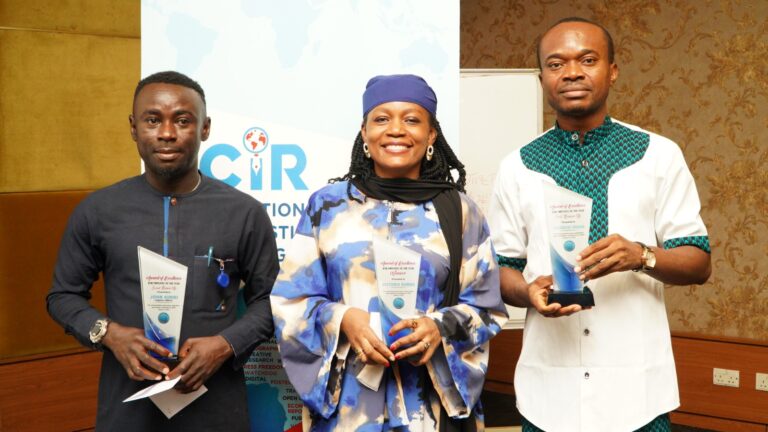
In recognition of their remarkable achievements in the preceding year, the awardees were honoured with cash prizes and plaques during the ceremony.

The ICIR Editor, Victoria Bamas, was named Employee of the Year, while Chukwudi Iwuoha and John Kimbi were recognised as first and second runners-up, respectively.

The awards were presented by The ICIR’s Executive Director, Dayo Aiyetan, who commended the recipients for their hard work and their efforts in promoting the organisation’s values.

He stressed that the awardees were fully deserving of the accolades.

Reacting, Bamas admitted the recognition came as a surprise. “I’m surprised because I didn’t expect to get it. At this point in my life, getting awards is not really my priority, but to ensure people I work with get them. I’m happy I was considered for the award,” she said.

Similarly, Iwuoha, The ICIR’s senior programmes officer, said he was honoured and grateful to have received the award for the second time in a row.

“I sincerely thank ICIR and its Executive Director for this recognition. It means more to me than I can express. This award is not just a personal achievement, it is a reflection of the guidance, trust and opportunities provided by The ICIR, which have helped me grow both professionally and personally.

“I also thank the entire staff of ICIR for their teamwork, support, and collaboration. Working alongside my team makes every challenge rewarding. This recognition motivates me to continue striving for excellence and contributing positively to the goals of the Centre. 2026 is here, I’m hopeful that it will be a rewarding year for The ICIR as an organisation.”

On his part, Kimbi, The ICIR’s logistics officer, expressed his gratitude through a letter of appreciation addressed to the management and staff.

“I wish to express my heartfelt appreciation to the Executive Director, Human Resources and Accounts Departments, the management, and the entire staff of The ICIR for honouring me with this award.

“I am deeply grateful for this recognition; it means so much to me and serves as a powerful encouragement to continue giving my best in every responsibility entrusted to me,” part of his letter read.

He added that the award was a reflection of the supportive, inspiring, and collaborative environment that The ICIR provides for the staff members.

Kimbi stressed that the recognition strengthened his commitment to upholding the values of the organisation and to contributing continuously to the The ICIR’s goals.

The ICIR reports that the annual retreat provided staff with a platform to reflect on the past year, celebrate successes, and strengthen collaboration ahead of 2026, reaffirming the organisation’s commitment to investigative journalism in the public interest.