Home Blog Page 944

Outrage as Femi Adesina says govt not responsible for job creation

NIGERIANS on the social media have expressed outrage over presidential spokesman Femi Adesina’s claim that it is not the government’s responsibility to create jobs.

Adesina made the comments while speaking on President Muhammadu Buhari’s achievements on Arise TV on Tuesday, May 2.

Adesina said the only responsibility of the government is to create enabling environment for job creation, while the private sector creates jobs.


Read Also:

Responding to a question on Buhari’s promise to create three million jobs yearly, Adesina noted the President didn’t give a specific figure.

“Did you say three million was the promise? I wouldn’t say he put a figure. What I recall was that President Buhari gave the per cent of joblessness in the country. I wouldn’t recall that he gave a specific figure for the number of jobs we are creating. For all you know, that may have come from anywhere.

“Regard as it may, it is the job and the duty of the government to create an enabling environment for jobs in the country. It is not the government itself that creates jobs. All it does is to create an enabling environment.”

According to him, most of the jobs “you need in a country would come from the private sector”. “As long as you have an enabling environment, it is the private sector that will create the jobs.”

He, however, noted that Buhari has achieved remarkably in all sectors including oil and gas, infrastructure, legislative matters, and security.

Buhari reportedly promised to provide three million jobs for unemployed youths if voted as the President in 2015.

Some Nigerians who reacted to Adesina’s comments on the social media expressed outrage at the presidential spokesman’s claims.

However, some also agreed with him to a certain extent, but said the government has failed to provide an enabling environment for private sectors.

Many of them identified insecurity, unstable electricity, police brutality, bad roads and infrastructures as major issues that the Buhari administration failed to address while in office.

A Twitter user with the name Bobola Mercy reacted by saying that the government could feed on citizens’ taxes but does not want to create jobs.

“But it is the duty of the citizens to pay taxes to the government that is being collected from their self-established jobs that will be used as their highly corrupt salary which they did not work for.”

@GodsDawta1 questioned why Buhari campaigned with the promise of providing jobs every year: “Agreed….My own queshun is “Why then campaign with the promise of providing jobs every election year” since it’s not govt duty?”

Another user wrote: “When a govt has totally failed. They begin to look for lies to wash their lies.”

Thomas Bassey said although he agreed with Adesina, the Buhari administration failed to create an enabling environment for job creation.

“Yes to some extent I agree… but it is 100% the duty of the government to create an enabling environment where people can work, live well and create jobs for others… and as far as am concerned the Government failed WOEFULLY! . So it takes us  back to status quo!”

OfonzeNews also said it is the government’s responsibility to provide electricity and support small businesses to grow.

He wrote: “But you must provide electricity, build good roads, develop the rail transportation, build solid infrastructures and support small businesses to grow. In fact it’s your duty as a government to create the environment that will support businesses and industries that will create jobs.”

Train accident: Lagos govt files charges against BRT driver

THE Lagos State government has filed charges against Osibanjo Oluwaseun, the driver of the Bus Rapid Transit (BRT) vehicle that collided with a train in the Shogunle area of the state last month.

Charges against Oluwaseun were filed at a State High Court sitting in Ikeja on Tuesday, May 2.

He was arraigned on a 16-count charge bordering on involuntary manslaughter and grievous harm.

The State’s Director of Public Prosecution, Babajide Martins, told the court that the driver ignored warning signals, and “negligently killed” four passengers due to the collision with the train.

The prosecution counsel also said the action of the driver inflicted bodily injuries on some passengers of the train.

He asked the court to remand the defendant to a correctional facility and prayed for a new date for trial.

According to him, the accused offences contravened the Criminal Laws of Lagos State, 2015.

However, Oluwaseun pleaded not guilty to the charges.

The defense counsel, Lekan Egberongbe, appealed to the court to remand the defendant in police custody due to health reasons.

In her ruling, Justice Oyindamola Ogala said the court did not have the medical report of the defendant, adding that it should be presented to prison officials.

“If the custodial centre is served with the necessary medical report of the defendant, he should be given proper medical attention,” the judge said.

The case was subsequently adjourned to May 26 for the commencement of trial.

The collision between the BRT vehicle and the train occurred on March 9 in the Shogunle area of Oshodi, Lagos.

Witnesses at the scene said the bus was attempting to cross the rail track when an oncoming train rammed into it and dragged the bus from Shogunle to the PWD area of Ikeja.

Two passengers died at the scene while four others were declared dead at different hospitals.

Reacting to the accident, the managing director of the Nigerian Railway Corporation (NRC), Fidet Okhiria, said the driver is to be blamed for the accident.

But, the BRT driver said the vehicle had a mechanical fault while asking for forgiveness from the families of the victims.

The ICIR commences training on open contract reporting project

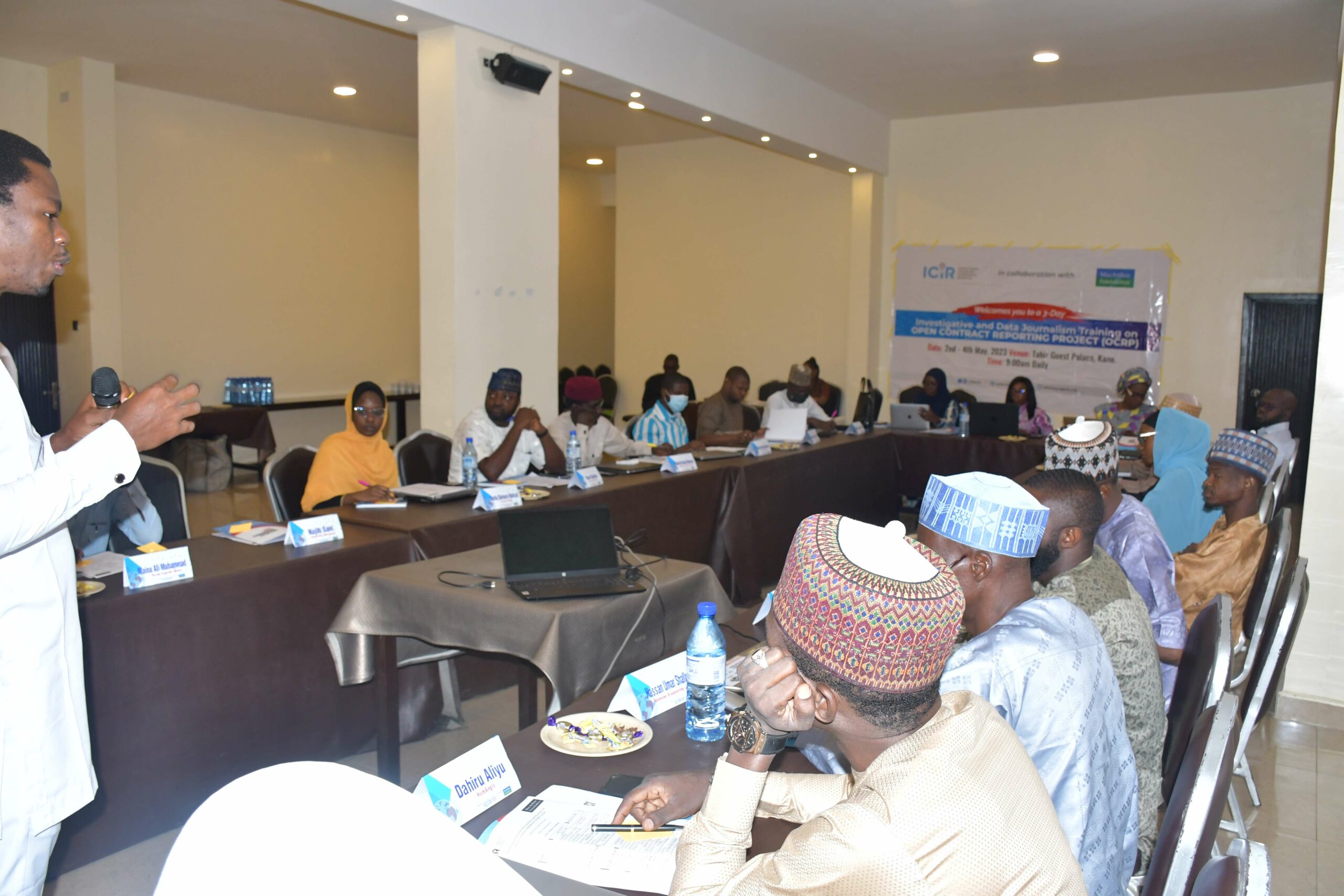
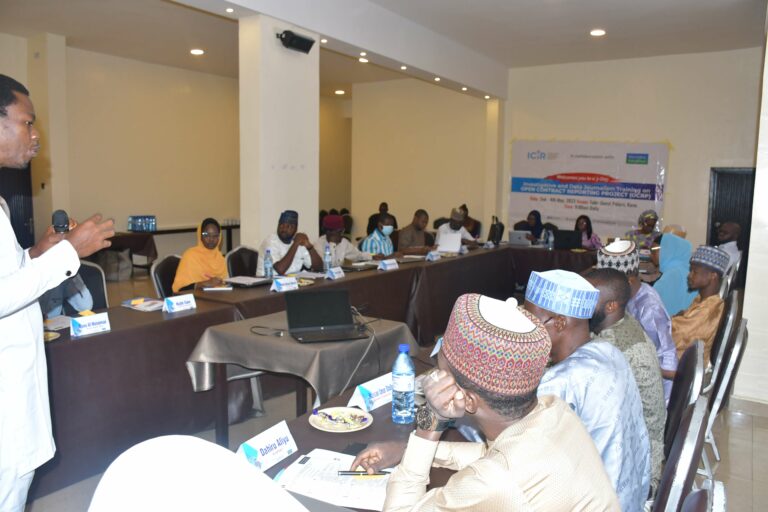
THE International Centre for Investigative Reporting (ICIR) has commenced training of selected journalists from newsrooms in North-East and North-West Nigeria on Data and Investigative Journalism.

The three-day programme is currently taking place in Tahir Guest Palace, Kano State.

The participants were drawn from print, online and broadcast media across the North-West and North-East geopolitical zones.

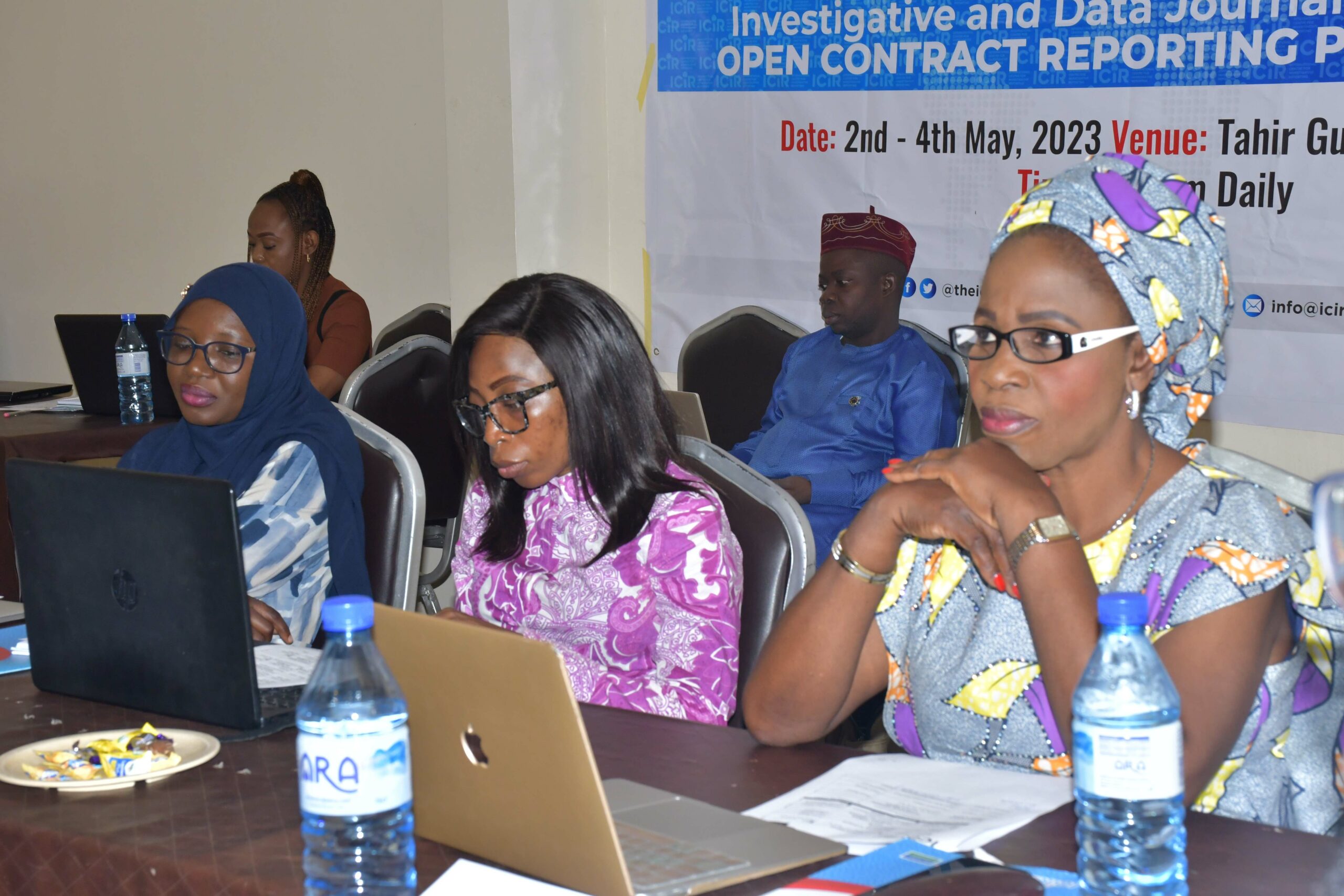
Selected participants at the ongoing #OCRP training
Selected participants at the ongoing training

The training, which is part of The ICIR Open Contract Reporting Project sponsored by the MacArthur Foundation, was organised by the Centre to build journalists’ capacity in Investigative and Data Journalism.


Read Also:

In his address, The ICIR’s Executive Director Dayo Aiyetan told participants that the project was designed to equip journalists working on the Open Contract Reporting Project (OCRP) with the ability to properly conduct investigative journalism, particularly when using data.

Abigail Obigwezzy, a professor;  Lami Sadiq, Daily Trust Head of Investigation; Yetunde Mosunmola from the Independent Corrupt Practices Commission (ICPC), Jonathan Ebe from Public and Private Development Centre(PPDC), Kemi Busari Editor of Dubawa are some of the faculty of trainers and mentors at the programme.

Prof. Abigail Obigweezy, Yetunde Mosunmola. and Lami Sadiq at the ongoing training

The ICIR Open Contract Reporting Project initiative began in 2017.

The project is aimed at building the capacity of Nigerian journalists to scrutinise and report on contracting and procurement processes.

Since the project began, The ICIR has organised capacity-building training for journalists and given funding to cash-strapped newsrooms in Nigeria to launch investigations related to public procurement and the budgeting process as a way of holding public officials to account.

Gombe APC expels senator, Rep for anti-party activities

THE Gombe State chapter of the All Progressives Congress (APC) has expelled two of its members for allegedly working against the party’s interest during the 2023 general elections. 

The chapter announced the expulsion of Senator Bulus Amos, who represents Gombe South Senatorial District and Yunusa Abubakar, a House of Representatives member representing Yamaltu/Deba Federal Constituency, on Tuesday, May 2.  

The state chairman of the APC, Muhammad Kaka, who made the announcement, said the lawmakers’ dismissal was informed by the gravity of their actions.

The lawmakers had earlier been suspended by their executive wards on April 18.

Bulus was suspended by executives of Bambam Ward of Balanga LGA, while the disciplinary committee in Yamaltu Deba Federal Constituency suspended Abubakar.

“The decision was reached after the findings of a petition written from his ward, which caused a five-man committee of the ward to investigate the matter,” the party said. 

Kaka said the lawmakers could not provide a good defence for their actions when summoned by party executives. 

He said Bulus threatened the party executives when questioned about his actions.

“We held elections in our ward during the just concluded general elections, and we have Senator Amos from our ward who didn’t come out to partake in our political activities.

“Instead, the senator went around with his supporters telling them not to vote for the APC and in his polling unit and the surrounding polling units, APC didn’t win any of those units because of his anti-party activities,” he said.

Kaka also said Amos appeared before the executives and could not justify his actions. “We gave him another chance, but he failed to return”, he added.

“He said we have no right to expel him from the party; this is wrong as no one is bigger than the party. It is in view of this that we, the executives at the ward, decided to expel Senator Amos from our party.”

Buhari re-appoints Abike Dabiri-Erewa CEO of NIDCOM

0

PRESIDENT Muhammadu Buhari has re-appointed Abike Dabiri-Erewa as Chief Executive Officer (CEO) of Nigerians in Diaspora Commission (NIDCOM).

Buhari made the request in a letter that was delivered to Ahmed Lawan, the Senate President, and read during plenary on Tuesday, May 2. 

In the letter, Buhari stated that the nomination complies with section 2 sub-section 2 of the NIDCOM Establishment Act of 2017.

In a similar vein, Buhari asked the Senate in a different letter to confirm six candidates for the position of Federal Commissioners for Revenue Mobilisation Allocation and Fiscal Commission (RMAFC).

According to Buhari, the request complied with section 154, subsection 1, of the 1999 Constitution.

The nominees are intended to fill open positions in several states.

The nominees include Ayogu Eze (Enugu), Peter Opara (Imo), and Hawa Umaru Aliyu (Jigawa) are among the nominees.

Others include Kolawole, Abimbola Daniel, Rekiya Haruna from Kebbi, and Ismaila Mohammed Agaka from Kwara.

NIDCOM, headed by Dabiri-Erewa, is involved in efforts to evacuate Nigerians trapped in Sudan following the violence between two rival forces that have torn the country apart.


READ ALSO:


The ICIR reported that on Wednesday, April 26, the first batch of Nigerian students stranded in Egypt began the journey out of the Sudan capital by road, as efforts to airlift them directly out of the country were frustrated by the crisis.

While some Nigerians were conveyed to the Egyptian border hoping to be airlifted to Abuja from Aswan, the students were refused entry into the country for four days.

Although the Egyptian authorities eventually granted the evacuees access on Monday following interventions by Nigerian President Muhammadu Buhari, other batches of students are being moved to safety through Port Sudan.

FCT gets new police commissioner

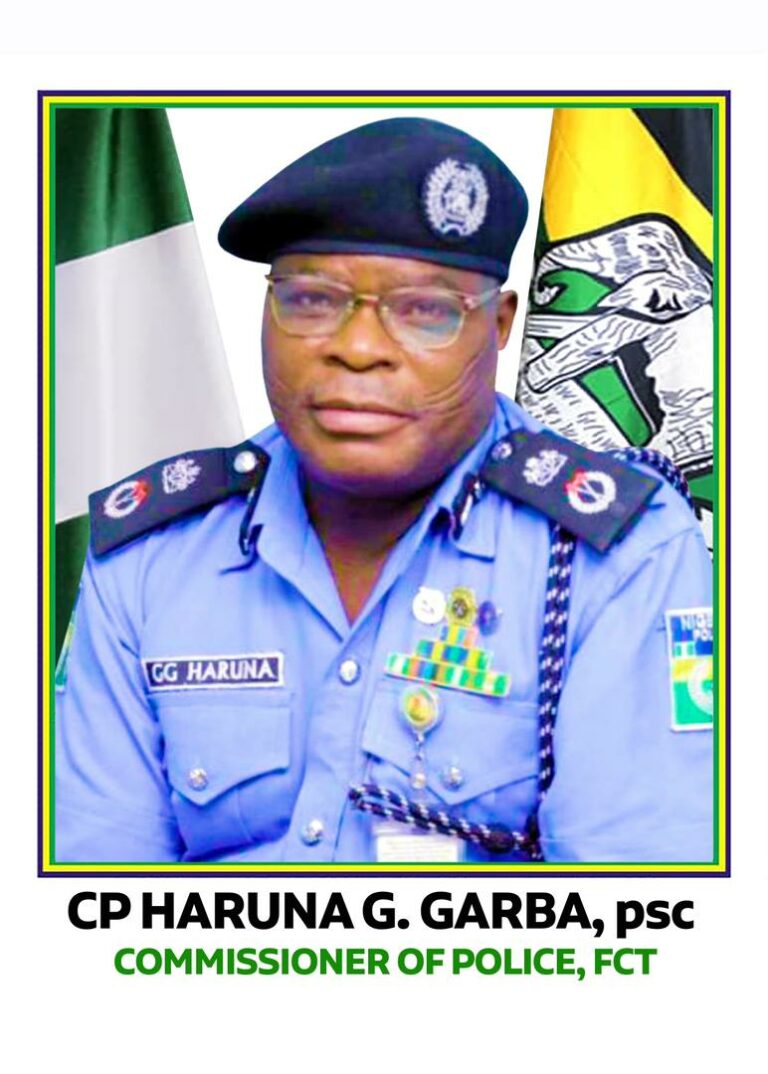
A NEW Commissioner of Police, Haruna Garba, has assumed duty in the Federal Capital Territory (FCT).

This followed the promotion of the immediate past police commissioner Sadiq Abubakar, who has been redeployed to the Police Academy, Kano State.

The FCT Police Public Relations Officer, Josephine Adeh in a statement on Tuesday, May 2, stated that Haruna will resume as the 30th Commissioner of Police in the Territory.

The statement said Haruna, who hailed from Ankpa LGA in Kogi State, was born on June 8, 1964.

He attended the University of Maiduguri (UNIMAID), where he bagged a Bachelor of Science Degree in Political Science and Administration and the University of Uyo, where he bagged a Masters Degree in International Relations in 1994.

“CP Haruna was enlisted into the Nigeria Police Force on March 3, 1990, as a Cadet Assistant Superintendent of Police and was trained at the prestigious Police Academy Kano Annex, Kaduna State,” the statement said.

Haruna has served in several operational, administrative and intelligence capacities, and before his redeployment to the FCT, he was the commissioner of police Yobe State.

Addressing senior officers during the maiden meeting of his administration, Haruna said his tenure will be marked by policing in line with global best practices, respect for fundamental human rights, visibility policing, and a proactive approach to security challenges in the FCT.

He also enjoined FCT residents to strengthen their relationship with the police in intelligence gathering and propagation of peace to aid the security architecture of the Territory.

Adamawa poll: Police arrest suspended REC

THE Nigeria Police Force (NPF) has apprehended the suspended Resident Electoral Commissioner (REC) of Adamawa State, Hudu Ari, over his conduct during the governorship supplementary election in the state.

The ICIR had reported that Ari was suspended by INEC after he illegally declared the governorship candidate of the All Progressives Congress (APC), Aishatu Dahiru Binani as the winner of the Adamawa State governorship election on April 16.

The embattled REC made the announcement while the collation of results was still going on, with incumbent governor and Peoples Democratic Party (PDP) candidate Ahmadu Fintiri leading in number of votes counted.

The ICIR also, stated that the Electoral Act (2022) only empowered the Returning Officer for the election to declare the winner of an election rather than the REC

A statement released on Tuesday, May 2 signed by the Force spokesperson, Muyiwa Adejobi confirmed that Ari is currently being held in police custody.

Adejobi stated that Ari was arrested by the Police Election Planning, Monitoring, and Evaluation Team in Abuja.

The suspended REC is undergoing interrogation as part of efforts to ascertain the motives behind his actions during the supplementary elections in Adamawa State.

Meanwhile, other officials and individuals suspected to be involved in the saga are being investigated by the team, the statement said.

The Police spokesperson reiterated the Inspector-General’s commitment to investigate and prosecute every individual involved and indicted in accordance with the provision of the Constitution.

Adejobi assured that all those found to be involved in the saga would be brought to justice.

Meanwhile, The ICIR reported that the suspended Resident Electoral Commissioner (REC) said he acted according to the provision of the law during the Adamawa April 15 supplementary election.

Ari made this pronouncement in a letter addressed to the Inspector-General of Police, the chairman of the Independent National Electoral Commission (INEC) and the director-general of the Department of State Services (DSS).

He explained that his role in the controversial declaration of the governorship election was to avert the impending danger posed by delay in announcing the results.

According to Ari, “The results brought by the presiding officers from the 69 polling units, which he did not sign, differed from those uploaded on the INEC Result Viewing (IReV) portal.”

He further alleged that he was threatened by contesting candidates, and his residential home was surrounded by policemen from the Government House.

“It was based on this that I compiled all the polling unit results and declared the winner of the election based on the highest number of valid votes scored by the candidate of the APC.

“I had the breakdown of the valid votes scored by the two leading candidates in the supplementary election, using the results from the polling units as collated into all relevant forms EC8B, C, D and E respectively by properly and legally appointed and recognised collation officers and my humble self as the Adamawa State Chief Collation Officer and Resident Electoral Commissioner (REC),” Ari added.

Before his arrest on Tuesday, May 2, INEC had said it was not aware of the suspended REC’s whereabouts.

The Chairman of INEC’s Information and Voter Education Committee, Festus Okoye, who made the disclosure on April 21, said Ari had stopped communicating with the Commission, ignoring official directives.

“We don’t know where he is because, after this particular incident, the Commission wrote him and also called him on the phone. He never returned any of the calls, he never answered any of the calls.

“We asked him to report to the Commission on Sunday, we didn’t see him, we asked him to report on Monday we didn’t see him. So up till this moment, he has not reported and we don’t know his whereabouts.”

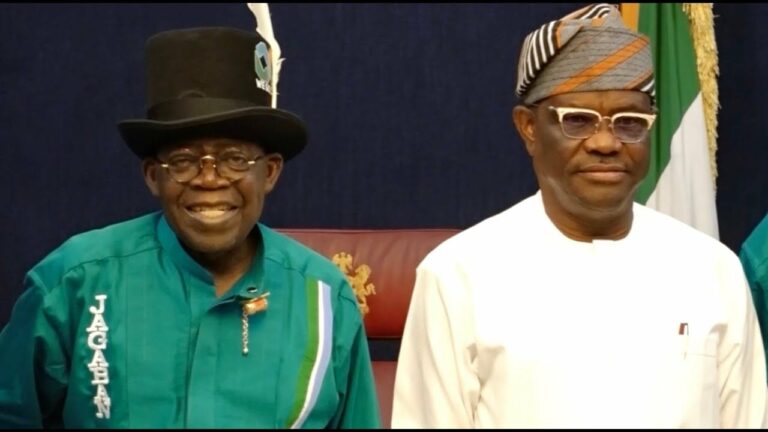
Wike declares public holiday over Tinubu’s visit

RIVERS State Governor Nyesom Wike has declared Wednesday, May 3, a public holiday.

The holiday is to enable people in the state to welcome President-elect Bola Tinubu, who embarks on a two-day visit to the state to commission projects.

Tinubu will be in the state on Wednesday, May 3 and Thursday, May 4.

The governor had promised to invite Tinubu to his state to commission projects when the President-Elect campaigned for votes in the state before the last election.

In a state-wide broadcast on Tuesday, May 2, he said a formal invitation was sent to the President-elect after the general elections, which he agreed to honour.

The governor ordered all shops and business premises along Rumuola to Rumuokwuta roads in Obio/Akpor Local Government Area of the State to close from 8:00 am to 3:00 pm on the first day of the visit. 

He urged all labour unions and security agencies to comply with the order.

He also appealed to all people in the state to come out en masse to receive the visitor.

The ICIR reports that the holiday comes a day after the May 1 Workers’ Day holiday declared by the Federal Government.

Two similar holidays are coming up later in the month – the Children’s Day on May 27 and the President’s Inauguration Day on May 29.

The ICIR further reports that Rivers is the first state Tinubu will visit upon invitation since the Independent National Electoral Commission (INEC) declared him the winner of the February 25 presidential election on March 1.

He will commission the Rumuola/Rumuokwuta Flyover and the ultra-modern Magistrates’ Court Complex in Port Harcourt during the visit.

Wike had invited political heavyweights, including President Muhammadu Buhari (who was represented by the Attorney-General of the Federation and Minister of Justice, Abubakar Malami), the Labour Party presidential candidate in the last election, Peter Obi, former Ondo State Governor, Olusegun Mimiko, Lagos State Governor, Babajide Sanwo-Olu among others to commission projects.

Wike, who leaves office on May 29, received a national award for infrastructural development in Rivers State in October 2022 from Buhari. 

Lagos govt publishes details of 3 convicted sex offenders

0

THE Lagos State Government has released the details of three adult males who were recently convicted for sexual offences in the state.

The State Domestic and Sexual Violence Agency (DSVA) made this known through its official Twitter handle on Tuesday, May 2.

The details of the publication include the offenders’ names and pictures, the nature of their offences, and the duration of their sentence.

The offenders were identified as Idowu Daniel, Moses Olawale, and Akin Isaac.

According to the agency, Daniel was sentenced to seven years imprisonment after being convicted of sexual assault, while Olawale was convicted of sexual assault by penetration and received a sentence of 37 years imprisonment.

Isaac was sentenced to 21 years imprisonment after being convicted of defilement.

Lagos had previously published the details of two sex offenders, Gbenga Olasunkanmi and Bashiru Obasekere, who were both sentenced to life imprisonment for defilement.

The agency said that the publication of these details is in line with Governor Babajide Sanwo-Olu’s zero tolerance for all forms of domestic and sexual violence in the state.

The agency had announced in May 2022 that it would begin to publish the details of sexual offenders in the state.

DSVA Executive Secretary, Titilola Vivour-Adeniyi, said the decision was in line with Section 42 of the DSVA Act.

Lagos is among the 10 states out of the 36 states in Nigeria that keeps databases of those convicted of sexual offences in the country.

Others are Ogun, Ekiti,  Bayelsa, Edo, Akwa Ibom, Bauchi, Adamawa; Abia and Kaduna.

However, only Lagos, Ekiti, Edo, and Akwa Ibom states publish the full details of the offenders to ‘name and shame’.

The Lagos State Ministry of Justice added the details of 206 persons convicted of sexual offences between April 2020 and April 2021 to the Lagos State Sexual Offenders Register.

The sex offenders register in Lagos was opened in 2014.

In 2019, the Nigerian Government launched its first National Sex Offenders Register to name and shame rapists and offenders of other forms of violence against persons across the country.

The National Sexual Offenders Register is managed by the National Agency for the Prohibition of Trafficking Persons (NAPTIP) and is funded mainly by the European Union (EU).

A sex offenders register is a list of all persons convicted for sex offences in a state. Sex offenders register generally includes the offender’s address, physical appearance, and criminal history.

As part of efforts to provide a one-stop solution to reporting, curbing sexual offences, end the high rate of violence against women and children in Nigeria, the Sex Offenders Registry was introduced to deter people from committing such acts.

It is also aimed at ensuring that most companies check the records of a would-be employee if his name is on the register.

In Nigeria, the Sex Offenders Registry was established to combat sexual offenses, reduce the prevalence of violence against women and children, and provide a comprehensive reporting system.

Its implementation aims to dissuade individuals from engaging in such acts and also requires most employers to verify potential employees’ names against the register.

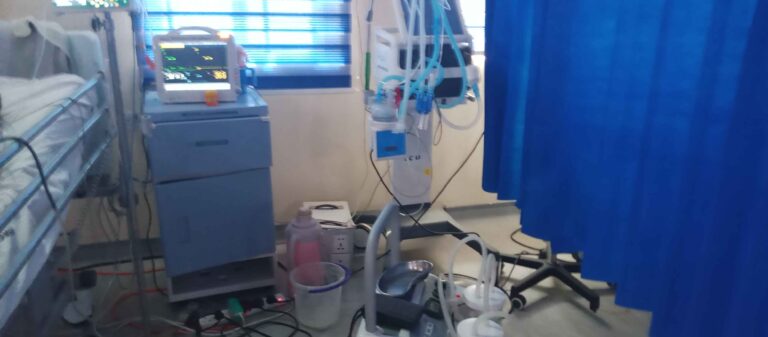
COVID-19: Global health systems improving for first time in 3 years — WHO

GLOBAL health systems have shown signs of improvement for the first time after COVID-19 struck the world in 2020, the World Health Organisation (WHO) has revealed.

The agency said in a report on Tuesday, May 2, that services such as sexual, reproductive, maternal, newborn, child and adolescent health, nutrition and immunisation, as well as treatment of infectious diseases, neglected tropical diseases, and non-communicable diseases, among others, had recorded improvements in hospitals.

Most countries also apply what they learnt during the COVID-19 pandemic, including institutionalising innovative service disruption mitigation strategies into their routine health service delivery, according to WHO.

These include the deployment of telemedicine approaches, promotion of home-based care or self-care interventions, approaches for strengthening health workers’ availability, capacities and support mechanisms, innovations in procuring and delivering medicines and supplies, more routine community communications, and partnerships with private sector providers.

Three-quarters of countries reported additional funding for long-term system recovery, resilience and preparedness.

The ICIR reports that COVID-19 infected nearly 700 million (687,246,434) people and killed nearly seven million (6,866,782) as of May 2, 2023.

Nigeria recorded 266,675 confirmed cases of the disease and lost 3,155.

The country is among nations whose health systems benefitted from the pandemic because of huge investments in health infrastructures largely by the private sector, and an increase in the national budget for health.

In a series of reports, The ICIR verified the procurement of multi-billion naira equipment in federal hospitals in 2022 and reported how they boosted service delivery.

Globally, between 2020 and mid-2022, the virus battered economies, resulting in near hyperinflation in countries.

An unprecedented pandemic in a century, COVID-19 denied many people their livelihoods, disrupted health systems and severed millions of people’s access to basic healthcare.

WHO said on Tuesday, “By early 2023, countries reported experiencing reduced disruptions in the delivery of routine health services, but highlighted the need to invest in recovery and stronger resilience for the future.

“Among the 139 countries that responded to the fourth round of WHO’s pulse survey, countries reported continued disruptions in almost one-quarter of services on average. In 84 countries where trend analysis is possible, the percentage of disrupted services declined on average from 56 per cent in July-September 2020 to 23 per cent in November 2022- January 2023.”

 According to the organisation, most countries reported partial signs of service recovery by the end of 2022. 

The agency said the number of countries reporting disruption to their national supply chain system reduced from nearly half (29 of 59 responding countries) to about a quarter (18 of 66 responding countries) within the last year.

However, despite signs of recovery, service disruptions persist across countries in all regions and income levels and most service delivery settings and tracer service areas. 

Besides, countries are also dealing with increasing service backlogs – most frequently in services for screening, diagnosis and treatment of non-communicable diseases – which can lead to negative consequences as people are delayed access to timely care.

WHO argued that recovering essential health service delivery was critical because disruptions – including services for health promotion, disease prevention, diagnosis, treatment, rehabilitation and palliation – could have greater adverse health effects at the population and individual level than the pandemic itself, especially among vulnerable people. 

The agency further observed that most countries had made progress in integrating COVID-19 services into routine health service delivery in another important step towards system recovery and transition. 

About 80-90 per cent of countries have fully integrated COVID-19 vaccination, diagnostic and case management services, and services for post-COVID-19 conditions into routine service delivery. 

Reacting, WHO Director for Integrated Health Services, Rudi Eggers, a doctor, said, “It is welcome news that health systems in the majority of countries are starting to restore essential health services for millions of people who missed them during the pandemic.

“But we need to ensure that all countries continue to close this gap to recover health services, and apply lessons learnt to build more prepared and resilient health systems for the future.”