AFTER two years, four kidnapped students of the Federal Government College (FGC) Yauri, Kebbi State, have regained their freedom.
The four girls are part of the remaining 11 girls in captivity.
According to Daily Trust Newspaper, a prominent bandit commander, Dogo Gide, reportedly released the four girls on Friday night.
The released girls are Faiza Ahmed, Bilha Musa Hafsa Murtala and Rahma Abdullah.
“It took six days of negations in the forest before four of the girl were released to us. We have seven more still in captivity, and two of the parents are still in the forest trying to secure their release.” a parent Salim Kaoje told Daily Trust on Saturday, April 22.
Kaoje, the chairman of the committee of parents, said after selling their properties and holding a fund-raising event where many Nigerians helped financially, they paid an undisclosed sum of money to ensure the release of the four girls.
Parents of the remaining 11 female students had earlier in January 2023 appealedfor donations to raise N100 million ransom demanded by the abductors.
The parents, under the aegis of ‘Committee of Parents of 11 Abducted Students of FGC Birnin Yauri, Kebbi State, Nigeria’, made the appeal in an open letter addressed to Nigerians.
In the letter, they said efforts at negotiating with the abductors or getting the government to intervene and secure the release of the students had not yielded results.
Kaoje noted in the letter that the abductors were demanding the sum of N100 million naira as a ransom for the release of the students.
On June 17, 2021, terrorists attacked the FGC in Birnin Yauri and kidnapped about 80 students and teachers.
Some students were severely injured in the gun battle between the abductors and the police. A policeman was also killed in the incident.
A letter had been addressed to the school, presumably by the terrorists, warning of the attack, but the authorities dismissed it as a prank.
While some students were earlier released, 11 remained in captivity.
It was reported in February 2022 that some of the girls had been married off and impregnated by their captors.
The mass abduction of students had become more frequent since 2014, when at least 276 girls were kidnapped from the Government Girls Secondary School in Chibok, Borno State.
Between 2020 and 2021, at least 700 students were abducted in northern Nigeria, forcing many schools to shut down.
The situation has forced many parents to withdraw their children from school, worsening the number of out-of-school children in Nigeria, which is currently over 20 million, according to the United Nations Educational, Scientific and Cultural Organisation (UNESCO).
THE people of Southern Kaduna have declared that they have lost faith in the Federal Government as a result of unending killings by suspected armed herdsmen in the area.
Southern Kaduna Peoples Union (SOKAPU) President Awemi Dio Maisamar expressed the position of the indigenes in a statement released on Friday, April 21.
SOKAPU pleaded with the Economic Community of West Africa (ECOWAS), African Union (AU), the United Nations (UN), and other international organisations to speak out and take action, so as to protect the people of Southern Kaduna from “genocide”.
“However, we have actually lost faith in the Nigerian state, not in the Nigerian people. In particular, we have lost faith in the Nigerian leadership and the current political arrangement that we have.
“Honestly, we have lost hope in the system and leadership of Nigeria, and that is why we are calling on the international community to intervene.
“The truth must be told that it is possible that you can change personnel, but if you don’t change the operating environment, you are not likely to get a better result,” Maisama said.
He frowned at what he described as the silence of the international community over the situation in Southern Kaduna.
“We are also very sad about the silence of the Economic Community of West African States (ECOWAS), the Africa Union (AU), the Commonwealth of Nations and the United Nations (UN) over the unrelenting pogrom in Southern Kaduna.
“SOKAPU is calling on these continental and global bodies to send independent investigation teams to Southern Kaduna to debunk or confirm our claims of ethnic cleansing here.
“Before then, we advocate for a UN or AU Peace Enforcement Operations Base in Southern Kaduna. This will practically demonstrate that the world is interested in our collective survival as minority ethnic groups. It must not abandon us to be hounded by well-funded and well-armed herdsmen who are being encouraged and protected by their powerful relatives and collaborators in and outside Nigeria,” he added.
The SOKAPU President listed some recent attacks on Southern Kaduna communities.
“Last Sunday, April 16, 2023, the peaceful, farming Runji village (Sankwab) in Atyap land Zangon Kataf LGA in Southern Kaduna, was invaded by marauding armed herdsmen around 1 a.m. in which they carried out horrific acts of murder, arson and theft. After operating for hours, brave youths of the town, joined by others from neighbouring villages, teamed up and faced the invaders, who then retreated into the night.
“By daybreak, 42 houses were burnt, with 17 women and children roasted beyond recognition. Twelve corpses mutilated by machete cuts and bullet shots were picked in and around the village. Later in the day, four persons that were rushed to hospitals died of their wounds, making the death toll 33 and those still in hospitals eight.
“The victims were buried in a mass grave on the eastern edge of the village. Southern Kaduna is dotted by numerous mass graves of such kind of victims.”
He claimed that no fewer than 245 Southern Kaduna communities have been sacked by armed herdsmen in collaboration with terrorists.
“And the fact that the same government wants to succeed itself at both the state and federal levels, we have great doubts if the genocide, kidnapping, displacement and occupation will abate,” the SOKAPU President noted.
According to records released by the state government on Wednesday, April 20, about 1,266 persons were killed by bandits in Kaduna State in the last 15 months,
Also, 746 persons were kidnapped in the state between January and March 2023.
Kaduna State Commissioner for Internal Security and Home Affairs, Samuel Aruwan, released the figures on Wednesday, April 19, at the Sir Kashim Ibrahim Government House, Kaduna.
According to Aruwan, 1,052 deaths were recorded due to banditry and other attacks in the state in 2022, while another 214 persons were killed in similar incidents between January and March 2023.
Globally, Nigeria ranks third among countries with the highest number of out-of-school children, behind only India and Pakistan, with education deprivation being worsened by several factors. In this report, IJEOMA OPARA examines how poverty is pushing Nigerian children out of school and onto the streets.
IN the Lugbe area of the FCT, thirty-year-old Hadiza Shuaibu lives with her husband and two children in a one-room apartment with shared facilities. She makes “kunun aya,” a local drink extracted from tiger nuts, which she sells to children in the neighbourhood.
Her husband is a local carpenter within the area, but the income generated from both jobs is inadequate to meet the family’s daily needs, much less afford their children an education. Shuaibu told The ICIR that due to a lack of money, her children do not go to school.
“My children, Aisha and Abdullahi, are five and eight years old. They do not attend school because there is no money. On the days I can afford it, I send them for evening lessons. When I cannot, they stay at home. They are home most of the time,” she said.
Abuja resident, Hadiza Shuaibu. Photo: The ICIR/ IJeoma Opara
Aisha and Abdulahi’s fates mirror the life of many of the estimated 20 million Nigerian children who are currently out of school.
The United Nations Educational Scientific and Cultural Organization (UNESCO) 2020 Model Estimates on out-of-school children, published in 2022, states that almost 20 million Nigerian children are out of school.
According to the data, the secondary school out-of-school population has grown by 61 per cent, from 6.3 million to 10 million since 2010.
Also, the number of primary school-aged children who are not in school also increased by 50 per cent, from 6.4 million to 9.7 million since 2010.
Globally, this puts Nigeria as the country with the third highest number of children deprived of education, only behind India and Pakistan.
The UNICEF also identified several factors, including insecurity, poverty and gender inequality, as responsible for the rising figure.
Among these factors, poverty plays a significant role in keeping millions of Nigerian children out of school.
Although basic education is free under the Universal Basic Education Commission (UBEC) Act, there are associated costs, including transportation and the purchase of uniforms, which are unaffordable for many families in Nigeria, where more than half the population live in extreme poverty.
Findings by The ICIRshowed that enrolling a child into most government-owned primary schools costs between N10,000 and N20,000, while junior secondary schools cost higher due to certain hidden fees demanded by the authorities.
This is also different and higher than the cost of enrolling a child into a private-owned school where some parents believe their children can be well taught.
Some of the fees collected by government-owned schools include N500; Parents Teachers Association (PTA) fees, N1,950; Uniforms, N2,500; Pupil’s file N500; Online registration, N500; Sportswear, N2000 and some textbooks, among others.
When contacted by The ICIR, the FCT-UBEB said education was not entirely free but vowed to tackle these fees.
But beyond hidden fees demanded in some schools, many families are unable to meet up with the necessary financial requirements for educating their children.
Over half the population live in poverty
UNICEF and other organisations have identified poverty as a major driver of education deprivation in Nigeria.
According to the Federal Government, 133 million out of the over 200 million people in Nigeria live in different poverty categories, representing 63 per cent of the country’s total population.
This was contained in the National Multi-Dimensional Poverty Report released in 2022 in collaboration with the National Bureau of Statistics (NBS), the National Social Safety-Nets Coordinating Office (NASSCO), the United Nations Development Programme (UNDP), the United Nations Children’s Fund (UNICEF), and the Oxford Poverty and Human Development Initiative (OPHI).
In the report, the federal government said 65 per cent of the poor (86 million people) live in the North, while 35 per cent (nearly 47 million) live in the South.
The report also stated that two-thirds (67.5 per cent) of children (0–17 per cent) are multi-dimensionally poor, and half (51 per cent) of all poor people are children.
Child poverty, the report notes, is prevalent in rural areas, where almost 90 per cent of children experience poverty.
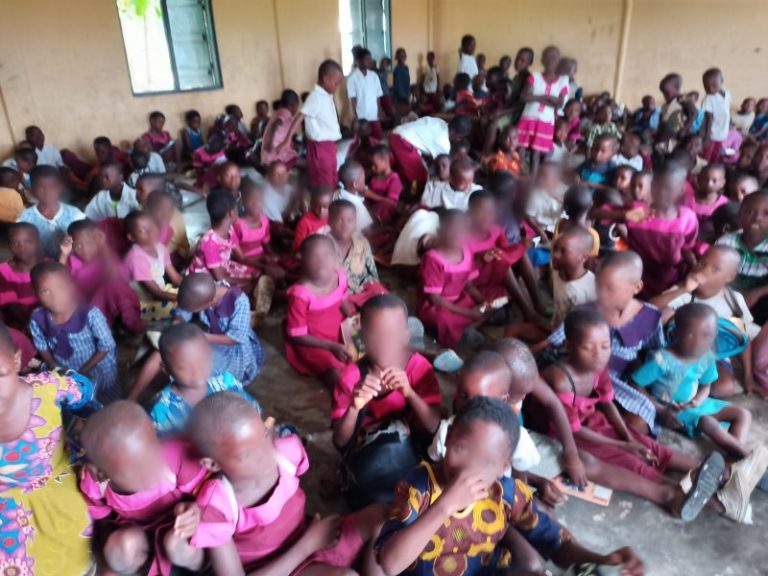
Out – of – school, pushed into labour
Many of the children who leave school due to the inability of their parents to pay fees end up engaging in menial activities to augment their family incomes.
Nine-year-old Ibrahim Useni*, who attends Local Education Authority (LEA) primary school in Kubwa, was spotted on a Monday morning in March 2023 hawking sachet water under a pedestrian bridge in the area.
He told The ICIR that he was sent out of school due to his parents’ inability to pay the Parents Teachers Association (PTA) levy demanded by his school.
Useni could not confirm how much was demanded by his school, but The ICIR had reported that PTA fees required in government-owned schools within the Federal Capital Territory (FCT) often fall between N1,500 and N5,000.
He also told The ICIR that he had missed classes many times in the past due to a lack of funds to pay certain fees and is unsure of returning to school.
“They said I should go home. I did not pay the PTA money in school, so they sent me home. My mother said I should stop school for now and hawk pure water, so we can get money. She said I would go back to school later,” he said.
Some children become victims of forced labour in a bid to acquire an education.
Mariam Suleiman lives with her husband and three of her four children in the Kuchingoro area of the FCT. She told The ICIR that her oldest child, who is twelve years old, had gone to work as a maid with a relative in Kubwa, a different part of the FCT.
“The oldest child is not here. She lives with one of my husband’s relatives. The woman needed someone to help with house chores, so I sent my daughter to her. She promised to also send her to school,” Suleiman said.
Nigeria, among other nations, is one of the countries that are signatories to the Social Development Goals (SDG) 2023. Goal 4 aims at ensuring “inclusive and equitable quality education and ensure lifelong learning opportunities.”
However, this does not look attainable for Nigeria with its outrageous number of out-of-school children and the slow pace of its reduction.
Way out
While challenges bedevilling Nigeria’s education sector seem to be overwhelming, advocate for free basic education Joshua Arogunyo, in an interview with The ICIR, suggested ways these issues can be addressed, including using National Social Investment Programmes (NSIPs) as bait for parents to send their children to school.
“We have the National Social Investment Office that oversees the National Social Investment Programme, NSIP. We have various programmes under the NSIP, including the popular one we call Conditional Cash Transfer. The NSIP can be used as a way of baiting parents to ensure their children are in school, especially the poor.
“Recall that the Social Investment Programme is targeted at the poorest of the poor. It is a conditional cash transfer. You can, say one of the conditions that will make us keep giving you this money is if you promise us that all your children will go to school,” he said.
He noted that in some cases, poor parents might still be unable to afford basic requirements such as uniforms and suggested that in such situations, children be permitted to attend school in ordinary clothes.
However, he pointed out that this method might not be effective in certain areas where school children are susceptible to abduction and terror attacks due to insecurity, as uniforms were also a means of identifying students and separating them from strangers.
“It has an implication. This is an era where there is insecurity in schools. Uniforms are also a way of helping to identify who is a student and who is a visitor. So it will not be ideal in our current circumstance, but maybe in other circumstances, or in the South, but we may not want to go that route in Northern Nigeria.
Arogunyo also said local governments should assume responsibility for subsidising uniforms, as basic education also falls under its purview.
Stating that textbooks were the responsibility of government officials and are usually made available in many cases, Arogunyo suggested that notebooks, which parents are expected to provide, could be provided through partnerships with private organisations.
“While education may be free and compulsory, the government should also begin to think of strategic partnerships with the private sector for education in Nigeria, considering the backlog of children out of school, about 20 million, according to UNESCO. So it will require some partnerships. That way, when children come to school, they have access to writing materials,” he said.
He pointed out that several private organisations are willing to partner with the government if trust is built. Arogunyo also encouraged state governments to incentivise education through certain benefits, such as scholarships, which would boost the level of retaining children in school after enrolment.
He, however, admitted that the process would require a lot of commitment, sincerity and hard work on the part of the government and others involved.
* Name with asterisk was changed to protect the identity of minior
This report is a part of Youth Hub Africa’s Basic Education Media Fellowship 2022 with support from the Malala Fund and Rise Up.
A SENIOR lecturer with the Department of History and International Studies at the Federal University of Lafia, Nasarawa State, Fred Ayokahi, has been sentenced to six months imprisonment for assaulting a female student, Blessing Mathias.
Ayokahi who had been remanded in the facility of the Nigeria Correctional Service, Lafia since October 2022, was convicted by the Nasarawa State High Court, in Obi Local Government Area of the state.
In October 2022, a video that went viral surfaced on the social media showing Ayokahi and his children assaulting and stripping Blessing, an orphan.
The lecturer was arraigned before Justice Solomon Ayenajeh of the Nasarawa State High Court, Obi.
The other suspects include Emmanuella Ayokahi, Bob-Praise Ayokahi, and Saint-Dan Ayokahi, who are all his children. The other accused person, Vera Ogbonnaya, is still at large.
They were charged with criminal conspiracy and physical assault with canes and sticks, contrary to sections 96 and 264, and punishable under sections 97 and 265, of the Penal Code (1963).
After processes were filed, issues joined and witnesses taken on the case with exhibits, counsel to defendants, A.U Idris, approached the court with an offer for a plea bargain, after his clients have pleaded guilty to the crime charged.
Delivering judgment on Thursday, April 20, the presiding judge, Justice Ayenajeh, convicted the lecturer and sentenced him to jail for six months for criminal conspiracy and another six months for physical assault.
The judge, however, said the sentences would run concurrently in consideration of the convict’s plea. He also explained that the six months Ayokahi had spent in prison would be reckoned with.
He said consequent upon the plea bargain and taking into cognizance their age, Ayokahi’s children were let off under a six months probation order for six months.
Justice Ayanejeh ordered that, within the six months period, Ayokahi’s children will be keeping the premises of the Nasarawa State High Court of Justice clean.
In a post-conviction speech, Ayokahi thanked the judge and parties involved for the consideration and the leniency accorded him.
THE Seme Command of Nigeria Customs Service (NCS) has intercepted 553 parcels of cannabis sativa worth N10 million.
The Command in a statement by the Customs Area Controller of Seme Customs, Dera Nnadi on Friday, April 22, disclosed that four suspects were arrested in connection with the development.
According to the News Agency of Nigeria (NAN), Nnadi said officers of the Command, while on routine patrol along the Abidjan – Lagos Corridor, at about 4:03 pm on April 21, intercepted a Ford Bus with registration number, EPE 622 YC at Gbatrome, Badagry.
Following a search on the bus, seven large sacks containing 553 parcels of cannabis sativa, also known as Indian hemp, were discovered.
He explained that four male occupants of the vehicle – two civilians and two members of an unnamed security agency – conveying the contraband items were arrested.
According to Nnadi, the contraband narcotics and the vehicles used in conveying them were taken to the station at Seme and detained pending further investigations.
“Also taken to the station are the four male suspects who have volunteered statements.”
Nnadi noted that the two members of the unnamed security agency were handed over to their organisation for further necessary action.
Preliminary investigation following the questioning of the suspects revealed that the Indian hemp was destined for Kaduna State.
Meanwhile, Nnadi condemned the nefarious activities of some members of the society who have no consideration for the damaging effects of hard drugs, which contribute to crime in the country.
He urged members of the society who traversed the Seme corridor to take advantage of the trade facilitation effort of the Nigeria Customs Service and engage in legitimate business.
He also advised all officers and men of the Command and sister border agencies along the corridor to remain vigilant and alert during the Sallah celebration as smugglers may take advantage of the public holidays to engage in snuggling and other criminal activities.
THE United Nations Children’s Fund (UNICEF) has revealed that 67 million children missed out on vaccinations across different countries of the world between 2019 and 2021.
UNICEF Nigeria Health Manager Dr. Dorothy Ochola-Odongo, disclosed this during a news conference held on the State of the World Children report, in Abuja.
According to her, the State of the World Report stated that vaccine confidence is volatile and time specific, warning that a total of 67 million children missed out on vaccinations between 2019 and 2021, with vaccination coverage levels decreasing in 112 countries.
“In 2022, for example, the number of measles cases was more than double the total in the previous year.
“Of the 67 million children who missed out on routine vaccination between 2019 and 2022, 48 million did not receive a single routine vaccine, also known as “zero-dose”.
“As of the end of 2021, India and Nigeria (both countries with very large birth cohorts) had the largest numbers of zero-dose children, with Nigeria having two million ‘zero-dose’ children.”
Ochola-Orongo further promised to work with Community Health Influencers, Promoters and Services (CHIPS) agents to increase awareness on routine immunisation in Nigeria.
She said it is important to have CHIPS agents participate fully in the social mobilisation activities, to inspire confidence in parents and caregivers in the communities.
“We have to make sure that we inspire confidence in parents and caregivers within the communities for them to be able to accept the vaccine.
“What we are doing within this area is working with a network of voluntary community mobilisers in the states that are most affected.
“These volunteer community organisers, who are selected by the communities, are good listeners and communicators and can convince the public about the importance of making their children vaccinated.
“They are trusted and we are investing a lot on this so that you can gain that confidence in the community,” she said.
Speaking on vaccine storage, she noted that it is very critical that they are stored in the right place and in the right quality.
According to her, the whole chain system is expected to be expanded so that there would be enough space to be able to store the vaccines as close near to the population as possible.
She also stressed that UNICEF is in partnership with GAVI to expand the cold chain stores in Lagos, Abuja and Kano.
“So, we need refrigerators, which may not necessarily be powered only by electricity because we know the electricity gaps in this country.”
Ochola-Odongo also highlighted the impact of misinformation, disinformation, and information disseminated with malicious intent on the effectiveness of immunisation.
“Building the capacity of relevant stakeholders, such as healthcare workers and the media, through training and the provision of access to useful infodemic management resources has proven to be an effective approach.
“Engaging communities through identified trusted sources of information is an effective approach, as it helps to build trust through timely communication that is specific to the local context,” she explained.
United Nation annual report on Children’s Health
Also, the United Nations on Wednesday, April 19 in its annual report on the state of children’s health, disclosed that 67 million children partially or fully missed routine vaccines globally between 2019 and 2021 because of lockdowns and health care disruptions caused by the COVID-19 pandemic.
“More than a decade of hard-earned gains in routine childhood immunization have been eroded,” a report by UN’s children’s agency, UNICEF, said, adding that getting back on track “will be challenging”.
Of the 67 million children whose vaccinations were “severely disrupted,” 48 million missed out on routine vaccines entirely, UNICEF said, flagging concerns about potential polio and measles outbreaks.
The report stressed that Africa and South Asia were particularly hard hit with low vaccination coverage during that period.
The percentage of children vaccinated worldwide slipped 5 points to 81 per cent – a low not seen since 2008 as a result of decline in vaccine coverage among children in 112 countries
“Worryingly, the backsliding during the pandemic came at the end of a decade when, in broad terms, growth in childhood immunization had stagnated,” the report said.
Meanwhile, in April 5, 2023, The ICIR reported how Kano state recorded high vaccination coverage for Coronavirus.
The report explained how Islamic clerics helped to drive high vaccination in the state. COVID-19 vaccination campaigns in Kano had initially suffered a setback due to an ugly experience with a failed Pfizer vaccine trial in the state and a deluge of misinformation.
Data in the report shows that Kano has vaccinated 100 per cent of its targeted residents.
THE Federal Government will not be able to evacuate Nigerians trapped in Sudan due to the risks involved in flight operations in the country.
Nigerians in Diaspora Commission (NiDCOM) Chairperson, Abike Dabiri-Erewa, disclosed this in a statement issued on Friday, April 21.
According to her, the Commission, in collaboration with the Nigerian Mission in Sudan and the National Emergency Management Agency, (NEMA), made arrangements for the evacuation of Nigerians trapped in the country.
However, it is risky for any flight to operate whilst the war is ongoing, she explained.
TheICIR earlier reported that non-adherence to calls for ceasefire by the warring parties — the Sudanese Army and the paramilitary Rapid Support Forces (RSF) – had made it difficult for the Federal Government to evacuate Nigerians in Sudan.
Dabiri-Erewa stated that aircrafts parked at the airport in Khartoum, the Sudanese capital, were burnt on Thursday morning.
“Nigerian Mission in Sudan and NEMA have put in place arrangements to evacuate Nigerian students and other Nigerian citizens stranded in Sudan. The tense situation makes it gravely risky and impossible for any flight at this point. Aircrafts parked at the airport in the country were burnt yesterday morning,” she said in a statement signed by Gabriel Odu of the Media, Public Relations and Protocols Unit of NIDCOM, on Friday.
She also noted that there are efforts by humanitarian groups to get food, water and medicals across to people affected by the conflict.
Dabiri-Erewa urged the “fighting parties to consider the Juba Peace Agreement enunciated by Intergovernmental Authority on Development, as fundamental mechanism for the restoration of peace and tranquillity in the country”.
Nigeria and Sudan have had a close relationship since 1960. About 10,000 Nigerian students are studying in the country, and thousands of other Nigerians are engaged in businesses in the country.
The United Nations public health agency also disclosed at least 11 attacks on health facilities had been recorded in the country since the war broke out.
At a press briefing in Geneva on Friday, April 21, the WHO spokesperson Margaret Harris said: “413 have died and 3,551 people have been injured that we know of.”
“The war has not only affected the people who have been injured during this terrible fighting but the people who needed treatment before. It is also taking a devastating toll on the country’s children,” she added.
Also speaking on the crisis in Sudan, UNICEF spokesperson James Elder said at least nine children have been killed and more than 50 wounded.
He warned that the fighting has put the lives of Sudanese children suffering from malnutrition at risk.
“Sudan already has one of the highest rates of malnutrition among children in the world,” Elder told reporters. “And now critical life-saving care for an estimated 50,000 severely acutely malnourished children has been disrupted. This is life threatening.”
Two men are at the heart of the clashes: Sudan’s military leader Abdel Fattah al-Burhan and the paramilitary Rapid Support Forces (RSF) commander, Mohamed Hamdan Dagalo.
However, the tension began during negotiations to integrate the RSF into the country’s military as part of plans to restore civilian rule. The clash between the duo and their loyalists is considered a struggle for dominance in Sudan.
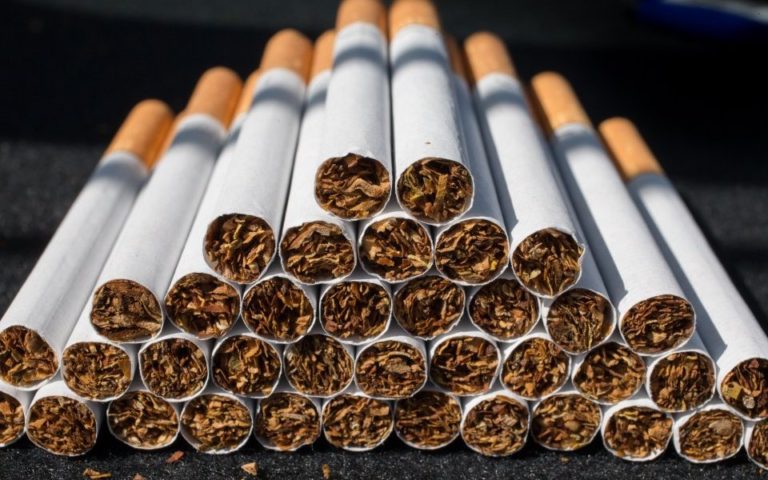
CONFUSION is the word now on a possible hike in tobacco tax after a hint by the ministry of Health of implementation of a planned 50 per cent increase of the tax.
Some industry experts would rather ignore the Health ministry’s disclosure, arguing that the ministry of Finance, and not Health, is the government body empowered by the relevant Act to announce such fiscal policy issues.
The Head of the Tobacco Control Unit, Non-communicable Disease Division, Federal Ministry of Health, Mangai Malau, had mentioned the planned tax increase on Tuesday April 18 at the National Tobacco Control Budget Advocates Meeting in Abuja.
Malau said jacking up tobacco tax was part of government’s effort to control smoking.
The Health ministry’s top official, in his paper, ‘Overview of Tobacco Control Funding/Budgeting in Nigeria: Why Tobacco Control Budgeting and Funding?’, said that funding for the control must come mostly from taxation, but added the need for relevant stakeholders to apply tax measures rightly if they would properly address the issue.
He stated, “In effectively controlling tobacco and tobacco products in Nigeria, funding is a critical component. The WHO Framework Convention on Tobacco Control recognises this and clearly stipulates it in Article 26.
“It states that parties shall provide financial support in respect of its national activities intended to achieve the objective of the Convention, in accordance with its national plans, priorities and programmes.”
Some industry stakeholders, arguing that the government must find a balance between enhanced revenue generation and dissuading addicted tobacco Nigerians, said a 50 per cent tax rise could discourage local tobacco producers and fuel smuggling. This, they maintained, could be counter-productive and rob the government of the expected revenue.
The ministry of Finance has not officially given its position on the 50 per cent tax hike, but the Manufacturers Association of Nigeria (MAN) had, after a visit to the ministry of Finance on April 5, said in an official statement issued by its director-general, Segun Kadir, that the tax hike on tobacco had been postponed.
Kadir actually applauded what he called the Federal government’s decision to halt the proposed increase in excise duty on alcohol, non-alcoholic beverages and tobacco, a position that would seem contrary to Malau’s statement.
MAN warned in the statement that a new tax imposed on carbonated drinks and others would be counter-productive, and that government should devise other means of generating revenue rather than stifling the productive sector, which is already gasping for breath.
A former director-general of the Lagos Chamber of Commerce and Industry (LCCI) and now executive director of the Centre for Promotion of Private Enterprise (CPPE), Muda Yusuf, wondered how the policy statement on increase in tax on tobacco was coming from the ministry of Finance and not Health.
“There is an original schedule of increase on this with the Federal Ministry of Finance, which has not been officially announced. Policy statements like this should come from the Finance Ministry, not Health,” Yusuf told TheICIR.
According to him, the yet-to-be released fiscal policy document for 2023 that would give further policy direction on excise duty on tobacco and carbonated drinks from the ministry of Finance was not yet out.
“This is where there is a concern. We would have to wait for the fiscal policy document from the Finance ministry, which would give direction on a policy statement like this,” Yusuf said.
A development economist, Celestine Okeke, also called on the government to create balance between enhanced revenue generation and proper health advocacy on tobacco.
“In as much as the government is looking intensely for revenue, there must be proper lessons on how other economies have done it so we could learn,” Okeke said.
Malau pointed out that funding is a major provision of the National Tobacco Control Act, adding that Section 8 of the Act provides for the Tobacco Control Fund, which shall be used to fund tobacco control activities programmes and projects.
“Tobacco use and exposure to second-hand smokers is a leading cause of mortality, morbidity, disability, and impoverishment in the world,” he said.
He stressed that smoking is the greatest risk factor for non-communicable diseases like hypertension, stroke, cancer, diabetes and chronic obstructive pulmonary diseases.
“Accordingly, tobacco causes more than eight million deaths annually around the world, with more than seven million of those deaths as a result of direct tobacco use.
“And there are about 1.2 million resulting from non-smokers being exposed to second-hand smoke. Also, there is no safe level of exposure to tobacco smoke, and even a brief exposure can be harmful to one’s health,” he added.
The Nigerian government, concerned about the threat from tobacco usage, signed the World Health Organisation Convention on Tobacco Control (WHO FCTC) in 2004, which it ratified in 2005.
In 2015, the National Tobacco Control Act was enacted and its Regulations were passed in 2019.
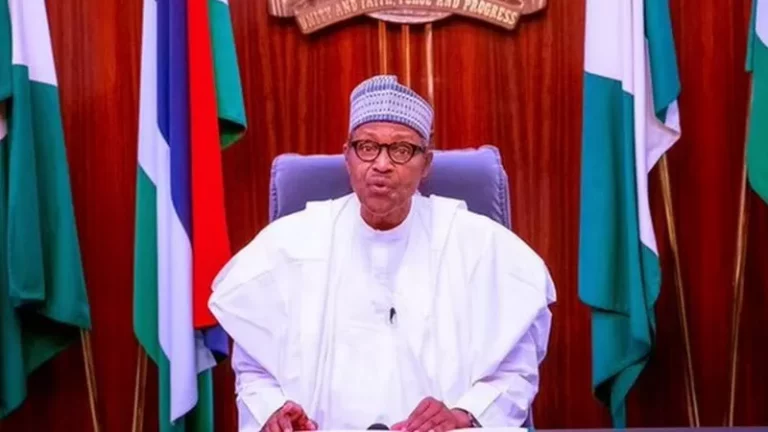
PRESIDENT Muhammadu Buhari has said he would leave for neighbouring Niger Republic after handing over as President if he is not able to get enough rest in Daura, his home town in Katsina State.
Buhari said this while addressing guests who came to celebrate with him on the occasion of the Sallah Day in at the State House on Friday, April 21.
Buhari, in a statement by his spokesperson, Garba Shehu, stated that he can’t wait to retire to Daura, far away from Abuja, in order to get some respite after years of work.
“If they make any noise to disturb me in Daura, I will leave for the Niger Republic.”
“I deliberately arranged to be as far away as possible. I got what I wanted and will quietly retire to my hometown,” he added.
The President said he remains grateful to Nigerians who voted him in 2015 and 2019 without any monetary incentive, with some trooping to campaign rallies in different states just to catch a glimpse of him.
He told his audience that his journey was not all smooth, and he was incarcerated for three years after the coup that ousted him from power in August 1984.
Buhari noted that he contested elections three times in 2003, 2007 and 2011 without success.
He said the flaunting of ethnic and religious cards in elections was “rubbish” as the presiding justices at the Supreme Court that squashed his cases in previous elections he contested before 2015, were Northern Muslims from Zaria in Kaduna State, Niger, and Jigawa states.
He highlighted the strengths of democracy as a system of government, particularly in providing opportunity to participate and fostering a sense of belonging among citizens.
“God gave me an incredible opportunity to serve the country. We are all humans; if I have hurt some people along the line of my service to the country, I ask that they pardon me. All those that I have hurt, I ask that they pardon me.
“I think it is a good coincidence for me to say goodbye to you, and thank you for tolerating me for almost eight years,” the President said.
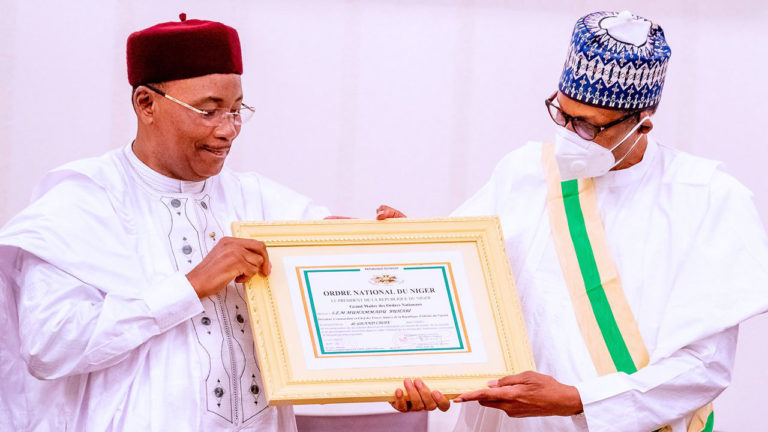
The ICIRreported that Niger Republic has been the centrepiece of Nigeria’s foreign policy under the Buhari’s administration in the last seven years.
Checks by The ICIR show that the neighbouring West African country has received more attention from the Nigerian government and enjoyed a more special, closer relationship with Nigeria than other African countries under Buhari.
Nigeria under Buhari embarked on a $2 billion railway that runs from Kano State to Maradi in Niger Republic. Maradi, the second-largest city in Niger Republic, is regarded as the centre of the country’s developing oil industry. Buhari performed the ground-breaking ceremony of the new rail line on February 9, 2021.
In 2020, Nigerians were shocked after the Nigerian government, through the Ministry of Petroleum Resources, signed a Memorandum of Understanding (MOU) with the government of Niger Republic for the importation of petroleum products from that country, a country that only joined the league of oil-producing countries in 2012.
The action was criticised by some Nigerians, particularly oil and gas industry stakeholders, who questioned the sincerity of Buhari’s roadmap on local refining, which involves introducing modular refineries in Nigeria.
Apart from other interventions, including agreeing in principle to cooperate on building an oil pipeline and refinery with Niger Republic in 2018, the Buhari administration again came under intense criticism last year after it approved the purchase and donation of vehicles worth N1.4 billion to Niger Republic.
The Minister of Finance, Budget and National Planning, Zainab Ahmed, told journalists that the donation was to help Niger Republic address its security concerns.
She said such donations by Nigeria to its neighbours were common.
Reacting to Nigerians who had expressed shock and displeasure over the action, Ahmed said it is the President’s prerogative to take such decisions after a careful assessment of the situation.
Foreign affairs experts, who analysed Nigeria’s relationship with Niger Republic in separate interviews with The ICIR in 2021, suggested that although the country have had cordial relations with neighbouring countries, personal motives may have informed Buhari’s emphasis on Niger Republic.
A former Director-General of the Nigerian Institute of International Affairs (NIIA) Bola Akinterinwa, told The ICIR that Buhari has a ‘personal relationship’ with Niger Republic but he did not explain the nature of the relationship to Nigerians.
“Buhari has relationship with them (Niger Republic) but I don’t think that is why he may be giving priority there. If Buhari is trying to give priority to Niger Republic it may be because of his own personal affiliation to them, you can’t rule that one out,” he said.
PRESIDENT Muhammadu Buhari has pleaded for forgiveness from Nigerians as he rounds off his tenure in office.
The President begged for forgiveness in a Sallah message he delivered on Friday, April 21, while hosting some residents of the Federal Capital Territory (FCT), who paid him a visit at his residence in the Presidential Villa, in Abuja.
Minister of the Federal Capital Territory, Muhammed Bello, led the visitors.
Buhari said he accepted all the complaints and criticisms directed at him in good faith because they were part of the leadership attributes he asked from God.
“God gave me an incredible opportunity to serve the country. We are all humans. If I have hurt some people along the line of my service to the country, I ask that they pardon me.
“All those that I have hurt, I ask that they pardon me,” the President said during the visit of the FCT residents, according to a statement signed by his Special Adviser on Media and Publicity, Femi Adesina.
Buhari thanked Nigerians for the honour given him to serve the nation for two terms (2015-2023) as an elected President.
Though he did not name anyone he offended, The ICIR reports that the President’s administration brought sorrow and suffering to Nigerians.
In December 2022, the Central Bank of Nigeria (CBN) redesigned the N200, N500 and N1,000 notes.
Many Nigerians took their old notes to the banks, hoping to exchange them for new ones.
For many weeks, people in the country could not get the new notes, which were very scarce in circulation.
In one of its many reports on the hardship the policy brought to Nigerians, The ICIRreportedhow Nigerians went nude, fought in banks and engaged in other habits that counted as offences when things were normal.
It took a Supreme Court ruling before the CBN released the old notes back into circulation to ease the acute pains faced by the citizens.
The CBN obeyed the Supreme Court ruling ten days after the court gave its judgement.
Buhari authorised the naira redesign policy initiated by the CBN.
Another issue which brought hardship to Nigerians under the President was a series of strikes by the Academic Staff Union of Universities (ASUU). The ICIR reported how ASUU members went on strike for 600 days under Buhari since he became President in 2015. – the longest under any president in the country.
Inflation has reached its highest under the President, causing prices of foods and other basic needs to soar beyond the reach of the poor.
Under the President’s watch, thousands of Nigerian6 have been killed by insurgents. Several children have been orphaned by insurgency, banditry, inter/intra communal conflicts, farmers-herders feuds and related crises.
In 2021 alone, out of the President’s eight years in office, over 10,000 people reportedly died in the country due to insecurity.
Thousands of people are being killed in Kaduna and Benue states by non-state actors, with the Benue State Governor Samuel Ortom accusing the President of complacency.
While the government has succeeded in building massive infrastructures, confronting and neutralizing criminals through its security forces, many Nigerians believe it could do more, especially in tackling corruption, which remains rife.
On the economy, local and foreign companies in Nigeria have folded up, and many Nigerians have lost their means of livelihood. In 2022, The ICIRreported how giant industries were silently disappearing under Buhari’s watch.
The ICIR reports that these challenges, and much more, were inherited by Buhari, who rose to power on his vow to tackle them. But the crises remain as he leaves office in less than 40 days.
“With less than 37 days left in office, the President recounted his leadership roles in the country for more than forty years, serving variously as a military officer, military governor, minister, and Head of State, and returning as a democratically elected President in 2015,” the statement released by Adesina on Friday said.
Buhari recounted how he was incarcerated for three years after the coup that ousted him from power in August 1984 and contested elections three times, 2003, 2007 and 2011, without success.
“I dared the politicians and ended up at the Supreme Court three times. They laughed at me, and I responded, ‘God dey’. God sent technology to my rescue with Permanent Voters’ Card (PVC). The fraudulent people became unemployed,” the President was quoted as saying.
He frowned at the flaunting of ethnic and religious cards in elections, as witnessed in the 2023 general elections.
The President reiterated the need for the nation to strengthen its democracy because of its immense gains.
“I have been counting the years. Democracy is good. Otherwise, how can someone come from one end of the country to rule for eight years? My home town, Daura, is about eight kilometres to the Niger Republic.
“When the Minister of Interior wanted to shut down petrol stations ten kilometres from the border, there was a fuel station close to my house, and I pleaded if he could allow it to keep operating,” he added.
The President said he decided to retire to Daura to get some respite after years of work.
“I can’t wait to go home to Daura. If they make any noise to disturb me in Daura, I will leave for the Niger Republic. I deliberately arranged to be as far away as possible. I got what I wanted and will quietly retire to my home town. In spite of technology, it will not be easy to get to Daura,” he said.