Home Blog Page 952

Time running out for Nigerians trapped in Sudan as rescue efforts remain slow

THOUSANDS of foreigners, including at least 10, 000 Nigerian students and over five million Sudanese of Nigerian origin, have remained trapped in Sudan, Northeastern Africa, a week after intense fighting between two rival forces broke out.

The fighting between the Sudanese armed forces, led by Abdelfattah al-Burhan, and the Rapid Support Forces (RSF), a paramilitary force led by Mohamed Hamdan Dagalo, is tearing apart cities and towns across the country, including the capital Khartoum.

Evacuation efforts have been difficult as the airport in the Sudanese capital has been repeatedly targeted.

Respite came on Saturday after some foreign countries like the United States and Saudi Arabia began evacuating their nationals and the Nigerian Government says it is also exploring all avenues to ensure the safe return of its stranded citizens.

The Director General of the National Emergency Management Agency (NEMA), Mustapha Ahmed, expressed concern about the safety of Nigerian residents in Sudan, adding that the Agency was coordinating with all relevant partners to constantly evaluate the situation and explore the safest means to rescue those stranded.

“The current emergency in Sudan is very complex with fighting between warring factions going on and all airports and land borders closed.

“The National Emergency Management Agency, NEMA is working assiduously with all its partners and is constantly compiling updated information on the situation,” Ahmed said.

The president of the National Association of Nigerian Students, Sudan (NANSS), Abubakar Babangida, warned that “any delay would lead to unpredictable casualties”.

More than 330 people have been killed so far in the violent power struggle and at least 3,200 people were injured.

Chairperson and CEO of the Nigerians in Diaspora Commission (NIDCOM), Abike Dabiri-Erewa, has urged all Nigerian students in Sudan as well as Nigerians living in the country to be security conscious and calm.

Meanwhile, the RSF announced a 72-hour truce on humanitarian grounds, effective from Friday morning, providing the opportunity for countries to evacuate their citizens.

The Sudanese Army said on Saturday that it would facilitate the evacuation of American, British, Chinese and French citizens, which it considers as “brotherly and friendly”.

Nigeria-Sudan diplomatic relations were established since Nigeria’s independence in 1960, and both countries have continued to explore ways to deepen cooperation in order to achieve more meaningful growth.

Earlier in the year, the Sudanese Ambassador to Nigeria, Mohamed Abdelmannan, said plans were ongoing to establish direct passenger and cargo flights from Khartoum to Abuja, Nigeria’s capital and licence has been issued to a Nigerian carrier, Nissers Sky AirPower, to fly the route.

Money laundering: EFCC beams searchlight on real estate investors

THE Economic and Financial Crimes Commission (EFCC) has said it will be beaming its searchlight on those hiding under real estate investments to perpetrate money laundering and other fraudulent acts.

An EFCC lawyer, Chris Mishela, said this during a training session for journalists on effective reporting of economic and financial crimes in Benin, Edo State.

Mishela, during his presentation, said many estates springing up in Abuja, Lagos and other parts of the country were believed to be proceeds of fraud and money laundering.

“In Abuja, you see so many estates coming all over, and we believe the source of this is unlawful funds. The funds are illegally gotten either from the government or from international crime that is used to launder through estate business.

“Real estate is one of the designated and non-designated professions that are also under our obligation under the establishment to do a full disclosure.

“So EFCC is actually working to look into that dimension, and the new Money Laundering Act has provided an opening for the government to look into the aspect of real estate as we saw under the Act.

“It is not an investigation that is going on; rather we have identified specifically that these are proceeds of crime,” Mishela said.

He explained that the training was to keep journalists abreast of the framework of the new Anti-Money Laundering Act 2022 and the role they were expected to play.

He added that the workshop was necessary to inform the public of the expanded scope of the Money Laundering (Prevention and Prohibition) Act 2022 as against the repealed Money Laundering Prohibition Act 2011.

In her presentation on risks and benefits associated with digital payment systems, the Head of the Cyber Crimes Unit in EFCC, Benin, Oluwakemi Olawoyin, charged members of the public to refrain from opening any link they didn’t initiate while on the Internet.

She highlighted tactics for safe transactions on the various e-business platforms and advised the members of the public to beware of unsecured sites.

Also speaking during the training, the Assistant Commander, Public Affairs Unit of EFCC, Dele Oyewale, charged journalists on investigative reporting to provide the Commission with a lead for fraud investigations.

The EFCC had in the past raised concerns over links between real estate and money laundering. In 2014, the Commission raised concerns over the new mode of money laundering through investments in real estate in the FCT.

The then Chairman of the EFCC, Ibrahim Lamorde, said the Commission had uncovered several money laundering schemes in the city where the perpetrators disguised the proceeds of crime by investing in properties without using the banks, preferring to pay for their acquisition with cash.

Lamorde further revealed that the laundered funds are frequently converted into foreign currencies through the Bureau de Change before the purchases are made and that, in most cases, no change of ownership is done after such acquisitions, making it difficult to verify the identities of the new owners or the sources of fund.

Lamorde said over 270 cases of land scams were reported to the Commission during the period , adding that evidence of the trend is the number of palatial but unoccupied houses that litter the capital city.

He added that the Commission suspected involvement of some FCT administration officials in some of the cases investigated.

The ICIR, in a report in 2022, discovered that housing remained a massive challenge for residents of Nigeria’s Federal Capital City, Abuja, where many people battle homelessness.

The city is responsible for at least 10 per cent of the housing deficit in the country, which stands at 17 million, with the likelihood of the figure increasing to 22 million by 2030, according to experts.

The high cost of rent is a factor in the housing deficit in Abuja, which has left many houses in the city unoccupied, with many residents living in slums or, worse, homeless.

Empty houses can be found littering the highbrow areas of the city, priced beyond the reach of average residents, and rotting away in large quantities.

Many residents believe the empty houses are built with fraud proceeds or used as a smokescreen for money laundering.

In 2021, a resident of Abuja, Ayo Balogun, had told The ICIR that abandoned houses sprawling throughout the city served as a smokescreen to launder stolen funds.

“I think these are just projects set up by these politicians or Yahoo boys to launder their money. You can’t just erect a building and leave it empty like that. No returns on your investment and you are not worried,” he said.

Also, the Independent Corrupt Practices and Related Offences Commission (ICPC) in 2022 said it would intensify the probe of completed but unoccupied housing estates across the country in a bid to address Illicit Financial Flows (IFFs).

The Commission’s Director of Asset Tracing, Recovery and Management (ATRM), Adedayo Kayode, disclosed this at opening of a two-day capacity-building workshop for investigators, prosecutors and tax inspectors on IFFs. 

More than 600 houses are unoccupied within Abuja, yet, almost two million residents battle homelessness.

Money laundering is the process of illegally concealing the origin of money obtained from illicit activities such as drug trafficking, corruption and others.

The Money Laundering Act 2022 was introduced as part of the intensified efforts towards adopting and implementing the Financial Action Task Force’s (FATF) recommendations on combating the financing of terrorism and money laundering.

Benue govt initiates bill to protect widows

THE Benue State government has enacted a bill to protect widows from harmful cultural practices in the state.

The bill is aimed at curtailing the impact of negative cultural practices upon the death of their husbands.

The Special Adviser on Media and Publicity to Governor Samuel Ortom, Terver Akase, disclosed this in a statement on Saturday, April 22.

According to him, if the bill is passed and signed into law, it will end one of the age-long negative traditional practices among the people in the state.

He said the bill was necessary due to the popularity of these cultural beliefs among diverse ethnic groups

Akase identified some harmful practices  as “the disinheritance from assets of a deceased husband, banishment from a late husband’s home, being forced to marry a relation of the deceased husband”.

“Most often, such widows have children for the deceased and have the task of nurturing the children without any assistance from the relatives of the deceased. In some instances, some are denied their fundamental rights enshrined in the 1999 Constitution.

“It is in face of such a helpless situation of widows that the Ortom administration has initiated the bill in order to assuage the position of widows as regards inheritance of their late husbands’ assets and to protect and guarantee their fundamental rights as well as obviate the obnoxious cultural practices which deny them the right of inheriting their late husbands’ property amongst others,” he said.

The bill also proposes creating a commission to oversee the welfare of widows in the state.

Akase noted that the proposed agency is called the Benue State Widows Commission. It will have the power and responsibility to support, protect and build the capacity of widows in the state.

“The Benue State Widows Commission envisioned by the proposed law will have the power and responsibility to support, protect and build the capacity of widows in the state whereby they can own their property and inherit the assets of their deceased husbands.

“It shall be the duty of the Commission to, among others, coordinate and monitor the implementation of widows programmes and activities; initiate and support measures which shall enhance the welfare of widows; assist widows by providing support services.“

There have been calls for the government to make legislation to protect and empower widows in Nigeria.

Several women-centred organisations have pointed out the need to draw attention to the voices and experiences of widows and to galvanise the unique support they require.

According to the International Women Society (IWS), 15 million widows in Nigeria are living in abject poverty.

Also, Eunice Ortom, wife of the Benue governor, had appealed for the elimination of cultural practices harmful to widows.

She indicated that widows faced demeaning situations ranging from rights abuses and indignity.

She also said many women had lost their lives to harmful widowhood practices, noting that most widows were ejected from their homes at the death of their spouses.

“They are denied even access to farmland and the right to other inheritances.

“In some cases, their children are taken away from them and they are denied access to the children,’’ Ortom said.

Naira in circulation rises to 71% in March, as CBN returns old notes to banks

CURRENCY in circulation increased by 71.41 per cent in March after the Central Bank of Nigeria (CBN) returned old naira notes from its vaults to commercial banks.

The naira in circulation rose to N1.68 trillion at the end of March 2023  from N982 billion in February, data published on the CBN’S website showed.

The increase in the circulation of the old N200, N500, and N1,000 notes followed the extension of their legal tender status to December 31, 2023, as directed by the Supreme Court, and as eventually obeyed by the CBN after a two-week tarry.

Although naira circulation has increased, reducing substantially the scarcity agonies that attended the currency redesigned policy, checks by The ICIR showed poor circulation of the new N200, N500, and N1000 notes.

Visits to banking halls by our correspondent showed that banks were dispensing mostly the old notes, both over the counter and through their automated teller machines (ATMs).

Also, point-of-sale (PoS) operators have also been paying their customers the old naira notes.

A PoS operator, Muhammed Yusuf, told The ICIR, “The banks pay us more of old notes than the new ones. They pay us more of the N1,000 and N500 old notes.

Another PoS merchant, Ngozi Nwankpa, told The ICIR that issuance of the new notes was still slow from the banks.

Nwankpa said, “We are still not getting enough of the new notes. Although people are not complaining, we want a situation whereby it would circulate more side by side with the old ones.”

The CBN’s acting Director, Corporate Communications, Isah Abdumuminin, confirmed on March 26 that the regulator had disbursed substantial amounts of money to the commercial banks for onward distribution to the public.

Bank sources told The ICIR that banks had, however, been receiving more of the old currency, with the new notes coming in just slowly.

“We have been monitoring the situation and it is improving. Banks are also disbursing what they get, although our findings showed we are getting more of the old notes. I can authoritatively tell you that the situation will improve more than what it is currently .We have got that assurance from the CBN that it can only get better,” the president of the Corporate Affairs Managers of Banks (ACAMB), Rasheed Bolarinwa, told The ICIR

Commenting on rise in currency circulation, a professor of Capital Markets, Uche Uwaleke, said there was a rise in deposit money banks borrowing from the CBN’s standing lending window.

Uwaleke pointed out that the rise in currency circulation followed the reinjection into the banking system some old naira notes the CBN had mopped up.

“The increase in the circulation of old naira notes followed the extension of legal tender status of old notes to December 31, 2023,” he said.

A report by the FSDH Merchant research unit noted that the impact of the naira redesign policy has been profound for the economy, and will be the major determinant of Nigeria’s economic trajectory in 2023.

“The associated cash crunch has led to increased pressure on the banking system and on the financial system’s digital infrastructure.

“It has also resulted in the disruption of economic activities, created social tensions, and distorted the trajectory of the economy,” the report stated.

The CBN had said that as at September 2022, N2.73 trillion out of the N3.23 trillion currency was outside the vaults of commercial banks. This apex bank cited the development as key reason for its naira redesign, and insinuating that the currency outside the banking vaults was being used for terrorism financing.

Hope rises for businesses as FG concessions Onitsha Port for 30 years

THERE are hopes for improved ease of doing business and trade facilitation in the Southeast as the Federal government said it has successfully concessioned the Onitsha Port in Anambra State.

The government also informed that discussions were ongoing for the concessioning of Baro and some other ports across the country.

The Managing Director, National Inland Waterways Authority (NIWA), George Muoghalu, made the disclosure on April 20 to State House correspondents in Abuja after a private meeting with President Muhammadu Buhari.


READ ALSO:

CBN’s intention to acquire N20trn dormant funds will worsen Federal govt’s debt portfolio – expert

NPA to investigate extortion at Lagos ports corridor after The ICIR investigation

Port Authority, others refuse to provide information on $100m Warri Port concession agreement

Port Harcourt refinery to begin operations 2nd quarter 2023 – NNPC


Muoghalu said such concessioning would ease pressure on the government and attract revenue to it as the concessioning firm would be paying royalty to the government.

“For Onitsha Port, we have successfully concessioned it and handed it over to Universal Elison, a company that is partnering with Port of Tuna, for the next 30 years.

“Now, because of limited resources and to reduce pressure on government, we opened up discussions with other interested organisations. Unsolicited proposals have come for the concessioning of Baro in Niger State, Oguta in Imo State and Lokoja, in the Kogi State capital, although they’re still under construction,” he said.

Muoghalu explained that the Oguta River Port was not on the budget prior to his appointment as the NIWA chief executive, but was brought into it.

He said that the fencing of the Oguta Port had been completed, while some basic facilities required for a seaport to operate were being put in place, depending on the availability of resources.

He said, “Same is applicable to Lokoja, in Kogi State. We are taking it from two perspectives, which is by completing the building and concessioning it so that the new concessionaire can complete the ports and put it effectively to use.”

Muoghalu said that cargo was being moved between Onne and Onitsha, while Lagos to Onitsha was being concluded.

“So, you find out that these jetties and ports are all in line with rivers Benue and Niger. We are very conscious of that and whatever we are doing, we have that at the back of our mind,” he said.

Ports are important network nodes for cargo transportation between cities and even countries, and they play vital roles in stimulating urban economies. However, at the same time, port production activities also consume various resources, like water, electricity, coal, and land.

Available statistics have shown that the annual volume of trade at the Onitsha market is in excess of $3 billion, with about 40 per cent of this figure in constant circulation through unbanked transactions.

Onitsha is located in Anambra State metropolitan, and many industry watchers believe the state will improve on its current ranking of 7th on ease of doing business.

“This development will improve trade facilitation and improve further ranking of the state on ease of doing business,” said Celestine Okeke, a development economist, who spoke with The ICIR.

FG sets up committee to rescue Nigerians trapped in Sudan

THE Federal Government has set up a committee to plan and oversee the evacuation of Nigerians trapped in Sudan.

The committee consists of professional emergency responders, as well as search and rescue experts, a statement released by the National Emergency Management Agency (NEMA) on Saturday, April 22, said.

The committee will work towards rescuing citizens of the country from the civil unrest ravaging the country.

The ICIR has earlier reported that the non-adherence to calls for ceasefire by the warring parties — the Sudanese army and the paramilitary Rapid Support Forces (RSF) — has made the evacuation of Nigerian nationals in the country difficult.

NEMA, in a statement released by the Head of Press Unit, Manzo Ezekiel, quoted the Director General, Mustapha Ahmed, as saying that the committee would evaluate the situation and work towards evacuating Nigerians safely.

“The committee will constantly evaluate the situation and seek the safest way to evacuate the Nigerian citizens, even if it is through a country neighbouring Sudan.

“The current emergency in Sudan is very complex, with fighting between warring factions and all airports and land borders closed. NEMA is working assiduously with all its partners and is constantly compiling updated information on the situation.”

The NEMA boss added that the agency is in constant communication with all relevant partners including the Ministry of Foreign Affairs, the Nigerian Embassy in Khartoum, Sudan, the Nigerians in Diaspora Commission (NiDCOM) and security agencies “while seeking for an appropriate window of opportunity to evacuate all stranded Nigerians back home in a safe and dignified manner”.

The Sudanese Armed Forces (SAF) led by Abdel Fattah al-Burhan and the paramilitary Rapid Support Forces (RSF) led by Mohamed Hamdan Dagalo have been fighting for control of the country since February 15.

As a result, many Nigerians are trapped in the country. About 10,000 Nigerian students study in the country and thousands of others are engaged in businesses.

According to the World Health Organization (WHO), more than 400 people have been killed and over 3,500 others hurt due to the crisis.

The ICIR reported that the Chairperson of NiDCOM, Abuja Dabiri-Erewa, earlier said the Federal Government would not be able to evacuate Nigerians trapped in Sudan due to the risks involved in flight operations in the country.

“The Nigerian Mission in Sudan and NEMA have put in place arrangements to evacuate Nigerian students and other Nigerian citizens stranded in Sudan. The tense situation makes it gravely risky and impossible for any flight at this point. Aircrafts parked at the airport in the country were burnt yesterday morning,” Dabiri-Erewa said in a statement signed by Gabriel Odu of the Media, Public Relations and Protocols Unit of NIDCOM, on Friday.

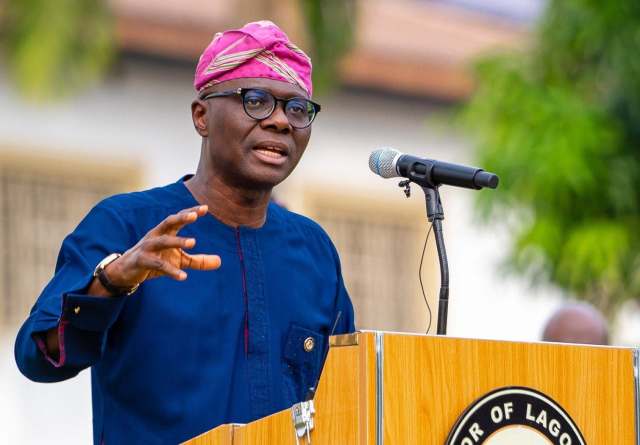
Sanwo-Olu orders removal of buildings in Banana Island

LAGOS State Governor, Babajide Sanwo-Olu, has ordered the removal of several buildings in the Banana Island area of the state.

The governor’s Chief Press Secretary, Gboyega Akosile, who revealed this in a Twitter post, said the governor gave the order while conducting an on-site evaluation of a seven-story building under construction that recently collapsed in the area.

He stated that some completed and uncompleted buildings in the area have been marked for removal.

The exclusive neighbourhood, home to some of the wealthiest Nigerians, witnessed the collapse of a building under construction on April 12.

The Lagos State Ministry of Physical Planning and Urban Development said no casualties were recorded during the incident.

However, the state’s Commissioner of Information, Gbenga Omotosho, said not less than 25 people were rescued from the rubbles of the collapsed building.

Lagos State has had at least 115 incidents of building collapse in the last decade.

In some cases, there were no fatalities, while in others, scores of people perished in the rubble.

In November 2021, the collapse of a 21-story building at Gerard Road, Ikoyi, led to the death of about 45 people.

Additionally, the collapse of a building at the Lekki Gardens in Ikoyi in 2016 claimed the lives of about 35 people.

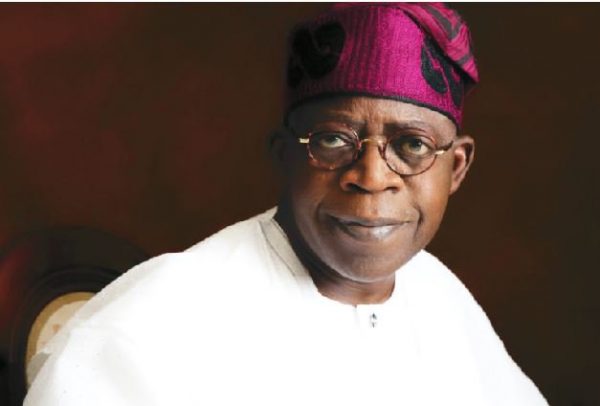
Where is President-Elect Bola Tinubu, 5 weeks to his inauguration? 

MANY Nigerians, including stalwarts of the All Progressives Congress (APC), are currently worried over President-Elect Bola Tinubu’s whereabouts as his inauguration draws closer.

Tinubu will be inaugurated as Nigeria’s President on May 29, when the eight-year leadership of President Muhammadu Buhari ends.

The ICIR reports that Tinubu travelled to Europe in late March after the Independent National Electoral Commission (INEC) declared him the winner of the presidential election conducted on February 25. 

Nothing has since been heard from him, except when he appreciated Nigerians for voting for him, and other statements issued through his social media handles. He also reportedly expanded the Presidential Transitional Council on Thursday, April 20.


READ ALSO:

Security in Nigeria: Bola Tinubu will increase tension in some parts of the country and reduce it in others

How Tinubu emerged Nigeria’s president with the lowest percentage of votes since 1999

From age, bagman to education: Bola Tinubu’s many controversies

[UPDATED] Was Tinubu the first governor to raise bond for infrastructure in Nigeria as claimed by Fashola?


Reactions from Tinubu’s media spokesperson, Tunde Rahman, and other aides to the former Lagos State governor appear not to convince those who doubt that all is well with the President-Elect.

While rumours spread that Tinubu jetted out to Europe in late March after the governorship and state houses of assembly election to attend to a medical emergency, Rahman debunked the claims.

But some party stalwarts and other Nigerians remain unconvinced because Tinubu has not been seen since he left Nigeria.

Rahman argued that Tinubu needed rest after touring the 36 states and working hard for his victory at the presidential poll.

He said the President-Elect travelled to France to rest and would proceed to Saudi Arabia during Ramadan for Umrah, the lesser Hajj.

Those who suspect that all is not well with Tinubu have pointed at a picture of Buhari and the former Lagos State governor, purportedly taken when they participated in the lesser Hajj in Saudi Arabia during the just-concluded Ramadan.

Sam Omatseye’sone of the heads of Tinubu’s media outfits, tweeted the picture.

The picture, when fact-checked, was found to be misleading, raising suspicion over Tinubu’s whereabouts.

The picture was from a news report published by Premium Times on May 11, 2019. It shows President Buhari breaking Ramadan fast with Tinubu at the Presidential Villa in Abuja.

The image caption on the media report indicated that the photo was shot by Sunday Aghaeze, President Buhari’s Personal Assistant on Photography, on May 10, 2019.

An APC chieftain who is worried over Tinubu’s whereabouts told the The ICIR, “A Northern governor reached out to his (Tinubu’s) people so that he could join him to Umrah, but the governor was ignored. That further heightened concerns.”

There have been more worries about Tinubu’s whereabouts because no one has heard from or seen him since he left Nigeria, with his inauguration less than 40 days away.

Tinubu embarked on a similar journey before the elections

Shortly after he won the APC presidential primary in 2022, Tinubu travelled to Europe and was inaccessible to many of his party’s leaders.

He arrived in Nigeria after the election campaigns had started.

Speaking with The ICIR on the telephone on Friday, April 21, Rahman, his media aide, confirmed that Tinubu was not in Saudi Arabia for the lesser Hajj, Umrah, during the just-concluded Ramadan.

Rahman said the former Lagos State governor would return to the country soon.

“He’s not in Saudi Arabia. He should be returning anytime from now. He’s not in Saudi Arabia because there are a lot of people lurking around the corner to see him there. What he is doing is planning for his inauguration, and he needs to reflect on the things he has to do as he plans for his inauguration.”

Speaking on the rumours that the President-elect has been treating an undisclosed ailment since he jetted out of the country, Rahman said, “All I can tell you is that His Excellency is there. He’s okay. He’s in fine spirits, and he’s strong. He’s not taking a break. At the appropriate time, he will talk.”

The ICIR reports that Tinubu’s lawyers are representing him in court after the candidate of the Peoples Democratic Party, Abubakar Atiku and his Labour Party counterpart, Peter Obi, disagreed with the Independent National Electoral Commission (INEC) that Tinubu won the presidential election. Atiku and Obi filed petitions before the Presidential Election Tribunal.

“How will you boast that you have a President-Elect who is elusive to his people and could not be seen to have been visited or discussing with anyone from around the world? Where does that happen? 

“If he had done that in the past, he needs to change. Nigeria needs to see him that he’s alive and doing well,” one of the party leaders told The ICIR.

The leader said Nigerians must not have a repeat of how Buhari spent months treating ailments outside the country and left his government shuddering.

How Tinubu expanded the Presidential Transition Council

On Thursday, April 20, reports indicated how the President-elect expanded the 22-member Presidential Transition Council created by President Muhammadu Buhari on February 9.

Tinubu had two members among the initial team, headed by the Secretary to the Government of the Federation, Boss Mustapha. They are Kebbi State Governor Atiku Bagudu and a former Commissioner for Finance in Lagos State, Olawale Edun.

Fourteen members added to the team by Tinubu include a former Director-General of the News Agency of Nigeria and spokesperson of the Tinubu/Shettima Presidential Campaign Council, Bayo Onanuga. He will serve as Head of Media and Publicity for the Council.

Others are the Executive Director of Nigeria Export-Import Bank, Stella Okotete (Secretariat, Planning and Monitoring); APC National Women Leader, Betta Edu (In charge of the Medical Team); former governorship aspirant in Ekiti, Makinde Araoye (Venue, Parade and Swearing-in); former Director General of National Broadcasting Commission, Danladi Bako (In charge of inauguration lecture) and Zainab Marwa-Abubakar, daughter of the Chairman of the National Drug Law Enforcement Agency, Brig. Gen. Buba Marwa (retd.). She will anchor the pre-inauguration dinner and gala night.

Also nominated by Tinubu is the acting National Deputy Chairman (North) of the APC, Abubakar Kyari (a former senator), who will coordinate and direct the committee’s finance and budget. The late President Umaru Musa Yar’Adua’s younger brother, Col. Abdulazeez Yar’Adua, will head security and ceremonial parade for the inauguration.

Samira Saddik will coordinate Children’s Day; Abuh Andrew Abuh is in charge of accommodation, Hajiya Hadiza Mohammed Kabir will take care of transportation and logistics, Donald Wokoma will manage protocol and invitation; Bishop Adegbite heads the church service, and Imam Faud will supervise Jumat Service.

Anambra to set up Bureau of Missing Persons

0

THE Anambra State Government has approved the establishment of a Bureau of Missing Persons.

According to a statement by the state’s Commissioner for Information Paul Nwosu on Saturday April 22, the Bureau would be created within the Ministry of Justice as part of efforts to carry out recommendations of the Truth, Justice and Peace Commission set up by Governor Chukwuma Soludo.

“Recall that on the 23rd of June 2022, Governor Soludo, pursuant to the Commission of Inquiry Law of Anambra State, inaugurated the Truth, Justice and Peace Commission which has Professor Chidi Anselm Odinkalu as the chairman, Ambassador Bianca Odumegwu Ojukwu as the secretary and Professor Sylvia Chike Ifemeje as one of its commissioners.

“The Commission’s Inception Report also recommended a whole-of-government strategy that locates atrocity and violence within a public health framework,” Nwosu noted.

The Bureau would also be mandated to trace cases of missing persons and provide reliable data to be used by security agencies during investigations.

The Truth, Justice and Peace Commission was inaugurated by the state governor Charles Soludo in 2022 to identify remote and immediate causes of agitations, restiveness, violence and struggle in the state and other parts of the South-East since 1999.

The Commission was also mandated to document victims and circumstances of death, brutality, and incarceration in the region.

The ICIR reported that Nigeria’s Ministry of Humanitarian Affairs, Disaster Management and Social Development had announced that the country lacks reliable data on missing persons.

Minister of Humanitarian Affairs, Disaster Management and Social Development Sadiya Farouk had expressed concern over the problem, describing it as an “often-neglected and tragic humanitarian and social issue”.

However, a report by the International Committee of the Red Cross (ICRC) said Nigeria accounts for the highest number of missing persons ever registered by the organisation.

According to the report, 25,000 persons are missing in Nigeria due to insecurity.

Out of this figure, 14,000 are children.

‘Blue Check’ verified accounts are flooding Twitter with misinformation – Report

0

A News Guard’s ‘misinformation monitor’ report has revealed that Twitter’s “blue check” which was previously an indication of an account’s authenticity, has now become a tool for propagators of false information to present themselves as credible.

Initially, Twitter created its verification system to boost users’ confidence in the platform by placing a blue check mark next to the names of public figures, companies, journalists, and organisations, however; currently, the blue check mark can be obtained by paying a monthly fee of $7.99. This move is part of Musk’s effort to increase the company’s revenue, which he acquired for $44 billion.

News Guard’s report highlights that the blue checkmark has become a tool for peddlers of misinformation to appear trustworthy and legitimate.

According to the report, numerous Twitter accounts with a history of spreading false information, some of whom were only recently readmitted to the platform, are now paying $8 a month to obtain a blue checkmark through Twitter Blue, the verification system.

This is giving them an appearance of credibility.

NewsGuard found that 25 misinformation superspreader accounts that were “verified” by Twitter Blue accounts cumulatively posted 141 tweets (original and quote tweets) containing false, misleading, and unsubstantiated claims between March 1 and March 7, 2023.

“These tweets were viewed nearly 27 million times and received more than 760,000 likes and retweets during this period, the NewsGuard analysis determined. The 25 accounts also cumulatively retweeted 35 posts containing misinformation, bringing the total number of tweets and retweets identified by NewsGuard for advancing false, misleading, or unsubstantiated information to 176,”  the report stated.

According to NewsGuard, out of those 25 accounts, 10 were reinstated under Musk after being suspended under Twitter’s previous ownership.

Most false information shared by the accounts are bordering on the COVID-19 vaccine, the Russia-Ukraine war, among others.

Twitter Blue initiative permits individuals worldwide to feature a blue checkmark on their profile by paying a monthly fee of $8. For organisations, the cost is now $1,000 per month, which grants them the ability to efficiently handle connected accounts like subsidiaries and representatives. 

Twitter previously used “Legacy” verification based on “authenticity, notability, and activity” to confirm user accounts before Musk’s acquisition. However, Twitter has started phasing out Legacy verification from April 20.

This is republished from the FactCheckHub, see the original here