Home Blog Page 966

World Bank report shows FG serviced debts with 96.3% of 2022 revenue

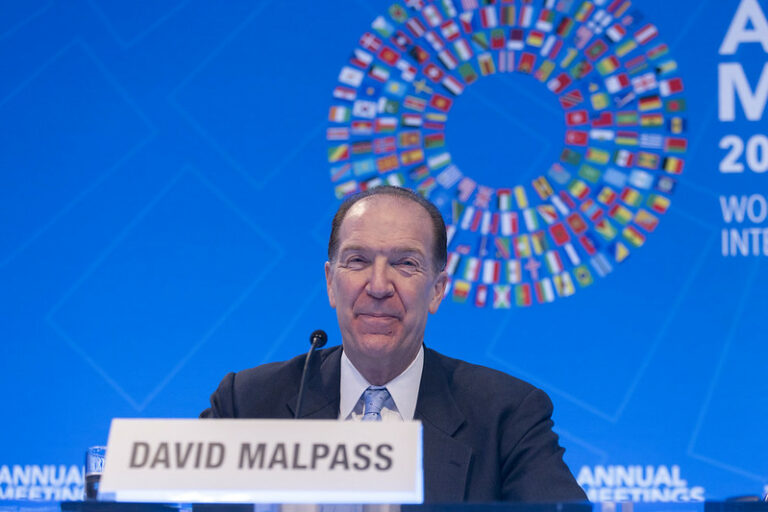
THE World Bank, in its latest report, says Nigeria spent 96.3 per cent of its 2022 revenue on servicing its debts.

The World Bank gave this information in its report on Macro Poverty Outlook for Nigeria, released in April 2023.

The report noted that Nigeria’s fiscal position deteriorated in 2022, leaving the cost of petrol subsidy to increase from 0.7 per cent to 2.3 per cent of the gross domestic product (GDP).

“This has kept the public debt stock at over 38 per cent of GDP and pushed the debt service to revenue ratio from 83.2 per cent in 2021 to 96.3 per cent in 2022,” it read.


SEE ALSO

The report stated that the fiscal deficit was estimated at 5.0 per cent of the GDP in 2022, breaching the stipulated limit for a federal fiscal deficit of 3 per cent.

The report stated that oil price booms had supported the country’s economy, but this has changed since 2021.

The cause for this included macroeconomic stability weakening amidst declining oil production, costly fuel subsidies, exchange rate distortions, and monetisation of the fiscal deficit.

“In 2022, oil revenues, the fiscal deficit outturn, FX reserves, and economic growth decoupled from the cycle of higher global oil prices. GDP growth decelerated from 3.6 per cent in 2021 to 3.3 per cent in 2022.

“Growth was driven by manufacturing, construction, and most services. In contrast, the oil sector shrank by 19.2 per cent. From the demand side, growth was driven by private consumption and investment.”

It also revealed that the deteriorating economic environment was leaving millions of Nigerians in poverty, resulting in risks tilting to the downside, given the lack of macro-fiscal reforms, the naira demonetisation, and an uncertain external outlook.

In a similar submission, the International Monetary Fund (IMF) in February said the Federal government has projected to spend 82 per cent of its revenue on interest payments in 2023.

According to the IMF, external debts (including those of the private sector) would rise to $121.6 billion, with external reserves climbing to $37.5 billion.

It disclosed this in a table of projections in its ‘IMF Executive Board Concludes 2022 Article IV Consultation with Nigeria summary.’

The projections showed an improvement in the share of the government’s revenue that was being used as interest payment, with interest payment falling from 96.3 per cent in 2022 to 82 per cent in 2023.

It added that interest payment was 86.1 per cent and 87.8 per cent of the Federal government’s revenue in 2020 and 2021 respectively.

The minister of Finance, Zainab Ahmed, said the Federal government spent 41 per cent of the revenue generated in 2022 to service its N44.06 trillion debt.

Transcorp’s net profit drops amid strained naira redesign policy

THE Transnational Corporation of Nigeria Plc, a publicly traded company under the name Transcorp, reported a 63.08 per cent decline in profit after tax (PAT) to N1.86 billion in the first quarter (Q1) of the year, from the N5.04 billion the company posted in the same period of 2022.

Many businesses had been adversely  affected by the naira redesign policy of the Central Bank of Nigeria (CBN) in the first quarter.

The apex bank had in October 2022 announced its plan to phase out designs of the N200, N500 and N1,000 notes, and introduced new designs into circulation, arguing it would help check counterfeiting, strengthen the economy, fight banditry, curb vote-buying in the general elections, and reduce the expenditure on cash management.

However, the redesign policy, experts said, had done more damage to the economy, paralysing business activities.

“The entire exercise was a needless disruption of economic growth activities, especially among the most vulnerable segments of the economy,” the Chief Executive Officer of the Centre for the Promotion of Private Enterprises (CPPE), Muda Yusuf, told The ICIR.

A look at Transcorp’s unaudited financial statements for the period ended 31 March 2023 showed that the company reported losses across all its main profit indicators.

A diversified conglomerate with investments in the hospitality, power, and oil and gas sectors, Transcorp’s profit before tax (PBT) also fell sharply by 50.18 per cent to N2.85 billion in the first quarter this year, from N5.73 billion in the first quarter of 2022.

Chaired by Tony Elumelu, a Nigerian philanthropist, the company’s gross profit moderated by 6.61 per cent to N14.22 billion, from N15.23 billion in the review period.

While Transcorp’s revenue grew minimally by 3.20 per cent to N32.39 billion from N31.39 billion, a 12.44 per cent rise in cost of sale to N18.17 billion from N16.16 billion brought its gross profit to fall by 6.61 per cent to N14.22 billion, from N15.23 billion in the review period.

Its operating expenses, also known as selling, general and administrative expenses (SG&A) or indirect cost, brought the company’s operating profit to decline by 15.22 per cent to N8.49 billion in the first quarter this year,  compared to N10.02 billion reported in the first quarter of 2022.

Transcorp’s total assets now stands at N351.84 billion in the review quarter, up by 3.23 per cent.

Meanwhile, Femi Otedola, a Nigerian businessman, had last week acquired over five per cent stake in the company. The move has seen Transcorp’s share price rise by 32.14 per cent to N1.85 as at Monday, April 17, when compared to the N1.40 figure it was as at Tuesday, April 11.

ICIR funded report shortlisted for African investigative journalism award

A REPORT funded and published by The International centre for investigative reporting (ICIR) has been shortlisted for the 2023 edition of African Prize For Investigative Journalism (PAJI) award.

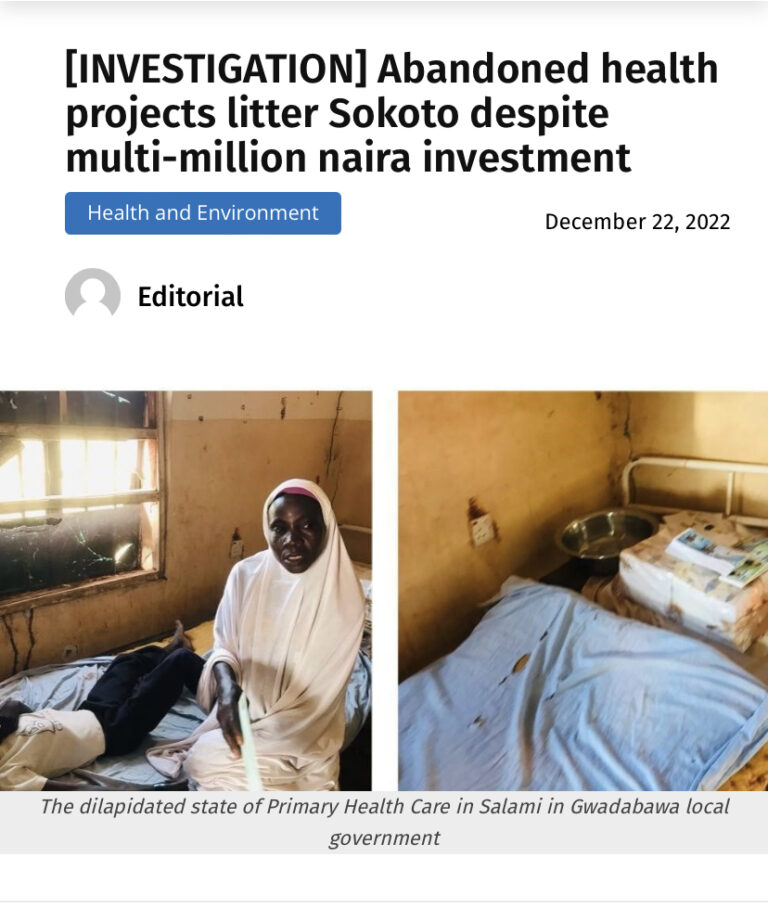
The report, ‘Abandoned health projects litter Sokoto despite multi-million naira investment’ by Abdulrasheed Hammad, a journalist who freelanced with The ICIR, was shortlisted in the online investigation category.

The African Prize for Investigative Journalism (PAJI) is an annual award created in 2021, honours the productions of journalists who had shown courage and determination in their work and also adhered to higher journalistic standards and deontological principles.

The 2023 edition of APIJ/PAJI is promoted and co-organised by M&D and the Centre d’Études des Sciences et Techniques de l’Information (CESTI) from the Cheikh Anta Diop University in Dakar, Sénégal.

The prizes that will be awarded at the event are intended to encourage investigative journalism in Africa and to highlight the quality of work carried out by a large number of African media professionals.

The ICIR-funded investigation exposed how Sokoto healthcare system remains in a deplorable state despite multi-million naira investments in health facilities. It also detailed how the Public Procurement Act was repeatedly violated in awarding public projects.

The reporter, Abdulrasheed Hammad went to four different LGAs to document the state of healthcare facilities despite the release of multimillion naira for the projects.

The healthcare centres visited are: Kware General hospital, Kware LGA, General Hospital Salami, Gwadabawa LGA, Abandoned healthcare facility in Achida and Sokoto State Specialist Hospital.

Speaking with The ICIR on the development, Hammad expressed his happiness for making the shortlisted list, stating that it’s a testament to the quality of investigative reports The ICIR is producing.

“I am so excited for being among the top three winners of this Africa Prize for Investigative Journalism (PAJI) Award. It is a great opportunity that my investigative story was rated in the top three in the whole of Africa. This is a testament to the quality and impactful investigative stories that ICIR is producing. 

“When I applied for the award, I didn’t expect that I would be shortlisted since it is an international award, but I was lucky to be shortlisted. This is the first international award I would be shortlisted for as an investigative journalist and I believe this would serve as an encouragement for me to do more impactful stories.”

When asked about the challenges faced during the course of the investigation, he explained that he received several threats from contractors and was offered a bribe to drop the story.

“I faced a lot of challenges while executing the story because I was afraid of physical attacks during the process of my investigation. While doing the story, I received threats from the contractors. Some contractors threatened to carry me with DSS, one contractor even rained curses on me and some contractors threatened me with court cases but I didn’t relent since my plan was to make sure I balance everything in my report,” he said.

Hammad also faced challenges in getting access to some important information that would further enrich his story as Freedom of Information (FOI) requests written to the concerned authorities were not responded to. 

He, therefore, applauded The ICIR team for financial and mentorship support during the project.

“I really appreciate The ICIR team for giving me an opportunity to freelance with the platform. Special thanks to Mr Dayo Aiyetan, the Executive Director of ICIR, Mr Ajibola Amzat, former Managing editor of ICIR and Africa editor for CCIJ and Ms Bamas Victoria, the ICIR editor for the support in executing the story. I appreciate my mentor on the OCR project, Mrs Lami Sadiq for the support in bringing out the best in my story,” he added.

Health emergencies: Ogun govt deploys tricycle ambulances to rural areas

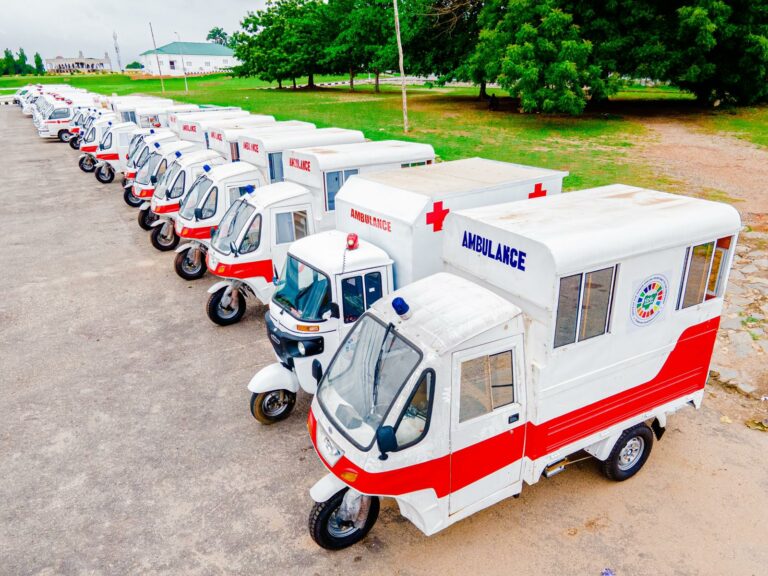
AS part of its efforts to tackle maternal and infant mortality and other emergencies, the Ogun State government has introduced tricycle (Keke) ambulances in rural areas.

A statement by the Chief Press Secretary to the Governor, Kunle Somorin, on Sunday, April 16, said the state government has purchased 50 tricycle ambulances for the scheme.

The statement added that the Office of the Senior Special Assistant to the President on Sustainable Development Goals donated 30 more tricycles while 10 more were donated by private donors to make a total of 90 tricycle ambulances.


READ ALSO:
N13trn subsidy spend equals health, education, agriculture, defence budgets in five years – NEITI

Nigeria’s health care sector needs urgent restructuring – NMA

Health workers recruitment: UK places Nigeria on red list

Senate health committee chair opposes doctors anti-migration bill


Somorin explained that transportation challenges has been a major cause of avoidable loss of lives of pregnant women and elderly persons.

According to the statement, the state government established an Emergency Medical Treatment Committee to ensure the quickest possible collaborative response to trauma and medical emergencies.

Parts of the statement read, “The committee consists of stakeholders drawn from various relevant government agencies and professional bodies including traffic, security agencies, health, media and emergency management.

“We have ensured that activation of a state-wide 3-digit 7-7-7 toll free emergency number, to notify the Emergency Medical Service (EMS) of any unforeseen situation  coupled with the integration of the national emergency number 112 in Ogun State.

“The government has integrated paramedics into the state’s emergency medical team to provide emergency care to victims at the scene of incident and on-route to the receiving facility/ hospital.

“We have incorporated the police, fire service, other paramilitary agencies, and volunteer international organisations into the EMS accordingly.”

However, the main opposition party in the state, the Peoples Democratic Party, had in 2021 accused the state governor Dapo Abiodun of a plotting to embezzle public funds when the tricycle ambulances were procured.

PDP condemned the governor’s decision to procure ‘tricycle ambulances’ in primary health centres across the state, saying it is an avenue created to divert tax payers’ money.

In a statement released by its spokesperson in the state, Akinloye Bankole, the PDP said, “As a reasonable political organisation, our great party still keeps wondering why any government, in all honesty, would keep showcasing deliberate deceit in order to appear busy in delivering dividends of responsive government to the people. Can anybody explain the possibility of an emergency bed stretcher fitting into this Keke Ambulance with full paramedics in attendance?

“Also, it is fundamentally necessary for the people to be equipped with the knowledge that the chassis of the much celebrated Keke NAPEP are not long and strong enough to carry a bed stretcher.

“For us as a party, we are convinced that the government under the watchful eyes of Prince Dapo Abiodun has, just as it has always done, supervised another flight of taxpayers’ money into some private vaults outside the state. He has again committed the state’s funds into another wasteful bazaar.”

Nigeria has one of the worst maternal and child mortality indices in the world.

According to the 2018 Nigeria Demographic and Health Survey (2018 NDHS), the country’s Maternal Mortality Ratio (MMR) is 512 deaths per 100,000 live births.

Also, the Minister of Health, Osagie Ehanire, in 2022, stated that the lack of access to healthcare is the main factor contributing to high maternal, infant and under five mortality in the country.

He said this during the News Agency of Nigeria (NAN) ministerial forum on November 13, 2022 in Abuja.

In the report, NAN noted that the latest United Nations Children’s Fund (UNICEF) report titled ‘Situation of Women and Children in Nigeria’ stated that the country records 576 maternal mortality per 100,000 live births, while approximately 262,000 babies die at birth every year.

According to the report, infant mortality stands at 69 per 1,000 live births, while under-five deaths is 128 per 1,000 live births with more than 64 per cent of the deaths caused by pneumonia, malaria and diarrhea.

Speaking about the maternal and infant mortality rate in the country, the minister said, “it is embarrassing when you go to conferences and see that your country has some of the worst indices and that’s one of the reasons why this administration is looking at extending healthcare to areas where we have problems.

“The area where you see this maternal mortality mostly is the rural areas where they have zero access to healthcare and where you will see that in spite of preaching inclusion, many people are actually excluded from the health service delivery.

“That’s why we are pressing for expanded primary healthcare. If you examine the causes of this high maternal mortality and also the infant mortality and the under-five mortality, you find that most of it is due to lack of access.

“There is no hospital there. Most of the women who deliver do so without skilled birth attendants, but once you have skilled birth attendants, maternal mortality reduces drastically.”

Poynter offers fellowship on editorial integrity

POYNTER, with support from the Corporation for Public Broadcasting, is offering the Editorial Integrity and Leadership Initiative.

This free fellowship seeks to strengthen the participants’ news leadership and ethical decision-making skills.

Participants will receive individual coaching, learn from industry experts, collaborate in small peer groups, and work on a personal project that will benefit their newsroom and their own leadership.

Public media journalists who want to transition into editorial leadership can also apply. Twenty-five public media journalists will be selected.

Participants for the first cohort will convene in St. Petersburg, Florida for five days in the week of September 11, 2023. They will also participate in online workshops twice per month.

Public media journalists serving in an editorial leadership role can apply for a nine-month fellowship.

The deadline for the submission of the application is May 15, 2023. Interested applicants can apply here.

Police arrest man over kidnap, murder of 3-year-old in Katsina

0

THE Katsina State Police Command has arrested a 30-year-old man Abubakar Abdulaziz suspected of kidnapping and killing a child in the Musawa Local Government Area (LGA) of the state.

Public Relations Officer (PRO) of the Command Gambo Isah noted in a statement on Monday April 17, that the child, a three-year-old boy, was abducted by the suspect from his home in Bacirawa village while his father was asleep.

“On March 23, at about 0100 hours, the suspect criminally trespassed into the residence of Adamu Alhassan of Bacirawa village, Musawa Local Government Area, Katsina State, while he was deep asleep and kidnapped his three-year-old son.

“He dropped a letter, directing Alhassan to pay a ransom of N800,000 and provided a contact number,” Isah noted.

The deceased’s father had negotiated and paid the sum of N150,000 to the suspect who confessed to burying the child alive, despite receiving the money.

Officials of the Command, however, traced and arrested the suspect who will subsequently be charged to court.

Many children in Nigeria fall victim to various forms of violence and abuse.

According to the United Nations Children’s Fund (UNICEF) six out of every 10 children experience some form of violence and only a fraction ever receive help.

In 2022, a five-year-old child, Hanifa Abubakar, was killed in Kano State by her teacher Abdulmalik Muhammad Tanko, who abducted her along and demanded a N6 million ransom from her parents.

The 38-year-old Tanko, the principal of Nobel Kids Academy and North West Preparatory School in Kano, abducted the child on December 4, 2021, on her way home from Islamiyya school.

Hanifa had been his pupil. Tanko murdered and buried her in a shallow grave after she recognised him while he held her captive.

The Police Command in the state had arrested Tanko who was sentenced to death by hanging by a High court in the state on July 28.

Bellingcat is hiring: Editor

BELLINGCAT is hiring and inviting applications for its Editor position.

The organisation is an independent collective of international researchers, investigators, and citizen journalists using open source and social media investigations to probe conflict and more.

The editor will commission, edit and publish major stories and investigations produced by the Bellingcat collective and, on occasion, freelance contributors.

Applicants must have at least five years of editing experience, experience conducting open-source research or editing articles with significant open-source components, and experience working on major, often legally sensitive, and high-profile investigations.

This position has an initial one-year contract with the possibility of extension.

The salary is between EUR47,000 to EUR49,500.

Experienced editors and journalists can apply for this position.

The deadline for the submission of the application is May 7, 2023. Interested applicants can apply here.

FG approves use of Oxford malaria vaccine in Nigeria

THE Federal Government has given a provisional approval for the use of R21/Matrix malaria vaccine produced by scientists at Oxford University.

The Nigerian government granted the approval after Ghana became the first country to approve the vaccine which is said to be 80 per cent effective.

Speaking to newsmen on Monday, April 17, the Director-General of the National Agency for Food and Drug Administration And Control (NAFDAC), Mojisola Adeyeye said the vaccine was produced by Oxford scientists in collaboration with the Serum Institute of India Pvt Ltd.

Adeyeye noted that the vaccine is adopted to mitigate and prevent clinical malaria among infants between five months to 36 months of age.

“The National Agency for Food and Drug Administration and Control (NAFDAC) in exercising its mandate as stipulated by its enabling law, NAFDAC Act CapN1, LFN 2004 is granting registration approval for R21 malaria vaccine.

“The vaccine is indicated for prevention of clinical malaria in children from five months to 36 months of age. The storage temperature of the vaccine is 2-8 °C.”

The NAFDAC boss stressed that the dossier of the R21 was subjected to independent review by researchers from tertiary institutions in Nigeria and the agency’s in-house vaccine committee.

The reviewers’ results were further assessed by a joint review which declared the dossier “satisfactory” and “adequate”.

“Overall, the R21 malaria vaccine dossier complied substantially with best international standards with which the dossier was benched-marked. The joint review committee concluded that the data on the R21 malaria vaccine were robust and met criteria for efficacy, safety, and quality.

“It was also adjudged that the vaccine’s known and potential benefits outweigh its known and potential risks, thereby supporting the manufacturer’s recommended use.”

Adeyeye further emphasised that the  provisional approval of R21 malaria vaccine was done in accordance with the WHO’s malaria vaccine implementation guideline.

“While granting the approval, the agency has also communicated the need for expansion of the clinical trial conducted to include a phase 4 clinical trial/pharmacovigilance study to be carried out in Nigeria.

“The brief on the approval of the R21 malaria vaccine has been communicated to the minister of health and the National Primary Healthcare Development Agency for appropriate actions towards immunisation in the respective population.

“The only vaccine currently endorsed for malaria by the World Health Organisation (WHO) is the RTS, S/AS01 (RTS,S) vaccine which is 29 per cent effective in preventing severe malaria,” she added.

The ICIR reported that Azerbaijan and Tajikistan were on March 29 declared malaria-free by the World Health Organization (WHO).

The two European countries were enlisted among 39 other malaria-free countries following century-long efforts at eradicating malaria.

Nigeria parades over a quarter (27 per cent) of global malaria cases and deaths. The country loses over 200,000 people, including women and children, to malaria annually.

A 2016 report revealed how the Global Fund accused the Nigerian government of embezzling and misappropriating the malaria funds it gave the country to fight the disease.

Consequently, Nigeria was suspended from accessing funding for the nation’s malaria programme.

Another report published in 2021 detailed how gross corruption hindered the country’s success in containing the malaria scourge.


READ ALSO:


The ICIR reported that the National Malaria Elimination Programme (NMEP) said malaria accounts for 30 per cent of deaths among children in Nigeria. NMEP also described malaria as one of the major public health challenges in the country.

“Malaria accounts for 60 per cent of outpatient visits to health facilities, 30 per cent of childhood deaths, 11 per cent of maternal deaths (4,500 die yearly), and 25 per cent of deaths in infants (children under a year old).

“To track progress being made as a result of these efforts, the National Malaria Elimination Programme, with support from partners/donors, conduct periodically the Nigeria Malaria Indicator Survey (NMIS), which is interspersed with the Nigeria Demographic and Health Survey (NDHS). So far Nigeria has conducted two rounds of NMIS in 2010 and 2015. The third round of MIS was implemented in 2021,” NMEP Coordinator, Dr Perpetua Uhomoibi said.

INEC suspends Adamawa REC

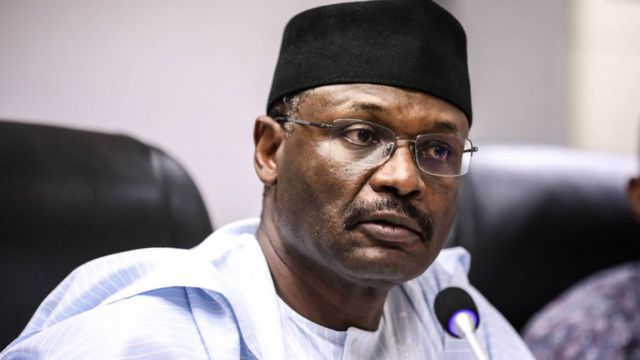
THE Independent National Electoral Commission (INEC) has suspended the Resident Electoral Commissioner (REC) for Adamawa State, Hudu Yinusa Ari, with immediate effect.

Ari has been under fire since Sunday, April 16, after he declared the governorship candidate of the All Progressives Congress (APC), Aisha Dahiru (Binani), the winner of the election concluded through a supplementary poll on Saturday, April 15.

The Peoples Democratic Party (PDP), whose candidate and incumbent Governor Ahmadu Fintiri was leading in the results already announced by the electoral body, protested the declaration.

The suspended REC illegally declared the winner while the collation of results had yet to conclude. According to Electoral Act (2022), the Returning Officer for the election, rather than the REC, has the power to declare the winner of an election.

Fintiri had the highest number of votes cast in the governorship election held on March 18, but some votes were cancelled, and the election could not hold in some parts of the state, forcing INEC to declare the exercise inconclusive.

Fintiri polled 421,524, while Binani secured 390, 275 in the March 18 election.

The incumbent governor won 13 of Adamawa’s 21 local government areas, while Binani won eight LGAs in the first round of the exercise on March 18.

Similarly, Fintiri was leading in the supplementary votes counted in 10 out of the 20 local government areas before the REC made his pronouncement.

The ICIR reported how the INEC headquarters in Abuja summoned Ari minutes after he declared Binani winner.

The Commission also invited its other staff involved in the declaration to Abuja and consequently suspended the collation of results of the supplementary poll.

The ICIR reports that Adamawa State is the only remaining state that is yet to have a governor-elect in all states where the governorship election took place on March 18 across Nigeria.

In a letter dated April 17, signed by Rose Oriaran-Anthony, the INEC Secretary, the Commission demanded that Ari ‘stay away’ from its Adamawa office.

“I hereby convey the Commission’s decision that you, Barrister Hudu Yunusa Ari, Resident Electoral Commission, Adamawa State, should stay away from the Commission’s office in Adamawa State immediately until further notice. The Administrative Secretary has been directed to take full charge of INEC, Adamawa State, with immediate effect,” parts of the letter read.

The ICIR reported how the PDP had called for Ari’s removal over alleged malpractices during the elections in the state.

Many Nigerians have reacted to the bizarre incident in the North-East state, where the presidential candidate of the PDP, Atiku Abubakar, hails from.

Many have described the declaration by the REC as the height of the shortcomings of the 2023 elections.

Nigerian calls out airline over racist treatment in Canada

A NIGERIAN based in Canada Adeola Adeyemi, has shared a recent experience with an airline where his wife suffered racial discrimination during a trip from Vancouver to Calgary.

According to Adeyemi, his mother, wife and their 12 weeks old baby had booked the trip with Flair Airlines and selected their preferred seats next to each other, which was confirmed in their boarding passes after check-in.


READ ALSO:
Medical racism: Canada-based Nigerian nurse narrates how negligence led to son’s death

Nigeria, Canada to strengthen bilateral relations

Terror alert: Canada, Australia warn against travel to Abuja

U-20 Women’s W/Cup: Falconets beat Canada to earn perfect group stage record


However, onboard the aircraft on Friday, April 14, they discovered that one of the seats (2A) located by the window was already occupied by a lone white female traveller who turned down appeals to vacate the seat.

“This woman took my wife’s seat, refused to get up when approached, gave my wife the middle finger afterwards, and staff of Flair Airlines did nothing.

“They even threatened to eject my wife, mother and 12 weeks old baby from the plane for demanding to seat on a seat they paid for! This is injustice and no other explanation makes sense other than the fact that it was discriminatory,” Adeyemi said.

A video taken during the incident was also shared on Twitter and one of the female flight attendants could be heard saying: “If you want us to help you, you need to calm down”, even though Adeyemi’s wife spoke softly.

Checks by The ICIR showed that a traveller can pick a favourite spot on a Flair Airplane and sit together in groups at an extra fee per passenger, depending on the seat option they choose.

The options include standard ($10-$20 + tax), front ($15-$25 + tax), extra legroom ($25-$45 + tax) and emergency boarding ($35-$45 + tax).

“If you do not want to pay to select your seat, you will be assigned a seat at random at no cost,” the airline said on its website.

Adeyemi said he booked the flight in advance and got a basic bundle to ensure that his family was comfortable, as he would not be embarking on the trip with them.

“I was on the phone with her and hearing her being subjected to this type of hassle got me very, very agitated,” he said.

Adeyemi said he had written to Flair Airlines but they were yet to respond.

Reacting to the incident, some Nigerians have called out the airline and threatened to boycott their services over the perceived racist treatment.

Ayinke Adefemi said she once had a similar experience on a Qatar flight to Dubai and quietly located the most convenient and vacant seat on the AC and sat.

“When a cabin crew arrived I showed them my pass and told her someone had also refused to leave my seat. It took 5 minutes but they booted her out,” Adefemi said.