Home Blog Page 967

Poynter offers fellowship on editorial integrity

POYNTER, with support from the Corporation for Public Broadcasting, is offering the Editorial Integrity and Leadership Initiative.

This free fellowship seeks to strengthen the participants’ news leadership and ethical decision-making skills.

Participants will receive individual coaching, learn from industry experts, collaborate in small peer groups, and work on a personal project that will benefit their newsroom and their own leadership.

Public media journalists who want to transition into editorial leadership can also apply. Twenty-five public media journalists will be selected.

Participants for the first cohort will convene in St. Petersburg, Florida for five days in the week of September 11, 2023. They will also participate in online workshops twice per month.

Public media journalists serving in an editorial leadership role can apply for a nine-month fellowship.

The deadline for the submission of the application is May 15, 2023. Interested applicants can apply here.

Police arrest man over kidnap, murder of 3-year-old in Katsina

0

THE Katsina State Police Command has arrested a 30-year-old man Abubakar Abdulaziz suspected of kidnapping and killing a child in the Musawa Local Government Area (LGA) of the state.

Public Relations Officer (PRO) of the Command Gambo Isah noted in a statement on Monday April 17, that the child, a three-year-old boy, was abducted by the suspect from his home in Bacirawa village while his father was asleep.

“On March 23, at about 0100 hours, the suspect criminally trespassed into the residence of Adamu Alhassan of Bacirawa village, Musawa Local Government Area, Katsina State, while he was deep asleep and kidnapped his three-year-old son.

“He dropped a letter, directing Alhassan to pay a ransom of N800,000 and provided a contact number,” Isah noted.

The deceased’s father had negotiated and paid the sum of N150,000 to the suspect who confessed to burying the child alive, despite receiving the money.

Officials of the Command, however, traced and arrested the suspect who will subsequently be charged to court.

Many children in Nigeria fall victim to various forms of violence and abuse.

According to the United Nations Children’s Fund (UNICEF) six out of every 10 children experience some form of violence and only a fraction ever receive help.

In 2022, a five-year-old child, Hanifa Abubakar, was killed in Kano State by her teacher Abdulmalik Muhammad Tanko, who abducted her along and demanded a N6 million ransom from her parents.

The 38-year-old Tanko, the principal of Nobel Kids Academy and North West Preparatory School in Kano, abducted the child on December 4, 2021, on her way home from Islamiyya school.

Hanifa had been his pupil. Tanko murdered and buried her in a shallow grave after she recognised him while he held her captive.

The Police Command in the state had arrested Tanko who was sentenced to death by hanging by a High court in the state on July 28.

Bellingcat is hiring: Editor

BELLINGCAT is hiring and inviting applications for its Editor position.

The organisation is an independent collective of international researchers, investigators, and citizen journalists using open source and social media investigations to probe conflict and more.

The editor will commission, edit and publish major stories and investigations produced by the Bellingcat collective and, on occasion, freelance contributors.

Applicants must have at least five years of editing experience, experience conducting open-source research or editing articles with significant open-source components, and experience working on major, often legally sensitive, and high-profile investigations.

This position has an initial one-year contract with the possibility of extension.

The salary is between EUR47,000 to EUR49,500.

Experienced editors and journalists can apply for this position.

The deadline for the submission of the application is May 7, 2023. Interested applicants can apply here.

FG approves use of Oxford malaria vaccine in Nigeria

THE Federal Government has given a provisional approval for the use of R21/Matrix malaria vaccine produced by scientists at Oxford University.

The Nigerian government granted the approval after Ghana became the first country to approve the vaccine which is said to be 80 per cent effective.

Speaking to newsmen on Monday, April 17, the Director-General of the National Agency for Food and Drug Administration And Control (NAFDAC), Mojisola Adeyeye said the vaccine was produced by Oxford scientists in collaboration with the Serum Institute of India Pvt Ltd.

Adeyeye noted that the vaccine is adopted to mitigate and prevent clinical malaria among infants between five months to 36 months of age.

“The National Agency for Food and Drug Administration and Control (NAFDAC) in exercising its mandate as stipulated by its enabling law, NAFDAC Act CapN1, LFN 2004 is granting registration approval for R21 malaria vaccine.

“The vaccine is indicated for prevention of clinical malaria in children from five months to 36 months of age. The storage temperature of the vaccine is 2-8 °C.”

The NAFDAC boss stressed that the dossier of the R21 was subjected to independent review by researchers from tertiary institutions in Nigeria and the agency’s in-house vaccine committee.

The reviewers’ results were further assessed by a joint review which declared the dossier “satisfactory” and “adequate”.

“Overall, the R21 malaria vaccine dossier complied substantially with best international standards with which the dossier was benched-marked. The joint review committee concluded that the data on the R21 malaria vaccine were robust and met criteria for efficacy, safety, and quality.

“It was also adjudged that the vaccine’s known and potential benefits outweigh its known and potential risks, thereby supporting the manufacturer’s recommended use.”

Adeyeye further emphasised that the  provisional approval of R21 malaria vaccine was done in accordance with the WHO’s malaria vaccine implementation guideline.

“While granting the approval, the agency has also communicated the need for expansion of the clinical trial conducted to include a phase 4 clinical trial/pharmacovigilance study to be carried out in Nigeria.

“The brief on the approval of the R21 malaria vaccine has been communicated to the minister of health and the National Primary Healthcare Development Agency for appropriate actions towards immunisation in the respective population.

“The only vaccine currently endorsed for malaria by the World Health Organisation (WHO) is the RTS, S/AS01 (RTS,S) vaccine which is 29 per cent effective in preventing severe malaria,” she added.

The ICIR reported that Azerbaijan and Tajikistan were on March 29 declared malaria-free by the World Health Organization (WHO).

The two European countries were enlisted among 39 other malaria-free countries following century-long efforts at eradicating malaria.

Nigeria parades over a quarter (27 per cent) of global malaria cases and deaths. The country loses over 200,000 people, including women and children, to malaria annually.

A 2016 report revealed how the Global Fund accused the Nigerian government of embezzling and misappropriating the malaria funds it gave the country to fight the disease.

Consequently, Nigeria was suspended from accessing funding for the nation’s malaria programme.

Another report published in 2021 detailed how gross corruption hindered the country’s success in containing the malaria scourge.


READ ALSO:


The ICIR reported that the National Malaria Elimination Programme (NMEP) said malaria accounts for 30 per cent of deaths among children in Nigeria. NMEP also described malaria as one of the major public health challenges in the country.

“Malaria accounts for 60 per cent of outpatient visits to health facilities, 30 per cent of childhood deaths, 11 per cent of maternal deaths (4,500 die yearly), and 25 per cent of deaths in infants (children under a year old).

“To track progress being made as a result of these efforts, the National Malaria Elimination Programme, with support from partners/donors, conduct periodically the Nigeria Malaria Indicator Survey (NMIS), which is interspersed with the Nigeria Demographic and Health Survey (NDHS). So far Nigeria has conducted two rounds of NMIS in 2010 and 2015. The third round of MIS was implemented in 2021,” NMEP Coordinator, Dr Perpetua Uhomoibi said.

INEC suspends Adamawa REC

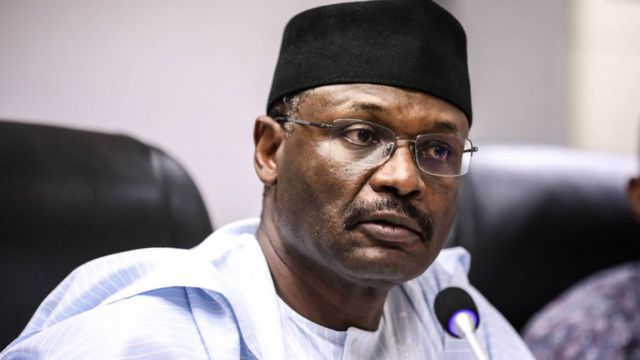
THE Independent National Electoral Commission (INEC) has suspended the Resident Electoral Commissioner (REC) for Adamawa State, Hudu Yinusa Ari, with immediate effect.

Ari has been under fire since Sunday, April 16, after he declared the governorship candidate of the All Progressives Congress (APC), Aisha Dahiru (Binani), the winner of the election concluded through a supplementary poll on Saturday, April 15.

The Peoples Democratic Party (PDP), whose candidate and incumbent Governor Ahmadu Fintiri was leading in the results already announced by the electoral body, protested the declaration.

The suspended REC illegally declared the winner while the collation of results had yet to conclude. According to Electoral Act (2022), the Returning Officer for the election, rather than the REC, has the power to declare the winner of an election.

Fintiri had the highest number of votes cast in the governorship election held on March 18, but some votes were cancelled, and the election could not hold in some parts of the state, forcing INEC to declare the exercise inconclusive.

Fintiri polled 421,524, while Binani secured 390, 275 in the March 18 election.

The incumbent governor won 13 of Adamawa’s 21 local government areas, while Binani won eight LGAs in the first round of the exercise on March 18.

Similarly, Fintiri was leading in the supplementary votes counted in 10 out of the 20 local government areas before the REC made his pronouncement.

The ICIR reported how the INEC headquarters in Abuja summoned Ari minutes after he declared Binani winner.

The Commission also invited its other staff involved in the declaration to Abuja and consequently suspended the collation of results of the supplementary poll.

The ICIR reports that Adamawa State is the only remaining state that is yet to have a governor-elect in all states where the governorship election took place on March 18 across Nigeria.

In a letter dated April 17, signed by Rose Oriaran-Anthony, the INEC Secretary, the Commission demanded that Ari ‘stay away’ from its Adamawa office.

“I hereby convey the Commission’s decision that you, Barrister Hudu Yunusa Ari, Resident Electoral Commission, Adamawa State, should stay away from the Commission’s office in Adamawa State immediately until further notice. The Administrative Secretary has been directed to take full charge of INEC, Adamawa State, with immediate effect,” parts of the letter read.

The ICIR reported how the PDP had called for Ari’s removal over alleged malpractices during the elections in the state.

Many Nigerians have reacted to the bizarre incident in the North-East state, where the presidential candidate of the PDP, Atiku Abubakar, hails from.

Many have described the declaration by the REC as the height of the shortcomings of the 2023 elections.

Nigerian calls out airline over racist treatment in Canada

A NIGERIAN based in Canada Adeola Adeyemi, has shared a recent experience with an airline where his wife suffered racial discrimination during a trip from Vancouver to Calgary.

According to Adeyemi, his mother, wife and their 12 weeks old baby had booked the trip with Flair Airlines and selected their preferred seats next to each other, which was confirmed in their boarding passes after check-in.


READ ALSO:
Medical racism: Canada-based Nigerian nurse narrates how negligence led to son’s death

Nigeria, Canada to strengthen bilateral relations

Terror alert: Canada, Australia warn against travel to Abuja

U-20 Women’s W/Cup: Falconets beat Canada to earn perfect group stage record


However, onboard the aircraft on Friday, April 14, they discovered that one of the seats (2A) located by the window was already occupied by a lone white female traveller who turned down appeals to vacate the seat.

“This woman took my wife’s seat, refused to get up when approached, gave my wife the middle finger afterwards, and staff of Flair Airlines did nothing.

“They even threatened to eject my wife, mother and 12 weeks old baby from the plane for demanding to seat on a seat they paid for! This is injustice and no other explanation makes sense other than the fact that it was discriminatory,” Adeyemi said.

A video taken during the incident was also shared on Twitter and one of the female flight attendants could be heard saying: “If you want us to help you, you need to calm down”, even though Adeyemi’s wife spoke softly.

Checks by The ICIR showed that a traveller can pick a favourite spot on a Flair Airplane and sit together in groups at an extra fee per passenger, depending on the seat option they choose.

The options include standard ($10-$20 + tax), front ($15-$25 + tax), extra legroom ($25-$45 + tax) and emergency boarding ($35-$45 + tax).

“If you do not want to pay to select your seat, you will be assigned a seat at random at no cost,” the airline said on its website.

Adeyemi said he booked the flight in advance and got a basic bundle to ensure that his family was comfortable, as he would not be embarking on the trip with them.

“I was on the phone with her and hearing her being subjected to this type of hassle got me very, very agitated,” he said.

Adeyemi said he had written to Flair Airlines but they were yet to respond.

Reacting to the incident, some Nigerians have called out the airline and threatened to boycott their services over the perceived racist treatment.

Ayinke Adefemi said she once had a similar experience on a Qatar flight to Dubai and quietly located the most convenient and vacant seat on the AC and sat.

“When a cabin crew arrived I showed them my pass and told her someone had also refused to leave my seat. It took 5 minutes but they booted her out,” Adefemi said.

Africa Check offers African fact-checking awards

AFRICA  Check, a project of the AFP Foundation, is accepting applications for the African Fact-Checking Awards. 

The awards honor journalism that exposes misleading claims made by public figures and institutions.

Works must be original pieces of fact-checking journalism first published or broadcast between July 1, 2022, and June 30, 2023, by a media house based in Africa.

Entries may have been published or broadcast in French or English.

The categories are fact-check of the year by a working journalist, fact-check of the year by a professional fact-checker, and fact-check of the year by a student.

The working journalist and fact-checkers will receive US$3,000, while the runners-up will be awarded US$1,500. The student journalist winner will receive US$2,000 and the runner-up US$1,000.

Print, broadcast, and online journalists whose works held public figures accountable can compete for cash prizes.

The deadline for the submission of applications is June 30, 2023. Interested applicants can apply here.

Child trafficking: Mother sells baby to settle bank loan

0

A mother in Ogun State has been arrested for allegedly selling her 18-month-old baby for N600,000 to pay off a loan she obtained from a microfinance bank.

Spokesman of the Ogun State Police Command Abimbola Oyeyemi, in a statement on Monday, April 17, revealed that the buyer, who is yet to be identified, purchased the baby in Lagos.

The suspect, identified as Olaide Adekunle, was apprehended following a report at the Sango Divisional Police headquarters by her husband, Nureni Rasaq.

According to Rasaq, his wife left their home for Lagos in March with their baby girl, Moridiat Rasaq, but returned without the child.

He said that all attempts to get information about the baby’s whereabouts from his wife proved futile.

Oyeyemi said the DPO Sango Division, Dahiru Saleh, immediately detailed his detectives to arrest the suspect.

He said during the interrogation, the suspect confessed to have sold the baby for N600,000.

“On interrogation, the suspect confessed that she has sold the baby to someone in Lagos at the rate of six hundred thousand naira (N600,000),” he said.

“When asked the reason for her action, she stated that she borrowed money from a microfinance bank, and when she was unable to pay back the money, the bank agents started dragging her and threatening to deal decisively with her. It was consequence upon this that she ran to Lagos and started hawking sachet water.

“It was while hawking that she met a man who introduced her to the woman that eventually bought the child in Lagos.”

Oyeyemi disclosed that the acting Commissioner of Police, Babakura Muhammed, has directed that the suspect be transferred to the State Criminal Investigation Department for further investigation and possible recovery of the baby.

He said the identity of the buyer is still unknown, and the police are actively searching for her.

Child trafficking is a significant problem in Nigeria, with many young children sold into forced labor, prostitution, and other forms of exploitation.

A 2020 report by the United Nations Office on Drugs and Crime (UNODC) noted that Nigeria is a major source, transit, and destination country for human trafficking.

The report stated that “the most prevalent form of human trafficking in Nigeria is forced labor, which accounts for approximately 70% of cases detected in 2018”.

The sale of children is also a common practice in some parts of Nigeria, where people often buy children as domestic servants or to work on farms and homes.

Also, some childless couples buy children, rather than going through legal adoption processes, which are seen as cumbersome. Some suspects arrested for engaging in child buying claim ignorance of the country’s adoption laws.

However, such transactions are illegal under Nigerian law, and offenders face up to 14 years in prison.

The Nigerian government has taken steps to address the issue, including the establishment of a National Agency for the Prohibition of Trafficking in Persons (NAPTIP) and the adoption of anti-trafficking laws.

Despite these efforts, child trafficking remains prevalent, with poverty and lack of education often cited as the primary reasons for the crime.

To tackle the issue, experts suggest that there needs to be a comprehensive approach that involves addressing poverty, improving education, and increasing awareness about the dangers of child trafficking.

Adamawa: APC senator says INEC can’t nullify result declared by REC

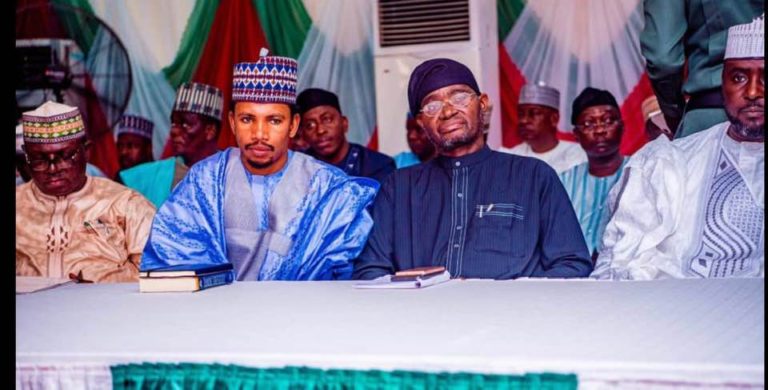
AN All Progressives Congress (APC) lawmaker Senator Ishaku Elisha Abbo has said the Independent National Electoral Commission (INEC) lacks the power to nullify the controversial Adamawa governorship supplementary election result declared by the state Resident Electoral Commissioner (REC).

The REC, Hudu Ari, had on April 16 declared the candidate of the APC, Aishat Dahiru, popularly known as Binani, winner of the supplementary governorship election in the state.


READ ALSO:
INEC suspends Adamawa REC

Fintiri says Adamawa REC’s action on governorship supplementary election provocative

Atiku alleges plot to provoke violence in Adamawa

Adamawa: How PDP had demanded removal of REC over alleged malpractices


However, INEC nullified the REC’s action, noting that he lacked the powers to declare the result of the election.

Reacting to the development on Channels Television on Monday, April 17, Abbo said provisions of the Electoral Act, 2022, as amended, forbids INEC from voiding the results declared by the REC.

Abbo argued that, according to the Electoral Act, further proclamation by INEC on the Adamawa supplentary election would be insignificant.

“They (INEC) cannot suspend collation. INEC cannot nullify an election that has been announced, they don’t have that power,” he said.

The lawmaker further argued that the declaration by the REC can only be challenged through legal means.

“Elections have been announced, it is out of their (INEC) hands. The result has been announced by the REC. Section 65 does not operate in isolation, there is Section 149.

“Notwithstanding any other provisions of this Act, any defect or error arising from any actions taken by an official of the Commission in relation to any notice, form, or document made or given or other things done by the official in pursuance of the provisions of the Constitution or of this Act, or any rules made thereunder remain valid, unless otherwise challenged and declared invalid by a competent court of law or tribunal.”

Abbo further stressed that it is futile to contest the already announced result.

The APC lawmaker accused the PDP of electoral violation.

“It has already been announced; you cannot review a result that they told us. They said the reason why they have not reviewed Fufore was that it was announced. We prepared for the elections and the elections went smoothly, with the introduction of BVAS, we all voted in line with the dictates of the Electoral Act and the INEC regulations.

“Election has taken place, the election was collated. PDP sent someone when they discovered that we had 37,000 votes in favour of APC and went and snatched election results. The chairman of the local government sent someone and snatched election results and disappeared,” he alleged.

Claiming that the incumbent governor, PDP candidate Ahmadu Fintiri coerced the Returning Officer to announce another result under duress, he said, “They went again and computed another result when they mobilized themselves in their thousands and chased out APC supporters and moved the collation centre to a police station.

“The governor drove in the presence of the former commissioner of police to Fufore and declared the result under duress.

“They forced the electoral officer to declare the result under duress, the governor was there, the commissioner of police was there.”

Abbo accused that the PDP and INEC commissioners of connivance to subvert the democratic process.

“The supplementary elections went very well until the national commissioners came from Abuja. In collaboration with the PDP, they decided to subvert the process and do a coup against the APC

“You cannot have a supplementary election without having the main election. It was the failure of the conclusiveness of the main elections that gave out supplementary elections. What happened in Fufore was a coup.”

The ICIR earlier reported that the Independent National Electoral Commission (INEC) through a statement on Sunday, April 7, summoned the Adamawa REC, Hudu Ari, to Abuja after he declared Binani winner of the supplementary governorship.

Ari reportedly declared Binani Governor-elect midway into collation of results of the supplementary election held on Saturday, April 16. However, the INEC Returning Officer is the official empowered by the Electoral Act, 2022, to make such a pronouncement.

Adamawa State governor Fintiri, described the REC’s action as provocative and illegal, and called on President Muhammadu Buhari to intervene in the matter.


APC controls more than half of Senate seats

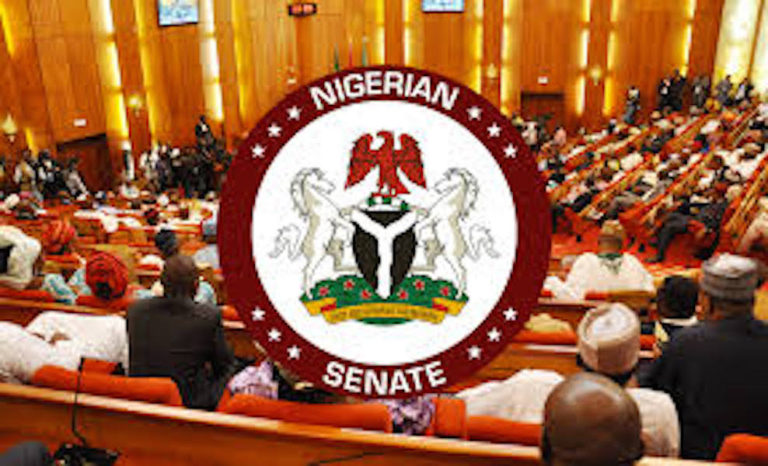
THE All Progressives Congress (APC) has won more seats than all six other political parties that have secured at least a seat at the nation’s 10th Senate.

After the announcement of the results of the supplementary elections on Sunday, April 16, the APC had 59 seats out of the 109 available at the Senate.

The number represents 54.1 per cent of the seats but less than the two-thirds required to take crucial decisions at the National Assembly.

The party is poised to lead the Senate for the third consecutive time – in 2015, 2019, and 2023, but will need the support of other parties to produce and deliver efficient leadership.

Six political parties sharing the remaining 50 seats not won by the APC are the Peoples Democratic Party (36), Labour Party (8), Social Democratic Party (2), New Nigeria Peoples Party, (2), Young Peoples Party, (1), and All Progressives Grand Alliance (1).

The APC won the presidency through its candidate, Bola Tinubu, in the February 25 presidential election and will be forming the government after the swearing-in of the President-elect on May 29.

Tinubu polled 8,794,726 votes to defeat Peoples Democratic Party’s (PDP) Atiku Abubakar and Labour Party’s (LP) Peter Obi, according to the presidential election result announced by the Chairman of the Independent National Electoral Commission (INEC), Mahmood Yakubu, who was the election’s returning officer.

Atiku, a former vice president, got 6,984,520 votes, while Obi, a former Anambra State governor, garnered 6,101,533 votes. 

Tinubu raked in 12 states, Atiku won 12 states, and Obi won 11 states plus the Federal Capital Territory (FCT).

However, both Atiku and Obi claimed they won and are challenging Tinubu’s victory in court.

Some senators are already contesting the position of President of the 10th Senate, which will be inaugurated in June.

Among the major contenders are former Abia State governor and senator representing Abia North, Orji Kalu, former Akwa Ibom State governor and senator representing Akwa-Ibom North, Godswill Akpabio, senator representing Kano-North, Jibrin Barau, and his Niger-East counterpart, Sani Musa.

The Senate appears to have been a retirement home for governors.

In the Ninth National Assembly in 2019, about 20 former governors were elected, including Rochas Okorocha (Imo), Ibikunle Amosun (Ogun), Abdulaziz Yari (Zamfara), Kabiru Gaya (Kano), Abdullahi Adamu (Nasarawa), Chimaroke Nnamani (Enugu), Orji Kalu (Abia), Gabriel Suswam (Benue), and Ibrahim Shekarau (Kano). 

But the calculation changed for some incumbent governors who eyed the Senate at the just-concluded poll.  

The ICIR reported how incumbent governors, who will complete their two terms on May 29, vied for the Senate and lost.      

The governors are Samuel Ortom (Benue), Ifeanyi Ugwuanyi (Enugu), Darius Ishaku (Taraba), Simon Lalong (Plateau), and Ben Ayade (Cross River).    

Others not captured in the report are Abubakar Bagudu (Kebbi) and Okezie Ikpeazu (Abia).

However, some incumbent governors won the Senate seat. They include Aminu Tambuwal (Sokoto) and David Umahi (Ebonyi).