

NIGERIA’s annual budgets, running into trillions of naira, has, over the years, failed to impact the lives of the people, with 130 million of the population still in multi-dimensional poverty. For the Lead Director of the Centre for Social Justice, Eze Onyekpere, the Legislature should rise to the occasion as an independent body empowered by the constitution to scrutinise budgets and relevant agencies of government in its oversight. Featuring on The ICIR’s budget and transparency series Onyekpere insists that legislative functions should be done independently and not trivialised by singing ‘on your mandate we shall stand’ in key functions of the National Assembly.
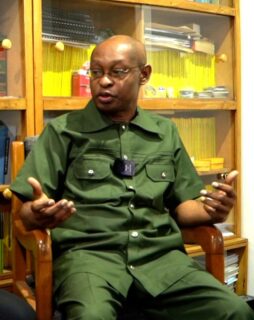
The ICIR: Can you give your assessment of President Tinubu’s government in the last two years? From the floating of the exchange rate and also from the removal of the subsidy?
Onyekpere: Well, let me start by saying that there have been critical challenges in the economy since the Tinubu administration came on board. Even before then, there were challenges. So not everything we see in the economy is attributable to either its proper management or mismanagement. But we are going to try an assessment based on the key critical reform issues which the administration introduced.
You know, when we use the word reform, it’s a fairly nebulous word because it doesn’t indicate the content. Everybody can call anything a reform, since you’re changing the system from what it used to be to a new one.
Now, if you look at the critical reforms — the removal of the fuel subsidy and the floating of the naira, you discover that the reforms were not well nuanced, well planned, well sequenced, and well understood by the author of the reforms.
First of all, I would like to see reforms from the construction of a categorical syllogism. In logic, you have the first premise, the second premise, which is the middle premise, and then the conclusion.
For instance, let’s try to construct a syllogism out of the removal of fuel subsidy. The idea is that paying for subsidies by the federal government and states is taking away fiscal space and resources that should have been used for infrastructure, electricity, education, health, water, namely all the infrastructure that we need. So, there was a need to remove that subsidy so that the resources — the six or seven trillion that would have been used — would now be re-channelled to improve health services, education, and access to water.
But when you say reform, the first step of removing subsidies is not the end of the reform. There needs to be a second stage showing what has been saved, and a final stage showing where the money is invested, leading to improvements in quality of life, security, and welfare.
The first step has been taken, but the second and third are not being discussed. Nobody is talking about where the money was invested or improvements in welfare, services rendered by the government, or security.
This is not the first time subsidy removal has been discussed. The only difference is that this time it was a total removal. If you recall, the much-maligned General Abacha did remove a few pennies from the subsidy. Consequently, what he did was to set up a Petroleum Trust Fund (PTDF), which was managed by the former Head of State, General Muhammadu Buhari. We may not agree with all the PTDF did, but at least we saw some road infrastructure, we saw some drugs, and some buses branded with PTF, and so there were some services delivered to the people.
When the much-maligned Goodluck Jonathan also removed a few pennies out of subsidy, you could see that there was a huge uproar, there were demonstrations. Beyond that, he now said, okay, I will set up Sure-P, focused on transportation, on maternal and child health, and a few other things in education. Even if you say the money was not managed with the wholeness and utmost transparency demanded, at least we could see a few things.
Now the difference is that this man removed the subsidy and refused to target the money and left the money in that bottomless pit. Okay, where the money simply goes to other things that are not targeted. So that is a critical challenge.
Yes, he removed fuel subsidy, and every major contestant in the 2023 elections, Peter Obi and Atiku Abubakar, said they were going to remove the subsidy. Even at some point in time, in this office, we had written papers demanding the removal because it was being pointed out that six, seven, or sometimes eight trillion dollars in a year was going to this. So the hope was that we would use our money better.
Now, the second one is about the floating of the Naira. We also have that critical challenge because we were supporting the Naira with a lot of resources. The CBN was doing that. And doing that, economists will say that the rate was artificial.
Therefore, the rate being artificial didn’t demonstrate its true value to both Nigerians, the investing community, and outsiders interested in Nigeria.
So there ought to have been a policy articulation that, after you’ve taken that first step to say I have floated the Naira, then you use that new policy framework to make local production easier, to incentivise local production, and remove those obstacles that are challenging exports.
When they improved the minimum wage, they did not improve it in such a way as to take cognisance of how much the currency has depreciated. Because it’s not just about the articulation of figures. When it came in newly, after the first couple of months, we were buying rice for about 80,000 to 100,000.
Now, even if you say you have done something new, rice has reduced to about 60,000 to 70,000. So that’s a bag of rice for the minimum wage. Forgetting that when we are doing 30,000 minimum wage, at some point, a bag of rice was under 10,000.
So you could buy a bag of rice from there, transport yourself, pay your children’s school fees, and even pay rent of 30,000. But from 70,000, you can no longer do that. If, for any reason, you buy a bag of rice, that means all your income for the month goes into a bag.
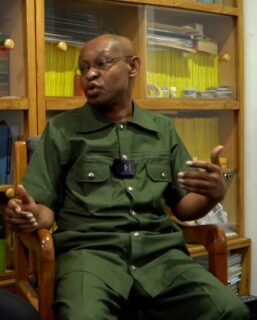
The ICIR: The governors seem to be the biggest beneficiaries, smiling to the bank with bigger FAAC allocations, yet citizens see little impact. What can be done differently now to reduce the burden?
Onyekpere: When you say governors are smiling to the bank, it appears you may have been drawn into propaganda. The revenue allocation formula did not change.
The federal government picks up about 52 per cent of all the money. It didn’t change after the removal of the subsidy or the floating of the Naira. So while Tinubu’s administration keeps insisting, oh, ask your governors what they’re doing with the more money. He has not accounted for what he’s doing with his own money.
But then, if the money that has increased looks like paper money and nominal money, now let’s look at it this way. The last budget before Buhari left, we had the budget premised on about less than, I think it wasn’t up to 400 Naira to the dollar. Then I could get a fairly used Toyota Corolla for 2.53 million Naira.
The ICIR: Are you satisfied with the budget office clarification on fiscal transparency concerns raised by some stakeholders, which you were part of?
Onyekpere: With utmost respect to them, it appears either the officials are ignorant of the law or deliberately mischievous. Whichever one you interpret it, it’s not good enough for people who are occupying that high office, either ignorance or mischief, because these facts are clear. You don’t need to be an accountant, a lawyer, or you don’t need to go to school to understand the basics.
So, look at the scenario; the 2024 budget was presented. The president drafted the 2024 budget in the executive and sent it to the National Assembly. The National Assembly approved his draft. He signed. So what next? Implement and report back to the people through the National Assembly.
If you have a problem in implementation during the year, you review it around June or July, and you go back to the National Assembly to say, either give me a supplementary budget or amend this. The money I’m expecting is no longer available. That’s the normal thing.
So he did not come within 2024 for the amendment of the act. And the law said, you implement this budget from January 1 to December 31.
He now begged that they should extend the implementation for up to 2025. They did that for him, although I hold that what they did was illegal. But let’s say what they did was legal. He took another 24 months and finished implementation in December 2025 of something you shall finish on December 2024. And all through that time, he did not come back to the National Assembly to say, I want to increase or to reduce.
When he finished implementing, he now brought a bill to amend the 2024 act, to reflect the actual thing he had done, which does not align with the approval of the National Assembly. He has spent more than the National Assembly approved for 2024. He was saying that at the end of 2024, I had not finished implementing.
Give me more time. The whole of 2025, he never got back to them to say, I will spend more. In 2025, he now says, I’m finished.
He now brought a bill to say, I have finished. But now, amend this law, which I should have finished, to reflect what I actually did.
Last year, too, they were only able to; they did a call circle and told MDAs to take 70 per cent of their capital budget over, roll it over to 2026, because they could not implement. They admitted they did only 30 per cent, but many MDAs said they did not even get up to 30 per cent releases.
That’s why they postponed it to March to say, let’s see if they will finish that 30 per cent by March. That cannot be a best practice. So you ask yourself, what was it doing all along?
The National Assembly is just about to have the budget, talking about it for the first time. And knowing what they do, that budget will not be ready until March or April. Then, when do you start implementation? And you know this is the year they are going for primaries.
The ICIR: Since Tinubu assumed office, we have seen fiscal transparency violations in the Medium-Term Expenditure Framework (MTEF) and other areas. What’s the general implication of this? Also, how do we wake up the National Assembly on this?
Onyekpere: You can wake up a man who is already asleep, I’m sure you know that. But a man pretending to be asleep, when he’s awake, it is not possible to wake him up now. First of all, he’s already awake. So you are wasting your time.
The infractions, as I see them, are not only on the part of the executive. It is like a conspiracy between the executive and the legislature. Because if you see what happens, this is the first time in history that the president comes to the National Assembly and instead of playing the national anthem, there is a special song ‘on your mandate.’
So they conspire. And each time the people draw attention to the infractions, they double down. So you are not going to wake up a National Assembly that sees itself as an extension of the presidency rather than as a respected arm of government.
If you look at the Constitution, the first arm, Section 4, is the legislature. Section 5 is the executive. Section 6 is the judiciary. The difference between a military dictatorship and a democracy is the legislature. Because in a military dictatorship, the executive is always there. The judiciary is always there, but it is forced to blow the military trumpet to obey military decisions.
So the first arm of government is actually the representative of the people in the legislature. So they should be supreme. For them now to become outrunners and appendages of a powerful chief executive is a throwback to dictatorship.
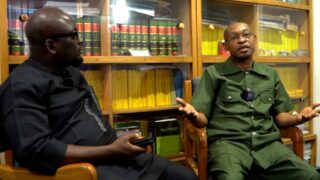
The ICIR: We have been going through these line items in the budget, highlighting lots of frivolous items inserted in the budget across various MDAs. And we have also seen that these monies are, of course, borrowed. How do we come out of this mess?
Onyekpere: That is why I say there is a coven-like conspiracy. Most of those projects, in fact, virtually all of them, are constituency projects inserted by legislators. Ideally, they are supposed to interact with the executive in the choice of constituency projects.
Because initially, people asked why legislators should even be the ones to select constituency projects. Let us even grant that they understand the problems of their constituency. The ideal procedure should have been that if you think the problem in your constituency is a health centre, you take it to the Minister of Health and sit down with the ministry officials to plan it.
They will tell you whether that is actually a problem for that community, because they may point out that there is already a health centre. Instead of building a new block, bring the money and furnish that centre. Ensure there is a nurse, a midwife, or a doctor. It is better than having two brick-and-mortar structures and none functioning.
So you plan along with them, do feasibility studies, environmental assessments, and everything, so it fits in. You may choose electricity and go to the Minister of Power or the Rural Electrification Agency; education, you go to the Minister of Education or UBEC. But they do not do this. They just select any MDA where the leadership is a party man and apply pressure.
That is why you see electrification and rural roads in oceanography institutes whose mandate relates to ocean waves, tides, fisheries, and development. Because the man there is a party man.
In my constituency in Imo State, I once saw constituency projects placed in a planning institute in Zaria. That is where they put water and electrification projects meant for my constituency.
The ICIR: Away from the budget briefly, we have seen the government and the CBN tell us that inflation is easing again, but when we go to banks, the cost of funds for businesses is still very high. This appears to be a huge disconnect. How do you react to this?
Onyekpere: That is part of why I was talking about Tinubu reforms. The floating of the naira also impacts inflation rates. Even before Tinubu came on board, the rate was already up. With these interventions he did, it skyrocketed further.
Now they claim inflation is about fifteen-point-something per cent; it does not hold water. If the central bank believes that, why is the monetary policy rate above twenty-seven per cent? Banks will add their margin to survive, so something is not adding up in that story that the inflation rate is coming down.
The rates as announced by the NBS do not reflect the actual inflation rate in the country.
Inflation reporting should give the government a proper understanding of economic difficulties so that policies can reduce the cost of living and production. But the current reportage does not give that direction. It is like saying we are succeeding while nothing has changed.
The ICIR: We have also seen the newly passed tax laws and concerns about forgery raised by a lawmaker, which appeared to be overlooked. Some advocacy NGOs are developing cold feet because the government does not seem to listen. How do you react to this?
Onyekpere: People develop cold feet because they cannot have a conversation with a stone. If someone is not listening, it’s either you kick him out of there or you shut up. And since you’re not in a position to kick him out of there, you either shut up or go back and devise another means of engaging him.
Even the report of the minority caucus from the House of Reps, you can see how they disowned it. And they said they’ve gazetted, done a new gazetting, but where is it? It’s not available to any Nigerian.
So by saying that they’ve rejected it or they’ve redone it, is an admission that it was altered.
Under the constitution, the powers of the legislature are solely reserved for the legislature. The president or any of his men has no right to change a comma, a full stop, an apostrophe, a semicolon, or a colon, either by adding or removal or changing his position in any law passed by the National Assembly.
The ICIR: You have worked on budgets for years. These issues keep recurring, and budgets often appear disconnected from the people. Is there a template for a truly people-focused budget we can adopt?
Onyekpere: Yes. That is why you have three key words: accountability, transparency, and popular participation.
These three words are so crucial to fiscal management, whether it’s revenue or expenditure. Accountability is that if you are elected president, governor, or Senator, you have to carry the people along through popular participation and transparency.
You have to tell everybody the truth that this is the money available for health.
And when you say the Ministry of Health is supposed to do a consultation with stakeholders. Stakeholders don’t need to be NGOs. You have doctors, you have nurses, you have pharmacists, you have laboratory technicians, those who are working in the health sector.

Mustapha Usman is an investigative journalist with the International Centre for Investigative Reporting. You can easily reach him via: musman@icirnigeria.com. He tweets @UsmanMustapha_M
Harrison Edeh is a journalist with the International Centre for Investigative Reporting, always determined to drive advocacy for good governance through holding public officials and businesses accountable.