
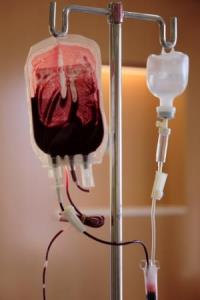

Blood plays a critical role in childbirth, surgery, trauma care and the treatment of chronic illnesses. But experts say Nigeria’s blood supply system remains underfunded, poorly coordinated and heavily dependent on family replacement donors. As the world marks the 2026 World Blood Donor Day, stakeholders call for urgent reforms to address shortages and improve access.
After delivering her baby through a caesarean section at an Abuja-based hospital in 2025, Blessing (second name withheld) was discharged in stable condition. Two weeks later, she developed severe anaemia, with her packed cell volume dropping to 12.
Although Blessing had initially secured a donor and a pint of blood in case complications arose during childbirth, she was told upon returning to the hospital that she would need to either buy blood or find another donor.
When she asked what had happened to the blood she had earlier secured, the hospital informed her that it had been used on another patient. As her condition worsened, an attending doctor eventually donated his blood, an act she said saved her life before the hospital later sourced another unit.
Behind every blood donation is a mother hoping to hold her child again, a patient fighting for another chance, and a family praying for good news. This #WorldBloodDonorDay, let’s end the myths, give with love, and save lives together. Donate blood. Give hope. Be a hero. pic.twitter.com/0t0mOo3OF7
— The ICIR (@TheICIR) June 14, 2026
“Doctor Davidson rolled up his sleeves and donated blood for me… If he hadn’t, maybe I wouldn’t be here today,” she recalled.
Blessing’s experience reflects a wider pattern across Nigeria’s health system, where access to blood often depends on family efforts, informal networks, or last-minute interventions rather than a reliable national supply.
Across hospitals, patients such as pregnant women, accident victims and people living with sickle cell disease are frequently asked to provide replacement donors before treatment, even in emergencies. In some cases, families search outside hospital gates or rely on informal arrangements to secure blood.
While Blessing was fortunate to get an emergency donation from the attending doctor, many others have not been so lucky.
Low voluntary donation and heavy reliance on emergencies
Reports show that Nigeria still falls far below the recommended level of voluntary blood donation needed to meet national demand.
The World Health Organisation said an adequate and reliable supply of safe blood depends on a stable base of regular, voluntary, unpaid donors, who are considered the safest source of blood. Health experts estimate that countries generally need regular donations from about 1–2 per cent of their population to meet demand. For Nigeria, this would translate to roughly two million regular donors, yet the country continues to grapple with blood shortages and unequal access to safe blood
Despite the life-saving importance of transfusion in surgeries, childbirth, trauma care and cancer treatment, blood availability in many Nigerian hospitals remains inconsistent. According to the National Blood Service Agency (NBSA), Nigeria currently meets only about 25 to 30 per cent of its estimated annual blood requirement, which is put at between 1.8 and 2 million units.
The Director-General of the NBSA, Saleh Yuguda, said in 2025 that the country records an annual collection of roughly 500,000 units of blood, most of which comes from family replacement donors and paid donors. He noted that this figure remains significantly below national demand.
He further explained that only about 17 to 20 percent of blood collected in Nigeria comes from voluntary, non-remunerated donors—the group the World Health Organisation identifies as the safest and most reliable source of blood.
“No will, no system,” expert warns of structural failure
Speaking on the 2026 World Blood Donor Day, a Nigerian medical laboratory scientist and blood donation advocate, Oluwamuyiwa Ogunkoya, described the country’s voluntary blood donation system as “abysmal,” warning that patients continue to suffer due to systemic gaps rather than lack of need.

“There is no will, no structure, no system and no culture for voluntary blood donation in Nigeria,” he said.
Observed every June 14, World Blood Donor Day honours voluntary, unpaid blood donors and highlights the importance of safe blood in saving lives. This year’s theme, “One Drop of Humanity. Give Blood. Save Lives,” emphasises solidarity and shared responsibility in ensuring access to safe blood.
Speaking further, Ogunkoya explained that although Nigeria has legal frameworks such as the National Health Act (2014) and the Blood Transfusion Act, enforcement is weak, and funding remains far below what is required.
He noted that while reforms would require about $15 million, the national blood agency has reportedly received only a fraction of that.
Ogunkoya, who is also the Co-founder of Bloodlines Foundation, highlighted the lack of donor centres, mobile collection units and proper recruitment systems, saying many Nigerians travel long distances to donate or access blood.
He added that most donations occur only during emergencies done by relatives, with no system for repeat or voluntary participation.
“There is also no recruitment system, no retention strategy. People donate once, usually for family emergencies, and that is the end of it,” he said.
Informal networks and urgent call for reform
Oluwamuyiwa Ogunkoya further raised concerns about informal and commercial blood arrangements that persist in parts of the country despite laws prohibiting the sale of blood.
He said desperate families are sometimes forced into replacement donor arrangements or linked to paid donors through informal intermediaries around hospitals.
While noting improvements in some states, such as Lagos, he said enforcement remains inconsistent nationwide, adding that misconceptions are not the main barrier to donation, but rather weak systems and a lack of political commitment.
The medical laboratory scientist called for stronger political will, increased funding, and a shift towards building a culture of voluntary donation through schools, youth service programmes, workplaces and community mobilisation.
On his part, Ayobami Bakare, Program Manager for Haima Health Initiative Nigeria, an initiative that facilitates access to safe blood and blood products in different blood banks, said Nigeria’s blood shortage is not only a supply problem but a failure of coordination and information management.
Bakare said there are instances when blood is available within a city. Still, because a hospital operates in isolation, it becomes difficult to know where units are located or how they can be redistributed during emergencies.
“Blood shortage in Nigeria is dependent on a lot of factors because there are instances where the blood is available, and Hospital A has particular blood units in particular blood groups, and Hospital B, which is down the road, doesn’t know,” he said.
Building a national blood database and strengthening coordination
Bakare said one of the most effective ways to address blood shortages in Nigeria is the creation of a centralised national blood database to connect public and private hospitals across the country.
He said such a system would allow health authorities and hospitals to know where blood is available and what blood groups are in stock. He said that where shortages exist, the enabling facilities could share resources during emergencies.
Bakare explained that many shortages are not necessarily caused by a complete absence of blood but by poor coordination and a lack of information on existing supplies.
“If we have a whole system where we know how much blood is available in Abuja today and where they are located, if Hospital B needs B positive, they can swap with Hospital A,” he said.
He proposed that every unit of blood collected and used in Nigeria should be logged into a central database, creating a real-time picture of national blood availability. But beyond technology, Bakare stressed that success would depend on sustained government investment and political commitment.
“It’s not about practical steps; mainly, it’s more of political will. Like, are they willing to do the work?” he queried, adding that blood availability should be treated as a national healthcare priority, requiring adequate funding for specialised equipment, storage facilities, reagents, donor recruitment and monitoring systems.
According to him, a coordinated national blood system would not only improve access to safe blood but also reduce the dependence on emergency family donations and informal donor networks that many patients currently rely on.

Mustapha Usman is an investigative journalist with the International Centre for Investigative Reporting. You can easily reach him via: musman@icirnigeria.com. He tweets @UsmanMustapha_M