THE Federal Executive Council (FEC) has approved a comprehensive reform of the National Youth Service Corps (NYSC).
The Minister of Youth Development, Ayodele Olawande, announced the approval on Monday, June 29, describing it as a landmark decision aimed at repositioning the NYSC to meet the demands of a rapidly changing Nigerian economy.
According to the minister, the reforms will transform the scheme into a “skills-driven, productivity-focused and youth-empowering institution” that aligns with President Bola Tinubu’s ambition of building a $1 trillion economy.
“For over five decades, the NYSC has remained a powerful symbol of national unity and service. Today, we have taken a bold step to preserve that legacy while preparing it for the future,” Olawande said.
He explained that the reforms would equip corps members with practical skills, career opportunities and experiences needed to thrive in an evolving labour market.
Among the key changes approved by the council is the introduction of a technology-driven call-up process designed to improve efficiency and transparency.
The reforms also provide for risk-sensitive deployment of corps members to enhance their safety, a redesigned six-week orientation programme with greater emphasis on leadership, entrepreneurship, digital skills and specialised career streams, as well as skills-based primary assignments aligned with participants’ academic qualifications and career aspirations.
In addition, the government approved a new governance structure that places the scheme under civilian operational leadership while retaining military support for security during orientation exercises.
The reforms further include the introduction of a national grading and certification system to improve camp standards across the country, alongside a new graduation ceremony that will replace the traditional Passing Out Parade. Corps members will also receive redesigned NYSC uniforms intended to reflect professionalism and national pride.
The minister said the reform process began in 2025 through consultations involving the Federal Ministry of Youth Development, the Federal Ministry of Education, and the Office of the Special Adviser to the President on Policy and Coordination.
He added that FEC has directed the Attorney-General of the Federation and the Federal Ministry of Youth Development to commence amendments to the NYSC Act and its regulations to provide the legal framework required for implementing the reforms.
Describing the decision as an investment in Nigeria’s youth, the minister said the changes would make the NYSC more relevant and impactful.
“This is more than a reform of an institution. It is an investment in Nigeria’s greatest asset, our young people. The future of the NYSC begins now, and it is brighter, more relevant and more impactful than ever,” he said.
The NYSC was established by Decree No. 24 of 1973 in the aftermath of the Nigerian Civil War to foster national unity, reconciliation and integration among young graduates.
The one-year mandatory national service scheme requires graduates of universities and other eligible tertiary institutions below the age of 30 to serve in states outside their regions of origin.
The programme currently comprises a three-week orientation camp, a primary place of assignment, community development service and a passing-out exercise at the end of the service year.
Over the years, the scheme has become one of Nigeria’s most enduring national institutions.
It has also faced growing criticism over the safety of corps members, inadequate welfare, deployment challenges and concerns that its operations no longer reflect the country’s changing economic and security realities.
The new reform by the Tinubu government may have put an end to calls by many Nigerians that the scheme has outlived its usefulness and should consequently be scrapped.
TRANSPARENCY International (TI) is inviting young journalists worldwide who are passionate about fighting corruption to apply for its 2026 programme.
TI has 10 places available for journalists in the early stages of their professional career to join its International Anti-Corruption Conference in the Dominican Republic from 1-4 December 2026.
As part of a mentored programme, participants will have the chance to join the conference discussions, interview leaders and activists, and build their knowledge of the latest trends in the anti-corruption space.
Participants must be proficient in English, under 35 years old, and be prepared to develop at least one report and to secure coverage in a media outlet after the event.
The organisers say, “We are committed to creating an inclusive work environment where diversity is valued and where there is equality of opportunity. We actively seek a diverse applicant pool and therefore welcome applications from qualified candidates of all regions, countries, cultures and backgrounds.
“Selection to the young journalist programme is made on a competitive basis, and we do not discriminate on the basis of national origin, race, colour or ethnic background, religious belief, sex, gender identity and expression or sexual orientation, marital or family status, age or ability. We kindly ask applicants to refrain from including in their application information relating to the above, as well as from attaching photos.
The deadline for applications is July 15, 2026. Interested applicants can apply here.
A FRESH controversy has emerged over the existence of the Presidential Foreign Intervention Promotion Council (PFIPC) after the council received a N1.3 billion allocations in the 2026 Appropriation Act, despite the Presidency insisting that the council does not exist.
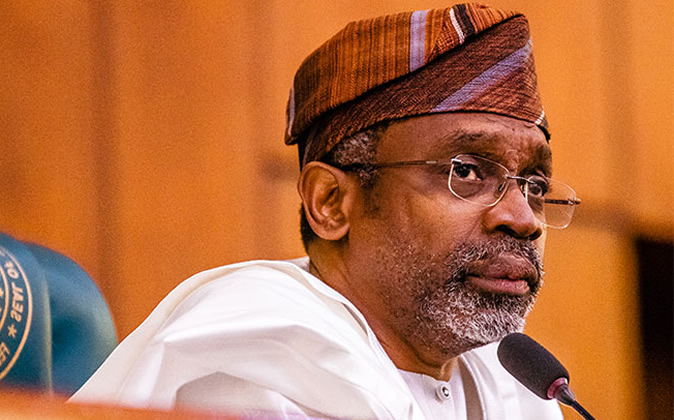
On June 11, the Chief of Staff to the President, Femi Gbajabiamila, publicly described the organisation as a non-existent entity and warned the public against dealing with individuals claiming to represent it.
“It has come to the notice of the Federal Government of Nigeria and specifically the Office of the Chief of Staff… that a certain Prince Adeniyi Adeyemi, under the auspices of an alleged organisation styled as the ‘Presidential Foreign Intervention Promotion Council’ is portraying himself to the general public as having been appointed by my office,” Gbajabiamila said in a statement.
The Chief of Staff stated that no such office exists under the administration of President Bola Tinubu and that no appointment had been made in! that regard. He urged foreign missions, development partners, financial institutions and the public to disregard any claims linking the council to the Presidency.
However, documents reviewed by TheCable in the 2026 Appropriation Act paint a different picture.
The 2026 Federal Government’s budget expressly lists the Presidential Economic Advisory Council/Presidential Foreign Intervention Promotion Council under the Presidency, with a total allocation of N1,302,978,784.
A breakdown of the allocation shows that N802,978,783 was earmarked for personnel costs, N200,000,001 for overhead expenses, while N300 million was budgeted for capital projects.
The allocation raises questions over how a council publicly disowned by the Presidency came to be captured in the nation’s approved budget with provisions for salaries, operations and capital expenditure.
The controversy deepened on Thursday when Adeniyi Adeyemi, who claims to head the council, challenged Gbajabiamila’s position during a press conference in Abuja.
Adeyemi described the Chief of Staff’s statement as inconsistent with existing government records.
According to him, the council maintains accounts with the Central Bank of Nigeria (CBN), occupies office space at the Federal Secretariat, and received approval for more than 300 personnel from the Office of the Head of the Civil Service of the Federation.
He argued that the existence of such official records would be difficult to reconcile with the Presidency’s assertion that the council had no legal or administrative existence.
Adeyemi called on President Bola Tinubu to establish an independent investigative panel to examine all government records relating to the council and determine how it came to appear in official federal documents, including the national budget.
The conflicting positions have raised concerns over the integrity of government records and the budget preparation process.
As of press time, neither the Presidency nor the Budget Office had publicly explained why the Presidential Foreign Intervention Promotion Council appears in the approved 2026 budget despite the official denial of its existence.
The development is likely to intensify scrutiny of the 2026 federal budget and may prompt demands for a comprehensive investigation into the council’s legal status, funding history and the officials responsible for its inclusion in the national appropriation.
A similar report by The ICIR in 2020 showed how the Office of the Chief Economic Adviser to the President (OCEAP) got approval for the sum of N573.45 million as capital allocations in five years without a clear identity of presidential appointee answerable to the fund’s utilisation.
THE Borno State Police Command has confirmed the abduction of an unspecified number of students sitting for the National Examinations Council (NECO) examination after suspected terrorists attacked a secondary school in Lassa community, Askira/Uba Local Government Area of the state on Monday, June 29.
The command said it had deployed security operatives to the area, where they are currently combing nearby forests in a bid to rescue the abducted victims and apprehend the attackers.
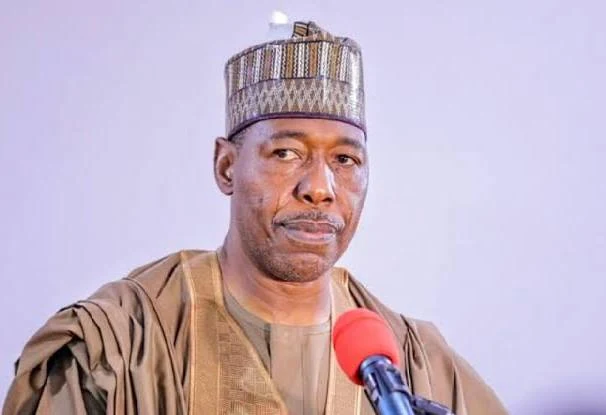
The spokesperson for the command, Nahum Daso, confirmed the incident on Monday, saying the attack occurred at about 9 a.m. when suspected fighters of the Islamic State West Africa Province (ISWAP) invaded Government Day Secondary School, Lassa, and opened fire.
“Around 9 a.m. this morning, ISWAP attacked Lassa Day Secondary School. They shot sporadically. An unspecified number of students have been abducted,” Daso said.
He added that security forces engaged the attackers during the assault, preventing what could have been a larger-scale abduction.
“Security forces confronted them. For now, we have an unspecified number of students who were abducted. The CP (commissioner of police) has deployed the Area Commander in Askira/Uba. They are currently combing the bush,” he said.
The latest attack comes about six weeks after suspected Boko Haram insurgents abducted 42 pupils and students from Mussa Primary and Junior Secondary School, also in Askira/Uba Local Government Area.
On May 15, suspected Boko Haram insurgents attacked Mussa Primary and Junior Secondary School and surrounding communities in the LGA, abducted 42 students and teachers.
Similarly, in Oyo, on the same day, gunmen launched coordinated raids on Baptist Nursery and Primary School, Yawota; Community Grammar School, Ahoro-Esiele; and L.A. Primary School in Oriire Local Government Area, whisked away 39 pupils and seven teachers. The attackers reportedly killed at least one teacher during the operation before marching the victims into the forest.
More than 40 days after the incident, the victims remain in captivity despite repeated assurances from authorities that rescue efforts were underway.
Since then, relatives in both states have endured weeks of uncertainty, with many saying they have received little information about the condition of their loved ones. Parents, community leaders and civil society groups have repeatedly appealed to authorities to intensify efforts to secure the victims’ release.
The union later staged protests in Oyo, Maiduguri and other parts of the country, demanding urgent government action to secure the release of the captives, as frustration mounted among residents of the affected communities.
The renewed attack also comes despite repeated assurances by President Bola Tinubu that his administration is prioritising security. In his June 12 Democracy Day address, the president acknowledged the continued captivity of schoolchildren abducted in Borno and Oyo states, describing the incidents as a source of national concern.
“We remain hopeful for their safe return,” Tinubu said, adding that the Federal Government had declared a security emergency, approved the recruitment of more than 50,000 police officers and thousands of military personnel, and allocated N5.41 trillion to defence and security in the 2026 budget.
The ICIR reports that the latest assault shows the persistent insecurity confronting communities in many parts of the country, where schools have repeatedly come under attack more than a decade after the 2014 Chibok schoolgirls’ abduction drew global attention to the vulnerability of educational institutions in Nigeria’s North-East.
BORNO State has commenced the documentation process for 1,066 newly recruited teachers following the release of the list of successful candidates for employment into the Borno State Senior Secondary School Education Board (BSSEB).
The development follows the completion of the recruitment exercise, including the competency test conducted on April 11.
This is contained in a statement issued by the Board Secretary, Malah Abatcha, on Monday in Maiduguri.
It directed all successful candidates to report to the BSSEB headquarters between June 29 and July 11, for documentation and verification before assuming duty.
According to the statement, the recruitment exercise was designed to address the shortage of teachers in public secondary schools across the state and improve the quality of education.
It explained that the selection and deployment of successful candidates were based on staffing requirements identified through school-specific needs assessments, with priority given to qualified personnel from the local communities where the schools are located.
The board stressed that appointments and postings were made strictly according to the schools indicated on the list, warning that requests for transfers from assigned duty stations would not be considered.
It added that candidates unwilling to serve in their designated schools should decline the offer.
The statement noted that acceptance of the appointment signifies readiness to work in the assigned locations.
The board congratulated the successful applicants and expressed optimism that the newly recruited teachers would strengthen the education sector by filling critical vacancies, particularly in underserved local government areas across the State.
UNITED States (US) Homeland Security Secretary, Markwayne Mullin, told migrants in the US on temporary protected status to seek permanent residence or leave for their home countries.
The remark follows Supreme Court decision that allowed the administration to strip thousands of Haitian and Syrian immigrants of a humanitarian status that protects them from deportation to home countries plagued by conflict and destitution.
“Either try to fill out the paperwork and be here underneath a permanent status or we’ll help you get back to your country,” Mullin said.
“We’ll actually give you a plane ticket, plus roughly 2,100 million dollars to help you re-establish when you get there, but temporary protective status, according to the courts and in its name itself, is not permanent status,” he added.
Federal law allows the administration to grant temporary legal residency in the US to people fleeing war, disaster or other adverse conditions.
The status had previously been renewed successively and, despite the move to end these protections, the State Department currently warns against travelling to either Haiti or Syria, citing widespread violence, crime, terrorism and kidnapping.
The US first provided TPS to Haitians after a devastating earthquake in 2010, and to Syrians after their country descended into civil war in 2012.
The prospect of large-scale deportations faces opposition, even among some Republicans.
However, Ohio Governor Mike DeWine said it was not safe for Haitians to return and that the removal of diligent workers would hurt the Ohio economy and leave the healthcare industry short-staffed.
During the 2024 election, President Donald Trump falsely accused Haitians living in Ohio of eating others’ household pets. The Supreme Court’s conservative majority found, however, that Haitians suing the administration were unlikely to succeed in their argument that the administration’s actions were racially biased.
The presence of Haitians in the state has helped spur economic revival in some Ohio areas that had fallen into post-industrial decline, boosting wages and job creation, Reuters reported.
“It’s Haitians who many times are taking care of your mom or your dad who has Alzheimer’s, taking care of family members who might be in a nursing home,” said DeWine.
“And to say we’re going to pull all those out, it’s just not in our own self-interest.’’ (Reuters/NAN)
This ICIR investigation uncovers troubling irregularities in Ebonyi State’s 2024 contract awards for the construction of 12‑classroom storey buildings in secondary schools across the state. It exposes both the absence of competitive bidding and the use of ‘front companies’ to secure contracts.
By Olanrewaju Oyedeji
In 2024, the Ebonyi State Government awarded billions of naira worth of contracts for the construction of 12-classroom storey buildings in secondary schools across the state. The contracts, according to details on the state Open Contracting Portal, numbered 35, with each awarded at the cost of N172 million, totalling N6.020 billion.
This came after the state budget and fiscal documents revealed that, in the same year, the government, through the Ministry of Primary and Secondary Education, spent N1.8 billion on a 39-classroom project for three schools in each local government area.
Just like the primary schools, findings reveal that many of the contracts for the secondary schools were awarded in three schools per local government. Available data on the state OCDS portal revealed that the contracts awarded for secondary school construction marked the first time since 2020 that the state had undertaken mass contract awards targeting secondary schools.
However, this investigation raises red flags over the absence of a competitive process in contract awards and the use of ‘front companies’ by winning bidders, which puts the transparency of the contractual process and eventual execution into question.
It traced some of the beneficiary companies to politically exposed persons, including individuals within Governor Francis Nwifuru’s current administration, raising further concerns about accountability and the neutrality of the award process.
The benefiting companies
Checks on the Open Contracting Portal show that the Ebonyi State Government awarded contracts for the construction of 35 twelve-classroom storeys to different companies. This investigation scrutinised 10 of those firms.
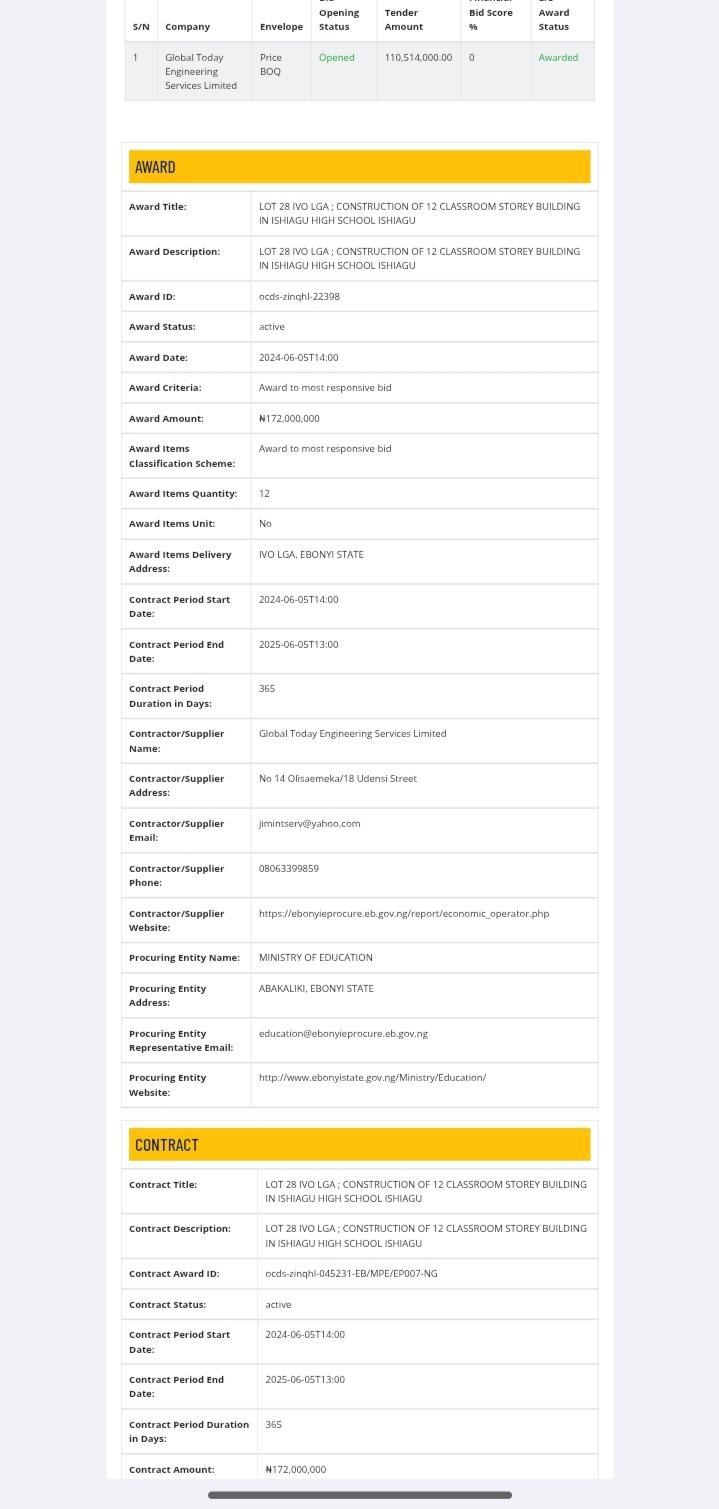
The companies are Global Today Engineering Services Limited, which was awarded the contract for the construction of a 12-classroom storey building in Ishiagu High School of Ivo local government area; Senior Kendo Ventureswhich was awarded a contract for the construction of 12-classroom storey building in Community Secondary School Ndiuruku, Abakaliki LGA; Integrated Simap, awarded a contract to build a 12-classroom storey at the Government Secondary School, Okposi, Ohaozara LGA; HC Carters Ventures, awarded for the construction of 12-classroom storey buildings in the Community Secondary School Ojiegbe Nkaliki, Ebonyi LGA and GroundFox Design and Construction Nigeria Limited, awarded a contract for the construction of a 12-classroom storey building in Community Secondary School, Nwofe Agbaja, Izzi LGA.
Others are BMG Space Solution Limited for the construction of a 12-classroom storey at Community Secondary School Enyigwe Ezza Inyime, in Izzi LGA, Limited, Esonas Investment awarded to build a school at Akpe Amachi, Abakaliki LGA, Gorrion Engineering, awarded for the construction a 12-classroom storey building at Community Secondary School in Izzo, Ezza North LGA and Onye-Andrew Project Limited for the construction of a school at Kpakpaji High, Ezzama, while Uzochukwu Top Class Limited, awarded for the construction of the Community Secondary School Ohaoffia Agba, Ishielu LGA.
Suspicious fronts
The Open Contracting Portal of the Ebonyi State Government listed Global Today Engineering Services Limited as the sole bidder and as the winner of the contract for the construction of a 12-classroom storey building at Ishiagu High School, Ishiagu, Ivo LGA, Ebonyi State. The contract was valued at N172 million. Being a sole bidder suggests the process was not subject to open competitive bidding, which prioritises fairness and transparency.
Contract details of Global Today Engineering Services Limited
Investigation shows that the company is owned by James Aroh Nweke, who is a Chieftain of the ruling All Progressive Congress (APC), a former Local Government Chairman, and a state Commissioner for Youth Empowerment and Poverty Eradication.
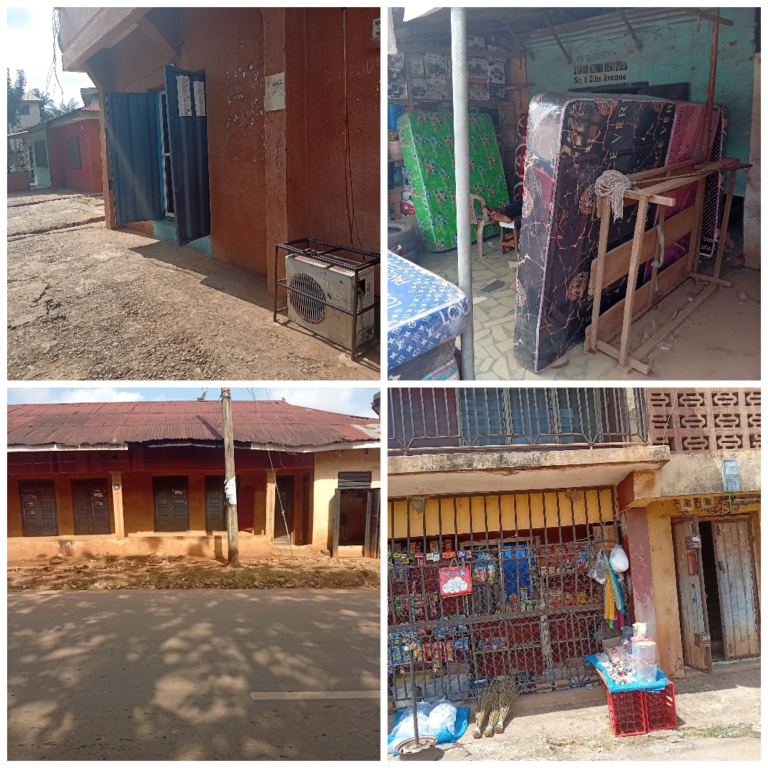
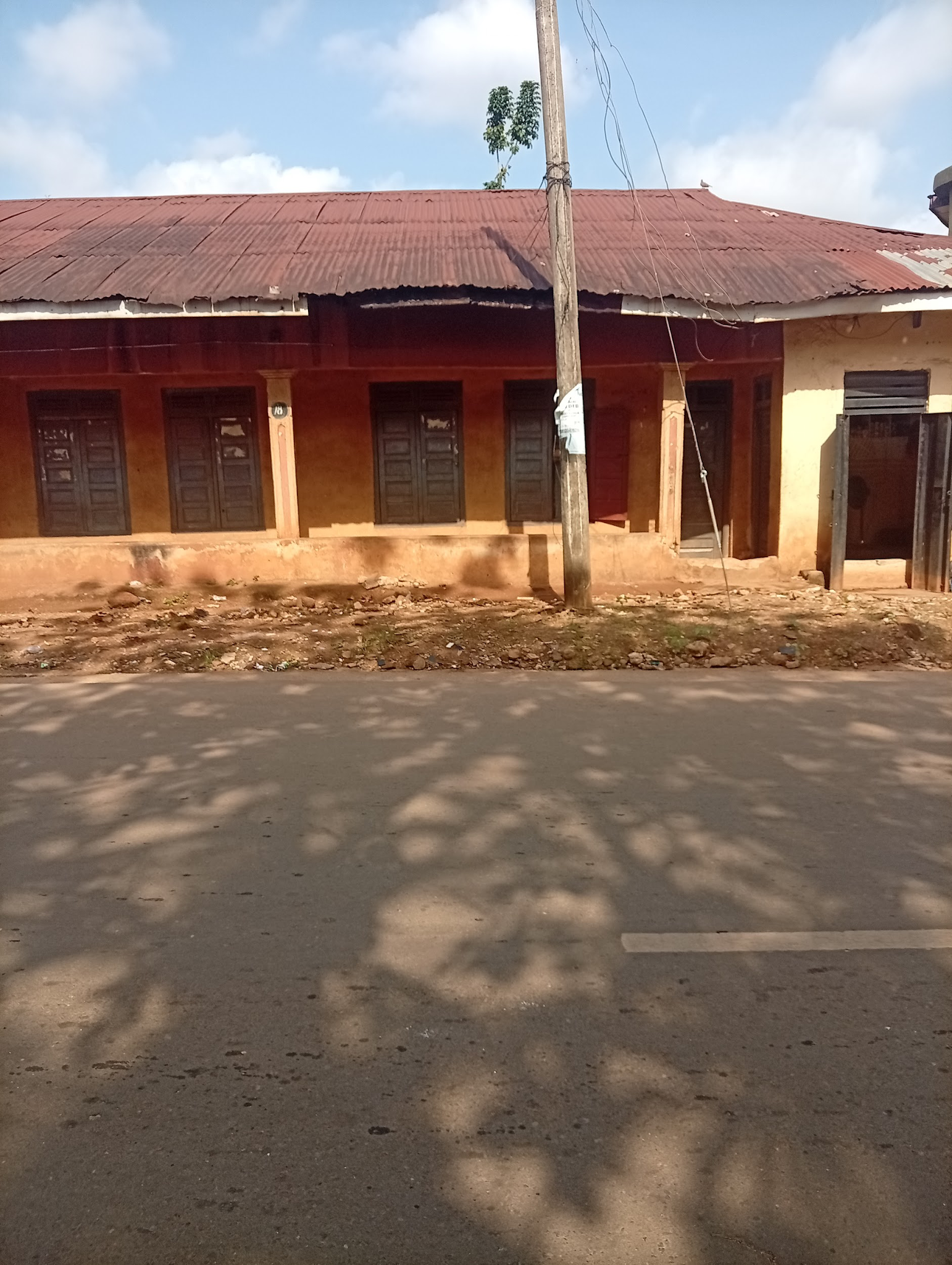
According to details on the OCDS portal, the company occupies two addresses at “No 14 Olisaemeka Street” and “No. 18 Udensi Street,” both in Ebonyi State. When this reporter visited the first address at No 14 Olisaemeka Street, he saw a shop-like space. Upon enquiry about the office of ‘Global Today Engineering,’ a young lady directed him to her boss at a partitioned office. Soon after the reporter introduced himself and enquired about the company, the man’s smile dimmed as he queried how the reporter knew about the existence of the company.
Number 18, Udensi Street, Ebonyi State
Posing as a researcher compiling names of companies in the state, the reporter told him he had stumbled on the company name. However, after much probing, the man revealed that No 14 Olisaemeka Street was not the office of Global Today Engineering but rather a contact place used as afront.
“I know him; this place is my own office, but if you have anything for him, we will deliver it to him. I know him, he is my friend, we are surprised that the existence of the company is known, that’s why I questioned you when you came in,” the man insisted.
For a company that won a N172 million contract for school construction and another N400 million for the construction of a two-kilometre road in Ivo LGA, one would expect the company to naturally want visibility.
An attempt by this reporter to trace the second address listed as No. 18 Udensi Street also ended in opacity, as the location contained abandoned old shops. Residents opposite the building noted that the building housing the street number was not in use.
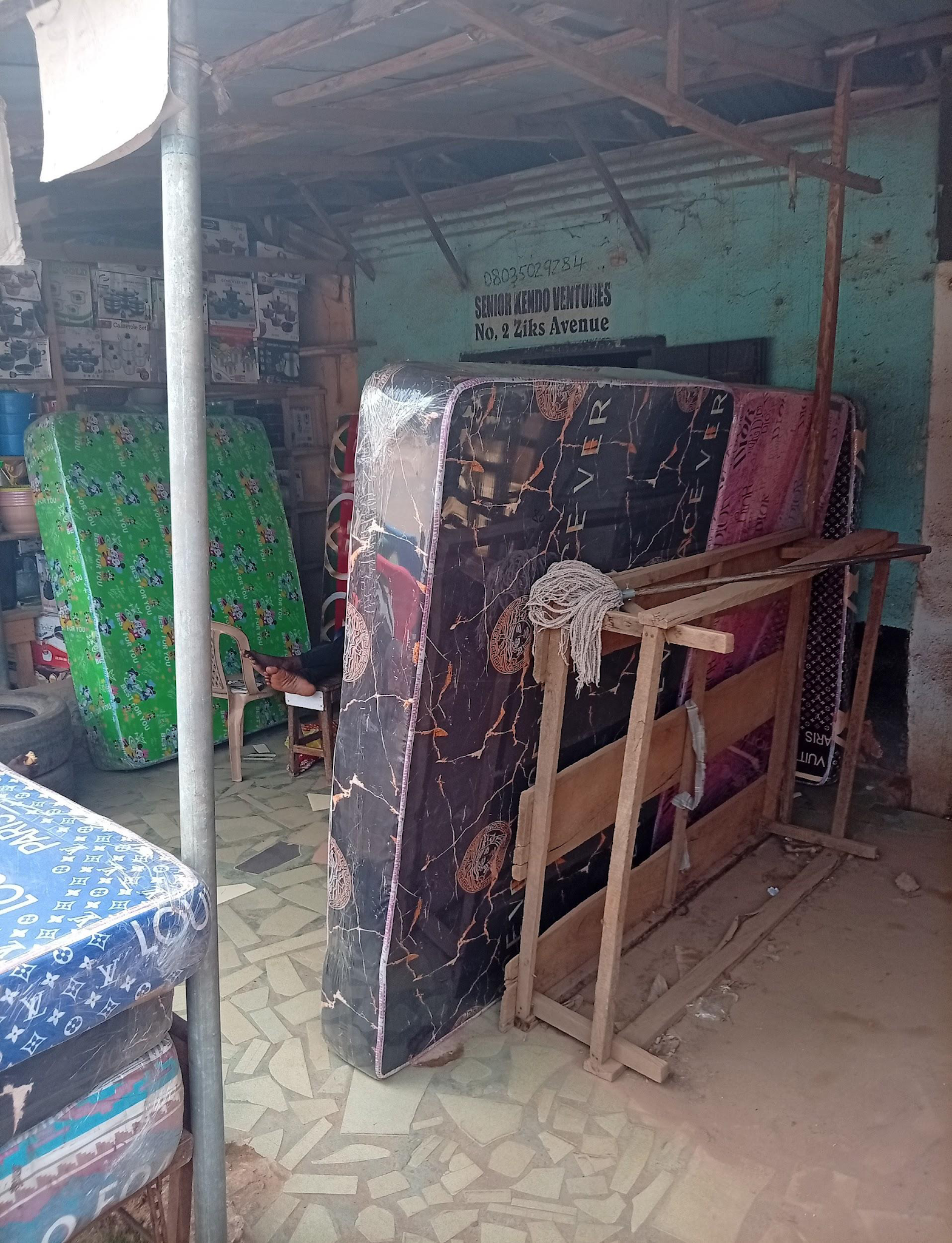
Information from the Ebonyi State OCDS portal listed the office of Senior Kendo Ventures, another sole bidder for a N172 million contract at No. 2, Ziks Avenue. The company won the contract to construct a 12-classroom storey building at Community Secondary School, Ndiuruku Amagu, Abakaliki LGA.
Senior Kendo listed office address
This reporter traced Ziks Avenue, following directions from small businesses in the area. When he located the shop, there was confusion when it was suggested that Senior Kendo Ventures sold mattresses.
He found only mattresses with no trace of construction equipment. This is contrary to the provisions of the Ebonyi State Open Contracting law, which places a premium on the professional and technical capacity of companies that win a contract from the government. A man found at the shop confirmed that Senior Kendo Ventures only deals in mattresses.
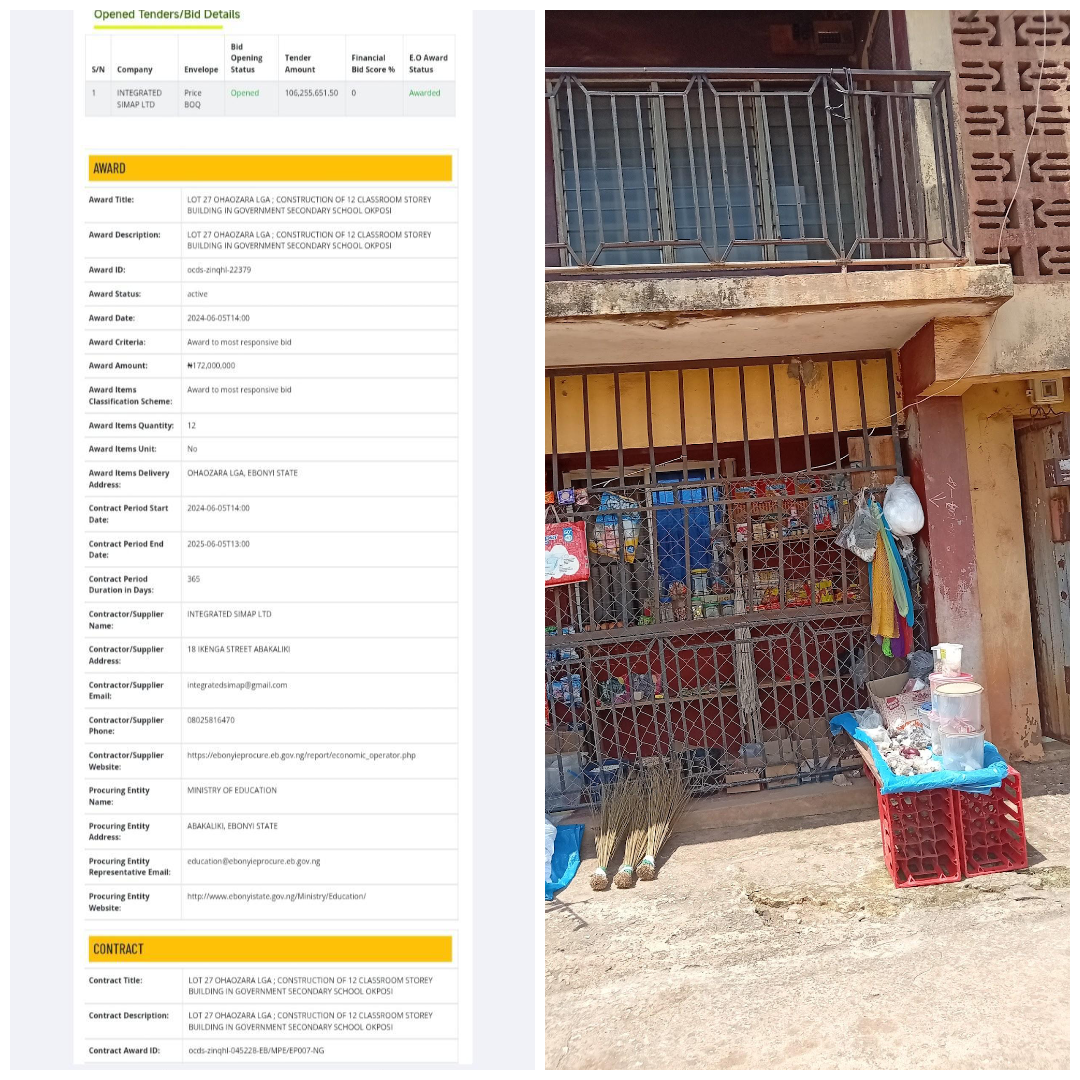
Like the first two companies, this reporter found that Integrated Simap, another company which also won a contract worth N172 million to build a 12-classroom storey building at Government Secondary School, Okposi, Ohaozara LGA, had a fake address. The company’s address listed on the OCDS portal as ‘Number 18, Ikenga Street, Abakaliki,’ happened to be a residential building.
The only business seen on the address was a shop that sells provisions, snacks and sweets. When enquiries were made about the presence of a company, residents noted that the building was residential and that they had no knowledge of any construction company in the area.
A side by side listed address of Integrated Simap and the physical address
This reporter also traced the address of GroundFox Design and Construction Nigeria Limited, which was listed on the OCDS platform as ‘No 1, Ejiofor Ernest Street, Ugwachara’, Ebonyi LGA. The company had equally won a contract for the construction of a 12-classroom storey building in Community Secondary School, Nwofe Agbaja, Izzi LGA.
The company, registered with the CAC on September 29, 2023, was awarded a contract for the construction of a school in February 2024, barely five months after registering with the CAC.
When this reporter visited Ugwachara, Ejiofor Ernest Street could not be located. Residents and motorcyclists denied knowledge of the street, making it impossible to verify the existence of the company address.
This reporter therefore called the contact phone number listed on the OCDS portal as the contact of the company, but the person on the line failed to comment on the inability to locate the company. He also did not affirm the stated address on the portal as the company’s location. Instead, the respondent declined to answer enquiries, failing to provide clarifications on the findings.
Politically exposed persons
Apart from the inability to trace some of the companies that benefited from the multimillion-naira contracts without competitive bidding, this investigation found that some of the companies that were awarded the contracts are linked to politically exposed persons in the state.
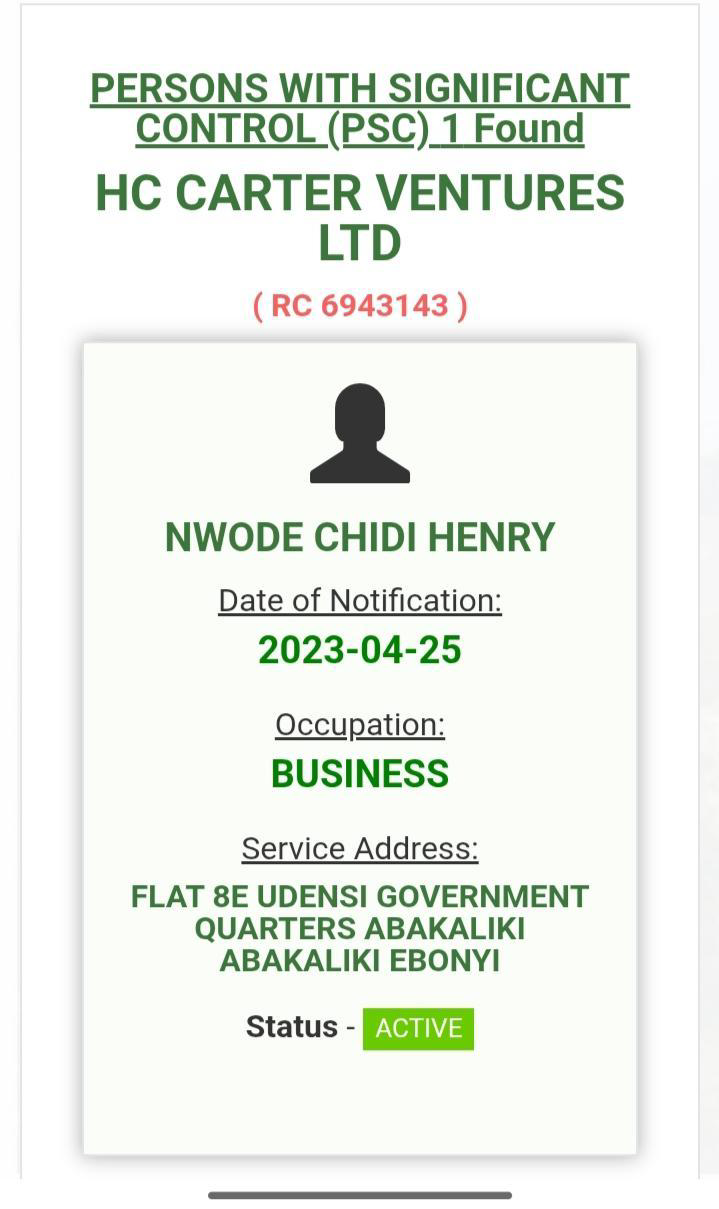
For instance, HC Carters Ventures, which was also awarded a N172 million contract as a sole bidder for the construction of 12-classroom storey buildings in the Community Secondary School, Ojiegbe Nkaliki, Ebonyi LGA, is owned by Nwode Chidi Henry, a younger brother of the first lady of Ebonyi State, Mary-Maudlin Nwifuru, based on the Corporate Affairs Commission beneficiary ownership register.
Beneficial Ownership Data of HC Carter Ventures on CAC Portal
As of the time of this report, Nwode Chidi Henry is a local government chairmanship aspirant for Ikwo Local Government Area in Ebonyi State under the APC.
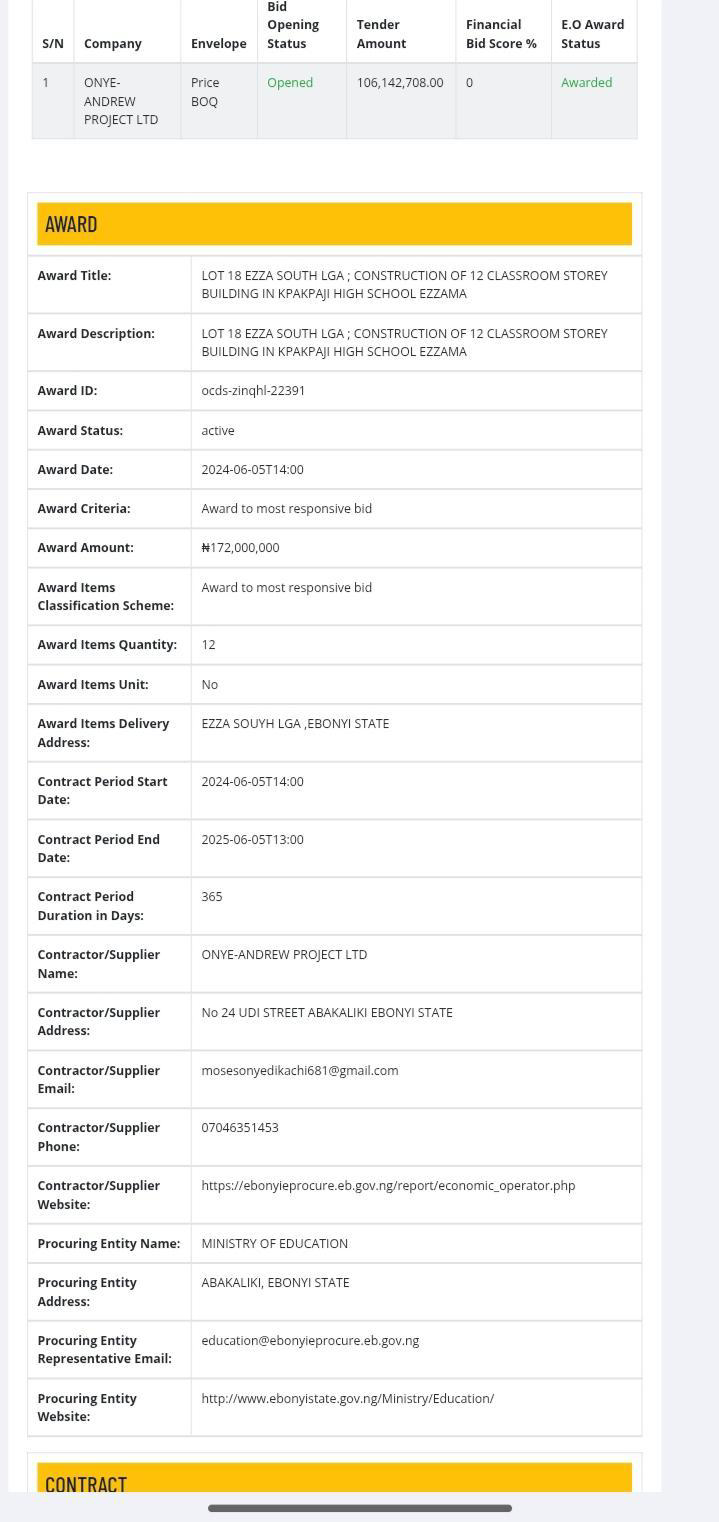
The government had also awarded a N172 million contract to Onye-Andrew Project Limited as the sole bidder for school construction at Kpakpaji High, Ezzama, Ezza South Local Government Area. Registered with the CAC in October 2023, the company was awarded a contract for school construction in June, 2024, barely nine months after incorporation. However, at the time of the advertisement in February 2024, it was barely six months old.
Onye Andrew Limited Contract Details as published on Ebonyi OCDS Portal
The address of the company was listed as number ‘24, Udi Street in Ebonyi State’ even though no such company existed on the street at the time this reporter visited.
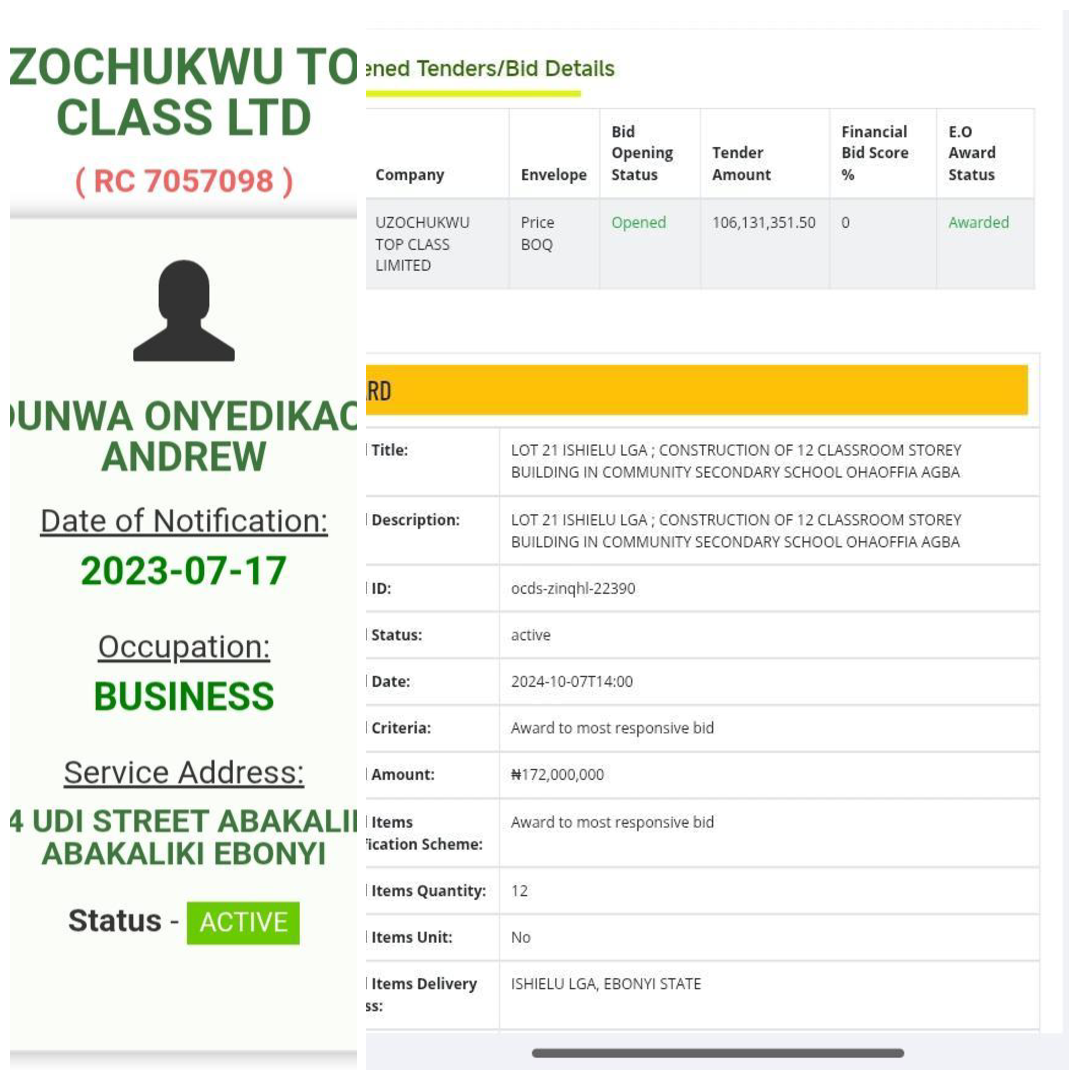
Interestingly, checks on the CAC beneficiary ownership register listed Odunwa Onyedikachi Andrew, a director of the company. Andrew is also a relative of the sitting Speaker of the Ebonyi State House of Assembly, Moses Ije Odunwa.
He is also listed as a director and owner of Uzochukwu Top Class Limited, which was registered in July 2023 and won the N172 million contract without competitive bidding, according to details on the Ebonyi State open contracting portal. As of March 2024,when the tender for the construction of the Community Secondary School Ohaoffia Agba in Ishielu LGA ended, it was nine months old.
Uzochukwu Top Class Limited beneficiary ownership details published by the CAC and contract details as published on Ebnoyi OCDS Portal
Within the same period, BMG Space Solution Limited also won a N172 million contract to construct a 12-classroom storey at Community Secondary School Enyigwe Ezza Inyime, Izzi LGA. Investigations reveal that the company is owned by Ofoke Rosemary Nwogbaga, who is the Senior Special Assistant to the Ebonyi State governor on Industry, and also the wife of the APC Secretary in Ebonyi State.
The company was listed as the sole bidder and winner for the contract, in violation of the State Contracting law, which emphasised the need for competitive bidding. Its address was listed on the Ebonyi State Open Contracting Portal as “17 Chukwuma Ofoke Street, Abakaliki,” in Ebonyi State.
This reporter visited the location but found that the address houses a school named ‘Liberal Arts and Science Academy.’ Although beneficial ownership checks show the school belongs to the Ofoke family, the existence of BMG Space Solution Limited was not verified during this process. When the organisation’s listed contact was reached, the company official who responded acknowledged that the address is occupied by Liberal Arts and Science Academy but insisted that the space is shared with BMG.
“We are on that address too, if you notice well, the building is big, so the company is on the address for now.” This reporter observed that at the time of the visit, there was signage for the school, but none to show the presence of BMG Space Ventures.
This reporter also found that Nwovu Benneth Alo, a special assistant to the governor, was listed as a director of Esonas Investment Limited, which won a N172 million contract as a sole bidder to build a school at Akpe Amachi, Abakaliki LGA. Checks on the beneficial ownership register show that ‘Nwovu Benneth Alo’ was listed as a director of the company.
Alo is a Special Assistant to the state governor on road maintenance. His appointment was publicly celebrated by Leo Okene Oketa, who is the Special Assistant to Governor Nwifuru on New Media.
During this investigation, while mass contract awards suffered from ‘lack of competitive process’ and other contract anomalies, the state of schools visited raised more questions.
One of the schools listed to benefit from the project is Community Secondary School in Izzo, Ezza North area of Ebonyi State.
Gorrion Engineering was listed as the sole bidder and winner of a N172 million contract to construct a 12-classroom storey building. During a visit to the school, this reporter saw some uncompleted building projects on the site. Because there was no signpost or description, it was not clear if it was the same project awarded by the government.
An alumnus of the school, Chukwudi Peter, who spoke to this reporter, noted that the community school, situated just opposite Ezza North local government secretariat, gives hope to the community.
The building at Ozzo High School and the current state of the School
“This school serves many students, although the current buildings in use are not in good shape, but we are seriously hoping that this project will be completed and not left at a slow pace,” he said.
Another resident who identified himself as Uzochukwu Abraham noted that while the building project was started and yet to be completed, members of the community hope it is completed in good time as the dilapidated state of the school makes learning harder for children.
“Private schools are quite expensive, but these public schools are meant to make access to education better, where the children are learning is an eyesore and dilapidated,” he said.
The company which won the contract, Gorrion Engineering, was contacted through its officially listed contact on the Ebonyi State Open Contracting Portal, but no response was received to enquiries via calls and messages as of the time of filing this report.
What the law says
Relevant provisions of the Ebonyi State Public Procurement (BPP) Law clearly outline strict standards guiding fairness, transparency, technical competence and conflict of interest in the award of public contracts.
On competitive bidding and fairness, Section 21 1(b) notes that: “All public procurements shall be conducted by open competitive bidding,” while Section 21(c) notes that the contracts must be awarded “in a manner which is transparent, timely and equitable, to achieve value for money.” This underscores the legal requirement that contract awards must follow a process that gives all qualified bidders equal opportunity. However, as revealed by this investigation, the state government had awarded contracts to sole bidders in violation of Section 21 of the state procurement law.
To prevent manipulation, the law gives guidelines for technical experience and capacity, with Section 21 (2 from a-e) mandating that bidders meet strict qualification standards. It provides that all bidders shall: “Possess the necessary professional and technical qualifications, financial capability, equipment and other relevant infrastructure, adequate personnel to perform the obligations of the procurement contracts.” This requirement highlights why companies without proven experience or capacity may not qualify for high-value government contracts.
Section 21(12, 13) of the law further places the burden of proof on bidders, stating that:
“The burden of proving fulfilment of the requirement for participation shall lie on the supplier or contractor.” This reinforces that companies must provide verifiable evidence of competence before being considered. This points to a direct violation in the case of a company like Senior Kendo Ventures, which deals in mattresses at its physical address and was yet awarded a contract of N172 million to construct classrooms.
On compliance and financial integrity, Section 21 subsection 2(e) adds that a bidder must: “Have fulfilled all its obligations to pay taxes, pensions and social security contributions,” adding that failure to meet these obligations can lead to disqualification. Award of contracts to companies few months old as of the time of tender and award questions their ability to fulfil these obligations. In these instances, the award of a contract to companies such as Uzochukwu Top Class Limited and HC Carter Limited becomes a violation of the state procurement law.
Taken together, these provisions of the Ebonyi State BPP Law demonstrate that the procurement framework prioritises fairness, transparency, technical competence and accountability. They also explain why newly formed or inexperienced companies, without proven track records or compliance, are unlikely to lawfully secure multi-million naira government contracts, particularly where issues of capacity or conflict of interest arise.
Experts comment
Speaking to the ICIR on procurement-related issues, Awosusi Kehinde, a lawyer who deals with companies, procurement and issues around incorporation of firms, frowned at awarding contracts without competitive processes. He noted that the procurement law stipulates that contracts must be awarded in strict adherence to the principles of competitive bidding.
“Contracts are meant to be well-advertised, bid for in a competitive process before the final award,” he noted.
He also stated that per law, construction companies are required to maintain a verifiable physical address where operational activities are visibly ongoing.
Also speaking, Anthony Adejuwon, Chief Executive Officer of Urban Alert, an accountability and socioeconomic-focused organisation, raised concerns over the award of contracts to infant companies.
“When you award a major contract to infant companies, the issue of capacity and their record in terms of experience and technical capacity to deliver comes to the fore,” he noted.
Ebonyi government reacts
Reacting to the development, Uzoma Betty, the executive Secretary of the Ebonyi State Bureau of Public Procurement, defended the process, explaining that the state had duly advertised the contracts, but in most cases, only a single bidder responded.
In a written response, she said: “The projects for the construction of 12-classroom storey buildings were duly advertised for 30 days in line with the requirements for open competitive bidding under the Ebonyi State Public Procurement and Related Matters Law, 2020.”
“The procurement method adopted for the projects was ‘Open Tendering.” This method offers every interested bidder equal simultaneous information and opportunity to submit bids (Section 29(2)).”
“In these instances, although the tenders were processed through open competitive bidding, only one responsive bid was received for most of the lots. The Bureau proceeded with the evaluation and award of the contract to the sole responsive bidder after confirming that the bid met all technical and financial requirements, as the Law permits the evaluation and award based on the responsive bids received.”
“The process fully complied with the principles of transparency, equality of opportunity, and value for money enshrined in the Law. Where necessary, re-advertisement provisions under Section 35(2)(a) were considered, but the single responsive submission allowed progression in the public interest after due evaluation.”
However, when asked why most of the sole bidders were companies owned by government officials or politically exposed persons, she failed to respond.
She was further asked to provide evidence that the contracts had indeed been advertised, as well as to clarify the conduct of the award process and verification of the companies that won the contracts. Yet again, the Executive Secretary of the Ebonyi State BPP failed to reply.
Several subsequent follow-ups also failed to elicit any additional comments from Uzoma Betty.
Peptide-based signaling molecules play a central role in the communication networks that regulate complex biological processes within organisms. Among these molecules, growth hormone–releasing hormone (GHRH) and its analogues have received sustained attention in biochemical and endocrine studies. Sermorelin, a manufactured compound corresponding to the first 29 amino acids of GHRH, is one of the most studied fragments in this pathway.
This truncated analogue has been the topic of sustained investigation due to the structural and functional relevance of the N-terminal fragment of GHRH. Research indicates that the initial 29 amino acids of the parent hormone contain the primary receptor-binding domain necessary for interaction with GHRH receptors located within endocrine signaling networks. Because of this structural attribute, Sermorelin has emerged as a prevalent research peptide in investigations concerning hormone signaling cascades, cellular communication pathways, and regulatory feedback mechanisms that influence growth hormone dynamics.
While its origin lies in the broader framework of endocrine regulation, the peptide’s properties are believed to extend beyond simple hormonal stimulation. Over time, investigators have explored the possibility that Sermorelin may serve as a molecular probe through which the regulation of growth-related pathways, cellular metabolism, and tissue signaling networks might be examined in controlled research models.
Structural Characteristics and Molecular Identity
Sermorelin is classified as a peptide analogue derived from the N-terminal fragment of growth hormone–releasing hormone. The endogenous GHRH molecule contains forty-four amino acids, but biochemical research has suggested that the first twenty-nine residues retain the essential structural motifs necessary for receptor interaction. Sermorelin, therefore, represents a truncated form designed to preserve the active signaling domain while omitting the remainder of the original peptide sequence.
From a molecular standpoint, the peptide belongs to the broader family of hypothalamic releasing factors. These molecules function as upstream regulators within endocrine hierarchies, modulating the release of secondary hormones through receptor-mediated signaling events. In the case of Sermorelin, its structural similarity to endogenous GHRH suggests that it might interact with the same receptor class, namely the GHRH receptor, a G protein–coupled receptor involved in activating intracellular cyclic AMP pathways.
Interactions with Endocrine Signaling Pathways in Research
One of the primary areas of interest surrounding Sermorelin involves its potential role in the regulation of growth hormone signaling cascades. Research indicates that growth hormone secretion is governed by a tightly regulated feedback system involving hypothalamic peptides, pituitary receptors, and peripheral signaling molecules. Sermorelin, as a structural analogue of GHRH, is believed to participate in these signaling frameworks by engaging with receptor-mediated pathways that influence hormone release patterns.
Investigations purport that the peptide might stimulate intracellular signaling events linked to cyclic AMP production following receptor engagement. This cascade is theorized to influence transcriptional mechanisms associated with growth hormone synthesis. Through such interactions, Sermorelin is thought to provide researchers with a molecular instrument for examining the regulatory loops that govern endocrine secretion rhythms.
Implications for Cellular Communication Research
Beyond its endocrine origins, Sermorelin has also attracted attention in broader cellular communication research. Growth hormone signaling does not occur in isolation; rather, it intersects with numerous metabolic and regulatory pathways that influence cellular development, protein synthesis, and nutrient utilization.
Research indicates that peptides involved in growth hormone regulation might interact with intracellular pathways connected to insulin-like growth factor signaling networks. Studies suggest that because Sermorelin retains the receptor-binding region of GHRH, it may serve as a useful probe for investigating how upstream endocrine signals influence downstream molecular events. These investigations have prompted interest in exploring how peptide fragments such as Sermorelin might interact with transcription factors, intracellular kinases, and gene regulatory mechanisms.
Possible Role in Investigations of Growth Regulation Mechanisms
Growth regulation remains one of the most intricate processes governed by endocrine and metabolic interactions. Multiple peptides and hormones collaborate to orchestrate cellular proliferation, tissue repair, and structural development over time. Sermorelin has become a topic of discussion within this domain because its structural properties closely mimic the active region of GHRH.
Research suggests that the peptide might be useful in examining how growth hormone signaling influences broader growth-regulating networks. These networks involve numerous mediators, including insulin-like growth factors, metabolic regulators, and transcriptional modulators that coordinate tissue adaptation and cellular differentiation.
Applications in Neuroendocrine Communication Research
Another area where Sermorelin has attracted research interest lies within neuroendocrine communication. The hypothalamus and pituitary gland function together as a central command system that regulates numerous hormonal pathways. Within this system, peptide messengers are speculated to serve as critical intermediaries that transmit signals between neural structures and endocrine tissues.
Sermorelin’s structural similarity to endogenous hypothalamic peptides makes it particularly relevant in research exploring how neuroendocrine communication operates. Investigations suggest that the peptide might assist scientists in examining how hypothalamic signals are translated into hormonal responses within endocrine tissues.
Potential Role in Aging and Metabolic Regulation Research
The relationship between peptide signaling and senescence-associated regulatory changes has also generated interest among investigators. Growth hormone signaling is believed to influence multiple metabolic processes, including protein turnover, nutrient utilization, and cellular maintenance.
Research indicates that peptides involved in growth hormone regulation may participate in signaling networks that shift over time. As an analogue of GHRH, Sermorelin seems to provide a molecular framework through which scientists examine how endocrine signaling patterns evolve throughout time.
Expanding Horizons in Peptide Research
The broader significance of Sermorelin lies not only in its specific biochemical properties but also in what it represents within the evolving landscape of peptide science. Short amino acid sequences derived from larger hormones often retain crucial signaling motifs that allow them to function as simplified analogues of complex biological messengers.
Research indicates that these fragments may serve as powerful tools for probing receptor behavior, signaling intensity, and endocrine feedback loops. Sermorelin exemplifies this concept by preserving the receptor-binding region of GHRH while offering a streamlined structure suitable for detailed biochemical investigation.
Conclusion
Sermorelin occupies a distinctive position within peptide research due to its origin as a functional fragment of growth hormone–releasing hormone. Its preserved N-terminal structure allows it to interact with receptor systems associated with endocrine signaling pathways, making it a valuable subject in investigations of hormone regulation and cellular communication. Researchers are encouraged to visit biotechpeptides.com for the best research materials.
References
[i] Guillemin, R., Brazeau, P., Böhlen, P., Esch, F., Ling, N., & Wehrenberg, W. B. (1982). Growth hormone–releasing factor from a human pancreatic tumor that caused acromegaly. Science, 218(4572), 585–587. https://doi.org/10.1126/science.6813662
[ii] Ling, N., Baird, A., Wehrenberg, W. B., Ueno, N., Akil, H., & Guillemin, R. (1984). Structure and function of human growth hormone–releasing factor. Recent Progress in Hormone Research, 40, 449–487.
[iv] Mayo, K. E., Miller, T., DeAlmeida, V., Zheng, J., Cunningham, M. J., & Ho, M. M. (2000). Regulation of growth hormone–releasing hormone gene expression. Endocrine Reviews, 21(2), 142–172. https://doi.org/10.1210/edrv.21.2.0399
[v] Jette, L., Leger, R., Thibaudeau, K., Benquet, C., Robitaille, M., Pellerin, I., Paradis, V., & Guillemette, G. (2005). Human growth hormone–releasing factor analogues: Structure–function relationships and receptor activation. Peptides, 26(6), 1047–1054. https://doi.org/10.1016/j.peptides.2004.12.018
The Socio-Economic Rights and Accountability Project (SERAP) has given Senate President, Godswill Akpabio, and Speaker of the House of Representatives, Tajudeen Abbas, seven days to refer allegations involving the diversion or failure to account for more than N6.3 billion in constituency project funds to anti-corruption agencies for investigation and possible prosecution.
SERAP’s Deputy Director, Kolawole Oluwadare, made the demand in a letter dated June 27, 2026, to the National Assembly, noting that the organisation shall take all appropriate legal actions to compel the National Assembly to probe the allegations contained in the Auditor-General of the Federation’s 2022 Annual Report, published on September 9, 2025.
“We would be grateful if the recommended measures are taken within seven days of the receipt and/or publication of this letter. If we have not heard from you by then, SERAP shall take all appropriate legal actions to compel you and the National Assembly to comply with our request in the public interest,” SERAP said.
The organisation urged the National Assembly leaders to publicly disclose the identities of contractors and companies that allegedly received constituency project funds without executing the projects, including details of their shareholders and beneficial owners.
“The allegations involve several federal ministries, departments and agencies, including the Environmental Health Registration Council of Nigeria (EHORECON); the Federal College of Animal Health and Production Technology, Vom; the Federal Polytechnic, Udana; the National Agency for the Prohibition of Trafficking in Persons (NAPTIP); and the National Institute of Legislative and Democratic Studies (NILDS),” he added.
According to SERAP, the Auditor-General’s report documented several cases of payments into private bank accounts, contracts awarded without due process, payments for contracts that were allegedly not executed, or for services not rendered, undocumented expenditures, inflated contracts, procurement irregularities, and failures to account for public funds.
“According to the 2022 audited report, contained in pages 367 to 396, the Environmental Health Registration Council of Nigeria (EHORECON or Council) Abuja paid over ‘N22 million [N22,944,565.16] into the private account of some members of staff of the Council from the Constituency Projects Fund Account. There ‘was no evidence of the utilisation of the funds and no explanations on the purpose for the payment of such amount into the individual accounts,” SERAP said.
The organisation also alleged that the council awarded consultancy contracts worth more than N12.03 million in 2021 for the development of modern abattoirs in Kebbi State and the supervision of seven projects in Kebbi, Jigawa and Abuja. However, the report allegedly found no evidence they were delivered, including bills of quantities and engineering designs.
“The money was to ‘produce bills of quantity, architectural design, structural design, mechanical design, and electrical designs for the contracts and supervision. But the items could not be found,” he added.
SERAP said the Auditor-General further alleged that EHORECON processed questionable constituency project transactions totaling more than N1.8 billion, as Federal College of Animal Health and Production Technology, Vom, allegedly paid over N279.7 million to three contractors in 2022 for youth and women’s empowerment and vocational training projects in Niger and Plateau states without supporting documentation.
The organisation added that the report also alleged another N279.7 million was paid as mobilisation fees without documentation, while more than N629.4 million was disbursed to contractors who allegedly did not meet procurement requirements, with no evidence of due process or contract advertisements.
SERAP highlighted alleged irregularities involving the Federal Polytechnic, Ukana, Akwa Ibom State, including over N407 million paid as mobilisation fees without supporting documents, more than N399 million allegedly paid to unqualified contractors, contracts inflated by over N192 million, more than N279 million spent on projects that were not fully executed, N50 million allegedly paid for an unexecuted borehole project, and over N83 million disbursed without the required approvals and documentation.
The organisation further alleged that NAPTIP awarded contracts worth over N21.8 million in violation of procurement rules, paid more than N176.8 million for logistics and consultancy services without supporting documents, and disbursed over N94 million for projects that were allegedly never executed.
According to SERAP, the Auditor-General also reported that NILDS failed to submit audited financial statements covering 2012 to 2022, did not remit more than N15 million in stamp duties, and spent N1.6 million without authorisation from the Office of the Accountant-General of the Federation.
SERAP argued that corruption in constituency projects deprives poor and vulnerable Nigerians of essential public services and development benefits, while undermining public trust in government institutions.
It urged the National Assembly to demonstrate leadership by ensuring accountability in the management of constituency project funds, adding that the allegations, if proven, would amount to violations of the Constitution, the Fiscal Responsibility Act 2007, and the Public Procurement Act 2007, all of which require transparency, accountability and due process in the management of public resources.
This ICIR investigation reveals how the Kogi State government uses security operatives and surveillance equipment that it acquired from a foreign surveillance vendor and spyware company to monitor and track critics, leading to intimidation, harassment, and arrests.
When Friday Ogungbemi, publisher of Policy and Lawmaker magazine, agreed to a caller’s request for a brief meeting at his residence on the evening of November 24, 2016, he had no idea that it was a trap that would land him in detention.
“I had a publication in 2016 titled ‘Overzealous chief of staff, acting governor extraordinary,’ which provoked the government. Because there were allegations saying the former governor (Yahaya Bello) would approve a document but the Chief of Staff, Edward Onoja, would disapprove the governor’s approval,” he explained.
Ogungbemi, a renowned political analyst in Kogi State, said an officer of the State Security Service (SSS) called him under the guise of placing an advertisement to lure him out of his house, after which over six men in two vehicles arrested him without a warrant.
“The SSS trailed me,” he said, “Invited me out of my house, and I came out. They collected my phone and deleted some messages from it.”
The political analyst said he was told that the then Chief of Staff, Edward Onoja, had ordered his arrest on the claim that he had insulted the governor in his publication.
“According to the person who came to arrest me, they were told I insulted the governor. They felt it was one-on-one, but it was after I was arrested that they even had the privilege of seeing the write-up,” he said.
Ogungbemi’s arrest would become one of multiple cases exposing a pattern of illegal monitoring, tracking, arrest and detention of political critics and journalists by the Yahaya Bello administration up to the current government of the state.
Friday Ogungbemi. PC: Nanji Nandang/ICIR
Based on media reports and field data, at least 15 journalists, bloggers, activists, and political critics were arrested, detained, re-arrested, or prosecuted during Bello’s tenure, which ran between 2016 and 2024
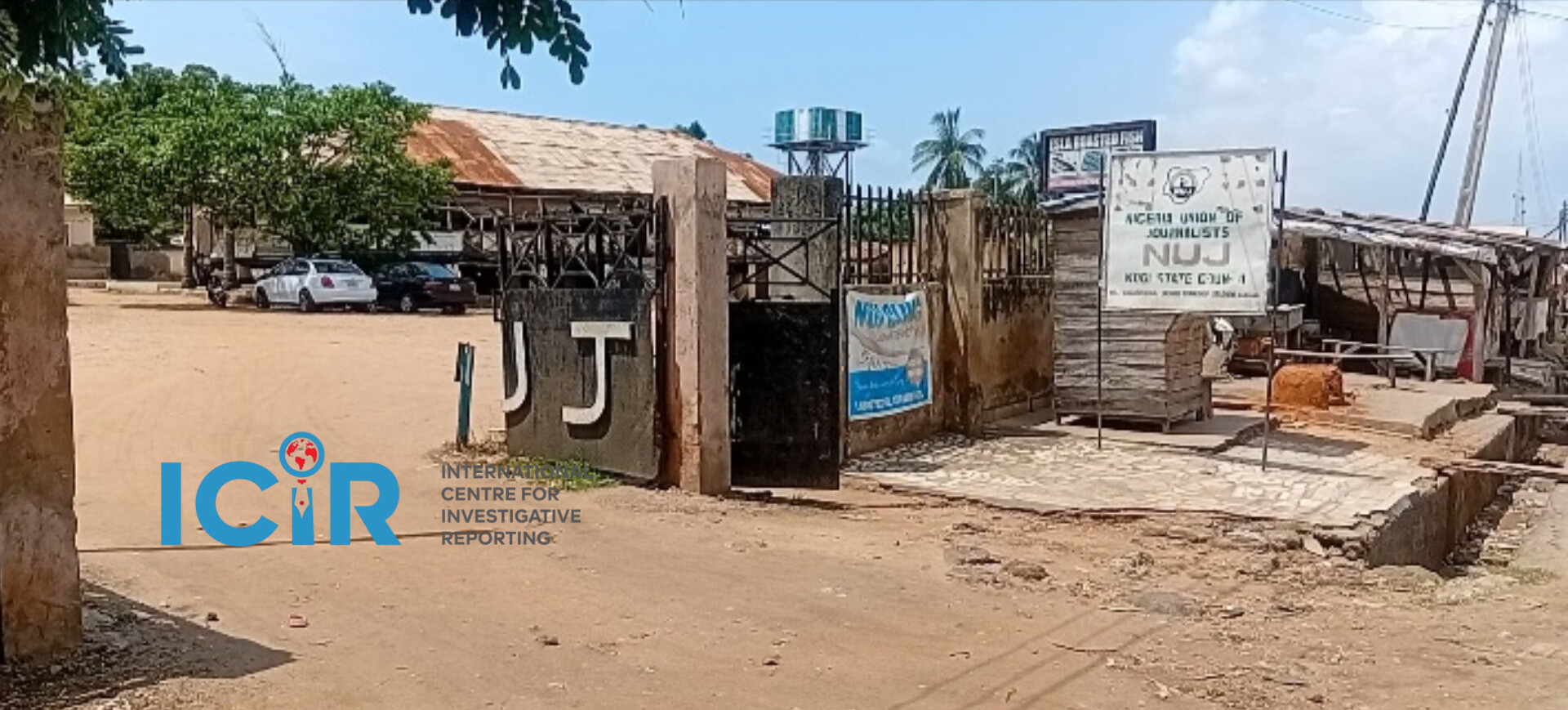
The mostdocumented among them was Ogungbemi’s detention, which attracted national attention and interventions from the Nigeria Union of Journalists (NUJ) and press freedom advocates. It eventually led the NUJ to boycott government activities.
The secretary of the Kogi State chapter of NUJ, Ibrahim Obansa, confirmed Ogungbemi’s ordeal. “It was in the line of his duty. He wrote an article that the then-government felt was offensive. We followed it up. We were also able to achieve his release,” he added.
I only use a pen, not arms- Ogungbemi
Speaking to The ICIR, in Lokoja, the Kogi State capital, Ogungbemi said after his arrest, the SSS sought to influence the content of a written statement he was asked to provide.
He, however, challenged the officers by citing constitutional provisions on freedom of expression and the media’s responsibility to hold public officials accountable.
“They were dictating what I should write in my statement, but I refused because in the statement, I said I, so-so-so voluntarily wrote the statement, but when you are guiding me on what to write, it is no longer voluntary,” he said.
He explained that the SSS obtained a court order to search his house and seized all his publications, including the “contentious” edition on the chief of staff.
“They took me home and packed those items, more than 69 volumes. They searched my house for incriminating documents,” the publisher said, adding that he was later charged in a Magistrate’s Court on claims that the publication was injurious to the government and that he was trying to incite the public.
“When they took me to court, I told them they were carrying a journalist as if they were dealing with a criminal. I’m not a harmful person; my pen is the only thing I use,” he said, describing journalism as his only weapon in the pursuit of truth and accountability.
During the proceedings, he said the magistrate had questioned the strength of the case and noted that the allegations “could not fly” in their original form. He said that despite adjustments in the charges, the magistrate consequently struck out the case in 2017, stating that the “court is not a place to warehouse cases and that matters without sufficient proof could not proceed.”
Kogi State NUJ Secretariat. PC: Nanji Nandang/ICIR
A few years after Ogungbemi’s case, a renowned activist in the state, Adebo Jonathan Smart, was tracked and monitored after a 2020 social media post.
“I love my people, and that’s how the journey of activism started. The government of Yahaya Bello was 70 or 80 per cent anti-people, so we had to rise to challenge him on social media. We’re seen as the enemies of the government,” Smart said.
He recalled how a former government official in February of 2020 tipped him off about his arrest.
“I stood to withdraw money from one ATM in Lokoja and an appointee of the government, after they had concluded their plans to arrest me, because my number was steadily on their track list, called me and said that I was standing at so so so place. He said I should leave there in one minute, if not, I’ll be arrested,” he recalled.
Smart recounted that he spent his birthday fleeing an alleged SSS hunt over a social media post warning of a possible COVID-19 threat in Kogi State at the height of the pandemic.
“The state government sternly stood their ground that there was nothing like COVID-19 in Kogi State. So, any news that was against their stand was frowned upon,” he recalled.
The activist said before the social media post, he had visited his late brother, who was receiving traditional treatment in a community in Igalamela Odolu Local Government Area (LGA), when residents became gripped by panic following reports that a woman had allegedly fled an isolation centre in Abuja and returned to the village.
“I wrote on my social media handle and warned everybody to be careful. I even intimated to the state government that someone had escaped from the isolation centre, according to reports. That there was danger in the state,” he said.
But that post had triggered an aggressive response from state authorities, as Smart said about 10 SSS operatives were allegedly dispatched to locate and arrest him. He said they went to a state-owned hospital where he had previously worked in Ayengba. “They showed them my picture. They forcefully demanded my address because I was at home. So, when they left the office to come to my house to pick me up, that was when a colleague informed me,” he added.
Again, for the second time, he evaded arrest by fleeing his residence and going into hiding in a rural community for more than a week. “That period happened to be my birthday, April 28th. So, I spent my birthday in the bush,” he said, alleging that Bello and Onoja masterminded his arrest.”
He, however, later reported to SSS officials in Abuja after tensions had subsided, and the matter was dropped after he explained what happened.
How Kogi allegedly acquired sophisticated security equipment
Kogi State has a documented history of allegations involving the deployment of security operatives, including the Nigeria Police Force, as well as surveillance equipment to monitor and track critics and political opponents, allegedly resulting in intimidation, harassment, and arrests.
In 2017, Senator Dino Melayeallegedbefore the Nigerian Senate that the Kogi State government had acquired sophisticated security equipment, including military-style equipment.
Recent trade data reviewed and analysed by The ICIR suggest the state government received a shipment of surveillance-related technology from InvaSys, a Czech company associated with sophisticated phone interception and spyware products.
On 27 December 2023, InvaSys delivered a shipment described as “Apple MacBook Air 13 Early-2020” to Scott Solutions Ltd, the Nigerian branch of the UK-based surveillance technology provider, Active Intelligence Group Limited (AIG). The Nigerian government reportedly contracted the AIG to establish surveillance systems for data centres in Abuja, Lagos and Minna, in Niger State.
Also, available trade data shows that on January 10, 2024, InvaSys delivered a shipment described as “TELLUS” to the SSS. While The ICIR could not determine what Tellus means, it could likely be a code name for a tool. The company both produces and sells mobile phone interception tools to governments across the world. Its products are described online as “unconventional malware” and “zero-day technology for the inner circle.”
InvaSys markets monitoring, interception and cyber-surveillance technologies directly to the SSS and relevant security agencies in Nigeria. According to company materials and previous reporting by Israeli newspaper Haaretz, its product portfolio includes Kelpie, a spyware platform compared to Pegasus and Predator, as well as Tellus, an interception system, and Luna, a man-in-the-middle module capable of monitoring and manipulating communications.
The data showed that on August 8, 2024, Czech-based InvaSys delivered a consignment described as a Luna module with the code HS code 8517.62 to the Office of the Secretary of the Kogi State Government.
OluGbenga Odeyemi, a security expert and the Chief Executive Officer of e86 described a Luna Module as part of the InvaSys Mobile360™ suite, designed as a highly sophisticated tactical mobile intelligence system.
“It operates as an active software-defined radio (SDR) base transceiver station (Software BTS). It mimics a legitimate cellular tower, tricking nearby mobile devices into registering with it. It is capable of active 2G, 3G, 4G LTE, and 5G-ready interception. It can capture voice, SMS metadata, and raw data streams directly from the air without the coordination or knowledge of telecommunications operators,” he said.
He said because it controls the local connection to the mobile device, “it can be used as a targeted ‘infection vector’ to inject payloads, trojans, or spyware implants directly into targeted devices (utilising zero-click or one-click exploits).”
According to Odeyemi, the Kogi State SSG has neither the constitutional mandate nor the operational training to make such an acquisition.
“The Office of the SSG is purely administrative. Its mandate is to coordinate cabinet policies, manage state records, and oversee general administration. It has zero constitutional mandate or operational training to conduct national security, military intelligence, or law enforcement functions. An acquisition of this nature implies that the state executive is constructing an informal, parallel intelligence capability bypassable by federal oversight,” Odeyemi said.
Unlike federal agencies such as the SSS and the National Intelligence Agency, state governments possess limited constitutional authority regarding communications interception, an area largely regulated by federal laws and national security institutions.
“In almost all democratic and rule-of-law states, the authority to run active communication interception is strictly reserved for federal/national intelligence agencies like the NSA in the US, GCHQ in the UK, while DSS and NIA in Nigeria. Subnational and provincial administrative offices are globally barred from acquiring or operating such equipment,” he added.
Nigeria has witnessed growing concerns over digital surveillance, with civic groups repeatedly warning about the absence of clear oversight mechanisms governing the use of intrusive technologies.
Reacting to mechanisms governing the use of intrusive technologies, Olumide Babalola, a human rights lawyer, warned that the procurement of sophisticated surveillance technologies must remain subject to constitutional safeguards or risk undermining citizens’ fundamental freedoms.
“The courts have repeatedly stated that the right to privacy under the Nigerian Constitution extends to online privacy, digital communications, and personal data. Interestingly, the right to privacy is intrinsically linked to other fundamental rights like dignity, freedom of expression, freedom of assembly and association, freedom of movement,” he said.
Babalola, who is the Editor-In-Chief of the Nigerian Privacy Law Report, said, “surveillance that chills free expression or deters association indirectly infringes on the enjoyment of privacy rights.” He said Section 45 of the Constitution provides for derogation from these rights, adding that the critical phrase is “reasonably justifiable in a democratic society.”
The lawyer said Nigeria has several laws regulating surveillance and data protection, pointing to the Nigeria Data Protection Act (NDPA) 2023 as the country’s principal legal framework governing the processing of personal data.
“There is the Lawful Interception of Communications Regulations 2019 as issued by the NCC. These regulations govern the interception of communications by security agencies. However, they sadly create a broad surveillance system that could allow authorities to intercept communications on grounds such as national security or economic well-being without sufficient judicial oversight,” Babalola said.
On accountability, the lawyer said individuals who discover that surveillance technologies have been deployed unlawfully against them have several legal remedies.
“The individual may commence fundamental rights action for breach of Section 37 (right to privacy). Where the surveillance violates provisions of the NDPA, the affected individual may seek damages for breach of statutory duty. The NDPA provides for penalties for non-compliance,” he added.
Babalola maintained that robust judicial oversight, transparency and accountability mechanisms remain essential to ensuring that surveillance technologies serve legitimate law enforcement purposes without eroding the constitutional rights and democratic freedoms they are intended to protect.
Security budgets hidden in vague categories
The ICIR scrutiny of the Kogi State budgets from 2020 to 2025 extracted all lines related to security gadgets, ICT equipment, security trust fund, and surveillance infrastructure.
The 2020 approved State budget contains several large security appropriations, but none explicitly mentions CCTV cameras, surveillance systems, tracking devices, drones, interception equipment, facial recognition systems, or similar technologies.
The government approved N4.186 billion for Special Security Expenses and Logistics, N8.3 billion for Security Votes, N800 million for Security Services, N100 million for Kogi Vigilante Services, N50 million for uniforms and Accoutrements for Kogi State Vigilante Services, and N30 million for Forward Operation Base, all under the Government House.
In 2021, the government approved N50,000,000 for the construction of a mini-town hall in Lokoja, including the installation of communication gadgets. N10,000,000 was approved for the provision of a Central Communication System at the House of Assembly Complex, and another N10,000,000 for the provision of a Central Communication System (Inter-Communication) at the High Court of Justice Complex.
A review of the 2022 approved budget shows that security-related allocations were largely made through the State Security Trust Fund, which received a total expenditure allocation of N997,362,483. However, the budget does not specify that these funds were earmarked for the acquisition of surveillance or tracking technologies.
In 2023, N4,000,000 was approved for the provision of CCTV and Security Devices in the College of Nursing and Midwifery, Obangede, and in 2024, the State Security Trust Fund received a total allocation of N833,150,000.
The State official 2024ApprovedBudget contains a line with the code 23010132, vaguely titled: purchase of security gadgets with a total allocation of N526 million, out of which N226 million was approved for the purchase of ICT installation tools with the code 23010145, and N145.5 million was approved for the purchase of security equipment with the code 23010128.
In 2025, N10,000,000 was approved for the purchase of security devices for the Speaker’s official residence and the Deputy Speaker’s residence, including CCTV cameras.
N500,000,000 was approved for the purchase of security equipment for members of the House of Assembly to complement security services across their constituencies. It also approved N50,000,000 for the purchase and installation of security gadgets at Kogi State University, Kabba, and N20,000,000 for five operational motorcycles for security patrols.
In 2026, the Kogi State government publiclyunveiledsurveillance drones with real-time intelligence gathering capabilities for security operations.
They wanted me to stop writing- Advocate
Godfrey Onoja Johnson, a good governance advocate, alleged that he was arrested in 2020 after criticising Edward Onoja, a former Chief of Staff who later became the deputy governor of Kogi State, on Facebook.
“I called the former Deputy Governor, Edward Onoja, out, for a pledge he made to certain students who graduated with first class (degrees) that he had yet to fulfil. I called him out on Facebook. A few days later, the DSS (also SSS) invited me to Lokoja the following day to answer a petition against me by the former Deputy Governor,” he said.
Johnson said he contacted his lawyer, who advised him not to honour the request without a formal written invitation. Not long after, he said he began noticing what he believed was surveillance.
He said that the security agent refused to disclose the details of the petition, and he soon noticed that he was being trailed. “From Lokoja, they moved to Abuja and were trailing me. Even though I was advised to discard my phone, my SIM, and all, I couldn’t do that because of my work. Eventually, I was picked from Abuja,” he added.
Johnson said he had been lured from his workplace through an unsuspicious call from someone claiming some people from the social media community wanted to see him. He said the SSS had then arrested and moved him to Lokoja.
“The Deputy Governor eventually dropped the petition after some respected people from our community intervened. They told me that I needed to stop writing against the government,” he said.
Pattern of human right violations
Journalists who spoke to The ICIR expressed concern over what they described as a “worsening climate for freedom of expression in Kogi State,” alleging that fear has become a powerful deterrent against speaking out.
“The fear remains. It makes people think twice before criticising those in power,” one of the journalists who requested anonymity said.
Confirming these allegations, Idris Miliki, a human rights activist and Executive Director of the Conscience for Human Rights and Conflict Resolution (CHRCR) in the state, raised concerns over “continuing cases of arbitrary arrests, intimidation by security agencies and the reluctance of victims to formally report abuses,” warning that fear remains one of the biggest obstacles to protecting human rights in the state.
Miliki said that although the current administration has not been accused of the same level of intimidation that characterised previous governments, politically exposed cases involving critics and journalists continue to raise concerns about freedom of expression.
“The government may disagree with criticism, but facts should be answered with facts. Democracy works better when institutions are respected, and citizens are free to express themselves without fear,” he said.
The human rights activist whose organisation has spent 21 years providing legal referrals, counselling and human rights advocacy in the state, said many residents report harassment by security agencies, political actors and powerful individuals.
“We don’t have powers of arrest, so our responsibility is counselling, advocacy and linking victims with institutions that can intervene,” he said.
Similarly, the publisher of Kogi Reports, Opeyemi Owoeye, said that operatives of the Nigeria Security and Civil Defence Corps (NSCDC) arrested and briefly detained him on June 11, over an opinion article published on his online newspaper during the political crisis surrounding the All-Progressives Congress (APC) senatorial primary election in Kogi West.
Owoeye said he was intercepted by an officer who later identified himself as an NSCDC operative at about 3:30 p.m. on June 11 while on his way to pick up his children from school. He accused the NSCDC of detaining him for several hours following a petition allegedly submitted by lawyers representing Leke Abejide, the member representing Yagba Federal Constituency.
“He told me they were investigating me and asked me to follow him to their command. I told them that if they needed me, they could have written to me or even written through the Nigeria Union of Journalists. I am not a fugitive,” he said.
After agreeing to follow the officers to the NSCDC state command, Owoeye said he was questioned for several hours. Despite hearing the Commandant direct that he be released and report back after the public holiday, he said investigating officers later placed him in a detention cell at about 7:40 p.m.
“I was surprised when they took me into the cell. Later that night, after intervention by journalists and senior officers, I was released before 11 p.m. and instructed to return the following Monday,” he explained.
According to him, the article at the centre of the dispute was an opinion article submitted by a regular contributor, alleging that the federal lawmaker was influencing the controversy surrounding the APC Kogi West senatorial primary.
He, however, said shortly after publication, media aides to the lawmaker contacted him to express their dissatisfaction, noting that he had offered them the opportunity to respond, after which both a counter-opinion and an official rebuttal were published on the platform the same day.
However, he alleged that another aide to the lawmaker later requested a physical meeting, which he eventually declined.
The NSCDC derives its powers from the Nigeria Security and Civil Defence Corps Act, 2003, as amended by the NSCDC (Amendment) Act, 2007. The Corps is primarily mandated to protect critical national assets and infrastructure, assist in disaster management, safeguard public utilities, prevent vandalism, and support law enforcement in maintaining public order.
Although the Act grants the Corps powers to investigate and prosecute certain offences within its statutory mandate, it does not specifically assign the agency responsibility for investigating alleged defamation, libel, or disputes arising solely from journalistic publications.
The 1999 Constitution of the Federal Republic of Nigeria, as amended, guarantees freedom of expression and freedom of the press under Section 39, while Section 35 protects citizens against unlawful deprivation of personal liberty except in circumstances prescribed by law.
As of the time of filing this report, efforts to obtain responses from Leke Abejide, who represents Yagba Federal Constituency, regarding allegations of a petition linked to him proved abortive. He did not respond to several calls and messages sent to his WhatsApp.
I never asked SSS to arrest anyone- Onoja
Former Chief of Staff and later Deputy Governor under former Governor Yahaya Bello, Edward Onoja, repeatedly insisted that he never petitioned the SSS or directed security operatives to arrest any individual while serving in either official capacity.
When The ICIR contacted him for a response, Onoja said, “I have never, I repeat, either by phone call, either by text message, either by WhatsApp message, either by a written document or petition to any official of the DSS, I, Edward Onoja, never requested the arrest of any human being.”
Responding to the allegation that he ordered the arrest of Ogungbemi and others, Onoja said he was unaware of any such incident, while acknowledging that his name may have appeared in media reports concerning arrests during the period, but said he was too occupied with official duties to monitor every allegation made against him online.
“If people called my name, I didn’t see it, I didn’t know about it, and I didn’t report anybody to be arrested. If the DSS says I am the one who reached out to them before they arrested anybody, then bring out my petition or bring out my message. It is a fabricated story if you ask me. If there was an arrest, I was not part of it, I was not aware of it, and I did not order any arrest,” he insisted.
Onoja also rejected suggestions that he made promises to students which he later failed to honour. Instead, he pointed to his involvement in supporting educational initiatives in Kogi East, including fundraising efforts for first-class graduates and financial support for law students.
“I do not make promises I cannot keep,” he said.
Kogi State Government defends surveillance procurement
The ICIR contacted the Kogi State Secretary to the State Government, Folashade Ayoade Arike, whose office received the InvaSys surveillance equipment consignment, seeking comments on the procurement and deployment of the technology; she denied receipt of the consignment.
“I feel bold to tell you that no security gadget was delivered to the Office of the Secretary to the Government of Kogi State. You may direct your question to the State Security Adviser, who is the coordinating officer for security in Kogi State,” Arike said.
This reporter contacted the Chairman of the Kogi State House of Assembly Committee on Security, Major Enfola, seeking clarification on the Assembly’s oversight of the state’s surveillance-related expenditure, including the procurement and deployment of the InvaSys surveillance system, but he declined to comment.
“I don’t think I am the right person to meet. You should meet the state security adviser, or better still, meet the speaker KSHA, if it has to do with the assembly from whom I take directives,” he said.
This reporter clarified that The ICIR needed insights from the House Committee on scrutiny of the vague security allocations in the state budget, but Enfola ignored the message.
When the State Security Adviser, Jerry Omodara, was contacted for a response, he defended the acquisition of surveillance technology, insisting that any security equipment procured by the state is intended solely to combat banditry, terrorism and kidnapping, not to monitor journalists, opposition figures or political critics.
“If you know you are using a particular piece of equipment to track criminals at a time and they have devised ways of bypassing it, you go to an advanced level to begin to track them,” he said.
Omodara neither confirmed nor denied the state records indicating that a surveillance-linked technology vendor delivered a consignment described as a Luna Module to the Office of the Secretary to the Kogi State Government in August 2024, arguing that security inventories could not be publicly disclosed.
“Any equipment we acquire is for surveillance, it is for lawful intercept, it is to be ahead of the criminals,” he added.
He maintained that the state government had no interest in targeting journalists or political opponents.
“Are we buying any equipment to go after politicians or anybody? No. Anybody they track is a criminal,” he said.
Omodara repeatedly declined to discuss specific equipment allegedly acquired by the state, arguing that revealing operational capabilities would undermine security operations.
“No state will acquire any security equipment without the clearance of the National Security Adviser,” he said, adding that while the state may procure security equipment, such assets are donated to relevant federal security agencies responsible for their deployment.
“If it was acquired, any equipment in our inventory was acquired for security agencies, particularly the DSS and the Police,” he added.
Asked about the legal framework governing lawful interception, Omodara insisted that the state had the authority to procure security equipment, while operational use remained with agencies legally empowered to conduct surveillance.
He cited what he described as recent operational successes, including the killing of a notorious bandit leader known as “Batijo” and the foiling of an attempted kidnapping involving foreign nationals.
Omodara criticised suggestions that surveillance technology could have been deployed against critics, describing such claims as politically motivated. “We are fighting banditry. We are fighting terrorism. I use my life going into the bush,” he added.
NSCDC denies arrest
The Public Relations Officer of the Kogi State NSCDC Command, Abdullahi Aliyu, denied allegations that the command arrested and detained Owoeye, insisting that he was merely invited in response to a petition and was released the same day.
“When you say someone has been arrested, it has to do with going to pick him up, whether in his office or at home. But he was invited, and after that, he was released,” Aliyu said.
When asked why Owoeye was invited, Aliyu said it followed an allegation made against the publisher but declined to disclose who lodged the complaint or the nature of the allegation.
“He was not kept in a cell,” Aliyu insisted, adding that he personally witnessed Owoeye’s release later in the evening but could not immediately provide the exact time the publisher left the command’s custody.
SSS Denies allegations
When The ICIR contacted the SSS Director of the Kogi State Command on allegations of arrests, he declined to comment, directing this reporter to obtain clearance from the agency’s headquarters in Abuja.
This reporter wrote to the SSS headquarters requesting the required clearance. However, as of the time of filing this report, the agency had neither granted the clearance nor responded to the request.
Meanwhile, an official of the agency, who requested anonymity because he was not authorised to speak on the matter, denied allegations of unlawful surveillance, the tracking of government critics, and politically motivated arrests allegedly carried out under both the immediate past and current administrations in Kogi State.
“These narratives are false, exaggerated claims and unsubstantiated claims. We have always operated professionally and in the best interest of all. My DG has always and explicitly promoted civility, observation of the rule of law and respect for human rights,” he said.
The official suggested that the allegations may be driven by political grievances, alleging that individuals with personal political scores against former and current state leadership are attempting to implicate security institutions in broader political disputes.
Reacting to the allegations of illegal arrests, he insisted that the agency uses the legal requirement duly signed by a magistrate in the jurisdiction.
“If we have to arrest, we seek legal clarification because every formation has a legal officer who ensures we meet the legal requirements for the pre-Ops and post ops matters, like a detention warrant duly signed by a magistrate in the jurisdiction. We have a DG who is stricter for due process and diligence,’ the official explained.
The cost of speaking out
Since his alleged pursuit by the SSS, Adebo Jonathan Smart said the experience has left him feeling unsafe and reinforced fears of surveillance and intimidation against critical voices.
“Sometimes you cannot comfortably come into your own state. You feel you are not welcome or that you are being trailed,” he said.
His account adds to longstanding concerns raised by media rights groups over the treatment of journalists, activists and government critics during the Bello administration.
Meanwhile, Godfrey Onoja Johnson, who alleged that he was arrested in 2020 for criticising the then deputy governor on Facebook, said the pressure to stop critical reporting has extended beyond security operatives. “My mother became involved. Family members pleaded with me to stop writing because they were afraid of what could happen,” he recalled.
“I had my facts. I had my sources. But I couldn’t continue the fight,” he added, saying the incident occurred at the beginning of his journalism career when he lacked financial independence and institutional support.
“I am still trying to recover from that trauma,” he added.